PRESENTED BY-
SHANTI DEVI
NURSING
OFFICER
Guided BY-
DR.ANJALATCHI
VICE PRINCIPAL
DEFINITION
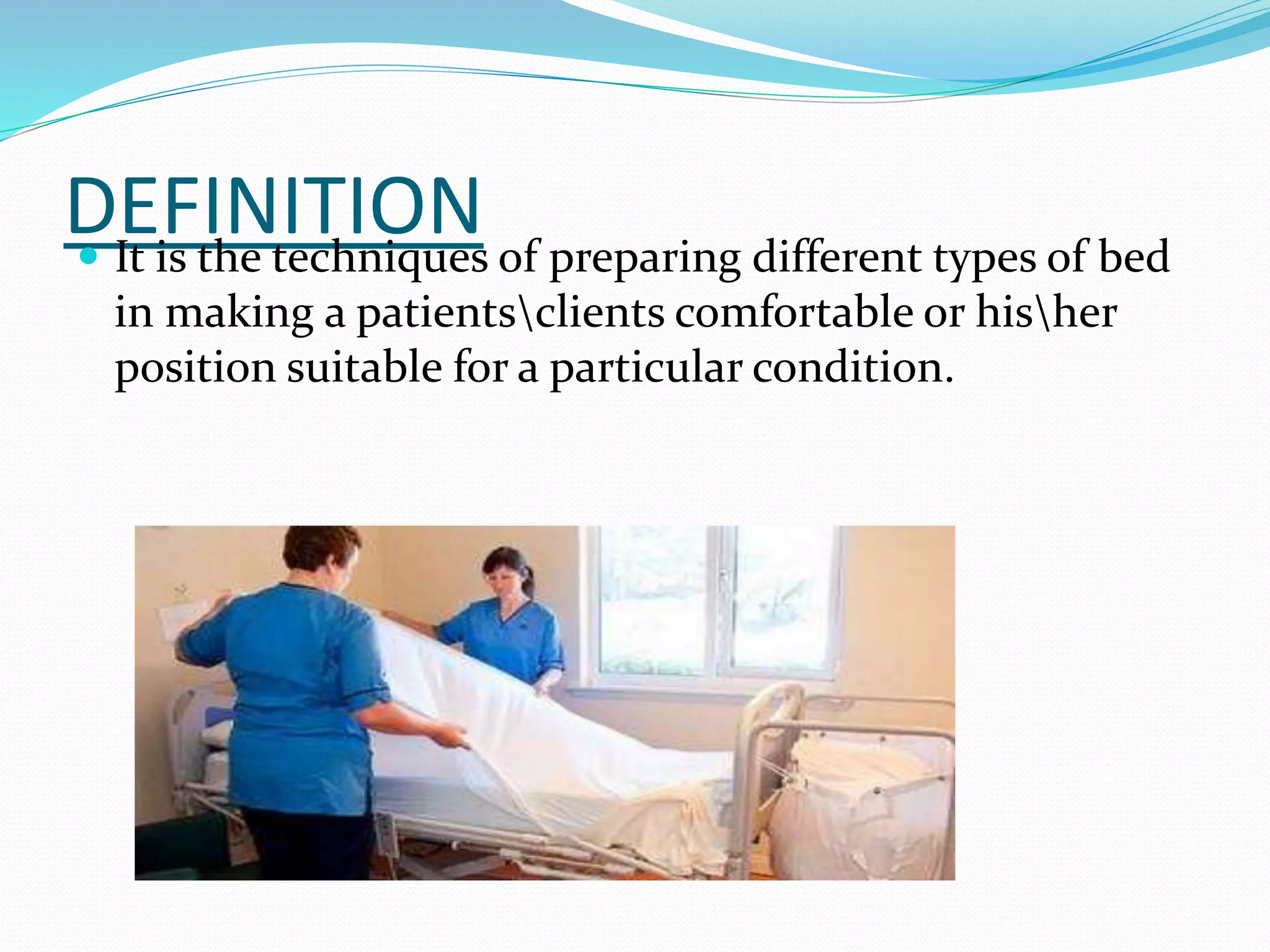
 It is the techniques of preparing different types of bed
in making a patientsclients comfortable or hisher
position suitable for a particular condition.
PURPOSE
 To provide the client with a safe & comfortable bed to take rest and
sleep.
 To keep the ward neat and tidy.
 To adapt to the needs of the client and to be ready for any emergency or
critical condition.
 To economize time, material & effort.
 To prevent bed sore.
 To observe the client.
 To prevent cross infection.
 To treat the certain conditon.
TYPES OF BED
 Open bed
 Closed bed
 Occupied bed
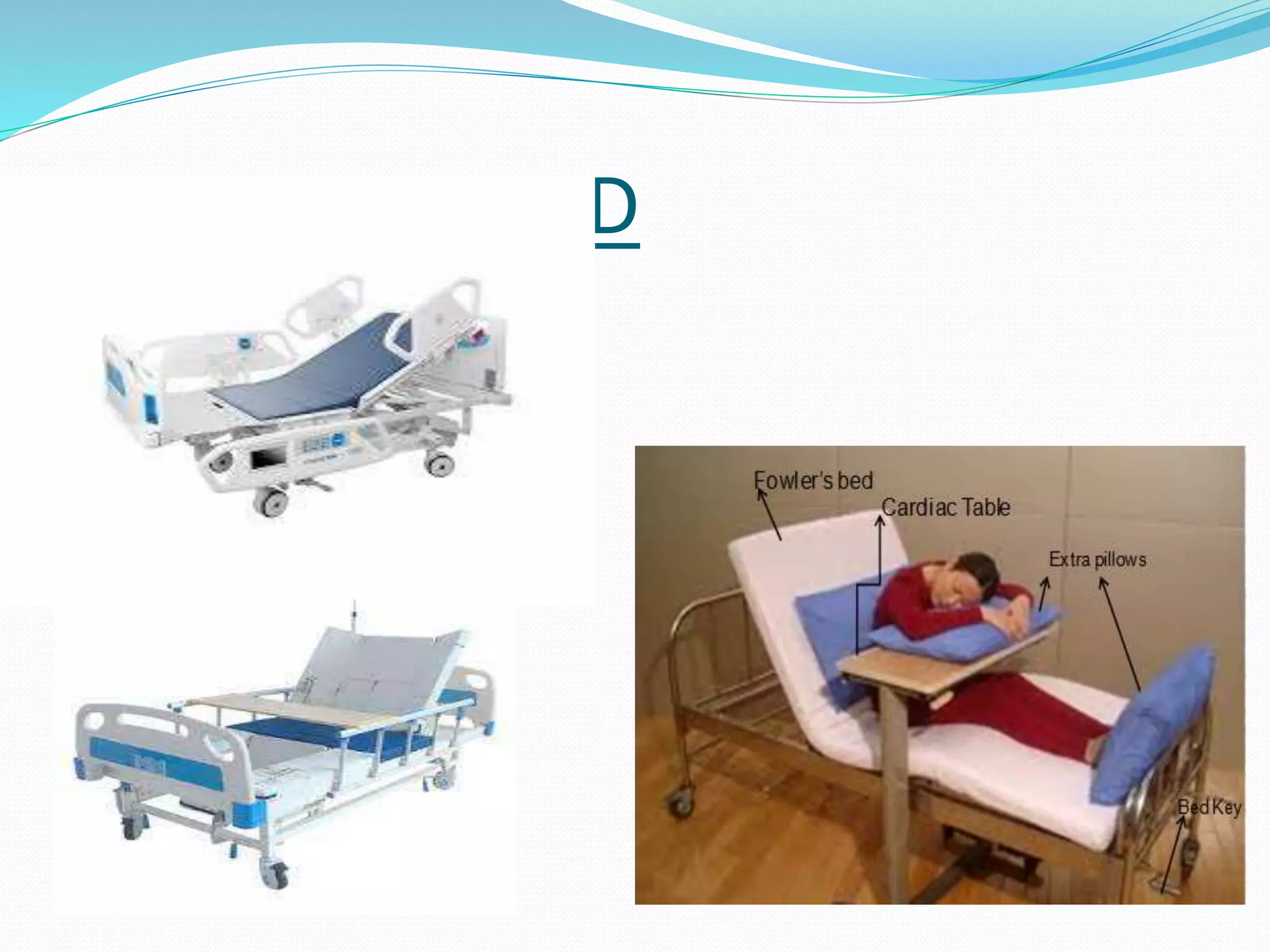
 Cardiac bed
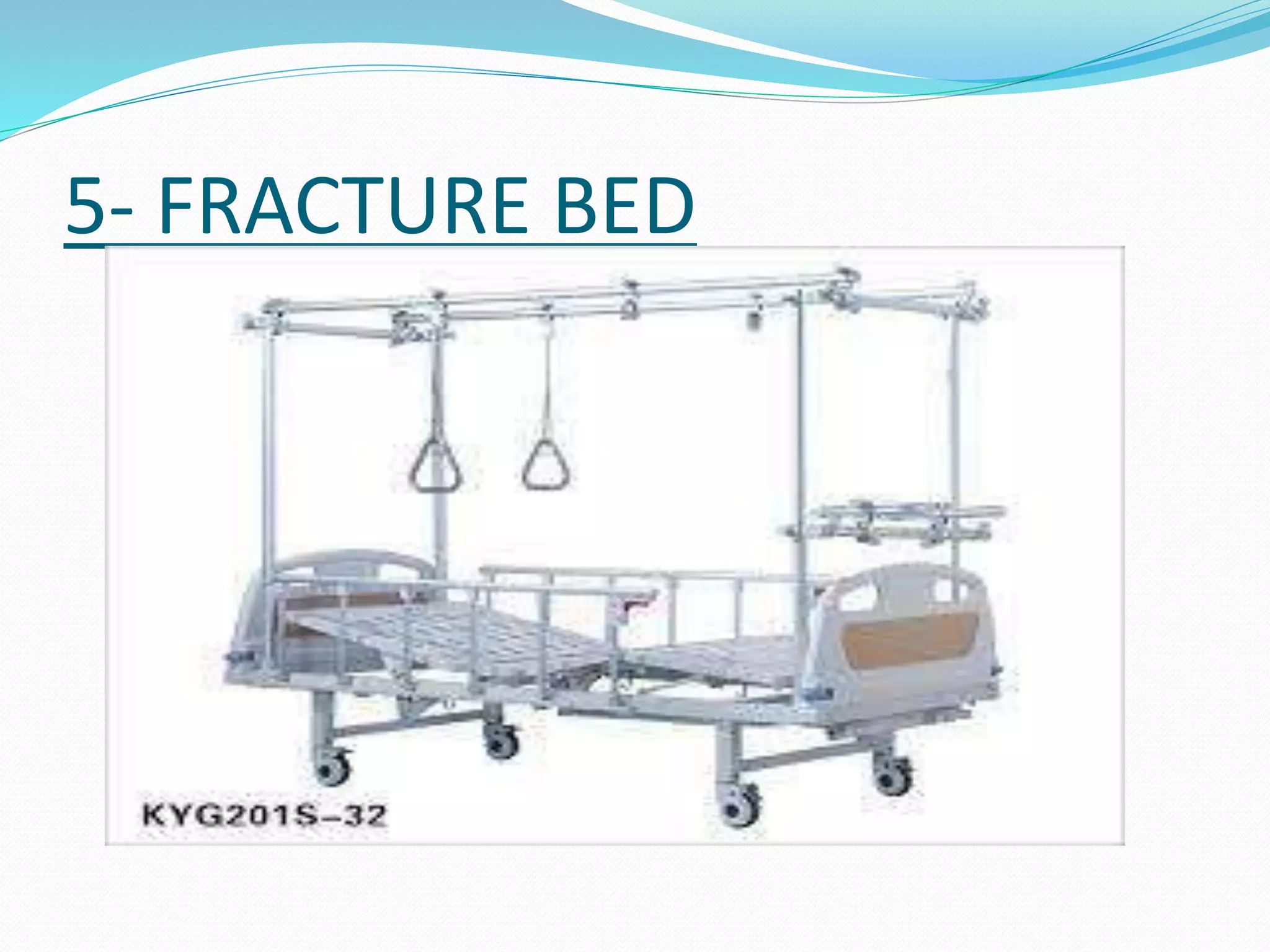
 Fracture bed
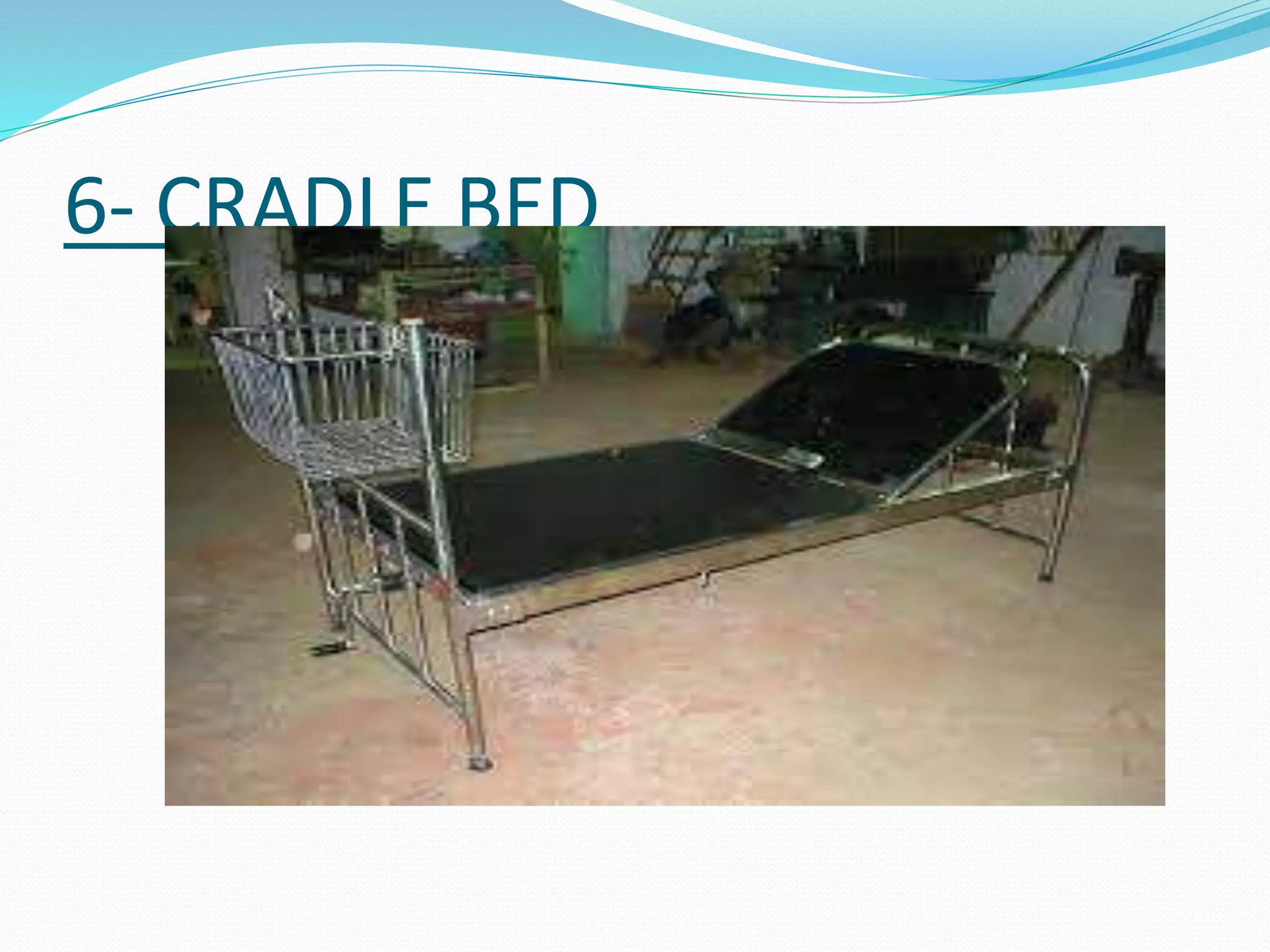
 Cradle bed
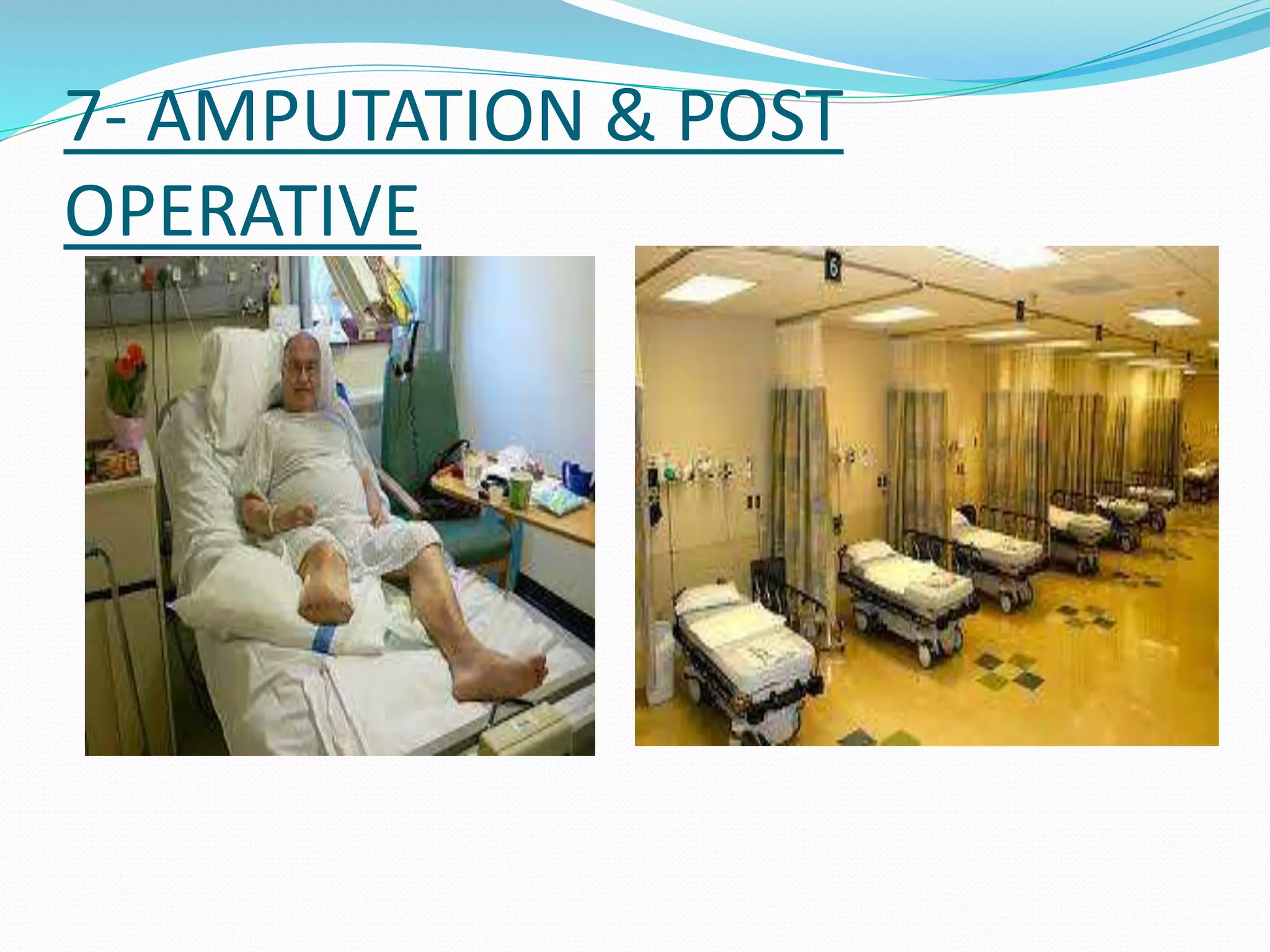
 Post operative bed
 Amputation bed
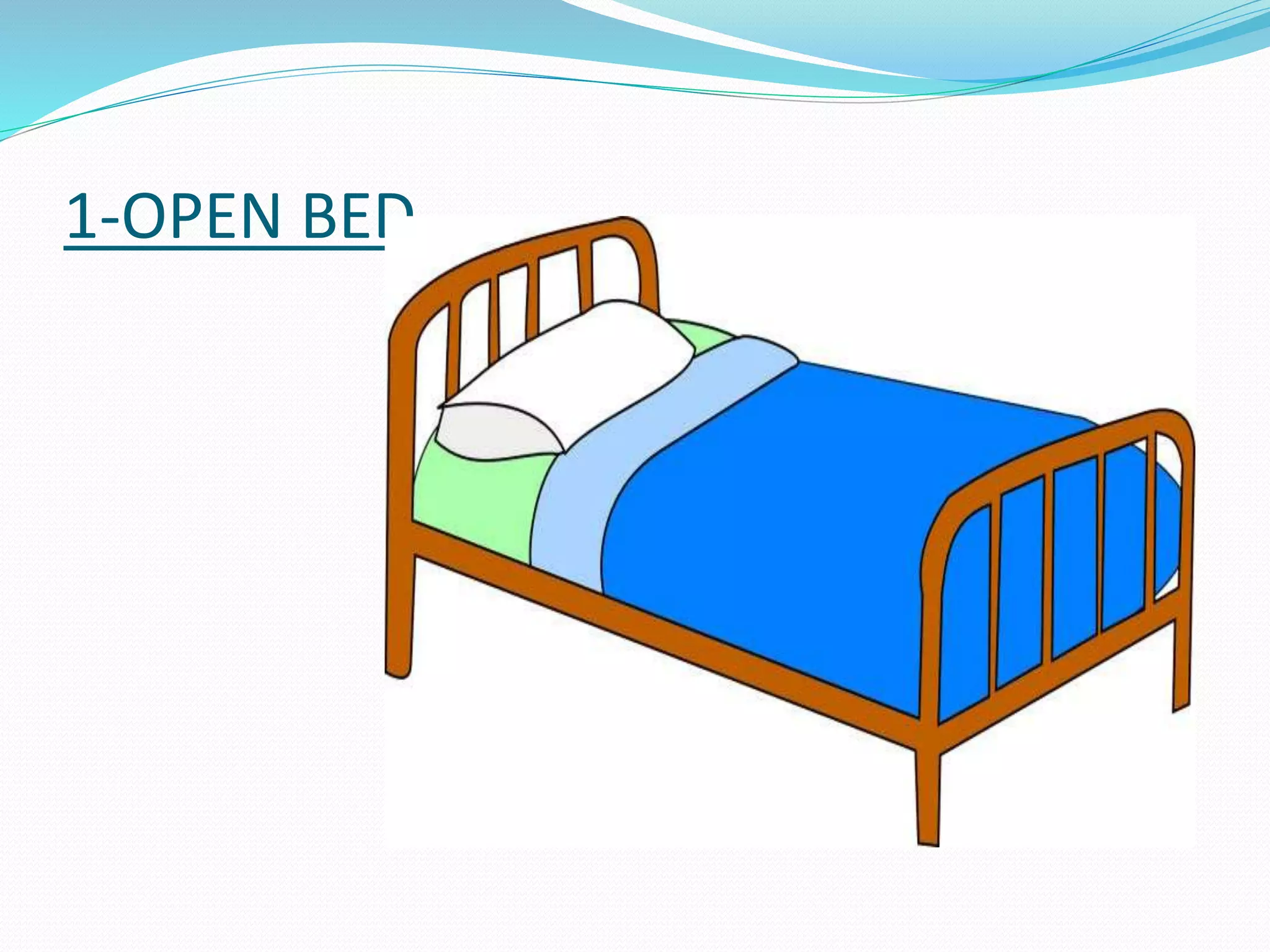
1-OPEN BED
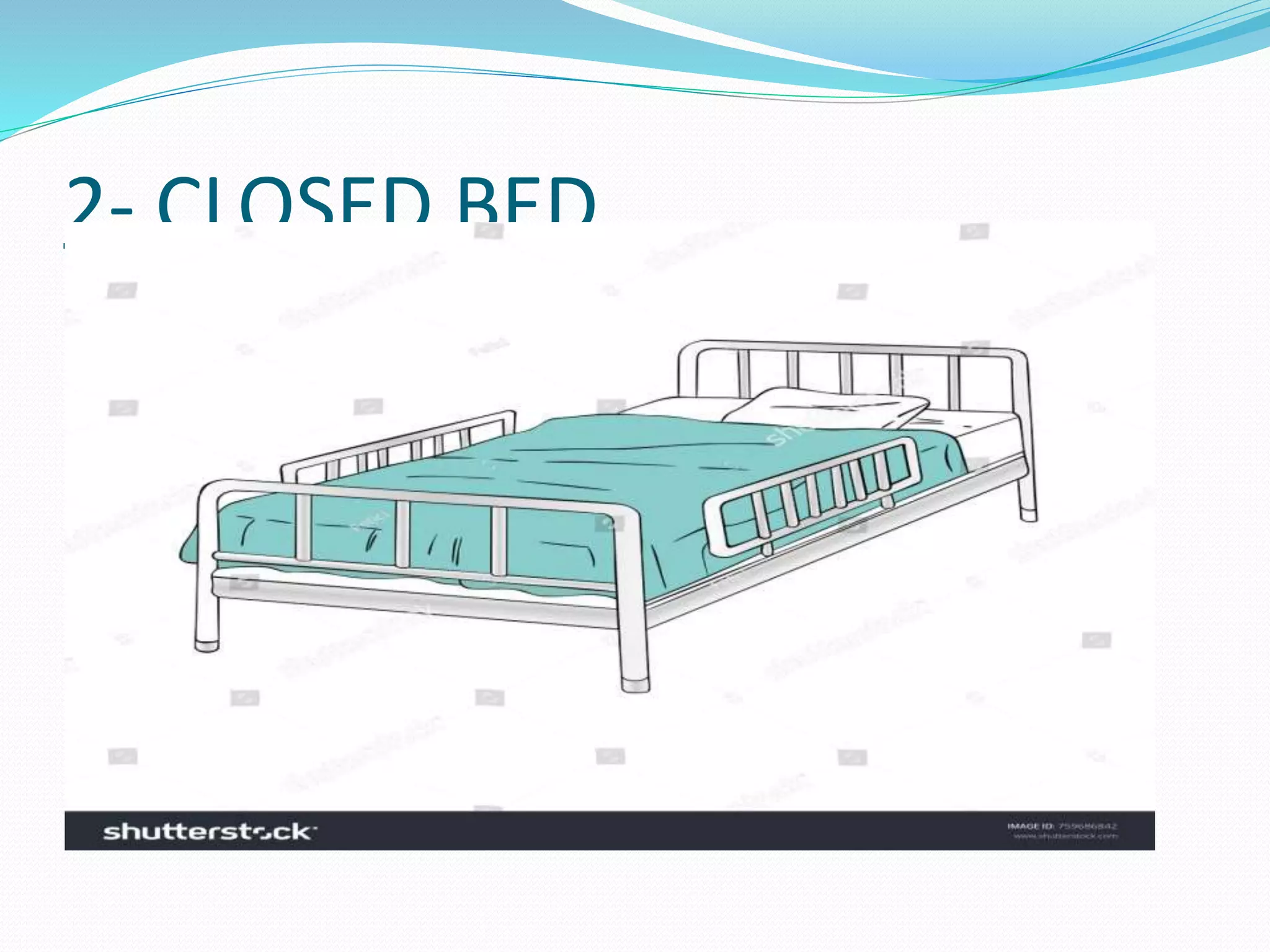
2- CLOSED BED
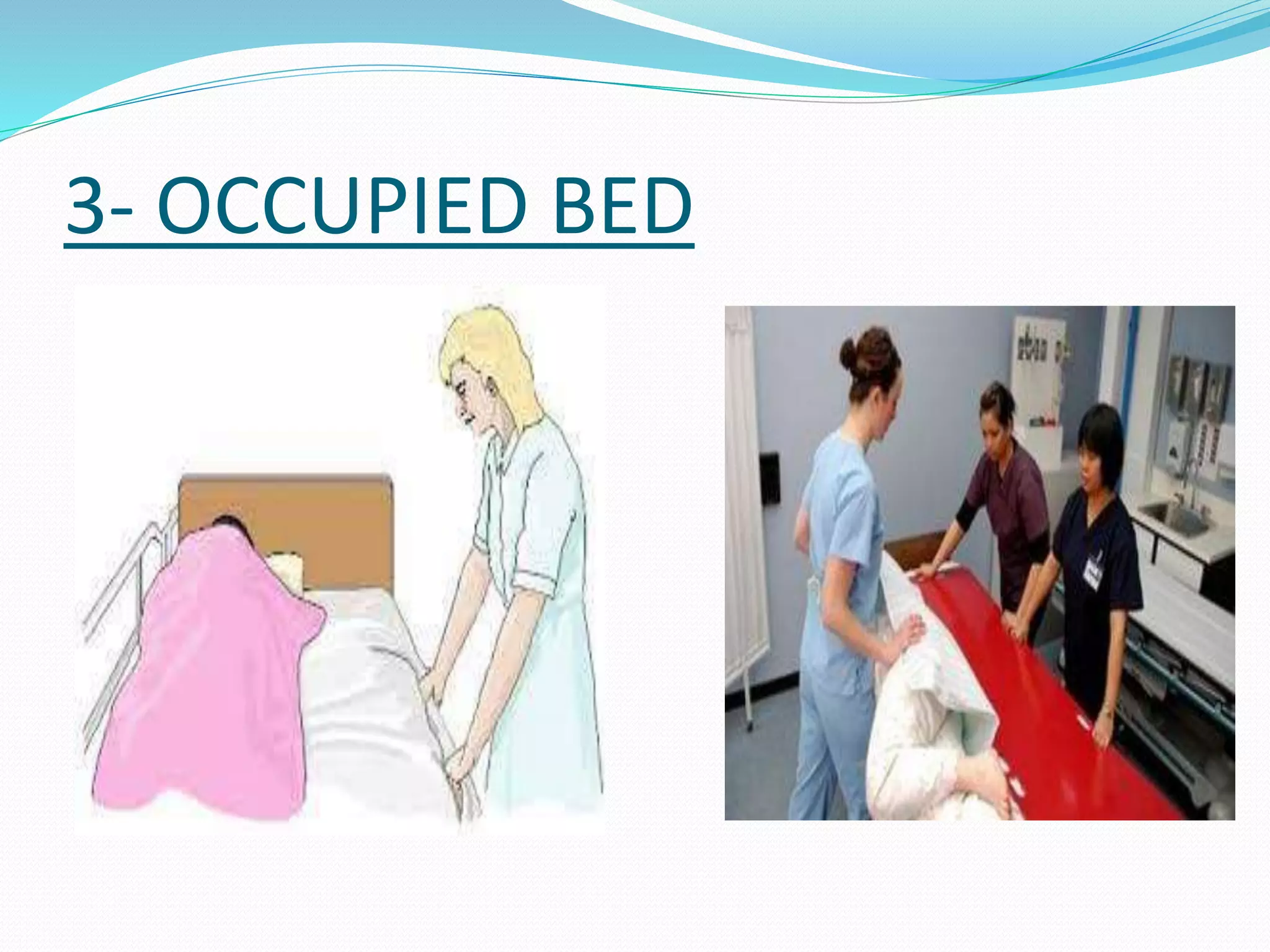
3- OCCUPIED BED
4- CARDIAC BED
5- FRACTURE BED
6- CRADLE BED
7- AMPUTATION & POST
OPERATIVE
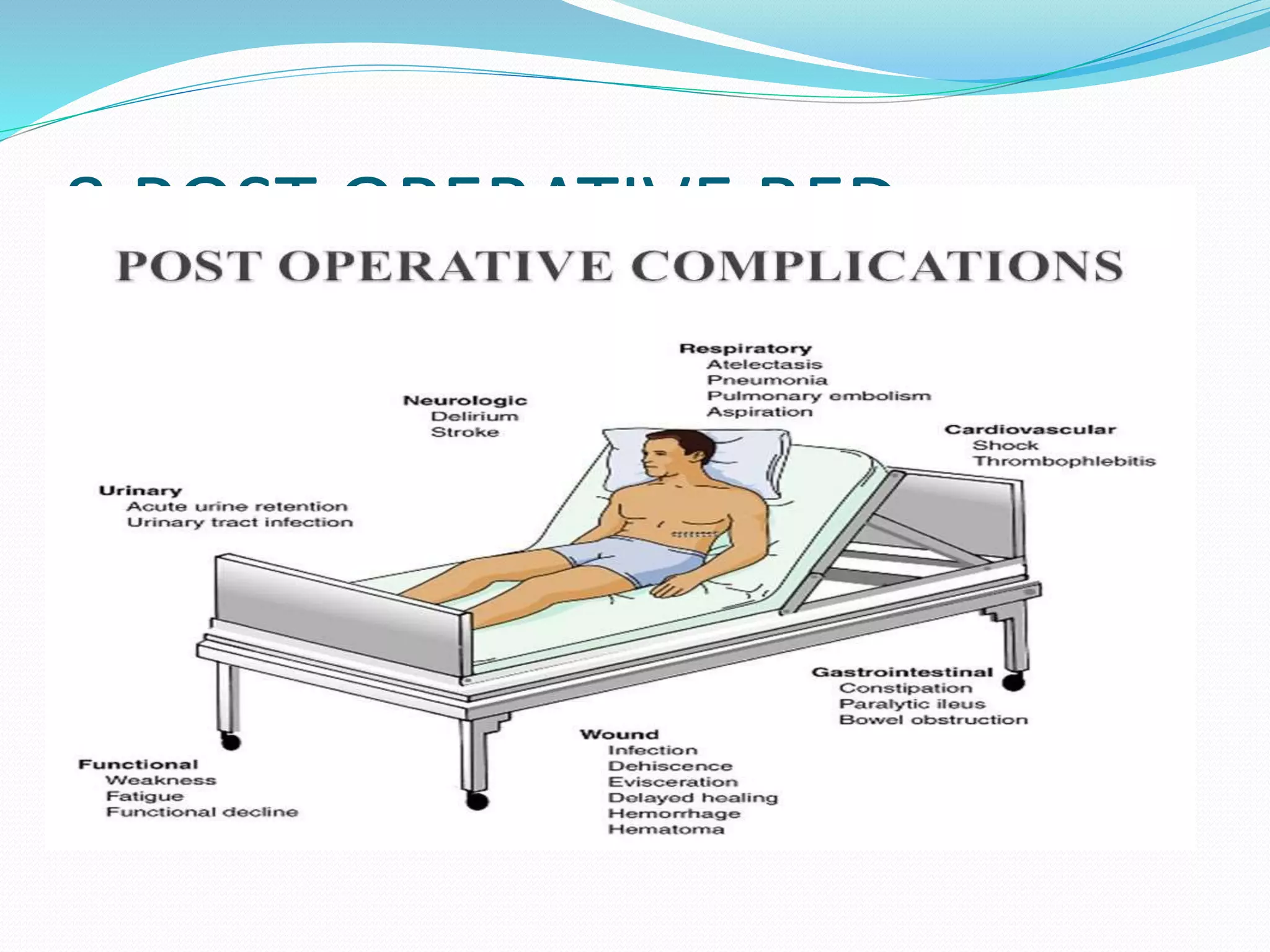
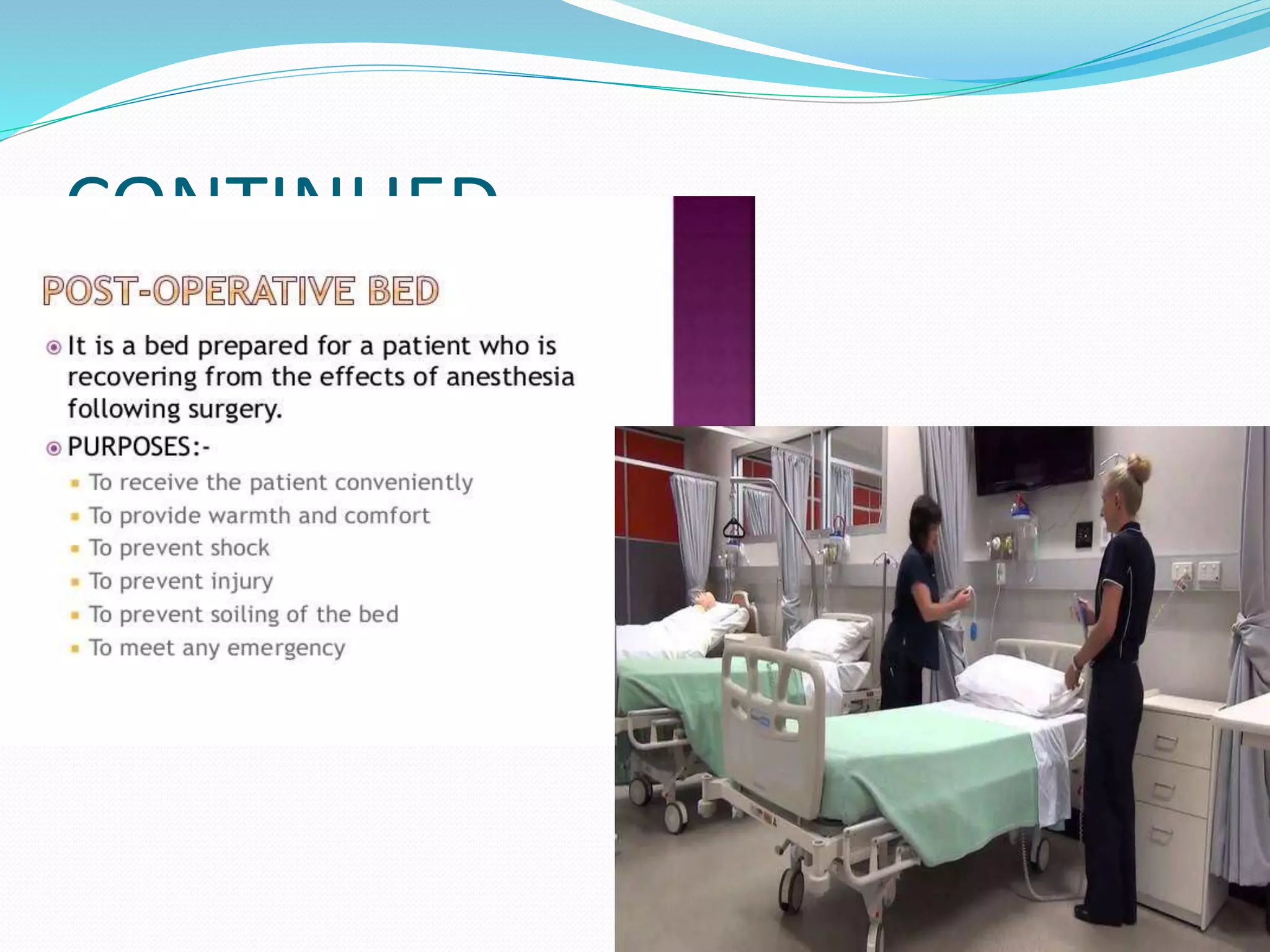
8.POST OPERATIVE BED
CONTINUED
PREPARATION OF PATIENT
 Gain consent
 Explain procedure
 Provide comfortable position
 Maintain privacy
 Select suitable type of bed making according to
patient’s condition
PREPARATION OF ENVIRONMENT
 Ensure patient’s privacy
 Ensure that tha environment is clean and hygienic
 Adequate lights
 Adequate ventilation
PREPARATION OF ARTICLES
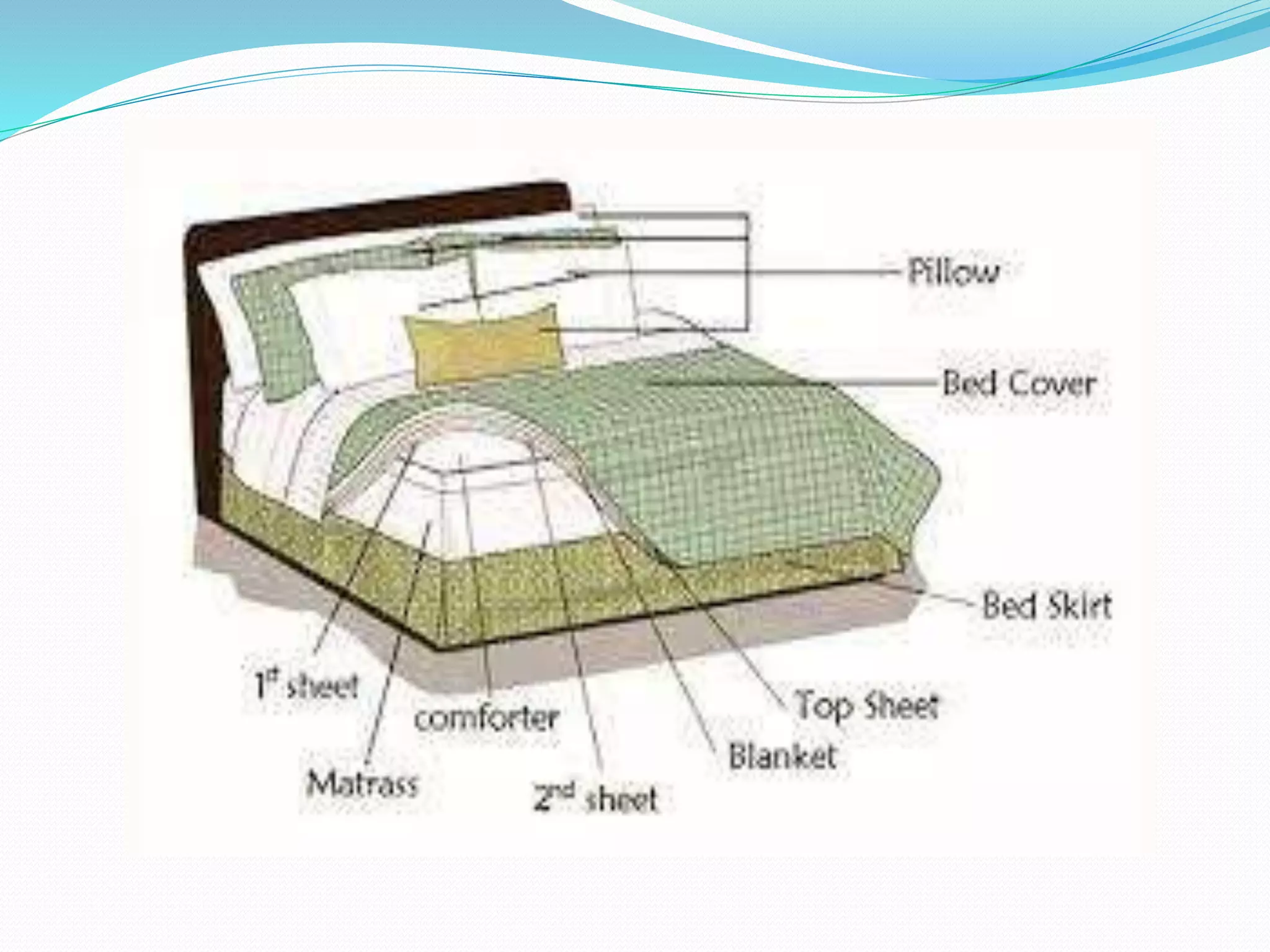
 Mattress pad
 Bottom sheet
 Drawsheet
 Mackintosh
 Topsheet
 Blanket
 Bedspread
 Pillows
 Pillowcase
 Duster
PROCEDURE
 Wash hands
 The bed should put where it is required.
 The other items are kept on bench near the bed for
convenience.
 Then the mattress is spread over the bed
 The mattress cover is then put on mattress.
 The bottom sheet is spread over the bed
 The sheet is well tucked into the mattress.
 The Mackintosh is spread at centre level of the sheet.
 Place the drawsheet over the Mackintosh
 Tucked the Mackintosh and drawsheet from the both
side
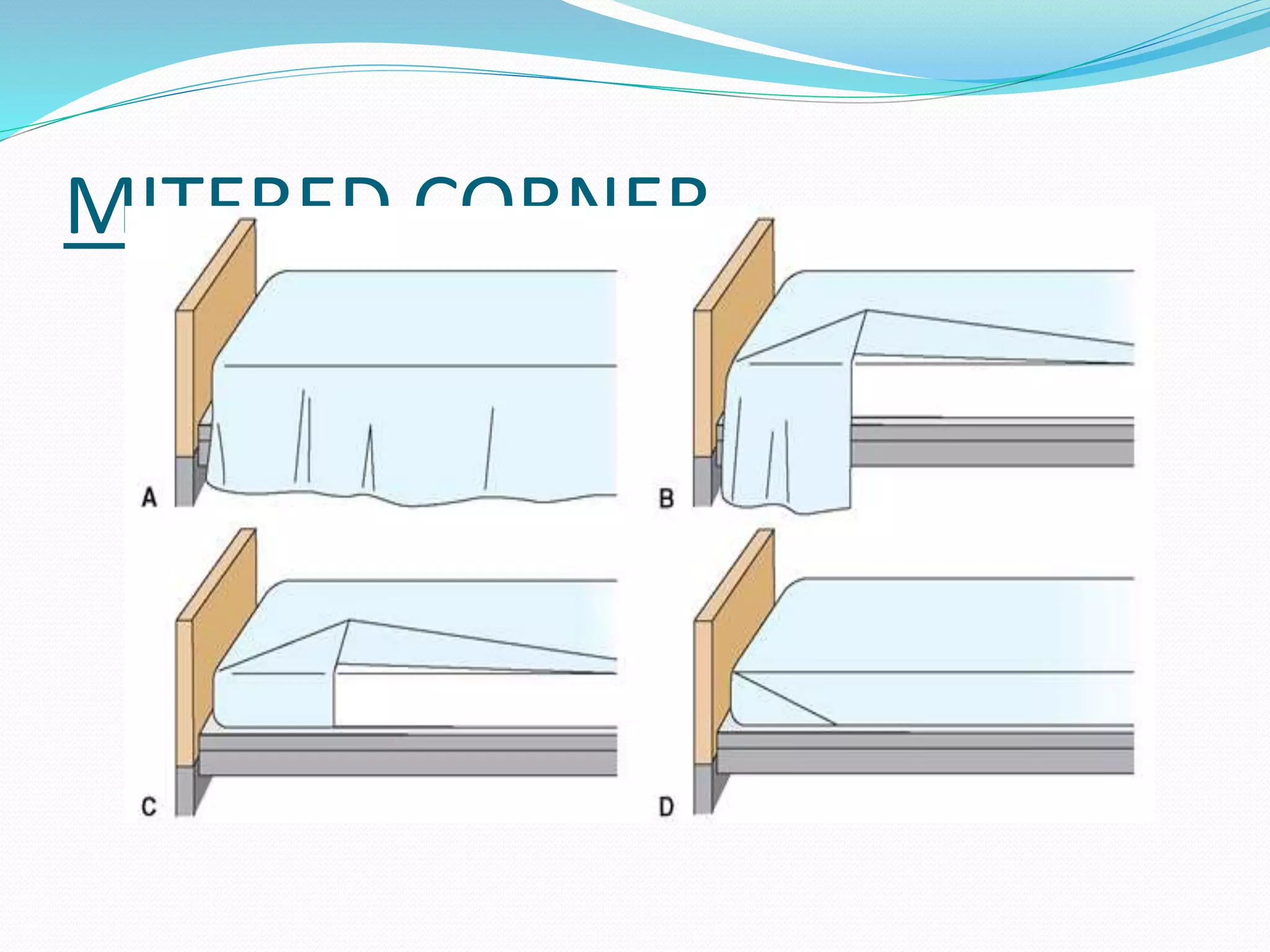
 Make Mitten corners
 Cover the pillow with pillow case.
 Fold the blanket and place at the foot level
RULES FOR BEDMAKING
 Use good body mechanism all the time.
 Follow standard precautions.
 Always wash your hands before handling clean linen and
after handling dirty linen.
 Bring enough linen into the person’s room.
 Always keep clean linen covered.
 Never shake linens
 Do not take linen from one person’s room to use another
person.
 Never put dirty linens on the floor or on the top of clean
linen.
GENERAL INSTRUCTIONS
 Wash hand before and after the procedure.
 Don’t expose the client unnecessarily.
 Protect the client from draught.
 Don’t cover the clients face while placing the linen.
 Don’t mix clean linen with soiled linen.
 All equipment should be collected before starting.
 The patients face should never be covered by sheets or blankets.
 Extra assistance should be available.
 Always have a dirty linen bin at hand in which to put dirty linen.
TRAY FOR BED MAKING
 A tray containing…
Mattress pad
Bottom sheet
Draw sheet
Top sheet
Blanket
Bedspread
Pillow with pillow case
MITERED CORNER
RECORDING AND REPORTING
 Note the patient name
 Type of bed making
 Observe the patient
 Report to the physician regarding any abnormalities.
Bed making procedure

Bed making procedure

  • 1.
    PRESENTED BY- SHANTI DEVI NURSING OFFICER GuidedBY- DR.ANJALATCHI VICE PRINCIPAL
  • 2.
    DEFINITION  It isthe techniques of preparing different types of bed in making a patientsclients comfortable or hisher position suitable for a particular condition.
  • 4.
    PURPOSE  To providethe client with a safe & comfortable bed to take rest and sleep.  To keep the ward neat and tidy.  To adapt to the needs of the client and to be ready for any emergency or critical condition.  To economize time, material & effort.  To prevent bed sore.  To observe the client.  To prevent cross infection.  To treat the certain conditon.
  • 5.
    TYPES OF BED Open bed  Closed bed  Occupied bed  Cardiac bed  Fracture bed  Cradle bed  Post operative bed  Amputation bed
  • 6.
  • 7.
  • 8.
  • 9.
  • 10.
  • 11.
  • 12.
    7- AMPUTATION &POST OPERATIVE
  • 13.
  • 14.
  • 15.
    PREPARATION OF PATIENT Gain consent  Explain procedure  Provide comfortable position  Maintain privacy  Select suitable type of bed making according to patient’s condition
  • 16.
    PREPARATION OF ENVIRONMENT Ensure patient’s privacy  Ensure that tha environment is clean and hygienic  Adequate lights  Adequate ventilation
  • 17.
    PREPARATION OF ARTICLES Mattress pad  Bottom sheet  Drawsheet  Mackintosh  Topsheet  Blanket  Bedspread  Pillows  Pillowcase  Duster
  • 18.
    PROCEDURE  Wash hands The bed should put where it is required.  The other items are kept on bench near the bed for convenience.  Then the mattress is spread over the bed  The mattress cover is then put on mattress.  The bottom sheet is spread over the bed  The sheet is well tucked into the mattress.  The Mackintosh is spread at centre level of the sheet.
  • 19.
     Place thedrawsheet over the Mackintosh  Tucked the Mackintosh and drawsheet from the both side  Make Mitten corners  Cover the pillow with pillow case.  Fold the blanket and place at the foot level
  • 20.
    RULES FOR BEDMAKING Use good body mechanism all the time.  Follow standard precautions.  Always wash your hands before handling clean linen and after handling dirty linen.  Bring enough linen into the person’s room.  Always keep clean linen covered.  Never shake linens  Do not take linen from one person’s room to use another person.  Never put dirty linens on the floor or on the top of clean linen.
  • 21.
    GENERAL INSTRUCTIONS  Washhand before and after the procedure.  Don’t expose the client unnecessarily.  Protect the client from draught.  Don’t cover the clients face while placing the linen.  Don’t mix clean linen with soiled linen.  All equipment should be collected before starting.  The patients face should never be covered by sheets or blankets.  Extra assistance should be available.  Always have a dirty linen bin at hand in which to put dirty linen.
  • 22.
    TRAY FOR BEDMAKING  A tray containing… Mattress pad Bottom sheet Draw sheet Top sheet Blanket Bedspread Pillow with pillow case
  • 23.
  • 24.
    RECORDING AND REPORTING Note the patient name  Type of bed making  Observe the patient  Report to the physician regarding any abnormalities.