Methods of Safe and Clean Electronic Waste DisposalPresented by:Daniel Werntz
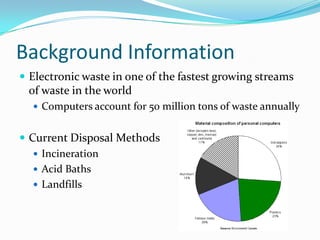
Background InformationElectronic waste in one of the fastest growing streams of waste in the worldComputers account for 50 million tons of waste annuallyCurrent Disposal MethodsIncinerationAcid BathsLandfills
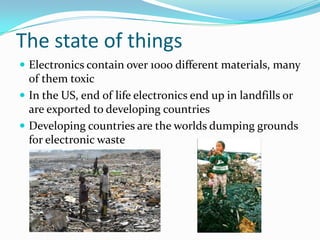
The state of thingsElectronics contain over 1000 different materials, many of them toxicIn the US, end of life electronics end up in landfills or are exported to developing countriesDeveloping countries are the worlds dumping grounds for electronic waste
Why is this a problem?Landfill disposal allows heavy metals to leach into ground waterIncineration makes hazardous material airborneAcid baths are dangerous and cause water and soil contaminationExported materials are handled improperlyMost e-waste goes to China, India, and AfricaWorkers are untrained and uneducated in safe handling of electronic wasteNo environmental protection laws
Environmental ImpactsStudies conducted in China discovered heavy contamination in e-waste recycling regionsSoil, air, water, and sediments all contained high levels of contaminationTrace metals (Lead, Zinc, Nickel, Copper, Mercury, and Cadmium)Polychlorinated BiphenylsPolycyclic Aromatic HydrocarbonsDioxins
MethodsRedesign of computer componentsSimplification of the deconstruction processConsumer EducationEasy to access information about where to dispose of unwanted electronicsUpdated Sorting MethodsAutomated sorting processes
MethodsSamples taken of soil, air, and water in areas surrounding disposal sitesTaken before the test is begun and once a week every week after the startThis will be considered a success if contamination levels are the same or lower than the initial samples
Desired ResultsThe purposed methods aim to:Reduce export of e-waste to developing countriesReduce the release of hazardous materials during recycling and disposal

Garbage west

  • 1.
    Methods of Safeand Clean Electronic Waste DisposalPresented by:Daniel Werntz
  • 2.
    Background InformationElectronic wastein one of the fastest growing streams of waste in the worldComputers account for 50 million tons of waste annuallyCurrent Disposal MethodsIncinerationAcid BathsLandfills
  • 3.
    The state ofthingsElectronics contain over 1000 different materials, many of them toxicIn the US, end of life electronics end up in landfills or are exported to developing countriesDeveloping countries are the worlds dumping grounds for electronic waste
  • 4.
    Why is thisa problem?Landfill disposal allows heavy metals to leach into ground waterIncineration makes hazardous material airborneAcid baths are dangerous and cause water and soil contaminationExported materials are handled improperlyMost e-waste goes to China, India, and AfricaWorkers are untrained and uneducated in safe handling of electronic wasteNo environmental protection laws
  • 5.
    Environmental ImpactsStudies conductedin China discovered heavy contamination in e-waste recycling regionsSoil, air, water, and sediments all contained high levels of contaminationTrace metals (Lead, Zinc, Nickel, Copper, Mercury, and Cadmium)Polychlorinated BiphenylsPolycyclic Aromatic HydrocarbonsDioxins
  • 6.
    MethodsRedesign of computercomponentsSimplification of the deconstruction processConsumer EducationEasy to access information about where to dispose of unwanted electronicsUpdated Sorting MethodsAutomated sorting processes
  • 7.
    MethodsSamples taken ofsoil, air, and water in areas surrounding disposal sitesTaken before the test is begun and once a week every week after the startThis will be considered a success if contamination levels are the same or lower than the initial samples
  • 8.
    Desired ResultsThe purposedmethods aim to:Reduce export of e-waste to developing countriesReduce the release of hazardous materials during recycling and disposal