The Social Construction of Reality By Anne Cortez | Adamson University 
UNDERSTANDING THE SOCIETY
Discussion Outline 
•Basic sociological concepts 
•Society as a human construction 
•The social construction of reality
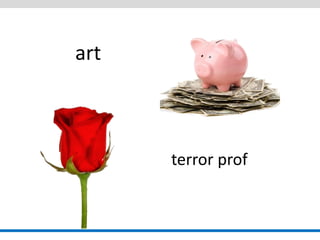
art 
terror prof
Reality is socially constructed. 
(Berger & Luckmann, 1996)
Principles of Early Economic Systems 
•Reciprocity 
•Redistribution 
•Householding 
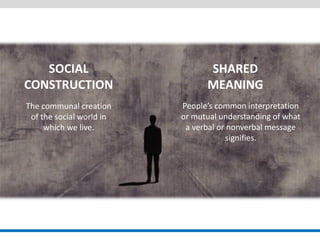
SOCIAL CONSTRUCTION 
SHARED MEANING 
The communal creation of the social world in which we live. 
People’s common interpretation or mutual understanding of what a verbal or nonverbal message signifies.
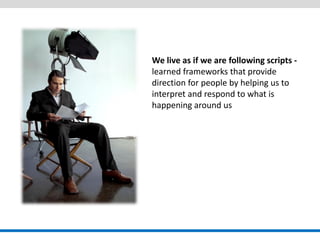
We live as if we are following scripts - learned frameworks that provide direction for people by helping us to interpret and respond to what is happening around us
“People and groups interacting in a social system create, over time, concepts or mental representations of each others actions. 
These concepts eventually become habituated into reciprocal roles played by the actors in relation to each other – institutionalized.”
Importance of “social construction of reality” in understanding life 
•Much of what we accept as objective or “natural facts of life” are really socially constructed (rather “moral facts of life”) 
•Once acted upon, socially-constructed facts of life become true for ourselves and others
Truth is nothing. What you believe to be true is everything.
BASIC SOCIOLOGICAL CONCEPTS 
Status 
Social stratification 
Role 
Social norms
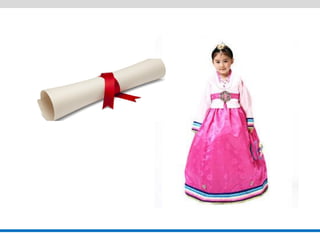
STATUS - a category or position a person occupies that is a significant determinant of how she or he will be defined and treated 
•Achievement - through our own efforts 
•Ascription - being born into a status or attaining it involuntarily at some other point in the life cycle
STATUS SET- a number of statuses we occupy simultaneously, such as mother, daughter, attorney, patient, employee, and passenger
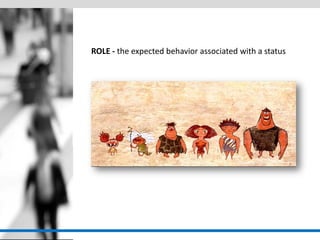
ROLE - the expected behavior associated with a status
A son talking to his mom to ask for allowance 
A trike driver negotiating with his passenger about the fare 
You talking to your crush
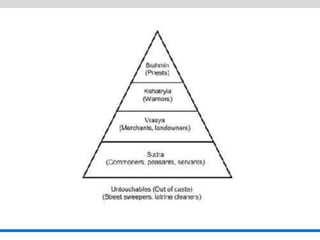
SOCIAL STRATIFICATION- The system created by the society which categorizes its members by status and then rank these statuses in some fashion
SOCIAL NORMS - shared rules that guide people’s behavior in specific situations. Social norms determine the privileges and responsibilities a status possesses.
What are statuses, roles and social norms for? They allow us to organize our lives in consistent, predictable ways.
Problem of anomie (normlessness) - when traditional social norms have changed but new ones have yet to be developed
Stereotypes- oversimplified conceptions that people who occupy the same status group share certain traits in common
Where do we derive social order and stability? Through the social construction of reality, which follows three steps: institutionalization, legitimation, and internalization.
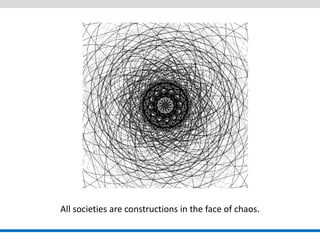
All societies are constructions in the face of chaos.
Human existence takes place in the 
context of order, direction, stability.
INSTITUTIONALIZATION- process of reciprocal habitualization of actions or roles by members of the society over time, not instantaneously
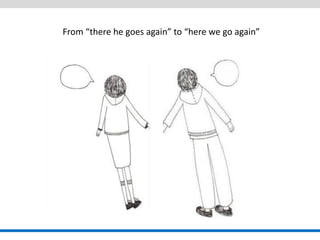
From “there he goes again” to “here we go again”
LEGITIMATION- process of explaining and justifying the existing institutions and habitual practices 
The challenge of legitimation inevitably arises when the objectivations of the present institutional order are to be transmitted to a new generation.
#seemsLEGIT
From “what to do” to “why do it”
INTERNALIZATION- the process by which an individual interprets the objective reality as subjectively meaningful to himself through socialization
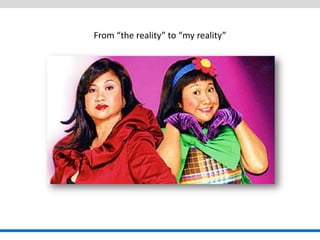
From “the reality” to “my reality”
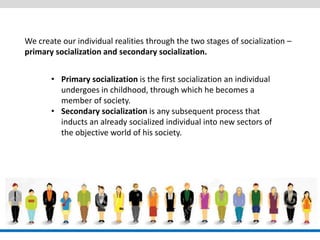
We create our individual realities through the two stages of socialization – 
primary socialization and secondary socialization. 
•Primary socialization is the first socialization an individual undergoes in childhood, through which he becomes a member of society. 
•Secondary socialization is any subsequent process that inducts an already socialized individual into new sectors of the objective world of his society.
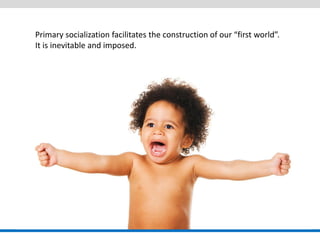
Primary socialization facilitates the construction of our “first world”. It is inevitable and imposed.
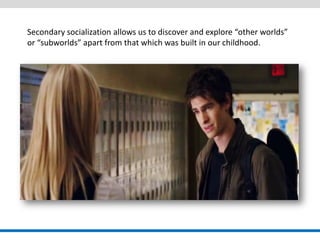
Secondary socialization allows us to discover and explore “other worlds” or “subworlds” apart from that which was built in our childhood.
Reality is constructed by the society. 
Society is a human construction.
REFERENCES Berger, P. and T. Luckmann (1996). The social construction of reality. USA: Penguin Books. Lindsey, L. (2005). The sociology of gender: Theoretical perspectives and feminist frameworks. New Jersey: Prentice Hall. Wharton, A. (2012. The sociology of gender: An introduction to theory and research. West Sussex, UK: John Wiley and Sons Ltd.
Questions?

Understanding the Society

  • 1.
    The Social Constructionof Reality By Anne Cortez | Adamson University UNDERSTANDING THE SOCIETY
  • 2.
    Discussion Outline •Basicsociological concepts •Society as a human construction •The social construction of reality
  • 3.
  • 4.
    Reality is sociallyconstructed. (Berger & Luckmann, 1996)
  • 5.
    Principles of EarlyEconomic Systems •Reciprocity •Redistribution •Householding SOCIAL CONSTRUCTION SHARED MEANING The communal creation of the social world in which we live. People’s common interpretation or mutual understanding of what a verbal or nonverbal message signifies.
  • 6.
    We live asif we are following scripts - learned frameworks that provide direction for people by helping us to interpret and respond to what is happening around us
  • 7.
    “People and groupsinteracting in a social system create, over time, concepts or mental representations of each others actions. These concepts eventually become habituated into reciprocal roles played by the actors in relation to each other – institutionalized.”
  • 9.
    Importance of “socialconstruction of reality” in understanding life •Much of what we accept as objective or “natural facts of life” are really socially constructed (rather “moral facts of life”) •Once acted upon, socially-constructed facts of life become true for ourselves and others
  • 10.
    Truth is nothing.What you believe to be true is everything.
  • 11.
    BASIC SOCIOLOGICAL CONCEPTS Status Social stratification Role Social norms
  • 12.
    STATUS - acategory or position a person occupies that is a significant determinant of how she or he will be defined and treated •Achievement - through our own efforts •Ascription - being born into a status or attaining it involuntarily at some other point in the life cycle
  • 15.
    STATUS SET- anumber of statuses we occupy simultaneously, such as mother, daughter, attorney, patient, employee, and passenger
  • 17.
    ROLE - theexpected behavior associated with a status
  • 18.
    A son talkingto his mom to ask for allowance A trike driver negotiating with his passenger about the fare You talking to your crush
  • 20.
    SOCIAL STRATIFICATION- Thesystem created by the society which categorizes its members by status and then rank these statuses in some fashion
  • 23.
    SOCIAL NORMS -shared rules that guide people’s behavior in specific situations. Social norms determine the privileges and responsibilities a status possesses.
  • 24.
    What are statuses,roles and social norms for? They allow us to organize our lives in consistent, predictable ways.
  • 25.
    What are statuses,roles and social norms for? They allow us to organize our lives in consistent, predictable ways.
  • 26.
    Problem of anomie(normlessness) - when traditional social norms have changed but new ones have yet to be developed
  • 27.
    Stereotypes- oversimplified conceptionsthat people who occupy the same status group share certain traits in common
  • 29.
    Where do wederive social order and stability? Through the social construction of reality, which follows three steps: institutionalization, legitimation, and internalization.
  • 30.
    All societies areconstructions in the face of chaos.
  • 31.
    Human existence takesplace in the context of order, direction, stability.
  • 32.
    INSTITUTIONALIZATION- process ofreciprocal habitualization of actions or roles by members of the society over time, not instantaneously
  • 34.
    From “there hegoes again” to “here we go again”
  • 36.
    LEGITIMATION- process ofexplaining and justifying the existing institutions and habitual practices The challenge of legitimation inevitably arises when the objectivations of the present institutional order are to be transmitted to a new generation.
  • 37.
  • 38.
    From “what todo” to “why do it”
  • 39.
    INTERNALIZATION- the processby which an individual interprets the objective reality as subjectively meaningful to himself through socialization
  • 40.
    From “the reality”to “my reality”
  • 41.
    We create ourindividual realities through the two stages of socialization – primary socialization and secondary socialization. •Primary socialization is the first socialization an individual undergoes in childhood, through which he becomes a member of society. •Secondary socialization is any subsequent process that inducts an already socialized individual into new sectors of the objective world of his society.
  • 42.
    Primary socialization facilitatesthe construction of our “first world”. It is inevitable and imposed.
  • 43.
    Secondary socialization allowsus to discover and explore “other worlds” or “subworlds” apart from that which was built in our childhood.
  • 44.
    Reality is constructedby the society. Society is a human construction.
  • 45.
    REFERENCES Berger, P.and T. Luckmann (1996). The social construction of reality. USA: Penguin Books. Lindsey, L. (2005). The sociology of gender: Theoretical perspectives and feminist frameworks. New Jersey: Prentice Hall. Wharton, A. (2012. The sociology of gender: An introduction to theory and research. West Sussex, UK: John Wiley and Sons Ltd.
  • 46.