Basics of Rocket
Propulsion Part 2
The Thrust Equation
Newton’s Second Law of Motion
• The rate of change of linear momentum of a
body is directly proportional to the external
force applied on the body, and this change
takes place in the direction of the applied
force.
1.Constant Mass System
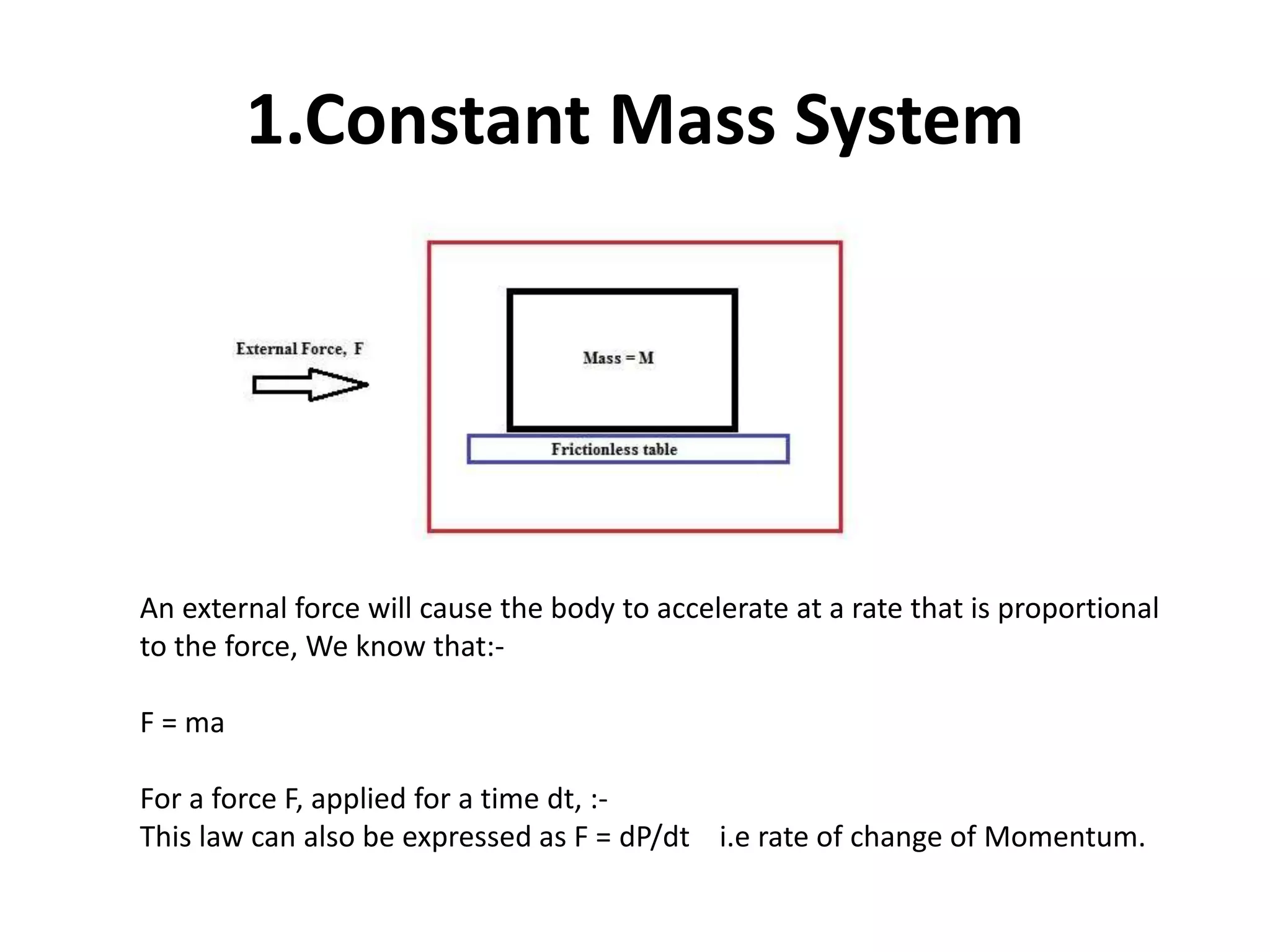
An external force will cause the body to accelerate at a rate that is proportional
to the force, We know that:-
F = ma
For a force F, applied for a time dt, :-
This law can also be expressed as F = dP/dt i.e rate of change of Momentum.
2. Rocket System
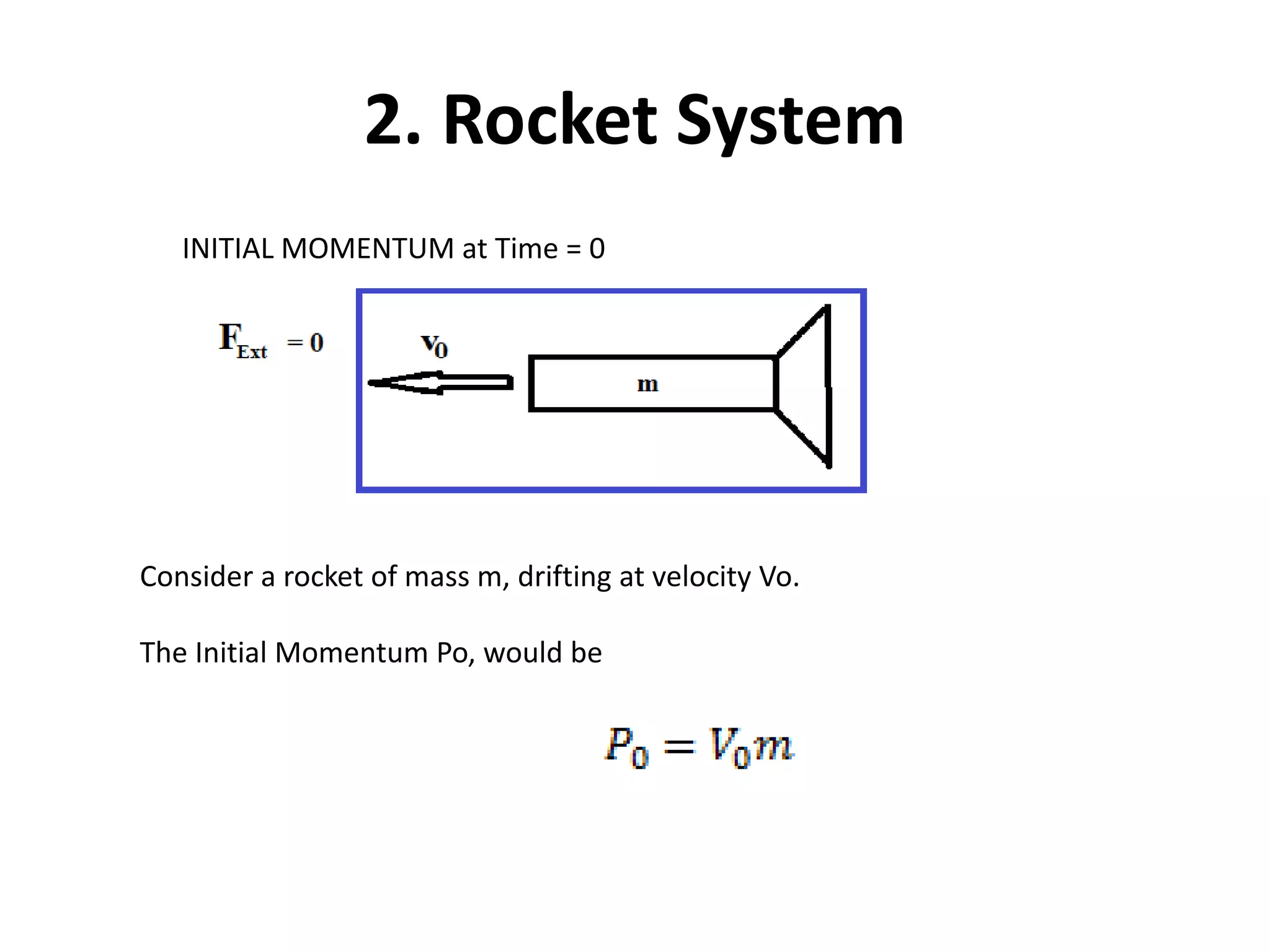
Consider a rocket of mass m, drifting at velocity Vo.
The Initial Momentum Po, would be
INITIAL MOMENTUM at Time = 0
Rocket System
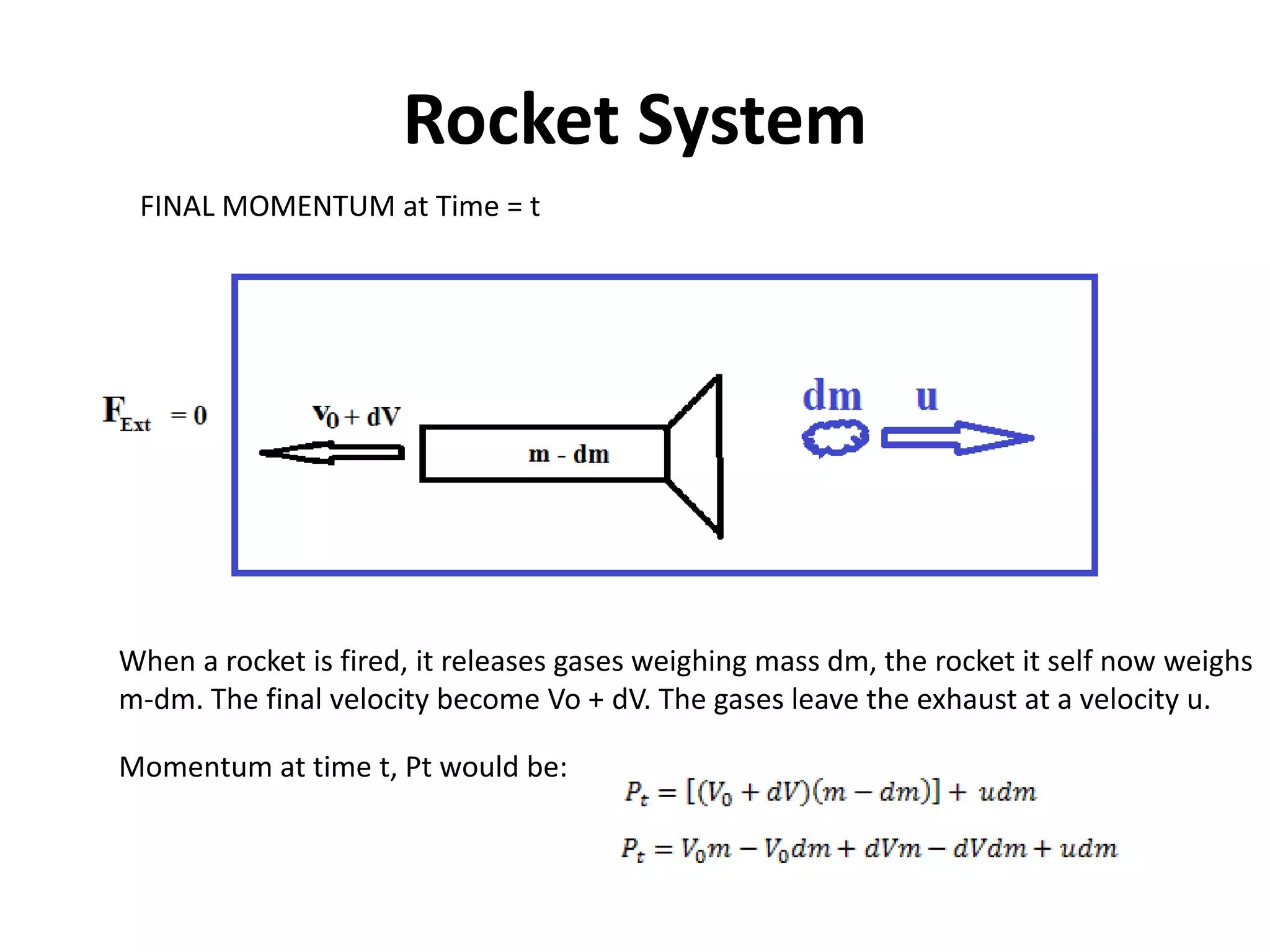
FINAL MOMENTUM at Time = t
When a rocket is fired, it releases gases weighing mass dm, the rocket it self now weighs
m-dm. The final velocity become Vo + dV. The gases leave the exhaust at a velocity u.
Momentum at time t, Pt would be:
Rocket System
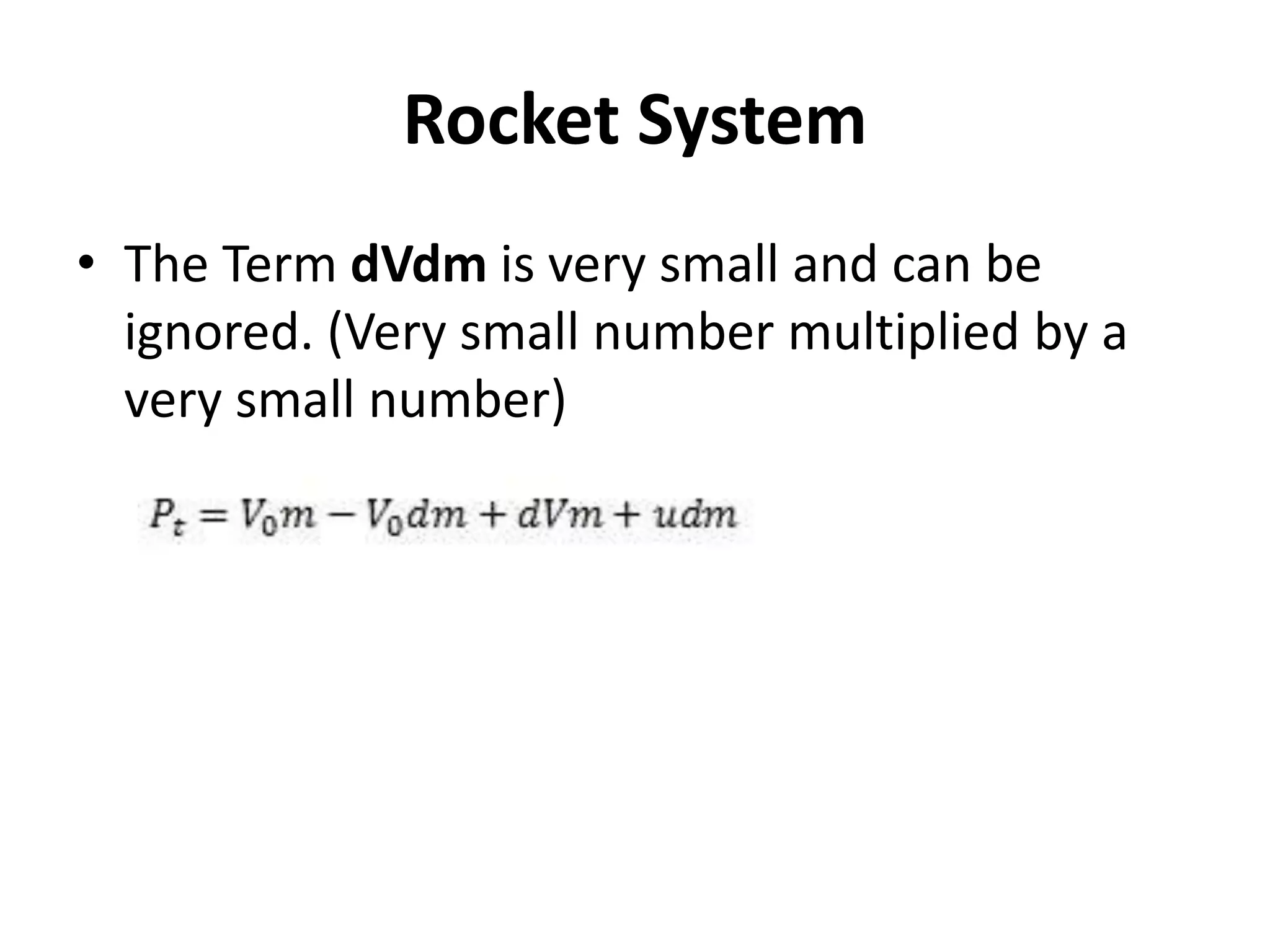
• The Term dVdm is very small and can be
ignored. (Very small number multiplied by a
very small number)
Rocket System Change in Momentum
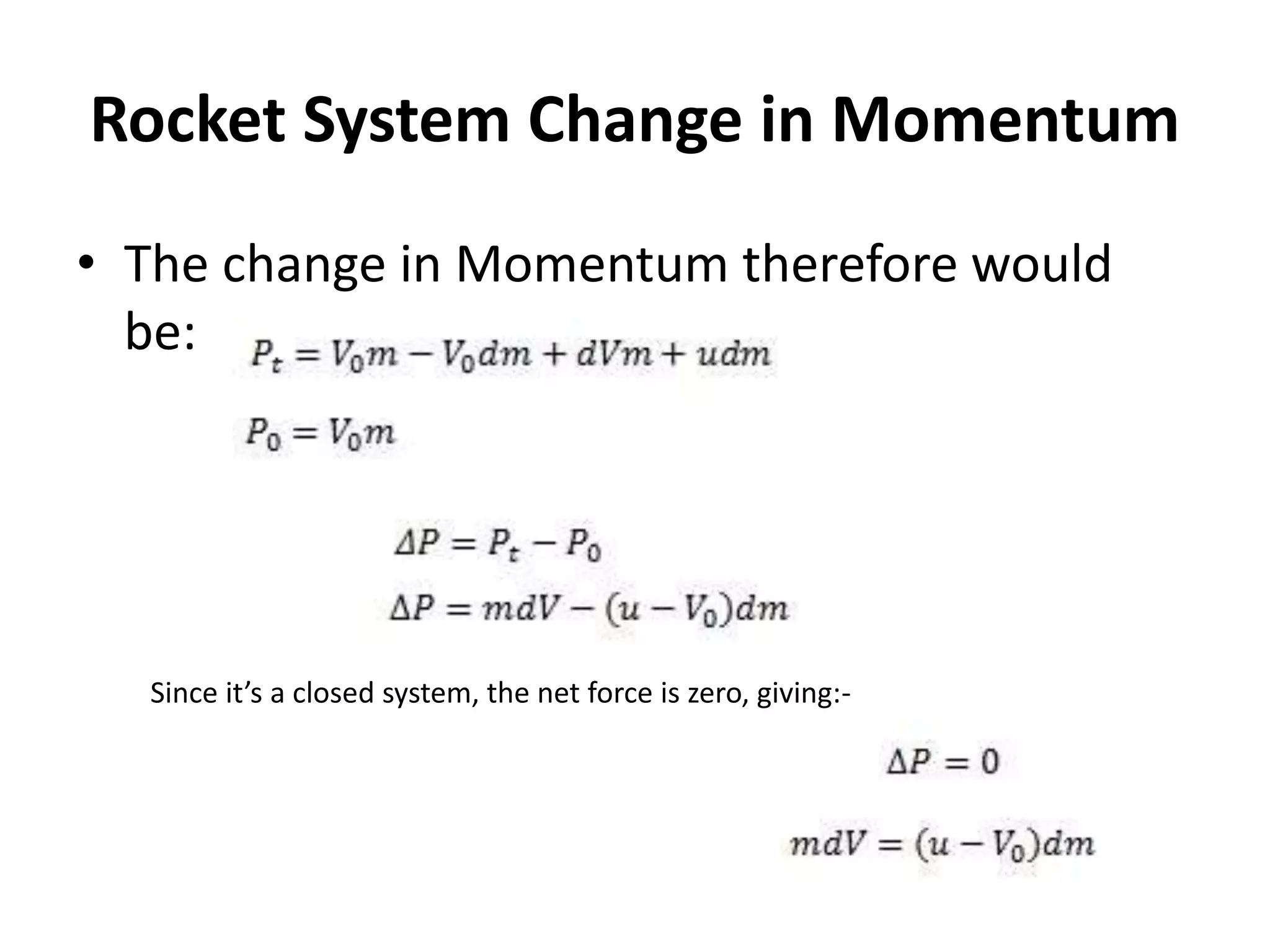
• The change in Momentum therefore would
be:
Since it’s a closed system, the net force is zero, giving:-
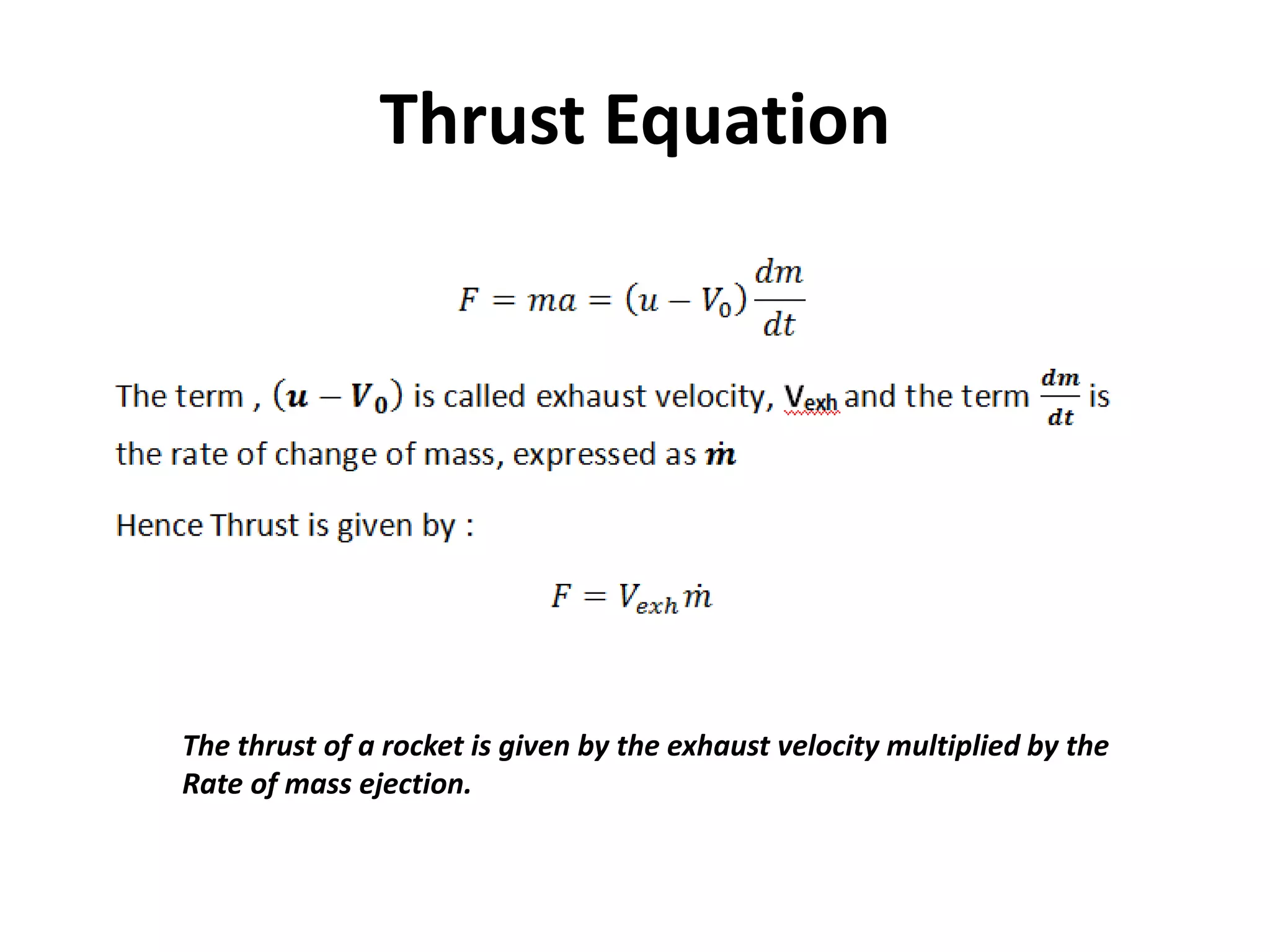
Thrust Equation
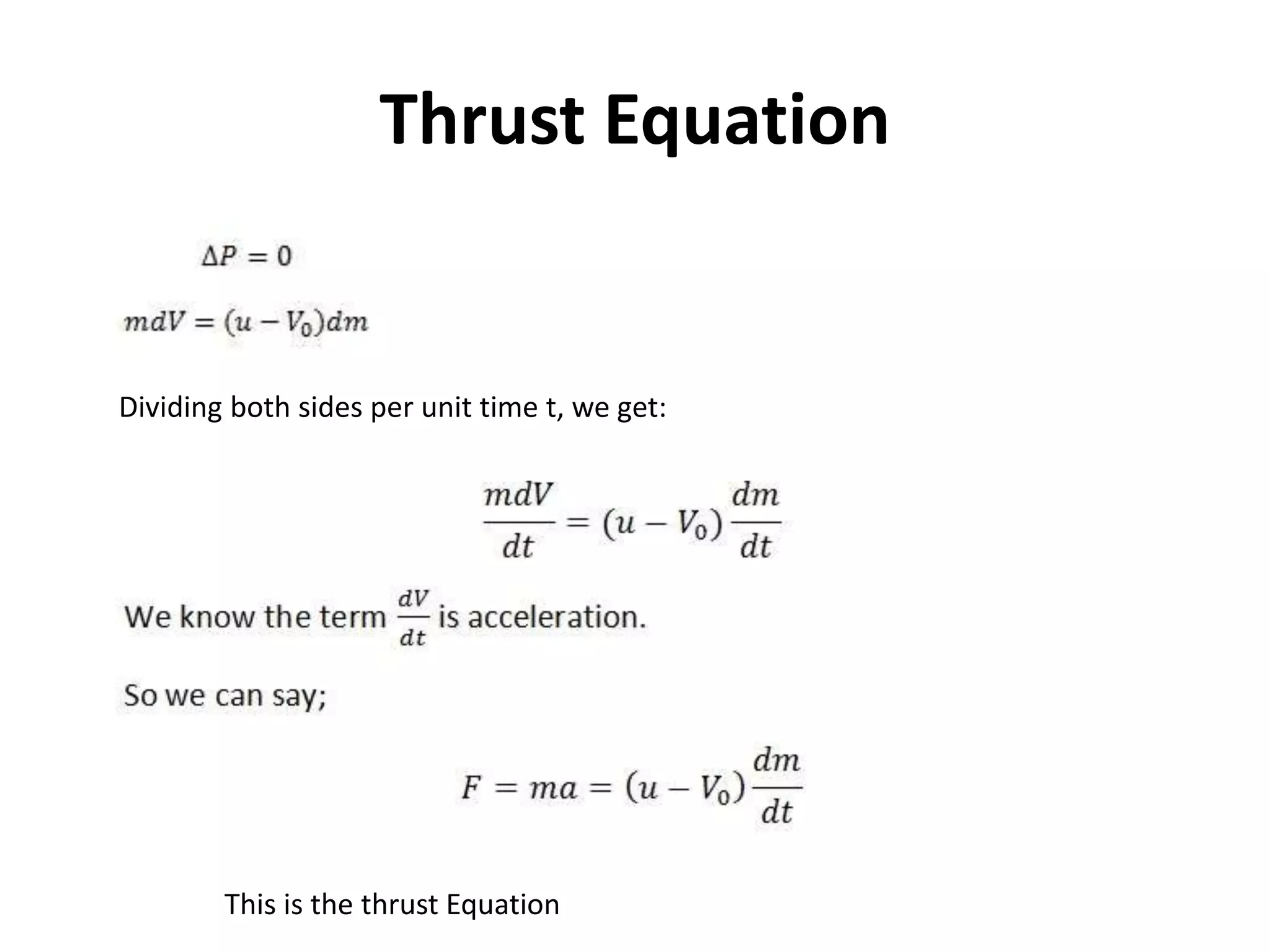
Dividing both sides per unit time t, we get:
This is the thrust Equation
Thrust Equation
The thrust of a rocket is given by the exhaust velocity multiplied by the
Rate of mass ejection.

Basics of Rocket Propulsion Part 2 The Thrust Equation

  • 1.
    Basics of Rocket PropulsionPart 2 The Thrust Equation
  • 2.
    Newton’s Second Lawof Motion • The rate of change of linear momentum of a body is directly proportional to the external force applied on the body, and this change takes place in the direction of the applied force.
  • 3.
    1.Constant Mass System Anexternal force will cause the body to accelerate at a rate that is proportional to the force, We know that:- F = ma For a force F, applied for a time dt, :- This law can also be expressed as F = dP/dt i.e rate of change of Momentum.
  • 4.
    2. Rocket System Considera rocket of mass m, drifting at velocity Vo. The Initial Momentum Po, would be INITIAL MOMENTUM at Time = 0
  • 5.
    Rocket System FINAL MOMENTUMat Time = t When a rocket is fired, it releases gases weighing mass dm, the rocket it self now weighs m-dm. The final velocity become Vo + dV. The gases leave the exhaust at a velocity u. Momentum at time t, Pt would be:
  • 6.
    Rocket System • TheTerm dVdm is very small and can be ignored. (Very small number multiplied by a very small number)
  • 7.
    Rocket System Changein Momentum • The change in Momentum therefore would be: Since it’s a closed system, the net force is zero, giving:-
  • 8.
    Thrust Equation Dividing bothsides per unit time t, we get: This is the thrust Equation
  • 9.
    Thrust Equation The thrustof a rocket is given by the exhaust velocity multiplied by the Rate of mass ejection.