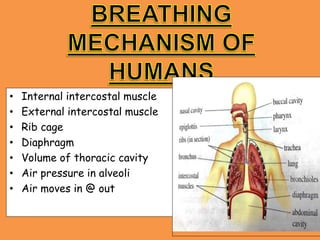
• Internal intercostal muscle
• External intercostal muscle
• Rib cage
• Diaphragm
• Volume of thoracic cavity
• Air pressure in alveoli
• Air moves in @ out
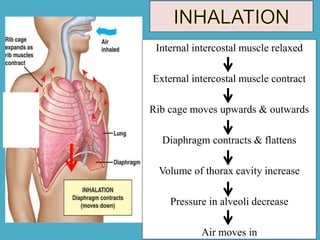
Internal intercostal muscle relaxed
External intercostal muscle contract
Rib cage moves upwards & outwards
Diaphragm contracts & flattens
Volume of thorax cavity increase
Pressure in alveoli decrease
Air moves in
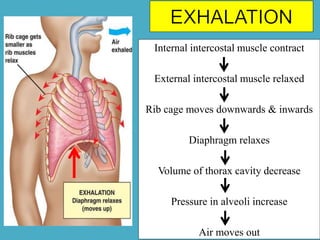
Internal intercostal muscle contract
External intercostal muscle relaxed
Rib cage moves downwards & inwards
Diaphragm relaxes
Volume of thorax cavity decrease
Pressure in alveoli increase
Air moves out
1. Gaseous Exchange Across
Surfaces of Alveolus and Blood
Capillaries
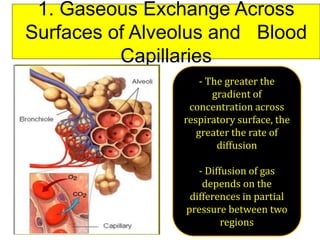
- The greater the
gradient of
concentration across
respiratory surface, the
greater the rate of
diffusion
- Diffusion of gas
depends on the
differences in partial
pressure between two
regions
1. Gaseous Exchange Across
Surfaces of Alveolus and Blood
Capillaries
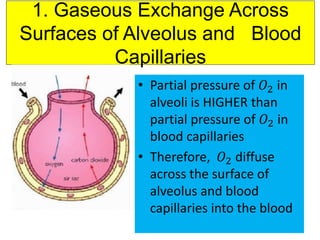
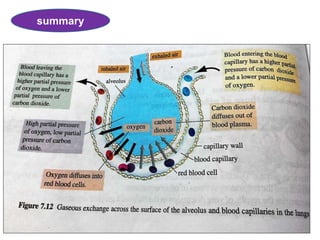
• Partial pressure of 𝑂2 in
alveoli is HIGHER than
partial pressure of 𝑂2 in
blood capillaries
• Therefore, 𝑂2 diffuse
across the surface of
alveolus and blood
capillaries into the blood
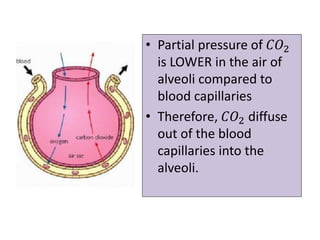
• Partial pressure of 𝐶𝑂2
is LOWER in the air of
alveoli compared to
blood capillaries
• Therefore, 𝐶𝑂2 diffuse
out of the blood
capillaries into the
alveoli.
• Gug
summary
2. Transport of respiratory gases
in humans
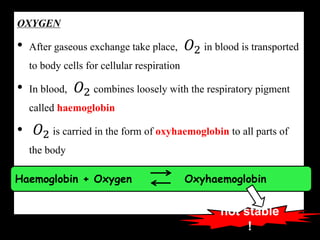
OXYGEN
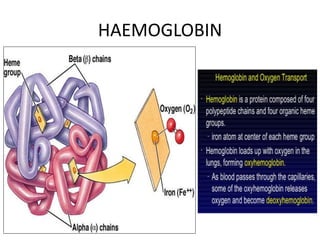
• After gaseous exchange take place, 𝑂2 in blood is transported
to body cells for cellular respiration
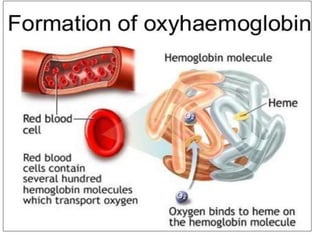
• In blood, 𝑂2 combines loosely with the respiratory pigment
called haemoglobin
• 𝑂2 is carried in the form of oxyhaemoglobin to all parts of
the body
Haemoglobin + Oxygen Oxyhaemoglobin
not stable
!
HAEMOGLOBIN
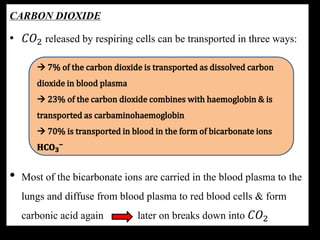
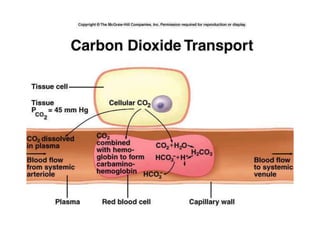
CARBON DIOXIDE
• 𝐶𝑂2 released by respiring cells can be transported in three ways:
• Most of the bicarbonate ions are carried in the blood plasma to the
lungs and diffuse from blood plasma to red blood cells & form
carbonic acid again later on breaks down into 𝐶𝑂2
3. Gaseous Exchange Between
Blood and Body Cells
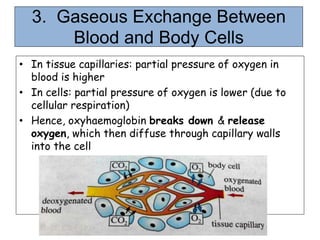
• In tissue capillaries: partial pressure of oxygen in
blood is higher
• In cells: partial pressure of oxygen is lower (due to
cellular respiration)
• Hence, oxyhaemoglobin breaks down & release
oxygen, which then diffuse through capillary walls
into the cell
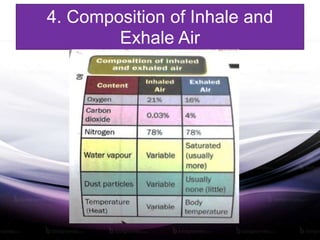
4. Composition of Inhale and
Exhale Air

Human breathing mechanism

  • 3.
    • Internal intercostalmuscle • External intercostal muscle • Rib cage • Diaphragm • Volume of thoracic cavity • Air pressure in alveoli • Air moves in @ out
  • 4.
    Internal intercostal musclerelaxed External intercostal muscle contract Rib cage moves upwards & outwards Diaphragm contracts & flattens Volume of thorax cavity increase Pressure in alveoli decrease Air moves in
  • 5.
    Internal intercostal musclecontract External intercostal muscle relaxed Rib cage moves downwards & inwards Diaphragm relaxes Volume of thorax cavity decrease Pressure in alveoli increase Air moves out
  • 7.
    1. Gaseous ExchangeAcross Surfaces of Alveolus and Blood Capillaries - The greater the gradient of concentration across respiratory surface, the greater the rate of diffusion - Diffusion of gas depends on the differences in partial pressure between two regions
  • 8.
    1. Gaseous ExchangeAcross Surfaces of Alveolus and Blood Capillaries • Partial pressure of 𝑂2 in alveoli is HIGHER than partial pressure of 𝑂2 in blood capillaries • Therefore, 𝑂2 diffuse across the surface of alveolus and blood capillaries into the blood
  • 9.
    • Partial pressureof 𝐶𝑂2 is LOWER in the air of alveoli compared to blood capillaries • Therefore, 𝐶𝑂2 diffuse out of the blood capillaries into the alveoli.
  • 10.
  • 11.
    2. Transport ofrespiratory gases in humans
  • 12.
    OXYGEN • After gaseousexchange take place, 𝑂2 in blood is transported to body cells for cellular respiration • In blood, 𝑂2 combines loosely with the respiratory pigment called haemoglobin • 𝑂2 is carried in the form of oxyhaemoglobin to all parts of the body Haemoglobin + Oxygen Oxyhaemoglobin not stable !
  • 13.
  • 15.
    CARBON DIOXIDE • 𝐶𝑂2released by respiring cells can be transported in three ways: • Most of the bicarbonate ions are carried in the blood plasma to the lungs and diffuse from blood plasma to red blood cells & form carbonic acid again later on breaks down into 𝐶𝑂2
  • 17.
    3. Gaseous ExchangeBetween Blood and Body Cells • In tissue capillaries: partial pressure of oxygen in blood is higher • In cells: partial pressure of oxygen is lower (due to cellular respiration) • Hence, oxyhaemoglobin breaks down & release oxygen, which then diffuse through capillary walls into the cell
  • 18.
    4. Composition ofInhale and Exhale Air