MODULE IV
Digital signal processor: Digital signal processor and its design
issues, evolving architecture of DSP, next generation DSP.
Customizable processors: Customizable processors and processor
customization, A benefit analysis of processor customization, use of
microprocessor cores in SOC design, benefits of microprocessor
extensibility.
Basics of DSPs
What is Digital Signal Processing?
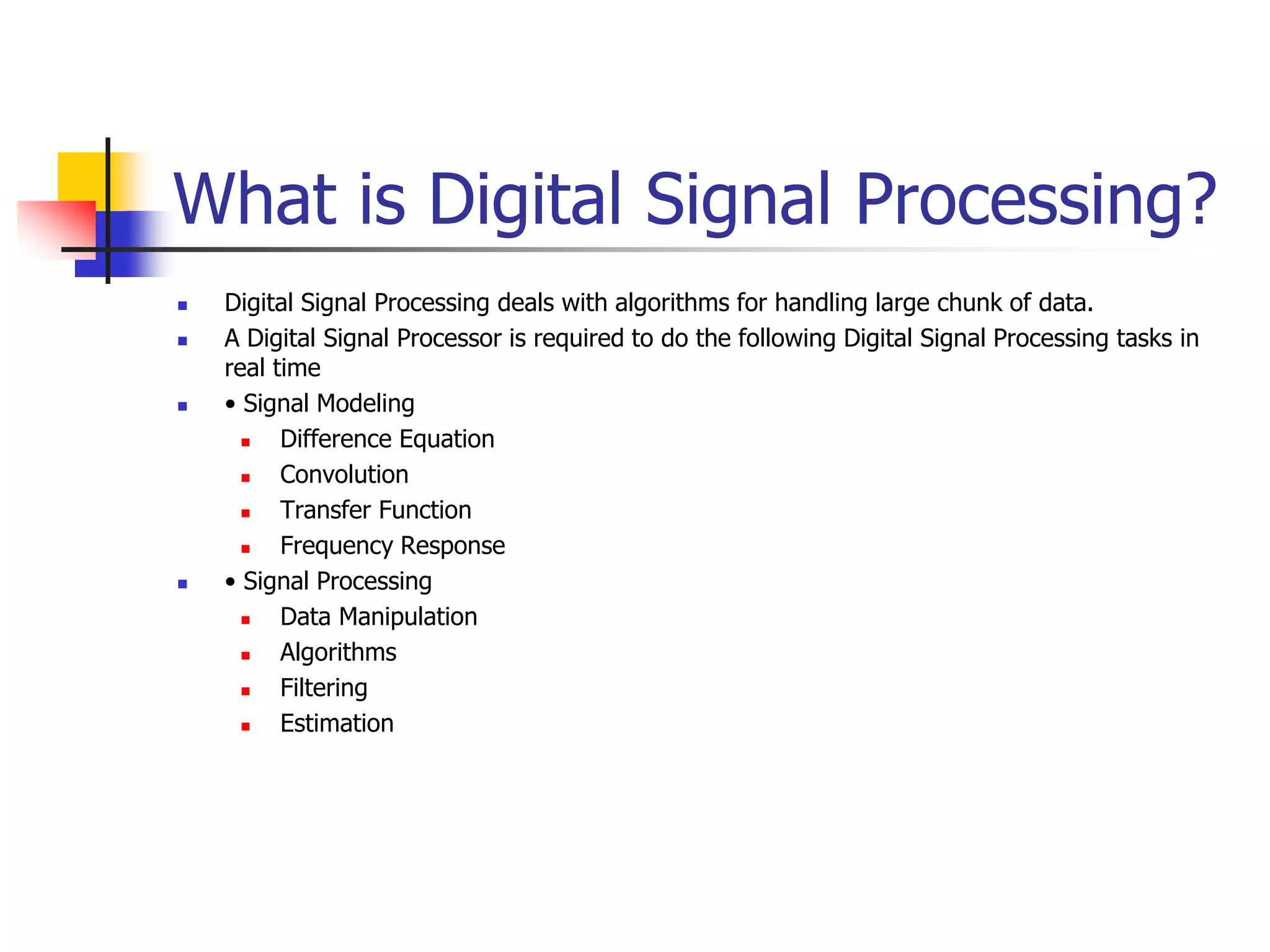
 Digital Signal Processing deals with algorithms for handling large chunk of data.
 A Digital Signal Processor is required to do the following Digital Signal Processing tasks in
real time
 • Signal Modeling
 Difference Equation
 Convolution
 Transfer Function
 Frequency Response
 • Signal Processing
 Data Manipulation
 Algorithms
 Filtering
 Estimation
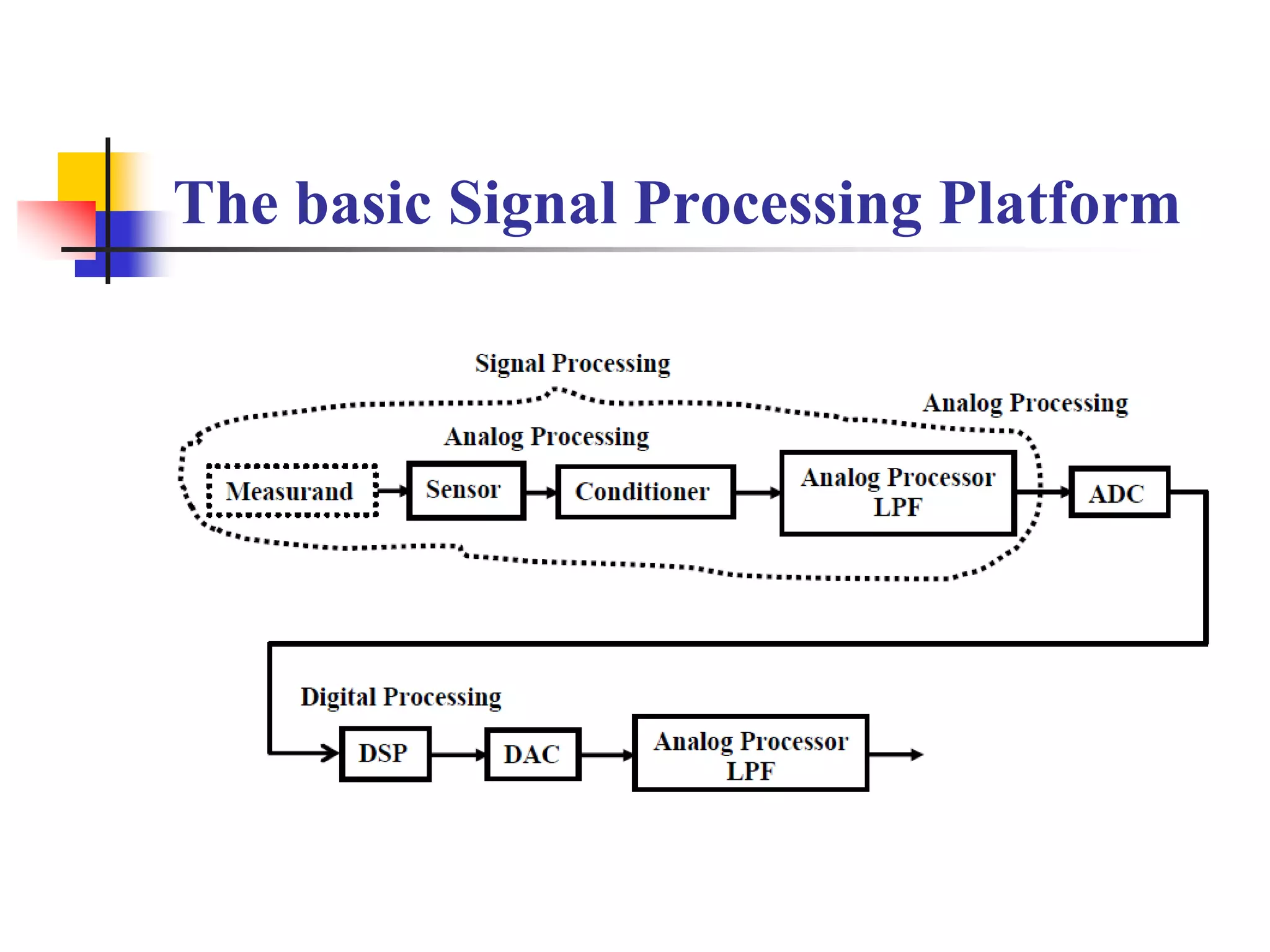
The basic Signal Processing Platform
Cont..
 Application of mathematical operations to digitally represented
signals
 Signals represented digitally as sequences of samples
 Digital signals obtained from physical signals via transducers (e.g.,
microphones) and analog-to- digital converters (ADC)
 Digital signals converted back to physical signals via digital-to-analog
converters (DAC)
 Digital Signal Processor (DSP): electronic system that processes digital
signals
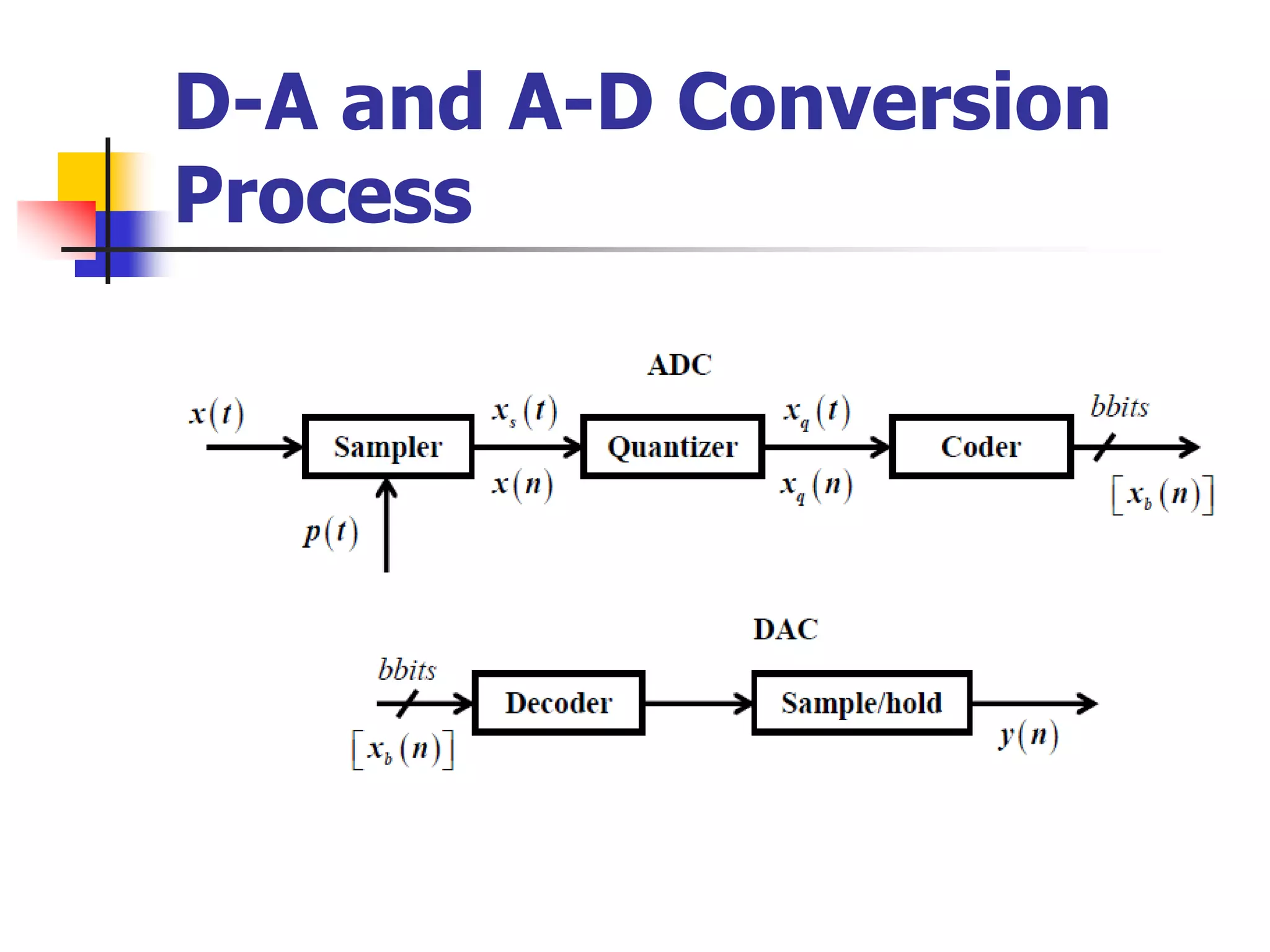
D-A and A-D Conversion
Process
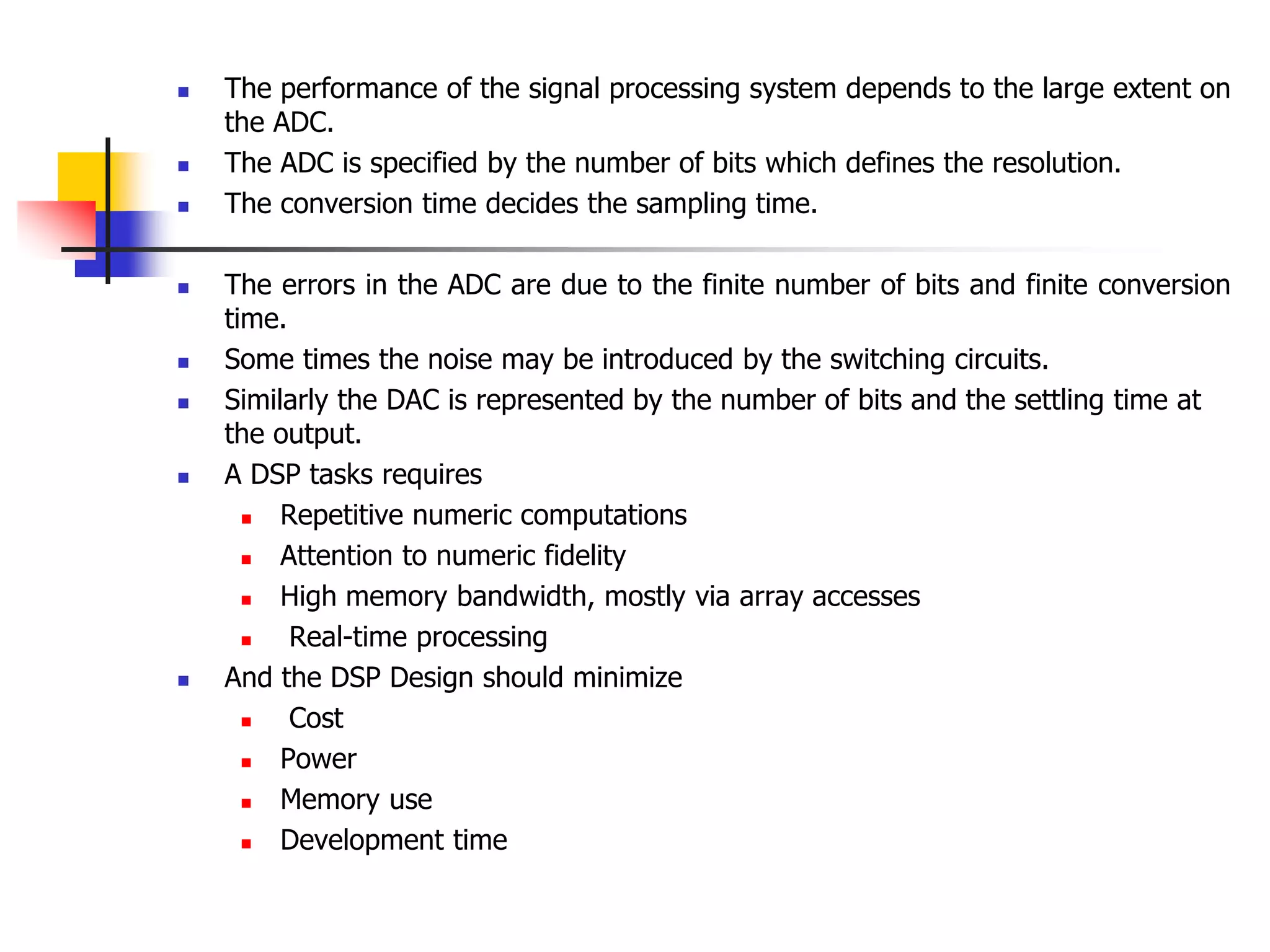
 The performance of the signal processing system depends to the large extent on
the ADC.
 The ADC is specified by the number of bits which defines the resolution.
 The conversion time decides the sampling time.
 The errors in the ADC are due to the finite number of bits and finite conversion
time.
 Some times the noise may be introduced by the switching circuits.
 Similarly the DAC is represented by the number of bits and the settling time at
the output.
 A DSP tasks requires
 Repetitive numeric computations
 Attention to numeric fidelity
 High memory bandwidth, mostly via array accesses
 Real-time processing
 And the DSP Design should minimize
 Cost
 Power
 Memory use
 Development time
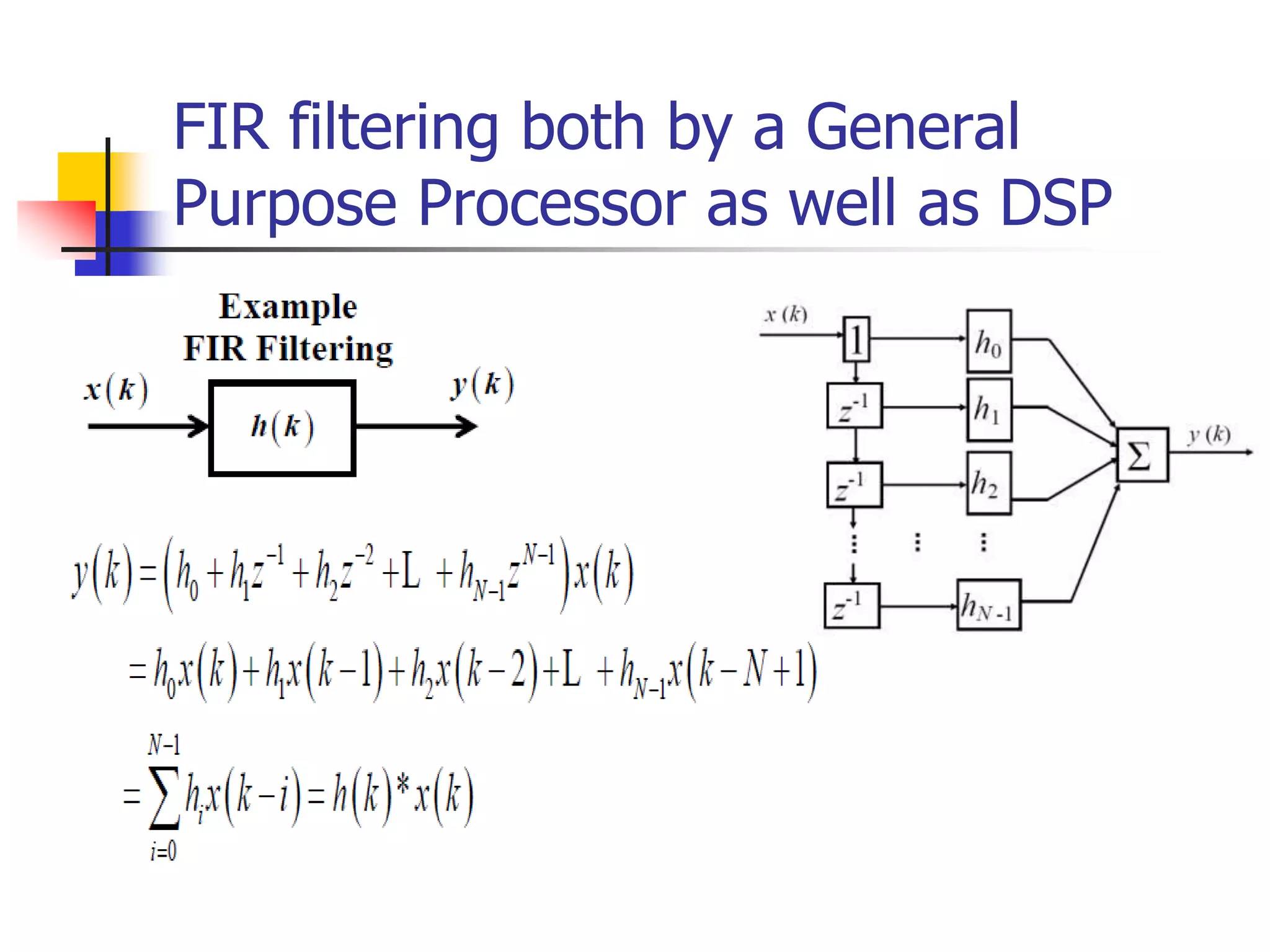
FIR filtering both by a General
Purpose Processor as well as DSP
FIR Filter
 The output of the filter is a linear combination of the present and past values of
the input. It has several advantages such as:
 Linear Phase
 Stability
 Improved Computational Time
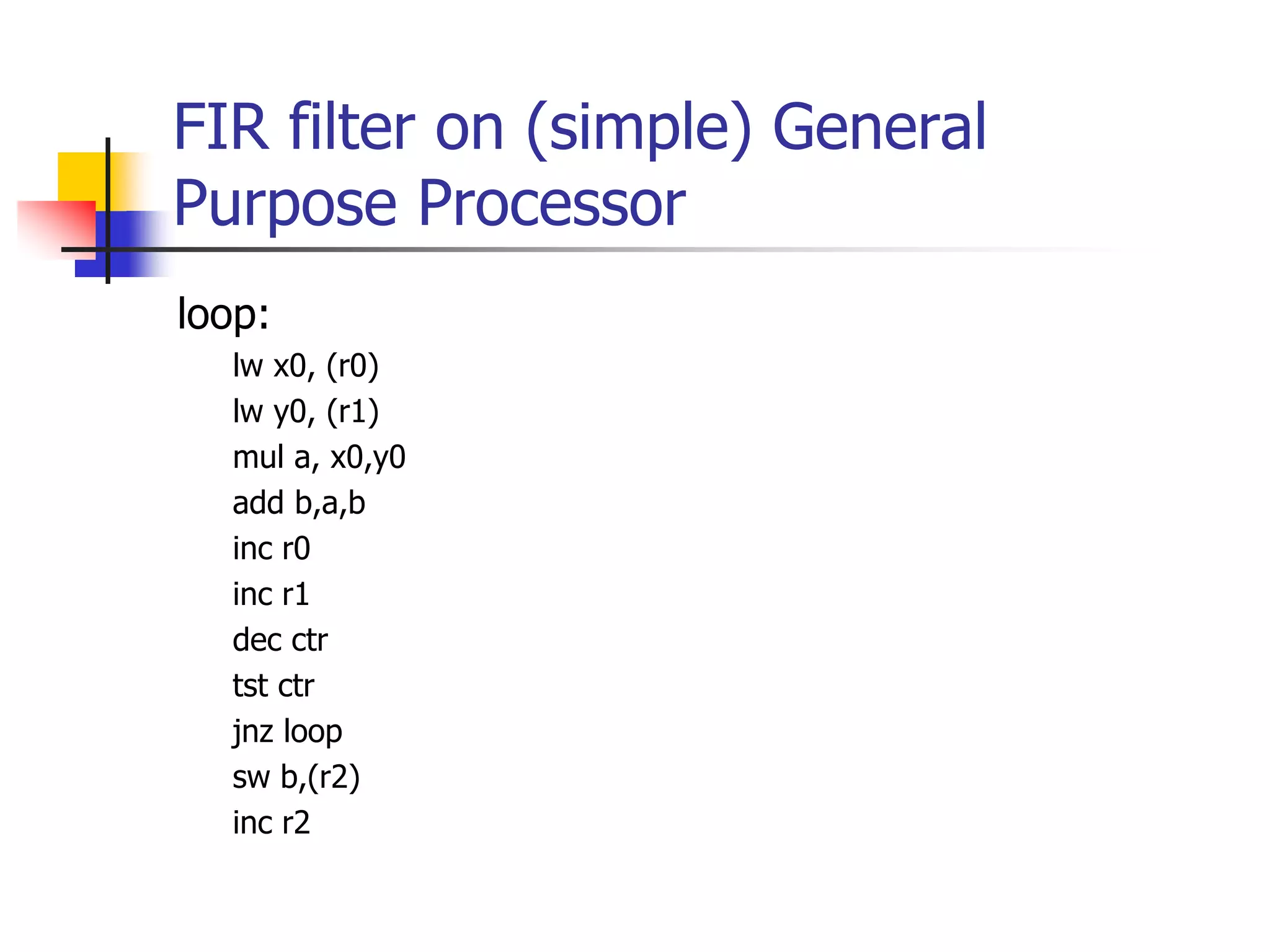
FIR filter on (simple) General
Purpose Processor
loop:
lw x0, (r0)
lw y0, (r1)
mul a, x0,y0
add b,a,b
inc r0
inc r1
dec ctr
tst ctr
jnz loop
sw b,(r2)
inc r2
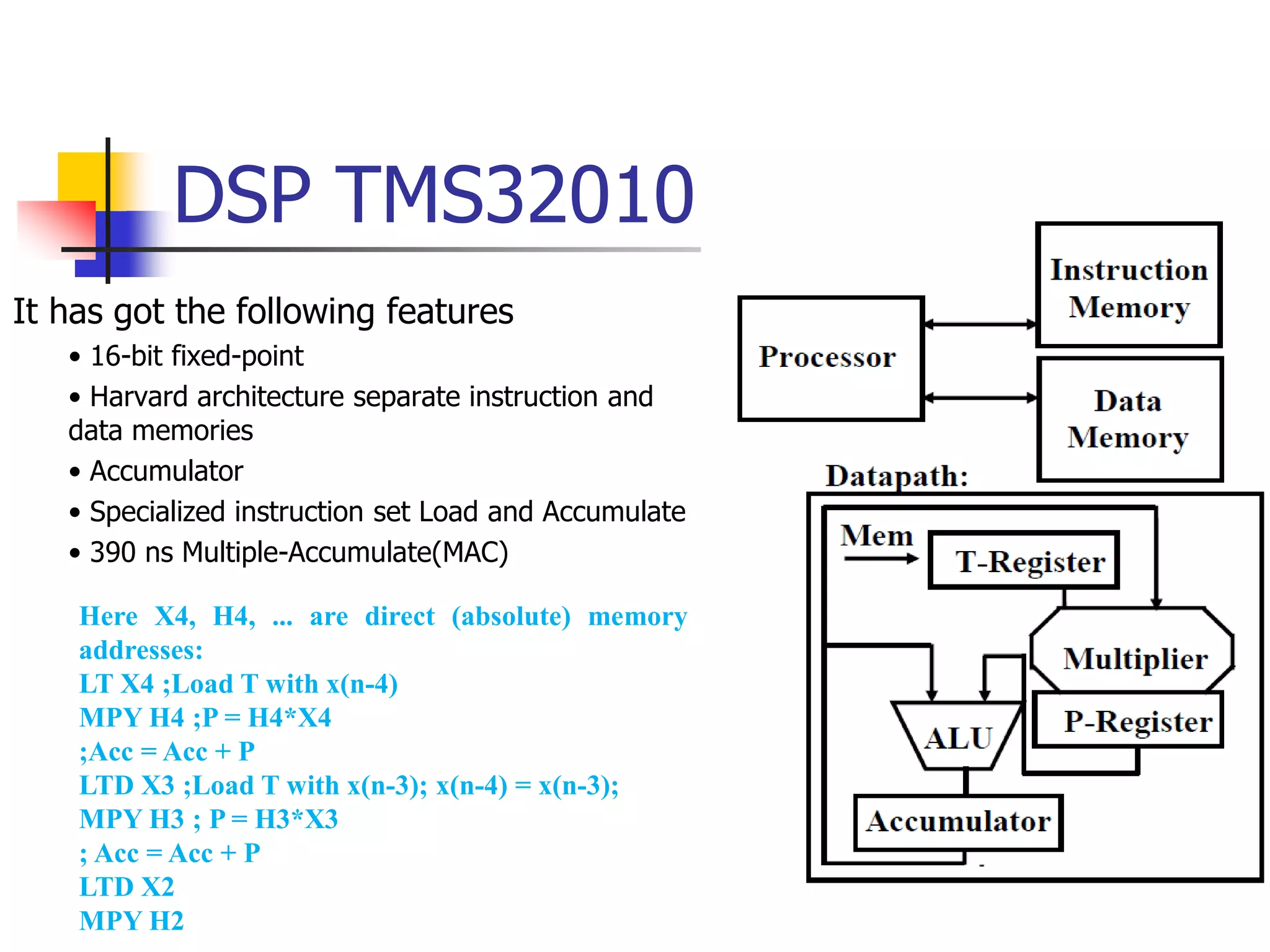
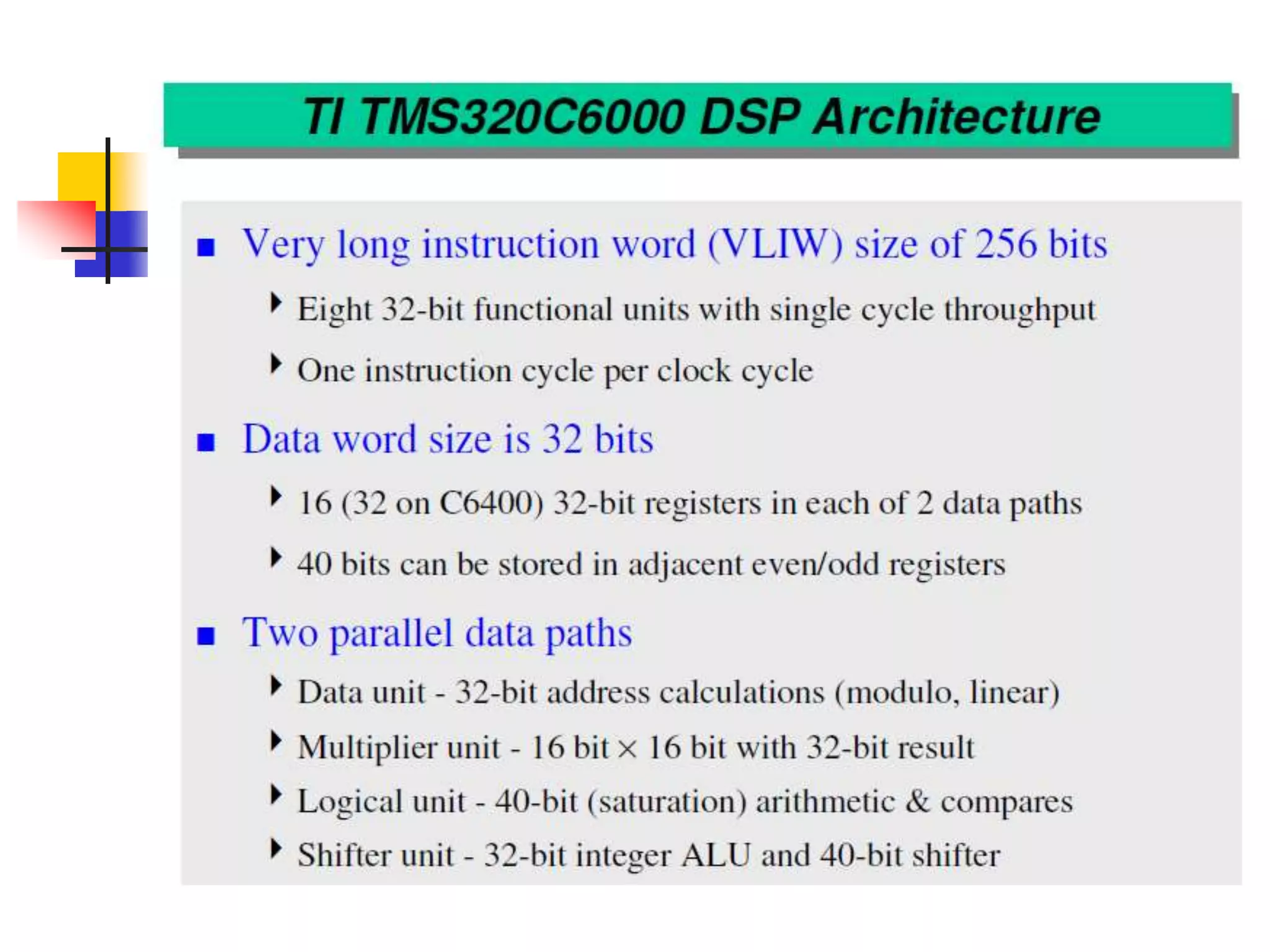
DSP TMS32010
It has got the following features
• 16-bit fixed-point
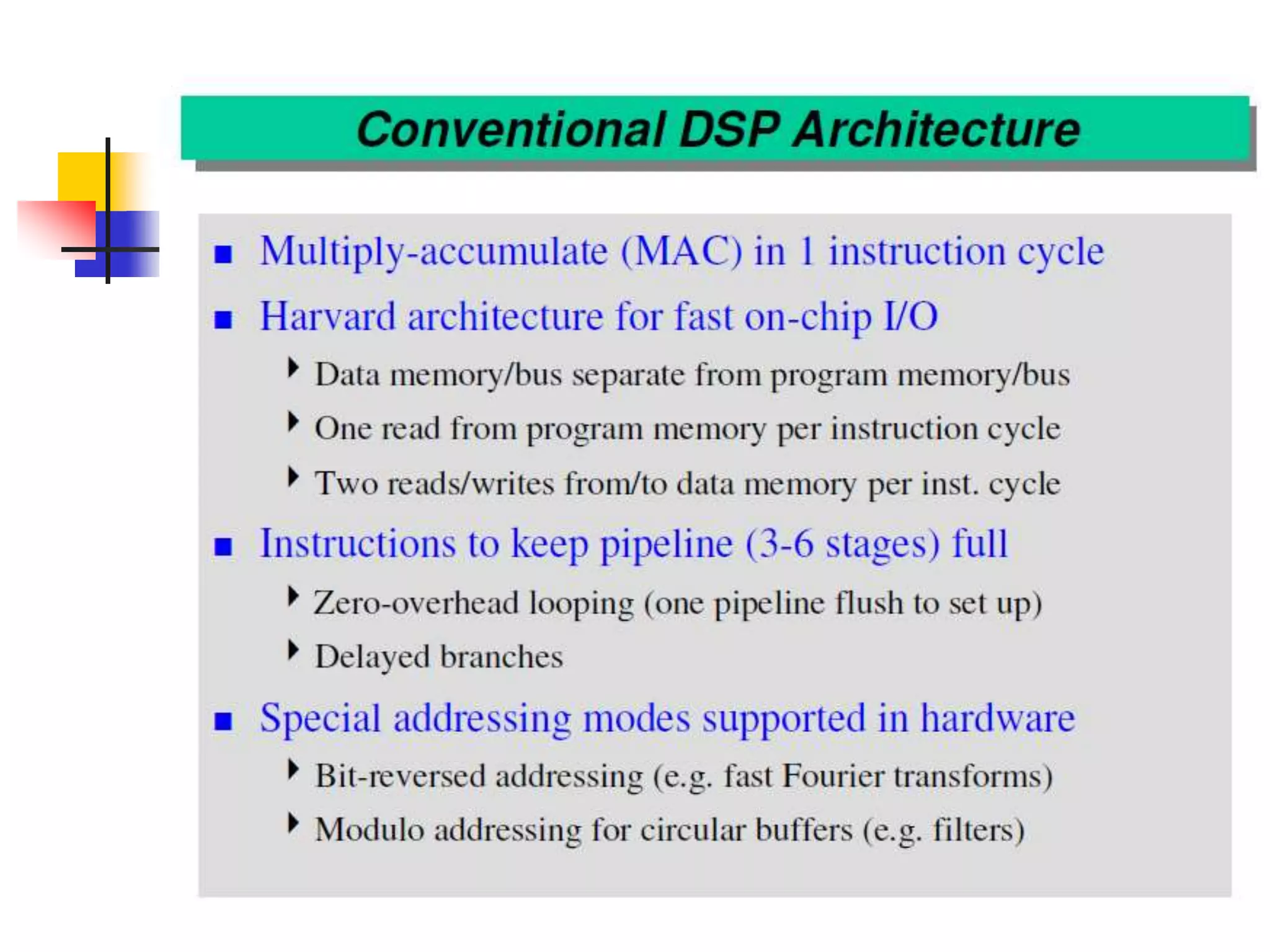
• Harvard architecture separate instruction and
data memories
• Accumulator
• Specialized instruction set Load and Accumulate
• 390 ns Multiple-Accumulate(MAC)
Here X4, H4, ... are direct (absolute) memory
addresses:
LT X4 ;Load T with x(n-4)
MPY H4 ;P = H4*X4
;Acc = Acc + P
LTD X3 ;Load T with x(n-3); x(n-4) = x(n-3);
MPY H3 ; P = H3*X3
; Acc = Acc + P
LTD X2
MPY H2
Lect1a_ basics of DSP.pptx

Lect1a_ basics of DSP.pptx

  • 1.
    MODULE IV Digital signalprocessor: Digital signal processor and its design issues, evolving architecture of DSP, next generation DSP. Customizable processors: Customizable processors and processor customization, A benefit analysis of processor customization, use of microprocessor cores in SOC design, benefits of microprocessor extensibility.
  • 2.
  • 3.
    What is DigitalSignal Processing?  Digital Signal Processing deals with algorithms for handling large chunk of data.  A Digital Signal Processor is required to do the following Digital Signal Processing tasks in real time  • Signal Modeling  Difference Equation  Convolution  Transfer Function  Frequency Response  • Signal Processing  Data Manipulation  Algorithms  Filtering  Estimation
  • 4.
    The basic SignalProcessing Platform
  • 5.
    Cont..  Application ofmathematical operations to digitally represented signals  Signals represented digitally as sequences of samples  Digital signals obtained from physical signals via transducers (e.g., microphones) and analog-to- digital converters (ADC)  Digital signals converted back to physical signals via digital-to-analog converters (DAC)  Digital Signal Processor (DSP): electronic system that processes digital signals
  • 6.
    D-A and A-DConversion Process
  • 7.
     The performanceof the signal processing system depends to the large extent on the ADC.  The ADC is specified by the number of bits which defines the resolution.  The conversion time decides the sampling time.  The errors in the ADC are due to the finite number of bits and finite conversion time.  Some times the noise may be introduced by the switching circuits.  Similarly the DAC is represented by the number of bits and the settling time at the output.  A DSP tasks requires  Repetitive numeric computations  Attention to numeric fidelity  High memory bandwidth, mostly via array accesses  Real-time processing  And the DSP Design should minimize  Cost  Power  Memory use  Development time
  • 8.
    FIR filtering bothby a General Purpose Processor as well as DSP
  • 9.
    FIR Filter  Theoutput of the filter is a linear combination of the present and past values of the input. It has several advantages such as:  Linear Phase  Stability  Improved Computational Time
  • 10.
    FIR filter on(simple) General Purpose Processor loop: lw x0, (r0) lw y0, (r1) mul a, x0,y0 add b,a,b inc r0 inc r1 dec ctr tst ctr jnz loop sw b,(r2) inc r2
  • 11.
    DSP TMS32010 It hasgot the following features • 16-bit fixed-point • Harvard architecture separate instruction and data memories • Accumulator • Specialized instruction set Load and Accumulate • 390 ns Multiple-Accumulate(MAC) Here X4, H4, ... are direct (absolute) memory addresses: LT X4 ;Load T with x(n-4) MPY H4 ;P = H4*X4 ;Acc = Acc + P LTD X3 ;Load T with x(n-3); x(n-4) = x(n-3); MPY H3 ; P = H3*X3 ; Acc = Acc + P LTD X2 MPY H2