 65 year old White male        T: 98.9 P 110 R 16 BP 120/80
 presents complaining of        Gen: elderly male in NAD,
                                HEENT: PERRL, NCAT,
 diffuse, crampy abdominal      Oropharynx clear
 pain. He began vomiting a      CV: mildly tachycardic, No m/r/g
 few hours ago and feels very   Pulm: CTAB
                                Abd: active, high-pitched bowel
 nauseated. His last bowel        sounds; mild TTP diffusely, No
 movement was yesterday.          rebound/guarding; mild
 He has a history of an open-     distention
 cholecystectomy and open -     Ext: 2+ pulse, no c/c/e

 appendectomy.
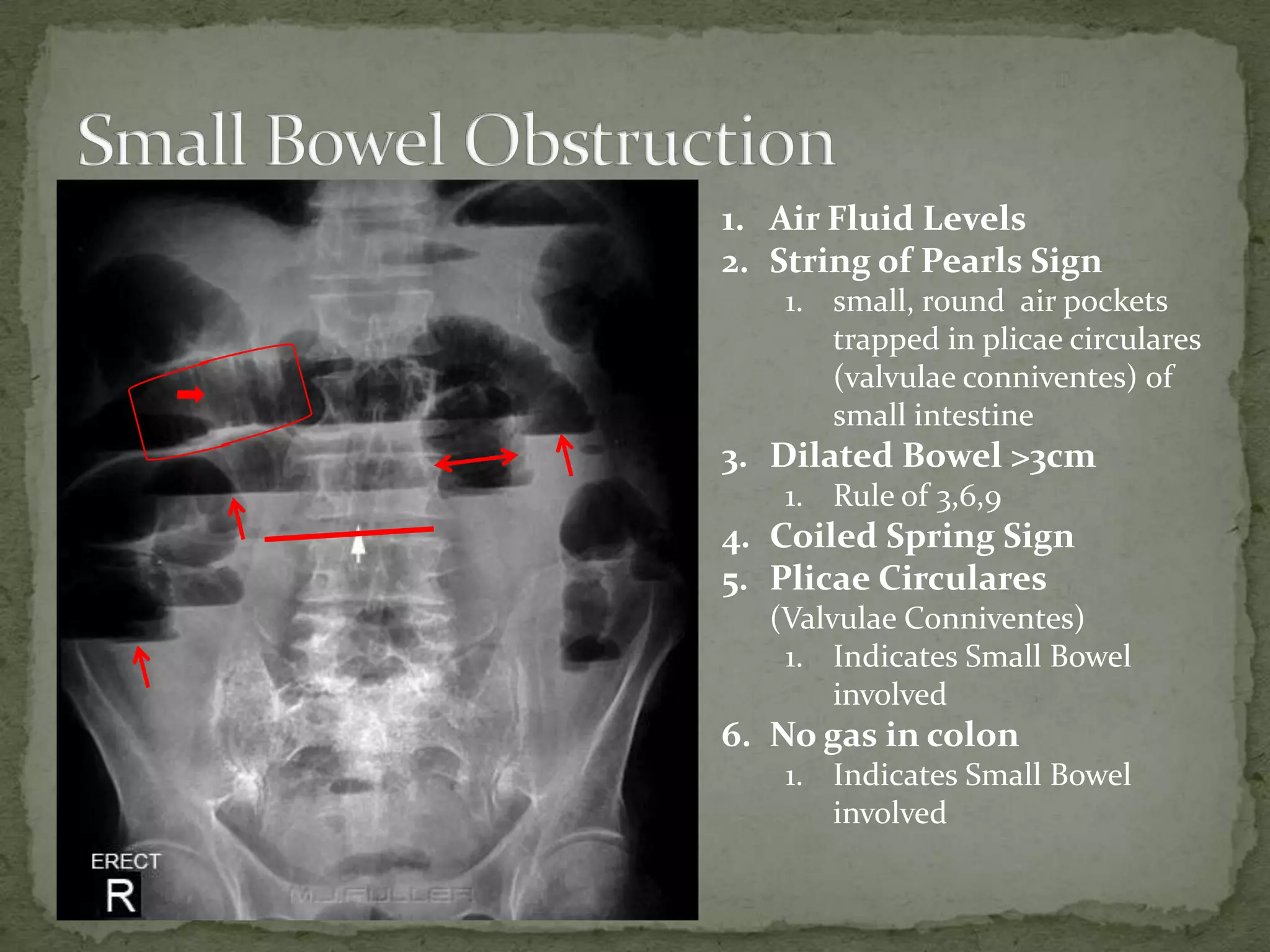
1. Air Fluid Levels
2. String of Pearls Sign
    1. small, round air pockets
       trapped in plicae circulares
       (valvulae conniventes) of
       small intestine
3. Dilated Bowel >3cm
    1. Rule of 3,6,9
4. Coiled Spring Sign
5. Plicae Circulares
   (Valvulae Conniventes)
    1. Indicates Small Bowel
        involved
6. No gas in colon
    1. Indicates Small Bowel
       involved
 Most common causes: (1) surgical adhesions (2)
  Hernia (3) Tumor (4) Inflammatory Bowel Disease
  (5) Intussusception (6) Gallstone Ileus
 Rule of 3,6,9:
  suspect obstruction if small bowel dilated >3cm; large bowel >6cm,
   cecum >9cm.
 “Never Let the Sun Rise or Set on a Small Bowel
 Obstruction”
   IV & IVFs
   NG Decompression
   Analgesics and Antiemetics
   Surgery Consult
     Approximately one-quarter of patients admitted for small
      bowel obstruction will require operation.
     Patients suspected of having complete or closed-loop
      obstruction with fever, leukocytosis, tachycardia, metabolic
      acidosis, continuous pain or peritonitis warrant prompt
      exploration
 Antibiotics are suggested if surgery planned.
 Admission to hospital
     Medical service is reasonable disposition if patient does not
      have significant risk factors for surgical managment
 String of Pearls Sign = obstruction
   Small Bowel: air pockets trapped in valvulae of small intestine, smaller,
    rounder
   Large Bowel: air pockets trapped in haustra; larger, and have flat
    underside


                               Large Small
                               Bowel Bowel
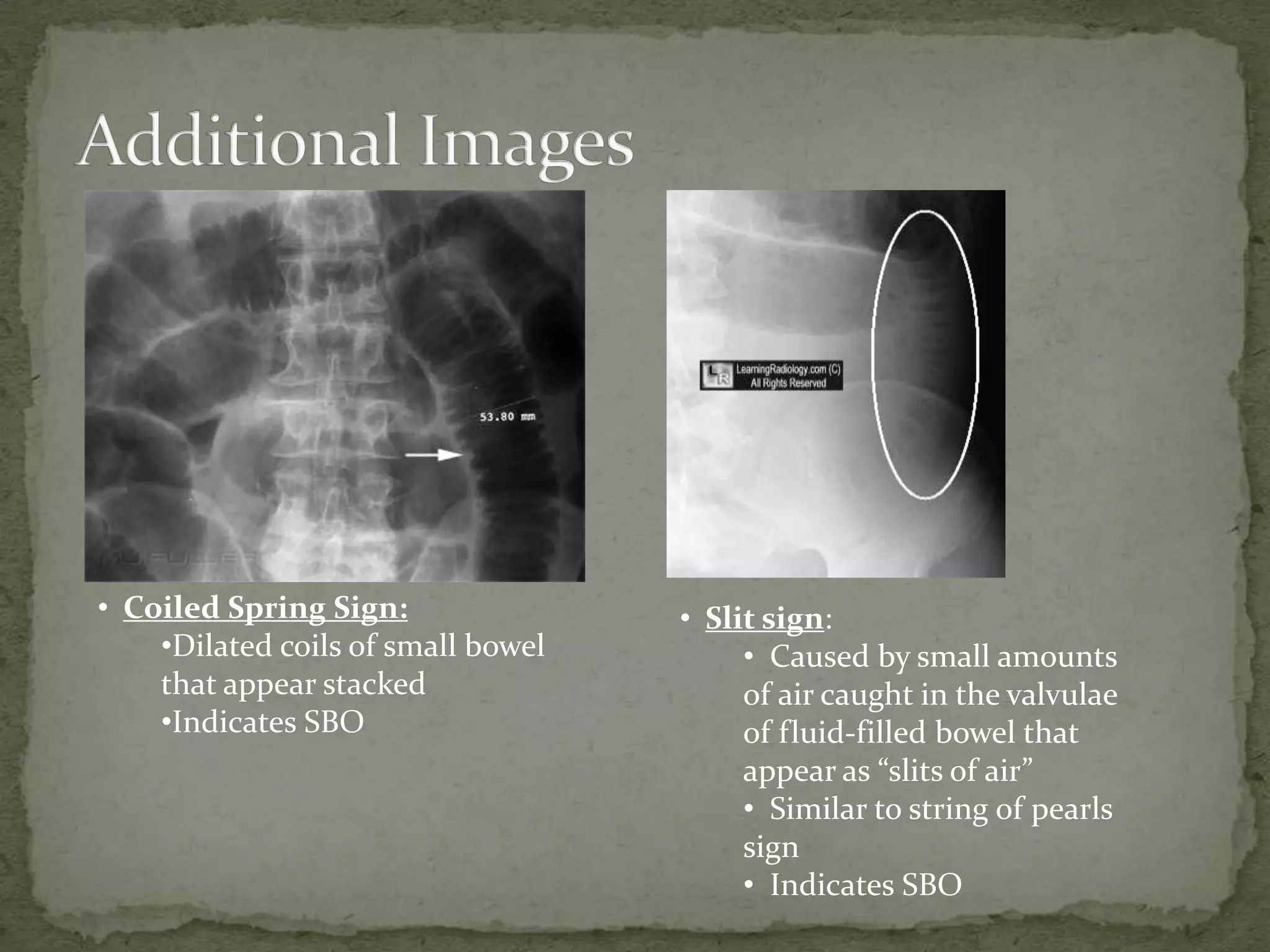
• Coiled Spring Sign:               • Slit sign:
    •Dilated coils of small bowel        • Caused by small amounts
    that appear stacked                  of air caught in the valvulae
    •Indicates SBO                       of fluid-filled bowel that
                                         appear as “slits of air”
                                         • Similar to string of pearls
                                         sign
                                         • Indicates SBO
 Greenberg, Michael. Greenberg’s Atlas of Emergency
    Medicine.
   http://learningradiology.com/radsigns/radsignsphotos
    /string%20of%20beads--cu.jpg
   Rosen’s Emergency Medicine: Concepts and Clinical
    Practice, 6th edition. Vol 2. pg 1440-1444.
   Schwartz, David. Emergency Radiology. 2000. pg 523-
    525.
   Tintanelli’s Emergency Medicine: A Comprehensive
    Study Guide. Chapter 97 Intestinal Obstruction

Small bowel obstruction (1)

  • 2.
     65 yearold White male T: 98.9 P 110 R 16 BP 120/80 presents complaining of Gen: elderly male in NAD, HEENT: PERRL, NCAT, diffuse, crampy abdominal Oropharynx clear pain. He began vomiting a CV: mildly tachycardic, No m/r/g few hours ago and feels very Pulm: CTAB Abd: active, high-pitched bowel nauseated. His last bowel sounds; mild TTP diffusely, No movement was yesterday. rebound/guarding; mild He has a history of an open- distention cholecystectomy and open - Ext: 2+ pulse, no c/c/e appendectomy.
  • 4.
    1. Air FluidLevels 2. String of Pearls Sign 1. small, round air pockets trapped in plicae circulares (valvulae conniventes) of small intestine 3. Dilated Bowel >3cm 1. Rule of 3,6,9 4. Coiled Spring Sign 5. Plicae Circulares (Valvulae Conniventes) 1. Indicates Small Bowel involved 6. No gas in colon 1. Indicates Small Bowel involved
  • 5.
     Most commoncauses: (1) surgical adhesions (2) Hernia (3) Tumor (4) Inflammatory Bowel Disease (5) Intussusception (6) Gallstone Ileus  Rule of 3,6,9:  suspect obstruction if small bowel dilated >3cm; large bowel >6cm, cecum >9cm.  “Never Let the Sun Rise or Set on a Small Bowel Obstruction”
  • 6.
    IV & IVFs  NG Decompression  Analgesics and Antiemetics  Surgery Consult  Approximately one-quarter of patients admitted for small bowel obstruction will require operation.  Patients suspected of having complete or closed-loop obstruction with fever, leukocytosis, tachycardia, metabolic acidosis, continuous pain or peritonitis warrant prompt exploration  Antibiotics are suggested if surgery planned.  Admission to hospital  Medical service is reasonable disposition if patient does not have significant risk factors for surgical managment
  • 7.
     String ofPearls Sign = obstruction  Small Bowel: air pockets trapped in valvulae of small intestine, smaller, rounder  Large Bowel: air pockets trapped in haustra; larger, and have flat underside Large Small Bowel Bowel
  • 8.
    • Coiled SpringSign: • Slit sign: •Dilated coils of small bowel • Caused by small amounts that appear stacked of air caught in the valvulae •Indicates SBO of fluid-filled bowel that appear as “slits of air” • Similar to string of pearls sign • Indicates SBO
  • 9.
     Greenberg, Michael.Greenberg’s Atlas of Emergency Medicine.  http://learningradiology.com/radsigns/radsignsphotos /string%20of%20beads--cu.jpg  Rosen’s Emergency Medicine: Concepts and Clinical Practice, 6th edition. Vol 2. pg 1440-1444.  Schwartz, David. Emergency Radiology. 2000. pg 523- 525.  Tintanelli’s Emergency Medicine: A Comprehensive Study Guide. Chapter 97 Intestinal Obstruction