Tieka WilkinsTieka Wilkins

 Throughout this lesson many directions will be given
to assist developing pedagogical methods. The
following will display arrangements and measures
that will lead to a successful excerise.
Background

 To discuss and describe the following:
• Types of Instructional Materials
• The Designer’s role in materials development and
instructional delivery
• Name and describe the components of an
instructional package
• Categories of criteria
• The delivery system and media selections
Objectives

 What are instructional materials?
 Instructional materials are tools used to assist
instructors and students for guidance during
assignments. These forms of communication play
major roles that determine whether a learner will
succeed or fail in learning a certain matter. If one
form of instructional material does not work, there’s
more!
Instructional Materials

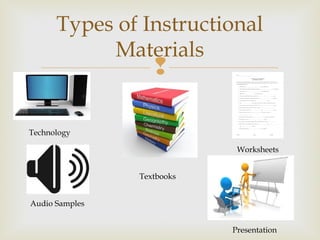
Types of Instructional
Materials
Technology
Textbooks
Worksheets
Audio Samples
Presentation

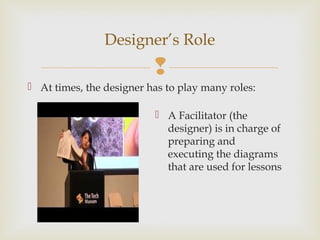
 At times, the designer has to play many roles:
Designer’s Role
 A Facilitator (the
designer) is in charge of
preparing and
executing the diagrams
that are used for lessons

 An Active
Agent, (the
instructor)
distributes
the
information.
Designer’s Role con’t

 An active agent If one
has to perform both
roles, they are
responsible for
selecting and
delivering the practice.
Designer’s Role con’t

 The following items builds up a package:
• Instructional Material
• Assessments
• Course Management
Components of an Instructional
Package

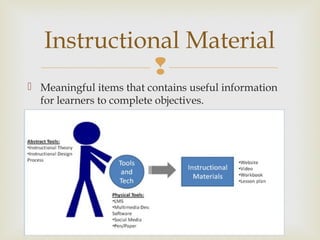
 Meaningful items that contains useful information
for learners to complete objectives.
Instructional Material

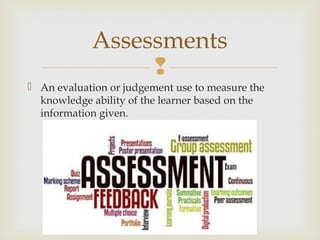
 An evaluation or judgement use to measure the
knowledge ability of the learner based on the
information given.
Assessments

 A set of tools that the instructor uses to create
content that is posted online without having to
program any technology.
Course Management
System

 These groups are designed to create test based on the
objective.
o Goal-Centered
o Learner-Centered
o Learning-Centered
o Context-Centered
Categories of Criteria

 The achievement objective must be equal to the test
items. To sum it up, the content of the test must
match the performance behavior in order to make
the goal a success.
Goal-Centered

 The section is targets the learner, known as the
student. It strictly works on bettering the student’s
learning and success, verses providing information.
Learner-Centered

 The instructions to this category must be clearly
stated to avoid any misassumptions. This criteria can
be written most freely with the limitations of the
specific directions.
Learning-Centered

 The following should be created near-at-hand to the
required standards and performance setting as
possible.
Context-Centered

 There are three factors used when it comes to media
selection:
• Measure of assistance the teacher allows during the
lesson.
• The access of instructional material.
• Presentation and application of the basis.
Media Selections

 The delivery method is one of the most important
method for developing instruction material. The
planning process can change various times due to
the capability of the learner. Using the four
categories of criteria makes the instructor stay within
the guidelines. Using instructional strategies with
updated media makes new development easier
comprehend.
Summary

 sewheatt@aol.com
Tieka Wilkins

Developing Instructional Materials

  • 1.
  • 2.
      Throughout thislesson many directions will be given to assist developing pedagogical methods. The following will display arrangements and measures that will lead to a successful excerise. Background
  • 3.
      To discussand describe the following: • Types of Instructional Materials • The Designer’s role in materials development and instructional delivery • Name and describe the components of an instructional package • Categories of criteria • The delivery system and media selections Objectives
  • 4.
      What areinstructional materials?  Instructional materials are tools used to assist instructors and students for guidance during assignments. These forms of communication play major roles that determine whether a learner will succeed or fail in learning a certain matter. If one form of instructional material does not work, there’s more! Instructional Materials
  • 5.
  • 6.
      At times,the designer has to play many roles: Designer’s Role  A Facilitator (the designer) is in charge of preparing and executing the diagrams that are used for lessons
  • 7.
      An Active Agent,(the instructor) distributes the information. Designer’s Role con’t
  • 8.
      An activeagent If one has to perform both roles, they are responsible for selecting and delivering the practice. Designer’s Role con’t
  • 9.
      The followingitems builds up a package: • Instructional Material • Assessments • Course Management Components of an Instructional Package
  • 10.
      Meaningful itemsthat contains useful information for learners to complete objectives. Instructional Material
  • 11.
      An evaluationor judgement use to measure the knowledge ability of the learner based on the information given. Assessments
  • 12.
      A setof tools that the instructor uses to create content that is posted online without having to program any technology. Course Management System
  • 13.
      These groupsare designed to create test based on the objective. o Goal-Centered o Learner-Centered o Learning-Centered o Context-Centered Categories of Criteria
  • 14.
      The achievementobjective must be equal to the test items. To sum it up, the content of the test must match the performance behavior in order to make the goal a success. Goal-Centered
  • 15.
      The sectionis targets the learner, known as the student. It strictly works on bettering the student’s learning and success, verses providing information. Learner-Centered
  • 16.
      The instructionsto this category must be clearly stated to avoid any misassumptions. This criteria can be written most freely with the limitations of the specific directions. Learning-Centered
  • 17.
      The followingshould be created near-at-hand to the required standards and performance setting as possible. Context-Centered
  • 18.
      There arethree factors used when it comes to media selection: • Measure of assistance the teacher allows during the lesson. • The access of instructional material. • Presentation and application of the basis. Media Selections
  • 19.
      The deliverymethod is one of the most important method for developing instruction material. The planning process can change various times due to the capability of the learner. Using the four categories of criteria makes the instructor stay within the guidelines. Using instructional strategies with updated media makes new development easier comprehend. Summary
  • 20.