WIRE BONDING
     Group 2: Tống Văn Khoa
              Cao Văn Phước
             Trần Phúc Thành
Why Wire Bonding?
     Enable an IC to be electrically interconnected
      to the package, and to allow that IC to be
      handled, tested and “burnt-in”
     Such “qualified” IC used in electronic
      product.
     Interconnected to other ICs, passives, flat
      panel displays, keyboards, sensors,
      connectors, antennas, switches, etc.
     PRIMARY purpose – enable ICs to be
      interconnected with rest of the system.
     Primary functions of IC assembly:
(1)   To provide signal and power distribution of
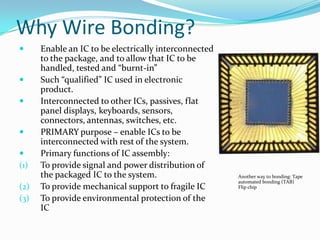
      the packaged IC to the system.                   Another way to bonding: Tape
                                                       automated bonding (TAB)
(2)   To provide mechanical support to fragile IC      Flip chip

(3)   To provide environmental protection of the
      IC
Introduction
 Used in interconnecting the Die to various substrates
 … The most popular interconnection method
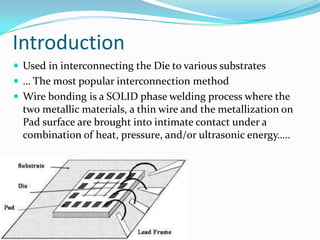
 Wire bonding is a SOLID phase welding process where the
  two metallic materials, a thin wire and the metallization on
  Pad surface are brought into intimate contact under a
  combination of heat, pressure, and/or ultrasonic energy…..
Types of Wire Bonding
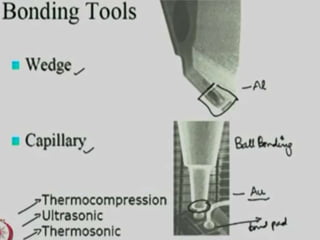
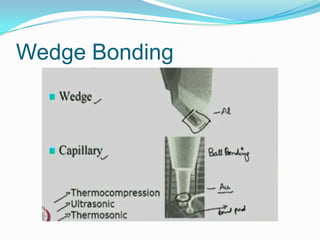
 Wire bonding is made using two types of tools:
   A Wedge- Called Wedge bonding
   B: Capillary- Called ball bonding
   Very inexpensive- A penny per pin
Bonding Tools
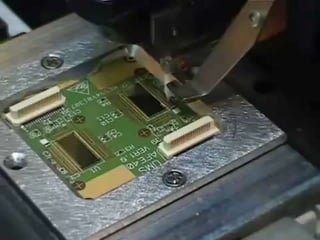
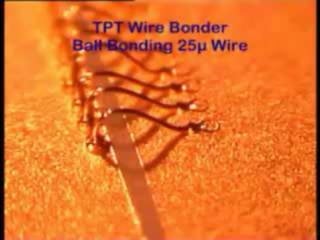
Ball Bonding
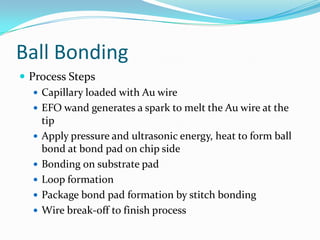
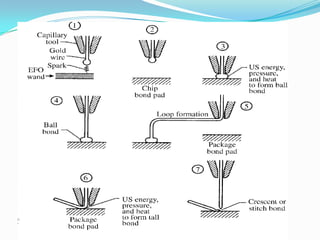
 Process Steps
    Capillary loaded with Au wire
    EFO wand generates a spark to melt the Au wire at the
     tip
    Apply pressure and ultrasonic energy, heat to form ball
     bond at bond pad on chip side
    Bonding on substrate pad
    Loop formation
    Package bond pad formation by stitch bonding
    Wire break-off to finish process
Wedge Bonding
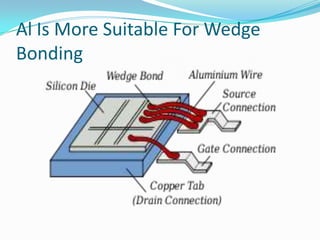
Al Is More Suitable For Wedge
Bonding
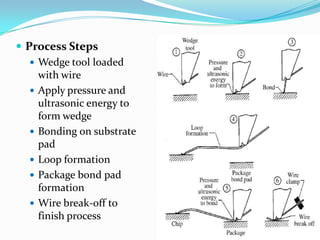
 Process Steps
    Wedge tool loaded
     with wire
    Apply pressure and
     ultrasonic energy to
     form wedge
    Bonding on substrate
     pad
    Loop formation
    Package bond pad
     formation
    Wire break-off to
     finish process
Features of Wire Bonding Method
 High speed( Bonding time 40ms: 2-4 wires/ sec)
 Economical
 Strong bond
 Larger Bonding pad (0,2mm gold wire: 0,5*0,5 mm
  pad)
 Ultrasonic can be used
(Dis)advantages
 The advantages of wirebonding:
     Highly flexible chip-to-package interconnection process
     Low defect rates or high yield interconnection processing
     Easily programmed
     High reliability interconnection structure
     Very large industry infrastructure supporting the technology
     Rapid advances in equipment, tools, and material technology
 The disadvantages of wirebonding:
   Slower interconnection rates due to point-to-point processing
    of each wirebond
   Long chip-to-package interconnection lengths, degrading
    electrical performance
   Larger footprint required for chip to package interconnection
Summary
 Function of Wire Bonding
 Types of Wire Bonding
    Ball Bonding
    Wedge Bonding
 Advantages and Disadvantages
References
 Wikipedia
   http://en.wikipedia.org/wiki/Wire_bonding
   http://en.wikipedia.org/wiki/Ball_bonding


 Youtube
    http://r1---sn-o097zuel.c.youtube.com/videoplayback
THANK YOU FOR LISTENING !


                       Nano- Electronic
                       Materials
                       Group-HUST

Wire bonding

  • 1.
    WIRE BONDING Group 2: Tống Văn Khoa Cao Văn Phước Trần Phúc Thành
  • 2.
    Why Wire Bonding?  Enable an IC to be electrically interconnected to the package, and to allow that IC to be handled, tested and “burnt-in”  Such “qualified” IC used in electronic product.  Interconnected to other ICs, passives, flat panel displays, keyboards, sensors, connectors, antennas, switches, etc.  PRIMARY purpose – enable ICs to be interconnected with rest of the system.  Primary functions of IC assembly: (1) To provide signal and power distribution of the packaged IC to the system. Another way to bonding: Tape automated bonding (TAB) (2) To provide mechanical support to fragile IC Flip chip (3) To provide environmental protection of the IC
  • 3.
    Introduction  Used ininterconnecting the Die to various substrates  … The most popular interconnection method  Wire bonding is a SOLID phase welding process where the two metallic materials, a thin wire and the metallization on Pad surface are brought into intimate contact under a combination of heat, pressure, and/or ultrasonic energy…..
  • 4.
    Types of WireBonding  Wire bonding is made using two types of tools:  A Wedge- Called Wedge bonding  B: Capillary- Called ball bonding  Very inexpensive- A penny per pin
  • 5.
  • 6.
    Ball Bonding  ProcessSteps  Capillary loaded with Au wire  EFO wand generates a spark to melt the Au wire at the tip  Apply pressure and ultrasonic energy, heat to form ball bond at bond pad on chip side  Bonding on substrate pad  Loop formation  Package bond pad formation by stitch bonding  Wire break-off to finish process
  • 10.
  • 11.
    Al Is MoreSuitable For Wedge Bonding
  • 12.
     Process Steps  Wedge tool loaded with wire  Apply pressure and ultrasonic energy to form wedge  Bonding on substrate pad  Loop formation  Package bond pad formation  Wire break-off to finish process
  • 14.
    Features of WireBonding Method  High speed( Bonding time 40ms: 2-4 wires/ sec)  Economical  Strong bond  Larger Bonding pad (0,2mm gold wire: 0,5*0,5 mm pad)  Ultrasonic can be used
  • 15.
    (Dis)advantages  The advantagesof wirebonding:  Highly flexible chip-to-package interconnection process  Low defect rates or high yield interconnection processing  Easily programmed  High reliability interconnection structure  Very large industry infrastructure supporting the technology  Rapid advances in equipment, tools, and material technology  The disadvantages of wirebonding:  Slower interconnection rates due to point-to-point processing of each wirebond  Long chip-to-package interconnection lengths, degrading electrical performance  Larger footprint required for chip to package interconnection
  • 16.
    Summary  Function ofWire Bonding  Types of Wire Bonding  Ball Bonding  Wedge Bonding  Advantages and Disadvantages
  • 17.
    References  Wikipedia  http://en.wikipedia.org/wiki/Wire_bonding  http://en.wikipedia.org/wiki/Ball_bonding  Youtube  http://r1---sn-o097zuel.c.youtube.com/videoplayback
  • 18.
    THANK YOU FORLISTENING ! Nano- Electronic Materials Group-HUST