

Crowdsourcing your documentation
Managing a crowdsourced documentation project
s g r i f f i n @ a t l a s s i a n . c o m | t w i t t e r : @ s u b e g e
S u s a n G r i f f i n • T r a i n i n g P r o g r a m M a n a g e r • A t l a s s i a n
Benjamin Franklin
By failing to prepare,
you are preparing to fail.
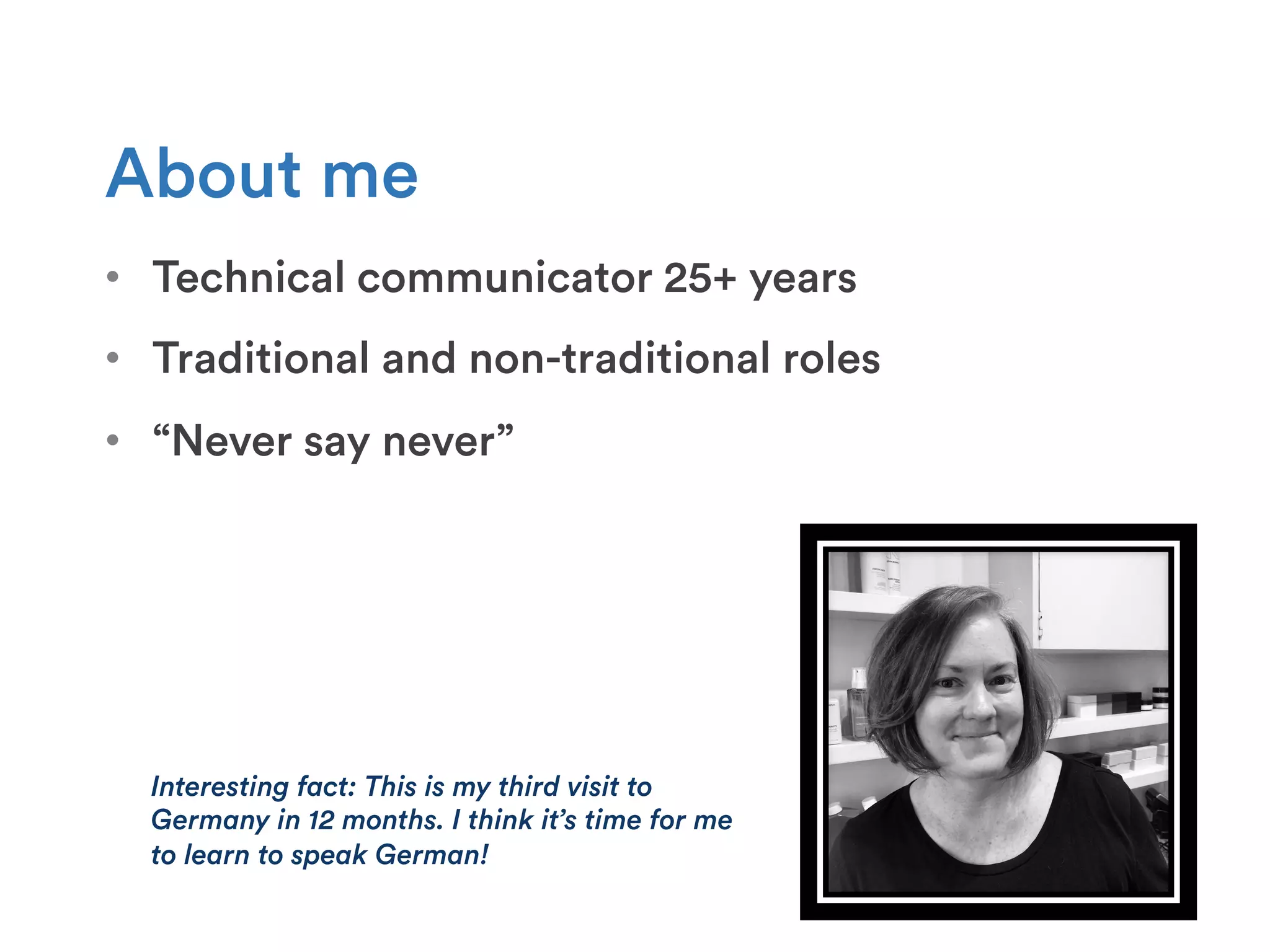
About me
•  Technical communicator 25+ years
•  Traditional and non-traditional roles
•  “Never say never”
Interesting fact: This is my third visit to
Germany in 12 months. I think it’s time for me
to learn to speak German!
What if…
Your manager came to you and said:
We are opening a new Support office in Austin, Texas, in four months and
we need a brand new training program by the time that office opens.
We can’t give you a writer, but you can use some of the Senior Support
Engineers in our other offices to help you create the program.
Don’t forget to breathe.*
(*someone actually said that to me)
We want this training program to be used by the 60+ new hires we plan on
adding in Austin by the end of this year, and it needs to include a 30-day
induction plan.
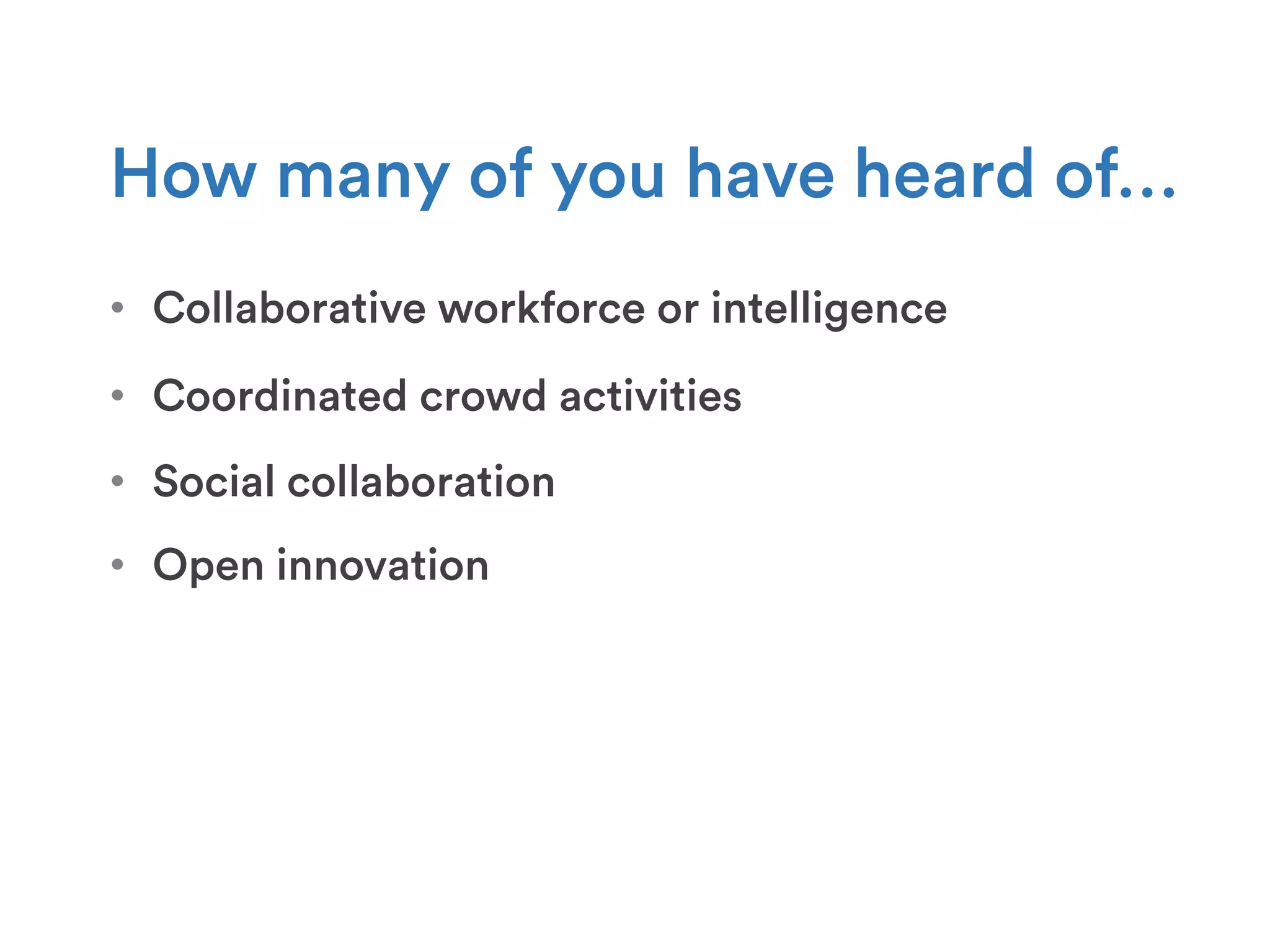
•  Collaborative workforce or intelligence
How many of you have heard of…
•  Coordinated crowd activities
•  Open innovation
•  Social collaboration
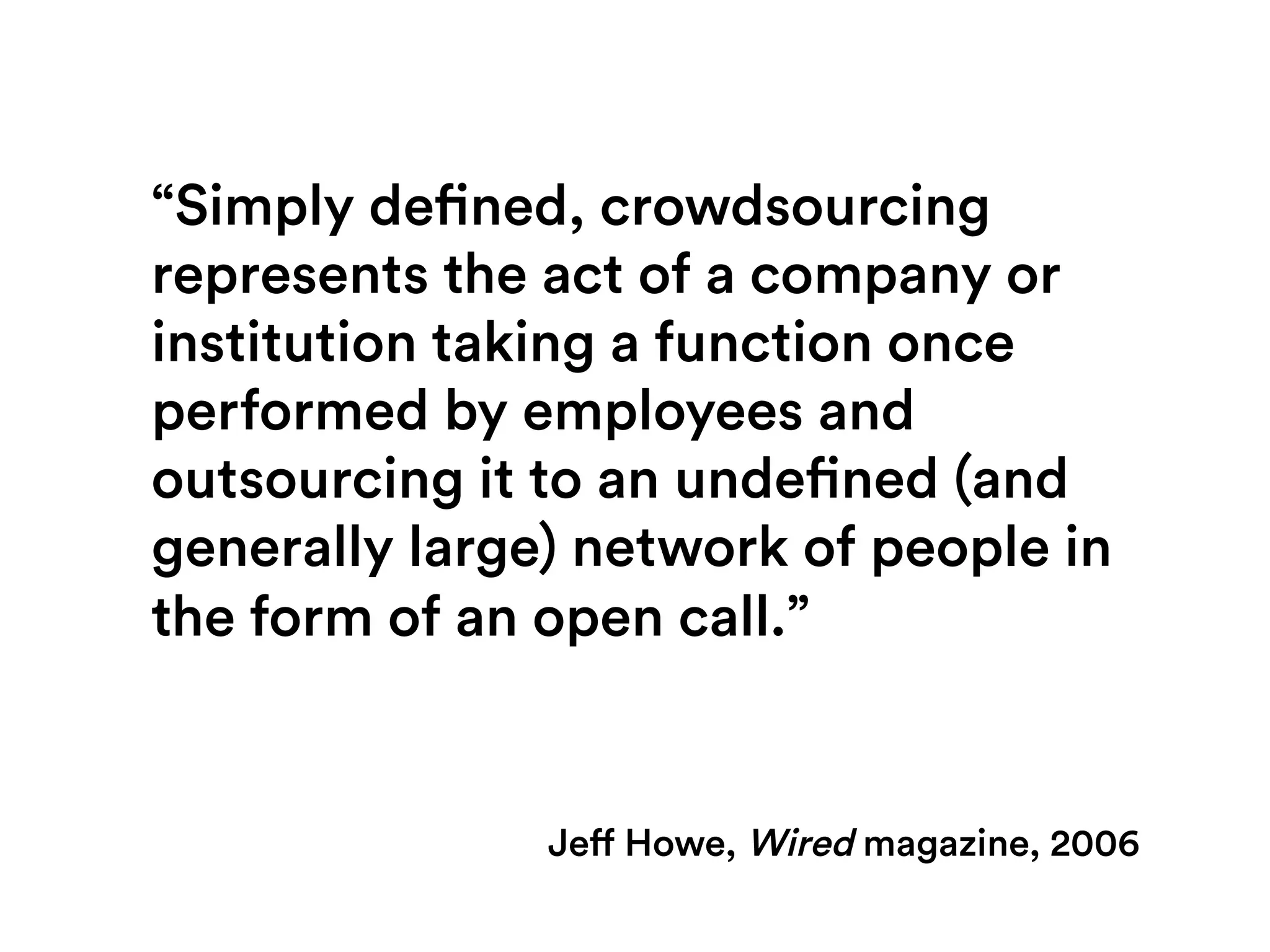
Jeff Howe, Wired magazine, 2006
“Simply defined, crowdsourcing
represents the act of a company or
institution taking a function once
performed by employees and
outsourcing it to an undefined (and
generally large) network of people in
the form of an open call.”
However…
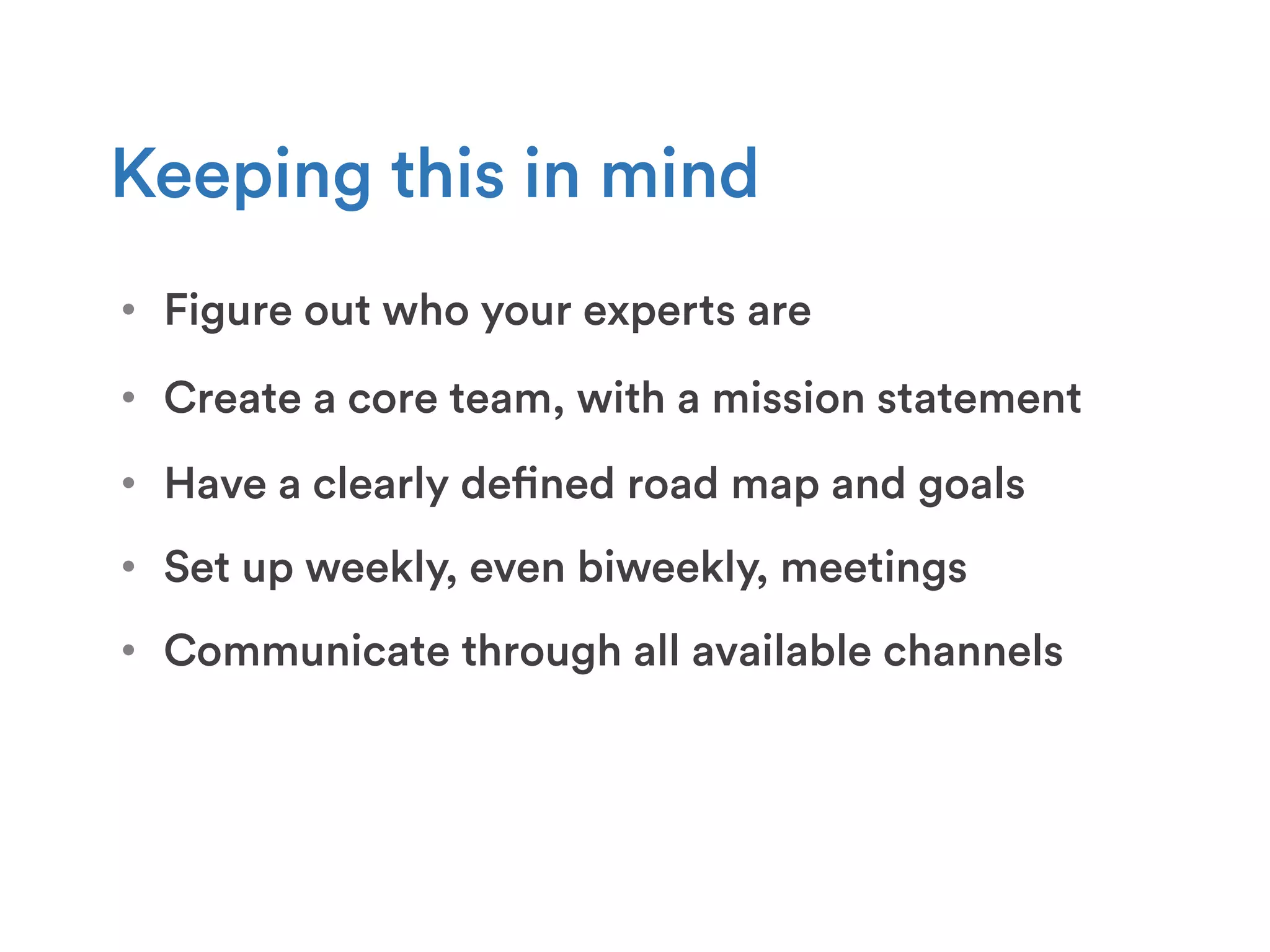
•  Figure out who your experts are
Keeping this in mind
•  Create a core team, with a mission statement
•  Set up weekly, even biweekly, meetings
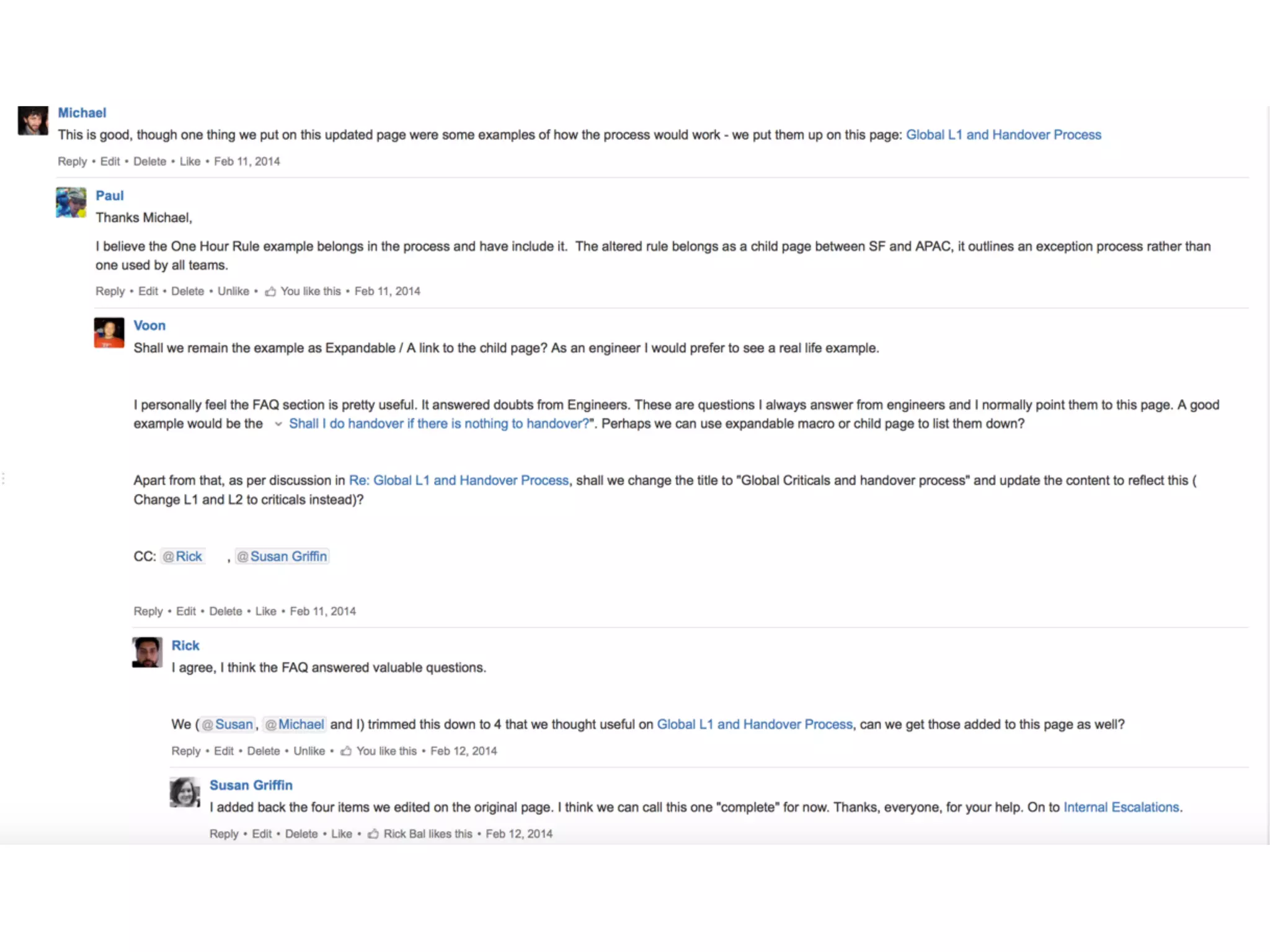
•  Communicate through all available channels
•  Have a clearly defined road map and goals
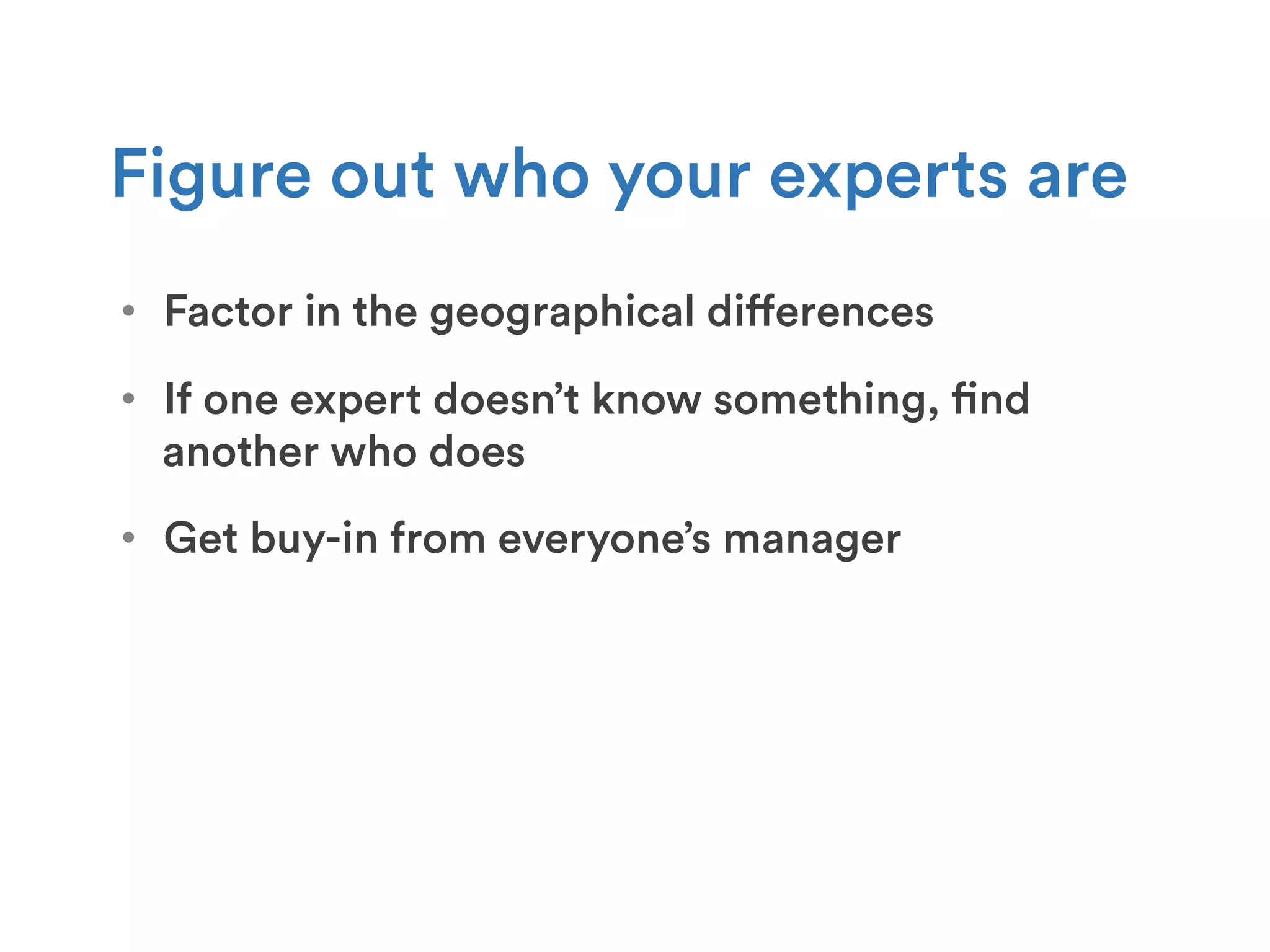
•  Factor in the geographical differences
Figure out who your experts are
•  If one expert doesn’t know something, find
another who does
•  Get buy-in from everyone’s manager
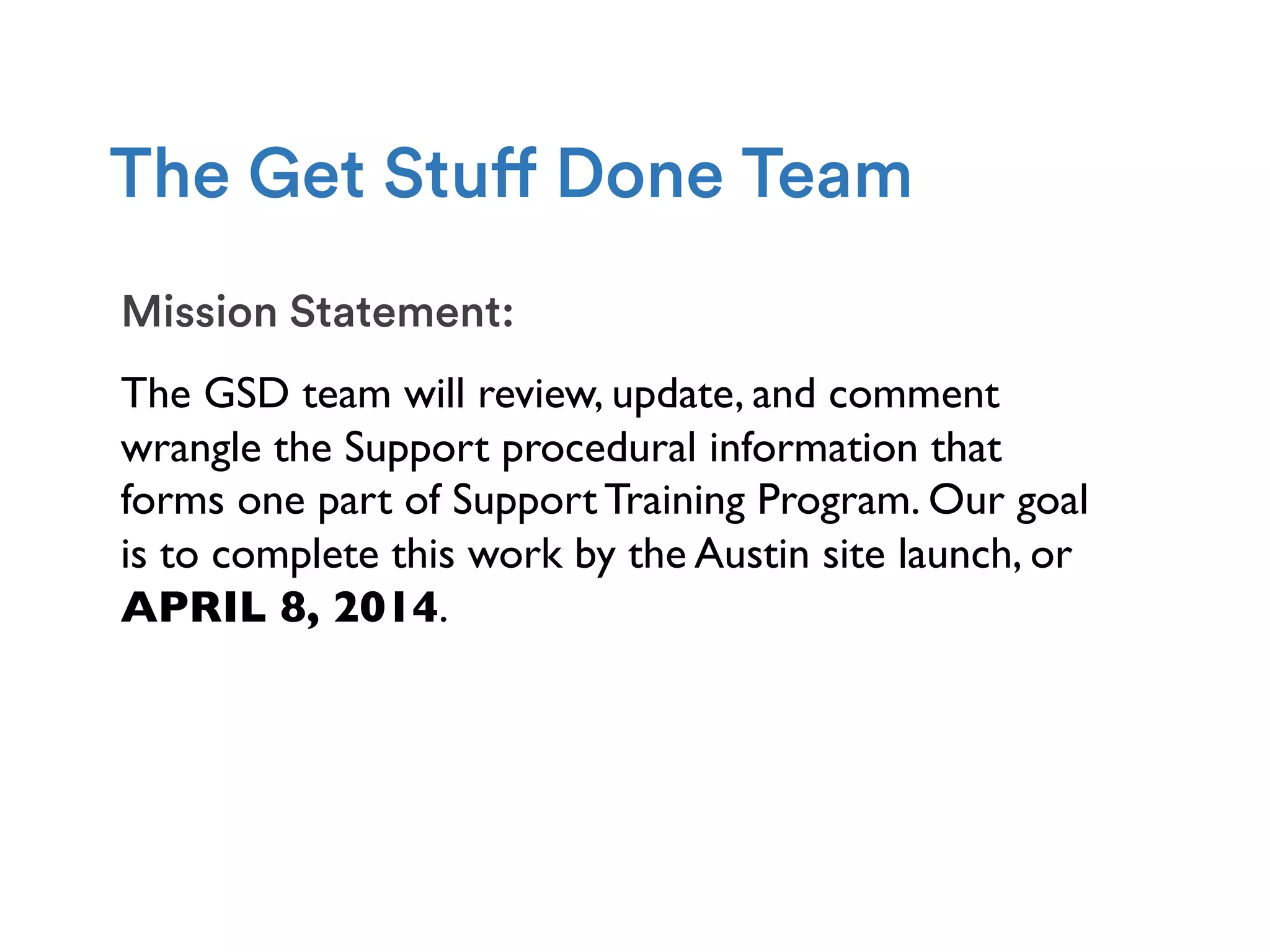
Mission Statement:
The GSD team will review, update, and comment
wrangle the Support procedural information that
forms one part of Support Training Program. Our goal
is to complete this work by the Austin site launch, or
APRIL 8, 2014.
The Get Stuff Done Team
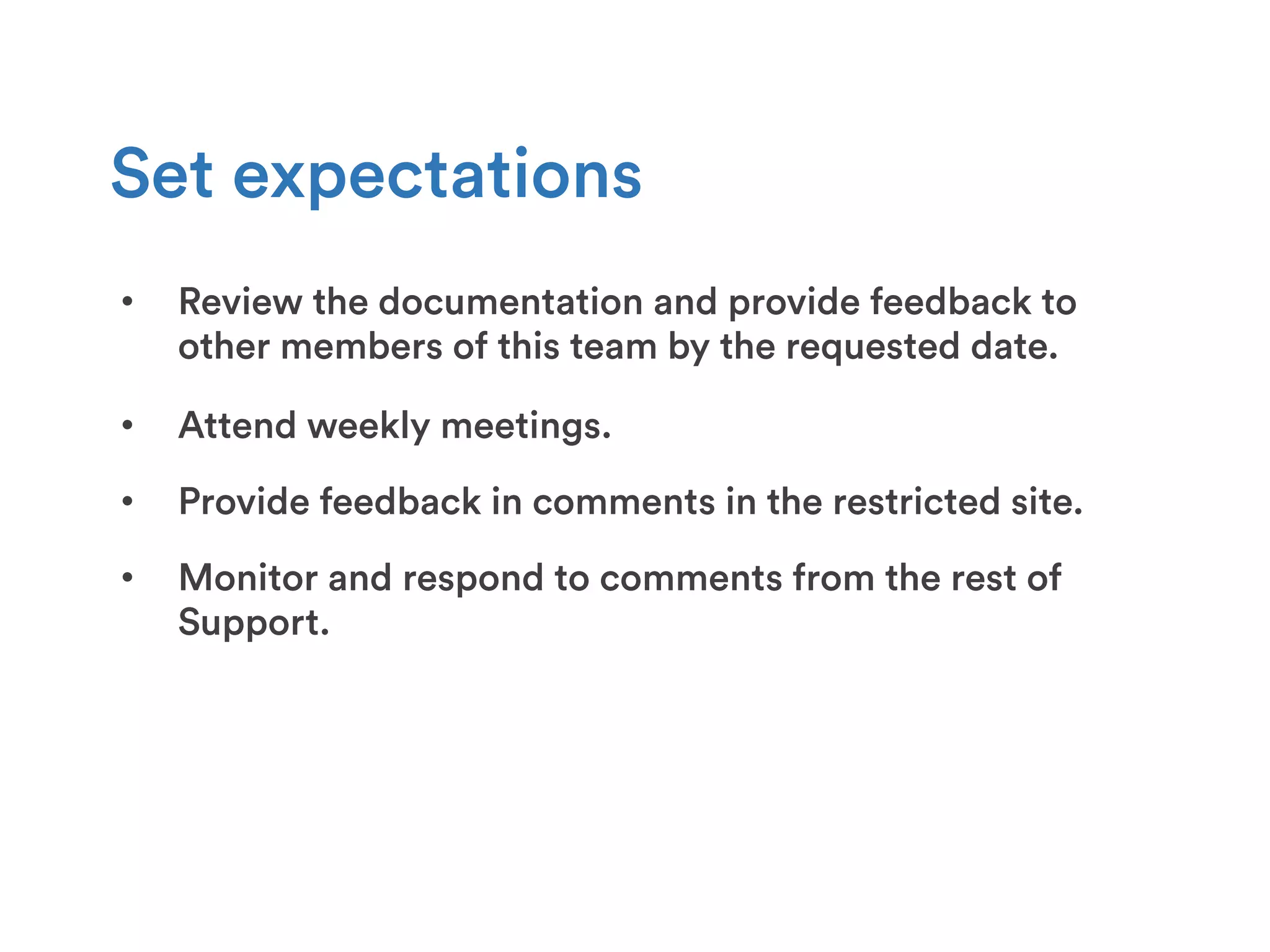
•  Review the documentation and provide feedback to
other members of this team by the requested date.
Set expectations
•  Attend weekly meetings.
•  Provide feedback in comments in the restricted site.
•  Monitor and respond to comments from the rest of
Support.
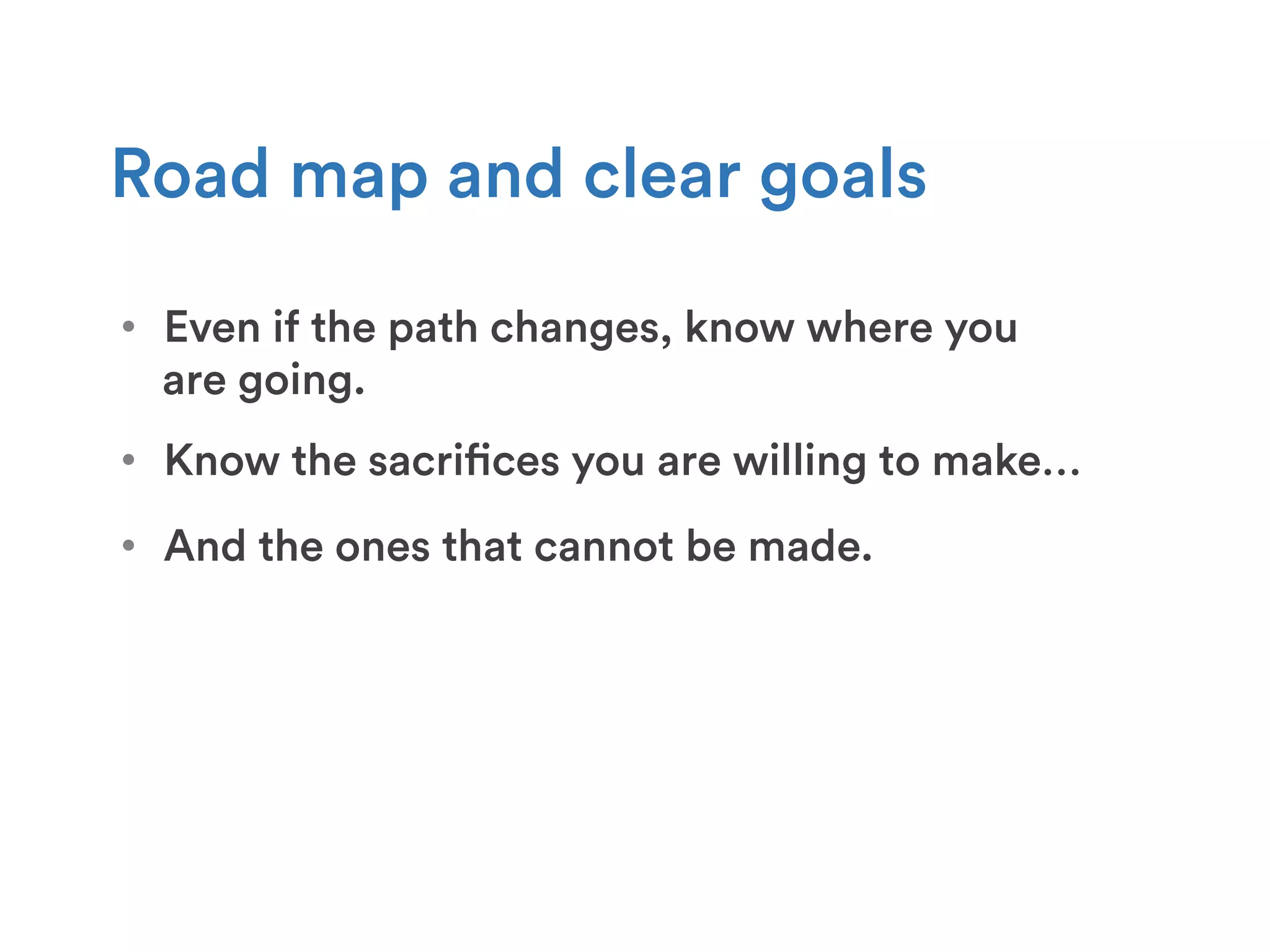
•  Even if the path changes, know where you
are going.
Road map and clear goals
•  Know the sacrifices you are willing to make…
•  And the ones that cannot be made.
At the beginning…
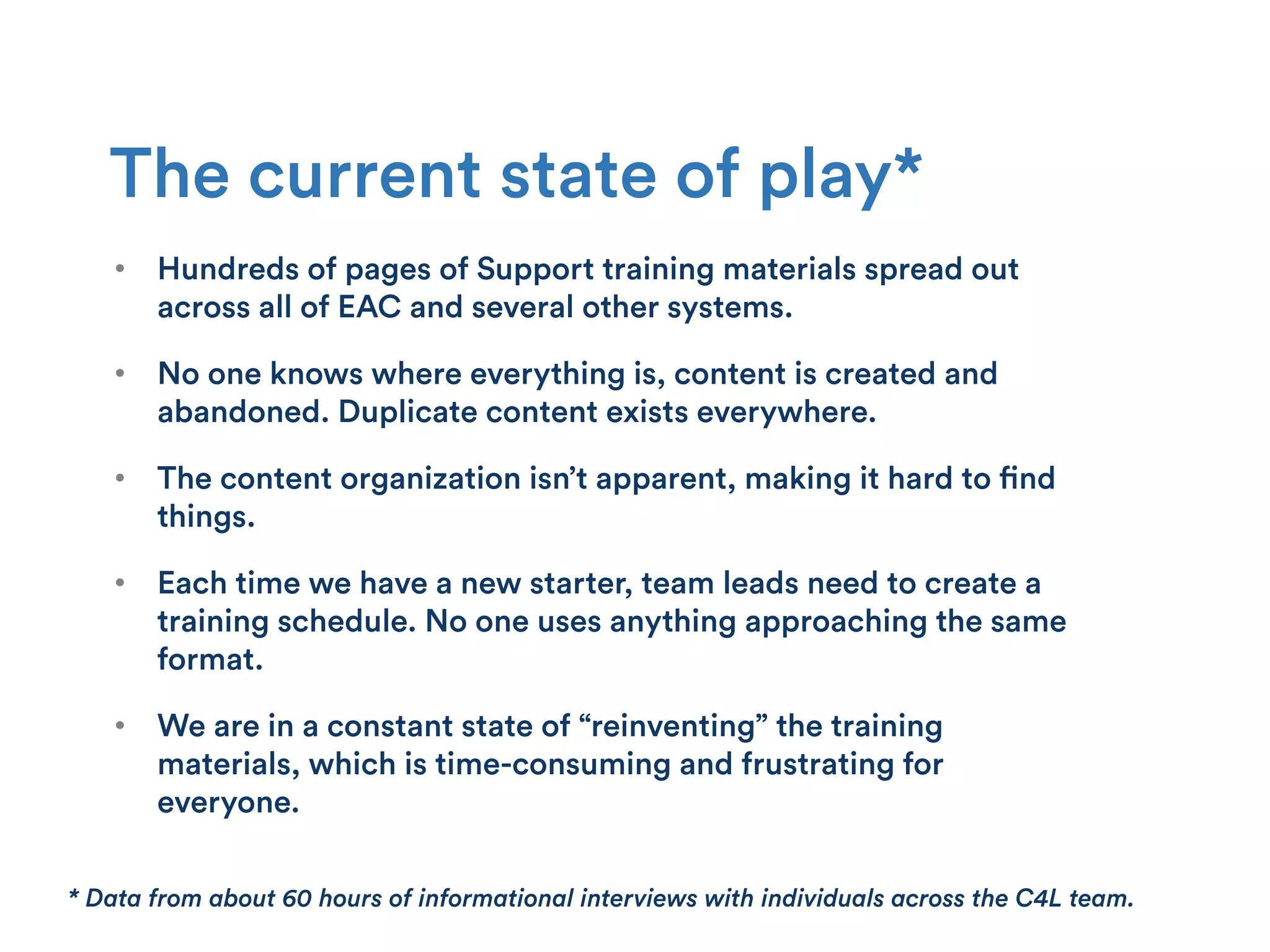
•  Hundreds of pages of Support training materials spread out
across all of EAC and several other systems.
•  No one knows where everything is, content is created and
abandoned. Duplicate content exists everywhere.
•  The content organization isn’t apparent, making it hard to find
things.
•  Each time we have a new starter, team leads need to create a
training schedule. No one uses anything approaching the same
format.
•  We are in a constant state of “reinventing” the training
materials, which is time-consuming and frustrating for
everyone.
The current state of play*
* Data from about 60 hours of informational interviews with individuals across the C4L team.
•  Everyone understands “The Code of Legendary Service” and
knows what this means when they interact with customers.
•  Day-to-day business procedures are the same across all Geos (or
as close as possible, and we start from the same baseline
procedure).
•  New starters are able to get up to speed within 90 days and
understand the “how and why” of our products and tools.
•  The training materials are professionally written, consistent, and
regularly updated.
•  We create a standard that other departments want to follow.
We want a program where:
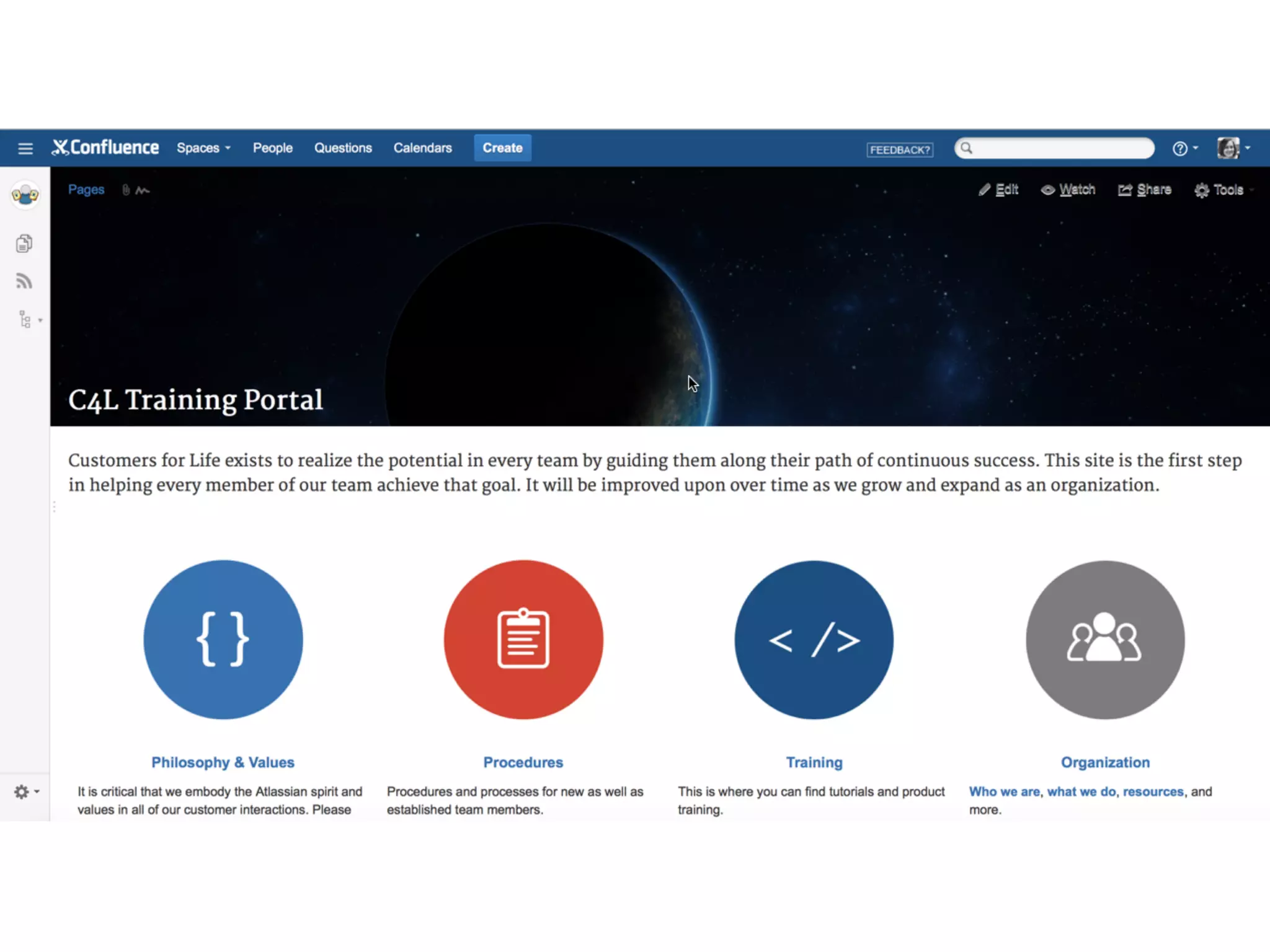
•  One space to rule them all: Support Training content lives in one
place on EAC.
•  We provide information on the three pillars of Atlassian Support:
•  Philosophy/Values (our code of service).
•  Procedures: how to do your job.
•  Technical training: we are consumers of the great content
coming from Sherry’s team as well as content we create.
•  Our materials are well written, consistent, and regularly updated.
What does this look like?
How does this help the business?
Over time, we should see the following:
•  New hires come up to speed quicker (goal: half the time it
takes currently, or 90 days).
•  We can expand Support faster if we reduce the amount of time
a TL can expect to spend one-on-one with new hires.
•  We have more expertise spread across the business.
•  We have everyone speaking the same language and operating
in the same ways, so our customers get a consistently good
experience.
How do we accomplish this?
•  Engage all key stakeholders across the team (started Dec
2013)
•  Evaluate current materials (in progress)
•  Form a small, core group of senior support staff to review
and update procedures (starts this week)
•  Outline what can be accomplished, by when (this
presentation)
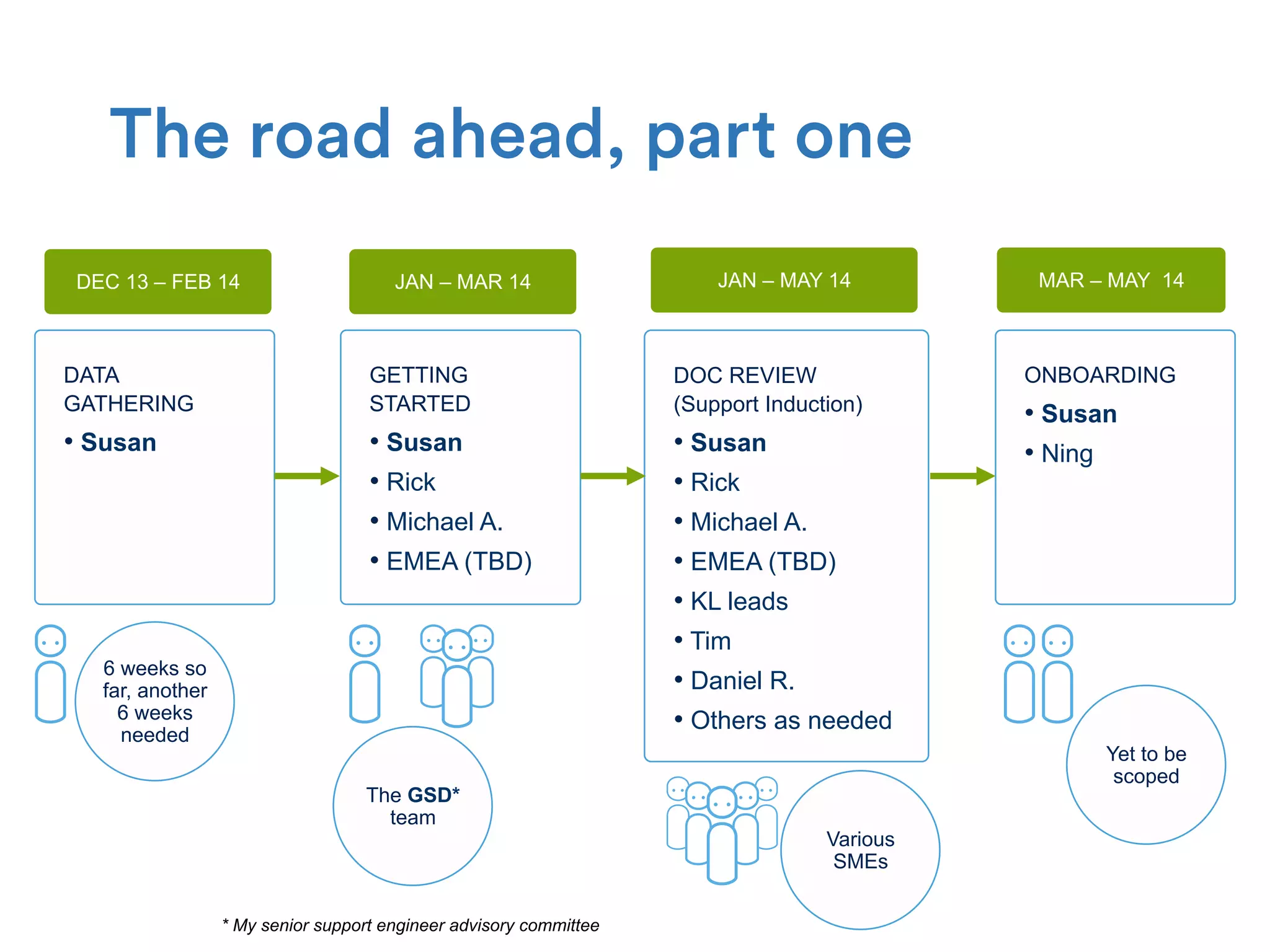
•  Create a timeline (next slide)
GETTING
STARTED
• Susan
• Rick
• Michael A.
• EMEA (TBD)
DATA
GATHERING
• Susan
ONBOARDING
• Susan
• Ning
The road ahead, part one
DOC REVIEW
(Support Induction)
• Susan
• Rick
• Michael A.
• EMEA (TBD)
• KL leads
• Tim
• Daniel R.
• Others as needed
DEC 13 – FEB 14 JAN – MAR 14 MAR – MAY 14JAN – MAY 14
6 weeks so
far, another
6 weeks
needed
The GSD*
team
Various
SMEs
Yet to be
scoped
* My senior support engineer advisory committee
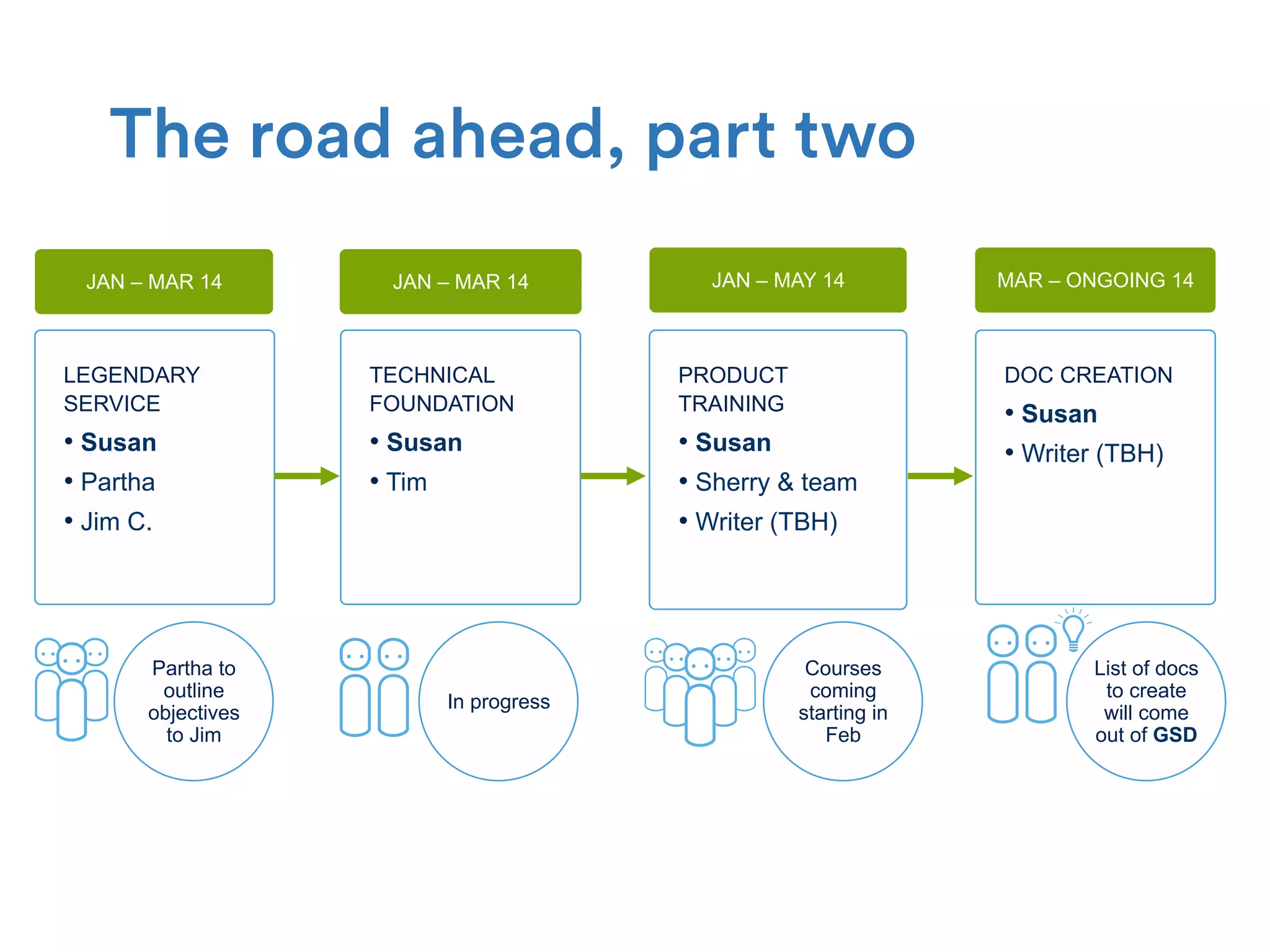
TECHNICAL
FOUNDATION
• Susan
• Tim
LEGENDARY
SERVICE
• Susan
• Partha
• Jim C.
DOC CREATION
• Susan
• Writer (TBH)
The road ahead, part two
PRODUCT
TRAINING
• Susan
• Sherry & team
• Writer (TBH)
JAN – MAR 14 JAN – MAR 14 MAR – ONGOING 14JAN – MAY 14
Partha to
outline
objectives
to Jim
Courses
coming
starting in
Feb
List of docs
to create
will come
out of GSD
In progress
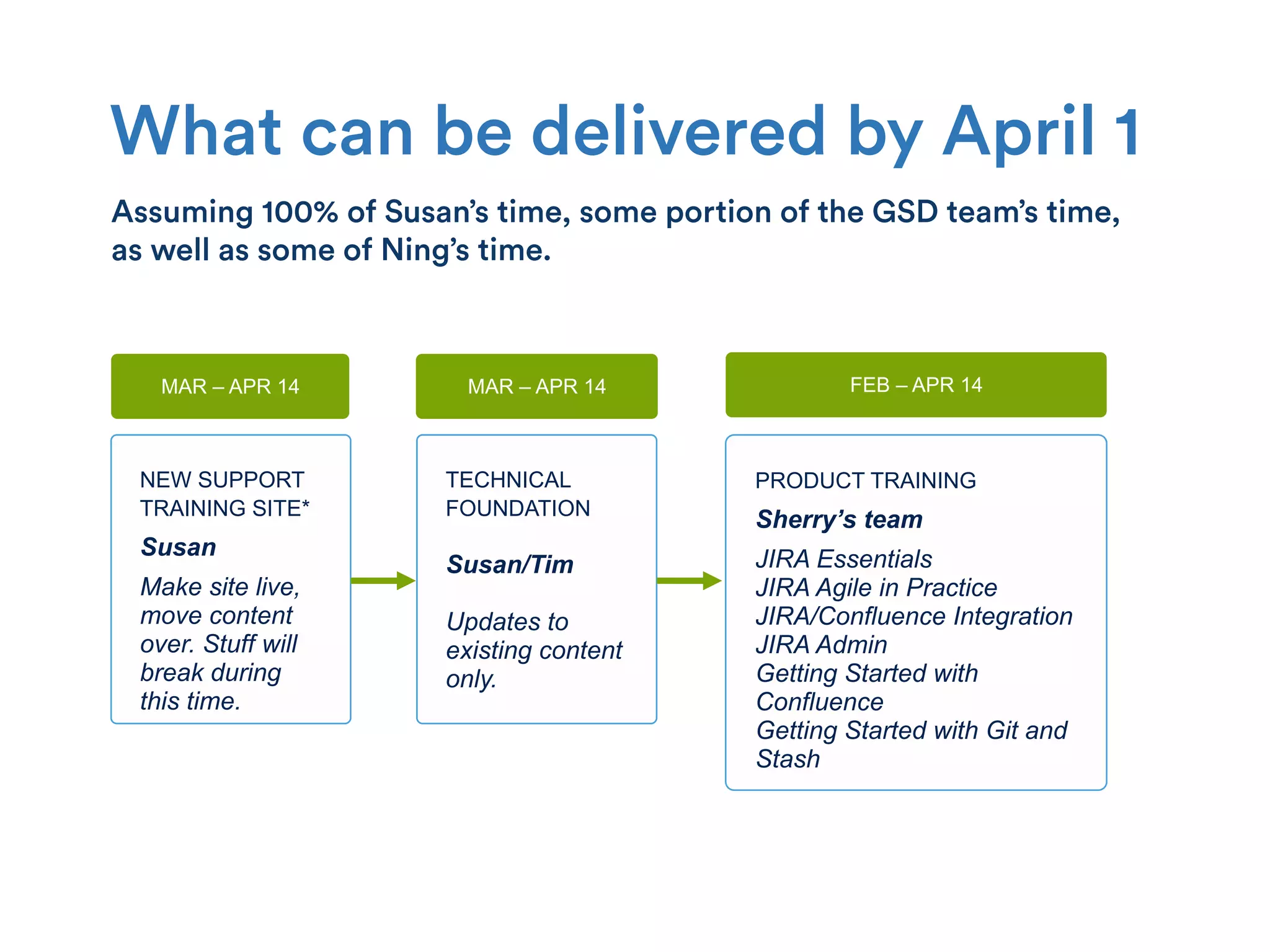
What can be delivered by April 1
TECHNICAL
FOUNDATION
Susan/Tim
Updates to
existing content
only.
NEW SUPPORT
TRAINING SITE*
Susan
Make site live,
move content
over. Stuff will
break during
this time.
PRODUCT TRAINING
Sherry’s team
JIRA Essentials
JIRA Agile in Practice
JIRA/Confluence Integration
JIRA Admin
Getting Started with
Confluence
Getting Started with Git and
Stash
MAR – APR 14 MAR – APR 14 FEB – APR 14
Assuming 100% of Susan’s time, some portion of the GSD team’s time,
as well as some of Ning’s time.
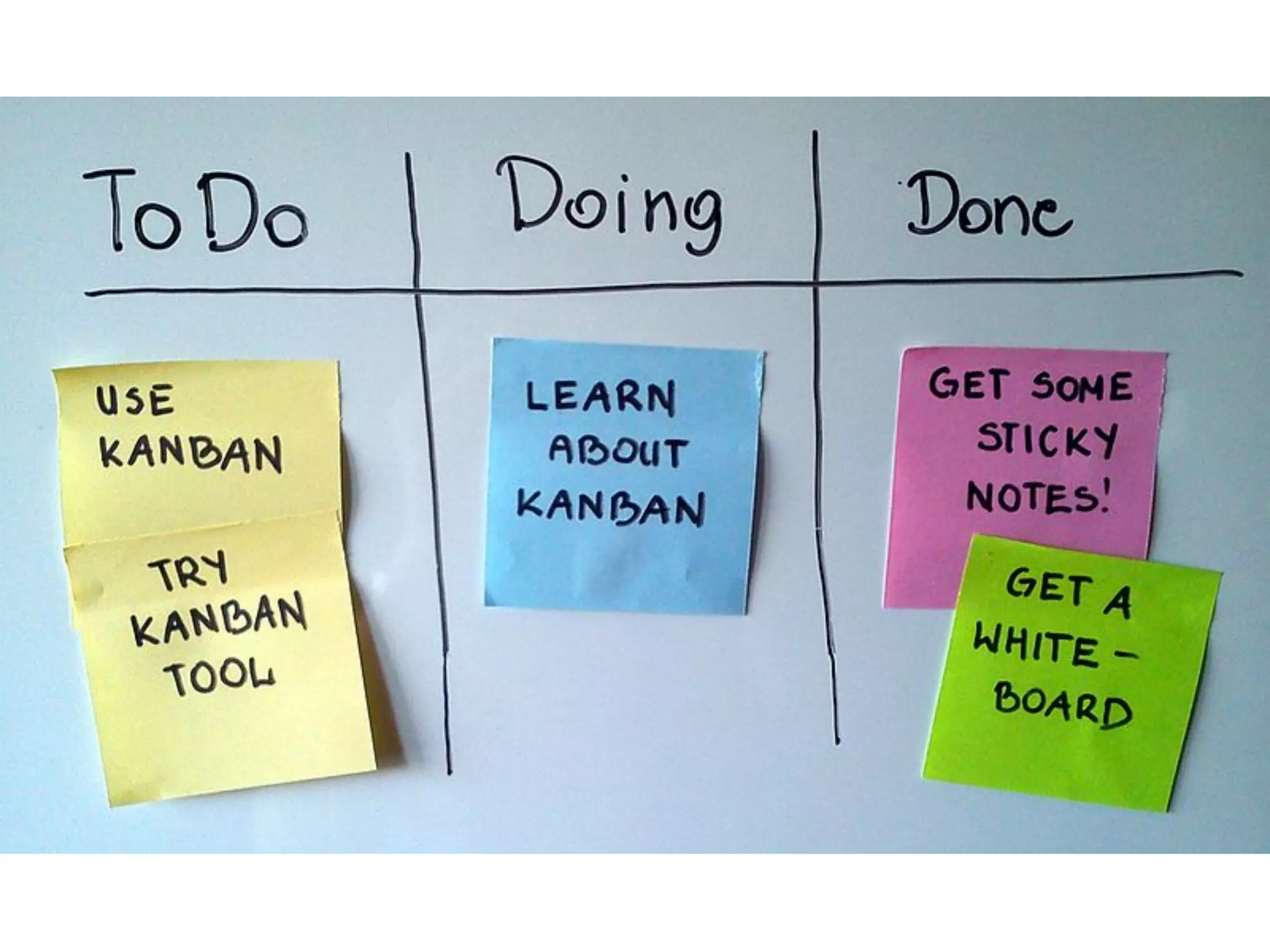
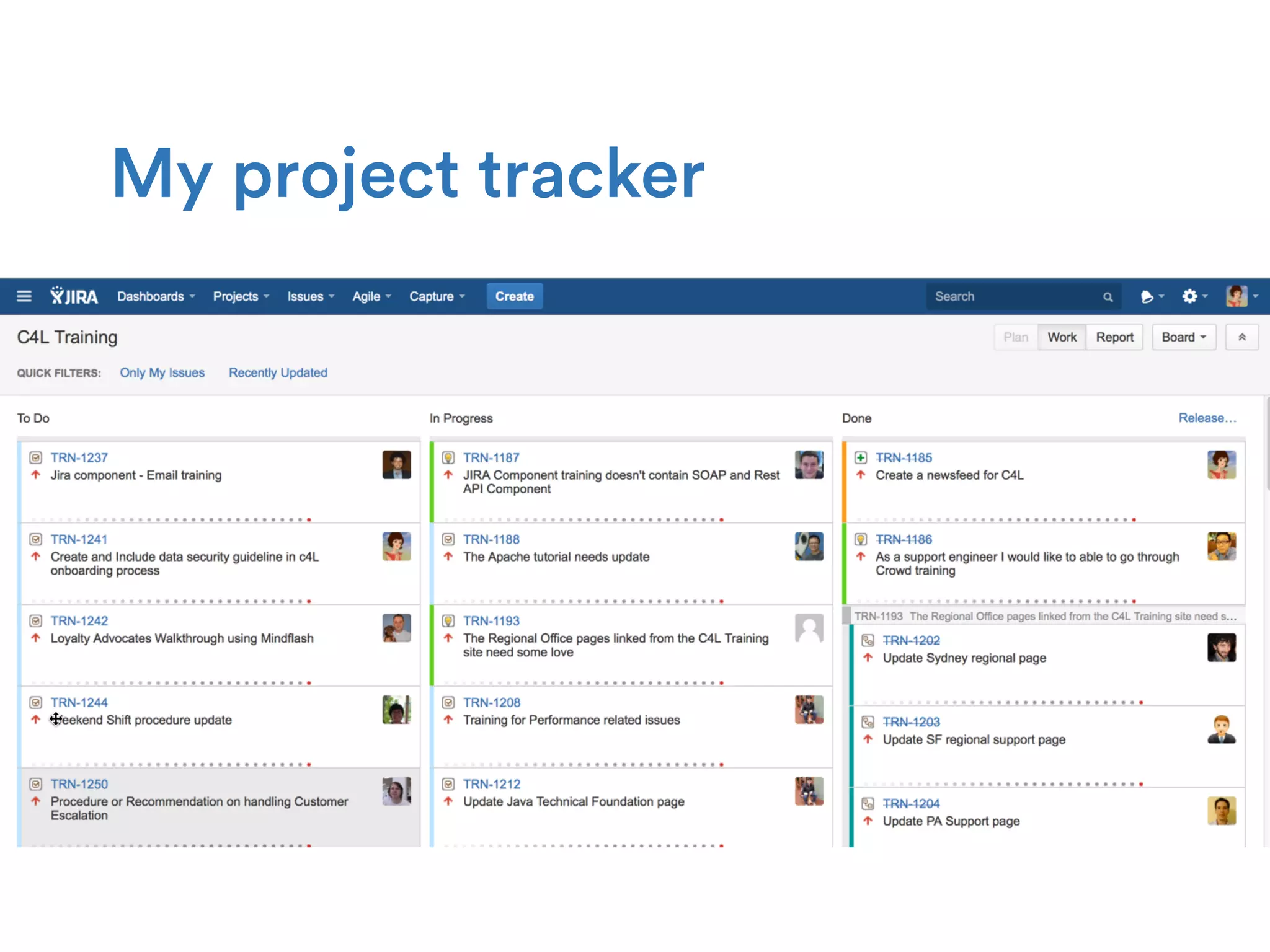
How I kept track
•  Use what you know and are comfortable with,
but…
•  If others can contribute as well, that will make
your job easier.
•  Don’t be afraid to try something new! You
might discover a tool that works better for
you.
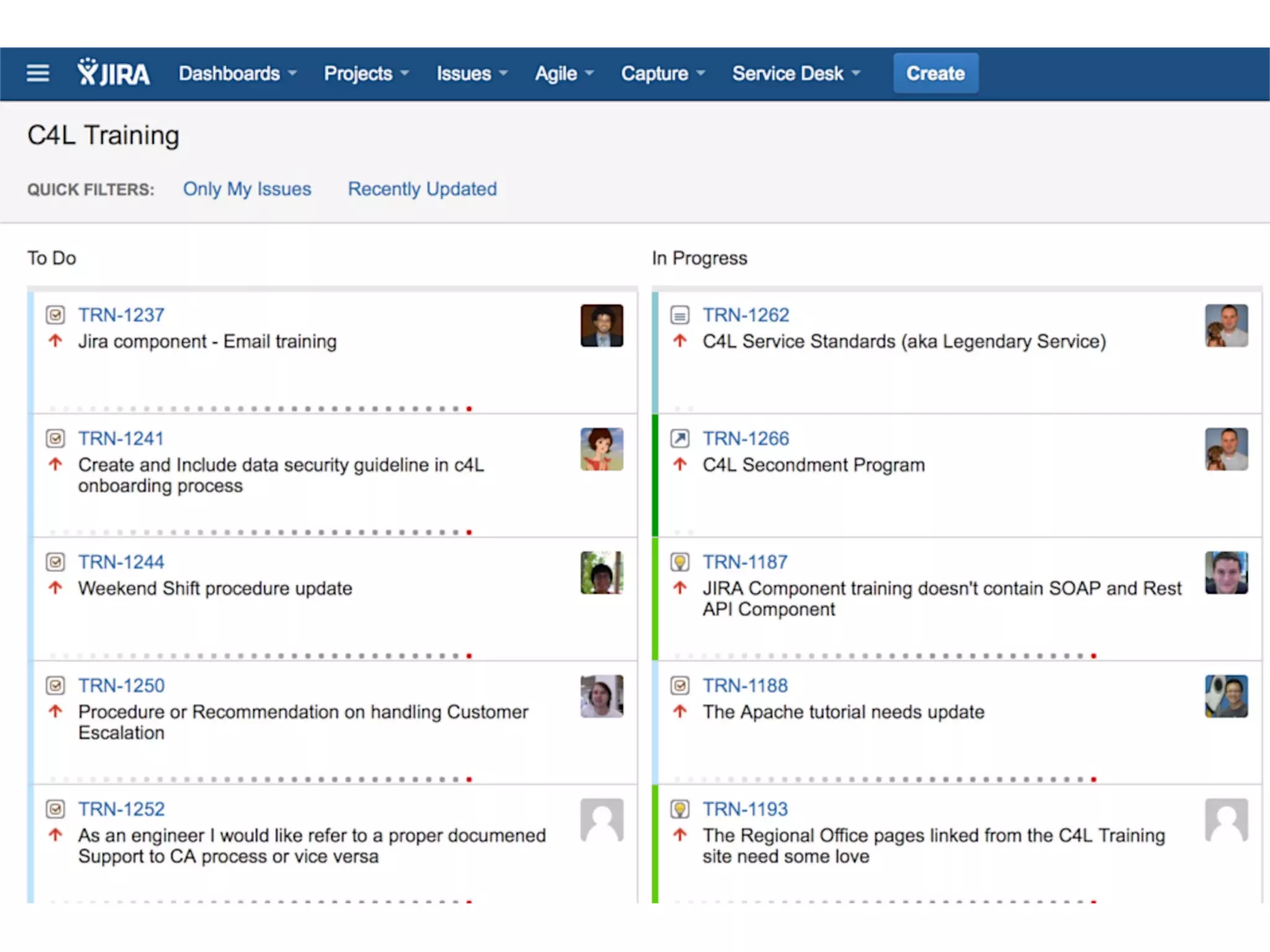
Project tracking tools
My project tracker
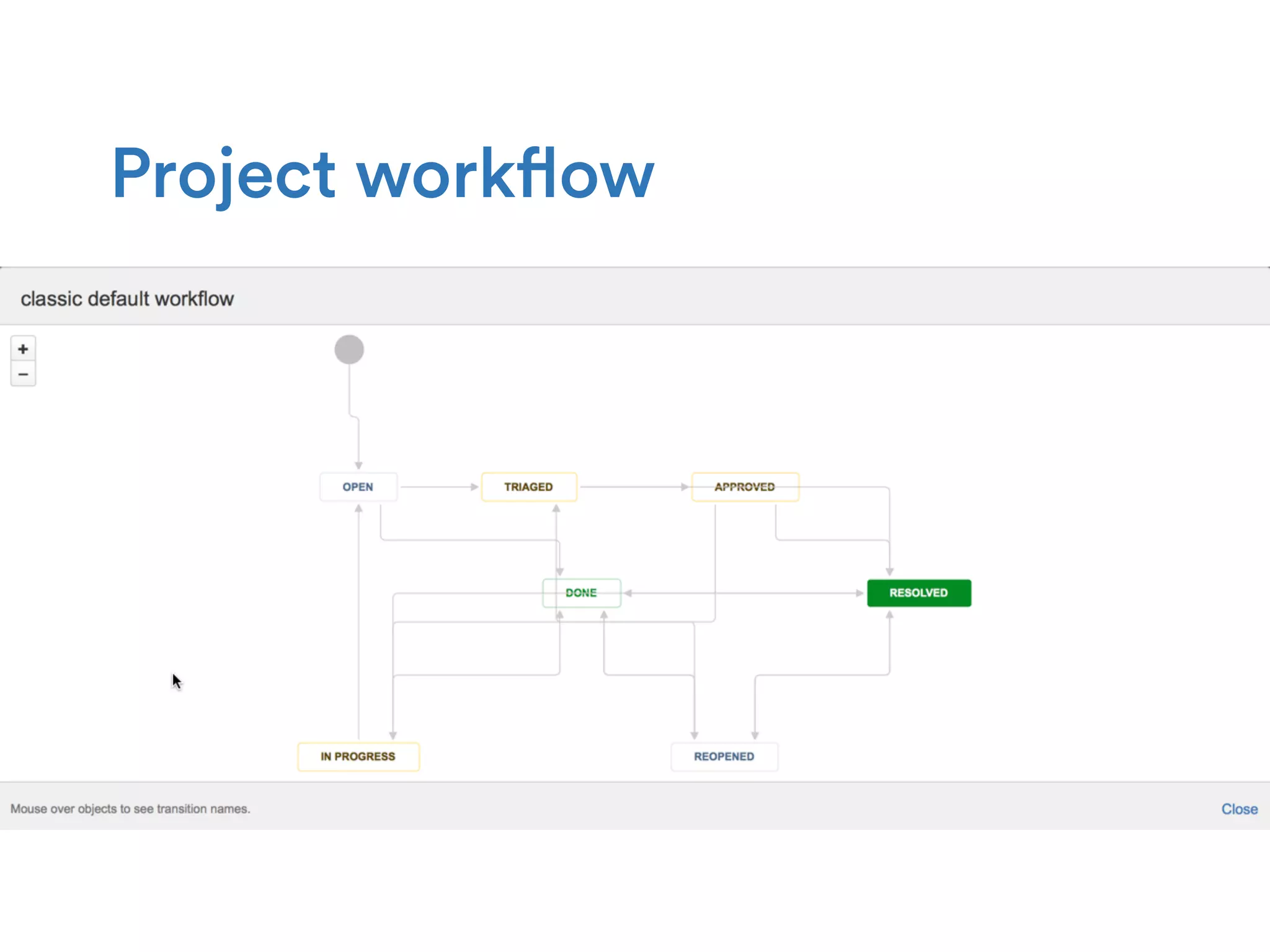
Project workflow
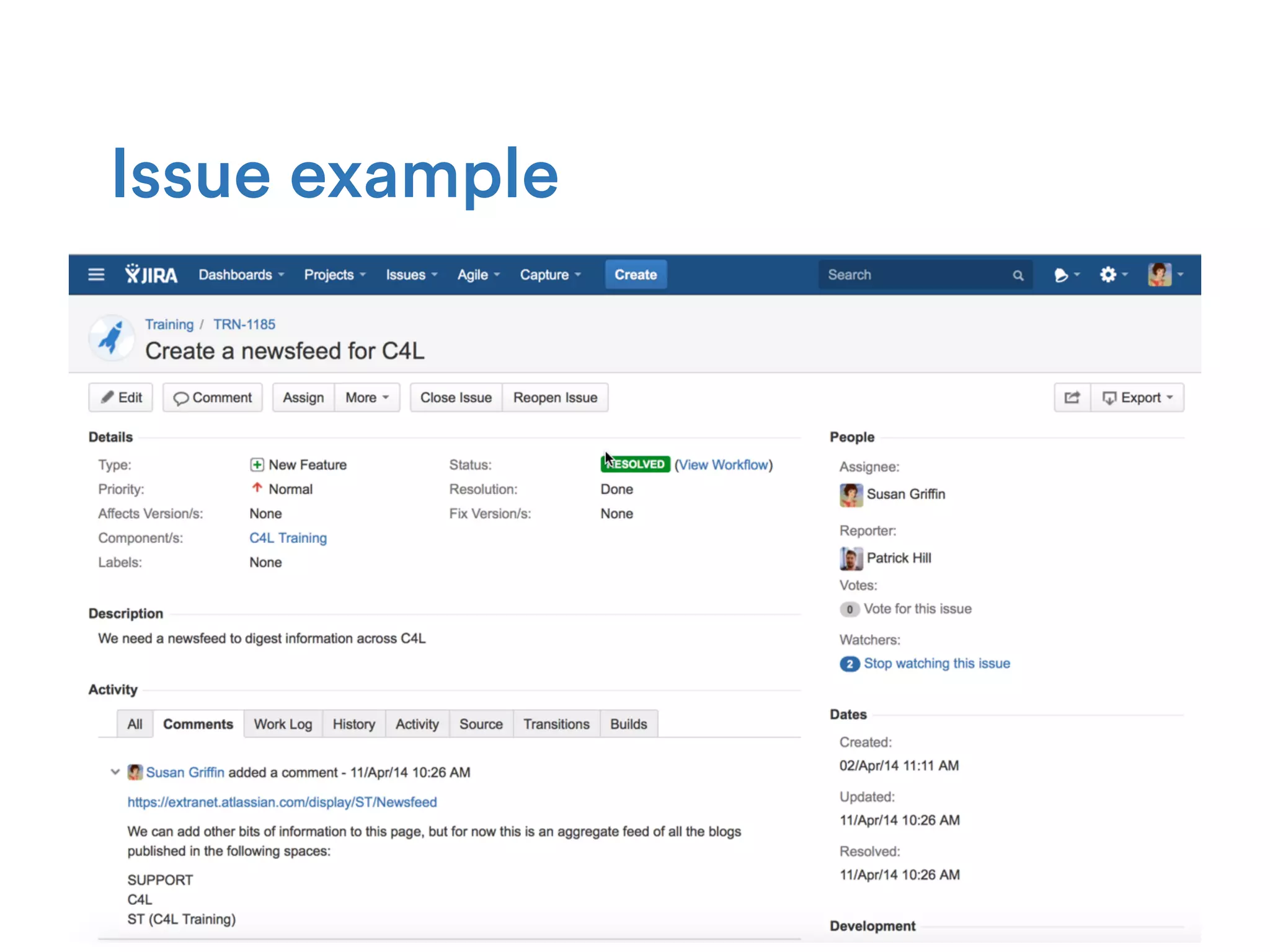
Issue example
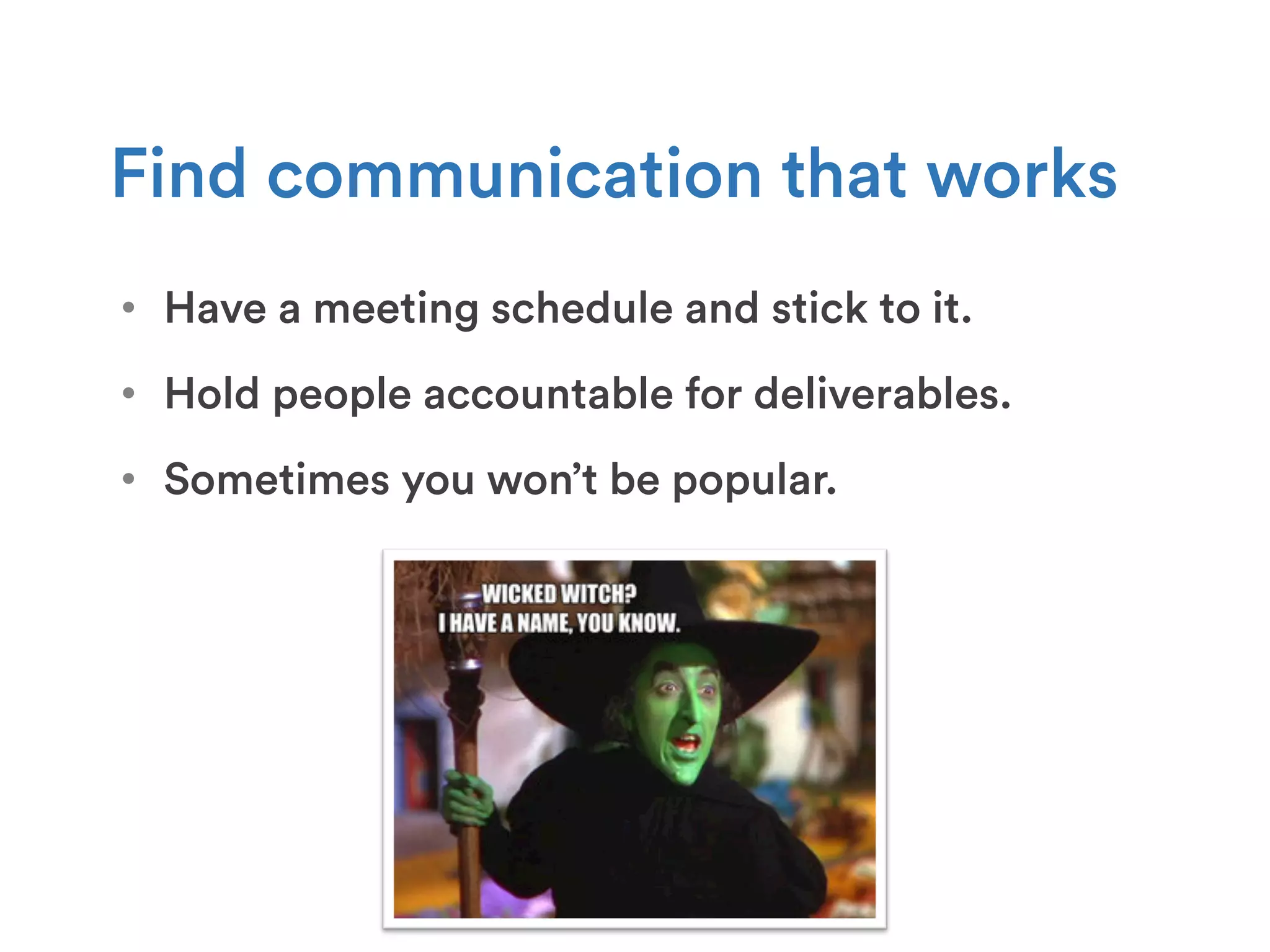
•  Have a meeting schedule and stick to it.
Find communication that works
•  Hold people accountable for deliverables.
•  Sometimes you won’t be popular.
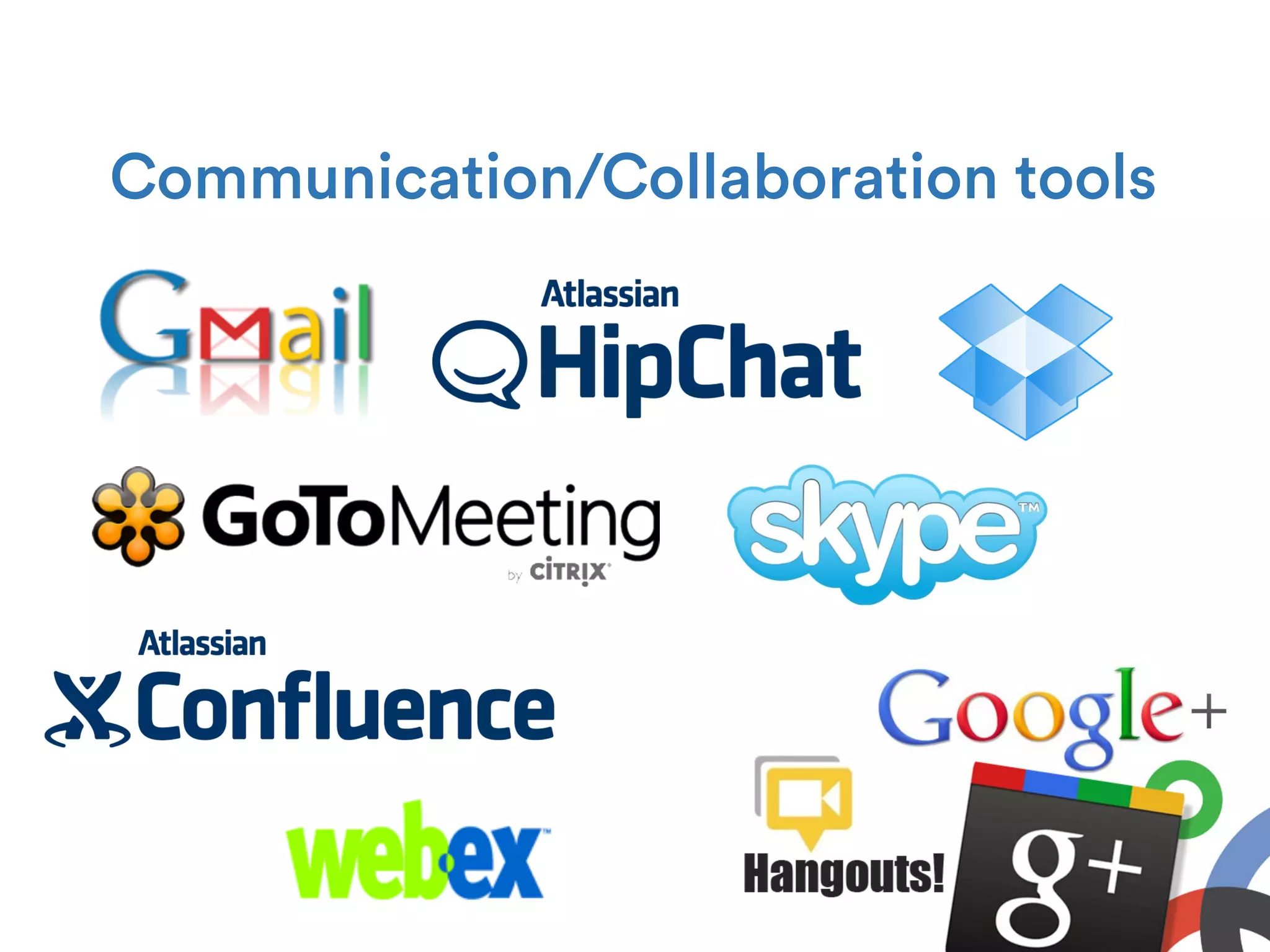
Communication/Collaboration tools
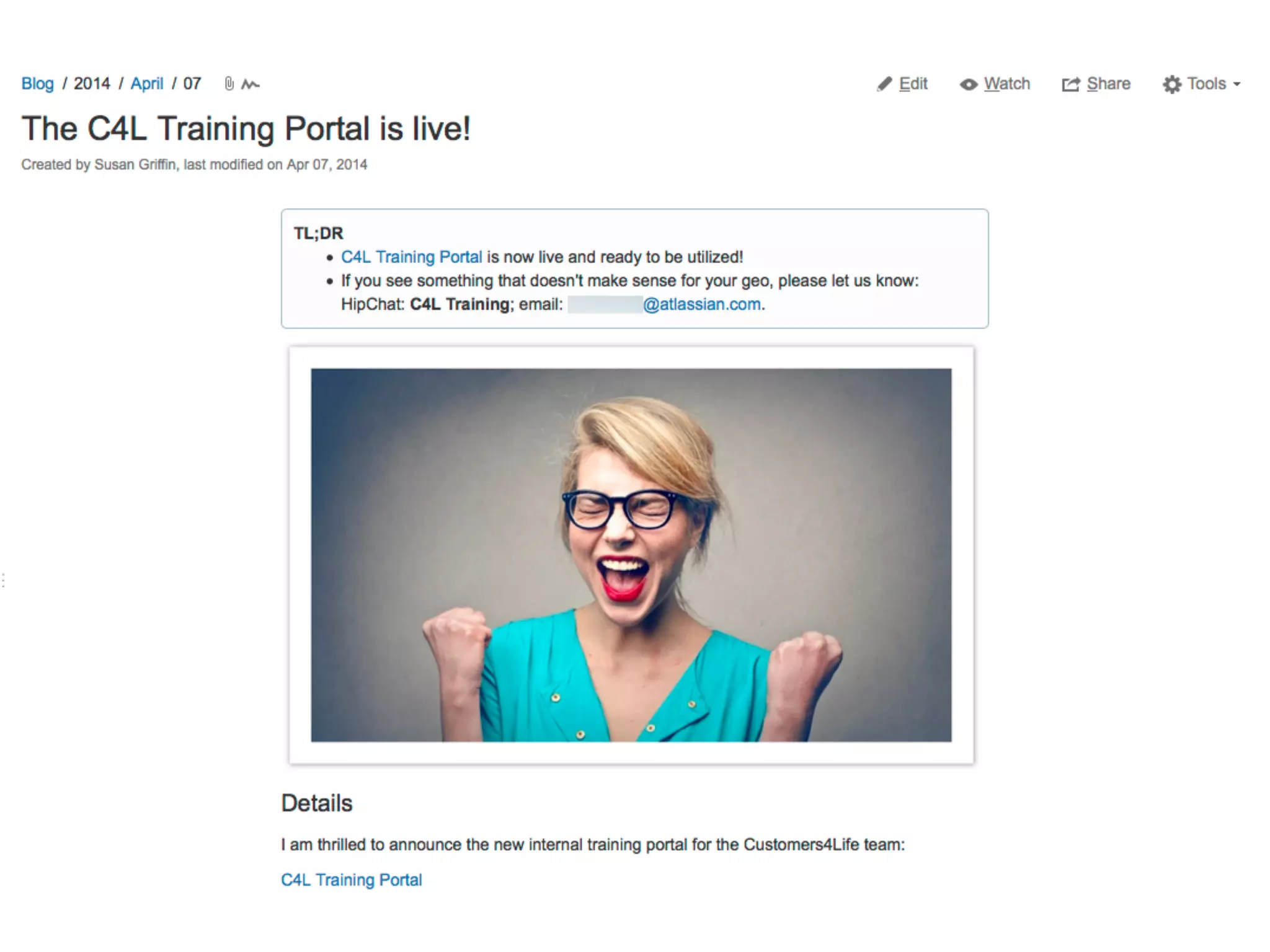
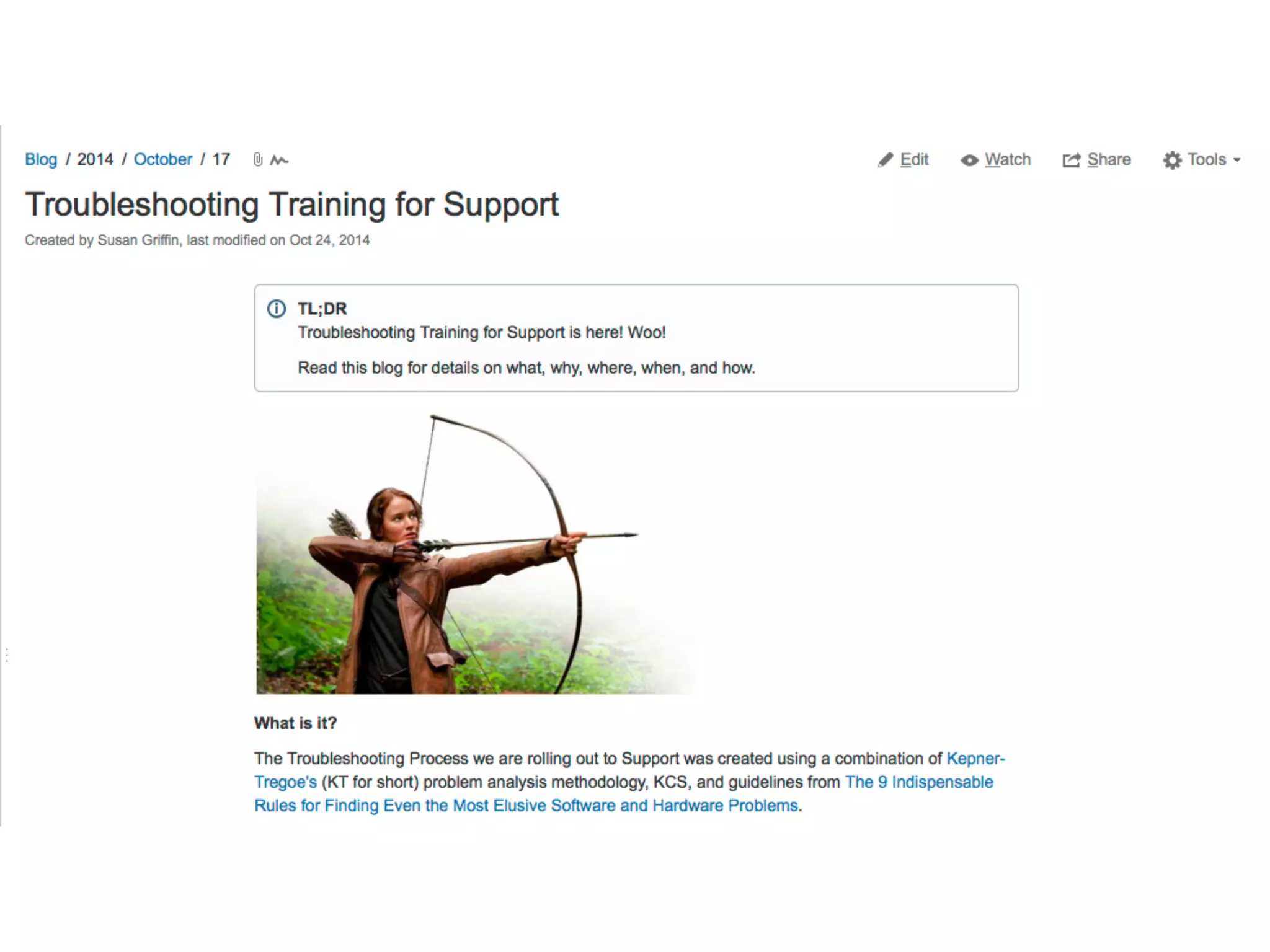
•  Blogs
Spread the word
•  Forums
•  Any other internal means of communicating to a
wide audience
Ongoing Maintenance
•  New projects need new owners
Post-Launch Activities
•  The challenge of the remote team
•  Assessing progress and making changes
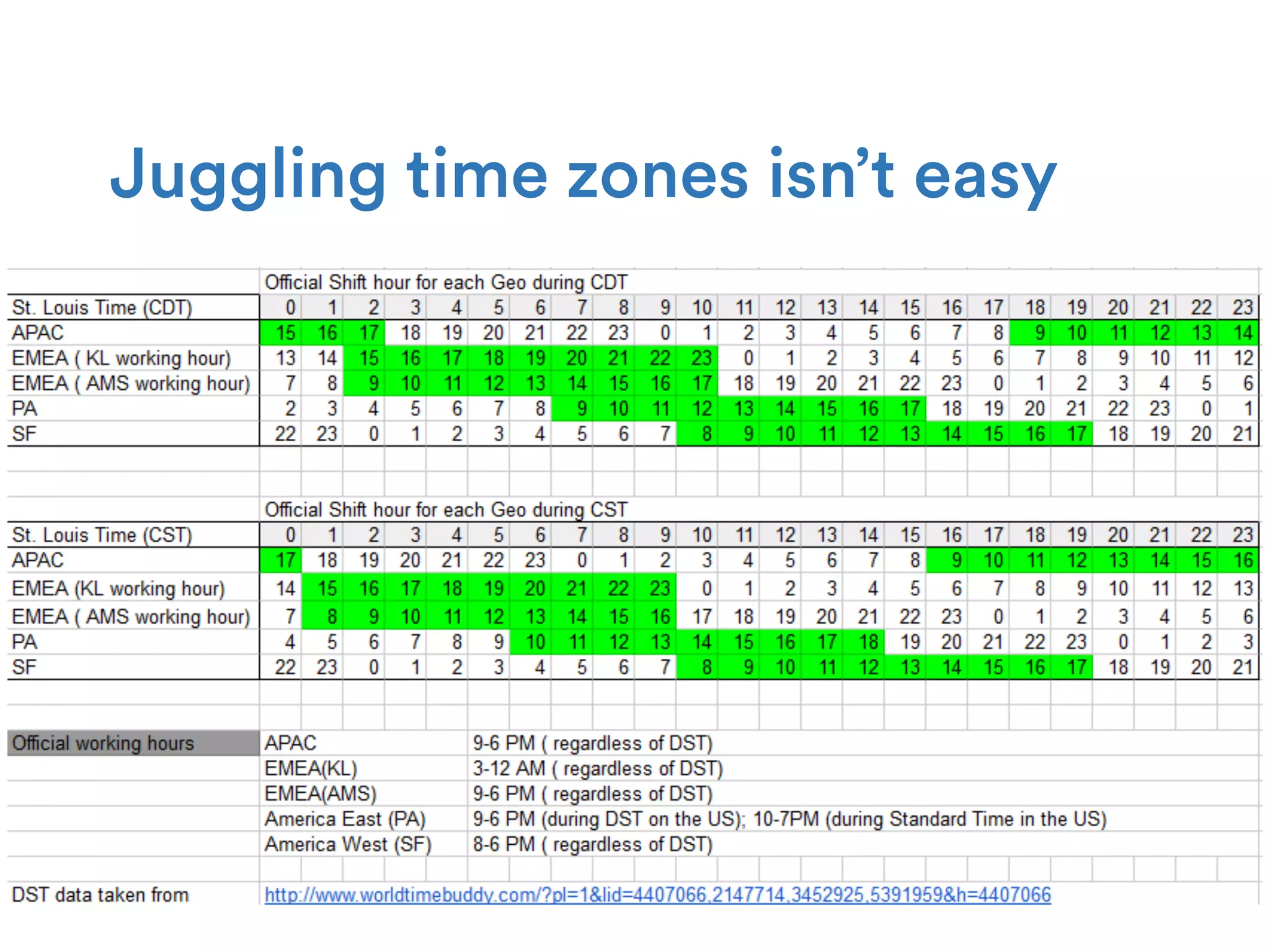
Juggling time zones isn’t easy
•  Survey feedback
How do you measure success?
•  Changes in NPS (net promoter score) and/or KPI
(key performance indicator)
•  Test scores
Thank you!
S u s a n G r i f f i n • T r a i n i n g P r o g r a m M a n a g e r • A t l a s s i a n
s g r i f f i n @ a t l a s s i a n . c o m | t w i t t e r : @ s u b e g e
Your opinion is important to us! Please tell us what you thought of the lecture.
We look forward to your feedback via smartphone or tablet under
http://TA6.honestly.de
or scan the QR code	
  	
  
The feedback tool will be available even after the conference!

Crowdsourcing your documentation: Managing a crowdsourced documentation project

  • 1.
    Crowdsourcing your documentation Managinga crowdsourced documentation project s g r i f f i n @ a t l a s s i a n . c o m | t w i t t e r : @ s u b e g e S u s a n G r i f f i n • T r a i n i n g P r o g r a m M a n a g e r • A t l a s s i a n
  • 2.
    Benjamin Franklin By failingto prepare, you are preparing to fail.
  • 3.
    About me •  Technicalcommunicator 25+ years •  Traditional and non-traditional roles •  “Never say never” Interesting fact: This is my third visit to Germany in 12 months. I think it’s time for me to learn to speak German!
  • 4.
    What if… Your managercame to you and said: We are opening a new Support office in Austin, Texas, in four months and we need a brand new training program by the time that office opens. We can’t give you a writer, but you can use some of the Senior Support Engineers in our other offices to help you create the program. Don’t forget to breathe.* (*someone actually said that to me) We want this training program to be used by the 60+ new hires we plan on adding in Austin by the end of this year, and it needs to include a 30-day induction plan.
  • 8.
    •  Collaborative workforceor intelligence How many of you have heard of… •  Coordinated crowd activities •  Open innovation •  Social collaboration
  • 9.
    Jeff Howe, Wiredmagazine, 2006 “Simply defined, crowdsourcing represents the act of a company or institution taking a function once performed by employees and outsourcing it to an undefined (and generally large) network of people in the form of an open call.”
  • 10.
  • 11.
    •  Figure outwho your experts are Keeping this in mind •  Create a core team, with a mission statement •  Set up weekly, even biweekly, meetings •  Communicate through all available channels •  Have a clearly defined road map and goals
  • 12.
    •  Factor inthe geographical differences Figure out who your experts are •  If one expert doesn’t know something, find another who does •  Get buy-in from everyone’s manager
  • 13.
    Mission Statement: The GSDteam will review, update, and comment wrangle the Support procedural information that forms one part of Support Training Program. Our goal is to complete this work by the Austin site launch, or APRIL 8, 2014. The Get Stuff Done Team
  • 14.
    •  Review thedocumentation and provide feedback to other members of this team by the requested date. Set expectations •  Attend weekly meetings. •  Provide feedback in comments in the restricted site. •  Monitor and respond to comments from the rest of Support.
  • 16.
    •  Even ifthe path changes, know where you are going. Road map and clear goals •  Know the sacrifices you are willing to make… •  And the ones that cannot be made.
  • 17.
  • 18.
    •  Hundreds ofpages of Support training materials spread out across all of EAC and several other systems. •  No one knows where everything is, content is created and abandoned. Duplicate content exists everywhere. •  The content organization isn’t apparent, making it hard to find things. •  Each time we have a new starter, team leads need to create a training schedule. No one uses anything approaching the same format. •  We are in a constant state of “reinventing” the training materials, which is time-consuming and frustrating for everyone. The current state of play* * Data from about 60 hours of informational interviews with individuals across the C4L team.
  • 19.
    •  Everyone understands“The Code of Legendary Service” and knows what this means when they interact with customers. •  Day-to-day business procedures are the same across all Geos (or as close as possible, and we start from the same baseline procedure). •  New starters are able to get up to speed within 90 days and understand the “how and why” of our products and tools. •  The training materials are professionally written, consistent, and regularly updated. •  We create a standard that other departments want to follow. We want a program where:
  • 20.
    •  One spaceto rule them all: Support Training content lives in one place on EAC. •  We provide information on the three pillars of Atlassian Support: •  Philosophy/Values (our code of service). •  Procedures: how to do your job. •  Technical training: we are consumers of the great content coming from Sherry’s team as well as content we create. •  Our materials are well written, consistent, and regularly updated. What does this look like?
  • 21.
    How does thishelp the business? Over time, we should see the following: •  New hires come up to speed quicker (goal: half the time it takes currently, or 90 days). •  We can expand Support faster if we reduce the amount of time a TL can expect to spend one-on-one with new hires. •  We have more expertise spread across the business. •  We have everyone speaking the same language and operating in the same ways, so our customers get a consistently good experience.
  • 22.
    How do weaccomplish this? •  Engage all key stakeholders across the team (started Dec 2013) •  Evaluate current materials (in progress) •  Form a small, core group of senior support staff to review and update procedures (starts this week) •  Outline what can be accomplished, by when (this presentation) •  Create a timeline (next slide)
  • 23.
    GETTING STARTED • Susan • Rick • Michael A. • EMEA (TBD) DATA GATHERING • Susan ONBOARDING • Susan • Ning Theroad ahead, part one DOC REVIEW (Support Induction) • Susan • Rick • Michael A. • EMEA (TBD) • KL leads • Tim • Daniel R. • Others as needed DEC 13 – FEB 14 JAN – MAR 14 MAR – MAY 14JAN – MAY 14 6 weeks so far, another 6 weeks needed The GSD* team Various SMEs Yet to be scoped * My senior support engineer advisory committee
  • 24.
    TECHNICAL FOUNDATION • Susan • Tim LEGENDARY SERVICE • Susan • Partha • Jim C. DOC CREATION • Susan • Writer(TBH) The road ahead, part two PRODUCT TRAINING • Susan • Sherry & team • Writer (TBH) JAN – MAR 14 JAN – MAR 14 MAR – ONGOING 14JAN – MAY 14 Partha to outline objectives to Jim Courses coming starting in Feb List of docs to create will come out of GSD In progress
  • 25.
    What can bedelivered by April 1 TECHNICAL FOUNDATION Susan/Tim Updates to existing content only. NEW SUPPORT TRAINING SITE* Susan Make site live, move content over. Stuff will break during this time. PRODUCT TRAINING Sherry’s team JIRA Essentials JIRA Agile in Practice JIRA/Confluence Integration JIRA Admin Getting Started with Confluence Getting Started with Git and Stash MAR – APR 14 MAR – APR 14 FEB – APR 14 Assuming 100% of Susan’s time, some portion of the GSD team’s time, as well as some of Ning’s time.
  • 26.
  • 28.
    •  Use whatyou know and are comfortable with, but… •  If others can contribute as well, that will make your job easier. •  Don’t be afraid to try something new! You might discover a tool that works better for you. Project tracking tools
  • 29.
  • 30.
  • 31.
  • 32.
    •  Have ameeting schedule and stick to it. Find communication that works •  Hold people accountable for deliverables. •  Sometimes you won’t be popular.
  • 33.
  • 34.
    •  Blogs Spread theword •  Forums •  Any other internal means of communicating to a wide audience
  • 38.
  • 39.
    •  New projectsneed new owners Post-Launch Activities •  The challenge of the remote team •  Assessing progress and making changes
  • 41.
    Juggling time zonesisn’t easy
  • 42.
    •  Survey feedback Howdo you measure success? •  Changes in NPS (net promoter score) and/or KPI (key performance indicator) •  Test scores
  • 43.
    Thank you! S us a n G r i f f i n • T r a i n i n g P r o g r a m M a n a g e r • A t l a s s i a n s g r i f f i n @ a t l a s s i a n . c o m | t w i t t e r : @ s u b e g e
  • 44.
    Your opinion isimportant to us! Please tell us what you thought of the lecture. We look forward to your feedback via smartphone or tablet under http://TA6.honestly.de or scan the QR code     The feedback tool will be available even after the conference!