Building Bridges Across 
an Expanding Universe 
Case study for a content collaboration council 
Mysti Berry, Principal Technical Writer
Safe Harbor 
Safe harbor statement under the Private Securities Litigation Reform Act of 1995: This presentation may contain forward-looking 
statements that involve risks, uncertainties, and assumptions. If any such uncertainties materialize or if any of the assumptions proves 
incorrect, the results of salesforce.com, inc. could differ materially from the results expressed or implied by the forward-looking statements 
we make. All statements other than statements of historical fact could be deemed forward-looking, including any projections of subscriber 
growth, earnings, revenues, or other financial items and any statements regarding strategies or plans of management for future operations, 
statements of belief, any statements concerning new, planned, or upgraded services or technology developments and customer contracts 
or use of our services. 
The risks and uncertainties referred to above include – but are not limited to – risks associated with developing and delivering new 
functionality for our service, our new business model, our past operating losses, possible fluctuations in our operating results and rate of 
growth, interruptions or delays in our Web hosting, breach of our security measures, risks associated with possible mergers and 
acquisitions, the immature market in which we operate, our relatively limited operating history, our ability to expand, retain, and motivate 
our employees and manage our growth, new releases of our service and successful customer deployment, our limited history reselling 
non-salesforce.com products, and utilization and selling to larger enterprise customers. Further information on potential factors that could 
affect the financial results of salesforce.com, inc. is included in our annual report on Form 10-K for the most recent fiscal year ended 
January 31, 2011. This document and others are available on the SEC Filings section of the Investor Information section of our Web site. 
Any unreleased services or features referenced in this or other press releases or public statements are not currently available and may not 
be delivered on time or at all. Customers who purchase our services should make the purchase decisions based upon features that are 
currently available. Salesforce.com, inc. assumes no obligation and does not intend to update these forward-looking statements.
Mysti Berry 
Principal Technical Writer 
@MystiContent 
www.linkedin.com/in/mystiberry
Before we get started… 
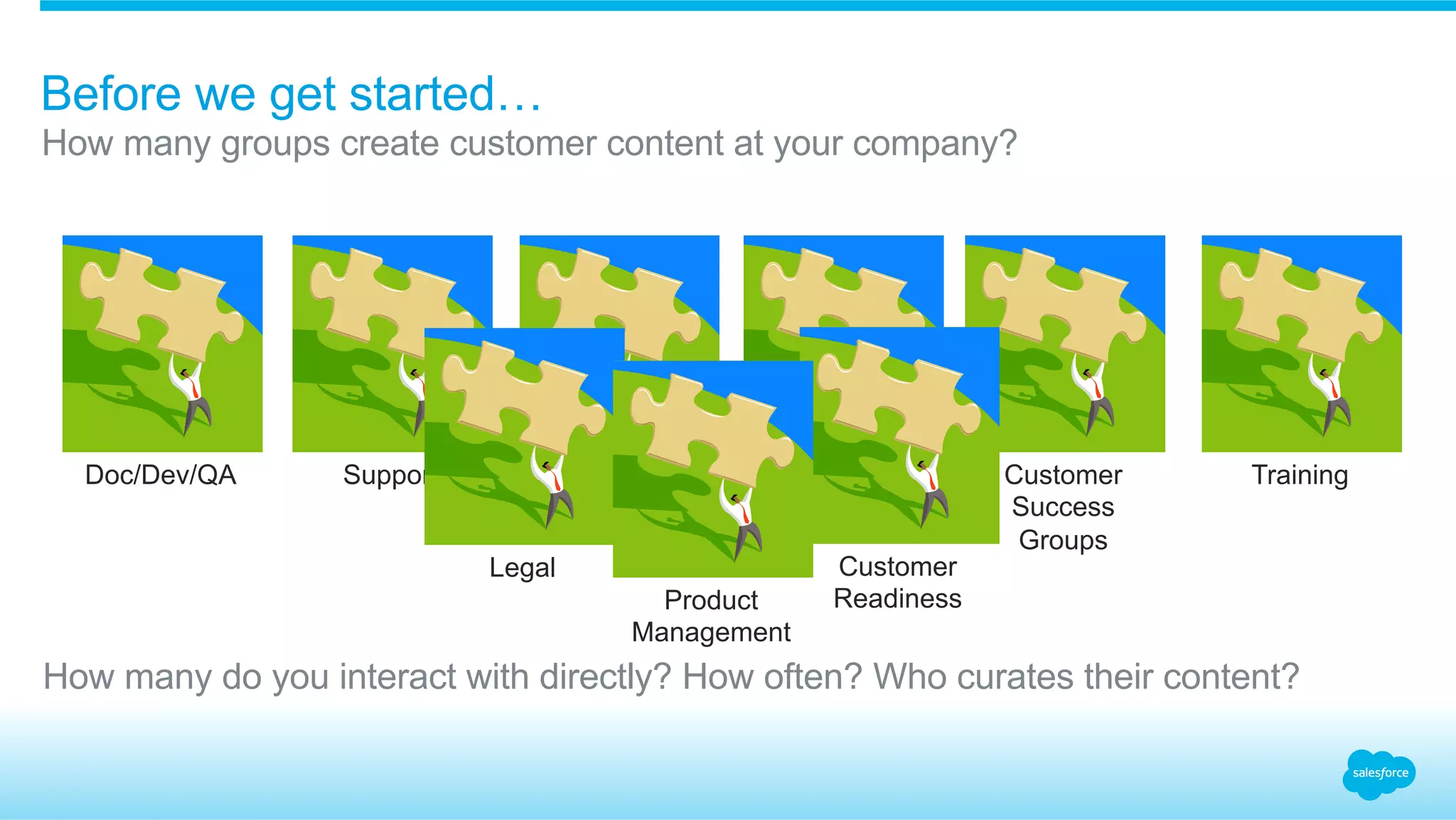
How many groups create customer content at your company? 
Doc/Dev/QA Support Marketing Sales Customer Training 
Success 
Groups 
Legal Customer 
Readiness 
Product 
Management 
How many do you interact with directly? How often? Who curates their content?
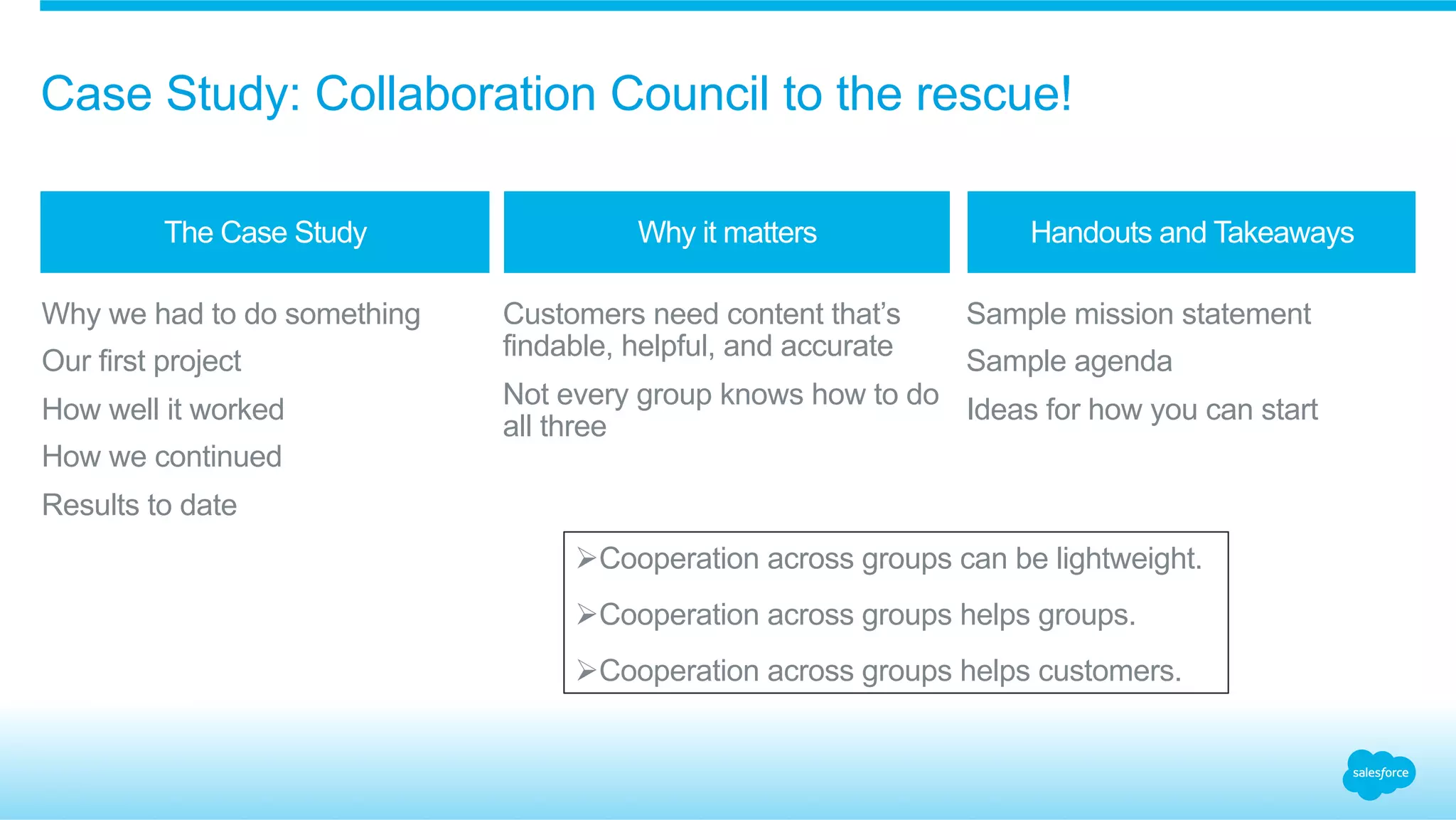
Case Study: Collaboration Council to the rescue! 
The Case Study Why it matters Handouts and Takeaways 
Why we had to do something 
Our first project 
How well it worked 
How we continued 
Results to date 
Customers need content that’s 
findable, helpful, and accurate 
Not every group knows how to do 
all three 
Sample mission statement 
Sample agenda 
Ideas for how you can start 
Ø Cooperation across groups can be lightweight. 
Ø Cooperation across groups helps groups. 
Ø Cooperation across groups helps customers.
Why we had to do something
Why we had to do something 
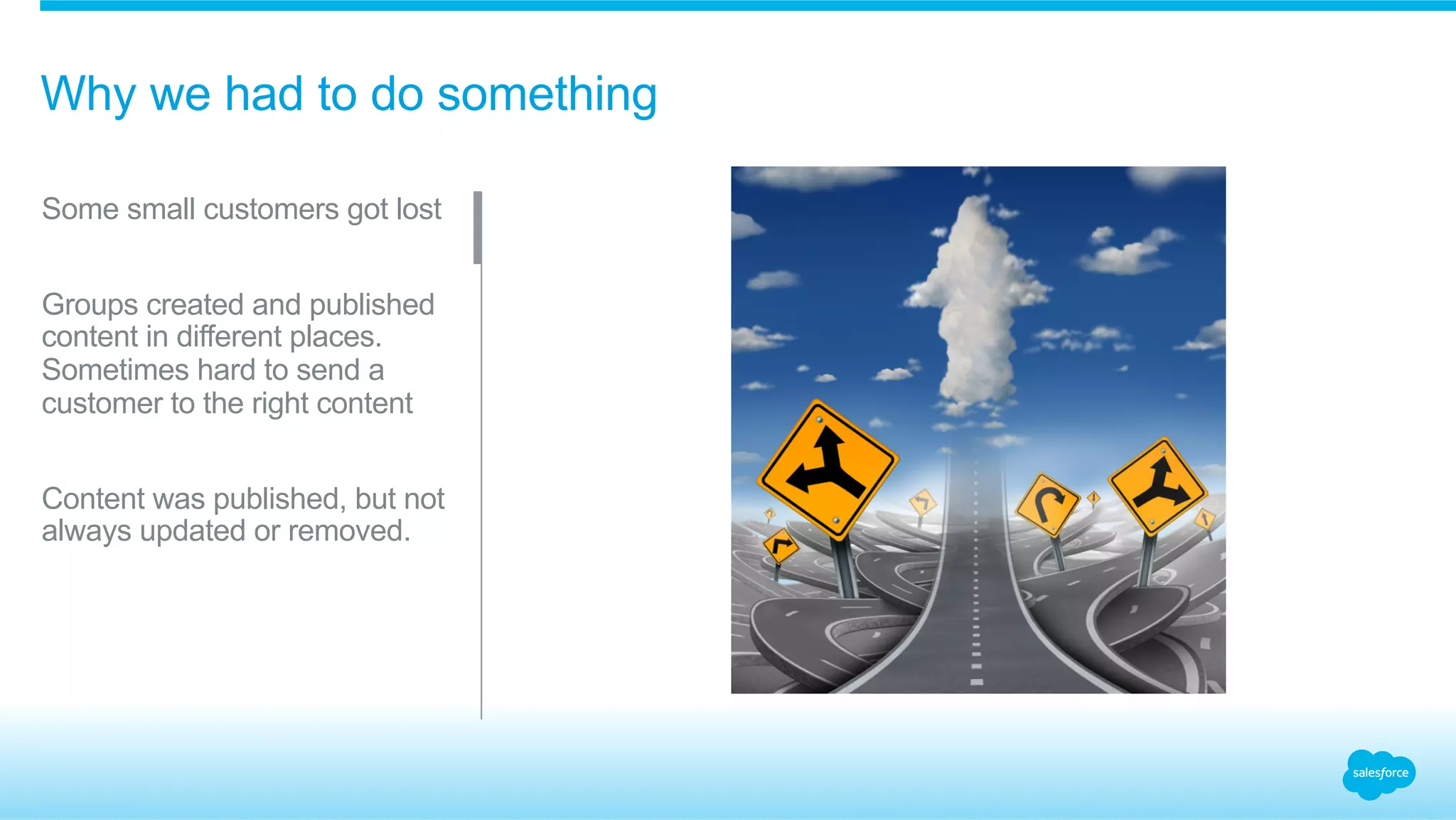
Some small customers got lost 
Groups created and published 
content in different places. 
Sometimes hard to send a 
customer to the right content 
Content was published, but not 
always updated or removed.
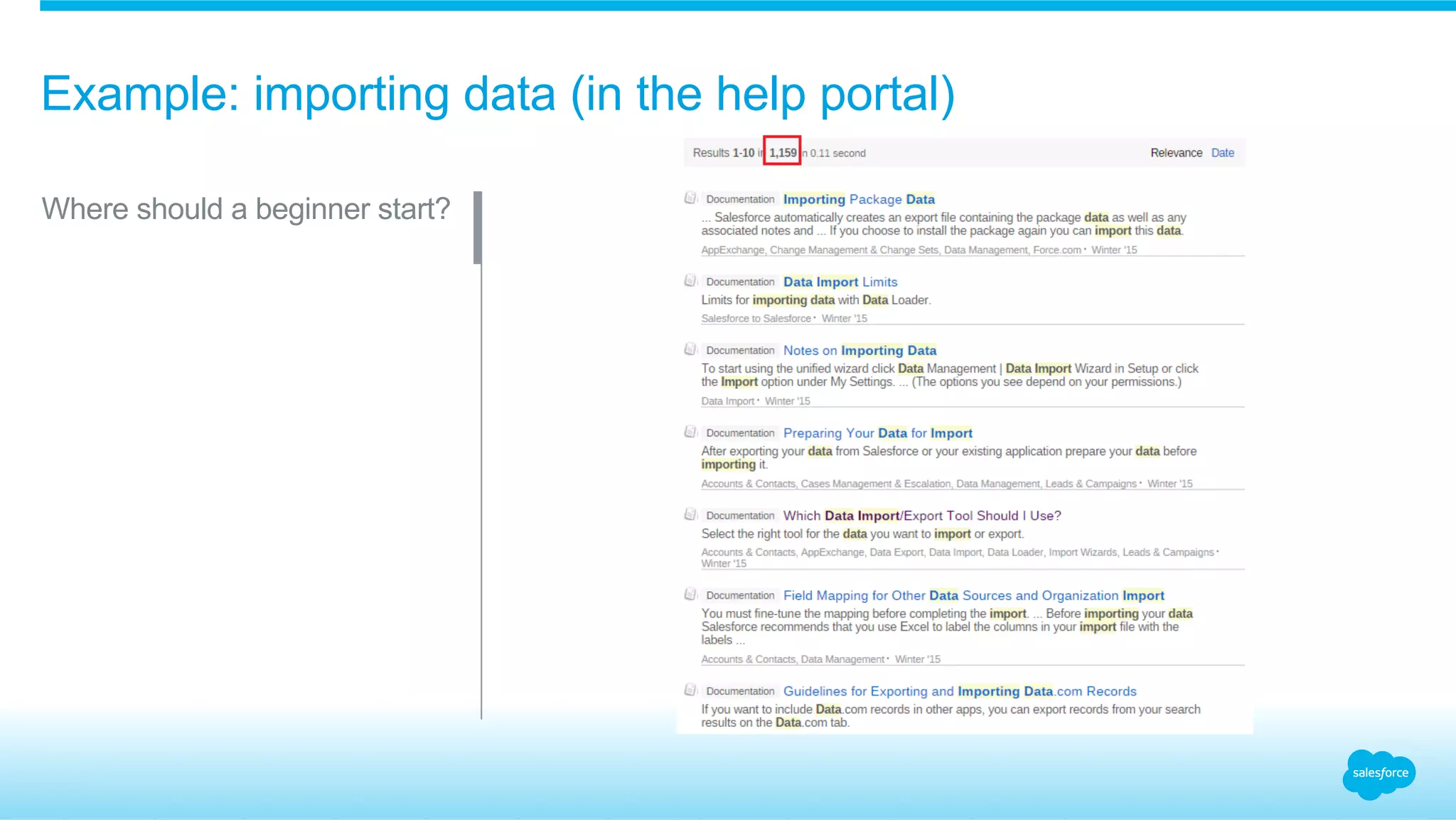
Example: importing data (in the help portal) 
Where should a beginner start?
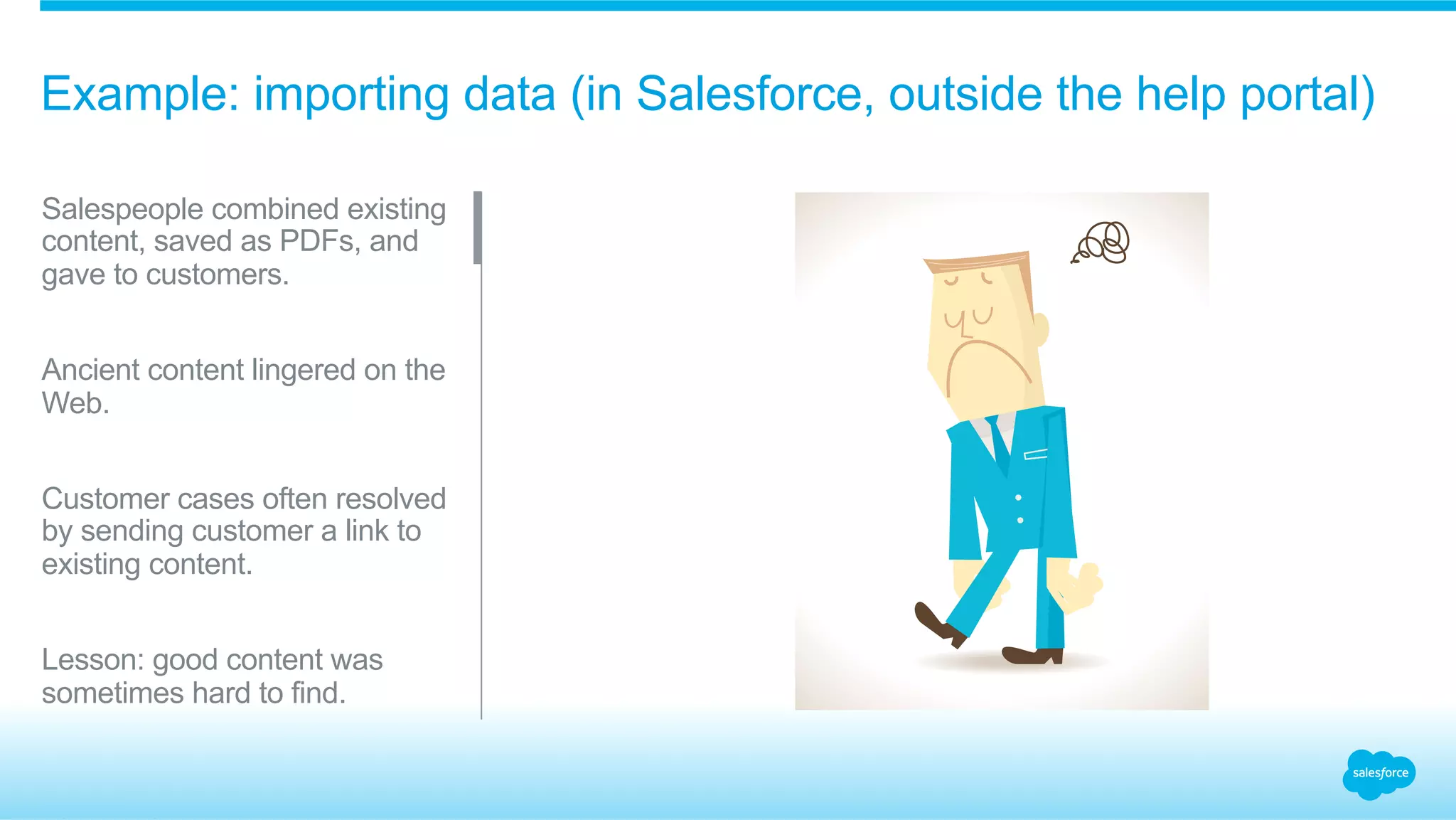
Example: importing data (in Salesforce, outside the help portal) 
Salespeople combined existing 
content, saved as PDFs, and 
gave to customers. 
Ancient content lingered on the 
Web. 
Customer cases often resolved 
by sending customer a link to 
existing content. 
Lesson: good content was 
sometimes hard to find.
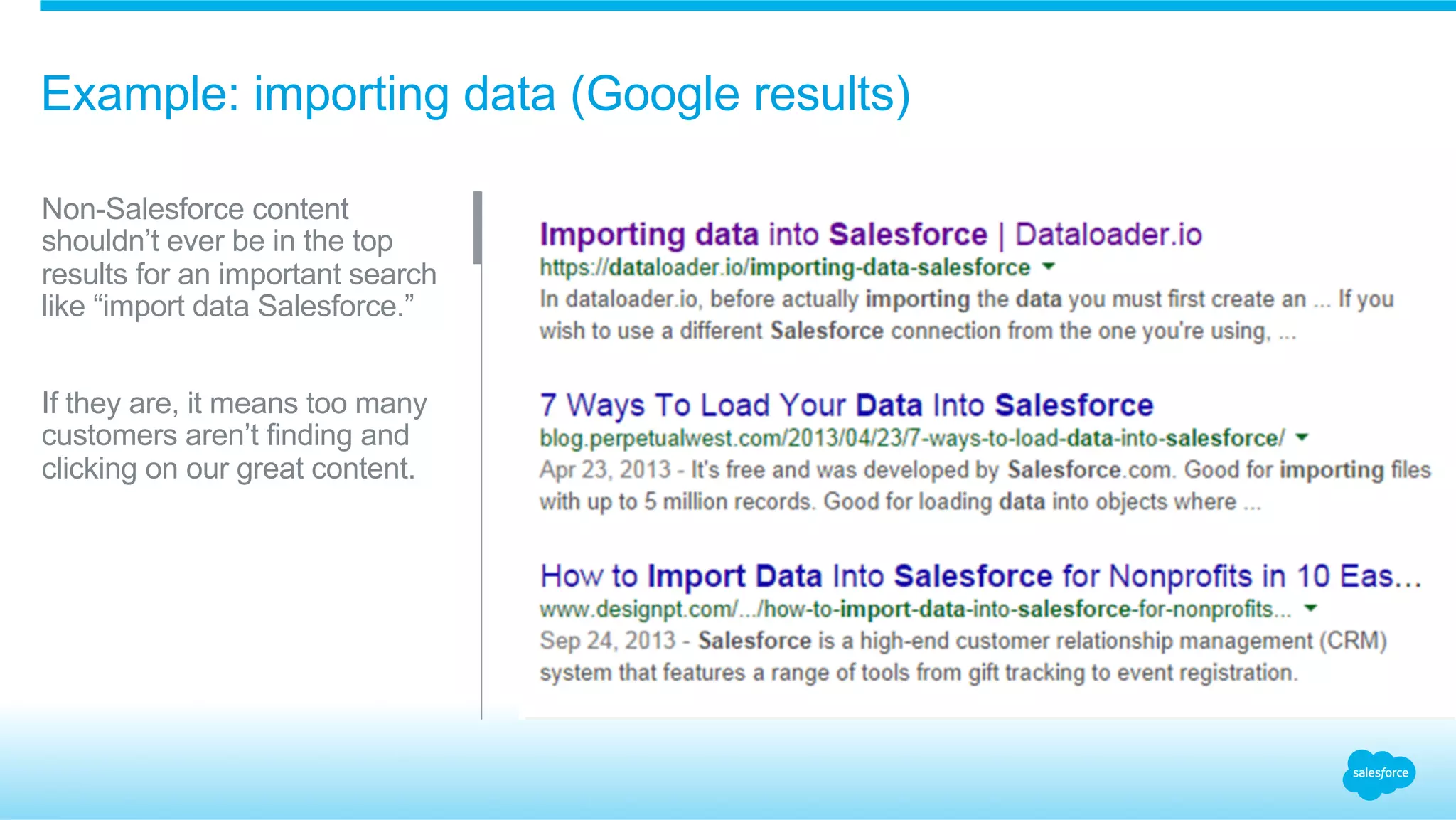
Example: importing data (Google results) 
Non-Salesforce content 
shouldn’t ever be in the top 
results for an important search 
like “import data Salesforce.” 
If they are, it means too many 
customers aren’t finding and 
clicking on our great content.
Our first project
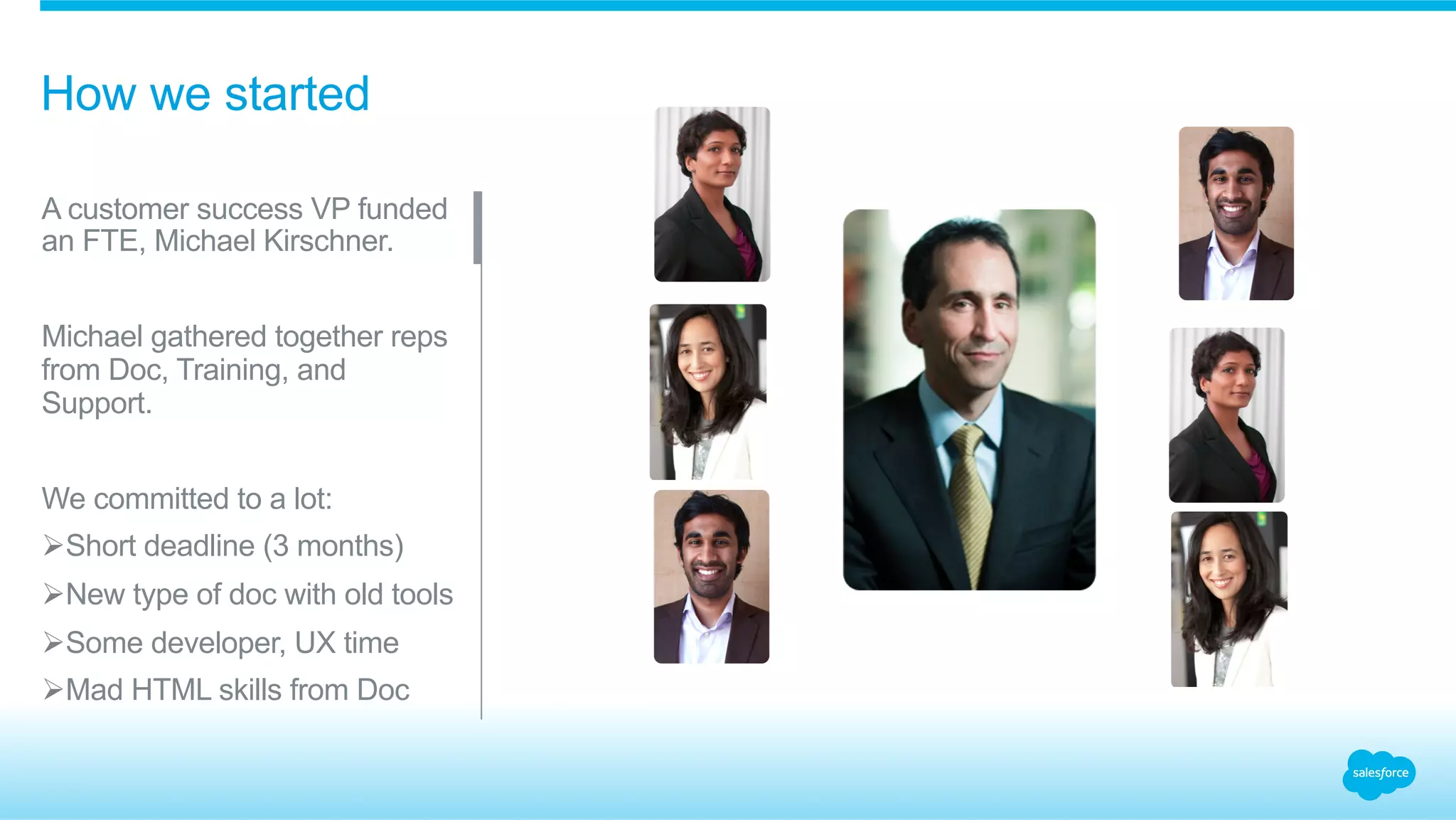
How we started 
A customer success VP funded 
an FTE, Michael Kirschner. 
Michael gathered together reps 
from Doc, Training, and 
Support. 
We committed to a lot: 
Ø Short deadline (3 months) 
Ø New type of doc with old tools 
Ø Some developer, UX time 
Ø Mad HTML skills from Doc
Michael’s first steps 
Michael’s team audited content and removed the old stuff. 
Support audited and removed duplicate knowledge 
articles as part of another initiative. 
Our unnamed team designed a brand new deliverable 
type with no new tools or processes, designed to help 
customers find content related to a goal like “import data.”
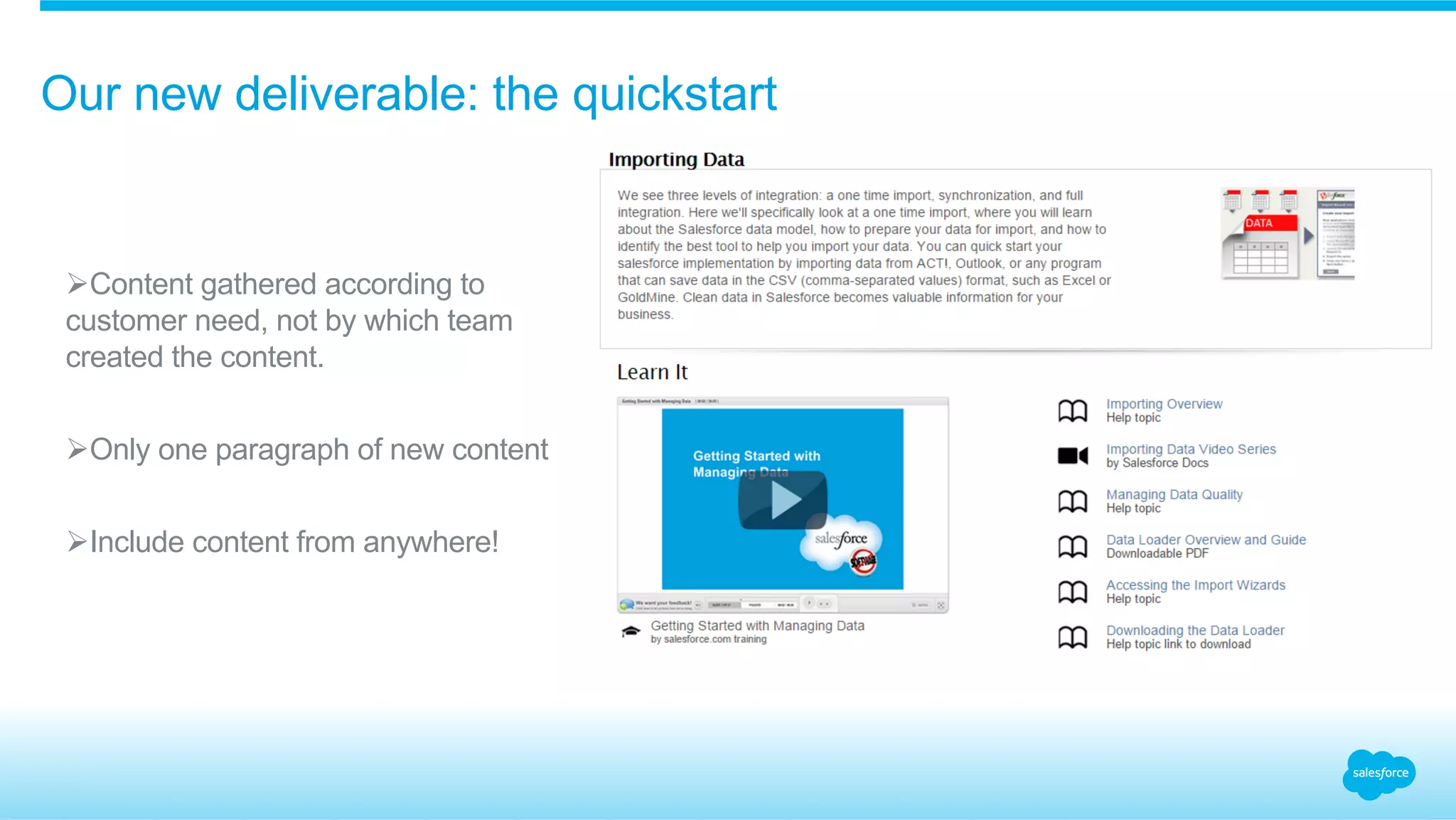
Our new deliverable: the quickstart 
Ø Content gathered according to 
customer need, not by which team 
created the content. 
Ø Only one paragraph of new content 
Ø Include content from anywhere!
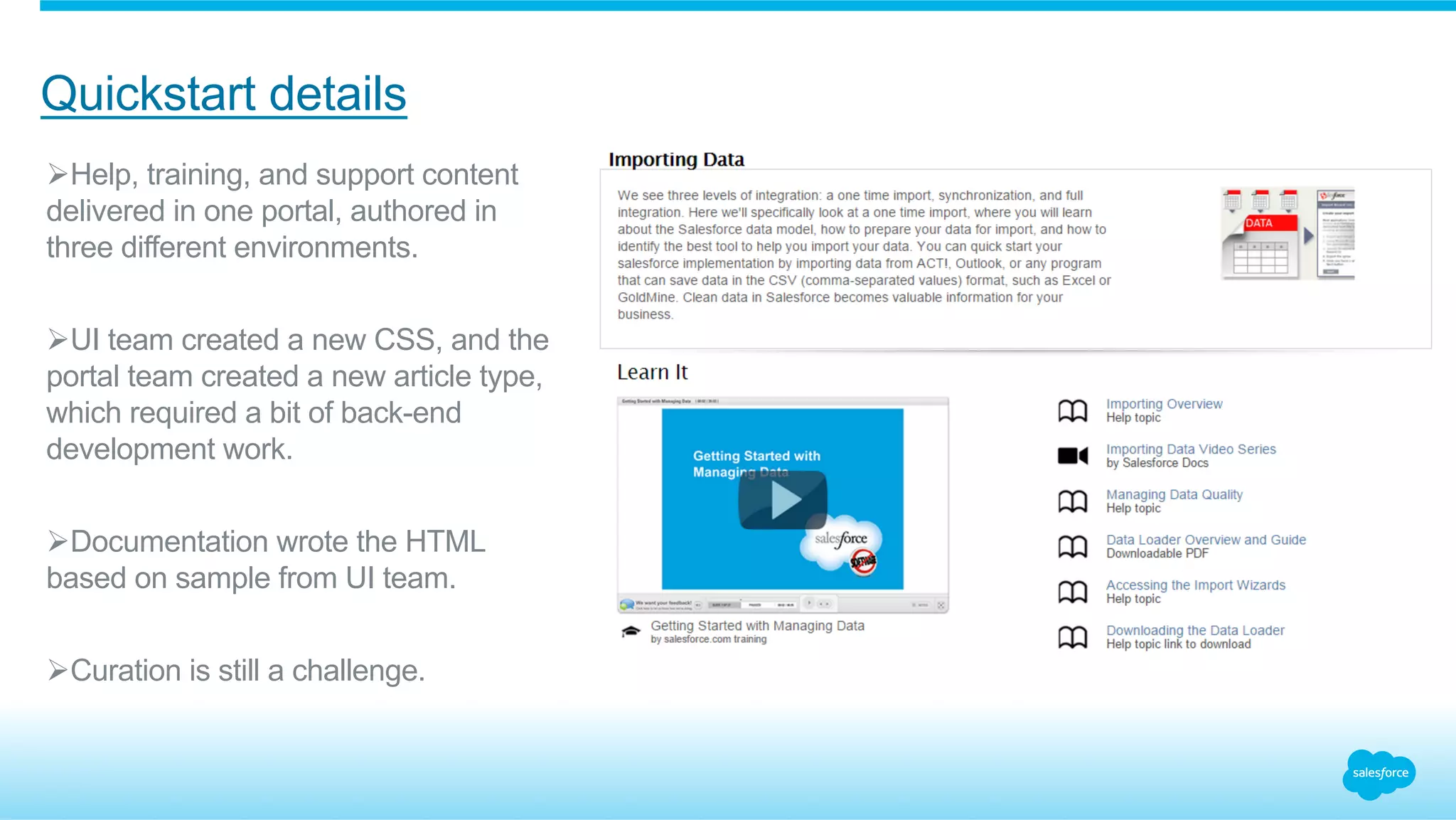
Quickstart details 
Ø Help, training, and support content 
delivered in one portal, authored in 
three different environments. 
Ø UI team created a new CSS, and the 
portal team created a new article type, 
which required a bit of back-end 
development work. 
Ø Documentation wrote the HTML 
based on sample from UI team. 
Ø Curation is still a challenge.
How well it worked
VPs and customers agreed—we filled an important gap 
Ø The number of relevant customer cases decreased. 
Ø Customers used our new quickstarts. 
Ø Other groups sent their customers links to the quickstarts.
We noticed other benefits to meeting regularly 
Ø We learned a lot about each other’s roles, challenges, and cadences. 
Ø We shared valuable information that otherwise would have stayed in one group. 
Ø We learned that different groups define success differently—and we’re all correct.
How we continued
Birth of the Content Collaboration Council 
We decided to keep meeting and looked for problems to solve. 
Our process: 
Ø Chose a name and agreed on attendees. 
Ø Met for an hour once a month, to keep requirements lightweight. 
Ø Started by defining our mission (three sessions). 
Ø Started by having each team member present their content challenges and 
opportunities. 
Ø Made time for informal sharing and questions. 
Ø Chose a facilitator (Doc!) who committed to a year.
Results to date
What we achieved 
Opening doors to communication on a rocket ship is challenging. 
Technical Sales Customer Success Training 
Ø Doesn’t waste time putting 
PDFs together. Sends customer a 
single URL. 
Ø Technical Sales knows who to 
ask for missing content, and other 
teams get precious customer 
input. Everybody wins! 
Ø Advertised new customer 
success communities across the 
company by sharing with our 
council. 
Ø Clarified how writers should 
contribute to forums (they don’t 
need us to hover, but we didn’t 
know that!) 
Ø Made some headway toward 
sharing examples. 
Ø Improved access to changes 
before they’re released 
Ø Investigated how localization 
might be improved for training.
More achievements 
Avoided a lot of duplication of effort in creating videos and walkthroughs! Plus… 
Technical Documentation Legal Marketing 
Ø Learned how customers use our 
most valuable deliverable, the 
Release Notes. 
Ø Coordinated a major change in 
help/support portal for search. 
Ø Identified the next likely 
“ask” (need for metadata and 
taxonomy that can support all 
content-generating groups). 
Ø Doc easily solved a content 
problem for Legal using 
quickstarts, just months after they 
were invented. 
Ø They’re using our style guide.
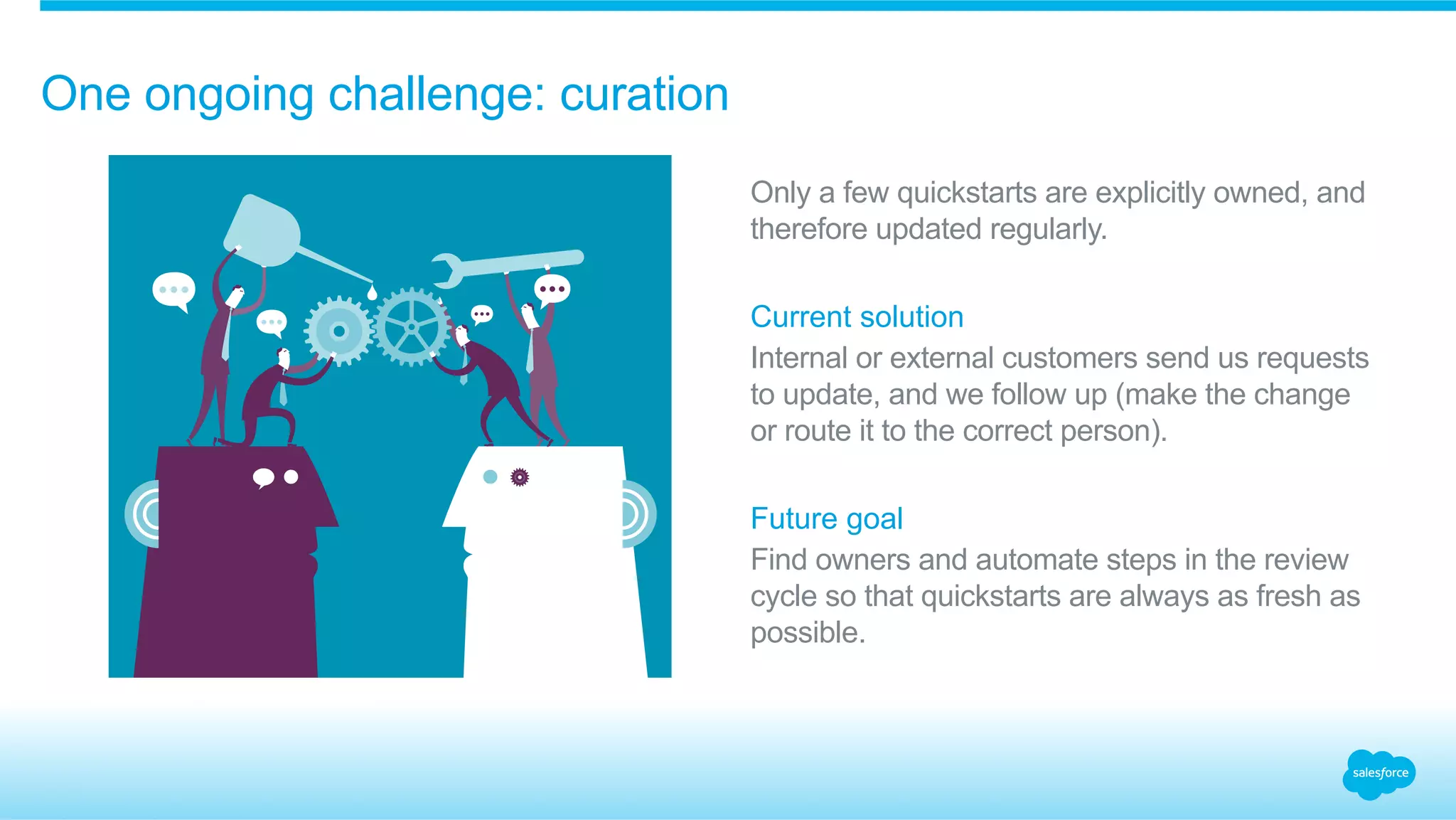
One ongoing challenge: curation 
Only a few quickstarts are explicitly owned, and 
therefore updated regularly. 
Current solution 
Internal or external customers send us requests 
to update, and we follow up (make the change 
or route it to the correct person). 
Future goal 
Find owners and automate steps in the review 
cycle so that quickstarts are always as fresh as 
possible.
Handouts and takeaways 
Start your own Collaboration Council! 
Getting Started Sample Agendas Sample Mission Statement 
Ø Tell your boss that it’s an 
industry best practice. 
Ø Pick one or two groups with the 
most overlap and need. 
Ø Give yourself time to learn each 
others’ language, cadence, and 
challenges. 
Ø Pick a small, easy win to start, 
for example: “Reduce duplicated 
content between Tech Doc and 
Support.” 
Slideshare download 
Slideshare download
What we learned 
Ø Cooperation across groups can be lightweight. 
Ø Cooperation across groups helps groups. 
Ø Cooperation across groups helps customers.
Thank you 
Mysti Berry 
Principal Technical Writer 
@MystiContent 
www.linkedin.com/in/mystiberry

Building Bridges Across an Expanding Universe

  • 1.
    Building Bridges Across an Expanding Universe Case study for a content collaboration council Mysti Berry, Principal Technical Writer
  • 2.
    Safe Harbor Safeharbor statement under the Private Securities Litigation Reform Act of 1995: This presentation may contain forward-looking statements that involve risks, uncertainties, and assumptions. If any such uncertainties materialize or if any of the assumptions proves incorrect, the results of salesforce.com, inc. could differ materially from the results expressed or implied by the forward-looking statements we make. All statements other than statements of historical fact could be deemed forward-looking, including any projections of subscriber growth, earnings, revenues, or other financial items and any statements regarding strategies or plans of management for future operations, statements of belief, any statements concerning new, planned, or upgraded services or technology developments and customer contracts or use of our services. The risks and uncertainties referred to above include – but are not limited to – risks associated with developing and delivering new functionality for our service, our new business model, our past operating losses, possible fluctuations in our operating results and rate of growth, interruptions or delays in our Web hosting, breach of our security measures, risks associated with possible mergers and acquisitions, the immature market in which we operate, our relatively limited operating history, our ability to expand, retain, and motivate our employees and manage our growth, new releases of our service and successful customer deployment, our limited history reselling non-salesforce.com products, and utilization and selling to larger enterprise customers. Further information on potential factors that could affect the financial results of salesforce.com, inc. is included in our annual report on Form 10-K for the most recent fiscal year ended January 31, 2011. This document and others are available on the SEC Filings section of the Investor Information section of our Web site. Any unreleased services or features referenced in this or other press releases or public statements are not currently available and may not be delivered on time or at all. Customers who purchase our services should make the purchase decisions based upon features that are currently available. Salesforce.com, inc. assumes no obligation and does not intend to update these forward-looking statements.
  • 3.
    Mysti Berry PrincipalTechnical Writer @MystiContent www.linkedin.com/in/mystiberry
  • 4.
    Before we getstarted… How many groups create customer content at your company? Doc/Dev/QA Support Marketing Sales Customer Training Success Groups Legal Customer Readiness Product Management How many do you interact with directly? How often? Who curates their content?
  • 5.
    Case Study: CollaborationCouncil to the rescue! The Case Study Why it matters Handouts and Takeaways Why we had to do something Our first project How well it worked How we continued Results to date Customers need content that’s findable, helpful, and accurate Not every group knows how to do all three Sample mission statement Sample agenda Ideas for how you can start Ø Cooperation across groups can be lightweight. Ø Cooperation across groups helps groups. Ø Cooperation across groups helps customers.
  • 6.
    Why we hadto do something
  • 7.
    Why we hadto do something Some small customers got lost Groups created and published content in different places. Sometimes hard to send a customer to the right content Content was published, but not always updated or removed.
  • 8.
    Example: importing data(in the help portal) Where should a beginner start?
  • 9.
    Example: importing data(in Salesforce, outside the help portal) Salespeople combined existing content, saved as PDFs, and gave to customers. Ancient content lingered on the Web. Customer cases often resolved by sending customer a link to existing content. Lesson: good content was sometimes hard to find.
  • 10.
    Example: importing data(Google results) Non-Salesforce content shouldn’t ever be in the top results for an important search like “import data Salesforce.” If they are, it means too many customers aren’t finding and clicking on our great content.
  • 11.
  • 12.
    How we started A customer success VP funded an FTE, Michael Kirschner. Michael gathered together reps from Doc, Training, and Support. We committed to a lot: Ø Short deadline (3 months) Ø New type of doc with old tools Ø Some developer, UX time Ø Mad HTML skills from Doc
  • 13.
    Michael’s first steps Michael’s team audited content and removed the old stuff. Support audited and removed duplicate knowledge articles as part of another initiative. Our unnamed team designed a brand new deliverable type with no new tools or processes, designed to help customers find content related to a goal like “import data.”
  • 14.
    Our new deliverable:the quickstart Ø Content gathered according to customer need, not by which team created the content. Ø Only one paragraph of new content Ø Include content from anywhere!
  • 15.
    Quickstart details ØHelp, training, and support content delivered in one portal, authored in three different environments. Ø UI team created a new CSS, and the portal team created a new article type, which required a bit of back-end development work. Ø Documentation wrote the HTML based on sample from UI team. Ø Curation is still a challenge.
  • 16.
  • 17.
    VPs and customersagreed—we filled an important gap Ø The number of relevant customer cases decreased. Ø Customers used our new quickstarts. Ø Other groups sent their customers links to the quickstarts.
  • 18.
    We noticed otherbenefits to meeting regularly Ø We learned a lot about each other’s roles, challenges, and cadences. Ø We shared valuable information that otherwise would have stayed in one group. Ø We learned that different groups define success differently—and we’re all correct.
  • 19.
  • 20.
    Birth of theContent Collaboration Council We decided to keep meeting and looked for problems to solve. Our process: Ø Chose a name and agreed on attendees. Ø Met for an hour once a month, to keep requirements lightweight. Ø Started by defining our mission (three sessions). Ø Started by having each team member present their content challenges and opportunities. Ø Made time for informal sharing and questions. Ø Chose a facilitator (Doc!) who committed to a year.
  • 21.
  • 22.
    What we achieved Opening doors to communication on a rocket ship is challenging. Technical Sales Customer Success Training Ø Doesn’t waste time putting PDFs together. Sends customer a single URL. Ø Technical Sales knows who to ask for missing content, and other teams get precious customer input. Everybody wins! Ø Advertised new customer success communities across the company by sharing with our council. Ø Clarified how writers should contribute to forums (they don’t need us to hover, but we didn’t know that!) Ø Made some headway toward sharing examples. Ø Improved access to changes before they’re released Ø Investigated how localization might be improved for training.
  • 23.
    More achievements Avoideda lot of duplication of effort in creating videos and walkthroughs! Plus… Technical Documentation Legal Marketing Ø Learned how customers use our most valuable deliverable, the Release Notes. Ø Coordinated a major change in help/support portal for search. Ø Identified the next likely “ask” (need for metadata and taxonomy that can support all content-generating groups). Ø Doc easily solved a content problem for Legal using quickstarts, just months after they were invented. Ø They’re using our style guide.
  • 24.
    One ongoing challenge:curation Only a few quickstarts are explicitly owned, and therefore updated regularly. Current solution Internal or external customers send us requests to update, and we follow up (make the change or route it to the correct person). Future goal Find owners and automate steps in the review cycle so that quickstarts are always as fresh as possible.
  • 25.
    Handouts and takeaways Start your own Collaboration Council! Getting Started Sample Agendas Sample Mission Statement Ø Tell your boss that it’s an industry best practice. Ø Pick one or two groups with the most overlap and need. Ø Give yourself time to learn each others’ language, cadence, and challenges. Ø Pick a small, easy win to start, for example: “Reduce duplicated content between Tech Doc and Support.” Slideshare download Slideshare download
  • 26.
    What we learned Ø Cooperation across groups can be lightweight. Ø Cooperation across groups helps groups. Ø Cooperation across groups helps customers.
  • 27.
    Thank you MystiBerry Principal Technical Writer @MystiContent www.linkedin.com/in/mystiberry