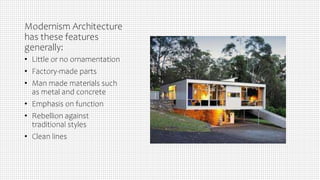
Modernism in architecture emerged in the late 19th century from advances in construction technologies like glass, steel, and reinforced concrete. It emphasized form following function through minimalist and asymmetrical designs without ornamentation. Key features included use of manufactured materials and an emphasis on functionality over historical styles. Proponents argued it inspired creativity and well served practical needs through stronger, lighter materials. Critics countered that it could disrupt cultural heritage through abstract geometries and had drawbacks like high energy use, limited aesthetics, and environmental impacts from certain materials.










![unit 1_Modernity&Architecture_251116_104341[1].pdf](https://cdn.slidesharecdn.com/ss_thumbnails/unit1modernityarchitecture2511161043411-251125083522-0646fcef-thumbnail.jpg?width=640&height=640&fit=bounds)


![ceramic-art-and-pottery [Autosaved].pptx](https://cdn.slidesharecdn.com/ss_thumbnails/ceramic-art-and-potteryautosaved-260113113456-35c55ddb-thumbnail.jpg?width=640&height=640&fit=bounds)


