Modern Architecture in
Architecture Engineering
Welcome to this introductory exploration of modern architecture,
designed for first-year students of architectural engineering. This
presentation will delve into the key concepts, styles, and influential
figures of modern architecture, exploring its development and ongoing
impact on contemporary design. We will examine the core principles
and influential movements that shaped modern architecture, tracing its
evolution from the early 20th century to the present. We will also
explore the key ideas and concepts that have driven its development,
such as functionalism, the International Style, and the emergence of
sustainability considerations. Finally, we will address some of the
critiques and controversies surrounding modern architecture, and look
toward its future direction.
SP
by Sarah Mohammed, PhD.
Introduction to Modern Architecture
Origins
Modern architecture emerged in the early 20th century
as a reaction against the ornamentation and historical
styles of the past. It emphasized simplicity,
functionality, and the use of new materials such as
steel, concrete, and glass.
Context
Modern architecture arose amidst significant societal
shifts, including the rise of industrialization,
technological advancements, and growing urban
populations. These factors influenced architects to seek
new approaches to building design.
Principles of Modern Architecture
1 Functionality
The form of a building should
be driven by its function,
emphasizing efficiency and
practicality.
2 Simplicity and Minimalism
A rejection of unnecessary
ornamentation and a focus on
clean lines, geometric shapes,
and plain surfaces.
3 New Materials and
Technologies
Modern architects embraced
new materials, such as steel,
concrete, and glass, for their
strength, durability, and
aesthetic properties.
4 Open Plan and Natural
Light
The use of large windows, open
floor plans, and a focus on
bringing natural light into
interior spaces.
Functionalism and Form
1
Function
The primary function of a building should determine its form.
2
Structure
The structure should be clearly visible and contribute to the
overall design.
3
Aesthetics
The building should be aesthetically pleasing, but not
at the expense of functionality.
The International Style
Key Features
Emphasis on horizontality,
flat roofs, large windows,
and the use of steel and
glass.
Influential Architects
Notable architects
associated with the
International Style include
Le Corbusier, Mies van der
Rohe, and Walter Gropius.
Global Impact
The International Style spread rapidly throughout the world,
influencing the design of buildings, furniture, and other
objects.
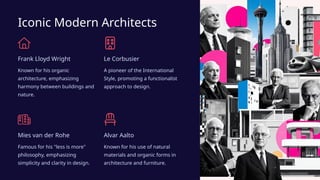
Iconic Modern Architects
Frank Lloyd Wright
Known for his organic
architecture, emphasizing
harmony between buildings and
nature.
Le Corbusier
A pioneer of the International
Style, promoting a functionalist
approach to design.
Mies van der Rohe
Famous for his "less is more"
philosophy, emphasizing
simplicity and clarity in design.
Alvar Aalto
Known for his use of natural
materials and organic forms in
architecture and furniture.
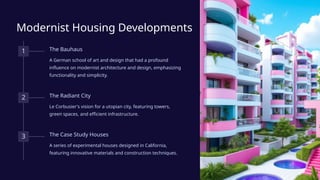
Modernist Housing Developments
1 The Bauhaus
A German school of art and design that had a profound
influence on modernist architecture and design, emphasizing
functionality and simplicity.
2 The Radiant City
Le Corbusier's vision for a utopian city, featuring towers,
green spaces, and efficient infrastructure.
3 The Case Study Houses
A series of experimental houses designed in California,
featuring innovative materials and construction techniques.
Sustainability in Modern
Architecture
Energy Efficiency
The use of passive solar design, energy-efficient
appliances, and renewable energy sources.
Water Conservation
The use of rainwater harvesting, low-flow fixtures, and
drought-tolerant landscaping.
Material Selection
The use of sustainable materials, such as recycled
materials, bamboo, and local timber.
Critiques and Criticisms of Modernism
1
Lack of Ornamentation
Critics argue that modern architecture is
too sterile and lacks the richness of
historical styles.
2
Mass Production
Concerns about the homogenization of
design and the potential for mass-
produced housing to create
monotonous landscapes.
3
Social Implications
Criticisms of the social impacts of
modern architecture, including the
displacement of communities and the
creation of segregated neighborhoods.
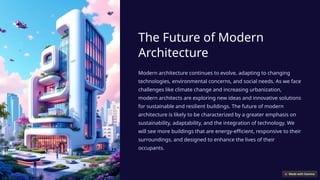
The Future of Modern
Architecture
Modern architecture continues to evolve, adapting to changing
technologies, environmental concerns, and social needs. As we face
challenges like climate change and increasing urbanization,
modern architects are exploring new ideas and innovative solutions
for sustainable and resilient buildings. The future of modern
architecture is likely to be characterized by a greater emphasis on
sustainability, adaptability, and the integration of technology. We
will see more buildings that are energy-efficient, responsive to their
surroundings, and designed to enhance the lives of their
occupants.
Tasks Design
Propose a modernist structure,
emphasizing simplicity and function.
Presentation
Analyze a modern architectural piece.
Written
Questions
Compare and contrast modern
architecture with preceding architectural
styles.
How did technology influence the design
of modernist buildings?

Modern-Architecture-in-Architectural-Engineering.pptx

  • 1.
    Modern Architecture in ArchitectureEngineering Welcome to this introductory exploration of modern architecture, designed for first-year students of architectural engineering. This presentation will delve into the key concepts, styles, and influential figures of modern architecture, exploring its development and ongoing impact on contemporary design. We will examine the core principles and influential movements that shaped modern architecture, tracing its evolution from the early 20th century to the present. We will also explore the key ideas and concepts that have driven its development, such as functionalism, the International Style, and the emergence of sustainability considerations. Finally, we will address some of the critiques and controversies surrounding modern architecture, and look toward its future direction. SP by Sarah Mohammed, PhD.
  • 2.
    Introduction to ModernArchitecture Origins Modern architecture emerged in the early 20th century as a reaction against the ornamentation and historical styles of the past. It emphasized simplicity, functionality, and the use of new materials such as steel, concrete, and glass. Context Modern architecture arose amidst significant societal shifts, including the rise of industrialization, technological advancements, and growing urban populations. These factors influenced architects to seek new approaches to building design.
  • 3.
    Principles of ModernArchitecture 1 Functionality The form of a building should be driven by its function, emphasizing efficiency and practicality. 2 Simplicity and Minimalism A rejection of unnecessary ornamentation and a focus on clean lines, geometric shapes, and plain surfaces. 3 New Materials and Technologies Modern architects embraced new materials, such as steel, concrete, and glass, for their strength, durability, and aesthetic properties. 4 Open Plan and Natural Light The use of large windows, open floor plans, and a focus on bringing natural light into interior spaces.
  • 4.
    Functionalism and Form 1 Function Theprimary function of a building should determine its form. 2 Structure The structure should be clearly visible and contribute to the overall design. 3 Aesthetics The building should be aesthetically pleasing, but not at the expense of functionality.
  • 5.
    The International Style KeyFeatures Emphasis on horizontality, flat roofs, large windows, and the use of steel and glass. Influential Architects Notable architects associated with the International Style include Le Corbusier, Mies van der Rohe, and Walter Gropius. Global Impact The International Style spread rapidly throughout the world, influencing the design of buildings, furniture, and other objects.
  • 6.
    Iconic Modern Architects FrankLloyd Wright Known for his organic architecture, emphasizing harmony between buildings and nature. Le Corbusier A pioneer of the International Style, promoting a functionalist approach to design. Mies van der Rohe Famous for his "less is more" philosophy, emphasizing simplicity and clarity in design. Alvar Aalto Known for his use of natural materials and organic forms in architecture and furniture.
  • 7.
    Modernist Housing Developments 1The Bauhaus A German school of art and design that had a profound influence on modernist architecture and design, emphasizing functionality and simplicity. 2 The Radiant City Le Corbusier's vision for a utopian city, featuring towers, green spaces, and efficient infrastructure. 3 The Case Study Houses A series of experimental houses designed in California, featuring innovative materials and construction techniques.
  • 8.
    Sustainability in Modern Architecture EnergyEfficiency The use of passive solar design, energy-efficient appliances, and renewable energy sources. Water Conservation The use of rainwater harvesting, low-flow fixtures, and drought-tolerant landscaping. Material Selection The use of sustainable materials, such as recycled materials, bamboo, and local timber.
  • 9.
    Critiques and Criticismsof Modernism 1 Lack of Ornamentation Critics argue that modern architecture is too sterile and lacks the richness of historical styles. 2 Mass Production Concerns about the homogenization of design and the potential for mass- produced housing to create monotonous landscapes. 3 Social Implications Criticisms of the social impacts of modern architecture, including the displacement of communities and the creation of segregated neighborhoods.
  • 10.
    The Future ofModern Architecture Modern architecture continues to evolve, adapting to changing technologies, environmental concerns, and social needs. As we face challenges like climate change and increasing urbanization, modern architects are exploring new ideas and innovative solutions for sustainable and resilient buildings. The future of modern architecture is likely to be characterized by a greater emphasis on sustainability, adaptability, and the integration of technology. We will see more buildings that are energy-efficient, responsive to their surroundings, and designed to enhance the lives of their occupants.
  • 11.
    Tasks Design Propose amodernist structure, emphasizing simplicity and function. Presentation Analyze a modern architectural piece. Written Questions Compare and contrast modern architecture with preceding architectural styles. How did technology influence the design of modernist buildings?