RANDALL HALLETT
NSFA NATIONAL CONFERENCE, 2015
GENERATIONAL GIVING
The Basics
2
Each Generation
Consists of approximately a 20-year span (not all
demographers and generation researchers agree on
the exact start/stop dates)
Has a unique set of values
Reacts to the generation before them
Looks at their generation as the standard of
comparison
Looks at the next generation skeptically “these kids
today…”
Those born on the “cusp” may have a blended set of
characteristics
They are either idealistic, reactive, civic or adaptive
How Generational Births Will
Impact Retirements
2,500,000
2,700,000
2,900,000
3,100,000
3,300,000
3,500,000
3,700,000
3,900,000
4,100,000
4,300,000
4,500,000
1940
1952
1955
1958
1961
1964
1967
1970
1973
1976
1979
1983
1986
1989
1992
1995
1998
2001
2004
births
(Boomers)
(Xers)
(Millennials)
Who Is Working Today?
43%
10%14%
33%
Veterans
Boomers
Gen X
Millennials
1,000 die per day
7,198 turned 60 every day in
2006
Youngest are 5 years old
Half the size of the
generations on either side
of them
Change in American Workers
The Generations
The Baby Boomers
1943–1964
Core Values
Optimism
Team Orientation
Personal Gratification
Health and Wellness
Personal Growth
Youth
Work
Involvement
 Divorce reached a low in 1960 of 9%
 Families moved due to GI Bill, GI housing
and industrialization
 First generation to live miles from
extended family
 Family size smaller (2-3 children)
 Few grandparents in the home
 Moms stayed home – no daycare
 Children spent significant time with
adult role models (mostly mom)
 Perception of the world as “safe”
Baby Boomers
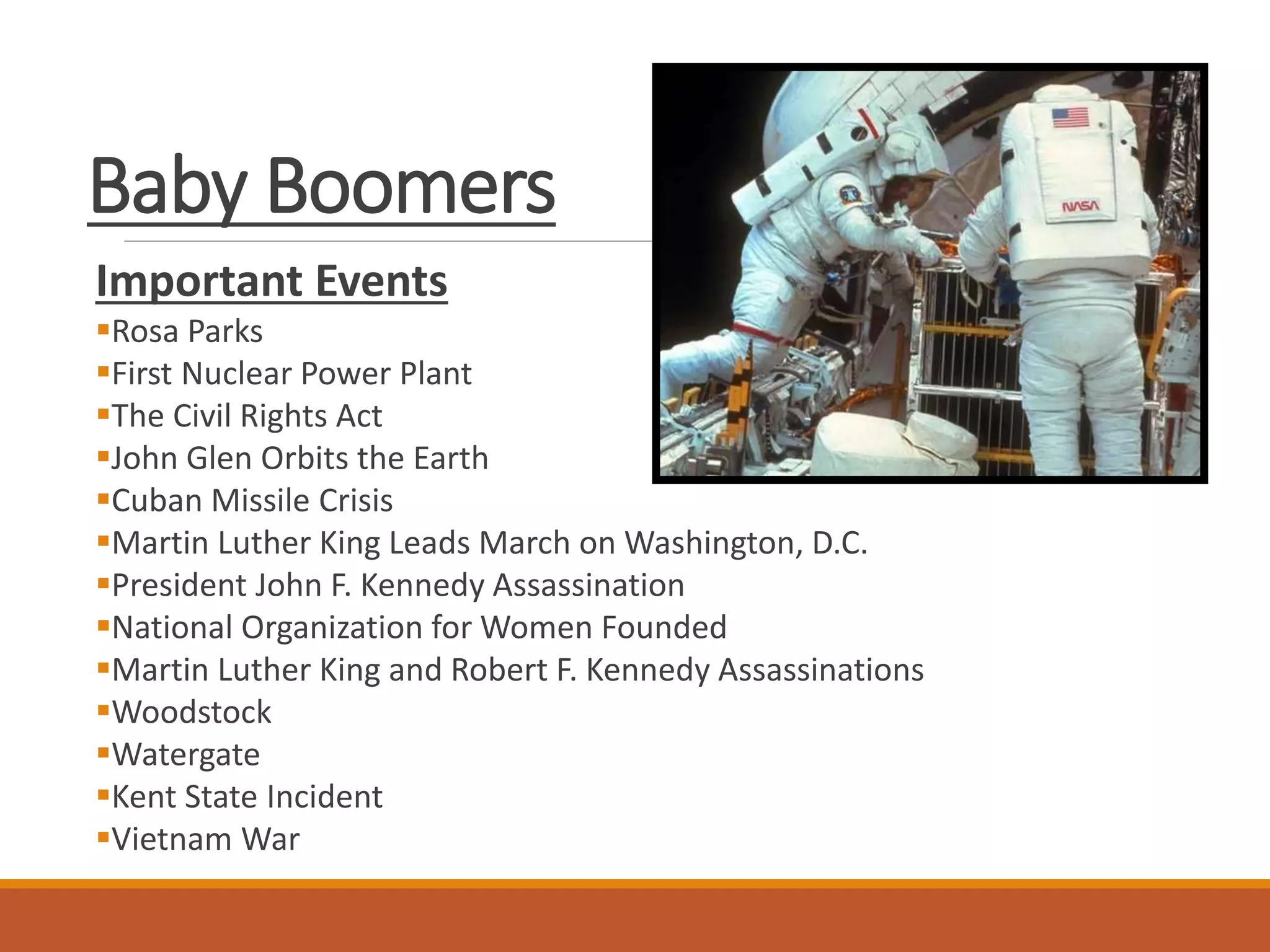
Important Events
Rosa Parks
First Nuclear Power Plant
The Civil Rights Act
John Glen Orbits the Earth
Cuban Missile Crisis
Martin Luther King Leads March on Washington, D.C.
President John F. Kennedy Assassination
National Organization for Women Founded
Martin Luther King and Robert F. Kennedy Assassinations
Woodstock
Watergate
Kent State Incident
Vietnam War
Baby-Boomer Results
Very idealistic - banned together and walked through
life with their fists held high
Generation gap occurred between them and their
parents
Captured phrases like “why be normal” and “question
authority”
They weren’t friendly toward authority figures
Did not get along with their parents and swore they
would not raise their kids like they were raised
As adults - work an average of 55 hours per week
How Boomers Learn
Want things to fit into the “big picture”
Want recognition for how well they have done
Team oriented, work well in groups
Like to explore and analyze, look at different
views
Follow instructions well
Good with content
Boomer’s Educational
Experiences
Overwhelmed the school system, large class sizes
Ability grouped (red birds and blue birds)
Question authority but respect position
See life as an adventure (and school)
Emphasis on team work (cohort education)
Need silence to concentrate
Were told “you are lucky to be here, others are standing in line to
get in.”
Want to feel valued
Rarely tested and not for school performance (PSAT, SAT)
Boomers at Work
Ethic = long hours show commitment
Team oriented and relationship builders
(don’t like conflict – can’t we all just get
along)
Not budget minded
Sensitive to feedback
Marketing to Boomers
Are individualistic so they like “customized and
custom-made products”
Want to look successful (lots of stuff)
Seek self-improvement
Products/services that help them reach a balanced
life (work/home)
Like technology but see the problems that come
with it
Boomer’s Take-Aways
The Gen X
1965-1997
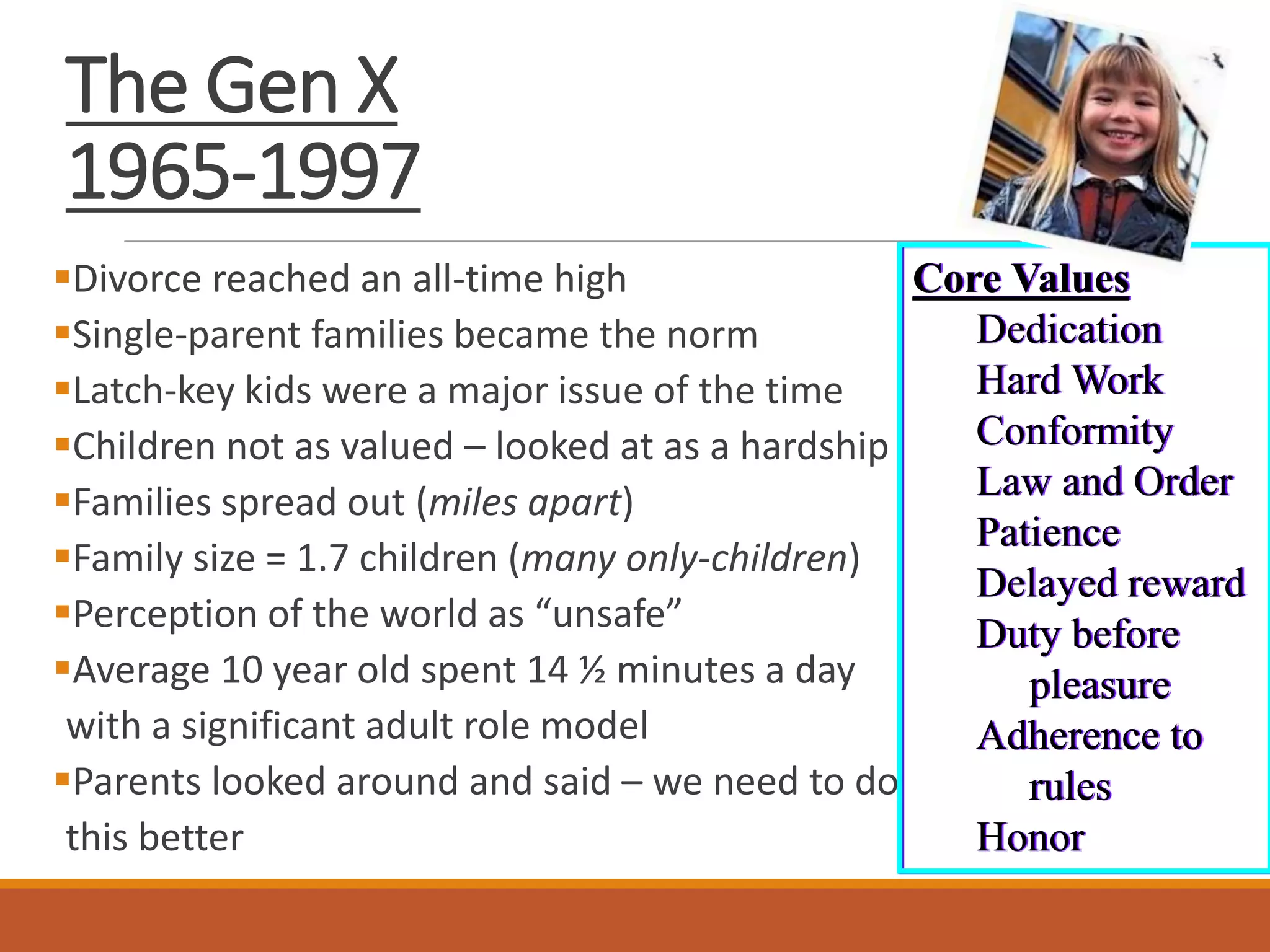
Divorce reached an all-time high
Single-parent families became the norm
Latch-key kids were a major issue of the time
Children not as valued – looked at as a hardship
Families spread out (miles apart)
Family size = 1.7 children (many only-children)
Perception of the world as “unsafe”
Average 10 year old spent 14 ½ minutes a day
with a significant adult role model
Parents looked around and said – we need to do
this better
Core Values
Dedication
Hard Work
Conformity
Law and Order
Patience
Delayed reward
Duty before
pleasure
Adherence to
rules
Honor
Gen X
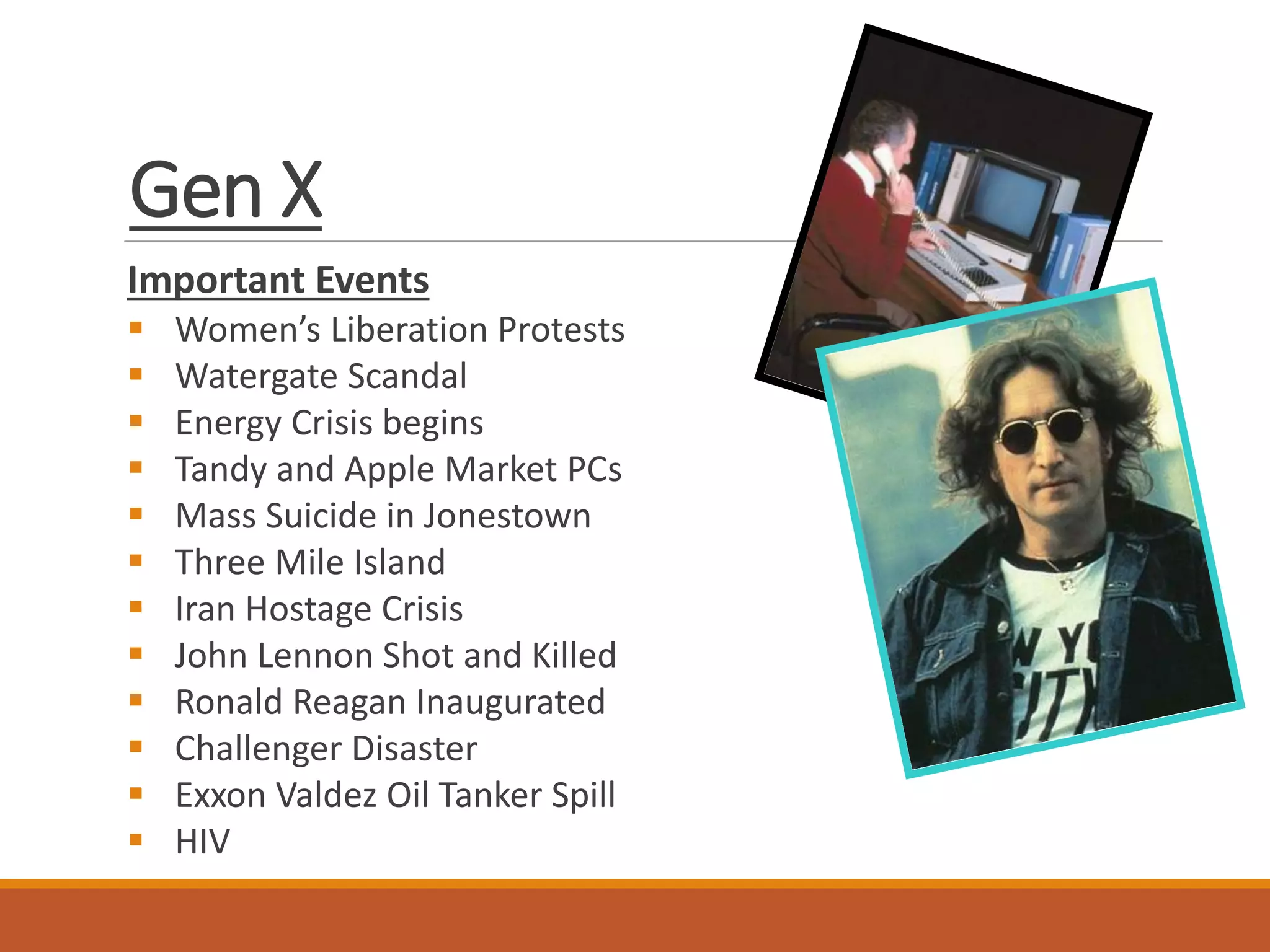
Important Events
 Women’s Liberation Protests
 Watergate Scandal
 Energy Crisis begins
 Tandy and Apple Market PCs
 Mass Suicide in Jonestown
 Three Mile Island
 Iran Hostage Crisis
 John Lennon Shot and Killed
 Ronald Reagan Inaugurated
 Challenger Disaster
 Exxon Valdez Oil Tanker Spill
 HIV
Generation X Results
This is the conscientious, extremely pragmatic, self-
sufficient generation that has a ruthless focus on the
bottom-line.
Born and raised at a time when children were at the
bottom of our social priorities, Gen Xers learned that
they could only count on one thing - themselves. As a
result, they are very "me" oriented.
They are not active voters, nor are they deeply
involved in politics in general.
Parents looked around and said “we have to do this
better.”
How Gen Xers Learn
Task oriented – like to learn new skills
Speed is important
Self-paced learning, independent learning
Want to have fun while they learn
Informal learning environments are best
Hate group work
Want feedback from teacher
Educational Experiences
Learned to rely on self (don’t like group work)
Distrust authority
Seek challenging environment (career education emphasis)
Want feedback on progress
Want to do things their way – like no rules and freedom on
assignments
Had honors programs
Funding cut to education
Testing “mania” began with them
First daycare centers arose with them
Many latch-key kids
Gen Xers as Workers
Cynical, pessimistic and impatient with poorer people skills
Want work-life balance
Think globally and seek independence
Like technology and want an informal work environment
Don’t want the boomers’ work ethic
Communication is important and talk to adults as friends/peers (not
impressed with authority)
Believe reward should be based on productivity not hours worked
Want control of self, time and future
Loyalty to people not a company
Gen Xer’s Take-Aways
The Echo Boom/Millennials…
The Millennials are almost as large as the baby boom
The Millennials are the children born between 1982 and 2002 (peaked in 1990), a
cohort called by various names:
Generation Y Echo Boom
Net GenerationMillennials
Millennials
This generation is civic-minded, much like the
previous GI Generation.
They are collectively optimistic, long-term
planners, high achievers with lower rates of violent
crime, teen pregnancy, smoking and alcohol use
than ever before.
This generation believes that they have the
potential to be great and they probably do. We are
looking to them to provide us with a new definition
of citizenship.
The Millennial Childhood
The most monumental financial boom in
history.
Steady income growth through the 1990’s.
Still great disparity between races.
Saw their parents lose all their stocks and
mutual funds (college funds) during the early
2000’s.
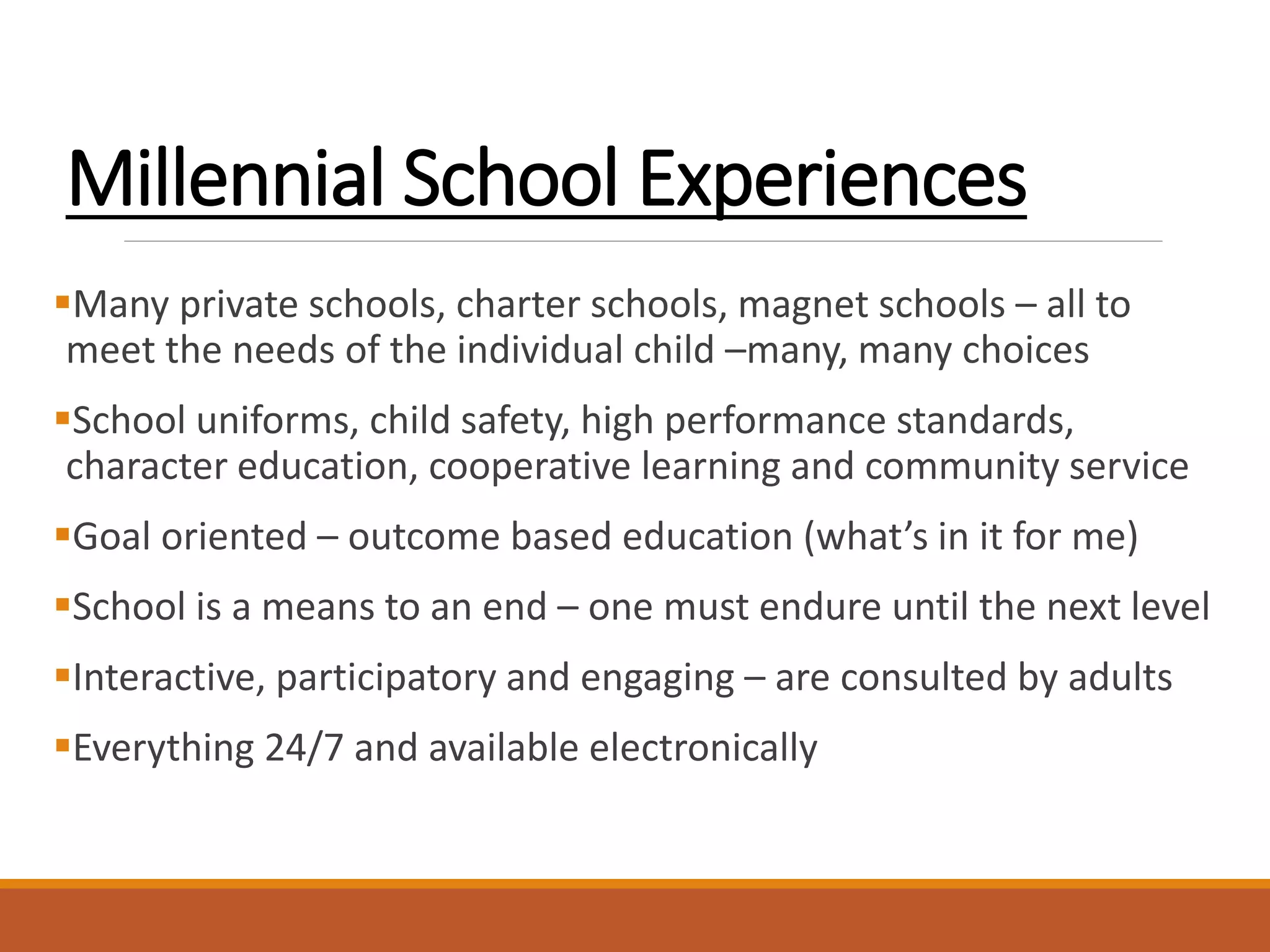
Millennial School Experiences
Many private schools, charter schools, magnet schools – all to
meet the needs of the individual child –many, many choices
School uniforms, child safety, high performance standards,
character education, cooperative learning and community service
Goal oriented – outcome based education (what’s in it for me)
School is a means to an end – one must endure until the next level
Interactive, participatory and engaging – are consulted by adults
Everything 24/7 and available electronically
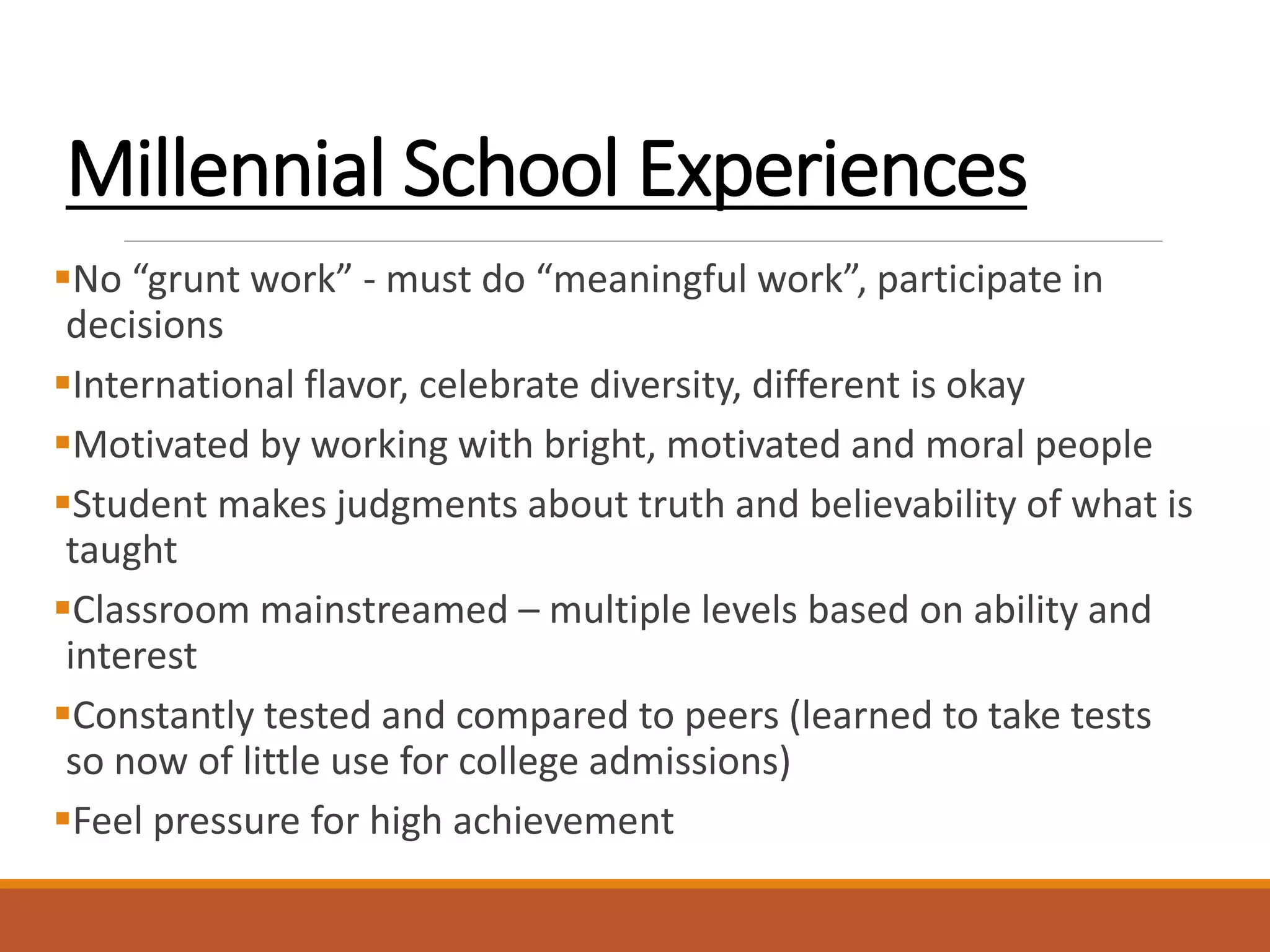
Millennial School Experiences
No “grunt work” - must do “meaningful work”, participate in
decisions
International flavor, celebrate diversity, different is okay
Motivated by working with bright, motivated and moral people
Student makes judgments about truth and believability of what is
taught
Classroom mainstreamed – multiple levels based on ability and
interest
Constantly tested and compared to peers (learned to take tests
so now of little use for college admissions)
Feel pressure for high achievement
How Millennials Learn
Try it their way – always looking for better,
faster way of doing things
Prefer graphics before text, reading of
excerpts
Like small and fast processing technology –
best when networked
Want instant gratification and frequent
rewards (spot)
How Millennials Learn
Focus on skill development – not memorization of
what they perceive they don’t need to know
Productivity is key – not attendance – so make
class worthwhile or they won’t come
Have different critical thinking skills based on their
high tech world not thought processing (need help
here)
Rely on teacher to facilitate learning
Group think and interaction
Millennials Want to Learn
With technology
With each other
Online
In their time
In their place
Doing things that
matter (most
important)
Source: Achievement and the 21st Century Learner.
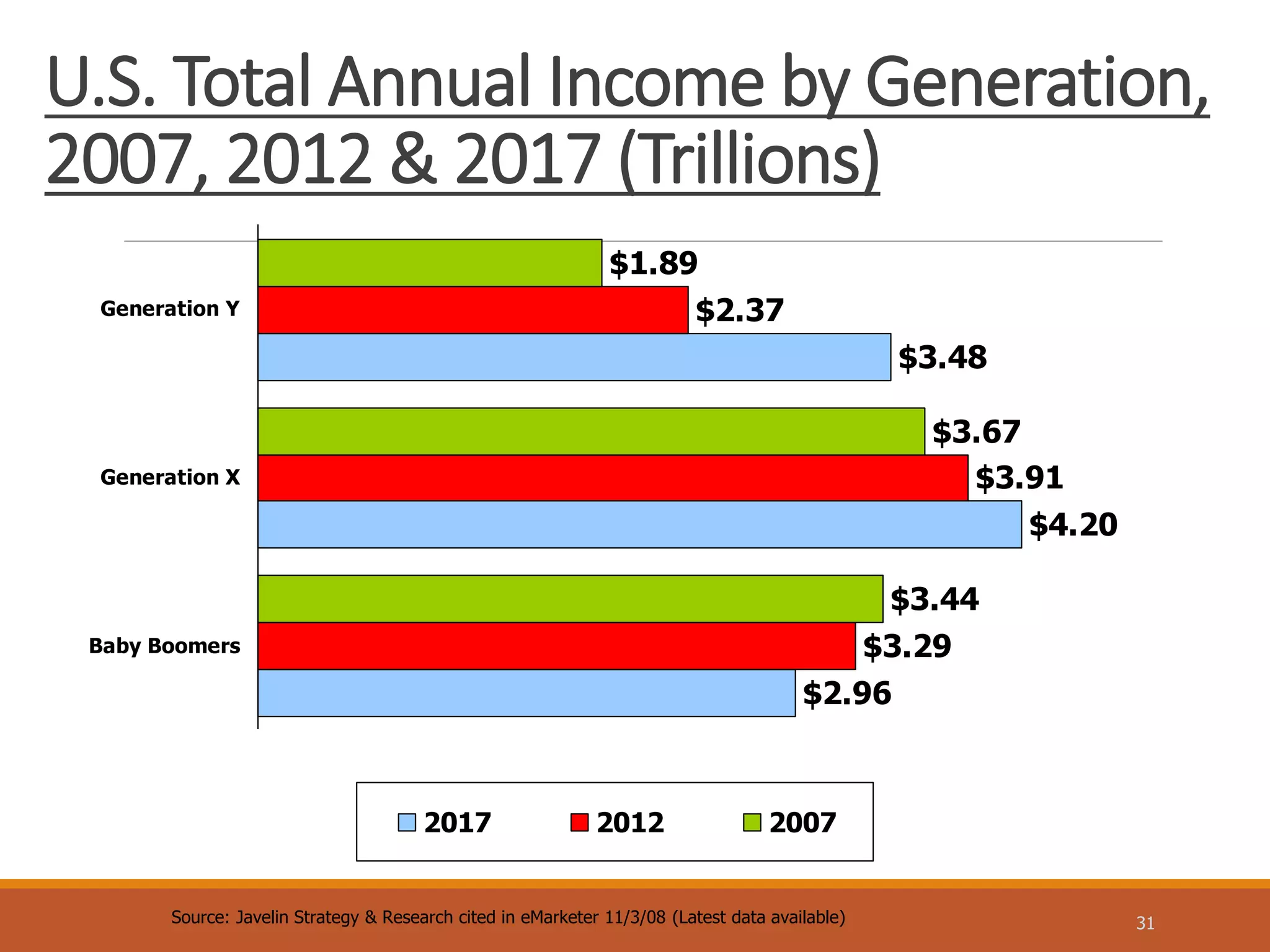
U.S. Total Annual Income by Generation,
2007, 2012 & 2017 (Trillions)
31Source: Javelin Strategy & Research cited in eMarketer 11/3/08 (Latest data available)
$2.96
$4.20
$3.48
$3.29
$3.91
$2.37
$3.44
$3.67
$1.89
Baby Boomers
Generation X
Generation Y
2017 2012 2007
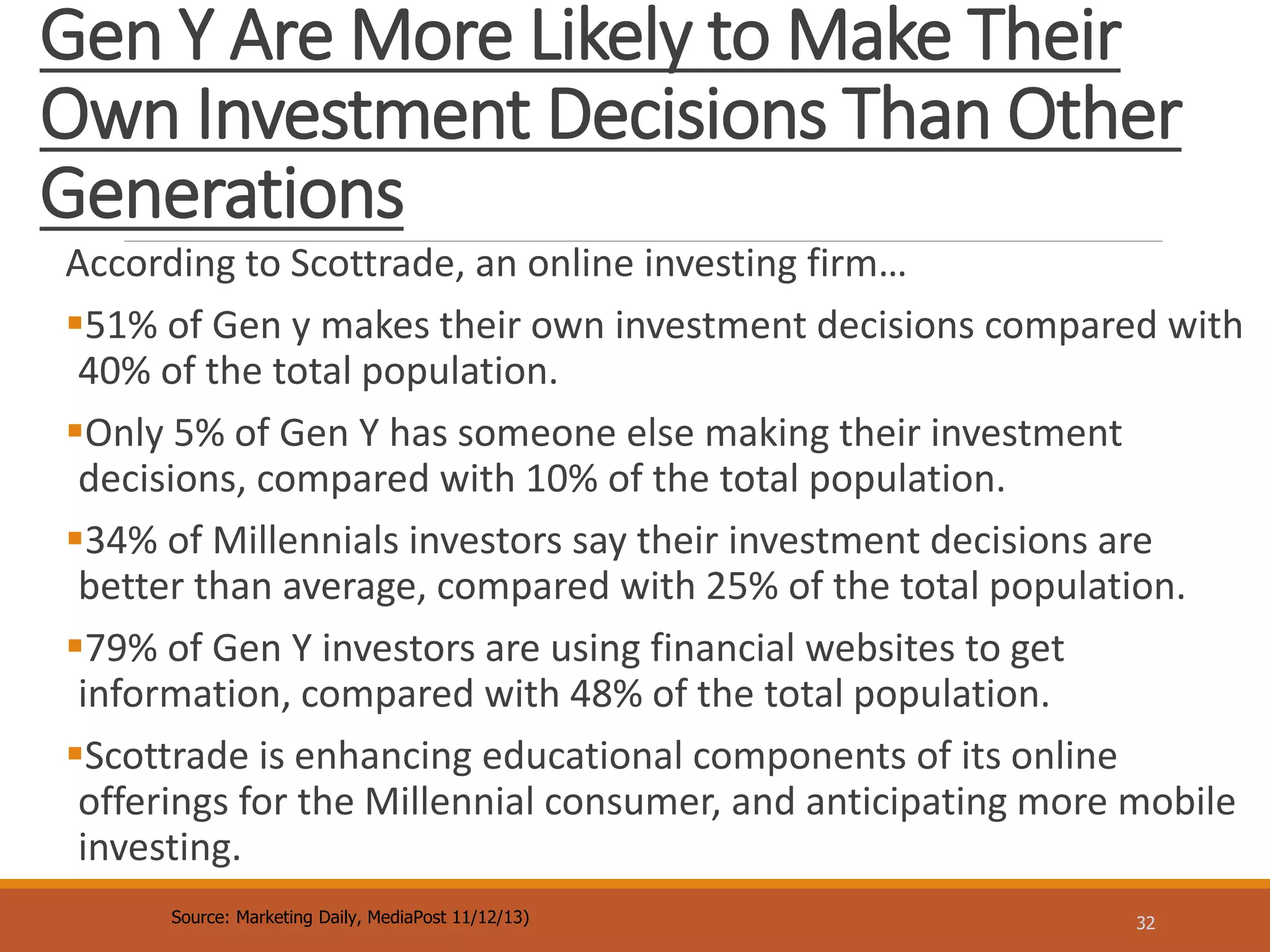
Gen Y Are More Likely to Make Their
Own Investment Decisions Than Other
Generations
According to Scottrade, an online investing firm…
51% of Gen y makes their own investment decisions compared with
40% of the total population.
Only 5% of Gen Y has someone else making their investment
decisions, compared with 10% of the total population.
34% of Millennials investors say their investment decisions are
better than average, compared with 25% of the total population.
79% of Gen Y investors are using financial websites to get
information, compared with 48% of the total population.
Scottrade is enhancing educational components of its online
offerings for the Millennial consumer, and anticipating more mobile
investing.
32Source: Marketing Daily, MediaPost 11/12/13)
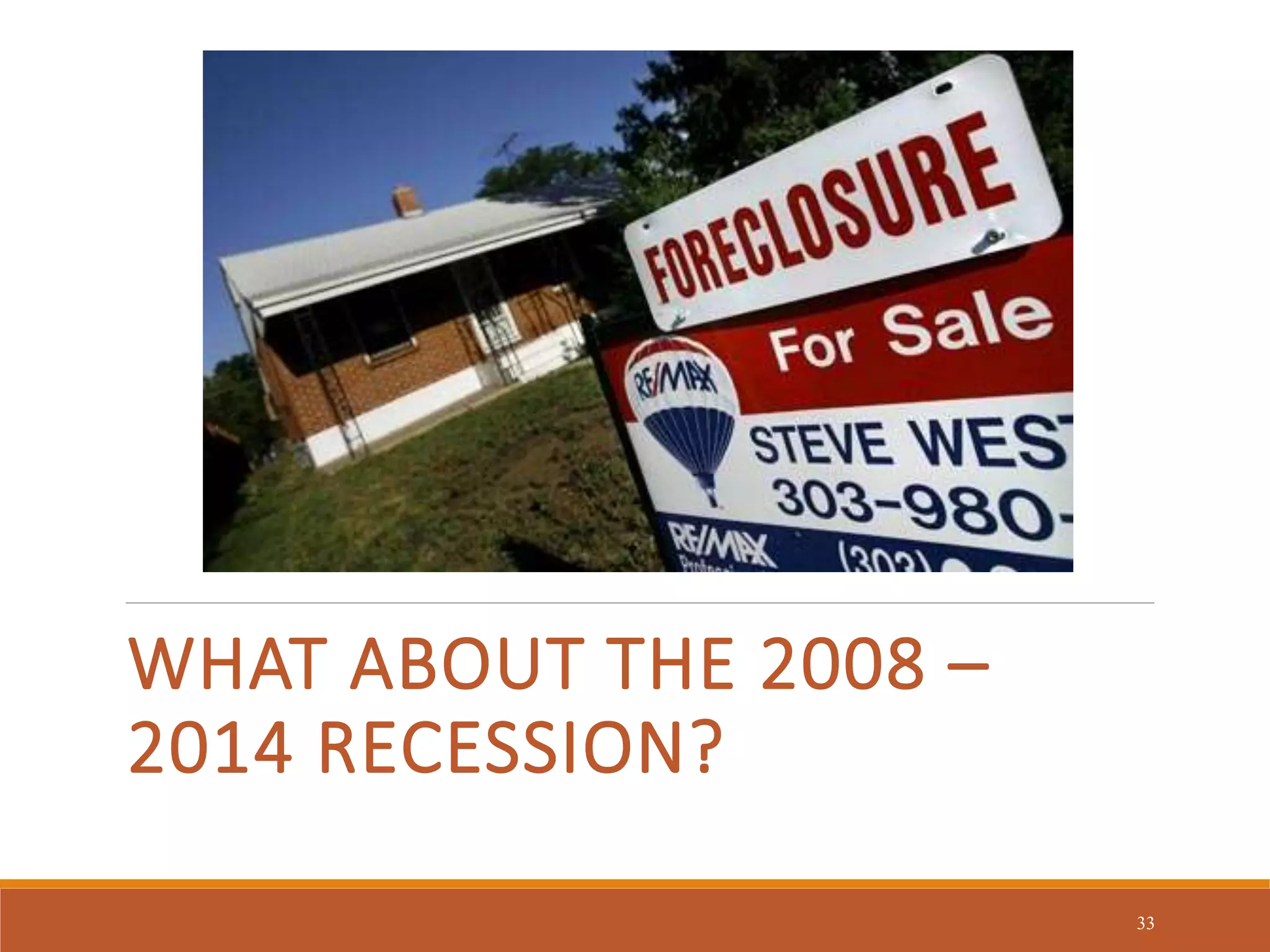
WHAT ABOUT THE 2008 –
2014 RECESSION?
33
Debt and Work
Total student loan debt exceeds $1 trillion; avg. debt per 2014
grad = $29,800 (Federal Reserve)
Unemployment rate for recent college grads = 8.8%
(Economic Policy Research Institute)
Between 2000 and 2013, wages for college grads decreased
8.5% or ~$3,200 (EPRI)
1 in 2 American adults aren’t saving for retirement (LIMRA)
39% of millennials expect to work indefinitely & won’t have
enough money to retire (Financial Times)
Generation Y Places High Value On
Connection to others
Diversity
Living first, working second
Time with friends
Civic activities
Taking care of the environment
Authenticity
Quality
Access to information
Ongoing learning
Career development
Freedom to travel
35Source: Marketing to Generation Y: What You Can’t Afford Not to Know, by Bea Fields, 12/25/2008
Expectation of Privacy
36
Helicopter Parenting
37
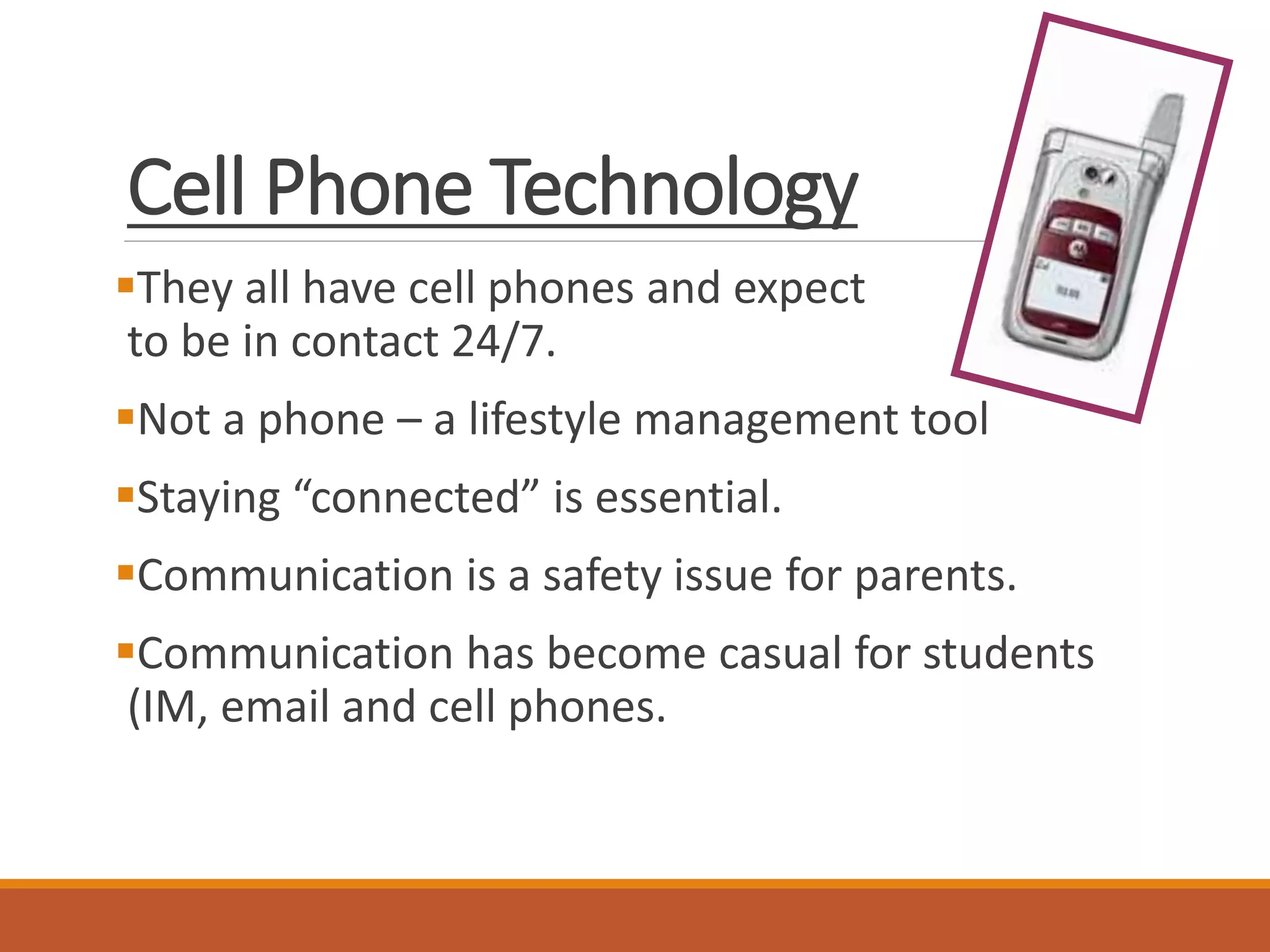
Cell Phone Technology
They all have cell phones and expect
to be in contact 24/7.
Not a phone – a lifestyle management tool
Staying “connected” is essential.
Communication is a safety issue for parents.
Communication has become casual for students
(IM, email and cell phones.
What Millennials Want
Ability to work whenever and wherever
they want.
Variation on the job
Continual feedback from supervisors
Opportunities to learn, retool and reinvent
themselves
Challenge, new problems to solve
To be in charge of their lives and future
Marston, Cam, Motivating the “What’s In It for Me” Workforce: Managing Across the
Generational Divide and Increasing Profits, 2007
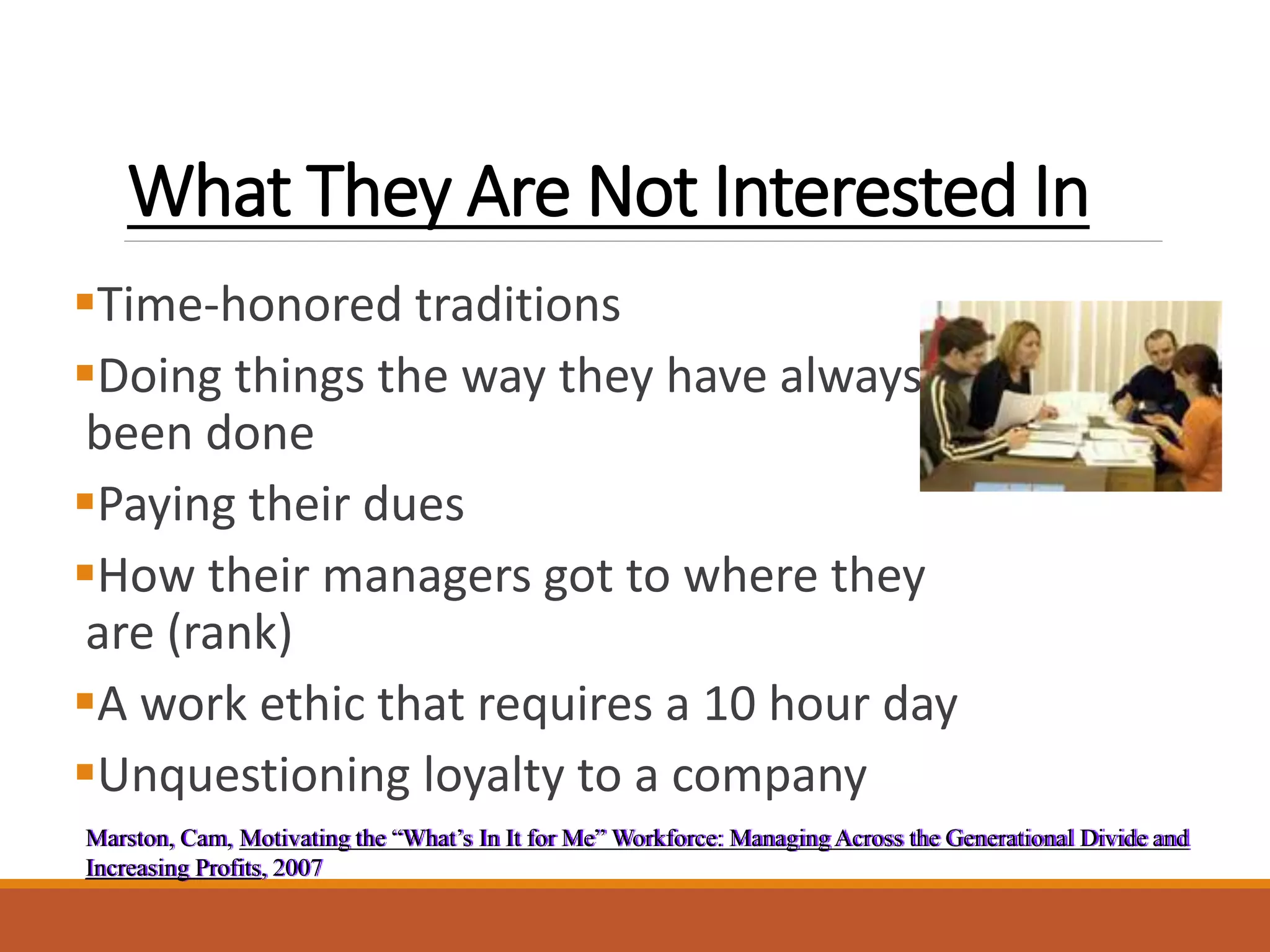
What They Are Not Interested In
Time-honored traditions
Doing things the way they have always
been done
Paying their dues
How their managers got to where they
are (rank)
A work ethic that requires a 10 hour day
Unquestioning loyalty to a company
Marston, Cam, Motivating the “What’s In It for Me” Workforce: Managing Across the Generational Divide and
Increasing Profits, 2007
Milleniam’s Take-Aways
Messages that Motivate
Veterans
◦ Your experience is respected here
◦ What has and hasn’t worked in the past is
relevant
◦ Perseverance is valued
Boomers
◦ You are important to our success
◦ Your contribution is unique and important
◦ We need you
Messages that Motivate
Gen Xers
◦ Do it your way
◦ There aren’t a lot of rules here
◦ We’re not very corporate
Millennials
◦ You will work with other bright, creative people
◦ You can help turn this company around
◦ You can be a hero here
◦ We value independent workers
◦ Your boss will help you succeed
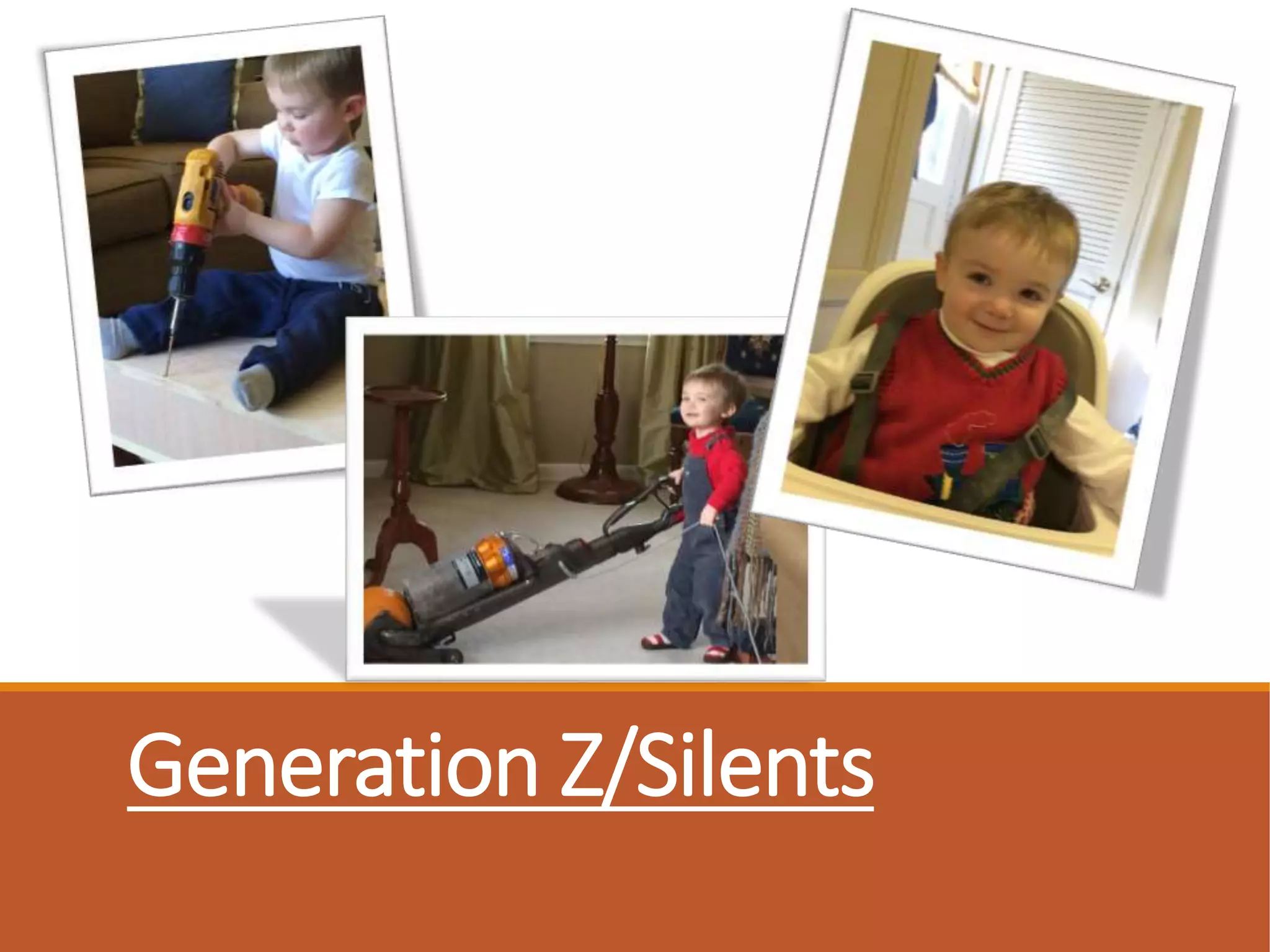
Generation Z/Silents
Starts mid-2000’s until about 2017-2020
Will be raised on technology, they will not be scared of anything, they
will be open to new ideas.
They will be into truth and loyalty and they will not be not afraid to
voice their opinion.
They will be flexible and open to change.
They will be fearless and fun.
They will be the ‘new’ hope for our own future.
Their great-grandparents belong mostly to the Silent Generation and
the Baby boomers form the core of their grandparents.
Their parents are seen as being roughly evenly divided between
Generation X and Generation Y.
http://www.generationzbaby.com/generation-z.html
Older Generations Make
Assumptions
That younger generations will measure success just as we have.
Young worker must pay their dues and follow the same paths to success
as previous generations.
The company ladder will remain intact.
Workers go where the jobs are.
Marston, Cam, Motivating the “What’s In It for Me” Workforce: Managing Across the
Generational Divide and Increasing Profits, 2007
One Final Word
In case you're worried about what's going to become of the younger
generation, it's going to grow up and start worrying about the younger
generation. (Roger Allen)
About Your Presenter
Randall Hallett
Board Member, NSFA
Long time fundraiser (CDO) and advocate for
secondary educational fundraising
Consultant in Healthcare Philanthropy
CFRE, Ed.D. Candidate, JD, MBA, BS
randallhallett@yahoo.com
402.943.6097

Generations - NSFA 2015

  • 1.
    RANDALL HALLETT NSFA NATIONALCONFERENCE, 2015 GENERATIONAL GIVING
  • 2.
  • 3.
    Each Generation Consists ofapproximately a 20-year span (not all demographers and generation researchers agree on the exact start/stop dates) Has a unique set of values Reacts to the generation before them Looks at their generation as the standard of comparison Looks at the next generation skeptically “these kids today…” Those born on the “cusp” may have a blended set of characteristics They are either idealistic, reactive, civic or adaptive
  • 4.
    How Generational BirthsWill Impact Retirements 2,500,000 2,700,000 2,900,000 3,100,000 3,300,000 3,500,000 3,700,000 3,900,000 4,100,000 4,300,000 4,500,000 1940 1952 1955 1958 1961 1964 1967 1970 1973 1976 1979 1983 1986 1989 1992 1995 1998 2001 2004 births (Boomers) (Xers) (Millennials)
  • 5.
    Who Is WorkingToday? 43% 10%14% 33% Veterans Boomers Gen X Millennials 1,000 die per day 7,198 turned 60 every day in 2006 Youngest are 5 years old Half the size of the generations on either side of them
  • 6.
  • 7.
  • 8.
    The Baby Boomers 1943–1964 CoreValues Optimism Team Orientation Personal Gratification Health and Wellness Personal Growth Youth Work Involvement  Divorce reached a low in 1960 of 9%  Families moved due to GI Bill, GI housing and industrialization  First generation to live miles from extended family  Family size smaller (2-3 children)  Few grandparents in the home  Moms stayed home – no daycare  Children spent significant time with adult role models (mostly mom)  Perception of the world as “safe”
  • 9.
    Baby Boomers Important Events RosaParks First Nuclear Power Plant The Civil Rights Act John Glen Orbits the Earth Cuban Missile Crisis Martin Luther King Leads March on Washington, D.C. President John F. Kennedy Assassination National Organization for Women Founded Martin Luther King and Robert F. Kennedy Assassinations Woodstock Watergate Kent State Incident Vietnam War
  • 10.
    Baby-Boomer Results Very idealistic- banned together and walked through life with their fists held high Generation gap occurred between them and their parents Captured phrases like “why be normal” and “question authority” They weren’t friendly toward authority figures Did not get along with their parents and swore they would not raise their kids like they were raised As adults - work an average of 55 hours per week
  • 11.
    How Boomers Learn Wantthings to fit into the “big picture” Want recognition for how well they have done Team oriented, work well in groups Like to explore and analyze, look at different views Follow instructions well Good with content
  • 12.
    Boomer’s Educational Experiences Overwhelmed theschool system, large class sizes Ability grouped (red birds and blue birds) Question authority but respect position See life as an adventure (and school) Emphasis on team work (cohort education) Need silence to concentrate Were told “you are lucky to be here, others are standing in line to get in.” Want to feel valued Rarely tested and not for school performance (PSAT, SAT)
  • 13.
    Boomers at Work Ethic= long hours show commitment Team oriented and relationship builders (don’t like conflict – can’t we all just get along) Not budget minded Sensitive to feedback
  • 14.
    Marketing to Boomers Areindividualistic so they like “customized and custom-made products” Want to look successful (lots of stuff) Seek self-improvement Products/services that help them reach a balanced life (work/home) Like technology but see the problems that come with it
  • 15.
  • 16.
    The Gen X 1965-1997 Divorcereached an all-time high Single-parent families became the norm Latch-key kids were a major issue of the time Children not as valued – looked at as a hardship Families spread out (miles apart) Family size = 1.7 children (many only-children) Perception of the world as “unsafe” Average 10 year old spent 14 ½ minutes a day with a significant adult role model Parents looked around and said – we need to do this better Core Values Dedication Hard Work Conformity Law and Order Patience Delayed reward Duty before pleasure Adherence to rules Honor
  • 17.
    Gen X Important Events Women’s Liberation Protests  Watergate Scandal  Energy Crisis begins  Tandy and Apple Market PCs  Mass Suicide in Jonestown  Three Mile Island  Iran Hostage Crisis  John Lennon Shot and Killed  Ronald Reagan Inaugurated  Challenger Disaster  Exxon Valdez Oil Tanker Spill  HIV
  • 18.
    Generation X Results Thisis the conscientious, extremely pragmatic, self- sufficient generation that has a ruthless focus on the bottom-line. Born and raised at a time when children were at the bottom of our social priorities, Gen Xers learned that they could only count on one thing - themselves. As a result, they are very "me" oriented. They are not active voters, nor are they deeply involved in politics in general. Parents looked around and said “we have to do this better.”
  • 19.
    How Gen XersLearn Task oriented – like to learn new skills Speed is important Self-paced learning, independent learning Want to have fun while they learn Informal learning environments are best Hate group work Want feedback from teacher
  • 20.
    Educational Experiences Learned torely on self (don’t like group work) Distrust authority Seek challenging environment (career education emphasis) Want feedback on progress Want to do things their way – like no rules and freedom on assignments Had honors programs Funding cut to education Testing “mania” began with them First daycare centers arose with them Many latch-key kids
  • 21.
    Gen Xers asWorkers Cynical, pessimistic and impatient with poorer people skills Want work-life balance Think globally and seek independence Like technology and want an informal work environment Don’t want the boomers’ work ethic Communication is important and talk to adults as friends/peers (not impressed with authority) Believe reward should be based on productivity not hours worked Want control of self, time and future Loyalty to people not a company
  • 22.
  • 23.
    The Echo Boom/Millennials… TheMillennials are almost as large as the baby boom The Millennials are the children born between 1982 and 2002 (peaked in 1990), a cohort called by various names: Generation Y Echo Boom Net GenerationMillennials
  • 24.
    Millennials This generation iscivic-minded, much like the previous GI Generation. They are collectively optimistic, long-term planners, high achievers with lower rates of violent crime, teen pregnancy, smoking and alcohol use than ever before. This generation believes that they have the potential to be great and they probably do. We are looking to them to provide us with a new definition of citizenship.
  • 25.
    The Millennial Childhood Themost monumental financial boom in history. Steady income growth through the 1990’s. Still great disparity between races. Saw their parents lose all their stocks and mutual funds (college funds) during the early 2000’s.
  • 26.
    Millennial School Experiences Manyprivate schools, charter schools, magnet schools – all to meet the needs of the individual child –many, many choices School uniforms, child safety, high performance standards, character education, cooperative learning and community service Goal oriented – outcome based education (what’s in it for me) School is a means to an end – one must endure until the next level Interactive, participatory and engaging – are consulted by adults Everything 24/7 and available electronically
  • 27.
    Millennial School Experiences No“grunt work” - must do “meaningful work”, participate in decisions International flavor, celebrate diversity, different is okay Motivated by working with bright, motivated and moral people Student makes judgments about truth and believability of what is taught Classroom mainstreamed – multiple levels based on ability and interest Constantly tested and compared to peers (learned to take tests so now of little use for college admissions) Feel pressure for high achievement
  • 28.
    How Millennials Learn Tryit their way – always looking for better, faster way of doing things Prefer graphics before text, reading of excerpts Like small and fast processing technology – best when networked Want instant gratification and frequent rewards (spot)
  • 29.
    How Millennials Learn Focuson skill development – not memorization of what they perceive they don’t need to know Productivity is key – not attendance – so make class worthwhile or they won’t come Have different critical thinking skills based on their high tech world not thought processing (need help here) Rely on teacher to facilitate learning Group think and interaction
  • 30.
    Millennials Want toLearn With technology With each other Online In their time In their place Doing things that matter (most important) Source: Achievement and the 21st Century Learner.
  • 31.
    U.S. Total AnnualIncome by Generation, 2007, 2012 & 2017 (Trillions) 31Source: Javelin Strategy & Research cited in eMarketer 11/3/08 (Latest data available) $2.96 $4.20 $3.48 $3.29 $3.91 $2.37 $3.44 $3.67 $1.89 Baby Boomers Generation X Generation Y 2017 2012 2007
  • 32.
    Gen Y AreMore Likely to Make Their Own Investment Decisions Than Other Generations According to Scottrade, an online investing firm… 51% of Gen y makes their own investment decisions compared with 40% of the total population. Only 5% of Gen Y has someone else making their investment decisions, compared with 10% of the total population. 34% of Millennials investors say their investment decisions are better than average, compared with 25% of the total population. 79% of Gen Y investors are using financial websites to get information, compared with 48% of the total population. Scottrade is enhancing educational components of its online offerings for the Millennial consumer, and anticipating more mobile investing. 32Source: Marketing Daily, MediaPost 11/12/13)
  • 33.
    WHAT ABOUT THE2008 – 2014 RECESSION? 33
  • 34.
    Debt and Work Totalstudent loan debt exceeds $1 trillion; avg. debt per 2014 grad = $29,800 (Federal Reserve) Unemployment rate for recent college grads = 8.8% (Economic Policy Research Institute) Between 2000 and 2013, wages for college grads decreased 8.5% or ~$3,200 (EPRI) 1 in 2 American adults aren’t saving for retirement (LIMRA) 39% of millennials expect to work indefinitely & won’t have enough money to retire (Financial Times)
  • 35.
    Generation Y PlacesHigh Value On Connection to others Diversity Living first, working second Time with friends Civic activities Taking care of the environment Authenticity Quality Access to information Ongoing learning Career development Freedom to travel 35Source: Marketing to Generation Y: What You Can’t Afford Not to Know, by Bea Fields, 12/25/2008
  • 36.
  • 37.
  • 38.
    Cell Phone Technology Theyall have cell phones and expect to be in contact 24/7. Not a phone – a lifestyle management tool Staying “connected” is essential. Communication is a safety issue for parents. Communication has become casual for students (IM, email and cell phones.
  • 39.
    What Millennials Want Abilityto work whenever and wherever they want. Variation on the job Continual feedback from supervisors Opportunities to learn, retool and reinvent themselves Challenge, new problems to solve To be in charge of their lives and future Marston, Cam, Motivating the “What’s In It for Me” Workforce: Managing Across the Generational Divide and Increasing Profits, 2007
  • 40.
    What They AreNot Interested In Time-honored traditions Doing things the way they have always been done Paying their dues How their managers got to where they are (rank) A work ethic that requires a 10 hour day Unquestioning loyalty to a company Marston, Cam, Motivating the “What’s In It for Me” Workforce: Managing Across the Generational Divide and Increasing Profits, 2007
  • 41.
  • 42.
    Messages that Motivate Veterans ◦Your experience is respected here ◦ What has and hasn’t worked in the past is relevant ◦ Perseverance is valued Boomers ◦ You are important to our success ◦ Your contribution is unique and important ◦ We need you
  • 43.
    Messages that Motivate GenXers ◦ Do it your way ◦ There aren’t a lot of rules here ◦ We’re not very corporate Millennials ◦ You will work with other bright, creative people ◦ You can help turn this company around ◦ You can be a hero here ◦ We value independent workers ◦ Your boss will help you succeed
  • 44.
  • 45.
    Generation Z/Silents Starts mid-2000’suntil about 2017-2020 Will be raised on technology, they will not be scared of anything, they will be open to new ideas. They will be into truth and loyalty and they will not be not afraid to voice their opinion. They will be flexible and open to change. They will be fearless and fun. They will be the ‘new’ hope for our own future. Their great-grandparents belong mostly to the Silent Generation and the Baby boomers form the core of their grandparents. Their parents are seen as being roughly evenly divided between Generation X and Generation Y. http://www.generationzbaby.com/generation-z.html
  • 46.
    Older Generations Make Assumptions Thatyounger generations will measure success just as we have. Young worker must pay their dues and follow the same paths to success as previous generations. The company ladder will remain intact. Workers go where the jobs are. Marston, Cam, Motivating the “What’s In It for Me” Workforce: Managing Across the Generational Divide and Increasing Profits, 2007
  • 47.
    One Final Word Incase you're worried about what's going to become of the younger generation, it's going to grow up and start worrying about the younger generation. (Roger Allen)
  • 48.
    About Your Presenter RandallHallett Board Member, NSFA Long time fundraiser (CDO) and advocate for secondary educational fundraising Consultant in Healthcare Philanthropy CFRE, Ed.D. Candidate, JD, MBA, BS randallhallett@yahoo.com 402.943.6097