EMBEDDED SYSTEM
DESIGN PROCESS
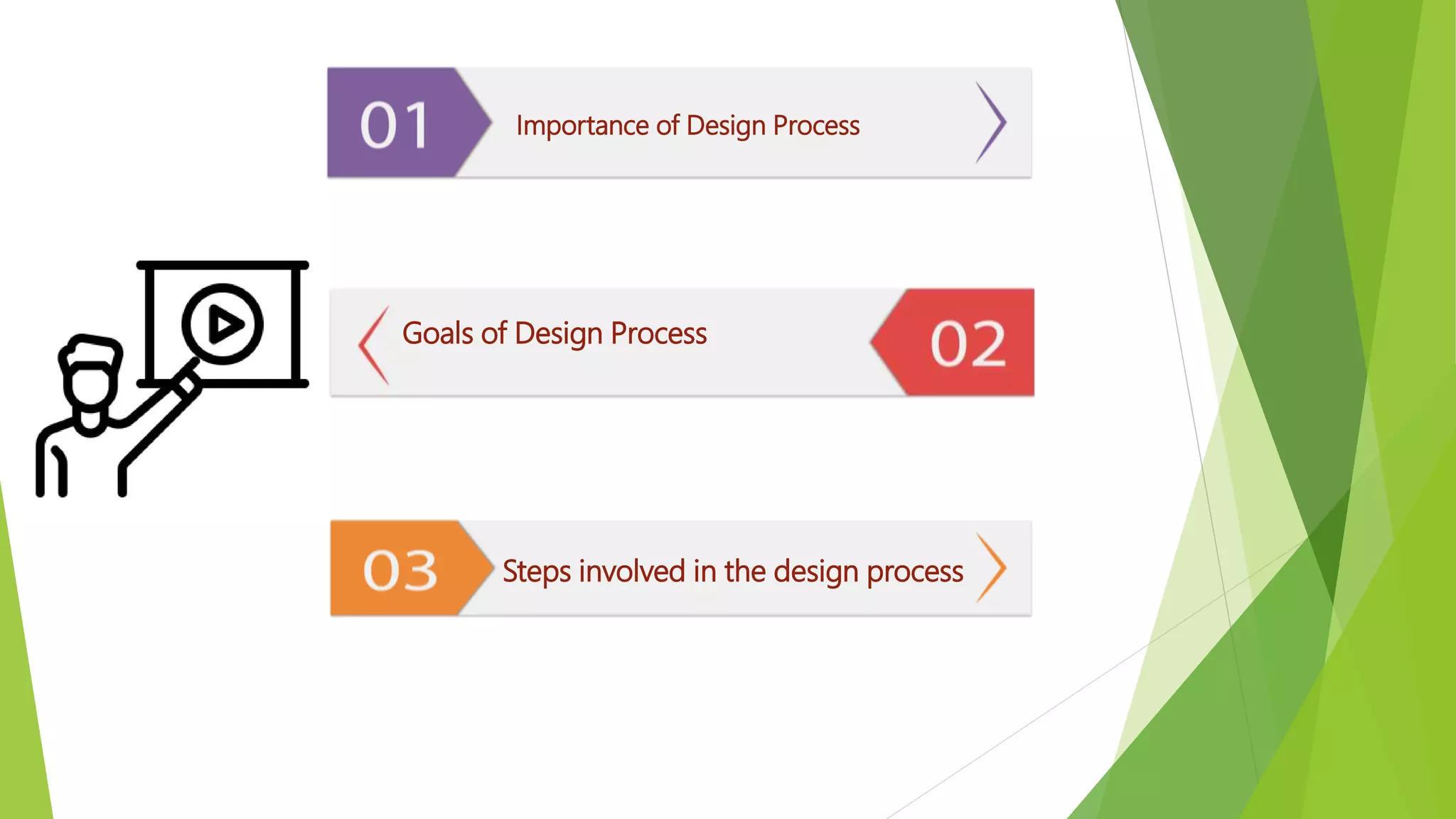
Goals of Design Process
Steps involved in the design process
Importance of Design Process
EMBEDDED SYSTEM DESIGN PROCESS
PROCESS – Series of actions/steps taken in order to achieve a particular thing
IMPORTANCE OF DESIGN PROCESS
I. Allows us to keep a scorecard on a design to ensure that we have done
everything we need to do
II. Allows us to develop Computer Aided Design Tools
III. Makes it easier for member of a design team to communicate
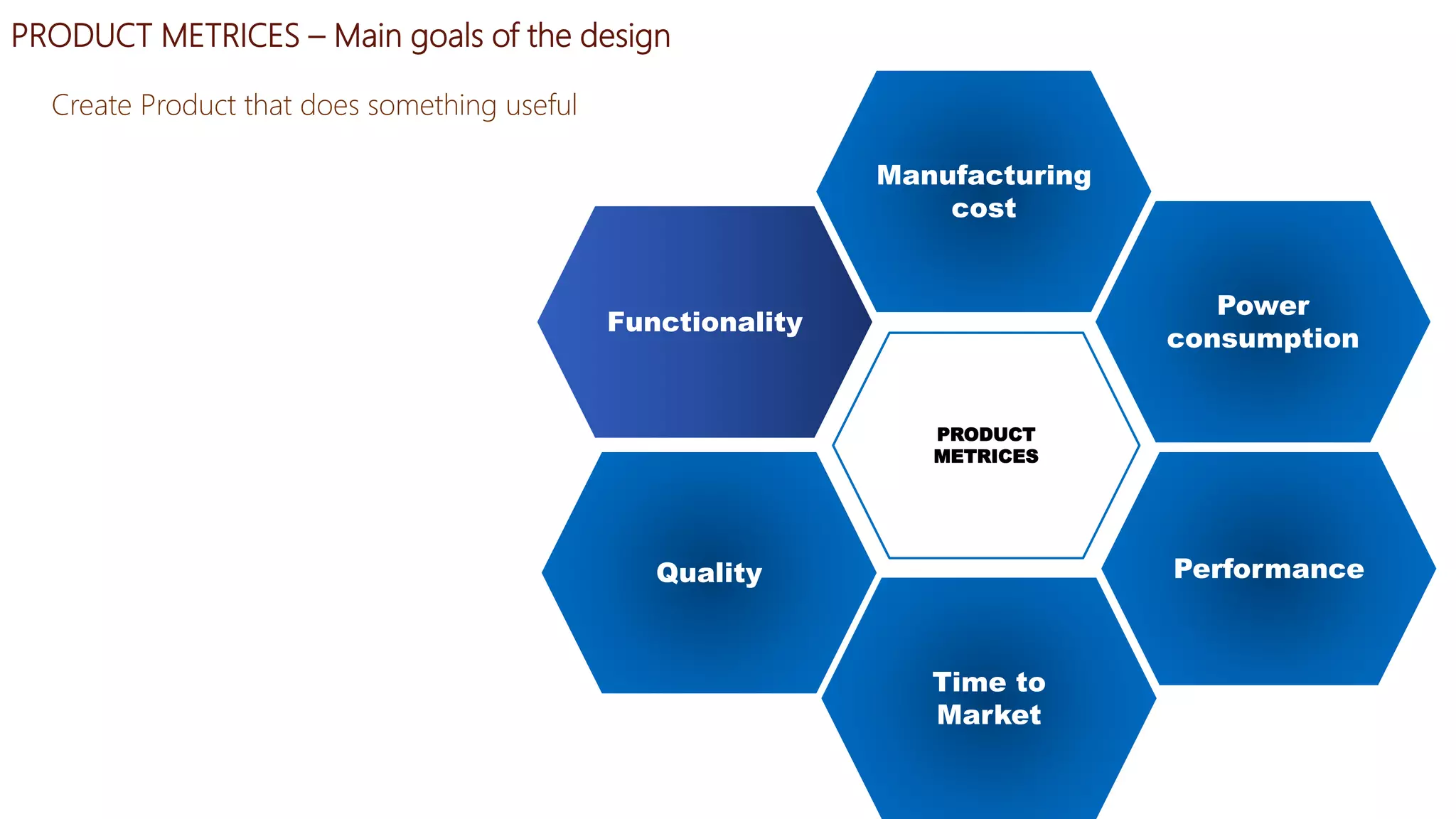
PRODUCT METRICES – Main goals of the design
Manufacturing
cost
PRODUCT
METRICES
Time to
Market
Quality Performance
Power
consumption
Functionality
Create Product that does something useful
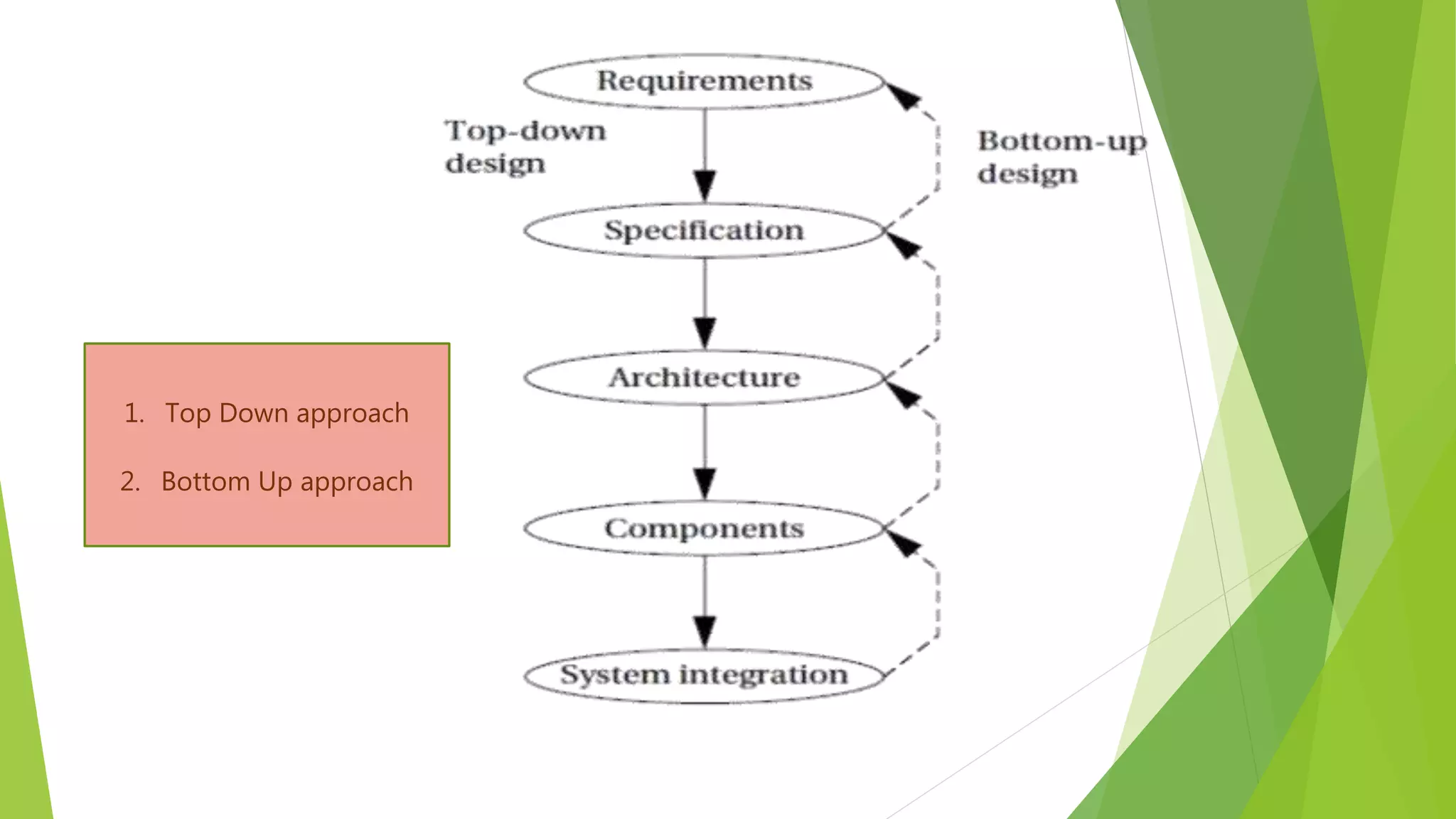
1. Top Down approach
2. Bottom Up approach
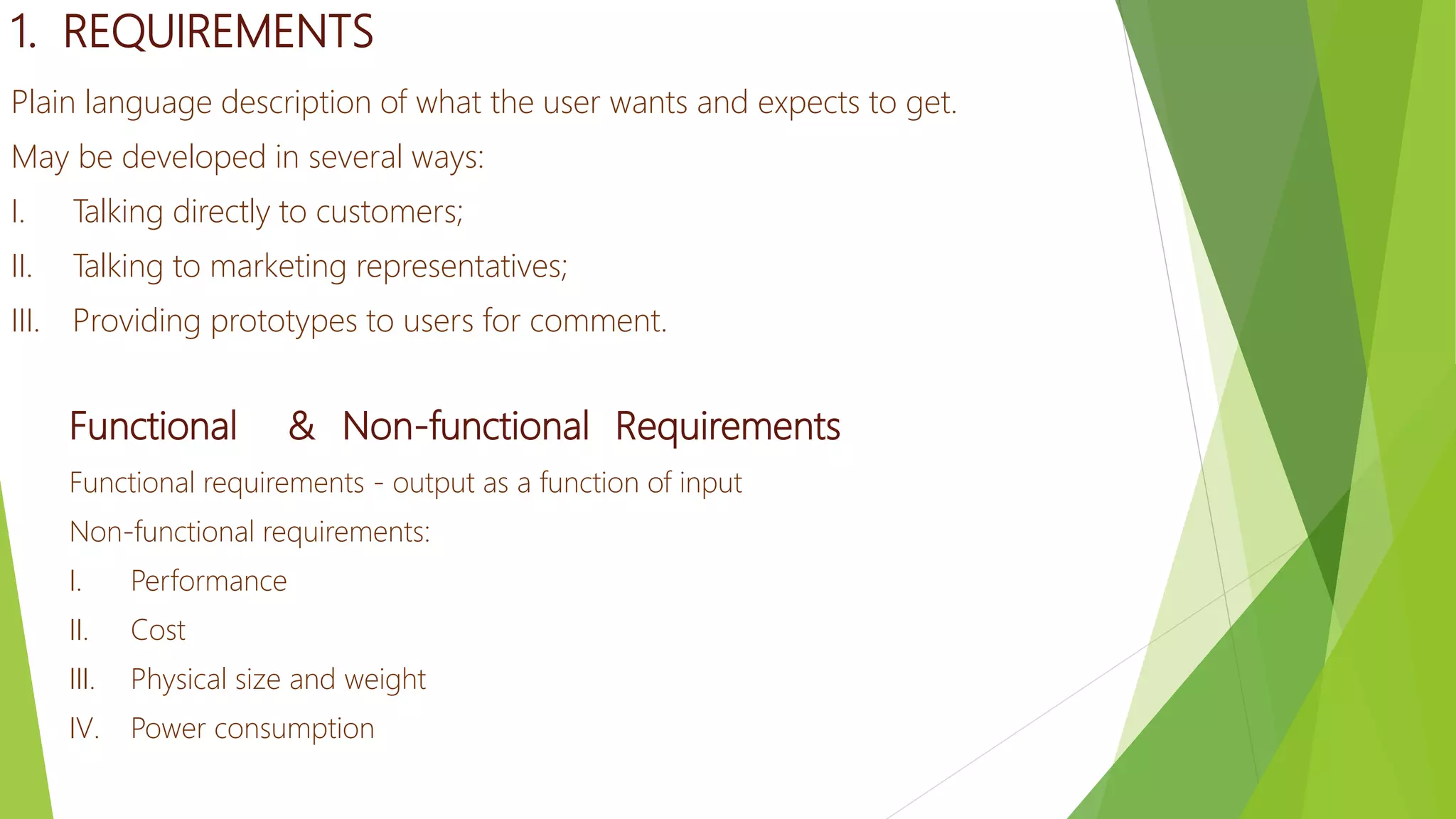
1. REQUIREMENTS
Plain language description of what the user wants and expects to get.
May be developed in several ways:
I. Talking directly to customers;
II. Talking to marketing representatives;
III. Providing prototypes to users for comment.
Functional & Non-functional Requirements
Functional requirements - output as a function of input
Non-functional requirements:
I. Performance
II. Cost
III. Physical size and weight
IV. Power consumption
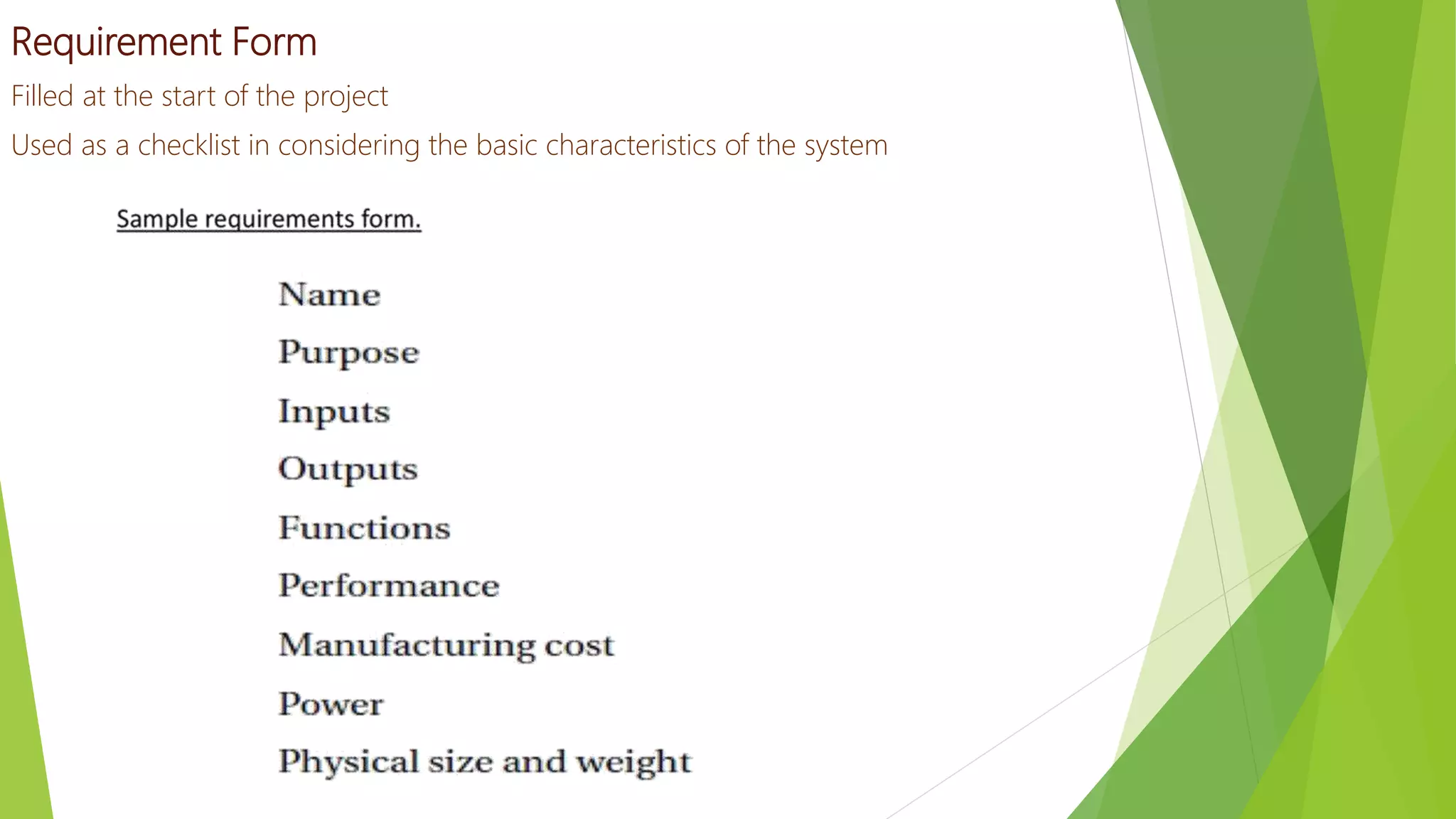
Requirement Form
Filled at the start of the project
Used as a checklist in considering the basic characteristics of the system
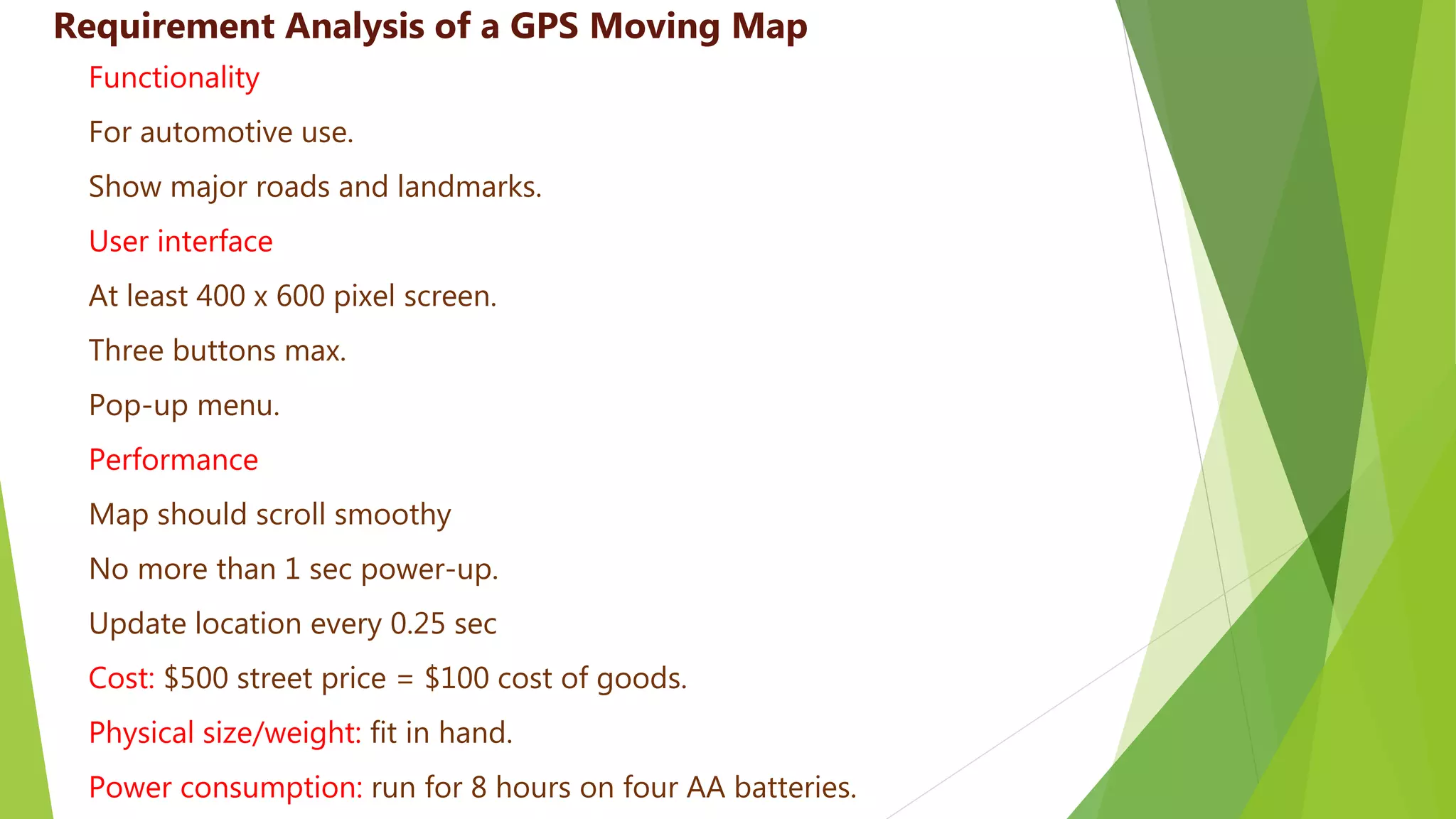
Functionality
For automotive use.
Show major roads and landmarks.
User interface
At least 400 x 600 pixel screen.
Three buttons max.
Pop-up menu.
Performance
Map should scroll smoothy
No more than 1 sec power-up.
Update location every 0.25 sec
Cost: $500 street price = $100 cost of goods.
Physical size/weight: fit in hand.
Power consumption: run for 8 hours on four AA batteries.
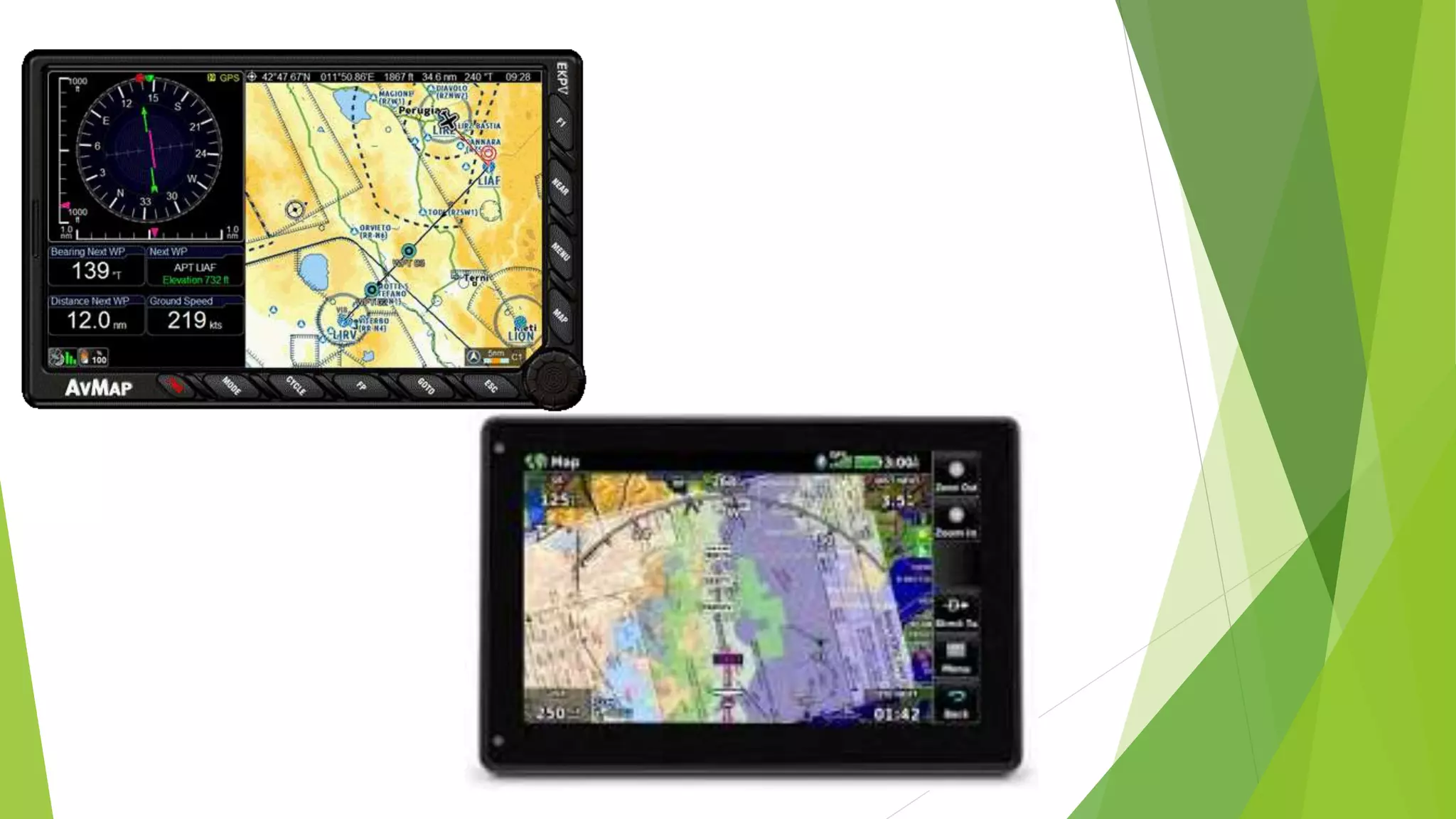
Requirement Analysis of a GPS Moving Map
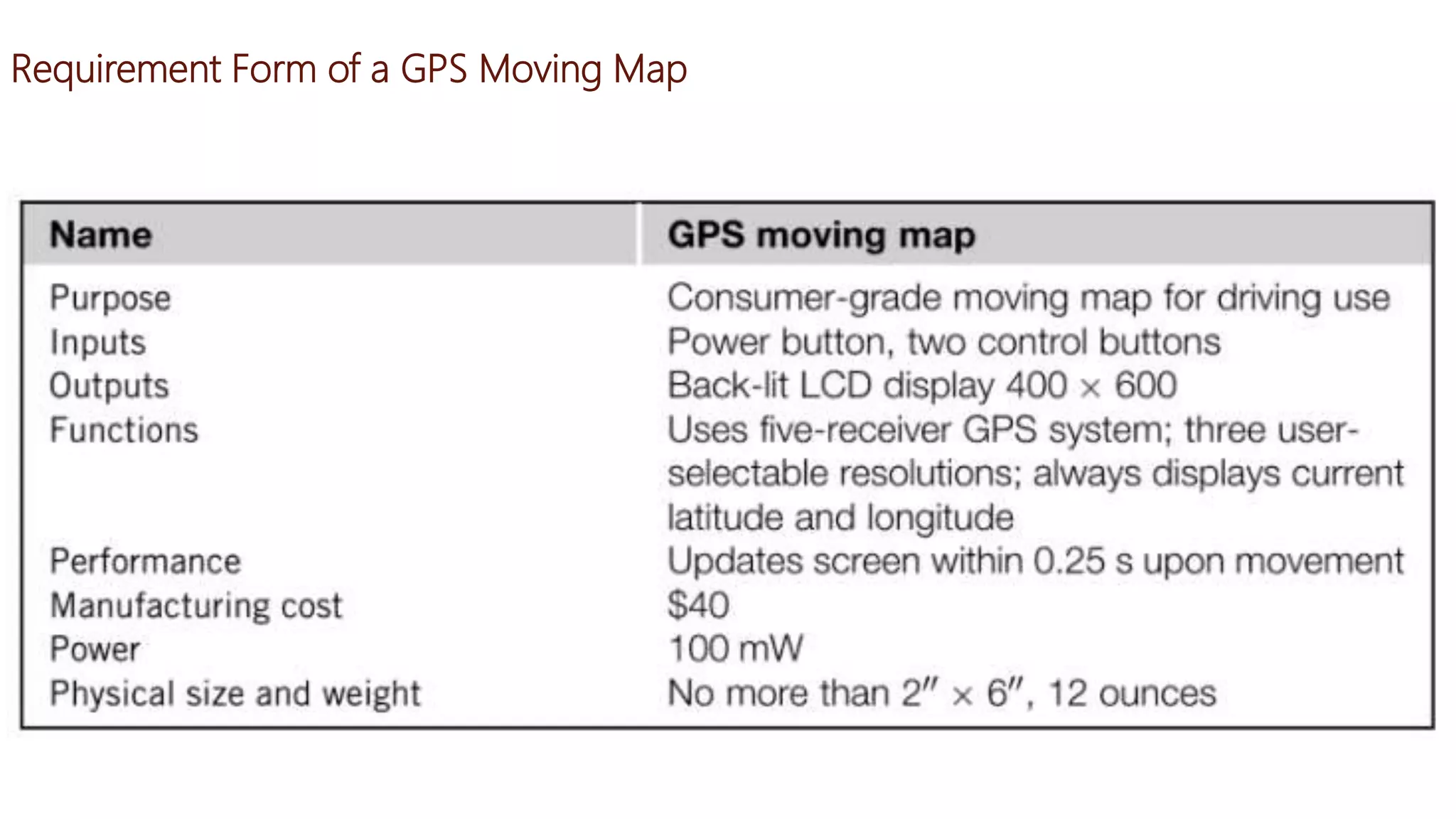
Requirement Form of a GPS Moving Map
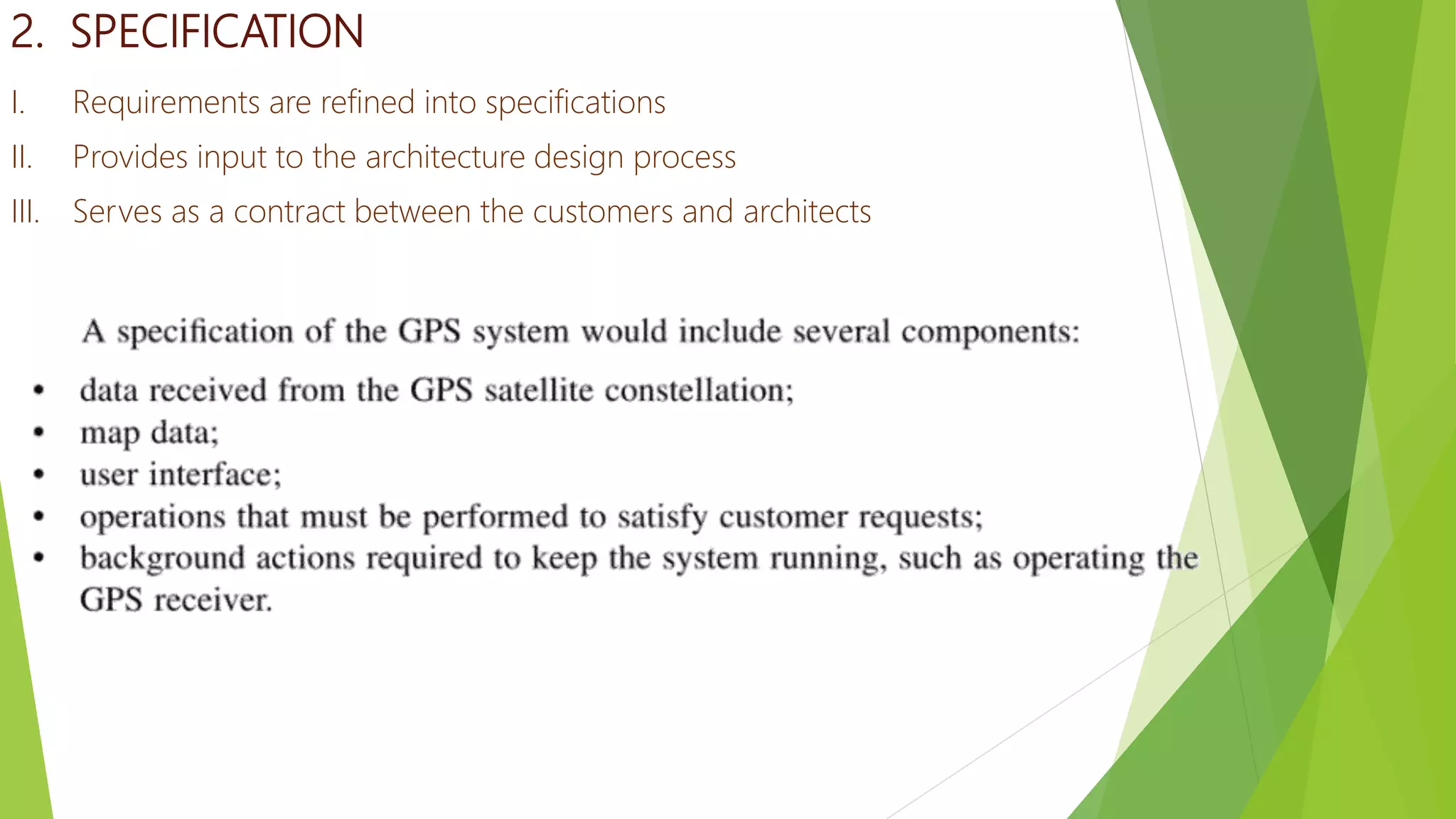
2. SPECIFICATION
I. Requirements are refined into specifications
II. Provides input to the architecture design process
III. Serves as a contract between the customers and architects
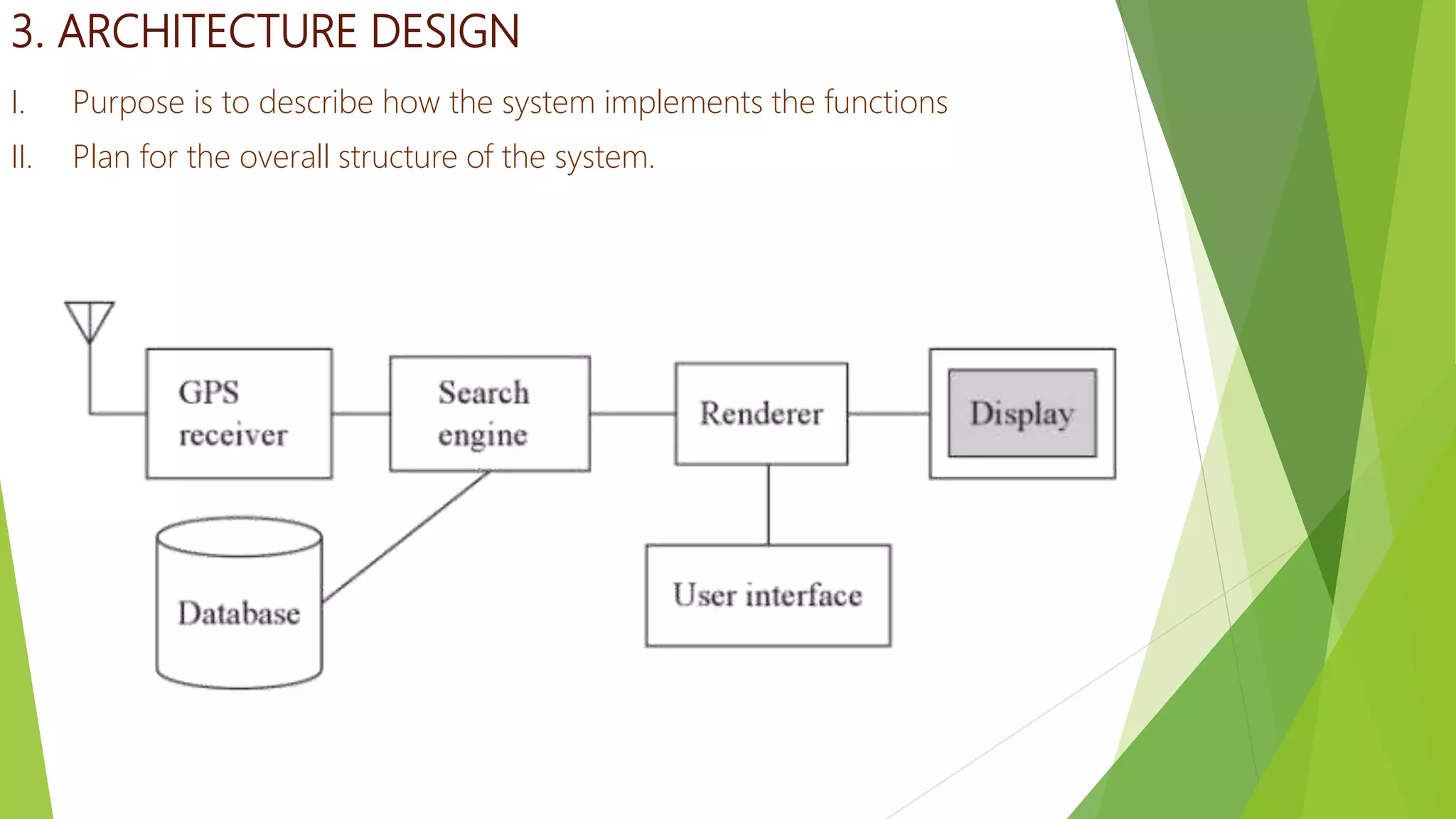
3. ARCHITECTURE DESIGN
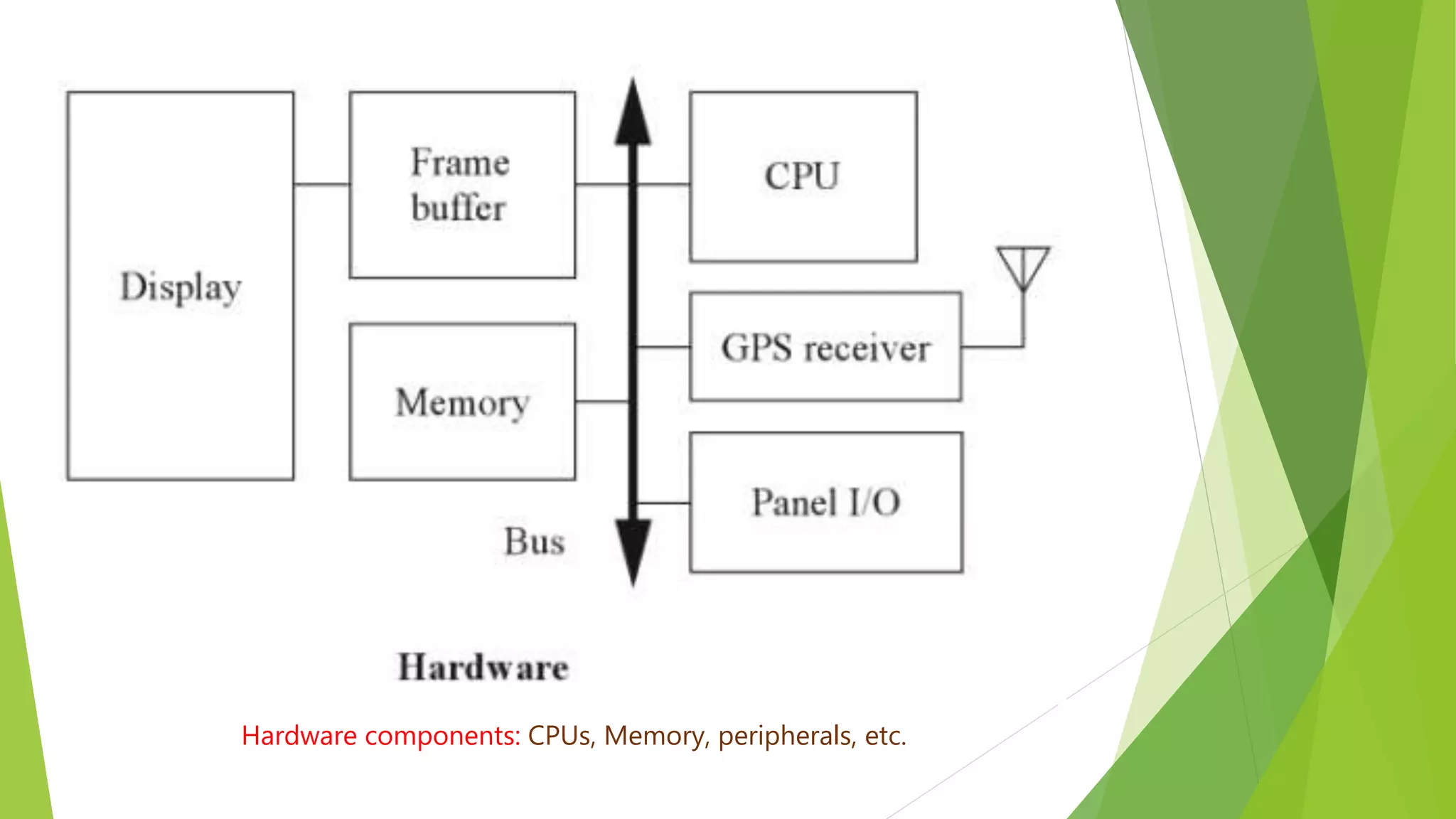
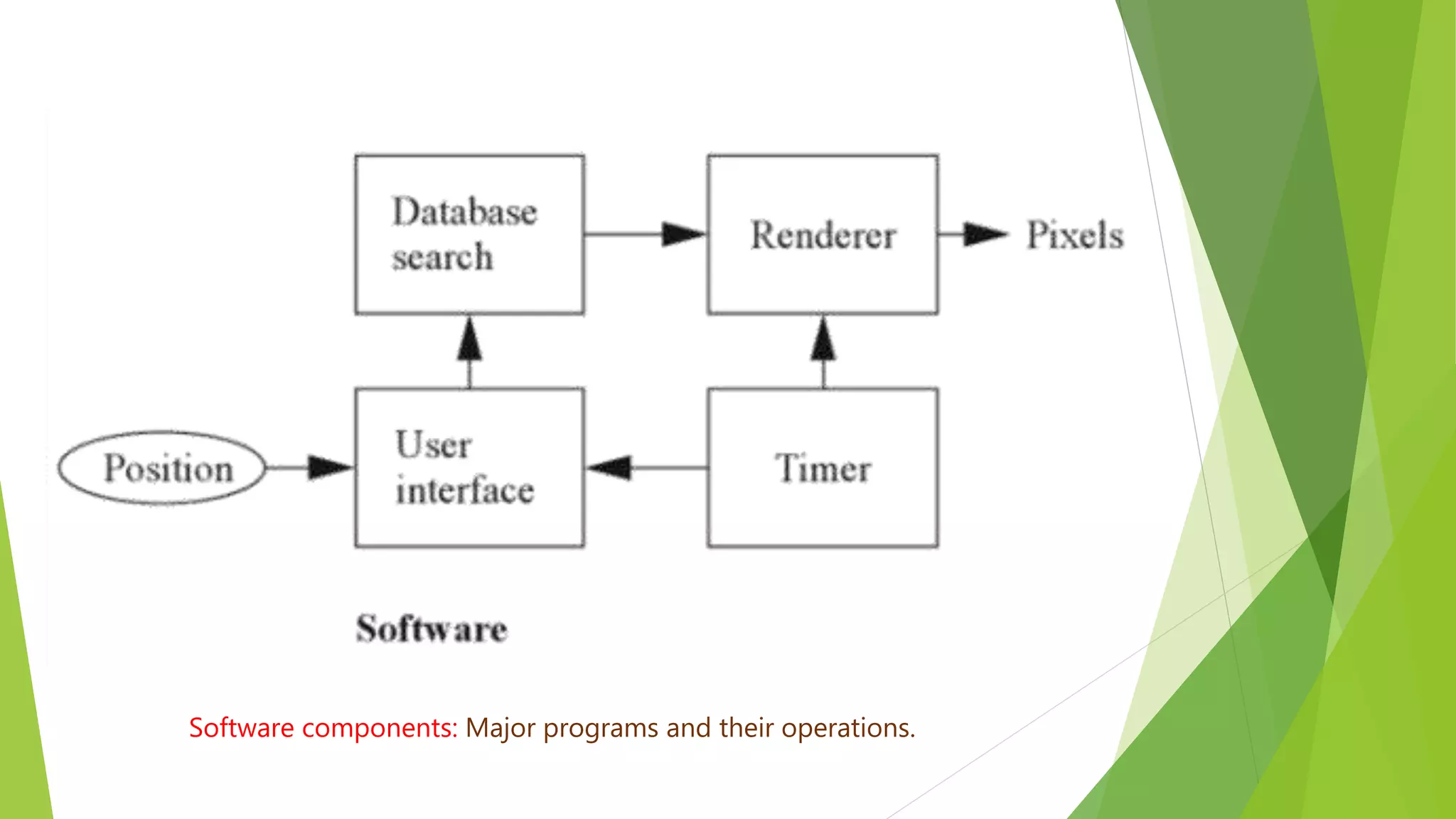
I. Purpose is to describe how the system implements the functions
II. Plan for the overall structure of the system.
Hardware components: CPUs, Memory, peripherals, etc.
Software components: Major programs and their operations.
4. COMPONENT DESIGN
Components may be
I. Ready-made
II. Modified from existing designs
III. Designed from scratch
Standard Hardware Component: CPU, Memory chips
Standard Software Component: Topographic database
5. SYSTEM INTEGRATION
 Put together the components.
 Many bugs appear only at this stage.
 Individual components should be tested first!
Summary
 Importance of design process
 Goals of Design process
 Steps involved in the design process
Embedded system design process

Embedded system design process

  • 1.
  • 2.
    Goals of DesignProcess Steps involved in the design process Importance of Design Process
  • 3.
    EMBEDDED SYSTEM DESIGNPROCESS PROCESS – Series of actions/steps taken in order to achieve a particular thing IMPORTANCE OF DESIGN PROCESS I. Allows us to keep a scorecard on a design to ensure that we have done everything we need to do II. Allows us to develop Computer Aided Design Tools III. Makes it easier for member of a design team to communicate
  • 4.
    PRODUCT METRICES –Main goals of the design Manufacturing cost PRODUCT METRICES Time to Market Quality Performance Power consumption Functionality Create Product that does something useful
  • 5.
    1. Top Downapproach 2. Bottom Up approach
  • 6.
    1. REQUIREMENTS Plain languagedescription of what the user wants and expects to get. May be developed in several ways: I. Talking directly to customers; II. Talking to marketing representatives; III. Providing prototypes to users for comment. Functional & Non-functional Requirements Functional requirements - output as a function of input Non-functional requirements: I. Performance II. Cost III. Physical size and weight IV. Power consumption
  • 7.
    Requirement Form Filled atthe start of the project Used as a checklist in considering the basic characteristics of the system
  • 9.
    Functionality For automotive use. Showmajor roads and landmarks. User interface At least 400 x 600 pixel screen. Three buttons max. Pop-up menu. Performance Map should scroll smoothy No more than 1 sec power-up. Update location every 0.25 sec Cost: $500 street price = $100 cost of goods. Physical size/weight: fit in hand. Power consumption: run for 8 hours on four AA batteries. Requirement Analysis of a GPS Moving Map
  • 10.
    Requirement Form ofa GPS Moving Map
  • 11.
    2. SPECIFICATION I. Requirementsare refined into specifications II. Provides input to the architecture design process III. Serves as a contract between the customers and architects
  • 12.
    3. ARCHITECTURE DESIGN I.Purpose is to describe how the system implements the functions II. Plan for the overall structure of the system.
  • 13.
    Hardware components: CPUs,Memory, peripherals, etc.
  • 14.
    Software components: Majorprograms and their operations.
  • 15.
    4. COMPONENT DESIGN Componentsmay be I. Ready-made II. Modified from existing designs III. Designed from scratch Standard Hardware Component: CPU, Memory chips Standard Software Component: Topographic database
  • 16.
    5. SYSTEM INTEGRATION Put together the components.  Many bugs appear only at this stage.  Individual components should be tested first!
  • 17.
    Summary  Importance ofdesign process  Goals of Design process  Steps involved in the design process