1
Window Sill Pan Flashings:
Are Liquid Membranes Suitable?
2017 CCBST Conference – Day 1
November 6th, 2017
Presented by: Michael Wilkinson | MEng, EIT
2
 Industry sill flashing practices
 What about liquid membranes?
 Long term water ponding testing
 Drying potential evaluation
 Gap bridging ability
 Conclusions
Outline
3
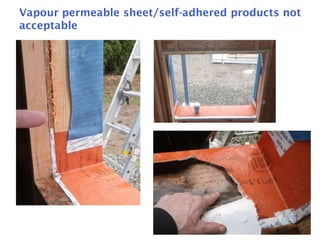
Vapour permeable sheet/self-adhered products not
acceptable
4
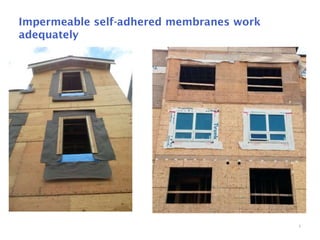
Impermeable self-adhered membranes work
adequately
5
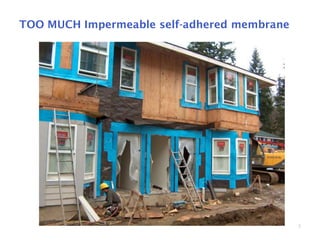
TOO MUCH Impermeable self-adhered membrane
6
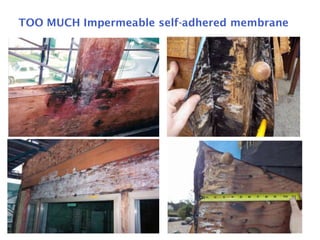
TOO MUCH Impermeable self-adhered membrane
7
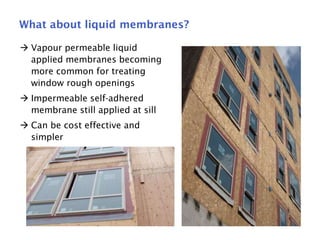
What about liquid membranes?
 Vapour permeable liquid
applied membranes becoming
more common for treating
window rough openings
 Impermeable self-adhered
membrane still applied at sill
 Can be cost effective and
simpler
8
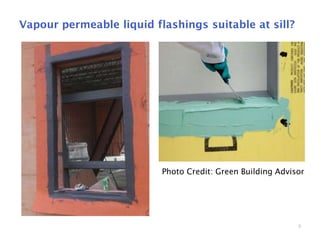
Vapour permeable liquid flashings suitable at sill?
Photo Credit: Green Building Advisor
9
Vapour permeable liquid flashings suitable at sill?
 Existing industry standards and guidelines do not yet
adequately cover liquid applied membranes applied in
horizontal applications
 Key considerations and potential issues:
 Water ponding resistance
 Drying potential
 Flexibility and gap bridging ability
 Compatibility and adhesion with other materials
 Weather dependent curing (rainwater, cold, heat)
 Workability and ease of application
 Longevity, durability, exposure to UV & heat
10
Long term water ponding resistance
 Devised test to demonstrate the potential for water uptake
through vapor permeable liquid flashing membranes on
horizontal surfaces (wood sill, OSB and plywood edges)
 Industry awareness that impermeable self-adhered membranes
work adequately in this application and that permeable sheet
goods (housewrap) are not suitable.
 No comparative data to suggest what vapor permeable water
repellant liquids may be suitable for this application
 Compared liquid membrane results with self-adhered control
membranes that were known to work well or fail
11
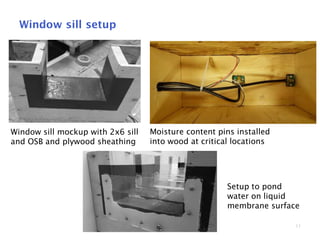
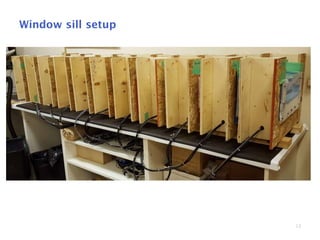
Window sill setup
Window sill mockup with 2x6 sill
and OSB and plywood sheathing
Moisture content pins installed
into wood at critical locations
Setup to pond
water on liquid
membrane surface
12
Window sill setup
13
0
5
10
15
20
25
30
35
40
45
0 Days 7 Days 14 Days 21 Days 28 Days 35 Days 42 Days
MoistureContent(%)
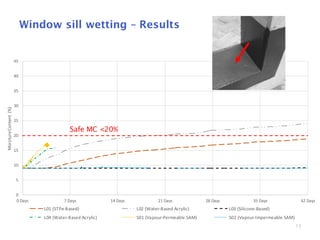
L01 (STPe-Based) L02 (Water-Based Acrylic) L03 (Silicone-Based)
L04 (Water-Based Acrylic) S01 (Vapour-Permeable SAM) S02 (Vapour-Impermeable SAM)
Window sill wetting – Results
Safe MC <20%
14
0
5
10
15
20
25
30
35
40
45
0 Days 7 Days 14 Days 21 Days 28 Days 35 Days 42 Days
MoistureContent(%)
L01 (STPe-Based) L02 (Water-Based Acrylic) L03 (Silicone-Based)
L04 (Water-Based Acrylic) S01 (Vapour-Permeable SAM) S02 (Vapour-Impermeable SAM)
Window sill wetting – Results
Safe MC <20%
15
0
5
10
15
20
25
30
35
40
45
0 Days 7 Days 14 Days 21 Days 28 Days 35 Days 42 Days
MoistureContent(%)
L01 (STPe-Based) L02 (Water-Based Acrylic) L03 (Silicone-Based)
L04 (Water-Based Acrylic) S01 (Vapour-Permeable SAM) S02 (Vapour-Impermeable SAM)
Window sill wetting – Results
Safe MC <20%
16
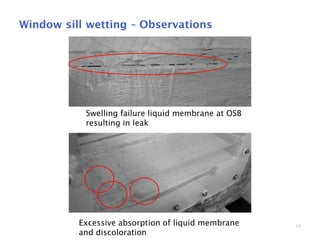
Window sill wetting – Observations
Swelling failure liquid membrane at OSB
resulting in leak
Excessive absorption of liquid membrane
and discoloration
17
Window sill wetting – Observations
Mould after 30 days due to absorption into OSB sheathing below a relatively absorptive &
permeable liquid applied window sill flashing
18
Drying potential evaluation
 Devised test to demonstrate whether improved drying
characteristics manifest through vapor permeable liquid
flashing membranes on horizontal surfaces (wood sill,
plywood edge)
 Wood-framing often wetted during construction in the Pacific
Northwest with little opportunity to dry throughout winter months
 Potential for enhanced drying at rough opening particularly if
interior window framing (king studs, cripple studs, headers) limit
drying to the interior
 Compared liquid membrane results with permeable and
impermeable self-adhered membranes
19
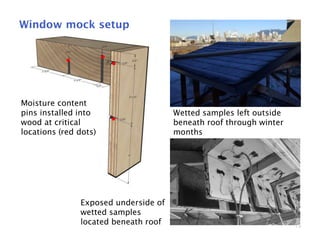
Window mock setup
Moisture content
pins installed into
wood at critical
locations (red dots)
Wetted samples left outside
beneath roof through winter
months
Exposed underside of
wetted samples
located beneath roof
20
Safe MC < 20%
0
5
10
15
20
25
30
35
40
45
0 Days 7 Days 14 Days 21 Days 28 Days 35 Days 42 Days 49 Days 56 Days
MoistureContent(%)
L01 (STPe-Based) L02 (Silicone-Based)
S01 (Vapour-Permeable SAM) S02 (Vapour-Impermeable SAM)
Window mock-up drying – Results
21
Safe MC < 20%
0
5
10
15
20
25
30
35
40
45
0 Days 7 Days 14 Days 21 Days 28 Days 35 Days 42 Days 49 Days 56 Days
MoistureContent(%)
L01 (STPe-Based) L02 (Silicone-Based)
S01 (Vapour-Permeable SAM) S02 (Vapour-Impermeable SAM)
Window mock-up drying – Results
22
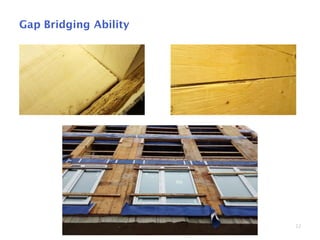
Gap Bridging Ability
23
Gap Bridging Ability
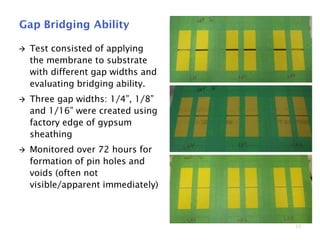
 Test consisted of applying
the membrane to substrate
with different gap widths and
evaluating bridging ability.
 Three gap widths: 1/4”, 1/8”
and 1/16” were created using
factory edge of gypsum
sheathing
 Monitored over 72 hours for
formation of pin holes and
voids (often not
visible/apparent immediately)
24
Gap Bridging Ability
Gap Bridging Test Results after 72 Hours
Note: All specimens applied at manufacturer’s specified thickness.
Sample ID Chemistry
Thickness
(wet mils)
1.6mm (1/16”) Gap 3.2mm (1/8”) Gap 6.4mm (¼”) Gap
L01 STPe 15 mils FAIL FAIL FAIL
L02 STPe 15 mils FAIL FAIL FAIL
L03 Silicone 30 mils FAIL FAIL FAIL
L04 STPe 25 mils BRIDGED BRIDGED FAIL
L05 Silicone 65 mils BRIDGED BRIDGED BRIDGED
L06 STPe 15 mils BRIDGED FAIL FAIL
L07 Acrylic 48 mils FAIL BRIDGED FAIL
25
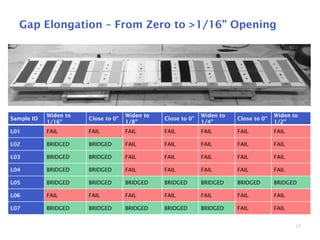
Gap Elongation – From Zero to >1/16” Opening
Sample ID
Widen to
1/16”
Close to 0”
Widen to
1/8”
Close to 0”
Widen to
1/4”
Close to 0”
Widen to
1/2”
L01 FAIL FAIL FAIL FAIL FAIL FAIL FAIL
L02 BRIDGED BRIDGED FAIL FAIL FAIL FAIL FAIL
L03 BRIDGED BRIDGED FAIL FAIL FAIL FAIL FAIL
L04 BRIDGED BRIDGED FAIL FAIL FAIL FAIL FAIL
L05 BRIDGED BRIDGED BRIDGED BRIDGED BRIDGED BRIDGED BRIDGED
L06 FAIL FAIL FAIL FAIL FAIL FAIL FAIL
L07 BRIDGED BRIDGED BRIDGED BRIDGED BRIDGED FAIL FAIL
26
Conclusions
 Preliminary results confirmed common industry assumptions
 Plywood and OSB more susceptible to moisture uptake and decay
than 2x framing
 Permeable and impermeable self-adhered membranes performed
as expected
 Liquid-applied flashing performance impacted by membrane
chemistry and application thickness
 Potentially some chemistries acceptable as sill flashings
 Thicker membranes exhibited better gap bridging capabilities,
but all membranes still require reinforcement across gaps/cracks
 No discernable drying benefit to liquid applied membrane
flashings over impermeable self-adhered products
 Development of new ASTM or AAMA test methods required to
accurately reflect in situ performance of liquid membrane
flashings
27
Discussion + Questions
FOR FURTHER INFORMATION PLEASE VISIT
 www.rdh.com
 www.buildingsciencelabs.com
 Michael Wilkinson- mwilkinson@rdh.com

Window Sill Pan Flashings: Are Liquid Membranes Suitable?

  • 1.
    1 Window Sill PanFlashings: Are Liquid Membranes Suitable? 2017 CCBST Conference – Day 1 November 6th, 2017 Presented by: Michael Wilkinson | MEng, EIT
  • 2.
    2  Industry sillflashing practices  What about liquid membranes?  Long term water ponding testing  Drying potential evaluation  Gap bridging ability  Conclusions Outline
  • 3.
  • 4.
  • 5.
    5 TOO MUCH Impermeableself-adhered membrane
  • 6.
    6 TOO MUCH Impermeableself-adhered membrane
  • 7.
    7 What about liquidmembranes?  Vapour permeable liquid applied membranes becoming more common for treating window rough openings  Impermeable self-adhered membrane still applied at sill  Can be cost effective and simpler
  • 8.
    8 Vapour permeable liquidflashings suitable at sill? Photo Credit: Green Building Advisor
  • 9.
    9 Vapour permeable liquidflashings suitable at sill?  Existing industry standards and guidelines do not yet adequately cover liquid applied membranes applied in horizontal applications  Key considerations and potential issues:  Water ponding resistance  Drying potential  Flexibility and gap bridging ability  Compatibility and adhesion with other materials  Weather dependent curing (rainwater, cold, heat)  Workability and ease of application  Longevity, durability, exposure to UV & heat
  • 10.
    10 Long term waterponding resistance  Devised test to demonstrate the potential for water uptake through vapor permeable liquid flashing membranes on horizontal surfaces (wood sill, OSB and plywood edges)  Industry awareness that impermeable self-adhered membranes work adequately in this application and that permeable sheet goods (housewrap) are not suitable.  No comparative data to suggest what vapor permeable water repellant liquids may be suitable for this application  Compared liquid membrane results with self-adhered control membranes that were known to work well or fail
  • 11.
    11 Window sill setup Windowsill mockup with 2x6 sill and OSB and plywood sheathing Moisture content pins installed into wood at critical locations Setup to pond water on liquid membrane surface
  • 12.
  • 13.
    13 0 5 10 15 20 25 30 35 40 45 0 Days 7Days 14 Days 21 Days 28 Days 35 Days 42 Days MoistureContent(%) L01 (STPe-Based) L02 (Water-Based Acrylic) L03 (Silicone-Based) L04 (Water-Based Acrylic) S01 (Vapour-Permeable SAM) S02 (Vapour-Impermeable SAM) Window sill wetting – Results Safe MC <20%
  • 14.
    14 0 5 10 15 20 25 30 35 40 45 0 Days 7Days 14 Days 21 Days 28 Days 35 Days 42 Days MoistureContent(%) L01 (STPe-Based) L02 (Water-Based Acrylic) L03 (Silicone-Based) L04 (Water-Based Acrylic) S01 (Vapour-Permeable SAM) S02 (Vapour-Impermeable SAM) Window sill wetting – Results Safe MC <20%
  • 15.
    15 0 5 10 15 20 25 30 35 40 45 0 Days 7Days 14 Days 21 Days 28 Days 35 Days 42 Days MoistureContent(%) L01 (STPe-Based) L02 (Water-Based Acrylic) L03 (Silicone-Based) L04 (Water-Based Acrylic) S01 (Vapour-Permeable SAM) S02 (Vapour-Impermeable SAM) Window sill wetting – Results Safe MC <20%
  • 16.
    16 Window sill wetting– Observations Swelling failure liquid membrane at OSB resulting in leak Excessive absorption of liquid membrane and discoloration
  • 17.
    17 Window sill wetting– Observations Mould after 30 days due to absorption into OSB sheathing below a relatively absorptive & permeable liquid applied window sill flashing
  • 18.
    18 Drying potential evaluation Devised test to demonstrate whether improved drying characteristics manifest through vapor permeable liquid flashing membranes on horizontal surfaces (wood sill, plywood edge)  Wood-framing often wetted during construction in the Pacific Northwest with little opportunity to dry throughout winter months  Potential for enhanced drying at rough opening particularly if interior window framing (king studs, cripple studs, headers) limit drying to the interior  Compared liquid membrane results with permeable and impermeable self-adhered membranes
  • 19.
    19 Window mock setup Moisturecontent pins installed into wood at critical locations (red dots) Wetted samples left outside beneath roof through winter months Exposed underside of wetted samples located beneath roof
  • 20.
    20 Safe MC <20% 0 5 10 15 20 25 30 35 40 45 0 Days 7 Days 14 Days 21 Days 28 Days 35 Days 42 Days 49 Days 56 Days MoistureContent(%) L01 (STPe-Based) L02 (Silicone-Based) S01 (Vapour-Permeable SAM) S02 (Vapour-Impermeable SAM) Window mock-up drying – Results
  • 21.
    21 Safe MC <20% 0 5 10 15 20 25 30 35 40 45 0 Days 7 Days 14 Days 21 Days 28 Days 35 Days 42 Days 49 Days 56 Days MoistureContent(%) L01 (STPe-Based) L02 (Silicone-Based) S01 (Vapour-Permeable SAM) S02 (Vapour-Impermeable SAM) Window mock-up drying – Results
  • 22.
  • 23.
    23 Gap Bridging Ability Test consisted of applying the membrane to substrate with different gap widths and evaluating bridging ability.  Three gap widths: 1/4”, 1/8” and 1/16” were created using factory edge of gypsum sheathing  Monitored over 72 hours for formation of pin holes and voids (often not visible/apparent immediately)
  • 24.
    24 Gap Bridging Ability GapBridging Test Results after 72 Hours Note: All specimens applied at manufacturer’s specified thickness. Sample ID Chemistry Thickness (wet mils) 1.6mm (1/16”) Gap 3.2mm (1/8”) Gap 6.4mm (¼”) Gap L01 STPe 15 mils FAIL FAIL FAIL L02 STPe 15 mils FAIL FAIL FAIL L03 Silicone 30 mils FAIL FAIL FAIL L04 STPe 25 mils BRIDGED BRIDGED FAIL L05 Silicone 65 mils BRIDGED BRIDGED BRIDGED L06 STPe 15 mils BRIDGED FAIL FAIL L07 Acrylic 48 mils FAIL BRIDGED FAIL
  • 25.
    25 Gap Elongation –From Zero to >1/16” Opening Sample ID Widen to 1/16” Close to 0” Widen to 1/8” Close to 0” Widen to 1/4” Close to 0” Widen to 1/2” L01 FAIL FAIL FAIL FAIL FAIL FAIL FAIL L02 BRIDGED BRIDGED FAIL FAIL FAIL FAIL FAIL L03 BRIDGED BRIDGED FAIL FAIL FAIL FAIL FAIL L04 BRIDGED BRIDGED FAIL FAIL FAIL FAIL FAIL L05 BRIDGED BRIDGED BRIDGED BRIDGED BRIDGED BRIDGED BRIDGED L06 FAIL FAIL FAIL FAIL FAIL FAIL FAIL L07 BRIDGED BRIDGED BRIDGED BRIDGED BRIDGED FAIL FAIL
  • 26.
    26 Conclusions  Preliminary resultsconfirmed common industry assumptions  Plywood and OSB more susceptible to moisture uptake and decay than 2x framing  Permeable and impermeable self-adhered membranes performed as expected  Liquid-applied flashing performance impacted by membrane chemistry and application thickness  Potentially some chemistries acceptable as sill flashings  Thicker membranes exhibited better gap bridging capabilities, but all membranes still require reinforcement across gaps/cracks  No discernable drying benefit to liquid applied membrane flashings over impermeable self-adhered products  Development of new ASTM or AAMA test methods required to accurately reflect in situ performance of liquid membrane flashings
  • 27.
    27 Discussion + Questions FORFURTHER INFORMATION PLEASE VISIT  www.rdh.com  www.buildingsciencelabs.com  Michael Wilkinson- mwilkinson@rdh.com

Editor's Notes

  • #2 Track 1 – Hall C at 3:00 PM, 2017-11-07 Passive House
  • #10 AAMA 711-13 - Voluntary Specification for Self-Adhering Flashing Used for Installation of Exterior Fenestration Products AAMA 714-15 - Voluntary Specification for Liquid-Applied Flashing Used to Create a Water-Resistive Seal Around Exterior Wall Openings in Buildings AATCC 127 – Water Resistance: Hydrostatic Pressure Test