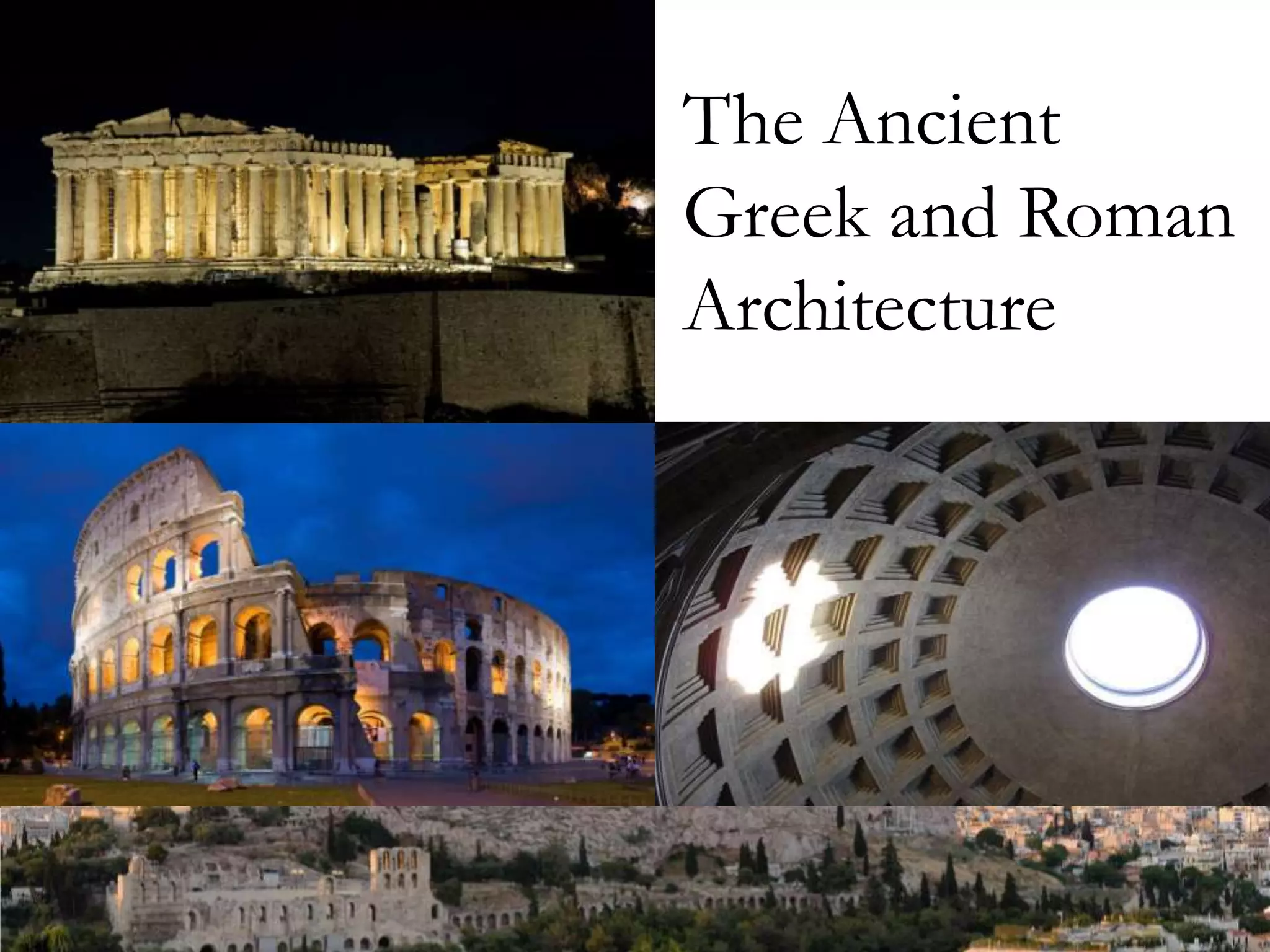
The Ancient
Greek and Roman
Architecture
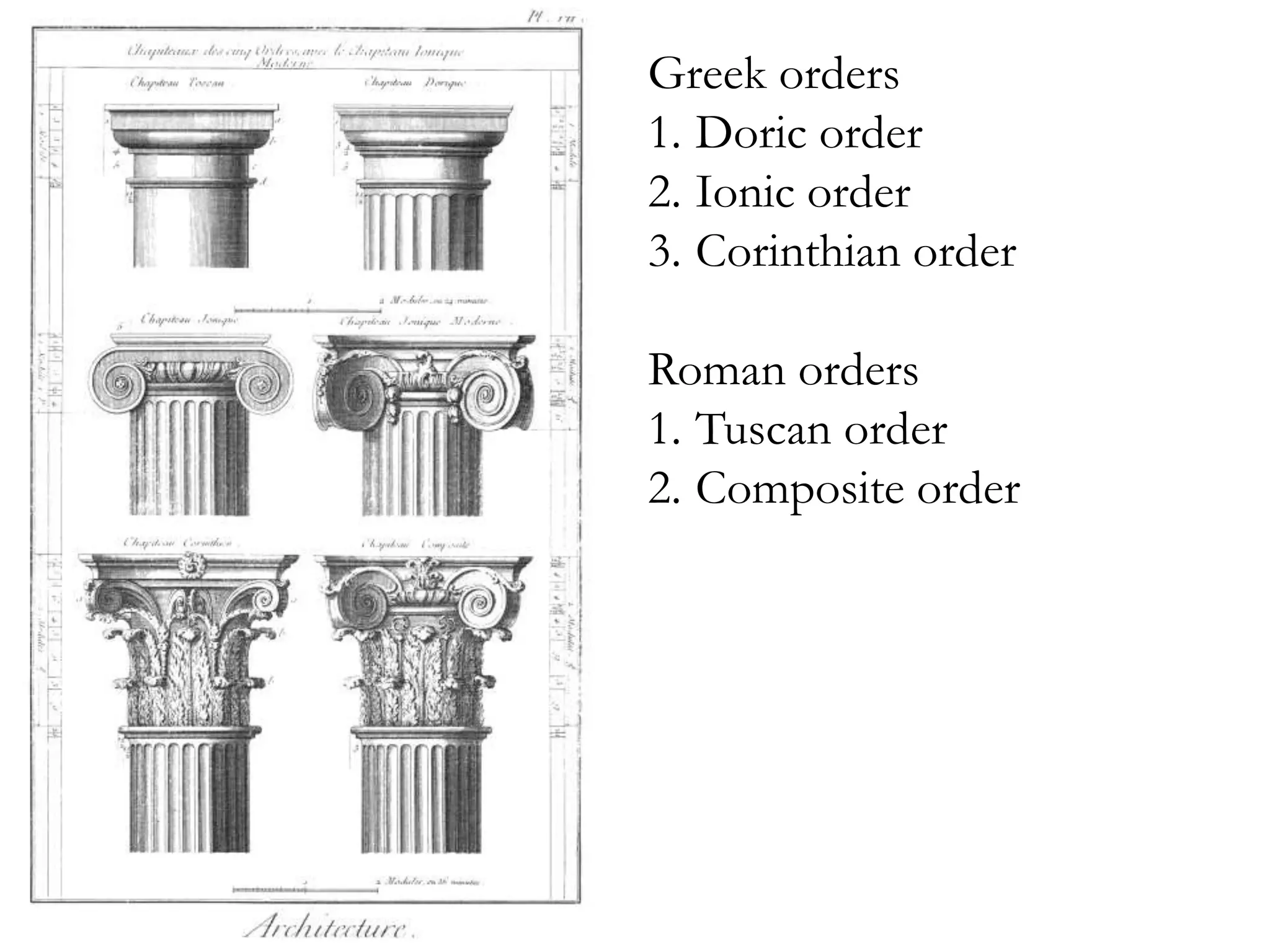
Greek orders
1. Doric order
2. Ionic order
3. Corinthian order
Roman orders
1. Tuscan order
2. Composite order
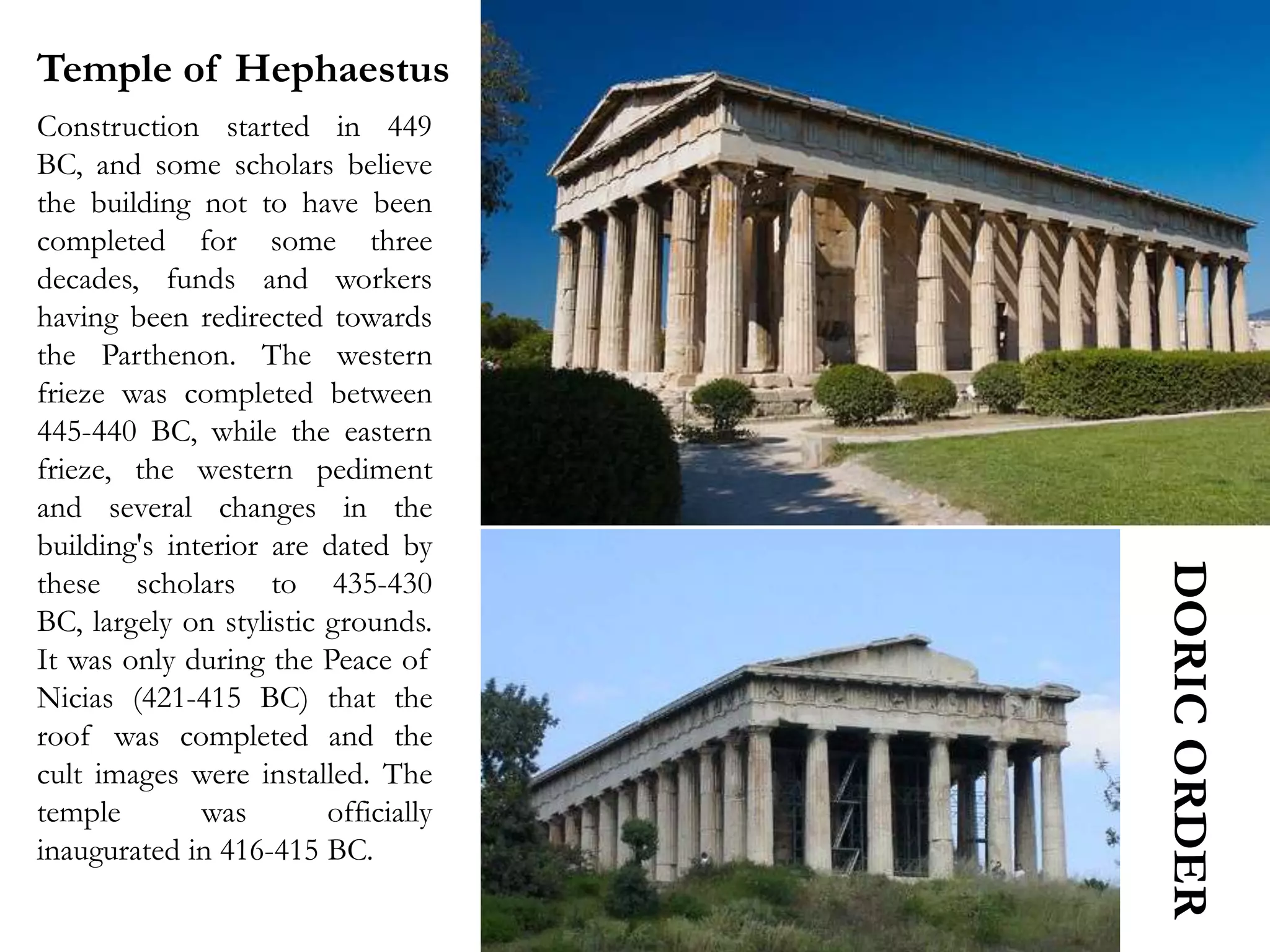
Construction started in 449
BC, and some scholars believe
the building not to have been
completed for some three
decades, funds and workers
having been redirected towards
the Parthenon. The western
frieze was completed between
445-440 BC, while the eastern
frieze, the western pediment
and several changes in the
building's interior are dated by
these scholars to 435-430
BC, largely on stylistic grounds.
It was only during the Peace of
Nicias (421-415 BC) that the
roof was completed and the
cult images were installed. The
temple was officially
inaugurated in 416-415 BC.
Temple of Hephaestus
DORICORDER
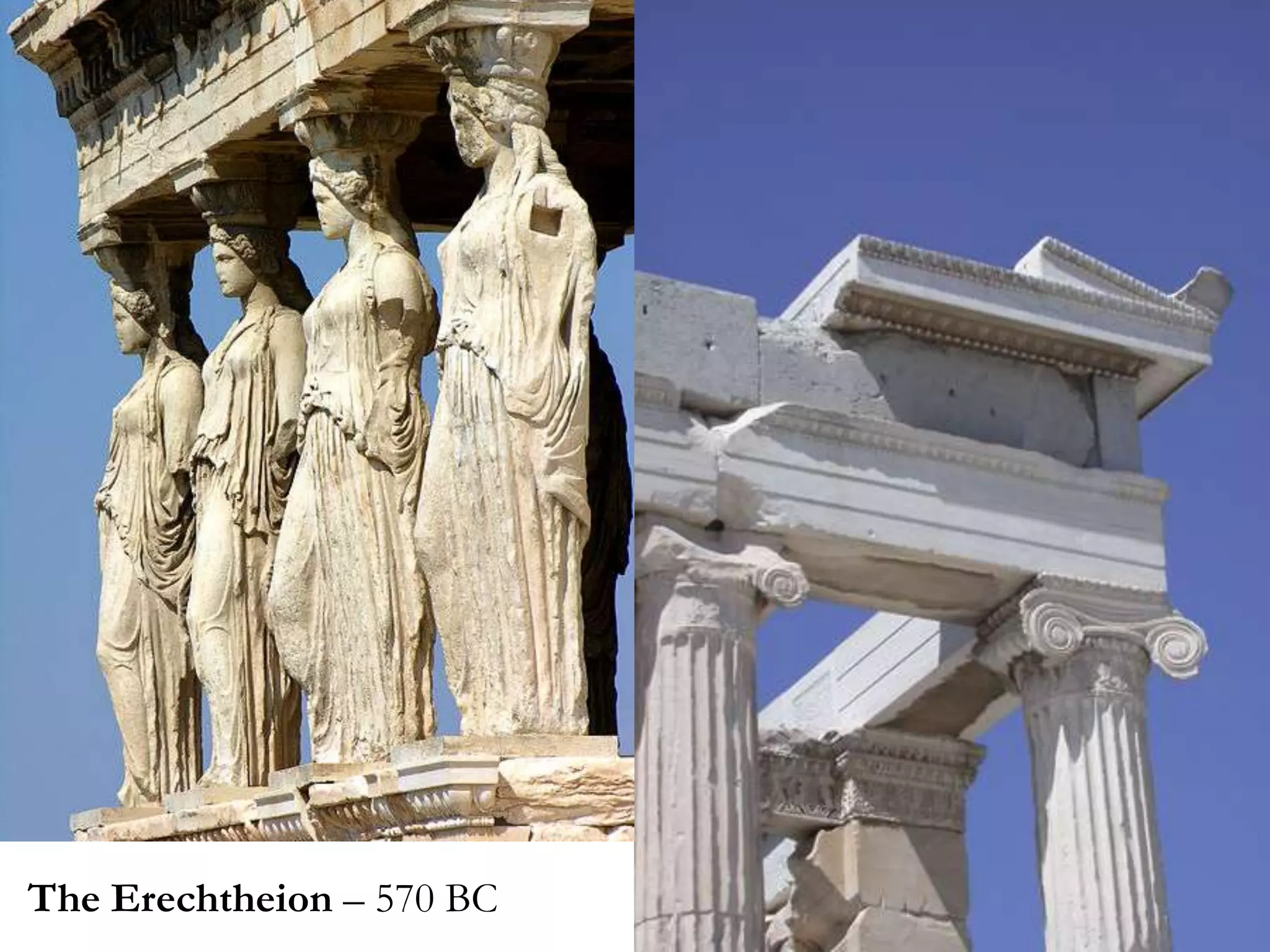
The Erechtheion – 570 BC
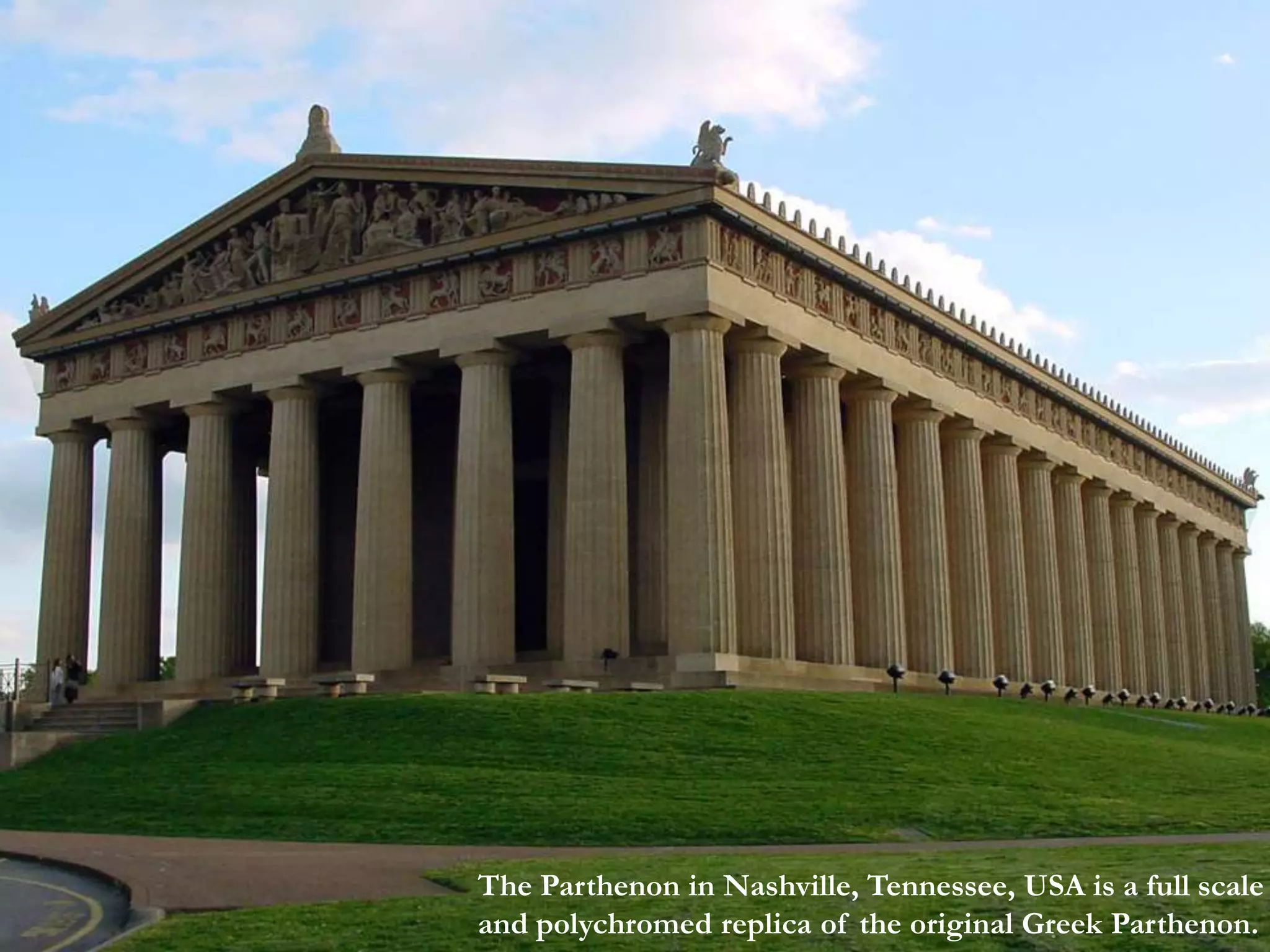
The Parthenon – 447 BC - 432 BC
A temple on the Athenian
Acropolis, Greece, dedicated to the maiden
goddess Athena, whom the people of
Athens considered their patron deity. After
the Ottoman conquest, it was turned into a
mosque in the early 1460s. On 26 September
1687, an Ottoman ammunition dump inside
the building was ignited by Venetian
bombardment. The resulting explosion
severely damaged the Parthenon and its
sculptures.
The Parthenon in Nashville, Tennessee, USA is a full scale
and polychromed replica of the original Greek Parthenon.
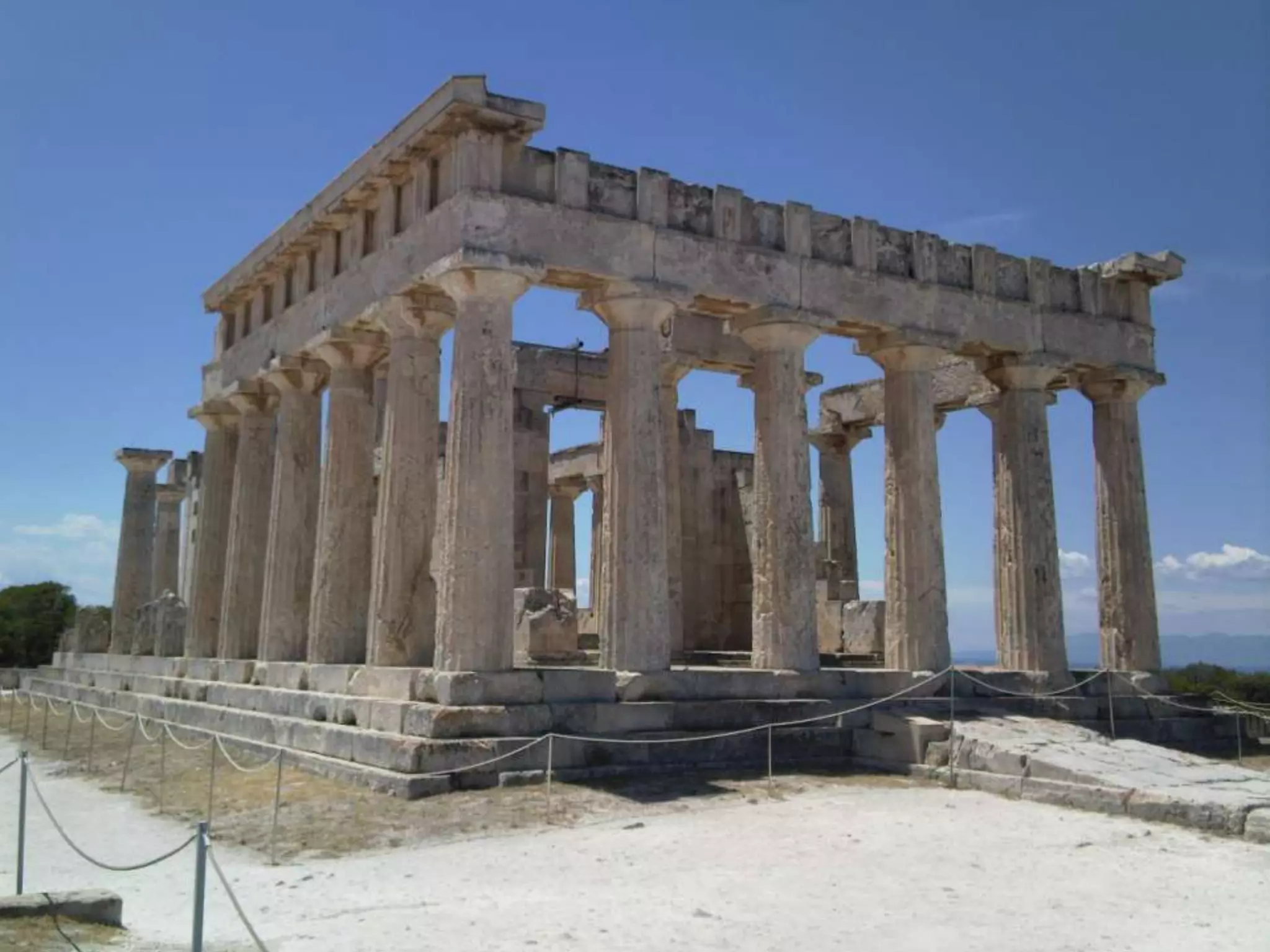
Temple of Aphaea – 500 BC
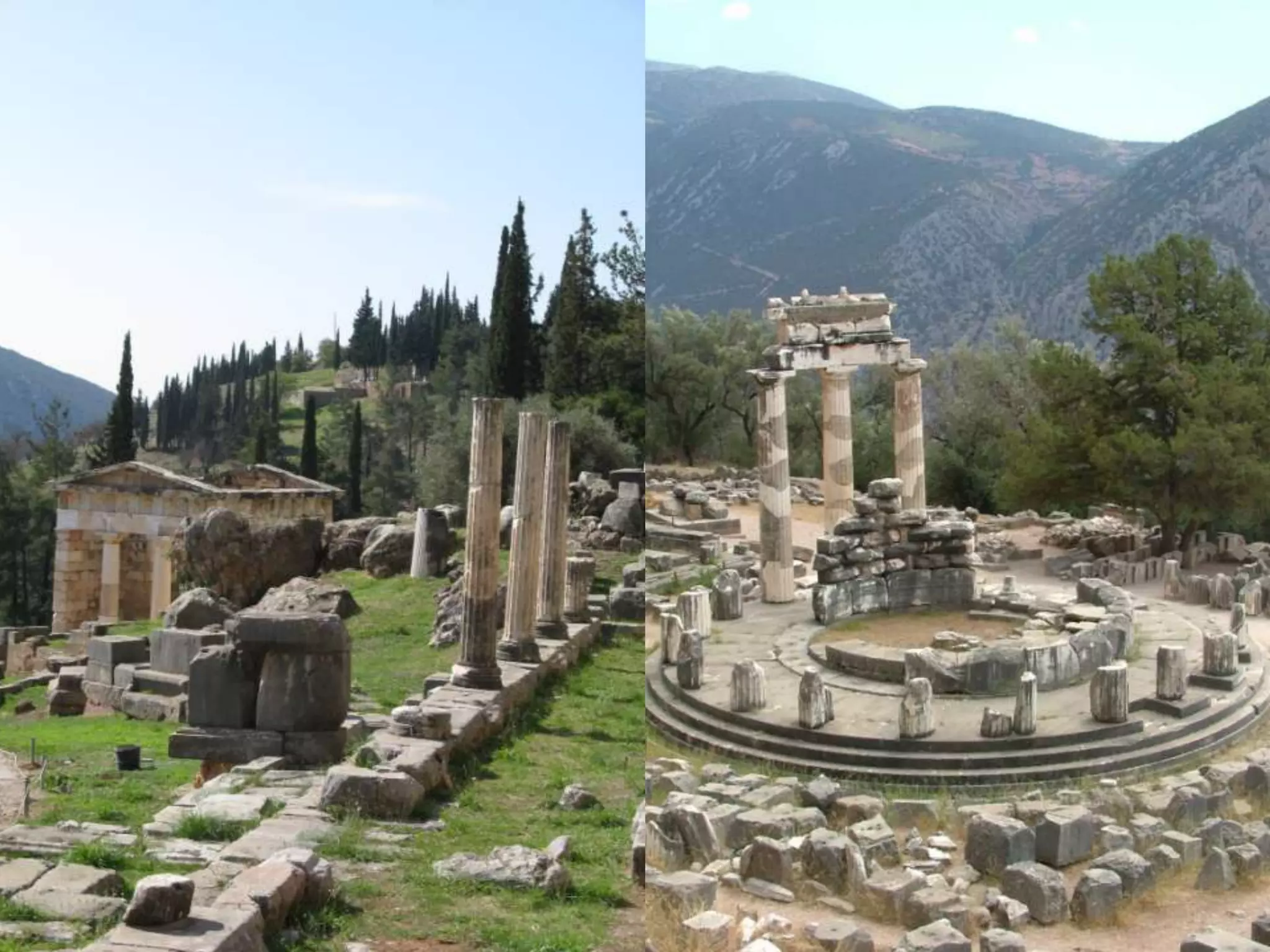
Delphi
Apollo's sacred precinct in Delphi was a panhellenic sanctuary, where every four years, starting in
586 BC athletes from all over the Greek world competed in the Pythian Games, one of the four
panhellenic (or stephanitic) games, precursors of the Modern Olympics. The victors at Delphi
were presented with a laurel crown (stephanos) which was ceremonially cut from a tree by a boy
who re-enacted the slaying of the Python.
Temple of Olympian Zeus
Roman orders
1. Tuscan order
2. Composite order
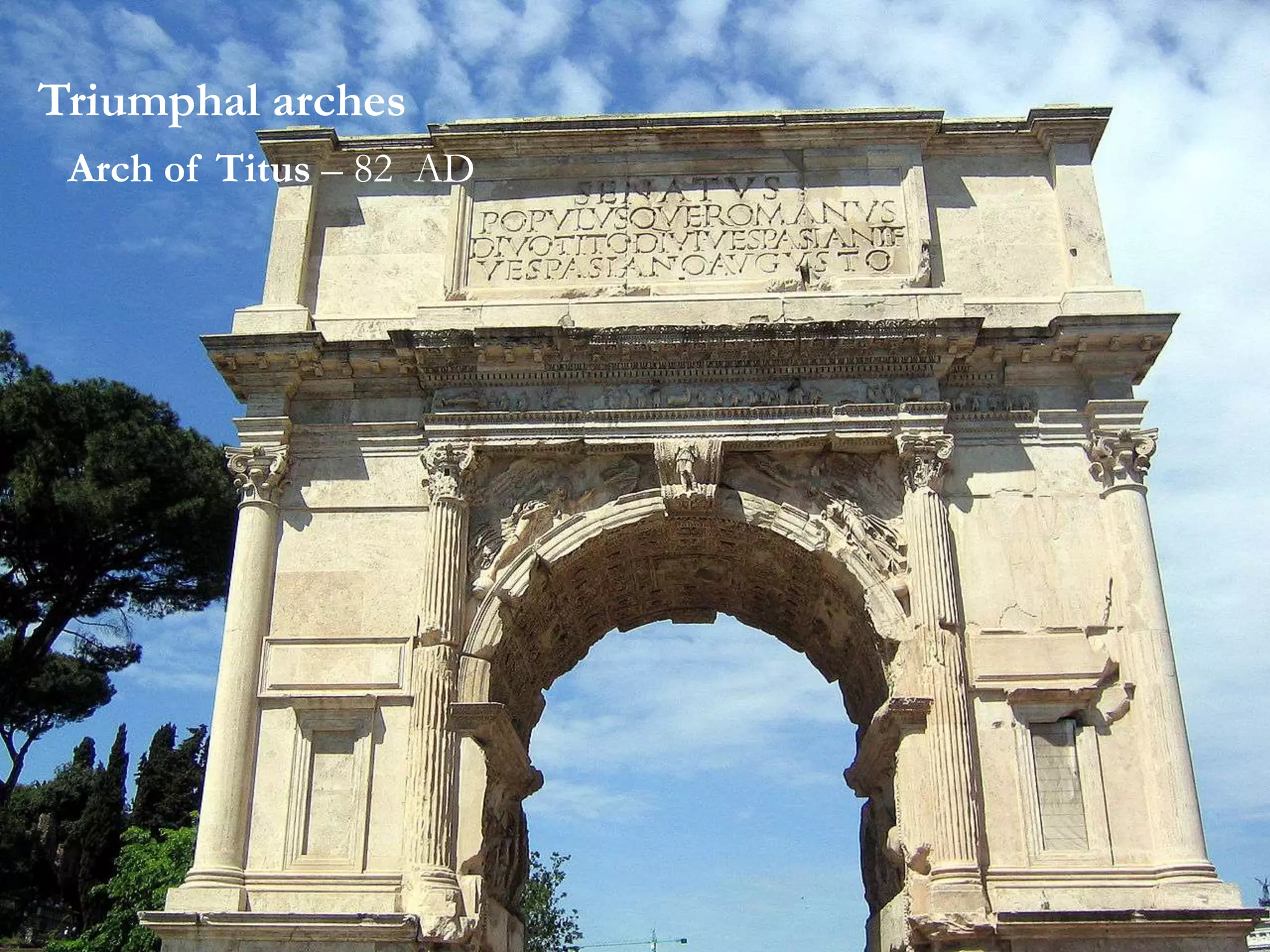
Triumphal arches
Arch of Titus – 82 AD
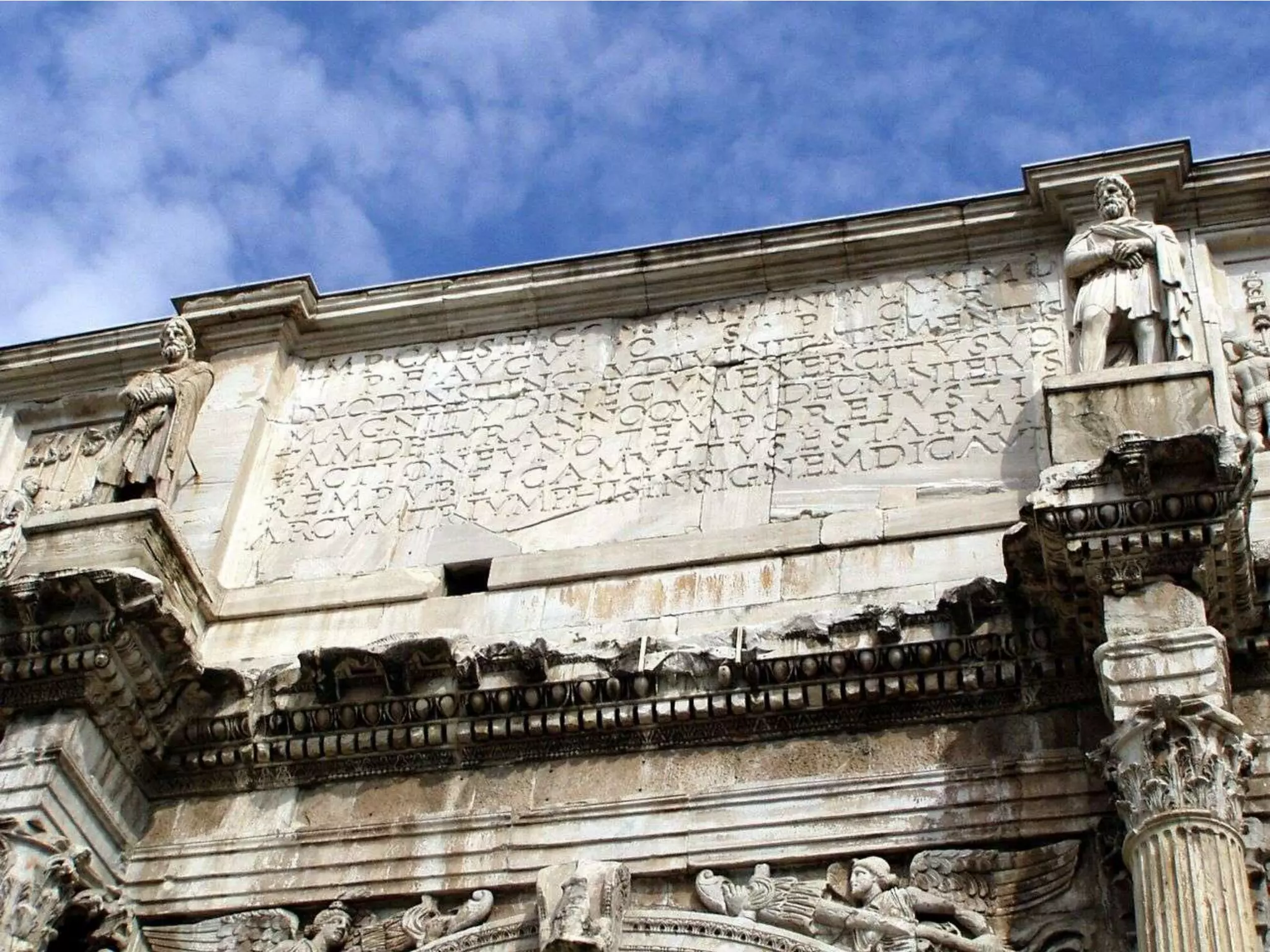
Arch of Constantine – 315 AD
The Alcántara Bridge (also known as Puente Trajan at Alcantara) is a Roman stone
arch bridge built over the Tagus River at Alcantara, Spain between 104 and 106 AD by an
order of the Roman Emperor Trajan in 98.
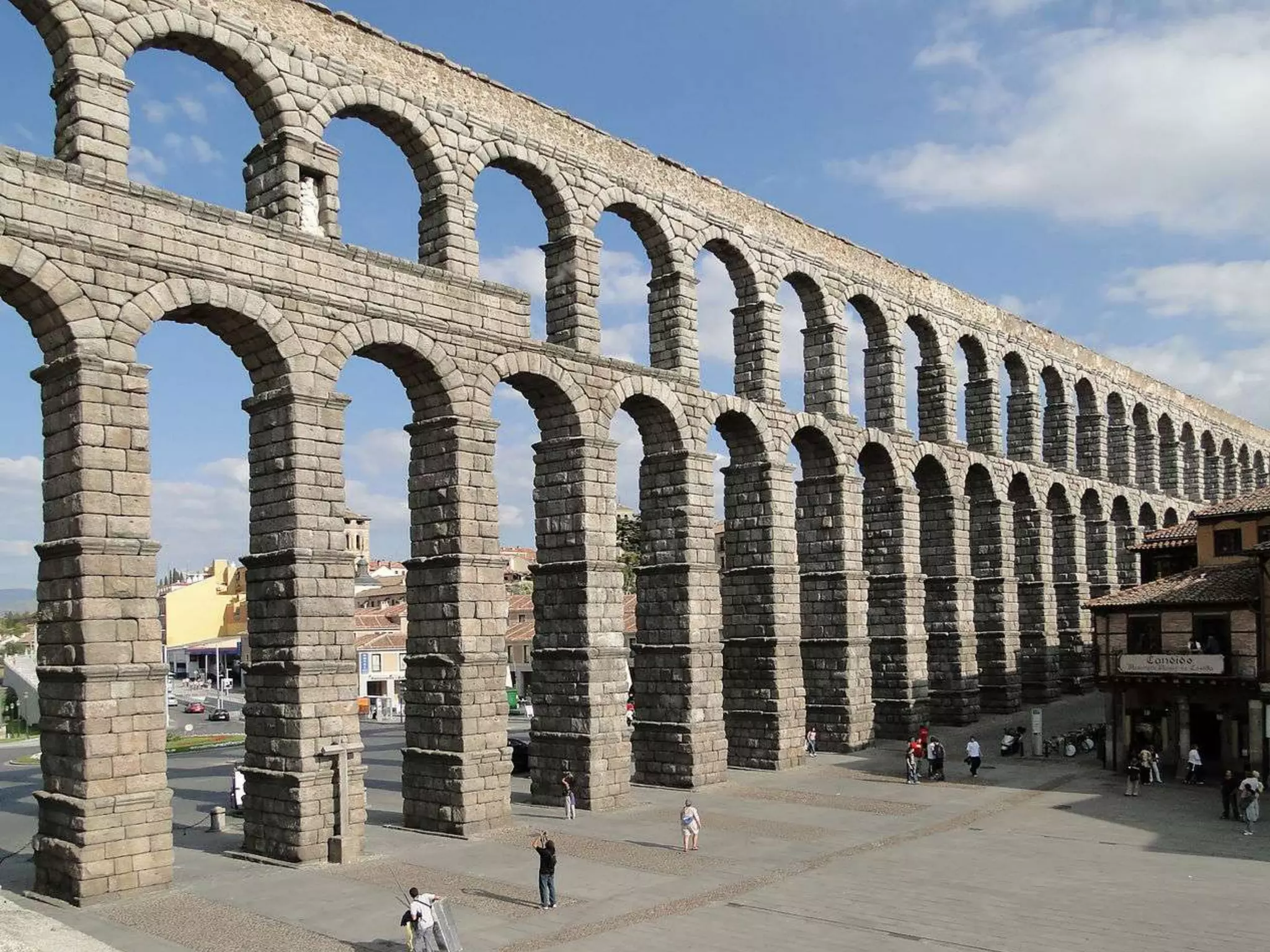
Aqueduct of Segovia
Pont du Gard
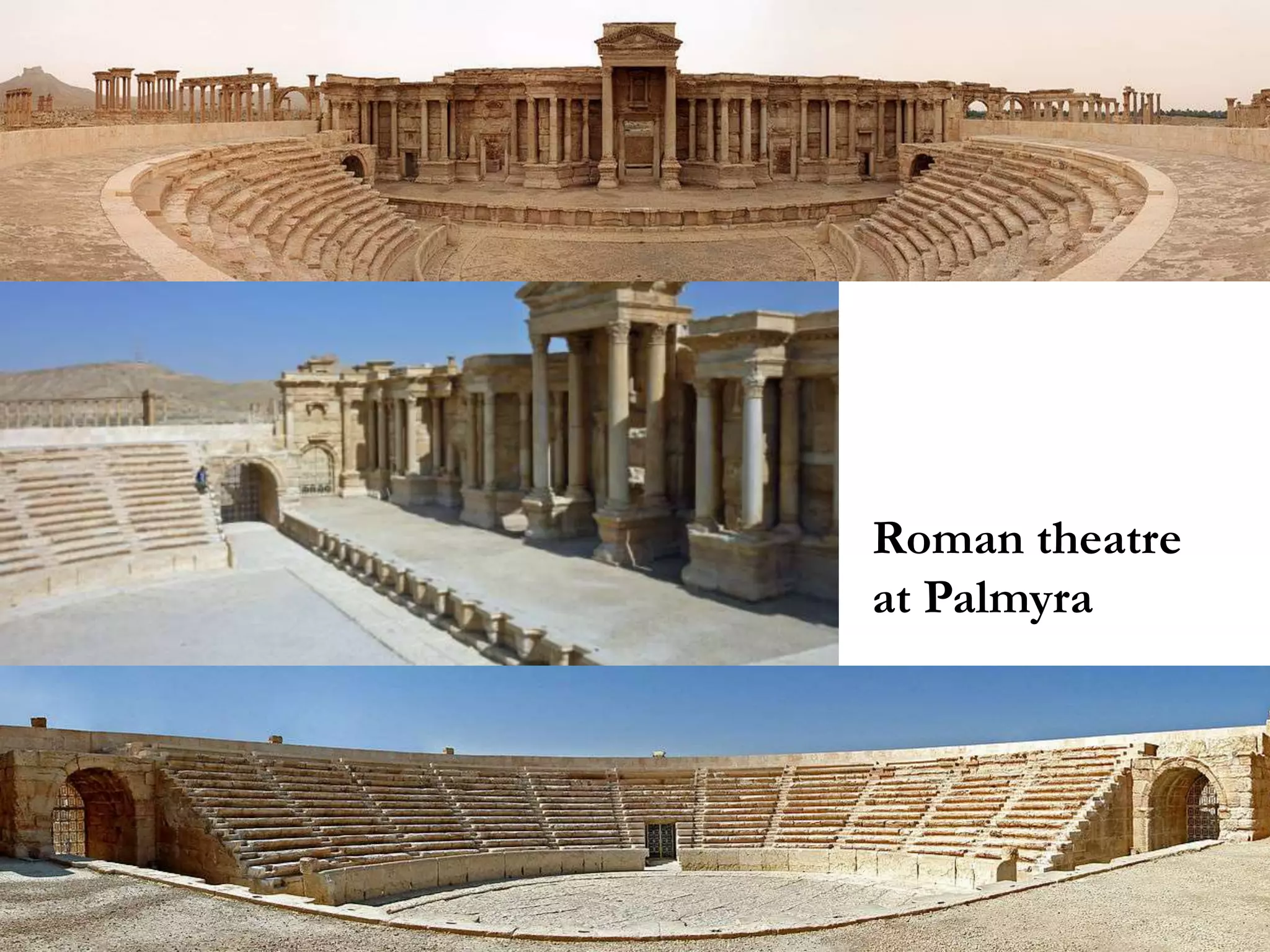
Roman theatre
at Palmyra
Colosseum – 80 AD
Roman Forum
The Roman Forum is a rectangular forum (plaza) surrounded by the ruins of several
important ancient government buildings at the centre of the city of Rome. Citizens
of the ancient city referred to this space, originally a marketplace, as the Forum
Magnum, or simply the Forum.
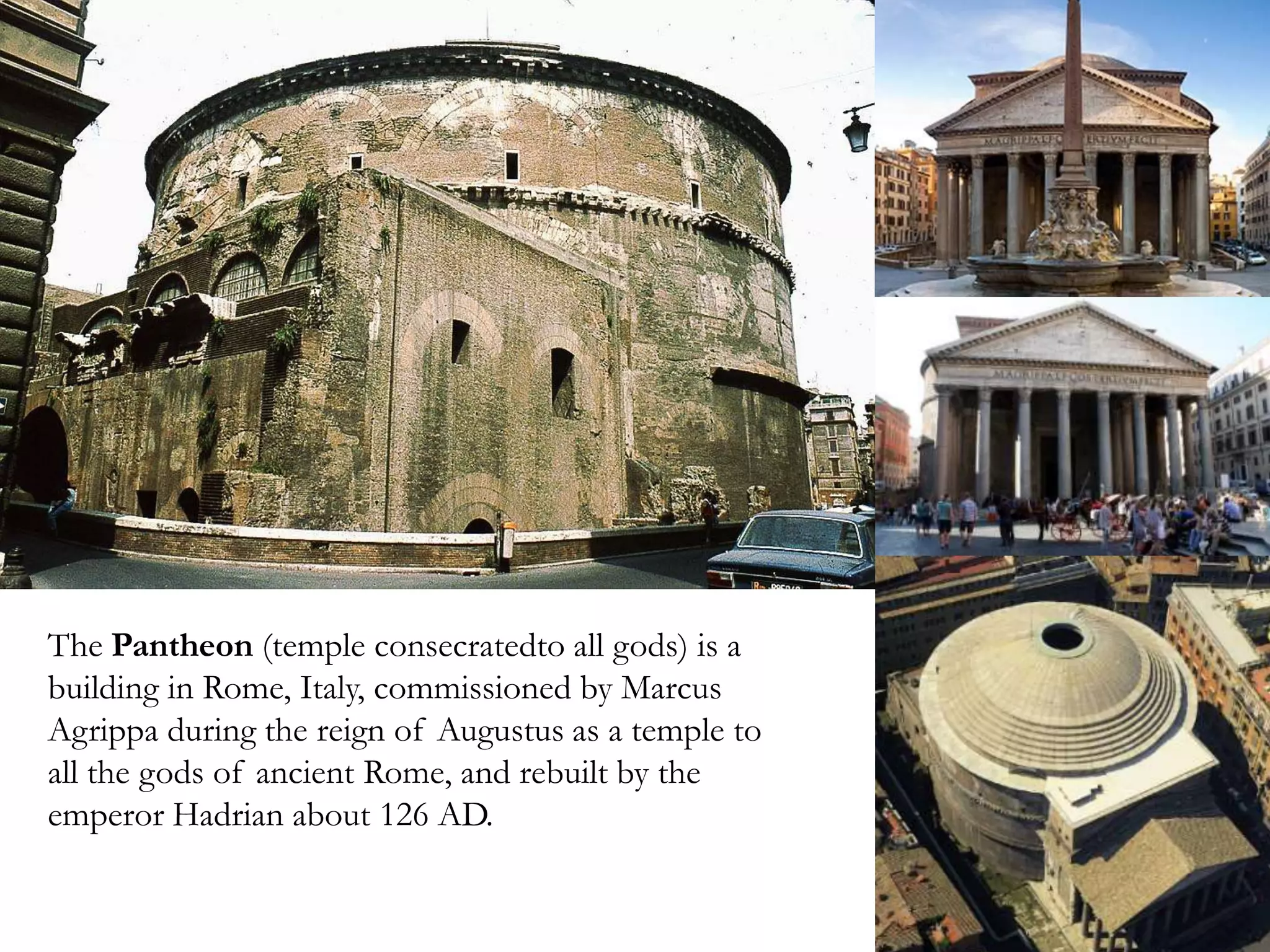
The Pantheon – 126 AD
The Pantheon (temple consecratedto all gods) is a
building in Rome, Italy, commissioned by Marcus
Agrippa during the reign of Augustus as a temple to
all the gods of ancient Rome, and rebuilt by the
emperor Hadrian about 126 AD.
Trajan's Column (Italian:
Colonna Traiana) is a Roman
triumphal column in Rome, Italy,
that commemorates Roman
emperor Trajan's victory in the
Dacian Wars. It was probably
constructed under the
supervision of the architect
Apollodorus of Damascus at the
order of the Roman Senate. It is
located in Trajan's Forum, built
near the Quirinal Hill, north of
the Roman Forum. Completed in
AD 113, the freestanding column
is most famous for its spiral bas
relief, which artistically describes
the epic wars between the
Romans and Dacians (101–102
and 105–106). Its design has
inspired numerous victory
columns, both ancient and
modern.

Greek and Roman Architecture

  • 1.
    The Ancient Greek andRoman Architecture
  • 2.
    Greek orders 1. Doricorder 2. Ionic order 3. Corinthian order Roman orders 1. Tuscan order 2. Composite order
  • 4.
    Construction started in449 BC, and some scholars believe the building not to have been completed for some three decades, funds and workers having been redirected towards the Parthenon. The western frieze was completed between 445-440 BC, while the eastern frieze, the western pediment and several changes in the building's interior are dated by these scholars to 435-430 BC, largely on stylistic grounds. It was only during the Peace of Nicias (421-415 BC) that the roof was completed and the cult images were installed. The temple was officially inaugurated in 416-415 BC. Temple of Hephaestus DORICORDER
  • 6.
  • 8.
    The Parthenon –447 BC - 432 BC A temple on the Athenian Acropolis, Greece, dedicated to the maiden goddess Athena, whom the people of Athens considered their patron deity. After the Ottoman conquest, it was turned into a mosque in the early 1460s. On 26 September 1687, an Ottoman ammunition dump inside the building was ignited by Venetian bombardment. The resulting explosion severely damaged the Parthenon and its sculptures.
  • 10.
    The Parthenon inNashville, Tennessee, USA is a full scale and polychromed replica of the original Greek Parthenon.
  • 11.
    Temple of Aphaea– 500 BC
  • 13.
    Delphi Apollo's sacred precinctin Delphi was a panhellenic sanctuary, where every four years, starting in 586 BC athletes from all over the Greek world competed in the Pythian Games, one of the four panhellenic (or stephanitic) games, precursors of the Modern Olympics. The victors at Delphi were presented with a laurel crown (stephanos) which was ceremonially cut from a tree by a boy who re-enacted the slaying of the Python.
  • 17.
  • 18.
    Roman orders 1. Tuscanorder 2. Composite order
  • 19.
    Triumphal arches Arch ofTitus – 82 AD
  • 20.
  • 23.
    The Alcántara Bridge(also known as Puente Trajan at Alcantara) is a Roman stone arch bridge built over the Tagus River at Alcantara, Spain between 104 and 106 AD by an order of the Roman Emperor Trajan in 98.
  • 24.
  • 26.
  • 28.
  • 29.
  • 30.
    Roman Forum The RomanForum is a rectangular forum (plaza) surrounded by the ruins of several important ancient government buildings at the centre of the city of Rome. Citizens of the ancient city referred to this space, originally a marketplace, as the Forum Magnum, or simply the Forum.
  • 31.
  • 32.
    The Pantheon (templeconsecratedto all gods) is a building in Rome, Italy, commissioned by Marcus Agrippa during the reign of Augustus as a temple to all the gods of ancient Rome, and rebuilt by the emperor Hadrian about 126 AD.
  • 33.
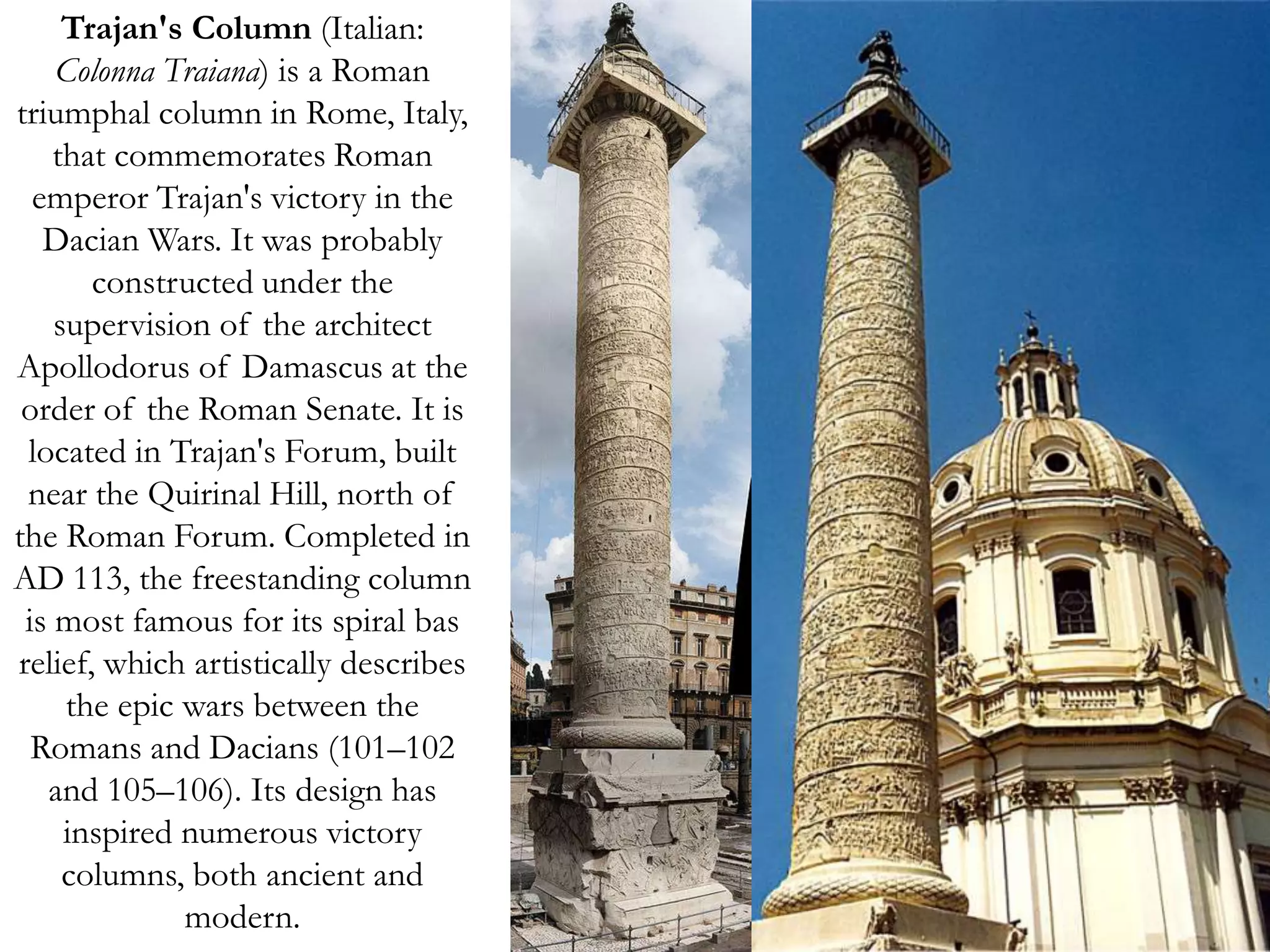
    Trajan's Column (Italian: ColonnaTraiana) is a Roman triumphal column in Rome, Italy, that commemorates Roman emperor Trajan's victory in the Dacian Wars. It was probably constructed under the supervision of the architect Apollodorus of Damascus at the order of the Roman Senate. It is located in Trajan's Forum, built near the Quirinal Hill, north of the Roman Forum. Completed in AD 113, the freestanding column is most famous for its spiral bas relief, which artistically describes the epic wars between the Romans and Dacians (101–102 and 105–106). Its design has inspired numerous victory columns, both ancient and modern.