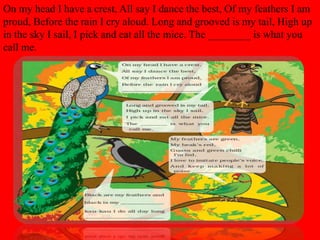

On my head I have a crest, All say I dance the best, Of my feathers I am
proud, Before the rain I cry aloud. Long and grooved is my tail, High up
in the sky I sail, I pick and eat all the mice. The ________ is what you
call me.
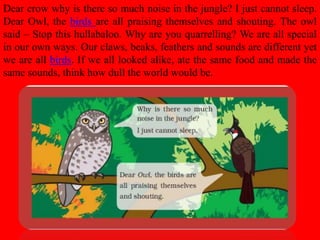
Dear crow why is there so much noise in the jungle? I just cannot sleep.
Dear Owl, the birds are all praising themselves and shouting. The owl
said – Stop this hullabaloo. Why are you quarrelling? We are all special
in our own ways. Our claws, beaks, feathers and sounds are different yet
we are all birds. If we all looked alike, ate the same food and made the
same sounds, think how dull the world would be.
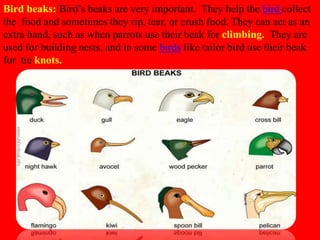
Bird beaks: Bird’s beaks are very important. They help the bird collect
the food and sometimes they rip, tear, or crush food. They can act as an
extra hand, such as when parrots use their beak for climbing. They are
used for building nests, and in some birds like tailor bird use their beak
for tie knots.
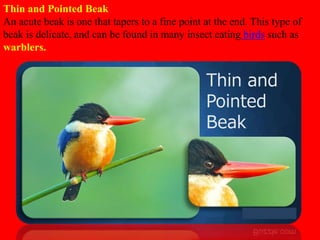
Thin and Pointed Beak
An acute beak is one that tapers to a fine point at the end. This type of
beak is delicate, and can be found in many insect eating birds such as
warblers.
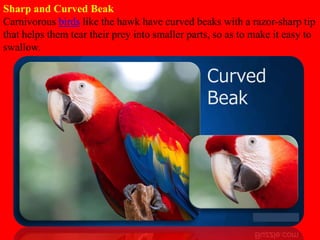
Sharp and Curved Beak
Carnivorous birds like the hawk have curved beaks with a razor-sharp tip
that helps them tear their prey into smaller parts, so as to make it easy to
swallow.
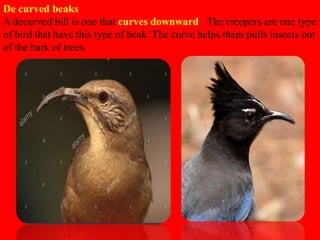
De curved beaks
A decurved bill is one that curves downward. The creepers are one type
of bird that have this type of beak. The curve helps them pulls insects out
of the bark of trees.
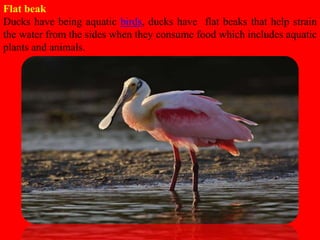
Flat beak
Ducks have being aquatic birds, ducks have flat beaks that help strain
the water from the sides when they consume food which includes aquatic
plants and animals.
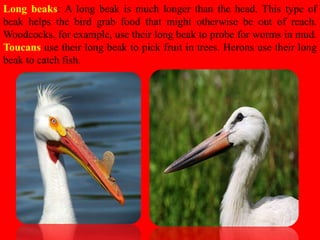
Long beaks: A long beak is much longer than the head. This type of
beak helps the bird grab food that might otherwise be out of reach.
Woodcocks, for example, use their long beak to probe for worms in mud.
Toucans use their long beak to pick fruit in trees. Herons use their long
beak to catch fish.
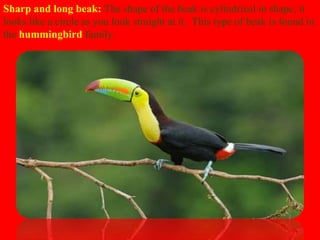
Sharp and long beak: The shape of the beak is cylindrical in shape, it
looks like a circle as you look straight at it. This type of beak is found in
the hummingbird family.
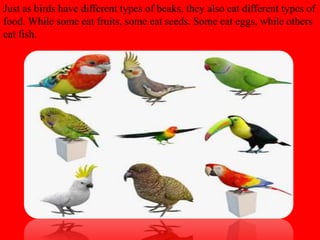
Just as birds have different types of beaks, they also eat different types of
food. While some eat fruits, some eat seeds. Some eat eggs, while others
eat fish.
Have you ever noticed that birds fly and walk in different ways. Their
neck movements also differ. The mynah moves her neck back and forth
with a jerk. The owl can rotate its neck backwards to a large extent.
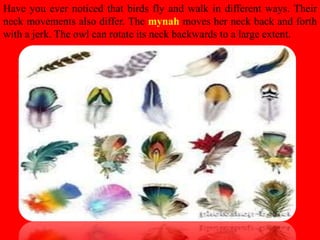
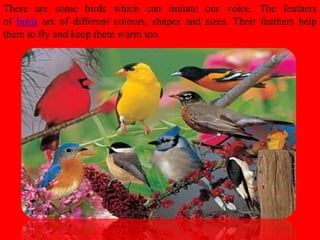
There are some birds which can imitate our voice. The feathers
of birds are of different colours, shapes and sizes. Their feathers help
them to fly and keep them warm too.
FLYING HIGH - ENVIRONMENTAL STUDIES CLASS III-CBSE

FLYING HIGH - ENVIRONMENTAL STUDIES CLASS III-CBSE

  • 2.
    On my headI have a crest, All say I dance the best, Of my feathers I am proud, Before the rain I cry aloud. Long and grooved is my tail, High up in the sky I sail, I pick and eat all the mice. The ________ is what you call me.
  • 3.
    Dear crow whyis there so much noise in the jungle? I just cannot sleep. Dear Owl, the birds are all praising themselves and shouting. The owl said – Stop this hullabaloo. Why are you quarrelling? We are all special in our own ways. Our claws, beaks, feathers and sounds are different yet we are all birds. If we all looked alike, ate the same food and made the same sounds, think how dull the world would be.
  • 4.
    Bird beaks: Bird’sbeaks are very important. They help the bird collect the food and sometimes they rip, tear, or crush food. They can act as an extra hand, such as when parrots use their beak for climbing. They are used for building nests, and in some birds like tailor bird use their beak for tie knots.
  • 5.
    Thin and PointedBeak An acute beak is one that tapers to a fine point at the end. This type of beak is delicate, and can be found in many insect eating birds such as warblers.
  • 6.
    Sharp and CurvedBeak Carnivorous birds like the hawk have curved beaks with a razor-sharp tip that helps them tear their prey into smaller parts, so as to make it easy to swallow.
  • 7.
    De curved beaks Adecurved bill is one that curves downward. The creepers are one type of bird that have this type of beak. The curve helps them pulls insects out of the bark of trees.
  • 8.
    Flat beak Ducks havebeing aquatic birds, ducks have flat beaks that help strain the water from the sides when they consume food which includes aquatic plants and animals.
  • 9.
    Long beaks: Along beak is much longer than the head. This type of beak helps the bird grab food that might otherwise be out of reach. Woodcocks, for example, use their long beak to probe for worms in mud. Toucans use their long beak to pick fruit in trees. Herons use their long beak to catch fish.
  • 10.
    Sharp and longbeak: The shape of the beak is cylindrical in shape, it looks like a circle as you look straight at it. This type of beak is found in the hummingbird family.
  • 11.
    Just as birdshave different types of beaks, they also eat different types of food. While some eat fruits, some eat seeds. Some eat eggs, while others eat fish.
  • 12.
    Have you evernoticed that birds fly and walk in different ways. Their neck movements also differ. The mynah moves her neck back and forth with a jerk. The owl can rotate its neck backwards to a large extent.
  • 13.
    There are somebirds which can imitate our voice. The feathers of birds are of different colours, shapes and sizes. Their feathers help them to fly and keep them warm too.