

System change:
Facing Canada’s toughest challenges
Joeri van den Steenhoven
Director, MaRS Solutions Lab

@joerivds

solutions-lab.marsdd.com

#systemchange
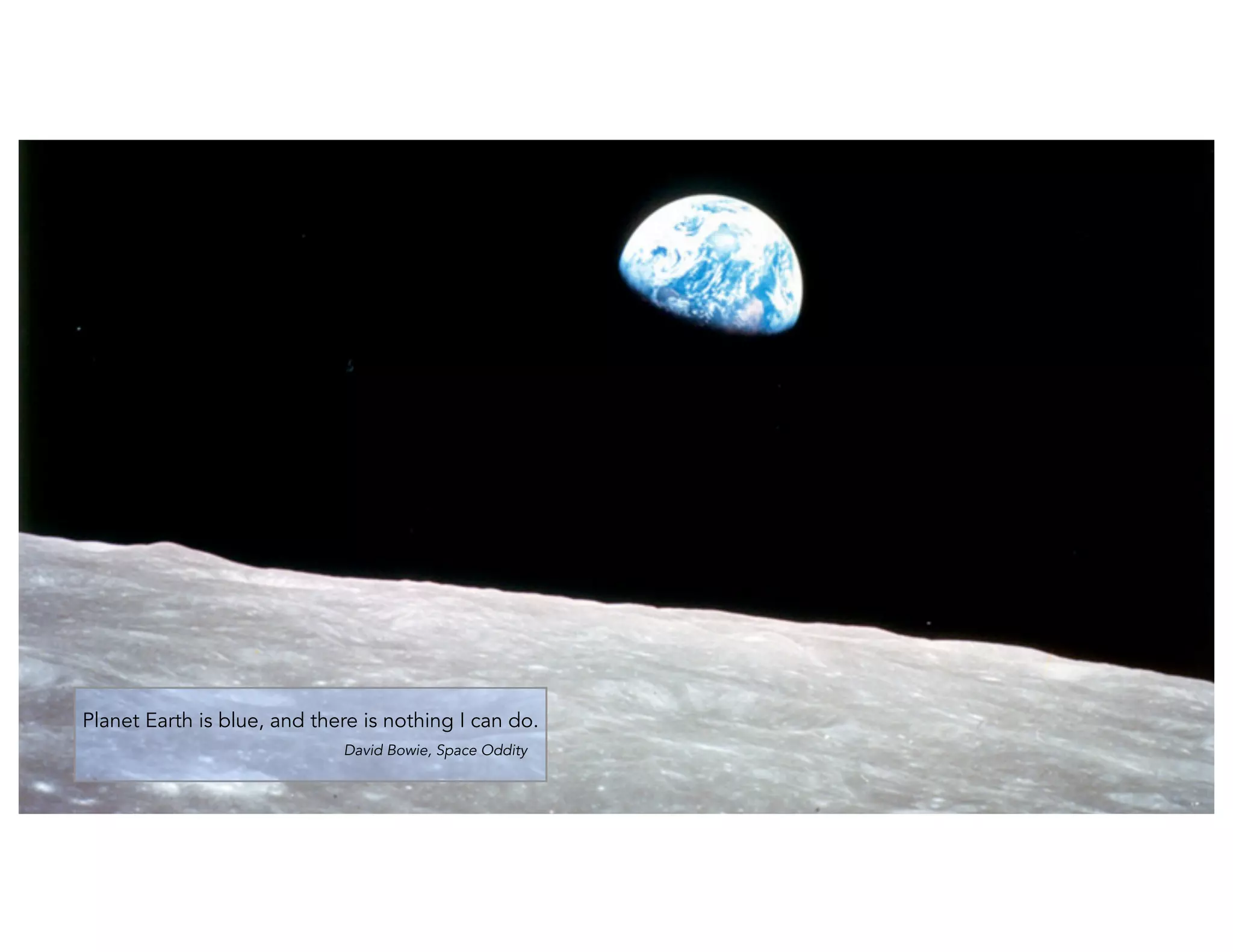
Planet Earth is blue, and there is nothing I can do.
David Bowie, Space Oddity
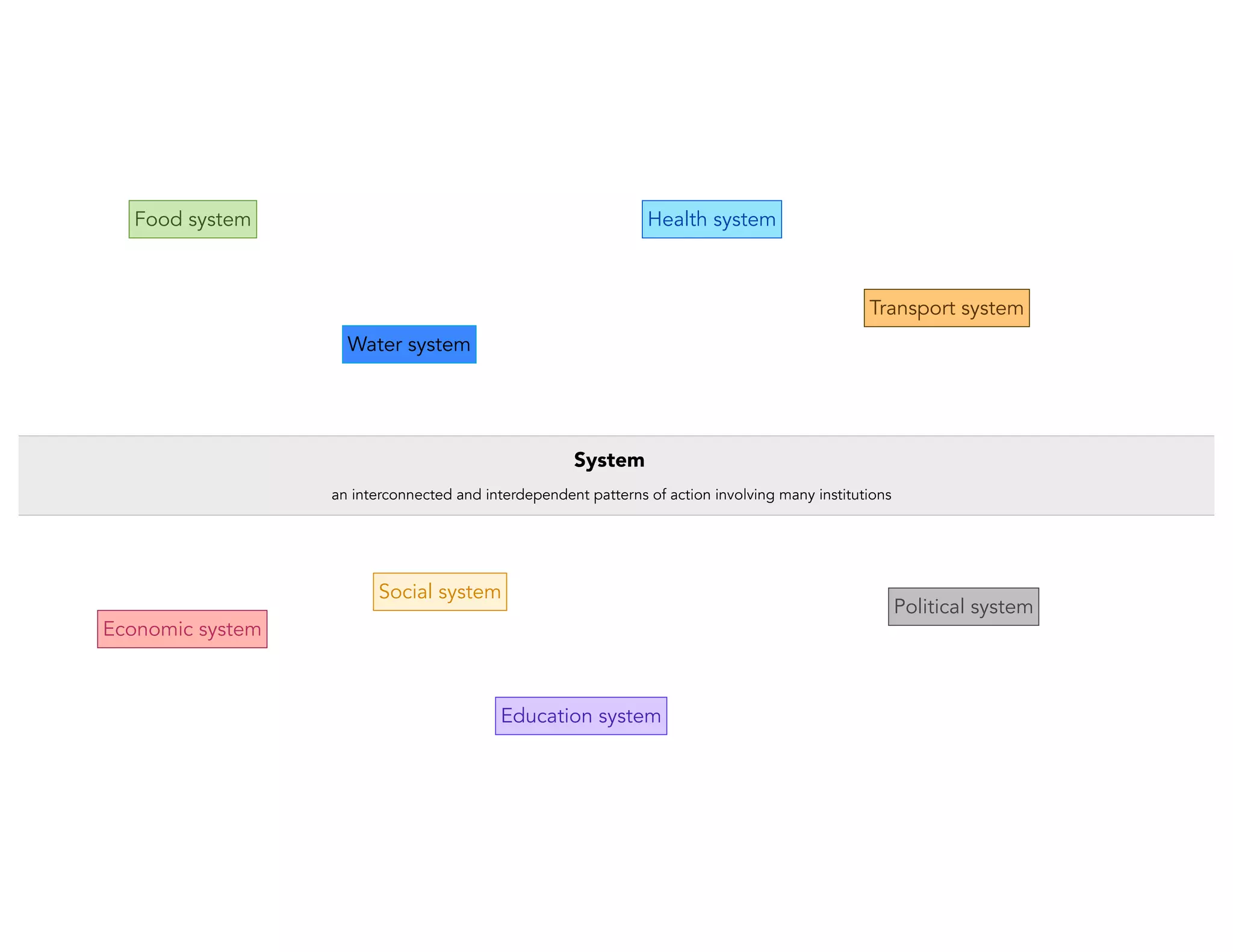
Food system

Health system

Transport system
Water system

System
an interconnected and interdependent patterns of action involving many institutions

Social system
Economic system

Education system

Political system
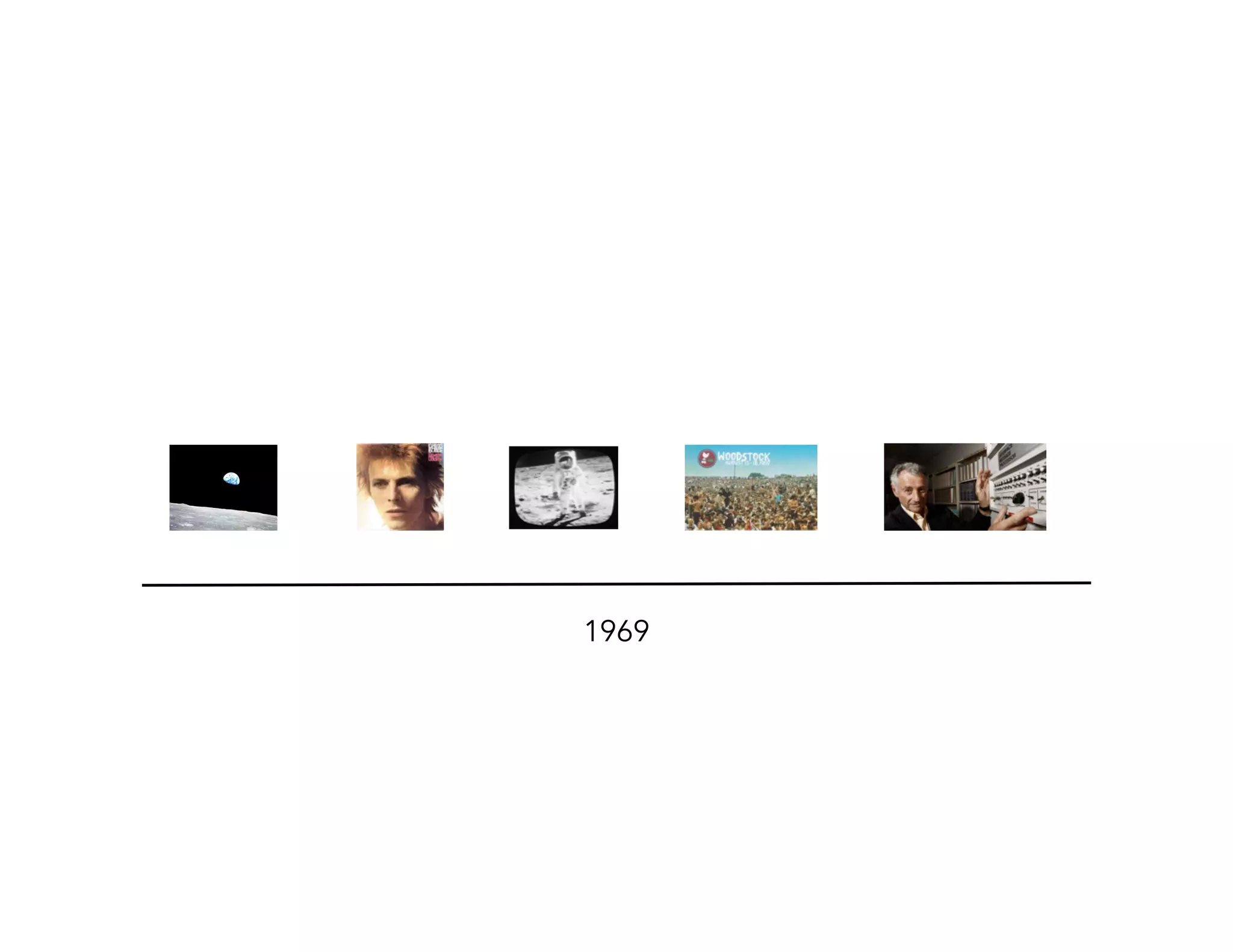
1969 - 1989
1969 - 1989
What will be our legacy?
Our legacy:
The transition to the knowledge society
1969
1989
The basic economic resource – the means of production, to use economist’s term – is no longer
capital, nor land, nor labor. It is and will be knowledge.
Value is now created by productivity and innovation, both applications of knowledge to work.

Peter Drucker (1993)
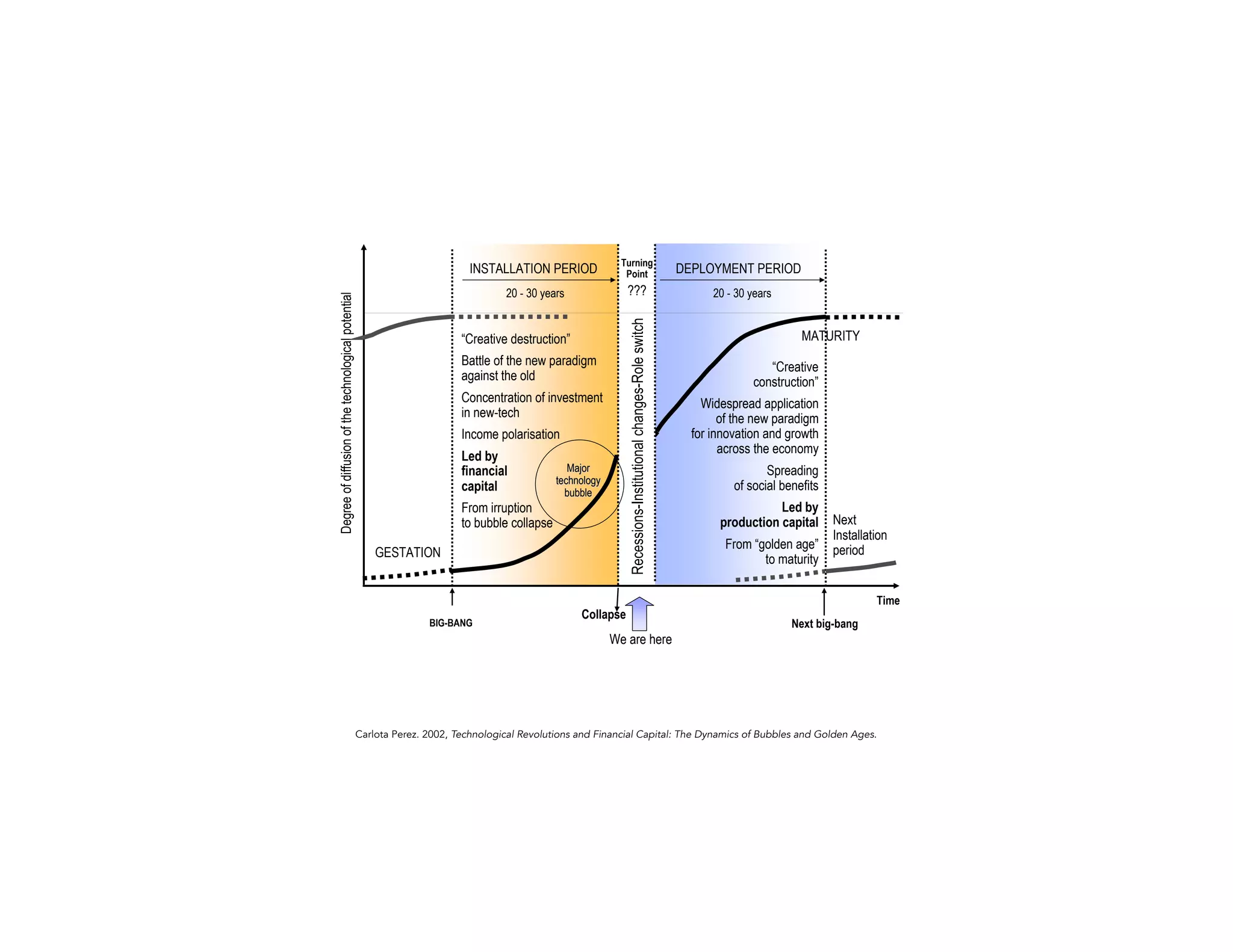
Due to the difficulty of social absorption of revolutions and new paradigms
EACH GREAT SURGE IS BROKEN INTO TWO DIFFERENT PERIODS

???

Recessions-Institutional changes-Role switch

Turning
Point

20 - 30 years

Degree of diffusion of the technological potential

INSTALLATION PERIOD

“Creative destruction”
Battle of the new paradigm
against the old
Concentration of investment
in new-tech
Income polarisation
Led by
financial
capital

Major
technology
bubble

From irruption
to bubble collapse
GESTATION

BIG-BANG

Collapse

DEPLOYMENT PERIOD
20 - 30 years

MATURITY
“Creative
construction”
Widespread application
of the new paradigm
for innovation and growth
across the economy
Spreading
of social benefits
Led by
production capital
From “golden age”
to maturity

Next
Installation
period

Time
Next big-bang

We are here

Carlota Perez. 2002, Technological Revolutions and Financial Capital: The Dynamics of Bubbles and Golden Ages.
Complexity%

System failure

Public%Systems%

Social%Challenges%

Time%
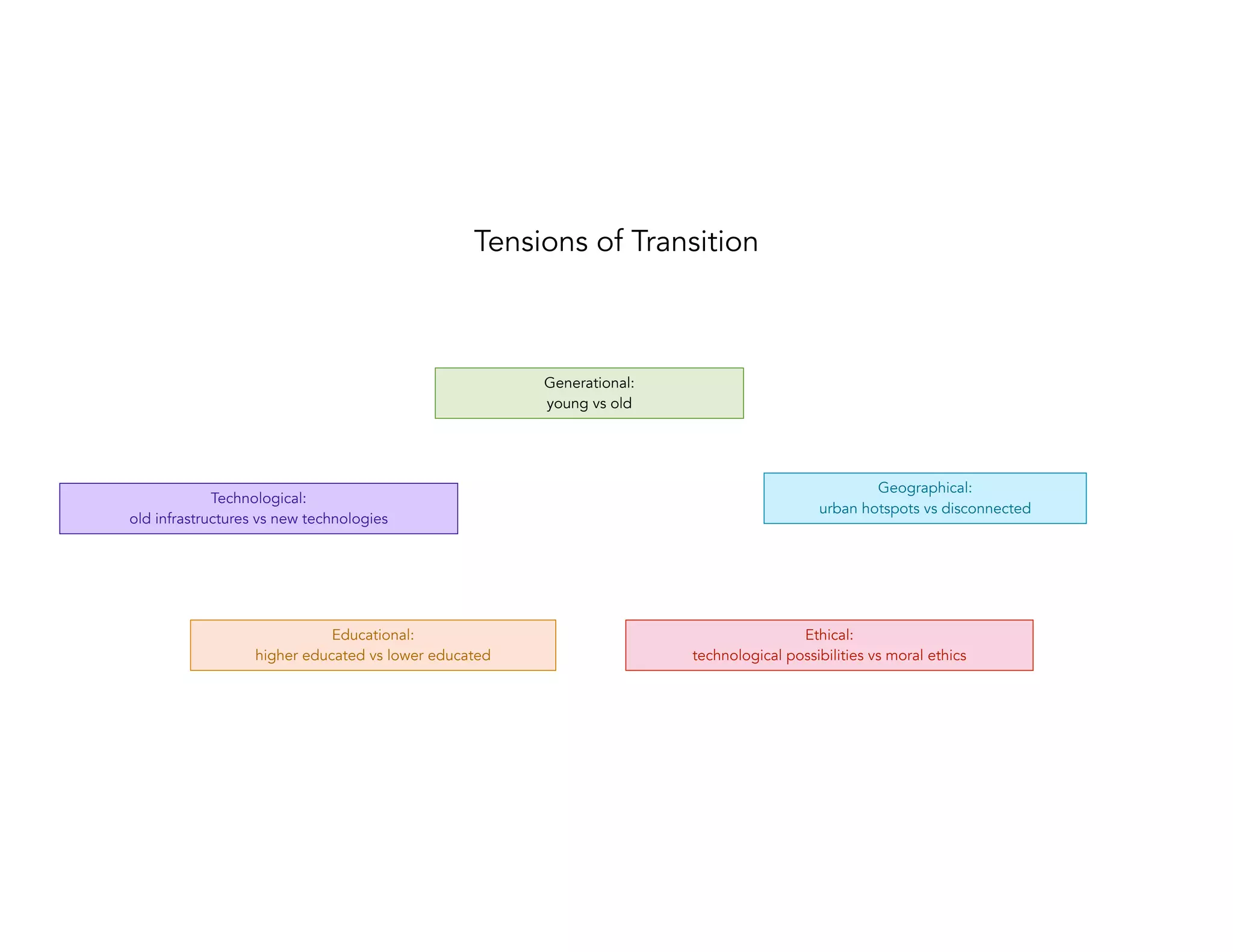
Tensions of Transition

Generational:
young vs old

Technological:
old infrastructures vs new technologies

Educational:
higher educated vs lower educated

Geographical:
urban hotspots vs disconnected

Ethical:
technological possibilities vs moral ethics
What kind of knowledge society do we want?
Government

Society

Decrease of problem solving capacity

Problem solving capacity record high

Difficult to attract and retain people, potential shortages

People better educated and informed,
and many want to be engaged

Less public resources
due to the financial crisis

More private capital for social good
available than ever before

Operating in vertical structures

Technology enables us to collaborate
and perform complex tasks horizontally
Social Innovation Labs
& change / design labs

Strengths

Pitfalls

Having a system perspective

Not scaling

Understanding the user

Lack of learning

Ideation & Prototyping

Just brainstorming

Long term

Just a process
Mission: To help solve complex societal challenges that require system change.
The lab process

H

R

T

M

Hypothesis

Research

Test

Market
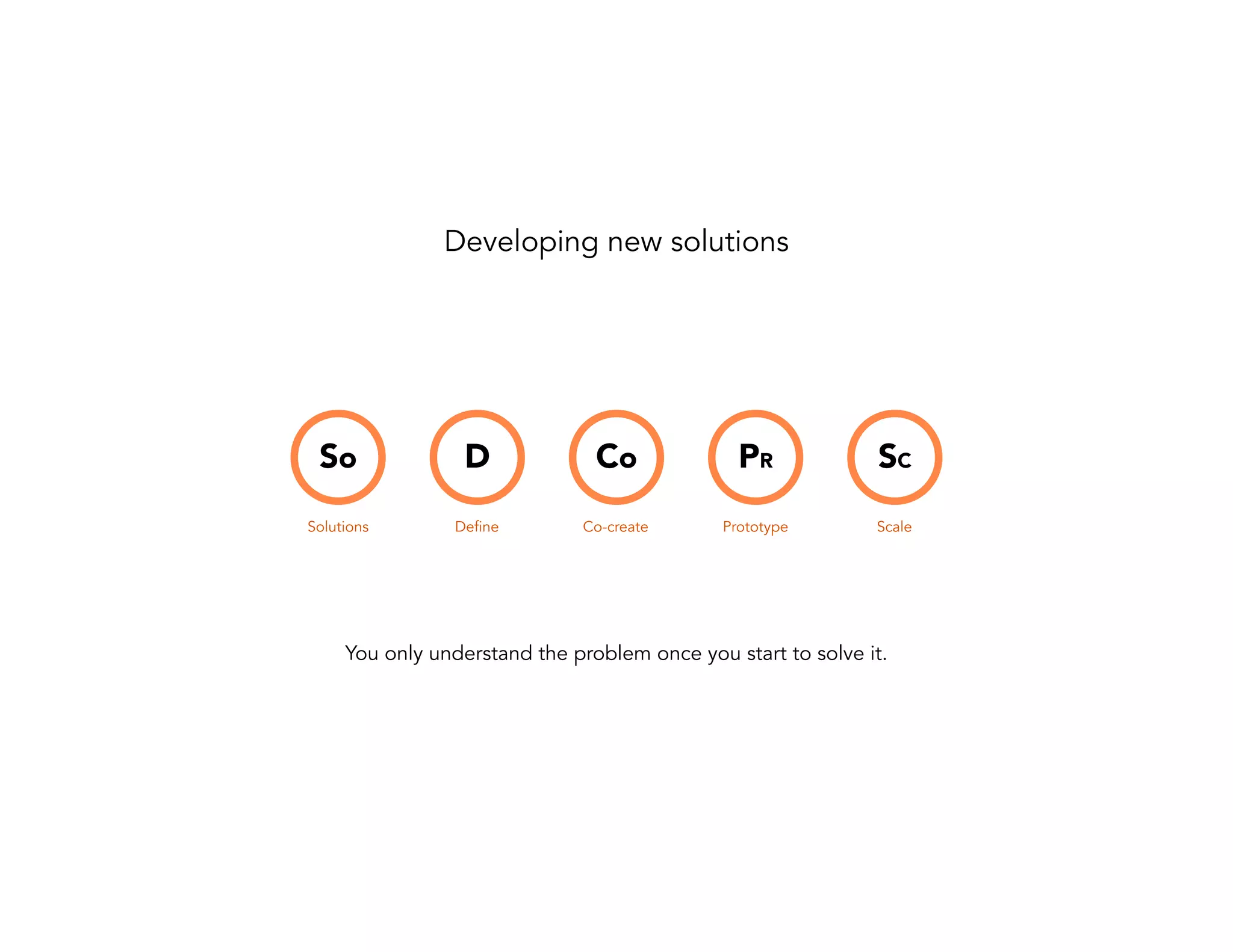
Developing new solutions

So

D

Co

PR

SC

Solutions

Define

Co-create

Prototype

Scale

You only understand the problem once you start to solve it.
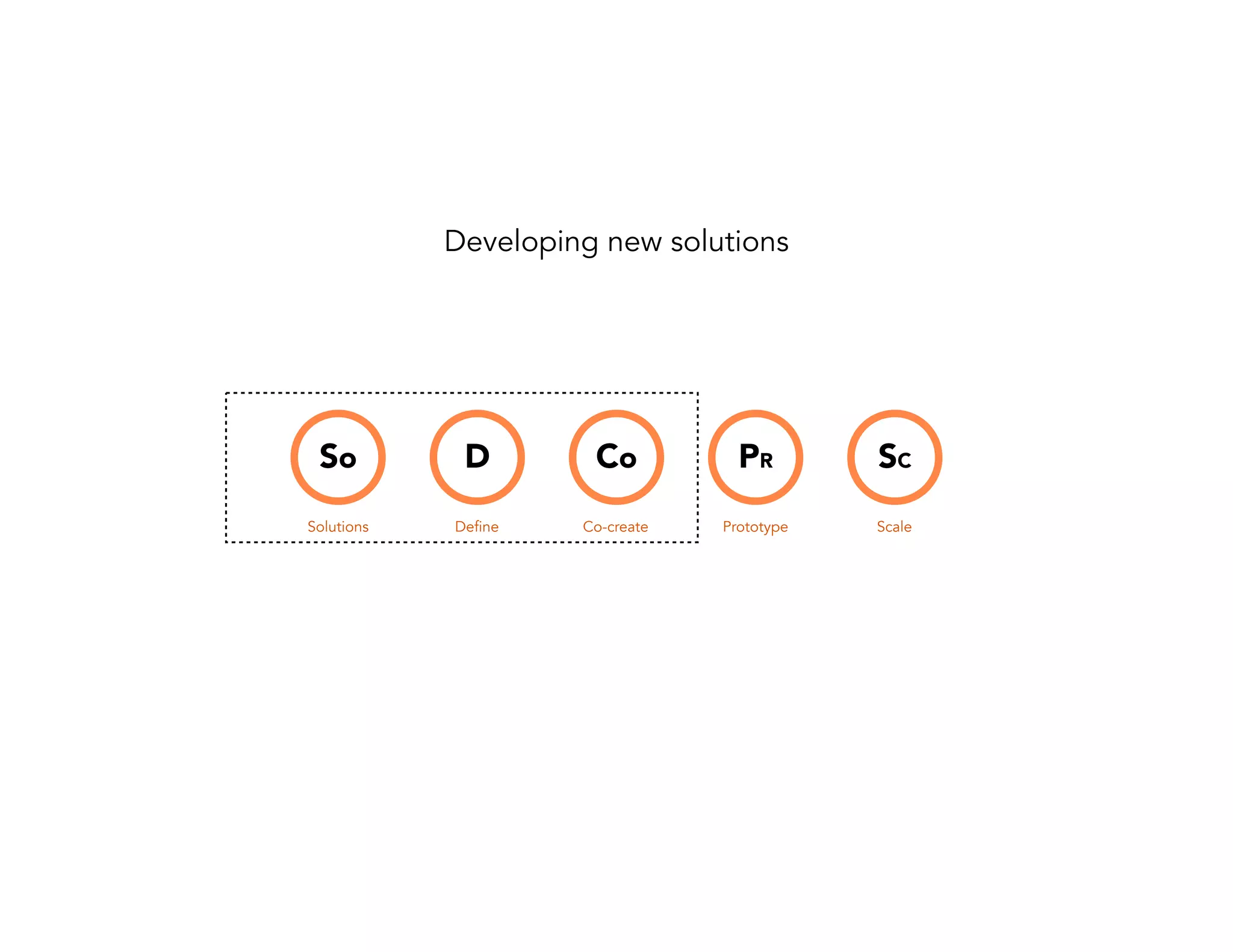
Developing new solutions

So

D

Co

PR

SC

Solutions

Define

Co-create

Prototype

Scale
Developing new solutions

So

D

Co

PR

SC

Solutions

Define

Co-create

Prototype

Scale
Policy Change

Po

F

V

Ev

PF

Policy change

Frame

Vision

Evidence

Policy formulation
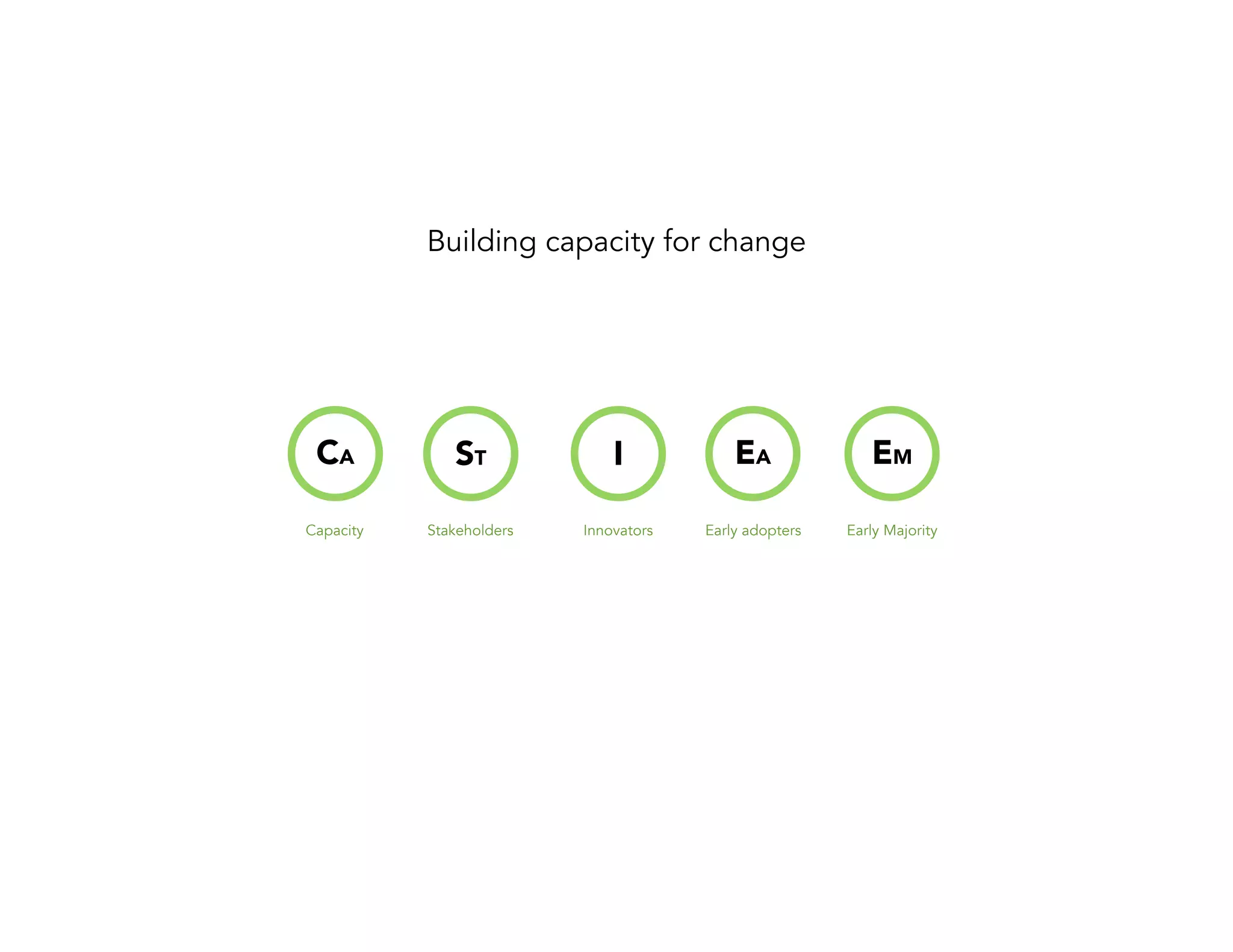
Building capacity for change

CA

ST

I

EA

EM

Capacity

Stakeholders

Innovators

Early adopters

Early Majority
Periodic Table of System Change

H

R

T

M

Po

F

V

Ev

PF

So

D

Co

PR

SC

CA

ST

I

EA

EM
55% of direct and indirect health costs are caused
by chronic diseases,
and it is growing dramatically.

Unhealthy eating is #1 factor with 2.9 billion direct
health costs in Ontario alone.

Challenge #1: Future of Health

We need to change the behaviour of people
at individual, community and system level.
Making healthy eating the easy choice.

In next 5 years we want to prototype new solutions
in 5 communities across Ontario,
and then help scale what works.
The food sector is one of biggest employers in Ontario
with 740.000 jobs. It has the 6th largest food processing
sector in North America.

But is it competitive for the future?
In terms of export value Canada is surpassed by many countries.
And also in terms of sustainability Canada has fallen behind.

Challenge #2: Future of Food

For a healthy and more sustainable food economy,
we need to change. From production, processing to retail.

We want to select a value chain and explore
what can be done to promote a more sustainable, healthy food
economy, leading to better food and more jobs.
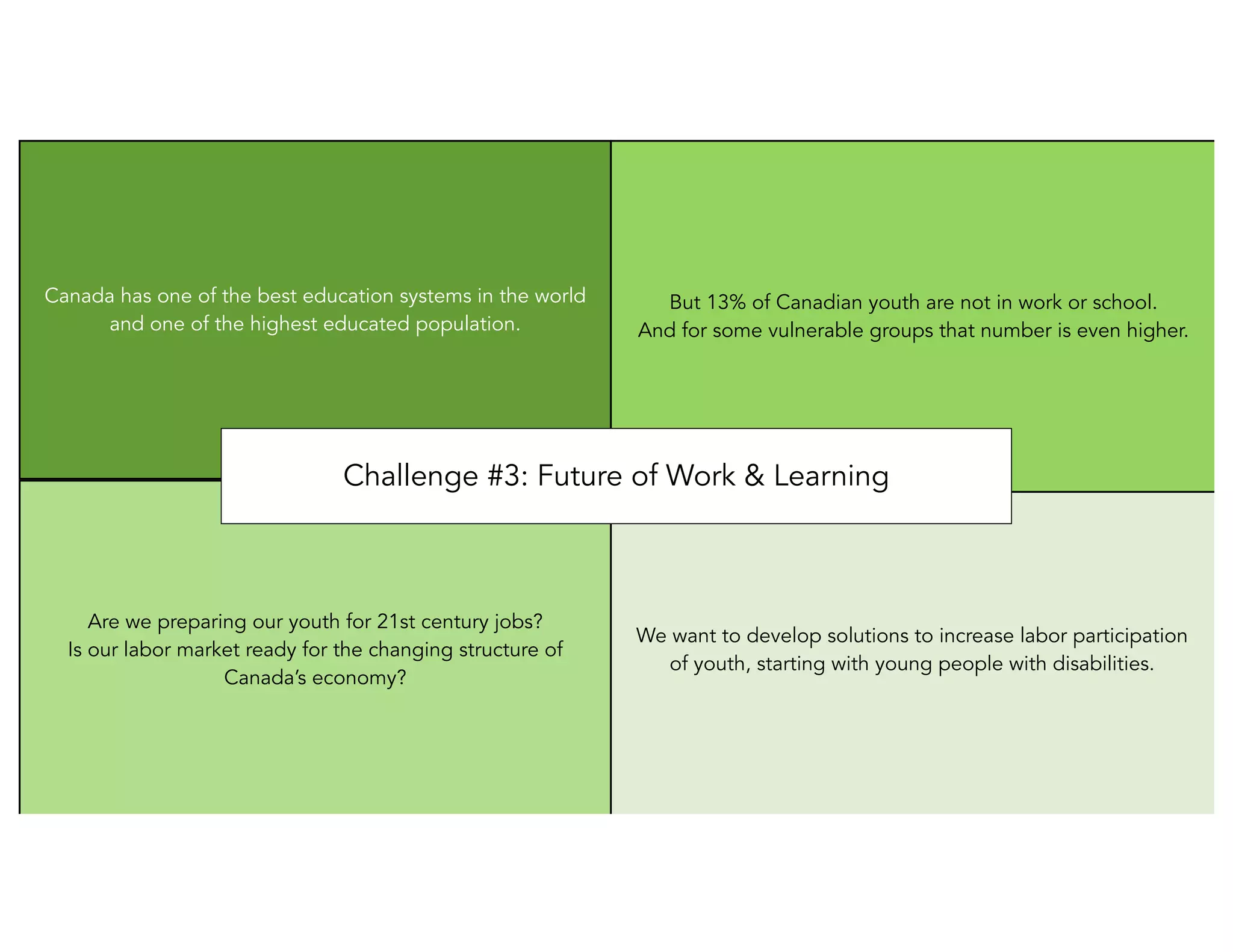
Canada has one of the best education systems in the world
and one of the highest educated population.

But 13% of Canadian youth are not in work or school.
And for some vulnerable groups that number is even higher.

Challenge #3: Future of Work & Learning

Are we preparing our youth for 21st century jobs?
Is our labor market ready for the changing structure of
Canada’s economy?

We want to develop solutions to increase labor participation
of youth, starting with young people with disabilities.
Governments today face complex challenges
in a transforming world
while public resources are decreasing.

This calls for fundamental government reform.
Build a government for the knowledge society.

Challenge #4: Future of Government

Start to redesign public services.
Learn to operate from a citizen perspective.
Connect with society to solve problems.

We plan to develop different actions to help government
become more open and citizen-centered.
And connect innovators inside and outside government.
Doing it together

Creating partnerships

Building communities
solutions-lab.marsdd.com

Lab Learning

and many more...

and many more...
1969 - 1989
What kind of knowledge society do we want?
System change:
Facing Canada’s toughest challenges
Joeri van den Steenhoven
Director, MaRS Solutions Lab

@joerivds

solutions-lab.marsdd.com

#systemchange

Systems Change: Facing Canada’s toughest challenges - MaRS Global Leadership

  • 1.
    System change: Facing Canada’stoughest challenges Joeri van den Steenhoven Director, MaRS Solutions Lab @joerivds solutions-lab.marsdd.com #systemchange
  • 2.
    Planet Earth isblue, and there is nothing I can do. David Bowie, Space Oddity
  • 3.
    Food system Health system Transportsystem Water system System an interconnected and interdependent patterns of action involving many institutions Social system Economic system Education system Political system
  • 4.
  • 5.
    1969 - 1989 Whatwill be our legacy?
  • 6.
    Our legacy: The transitionto the knowledge society
  • 7.
  • 8.
  • 9.
    The basic economicresource – the means of production, to use economist’s term – is no longer capital, nor land, nor labor. It is and will be knowledge. Value is now created by productivity and innovation, both applications of knowledge to work. Peter Drucker (1993)
  • 10.
    Due to thedifficulty of social absorption of revolutions and new paradigms EACH GREAT SURGE IS BROKEN INTO TWO DIFFERENT PERIODS ??? Recessions-Institutional changes-Role switch Turning Point 20 - 30 years Degree of diffusion of the technological potential INSTALLATION PERIOD “Creative destruction” Battle of the new paradigm against the old Concentration of investment in new-tech Income polarisation Led by financial capital Major technology bubble From irruption to bubble collapse GESTATION BIG-BANG Collapse DEPLOYMENT PERIOD 20 - 30 years MATURITY “Creative construction” Widespread application of the new paradigm for innovation and growth across the economy Spreading of social benefits Led by production capital From “golden age” to maturity Next Installation period Time Next big-bang We are here Carlota Perez. 2002, Technological Revolutions and Financial Capital: The Dynamics of Bubbles and Golden Ages.
  • 11.
  • 12.
    Tensions of Transition Generational: youngvs old Technological: old infrastructures vs new technologies Educational: higher educated vs lower educated Geographical: urban hotspots vs disconnected Ethical: technological possibilities vs moral ethics
  • 13.
    What kind ofknowledge society do we want?
  • 14.
    Government Society Decrease of problemsolving capacity Problem solving capacity record high Difficult to attract and retain people, potential shortages People better educated and informed, and many want to be engaged Less public resources due to the financial crisis More private capital for social good available than ever before Operating in vertical structures Technology enables us to collaborate and perform complex tasks horizontally
  • 18.
    Social Innovation Labs &change / design labs Strengths Pitfalls Having a system perspective Not scaling Understanding the user Lack of learning Ideation & Prototyping Just brainstorming Long term Just a process
  • 19.
    Mission: To helpsolve complex societal challenges that require system change.
  • 20.
  • 21.
  • 22.
  • 23.
  • 24.
  • 25.
    Building capacity forchange CA ST I EA EM Capacity Stakeholders Innovators Early adopters Early Majority
  • 26.
    Periodic Table ofSystem Change H R T M Po F V Ev PF So D Co PR SC CA ST I EA EM
  • 27.
    55% of directand indirect health costs are caused by chronic diseases, and it is growing dramatically. Unhealthy eating is #1 factor with 2.9 billion direct health costs in Ontario alone. Challenge #1: Future of Health We need to change the behaviour of people at individual, community and system level. Making healthy eating the easy choice. In next 5 years we want to prototype new solutions in 5 communities across Ontario, and then help scale what works.
  • 28.
    The food sectoris one of biggest employers in Ontario with 740.000 jobs. It has the 6th largest food processing sector in North America. But is it competitive for the future? In terms of export value Canada is surpassed by many countries. And also in terms of sustainability Canada has fallen behind. Challenge #2: Future of Food For a healthy and more sustainable food economy, we need to change. From production, processing to retail. We want to select a value chain and explore what can be done to promote a more sustainable, healthy food economy, leading to better food and more jobs.
  • 29.
    Canada has oneof the best education systems in the world and one of the highest educated population. But 13% of Canadian youth are not in work or school. And for some vulnerable groups that number is even higher. Challenge #3: Future of Work & Learning Are we preparing our youth for 21st century jobs? Is our labor market ready for the changing structure of Canada’s economy? We want to develop solutions to increase labor participation of youth, starting with young people with disabilities.
  • 30.
    Governments today facecomplex challenges in a transforming world while public resources are decreasing. This calls for fundamental government reform. Build a government for the knowledge society. Challenge #4: Future of Government Start to redesign public services. Learn to operate from a citizen perspective. Connect with society to solve problems. We plan to develop different actions to help government become more open and citizen-centered. And connect innovators inside and outside government.
  • 31.
    Doing it together Creatingpartnerships Building communities solutions-lab.marsdd.com Lab Learning and many more... and many more...
  • 32.
    1969 - 1989 Whatkind of knowledge society do we want?
  • 33.
    System change: Facing Canada’stoughest challenges Joeri van den Steenhoven Director, MaRS Solutions Lab @joerivds solutions-lab.marsdd.com #systemchange