Hiring	
  for	
  Attitude.
Considering	
  a	
  different	
  hiring	
  paradigm.
Talent
• X+	
  years	
  of	
  hands-­‐on	
  software	
  development
• X+	
  years	
  of	
  java	
  development
• Hands	
  on	
  experience	
  in	
  designing	
   and	
  developing	
   J2EE	
  platforms
• OO	
  analysis	
  and	
  design
• Profound	
   insight	
  of	
  Java	
  and	
  J2EE	
  internals	
  
• Excellent	
  knowledge	
  of	
  relational	
  databases	
  and	
  Open	
  Source
• Experience	
  in	
  developing	
   web	
  applications	
  using	
  at	
  least	
  one	
  popular	
  web	
  framework
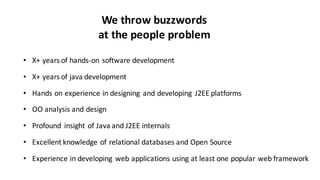
We	
  throw	
  buzzwords	
  
at	
  the	
  people	
  problem
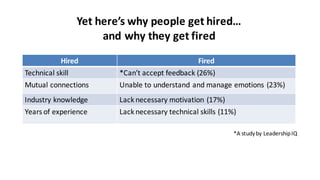
Hired Fired
Technical skill *Can’t	
  accept feedback	
  (26%)
Mutual connections Unable to	
  understand	
  and	
  manage	
  emotions	
  (23%)
Industry	
  knowledge Lack	
  necessary	
  motivation	
  (17%)
Years	
  of	
  experience Lack	
  necessary	
  technical	
  skills	
  (11%)
*A	
  study	
  by	
  Leadership	
  IQ
Yet	
  here’s	
  why	
  people	
  get	
  hired…	
  
and	
  why	
  they	
  get	
  fired
What	
  do	
  great	
  coders	
  do	
  differently?
1. Have	
  a	
  deeper	
  understanding	
  of	
  what	
  the	
  client	
  needs	
  so	
  they	
  don’t	
  spend	
  time	
  
building	
  code	
  that’s	
  not	
  required.
2. Find	
  a	
  tool/library	
  that	
  gets	
  50%+	
  of	
  the	
  job	
  done	
  instead	
  of	
  writing	
  code	
  from	
  scratch.
3. Have	
  the	
  ability	
  to	
  focus	
  more	
  effectively,	
  and	
  block	
  out	
  interruptions	
  better	
  than	
  
others.
4. Throw	
  out	
  code	
  that’s	
  not	
  working	
  rather	
  than	
  going	
  deep	
  on	
  extraneous	
  applications.
5. Communicate	
  with	
  their	
  peers	
  more	
  effectively.
Technical	
  knowledge	
  profile
Technical	
  skills (incl.	
  languages,	
  
o/s,	
  databases,	
  tools,	
  
methodologies
#	
  of	
  years	
  experience	
  and	
  how	
  
current
Competency	
  level	
  (expert,	
  
intermediate,	
  academic)
Additional	
  info	
  from	
  a	
  candidate’s	
  last	
  3	
  main	
  projects
1. Roles	
  on	
  the	
  projects
2. Size	
  of	
  projects
3. How	
  many	
  teams
4. New	
  initiatives/fixes/re-­‐platforms?
5. Have	
  you	
  transitioned	
  from	
  one	
  stack	
  to	
  another?	
  When?	
  Tell	
  me	
  about	
  the	
  process?
6. What	
  methodologies	
  have	
  they	
  used?
7. What	
  frameworks	
  have	
  they	
  used?
8. Have	
  they	
  worked	
  in	
  an	
  Open	
  Source	
  environment?
9. What	
  work	
  are	
  they	
  most	
  proud	
  of?
10.Tell	
  you	
  about	
  their	
  portfolio
11.What	
  sort	
  of	
  experimenting	
  do	
  they	
  do	
  off	
  hours?
• J2EE/Java
• Node.js
• Django/Python
• Zend/CakePHP
• Ruby	
  on	
  Rails
Enterprise	
  Stacks “Modern”	
   Stacks
45%	
  of	
  programmers
35%	
  of	
  programmers
20%	
  of	
  programmers
Front	
  –end	
  
Application	
  
Developers
and	
  Mobile
Application	
  
Server-­‐ Business	
  
Logic	
  Layer
Databases
.Net
Front–end	
  
1-­‐3	
  months	
  within	
  
this	
  stack
A	
  breakdown	
  
of	
  technology	
  
‘stacks’	
  and	
  
languages
1-­‐3	
  months	
  to	
  get	
  up	
  and	
  running
• HTML5
• CSS
• Javascript
• Jquery
Tools
• Angular
• React
• Ember
Web	
  App
• PhoneGap
• Ionic
• Sencha
Hybrid	
  Mobile
• Objective	
  C
• Java
• C#
Mobile	
  App
Hard
3-­‐6	
  mo	
  to	
  
move	
  
between	
  
these	
  stacks
SQL
(Oracle,	
  MySQL,	
  DB2,	
  
PostgreSQL,	
  …)
NoSQL
(MongoDB,	
  	
  CouchDB,	
  
Cassandra,	
  …)
Assess	
  what	
  you’ve	
  done…
both	
  right	
  and	
  wrong
One	
  last	
  thought
“Somebody	
  once	
  said	
  that	
  in	
  looking	
   for	
  people	
  to	
  hire,	
  you
look	
  for	
  three	
  qualities:	
  integrity,	
  intelligence,	
  and	
  energy.
And	
  if	
  you	
  don’t	
  have	
  the	
  first,	
  the	
  other	
  two	
  will	
  kill	
  you.
You	
  think	
  about	
  it;	
  it’s	
  true.	
  If	
  you	
  hire	
  somebody	
   without
[integrity],	
  you	
  really	
  want	
  them	
  to	
  be	
  dumb	
  and	
  lazy.”
I	
  am	
  a	
  recruiter,	
  and	
  trusted	
  advisor,	
  for	
  critical	
  
executive	
  and	
  senior	
  technical	
  roles	
  in	
  small	
  and	
  
mid-­‐sized	
  technology	
  firms
Tel:	
  416-­‐406-­‐1777
E-­‐mail:	
  mfox@brightlightsinc.com
Website:	
  www.brightlightsinc.com

A New Hiring Paradigm

  • 1.
    Hiring  for  Attitude. Considering  a  different  hiring  paradigm. Talent
  • 2.
    • X+  years  of  hands-­‐on  software  development • X+  years  of  java  development • Hands  on  experience  in  designing   and  developing   J2EE  platforms • OO  analysis  and  design • Profound   insight  of  Java  and  J2EE  internals   • Excellent  knowledge  of  relational  databases  and  Open  Source • Experience  in  developing   web  applications  using  at  least  one  popular  web  framework We  throw  buzzwords   at  the  people  problem
  • 3.
    Hired Fired Technical skill*Can’t  accept feedback  (26%) Mutual connections Unable to  understand  and  manage  emotions  (23%) Industry  knowledge Lack  necessary  motivation  (17%) Years  of  experience Lack  necessary  technical  skills  (11%) *A  study  by  Leadership  IQ Yet  here’s  why  people  get  hired…   and  why  they  get  fired
  • 4.
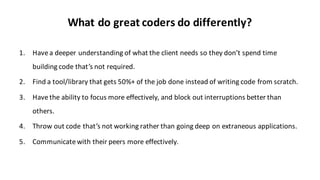
    What  do  great  coders  do  differently? 1. Have  a  deeper  understanding  of  what  the  client  needs  so  they  don’t  spend  time   building  code  that’s  not  required. 2. Find  a  tool/library  that  gets  50%+  of  the  job  done  instead  of  writing  code  from  scratch. 3. Have  the  ability  to  focus  more  effectively,  and  block  out  interruptions  better  than   others. 4. Throw  out  code  that’s  not  working  rather  than  going  deep  on  extraneous  applications. 5. Communicate  with  their  peers  more  effectively.
  • 5.
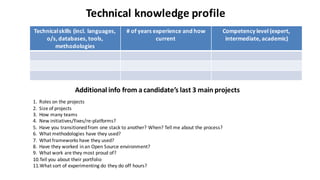
    Technical  knowledge  profile Technical  skills (incl.  languages,   o/s,  databases,  tools,   methodologies #  of  years  experience  and  how   current Competency  level  (expert,   intermediate,  academic) Additional  info  from  a  candidate’s  last  3  main  projects 1. Roles  on  the  projects 2. Size  of  projects 3. How  many  teams 4. New  initiatives/fixes/re-­‐platforms? 5. Have  you  transitioned  from  one  stack  to  another?  When?  Tell  me  about  the  process? 6. What  methodologies  have  they  used? 7. What  frameworks  have  they  used? 8. Have  they  worked  in  an  Open  Source  environment? 9. What  work  are  they  most  proud  of? 10.Tell  you  about  their  portfolio 11.What  sort  of  experimenting  do  they  do  off  hours?
  • 6.
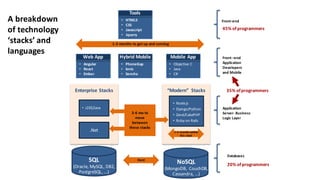
    • J2EE/Java • Node.js •Django/Python • Zend/CakePHP • Ruby  on  Rails Enterprise  Stacks “Modern”   Stacks 45%  of  programmers 35%  of  programmers 20%  of  programmers Front  –end   Application   Developers and  Mobile Application   Server-­‐ Business   Logic  Layer Databases .Net Front–end   1-­‐3  months  within   this  stack A  breakdown   of  technology   ‘stacks’  and   languages 1-­‐3  months  to  get  up  and  running • HTML5 • CSS • Javascript • Jquery Tools • Angular • React • Ember Web  App • PhoneGap • Ionic • Sencha Hybrid  Mobile • Objective  C • Java • C# Mobile  App Hard 3-­‐6  mo  to   move   between   these  stacks SQL (Oracle,  MySQL,  DB2,   PostgreSQL,  …) NoSQL (MongoDB,    CouchDB,   Cassandra,  …)
  • 7.
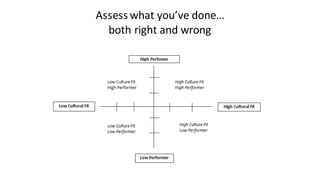
    Assess  what  you’ve  done… both  right  and  wrong
  • 8.
    One  last  thought “Somebody  once  said  that  in  looking   for  people  to  hire,  you look  for  three  qualities:  integrity,  intelligence,  and  energy. And  if  you  don’t  have  the  first,  the  other  two  will  kill  you. You  think  about  it;  it’s  true.  If  you  hire  somebody   without [integrity],  you  really  want  them  to  be  dumb  and  lazy.”
  • 9.
    I  am  a  recruiter,  and  trusted  advisor,  for  critical   executive  and  senior  technical  roles  in  small  and   mid-­‐sized  technology  firms Tel:  416-­‐406-­‐1777 E-­‐mail:  mfox@brightlightsinc.com Website:  www.brightlightsinc.com