Designing and Implementing
Performance Management
Program
Created by Laurie Armstrong
Managing Director/ Human Resources Advisor
What is Performance Management (PM)?
• Setting and achieving organizational goals that
produce desired business results
• Aligning individual and team goals with business
strategy - organizational change, growth, finance,
people
• Benchmarking; Determining and obtaining skills,
knowledge and tools required for success
• Staying on track with consistent, timely
communication & feedback (360 degrees)
Key Considerations for PM Program Design
• Corporate goals - short and long term plans
• Team goals - group contributions to company goals
• Individual goals - organizational, career, personal
• Management and Leadership skills - HR knowledge
• Job Descriptions - roles, relationships, accountability
• People - knowledge, skills, competencies, potential
• Actions - required to implement and follow-up
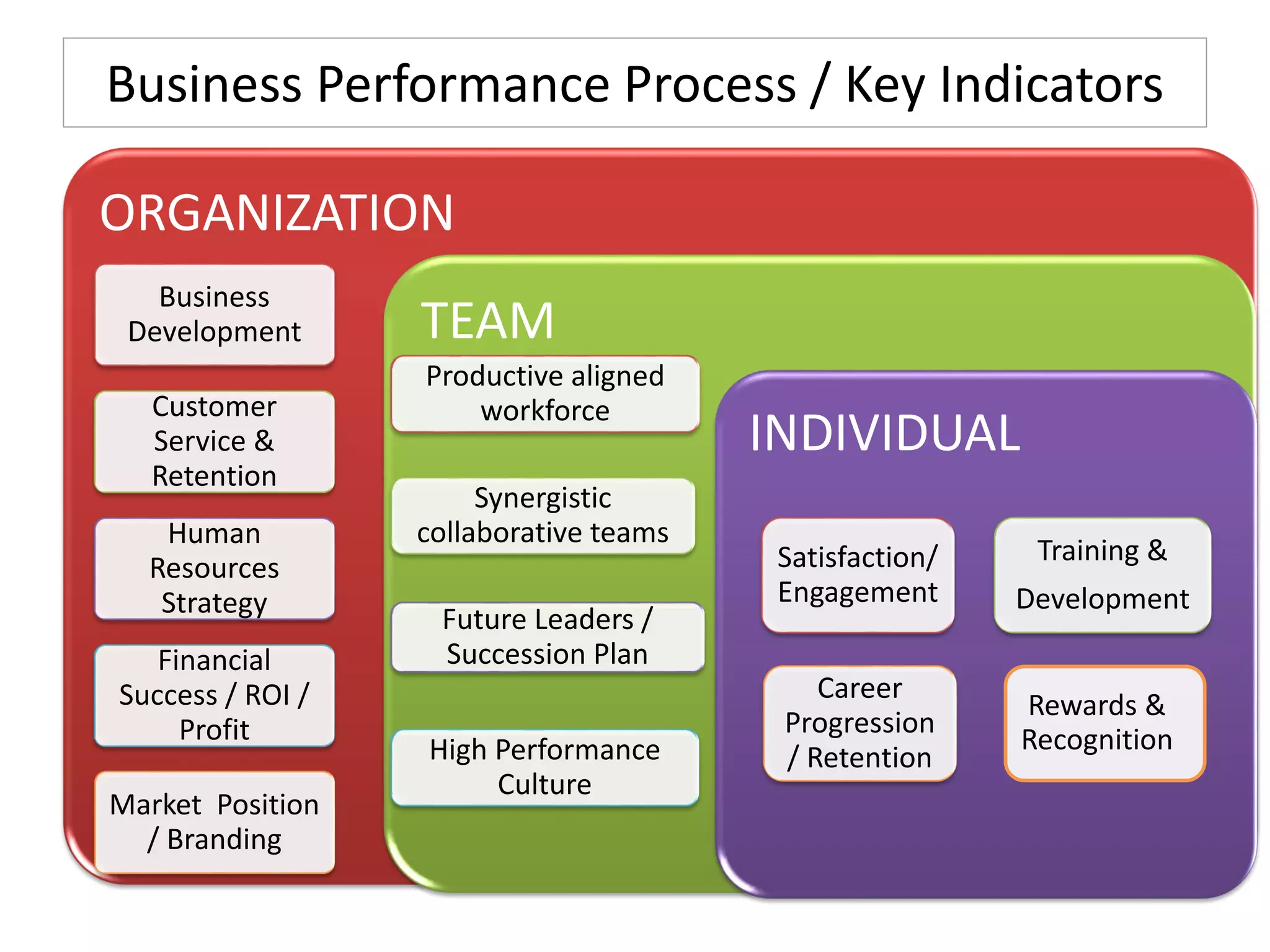
Business Performance Process / Key Indicators
ORGANIZATION
Business
Development
Customer
Service &
Retention
Human
Resources
Strategy
Financial
Success / ROI /
Profit
Market Position
/ Branding
TEAM
Productive aligned
workforce
Synergistic
collaborative teams
Future Leaders /
Succession Plan
High Performance
Culture
INDIVIDUAL
Career
Progression
/ Retention
Satisfaction/
Engagement
Training &
Development
Rewards &
Recognition
Benefits of Effective Performance Management
• Identify goals, challenges, strengths, gaps in
performance
• Identify gaps in knowledge & skills – Training &
Development / Recruiting
• Improve employee and team engagement /
performance
• Identify top performers – reward & retain
• Identify poor performers – correction or exit
Benefits of Effective Performance Management
...cont’d
• Determine & justify decisions and actions – merit,
bonus, compensation, promotion, succession,
discipline, termination
• Enhance success factors / Reduce risks and exposure
• Improve organization’s overall performance
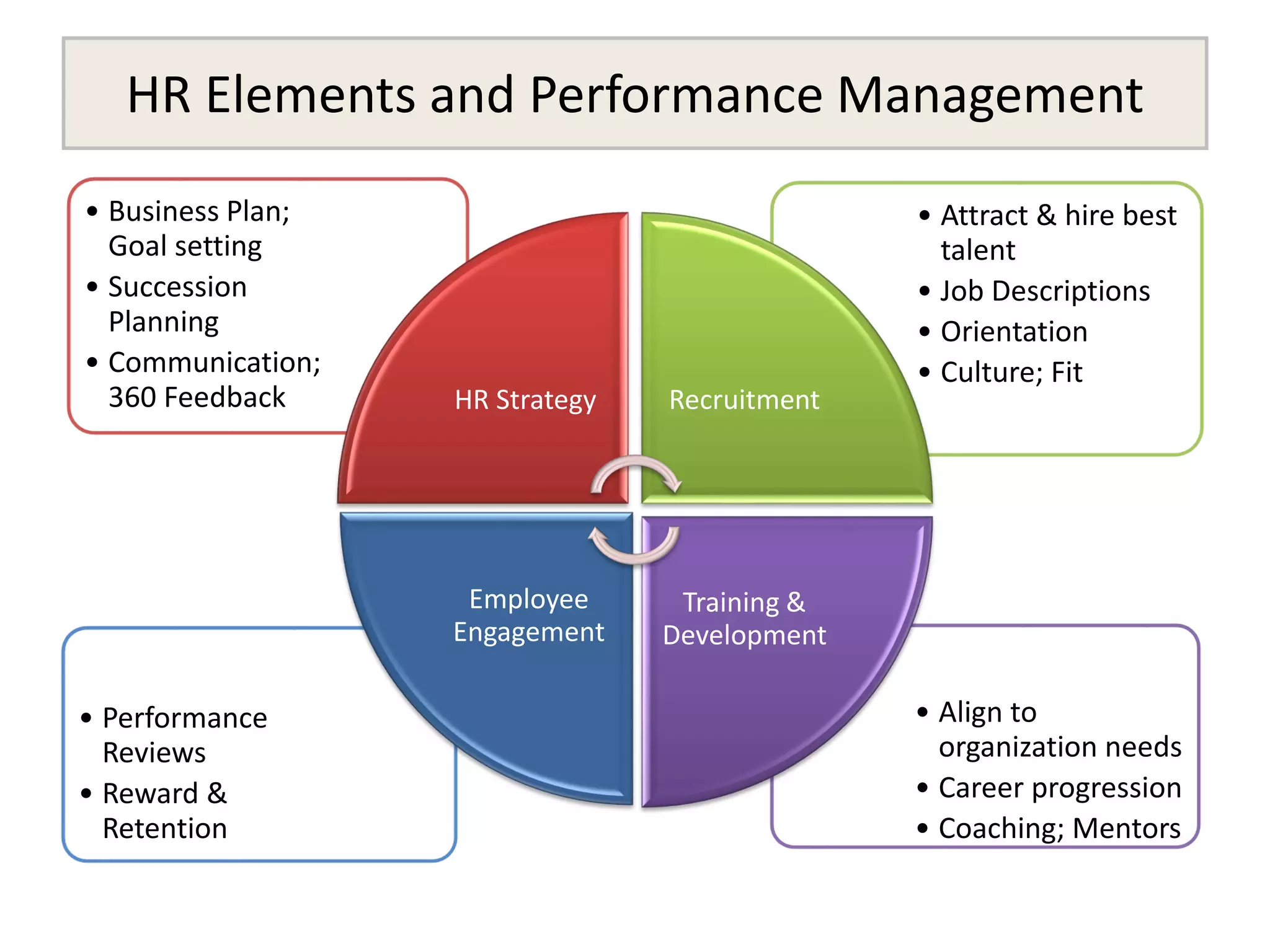
HR Elements and Performance Management
• Align to
organization needs
• Career progression
• Coaching; Mentors
• Performance
Reviews
• Reward &
Retention
• Attract & hire best
talent
• Job Descriptions
• Orientation
• Culture; Fit
• Business Plan;
Goal setting
• Succession
Planning
• Communication;
360 Feedback HR Strategy Recruitment
Training &
Development
Employee
Engagement
2 Performance Management Models
1. Development Driven Model
2. Competitive Assessment Model
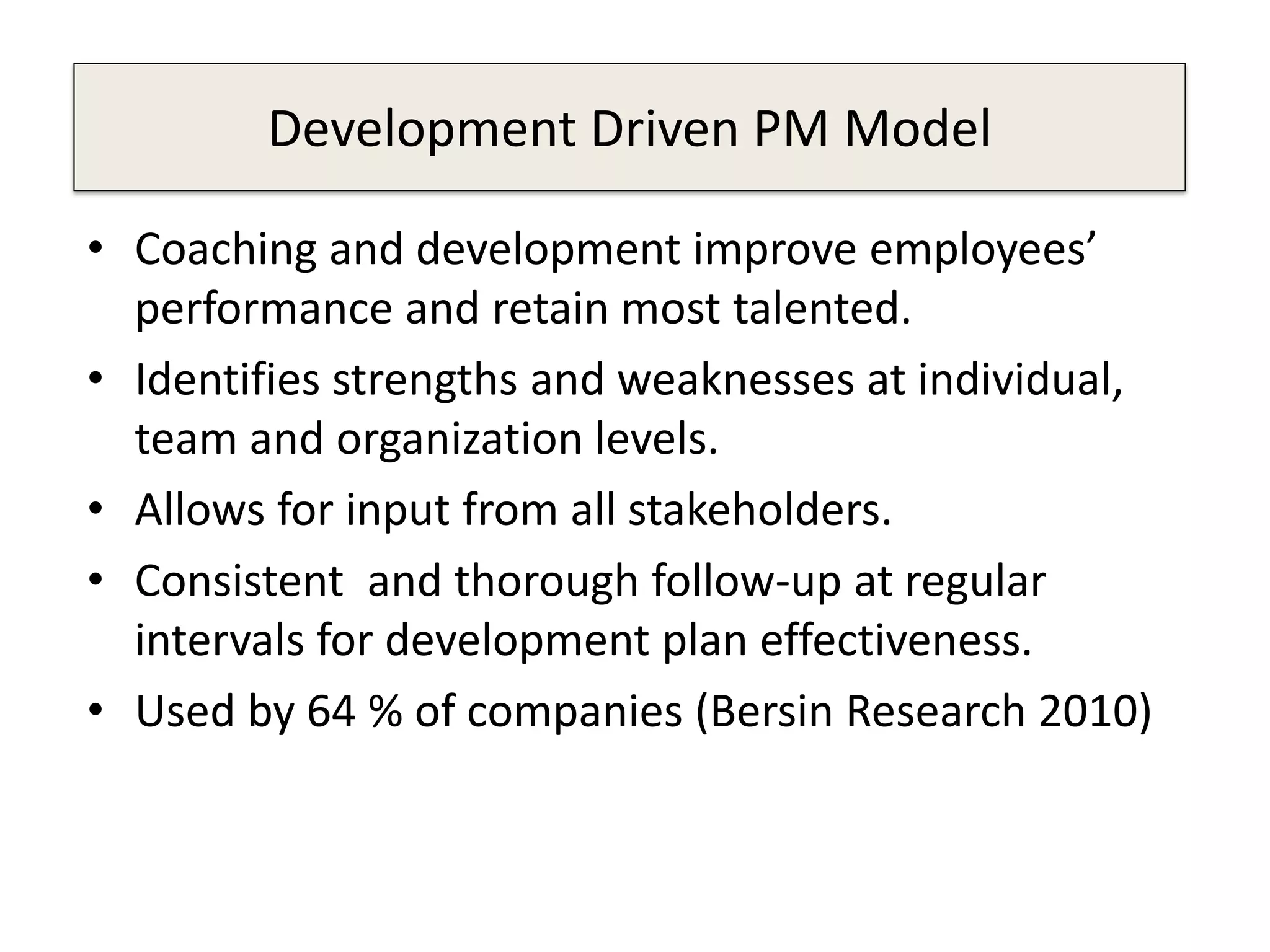
Development Driven PM Model
• Coaching and development improve employees’
performance and retain most talented.
• Identifies strengths and weaknesses at individual,
team and organization levels.
• Allows for input from all stakeholders.
• Consistent and thorough follow-up at regular
intervals for development plan effectiveness.
• Used by 64 % of companies (Bersin Research 2010)
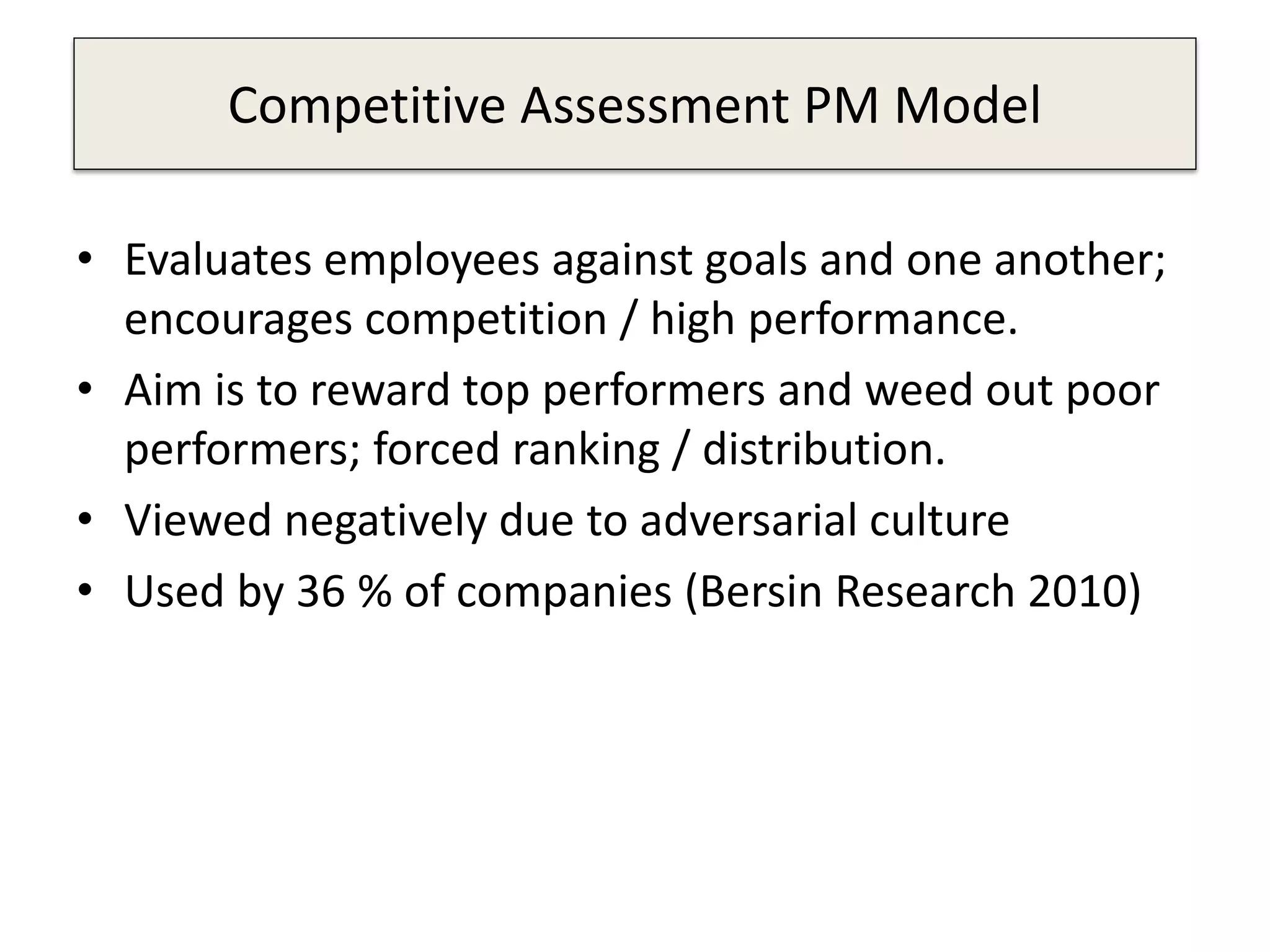
Competitive Assessment PM Model
• Evaluates employees against goals and one another;
encourages competition / high performance.
• Aim is to reward top performers and weed out poor
performers; forced ranking / distribution.
• Viewed negatively due to adversarial culture
• Used by 36 % of companies (Bersin Research 2010)
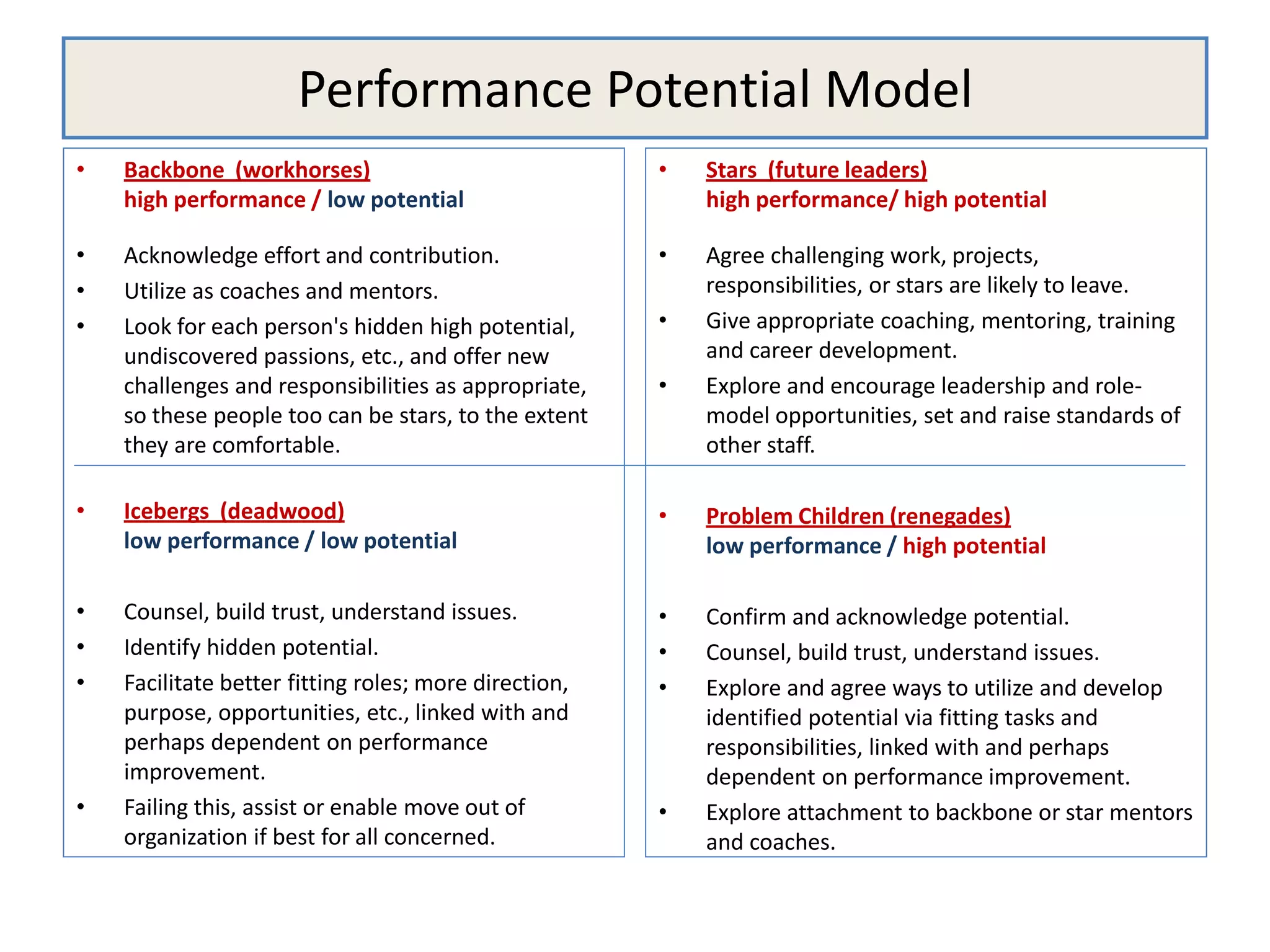
Performance Potential Model
• Backbone (workhorses)
high performance / low potential
• Acknowledge effort and contribution.
• Utilize as coaches and mentors.
• Look for each person's hidden high potential,
undiscovered passions, etc., and offer new
challenges and responsibilities as appropriate,
so these people too can be stars, to the extent
they are comfortable.
• Icebergs (deadwood)
low performance / low potential
• Counsel, build trust, understand issues.
• Identify hidden potential.
• Facilitate better fitting roles; more direction,
purpose, opportunities, etc., linked with and
perhaps dependent on performance
improvement.
• Failing this, assist or enable move out of
organization if best for all concerned.
• Stars (future leaders)
high performance/ high potential
• Agree challenging work, projects,
responsibilities, or stars are likely to leave.
• Give appropriate coaching, mentoring, training
and career development.
• Explore and encourage leadership and role-
model opportunities, set and raise standards of
other staff.
• Problem Children (renegades)
low performance / high potential
• Confirm and acknowledge potential.
• Counsel, build trust, understand issues.
• Explore and agree ways to utilize and develop
identified potential via fitting tasks and
responsibilities, linked with and perhaps
dependent on performance improvement.
• Explore attachment to backbone or star mentors
and coaches.
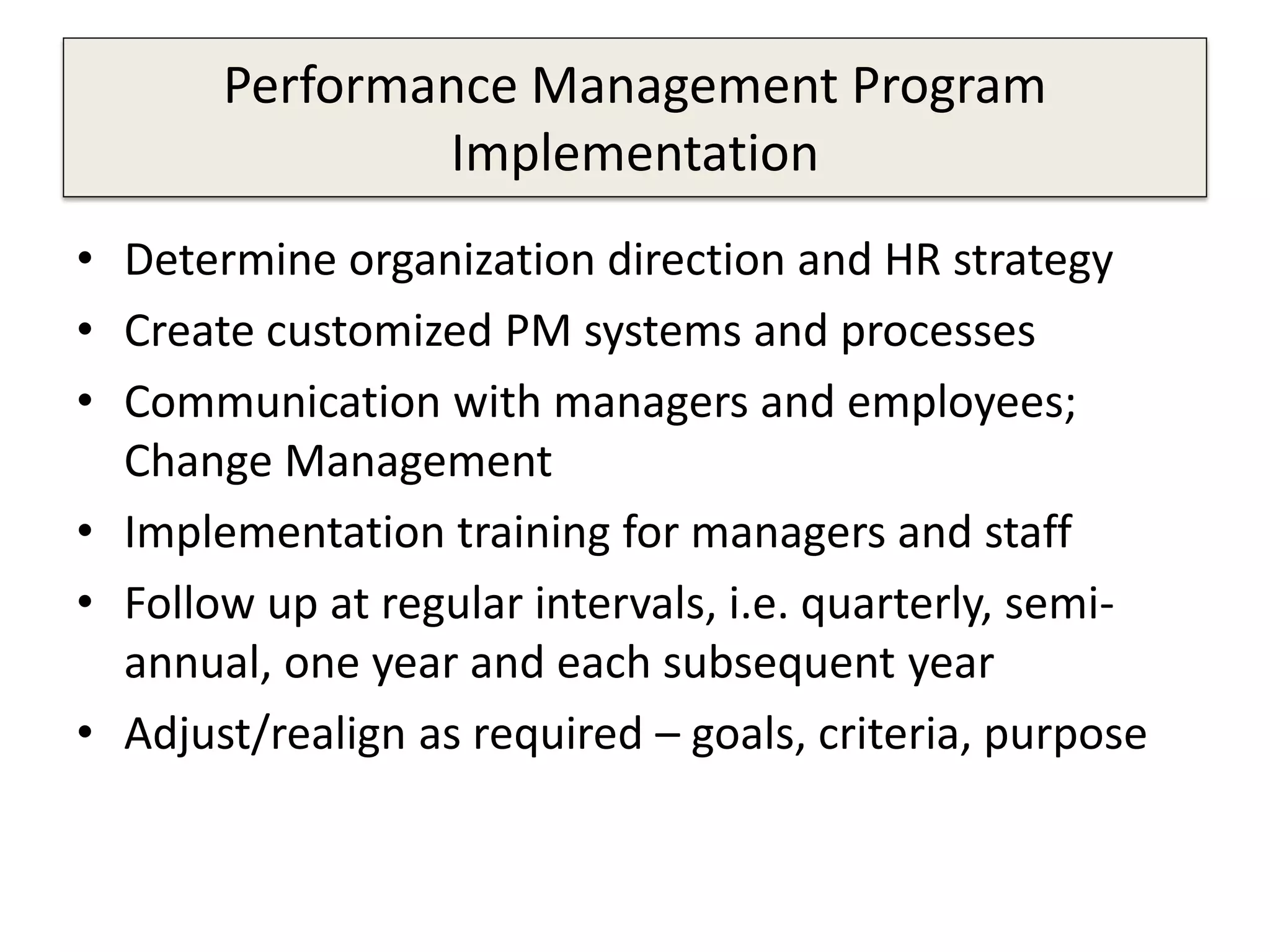
Performance Management Program
Implementation
• Determine organization direction and HR strategy
• Create customized PM systems and processes
• Communication with managers and employees;
Change Management
• Implementation training for managers and staff
• Follow up at regular intervals, i.e. quarterly, semi-
annual, one year and each subsequent year
• Adjust/realign as required – goals, criteria, purpose
Armstrong & Associates services
• Human Resources Management
• Strategic Planning
• Business and Career Coaching
• Training and Development
• Compensation and Benefits
• Health and Safety
Armstrong & Associates
Client Benefits:
• Improved strategic focus
• Reduced overhead
• Increased efficiencies
• Enhanced staff productivity
• Increased profit
• Reduced risk and conflict
• Decreased employee turnover
• Improved time management for leadership and staff
Thanks
Q & A
Laurie Armstrong
Tel: 905.997.2273
laurie@armstrongandassociates.ca

Performance Management presentation

  • 1.
    Designing and Implementing PerformanceManagement Program Created by Laurie Armstrong Managing Director/ Human Resources Advisor
  • 2.
    What is PerformanceManagement (PM)? • Setting and achieving organizational goals that produce desired business results • Aligning individual and team goals with business strategy - organizational change, growth, finance, people • Benchmarking; Determining and obtaining skills, knowledge and tools required for success • Staying on track with consistent, timely communication & feedback (360 degrees)
  • 3.
    Key Considerations forPM Program Design • Corporate goals - short and long term plans • Team goals - group contributions to company goals • Individual goals - organizational, career, personal • Management and Leadership skills - HR knowledge • Job Descriptions - roles, relationships, accountability • People - knowledge, skills, competencies, potential • Actions - required to implement and follow-up
  • 4.
    Business Performance Process/ Key Indicators ORGANIZATION Business Development Customer Service & Retention Human Resources Strategy Financial Success / ROI / Profit Market Position / Branding TEAM Productive aligned workforce Synergistic collaborative teams Future Leaders / Succession Plan High Performance Culture INDIVIDUAL Career Progression / Retention Satisfaction/ Engagement Training & Development Rewards & Recognition
  • 5.
    Benefits of EffectivePerformance Management • Identify goals, challenges, strengths, gaps in performance • Identify gaps in knowledge & skills – Training & Development / Recruiting • Improve employee and team engagement / performance • Identify top performers – reward & retain • Identify poor performers – correction or exit
  • 6.
    Benefits of EffectivePerformance Management ...cont’d • Determine & justify decisions and actions – merit, bonus, compensation, promotion, succession, discipline, termination • Enhance success factors / Reduce risks and exposure • Improve organization’s overall performance
  • 7.
    HR Elements andPerformance Management • Align to organization needs • Career progression • Coaching; Mentors • Performance Reviews • Reward & Retention • Attract & hire best talent • Job Descriptions • Orientation • Culture; Fit • Business Plan; Goal setting • Succession Planning • Communication; 360 Feedback HR Strategy Recruitment Training & Development Employee Engagement
  • 8.
    2 Performance ManagementModels 1. Development Driven Model 2. Competitive Assessment Model
  • 9.
    Development Driven PMModel • Coaching and development improve employees’ performance and retain most talented. • Identifies strengths and weaknesses at individual, team and organization levels. • Allows for input from all stakeholders. • Consistent and thorough follow-up at regular intervals for development plan effectiveness. • Used by 64 % of companies (Bersin Research 2010)
  • 10.
    Competitive Assessment PMModel • Evaluates employees against goals and one another; encourages competition / high performance. • Aim is to reward top performers and weed out poor performers; forced ranking / distribution. • Viewed negatively due to adversarial culture • Used by 36 % of companies (Bersin Research 2010)
  • 11.
    Performance Potential Model •Backbone (workhorses) high performance / low potential • Acknowledge effort and contribution. • Utilize as coaches and mentors. • Look for each person's hidden high potential, undiscovered passions, etc., and offer new challenges and responsibilities as appropriate, so these people too can be stars, to the extent they are comfortable. • Icebergs (deadwood) low performance / low potential • Counsel, build trust, understand issues. • Identify hidden potential. • Facilitate better fitting roles; more direction, purpose, opportunities, etc., linked with and perhaps dependent on performance improvement. • Failing this, assist or enable move out of organization if best for all concerned. • Stars (future leaders) high performance/ high potential • Agree challenging work, projects, responsibilities, or stars are likely to leave. • Give appropriate coaching, mentoring, training and career development. • Explore and encourage leadership and role- model opportunities, set and raise standards of other staff. • Problem Children (renegades) low performance / high potential • Confirm and acknowledge potential. • Counsel, build trust, understand issues. • Explore and agree ways to utilize and develop identified potential via fitting tasks and responsibilities, linked with and perhaps dependent on performance improvement. • Explore attachment to backbone or star mentors and coaches.
  • 12.
    Performance Management Program Implementation •Determine organization direction and HR strategy • Create customized PM systems and processes • Communication with managers and employees; Change Management • Implementation training for managers and staff • Follow up at regular intervals, i.e. quarterly, semi- annual, one year and each subsequent year • Adjust/realign as required – goals, criteria, purpose
  • 13.
    Armstrong & Associatesservices • Human Resources Management • Strategic Planning • Business and Career Coaching • Training and Development • Compensation and Benefits • Health and Safety
  • 14.
    Armstrong & Associates ClientBenefits: • Improved strategic focus • Reduced overhead • Increased efficiencies • Enhanced staff productivity • Increased profit • Reduced risk and conflict • Decreased employee turnover • Improved time management for leadership and staff
  • 15.
  • 16.