16-122013

Human Resource Management & Practices
Assignment on: Performance Management & appraisal
ma

Prepared to:

Md. Abu Baker
Siddique

Management and Appraisal
Group Members:

Md. Ashraful Alam
Konika
Md.Sakib-ur-nabi
Pabel Ahmmed
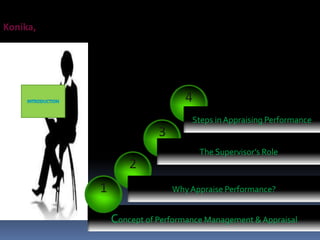
Konika,

4
Steps in Appraising Performance

3
The Supervisor’s Role

2
1

Why Appraise Performance?

Concept of Performance Management & Appraisal
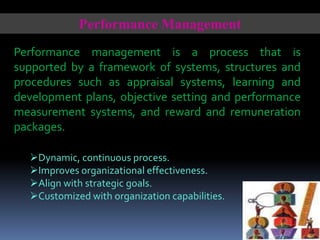
Performance Management
Performance management is a process that is
supported by a framework of systems, structures and
procedures such as appraisal systems, learning and
development plans, objective setting and performance
measurement systems, and reward and remuneration
packages.
Dynamic, continuous process.
Improves organizational effectiveness.
Align with strategic goals.
Customized with organization capabilities.
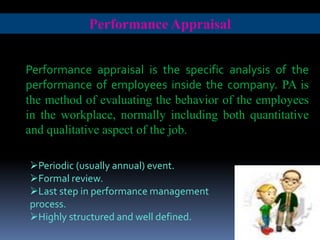
Performance Appraisal
Performance appraisal is the specific analysis of the
performance of employees inside the company. PA is
the method of evaluating the behavior of the employees
in the workplace, normally including both quantitative
and qualitative aspect of the job.
Periodic (usually annual) event.
Formal review.
Last step in performance management
process.
Highly structured and well defined.
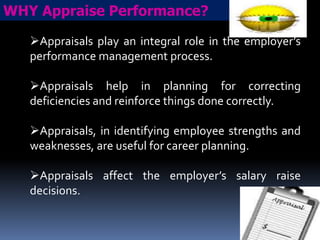
WHY Appraise Performance?
Appraisals play an integral role in the employer’s
performance management process.
Appraisals help in planning for correcting
deficiencies and reinforce things done correctly.

Appraisals, in identifying employee strengths and
weaknesses, are useful for career planning.
Appraisals affect the employer’s salary raise
decisions.
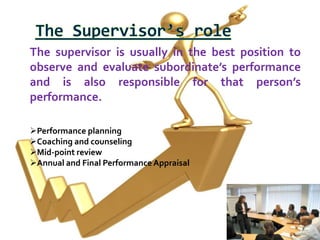
The supervisor is usually in the best position to
observe and evaluate subordinate’s performance
and is also responsible for that person’s
performance.
Performance planning
Coaching and counseling
Mid-point review
Annual and Final Performance Appraisal
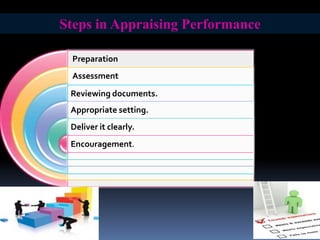
Steps in Appraising Performance
Preparation
Assessment
Reviewing documents.
Appropriate setting.
Deliver it clearly.
Encouragement.
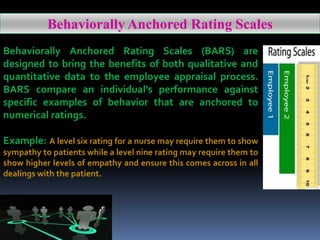
Behaviorally Anchored Rating Scales
Behaviorally Anchored Rating Scales (BARS) are
designed to bring the benefits of both qualitative and
quantitative data to the employee appraisal process.
BARS compare an individual’s performance against
specific examples of behavior that are anchored to
numerical ratings.

Example: A level six rating for a nurse may require them to show
sympathy to patients while a level nine rating may require them to
show higher levels of empathy and ensure this comes across in all
dealings with the patient.
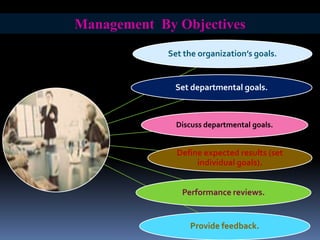
Management By Objectives
Set the organization’s goals.

Set departmental goals.

Discuss departmental goals.

Define expected results (set
individual goals).

Performance reviews.

Provide feedback.
Electronic Performance Monitoring

EPM means using technology to
monitor the activities of
employees at work

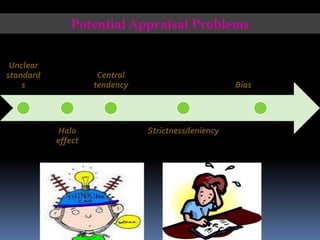
Potential Appraisal Problems
Unclear
standard
s

Central
tendency

Halo
effect

Bias

Strictness/leniency
Five Guidelines for holding Effective Appraisals
Do your homework.

Set the stage

Conduct the interview
Close the discussion

Follow Up
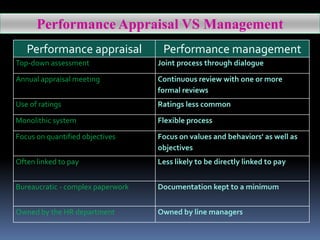
Performance Appraisal VS Management
Performance appraisal

Performance management

Top-down assessment

Joint process through dialogue

Annual appraisal meeting

Continuous review with one or more
formal reviews

Use of ratings

Ratings less common

Monolithic system

Flexible process

Focus on quantified objectives

Focus on values and behaviors' as well as
objectives

Often linked to pay

Less likely to be directly linked to pay

Bureaucratic - complex paperwork

Documentation kept to a minimum

Owned by the HR department

Owned by line managers
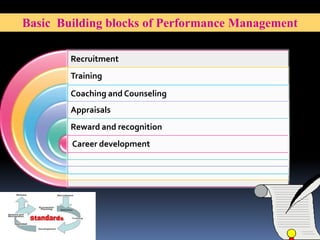
Basic Building blocks of Performance Management
Recruitment
Training
Coaching and Counseling
Appraisals
Reward and recognition

Career development
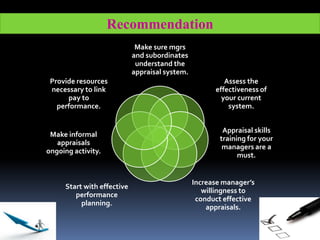
Recommendation
Make sure mgrs
and subordinates
understand the
appraisal system.
Provide resources
necessary to link
pay to
performance.

Make informal
appraisals
ongoing activity.

Start with effective
performance
planning.

Assess the
effectiveness of
your current
system.
Appraisal skills
training for your
managers are a
must.

Increase manager’s
willingness to
conduct effective
appraisals.
Performance Management and Appraisal

Performance Management and Appraisal

  • 1.
    16-122013 Human Resource Management& Practices Assignment on: Performance Management & appraisal ma Prepared to: Md. Abu Baker Siddique Management and Appraisal Group Members: Md. Ashraful Alam Konika Md.Sakib-ur-nabi Pabel Ahmmed
  • 2.
    Konika, 4 Steps in AppraisingPerformance 3 The Supervisor’s Role 2 1 Why Appraise Performance? Concept of Performance Management & Appraisal
  • 3.
    Performance Management Performance managementis a process that is supported by a framework of systems, structures and procedures such as appraisal systems, learning and development plans, objective setting and performance measurement systems, and reward and remuneration packages. Dynamic, continuous process. Improves organizational effectiveness. Align with strategic goals. Customized with organization capabilities.
  • 4.
    Performance Appraisal Performance appraisalis the specific analysis of the performance of employees inside the company. PA is the method of evaluating the behavior of the employees in the workplace, normally including both quantitative and qualitative aspect of the job. Periodic (usually annual) event. Formal review. Last step in performance management process. Highly structured and well defined.
  • 5.
    WHY Appraise Performance? Appraisalsplay an integral role in the employer’s performance management process. Appraisals help in planning for correcting deficiencies and reinforce things done correctly. Appraisals, in identifying employee strengths and weaknesses, are useful for career planning. Appraisals affect the employer’s salary raise decisions.
  • 6.
    The supervisor isusually in the best position to observe and evaluate subordinate’s performance and is also responsible for that person’s performance. Performance planning Coaching and counseling Mid-point review Annual and Final Performance Appraisal
  • 7.
    Steps in AppraisingPerformance Preparation Assessment Reviewing documents. Appropriate setting. Deliver it clearly. Encouragement.
  • 9.
    Behaviorally Anchored RatingScales Behaviorally Anchored Rating Scales (BARS) are designed to bring the benefits of both qualitative and quantitative data to the employee appraisal process. BARS compare an individual’s performance against specific examples of behavior that are anchored to numerical ratings. Example: A level six rating for a nurse may require them to show sympathy to patients while a level nine rating may require them to show higher levels of empathy and ensure this comes across in all dealings with the patient.
  • 10.
    Management By Objectives Setthe organization’s goals. Set departmental goals. Discuss departmental goals. Define expected results (set individual goals). Performance reviews. Provide feedback.
  • 11.
    Electronic Performance Monitoring EPMmeans using technology to monitor the activities of employees at work 
  • 13.
  • 14.
    Five Guidelines forholding Effective Appraisals Do your homework. Set the stage Conduct the interview Close the discussion Follow Up
  • 16.
    Performance Appraisal VSManagement Performance appraisal Performance management Top-down assessment Joint process through dialogue Annual appraisal meeting Continuous review with one or more formal reviews Use of ratings Ratings less common Monolithic system Flexible process Focus on quantified objectives Focus on values and behaviors' as well as objectives Often linked to pay Less likely to be directly linked to pay Bureaucratic - complex paperwork Documentation kept to a minimum Owned by the HR department Owned by line managers
  • 17.
    Basic Building blocksof Performance Management Recruitment Training Coaching and Counseling Appraisals Reward and recognition Career development
  • 18.
    Recommendation Make sure mgrs andsubordinates understand the appraisal system. Provide resources necessary to link pay to performance. Make informal appraisals ongoing activity. Start with effective performance planning. Assess the effectiveness of your current system. Appraisal skills training for your managers are a must. Increase manager’s willingness to conduct effective appraisals.