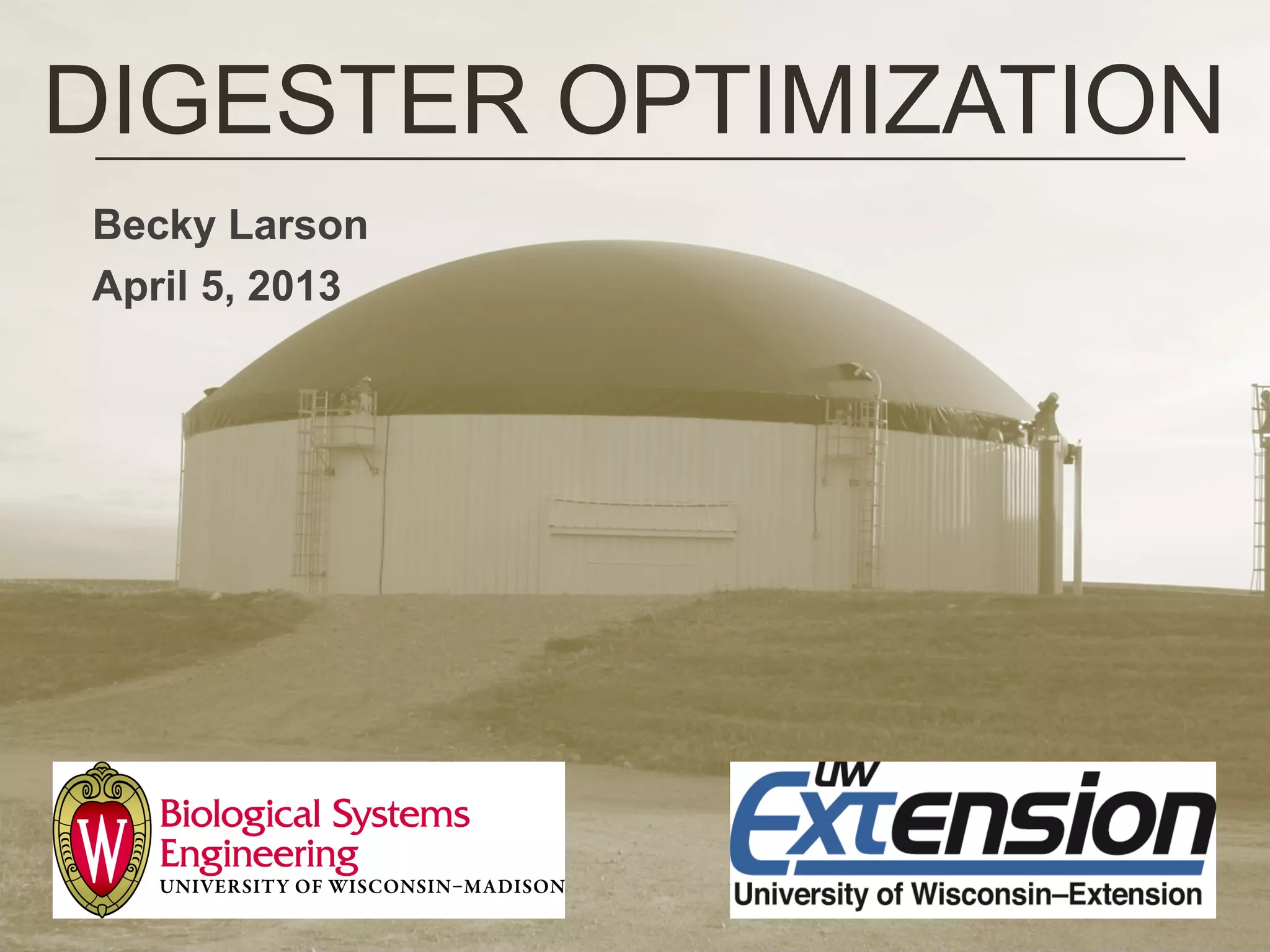
DIGESTER OPTIMIZATION
Becky Larson
April 5, 2013
Why install a digester?
• Energy independence
• Reductions in green house gases
• Flexibility in manure management
• Reduced odors & pathogens
• Reduction in other environmental impacts
• Potential for additional asset streams (?)
• Bedding
• Tipping fees
• Environmental credits
• Do I dare say profits?
• What can’t digesters do?
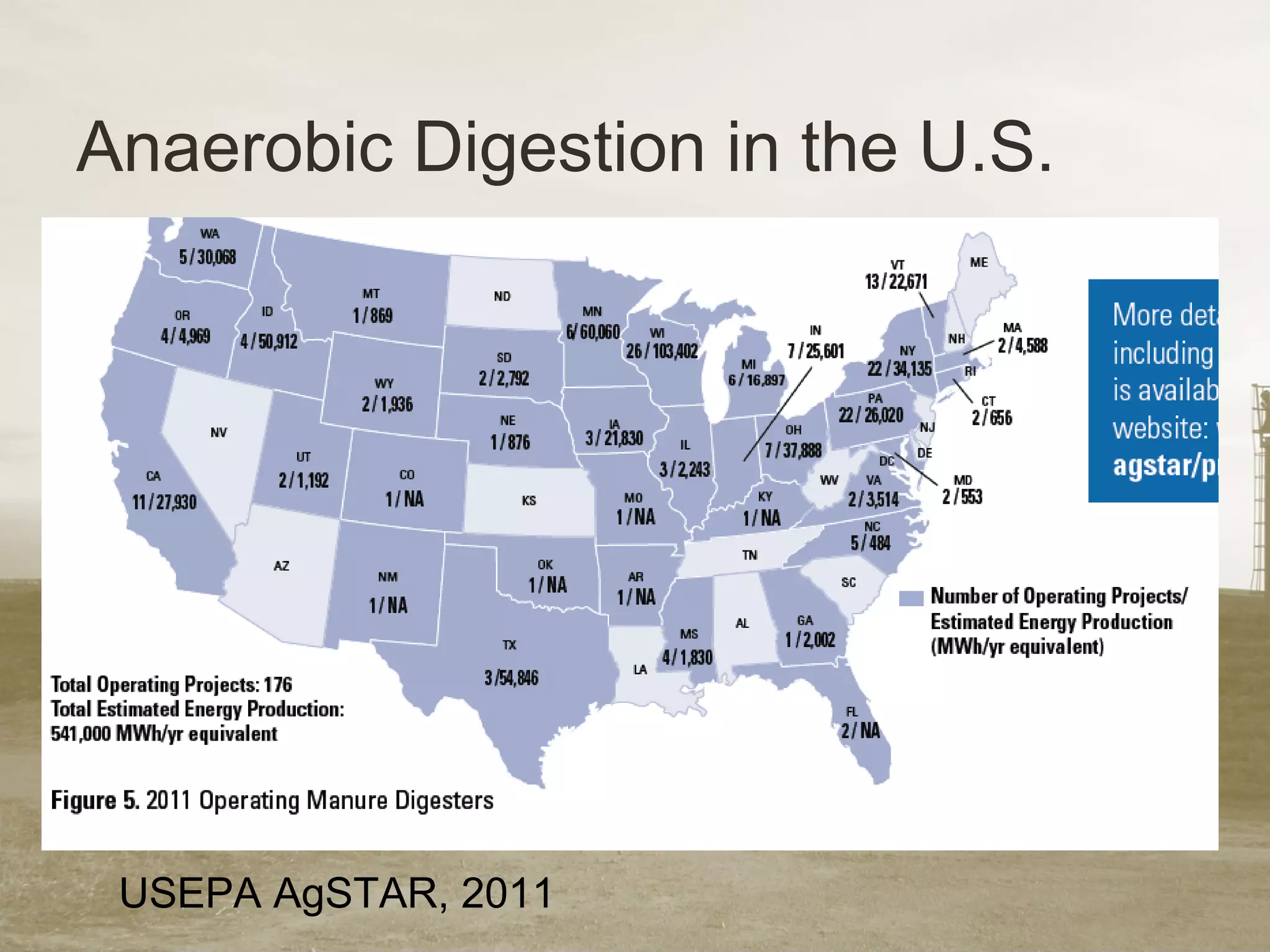
Anaerobic Digestion in the U.S.
USEPA AgSTAR, 2011
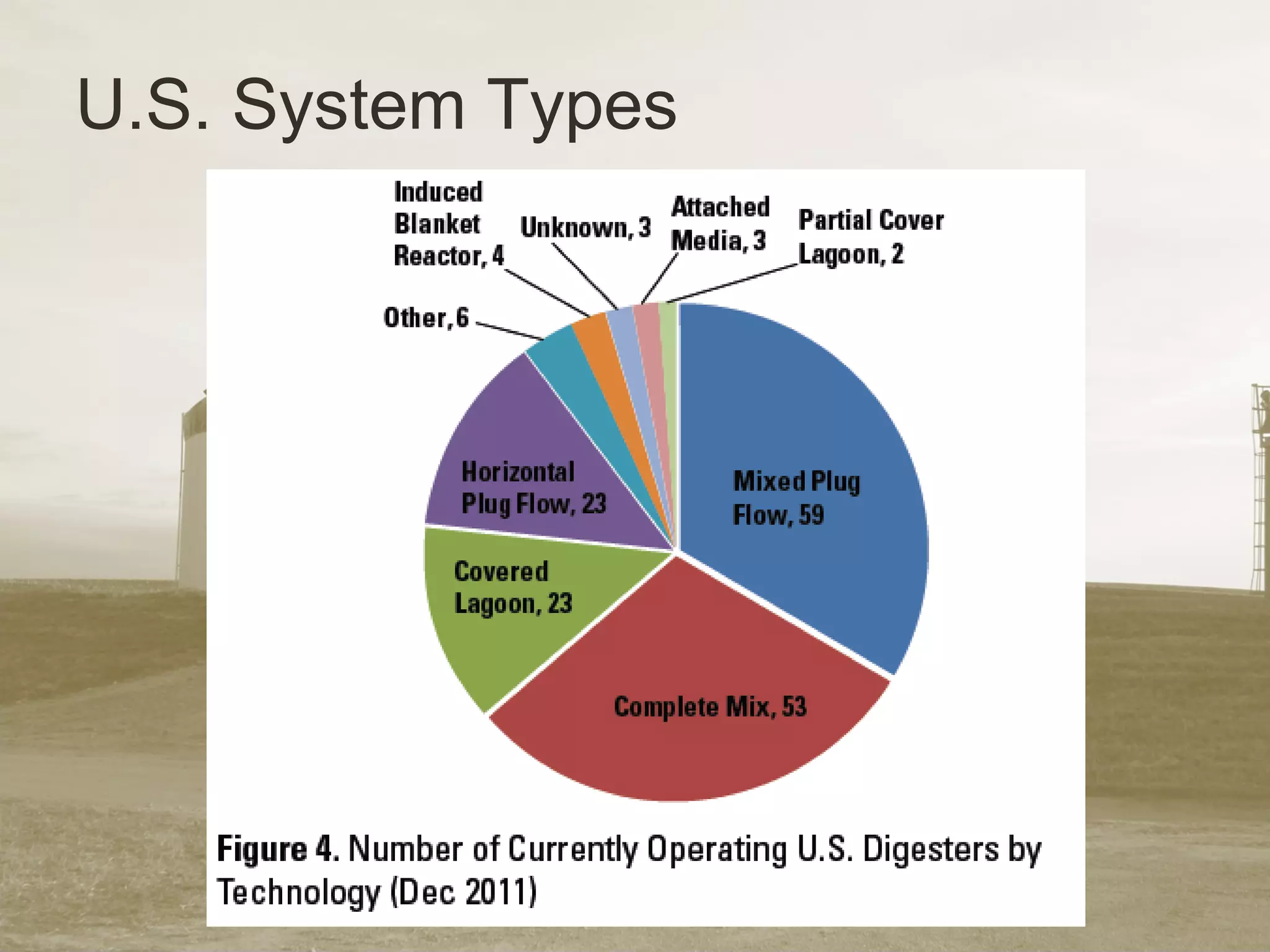
U.S. System Types
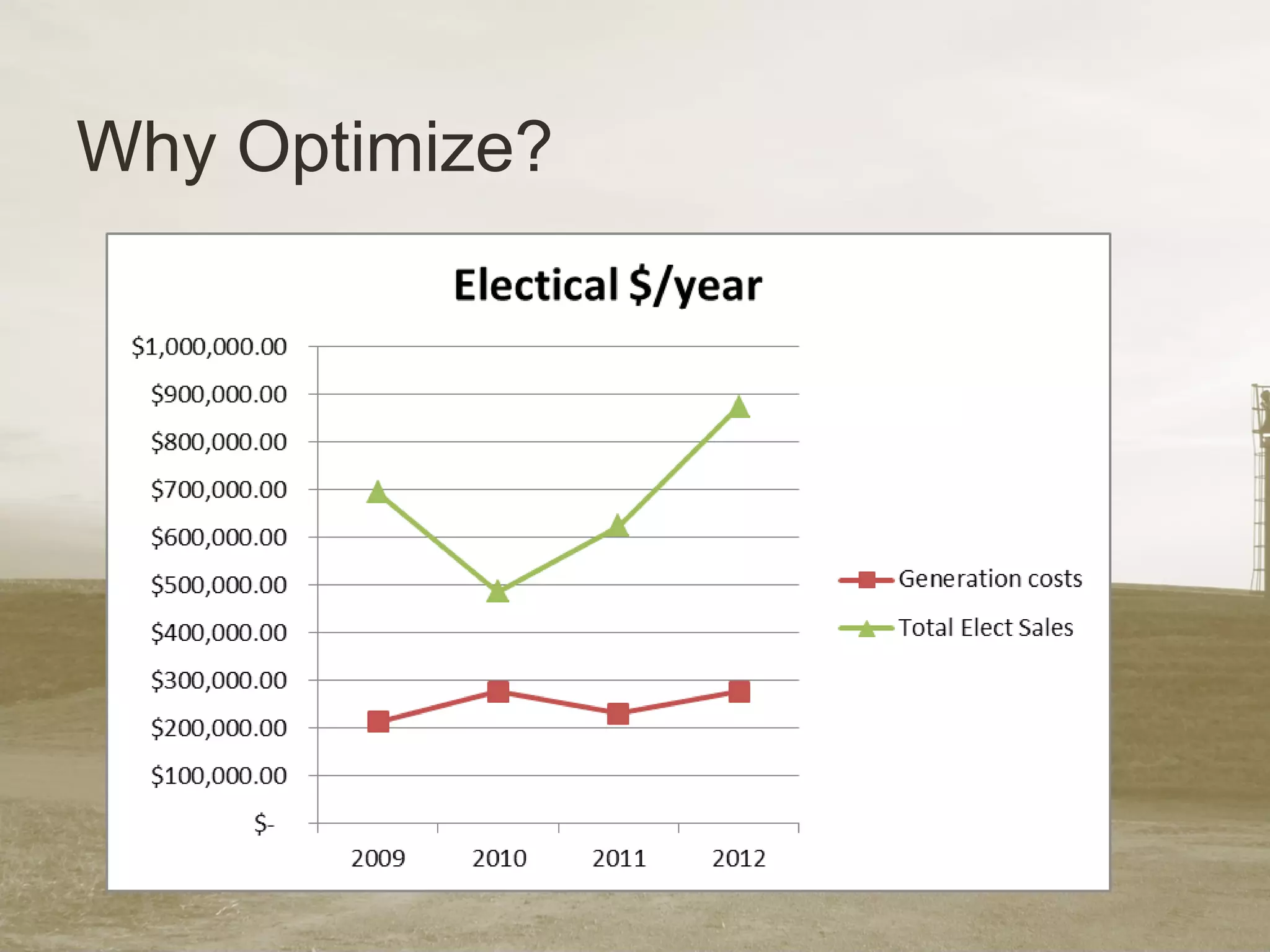
Why Optimize?
Anaerobic Digestion Process Flow
Slurry
Biogas
SeparatorDigestate
Filtrate (liquid)
Fiber (solid)
Feedstock's
Characterized by
rapid bacterial
growth
“Weak link” in
the process of
producing
biogas
Goal?...Avoid
inhibition,
maintain
stabilization!
Stage Three:
Acetogenesis
Stage One:
Hydrolysis
Stage Two:
Acidogenesis
Stage Four:
Methanogenesis
CO2 reducing
methanogens
aceticiastic
methanogens
acetogens
(H2
producing)
fermentative
bacteria
fermentative
bacteria
PROPIONATE,
BUTYRATE, etc.
(Short-chain volatile
organic acids)
fermentative
bacteria
fermentative
bacteria
COMPLEX POLYMERS
(Proteins, polysaccharides, etc.)
MONOMERS AND OLIGOMERS
(Sugars, amino acids, peptides)
acetogens
(H2 consuming)
H2 + CO2 ACETATE
CH4, CO2
Source: Syed Hashsham, PhD, lecture notes, Michigan State University
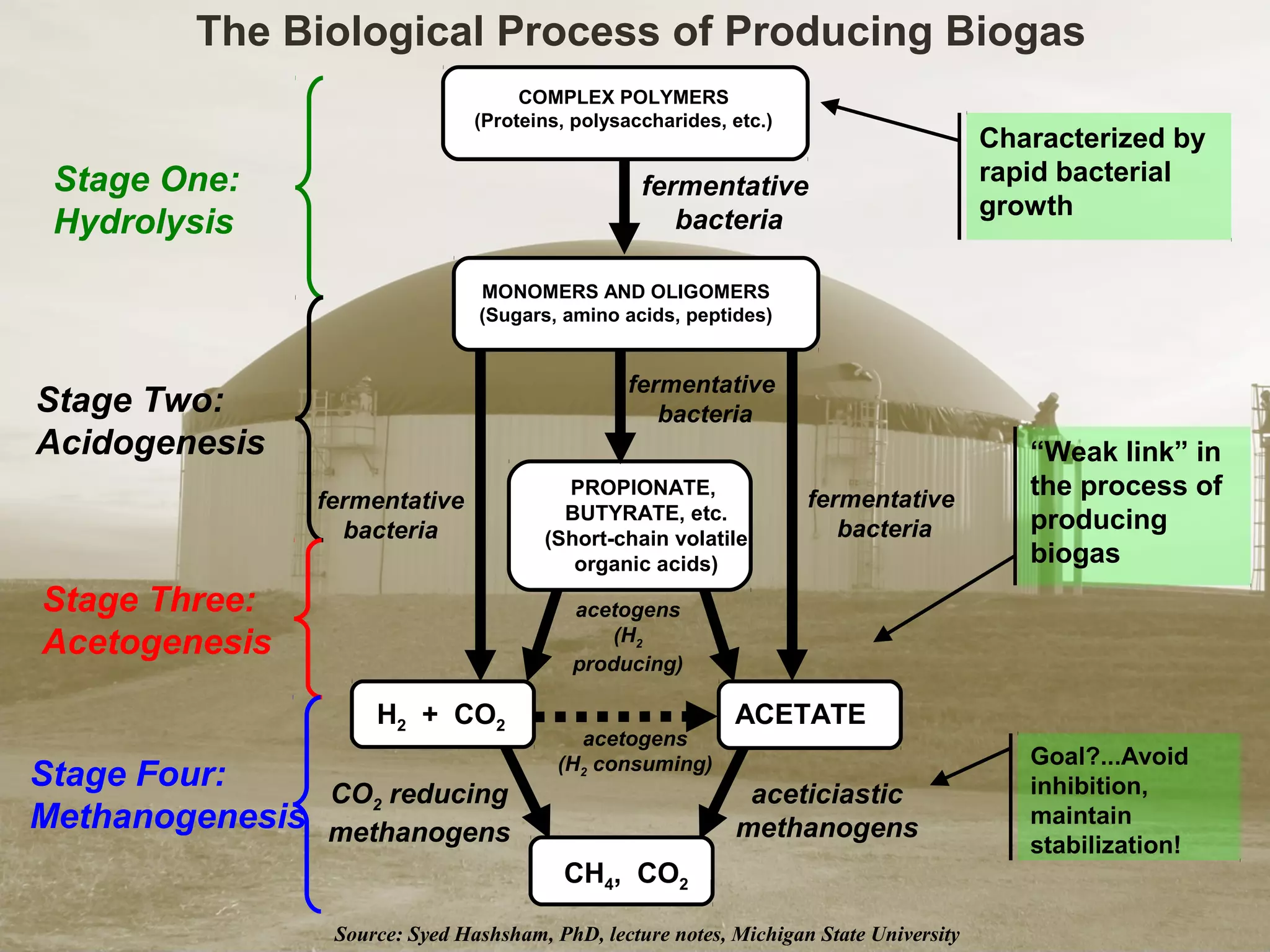
The Biological Process of Producing Biogas
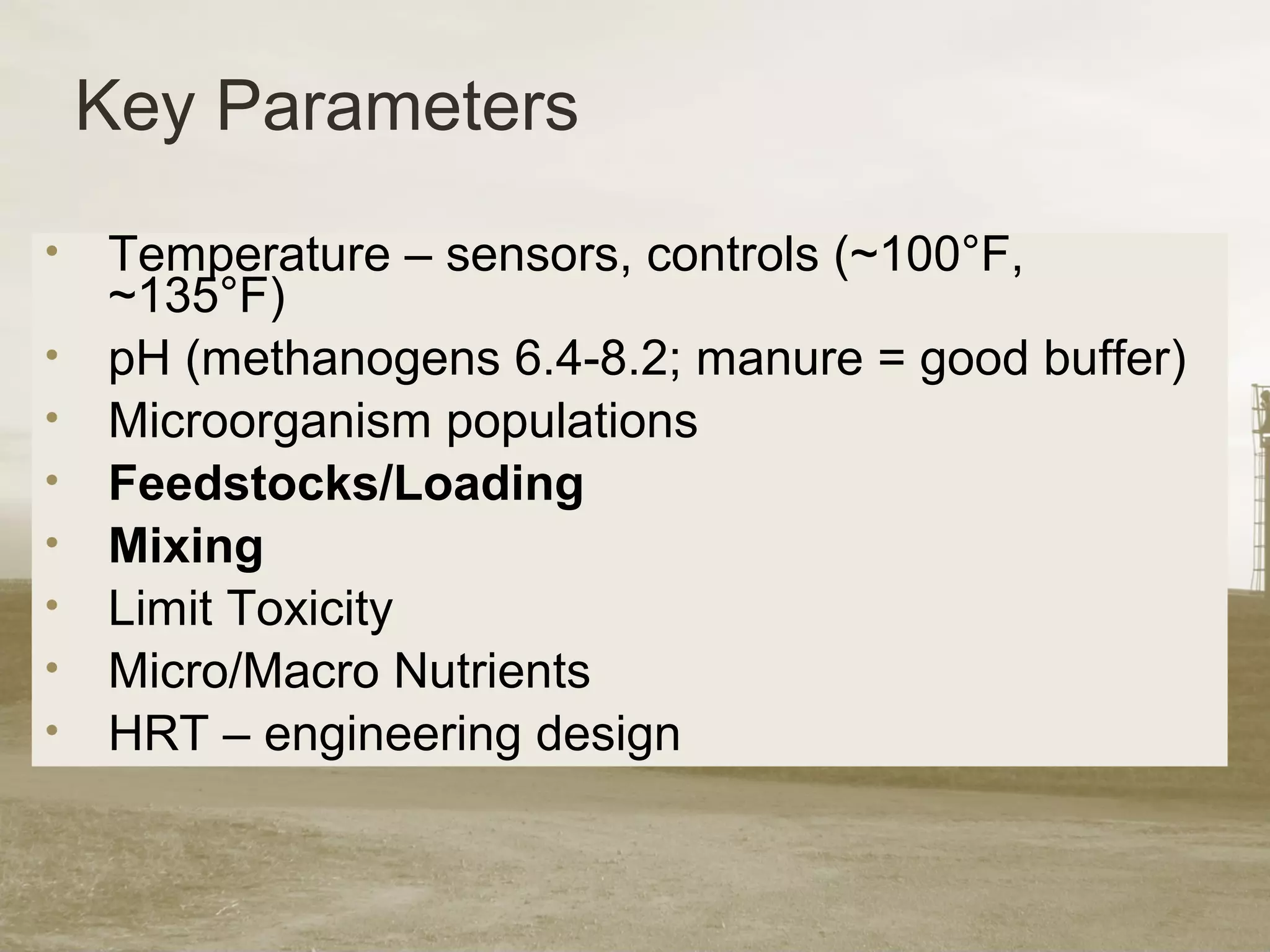
Key Parameters
• Temperature – sensors, controls (~100°F,
~135°F)
• pH (methanogens 6.4-8.2; manure = good buffer)
• Microorganism populations
• Feedstocks/Loading
• Mixing
• Limit Toxicity
• Micro/Macro Nutrients
• HRT – engineering design
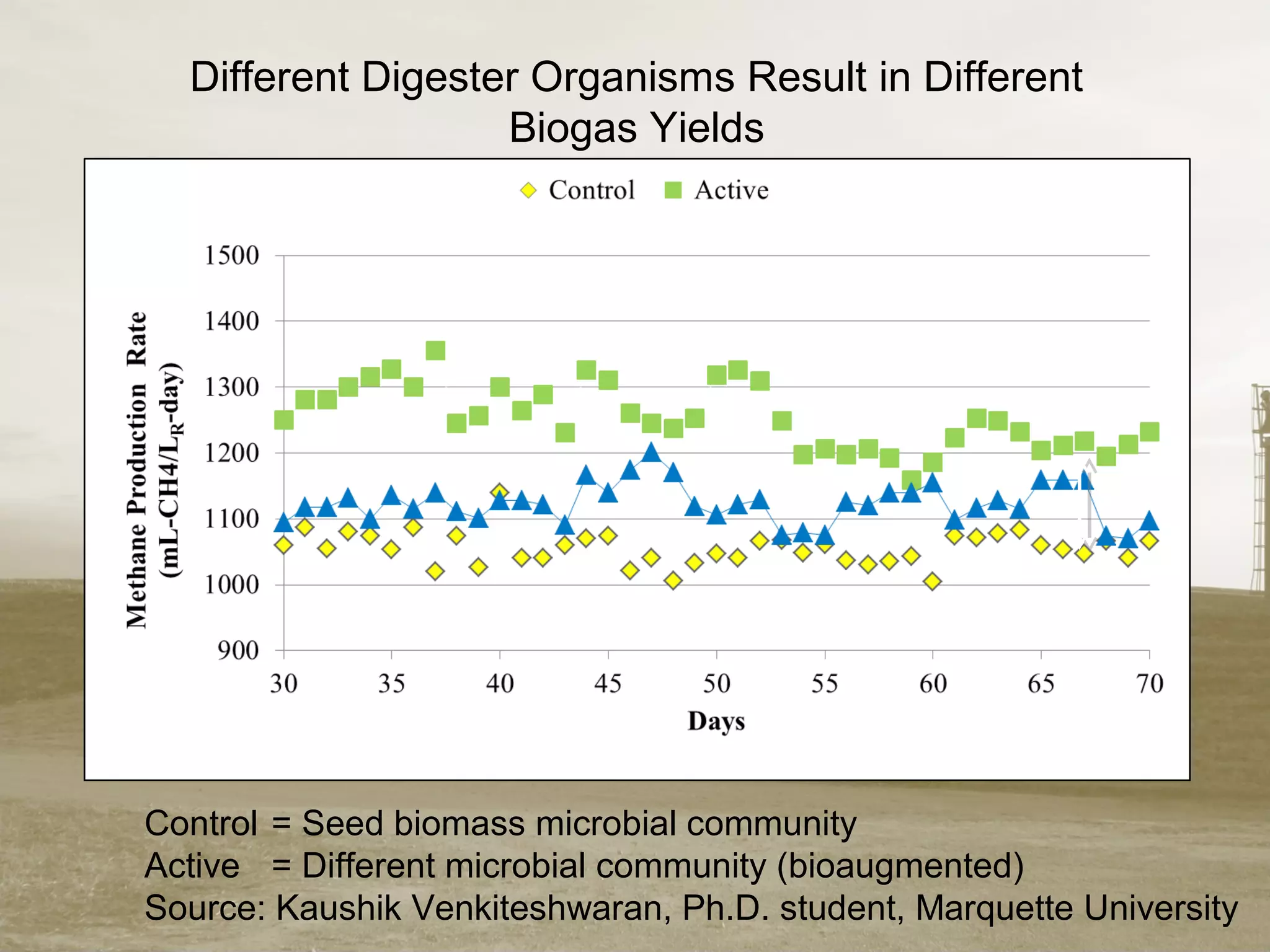
Different Digester Organisms Result in Different
Biogas Yields
Control = Seed biomass microbial community
Active = Different microbial community (bioaugmented)
Source: Kaushik Venkiteshwaran, Ph.D. student, Marquette University
15% more methane
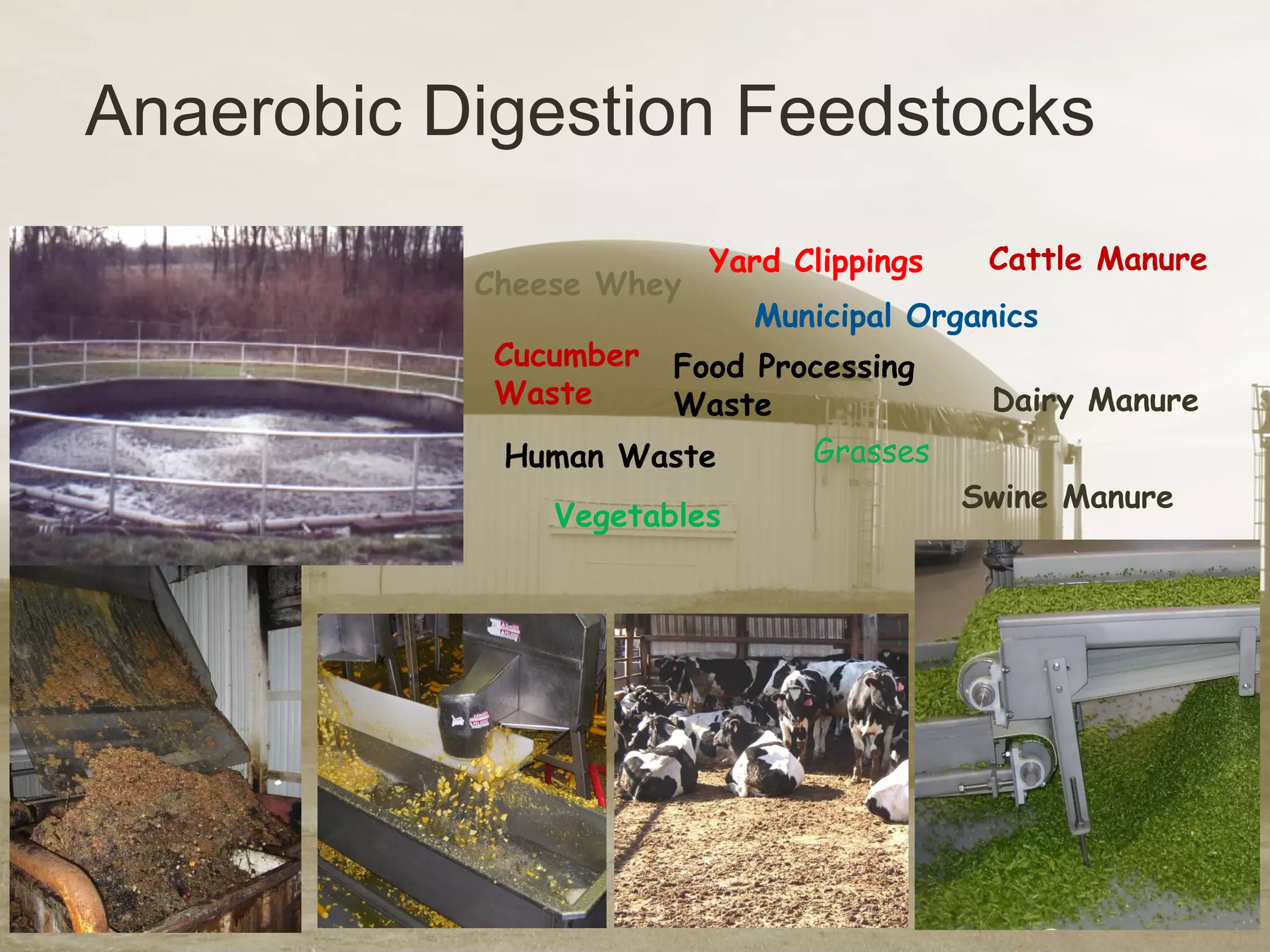
Anaerobic Digestion Feedstocks
Cheese Whey
Swine Manure
Dairy Manure
Cattle Manure
Cucumber
Waste
Yard Clippings
Municipal Organics
Human Waste
Food Processing
Waste
Vegetables
Grasses
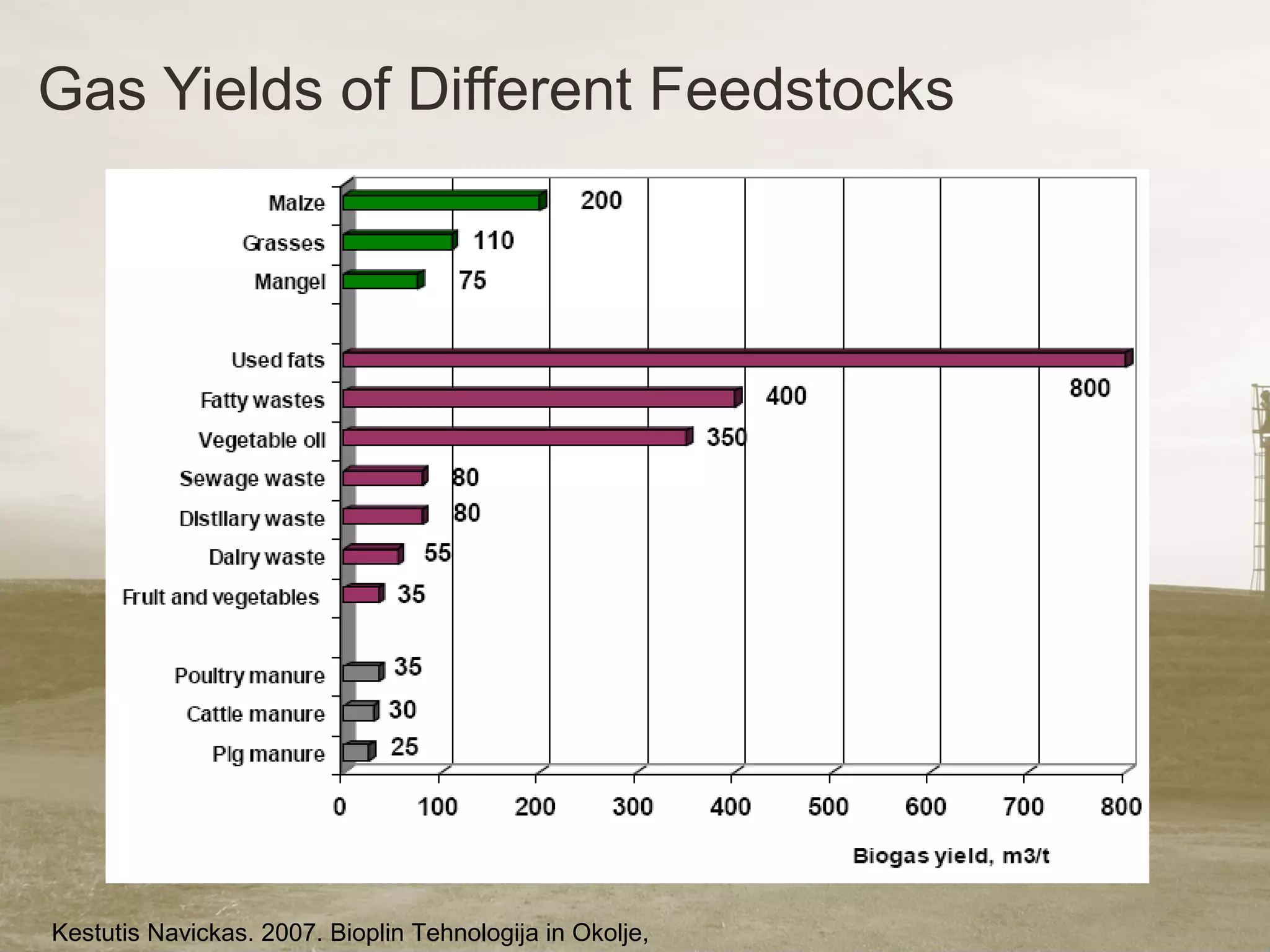
Gas Yields of Different Feedstocks
Kestutis Navickas. 2007. Bioplin Tehnologija in Okolje,
Additional Substrates
• What to use?
• Avoid toxicity – trust your
supplier (now have brokers)
• Producers range – smart ones
are cautious
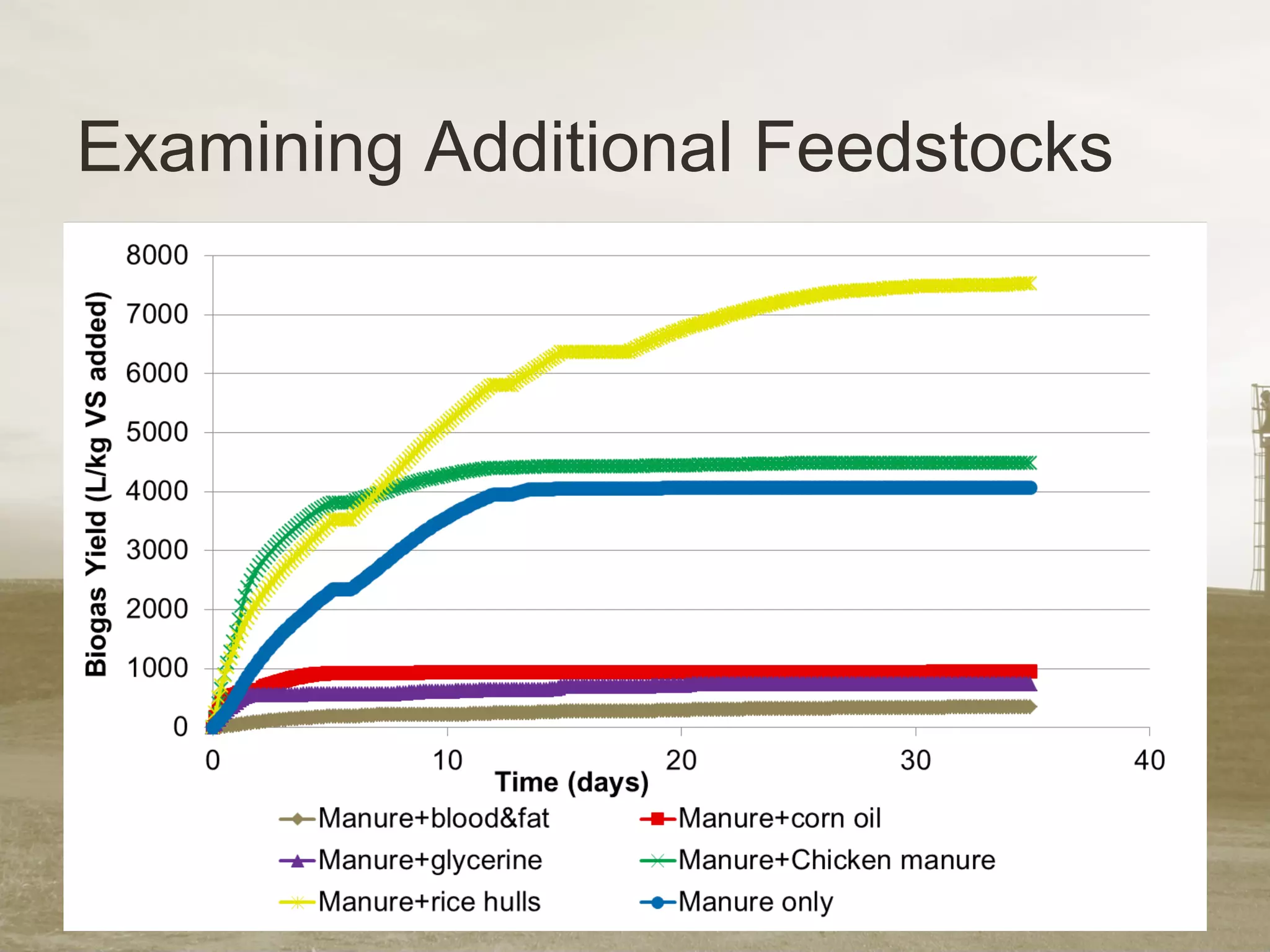
• Evaluate additional substrates
• What will substrates do to the
digestate?
• Rule of thumb – must be worth
more than the cost of spreading
(some use the idea that tipping
fees must be ≥ application costs)
• Load slowly
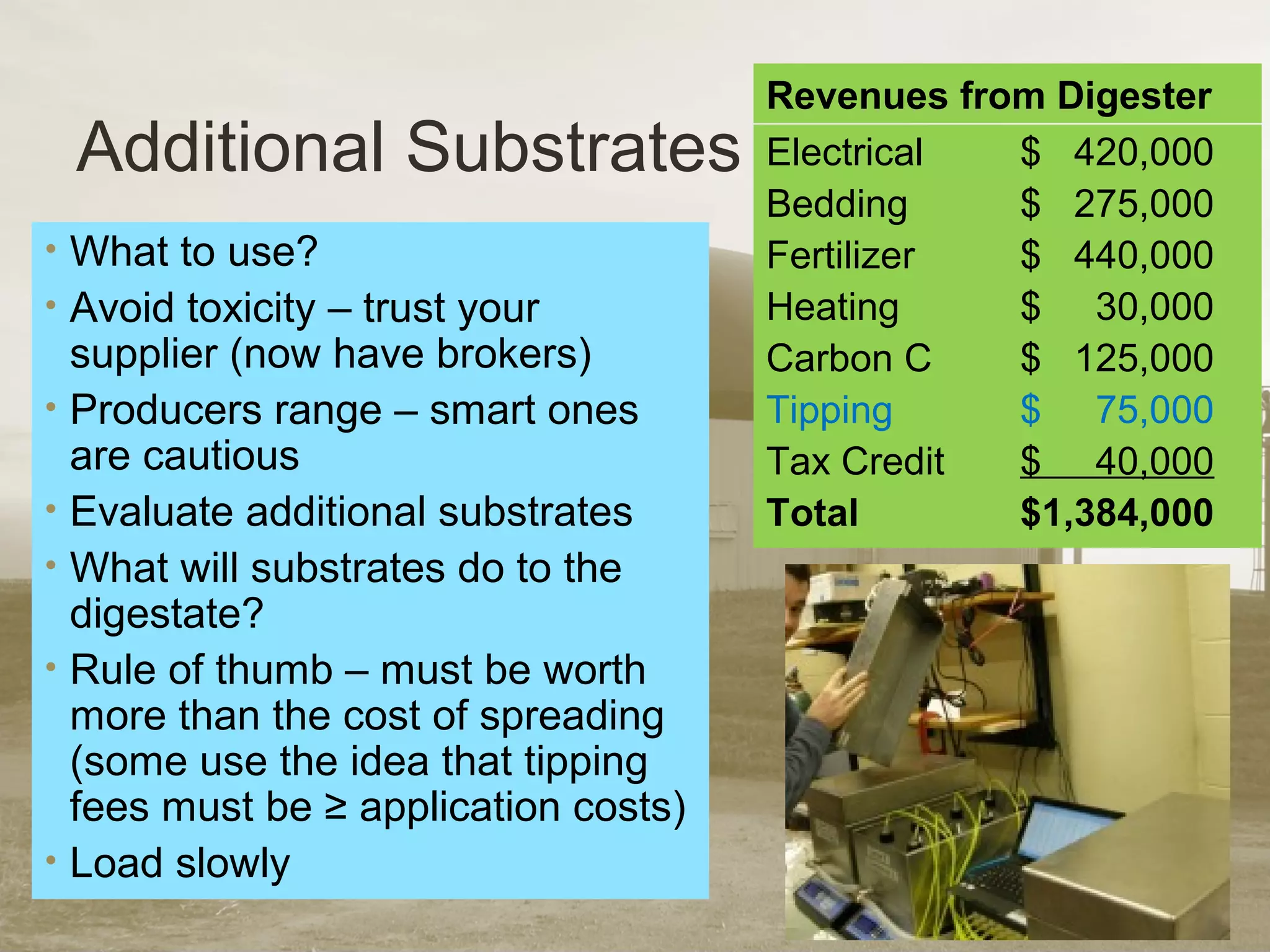
Electrical $ 420,000
Bedding $ 275,000
Fertilizer $ 440,000
Heating $ 30,000
Carbon C $ 125,000
Tipping $ 75,000
Tax Credit $ 40,000
Total $1,384,000
Revenues from Digester
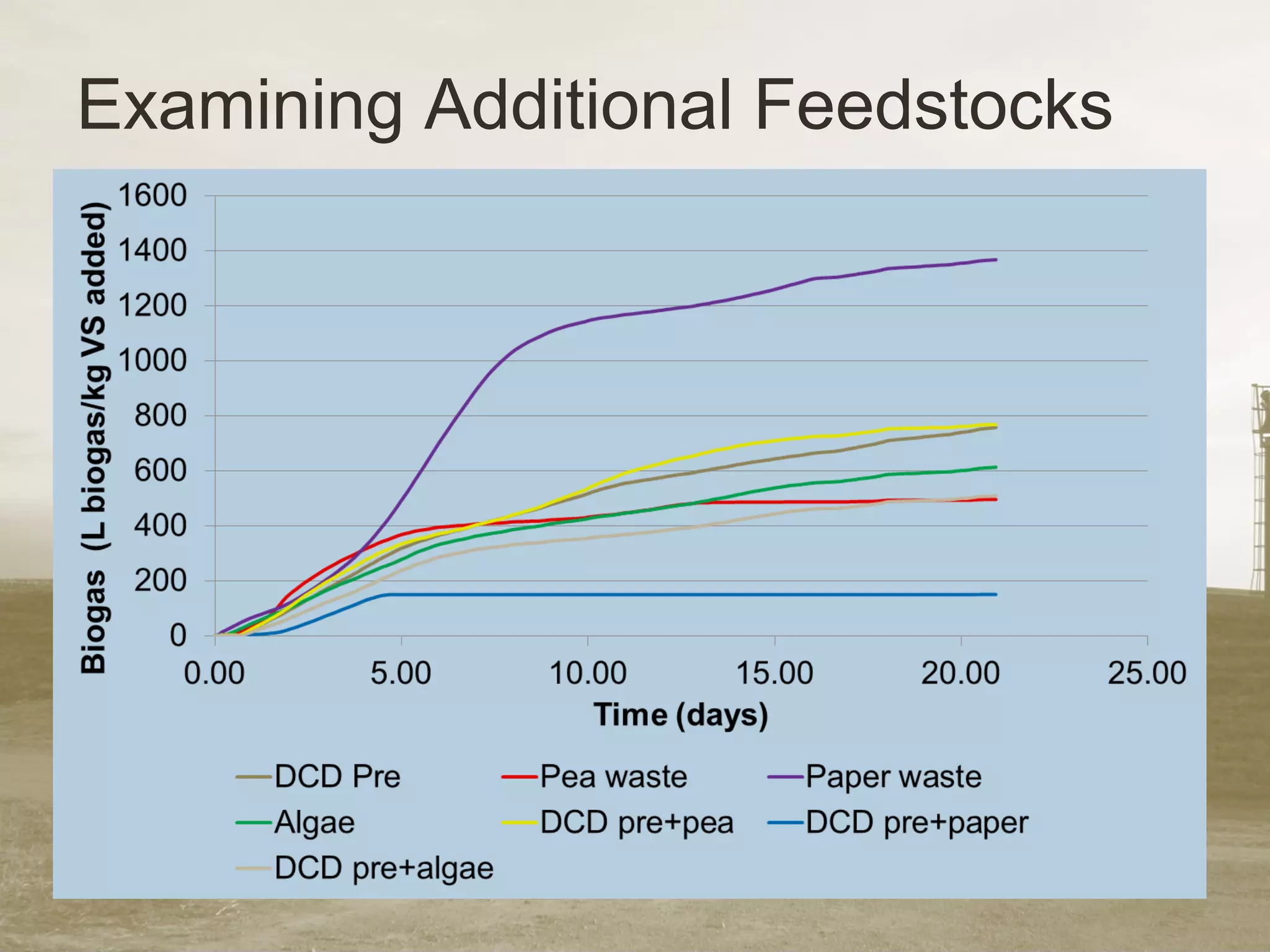
Examining Additional Feedstocks
Cheese Whey and Cheese Whey
Permeate
• Evaluated in triplicates
• 0% (control – all manure), 20%, 40%, 80%, and 100%
substrate additions
• Varying performance
• Generally < 40% reached a maximum biogas production
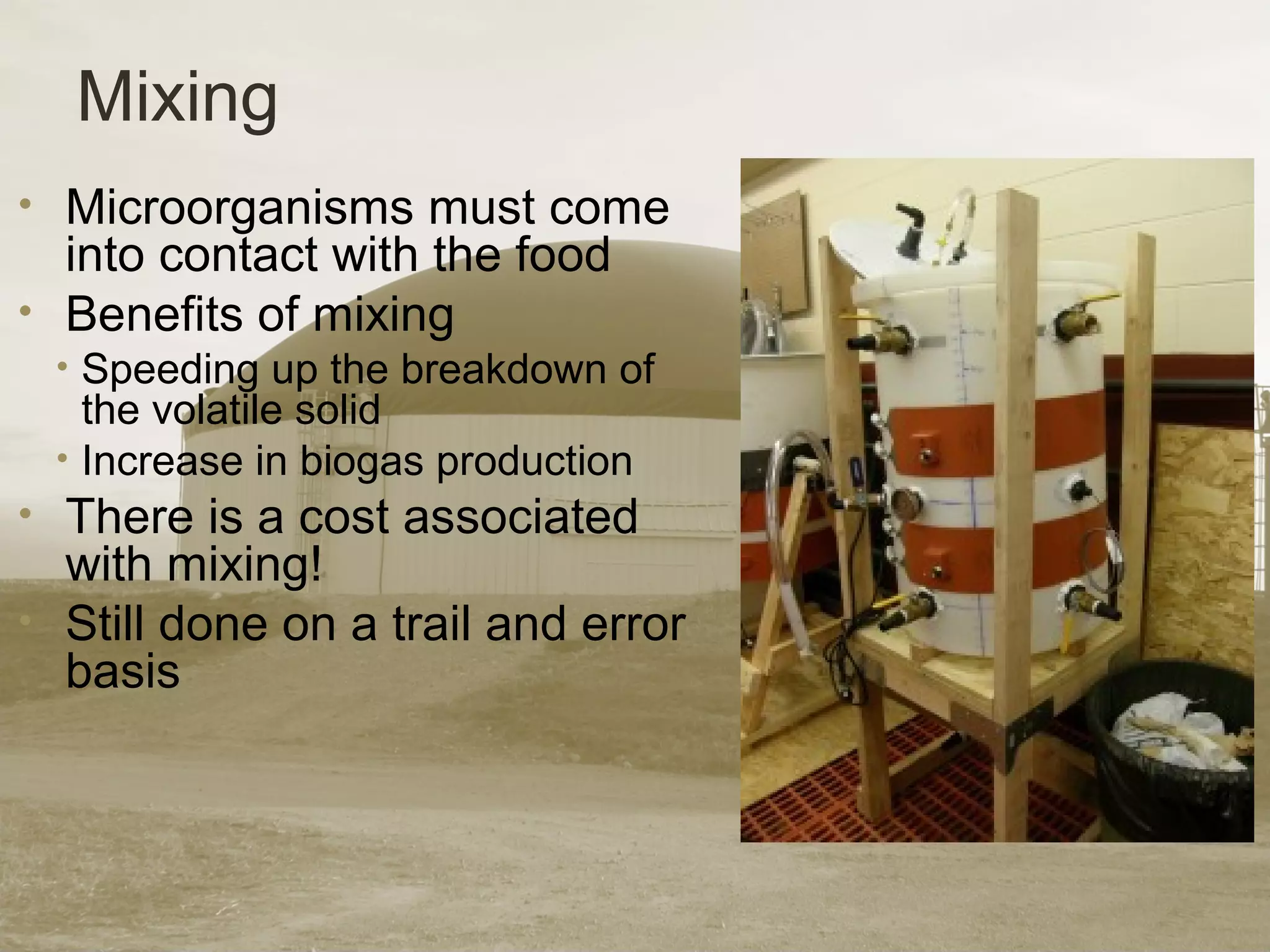
Mixing
• Microorganisms must come
into contact with the food
• Benefits of mixing
• Speeding up the breakdown of
the volatile solid
• Increase in biogas production
• There is a cost associated
with mixing!
• Still done on a trail and error
basis
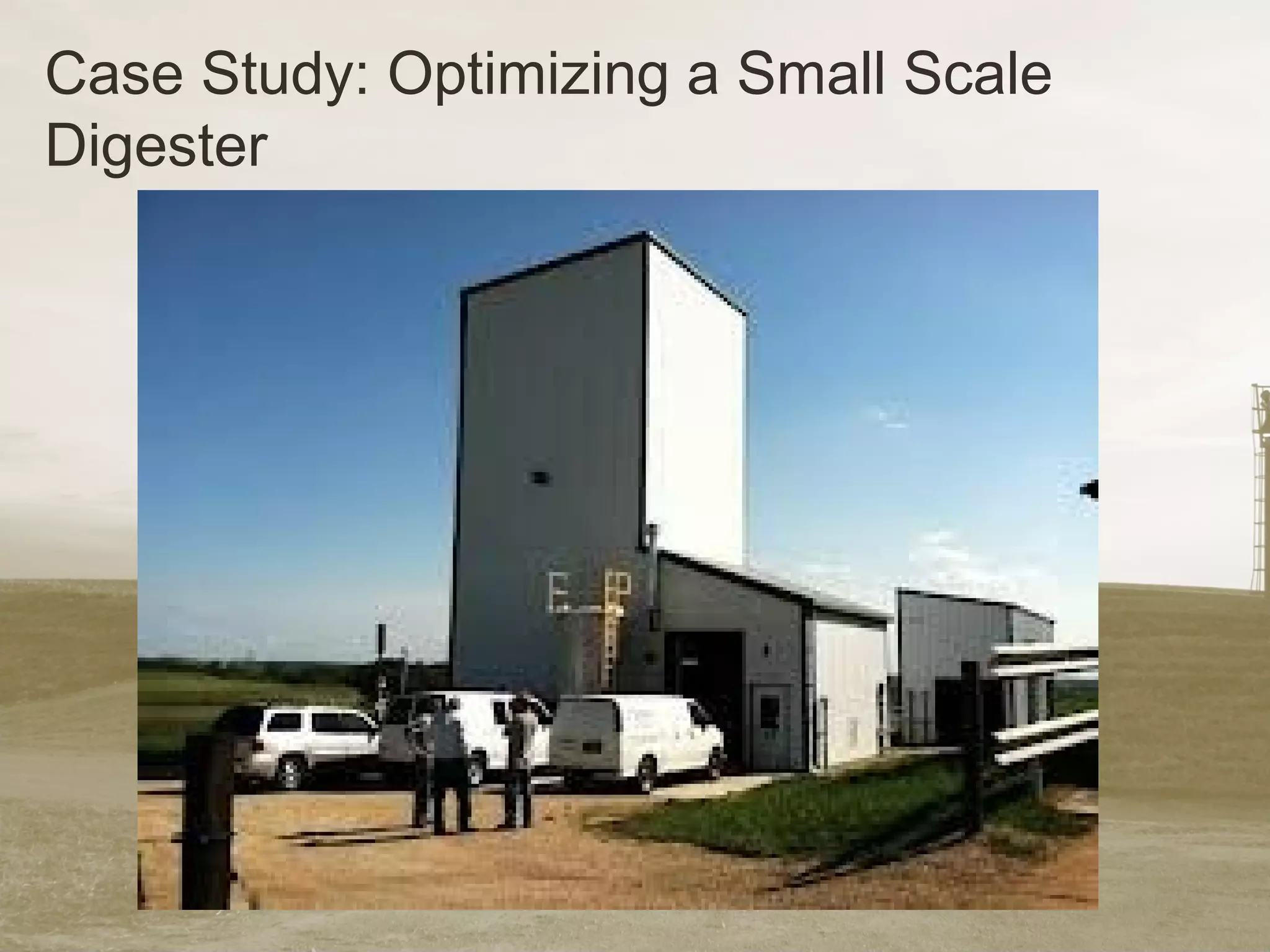
Case Study: Optimizing a Small Scale
Digester
Case Study
• Don’t assume anything!
• Make operators record EVERYTHING
1.Verify temperature throughout tank
2.Take measurements (pH, VS, COD, etc.) over time
3.Don’t change things quickly, allow time to stabilize
• Lower gas production than predicted
• Made lots of changes to feedstocks and feed operations
• Contemplated design changes
• Retention time was too short, found through low
destruction
• Increased temperature resulted in 2-3x the biogas
production
Destruction
Evaluating Toxicity – BMP’s
Take Away
• Many things affect digester performance, optimize one by
one, may need to go back
• Feedstocks need to be evaluated on an individual basis
• Mixing is still a trail and error process
• Digesters require operators and farm employees to
understand the system
• Make the simple and low cost adjustments first, typically
have the highest pay back
• Future:
• Mixing impacts to methanogens and modeling to reduce
build-up (we will finish eventually)
Becky Larson
ralarson2@wisc.edu
(608) 890-3171
Thank you!

Anaerobic Digestion: Co-Digestion and Operational Issues

  • 1.
  • 2.
    Why install adigester? • Energy independence • Reductions in green house gases • Flexibility in manure management • Reduced odors & pathogens • Reduction in other environmental impacts • Potential for additional asset streams (?) • Bedding • Tipping fees • Environmental credits • Do I dare say profits? • What can’t digesters do?
  • 3.
    Anaerobic Digestion inthe U.S. USEPA AgSTAR, 2011
  • 4.
  • 5.
  • 6.
    Anaerobic Digestion ProcessFlow Slurry Biogas SeparatorDigestate Filtrate (liquid) Fiber (solid) Feedstock's
  • 7.
    Characterized by rapid bacterial growth “Weaklink” in the process of producing biogas Goal?...Avoid inhibition, maintain stabilization! Stage Three: Acetogenesis Stage One: Hydrolysis Stage Two: Acidogenesis Stage Four: Methanogenesis CO2 reducing methanogens aceticiastic methanogens acetogens (H2 producing) fermentative bacteria fermentative bacteria PROPIONATE, BUTYRATE, etc. (Short-chain volatile organic acids) fermentative bacteria fermentative bacteria COMPLEX POLYMERS (Proteins, polysaccharides, etc.) MONOMERS AND OLIGOMERS (Sugars, amino acids, peptides) acetogens (H2 consuming) H2 + CO2 ACETATE CH4, CO2 Source: Syed Hashsham, PhD, lecture notes, Michigan State University The Biological Process of Producing Biogas
  • 8.
    Key Parameters • Temperature– sensors, controls (~100°F, ~135°F) • pH (methanogens 6.4-8.2; manure = good buffer) • Microorganism populations • Feedstocks/Loading • Mixing • Limit Toxicity • Micro/Macro Nutrients • HRT – engineering design
  • 9.
    Different Digester OrganismsResult in Different Biogas Yields Control = Seed biomass microbial community Active = Different microbial community (bioaugmented) Source: Kaushik Venkiteshwaran, Ph.D. student, Marquette University 15% more methane
  • 10.
    Anaerobic Digestion Feedstocks CheeseWhey Swine Manure Dairy Manure Cattle Manure Cucumber Waste Yard Clippings Municipal Organics Human Waste Food Processing Waste Vegetables Grasses
  • 11.
    Gas Yields ofDifferent Feedstocks Kestutis Navickas. 2007. Bioplin Tehnologija in Okolje,
  • 12.
    Additional Substrates • Whatto use? • Avoid toxicity – trust your supplier (now have brokers) • Producers range – smart ones are cautious • Evaluate additional substrates • What will substrates do to the digestate? • Rule of thumb – must be worth more than the cost of spreading (some use the idea that tipping fees must be ≥ application costs) • Load slowly Electrical $ 420,000 Bedding $ 275,000 Fertilizer $ 440,000 Heating $ 30,000 Carbon C $ 125,000 Tipping $ 75,000 Tax Credit $ 40,000 Total $1,384,000 Revenues from Digester
  • 13.
  • 14.
  • 15.
    Cheese Whey andCheese Whey Permeate • Evaluated in triplicates • 0% (control – all manure), 20%, 40%, 80%, and 100% substrate additions • Varying performance • Generally < 40% reached a maximum biogas production
  • 16.
    Mixing • Microorganisms mustcome into contact with the food • Benefits of mixing • Speeding up the breakdown of the volatile solid • Increase in biogas production • There is a cost associated with mixing! • Still done on a trail and error basis
  • 17.
    Case Study: Optimizinga Small Scale Digester
  • 18.
    Case Study • Don’tassume anything! • Make operators record EVERYTHING 1.Verify temperature throughout tank 2.Take measurements (pH, VS, COD, etc.) over time 3.Don’t change things quickly, allow time to stabilize • Lower gas production than predicted • Made lots of changes to feedstocks and feed operations • Contemplated design changes • Retention time was too short, found through low destruction • Increased temperature resulted in 2-3x the biogas production
  • 19.
  • 20.
  • 21.
    Take Away • Manythings affect digester performance, optimize one by one, may need to go back • Feedstocks need to be evaluated on an individual basis • Mixing is still a trail and error process • Digesters require operators and farm employees to understand the system • Make the simple and low cost adjustments first, typically have the highest pay back • Future: • Mixing impacts to methanogens and modeling to reduce build-up (we will finish eventually)
  • 22.

Editor's Notes