FRESH
PRODUCE
STORAGE & ETHYLENE GAS
PRESENTATION BY KRISTOPHER CRANE – ISU DIETETIC INTERN
OBJECTIVES
• EFFICIENT STORAGE OF PRODUCE
• WHAT CAN CAUSE FRUIT TO RIPEN FASTER?
• WHAT TO WATCH FOR WHEN PRODUCE
TURNS BAD
ETHYLENE GAS
• WHAT IS IT?
• WHY SHOULD YOU BE CONCERNED ABOUT IT IN THE COOLER AND DRY STORAGE?
ETHYLENE GAS & STORAGE
• BROWN SPOTS ON GREEN LETTUCE
• BITTER TASTE IN CARROTS
• YELLOWING OF BROCCOLI, CAULIFLOWER,
CABBAGE, & DARK LEAFY GREENS (SPINACH)
• DECREASED SHELF LIFE OF PRODUCE
• ROTTEN & MOLDY FRUIT
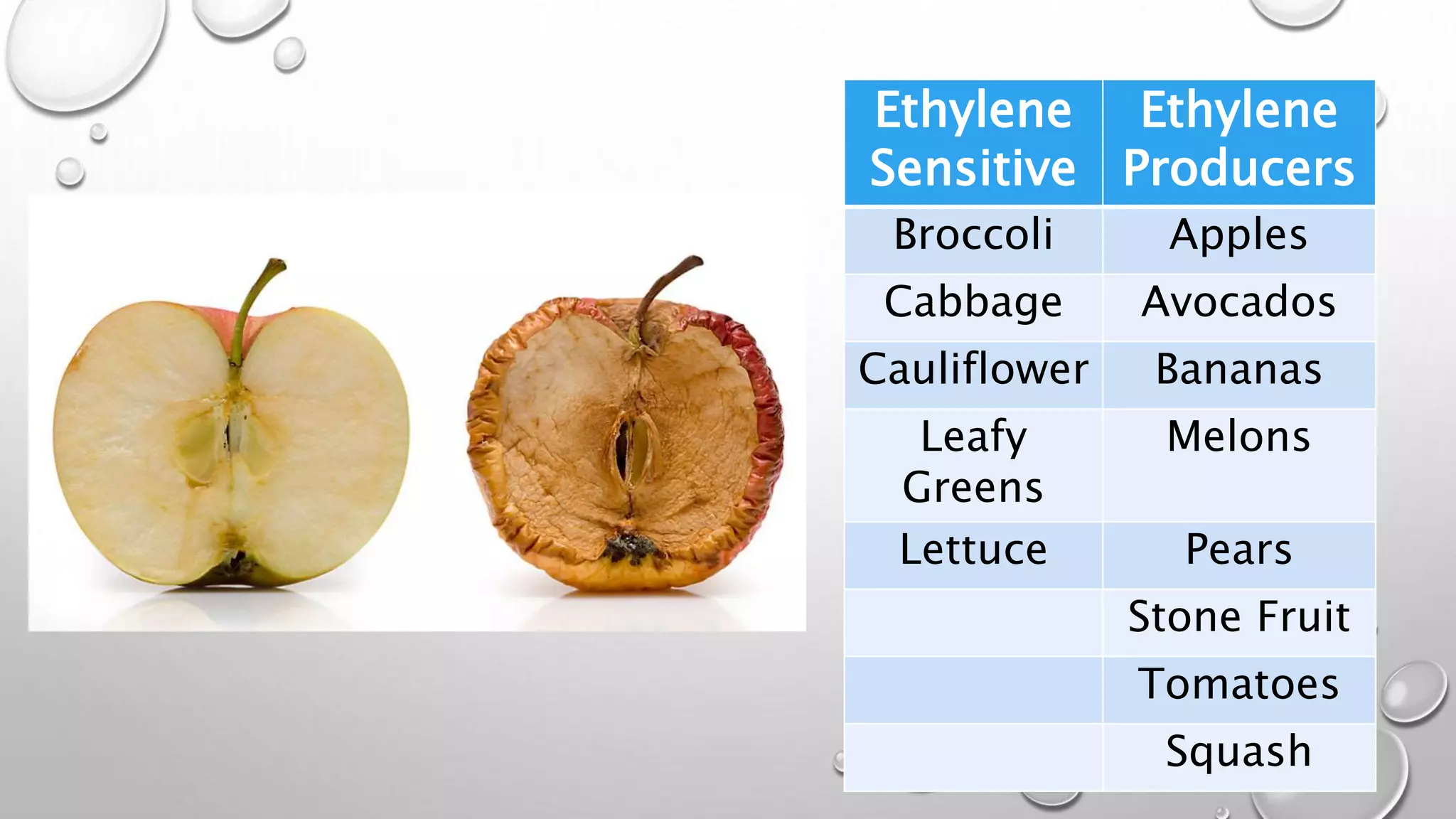
Ethylene
Sensitive
Ethylene
Producers
Broccoli Apples
Cabbage Avocados
Cauliflower Bananas
Leafy
Greens
Melons
Lettuce Pears
Stone Fruit
Tomatoes
Squash
HOW TO REDUCE
ETHYLENE GAS
• STORE ETHYLENE SENSITIVE PRODUCE ON
ONE SIDE OF THE COOLER/SHELF AND
ETHYLENE PRODUCING PRODUCE ON THE
OTHER SIDE.
• OR
• STORE FRUITS ON ONE SIDE OF THE
COOLER/SHELF – VEGETABLES ON THE
OTHER SIDE
• KEEP F/V ON THE HIGHER SHELVES TO
AVOID CROSS CONTAMINATION OF OTHER
PRODUCTS
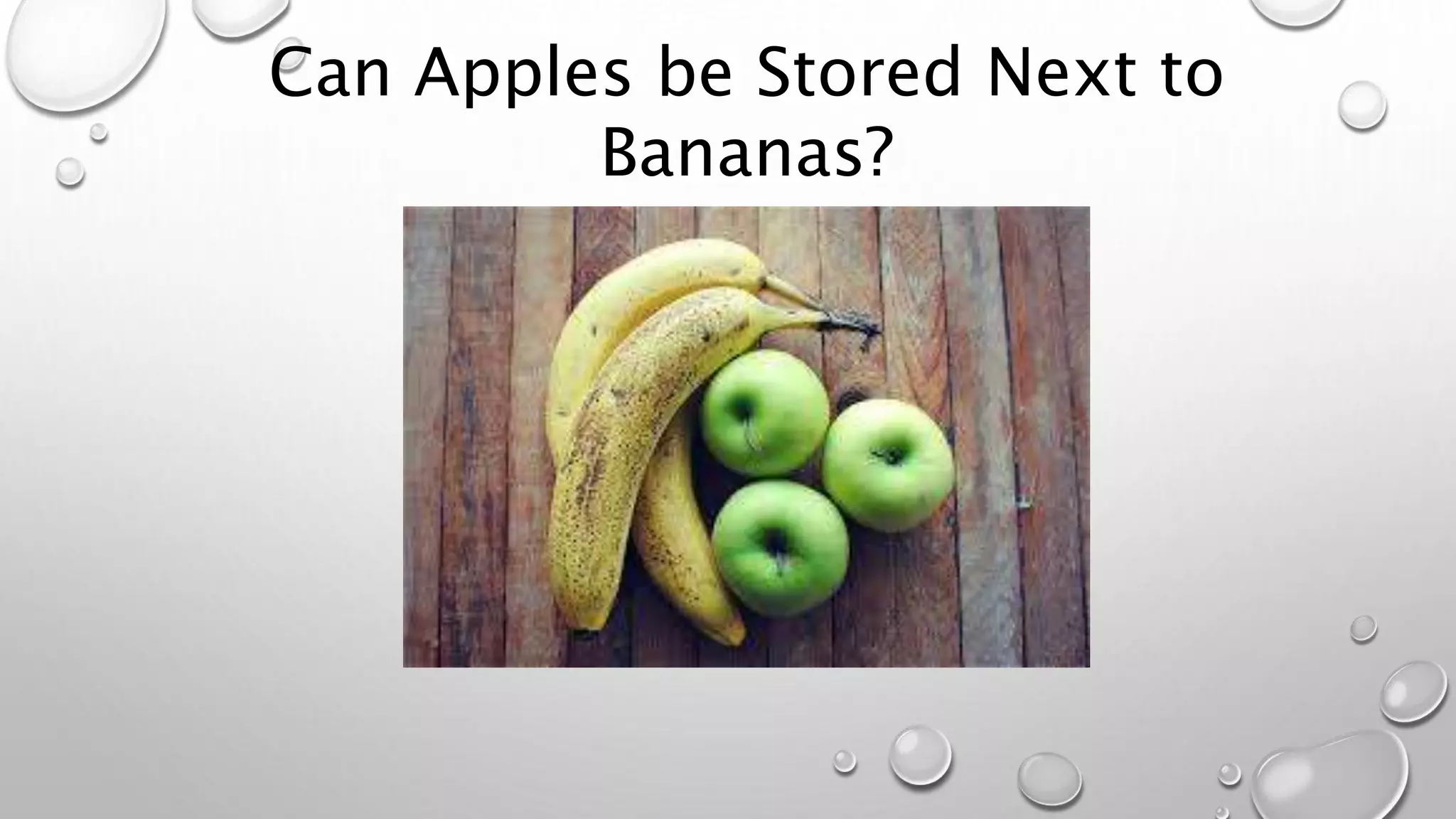
Can Apples be Stored Next to
Bananas?
WHAT HAPPENS IF THEY ARE?
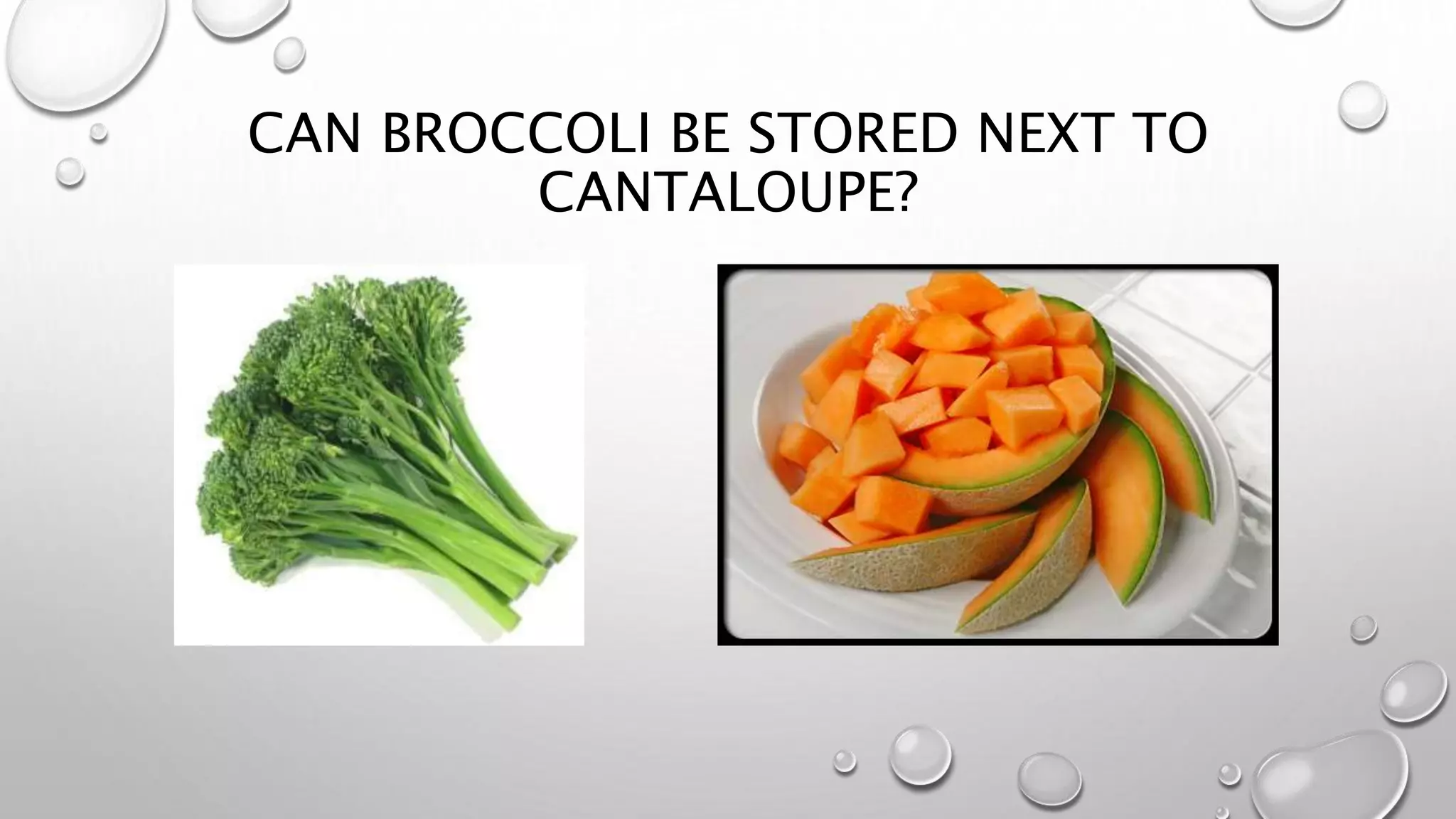
CAN BROCCOLI BE STORED NEXT TO
CANTALOUPE?
CAN GREEN LETTUCE BE STORED NEXT TO
PEARS?
WHEN IS PRODUCE BAD?
• TEXTURE
• WRONG SHAPE
• SCARRING
• BRUISING
• MOLD
• MUSHY/SOFT
WOULD I EAT
THIS?
STORAGE OF PRODUCE ON DRY SHELF
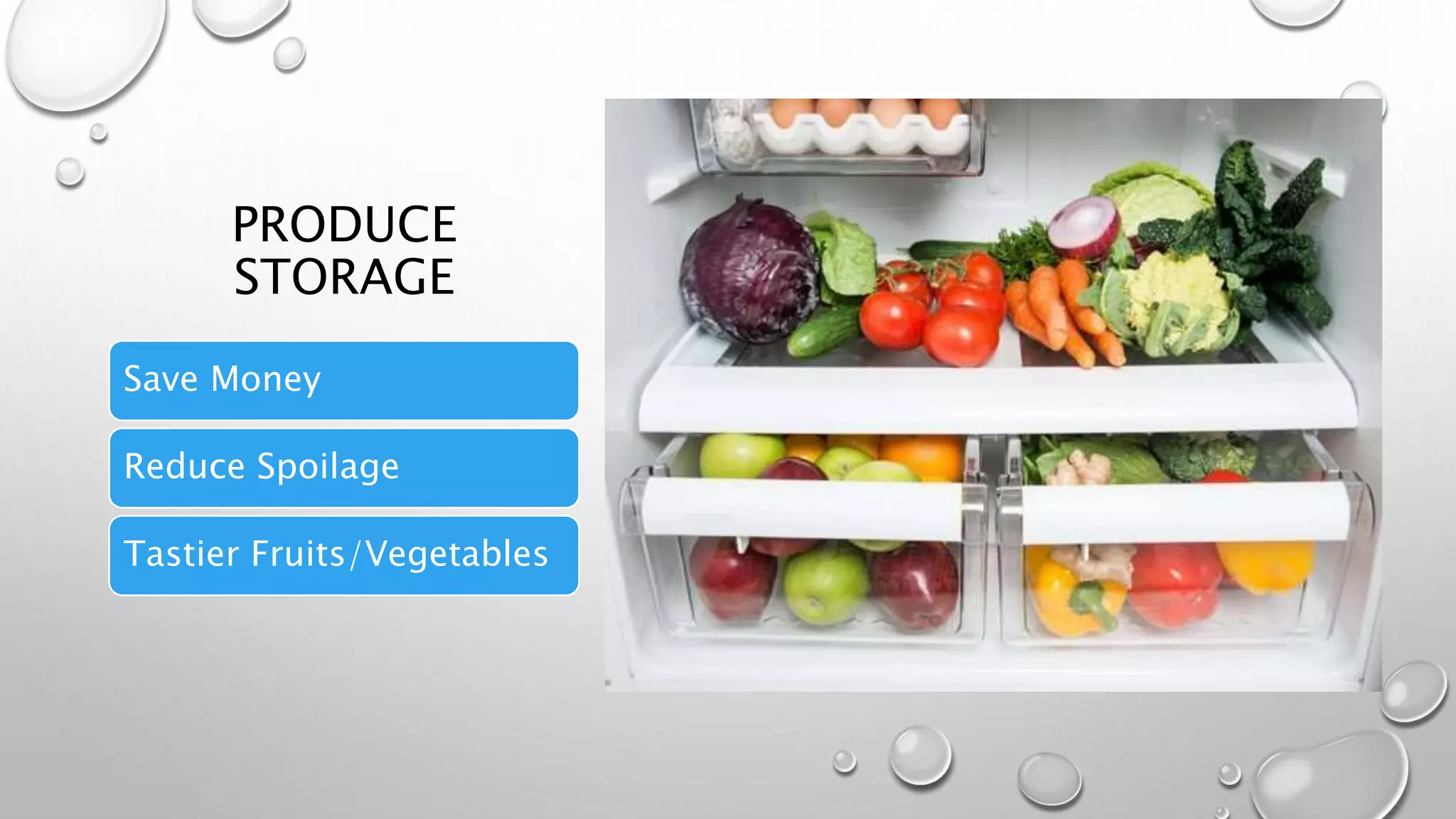
STORAGE OF PRODUCE IN THE FRIDGE
•Fruits •Vegetables
PRODUCE
STORAGE
Save Money
Reduce Spoilage
Tastier Fruits/Vegetables
QUESTIONS?
REFERENCES:
• USDA PRODUCE SAFETY UNIVERSITY 2015 LECTURE. NATIONAL FOOD SERVICE MANAGEMENT INSTITUTE.
UNIVERSITY OF MISSISSIPPI. 2015.
• PRODUCE SAFETY PRESENTATIONS AND TALKING POINTS. PRODUCE SAFETY PRESENTATIONS AND TALKING
POINTS. NATIONAL INSTITUTE OF CHILD NUTRITION. 2015. AVAILABLE AT:
HTTP://WWW.NFSMI.ORG/RESOURCEOVERVIEW.ASPX?ID=438. ACCESSED OCTOBER 2015.

Ethylene Gas Presentation

Editor's Notes

  • #3 Fresh produce costs quite a bit of money – what can we do to make sure produce can last longer in the cooler? How do you know if produce is bad?
  • #4 Hydrocarbon Gas emitted from fruits and vegetables to “speed up” the aging process. Thought to be a hormone for F/V aging. You cannot see it or smell it. Commercially it is used to speed up the ripening process of tomatoes, bananas, avocados, pears, and apples. Store a banana in a brown paper bag with an unripe apple for a couple days – the apple will become sweeter. This gas in large quantities can ripen fruit too fast and cause decay, yellowing, and a bitter taste to occur in F/V. Loss of money, loss of product, and nasty fruits/vegetables for lunch.
  • #5 Picture shows a study done on broccoli with various ppm of ethylene gas exposure over one week. Has anyone seen this phenomena occur in their home life or in their kitchens?
  • #6 Those that create it. Those that are affected by it. How to stop the influence of this gas?
  • #7 Do what you can in your coolers and shelves – some have more room than others. If a small cooler: Fruits on one side, Vegetables on the other – keep F/V on top shelf above meats and other products to avoid cross contamination. Larger coolers – follow picture guide as much as you have room to minimize gas exposure. Ideal cooler and shelf set up would be one for fruits and one for vegetables – not realistic or practical.
  • #8 Nice printed chart to show which produce goes where – Cooler Door or Taped onto Shelf. Try your best to stack produce in this manner – it will last longer – ripe less fast – and stay at a higher quality for serving.
  • #12 What does bad produce taste like? Nasty, bitter, sour, mushy, crunchy, gritty, bland
  • #13 If it looks bad or if you would not eat it – don’t risk it. You could get sick if it’s rotten.