TECHNICAL PAPER PRESENTATION
ON
ECU
PRESENTING
BY
K. NARENDRA REDDY N.MANOHAR BABU
Over view
WHAT IS ECU ?
WHAT IS THE NEED?
HOW IT WORKS?
CONVENTIONAL V/S ECU ?
NEW TECHNOLOGY
SAFETY AND SAFETY UNITS
EMISSION CONTROL
APPLICATIONS
CONCLUSION
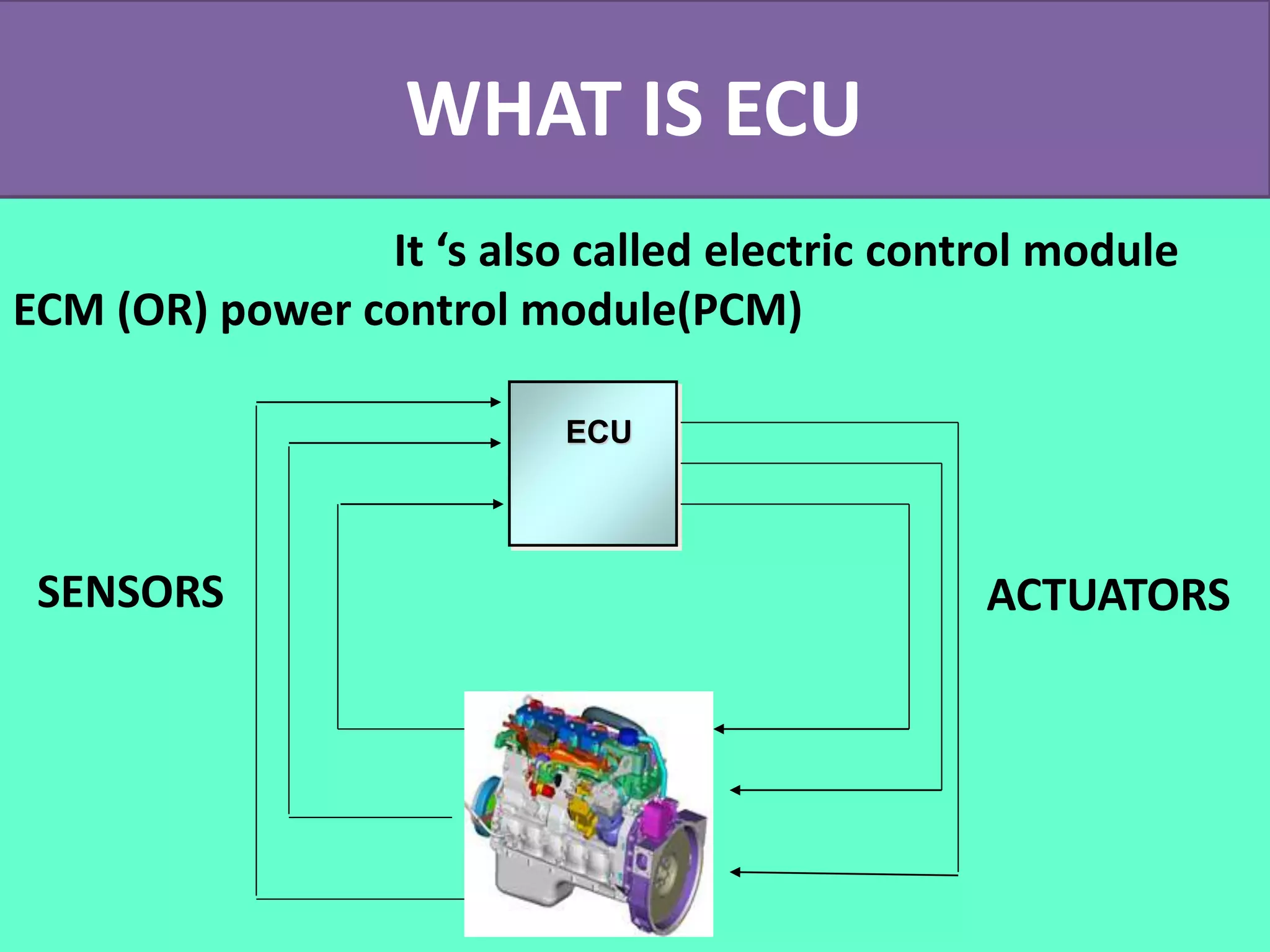
WHAT IS ECU
ACTUATORS
ECU
SENSORS
It ‘s also called electric control module
ECM (OR) power control module(PCM)
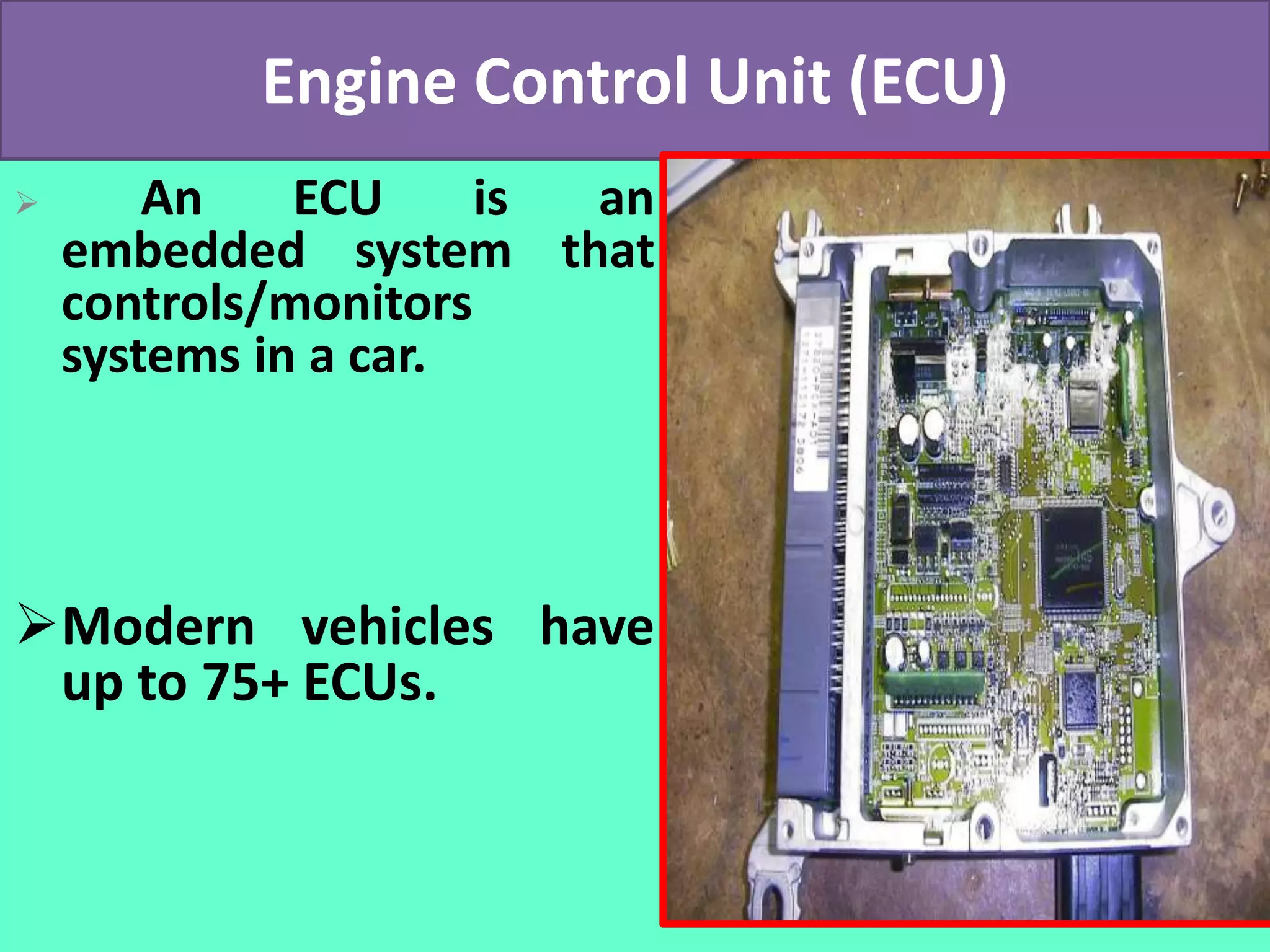
Engine Control Unit (ECU)
 An ECU is an
embedded system that
controls/monitors
systems in a car.
Modern vehicles have
up to 75+ ECUs.
It uses the 32 bit processor
ENIGNE CONTROL UNIT MICRO
PROCESSESSOR
The cars “computer” is not one
system but a large number of small
subsystems connected together by a
network to the processor
WHAT IS THE NEED OF ECU ?
ECU
PERFORMANCE OF
ENGINE INCREASES
EMISSION
CONTROLSAFETY
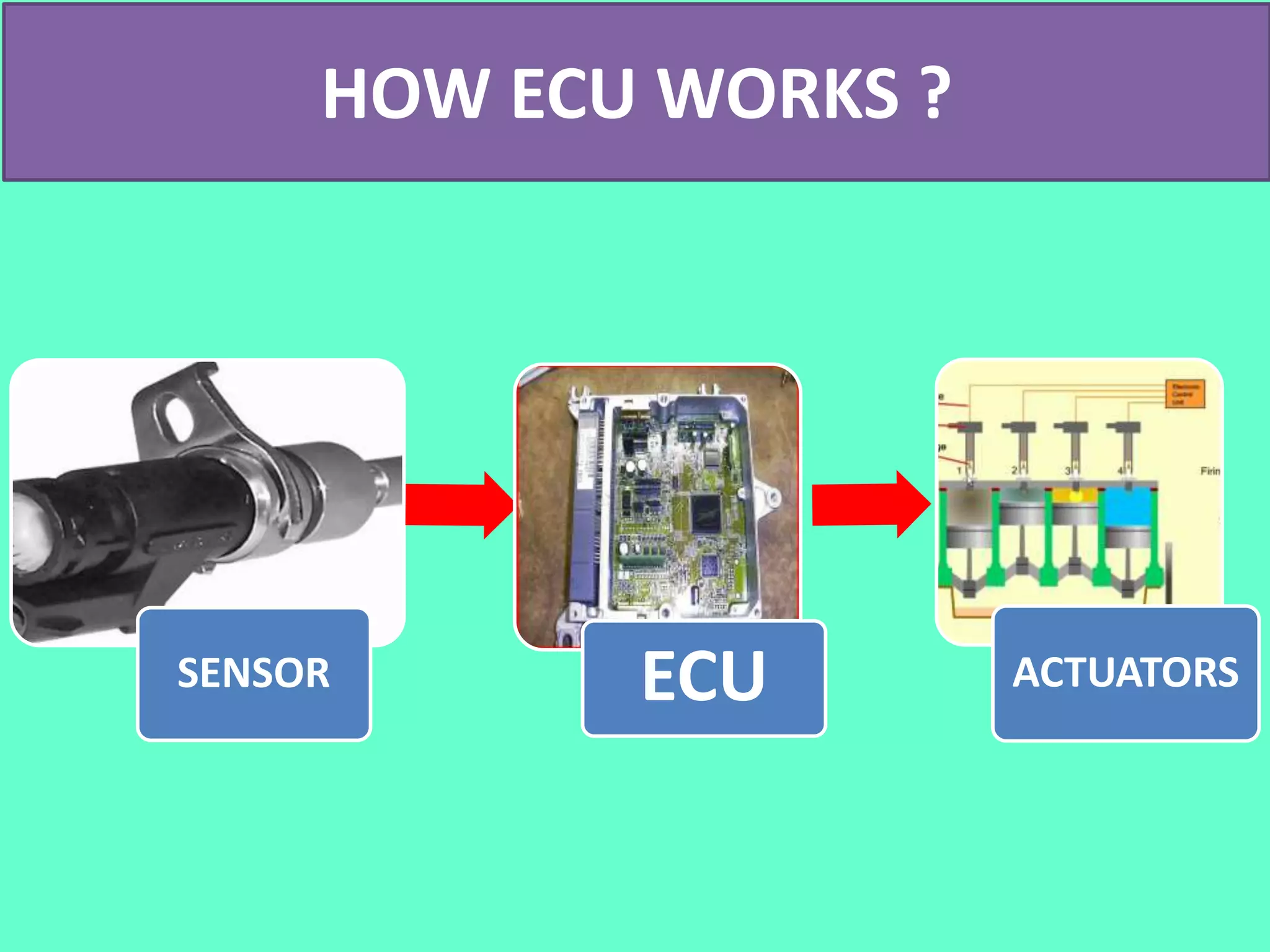
HOW ECU WORKS ?
SENSOR ECU ACTUATORS
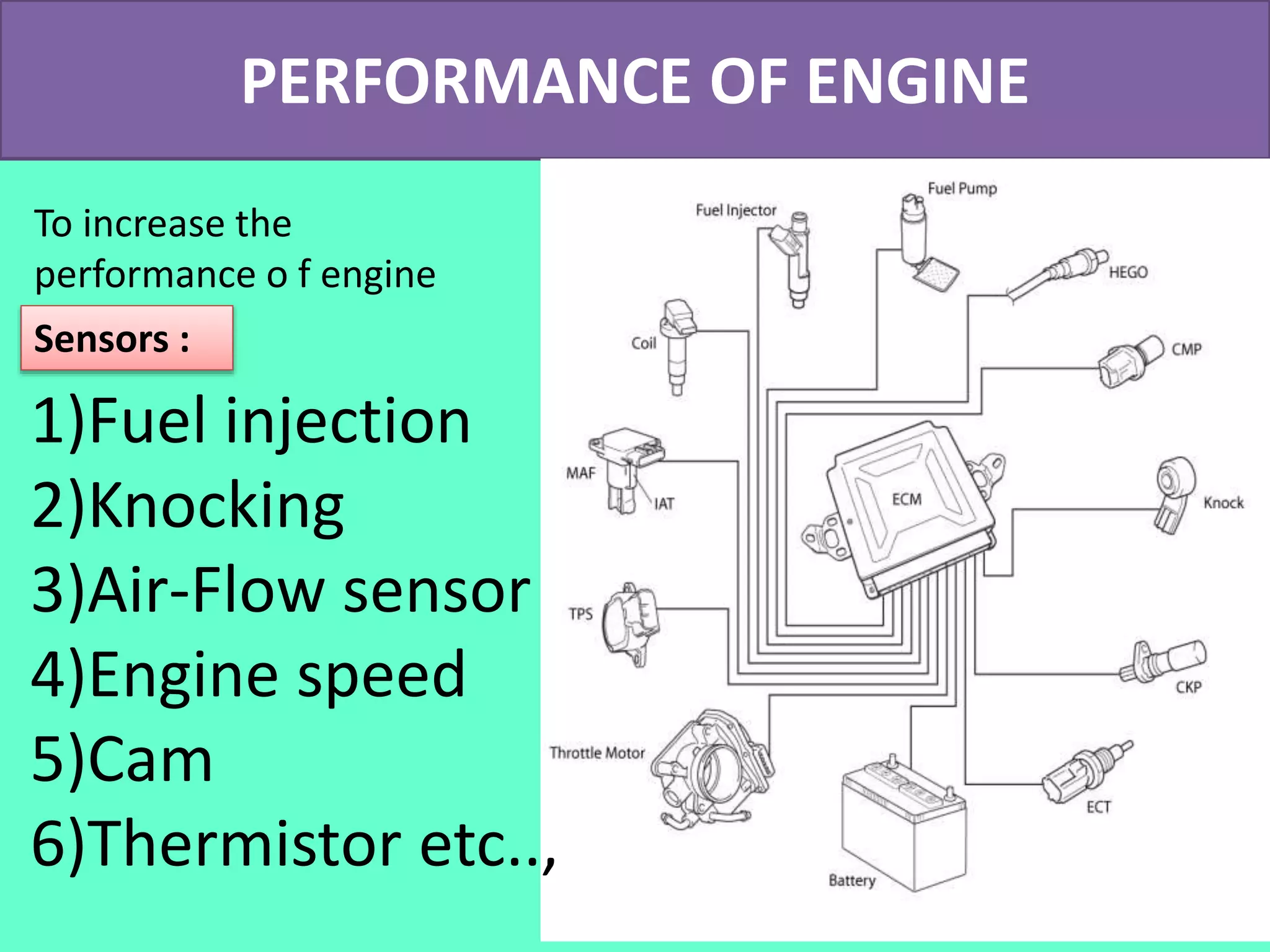
PERFORMANCE OF ENGINE
To increase the
performance o f engine
1)Fuel injection
2)Knocking
3)Air-Flow sensor
4)Engine speed
5)Cam
6)Thermistor etc..,
Sensors :
FUEL INJECTOR SENSOR
A fuel injector is nothing but an
electronically controlled valve.
Indirectly controlled variable : Air-fuel ratio
Directly controlled variable : Exhaust oxygen content
Manipulated variable : Quality of injection fuel
SENSOR: Zirconia or Titania based electro-
chemical
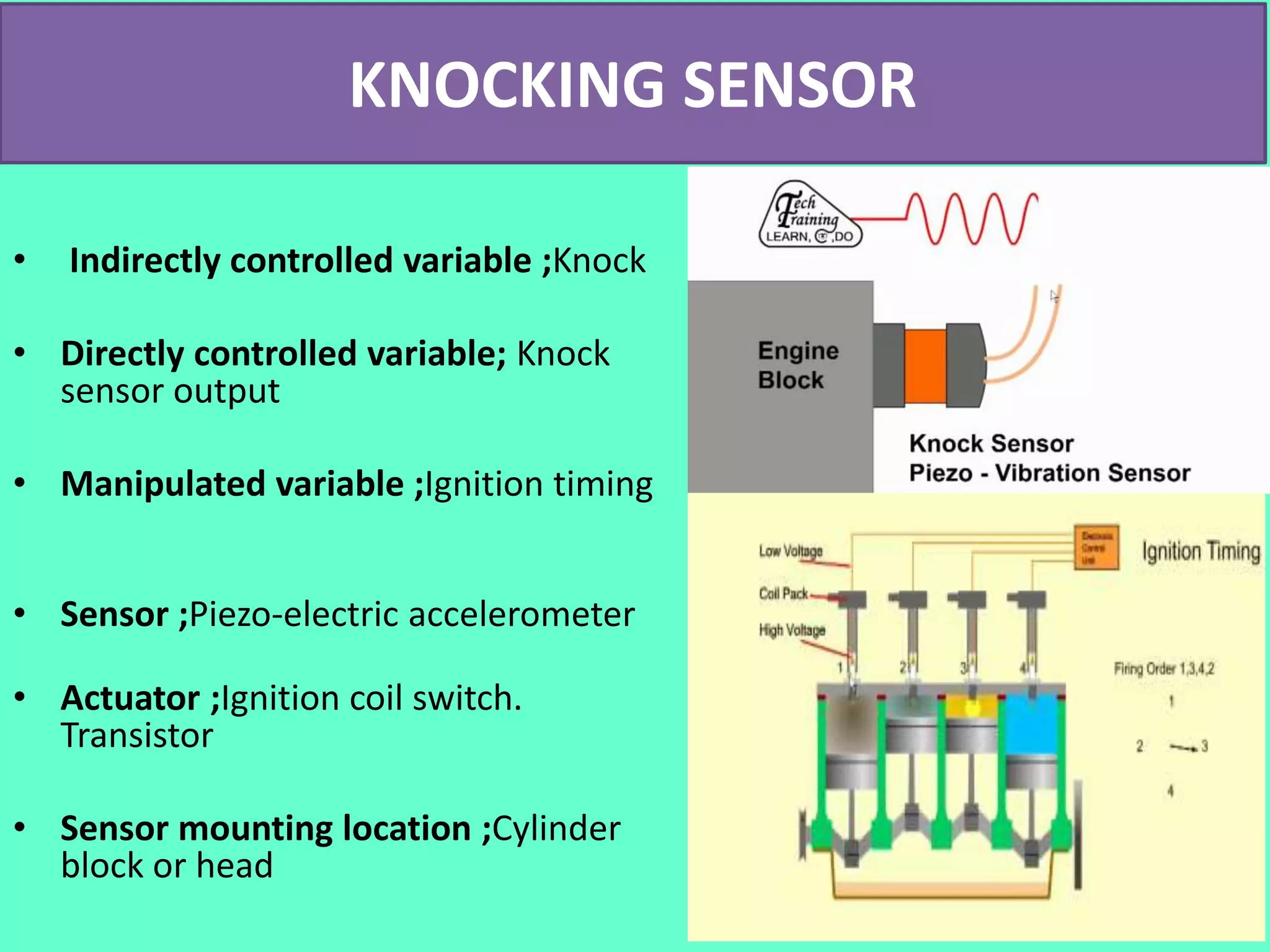
KNOCKING SENSOR
• Indirectly controlled variable ;Knock
• Directly controlled variable; Knock
sensor output
• Manipulated variable ;Ignition timing
• Sensor ;Piezo-electric accelerometer
• Actuator ;Ignition coil switch.
Transistor
• Sensor mounting location ;Cylinder
block or head
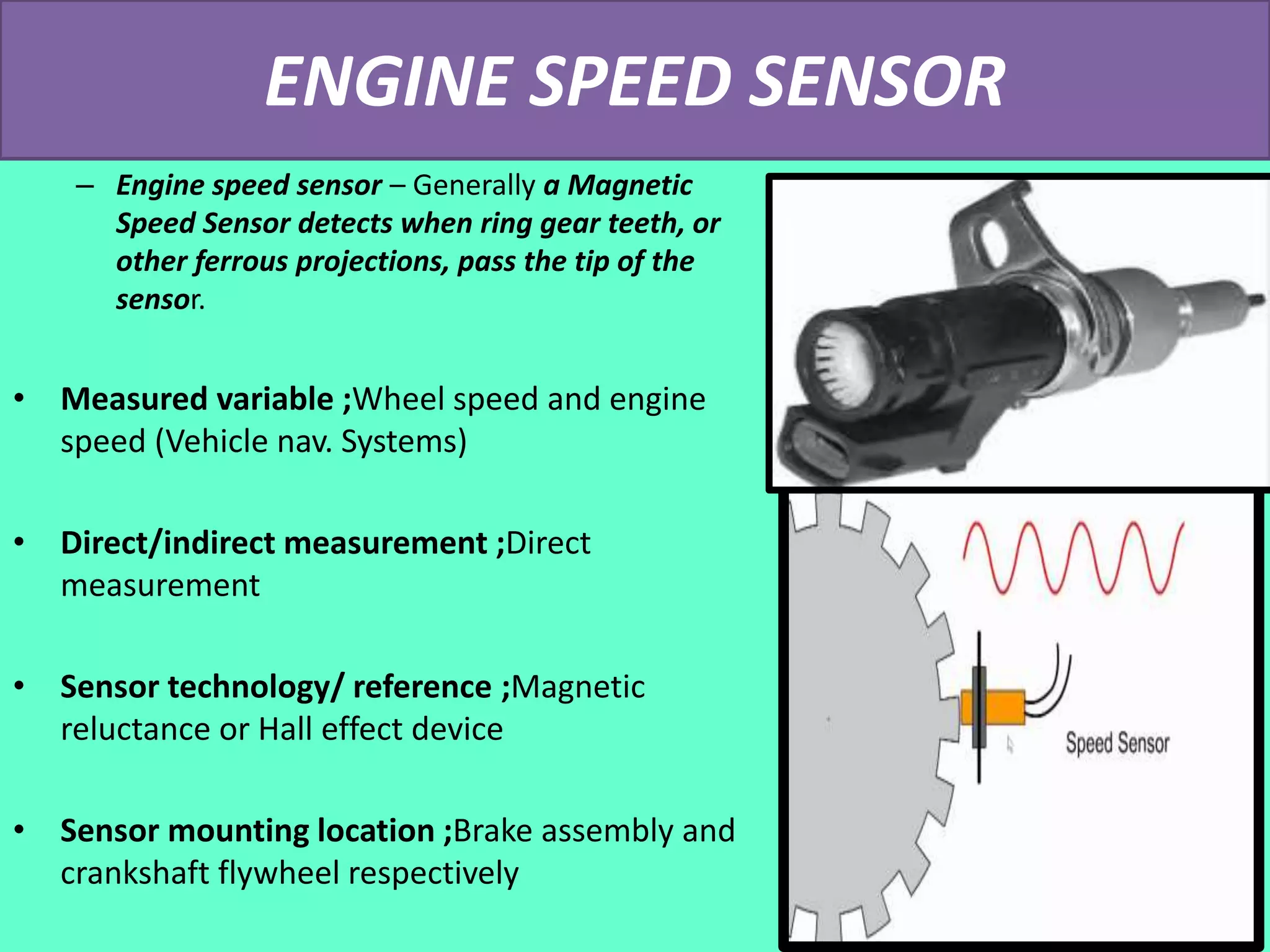
ENGINE SPEED SENSOR
– Engine speed sensor – Generally a Magnetic
Speed Sensor detects when ring gear teeth, or
other ferrous projections, pass the tip of the
sensor.
• Measured variable ;Wheel speed and engine
speed (Vehicle nav. Systems)
• Direct/indirect measurement ;Direct
measurement
• Sensor technology/ reference ;Magnetic
reluctance or Hall effect device
• Sensor mounting location ;Brake assembly and
crankshaft flywheel respectively
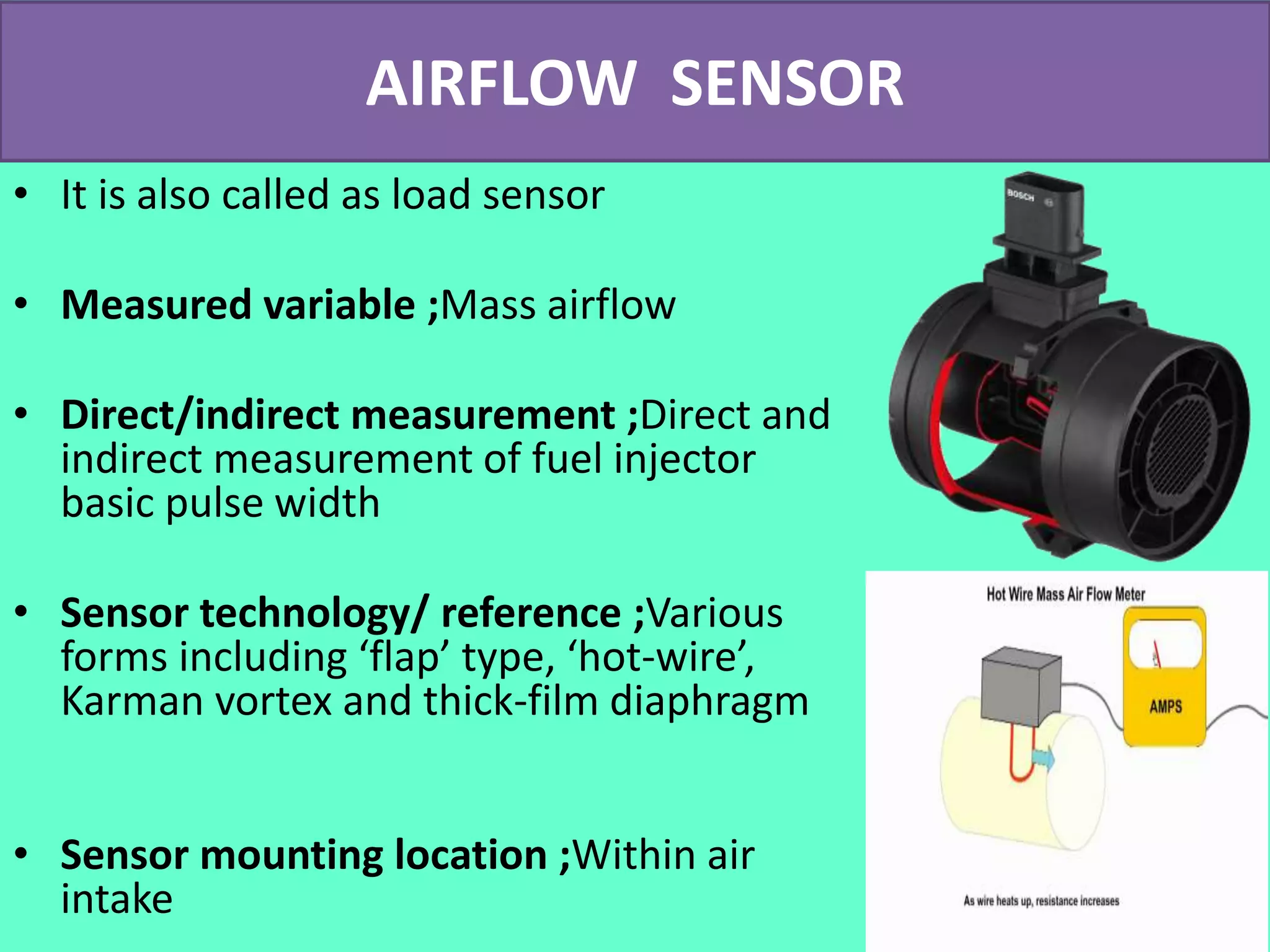
AIRFLOW SENSOR
• It is also called as load sensor
• Measured variable ;Mass airflow
• Direct/indirect measurement ;Direct and
indirect measurement of fuel injector
basic pulse width
• Sensor technology/ reference ;Various
forms including ‘flap’ type, ‘hot-wire’,
Karman vortex and thick-film diaphragm
• Sensor mounting location ;Within air
intake
TEMPARATURE SENSOR
• Measured variable ;Temperature
• Direct/indirect measurement ;Direct
measurement at various locations
Sensor technology/ reference ;
Thermistor or thermocouple depending
on temperature range
• Sensor mounting location ;Intake air,
outside air, catalytic converter, engine
coolant, hydraulic oil .
CAMLESS ENGINE
Operation of valves not
controlled by the cam shaft
but it controlled by the ECU
To control the valves solenoid
valves are used and they
controlled by the ECU at
required intervals of time
CONVENTIONAL V/S ECU
0
10
20
30
40
50
60
70
80
90
100
EMISSION FUEL ECONAMY PERFORMANCE SAFETY
CONVENTIONAL
ECU
NEW TECHNOLOGY
ECU
CAM
LESS
ENGINE
POWER
STEERING
INTER
COOLERCRDI
GDI
VVTI
SAFETY
• Humans Make Mistake
• In US alone, 400,0000 people die every
year in traffic accidents.
SAFETY UNITS
Air bag control unit (ACU): It protects the occupant in
the cars by inflating the thin nylon balloon from the
steering when automobile colloids with any object
 Body control unit (BCU) controls door locks, electric
windows, courtesy lights, etc.
 Brake Control Module (BCM) :
 Seat Control Unit
Speed control unit (SCU)
EMISSION CONTROL
• The oxygen sensor plays a critical role in
providing optimum engine performance with
minimal emissions.
• There are three basic types of oxygen sensors.
They are the:
• •Zirconia
• •Titania
• •Air Fuel
APPLICATIONS
• High-pressure pump
• common-rail
• gasoline injection systems a
• fuel injectors
• inter cooler turbo charger
• VVT-I ( Variable Valve Timing with intelligence)
• catalytic converter and sensors
CONCLUSION
• HIGH RELIABILTY AND DURABILTY WITH LOW POSSIBLE
INITIAL COST
• HIGH POWER OUTPUT AND TORQUE
• LOW LEVELS OF GASES AND PARTICULATED EMISSIONS
• LOW FUEL CONSUMPTION
• HIGH PERFORMANCE AND SAFETY
QUERIES
engine control unit (ECU)

engine control unit (ECU)

  • 1.
  • 2.
    Over view WHAT ISECU ? WHAT IS THE NEED? HOW IT WORKS? CONVENTIONAL V/S ECU ? NEW TECHNOLOGY SAFETY AND SAFETY UNITS EMISSION CONTROL APPLICATIONS CONCLUSION
  • 3.
    WHAT IS ECU ACTUATORS ECU SENSORS It‘s also called electric control module ECM (OR) power control module(PCM)
  • 4.
    Engine Control Unit(ECU)  An ECU is an embedded system that controls/monitors systems in a car. Modern vehicles have up to 75+ ECUs.
  • 5.
    It uses the32 bit processor ENIGNE CONTROL UNIT MICRO PROCESSESSOR The cars “computer” is not one system but a large number of small subsystems connected together by a network to the processor
  • 6.
    WHAT IS THENEED OF ECU ? ECU PERFORMANCE OF ENGINE INCREASES EMISSION CONTROLSAFETY
  • 7.
    HOW ECU WORKS? SENSOR ECU ACTUATORS
  • 8.
    PERFORMANCE OF ENGINE Toincrease the performance o f engine 1)Fuel injection 2)Knocking 3)Air-Flow sensor 4)Engine speed 5)Cam 6)Thermistor etc.., Sensors :
  • 9.
    FUEL INJECTOR SENSOR Afuel injector is nothing but an electronically controlled valve. Indirectly controlled variable : Air-fuel ratio Directly controlled variable : Exhaust oxygen content Manipulated variable : Quality of injection fuel SENSOR: Zirconia or Titania based electro- chemical
  • 10.
    KNOCKING SENSOR • Indirectlycontrolled variable ;Knock • Directly controlled variable; Knock sensor output • Manipulated variable ;Ignition timing • Sensor ;Piezo-electric accelerometer • Actuator ;Ignition coil switch. Transistor • Sensor mounting location ;Cylinder block or head
  • 11.
    ENGINE SPEED SENSOR –Engine speed sensor – Generally a Magnetic Speed Sensor detects when ring gear teeth, or other ferrous projections, pass the tip of the sensor. • Measured variable ;Wheel speed and engine speed (Vehicle nav. Systems) • Direct/indirect measurement ;Direct measurement • Sensor technology/ reference ;Magnetic reluctance or Hall effect device • Sensor mounting location ;Brake assembly and crankshaft flywheel respectively
  • 12.
    AIRFLOW SENSOR • Itis also called as load sensor • Measured variable ;Mass airflow • Direct/indirect measurement ;Direct and indirect measurement of fuel injector basic pulse width • Sensor technology/ reference ;Various forms including ‘flap’ type, ‘hot-wire’, Karman vortex and thick-film diaphragm • Sensor mounting location ;Within air intake
  • 13.
    TEMPARATURE SENSOR • Measuredvariable ;Temperature • Direct/indirect measurement ;Direct measurement at various locations Sensor technology/ reference ; Thermistor or thermocouple depending on temperature range • Sensor mounting location ;Intake air, outside air, catalytic converter, engine coolant, hydraulic oil .
  • 14.
    CAMLESS ENGINE Operation ofvalves not controlled by the cam shaft but it controlled by the ECU To control the valves solenoid valves are used and they controlled by the ECU at required intervals of time
  • 15.
    CONVENTIONAL V/S ECU 0 10 20 30 40 50 60 70 80 90 100 EMISSIONFUEL ECONAMY PERFORMANCE SAFETY CONVENTIONAL ECU
  • 16.
  • 17.
    SAFETY • Humans MakeMistake • In US alone, 400,0000 people die every year in traffic accidents.
  • 18.
    SAFETY UNITS Air bagcontrol unit (ACU): It protects the occupant in the cars by inflating the thin nylon balloon from the steering when automobile colloids with any object  Body control unit (BCU) controls door locks, electric windows, courtesy lights, etc.  Brake Control Module (BCM) :  Seat Control Unit Speed control unit (SCU)
  • 19.
    EMISSION CONTROL • Theoxygen sensor plays a critical role in providing optimum engine performance with minimal emissions. • There are three basic types of oxygen sensors. They are the: • •Zirconia • •Titania • •Air Fuel
  • 20.
    APPLICATIONS • High-pressure pump •common-rail • gasoline injection systems a • fuel injectors • inter cooler turbo charger • VVT-I ( Variable Valve Timing with intelligence) • catalytic converter and sensors
  • 21.
    CONCLUSION • HIGH RELIABILTYAND DURABILTY WITH LOW POSSIBLE INITIAL COST • HIGH POWER OUTPUT AND TORQUE • LOW LEVELS OF GASES AND PARTICULATED EMISSIONS • LOW FUEL CONSUMPTION • HIGH PERFORMANCE AND SAFETY
  • 22.