Reference:
https://owl.purdue.edu/owl/g
eneral_writing/mechanics/tra
nsitions_and_transitional_dev
ices/transitional_devices.html
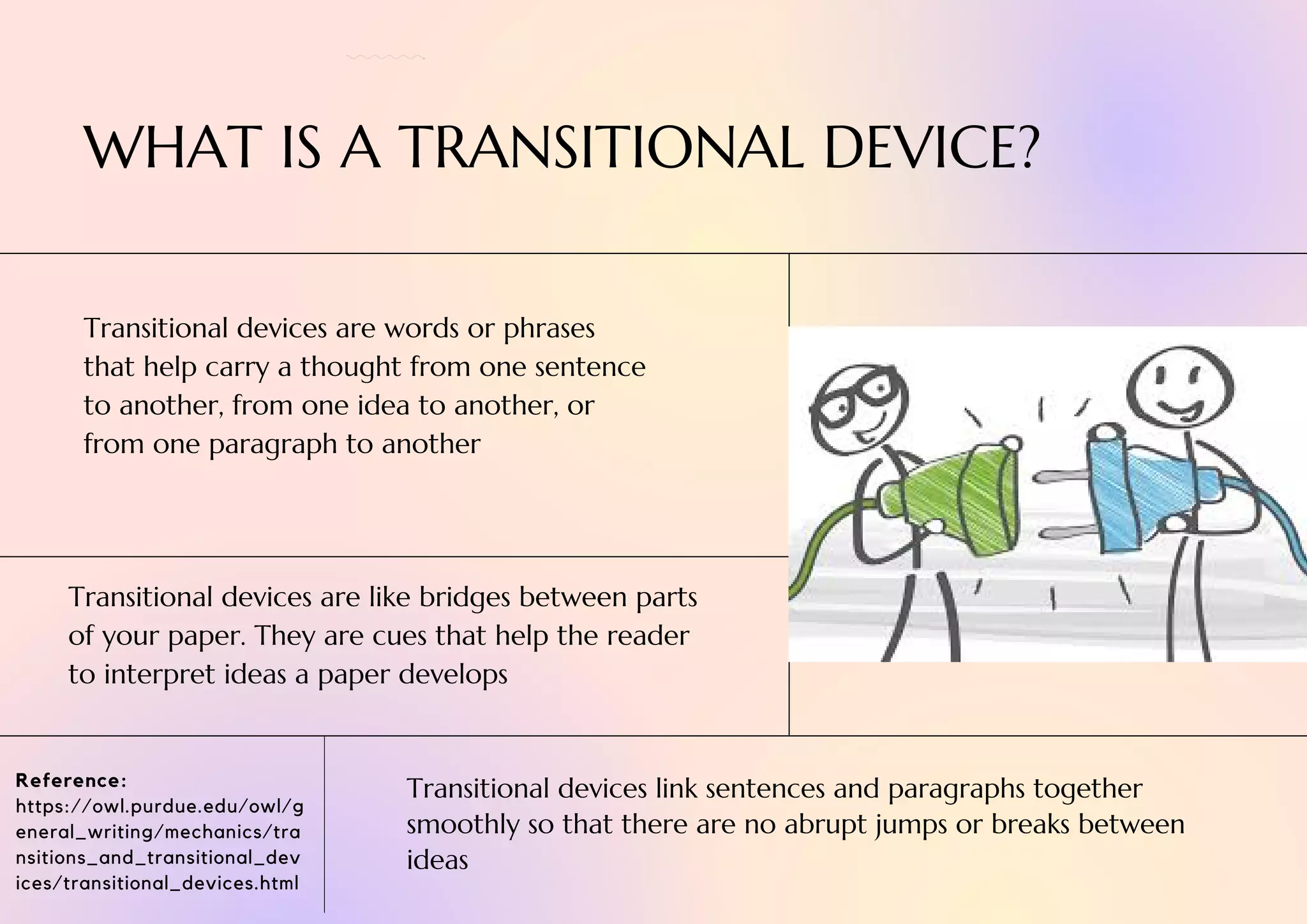
Transitional devices link sentences and paragraphs together
smoothly so that there are no abrupt jumps or breaks between
ideas
Transitional devices are words or phrases
that help carry a thought from one sentence
to another, from one idea to another, or
from one paragraph to another
Transitional devices are like bridges between parts
of your paper. They are cues that help the reader
to interpret ideas a paper develops
WHAT IS A TRANSITIONAL DEVICE?
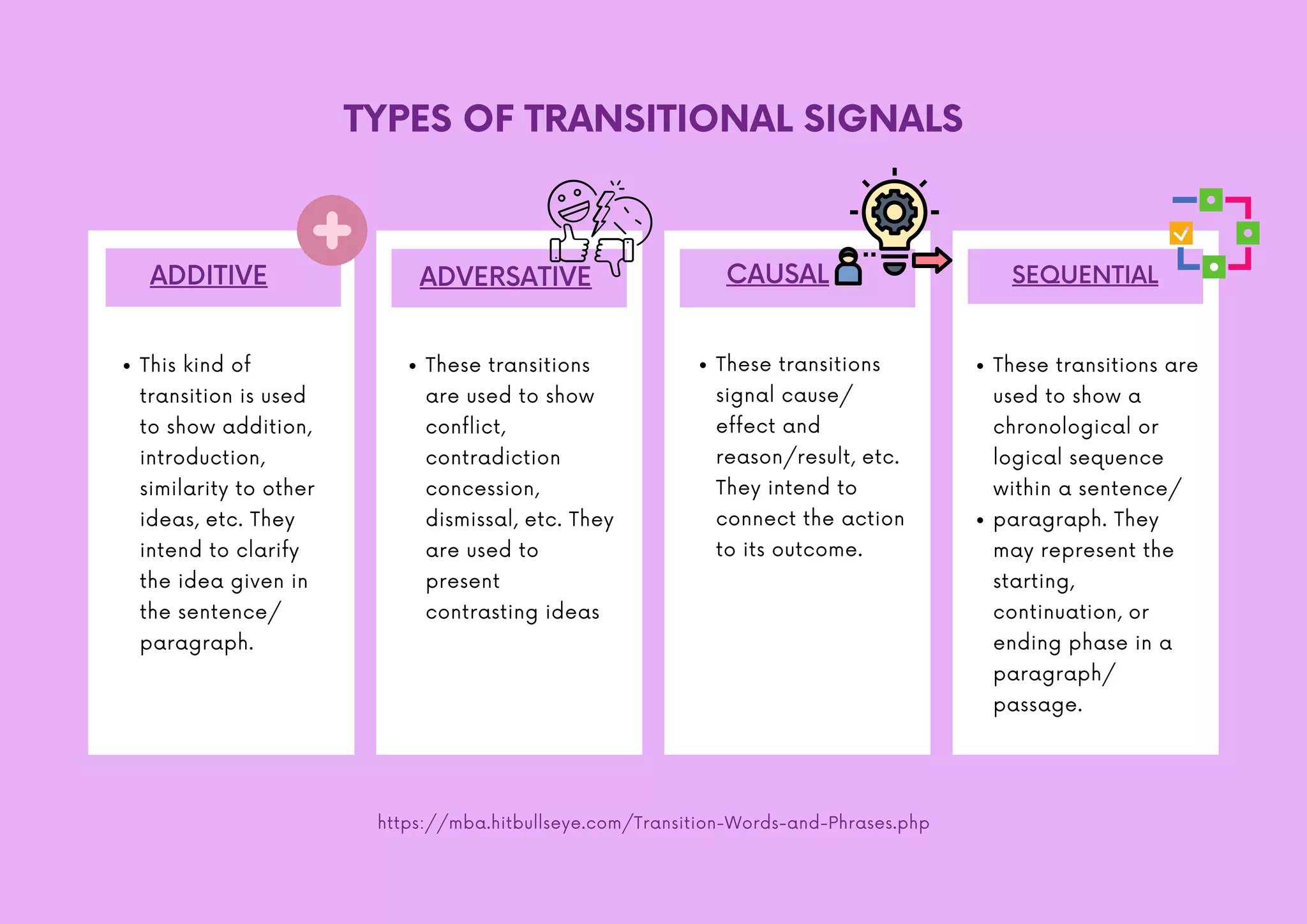
ADVERSATIVE CAUSAL
TYPES OF TRANSITIONAL SIGNALS
This kind of
transition is used
to show addition,
introduction,
similarity to other
ideas, etc. They
intend to clarify
the idea given in
the sentence/
paragraph.
ADDITIVE
These transitions
are used to show
conflict,
contradiction
concession,
dismissal, etc. They
are used to
present
contrasting ideas
These transitions
signal cause/
effect and
reason/result, etc.
They intend to
connect the action
to its outcome.
These transitions are
used to show a
chronological or
logical sequence
within a sentence/
paragraph. They
may represent the
starting,
continuation, or
ending phase in a
paragraph/
passage.
https://mba.hitbullseye.com/Transition-Words-and-Phrases.php
SEQUENTIAL
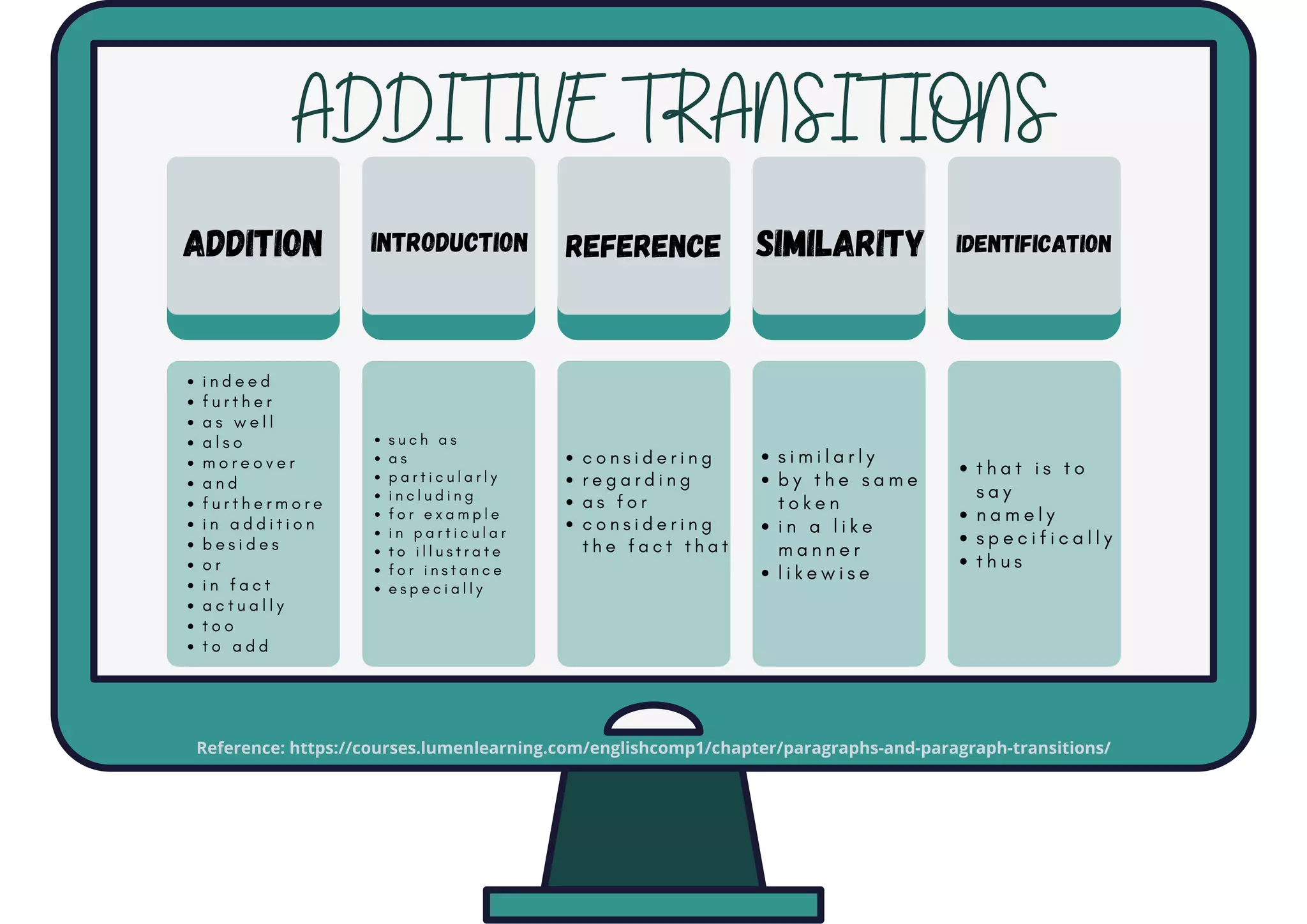
i n d e e d
f u r t h e r
a s w e l l
a l s o
m o r e o v e r
a n d
f u r t h e r m o r e
i n a d d i t i o n
b e s i d e s
o r
i n f a c t
a c t u a l l y
t o o
t o a d d
s u c h a s
a s
p a r t i c u l a r l y
i n c l u d i n g
f o r e x a m p l e
i n p a r t i c u l a r
t o i l l u s t r a t e
f o r i n s t a n c e
e s p e c i a l l y
c o n s i d e r i n g
r e g a r d i n g
a s f o r
c o n s i d e r i n g
t h e f a c t t h a t
s i m i l a r l y
b y t h e s a m e
t o k e n
i n a l i k e
m a n n e r
l i k e w i s e
t h a t i s t o
s a y
n a m e l y
s p e c i f i c a l l y
t h u s
ADDITIVE TRANSITIONS
ADDITION INTRODUCTION REFERENCE SIMILARITY IDENTIFICATION
Reference: https://courses.lumenlearning.com/englishcomp1/chapter/paragraphs-and-paragraph-transitions/
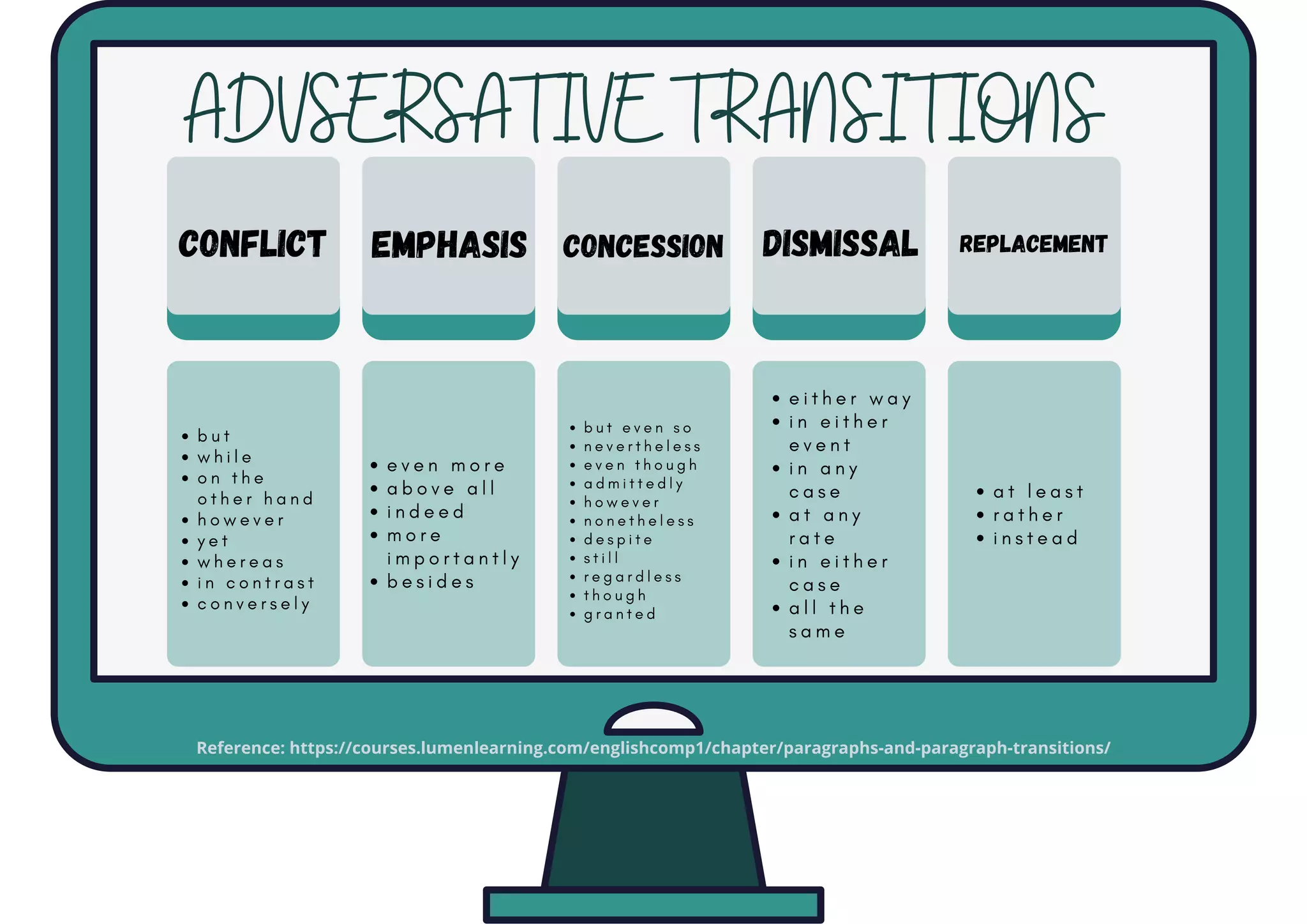
b u t
w h i l e
o n t h e
o t h e r h a n d
h o w e v e r
y e t
w h e r e a s
i n c o n t r a s t
c o n v e r s e l y
e v e n m o r e
a b o v e a l l
i n d e e d
m o r e
i m p o r t a n t l y
b e s i d e s
b u t e v e n s o
n e v e r t h e l e s s
e v e n t h o u g h
a d m i t t e d l y
h o w e v e r
n o n e t h e l e s s
d e s p i t e
s t i l l
r e g a r d l e s s
t h o u g h
g r a n t e d
e i t h e r w a y
i n e i t h e r
e v e n t
i n a n y
c a s e
a t a n y
r a t e
i n e i t h e r
c a s e
a l l t h e
s a m e
a t l e a s t
r a t h e r
i n s t e a d
ADVSERSATIVE TRANSITIONS
CONFLICT EMPHASIS CONCESSION DISMISSAL REPLACEMENT
Reference: https://courses.lumenlearning.com/englishcomp1/chapter/paragraphs-and-paragraph-transitions/
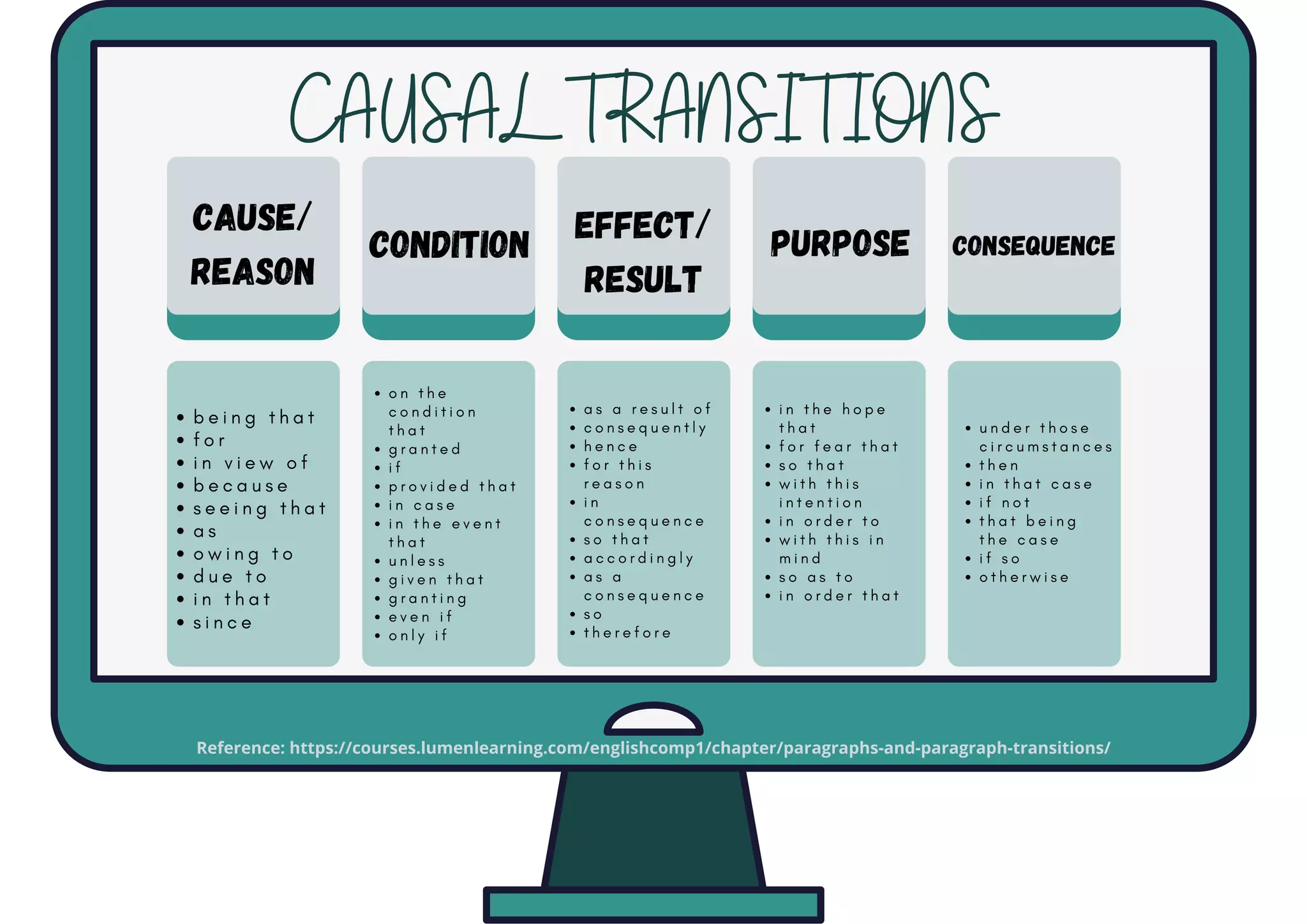
b e i n g t h a t
f o r
i n v i e w o f
b e c a u s e
s e e i n g t h a t
a s
o w i n g t o
d u e t o
i n t h a t
s i n c e
o n t h e
c o n d i t i o n
t h a t
g r a n t e d
i f
p r o v i d e d t h a t
i n c a s e
i n t h e e v e n t
t h a t
u n l e s s
g i v e n t h a t
g r a n t i n g
e v e n i f
o n l y i f
a s a r e s u l t o f
c o n s e q u e n t l y
h e n c e
f o r t h i s
r e a s o n
i n
c o n s e q u e n c e
s o t h a t
a c c o r d i n g l y
a s a
c o n s e q u e n c e
s o
t h e r e f o r e
i n t h e h o p e
t h a t
f o r f e a r t h a t
s o t h a t
w i t h t h i s
i n t e n t i o n
i n o r d e r t o
w i t h t h i s i n
m i n d
s o a s t o
i n o r d e r t h a t
u n d e r t h o s e
c i r c u m s t a n c e s
t h e n
i n t h a t c a s e
i f n o t
t h a t b e i n g
t h e c a s e
i f s o
o t h e r w i s e
CAUSAL TRANSITIONS
CAUSE/
REASON
CONDITION EFFECT/
RESULT
PURPOSE CONSEQUENCE
Reference: https://courses.lumenlearning.com/englishcomp1/chapter/paragraphs-and-paragraph-transitions/
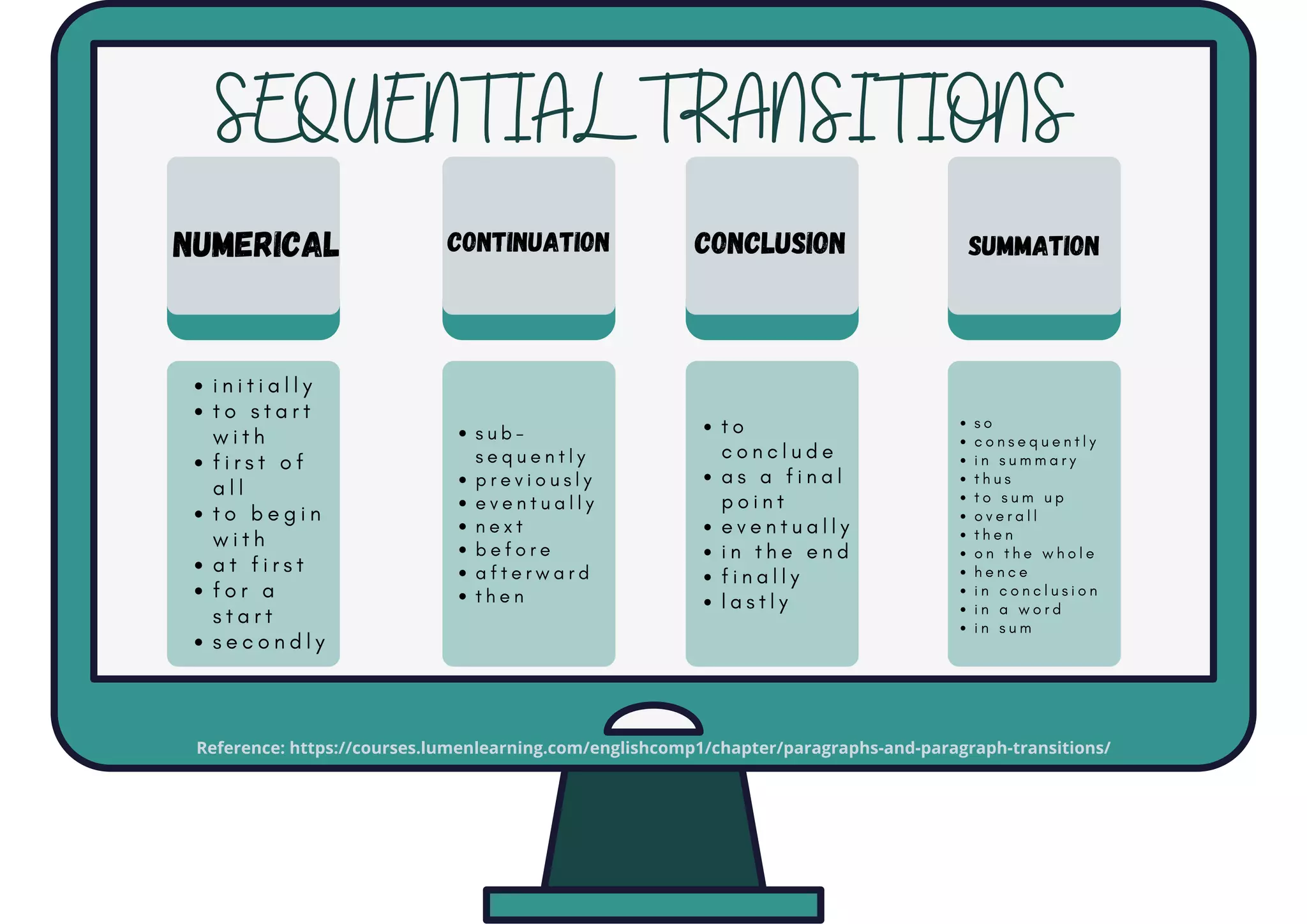
i n i t i a l l y
t o s t a r t
w i t h
f i r s t o f
a l l
t o b e g i n
w i t h
a t f i r s t
f o r a
s t a r t
s e c o n d l y
s u b -
s e q u e n t l y
p r e v i o u s l y
e v e n t u a l l y
n e x t
b e f o r e
a f t e r w a r d
t h e n
t o
c o n c l u d e
a s a f i n a l
p o i n t
e v e n t u a l l y
i n t h e e n d
f i n a l l y
l a s t l y
s o
c o n s e q u e n t l y
i n s u m m a r y
t h u s
t o s u m u p
o v e r a l l
t h e n
o n t h e w h o l e
h e n c e
i n c o n c l u s i o n
i n a w o r d
i n s u m
SEQUENTIAL TRANSITIONS
NUMERICAL Continuation Conclusion SUMMATION
Reference: https://courses.lumenlearning.com/englishcomp1/chapter/paragraphs-and-paragraph-transitions/

Transitional devices

  • 1.
    Reference: https://owl.purdue.edu/owl/g eneral_writing/mechanics/tra nsitions_and_transitional_dev ices/transitional_devices.html Transitional devices linksentences and paragraphs together smoothly so that there are no abrupt jumps or breaks between ideas Transitional devices are words or phrases that help carry a thought from one sentence to another, from one idea to another, or from one paragraph to another Transitional devices are like bridges between parts of your paper. They are cues that help the reader to interpret ideas a paper develops WHAT IS A TRANSITIONAL DEVICE?
  • 2.
    ADVERSATIVE CAUSAL TYPES OFTRANSITIONAL SIGNALS This kind of transition is used to show addition, introduction, similarity to other ideas, etc. They intend to clarify the idea given in the sentence/ paragraph. ADDITIVE These transitions are used to show conflict, contradiction concession, dismissal, etc. They are used to present contrasting ideas These transitions signal cause/ effect and reason/result, etc. They intend to connect the action to its outcome. These transitions are used to show a chronological or logical sequence within a sentence/ paragraph. They may represent the starting, continuation, or ending phase in a paragraph/ passage. https://mba.hitbullseye.com/Transition-Words-and-Phrases.php SEQUENTIAL
  • 3.
    i n de e d f u r t h e r a s w e l l a l s o m o r e o v e r a n d f u r t h e r m o r e i n a d d i t i o n b e s i d e s o r i n f a c t a c t u a l l y t o o t o a d d s u c h a s a s p a r t i c u l a r l y i n c l u d i n g f o r e x a m p l e i n p a r t i c u l a r t o i l l u s t r a t e f o r i n s t a n c e e s p e c i a l l y c o n s i d e r i n g r e g a r d i n g a s f o r c o n s i d e r i n g t h e f a c t t h a t s i m i l a r l y b y t h e s a m e t o k e n i n a l i k e m a n n e r l i k e w i s e t h a t i s t o s a y n a m e l y s p e c i f i c a l l y t h u s ADDITIVE TRANSITIONS ADDITION INTRODUCTION REFERENCE SIMILARITY IDENTIFICATION Reference: https://courses.lumenlearning.com/englishcomp1/chapter/paragraphs-and-paragraph-transitions/
  • 4.
    b u t wh i l e o n t h e o t h e r h a n d h o w e v e r y e t w h e r e a s i n c o n t r a s t c o n v e r s e l y e v e n m o r e a b o v e a l l i n d e e d m o r e i m p o r t a n t l y b e s i d e s b u t e v e n s o n e v e r t h e l e s s e v e n t h o u g h a d m i t t e d l y h o w e v e r n o n e t h e l e s s d e s p i t e s t i l l r e g a r d l e s s t h o u g h g r a n t e d e i t h e r w a y i n e i t h e r e v e n t i n a n y c a s e a t a n y r a t e i n e i t h e r c a s e a l l t h e s a m e a t l e a s t r a t h e r i n s t e a d ADVSERSATIVE TRANSITIONS CONFLICT EMPHASIS CONCESSION DISMISSAL REPLACEMENT Reference: https://courses.lumenlearning.com/englishcomp1/chapter/paragraphs-and-paragraph-transitions/
  • 5.
    b e in g t h a t f o r i n v i e w o f b e c a u s e s e e i n g t h a t a s o w i n g t o d u e t o i n t h a t s i n c e o n t h e c o n d i t i o n t h a t g r a n t e d i f p r o v i d e d t h a t i n c a s e i n t h e e v e n t t h a t u n l e s s g i v e n t h a t g r a n t i n g e v e n i f o n l y i f a s a r e s u l t o f c o n s e q u e n t l y h e n c e f o r t h i s r e a s o n i n c o n s e q u e n c e s o t h a t a c c o r d i n g l y a s a c o n s e q u e n c e s o t h e r e f o r e i n t h e h o p e t h a t f o r f e a r t h a t s o t h a t w i t h t h i s i n t e n t i o n i n o r d e r t o w i t h t h i s i n m i n d s o a s t o i n o r d e r t h a t u n d e r t h o s e c i r c u m s t a n c e s t h e n i n t h a t c a s e i f n o t t h a t b e i n g t h e c a s e i f s o o t h e r w i s e CAUSAL TRANSITIONS CAUSE/ REASON CONDITION EFFECT/ RESULT PURPOSE CONSEQUENCE Reference: https://courses.lumenlearning.com/englishcomp1/chapter/paragraphs-and-paragraph-transitions/
  • 6.
    i n it i a l l y t o s t a r t w i t h f i r s t o f a l l t o b e g i n w i t h a t f i r s t f o r a s t a r t s e c o n d l y s u b - s e q u e n t l y p r e v i o u s l y e v e n t u a l l y n e x t b e f o r e a f t e r w a r d t h e n t o c o n c l u d e a s a f i n a l p o i n t e v e n t u a l l y i n t h e e n d f i n a l l y l a s t l y s o c o n s e q u e n t l y i n s u m m a r y t h u s t o s u m u p o v e r a l l t h e n o n t h e w h o l e h e n c e i n c o n c l u s i o n i n a w o r d i n s u m SEQUENTIAL TRANSITIONS NUMERICAL Continuation Conclusion SUMMATION Reference: https://courses.lumenlearning.com/englishcomp1/chapter/paragraphs-and-paragraph-transitions/