Wound Dressings
Dr. Joel Arudchelvam
Consultant Vascular and Transplant Surgeon
Wound dressings
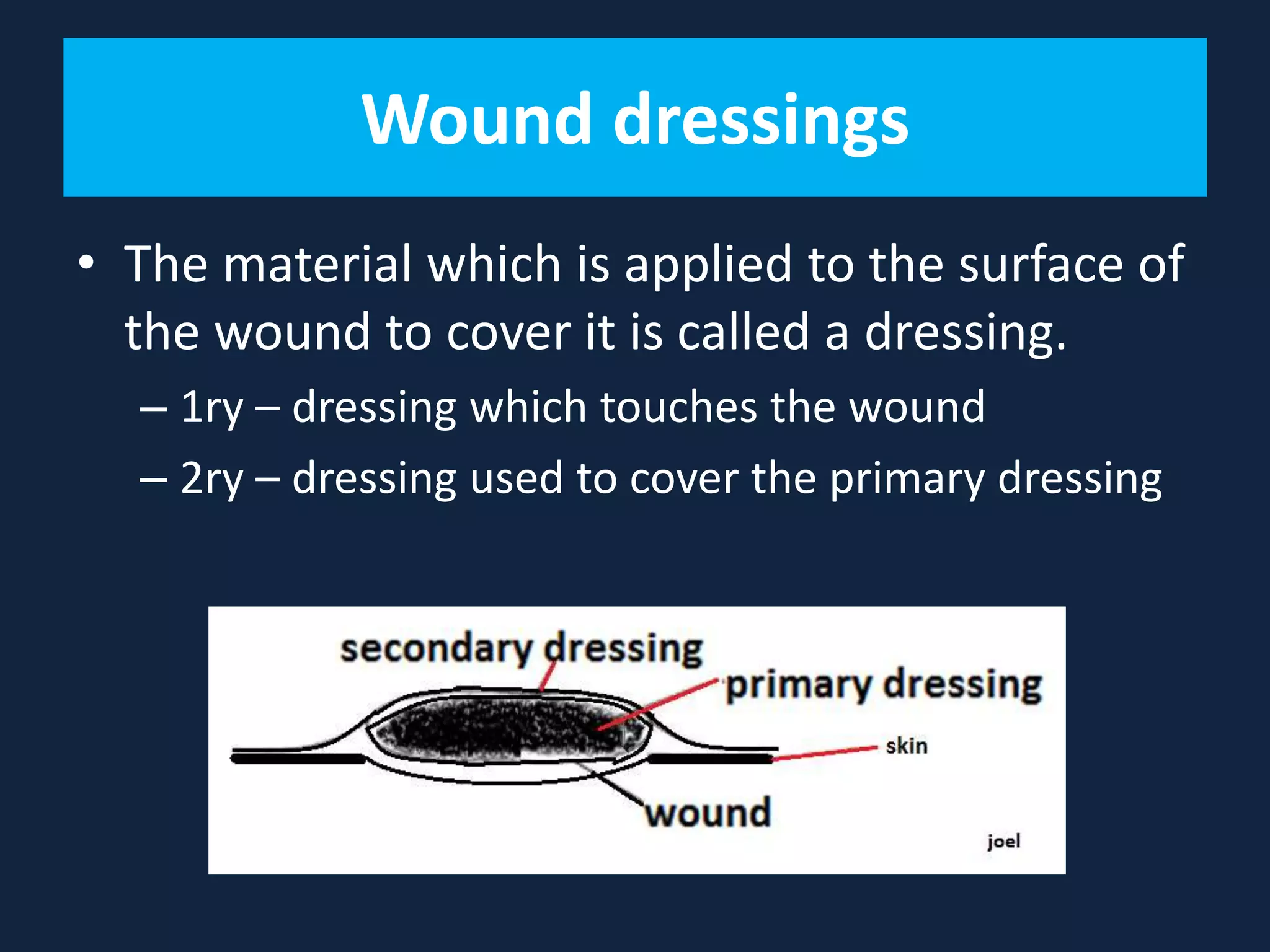
• The material which is applied to the surface of
the wound to cover it is called a dressing.
– 1ry – dressing which touches the wound
– 2ry – dressing used to cover the primary dressing
Ideal wound dressing
Dressings are applied to wounds for the following reasons;
• To provide a protective cover
• To maintain moisture
• To reduce pain
• To absorb exudates
In addition an ideal dressing have the following features;
• does not induce pain or itching
• easy to change
• Allows gaseous exchange
• Cheap
• Freely available
Types of Wound Dressings
• Gauze dressings
• Tulle
• Hydrocolloid dressings
• Hydrogel dressings
• Alginate dressings
• Foam dressings
• Transparent film dressings
• Etc.
Gauze
• Cheap
• Freely available
• Dry
• Painful on removing
• Damages epithelium
Tulle
• Cheap
• Freely available
• Easy removal
– E.g : Vaseline
Hydrocolloid Dressings
• Made up of pectin based material
• Absorb exudate
• Occlusive – should not be used on infected
wounds
• Come in various shapes and sizes
Hydrogel Dressings
Hydrogel Dressings
• Made up of primarily water in a polymer to maintain
moist wound base
• used in dry wounds
• Should not be used in exudating wounds
Alginate Dressings
Alginate Dressings
• Made up of seaweed
• Absorb moderate amounts of drainage
• becomes a gel when it comes into contact with
wound fluid through Calcium/Sodium ion
exchange
Foam Dressings
Foam Dressings
• Made up of polyurethane foam
• Absorbs moderate to large amounts of fluid
• Available in various sizes and shapes
• Some types my macerate peri wound skin if it
allows drainage laterally
Silver Dressings
• Antimicrobial to reduce bio burden of wound
through slow release of silver ion into the
wound
• e.g. Acticoat, Biatin Ag, Atruman Ag
Vacuum assisted closure VAC
• Macrostrain - visible stretch that occurs when negative pressure
contracts the foam.
– Draws wound edges together
– Provides direct and complete wound bed contact
– Evenly distributes negative pressure
– Removes exudate and infectious materials
• Microstrain - micro deformation at the cellular level
– Reduces edema
– Promotes granulation tissue formation by facilitating cell migration
and proliferation
Vacuum assisted closure VAC
• Indications for use
– Large wounds
– Cavities
– Large amount of exudate
Summary
Wound type Dressing
Dry Hydrocolloid, Hydrogel
Exudating wound Hydrocolloid, foam
Slough Hydrocolloid, hydrogels
Dead space / cavity Alginate, foam
When to change dressings
• When there is an indication to change
– Soaking
– Pain
– Need to inspect
• Discuss with doctor before changing
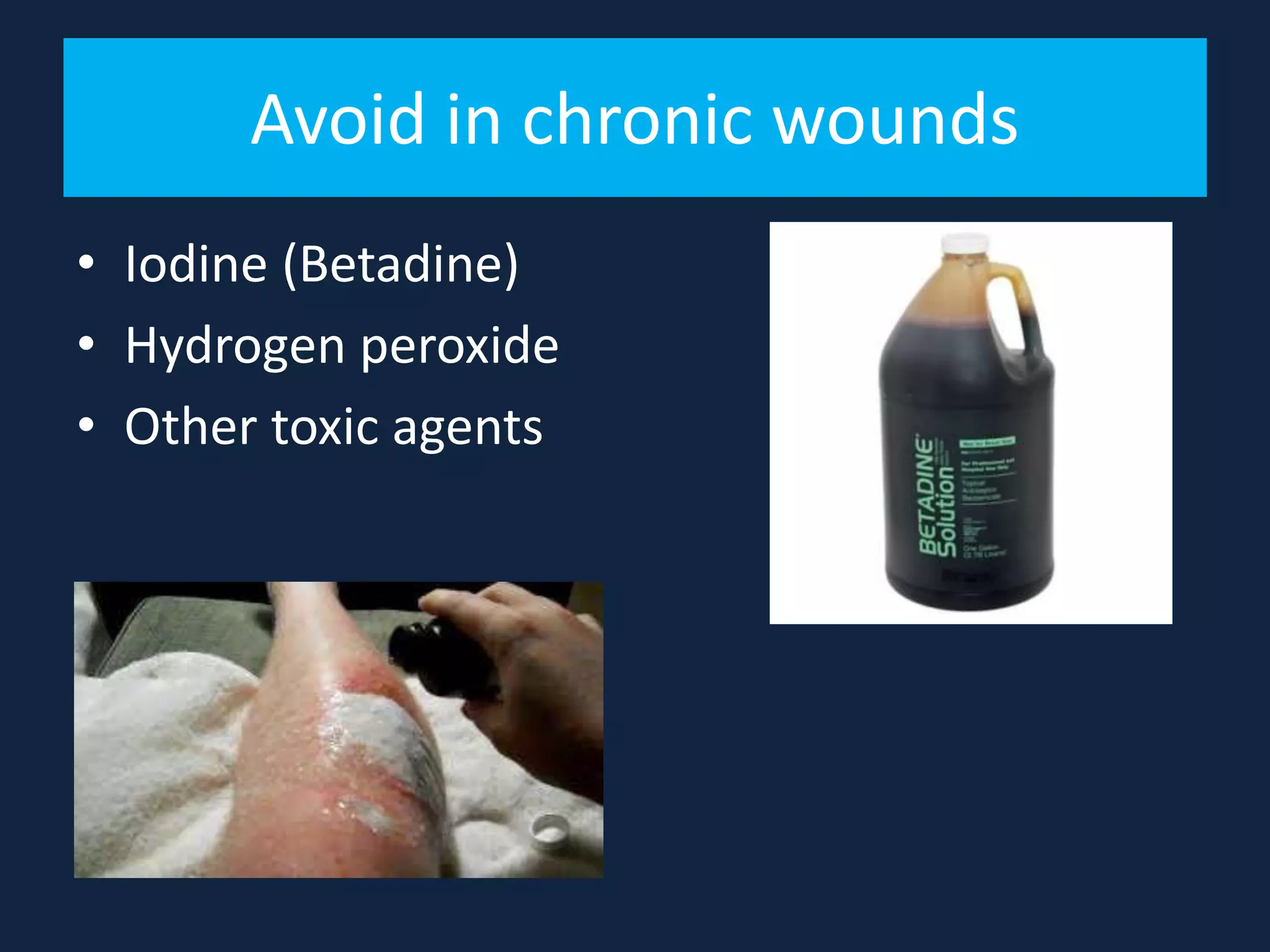
Avoid in chronic wounds
• Iodine (Betadine)
• Hydrogen peroxide
• Other toxic agents
Avoid
• Do not tie gauze bandage
tightly around limbs, digits
– causes ischaemia
• Use – plaster , crepe
instead
Thank You

Wound care for nurses

  • 1.
    Wound Dressings Dr. JoelArudchelvam Consultant Vascular and Transplant Surgeon
  • 2.
    Wound dressings • Thematerial which is applied to the surface of the wound to cover it is called a dressing. – 1ry – dressing which touches the wound – 2ry – dressing used to cover the primary dressing
  • 3.
    Ideal wound dressing Dressingsare applied to wounds for the following reasons; • To provide a protective cover • To maintain moisture • To reduce pain • To absorb exudates In addition an ideal dressing have the following features; • does not induce pain or itching • easy to change • Allows gaseous exchange • Cheap • Freely available
  • 4.
    Types of WoundDressings • Gauze dressings • Tulle • Hydrocolloid dressings • Hydrogel dressings • Alginate dressings • Foam dressings • Transparent film dressings • Etc.
  • 5.
    Gauze • Cheap • Freelyavailable • Dry • Painful on removing • Damages epithelium
  • 6.
    Tulle • Cheap • Freelyavailable • Easy removal – E.g : Vaseline
  • 7.
  • 8.
    Hydrocolloid Dressings • Madeup of pectin based material • Absorb exudate • Occlusive – should not be used on infected wounds • Come in various shapes and sizes
  • 9.
  • 10.
    Hydrogel Dressings • Madeup of primarily water in a polymer to maintain moist wound base • used in dry wounds • Should not be used in exudating wounds
  • 11.
  • 12.
    Alginate Dressings • Madeup of seaweed • Absorb moderate amounts of drainage • becomes a gel when it comes into contact with wound fluid through Calcium/Sodium ion exchange
  • 13.
  • 14.
    Foam Dressings • Madeup of polyurethane foam • Absorbs moderate to large amounts of fluid • Available in various sizes and shapes • Some types my macerate peri wound skin if it allows drainage laterally
  • 15.
    Silver Dressings • Antimicrobialto reduce bio burden of wound through slow release of silver ion into the wound • e.g. Acticoat, Biatin Ag, Atruman Ag
  • 16.
  • 17.
  • 18.
    Vacuum assisted closureVAC • Macrostrain - visible stretch that occurs when negative pressure contracts the foam. – Draws wound edges together – Provides direct and complete wound bed contact – Evenly distributes negative pressure – Removes exudate and infectious materials • Microstrain - micro deformation at the cellular level – Reduces edema – Promotes granulation tissue formation by facilitating cell migration and proliferation
  • 19.
    Vacuum assisted closureVAC • Indications for use – Large wounds – Cavities – Large amount of exudate
  • 20.
    Summary Wound type Dressing DryHydrocolloid, Hydrogel Exudating wound Hydrocolloid, foam Slough Hydrocolloid, hydrogels Dead space / cavity Alginate, foam
  • 21.
    When to changedressings • When there is an indication to change – Soaking – Pain – Need to inspect • Discuss with doctor before changing
  • 22.
    Avoid in chronicwounds • Iodine (Betadine) • Hydrogen peroxide • Other toxic agents
  • 23.
    Avoid • Do nottie gauze bandage tightly around limbs, digits – causes ischaemia • Use – plaster , crepe instead
  • 24.