By: Rosales Eldwin Fritz D.
Sicsic Justyn Wayne M.
Introduction to the SAE-AISI
Designation System
Objectives:
 To be able to know the specification numbers of
both SAE/AISI materials.
 To familiarize at least a couple of metal
specification numbers regarding SAE-AISI
materials.
AISI AND SAE SPECIFICATION
NUMBERS
There are numerous “standard” materials
specifications. Many large consuming
organizations and nearly all producers have some
standards of their own. The armed forces have
numerous ones.
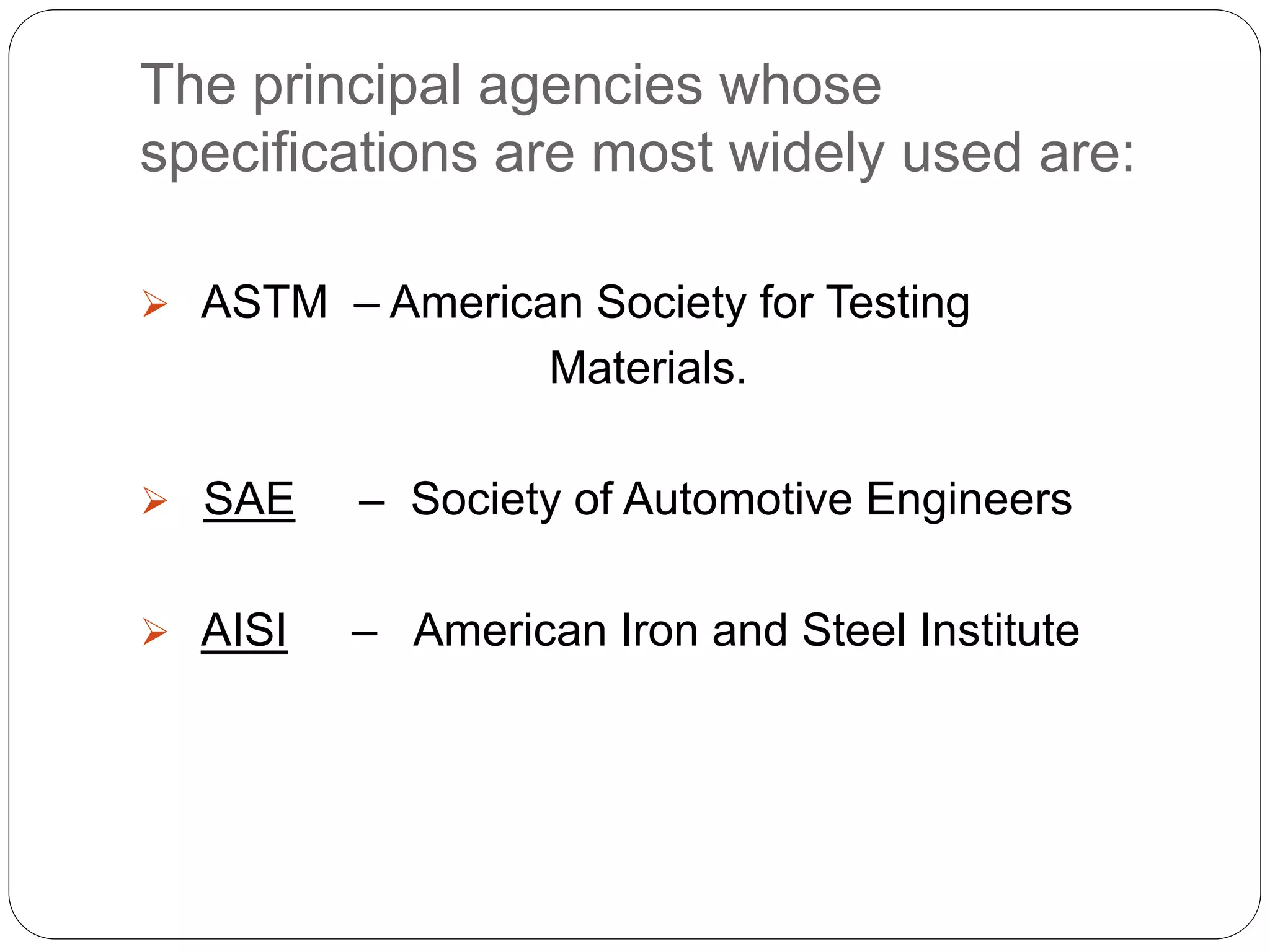
The principal agencies whose
specifications are most widely used are:
 ASTM – American Society for Testing
Materials.
 SAE – Society of Automotive Engineers
 AISI – American Iron and Steel Institute
Difference between AISI/SAE:
SAE and AISI specification numbers are alike in
terms of steels except:
 The AISI uses prefixes B,C,D, and E to indicate
the method of manufacturing the carbon grades.
In general way for steel, the first digit (or the first
two digit) of the number represents the type of
steel. The last two digits in four-digit numbers
invariably give the approximate or average
carbon content in “points” or hundredths of
percent.
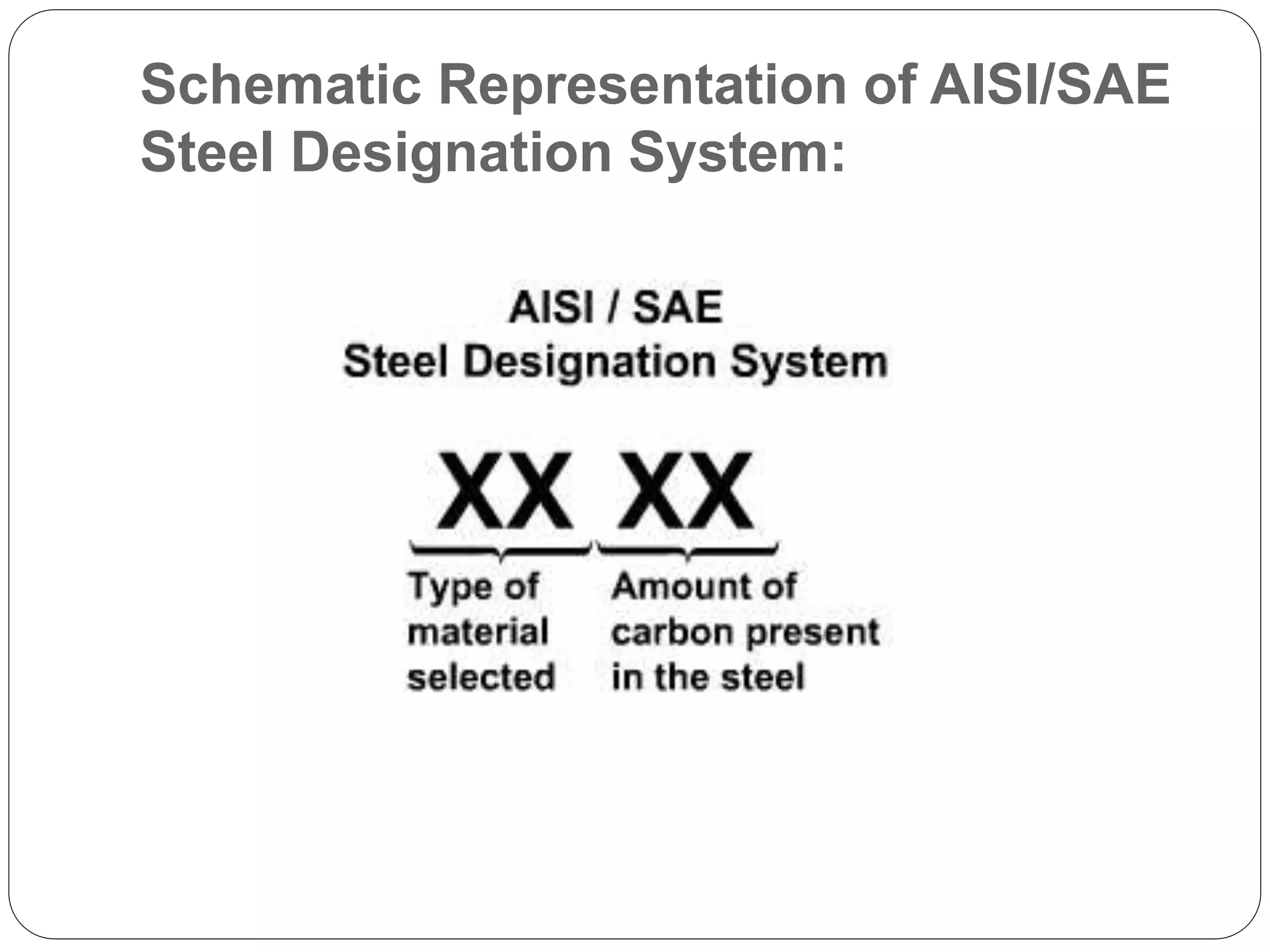
Schematic Representation of AISI/SAE
Steel Designation System:
The said figure demonstrates that the SAE-AISI
system uses a four-digit number to designate a
carbon and alloy steel and refers to its specific
chemical composition. However, that there are also
certain types of alloy steels that are designated by
five digits ( 51XXX; 52XXX).
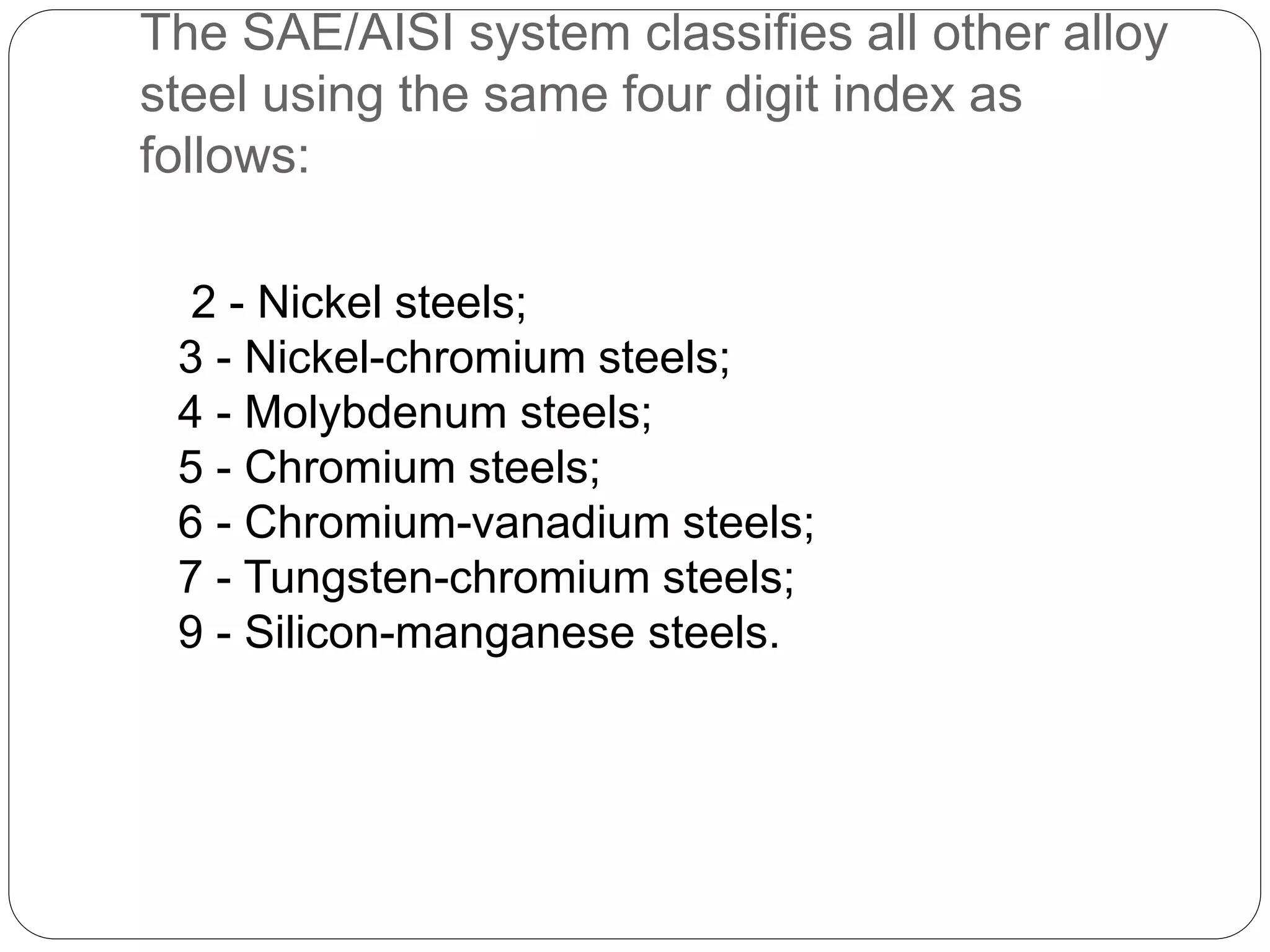
The SAE/AISI system classifies all other alloy
steel using the same four digit index as
follows:
2 - Nickel steels;
3 - Nickel-chromium steels;
4 - Molybdenum steels;
5 - Chromium steels;
6 - Chromium-vanadium steels;
7 - Tungsten-chromium steels;
9 - Silicon-manganese steels.
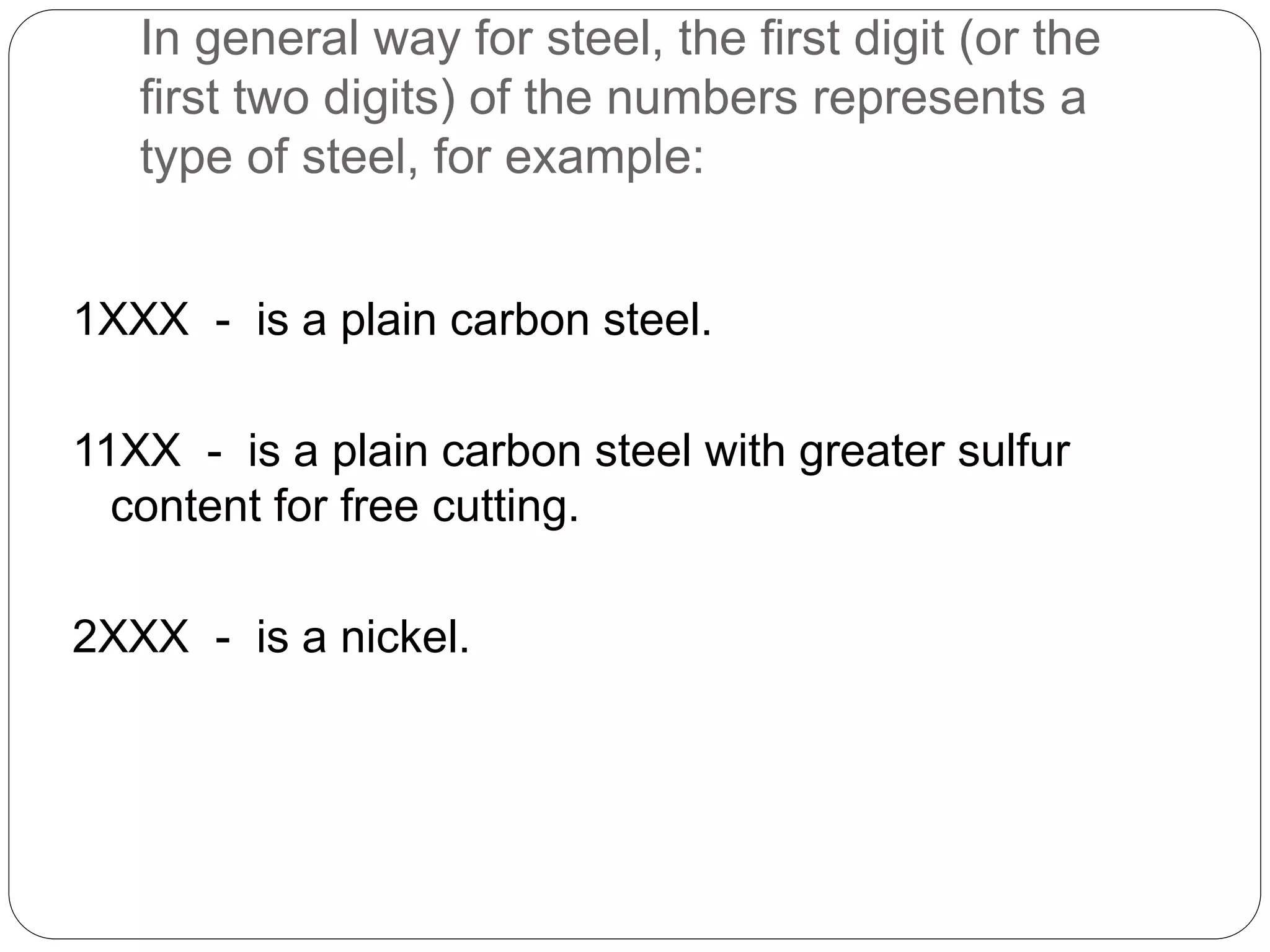
In general way for steel, the first digit (or the
first two digits) of the numbers represents a
type of steel, for example:
1XXX - is a plain carbon steel.
11XX - is a plain carbon steel with greater sulfur
content for free cutting.
2XXX - is a nickel.
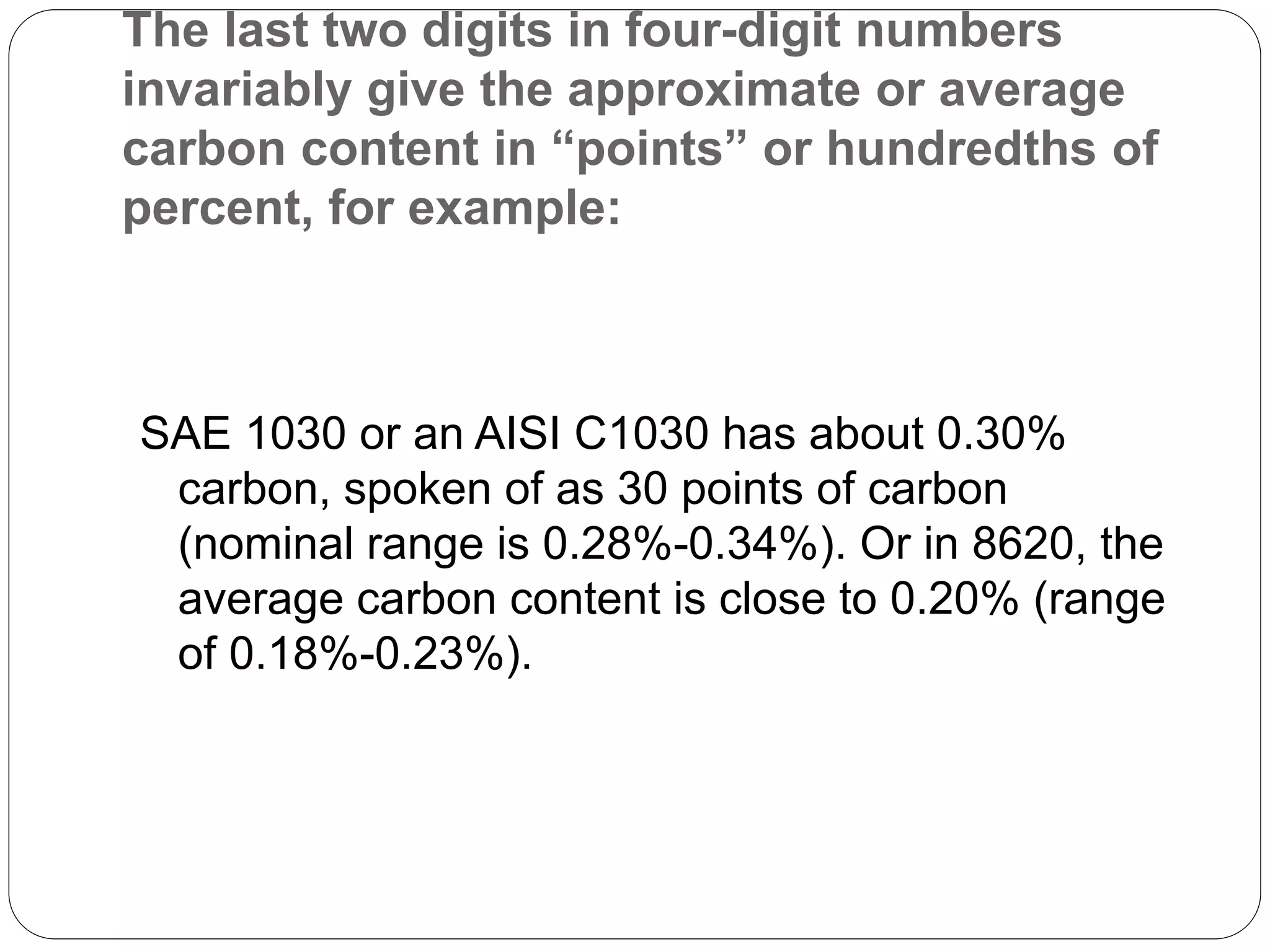
The last two digits in four-digit numbers
invariably give the approximate or average
carbon content in “points” or hundredths of
percent, for example:
SAE 1030 or an AISI C1030 has about 0.30%
carbon, spoken of as 30 points of carbon
(nominal range is 0.28%-0.34%). Or in 8620, the
average carbon content is close to 0.20% (range
of 0.18%-0.23%).
System of specification numbers for
steel- AISI and SAE
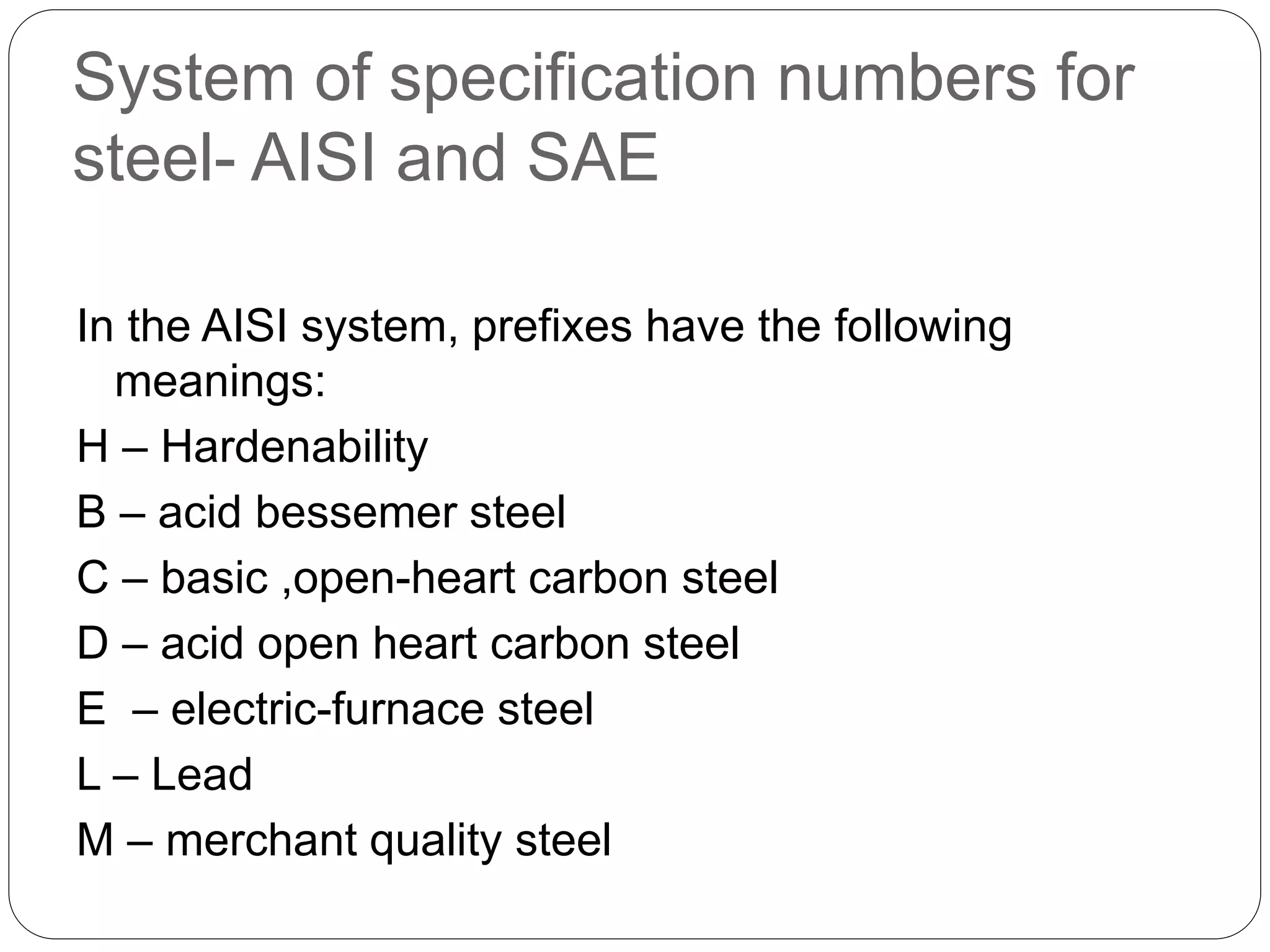
In the AISI system, prefixes have the following
meanings:
H – Hardenability
B – acid bessemer steel
C – basic ,open-heart carbon steel
D – acid open heart carbon steel
E – electric-furnace steel
L – Lead
M – merchant quality steel
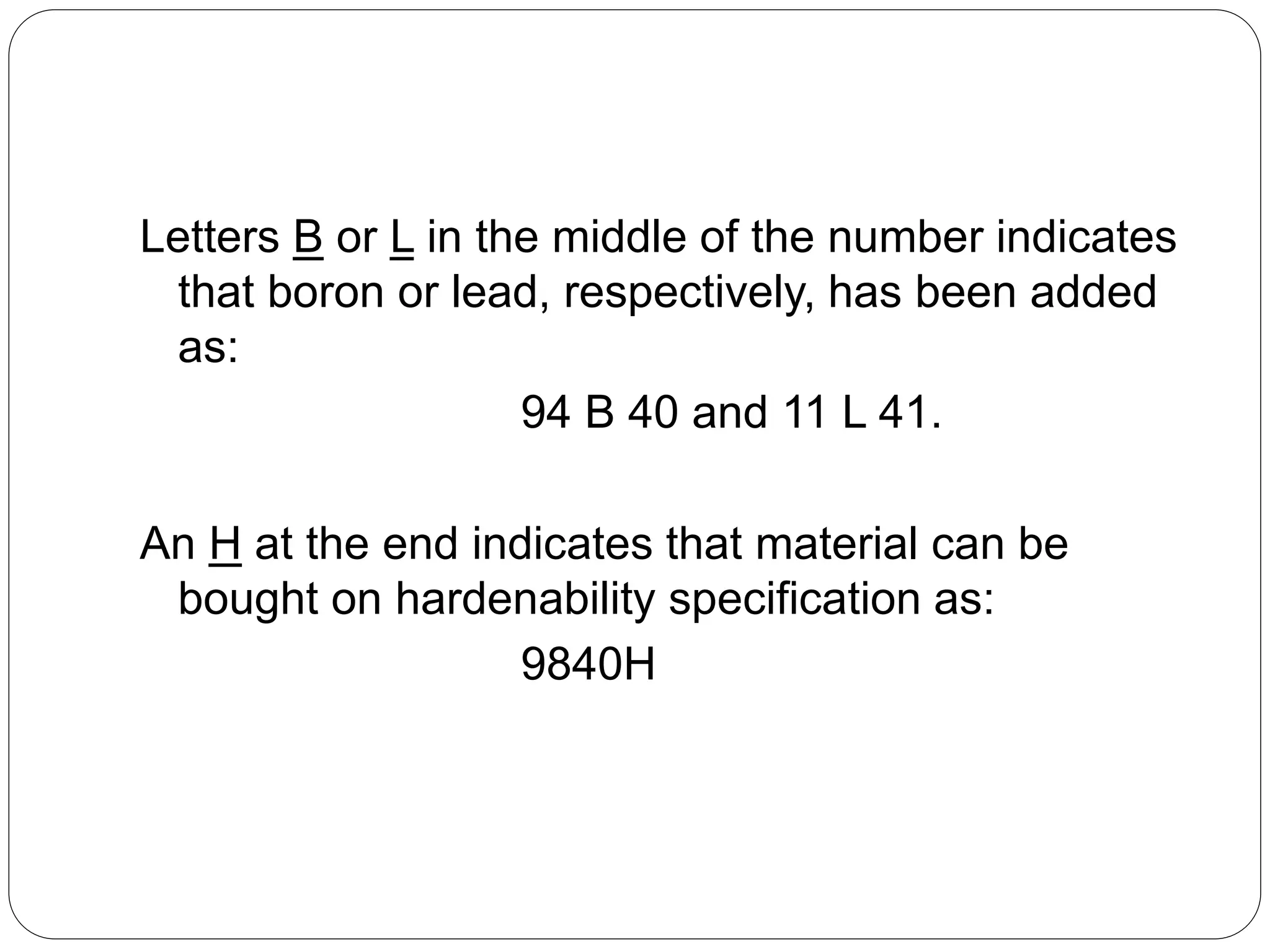
Letters B or L in the middle of the number indicates
that boron or lead, respectively, has been added
as:
94 B 40 and 11 L 41.
An H at the end indicates that material can be
bought on hardenability specification as:
9840H
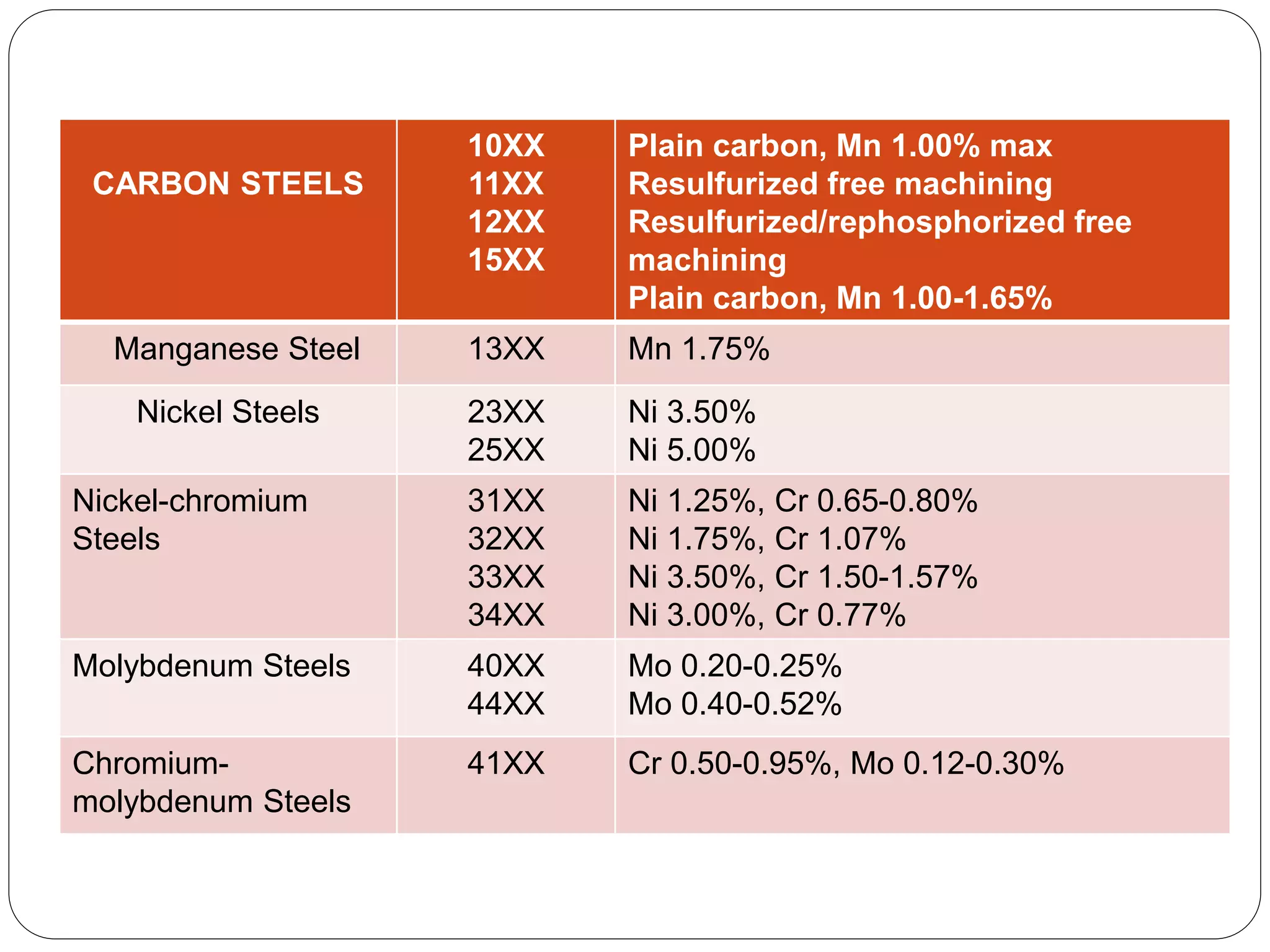
CARBON STEELS
10XX
11XX
12XX
15XX
Plain carbon, Mn 1.00% max
Resulfurized free machining
Resulfurized/rephosphorized free
machining
Plain carbon, Mn 1.00-1.65%
Manganese Steel 13XX Mn 1.75%
Nickel Steels 23XX
25XX
Ni 3.50%
Ni 5.00%
Nickel-chromium
Steels
31XX
32XX
33XX
34XX
Ni 1.25%, Cr 0.65-0.80%
Ni 1.75%, Cr 1.07%
Ni 3.50%, Cr 1.50-1.57%
Ni 3.00%, Cr 0.77%
Molybdenum Steels 40XX
44XX
Mo 0.20-0.25%
Mo 0.40-0.52%
Chromium-
molybdenum Steels
41XX Cr 0.50-0.95%, Mo 0.12-0.30%
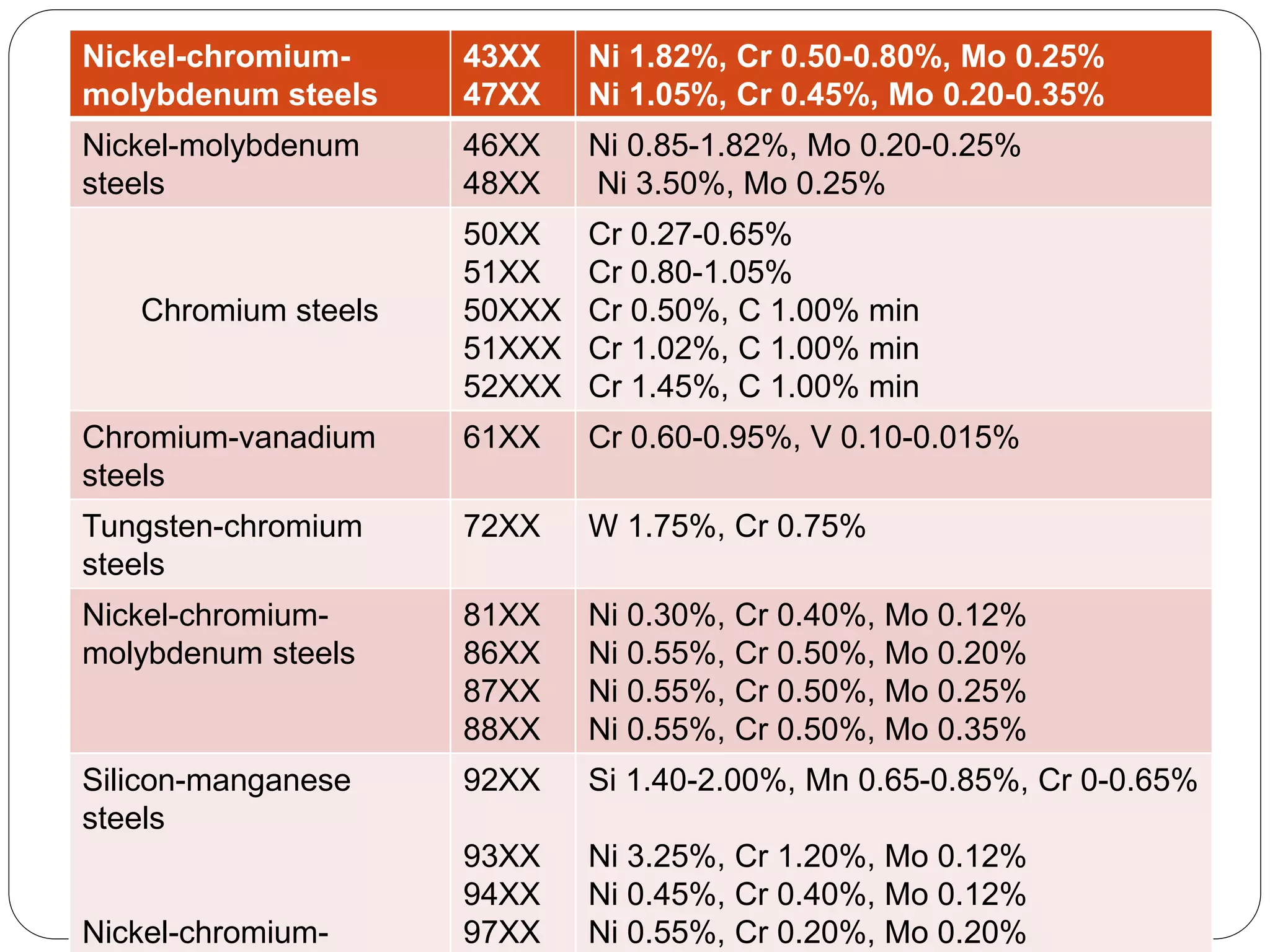
Nickel-chromium-
molybdenum steels
43XX
47XX
Ni 1.82%, Cr 0.50-0.80%, Mo 0.25%
Ni 1.05%, Cr 0.45%, Mo 0.20-0.35%
Nickel-molybdenum
steels
46XX
48XX
Ni 0.85-1.82%, Mo 0.20-0.25%
Ni 3.50%, Mo 0.25%
Chromium steels
50XX
51XX
50XXX
51XXX
52XXX
Cr 0.27-0.65%
Cr 0.80-1.05%
Cr 0.50%, C 1.00% min
Cr 1.02%, C 1.00% min
Cr 1.45%, C 1.00% min
Chromium-vanadium
steels
61XX Cr 0.60-0.95%, V 0.10-0.015%
Tungsten-chromium
steels
72XX W 1.75%, Cr 0.75%
Nickel-chromium-
molybdenum steels
81XX
86XX
87XX
88XX
Ni 0.30%, Cr 0.40%, Mo 0.12%
Ni 0.55%, Cr 0.50%, Mo 0.20%
Ni 0.55%, Cr 0.50%, Mo 0.25%
Ni 0.55%, Cr 0.50%, Mo 0.35%
Silicon-manganese
steels
Nickel-chromium-
92XX
93XX
94XX
97XX
Si 1.40-2.00%, Mn 0.65-0.85%, Cr 0-0.65%
Ni 3.25%, Cr 1.20%, Mo 0.12%
Ni 0.45%, Cr 0.40%, Mo 0.12%
Ni 0.55%, Cr 0.20%, Mo 0.20%
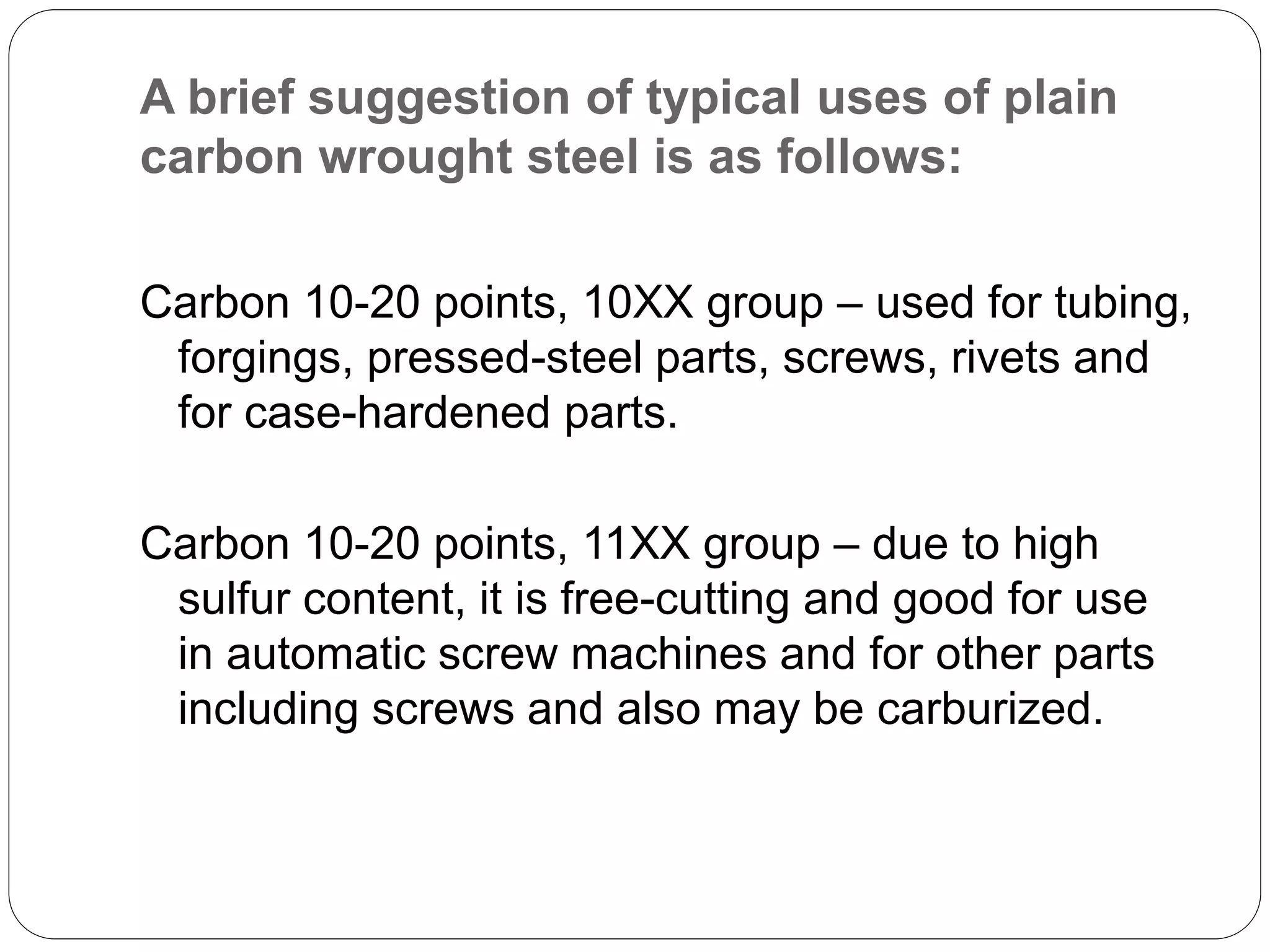
A brief suggestion of typical uses of plain
carbon wrought steel is as follows:
Carbon 10-20 points, 10XX group – used for tubing,
forgings, pressed-steel parts, screws, rivets and
for case-hardened parts.
Carbon 10-20 points, 11XX group – due to high
sulfur content, it is free-cutting and good for use
in automatic screw machines and for other parts
including screws and also may be carburized.
Carbon 20-30 points – General purpose grades.
Used for forged and machined parts, screws; also
for boiler plate and structural steel.
Carbon 30-55 points – with 0.40-0.50% C,
frequently used for miscellaneous forged and
machined parts; shafts.
Carbon 60-90 points – may be hardened to a
cutting edge, especially in the higher ranges of
carbon; therefore used for tools and also for
springs. High strength, low ductility. Nearly always
heat treated, say, to a Brinell hardness 375 or
higher.
THANK YOU
VERRY MUCH
FOR LISTENING!!


AISI-SAE Designation System.pptx

  • 1.
    By: Rosales EldwinFritz D. Sicsic Justyn Wayne M. Introduction to the SAE-AISI Designation System
  • 2.
    Objectives:  To beable to know the specification numbers of both SAE/AISI materials.  To familiarize at least a couple of metal specification numbers regarding SAE-AISI materials.
  • 3.
    AISI AND SAESPECIFICATION NUMBERS There are numerous “standard” materials specifications. Many large consuming organizations and nearly all producers have some standards of their own. The armed forces have numerous ones.
  • 4.
    The principal agencieswhose specifications are most widely used are:  ASTM – American Society for Testing Materials.  SAE – Society of Automotive Engineers  AISI – American Iron and Steel Institute
  • 5.
    Difference between AISI/SAE: SAEand AISI specification numbers are alike in terms of steels except:  The AISI uses prefixes B,C,D, and E to indicate the method of manufacturing the carbon grades.
  • 6.
    In general wayfor steel, the first digit (or the first two digit) of the number represents the type of steel. The last two digits in four-digit numbers invariably give the approximate or average carbon content in “points” or hundredths of percent.
  • 7.
    Schematic Representation ofAISI/SAE Steel Designation System:
  • 8.
    The said figuredemonstrates that the SAE-AISI system uses a four-digit number to designate a carbon and alloy steel and refers to its specific chemical composition. However, that there are also certain types of alloy steels that are designated by five digits ( 51XXX; 52XXX).
  • 9.
    The SAE/AISI systemclassifies all other alloy steel using the same four digit index as follows: 2 - Nickel steels; 3 - Nickel-chromium steels; 4 - Molybdenum steels; 5 - Chromium steels; 6 - Chromium-vanadium steels; 7 - Tungsten-chromium steels; 9 - Silicon-manganese steels.
  • 10.
    In general wayfor steel, the first digit (or the first two digits) of the numbers represents a type of steel, for example: 1XXX - is a plain carbon steel. 11XX - is a plain carbon steel with greater sulfur content for free cutting. 2XXX - is a nickel.
  • 11.
    The last twodigits in four-digit numbers invariably give the approximate or average carbon content in “points” or hundredths of percent, for example: SAE 1030 or an AISI C1030 has about 0.30% carbon, spoken of as 30 points of carbon (nominal range is 0.28%-0.34%). Or in 8620, the average carbon content is close to 0.20% (range of 0.18%-0.23%).
  • 12.
    System of specificationnumbers for steel- AISI and SAE In the AISI system, prefixes have the following meanings: H – Hardenability B – acid bessemer steel C – basic ,open-heart carbon steel D – acid open heart carbon steel E – electric-furnace steel L – Lead M – merchant quality steel
  • 13.
    Letters B orL in the middle of the number indicates that boron or lead, respectively, has been added as: 94 B 40 and 11 L 41. An H at the end indicates that material can be bought on hardenability specification as: 9840H
  • 14.
    CARBON STEELS 10XX 11XX 12XX 15XX Plain carbon,Mn 1.00% max Resulfurized free machining Resulfurized/rephosphorized free machining Plain carbon, Mn 1.00-1.65% Manganese Steel 13XX Mn 1.75% Nickel Steels 23XX 25XX Ni 3.50% Ni 5.00% Nickel-chromium Steels 31XX 32XX 33XX 34XX Ni 1.25%, Cr 0.65-0.80% Ni 1.75%, Cr 1.07% Ni 3.50%, Cr 1.50-1.57% Ni 3.00%, Cr 0.77% Molybdenum Steels 40XX 44XX Mo 0.20-0.25% Mo 0.40-0.52% Chromium- molybdenum Steels 41XX Cr 0.50-0.95%, Mo 0.12-0.30%
  • 15.
    Nickel-chromium- molybdenum steels 43XX 47XX Ni 1.82%,Cr 0.50-0.80%, Mo 0.25% Ni 1.05%, Cr 0.45%, Mo 0.20-0.35% Nickel-molybdenum steels 46XX 48XX Ni 0.85-1.82%, Mo 0.20-0.25% Ni 3.50%, Mo 0.25% Chromium steels 50XX 51XX 50XXX 51XXX 52XXX Cr 0.27-0.65% Cr 0.80-1.05% Cr 0.50%, C 1.00% min Cr 1.02%, C 1.00% min Cr 1.45%, C 1.00% min Chromium-vanadium steels 61XX Cr 0.60-0.95%, V 0.10-0.015% Tungsten-chromium steels 72XX W 1.75%, Cr 0.75% Nickel-chromium- molybdenum steels 81XX 86XX 87XX 88XX Ni 0.30%, Cr 0.40%, Mo 0.12% Ni 0.55%, Cr 0.50%, Mo 0.20% Ni 0.55%, Cr 0.50%, Mo 0.25% Ni 0.55%, Cr 0.50%, Mo 0.35% Silicon-manganese steels Nickel-chromium- 92XX 93XX 94XX 97XX Si 1.40-2.00%, Mn 0.65-0.85%, Cr 0-0.65% Ni 3.25%, Cr 1.20%, Mo 0.12% Ni 0.45%, Cr 0.40%, Mo 0.12% Ni 0.55%, Cr 0.20%, Mo 0.20%
  • 16.
    A brief suggestionof typical uses of plain carbon wrought steel is as follows: Carbon 10-20 points, 10XX group – used for tubing, forgings, pressed-steel parts, screws, rivets and for case-hardened parts. Carbon 10-20 points, 11XX group – due to high sulfur content, it is free-cutting and good for use in automatic screw machines and for other parts including screws and also may be carburized.
  • 17.
    Carbon 20-30 points– General purpose grades. Used for forged and machined parts, screws; also for boiler plate and structural steel. Carbon 30-55 points – with 0.40-0.50% C, frequently used for miscellaneous forged and machined parts; shafts.
  • 18.
    Carbon 60-90 points– may be hardened to a cutting edge, especially in the higher ranges of carbon; therefore used for tools and also for springs. High strength, low ductility. Nearly always heat treated, say, to a Brinell hardness 375 or higher.
  • 19.
    THANK YOU VERRY MUCH FORLISTENING!! 