SMILE
Primary research
In this pie chart, it is shown that my targeted audience is the age
range from 16-25 year olds. This means that this project for the
smile campaign is within my community. Evidently, this shows that
by doing this research we were able to see who this product is
more likely to aim at, for example my age range.
What makes you happy? Was the question had asked many people.
However, I was given 7 different answers this shows that everyone has a
different way to smile. For example, someone had responded with that
listening to music makes them happy on the other hand, someone said
football makes them happy/smile.
However, one responder said nothing at the moment makes them happy,
this ​shows that they are dealing with stuff and don’t feel like there's
nothing that can make them feel happy. This is a sign of depression; this
could mean that they feel numb and hopeless of feeling happiness.
These results evidently show that my audience find trouble in finding a
way to smile on the other hand a fraction of my audience is able to find a
way by either socializing with family/friends or animals.
In this pie chart, you can clearly see that all 7 responders are
dealing with stress. After that, I had asked ' if so, how frequently?'
and there was a range of different answers given. The majority of
my audience are stressed most of time; 42.9% . However, 28.6%
of my audience are rarely and sometimes stressed. My audience
deal with stress on regular basis but some more than others.
In this question, I asked what hobbies my audience will have. This is
because by having a Hobbie they are doing something that they enjoy
therefore it's like an escape route for their minds. By asking this question,
I would be able to find out about my audience better and will be able to
connect with them a lot more. These responses are very distinct to one
another. This is because we either have a very active, fitness, socialising
audience or a stay in, reading watching tv audience.
How often do you socialise? Is the question I asked my
targeted audience. 57.1% have said that they socialise
all week. This could mean that being with people makes
them happy and smile. However, 42.9% of my audience
only socialise 4-5 days of the week. This could either
mean that they are busy quite a lot or only see people
whilst at school/college/work.
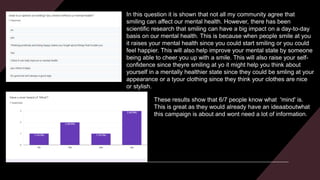
In this question it is shown that not all my community agree that
smiling can affect our mental health. However, there has been
scientific research that smiling can have a big impact on a day-to-day
basis on our mental health. This is because when people smile at you
it raises your mental health since you could start smiling or you could
feel happier. This will also help improve your mental state by someone
being able to cheer you up with a smile. This will also raise your self-
confidence since theyre smiling at yo it might help you think about
yourself in a mentally healthier state since they could be smling at your
appearance or a tyour clothing since they think your clothes are nice
or stylish.
These results show that 6/7 people know what 'mind' is.
This is great as they would already have an ideaaboutwhat
this campaign is about and wont need a lot of information.

Smile primary research

  • 1.
  • 2.
    In this piechart, it is shown that my targeted audience is the age range from 16-25 year olds. This means that this project for the smile campaign is within my community. Evidently, this shows that by doing this research we were able to see who this product is more likely to aim at, for example my age range.
  • 3.
    What makes youhappy? Was the question had asked many people. However, I was given 7 different answers this shows that everyone has a different way to smile. For example, someone had responded with that listening to music makes them happy on the other hand, someone said football makes them happy/smile. However, one responder said nothing at the moment makes them happy, this ​shows that they are dealing with stuff and don’t feel like there's nothing that can make them feel happy. This is a sign of depression; this could mean that they feel numb and hopeless of feeling happiness. These results evidently show that my audience find trouble in finding a way to smile on the other hand a fraction of my audience is able to find a way by either socializing with family/friends or animals.
  • 4.
    In this piechart, you can clearly see that all 7 responders are dealing with stress. After that, I had asked ' if so, how frequently?' and there was a range of different answers given. The majority of my audience are stressed most of time; 42.9% . However, 28.6% of my audience are rarely and sometimes stressed. My audience deal with stress on regular basis but some more than others.
  • 5.
    In this question,I asked what hobbies my audience will have. This is because by having a Hobbie they are doing something that they enjoy therefore it's like an escape route for their minds. By asking this question, I would be able to find out about my audience better and will be able to connect with them a lot more. These responses are very distinct to one another. This is because we either have a very active, fitness, socialising audience or a stay in, reading watching tv audience.
  • 6.
    How often doyou socialise? Is the question I asked my targeted audience. 57.1% have said that they socialise all week. This could mean that being with people makes them happy and smile. However, 42.9% of my audience only socialise 4-5 days of the week. This could either mean that they are busy quite a lot or only see people whilst at school/college/work.
  • 7.
    In this questionit is shown that not all my community agree that smiling can affect our mental health. However, there has been scientific research that smiling can have a big impact on a day-to-day basis on our mental health. This is because when people smile at you it raises your mental health since you could start smiling or you could feel happier. This will also help improve your mental state by someone being able to cheer you up with a smile. This will also raise your self- confidence since theyre smiling at yo it might help you think about yourself in a mentally healthier state since they could be smling at your appearance or a tyour clothing since they think your clothes are nice or stylish. These results show that 6/7 people know what 'mind' is. This is great as they would already have an ideaaboutwhat this campaign is about and wont need a lot of information.