Non-financial
Compensation System
Dr. G C Mohanta, BE, MSc(Engg), MBA, PhD(Mgt)
Professor
Al-Qurmoshi Institute of Business Management
Hyderabad
1
Non-financial Compensation System
Job & Job characteristics
Job Environment
Workplace Flexibility
2
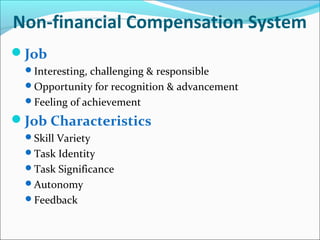
Non-financial Compensation System
Job
Interesting, challenging & responsible
Opportunity for recognition & advancement
Feeling of achievement
Job Characteristics
Skill Variety
Task Identity
Task Significance
Autonomy
Feedback
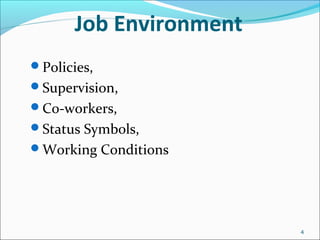
Job Environment
Policies,
Supervision,
Co-workers,
Status Symbols,
Working Conditions
4
Workplace Flexibility
Flextime
Compressed workweek
Job sharing
Flexible compensation (cafeteria
compensation)
Telecommuting
Part-time work
Modified retirement
5
Flextime
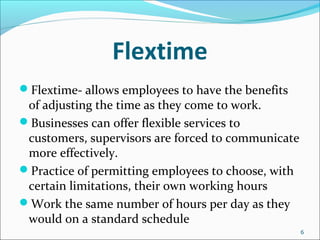
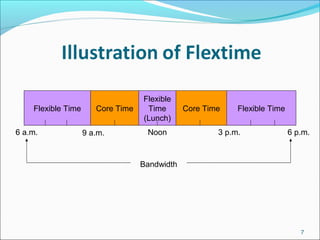
Flextime- allows employees to have the benefits
of adjusting the time as they come to work.
Businesses can offer flexible services to
customers, supervisors are forced to communicate
more effectively.
Practice of permitting employees to choose, with
certain limitations, their own working hours
Work the same number of hours per day as they
would on a standard schedule
6
7
Flexible Time Core Time
Flexible
Time
(Lunch)
Core Time Flexible Time
6 a.m. 9 a.m. 6 p.m.3 p.m.Noon
Bandwidth
Compressed Work Week
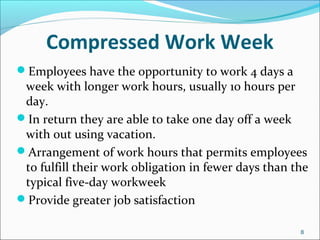
Employees have the opportunity to work 4 days a
week with longer work hours, usually 10 hours per
day.
In return they are able to take one day off a week
with out using vacation.
Arrangement of work hours that permits employees
to fulfill their work obligation in fewer days than the
typical five-day workweek
Provide greater job satisfaction
8
Job Sharing
Two part-time people split the work schedule of 40
hours a week.
They split the duties of one job in some agreed-on
manner and are paid according to their
contributions
Partners must be compatible, have good
communication skills and trust must exist between
the job sharers and their manager
9
Flexible Compensation Plans
Permit employees to choose from among many
alternatives in deciding how their financial
compensation will be allocated
Determine the compensation package that best
satisfies his or her particular needs
10
Telecommuting
Work arrangement whereby employees, called
teleworkers or telecommuters, are able to remain
at home, or otherwise away from the office, and
perform their work using computers and other
electronic devices that connect them with their
offices
11
Part-time Work
Some people do not either want or need full-time
employment
Adds many highly qualified individuals to the
labor market by permitting both employment and
personal needs to be addressed
12
Modified Retirement
Permits older employees to work fewer than
regular hours for a certain period of time
preceding retirement
Allows an employee to avoid an abrupt change in
lifestyle and move gracefully into retirement
13

Non financial compensation system

  • 1.
    Non-financial Compensation System Dr. GC Mohanta, BE, MSc(Engg), MBA, PhD(Mgt) Professor Al-Qurmoshi Institute of Business Management Hyderabad 1
  • 2.
    Non-financial Compensation System Job& Job characteristics Job Environment Workplace Flexibility 2
  • 3.
    Non-financial Compensation System Job Interesting,challenging & responsible Opportunity for recognition & advancement Feeling of achievement Job Characteristics Skill Variety Task Identity Task Significance Autonomy Feedback
  • 4.
  • 5.
    Workplace Flexibility Flextime Compressed workweek Jobsharing Flexible compensation (cafeteria compensation) Telecommuting Part-time work Modified retirement 5
  • 6.
    Flextime Flextime- allows employeesto have the benefits of adjusting the time as they come to work. Businesses can offer flexible services to customers, supervisors are forced to communicate more effectively. Practice of permitting employees to choose, with certain limitations, their own working hours Work the same number of hours per day as they would on a standard schedule 6
  • 7.
    7 Flexible Time CoreTime Flexible Time (Lunch) Core Time Flexible Time 6 a.m. 9 a.m. 6 p.m.3 p.m.Noon Bandwidth
  • 8.
    Compressed Work Week Employeeshave the opportunity to work 4 days a week with longer work hours, usually 10 hours per day. In return they are able to take one day off a week with out using vacation. Arrangement of work hours that permits employees to fulfill their work obligation in fewer days than the typical five-day workweek Provide greater job satisfaction 8
  • 9.
    Job Sharing Two part-timepeople split the work schedule of 40 hours a week. They split the duties of one job in some agreed-on manner and are paid according to their contributions Partners must be compatible, have good communication skills and trust must exist between the job sharers and their manager 9
  • 10.
    Flexible Compensation Plans Permitemployees to choose from among many alternatives in deciding how their financial compensation will be allocated Determine the compensation package that best satisfies his or her particular needs 10
  • 11.
    Telecommuting Work arrangement wherebyemployees, called teleworkers or telecommuters, are able to remain at home, or otherwise away from the office, and perform their work using computers and other electronic devices that connect them with their offices 11
  • 12.
    Part-time Work Some peopledo not either want or need full-time employment Adds many highly qualified individuals to the labor market by permitting both employment and personal needs to be addressed 12
  • 13.
    Modified Retirement Permits olderemployees to work fewer than regular hours for a certain period of time preceding retirement Allows an employee to avoid an abrupt change in lifestyle and move gracefully into retirement 13

Editor's Notes

  • #6 Flextime- allows employees to have the benefits of adjusting the time they come to work. Businesses can offer flexible services to customers, supervisors are forced to communicate more effectively. Compressed workweek- employees have the opportunity to work 4 days a week with longer work hours, usually 10hours per day. In return they are able to take one day off a week with out using vacation. Job sharing- two part-time people split the work schedule of 40 hours a week. Sometimes the days work over lap to allow for successful hand-offs and communication. Trust is very important in this role Flexible compensation - allows employees the ability to select what components that have for their compensation package. This approach with employees individual needs and preferences Telecommuting- allows employees the ability to work from home if they are able to maintain their performance. Not every job can be performed remotely. For example, Customer Service Representative. Most telecommuters are information workers. For example, programmer or recruiter. Part-time work - the employee who are students or parents with young children may need part-time schedules. The retail industry is known for having its workforce be part-time. Modified retirement- permits older workers to work fewer hours for a certain time period while maintaining their eligibility to retire