






The development of Open Source
e-learning environments:
the Chamilo experience
Prof. dr. Frederik Questier, Vrije Universiteit Brussel
             Guest lecture at Beijing Normal University, 21/10/2010
This presentation can be found at
             http://questier.com
http://www.slideshare.net/Frederik_Questier
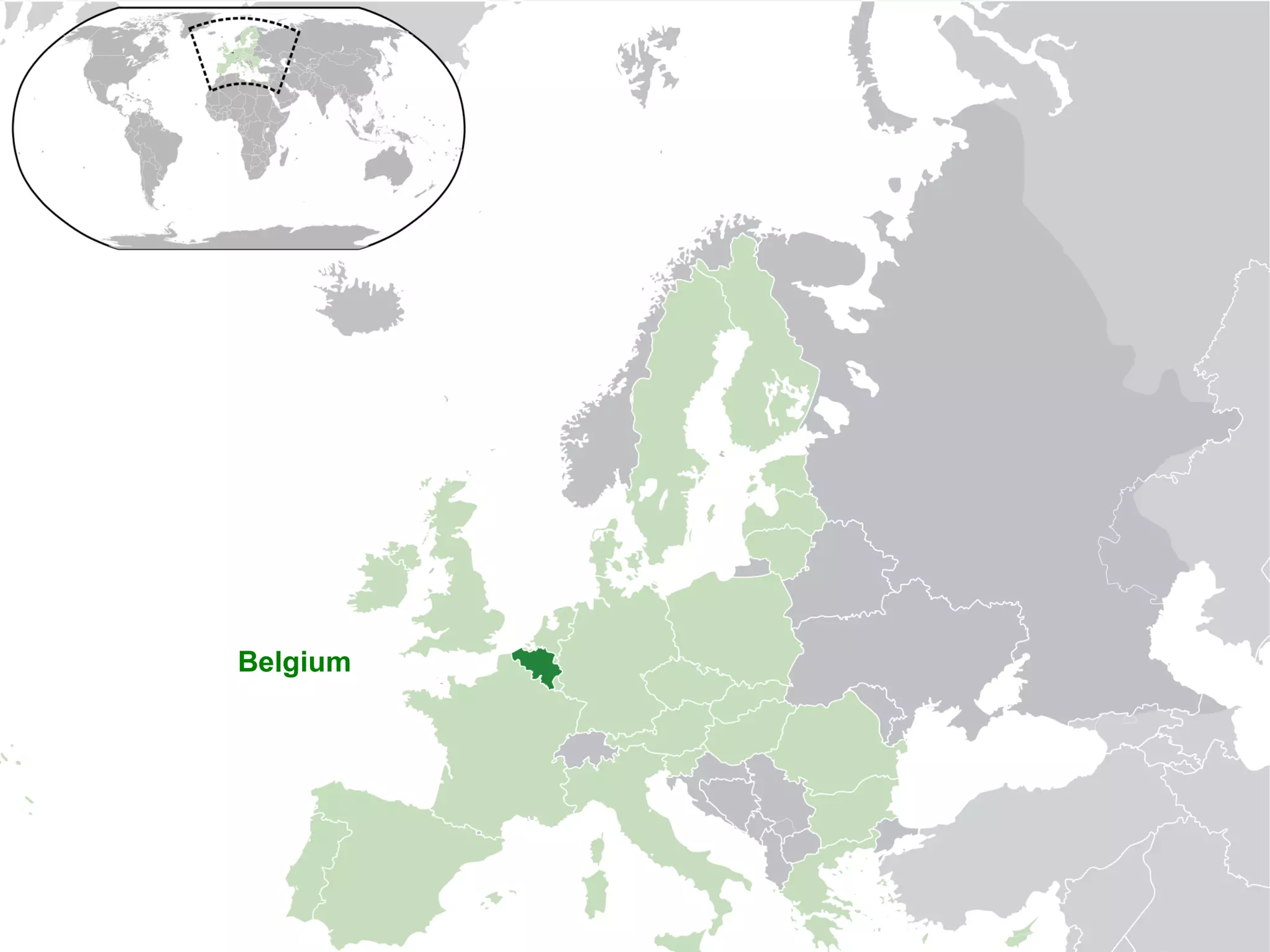
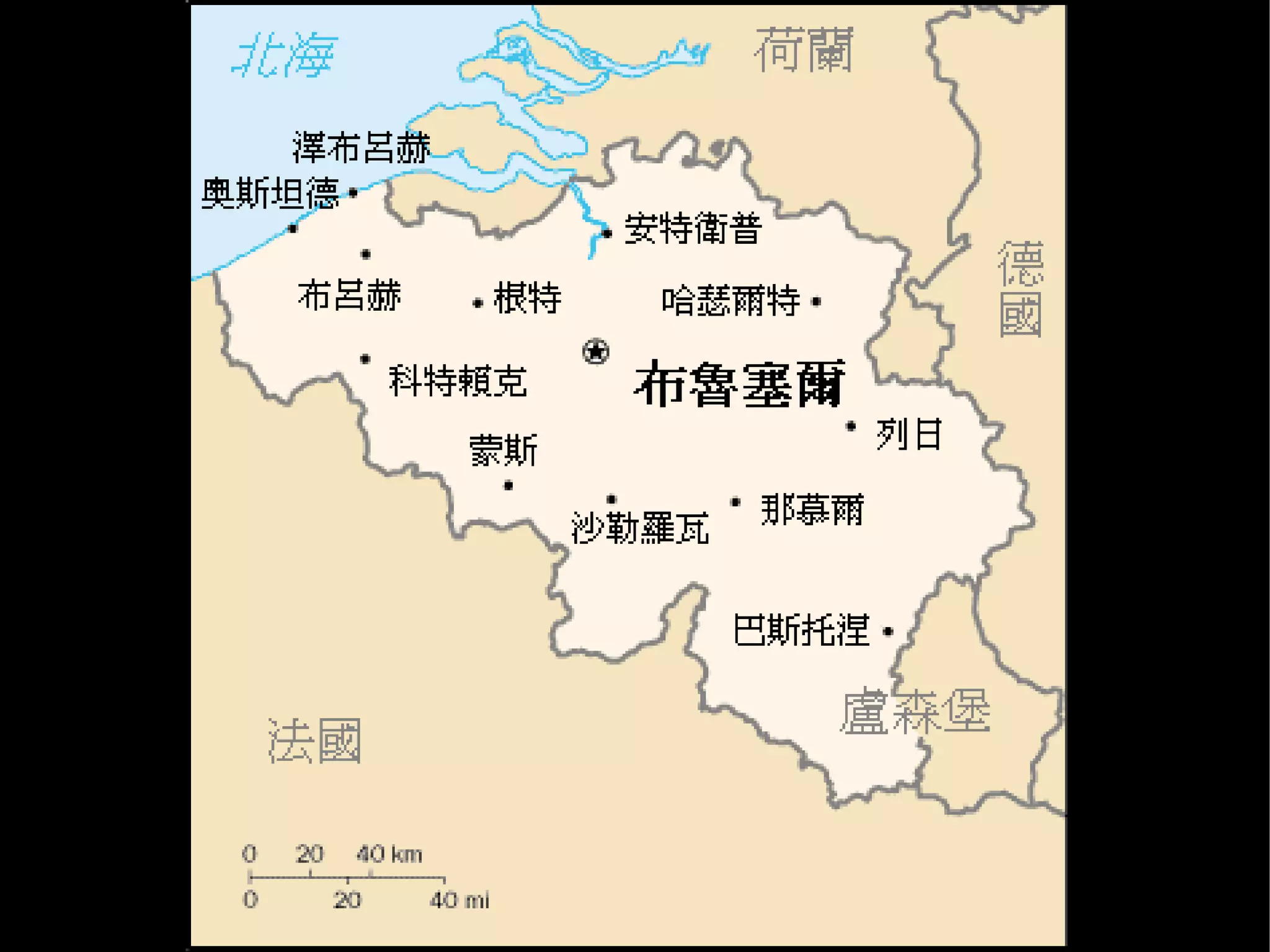
Belgium
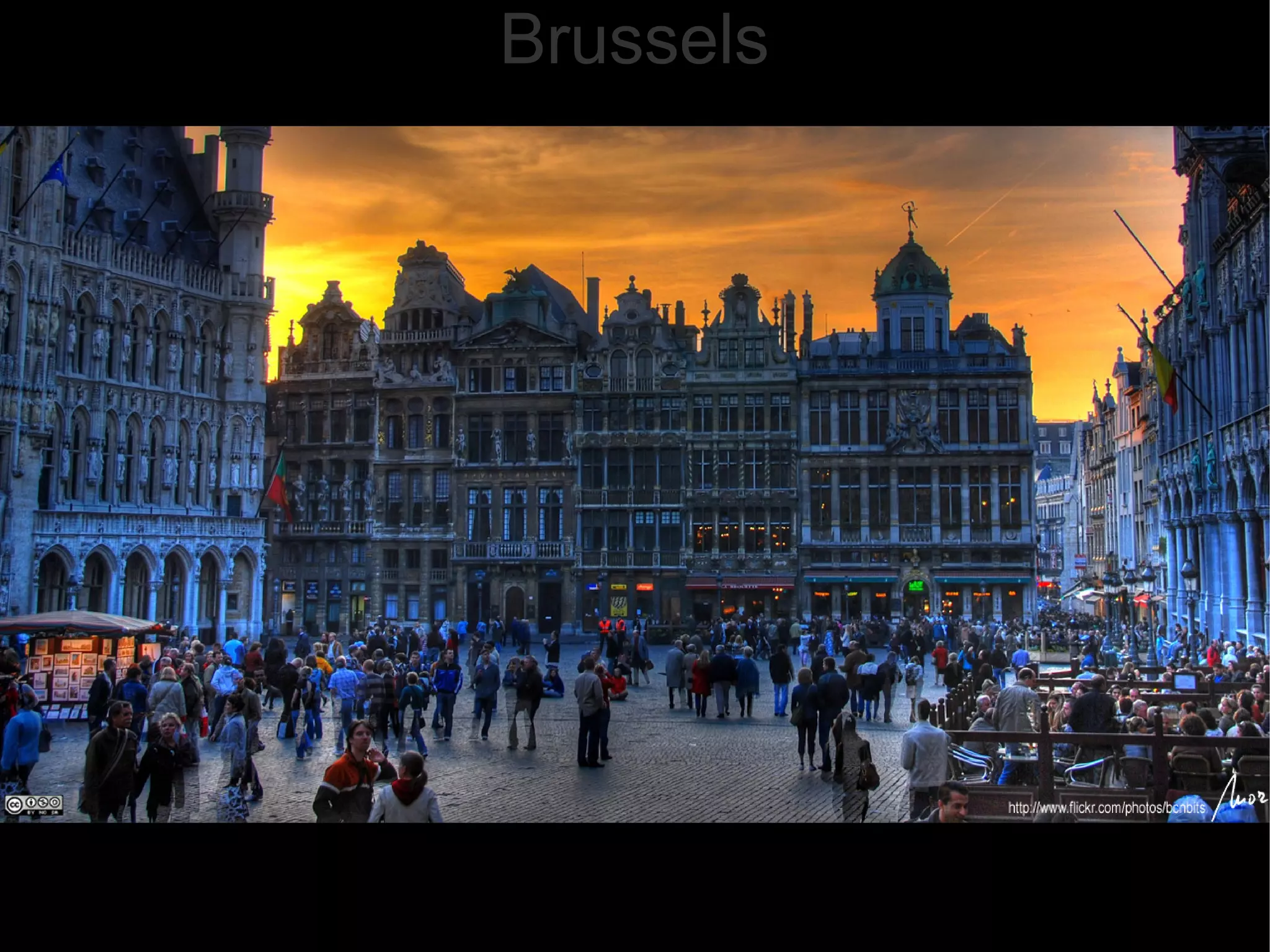
Brussels
Atomium building © www.atomium.be - SABAM 2010; photo CC-by-nc-sa by fatboyke Luc B
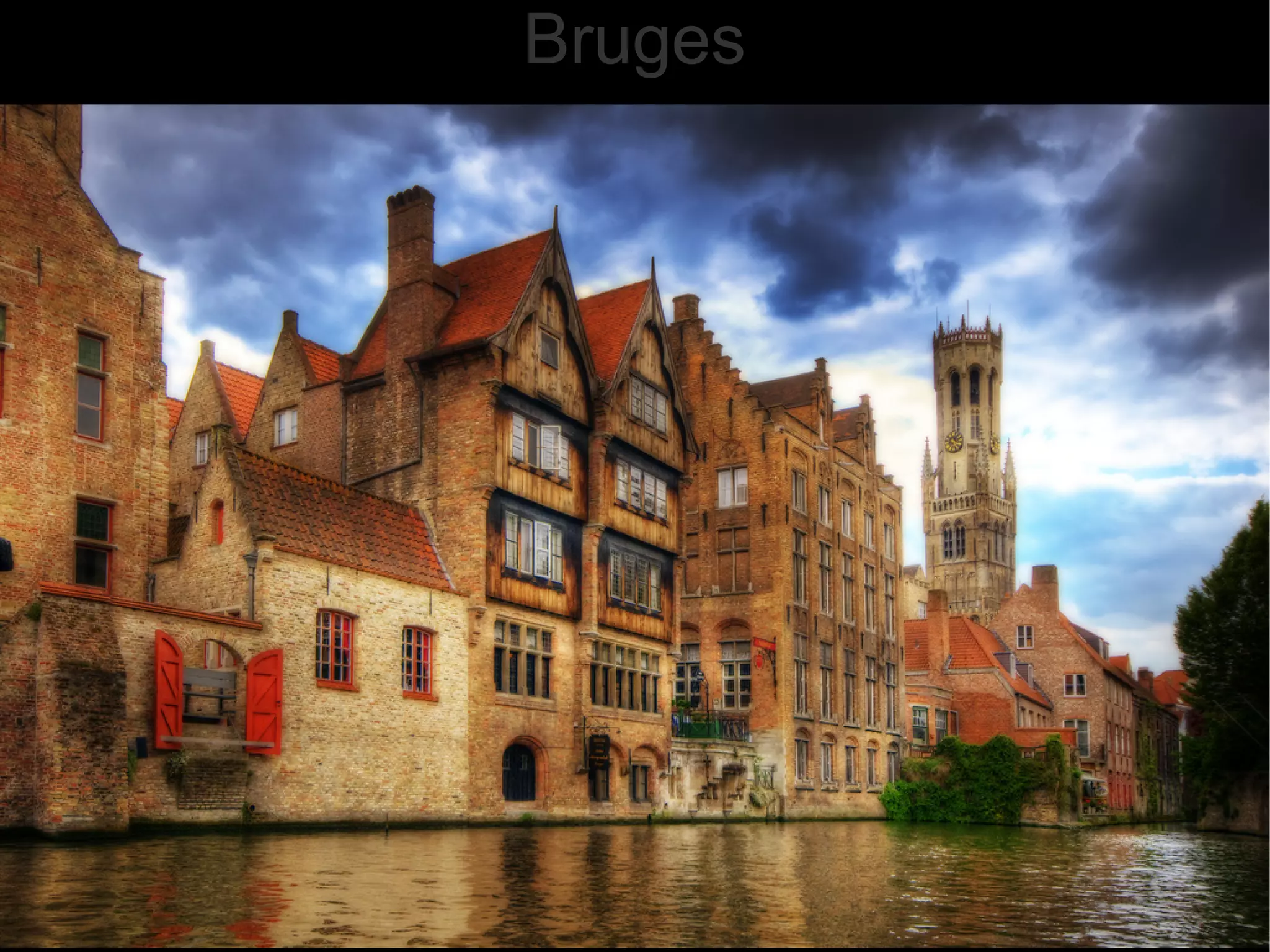
Bruges
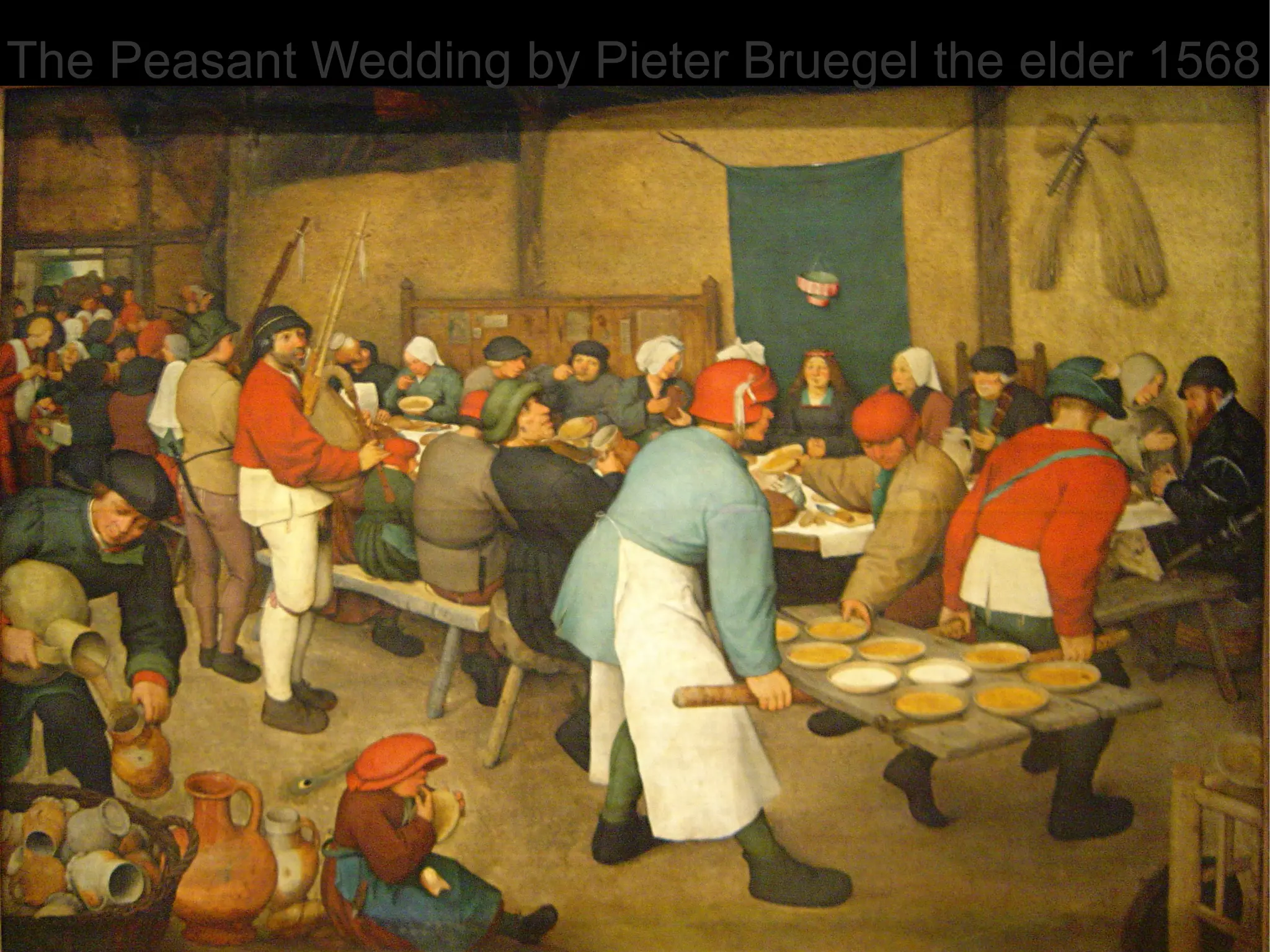
The Peasant Wedding by Pieter Bruegel the elder 1568
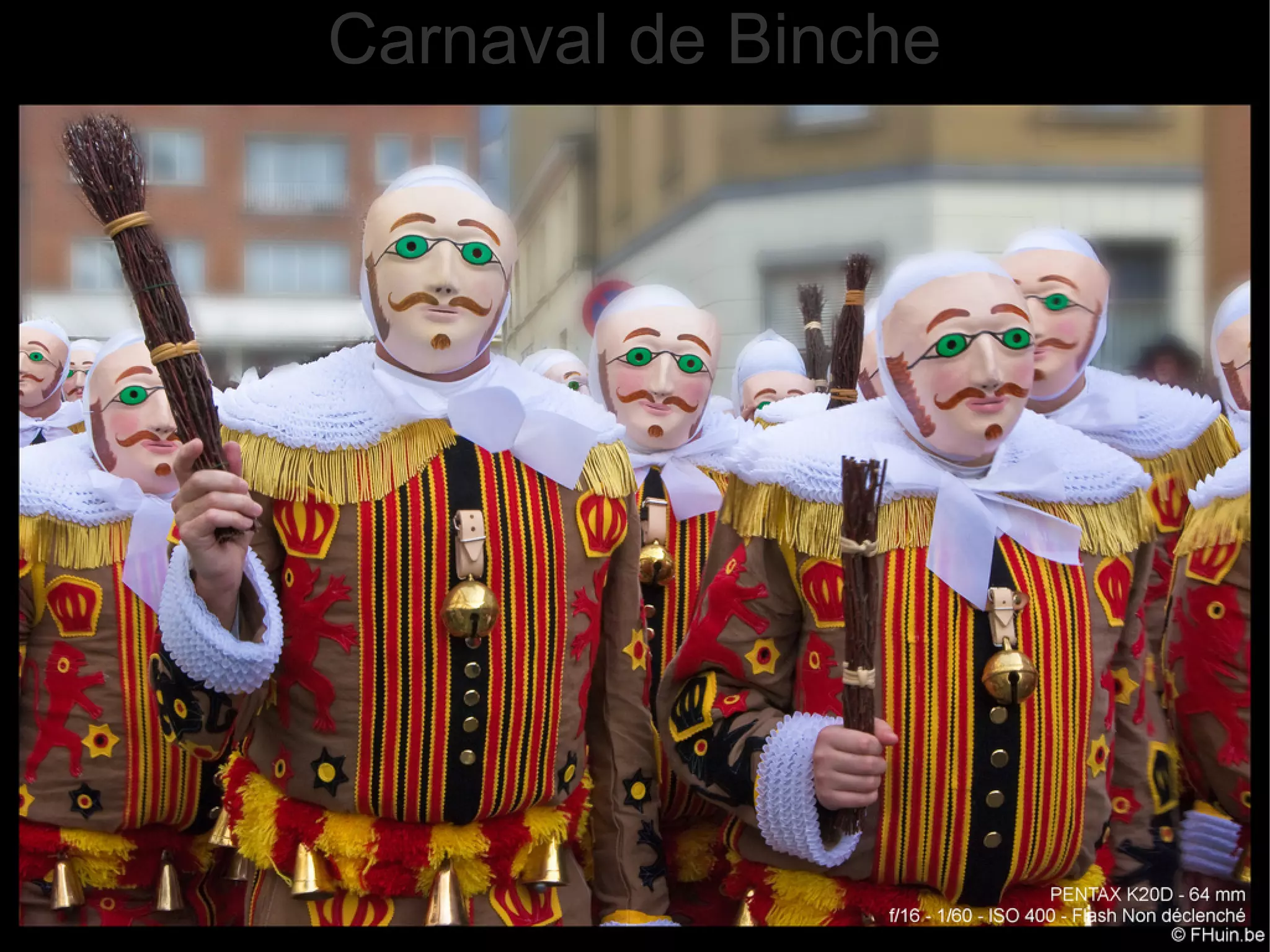
Carnaval de Binche
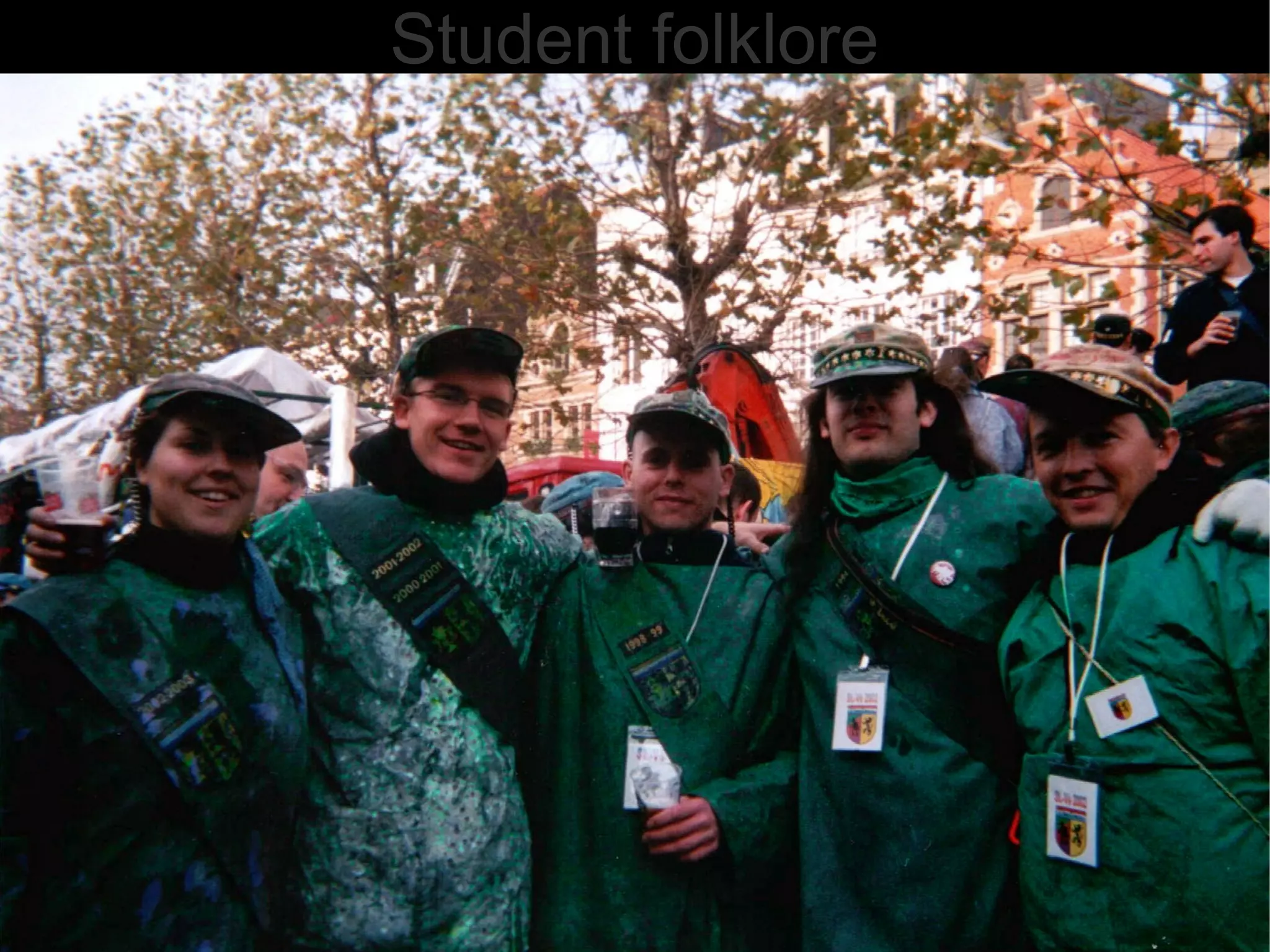
Student folklore
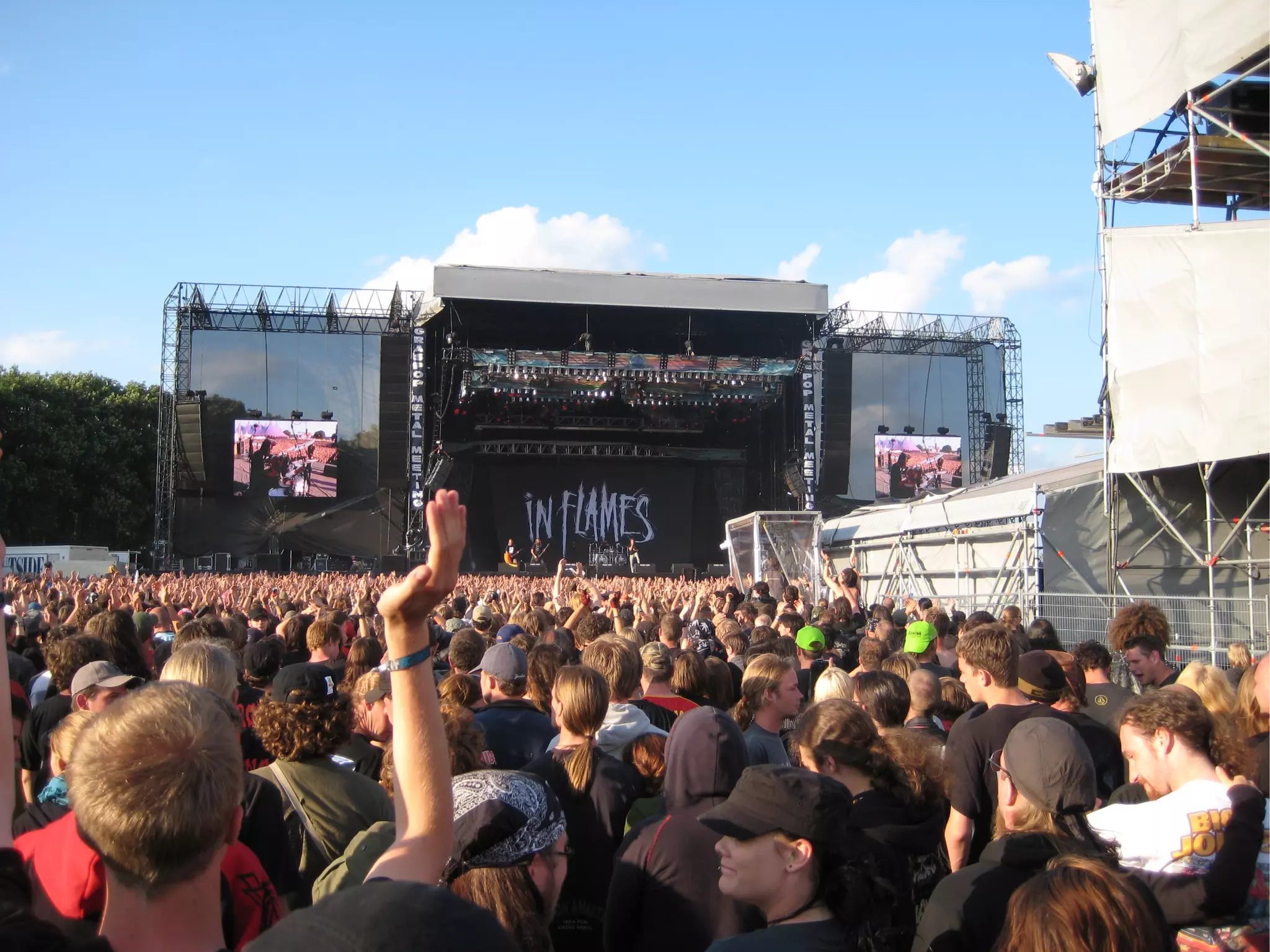
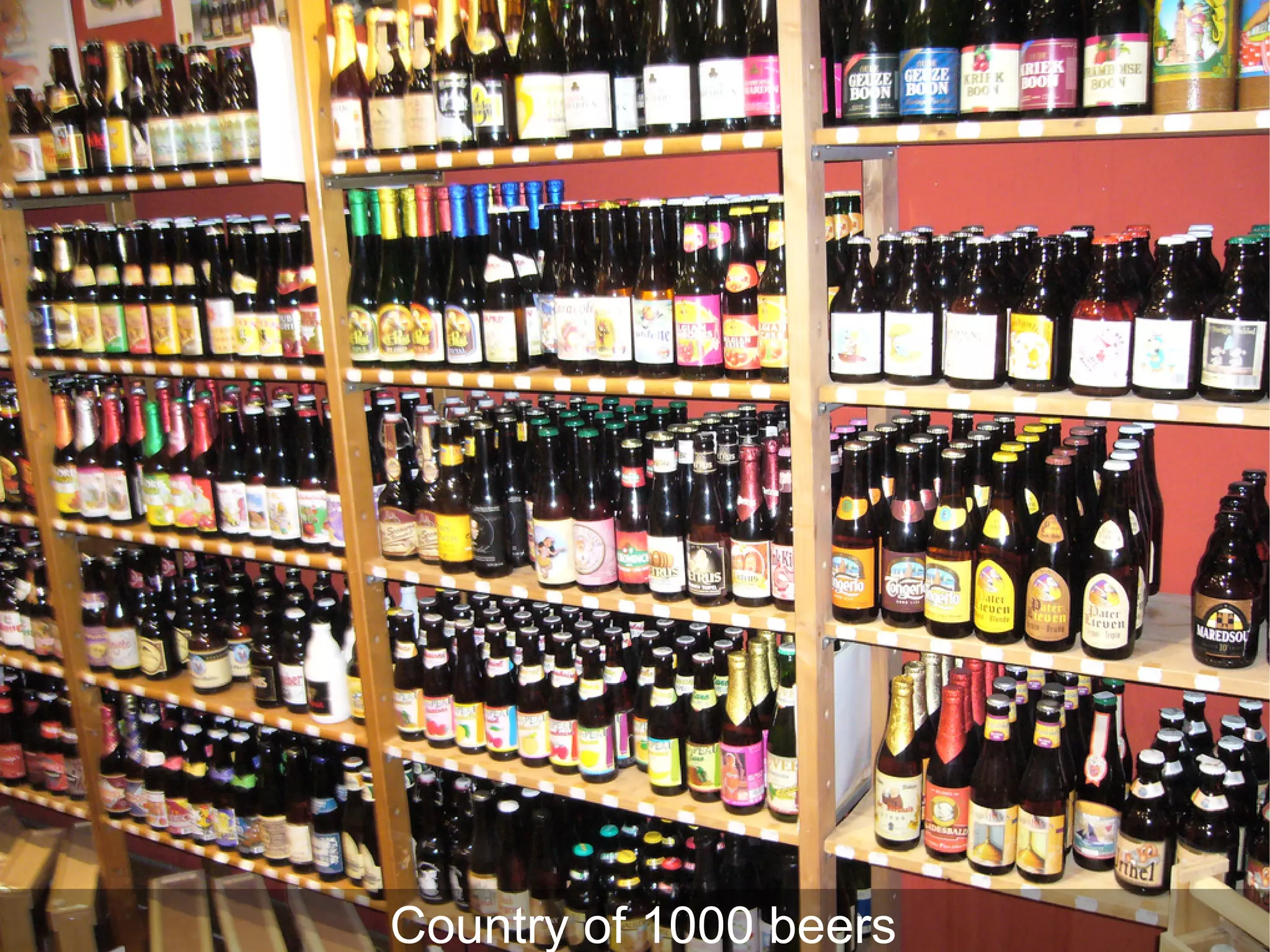
Country of 1000 beers
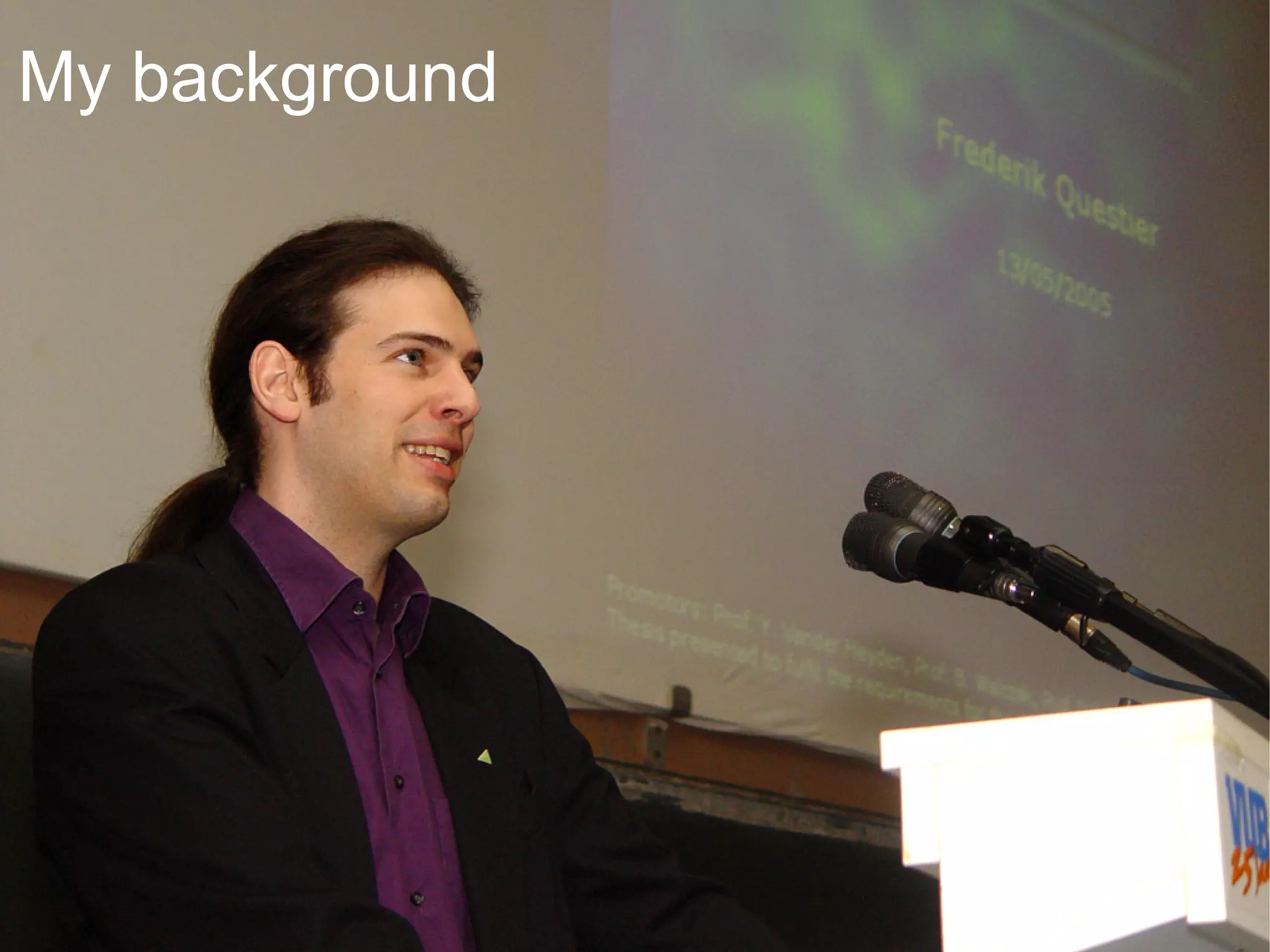
My background
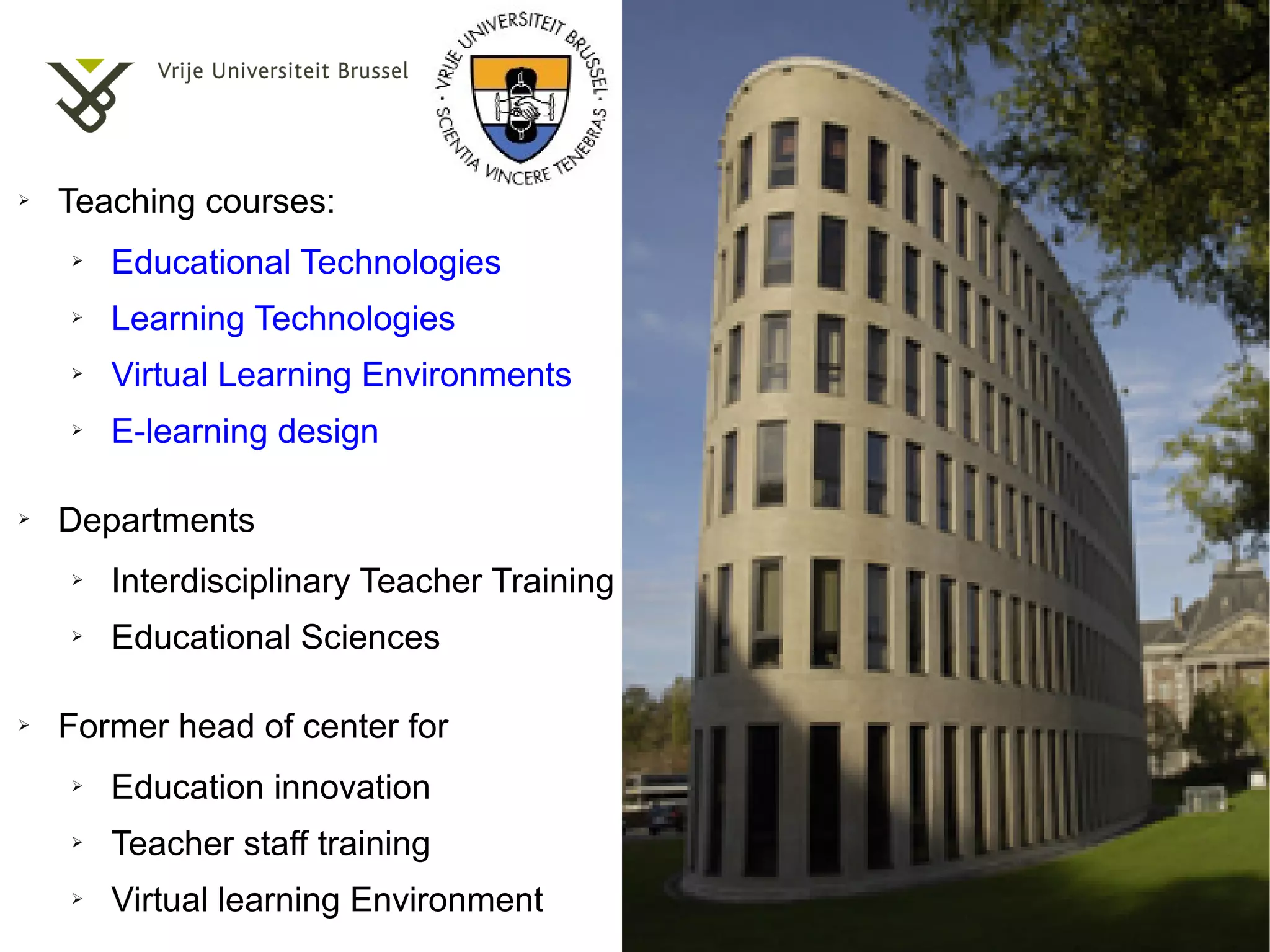
➢   Teaching courses:
    ➢   Educational Technologies
    ➢   Learning Technologies
    ➢   Virtual Learning Environments
    ➢   E-learning design

➢   Departments
    ➢   Interdisciplinary Teacher Training
    ➢   Educational Sciences

➢   Former head of center for
    ➢   Education innovation
    ➢   Teacher staff training
    ➢   Virtual learning Environment
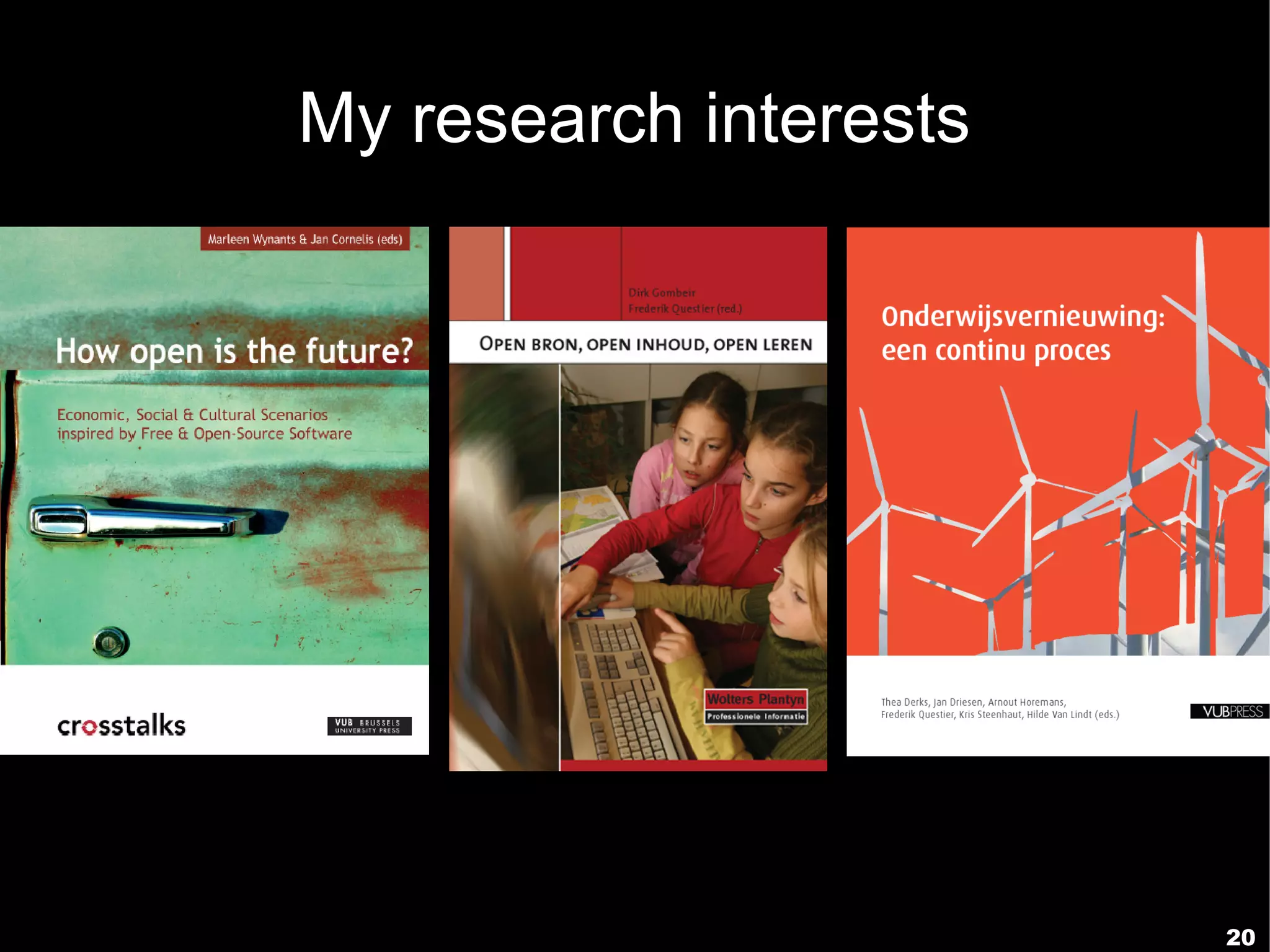
My research interests


                        20
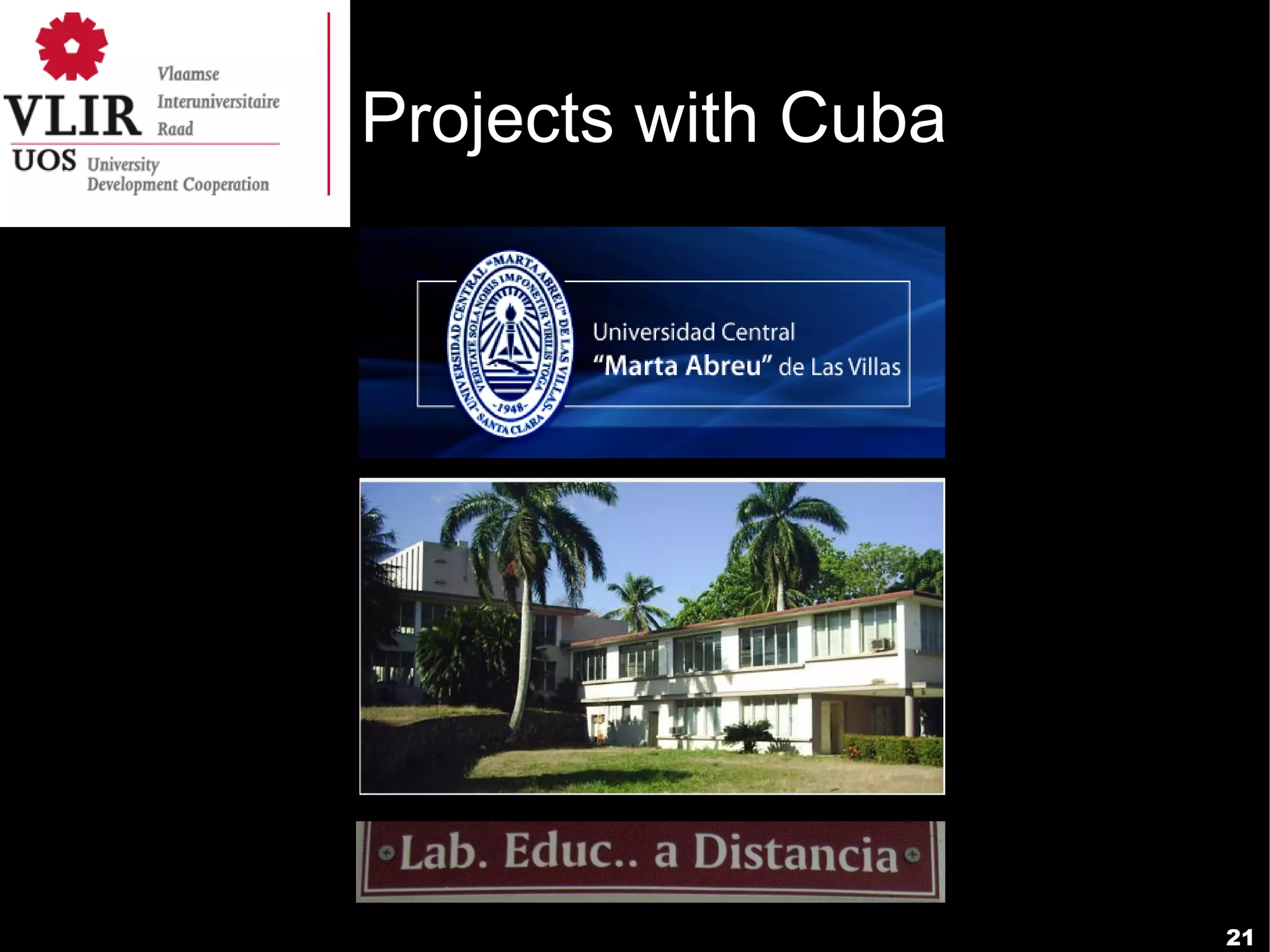
Projects with Cuba


                     21
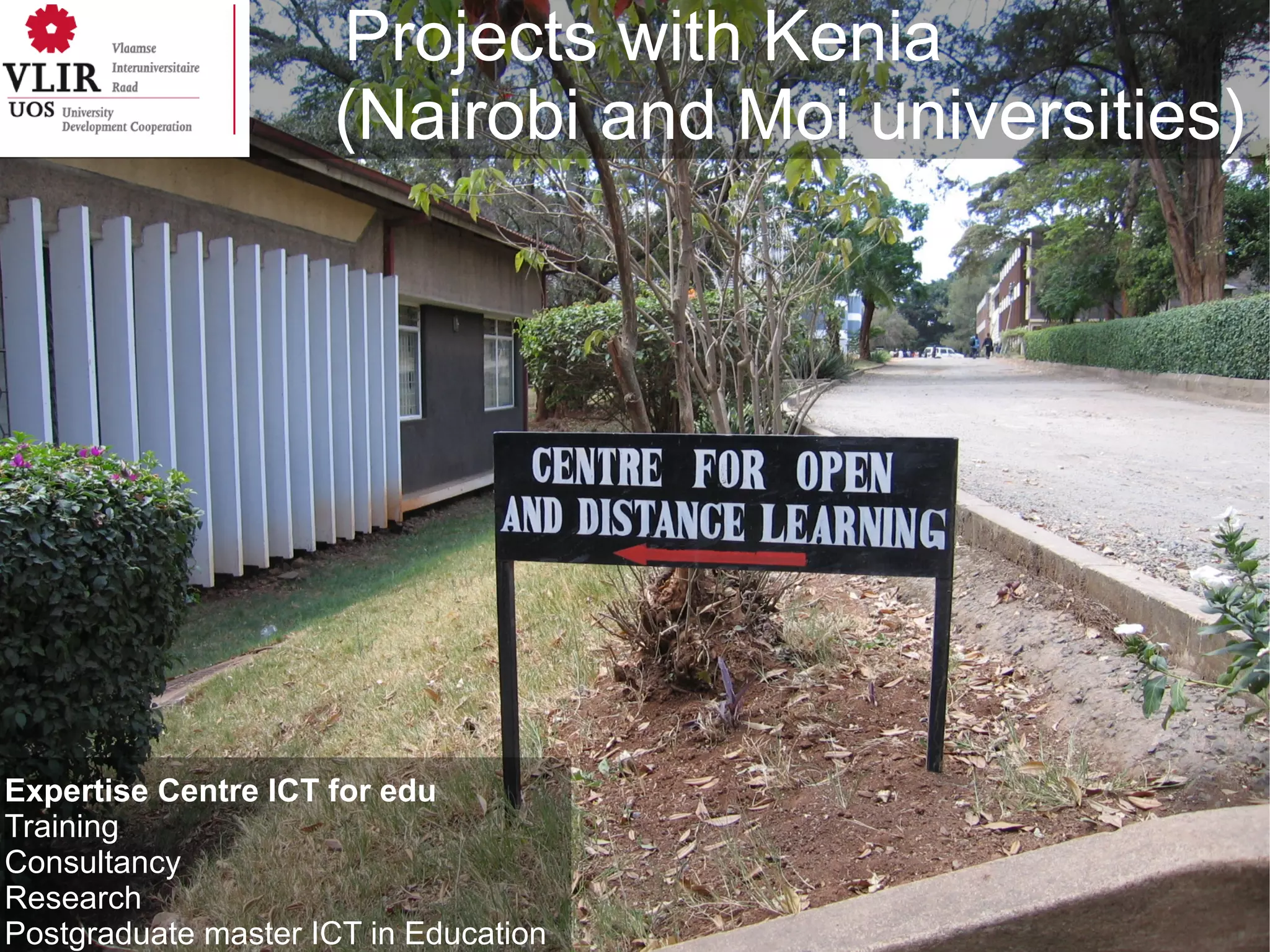
Projects with Kenia
                     (Nairobi and Moi universities)


Expertise Centre ICT for edu
Training
Consultancy
Research
Postgraduate master ICT in Education              22
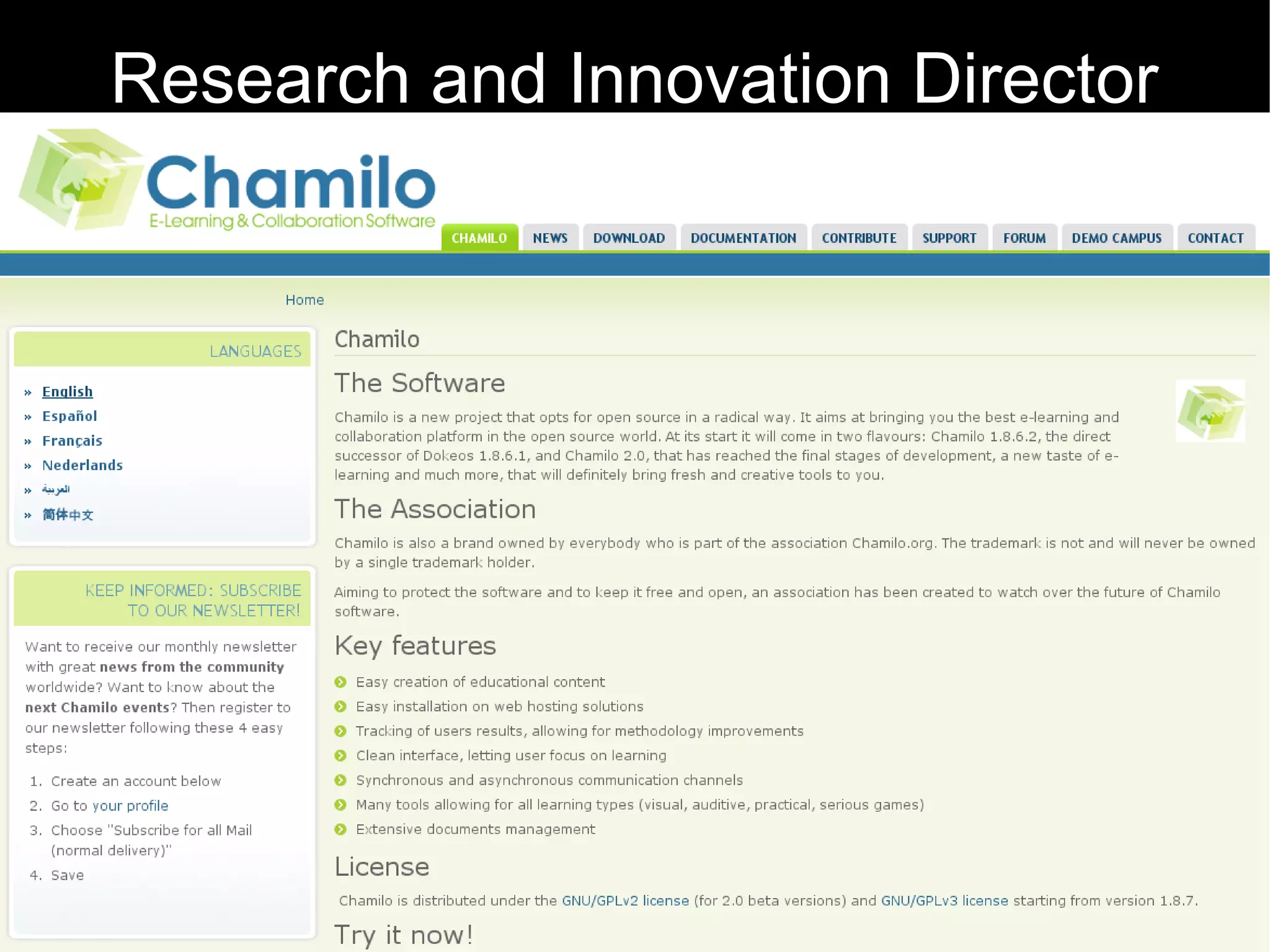
Research and Innovation Director


                                   23
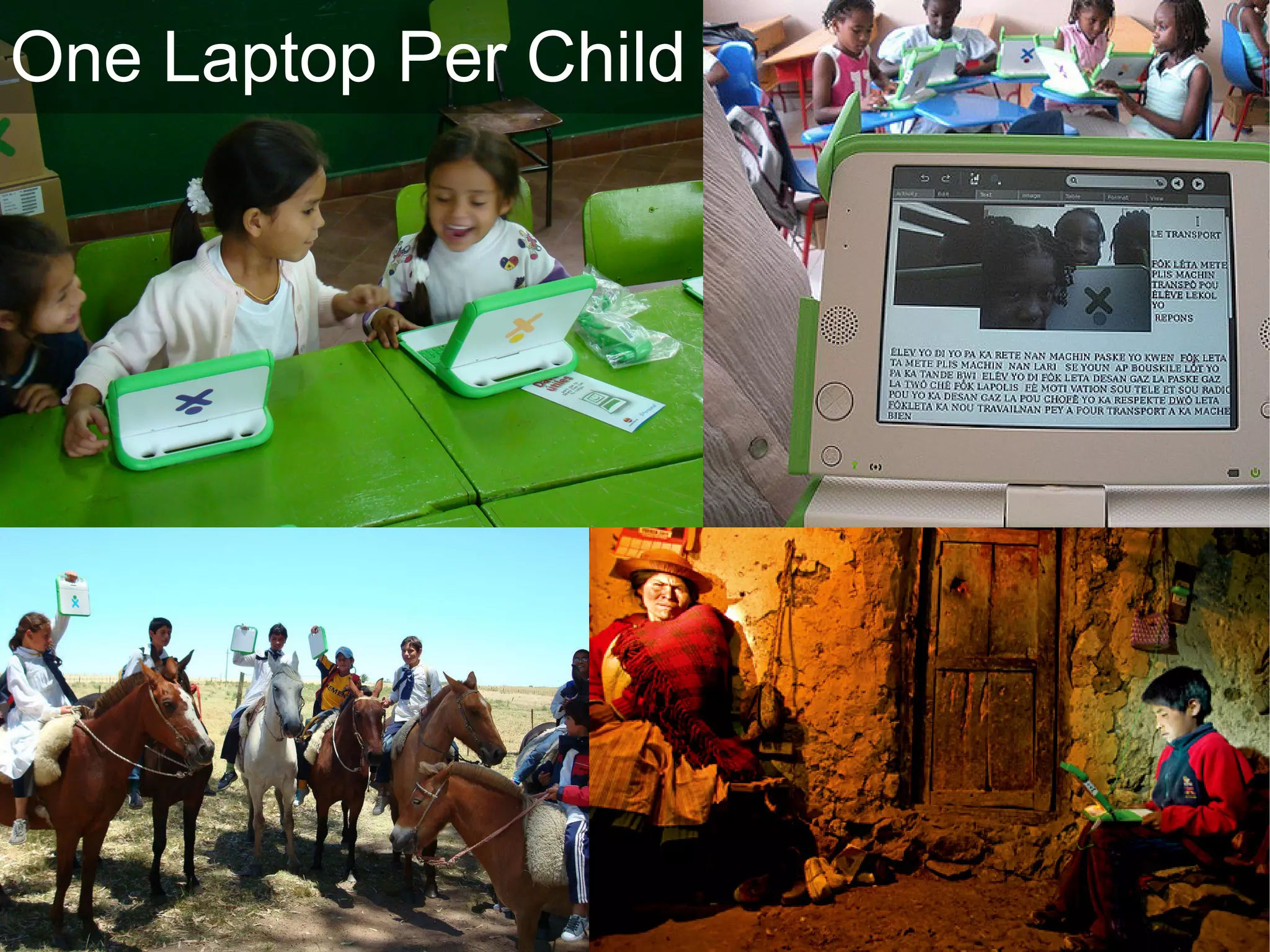
One Laptop Per Child


                       24
1 Understand the Free & Open Source basics


2 Start a project or contribute to a project


3 Build a community or contribute to a community


4 Build expertise


5 Support your users and/or sell services

                                                   25
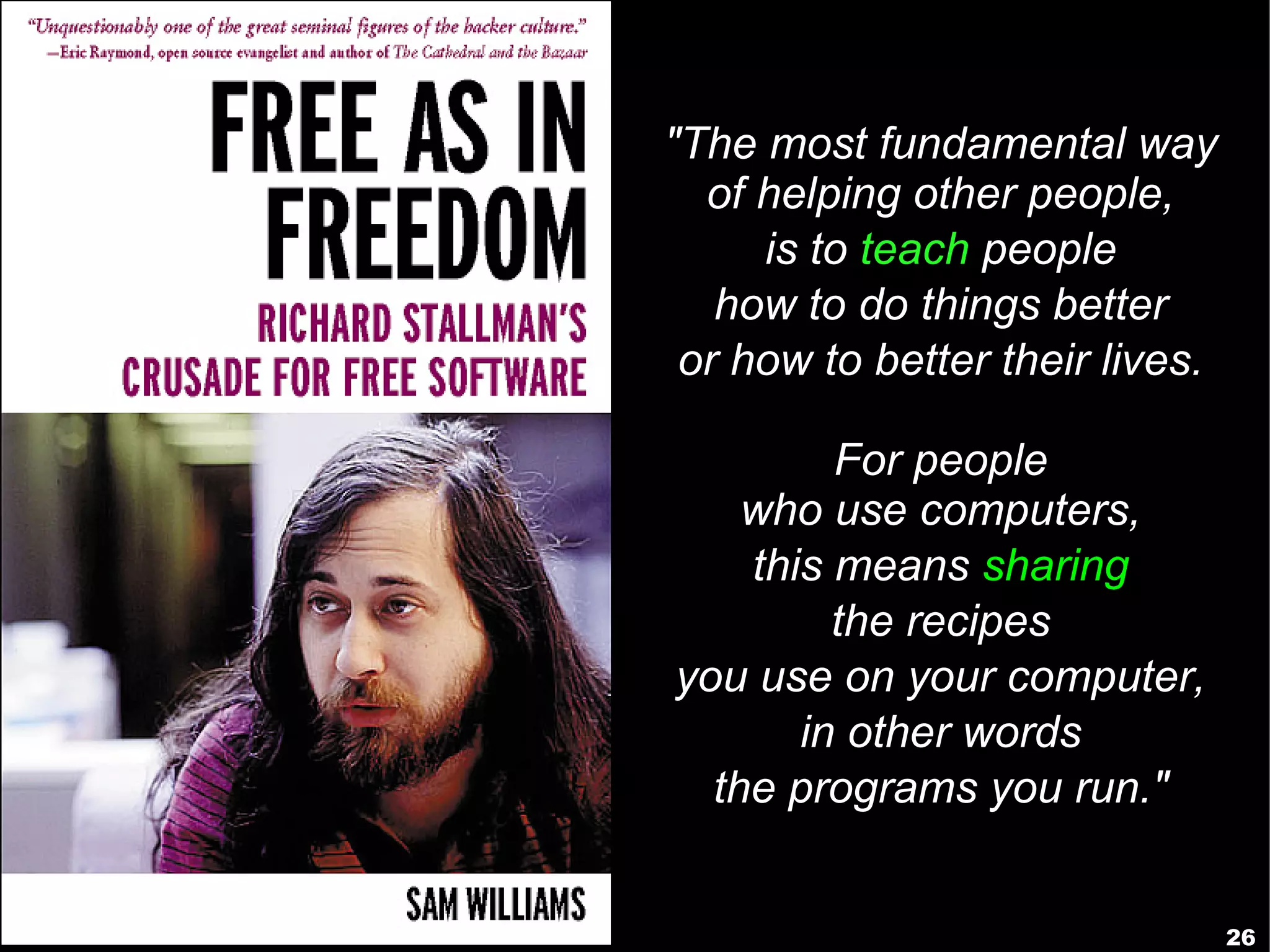
"The most fundamental way
  of helping other people,
     is to teach people
   how to do things better
 or how to better their lives.

         For people
    who use computers,
    this means sharing
         the recipes
you use on your computer,
       in other words
  the programs you run."


                                 26
Free Software

➢   The freedom to
    ➢   use
    ➢   study
    ➢   distribute
    ➢   improve

        the program

                                      27
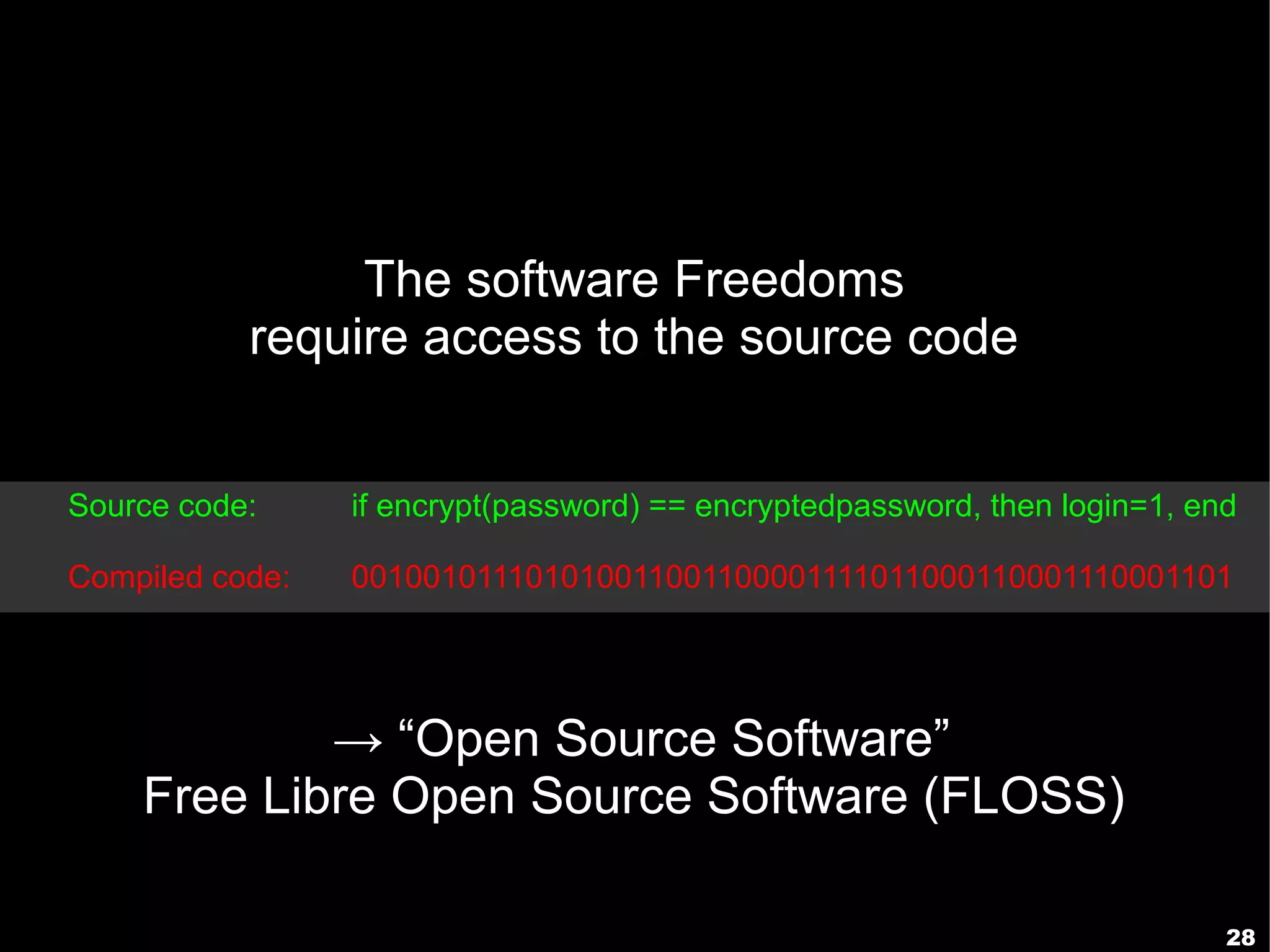
The software Freedoms
           require access to the source code


Source code:     if encrypt(password) == encryptedpassword, then login=1, end

Compiled code:   001001011101010011001100001111011000110001110001101


            → “Open Source Software”
    Free Libre Open Source Software (FLOSS)

                                                                            28
FLOSS characteristics
➢   User friendly              ← written by users for users
➢   Cross-platform             ← recompile source code
➢   High development pace ← reuse of best modules
➢   High quality               ← peer review, reuse = survival of the fittest
➢   High security              ← peer review, Unix origin, modular, encryption


                                                                                 29
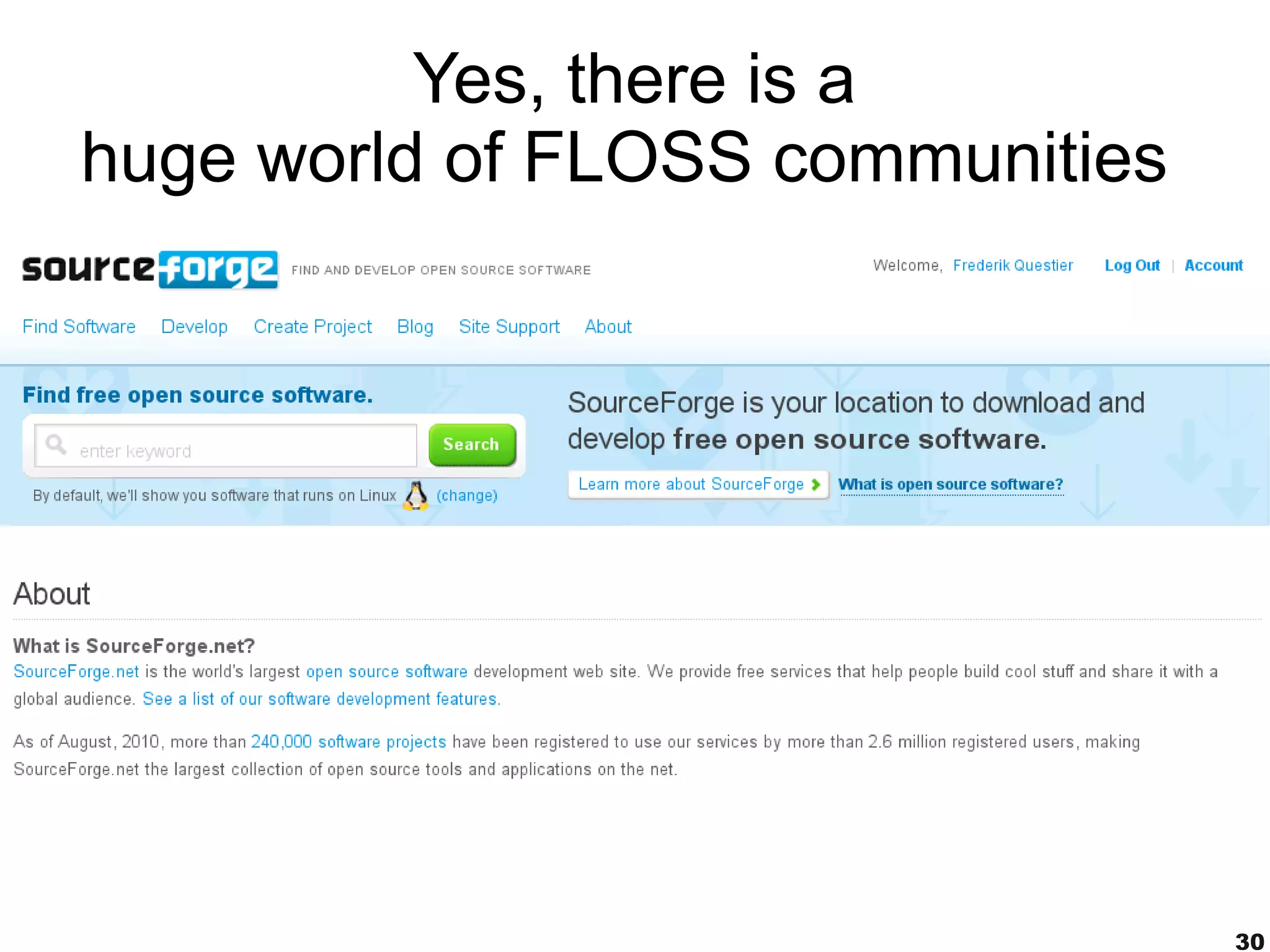
Yes, there is a
huge world of FLOSS communities


                                  30
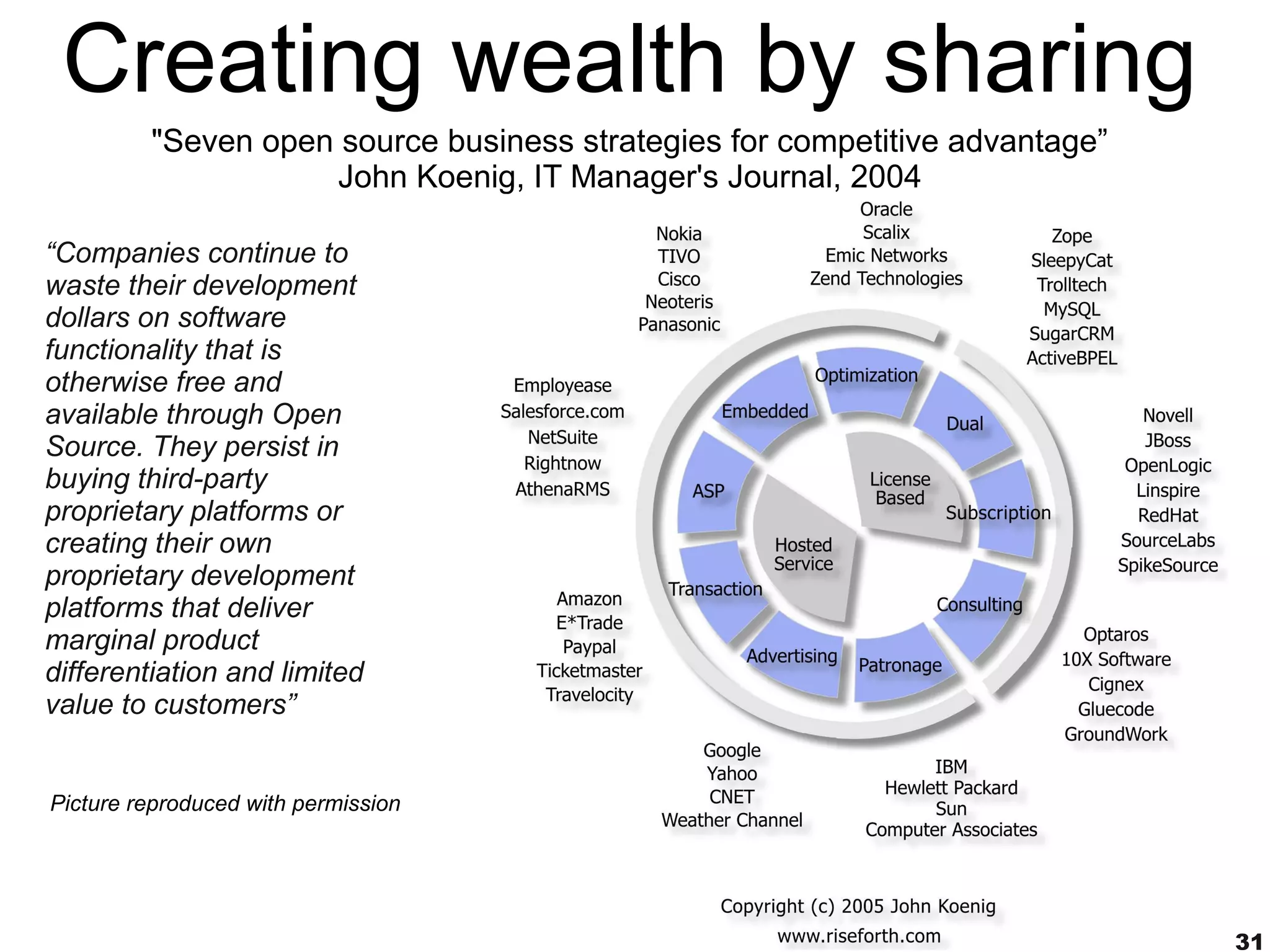
Creating wealth by sharing
         "Seven open source business strategies for competitive advantage”
                    John Koenig, IT Manager's Journal, 2004

“Companies continue to
waste their development
dollars on software
functionality that is
otherwise free and
available through Open
Source. They persist in
buying third-party
proprietary platforms or
creating their own
proprietary development
platforms that deliver
marginal product
differentiation and limited
value to customers”


Picture reproduced with permission


                                                                             31
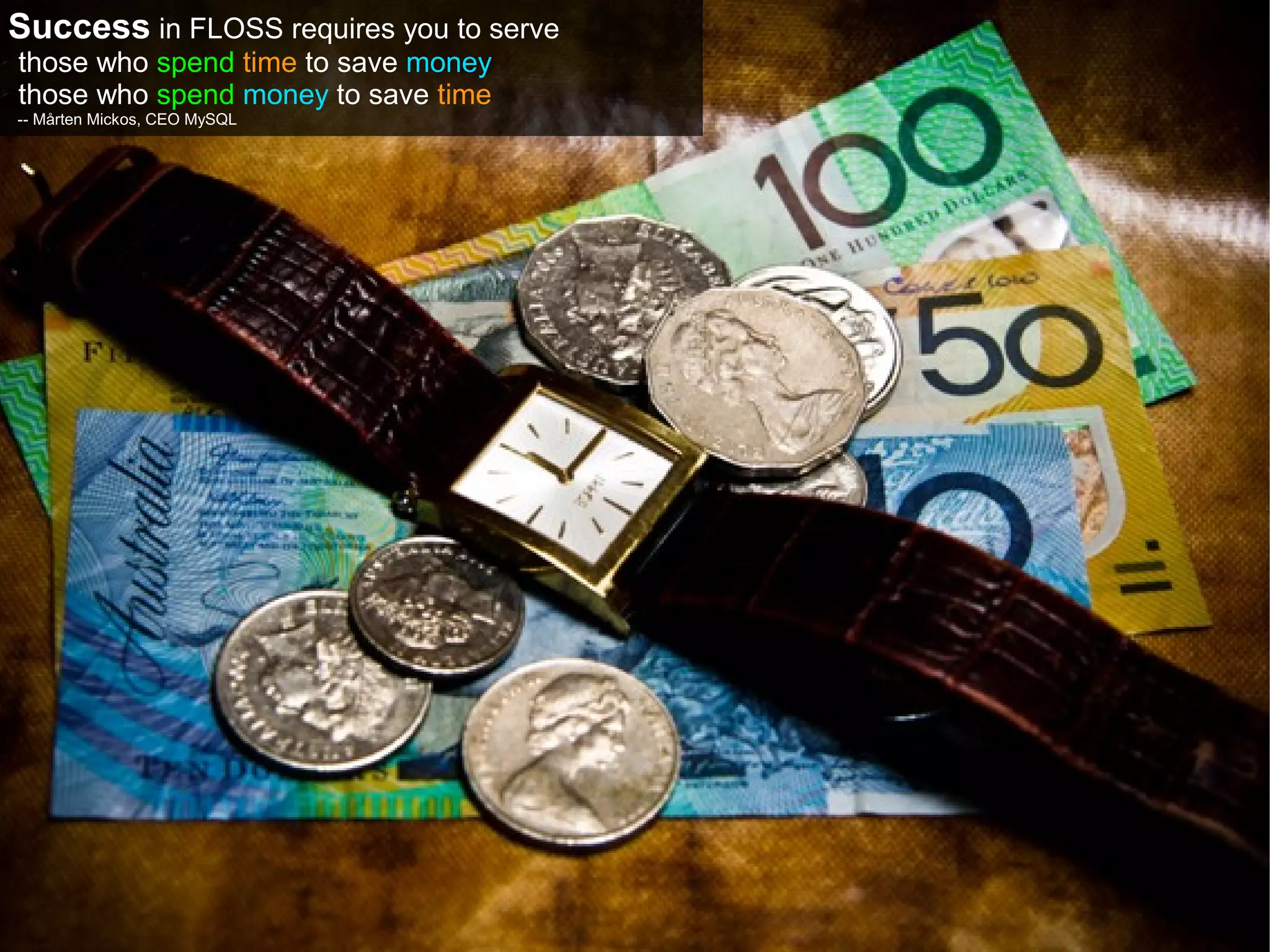
Success in FLOSS requires you to serve
➢ those who spend time to save money
➢ those who spend money to save time

    -- Mårten Mickos, CEO MySQL


                                         32
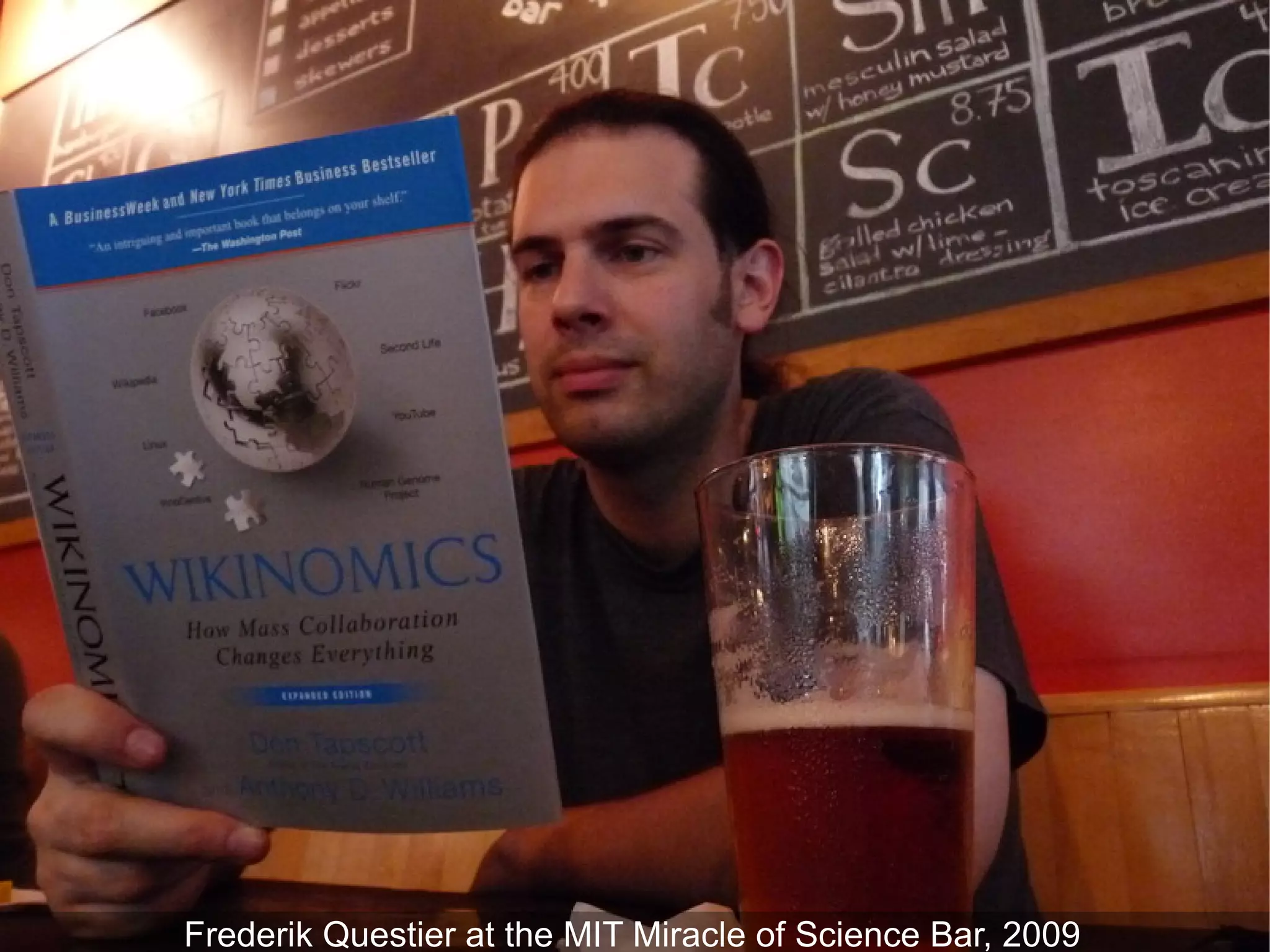
Frederik Questier at the MIT Miracle of Science Bar, 2009   33
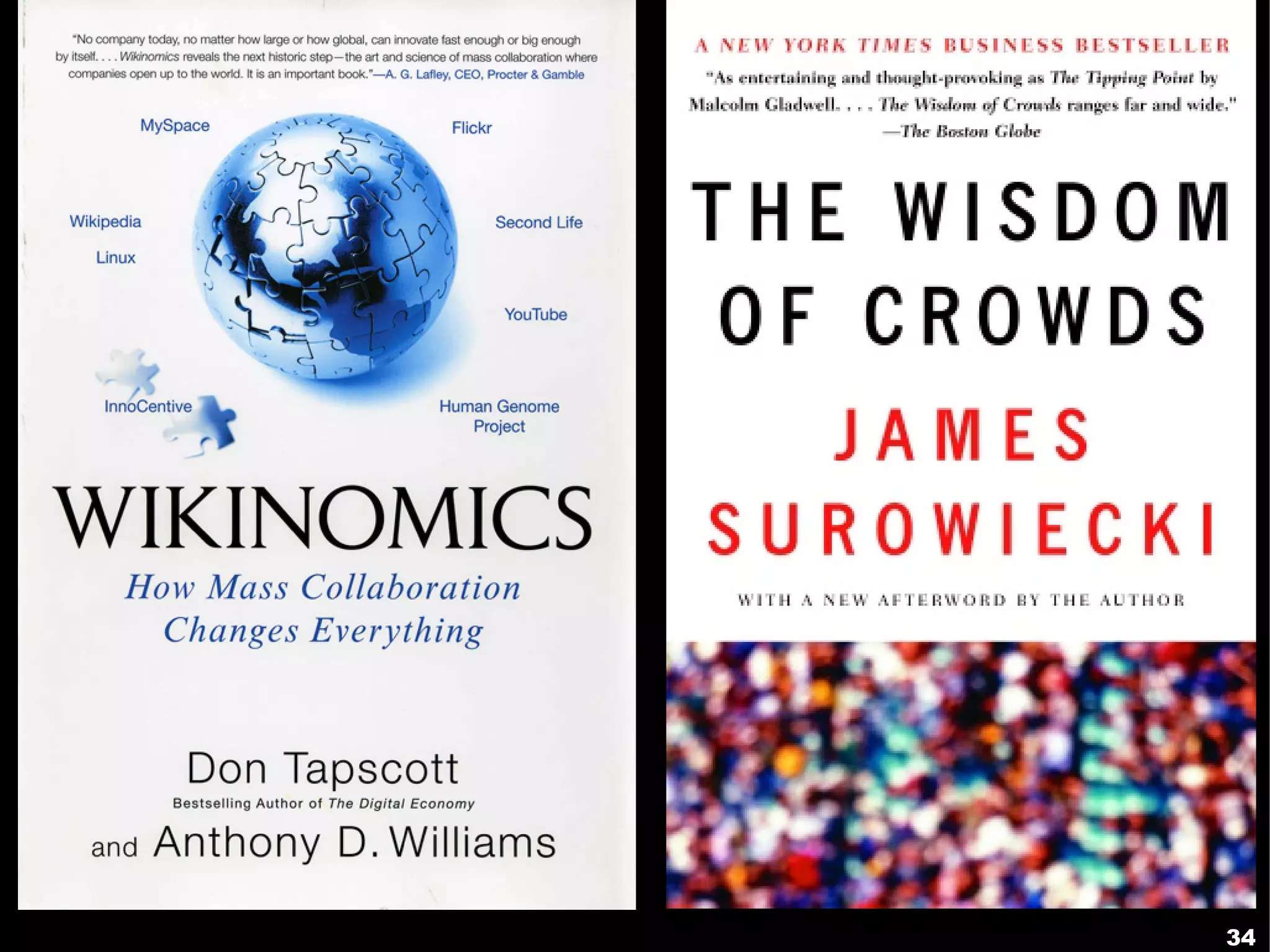
34
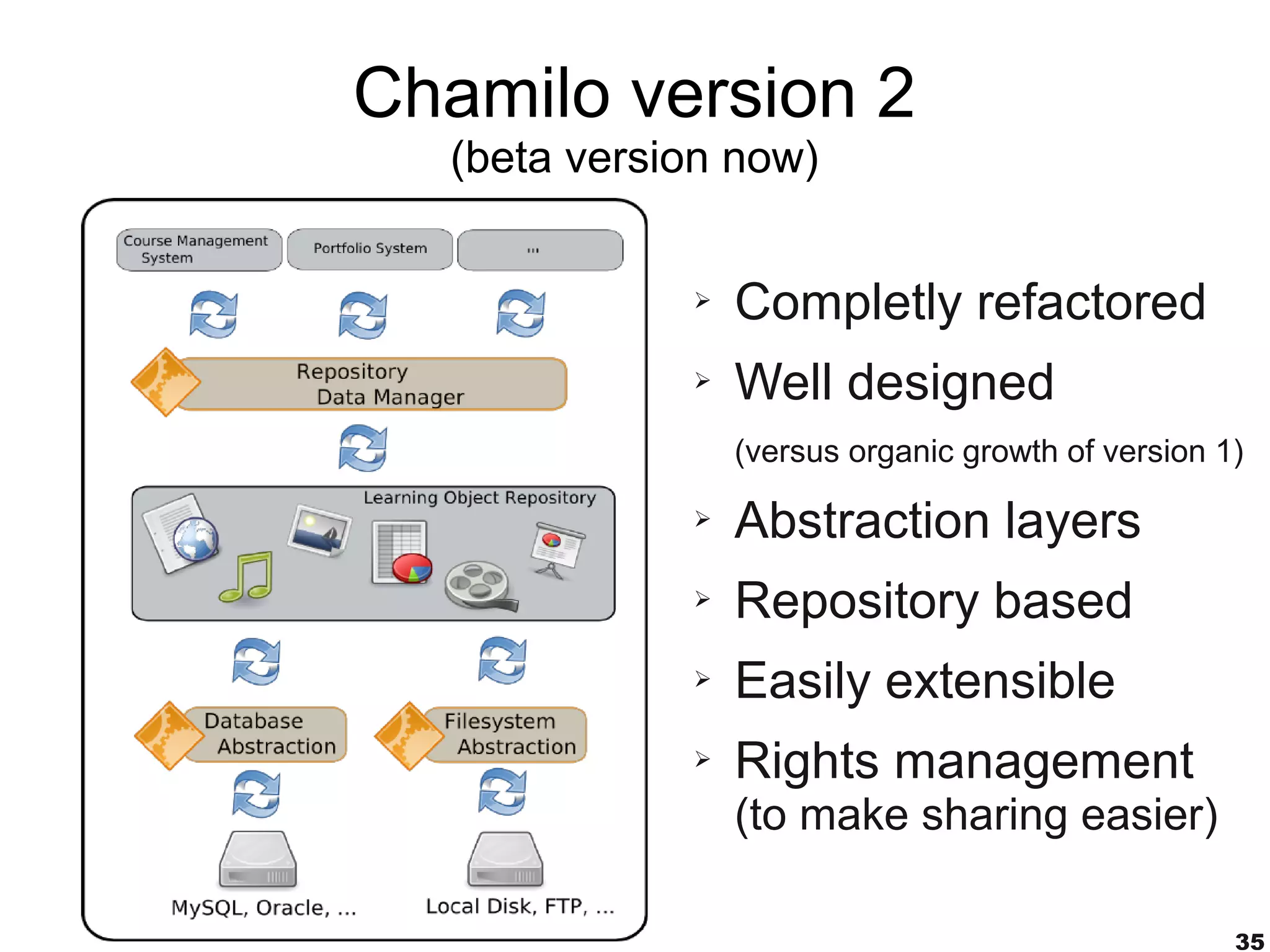
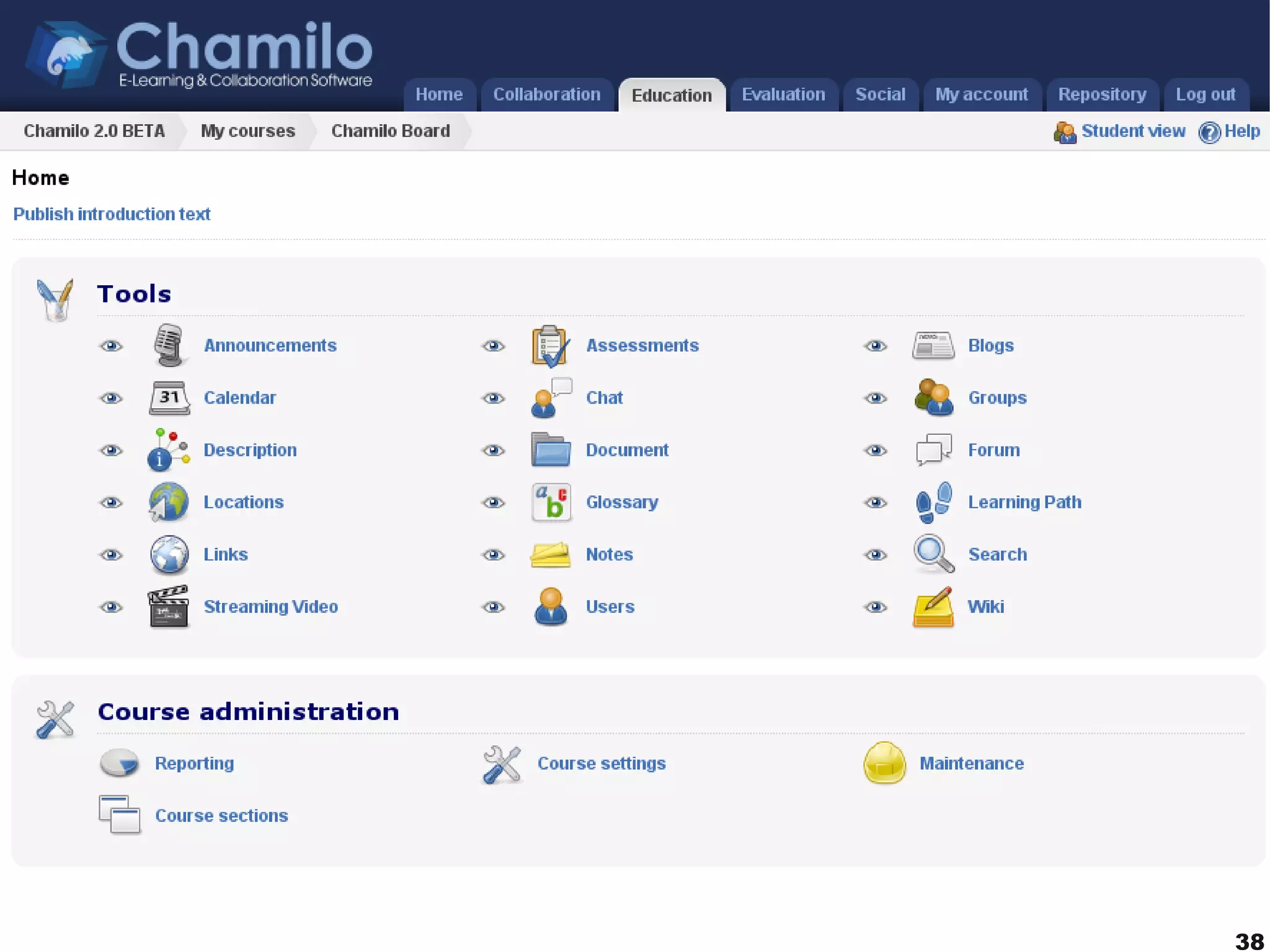
Chamilo version 2
  (beta version now)


             ➢   Completly refactored
             ➢   Well designed
                 (versus organic growth of version 1)

             ➢   Abstraction layers
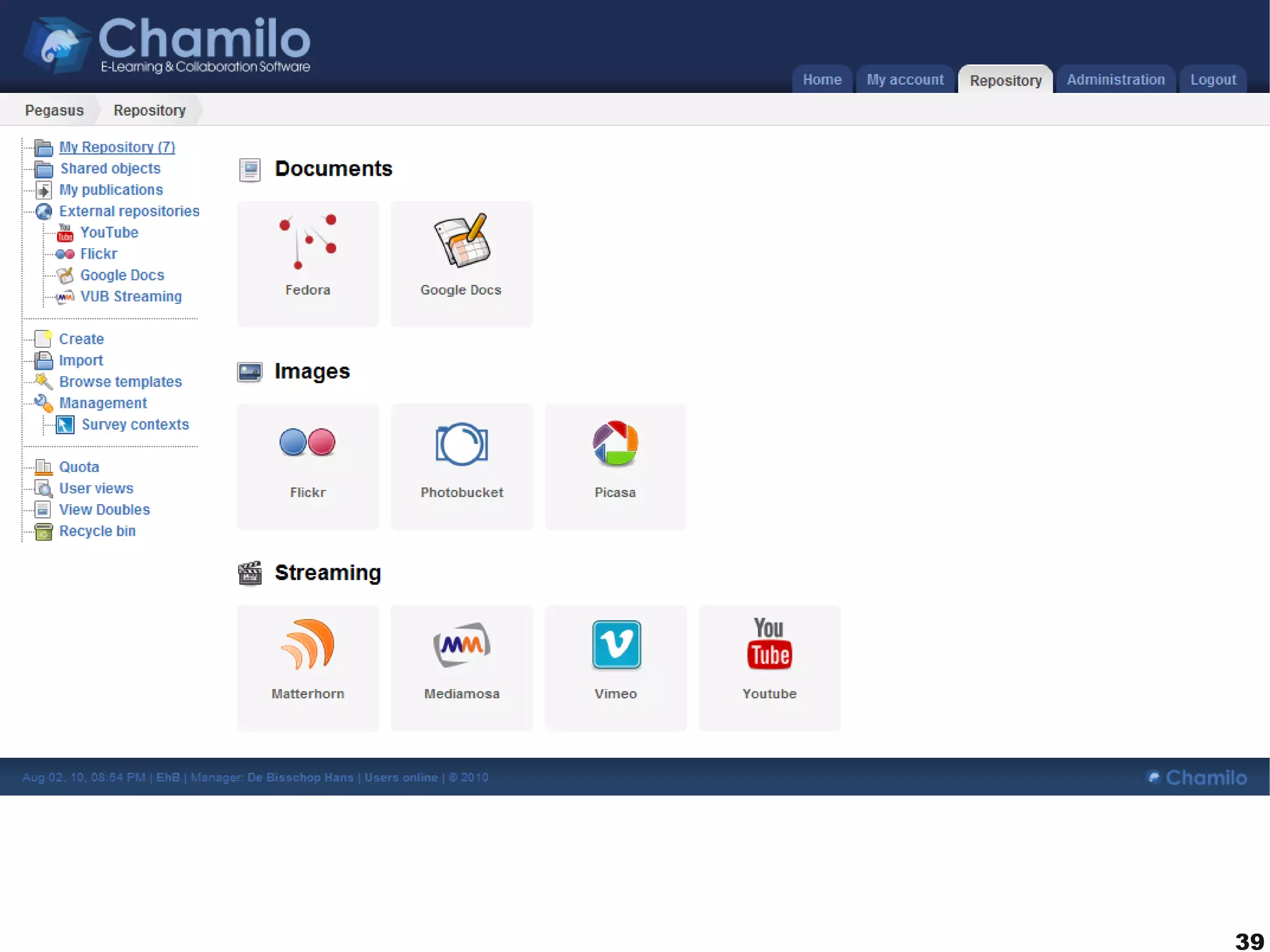
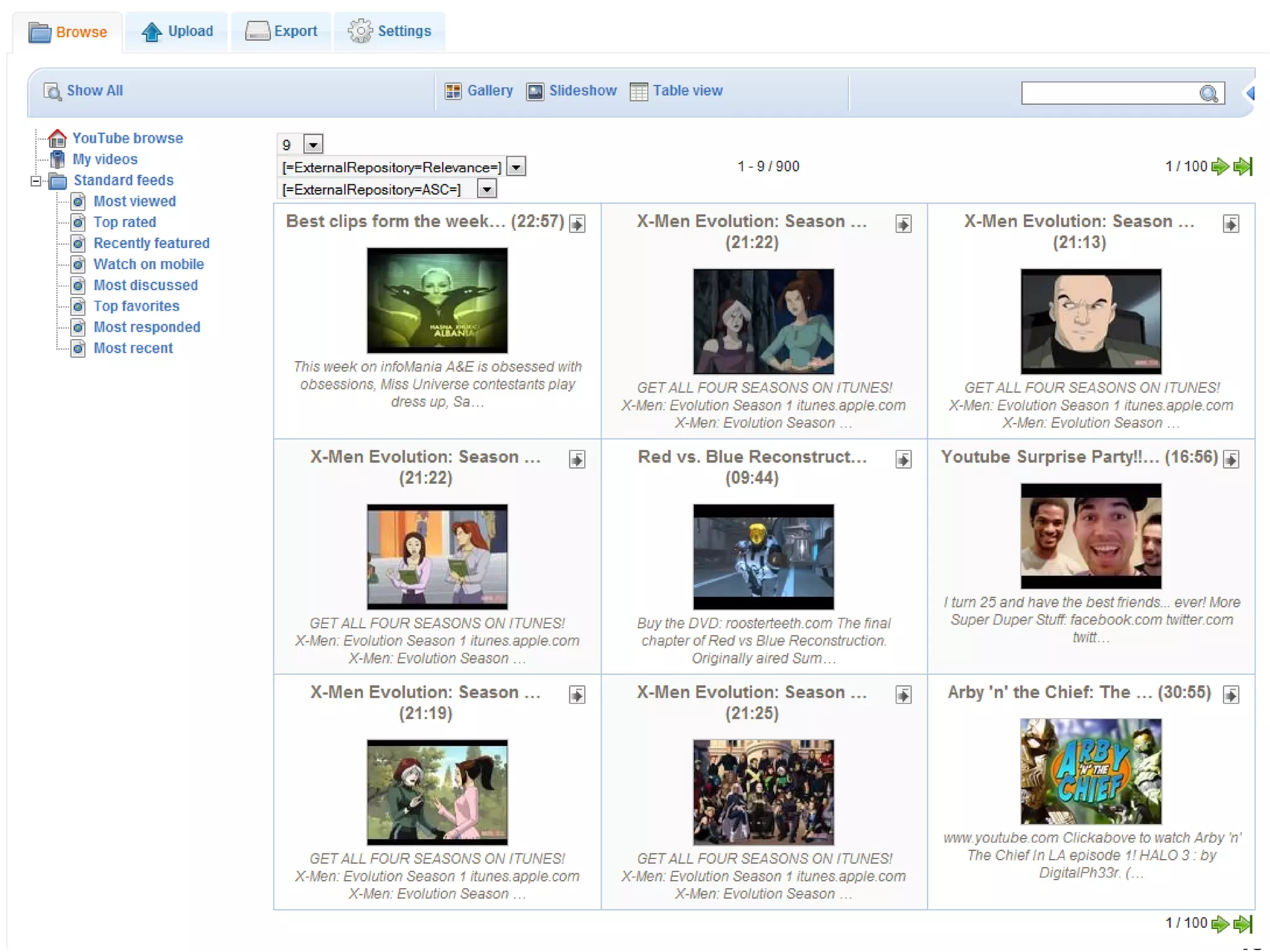
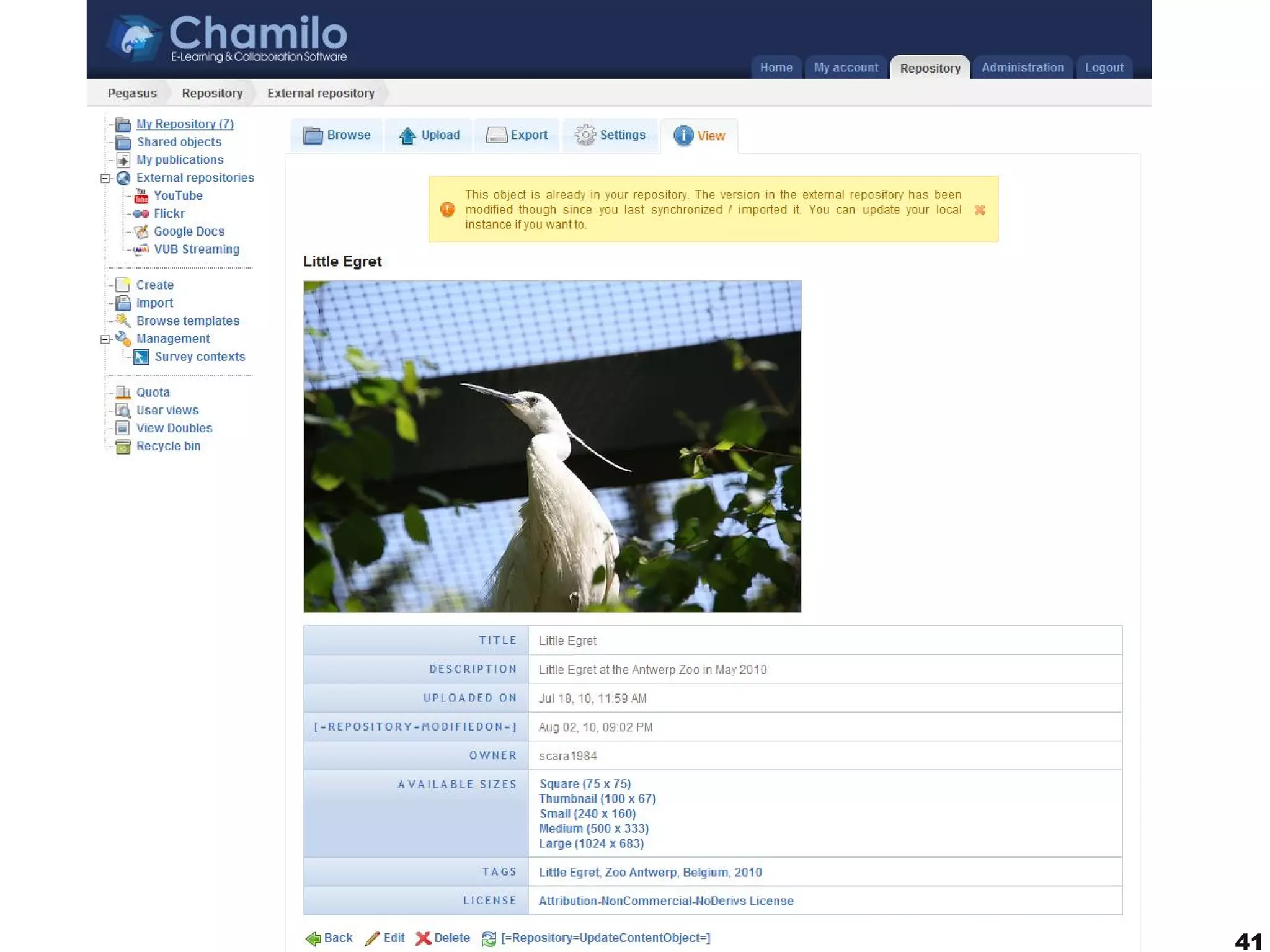
             ➢   Repository based
             ➢   Easily extensible
             ➢   Rights management
                 (to make sharing easier)

                                                    35
36
37
38
39
40
41
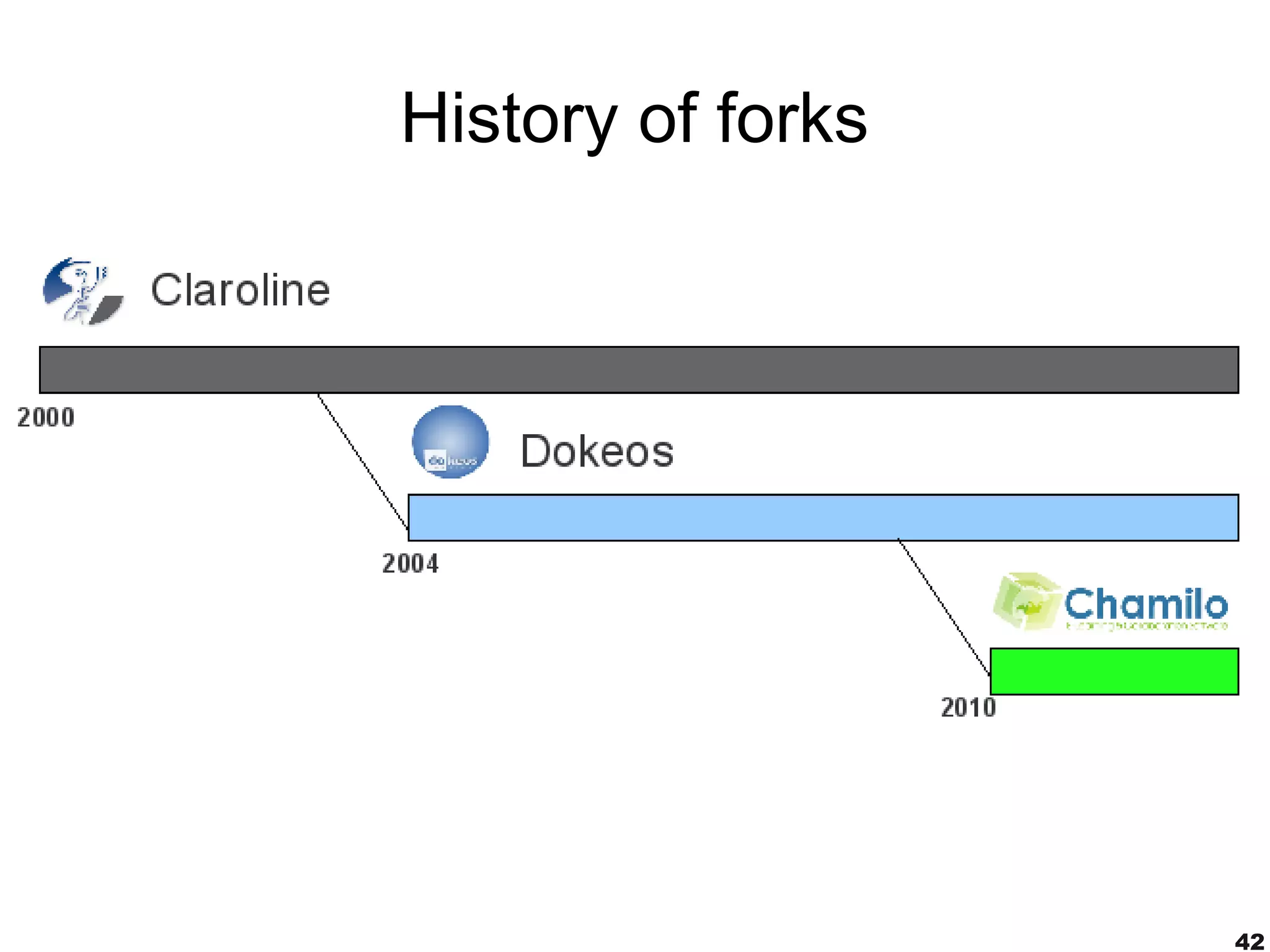
History of forks


                   42
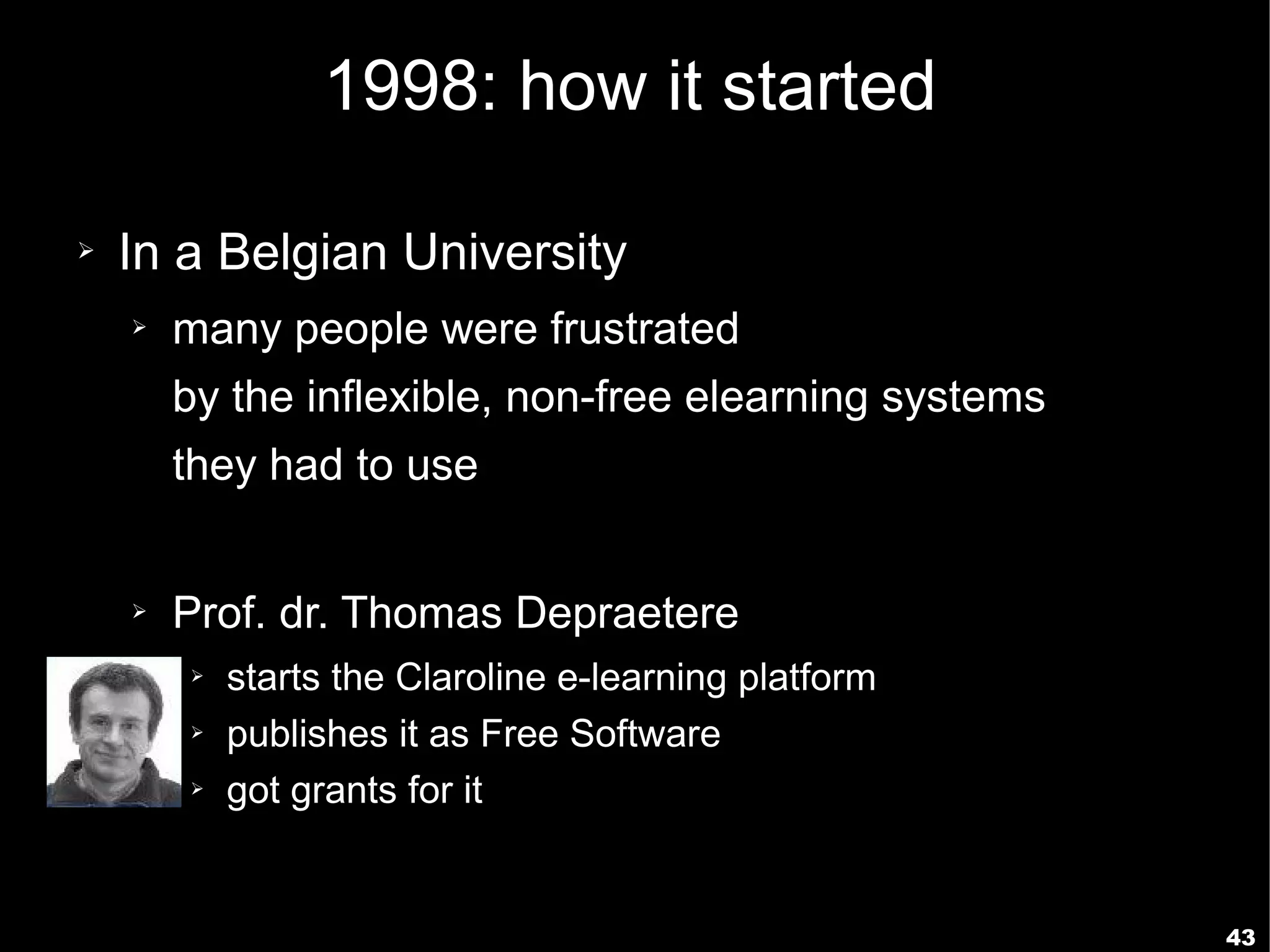
1998: how it started

➢   In a Belgian University
    ➢   many people were frustrated
        by the inflexible, non-free elearning systems
        they had to use


    ➢   Prof. dr. Thomas Depraetere
        ➢   starts the Claroline e-learning platform
        ➢   publishes it as Free Software
        ➢   got grants for it


                                                        43
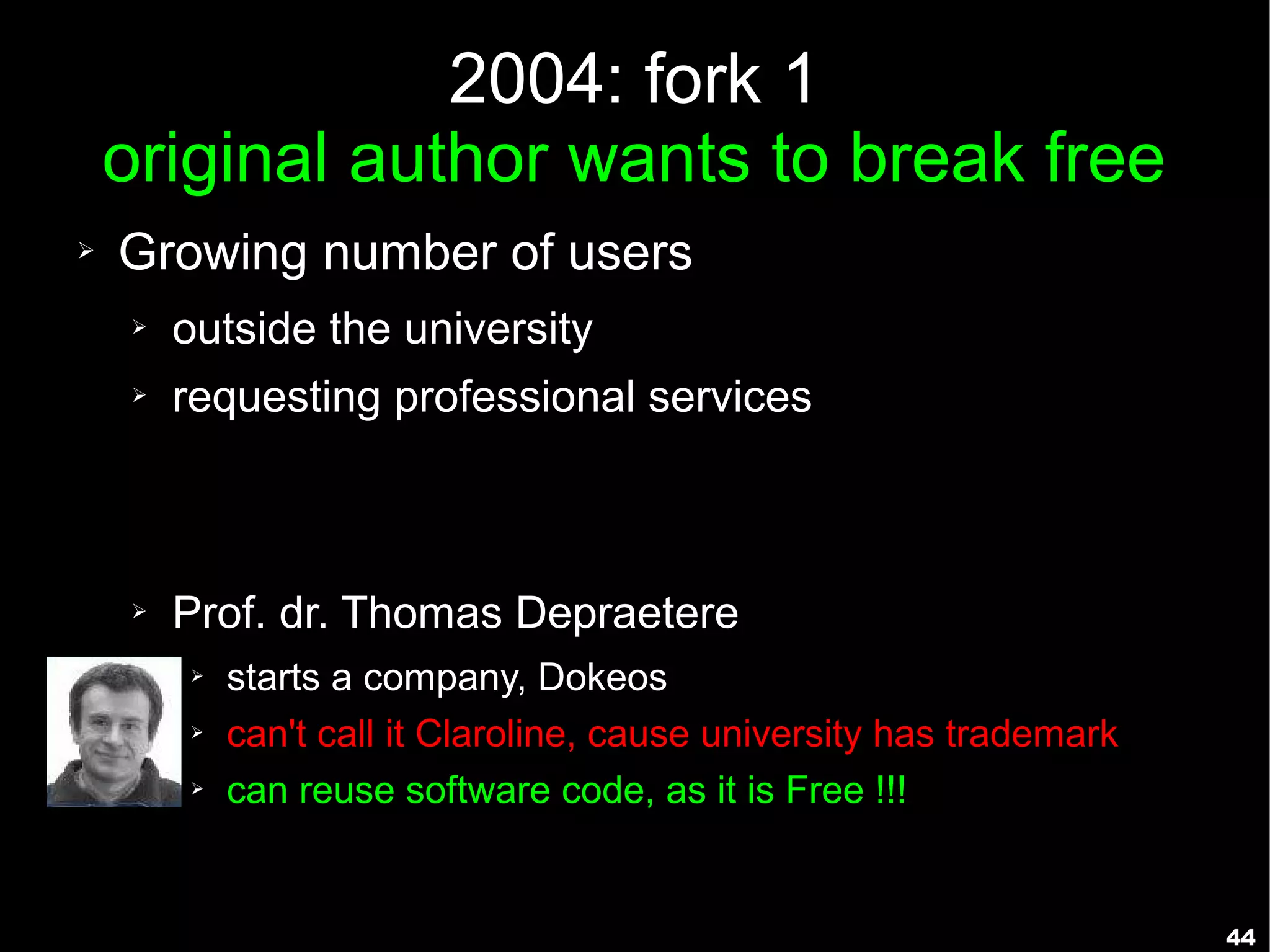
2004: fork 1
    original author wants to break free
➢   Growing number of users
    ➢   outside the university
    ➢   requesting professional services


    ➢   Prof. dr. Thomas Depraetere
        ➢   starts a company, Dokeos
        ➢   can't call it Claroline, cause university has trademark
        ➢   can reuse software code, as it is Free !!!


                                                                      44
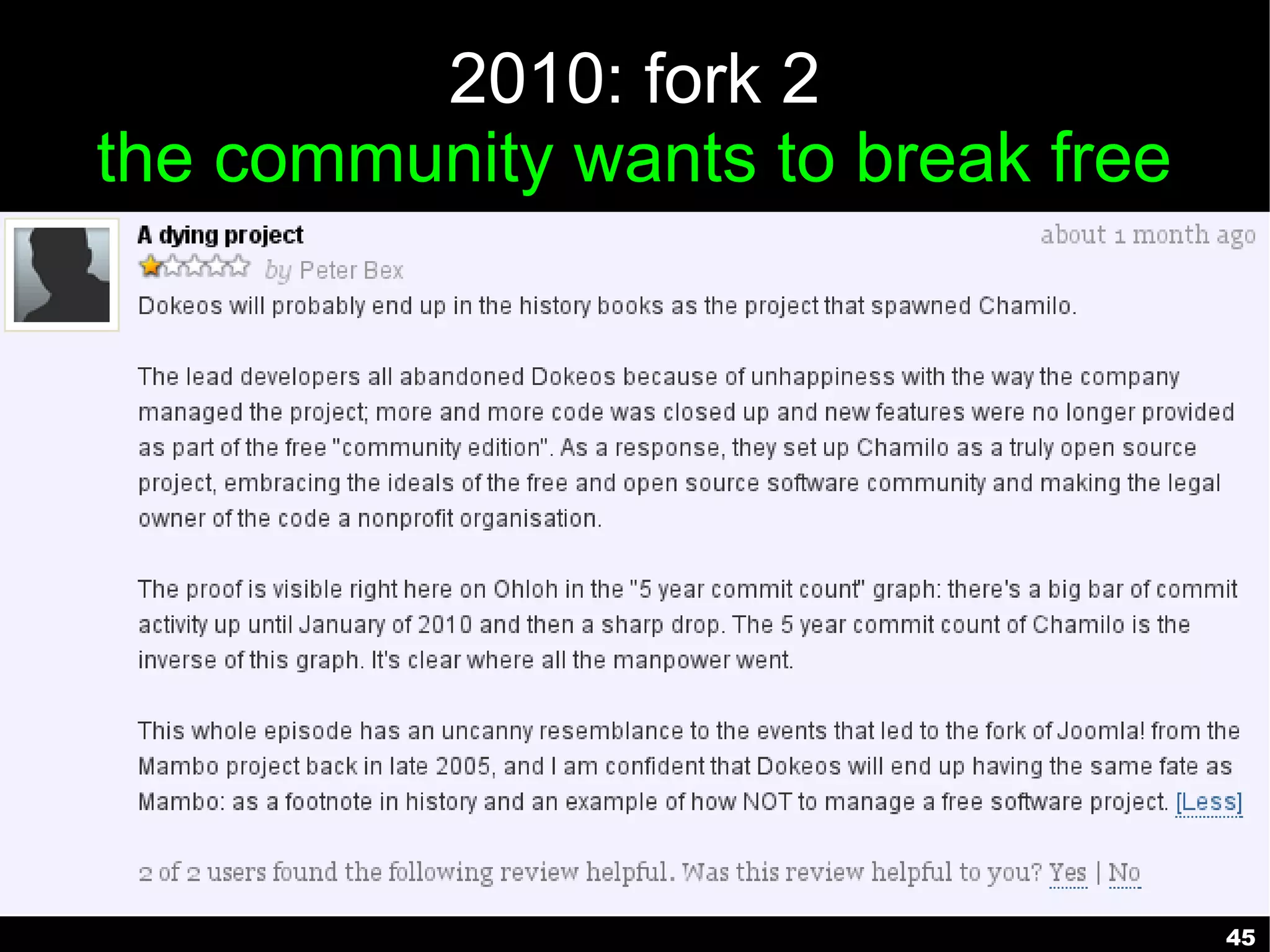
2010: fork 2
the community wants to break free


                                    45
Future?
         From forks to collaboration?

➢   First talks between Chamilo and Claroline
    about common kernel in next versions

➢   Consortium of FLOSS e-learning platforms?
    ➢   standards for exchanging modules
        ➢   (besides content and users)


                                                46
Build and Manage
a Community?


                   47
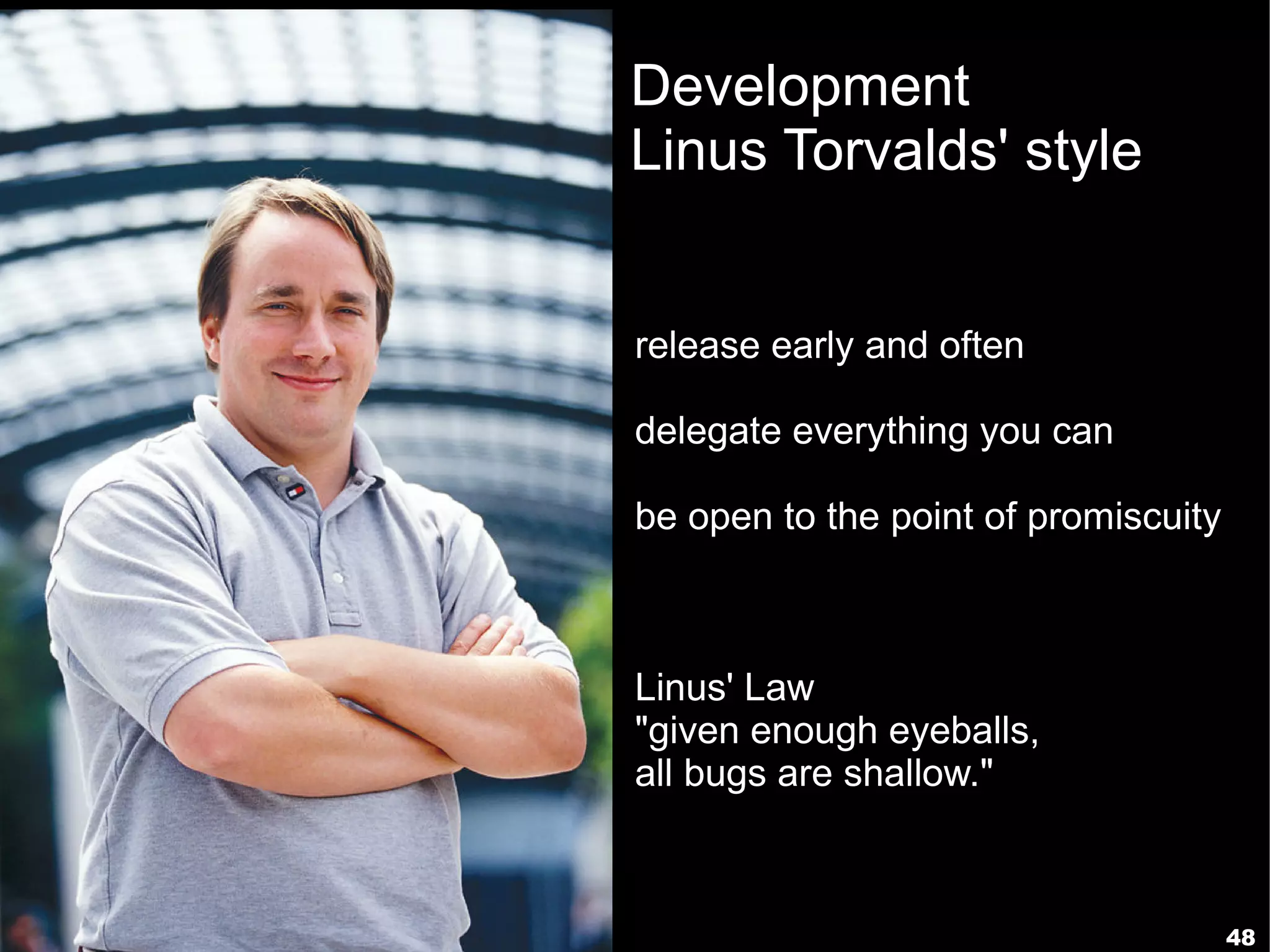
Development
Linus Torvalds' style


release early and often

delegate everything you can

be open to the point of promiscuity


Linus' Law
"given enough eyeballs,
all bugs are shallow."


                                      48
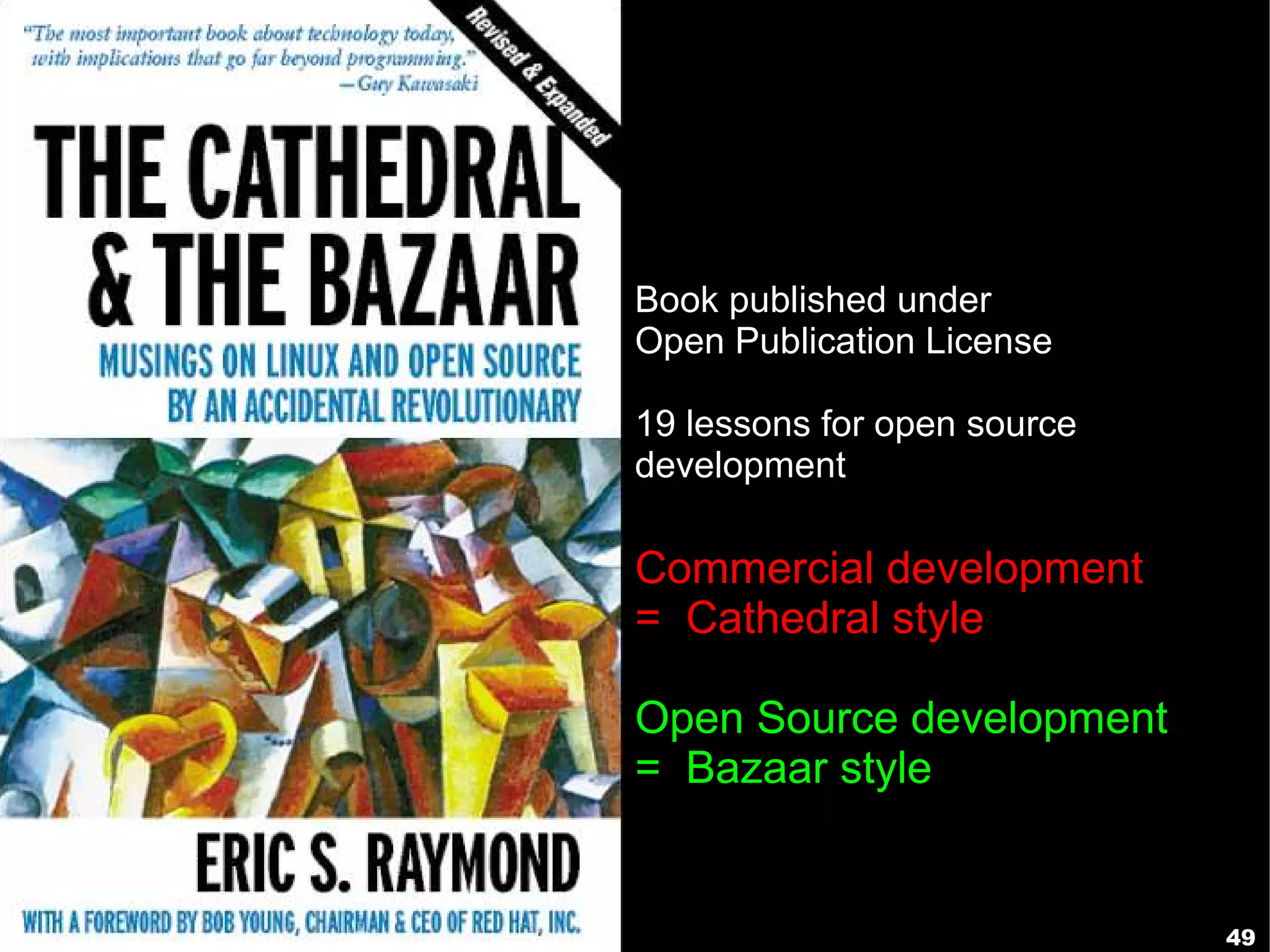
Book published under
Open Publication License

19 lessons for open source
development

Commercial development
= Cathedral style

Open Source development
= Bazaar style


                             49
The Cathedral and the Bazaar
           about developers


1. Every good work of software
        starts by scratching a developer's personal itch.


2. Good programmers know what to write.
        Great ones know what to rewrite (and reuse).


                                                            50
The Cathedral and the Bazaar
              about users

6. Treating your users as co-developers is your least-hassle route
    to rapid code improvement and effective debugging.

7. Release early. Release often. And listen to your customers.

8. Given a large enough beta-tester and co-developer base,
    almost every problem will be characterized quickly
    and the fix obvious to someone.

11. The next best thing to having good ideas is
    recognizing good ideas from your users.
    Sometimes the latter is better.


                                                                     51
The Cathedral and the Bazaar
           about development

17. A security system is only as secure as its secret.
        Beware of pseudo-secrets.

18. To solve an interesting problem,
         start by finding a problem that is interesting to you.

19. Provided the development coordinator
        has a medium at least as good as the Internet,
        and knows how to lead without coercion,
        many heads are inevitably better than one.


                                                                  52
Aim BIG !


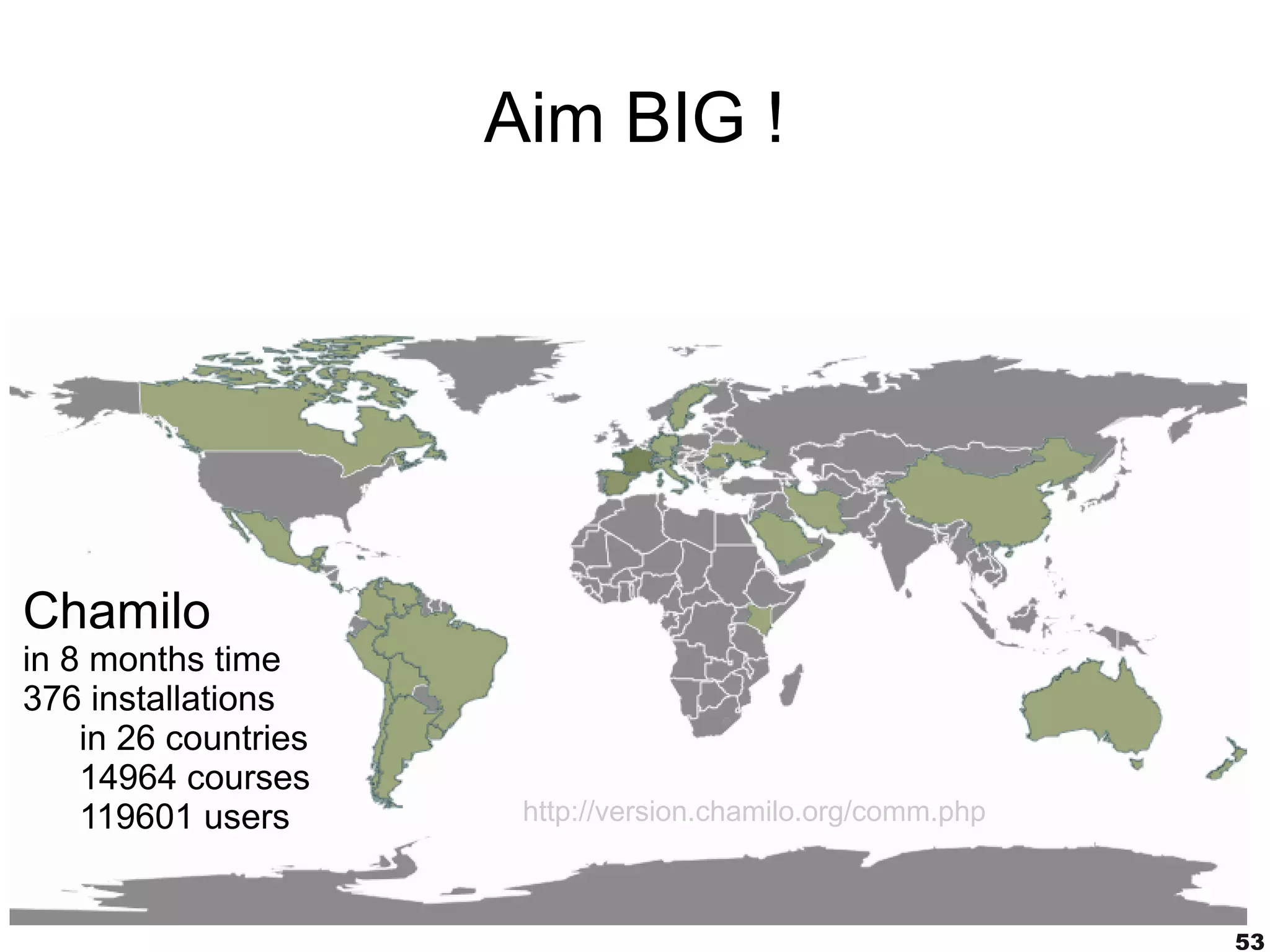
Chamilo
in 8 months time
376 installations
    in 26 countries
    14964 courses
    119601 users       http://version.chamilo.org/comm.php


                                                             53
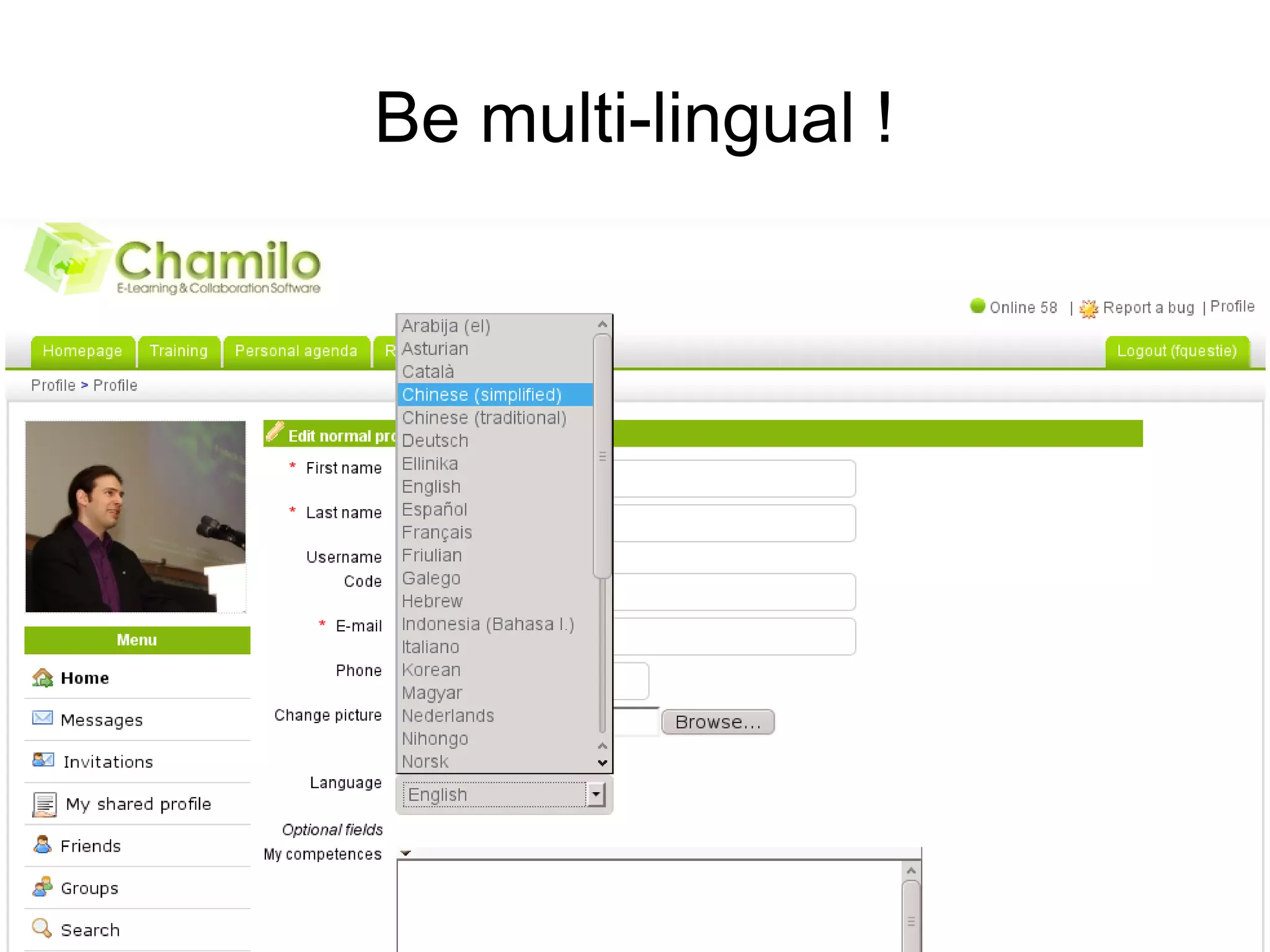
Be multi-lingual !


                     54
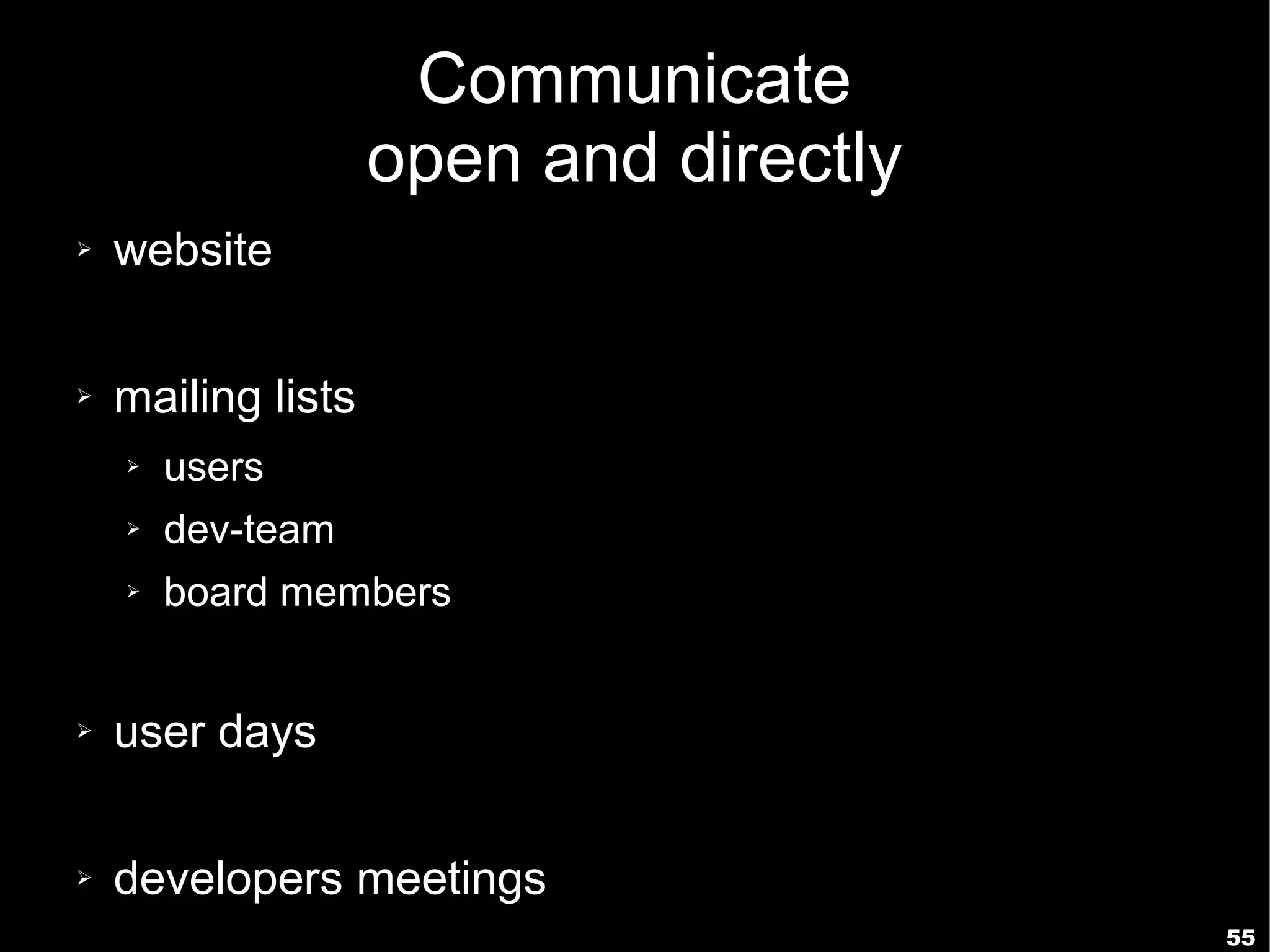
Communicate
                    open and directly
➢   website

➢   mailing lists
    ➢   users
    ➢   dev-team
    ➢   board members


➢   user days

➢   developers meetings
                                        55
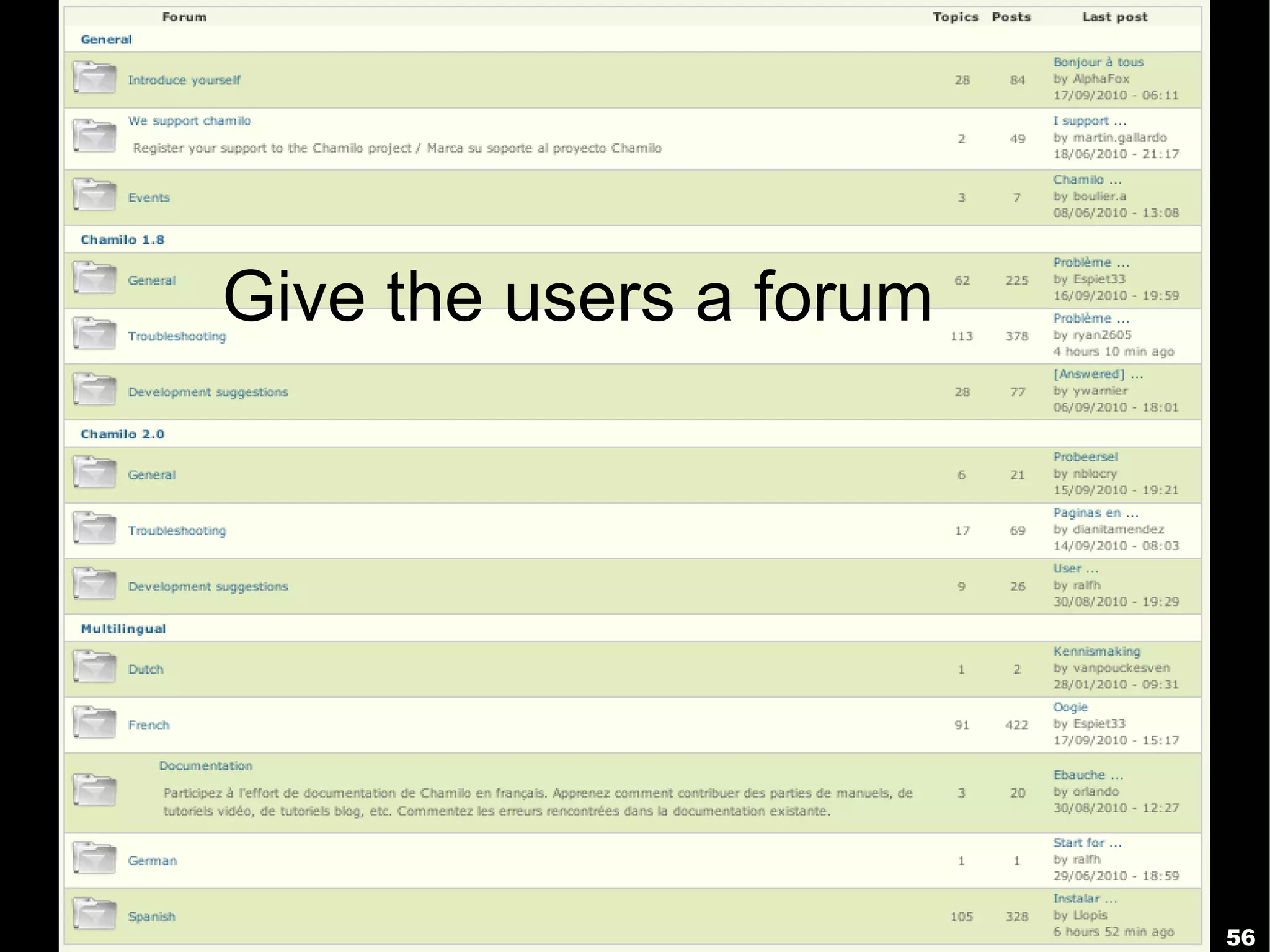
Give the users a forum


                         56
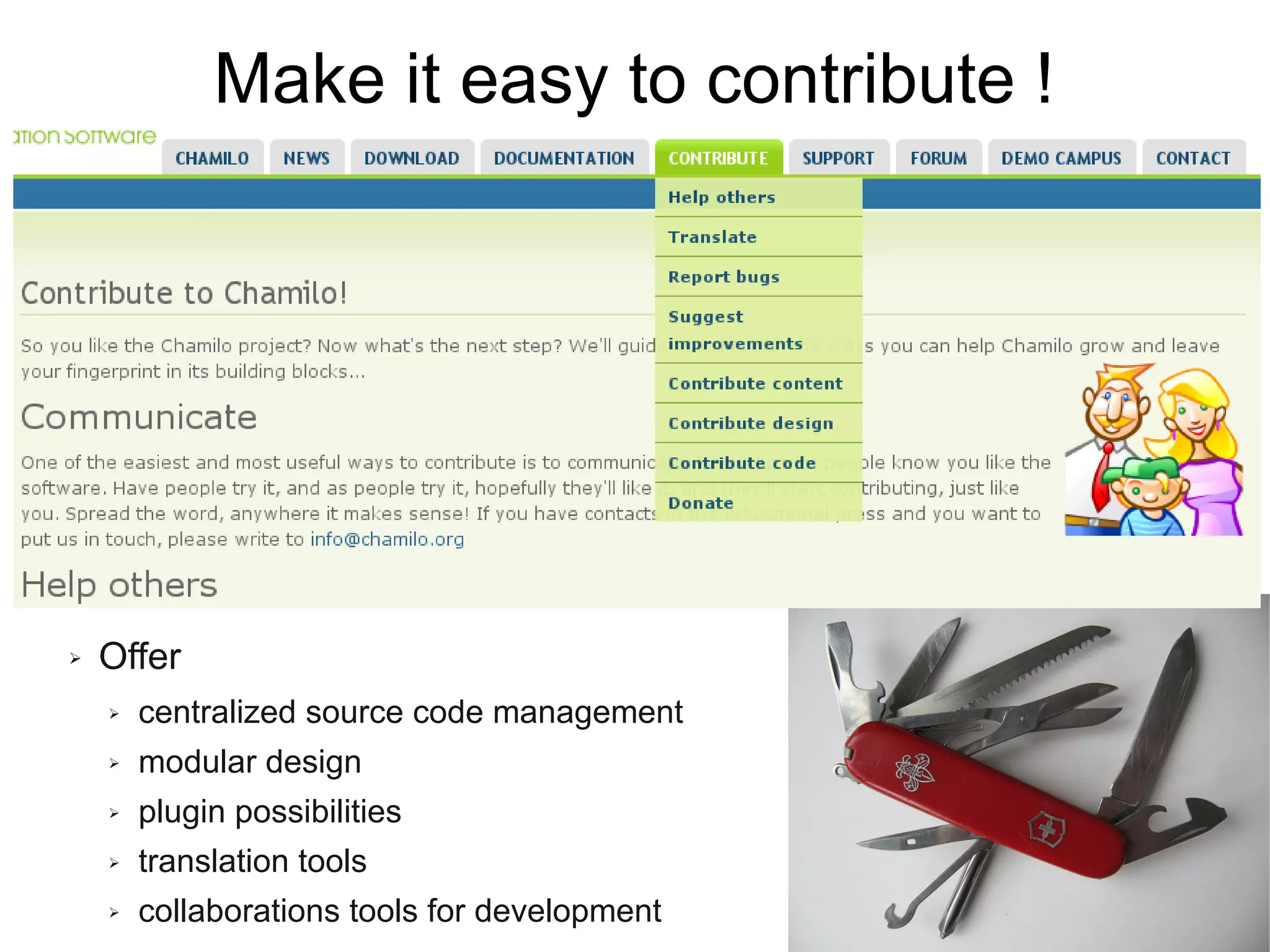
Make it easy to contribute !


➢   Offer
    ➢   centralized source code management
    ➢   modular design
    ➢   plugin possibilities
    ➢   translation tools
    ➢   collaborations tools for development
                                               57
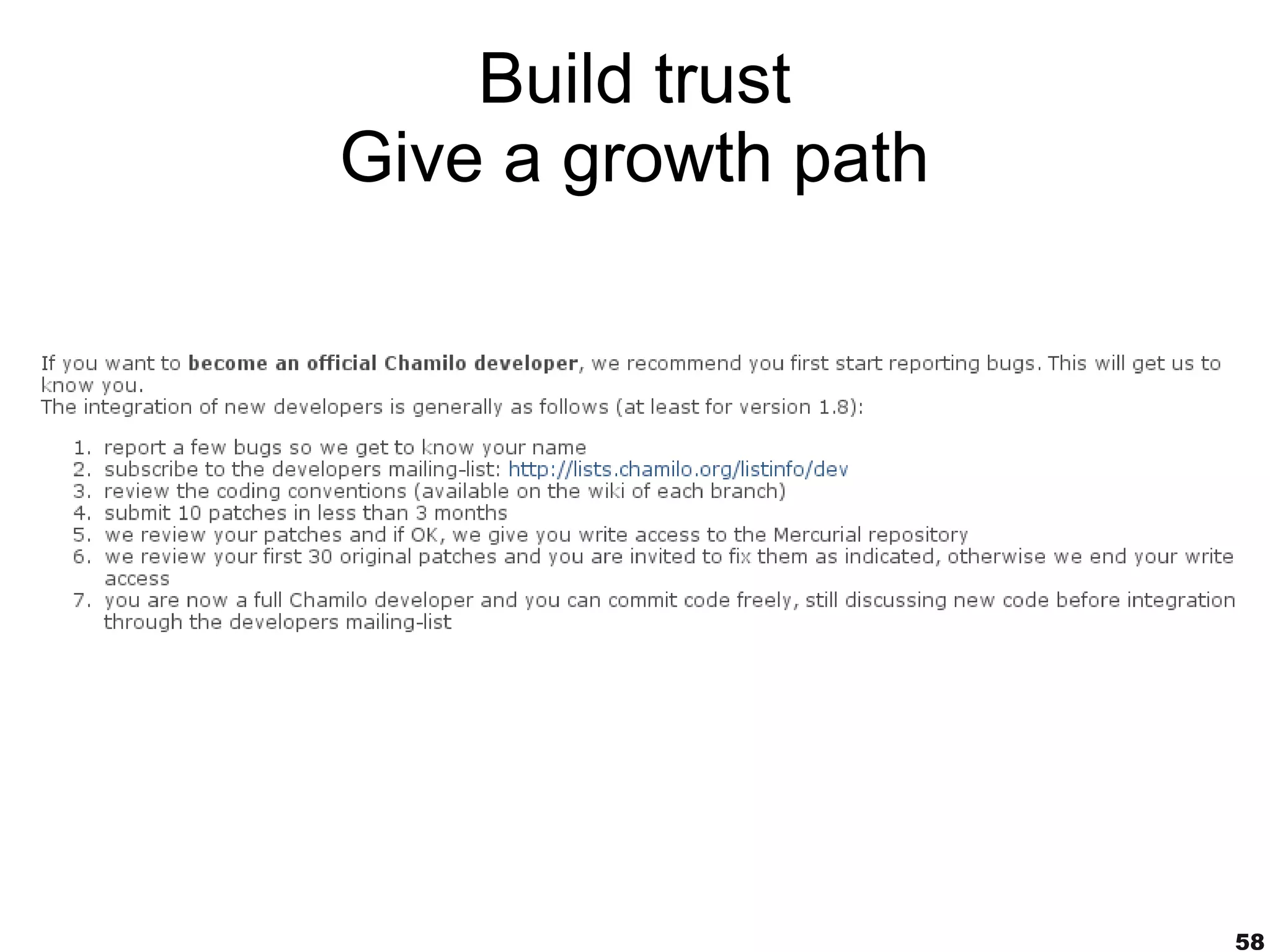
Build trust
Give a growth path


                     58
Analyse and monitor
 your performance


                      59
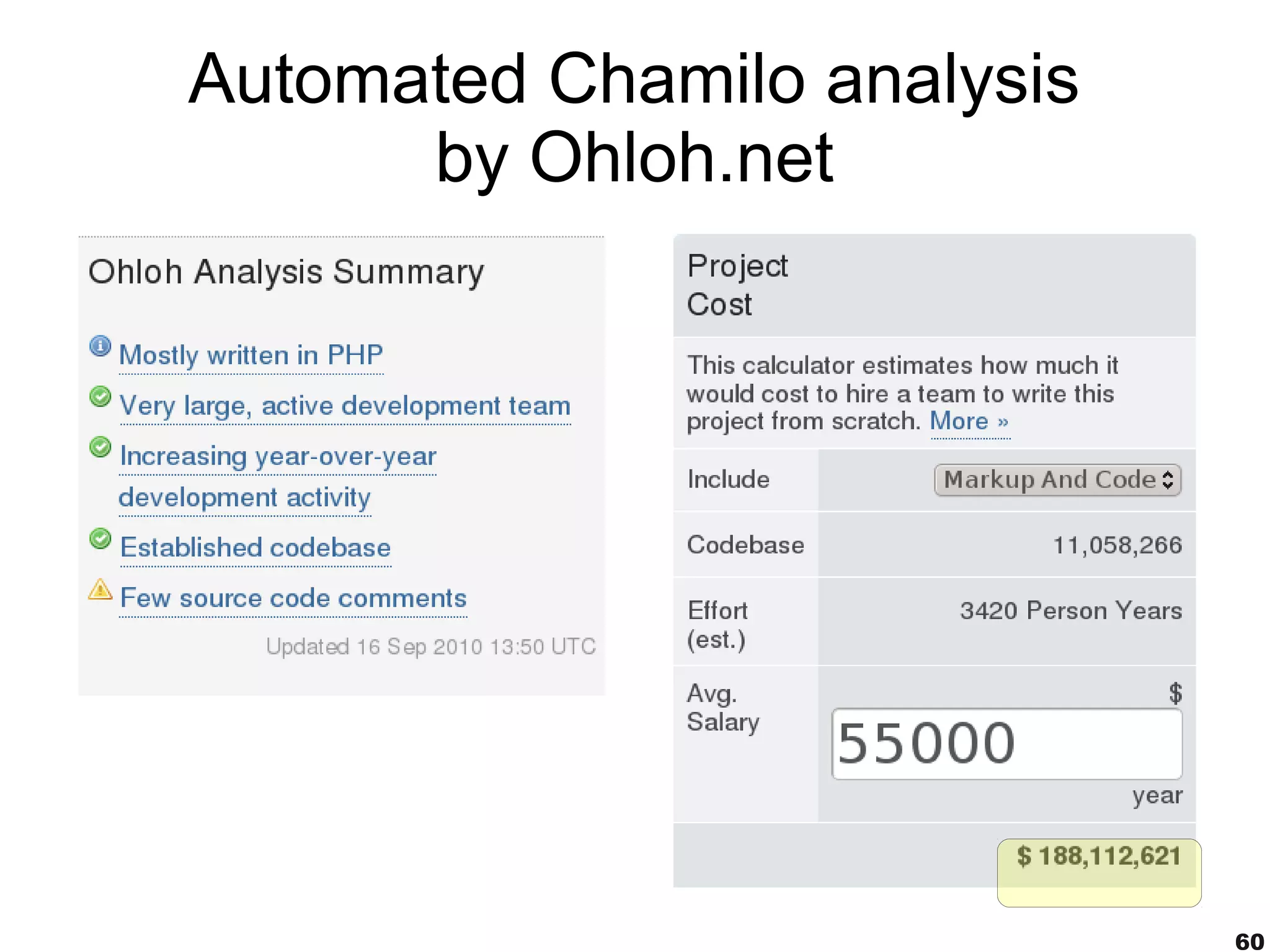
Automated Chamilo analysis
      by Ohloh.net


                             60
61
62
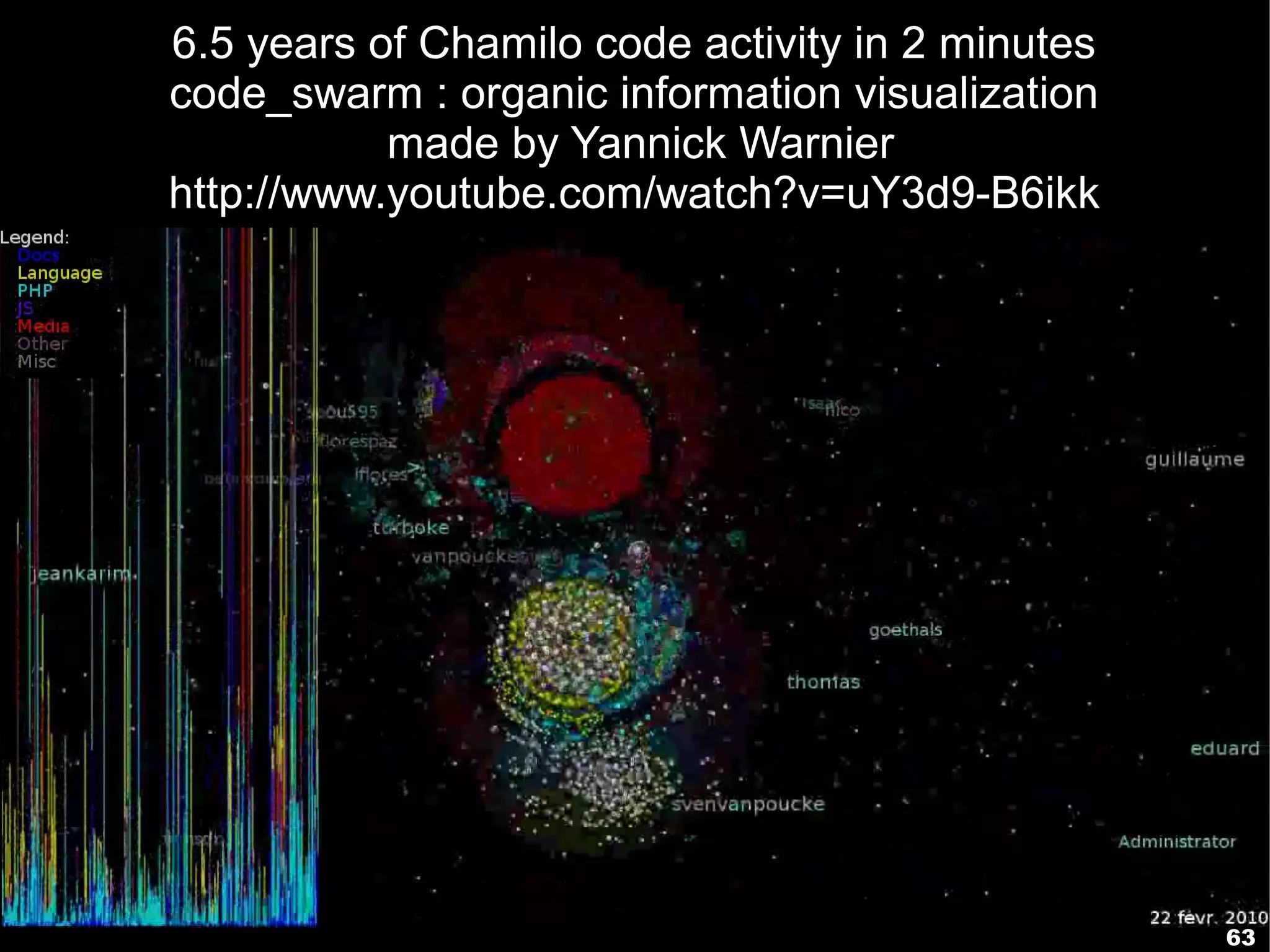
6.5 years of Chamilo code activity in 2 minutes
code_swarm : organic information visualization
           made by Yannick Warnier
http://www.youtube.com/watch?v=uY3d9-B6ikk


                                                  63
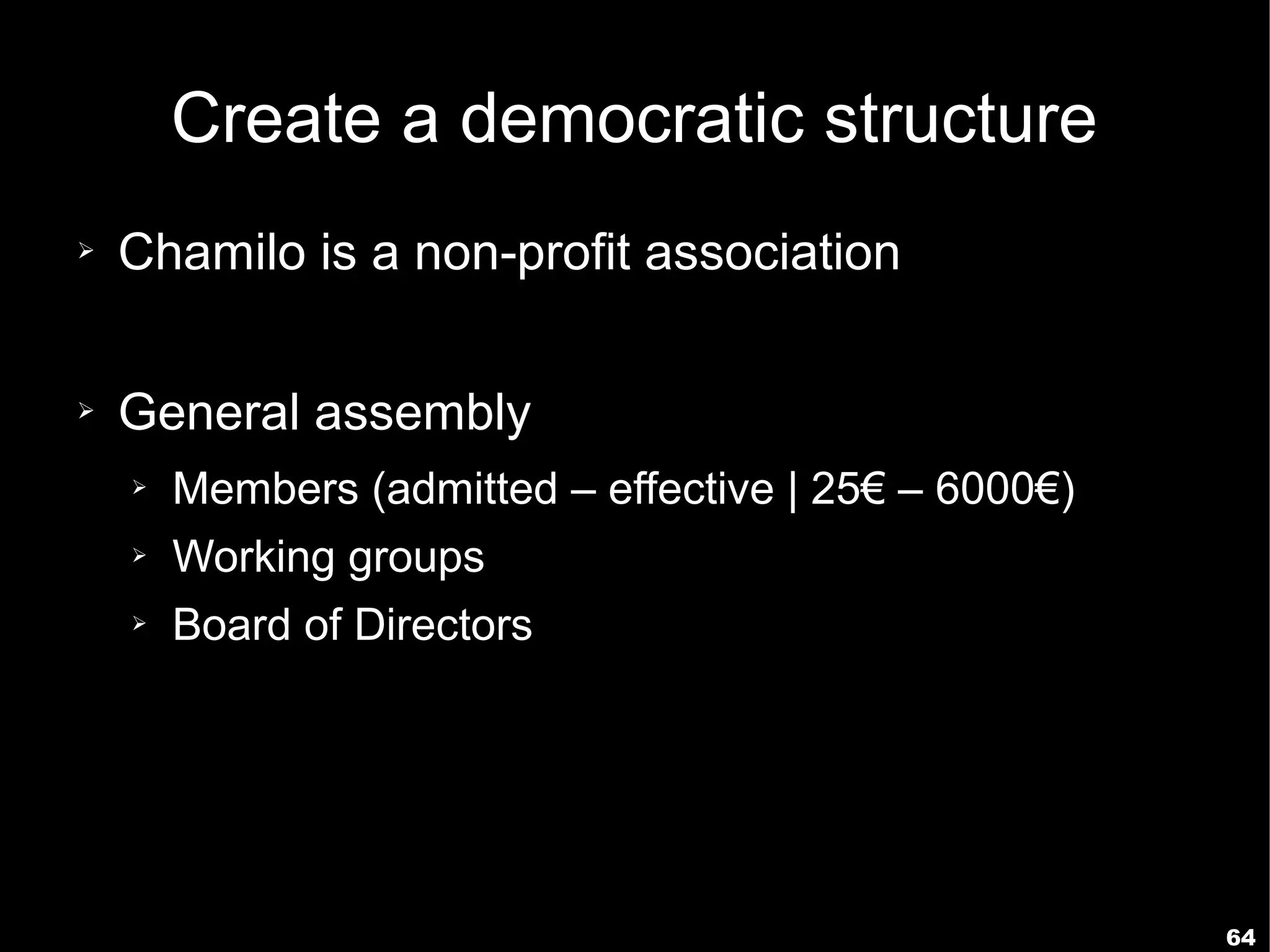
Create a democratic structure
➢   Chamilo is a non-profit association

➢   General assembly
    ➢   Members (admitted – effective | 25€ – 6000€)
    ➢   Working groups
    ➢   Board of Directors


                                                       64
Foster an ecosystem
➢   Users
➢   Developers
➢   Official service providers
    ➢   certification


                                     65
Advantages for university
            proprietary → FLOSS VLE
➢   co-decide the direction of development
➢   create extensions
    ➢   user requested
    ➢   research driven innovation
➢   more contacts with other educational institutions
➢   contributions from others
➢   programming projects for students
➢   better knowledge of the system
    ➢   better trouble solving
➢   possibilities for funding or for selling services
➢   more for the same amount of investment
                                                        66
Advantages for university
    open sourcing own developments
➢   Get contributions from others
➢   Start new collaborations
➢   Broaden the expertise
➢   Sustainability
➢   Reputation
➢   Ethical
➢   It's fun!


                                     67
DARE
TO SHARE


           68
Copyright acknowledgements
➢   Belgium in EU Map CC-by-sa by NuclearVacuum
➢   Belgium map, Public Domain
➢   The Peasant Wedding by Pieter Bruegel the elder 1568
➢   http://en.wikipedia.org/wiki/File:Asterix_in_Belgium.jpg
➢   Atomium building © www.atomium.be - SABAM 2010; photo CC-by-nc-sa by fatboyke Luc B
➢   Atomium building © www.atomium.be - SABAM 2010; photo CC-by-sa by Emilio Garcia
➢   Gilles de Binche CC-by-nc-nd by Fabrice Huin
➢   Saxophone CC-by-nc-nd by Bruno Bollaert
➢   Graspop Metal Meeting Festival 2008 CC-by-sa by Jtesla16
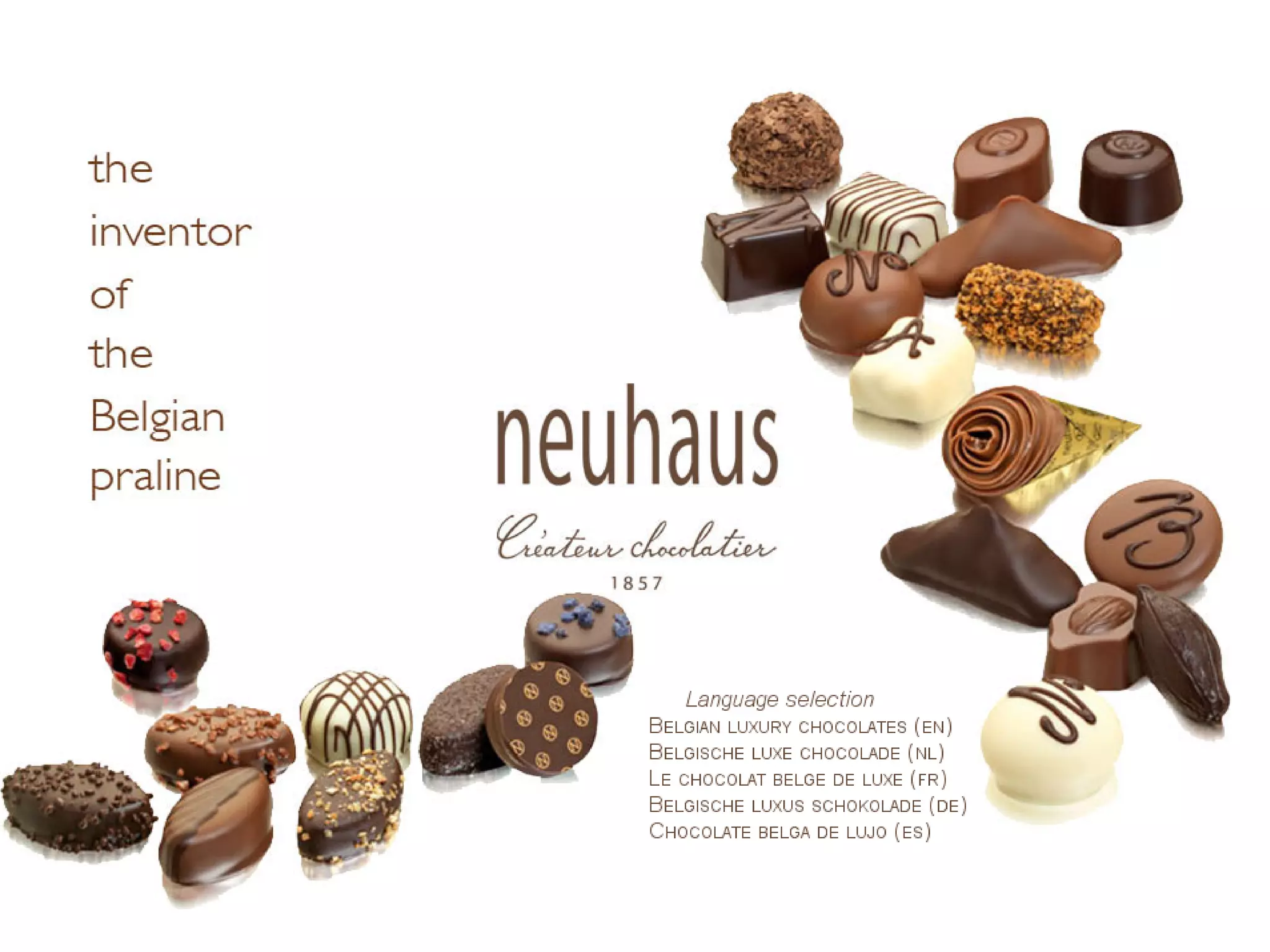
➢   Pralines, screenshot Neuhaus website
➢   Moules frites: CC-by-nc-sa by poluz – Nicola
➢   Belgian Beers: CC-by-nc-sa by Adam Lang
➢   Brussels Waffle CC-by-sa by David Monniaux
➢   Screenshota http://www.chamilo.org/
➢   Screenshots http://Ohloh.net
➢   Time Money CC-by by Nina Matthews
➢   Birds CC-by-nc-nd by Denis Collette
➢   Swiss Army Knife CC-by-sa-nc by herzogbr
➢   Share matches CC-by-nc-nd by Josh Harper
➢   Social Network CC-by by Frederik Questier
Active/Manipulative - Collaborative - Complex - Constructive - Contextualized - Conversational - Intentional - Reflective


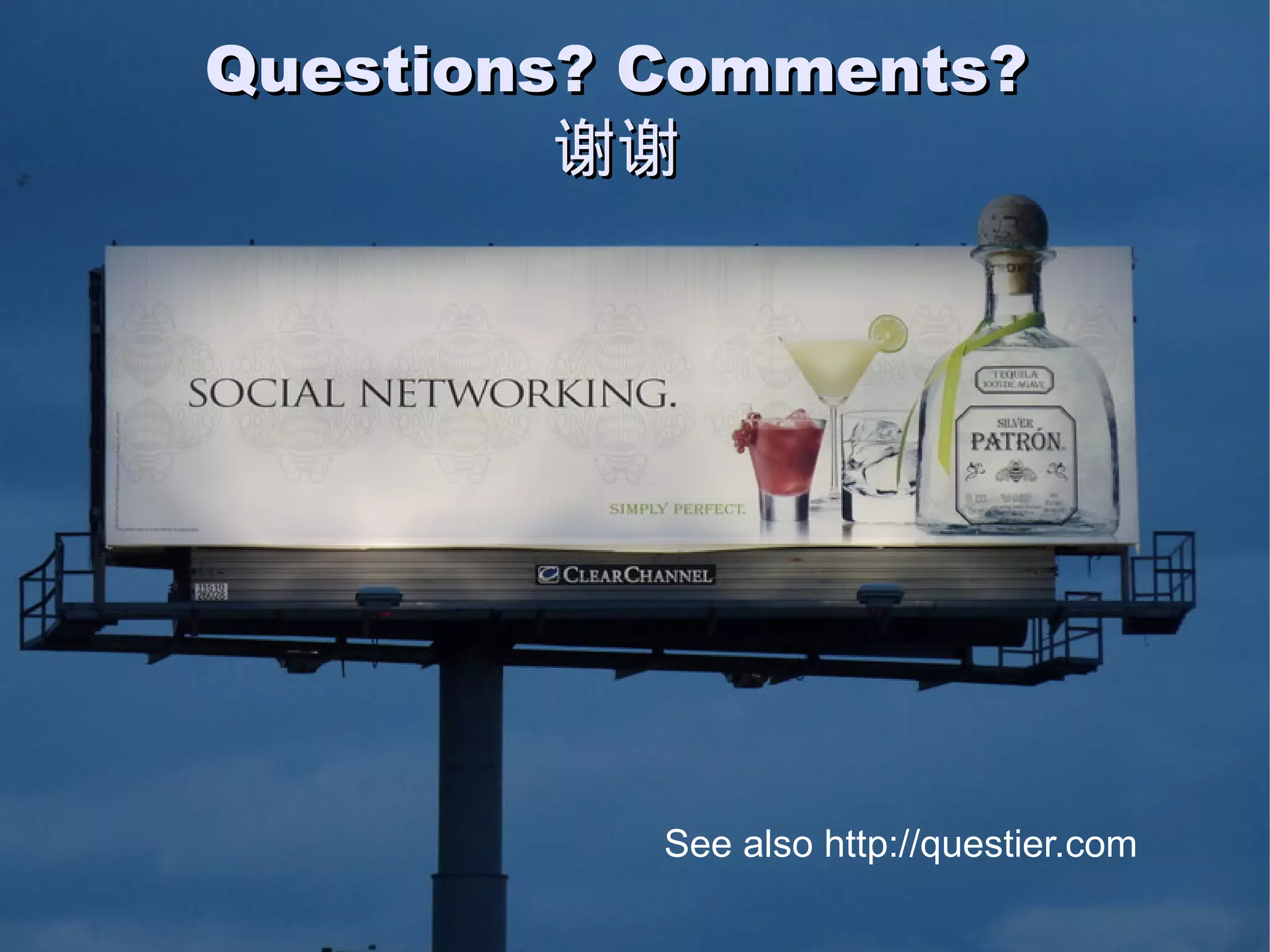
                  Questions? Comments?
                           谢谢


                                                               See also http://questier.com

                                                                                                               70

The Development of Open Source E-Learning Environments: the Chamilo Experience

  • 1.
    The development ofOpen Source e-learning environments: the Chamilo experience Prof. dr. Frederik Questier, Vrije Universiteit Brussel Guest lecture at Beijing Normal University, 21/10/2010
  • 2.
    This presentation canbe found at http://questier.com http://www.slideshare.net/Frederik_Questier
  • 3.
  • 5.
  • 6.
    Atomium building ©www.atomium.be - SABAM 2010; photo CC-by-nc-sa by fatboyke Luc B
  • 8.
  • 9.
    The Peasant Weddingby Pieter Bruegel the elder 1568
  • 12.
  • 13.
  • 15.
  • 18.
  • 19.
    Teaching courses: ➢ Educational Technologies ➢ Learning Technologies ➢ Virtual Learning Environments ➢ E-learning design ➢ Departments ➢ Interdisciplinary Teacher Training ➢ Educational Sciences ➢ Former head of center for ➢ Education innovation ➢ Teacher staff training ➢ Virtual learning Environment
  • 20.
  • 21.
  • 22.
    Projects with Kenia (Nairobi and Moi universities) Expertise Centre ICT for edu Training Consultancy Research Postgraduate master ICT in Education 22
  • 23.
  • 24.
  • 25.
    1 Understand theFree & Open Source basics 2 Start a project or contribute to a project 3 Build a community or contribute to a community 4 Build expertise 5 Support your users and/or sell services 25
  • 26.
    "The most fundamentalway of helping other people, is to teach people how to do things better or how to better their lives. For people who use computers, this means sharing the recipes you use on your computer, in other words the programs you run." 26
  • 27.
    Free Software ➢ The freedom to ➢ use ➢ study ➢ distribute ➢ improve the program 27
  • 28.
    The software Freedoms require access to the source code Source code: if encrypt(password) == encryptedpassword, then login=1, end Compiled code: 001001011101010011001100001111011000110001110001101 → “Open Source Software” Free Libre Open Source Software (FLOSS) 28
  • 29.
    FLOSS characteristics ➢ User friendly ← written by users for users ➢ Cross-platform ← recompile source code ➢ High development pace ← reuse of best modules ➢ High quality ← peer review, reuse = survival of the fittest ➢ High security ← peer review, Unix origin, modular, encryption 29
  • 30.
    Yes, there isa huge world of FLOSS communities 30
  • 31.
    Creating wealth bysharing "Seven open source business strategies for competitive advantage” John Koenig, IT Manager's Journal, 2004 “Companies continue to waste their development dollars on software functionality that is otherwise free and available through Open Source. They persist in buying third-party proprietary platforms or creating their own proprietary development platforms that deliver marginal product differentiation and limited value to customers” Picture reproduced with permission 31
  • 32.
    Success in FLOSSrequires you to serve ➢ those who spend time to save money ➢ those who spend money to save time -- Mårten Mickos, CEO MySQL 32
  • 33.
    Frederik Questier atthe MIT Miracle of Science Bar, 2009 33
  • 34.
  • 35.
    Chamilo version 2 (beta version now) ➢ Completly refactored ➢ Well designed (versus organic growth of version 1) ➢ Abstraction layers ➢ Repository based ➢ Easily extensible ➢ Rights management (to make sharing easier) 35
  • 36.
  • 37.
  • 38.
  • 39.
  • 40.
  • 41.
  • 42.
  • 43.
    1998: how itstarted ➢ In a Belgian University ➢ many people were frustrated by the inflexible, non-free elearning systems they had to use ➢ Prof. dr. Thomas Depraetere ➢ starts the Claroline e-learning platform ➢ publishes it as Free Software ➢ got grants for it 43
  • 44.
    2004: fork 1 original author wants to break free ➢ Growing number of users ➢ outside the university ➢ requesting professional services ➢ Prof. dr. Thomas Depraetere ➢ starts a company, Dokeos ➢ can't call it Claroline, cause university has trademark ➢ can reuse software code, as it is Free !!! 44
  • 45.
    2010: fork 2 thecommunity wants to break free 45
  • 46.
    Future? From forks to collaboration? ➢ First talks between Chamilo and Claroline about common kernel in next versions ➢ Consortium of FLOSS e-learning platforms? ➢ standards for exchanging modules ➢ (besides content and users) 46
  • 47.
    Build and Manage aCommunity? 47
  • 48.
    Development Linus Torvalds' style releaseearly and often delegate everything you can be open to the point of promiscuity Linus' Law "given enough eyeballs, all bugs are shallow." 48
  • 49.
    Book published under OpenPublication License 19 lessons for open source development Commercial development = Cathedral style Open Source development = Bazaar style 49
  • 50.
    The Cathedral andthe Bazaar about developers 1. Every good work of software starts by scratching a developer's personal itch. 2. Good programmers know what to write. Great ones know what to rewrite (and reuse). 50
  • 51.
    The Cathedral andthe Bazaar about users 6. Treating your users as co-developers is your least-hassle route to rapid code improvement and effective debugging. 7. Release early. Release often. And listen to your customers. 8. Given a large enough beta-tester and co-developer base, almost every problem will be characterized quickly and the fix obvious to someone. 11. The next best thing to having good ideas is recognizing good ideas from your users. Sometimes the latter is better. 51
  • 52.
    The Cathedral andthe Bazaar about development 17. A security system is only as secure as its secret. Beware of pseudo-secrets. 18. To solve an interesting problem, start by finding a problem that is interesting to you. 19. Provided the development coordinator has a medium at least as good as the Internet, and knows how to lead without coercion, many heads are inevitably better than one. 52
  • 53.
    Aim BIG ! Chamilo in8 months time 376 installations in 26 countries 14964 courses 119601 users http://version.chamilo.org/comm.php 53
  • 54.
  • 55.
    Communicate open and directly ➢ website ➢ mailing lists ➢ users ➢ dev-team ➢ board members ➢ user days ➢ developers meetings 55
  • 56.
    Give the usersa forum 56
  • 57.
    Make it easyto contribute ! ➢ Offer ➢ centralized source code management ➢ modular design ➢ plugin possibilities ➢ translation tools ➢ collaborations tools for development 57
  • 58.
    Build trust Give agrowth path 58
  • 59.
    Analyse and monitor your performance 59
  • 60.
  • 61.
  • 62.
  • 63.
    6.5 years ofChamilo code activity in 2 minutes code_swarm : organic information visualization made by Yannick Warnier http://www.youtube.com/watch?v=uY3d9-B6ikk 63
  • 64.
    Create a democraticstructure ➢ Chamilo is a non-profit association ➢ General assembly ➢ Members (admitted – effective | 25€ – 6000€) ➢ Working groups ➢ Board of Directors 64
  • 65.
    Foster an ecosystem ➢ Users ➢ Developers ➢ Official service providers ➢ certification 65
  • 66.
    Advantages for university proprietary → FLOSS VLE ➢ co-decide the direction of development ➢ create extensions ➢ user requested ➢ research driven innovation ➢ more contacts with other educational institutions ➢ contributions from others ➢ programming projects for students ➢ better knowledge of the system ➢ better trouble solving ➢ possibilities for funding or for selling services ➢ more for the same amount of investment 66
  • 67.
    Advantages for university open sourcing own developments ➢ Get contributions from others ➢ Start new collaborations ➢ Broaden the expertise ➢ Sustainability ➢ Reputation ➢ Ethical ➢ It's fun! 67
  • 68.
  • 69.
    Copyright acknowledgements ➢ Belgium in EU Map CC-by-sa by NuclearVacuum ➢ Belgium map, Public Domain ➢ The Peasant Wedding by Pieter Bruegel the elder 1568 ➢ http://en.wikipedia.org/wiki/File:Asterix_in_Belgium.jpg ➢ Atomium building © www.atomium.be - SABAM 2010; photo CC-by-nc-sa by fatboyke Luc B ➢ Atomium building © www.atomium.be - SABAM 2010; photo CC-by-sa by Emilio Garcia ➢ Gilles de Binche CC-by-nc-nd by Fabrice Huin ➢ Saxophone CC-by-nc-nd by Bruno Bollaert ➢ Graspop Metal Meeting Festival 2008 CC-by-sa by Jtesla16 ➢ Pralines, screenshot Neuhaus website ➢ Moules frites: CC-by-nc-sa by poluz – Nicola ➢ Belgian Beers: CC-by-nc-sa by Adam Lang ➢ Brussels Waffle CC-by-sa by David Monniaux ➢ Screenshota http://www.chamilo.org/ ➢ Screenshots http://Ohloh.net ➢ Time Money CC-by by Nina Matthews ➢ Birds CC-by-nc-nd by Denis Collette ➢ Swiss Army Knife CC-by-sa-nc by herzogbr ➢ Share matches CC-by-nc-nd by Josh Harper ➢ Social Network CC-by by Frederik Questier
  • 70.
    Active/Manipulative - Collaborative- Complex - Constructive - Contextualized - Conversational - Intentional - Reflective Questions? Comments? 谢谢 See also http://questier.com 70