THE CONCEPTUAL
FRAMEWORK
•A conceptual
framework shows the
relationship of the
variables of your
study.
•It includes a visual
diagram or a model that
summarizes the
concepts of your study
and a narrative
explanation of the
model presented.
WHY IS A FRAMEWORK
IMPORTANT?
•The conceptual
framework keeps you
on track by presenting
and simplifying the
relationship between the
variables (serves as
guide)
• Just by looking at the
conceptual framework, the
readers can get the gist of
the research concepts
without reading the entire
study.
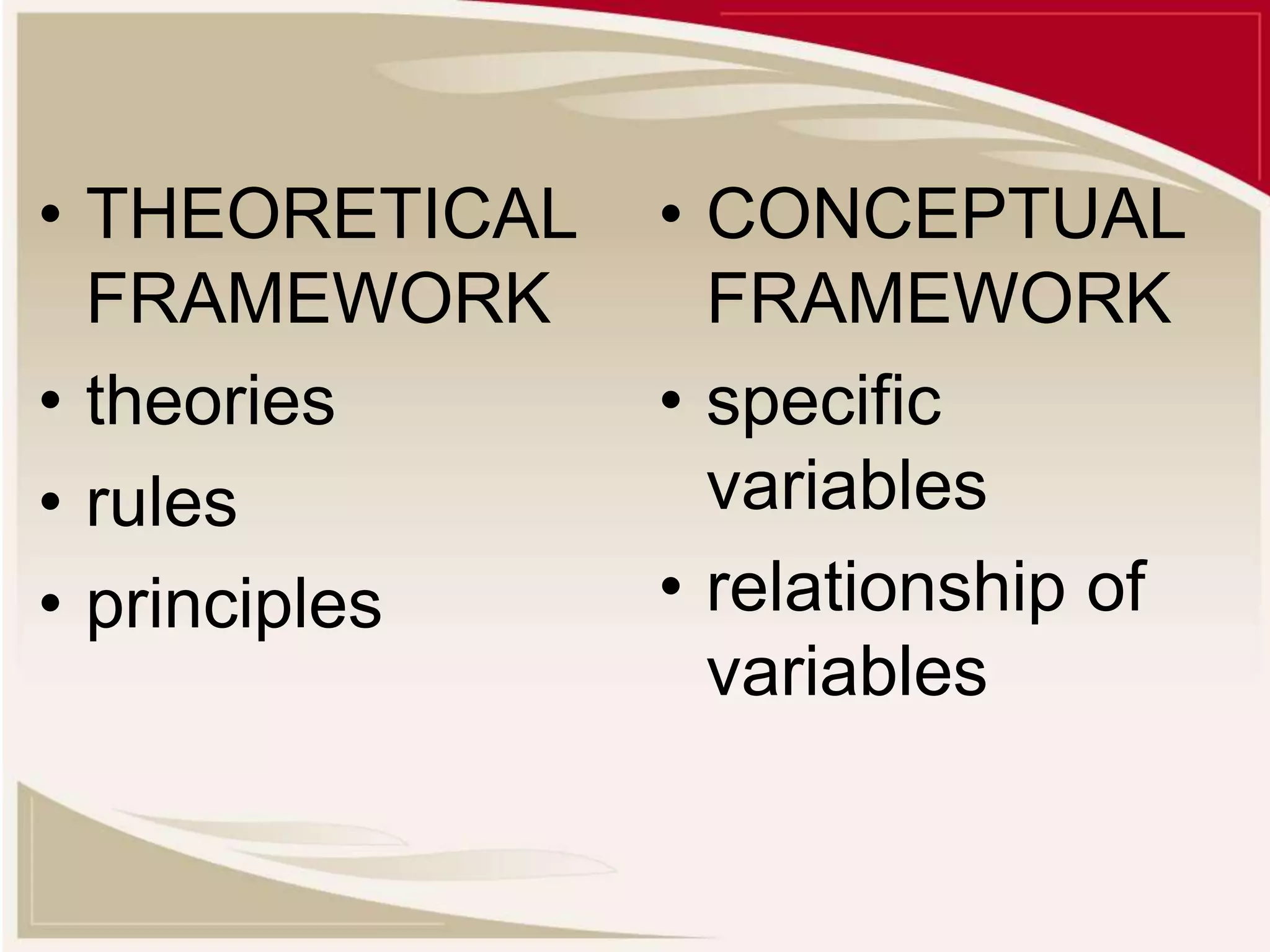
• THEORETICAL
FRAMEWORK
• theories
• rules
• principles
• CONCEPTUAL
FRAMEWORK
• specific
variables
• relationship of
variables
Types of Conceptual
Framework
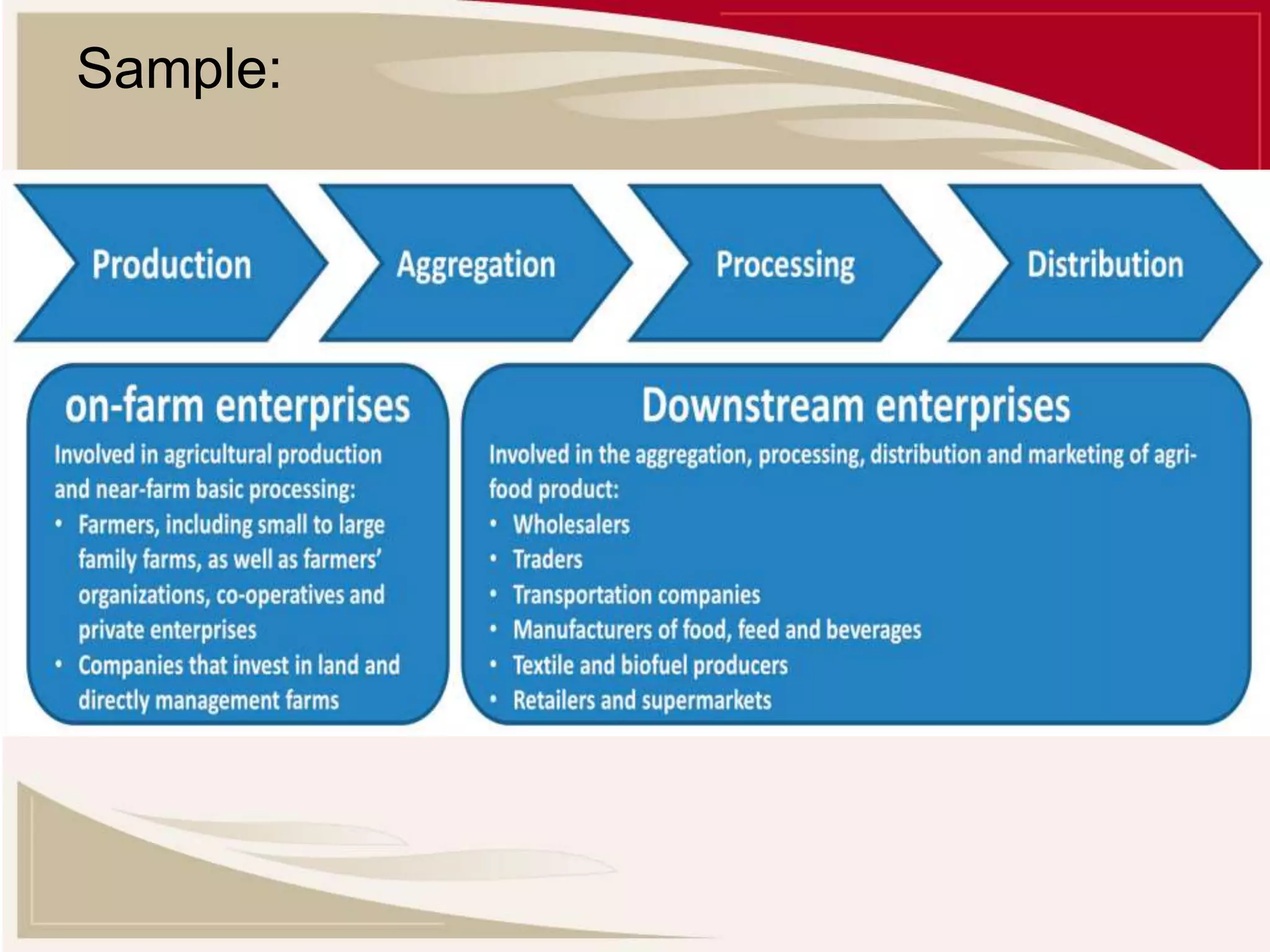
1. TAXONOMY
•The phenomena of your
study are grouped
together into categories
without presenting the
relationship among them.
Sample:
2. VISUAL REPRESENTATION
•The relationship
between the
phenomena and
variables of your study
is presented.
Sample:
3. MATHEMATICAL
DESCRIPTION
• The relationship between
phenomena and variables
of your study are described
using mathematical
formulas.
How To Make the
Conceptual
Framework
1. Identify the important
variables of your study
•the independent and the
dependent variables
2. Think how the
variables are related
• Having a direct relationship
between variables does not
mean that they already
have a cause-and-effect
relationship
3. Create a visual
diagram or a model
a. Independent-Dependent
Model
b. Input-Process-Output Model
c. Concept Maps
4. Explain your conceptual
framework in narrative
form
• Provide a brief explanation of
your conceptual framework. State
the important variables, their
relationship, and the research
outcome.
Sample:
• Figure 1 shows the Conceptual
Framework of the study. The quantity
of the organic fertilizer used is the
independent variable while the growth
of the plant is the research’s
dependent variable. These two
variables are directly related based
on the research’s empirical evidence.
THE CONCEPTUAL FRAMEWORK.ppt

THE CONCEPTUAL FRAMEWORK.ppt

  • 1.
  • 2.
    •A conceptual framework showsthe relationship of the variables of your study.
  • 3.
    •It includes avisual diagram or a model that summarizes the concepts of your study and a narrative explanation of the model presented.
  • 4.
    WHY IS AFRAMEWORK IMPORTANT?
  • 5.
    •The conceptual framework keepsyou on track by presenting and simplifying the relationship between the variables (serves as guide)
  • 6.
    • Just bylooking at the conceptual framework, the readers can get the gist of the research concepts without reading the entire study.
  • 7.
    • THEORETICAL FRAMEWORK • theories •rules • principles • CONCEPTUAL FRAMEWORK • specific variables • relationship of variables
  • 8.
  • 9.
    1. TAXONOMY •The phenomenaof your study are grouped together into categories without presenting the relationship among them.
  • 10.
  • 11.
    2. VISUAL REPRESENTATION •Therelationship between the phenomena and variables of your study is presented.
  • 12.
  • 13.
    3. MATHEMATICAL DESCRIPTION • Therelationship between phenomena and variables of your study are described using mathematical formulas.
  • 14.
    How To Makethe Conceptual Framework
  • 15.
    1. Identify theimportant variables of your study •the independent and the dependent variables
  • 16.
    2. Think howthe variables are related • Having a direct relationship between variables does not mean that they already have a cause-and-effect relationship
  • 17.
    3. Create avisual diagram or a model a. Independent-Dependent Model b. Input-Process-Output Model c. Concept Maps
  • 18.
    4. Explain yourconceptual framework in narrative form • Provide a brief explanation of your conceptual framework. State the important variables, their relationship, and the research outcome.
  • 19.
    Sample: • Figure 1shows the Conceptual Framework of the study. The quantity of the organic fertilizer used is the independent variable while the growth of the plant is the research’s dependent variable. These two variables are directly related based on the research’s empirical evidence.