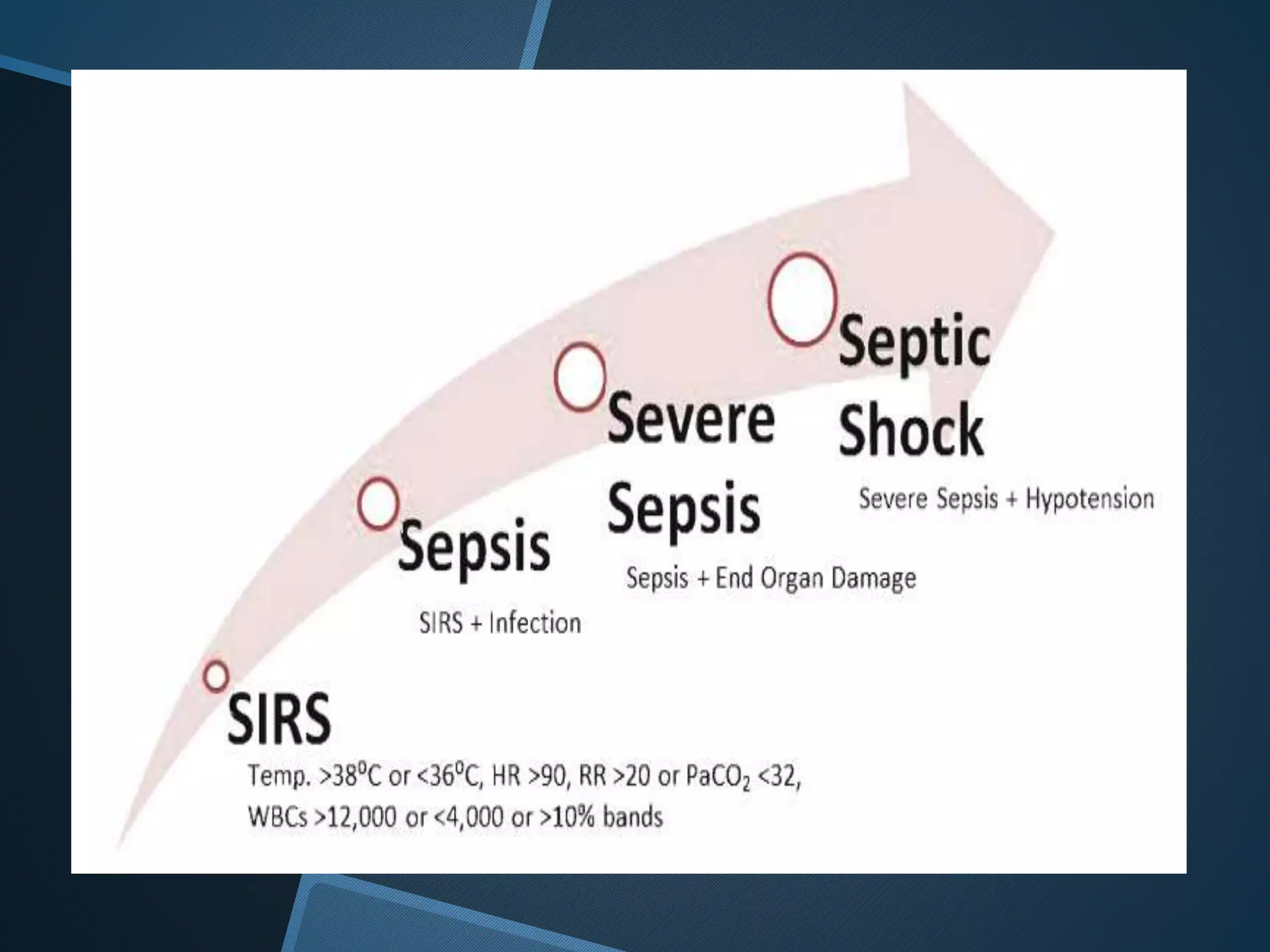
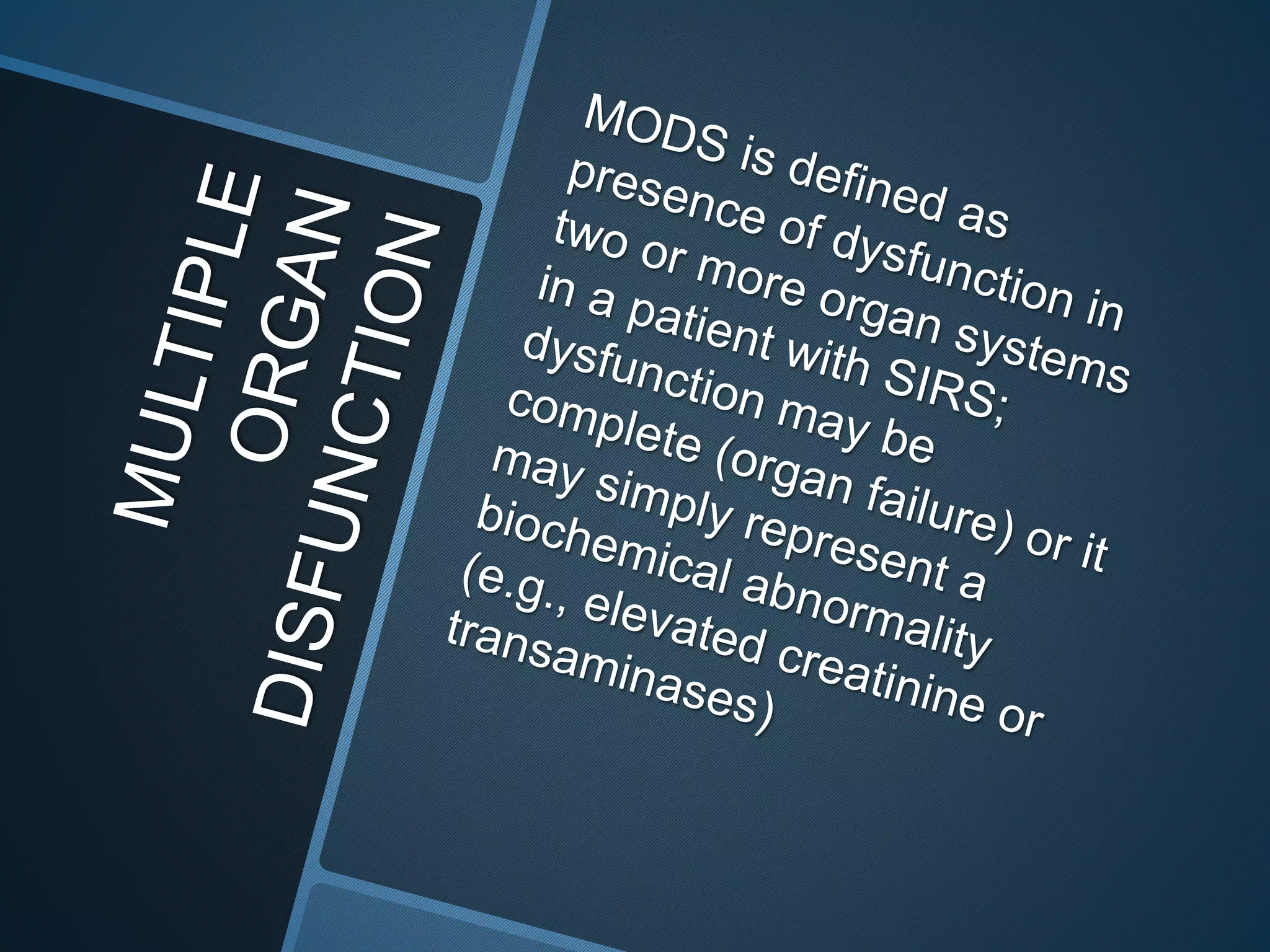
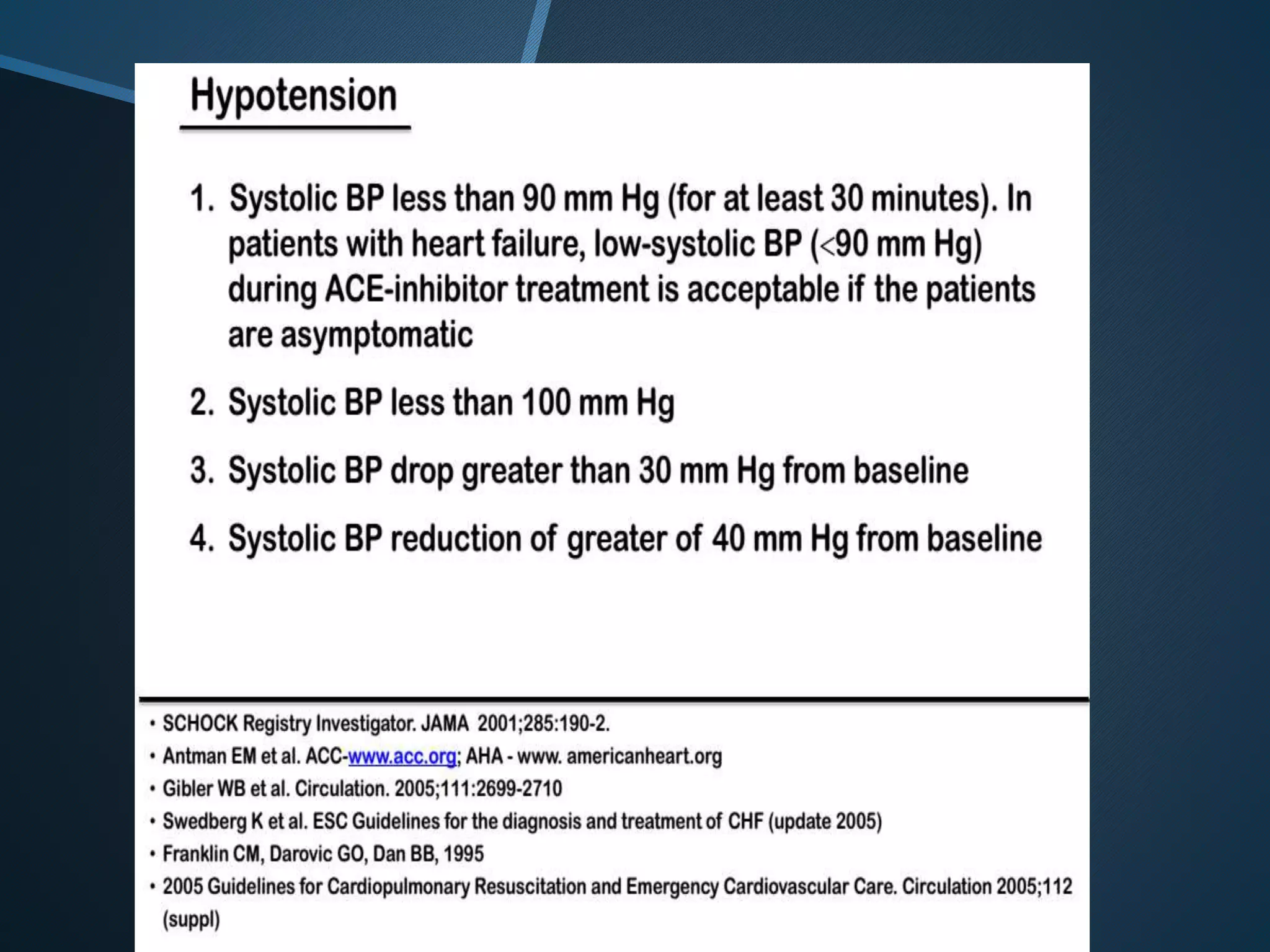
Systemic Inflamatory Response
Syndrome (SIRS)
ACUTE
RESPIRATORY
DISTRESS
SYNDROME
 ARDS is the prototypical expression of
respiratory dysfunction in MODS.
 In its mildest form, respiratory
dysfunction is characterized by
tachypnea, hypocapnia, and hypoxemia.
As lung injury Evolves, a combination of
worsening hypoxemia and increased
work of breathing necessitates
mechanical ventilatory support.
Impaired lung function is reflected in a
reduced PaO2.
 To ensure adequate oxygen delivery to
the tissues, mechanical ventilation must
be instituted and FIO2
 increased.
The ratio PaO2/FIO2 , therefore, is a
reliable measure of respiratory
dysfunction.
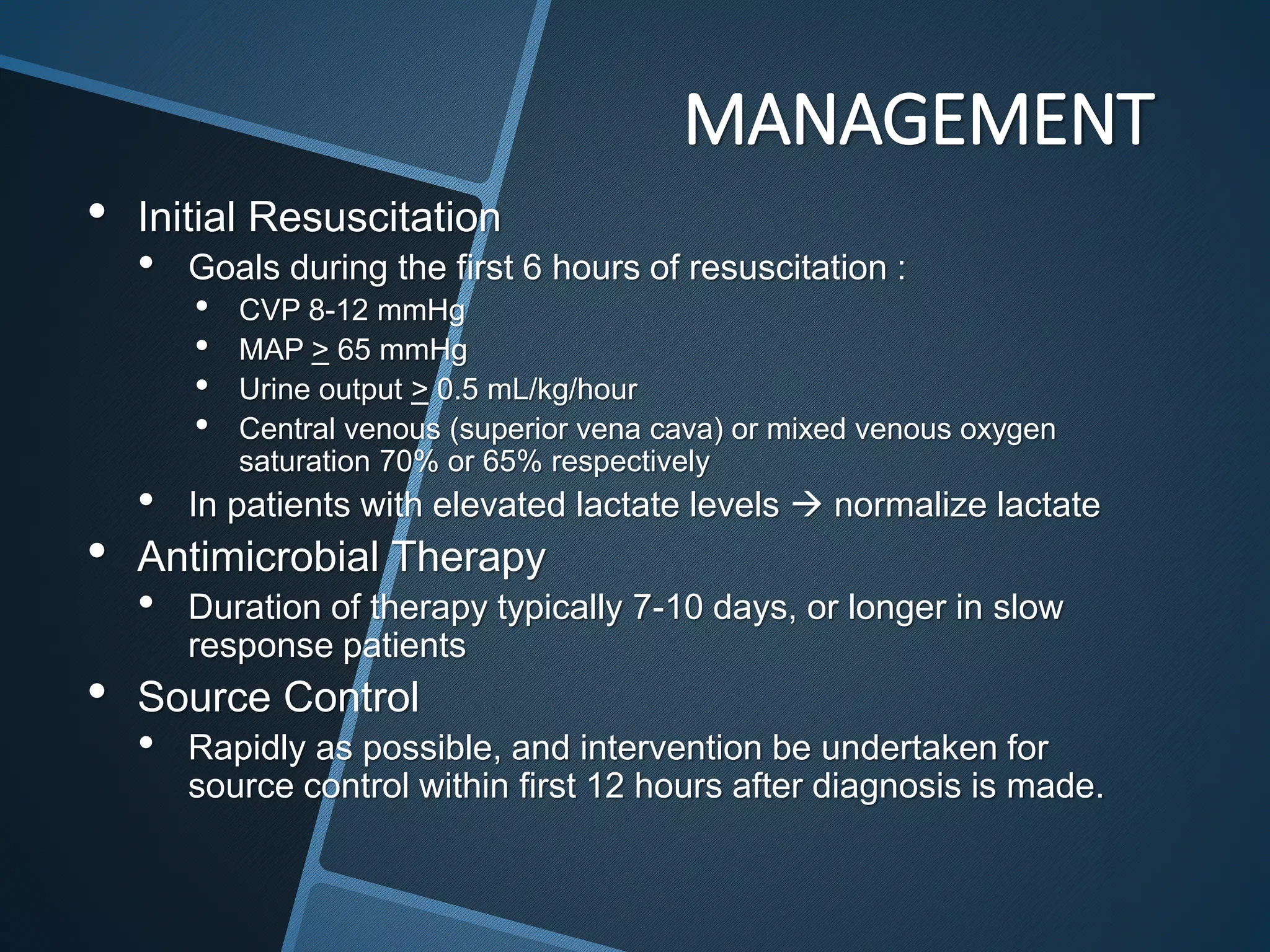
MANAGEMENT
• Initial Resuscitation
• Goals during the first 6 hours of resuscitation :
• CVP 8-12 mmHg
• MAP > 65 mmHg
• Urine output > 0.5 mL/kg/hour
• Central venous (superior vena cava) or mixed venous oxygen
saturation 70% or 65% respectively
• In patients with elevated lactate levels  normalize lactate
• Antimicrobial Therapy
• Duration of therapy typically 7-10 days, or longer in slow
response patients
• Source Control
• Rapidly as possible, and intervention be undertaken for
source control within first 12 hours after diagnosis is made.
 Vasopressor
 Target MAP > 65 mmHg.
 Norepinephrine as the first choice vasopressor.
 Epinephrine (when additional agent is needed).
 Dopamine as an alternative vasopressor to norepinephrine.
 Inotropic therapy
 Dobutamine infusion added to vasopressor in presence of
myocardial dysfunction and ongoing sign of hypoperfusion.
 Corticosteroids
 Suggest to use in adult septic shock patients if adequate fluid
resuscitation and vasopressor therapy are unable to restore
hemodynamic stability.
SEPSIS, SIRS, MOF, AND ARDS

SEPSIS, SIRS, MOF, AND ARDS

  • 3.
  • 13.
    ACUTE RESPIRATORY DISTRESS SYNDROME  ARDS isthe prototypical expression of respiratory dysfunction in MODS.  In its mildest form, respiratory dysfunction is characterized by tachypnea, hypocapnia, and hypoxemia. As lung injury Evolves, a combination of worsening hypoxemia and increased work of breathing necessitates mechanical ventilatory support. Impaired lung function is reflected in a reduced PaO2.  To ensure adequate oxygen delivery to the tissues, mechanical ventilation must be instituted and FIO2  increased. The ratio PaO2/FIO2 , therefore, is a reliable measure of respiratory dysfunction.
  • 17.
    MANAGEMENT • Initial Resuscitation •Goals during the first 6 hours of resuscitation : • CVP 8-12 mmHg • MAP > 65 mmHg • Urine output > 0.5 mL/kg/hour • Central venous (superior vena cava) or mixed venous oxygen saturation 70% or 65% respectively • In patients with elevated lactate levels  normalize lactate • Antimicrobial Therapy • Duration of therapy typically 7-10 days, or longer in slow response patients • Source Control • Rapidly as possible, and intervention be undertaken for source control within first 12 hours after diagnosis is made.
  • 18.
     Vasopressor  TargetMAP > 65 mmHg.  Norepinephrine as the first choice vasopressor.  Epinephrine (when additional agent is needed).  Dopamine as an alternative vasopressor to norepinephrine.  Inotropic therapy  Dobutamine infusion added to vasopressor in presence of myocardial dysfunction and ongoing sign of hypoperfusion.  Corticosteroids  Suggest to use in adult septic shock patients if adequate fluid resuscitation and vasopressor therapy are unable to restore hemodynamic stability.