GLUTAMATE & GABA
RECEPTORS AND
THERAPEUTIC APPLICATIONS
OUTLINE
• INTRODUCTION
• HISTORY
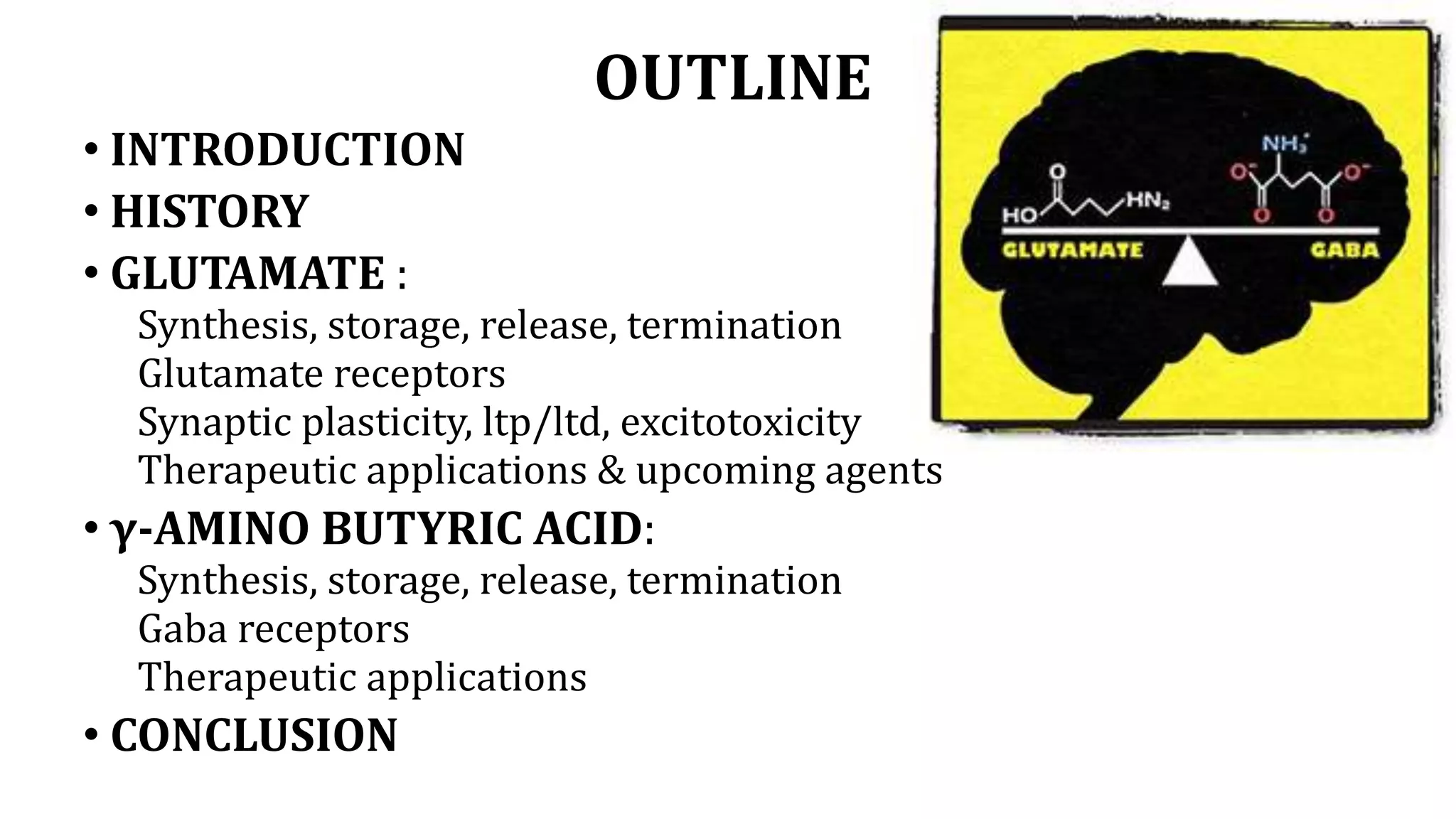
• GLUTAMATE :
Synthesis, storage, release, termination
Glutamate receptors
Synaptic plasticity, ltp/ltd, excitotoxicity
Therapeutic applications & upcoming agents
• γ-AMINO BUTYRIC ACID:
Synthesis, storage, release, termination
Gaba receptors
Therapeutic applications
• CONCLUSION
INTRODUCTION: AMINO ACID TRANSMITTERS
•CNS- high concentrations of certain amino acids.
•Dicarboxylic vs Monocarboxylic amino acids.
•Terms : Neurotransmitters vs Neuromodulators.
HISTORY
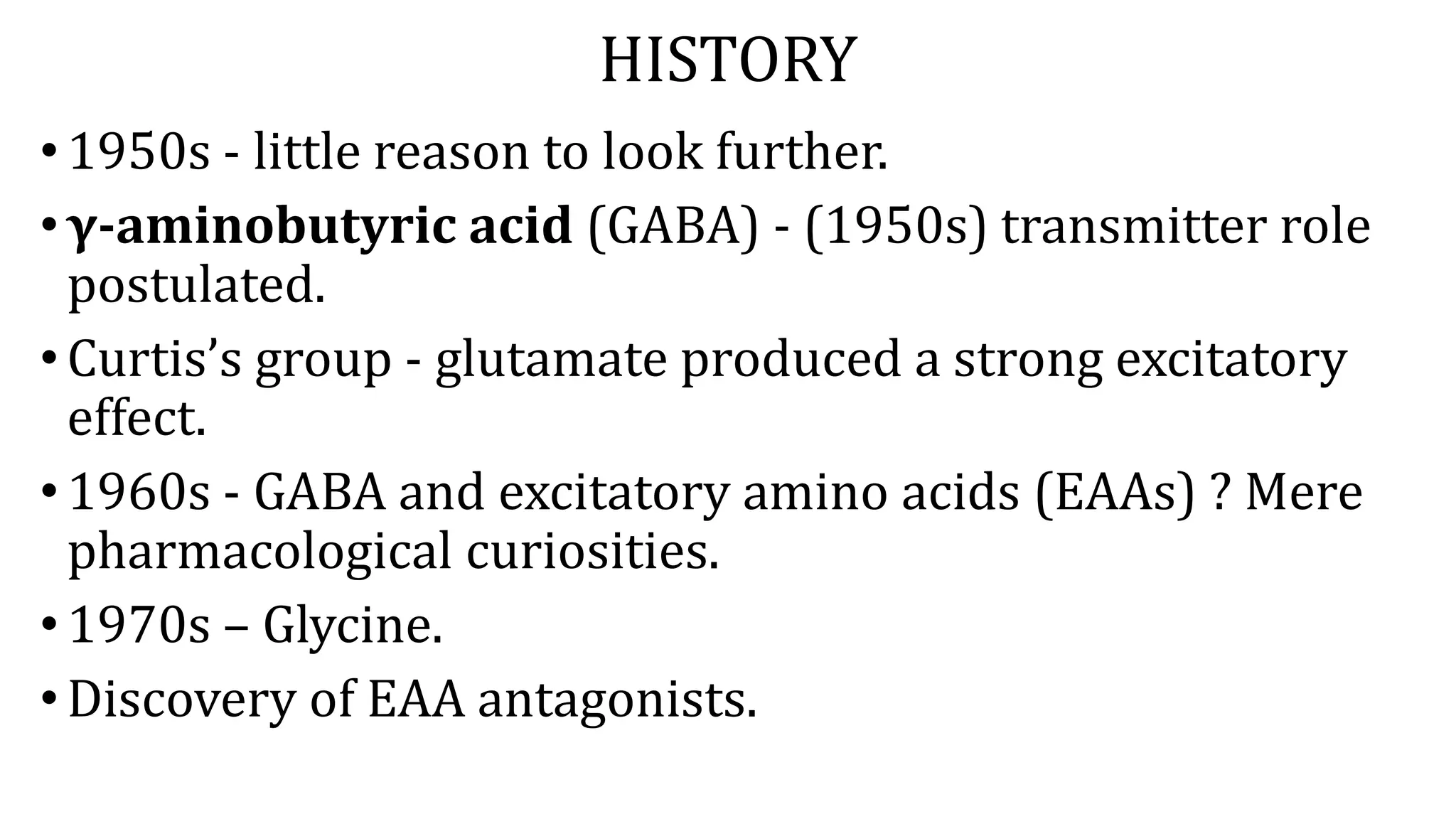
•1950s - little reason to look further.
•γ-aminobutyric acid (GABA) - (1950s) transmitter role
postulated.
•Curtis’s group - glutamate produced a strong excitatory
effect.
•1960s - GABA and excitatory amino acids (EAAs) ? Mere
pharmacological curiosities.
•1970s – Glycine.
•Discovery of EAA antagonists.
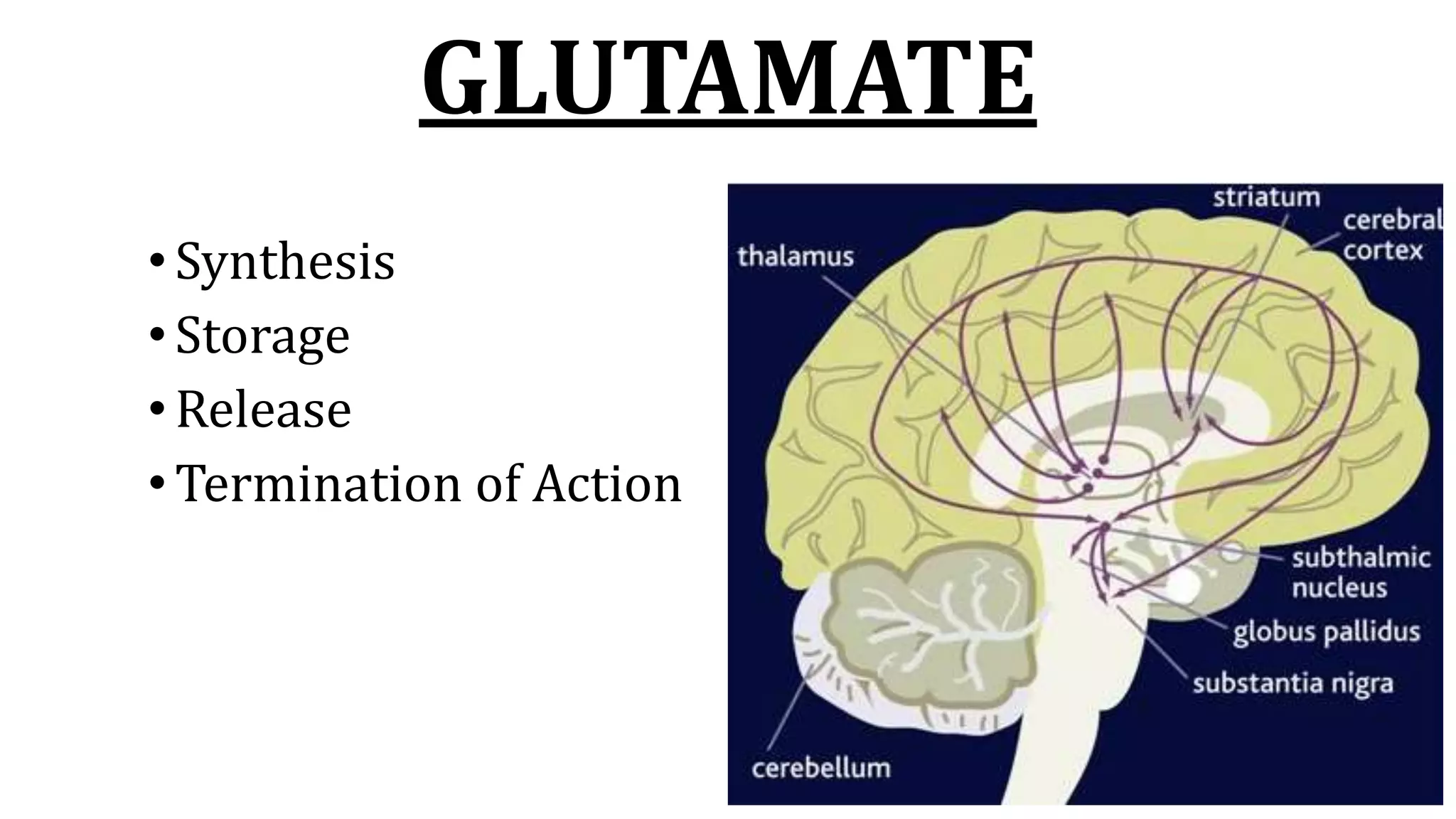
GLUTAMATE
•Synthesis
•Storage
•Release
•Termination of Action
GLUTAMATE RECEPTORS
• IONOTROPIC GLUTAMATE RECEPTORS
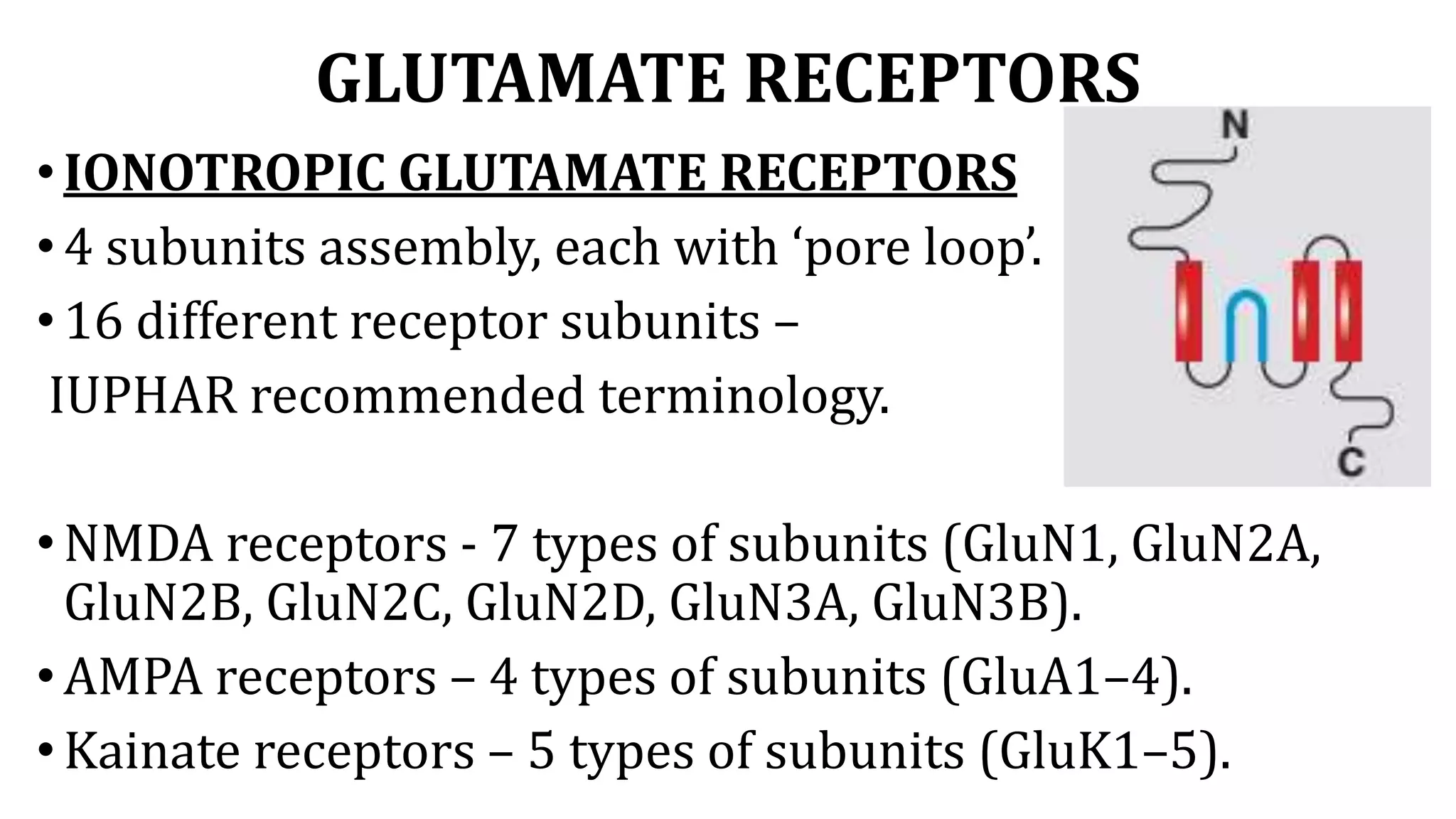
• 4 subunits assembly, each with ‘pore loop’.
• 16 different receptor subunits –
IUPHAR recommended terminology.
• NMDA receptors - 7 types of subunits (GluN1, GluN2A,
GluN2B, GluN2C, GluN2D, GluN3A, GluN3B).
•AMPA receptors – 4 types of subunits (GluA1–4).
• Kainate receptors – 5 types of subunits (GluK1–5).
•Receptors comprising different subunits; differ in
characteristics, e.g. AMPA receptors lacking GluA2.
•NMDA – slow excitatory. AMPA, kainate receptors - fast
excitatory.
•NMDA and Kainate receptors – also pre-synaptic.
•Cortex, basal ganglia and sensory pathways.
•NMDA, AMPA – generally co-localised.
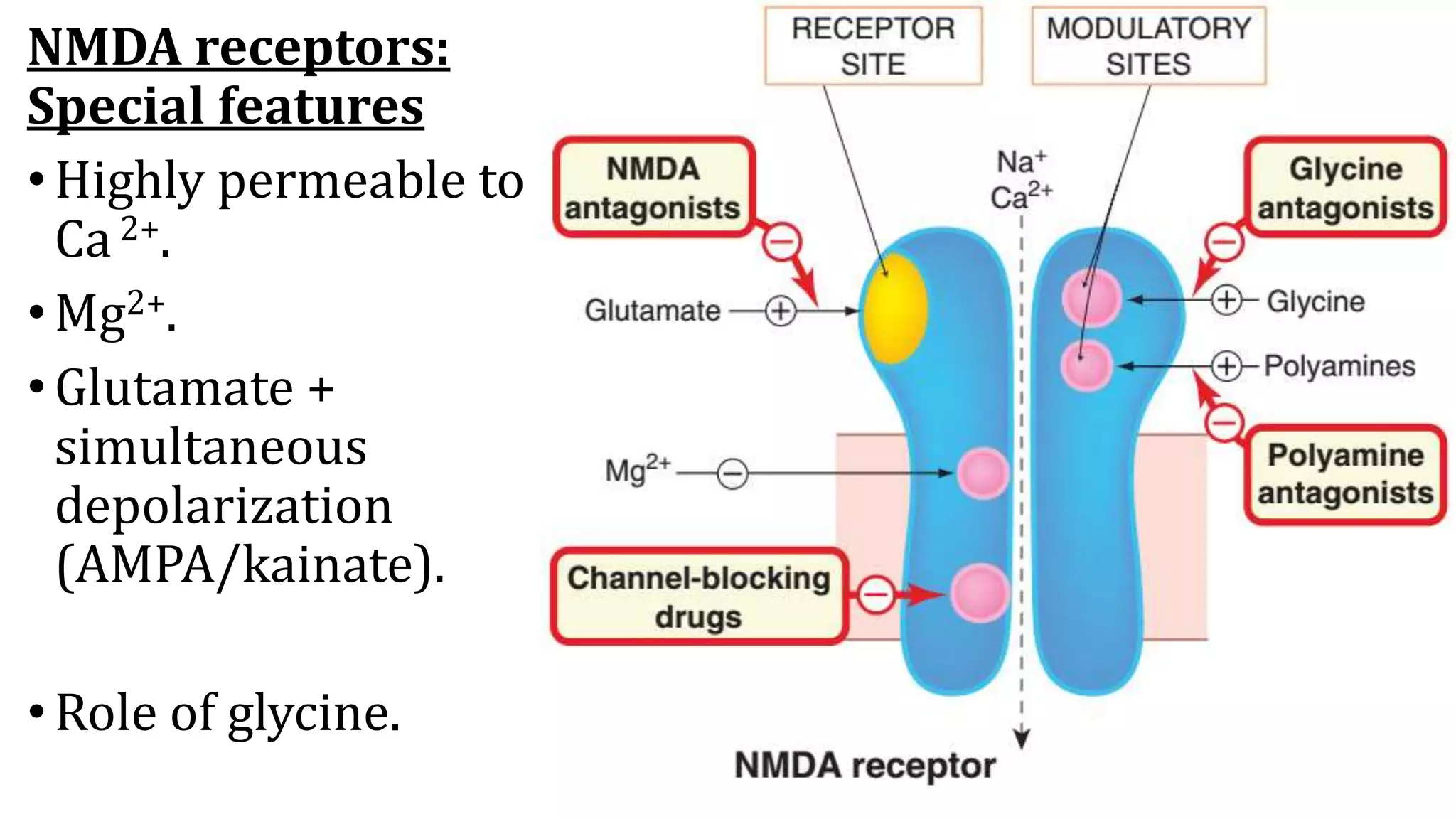
NMDA receptors:
Special features
•Highly permeable to
Ca2+.
•Mg2+.
•Glutamate +
simultaneous
depolarization
(AMPA/kainate).
•Role of glycine.
•METABOTROPIC GLUTAMATE RECEPTORS
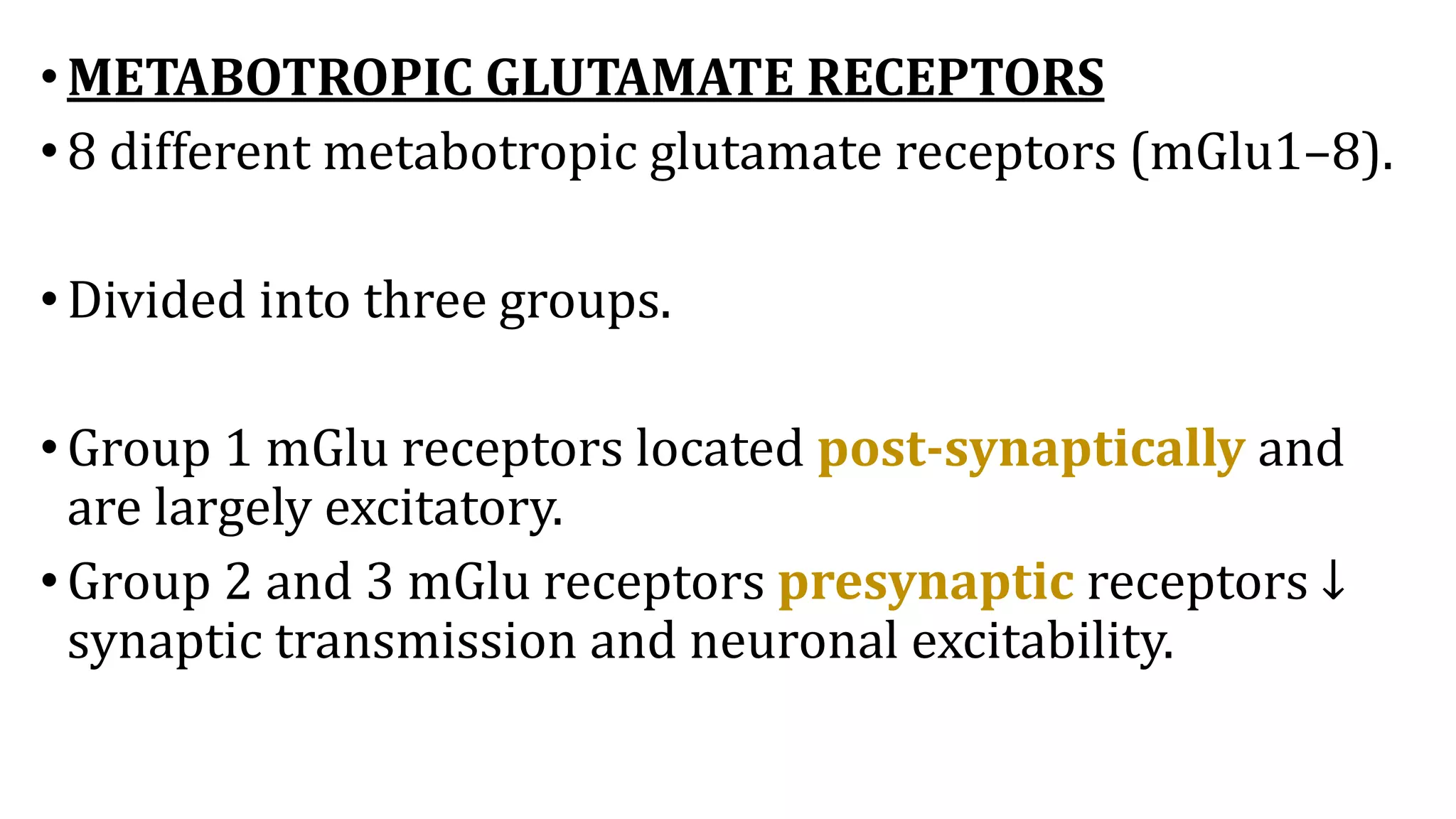
•8 different metabotropic glutamate receptors (mGlu1–8).
•Divided into three groups.
•Group 1 mGlu receptors located post-synaptically and
are largely excitatory.
•Group 2 and 3 mGlu receptors presynaptic receptors ↓
synaptic transmission and neuronal excitability.
SYNAPTIC PLASTICITY & LONG-TERM
POTENTIATION (LTP)
•NMDA, mGlu receptors – Long term adaptive changes.
•Long-term potentiation : prolonged enhancement of
synaptic transmission following presynaptic stimulation.
•Counterpart - long-term depression (LTD).
EXCITOTOXICITY
•High concentrations of glutamate → neuronal cell death.
•Glutamate-mediated excitotoxicity may underlie the
damage occurring after ischemia or hypoglycemia in
the brain.
•NMDA receptor antagonists.
•? Etiology of chronic neurodegenerative diseases.
DISEASE ASSOCIATIONS WITH GLUTAMATE
Seizures
ADHD
Autism
Neurodegenerative diseases
 Multiple Sclerosis
 Rasmussen’s Encephalitis
 Stroke
THERAPEUTIC APPLICATIONS
KETAMINE
•Congener of Phencyclidine.
•MOA : NMDA channel blocker and …
•Uses : “Dissociative Anesthesia” (hypotensive. Asthmatic.
Pediatric procedures)
•A/E : Hallucinations, Emergence Delirium, Amnesia, ↑ ICT,
↑ HR, Nausea, Vomiting, ↑IOP, Erythema, Rash.
MEMANTINE
•NMDA Channel blocker, ↓ excitotoxicity.
•Uses : Moderate to Severe Alzheimer’s Disease.
•A/E : Confusion, Dizziness, Drowsiness, Headache,
insomnia, agitation.
FELBAMATE
•NMDA Blocker, +ve modulation of GABA-R.
•Uses : Severe Refr. Partial Seizures, Lennox-Gastaut Syn.
•A/E : ↓ appetite, vomiting, headache, aplastic anemia,
liver failure.
TOPIRAMATE
•AMPA-kainate antag.
•Uses : Initial monotherapy & adj. therapy for partial onset/
primary GTCS, L-G Syndr, Migraine.
•A/E : Fatigue, Weight loss, nervousness, renal calculi.
ACAMPROSATE
•Alcoholism. A/E – Diarrhea, allergy, headache, insomnia.
RILUZOLE
•Amyotrophic Lateral Sclerosis.
•Modest ↑ in survival.
UPCOMING AGENTS
•Analgesic : TEZAMPANEL : AMPA-Kainate Antagonist ;
Phase III (Ac. Migraine)
•ALS : TALAMPANEL : AMPA Antag. ; ALS negative results.
•Seizure Disorder: PERAMPANEL : AMPA Antag. ;
FDA – 2012 but role unclear.
A/E – Suicidal thoughts,
dizziness, vertigo,
aggression, slurred
speech, abuse liability.
• Stroke: NBQX : AMPA-Kainate Antag ; Pre Clinical
TRAXOPRODIL : NMDA Antag. ; QT prolongation.
• Neurodegen. RADIPRODIL :NMDA Antag.; Pre-Clin (Parkinson’s)
REMACEMIDE:NMDA Antag.;Huntington(III),Park(II)
FARAMPATOR : AMPA + modulator ; Alzheimer’s (I)
PIRACETAM : Ampakine ; Dementia, not approved.
γ-AMINOBUTYRIC ACID
•Synthesis
•Storage
•Release
•Termination of Action
GABA RECEPTORS
GABAA (IONOTROPIC) RECEPTORS
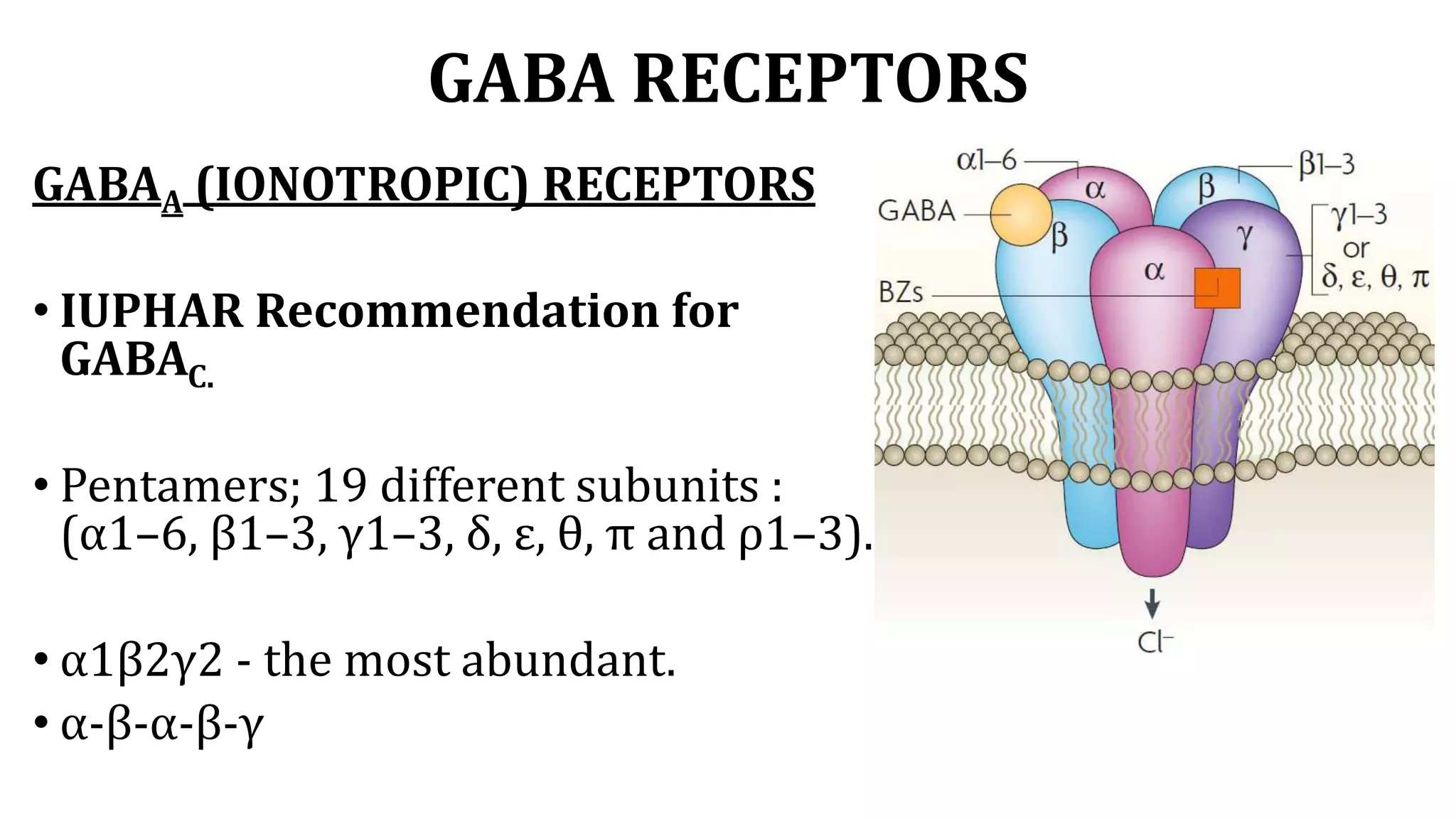
• IUPHAR Recommendation for
GABAC.
• Pentamers; 19 different subunits :
(α1–6, β1–3, γ1–3, δ, ε, θ, π and ρ1–3).
• α1β2γ2 - the most abundant.
• α-β-α-β-γ
GABAB (METABOTROPIC) RECEPTORS
•Gi - inhibit adenylyl cyclase, activate K+ channels, and
reduce Ca2+ conductance.
THERAPEUTIC APPLICATIONS
Drug/ Class Mechanism Use Adverse Effects
BARBITURATES ↑ Duration GABAA
gated Chloride
Channel
Anesthesia,
Anticonvulsant,
hyperbilirubinemia,
Sedative-Hypnotics
Distortion of Sleep Architecture, Learning and
Memory impairment, respiratory depression,
abuse, laryngeal edema, hypersensitivity.
BENZODIAZEPINES ↑ Frequency
GABAA gated
Chloride Channel
Anxiety, Insomnia,
Induction, Sk
muscle relaxation,
Anticonvulsant, Alc
Withdrawal
Drowsiness, fatigue, disorientation, lethargy,
respiratory depression, abuse, impaired
memory and learning, date rape
Z-DRUGS Agonist at
modulatory site at
GABAA R to which
BZD bind
Insomnia Rebound insomnia, hangover are less.
Headache, daytime drowsiness, nightmares at
high doses.
Drug/ Class Mechanism Use Adverse Effects
ETOMIDATE GABAA
Agonist
Induction of
Anesthesia
Nausea, Vomiting, Suppression
of corticosteroid synthesis, Pain
on injection, seizures.
PROPOFOL GABAA
Agonist
Induction and
maintenance,
status epi
Irregular heart rate,
Hypotension, Burning sensation
at site of injection, Apnea,
seizures, addiction, Propofol
Infusion Syndrome (PRIS).
FLUMAZENIL Selective BZD
Receptor
Antagonist
Suspected
BZD overdose,
reversal
of sedative
effects
Convulsions , dizziness, injection
site pain, increased sweating,
headache, visual disturbances.
Drug/ Class Mechanism Use Adverse Effects
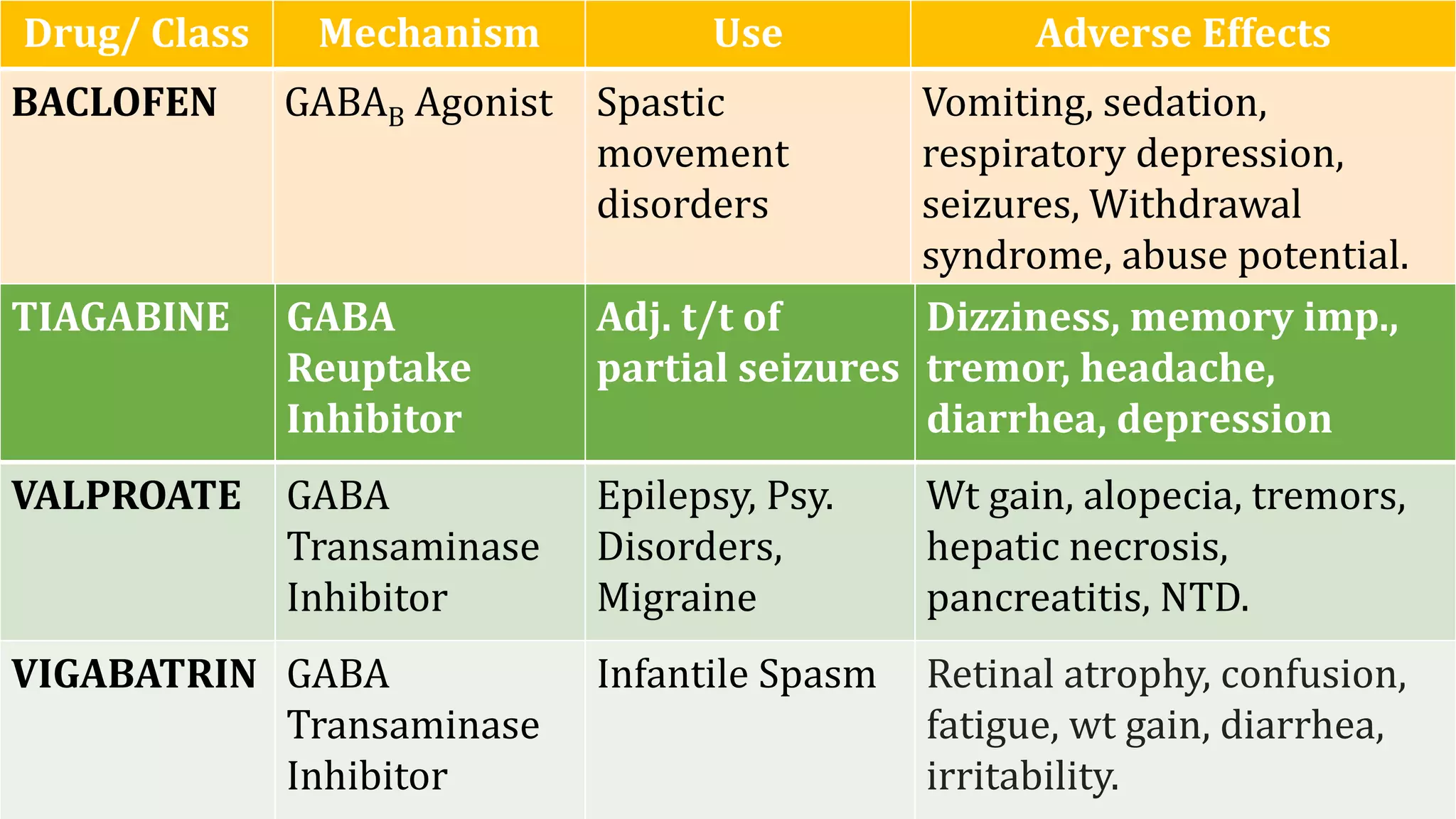
BACLOFEN GABAB Agonist Spastic
movement
disorders
Vomiting, sedation,
respiratory depression,
seizures, Withdrawal
syndrome, abuse potential.
TIAGABINE GABA
Reuptake
Inhibitor
Adj. t/t of
partial seizures
Dizziness, memory imp.,
tremor, headache,
diarrhea, depression
VALPROATE GABA
Transaminase
Inhibitor
Epilepsy, Psy.
Disorders,
Migraine
Wt gain, alopecia, tremors,
hepatic necrosis,
pancreatitis, NTD.
VIGABATRIN GABA
Transaminase
Inhibitor
Infantile Spasm Retinal atrophy, confusion,
fatigue, wt gain, diarrhea,
irritability.
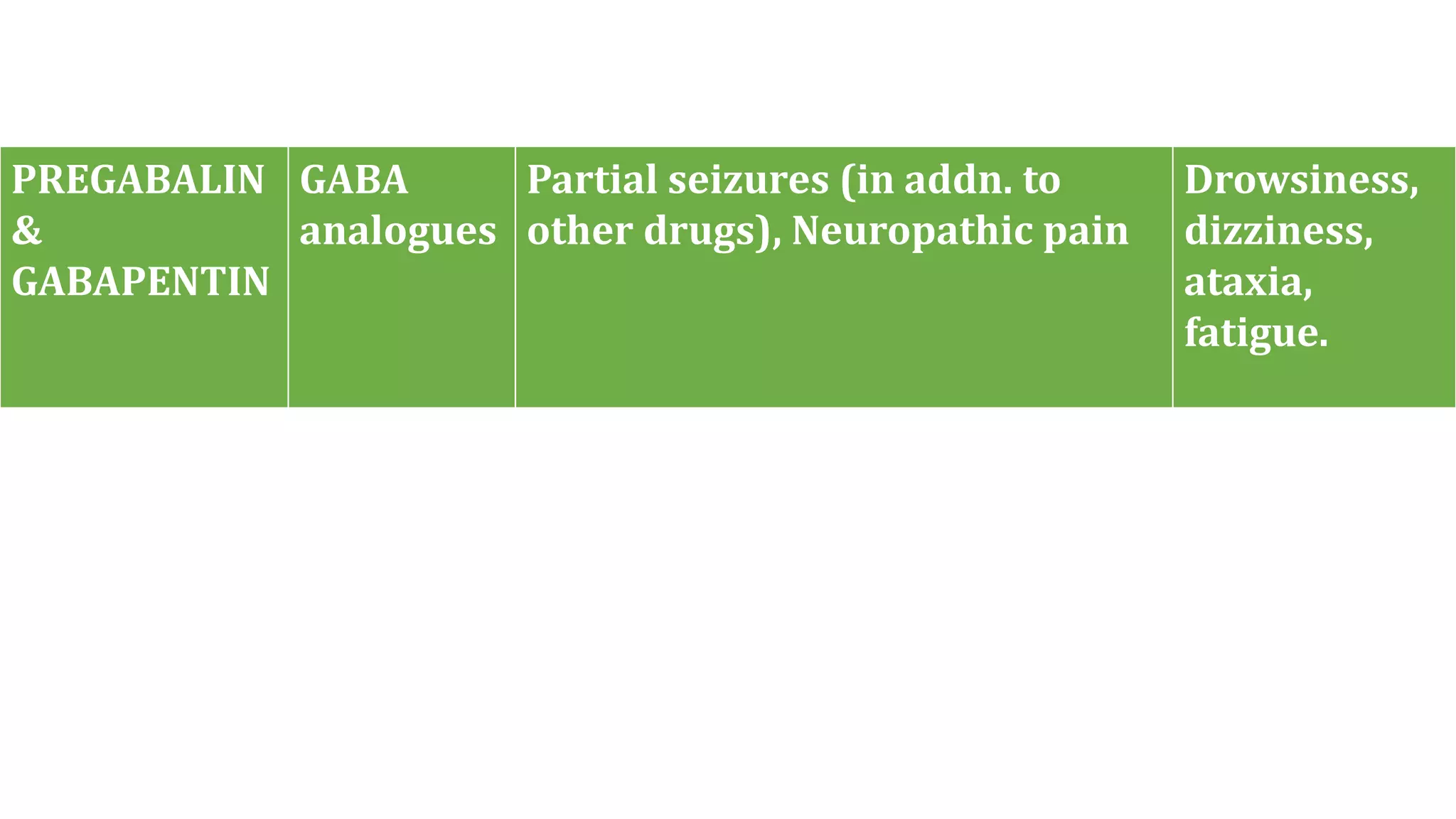
PREGABALIN
&
GABAPENTIN
GABA
analogues
Partial seizures (in addn. to
other drugs), Neuropathic pain
Drowsiness,
dizziness,
ataxia,
fatigue.
CONCLUDING REMARK
THANK YOU

GABA, glutamate receptors and their modulation

  • 1.
    GLUTAMATE & GABA RECEPTORSAND THERAPEUTIC APPLICATIONS
  • 2.
    OUTLINE • INTRODUCTION • HISTORY •GLUTAMATE : Synthesis, storage, release, termination Glutamate receptors Synaptic plasticity, ltp/ltd, excitotoxicity Therapeutic applications & upcoming agents • γ-AMINO BUTYRIC ACID: Synthesis, storage, release, termination Gaba receptors Therapeutic applications • CONCLUSION
  • 3.
    INTRODUCTION: AMINO ACIDTRANSMITTERS •CNS- high concentrations of certain amino acids. •Dicarboxylic vs Monocarboxylic amino acids. •Terms : Neurotransmitters vs Neuromodulators.
  • 4.
    HISTORY •1950s - littlereason to look further. •γ-aminobutyric acid (GABA) - (1950s) transmitter role postulated. •Curtis’s group - glutamate produced a strong excitatory effect. •1960s - GABA and excitatory amino acids (EAAs) ? Mere pharmacological curiosities. •1970s – Glycine. •Discovery of EAA antagonists.
  • 5.
  • 8.
    GLUTAMATE RECEPTORS • IONOTROPICGLUTAMATE RECEPTORS • 4 subunits assembly, each with ‘pore loop’. • 16 different receptor subunits – IUPHAR recommended terminology. • NMDA receptors - 7 types of subunits (GluN1, GluN2A, GluN2B, GluN2C, GluN2D, GluN3A, GluN3B). •AMPA receptors – 4 types of subunits (GluA1–4). • Kainate receptors – 5 types of subunits (GluK1–5).
  • 9.
    •Receptors comprising differentsubunits; differ in characteristics, e.g. AMPA receptors lacking GluA2. •NMDA – slow excitatory. AMPA, kainate receptors - fast excitatory. •NMDA and Kainate receptors – also pre-synaptic. •Cortex, basal ganglia and sensory pathways. •NMDA, AMPA – generally co-localised.
  • 10.
    NMDA receptors: Special features •Highlypermeable to Ca2+. •Mg2+. •Glutamate + simultaneous depolarization (AMPA/kainate). •Role of glycine.
  • 13.
    •METABOTROPIC GLUTAMATE RECEPTORS •8different metabotropic glutamate receptors (mGlu1–8). •Divided into three groups. •Group 1 mGlu receptors located post-synaptically and are largely excitatory. •Group 2 and 3 mGlu receptors presynaptic receptors ↓ synaptic transmission and neuronal excitability.
  • 15.
    SYNAPTIC PLASTICITY &LONG-TERM POTENTIATION (LTP) •NMDA, mGlu receptors – Long term adaptive changes. •Long-term potentiation : prolonged enhancement of synaptic transmission following presynaptic stimulation. •Counterpart - long-term depression (LTD).
  • 18.
    EXCITOTOXICITY •High concentrations ofglutamate → neuronal cell death. •Glutamate-mediated excitotoxicity may underlie the damage occurring after ischemia or hypoglycemia in the brain. •NMDA receptor antagonists. •? Etiology of chronic neurodegenerative diseases.
  • 20.
    DISEASE ASSOCIATIONS WITHGLUTAMATE Seizures ADHD Autism Neurodegenerative diseases  Multiple Sclerosis  Rasmussen’s Encephalitis  Stroke
  • 21.
    THERAPEUTIC APPLICATIONS KETAMINE •Congener ofPhencyclidine. •MOA : NMDA channel blocker and … •Uses : “Dissociative Anesthesia” (hypotensive. Asthmatic. Pediatric procedures) •A/E : Hallucinations, Emergence Delirium, Amnesia, ↑ ICT, ↑ HR, Nausea, Vomiting, ↑IOP, Erythema, Rash.
  • 22.
    MEMANTINE •NMDA Channel blocker,↓ excitotoxicity. •Uses : Moderate to Severe Alzheimer’s Disease. •A/E : Confusion, Dizziness, Drowsiness, Headache, insomnia, agitation. FELBAMATE •NMDA Blocker, +ve modulation of GABA-R. •Uses : Severe Refr. Partial Seizures, Lennox-Gastaut Syn. •A/E : ↓ appetite, vomiting, headache, aplastic anemia, liver failure.
  • 23.
    TOPIRAMATE •AMPA-kainate antag. •Uses :Initial monotherapy & adj. therapy for partial onset/ primary GTCS, L-G Syndr, Migraine. •A/E : Fatigue, Weight loss, nervousness, renal calculi. ACAMPROSATE •Alcoholism. A/E – Diarrhea, allergy, headache, insomnia. RILUZOLE •Amyotrophic Lateral Sclerosis. •Modest ↑ in survival.
  • 24.
    UPCOMING AGENTS •Analgesic :TEZAMPANEL : AMPA-Kainate Antagonist ; Phase III (Ac. Migraine) •ALS : TALAMPANEL : AMPA Antag. ; ALS negative results. •Seizure Disorder: PERAMPANEL : AMPA Antag. ; FDA – 2012 but role unclear. A/E – Suicidal thoughts, dizziness, vertigo, aggression, slurred speech, abuse liability.
  • 25.
    • Stroke: NBQX: AMPA-Kainate Antag ; Pre Clinical TRAXOPRODIL : NMDA Antag. ; QT prolongation. • Neurodegen. RADIPRODIL :NMDA Antag.; Pre-Clin (Parkinson’s) REMACEMIDE:NMDA Antag.;Huntington(III),Park(II) FARAMPATOR : AMPA + modulator ; Alzheimer’s (I) PIRACETAM : Ampakine ; Dementia, not approved.
  • 26.
  • 29.
    GABA RECEPTORS GABAA (IONOTROPIC)RECEPTORS • IUPHAR Recommendation for GABAC. • Pentamers; 19 different subunits : (α1–6, β1–3, γ1–3, δ, ε, θ, π and ρ1–3). • α1β2γ2 - the most abundant. • α-β-α-β-γ
  • 32.
    GABAB (METABOTROPIC) RECEPTORS •Gi- inhibit adenylyl cyclase, activate K+ channels, and reduce Ca2+ conductance.
  • 34.
    THERAPEUTIC APPLICATIONS Drug/ ClassMechanism Use Adverse Effects BARBITURATES ↑ Duration GABAA gated Chloride Channel Anesthesia, Anticonvulsant, hyperbilirubinemia, Sedative-Hypnotics Distortion of Sleep Architecture, Learning and Memory impairment, respiratory depression, abuse, laryngeal edema, hypersensitivity. BENZODIAZEPINES ↑ Frequency GABAA gated Chloride Channel Anxiety, Insomnia, Induction, Sk muscle relaxation, Anticonvulsant, Alc Withdrawal Drowsiness, fatigue, disorientation, lethargy, respiratory depression, abuse, impaired memory and learning, date rape Z-DRUGS Agonist at modulatory site at GABAA R to which BZD bind Insomnia Rebound insomnia, hangover are less. Headache, daytime drowsiness, nightmares at high doses.
  • 35.
    Drug/ Class MechanismUse Adverse Effects ETOMIDATE GABAA Agonist Induction of Anesthesia Nausea, Vomiting, Suppression of corticosteroid synthesis, Pain on injection, seizures. PROPOFOL GABAA Agonist Induction and maintenance, status epi Irregular heart rate, Hypotension, Burning sensation at site of injection, Apnea, seizures, addiction, Propofol Infusion Syndrome (PRIS). FLUMAZENIL Selective BZD Receptor Antagonist Suspected BZD overdose, reversal of sedative effects Convulsions , dizziness, injection site pain, increased sweating, headache, visual disturbances.
  • 36.
    Drug/ Class MechanismUse Adverse Effects BACLOFEN GABAB Agonist Spastic movement disorders Vomiting, sedation, respiratory depression, seizures, Withdrawal syndrome, abuse potential. TIAGABINE GABA Reuptake Inhibitor Adj. t/t of partial seizures Dizziness, memory imp., tremor, headache, diarrhea, depression VALPROATE GABA Transaminase Inhibitor Epilepsy, Psy. Disorders, Migraine Wt gain, alopecia, tremors, hepatic necrosis, pancreatitis, NTD. VIGABATRIN GABA Transaminase Inhibitor Infantile Spasm Retinal atrophy, confusion, fatigue, wt gain, diarrhea, irritability.
  • 37.
    PREGABALIN & GABAPENTIN GABA analogues Partial seizures (inaddn. to other drugs), Neuropathic pain Drowsiness, dizziness, ataxia, fatigue.
  • 38.
  • 39.

Editor's Notes

  • #4 Neurohormones Neuropeptides Neurotrophic Factors
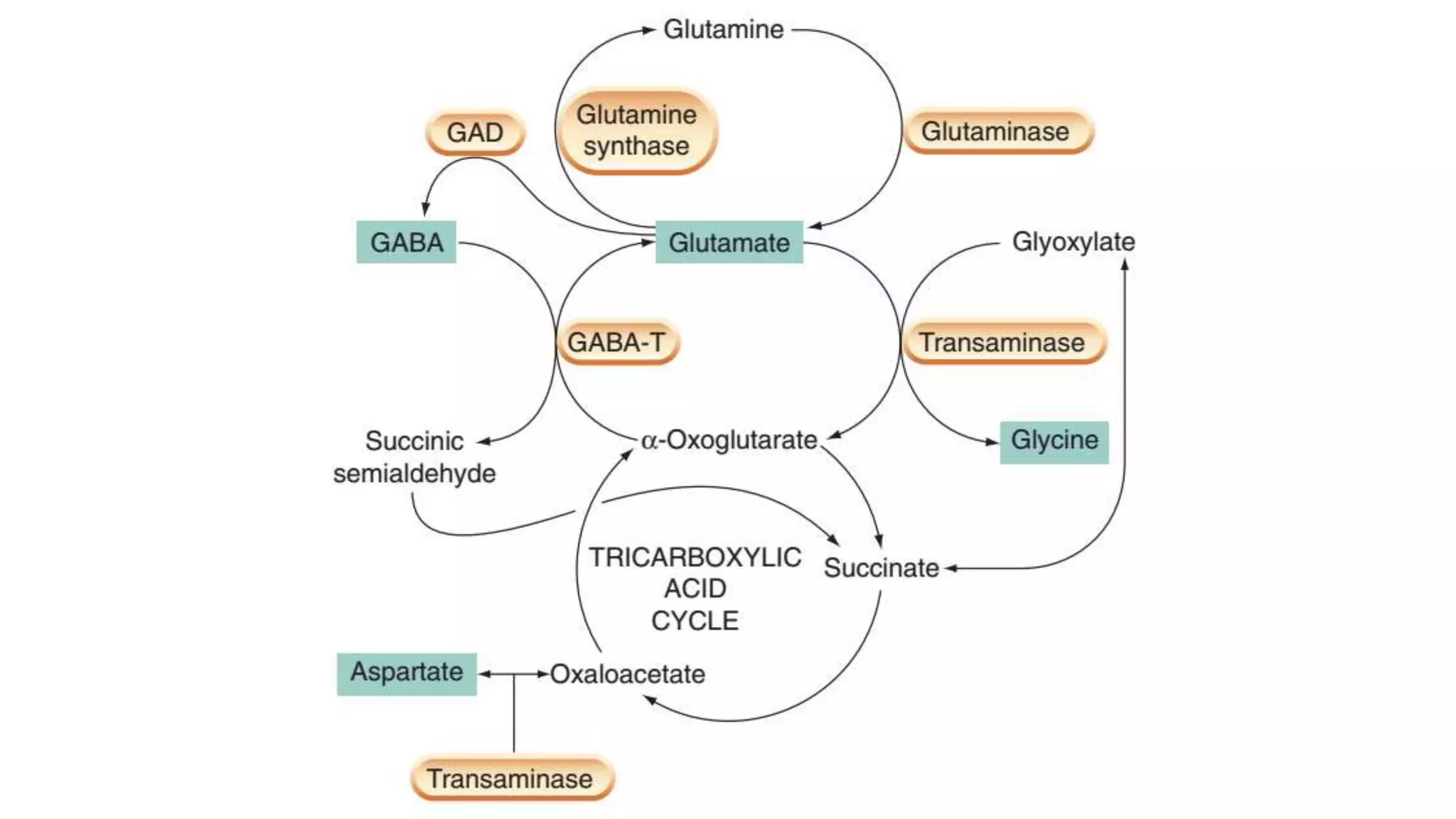
  • #7 Transmitter substances are marked with green boxes.  GABA-T, GABA transaminase;  GAD, glutamic acid decarboxylase
  • #9 Red rectangles represent α-helices. Blue hairpins are pore loop (P) domains (through which ions pass)
  • #11 Nmda antagonists – AP 5 (2-amino-5-phosphonopentanoic acid); CPP, 3-(2-carboxypirazin-4-yl)-propyl-1-phosphonic acid;
  • #17 Memory strengthening occurs due to strengthening of existing synapses.
  • #19 The frequency and pattern of synaptic stimulation may dictate whether a synapse undergoes LTP or LTD Brief activation of an excitatory pathway can produce what is known as long-term depression (LTD) of synaptic transmission in many areas of the brain. LTD is induced by a minimum level of postsynaptic depolarization and simultaneous increase in the intracellular calcium concentration at the postsynaptic neuron. D-serine release by astrocytes has been found to lead to a significant reduction of LTD in the hippocampus
  • #21 Mechanisms contributing to neuronal injury during ischemia-reperfusion. Several pathways contribute to excitotoxic neuronal injury in ischemia, with excess cytosolic Ca2+ playing a precipitating role. DAG, diacylglycerol; GluR, AMPA/kainate type of glutamate receptors; IP3, inositol trisphosphate; mGluR, metabotropic glutamate receptor; NMDA-R, N—methyl- D- aspartate receptor; O2-, superoxide radical; PIP2, phophatidyinositol 4,5-bisphosphate; PKC, protein kinase C; PL, phospholipids, PL phospholipase, VSCC, voltage- sensitive Ca2+ channel. COX, cyclooxygenase; LOX, lipoxygenase; NCX, NA+/Ca2+ exchanger; mtPTP, mitochondrial permeability transition pore
  • #27 NMDA receptors require glycine as well as NMDA to activate them, so blocking of the glycine site is an alternative way to produce antagonism. Kynurenic acid  and  the  more  potent  analogue  7-chloro-kynurenic acid act in this way, as do various compounds currently in  development. Overall,  the  promise  foreseen  for  ionotropic  glutamate receptor  antagonists  in  the  clinic  has  simply  not,  so  far, been fulflled. The problem may be that glutamate is such a  ubiquitous  and  multifunctional  mediator—involved,  it seems,  in  almost  every  aspect  of  brain  function—that attempting to improve a specifc malfunction by flooding the  brain  with  a  compound  that  affects  the  glutamate system in some way is just too crude a strategy.
  • #29 Transmitter substances are marked with green boxes.  GABA-T, GABA transaminase;  GAD, glutamic acid decarboxylase
  • #36 Uses, a/e .Agonists/: ethanol (positive allo. modulator), barbiturates, benzodiazepines, carisoprodol, chloral hydrate, etaqualone, etomidate, glutethimide, kava, methaqualone, muscimol, neuroactive steroids, z-drugs, propofol, skullcap, valerian, theanine, volatile/inhaled anaesthetics. Antagonists/negative allosteric modulators: bicuculline, cicutoxin, flumazenil, furosemide, gabazine, oenanthotoxin, picrotoxin, ?PTZ, Ro15-4513, thujone, amentoflavone.
  • #37 INHALED ANESTHETICS
  • #38 GABAB receptor ligands. Agonists: baclofen, GBL (lactone), GHB, phenibut (dietary supplement). Antagonists: phaclofen, saclofen. (experimental) GABA reuptake inhibitors: deramciclane, hyperforin, tiagabine. GABA-transaminase inhibitors: gabaculine, phenelzine, valproate, vigabatrin, lemon balm (Melissa officinalis). GABA analogues: pregabalin , gabapentin. Neurosteroids?