SUB: EXPORT IMPORT PROCEDURES & DOCUMENTATION
Packaging , Packing
Marking & Labeling
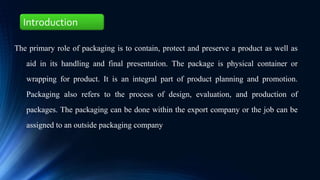
The primary role of packaging is to contain, protect and preserve a product as well as
aid in its handling and final presentation. The package is physical container or
wrapping for product. It is an integral part of product planning and promotion.
Packaging also refers to the process of design, evaluation, and production of
packages. The packaging can be done within the export company or the job can be
assigned to an outside packaging company
Introduction
Packaging provides following benefits to the goods to be exported:
• Physical Protection – Packaging provides protection against shock, vibration,
temperature, moisture and dust.
• Marketing: Proper and attractive packaging play an important role in
encouraging a potential buyer.
• Convenience - Packages can have features which add convenience in
distribution, handling, display, sale, opening, use, and reuse.
• Negative :The design of the package should not give any negative message.
• Companies sometimes change packaging to update their image andreach a new
market.
•
Packaging
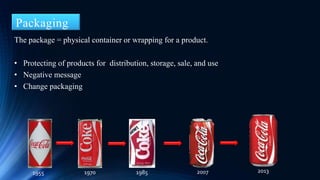
The package = physical container or wrapping for a product.
• Protecting of products for distribution, storage, sale, and use
• Negative message
• Change packaging
1955 1970 1985 2007 2013
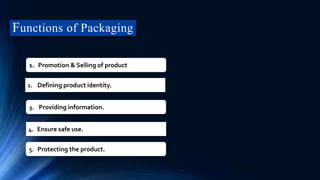
Functions of Packaging
1. Promotion & Selling of product.
2. Defining product identity.
3. Providing information.
4. Ensure safe use.
5. Protecting the product.
Promotion & Selling of product.
Promotion & Selling of product. Customer reaction to a package and
brand name is an important factor in determining marketplace success
or failure. Attractive, colorful and visually appealing packages have
promotional value. A well designed package is a powerful selling
device because it helps the product stand out from its competitors
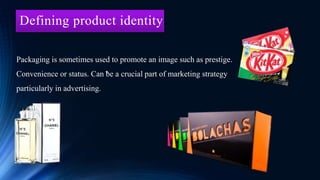
Defining product identity.
Packaging is sometimes used to promote an image such as prestige.
Convenience or status. Can be a crucial part of marketing strategy
particularly in advertising.
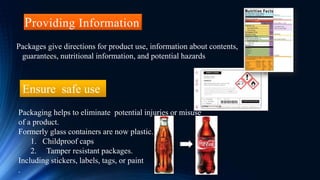
Providing Information
Packages give directions for product use, information about contents,
guarantees, nutritional information, and potential hazards
Ensure safe use
Packaging helps to eliminate potential injuries or misuse
of a product.
Formerly glass containers are now plastic.
1. Childproof caps
2. Tamper resistant packages.
Including stickers, labels, tags, or paint
.
Protecting the product.
Packages protect a product during shipping, storage, and display,
prevent tampering, and protect against spoilage and breakage
24%
16%
28%
32%
Protective Packaging Eco-friendly Convience Packaging All Above
Consumer Priority Towards Packaging
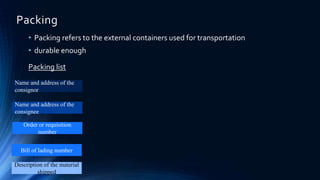
Packing
• Packing refers to the external containers used for transportation
• durable enough
Packing list
Name and address of the
consignor
Name and address of the
consignee
Order or requisition
number
Bill of lading number
Description of the material
shipped
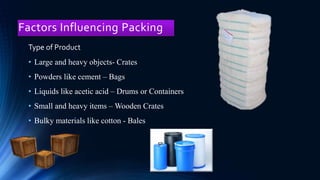
Factors Influencing Packing
Type of Product
• Large and heavy objects- Crates
• Powders like cement – Bags
• Liquids like acetic acid – Drums or Containers
• Small and heavy items – Wooden Crates
• Bulky materials like cotton - Bales
• Marking means to mark the address, number of packages etc. on the packets. It is
essential for identification purpose and should provide information on exporters' mark,
port of destination, and place of destination, order number and date, gross, net and tare
weight and handling instructions.
• It should also be ensured that while putting marks, the law of buyer's country is duly
compiled with.
• Marking can be included in stickers, labels, tags, or paint.
• Care should also be taken to ensure that the marking conforms to those written in the
invoice, insurance certificate, bill of lading and other documents.
Marking
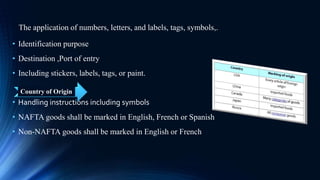
The application of numbers, letters, and labels, tags, symbols,.
• Identification purpose
• Destination ,Port of entry
• Including stickers, labels, tags, or paint.
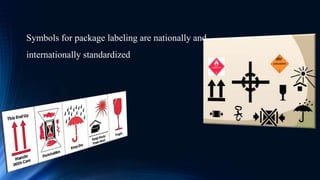
• Handling instructions including symbols
• NAFTA goods shall be marked in English, French or Spanish
• Non-NAFTA goods shall be marked in English or French
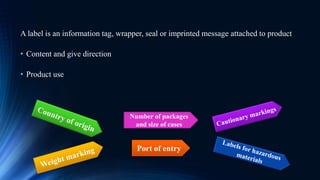
Country of Origin
A label is an information tag , wrapper, seal or imprinted message attached to a product. A label’s
main function is to inform about the contents and give directions. Information about product
use, care other features. Protects businesses from legal liability if someone if injured while
using the product. It contain a brand name, logo, ingredients, special promotional messages, and
other useful information. Many package labels must meet local, state, and federal standards to
prevent manufacturers from misleading consumers. all kinds of sign and symbols and should
also maintain all the nationally and internationally standers while using these symbols. Labeling
should be in English, and words indicating country of origin should be as large and as
prominent as any other English wording on the package or label.
Labeling
A label is an information tag, wrapper, seal or imprinted message attached to product
• Content and give direction
• Product use
Number of packages
and size of cases
Port of entry
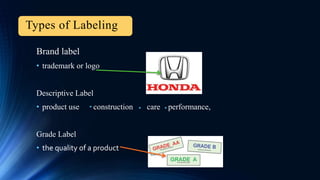
Types of Labeling
Brand label
• trademark or logo
Descriptive Label
• product use construction care performance,
Grade Label
• the quality of a product
Symbols for package labeling are nationally and
internationally standardized
Conclusion
• Packaging, packing, Marking & Labeling are important
• Packaging increases sales & improves
• The Federal Food and DrugAdministration
The FDA administers the Federal Nutrition Labeling and Education Act
passed in 1990, which protects consumers from deceptive labeling and
establishes standards for use of terms and health warnings
Packaging, Packing, Marking & Labeling

Packaging, Packing, Marking & Labeling

  • 1.
    SUB: EXPORT IMPORTPROCEDURES & DOCUMENTATION Packaging , Packing Marking & Labeling
  • 2.
    The primary roleof packaging is to contain, protect and preserve a product as well as aid in its handling and final presentation. The package is physical container or wrapping for product. It is an integral part of product planning and promotion. Packaging also refers to the process of design, evaluation, and production of packages. The packaging can be done within the export company or the job can be assigned to an outside packaging company Introduction
  • 3.
    Packaging provides followingbenefits to the goods to be exported: • Physical Protection – Packaging provides protection against shock, vibration, temperature, moisture and dust. • Marketing: Proper and attractive packaging play an important role in encouraging a potential buyer. • Convenience - Packages can have features which add convenience in distribution, handling, display, sale, opening, use, and reuse. • Negative :The design of the package should not give any negative message. • Companies sometimes change packaging to update their image andreach a new market. •
  • 4.
    Packaging The package =physical container or wrapping for a product. • Protecting of products for distribution, storage, sale, and use • Negative message • Change packaging 1955 1970 1985 2007 2013
  • 5.
    Functions of Packaging 1.Promotion & Selling of product. 2. Defining product identity. 3. Providing information. 4. Ensure safe use. 5. Protecting the product.
  • 6.
    Promotion & Sellingof product. Promotion & Selling of product. Customer reaction to a package and brand name is an important factor in determining marketplace success or failure. Attractive, colorful and visually appealing packages have promotional value. A well designed package is a powerful selling device because it helps the product stand out from its competitors
  • 7.
    Defining product identity. Packagingis sometimes used to promote an image such as prestige. Convenience or status. Can be a crucial part of marketing strategy particularly in advertising.
  • 8.
    Providing Information Packages givedirections for product use, information about contents, guarantees, nutritional information, and potential hazards Ensure safe use Packaging helps to eliminate potential injuries or misuse of a product. Formerly glass containers are now plastic. 1. Childproof caps 2. Tamper resistant packages. Including stickers, labels, tags, or paint .
  • 9.
    Protecting the product. Packagesprotect a product during shipping, storage, and display, prevent tampering, and protect against spoilage and breakage
  • 10.
    24% 16% 28% 32% Protective Packaging Eco-friendlyConvience Packaging All Above Consumer Priority Towards Packaging
  • 11.
    Packing • Packing refersto the external containers used for transportation • durable enough Packing list Name and address of the consignor Name and address of the consignee Order or requisition number Bill of lading number Description of the material shipped
  • 12.
    Factors Influencing Packing Typeof Product • Large and heavy objects- Crates • Powders like cement – Bags • Liquids like acetic acid – Drums or Containers • Small and heavy items – Wooden Crates • Bulky materials like cotton - Bales
  • 13.
    • Marking meansto mark the address, number of packages etc. on the packets. It is essential for identification purpose and should provide information on exporters' mark, port of destination, and place of destination, order number and date, gross, net and tare weight and handling instructions. • It should also be ensured that while putting marks, the law of buyer's country is duly compiled with. • Marking can be included in stickers, labels, tags, or paint. • Care should also be taken to ensure that the marking conforms to those written in the invoice, insurance certificate, bill of lading and other documents. Marking
  • 14.
    The application ofnumbers, letters, and labels, tags, symbols,. • Identification purpose • Destination ,Port of entry • Including stickers, labels, tags, or paint. • Handling instructions including symbols • NAFTA goods shall be marked in English, French or Spanish • Non-NAFTA goods shall be marked in English or French Country of Origin
  • 15.
    A label isan information tag , wrapper, seal or imprinted message attached to a product. A label’s main function is to inform about the contents and give directions. Information about product use, care other features. Protects businesses from legal liability if someone if injured while using the product. It contain a brand name, logo, ingredients, special promotional messages, and other useful information. Many package labels must meet local, state, and federal standards to prevent manufacturers from misleading consumers. all kinds of sign and symbols and should also maintain all the nationally and internationally standers while using these symbols. Labeling should be in English, and words indicating country of origin should be as large and as prominent as any other English wording on the package or label. Labeling
  • 16.
    A label isan information tag, wrapper, seal or imprinted message attached to product • Content and give direction • Product use Number of packages and size of cases Port of entry
  • 17.
    Types of Labeling Brandlabel • trademark or logo Descriptive Label • product use construction care performance, Grade Label • the quality of a product
  • 18.
    Symbols for packagelabeling are nationally and internationally standardized
  • 19.
    Conclusion • Packaging, packing,Marking & Labeling are important • Packaging increases sales & improves • The Federal Food and DrugAdministration The FDA administers the Federal Nutrition Labeling and Education Act passed in 1990, which protects consumers from deceptive labeling and establishes standards for use of terms and health warnings