Packaging
IMPORTANCE OF PACKAGING
Containment 
Communication 
Usefulness 
Logistical 
Functions 
Convenience 
Unitization
Types of 
Packaging 
Primary 
packaging 
Secondary 
packaging 
Transit 
packaging
Primary packaging 
Package labelling 
refers to the graphics 
and text that provide 
information about 
product contents, and 
directions for handling 
and use 
Primary packaging surrounds the product and features 
labelling.
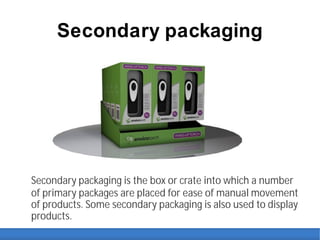
Secondary packaging 
Secondary packaging is the box or crate into which a number 
of primary packages are placed for ease of manual movement 
of products. Some secondary packaging is also used to display 
products.
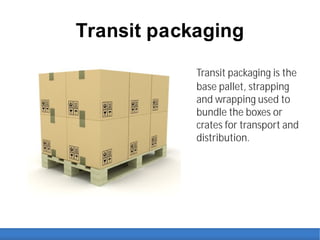
Transit packaging 
Transit packaging is the 
base pallet, strapping 
and wrapping used to 
bundle the boxes or 
crates for transport and 
distribution.
Shipping containers 
Standard size by 
ISO: 40 x 8 x 8 
feet's 
Transit packaged products are placed in shipping containers 
for long-distance transportation and distribution.
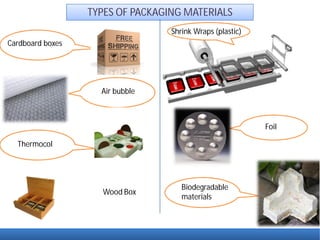
TYPES OF PACKAGING MATERIALS 
Cardboard boxes 
Air bubble 
Thermocol 
Wood Box 
Foil 
Shrink Wraps (plastic) 
Biodegradable 
materials
• Enhance customer 
service 
Benefits of Good Packaging 
• Lighter packaging 
saves transportation 
• Reduce requirement 
of special handling 
• Better utilization of 
warehousing space • Reduce damage losses 
• Environment friendly 
packs 
• Reusability
Physical 
protection 
OBJECTIVES 
Security 
Portion 
control 
Convenience 
Barrier 
protection 
Containment 
or 
agglomeration
Unitization 
Stages of 
industrial 
packaging 
3. 
Containeriza 
tion 
1. 
2. 
Palletisation
Cost effectiveness 
This test should assess the cost of the 
packing as a percentage of the cost of 
the product inside the packaging. 
It should make an effort to estimate 
the direct costs that would be 
incurred over the life cycle of the 
combination packaging.
Right- 
-sizing 
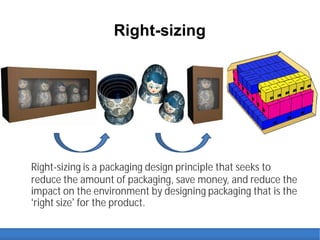
Right-sizing is a packaging design principle that seeks to 
reduce the amount of packaging, save money, and reduce the 
impact on the environment by designing packaging that is the 
‘right size’ for the product.
Environmental Packaging
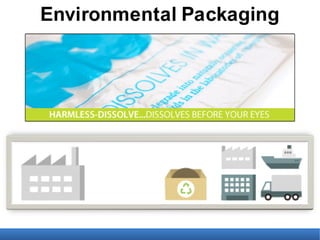
Waste-free packaging 
Is it possible to develop 
practical and cost-effective 
packaging that is waste-free?
LASH (Lighter Aboard Ship)
RO-RO (Roll-on/roll-off)
Inland Container Depots 
Container freight station (C.F.S) 
(I.C.D) and

Packaging in Logistics

  • 1.
  • 3.
  • 4.
    Containment Communication Usefulness Logistical Functions Convenience Unitization
  • 5.
    Types of Packaging Primary packaging Secondary packaging Transit packaging
  • 6.
    Primary packaging Packagelabelling refers to the graphics and text that provide information about product contents, and directions for handling and use Primary packaging surrounds the product and features labelling.
  • 7.
    Secondary packaging Secondarypackaging is the box or crate into which a number of primary packages are placed for ease of manual movement of products. Some secondary packaging is also used to display products.
  • 8.
    Transit packaging Transitpackaging is the base pallet, strapping and wrapping used to bundle the boxes or crates for transport and distribution.
  • 9.
    Shipping containers Standardsize by ISO: 40 x 8 x 8 feet's Transit packaged products are placed in shipping containers for long-distance transportation and distribution.
  • 10.
    TYPES OF PACKAGINGMATERIALS Cardboard boxes Air bubble Thermocol Wood Box Foil Shrink Wraps (plastic) Biodegradable materials
  • 11.
    • Enhance customer service Benefits of Good Packaging • Lighter packaging saves transportation • Reduce requirement of special handling • Better utilization of warehousing space • Reduce damage losses • Environment friendly packs • Reusability
  • 14.
    Physical protection OBJECTIVES Security Portion control Convenience Barrier protection Containment or agglomeration
  • 15.
    Unitization Stages of industrial packaging 3. Containeriza tion 1. 2. Palletisation
  • 16.
    Cost effectiveness Thistest should assess the cost of the packing as a percentage of the cost of the product inside the packaging. It should make an effort to estimate the direct costs that would be incurred over the life cycle of the combination packaging.
  • 17.
    Right- -sizing Right-sizingis a packaging design principle that seeks to reduce the amount of packaging, save money, and reduce the impact on the environment by designing packaging that is the ‘right size’ for the product.
  • 18.
  • 19.
    Waste-free packaging Isit possible to develop practical and cost-effective packaging that is waste-free?
  • 20.
  • 21.
  • 22.
    Inland Container Depots Container freight station (C.F.S) (I.C.D) and