PRESENTED 
BY 
DEEPSHIKHA MAURYA 
Team members 
( PRATIMA MAURYA & 
NAMRATA KUSHWAHA ) 
AT 
ASHOKA INSTITUTE OF TECHNOLOGY & MANAGEMENT 
1
CONTENTS 
 INTRODUCTION 
 OUTLOOK OF SIX SENSE TECHNOLOGY 
 WHY SIX SENSE ? 
 COMPONENTS 
 HOW IT WORKS ? 
 APPLICATIONS 
 ADVANTAGES 
 DISADVANTAGES 
 CONCLUSION 
 REFERENCES 
2 
Ashoka institute of technology & management
INTRODUCTION 
 Sixth sense is a wearable gestural interface that enhances 
the physical world around us with digital information and let 
us use natural hand gestures to interact with that information. 
 IT was developed in 1997 by “Pranav Mistry” ,a PhD 
student in the fluid interfaces group at the MIT Media Lab. 
 Six sense bridges the gap by intangible , digital information 
Out in the tangible world. 
3 
Ashoka Institute of technology & management
OUTLOOK OF SIX SENSE TECHNOLOGY 
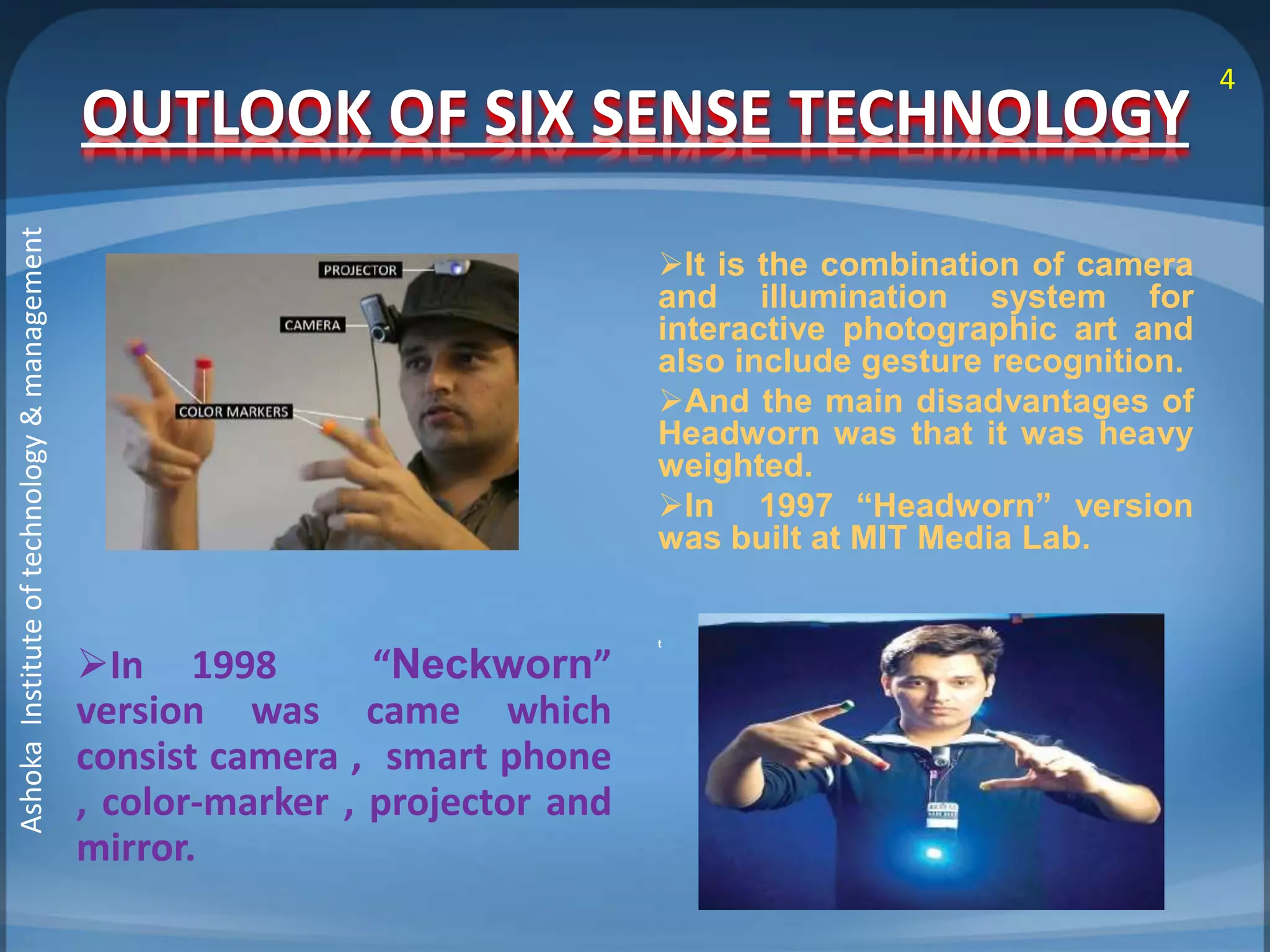
In 1998 “Neckworn” 
version was came which 
consist camera , smart phone 
, color-marker , projector and 
mirror. 
It is the combination of camera 
and illumination system for 
interactive photographic art and 
also include gesture recognition. 
And the main disadvantages of 
Headworn was that it was heavy 
weighted. 
In 1997 “Headworn” version 
was built at MIT Media Lab. 
t 
4 
Ashoka Institute of technology & management
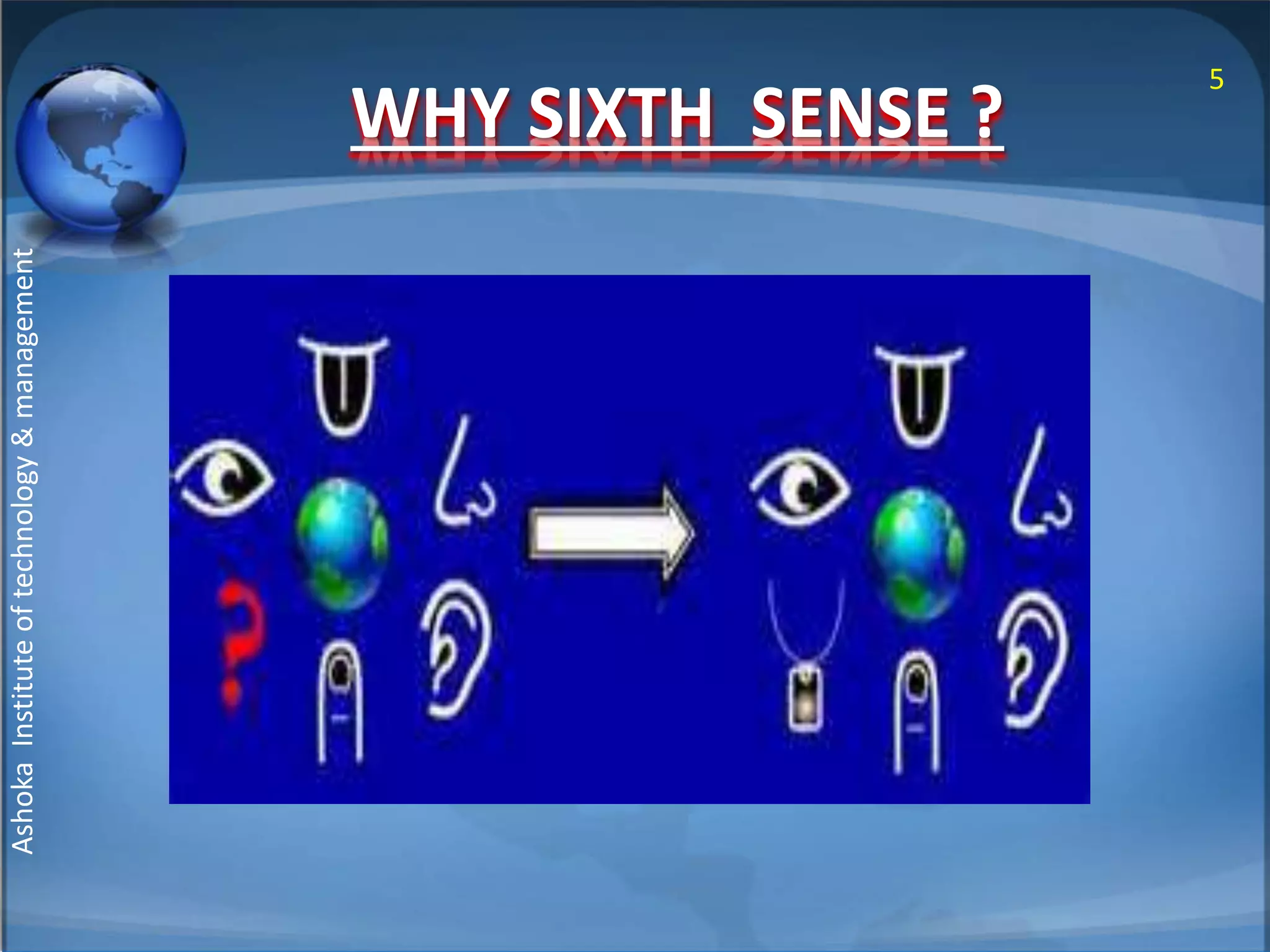
WHY SIXTH SENSE ? 5 
Ashoka Institute of technology & management
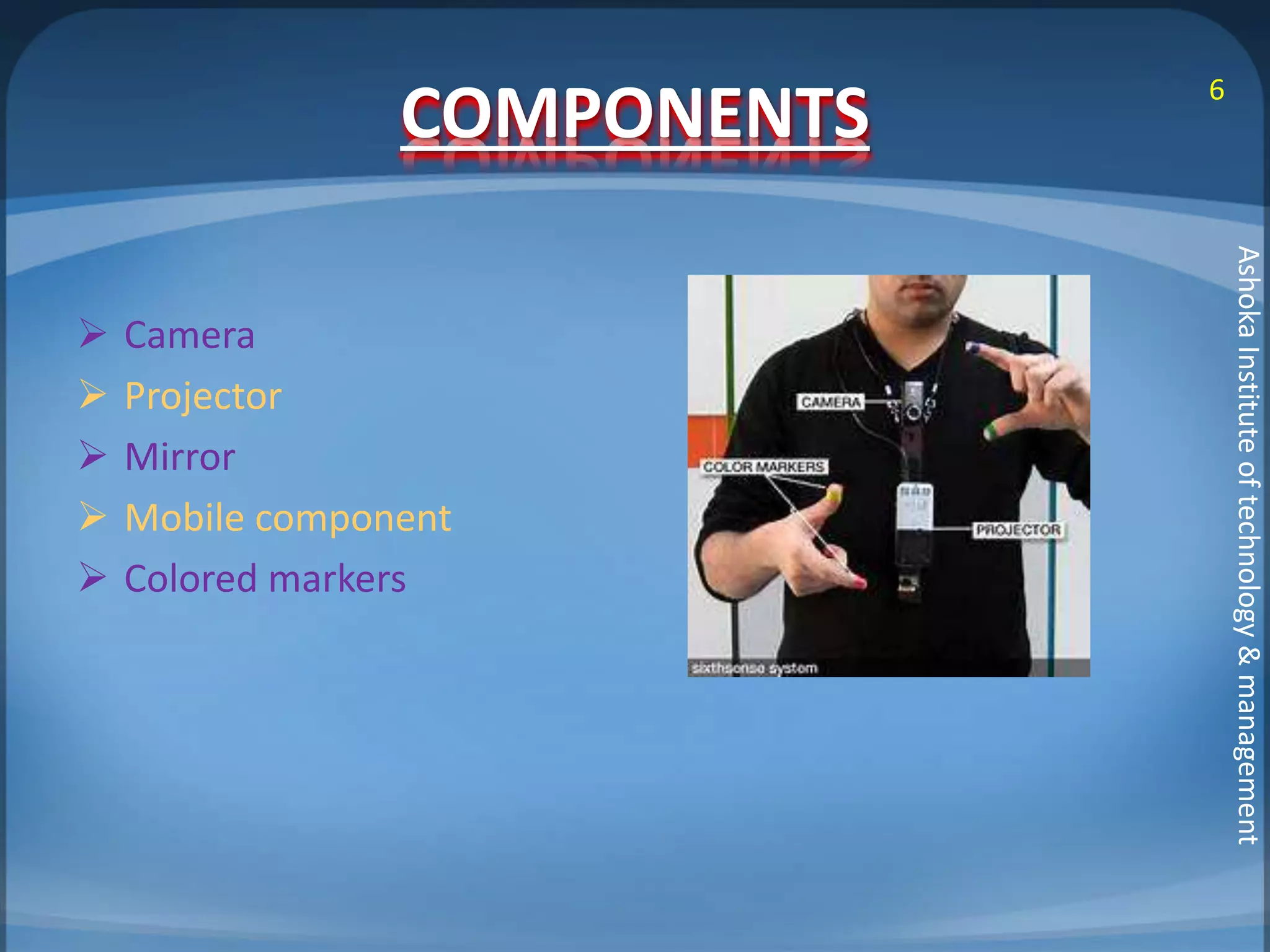
COMPONENTS 
 Camera 
 Projector 
 Mirror 
 Mobile component 
 Colored markers 
6 
Ashoka Institute of technology & management
CAMERA 
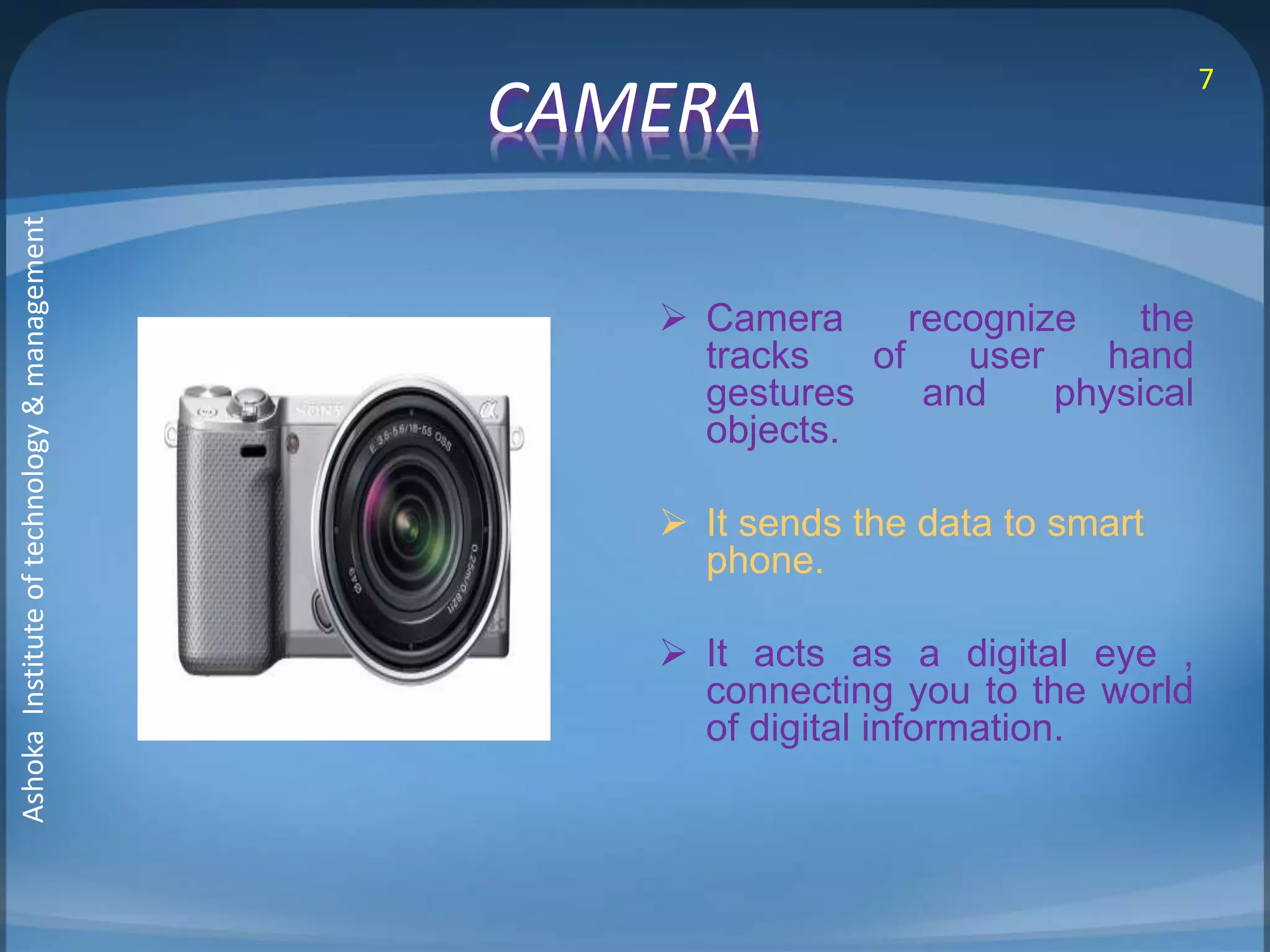
 Camera recognize the 
tracks of user hand 
gestures and physical 
objects. 
 It sends the data to smart 
phone. 
 It acts as a digital eye , 
connecting you to the world 
of digital information. 
7 
Ashoka Institute of technology & management
PROJECTOR 
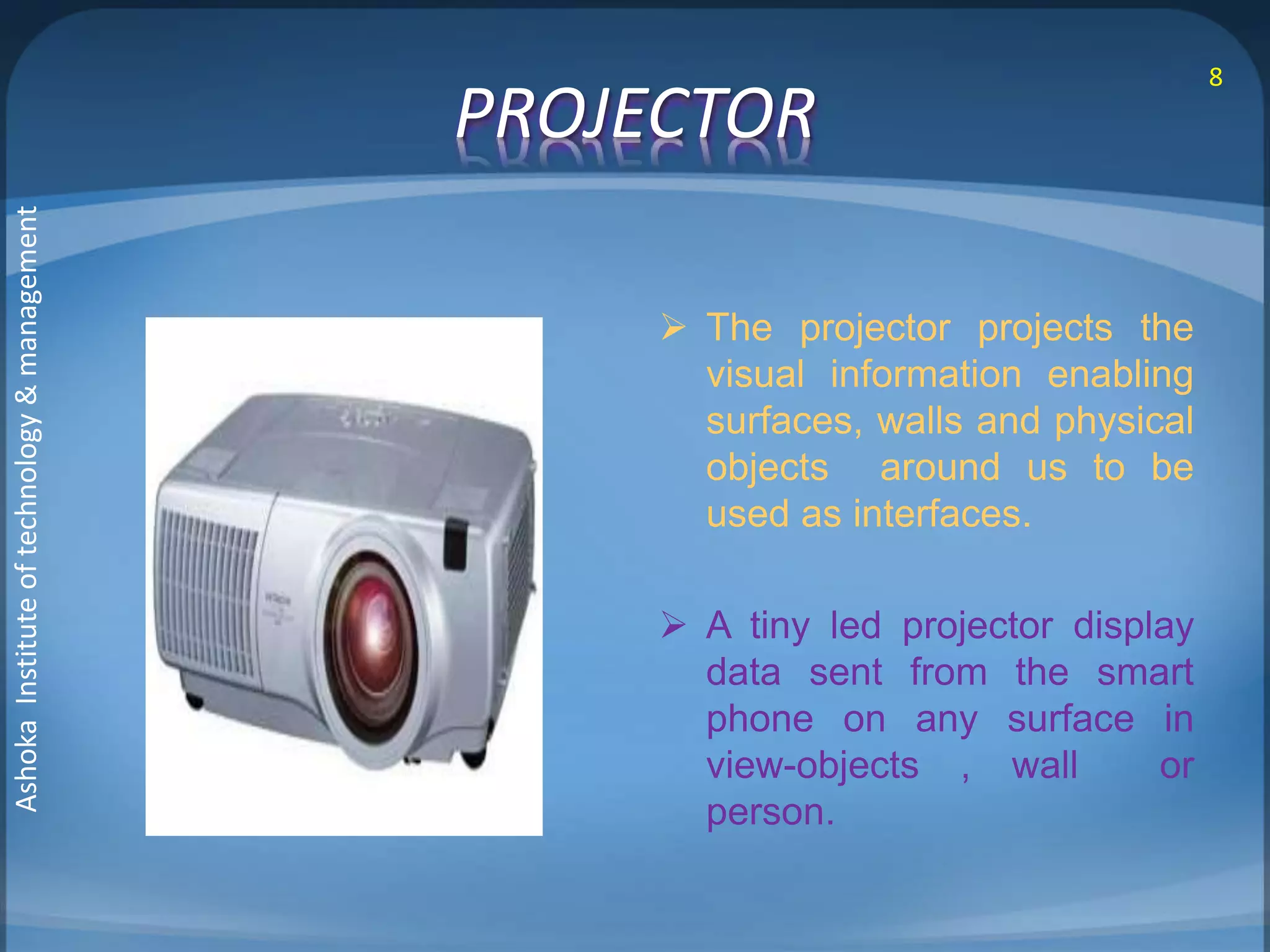
 The projector projects the 
visual information enabling 
surfaces, walls and physical 
objects around us to be 
used as interfaces. 
 A tiny led projector display 
data sent from the smart 
phone on any surface in 
view-objects , wall or 
person. 
8 
Ashoka Institute of technology & management
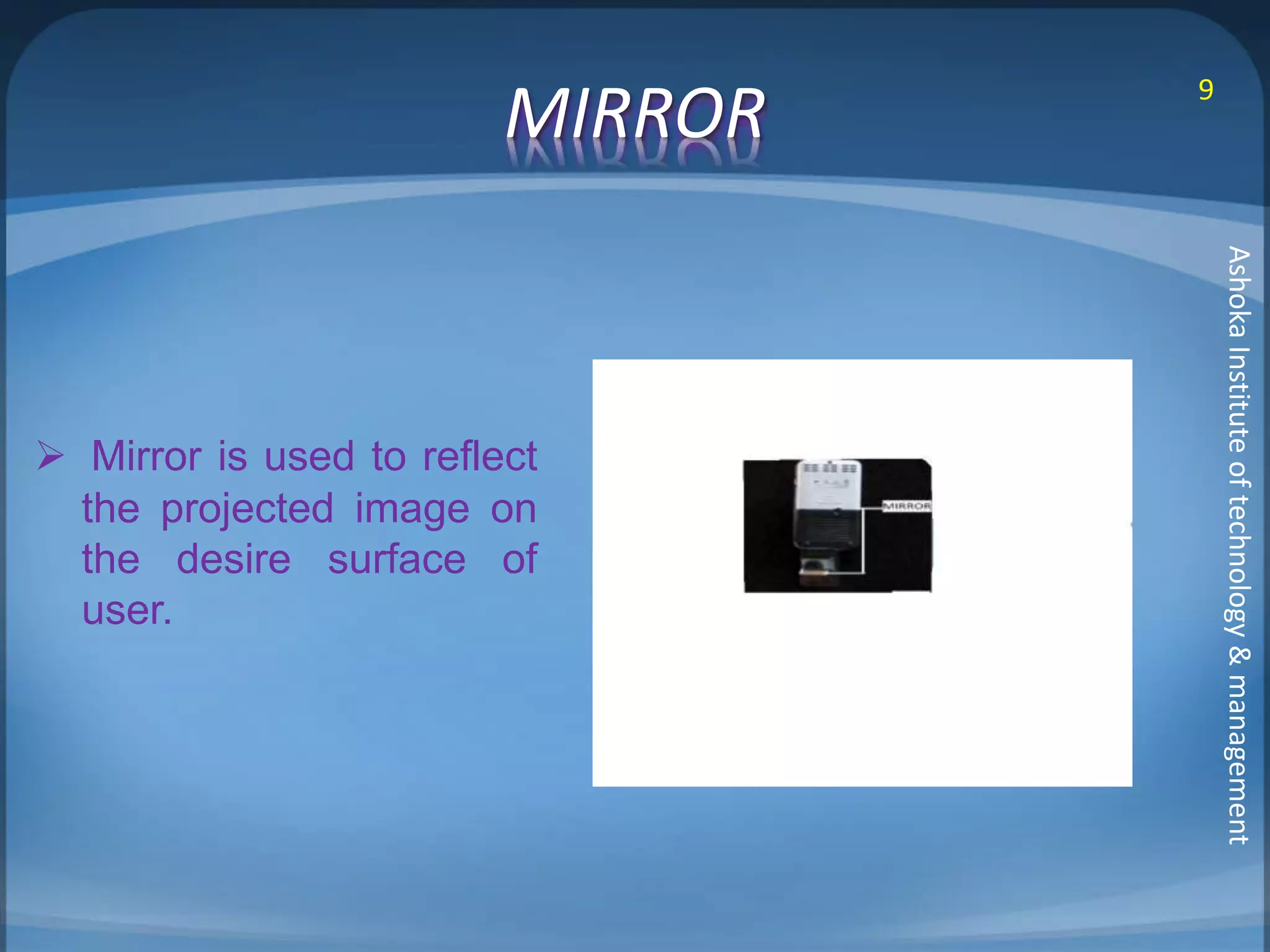
MIRROR 
 Mirror is used to reflect 
the projected image on 
the desire surface of 
user. 
9 
Ashoka Institute of technology & management
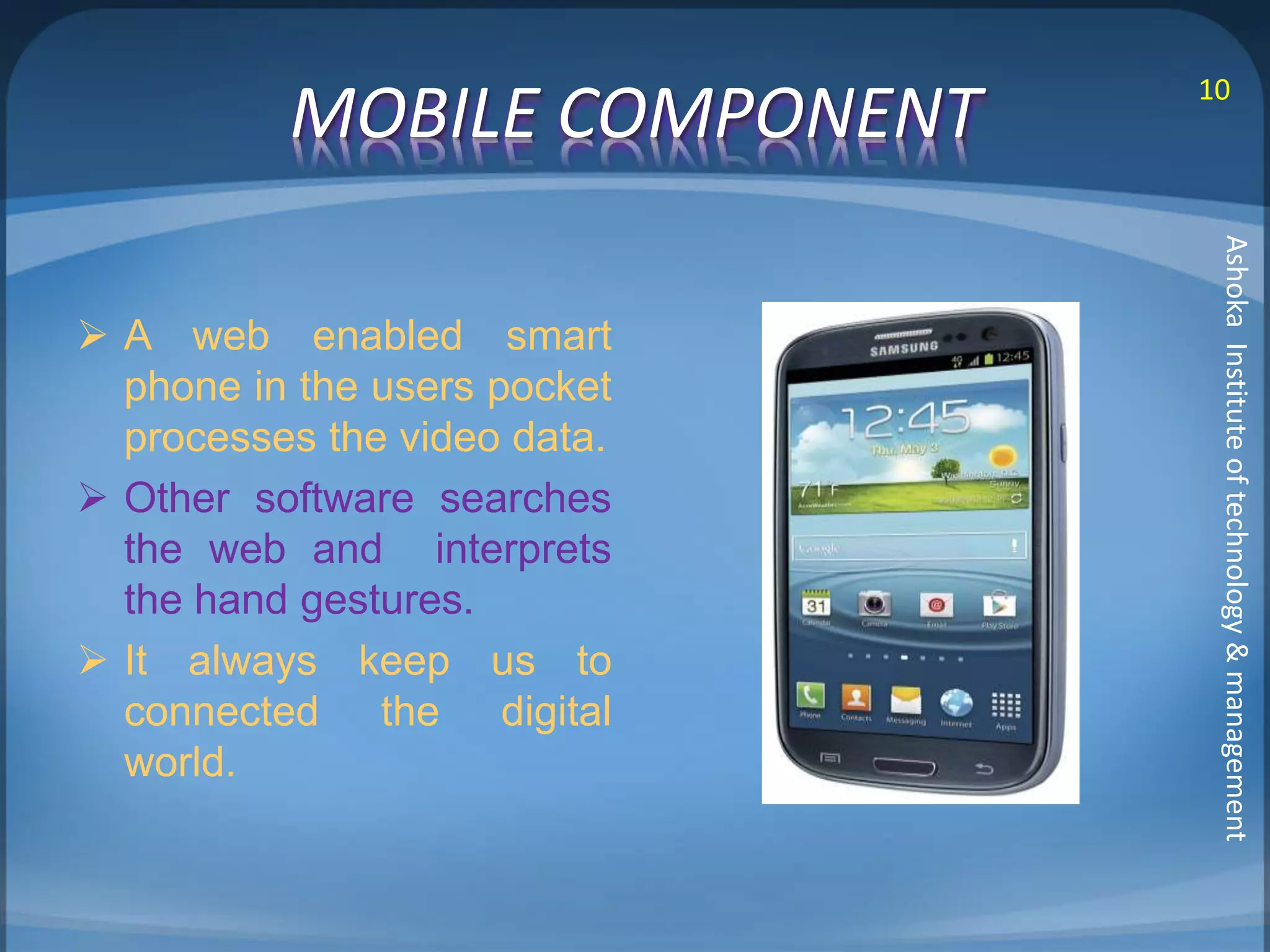
MOBILE COMPONENT 10 
 A web enabled smart 
phone in the users pocket 
processes the video data. 
 Other software searches 
the web and interprets 
the hand gestures. 
 It always keep us to 
connected the digital 
world. 
Ashoka Institute of technology & management
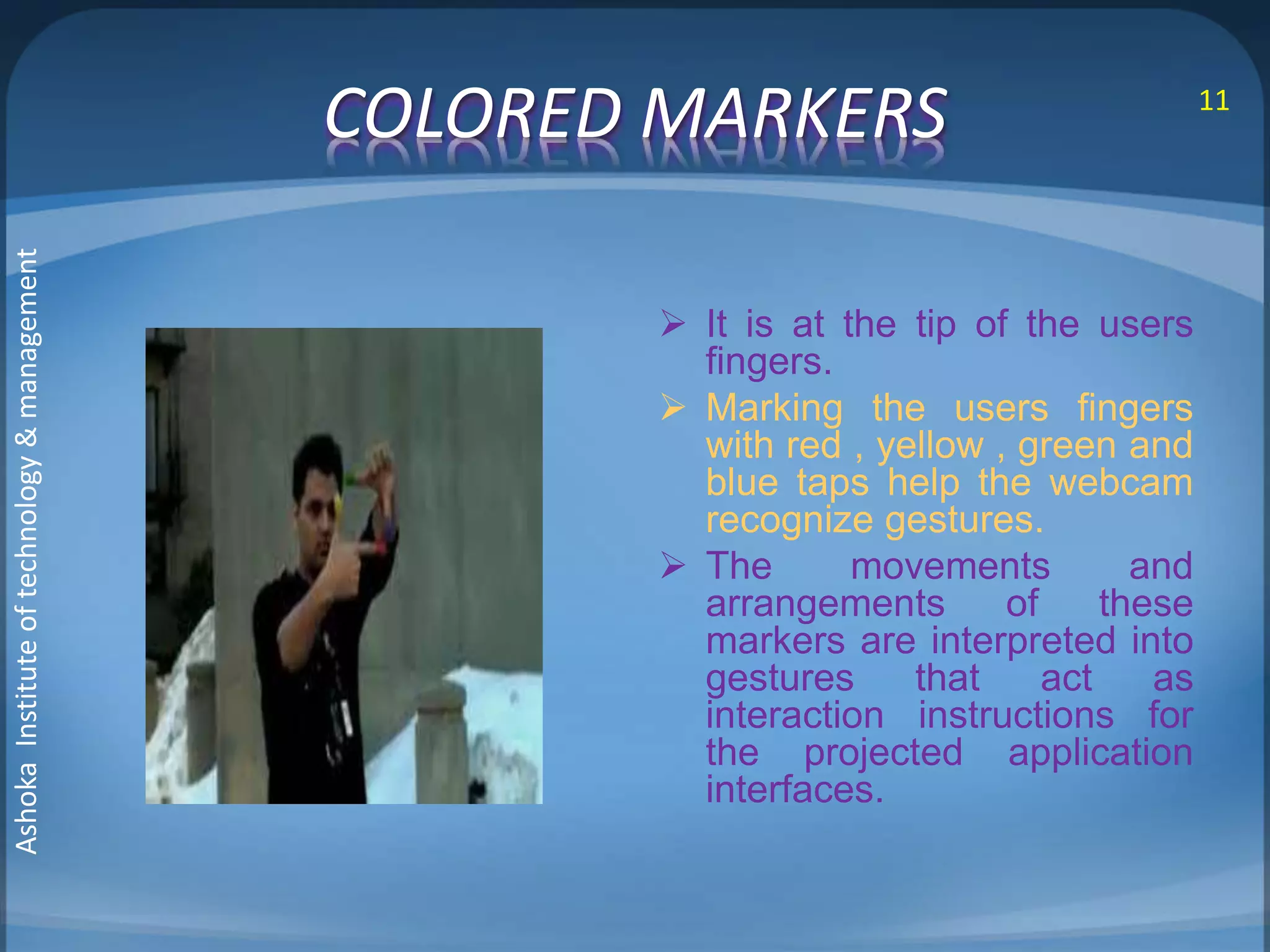
COLORED MARKERS 
 It is at the tip of the users 
fingers. 
 Marking the users fingers 
with red , yellow , green and 
blue taps help the webcam 
recognize gestures. 
 The movements and 
arrangements of these 
markers are interpreted into 
gestures that act as 
interaction instructions for 
the projected application 
interfaces. 
11 
Ashoka Institute of technology & management
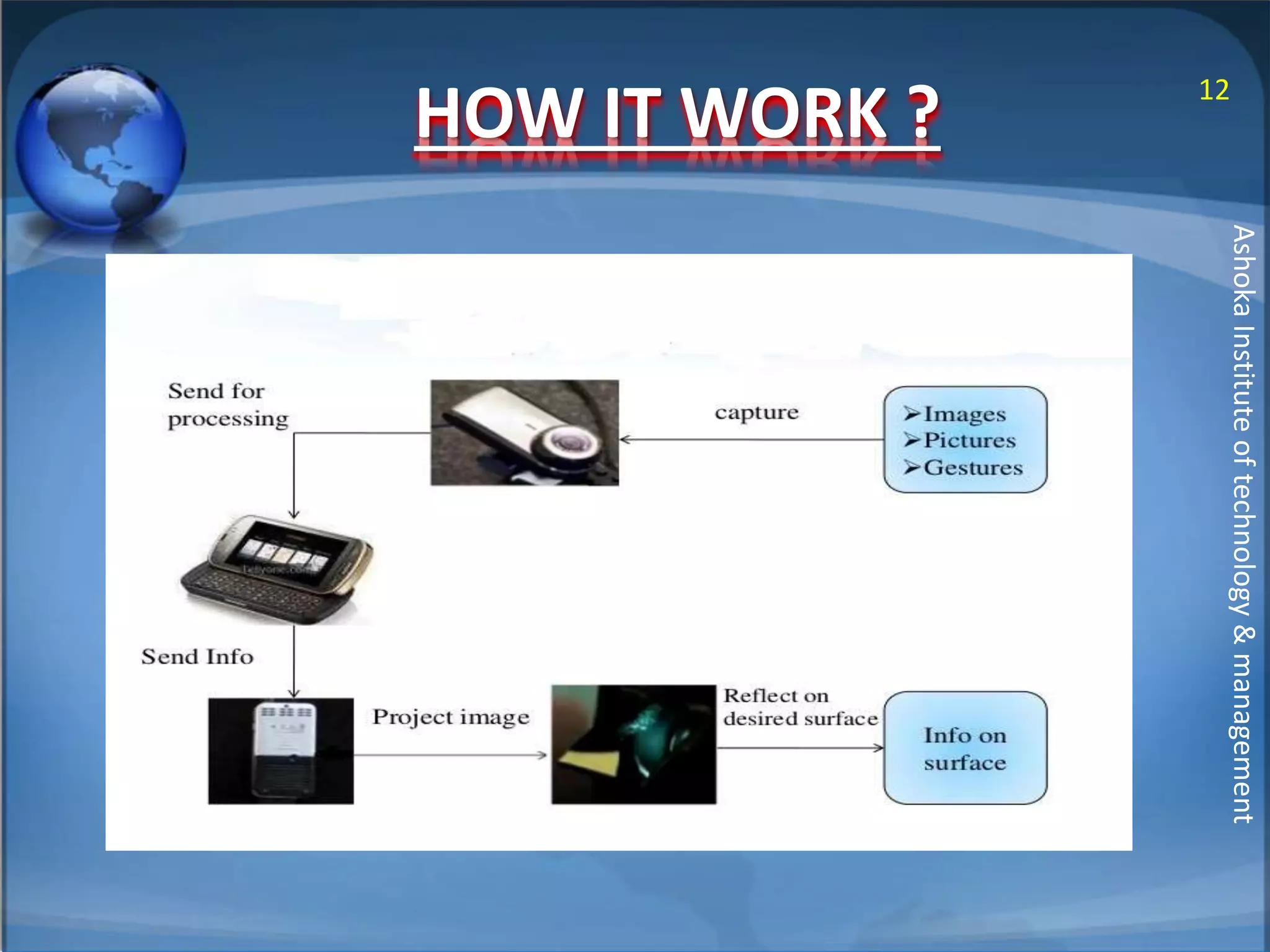
HOW IT WORK ? 12 
Ashoka Institute of technology & management
APPLICATIONS 
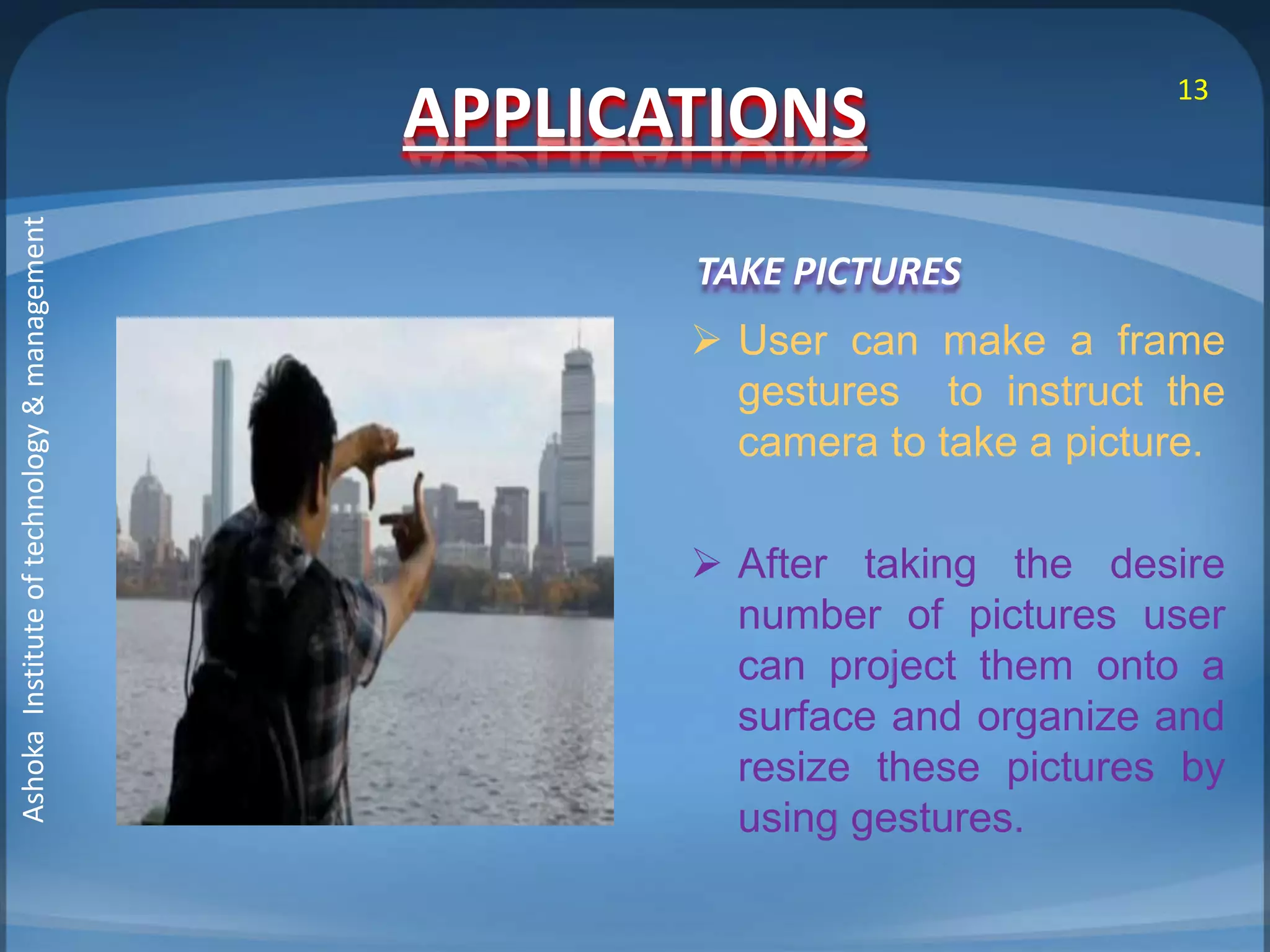
TAKE PICTURES 
13 
 User can make a frame 
gestures to instruct the 
camera to take a picture. 
 After taking the desire 
number of pictures user 
can project them onto a 
surface and organize and 
resize these pictures by 
using gestures. 
Ashoka Institute of technology & management
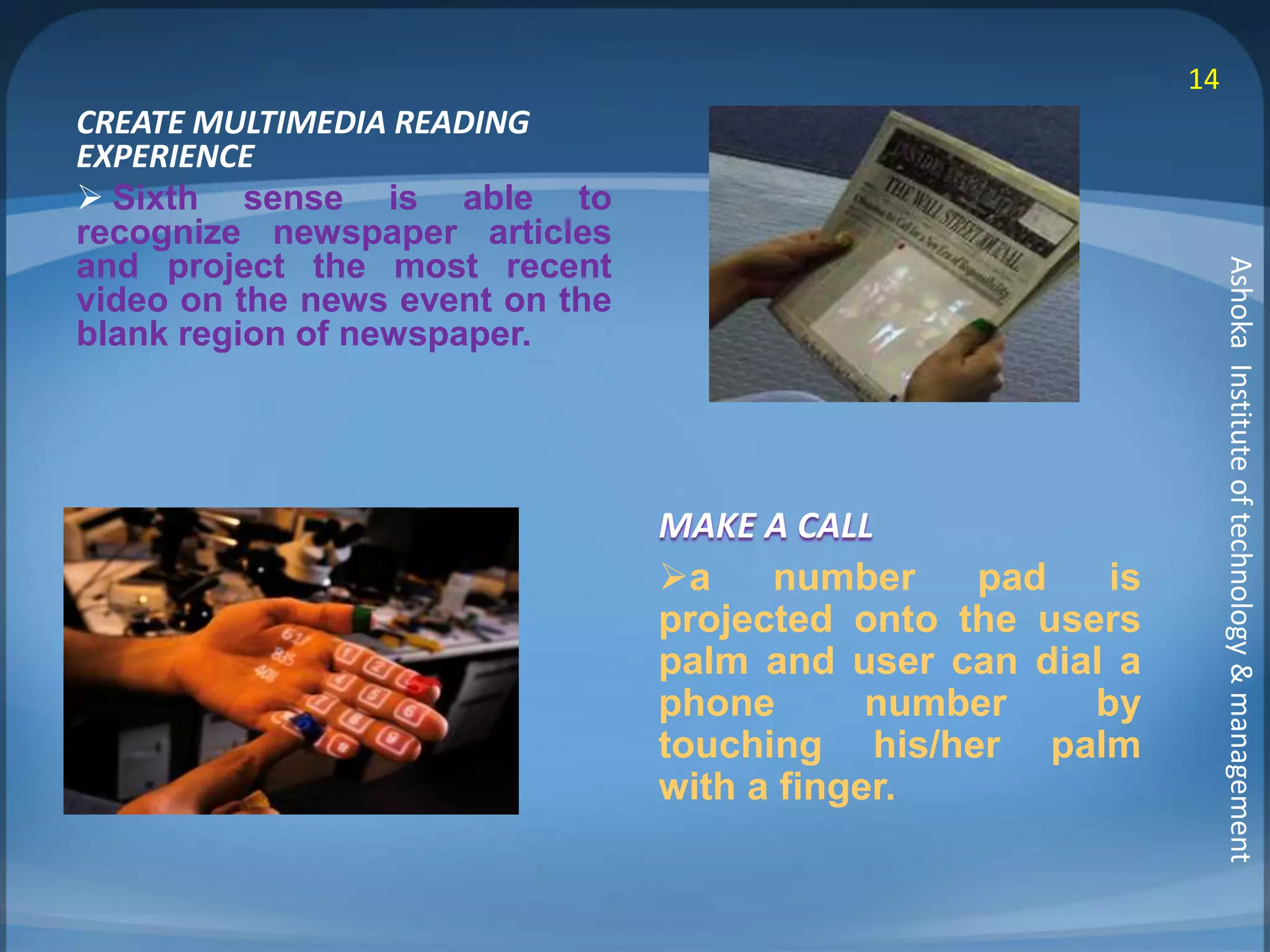
CREATE MULTIMEDIA READING 
EXPERIENCE 
 Sixth sense is able to 
recognize newspaper articles 
and project the most recent 
video on the news event on the 
blank region of newspaper. 
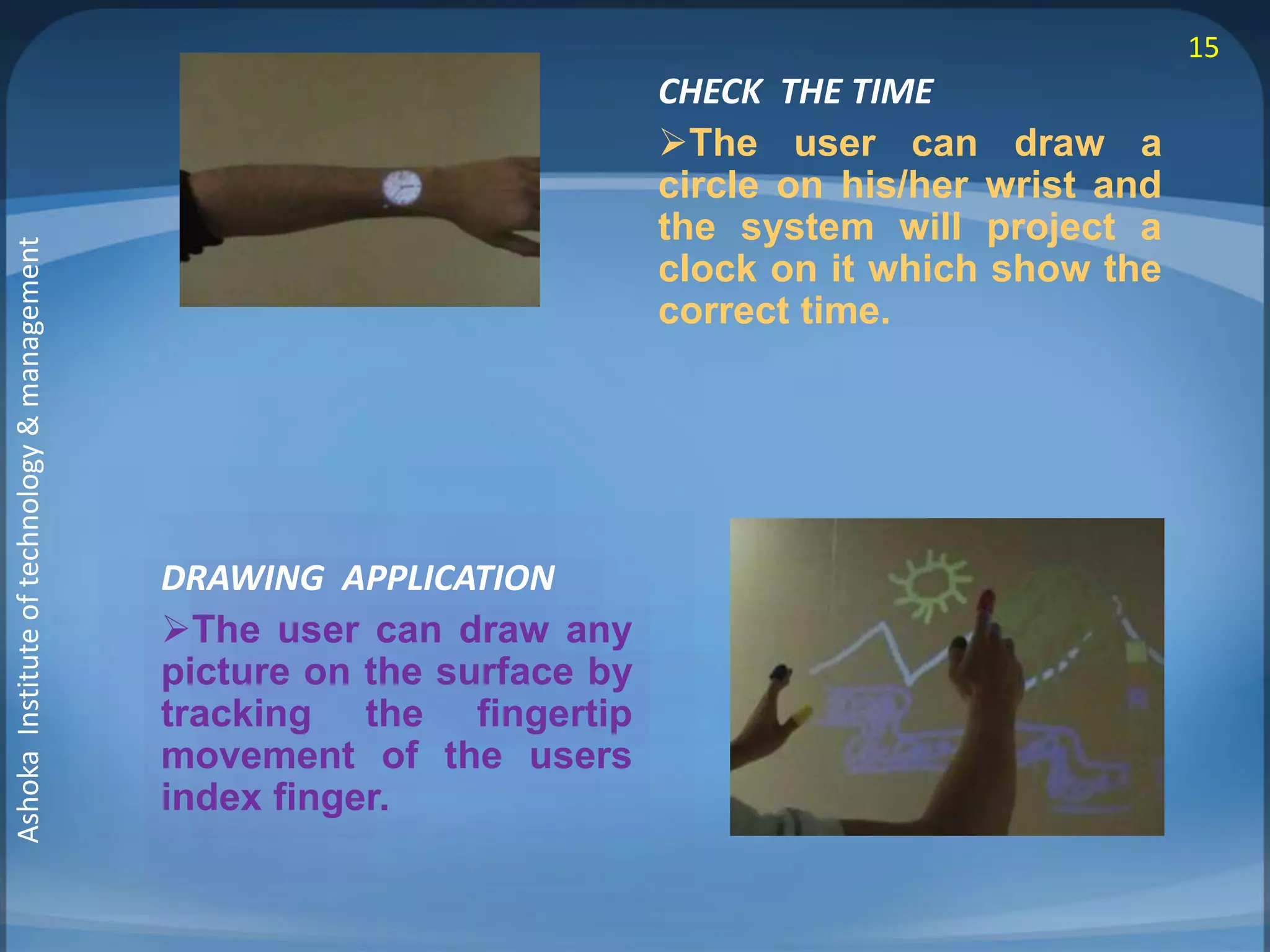
MAKE A CALL 
a number pad is 
projected onto the users 
palm and user can dial a 
phone number by 
touching his/her palm 
with a finger. 
14 
Ashoka Institute of technology & management
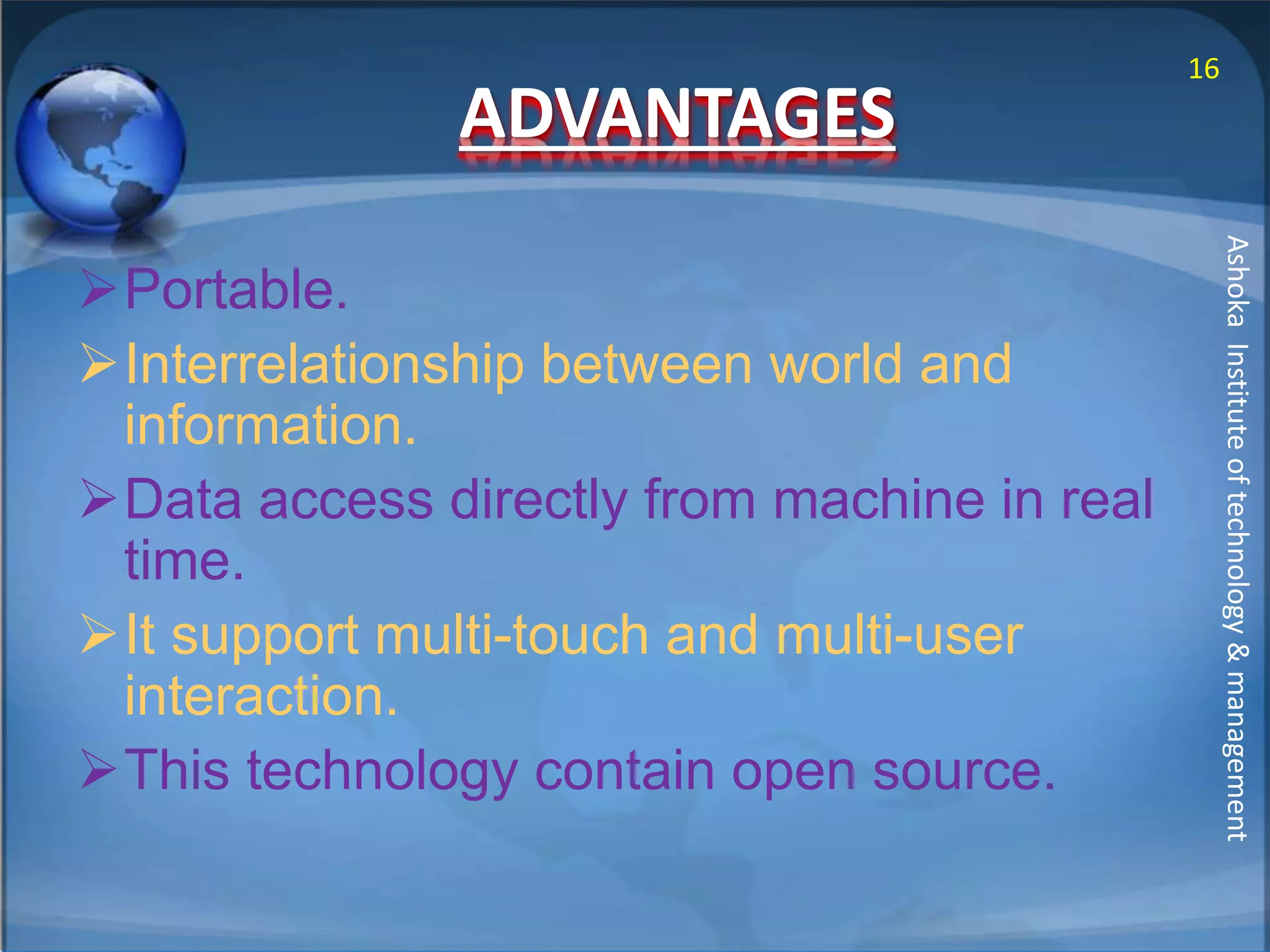
DRAWING APPLICATION 
The user can draw any 
picture on the surface by 
tracking the fingertip 
movement of the users 
index finger. 
CHECK THE TIME 
The user can draw a 
circle on his/her wrist and 
the system will project a 
clock on it which show the 
correct time. 
15 
Ashoka Institute of technology & management
ADVANTAGES 
Portable. 
Interrelationship between world and 
information. 
Data access directly from machine in real 
time. 
It support multi-touch and multi-user 
interaction. 
This technology contain open source. 
16 
Ashoka Institute of technology & management
DISADVANTAGES 
Hardware limitations of the devices that 
are currently carry around with us. 
For example many phones will not allow 
the external camera feed to be 
manufactured in real time. 
17 
Ashoka Institute of technology & management
CONCLUSION 
Sixth sense recognizes the objects 
around us and displaying information 
automatically. 
This prototype implements several 
applications that demonstrate the 
usefulness , viability and flexibility of the 
system , allowing us to interact with this 
information by the means of natural hand 
gestures. 
18 
Ashoka Institute of technology & management
19 
This technology become ultimate 
transparent user interface for accessing 
information about everything around us. 
Ashoka Institute of technology & management
REFERENCES 
 http://www.ted.com/talks/pattie_maes_demo_the_sixth 
_sense.html 
 http://theviewspaper.net/sixth-sense- technology 
 http://www.freshcreation.com/entry/sixth-sense-technology 
 http://boingboing.net/sixth-sense-technology.html 
20 
Ashoka Institute of technology & management
QUERIES 
? 
? 
? 
21 
Ashoka Institute of technology & management
22

Presentation on Six Sense Technology

  • 1.
    PRESENTED BY DEEPSHIKHAMAURYA Team members ( PRATIMA MAURYA & NAMRATA KUSHWAHA ) AT ASHOKA INSTITUTE OF TECHNOLOGY & MANAGEMENT 1
  • 2.
    CONTENTS  INTRODUCTION  OUTLOOK OF SIX SENSE TECHNOLOGY  WHY SIX SENSE ?  COMPONENTS  HOW IT WORKS ?  APPLICATIONS  ADVANTAGES  DISADVANTAGES  CONCLUSION  REFERENCES 2 Ashoka institute of technology & management
  • 3.
    INTRODUCTION  Sixthsense is a wearable gestural interface that enhances the physical world around us with digital information and let us use natural hand gestures to interact with that information.  IT was developed in 1997 by “Pranav Mistry” ,a PhD student in the fluid interfaces group at the MIT Media Lab.  Six sense bridges the gap by intangible , digital information Out in the tangible world. 3 Ashoka Institute of technology & management
  • 4.
    OUTLOOK OF SIXSENSE TECHNOLOGY In 1998 “Neckworn” version was came which consist camera , smart phone , color-marker , projector and mirror. It is the combination of camera and illumination system for interactive photographic art and also include gesture recognition. And the main disadvantages of Headworn was that it was heavy weighted. In 1997 “Headworn” version was built at MIT Media Lab. t 4 Ashoka Institute of technology & management
  • 5.
    WHY SIXTH SENSE? 5 Ashoka Institute of technology & management
  • 6.
    COMPONENTS  Camera  Projector  Mirror  Mobile component  Colored markers 6 Ashoka Institute of technology & management
  • 7.
    CAMERA  Camerarecognize the tracks of user hand gestures and physical objects.  It sends the data to smart phone.  It acts as a digital eye , connecting you to the world of digital information. 7 Ashoka Institute of technology & management
  • 8.
    PROJECTOR  Theprojector projects the visual information enabling surfaces, walls and physical objects around us to be used as interfaces.  A tiny led projector display data sent from the smart phone on any surface in view-objects , wall or person. 8 Ashoka Institute of technology & management
  • 9.
    MIRROR  Mirroris used to reflect the projected image on the desire surface of user. 9 Ashoka Institute of technology & management
  • 10.
    MOBILE COMPONENT 10  A web enabled smart phone in the users pocket processes the video data.  Other software searches the web and interprets the hand gestures.  It always keep us to connected the digital world. Ashoka Institute of technology & management
  • 11.
    COLORED MARKERS It is at the tip of the users fingers.  Marking the users fingers with red , yellow , green and blue taps help the webcam recognize gestures.  The movements and arrangements of these markers are interpreted into gestures that act as interaction instructions for the projected application interfaces. 11 Ashoka Institute of technology & management
  • 12.
    HOW IT WORK? 12 Ashoka Institute of technology & management
  • 13.
    APPLICATIONS TAKE PICTURES 13  User can make a frame gestures to instruct the camera to take a picture.  After taking the desire number of pictures user can project them onto a surface and organize and resize these pictures by using gestures. Ashoka Institute of technology & management
  • 14.
    CREATE MULTIMEDIA READING EXPERIENCE  Sixth sense is able to recognize newspaper articles and project the most recent video on the news event on the blank region of newspaper. MAKE A CALL a number pad is projected onto the users palm and user can dial a phone number by touching his/her palm with a finger. 14 Ashoka Institute of technology & management
  • 15.
    DRAWING APPLICATION Theuser can draw any picture on the surface by tracking the fingertip movement of the users index finger. CHECK THE TIME The user can draw a circle on his/her wrist and the system will project a clock on it which show the correct time. 15 Ashoka Institute of technology & management
  • 16.
    ADVANTAGES Portable. Interrelationshipbetween world and information. Data access directly from machine in real time. It support multi-touch and multi-user interaction. This technology contain open source. 16 Ashoka Institute of technology & management
  • 17.
    DISADVANTAGES Hardware limitationsof the devices that are currently carry around with us. For example many phones will not allow the external camera feed to be manufactured in real time. 17 Ashoka Institute of technology & management
  • 18.
    CONCLUSION Sixth senserecognizes the objects around us and displaying information automatically. This prototype implements several applications that demonstrate the usefulness , viability and flexibility of the system , allowing us to interact with this information by the means of natural hand gestures. 18 Ashoka Institute of technology & management
  • 19.
    19 This technologybecome ultimate transparent user interface for accessing information about everything around us. Ashoka Institute of technology & management
  • 20.
    REFERENCES  http://www.ted.com/talks/pattie_maes_demo_the_sixth _sense.html  http://theviewspaper.net/sixth-sense- technology  http://www.freshcreation.com/entry/sixth-sense-technology  http://boingboing.net/sixth-sense-technology.html 20 Ashoka Institute of technology & management
  • 21.
    QUERIES ? ? ? 21 Ashoka Institute of technology & management
  • 22.