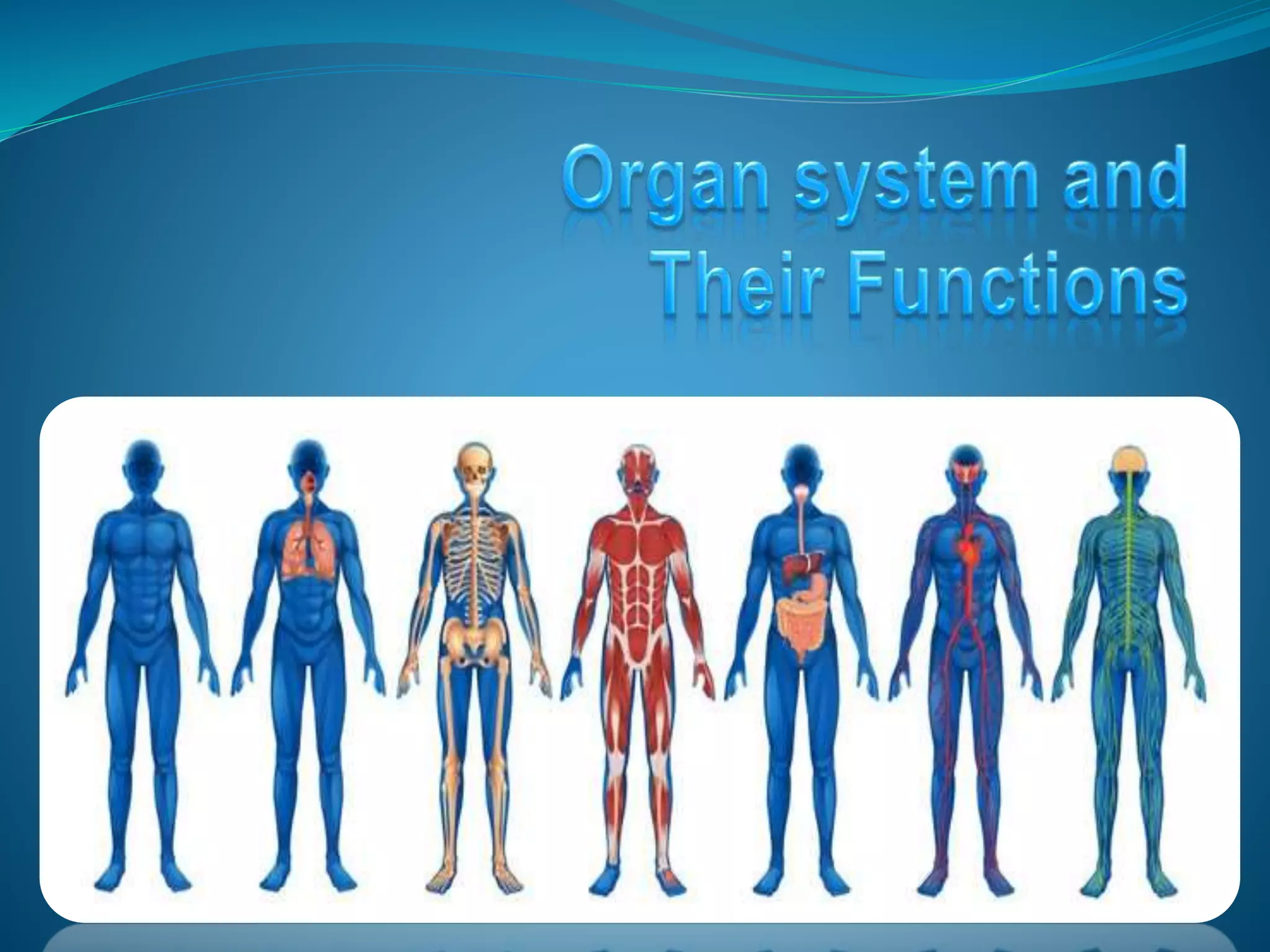
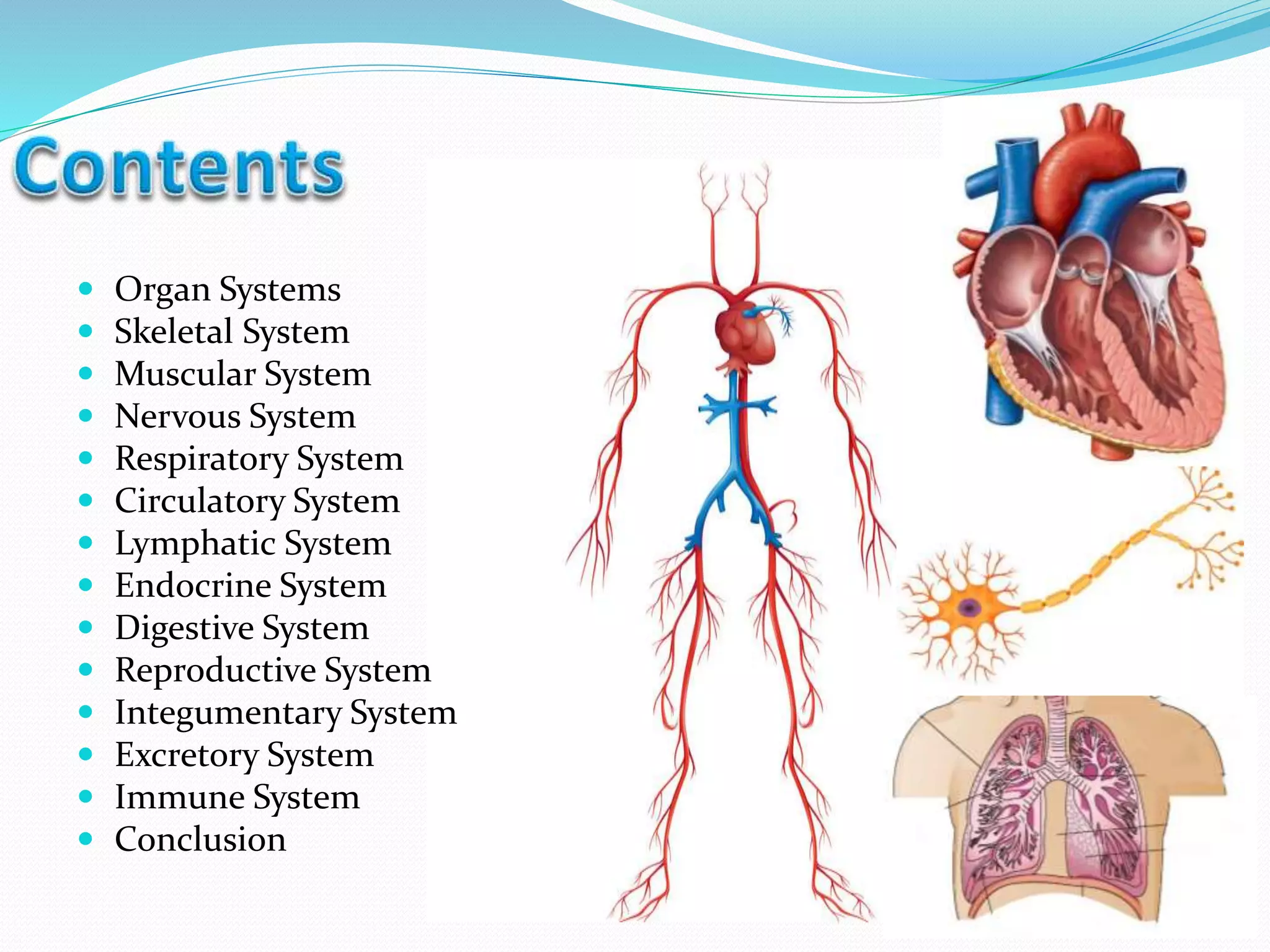
 Organ Systems
 Skeletal System
 Muscular System
 Nervous System
 Respiratory System
 Circulatory System
 Lymphatic System
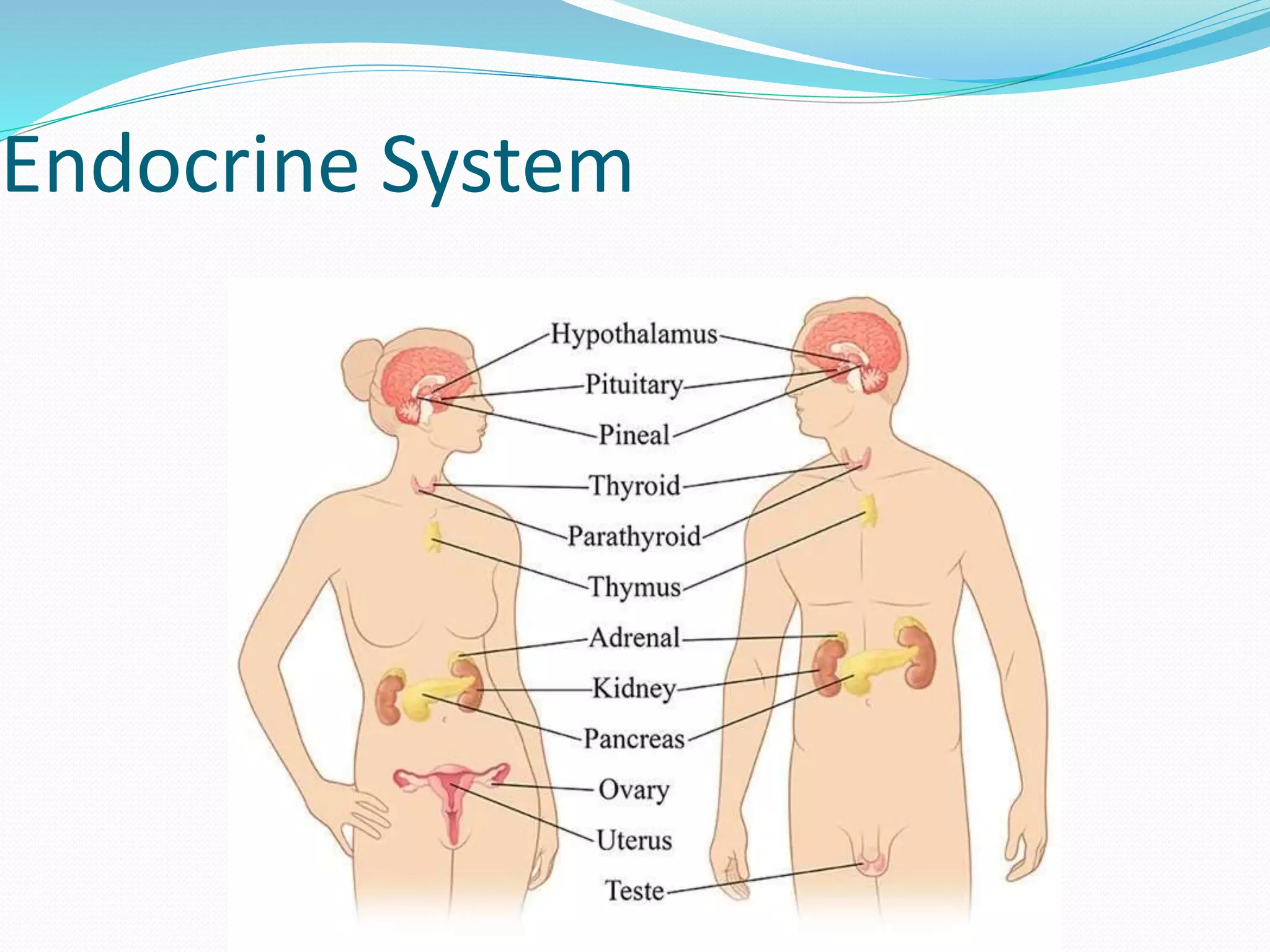
 Endocrine System
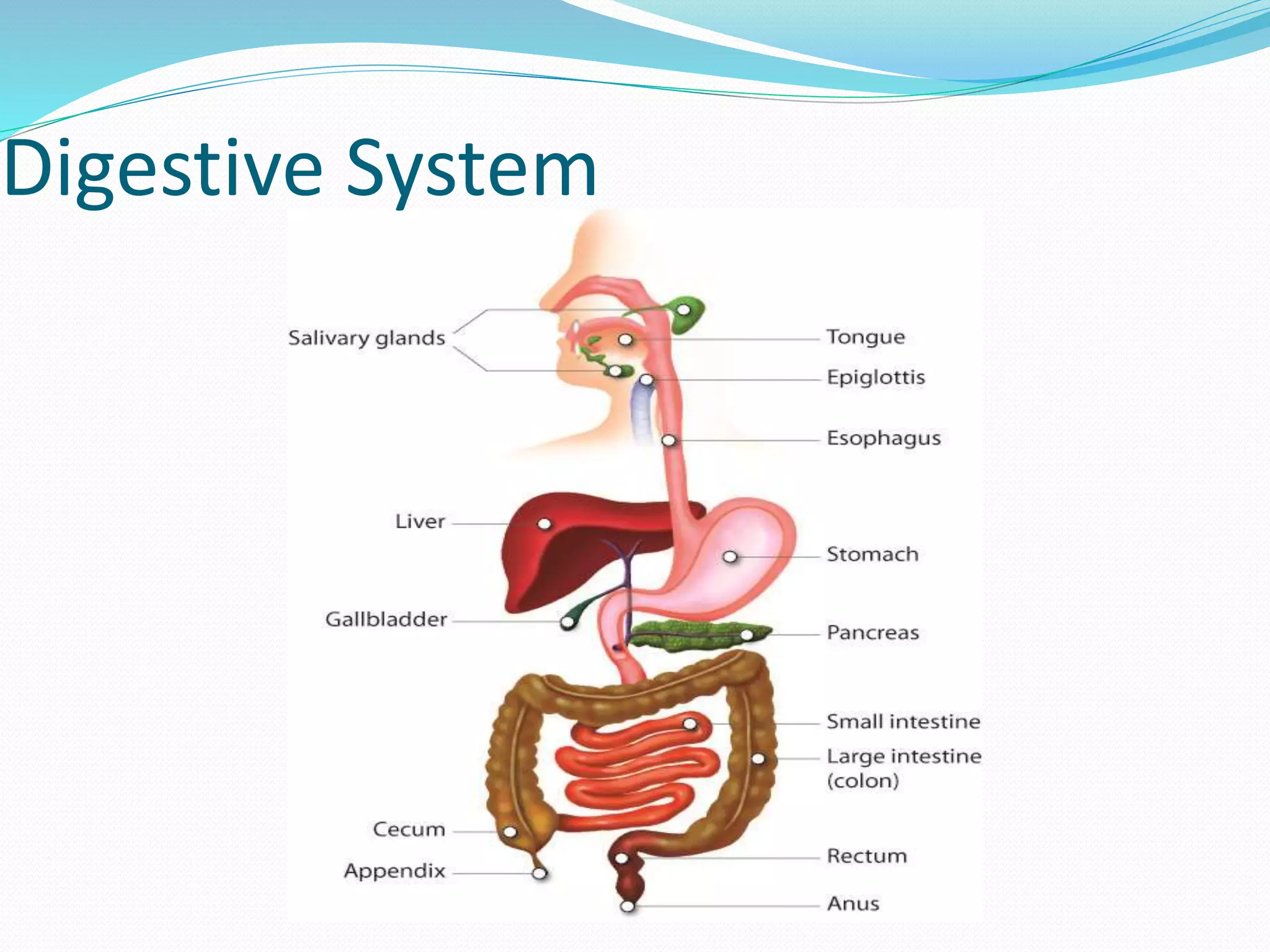
 Digestive System
 Reproductive System
 Integumentary System
 Excretory System
 Immune System
 Conclusion
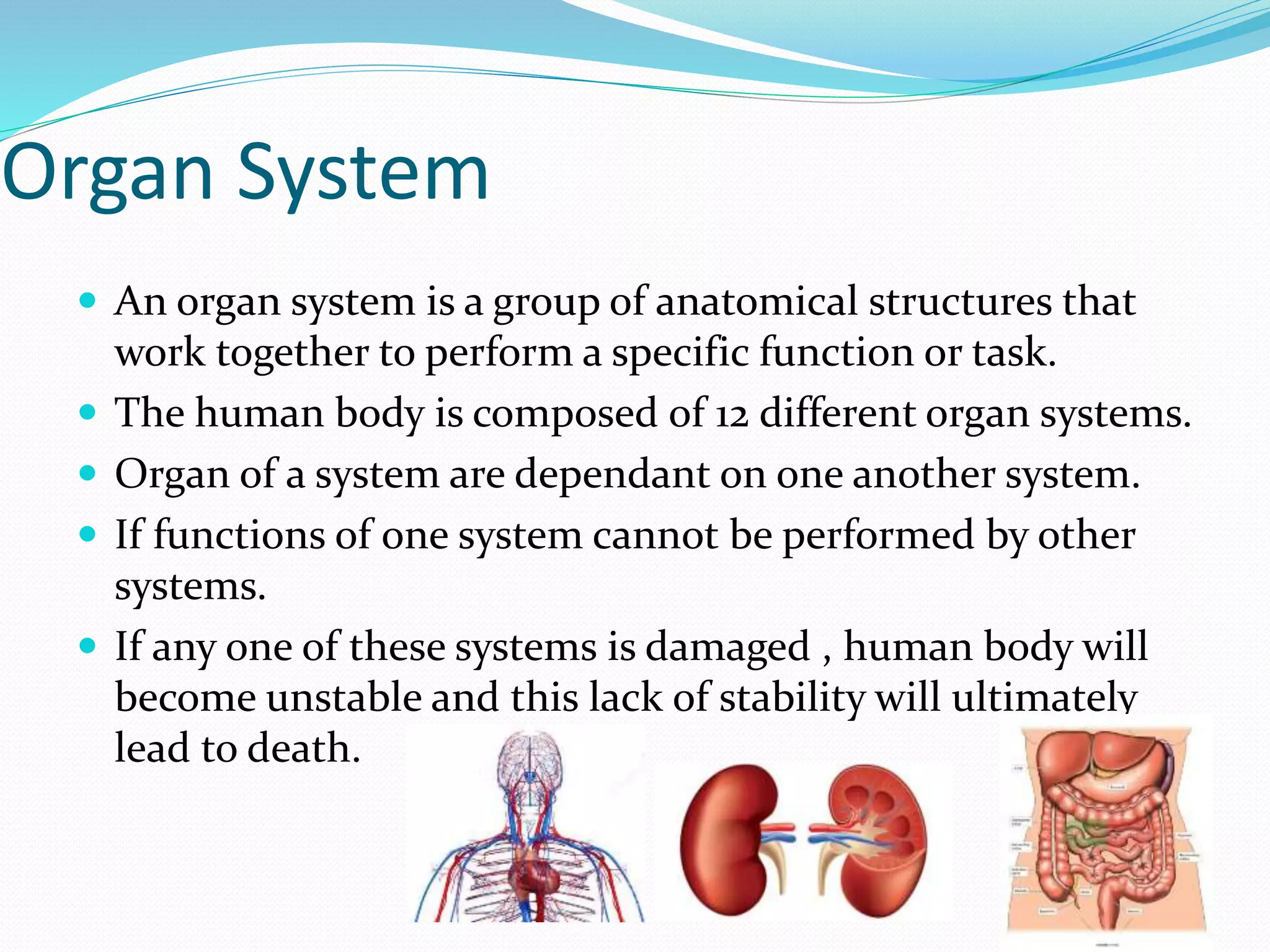
Organ System
 An organ system is a group of anatomical structures that
work together to perform a specific function or task.
 The human body is composed of 12 different organ systems.
 Organ of a system are dependant on one another system.
 If functions of one system cannot be performed by other
systems.
 If any one of these systems is damaged , human body will
become unstable and this lack of stability will ultimately
lead to death.
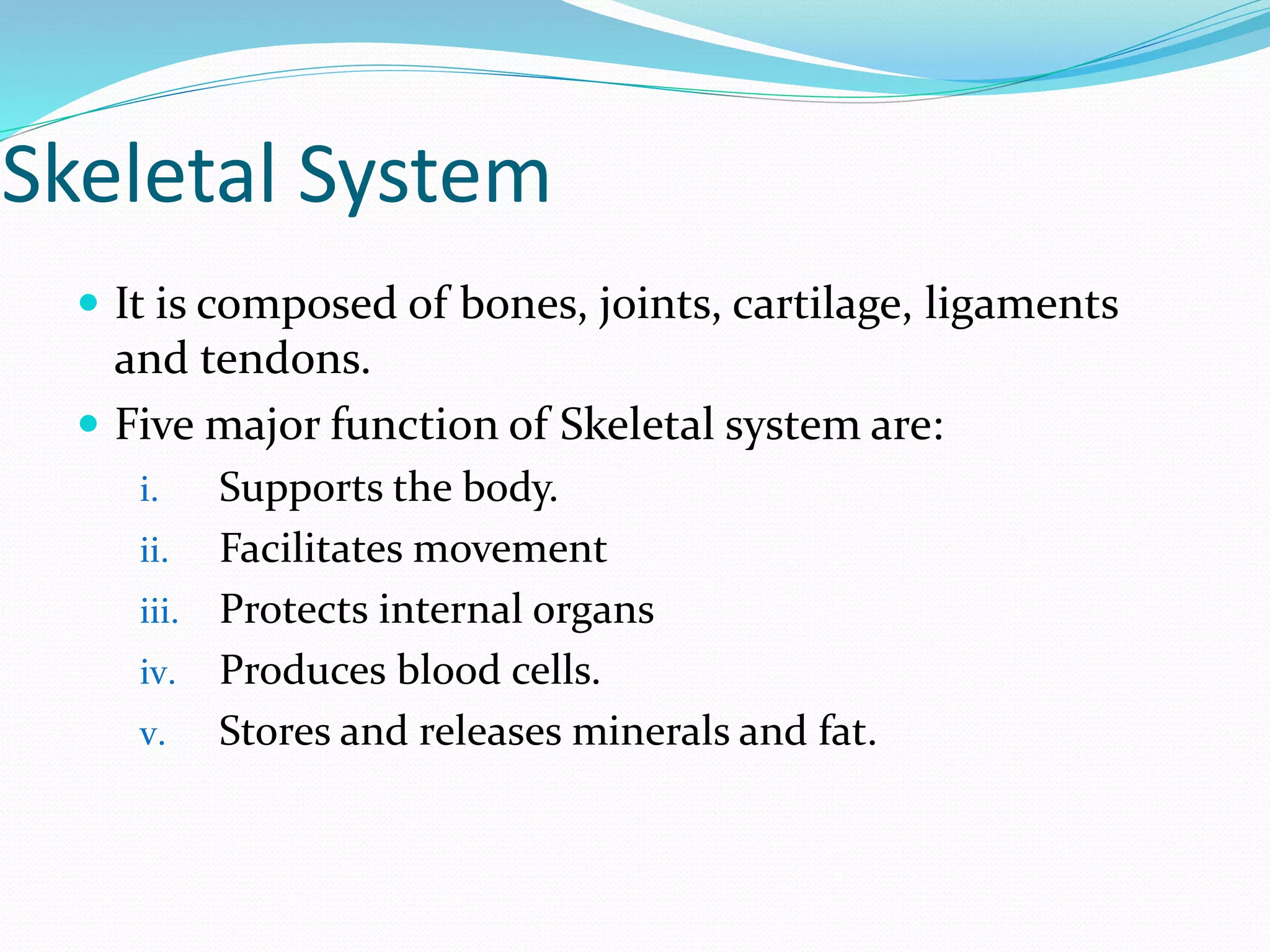
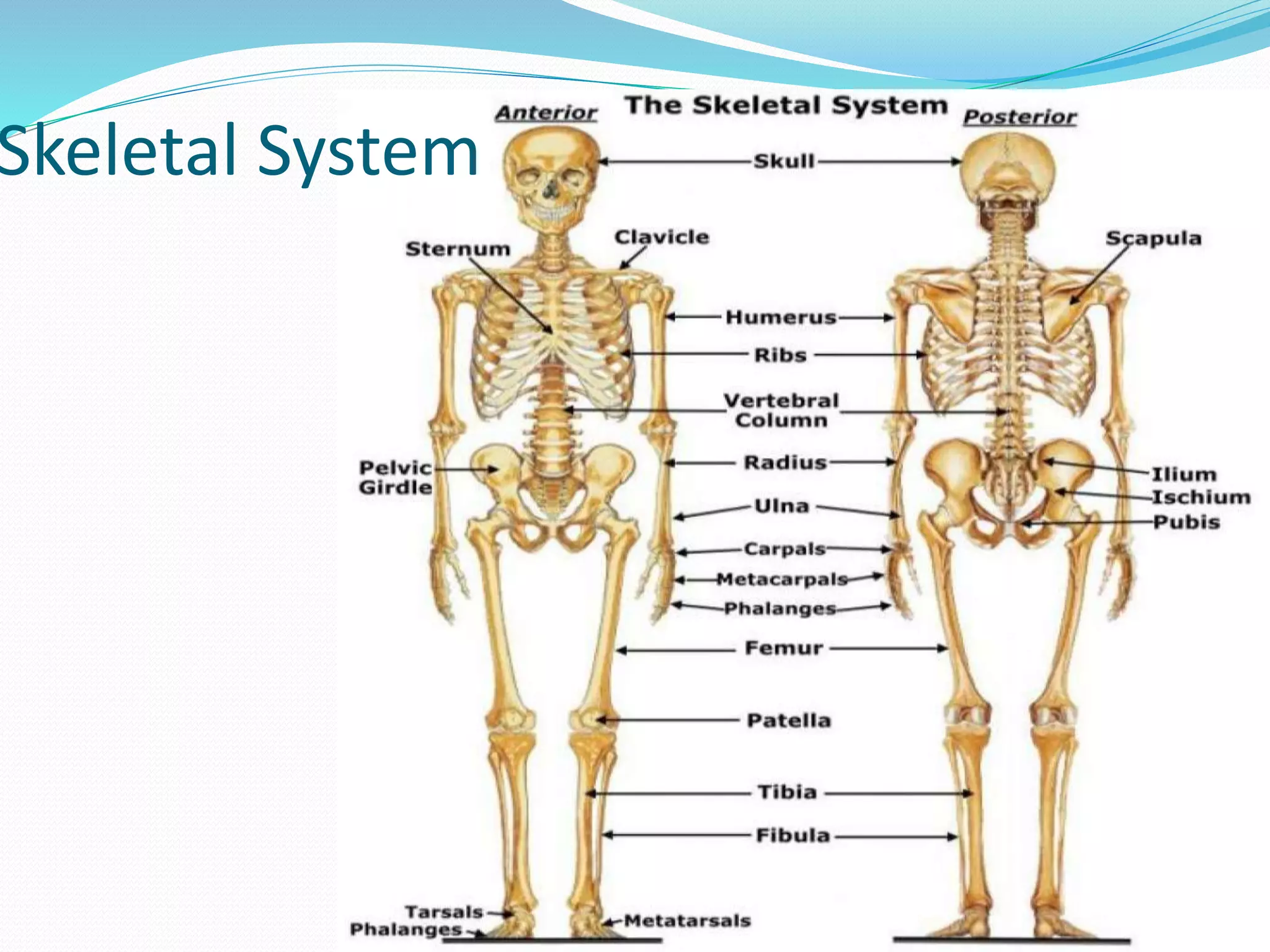
Skeletal System
 It is composed of bones, joints, cartilage, ligaments
and tendons.
 Five major function of Skeletal system are:
i. Supports the body.
ii. Facilitates movement
iii. Protects internal organs
iv. Produces blood cells.
v. Stores and releases minerals and fat.
Skeletal System
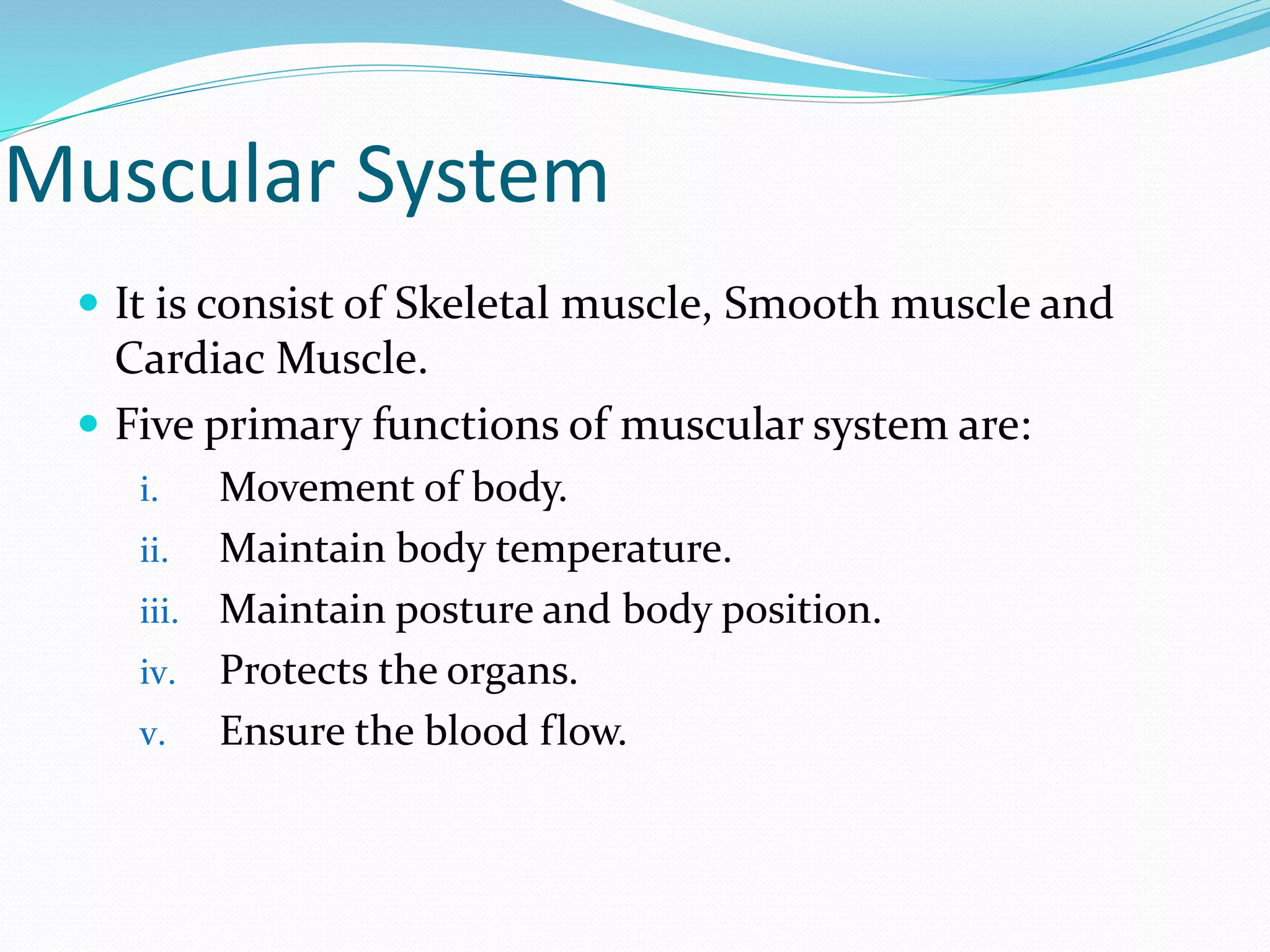
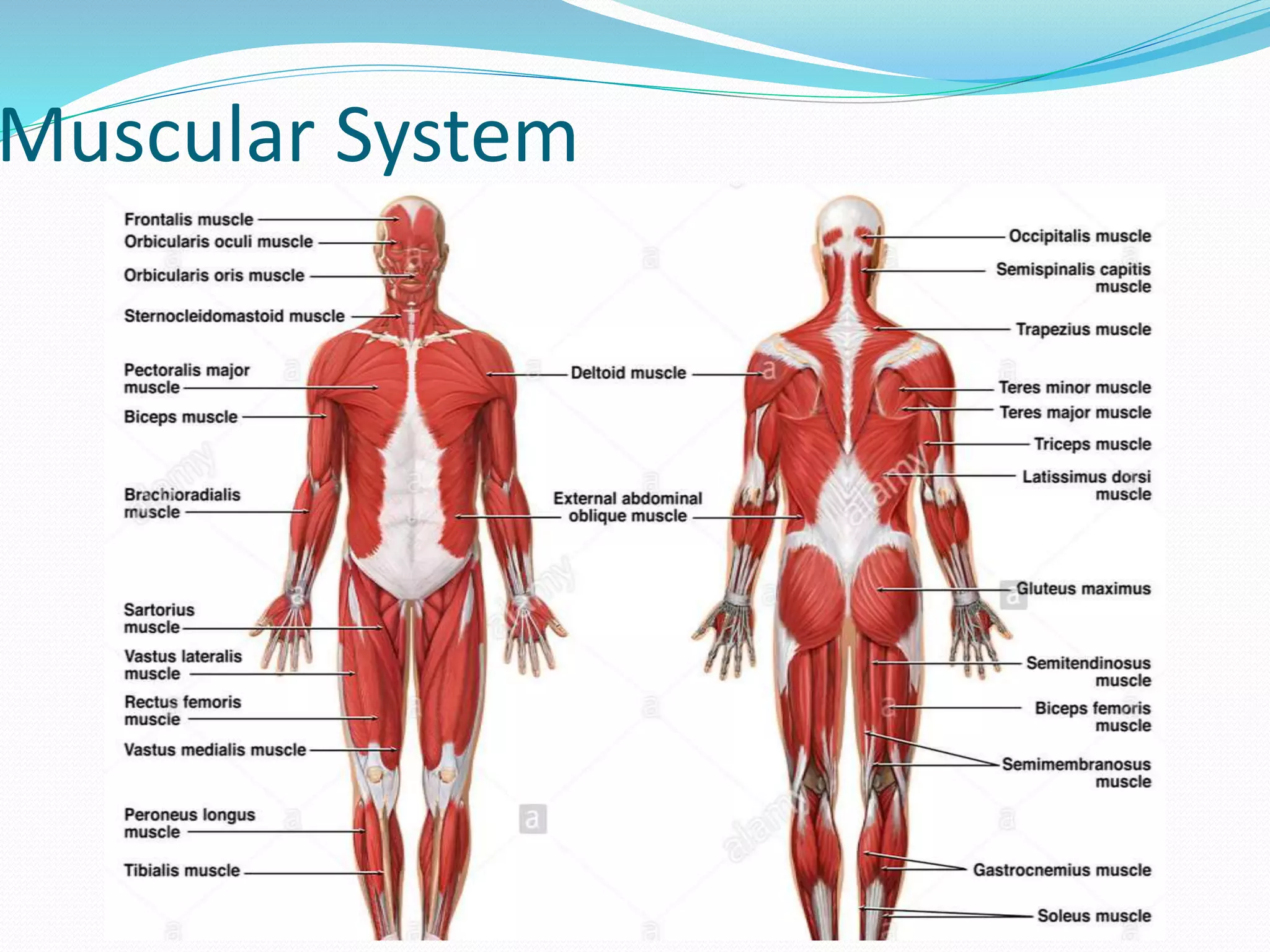
Muscular System
 It is consist of Skeletal muscle, Smooth muscle and
Cardiac Muscle.
 Five primary functions of muscular system are:
i. Movement of body.
ii. Maintain body temperature.
iii. Maintain posture and body position.
iv. Protects the organs.
v. Ensure the blood flow.
Muscular System
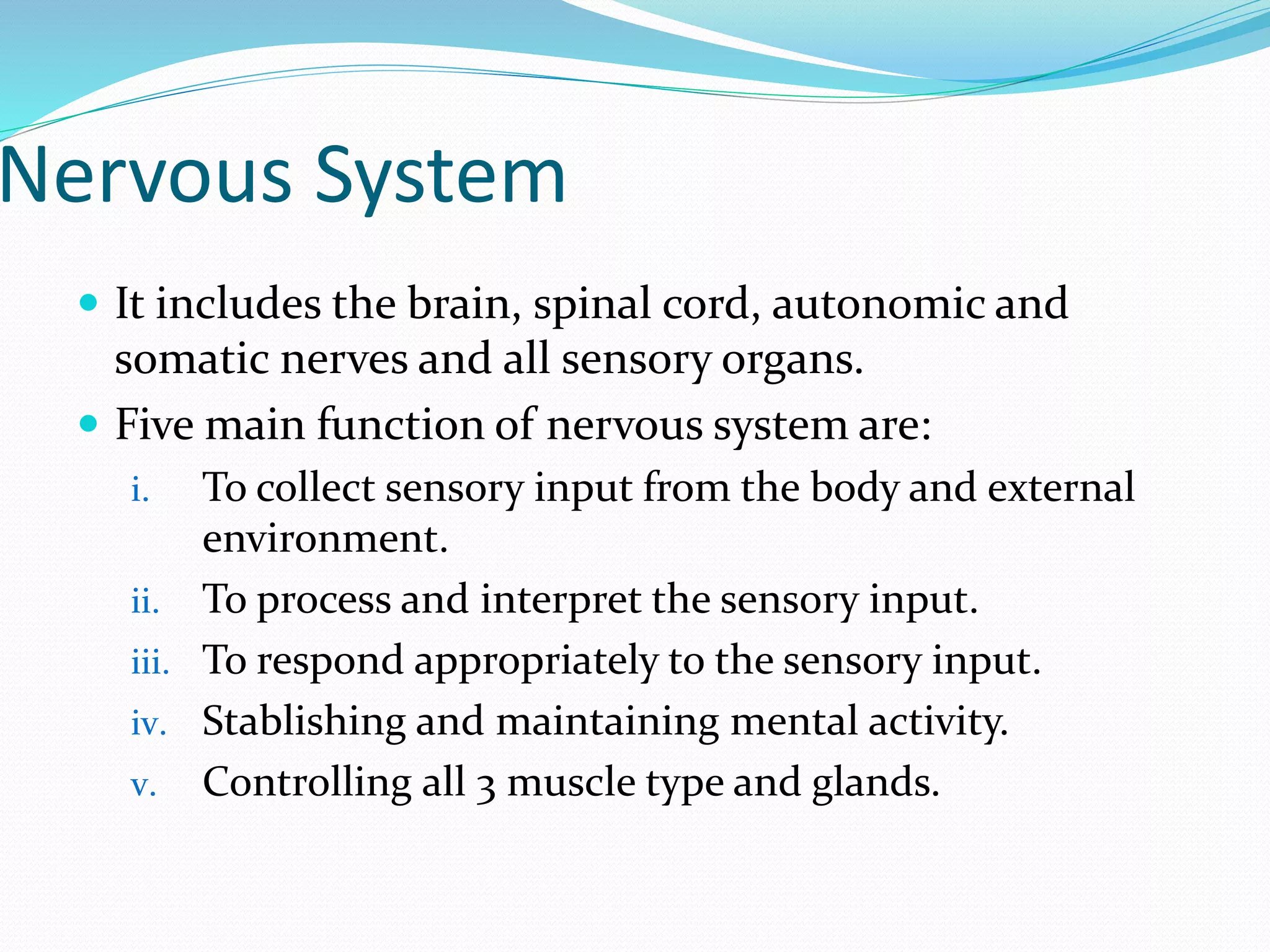
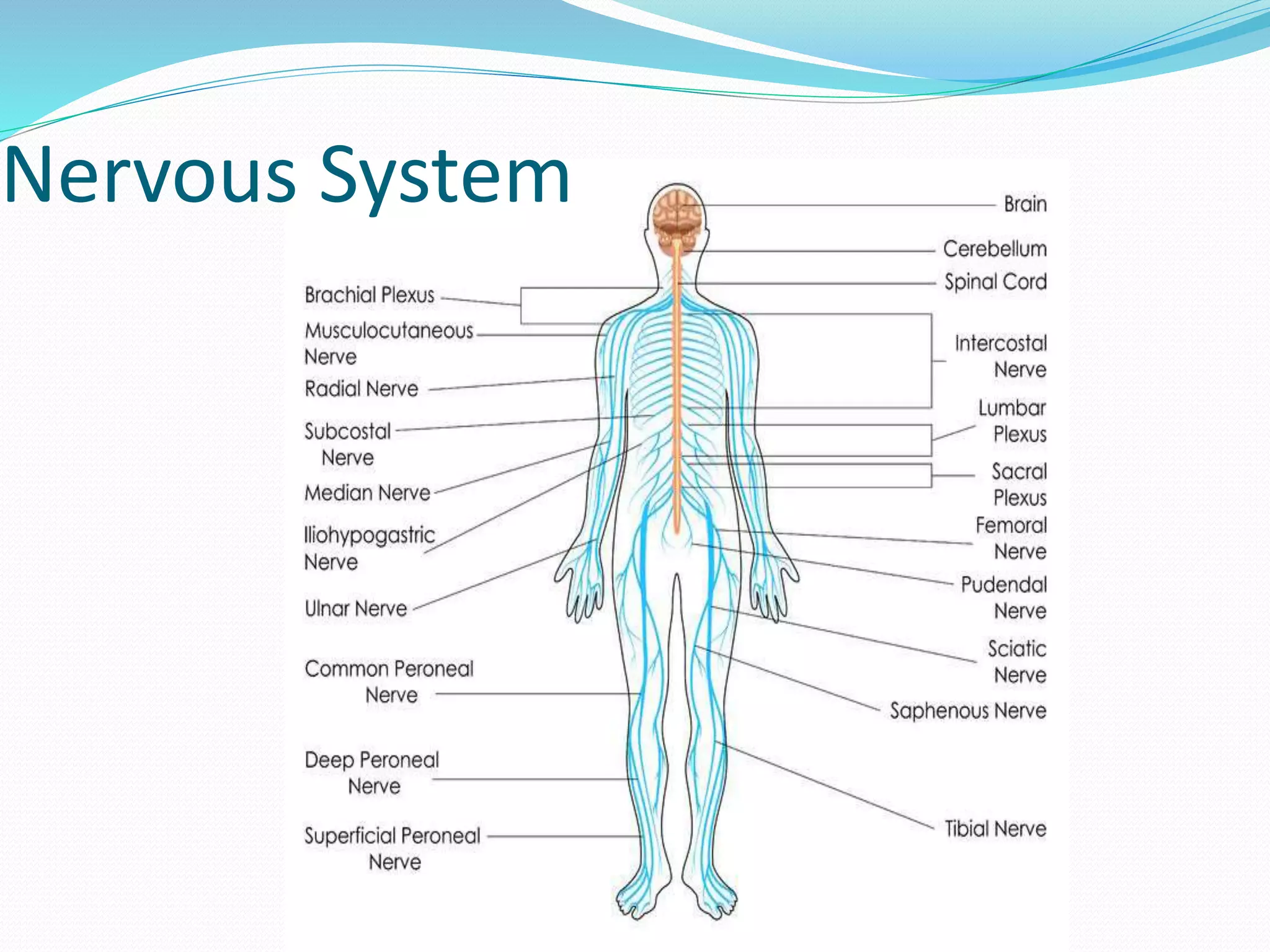
Nervous System
 It includes the brain, spinal cord, autonomic and
somatic nerves and all sensory organs.
 Five main function of nervous system are:
i. To collect sensory input from the body and external
environment.
ii. To process and interpret the sensory input.
iii. To respond appropriately to the sensory input.
iv. Stablishing and maintaining mental activity.
v. Controlling all 3 muscle type and glands.
Nervous System
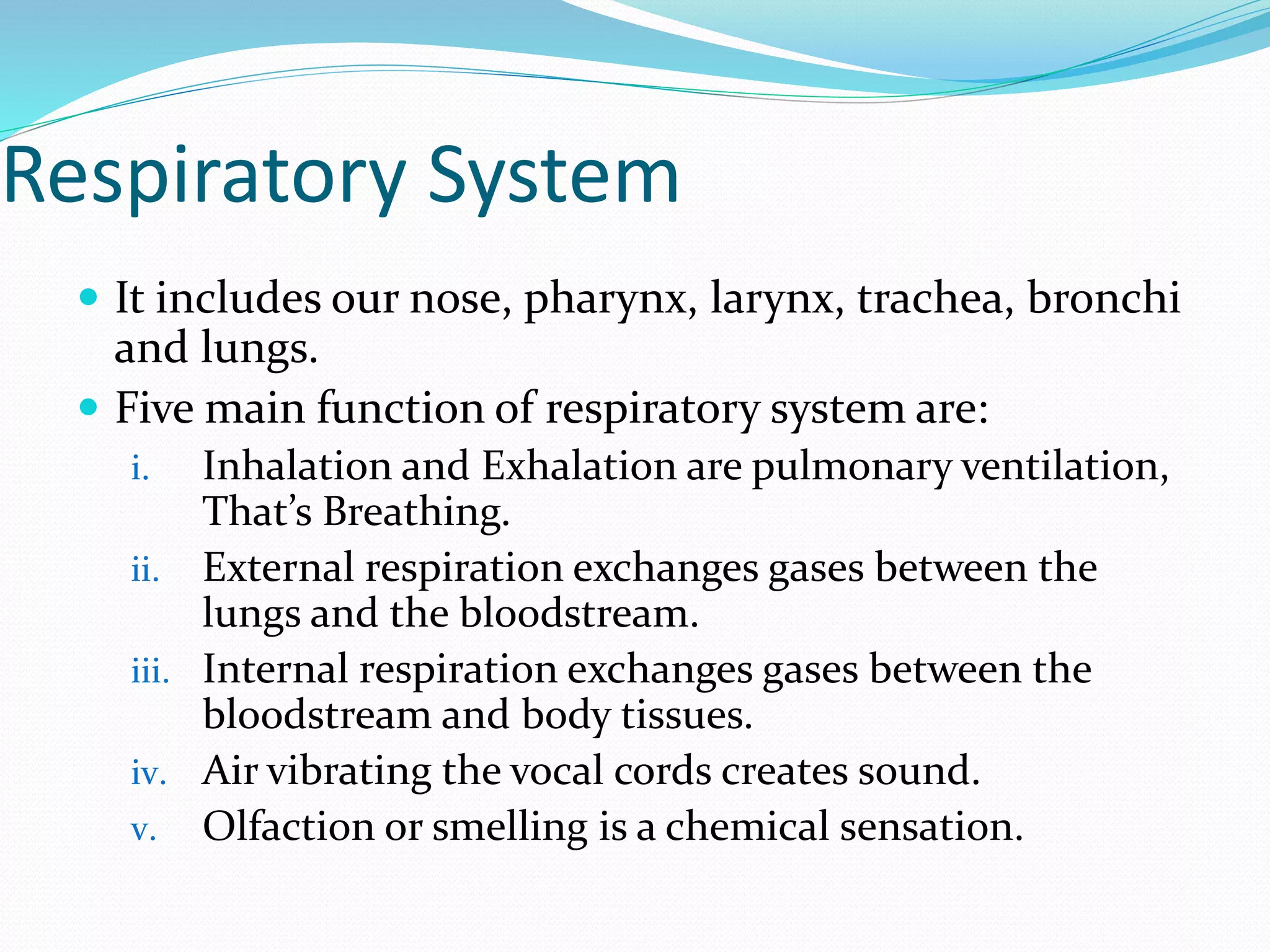
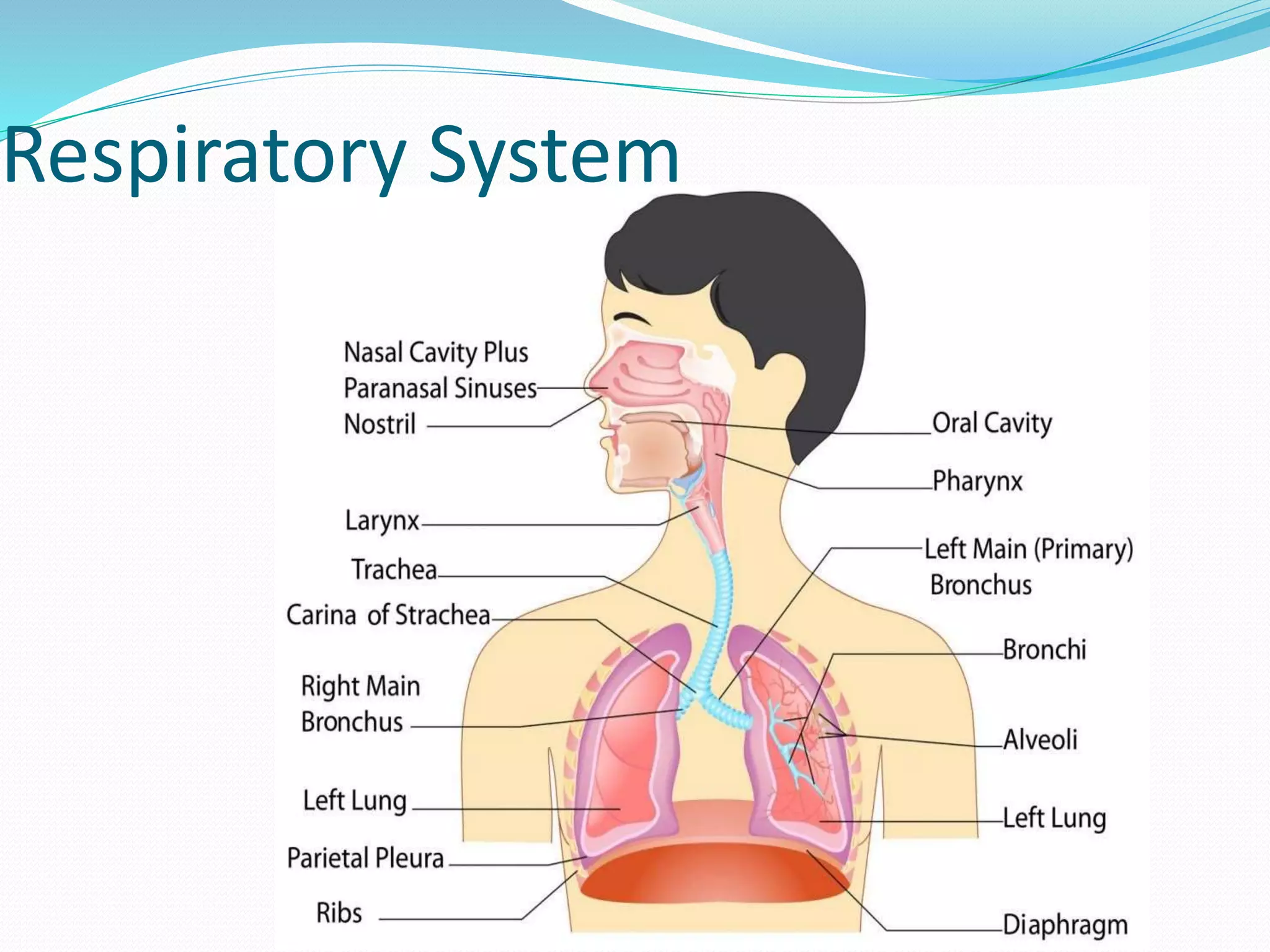
Respiratory System
 It includes our nose, pharynx, larynx, trachea, bronchi
and lungs.
 Five main function of respiratory system are:
i. Inhalation and Exhalation are pulmonary ventilation,
That’s Breathing.
ii. External respiration exchanges gases between the
lungs and the bloodstream.
iii. Internal respiration exchanges gases between the
bloodstream and body tissues.
iv. Air vibrating the vocal cords creates sound.
v. Olfaction or smelling is a chemical sensation.
Respiratory System
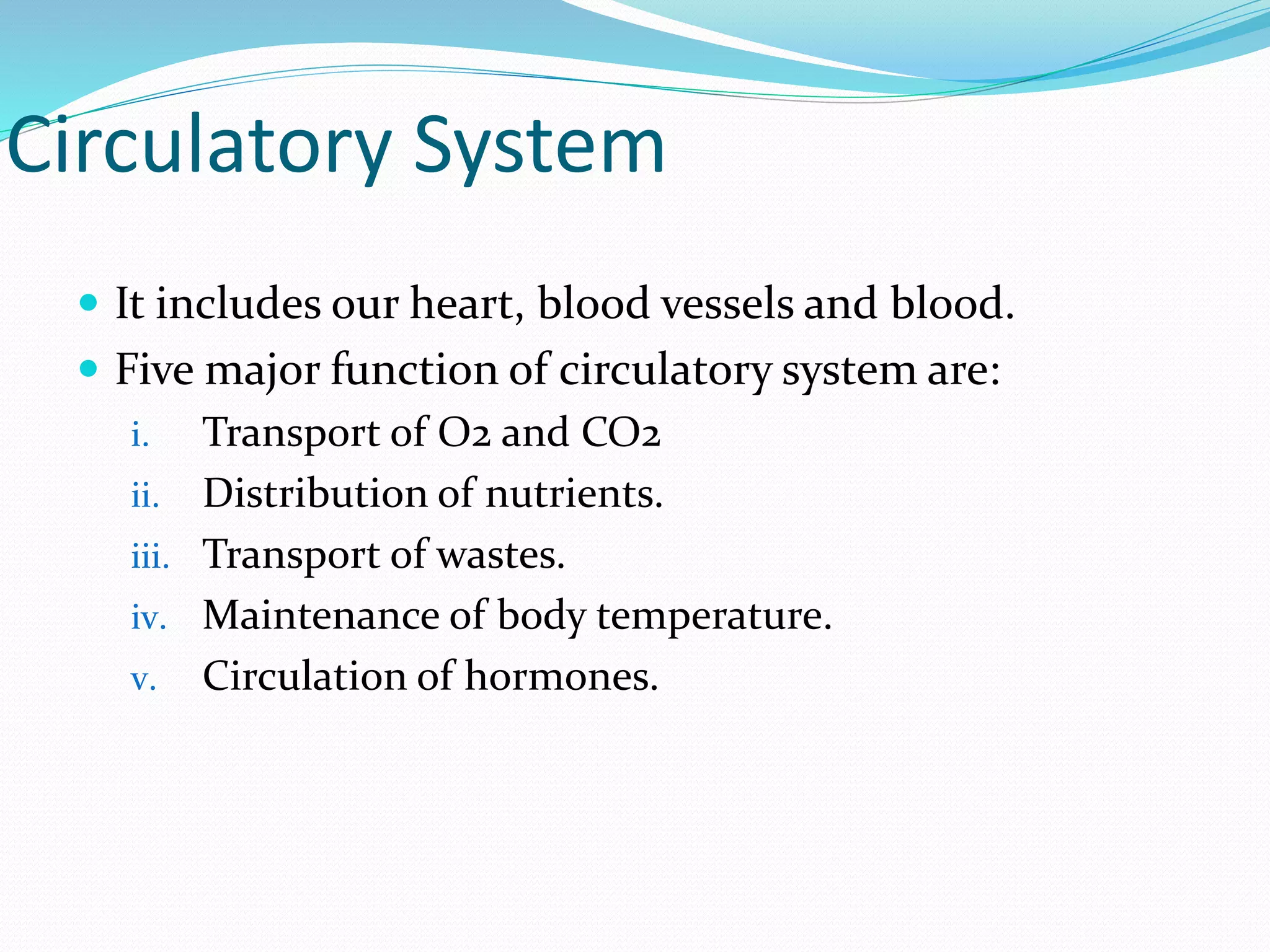
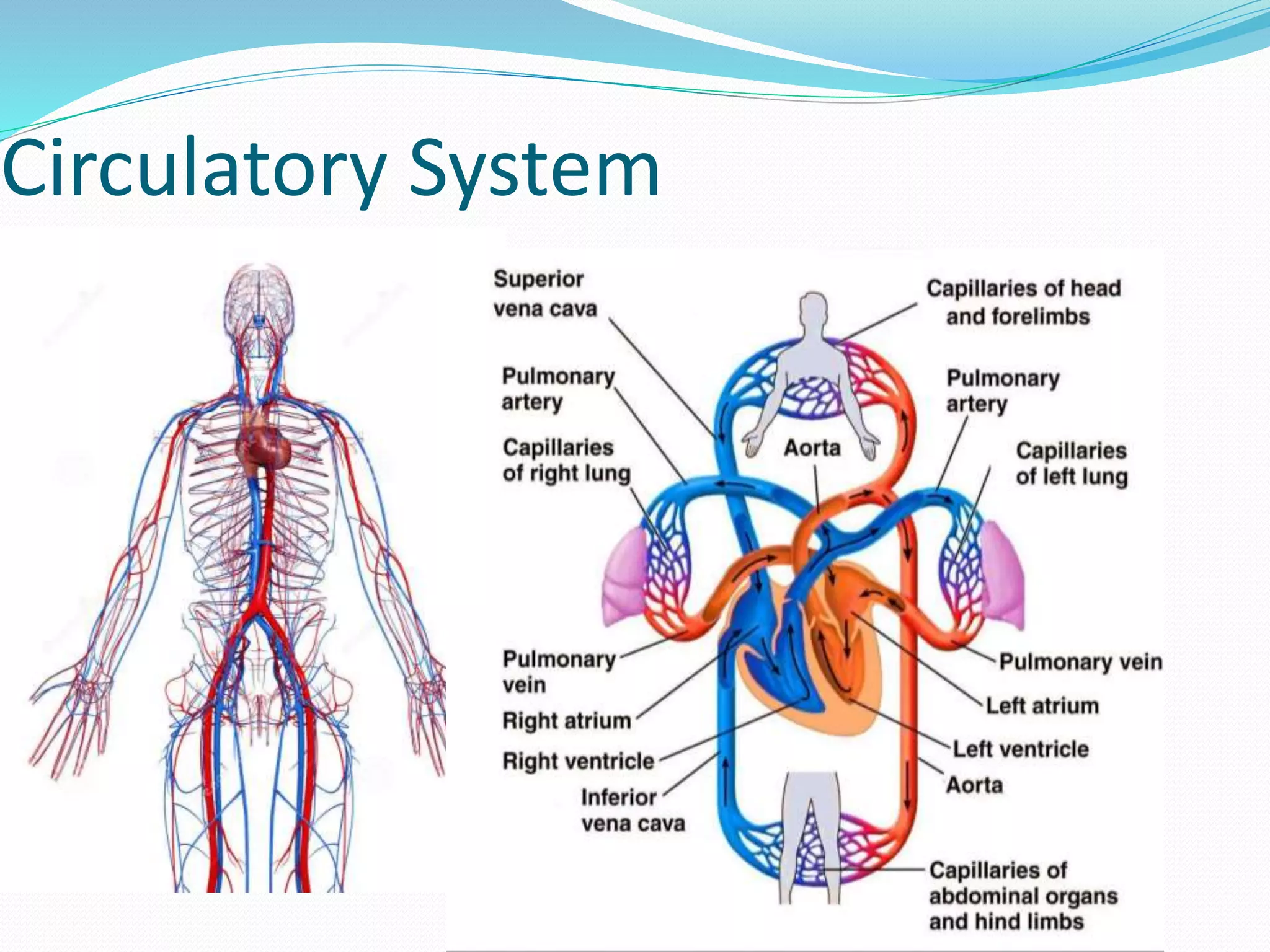
Circulatory System
 It includes our heart, blood vessels and blood.
 Five major function of circulatory system are:
i. Transport of O2 and CO2
ii. Distribution of nutrients.
iii. Transport of wastes.
iv. Maintenance of body temperature.
v. Circulation of hormones.
Circulatory System
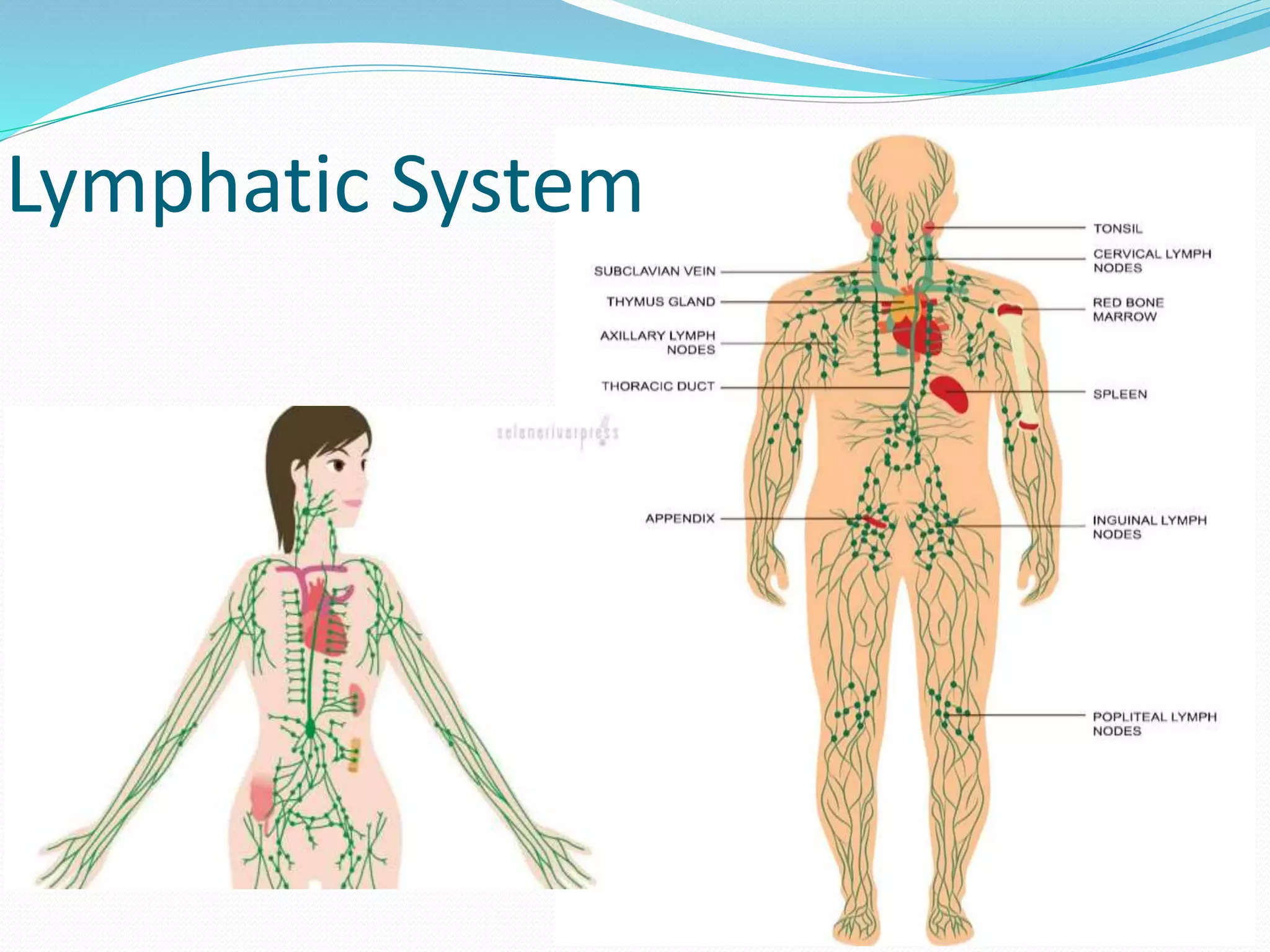
Lymphatic System
 It consists of lymph vessels, Lymph nodes, spleen and
thymus.
 Five function of lymphatic system are:
i. Filters bacteria, foreign materials, toxins and any
harmful materials.
ii. Drains away excess fluid to prevent water clogging of
the tissues and cells.
iii. Transports proteins back into the blood supply.
iv. Produces antibodies to fight bacteria.
v. Absorbs fat from the intestine and transport it to the
liver.
Lymphatic System
Endocrine System
 The major glands of the endocrine system are
hypothalamus, pituitary gland, thyroid gland, adrenals
and the reproductive organs.
 Five functions of endocrine system are:
i. Metabolism and tissue maturation.
ii. Immune system regulation.
iii. Heart rate and blood pressure regulation.
iv. Control of reproductive functions.
v. Control of blood glucose and other nutrients.
Endocrine System
Digestive System
 It consists of Salivary glands, Intestine, Stomach,
Pancreas and Liver.
 Five major function of digestive system are:
i. Intake and digestion of food.
ii. Secretion of fluids and digestive enzymes.
iii. Absorption of nutrients from digested food.
iv. Production of cellular energy, ATP.
v. Elimination of solid waste products.
Digestive System
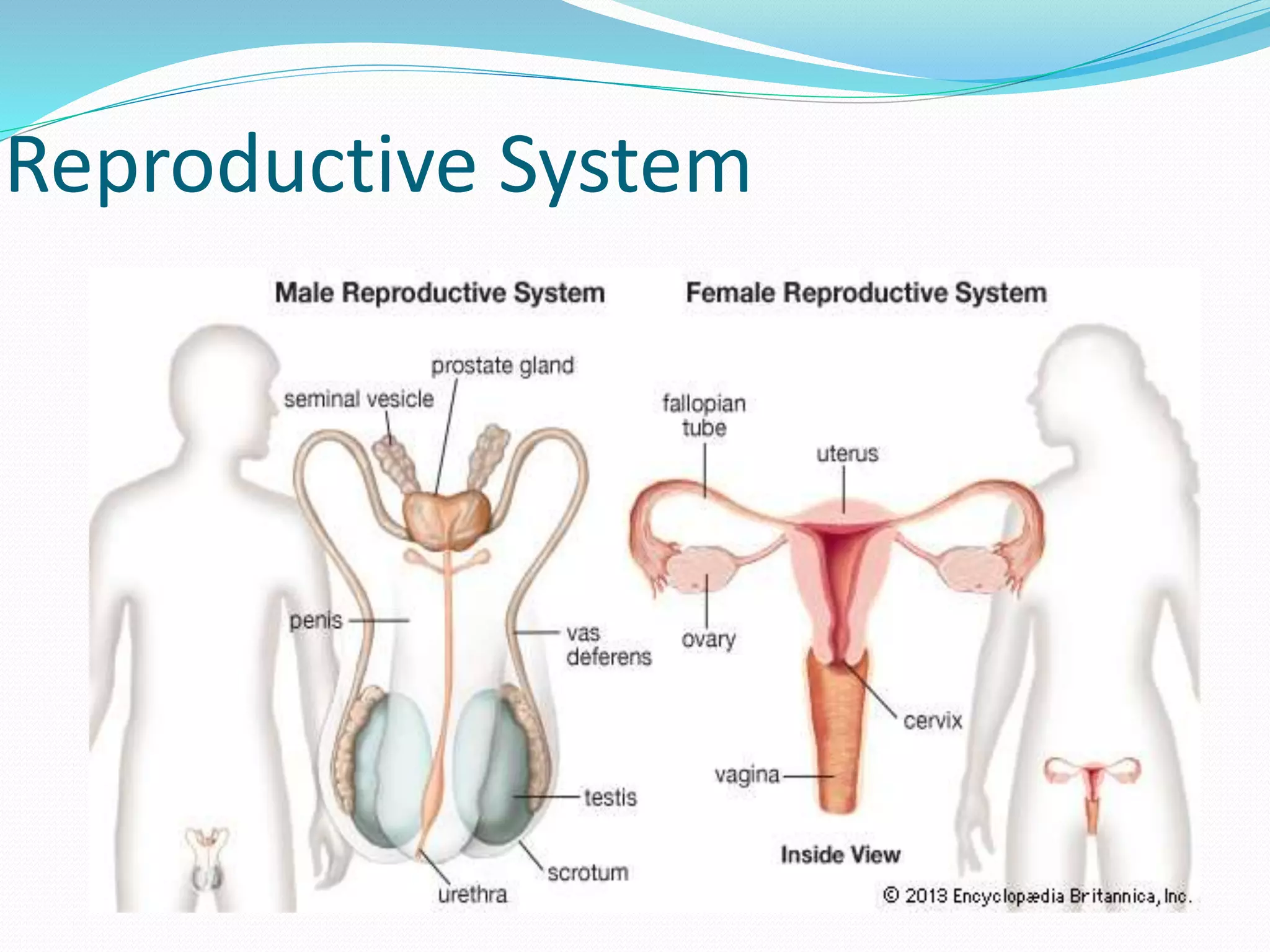
Reproductive System
 The reproductive system is a system of sex organ which
consists of Urethra, Testicles, Vagina, Uterus.
 Four major function of reproductive system are:
i. To produce egg and sperm cells.
ii. To transport and sustain these cells.
iii. To nurture the developing offspring.
iv. To produce hormones.
Reproductive System
Integumentary System
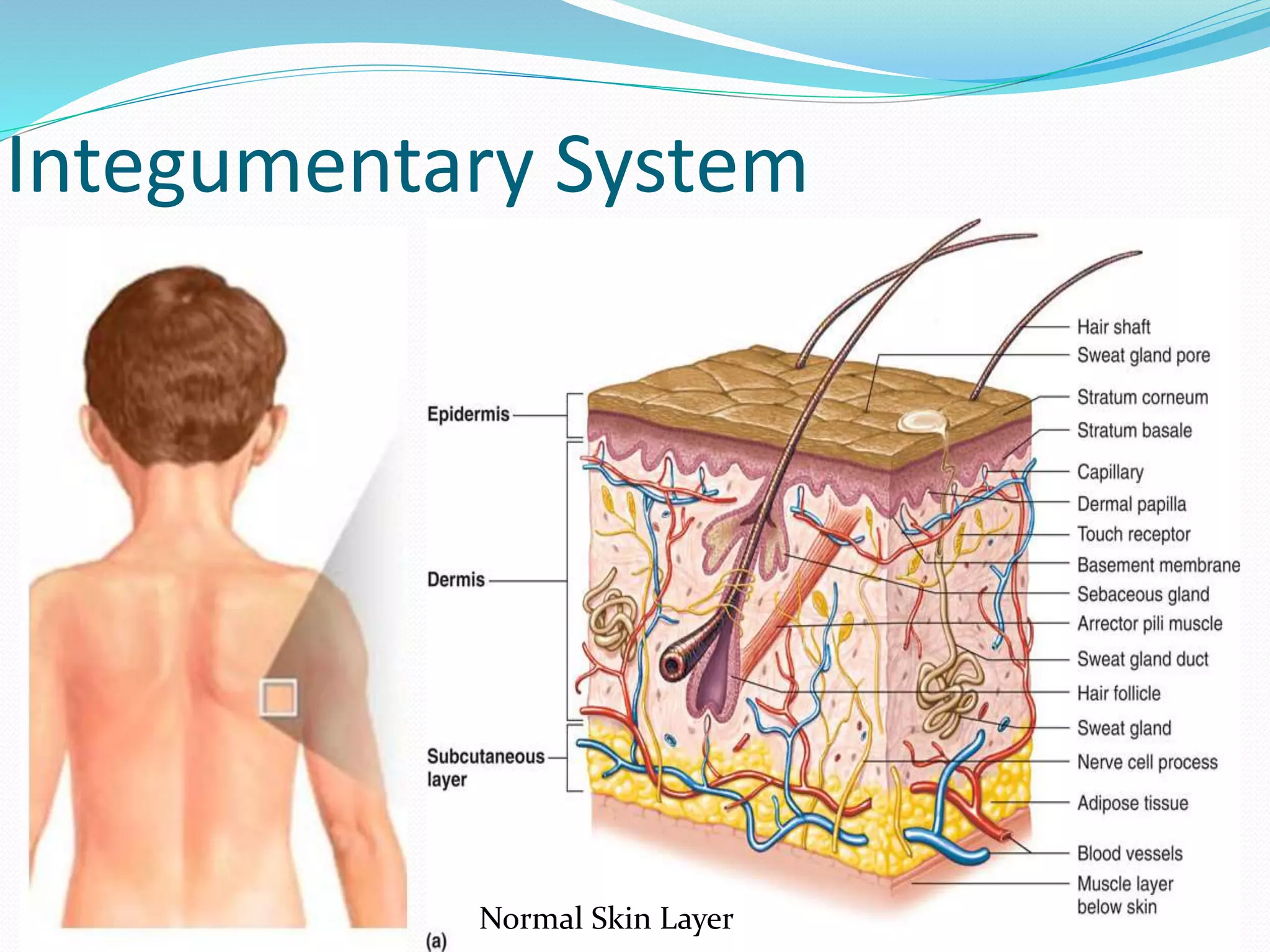
 It is a consists of Skin, Hair, Nails, and Variety of
glands.
 Five function of integumentary system are:
i. Protects the body’s internal tissues and organs.
ii. Maintain the body’s form.
iii. Generate the vitamin D.
iv. Stores fats, water, glucose and vitamin D.
v. Protects against invasion of infectious organisms,
sunburn.
Normal Skin Layer
Integumentary System
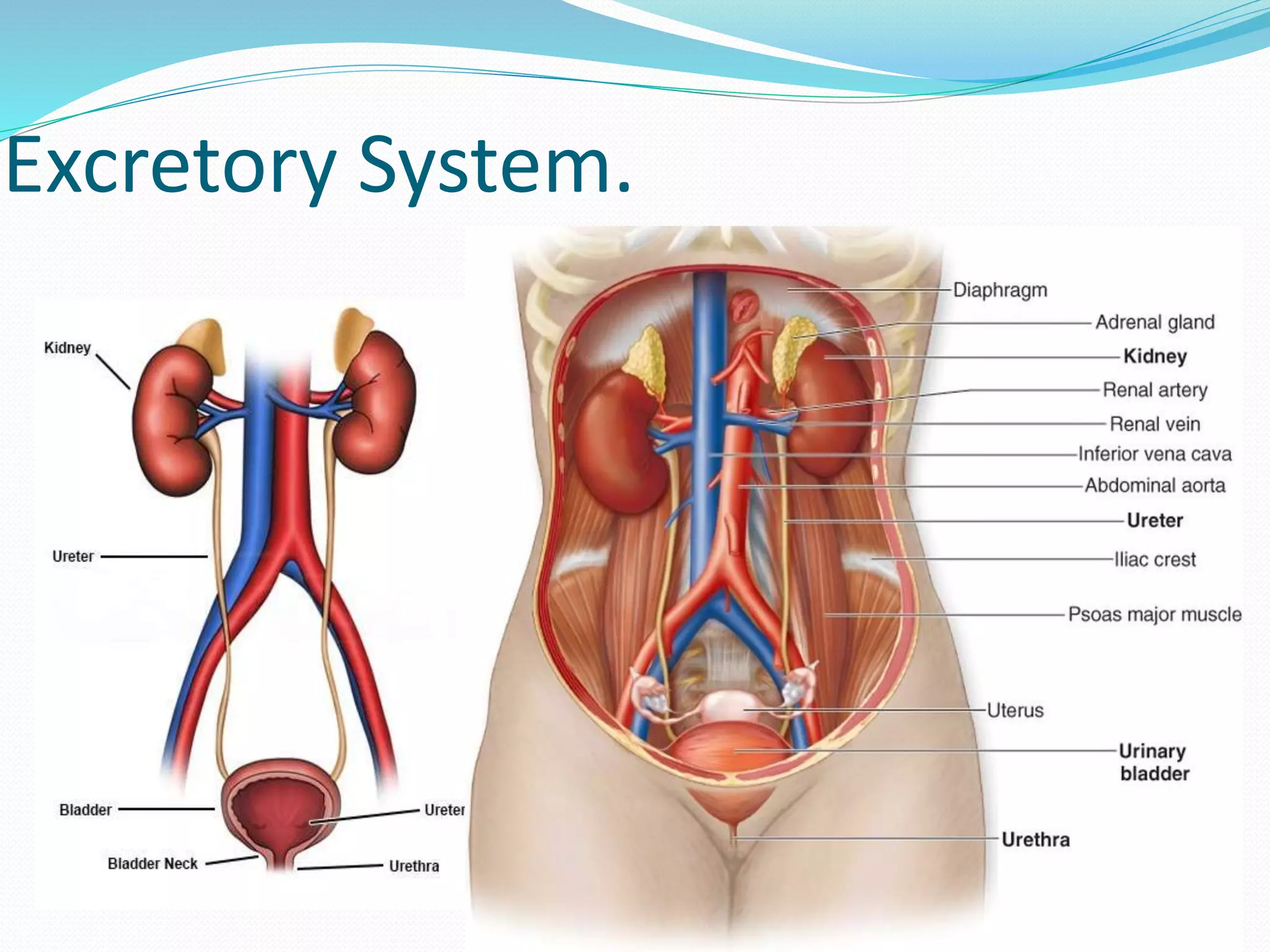
Excretory System.
 The parts of the system are kidneys, Urethra, Urinary
bladder, ureters.
 Four major functions of excretory system are:
i. Removes wastes from the body.
ii. Clean the blood.
iii. Produce urine.
iv. Involves the kidney and bladder.
Excretory System.
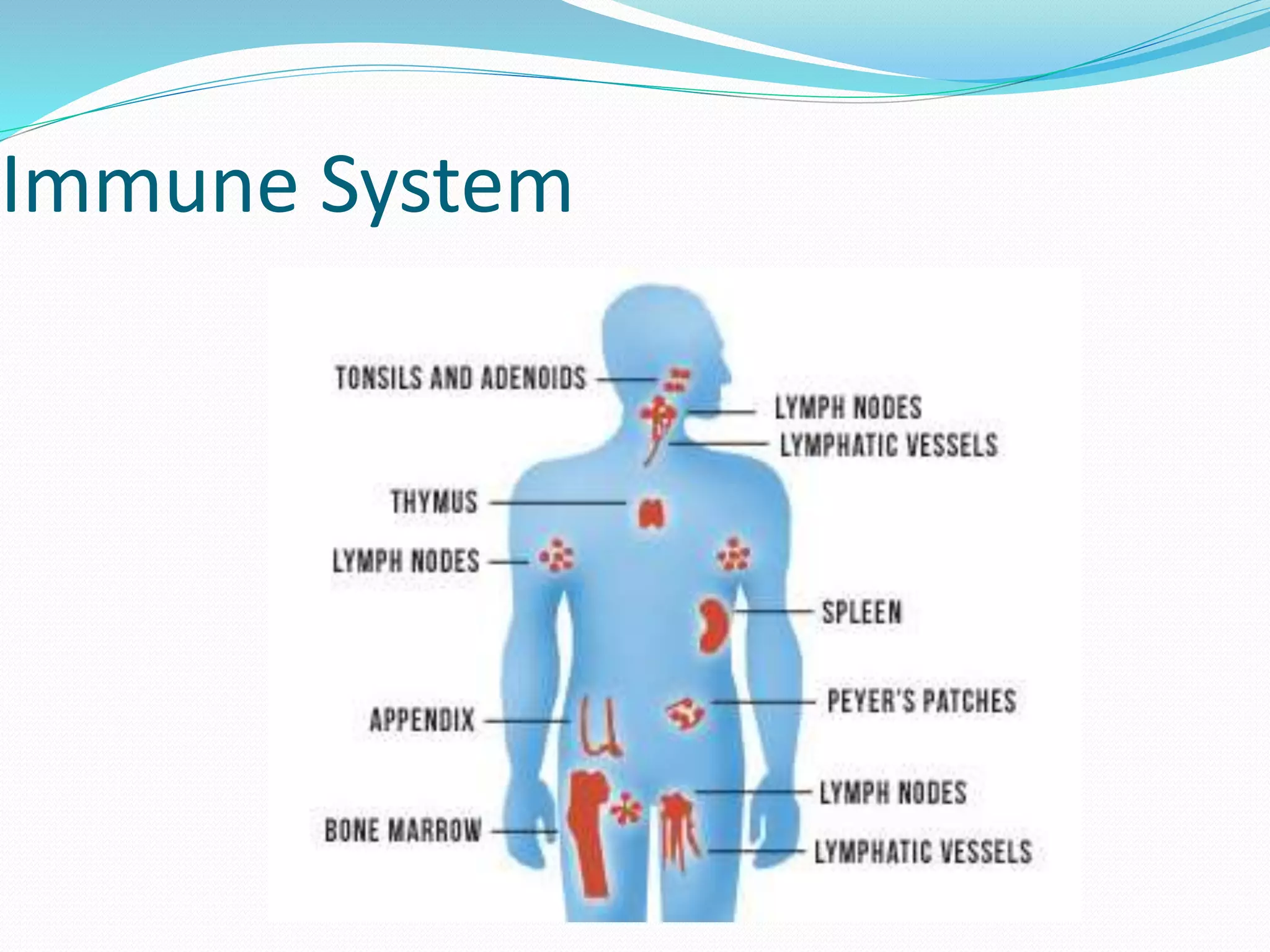
Immune System
 The immune system is made up of a network of cells,
tissues and organs such as Bone marrow, the thymus.
 Four main functions of immune system are:
i. Prevent pathogens from entering.
ii. Eliminates pathogens from body.
iii. Collect fluid lost from blood vessels.
iv. Return the fluid to the circulatory system.
Immune System
Conclusion
 We learn that our body structures are arranged into
different systems.
 We learn that human body is made of 12 different
systems.
 Each system have its own specific function.
 We learn that all the systems require support and
coordination of other systems to form a living and
healthy human body.
 The knowledge of the system is important for medical
professional because it is the base of all medical
science.

Human Body System and Their Function with a Labelled Diagram.

  • 2.
     Organ Systems Skeletal System  Muscular System  Nervous System  Respiratory System  Circulatory System  Lymphatic System  Endocrine System  Digestive System  Reproductive System  Integumentary System  Excretory System  Immune System  Conclusion
  • 3.
    Organ System  Anorgan system is a group of anatomical structures that work together to perform a specific function or task.  The human body is composed of 12 different organ systems.  Organ of a system are dependant on one another system.  If functions of one system cannot be performed by other systems.  If any one of these systems is damaged , human body will become unstable and this lack of stability will ultimately lead to death.
  • 4.
    Skeletal System  Itis composed of bones, joints, cartilage, ligaments and tendons.  Five major function of Skeletal system are: i. Supports the body. ii. Facilitates movement iii. Protects internal organs iv. Produces blood cells. v. Stores and releases minerals and fat.
  • 5.
  • 6.
    Muscular System  Itis consist of Skeletal muscle, Smooth muscle and Cardiac Muscle.  Five primary functions of muscular system are: i. Movement of body. ii. Maintain body temperature. iii. Maintain posture and body position. iv. Protects the organs. v. Ensure the blood flow.
  • 7.
  • 8.
    Nervous System  Itincludes the brain, spinal cord, autonomic and somatic nerves and all sensory organs.  Five main function of nervous system are: i. To collect sensory input from the body and external environment. ii. To process and interpret the sensory input. iii. To respond appropriately to the sensory input. iv. Stablishing and maintaining mental activity. v. Controlling all 3 muscle type and glands.
  • 9.
  • 10.
    Respiratory System  Itincludes our nose, pharynx, larynx, trachea, bronchi and lungs.  Five main function of respiratory system are: i. Inhalation and Exhalation are pulmonary ventilation, That’s Breathing. ii. External respiration exchanges gases between the lungs and the bloodstream. iii. Internal respiration exchanges gases between the bloodstream and body tissues. iv. Air vibrating the vocal cords creates sound. v. Olfaction or smelling is a chemical sensation.
  • 11.
  • 12.
    Circulatory System  Itincludes our heart, blood vessels and blood.  Five major function of circulatory system are: i. Transport of O2 and CO2 ii. Distribution of nutrients. iii. Transport of wastes. iv. Maintenance of body temperature. v. Circulation of hormones.
  • 13.
  • 14.
    Lymphatic System  Itconsists of lymph vessels, Lymph nodes, spleen and thymus.  Five function of lymphatic system are: i. Filters bacteria, foreign materials, toxins and any harmful materials. ii. Drains away excess fluid to prevent water clogging of the tissues and cells. iii. Transports proteins back into the blood supply. iv. Produces antibodies to fight bacteria. v. Absorbs fat from the intestine and transport it to the liver.
  • 15.
  • 16.
    Endocrine System  Themajor glands of the endocrine system are hypothalamus, pituitary gland, thyroid gland, adrenals and the reproductive organs.  Five functions of endocrine system are: i. Metabolism and tissue maturation. ii. Immune system regulation. iii. Heart rate and blood pressure regulation. iv. Control of reproductive functions. v. Control of blood glucose and other nutrients.
  • 17.
  • 18.
    Digestive System  Itconsists of Salivary glands, Intestine, Stomach, Pancreas and Liver.  Five major function of digestive system are: i. Intake and digestion of food. ii. Secretion of fluids and digestive enzymes. iii. Absorption of nutrients from digested food. iv. Production of cellular energy, ATP. v. Elimination of solid waste products.
  • 19.
  • 20.
    Reproductive System  Thereproductive system is a system of sex organ which consists of Urethra, Testicles, Vagina, Uterus.  Four major function of reproductive system are: i. To produce egg and sperm cells. ii. To transport and sustain these cells. iii. To nurture the developing offspring. iv. To produce hormones.
  • 21.
  • 22.
    Integumentary System  Itis a consists of Skin, Hair, Nails, and Variety of glands.  Five function of integumentary system are: i. Protects the body’s internal tissues and organs. ii. Maintain the body’s form. iii. Generate the vitamin D. iv. Stores fats, water, glucose and vitamin D. v. Protects against invasion of infectious organisms, sunburn.
  • 23.
  • 24.
    Excretory System.  Theparts of the system are kidneys, Urethra, Urinary bladder, ureters.  Four major functions of excretory system are: i. Removes wastes from the body. ii. Clean the blood. iii. Produce urine. iv. Involves the kidney and bladder.
  • 25.
  • 26.
    Immune System  Theimmune system is made up of a network of cells, tissues and organs such as Bone marrow, the thymus.  Four main functions of immune system are: i. Prevent pathogens from entering. ii. Eliminates pathogens from body. iii. Collect fluid lost from blood vessels. iv. Return the fluid to the circulatory system.
  • 27.
  • 28.
    Conclusion  We learnthat our body structures are arranged into different systems.  We learn that human body is made of 12 different systems.  Each system have its own specific function.  We learn that all the systems require support and coordination of other systems to form a living and healthy human body.  The knowledge of the system is important for medical professional because it is the base of all medical science.