What Is A Script?
Unit 24
By Chelsie Brandrick
Introduction
In this presentation I shall cover:
• What a script is
• The different types of scripts
• The purpose of a script
What Is A Script?
• A script is a document that outlines every aural,
visual, behavioral and lingual element requirement
to tell a story.
• A script is a highly collaborative medium as the
writer, director, producer and actors can all have
input.
• The script is an outline of the story that the
director, producer and actors can build on to
create the writers vision.
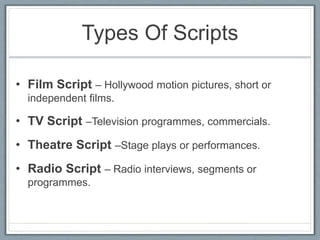
Types Of Scripts
• Film Script – Hollywood motion pictures, short or
independent films.
• TV Script –Television programmes, commercials.
• Theatre Script –Stage plays or performances.
• Radio Script – Radio interviews, segments or
programmes.
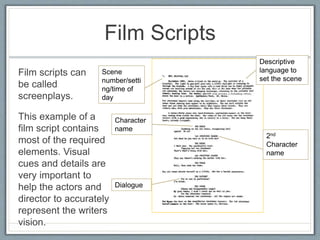
Film Scripts
Film scripts can
be called
screenplays.
This example of a
film script contains
most of the required
elements. Visual
cues and details are
very important to
help the actors and
director to accurately
represent the writers
vision.
Descriptive
language to
set the scene
Scene
number/setti
ng/time of
day
Character
name
2nd
Character
name
Dialogue
Television Scripts
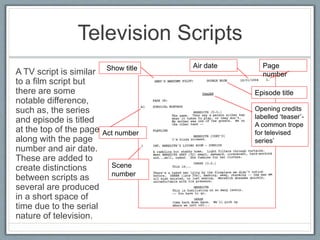
A TV script is similar
to a film script but
there are some
notable difference,
such as, the series
and episode is titled
at the top of the page
along with the page
number and air date.
These are added to
create distinctions
between scripts as
several are produced
in a short space of
time due to the serial
nature of television.
Page
number
Air dateShow title
Episode title
Opening credits
labelled ‘teaser’-
A common trope
for televised
series’
Act number
Scene
number
Theatre Scripts
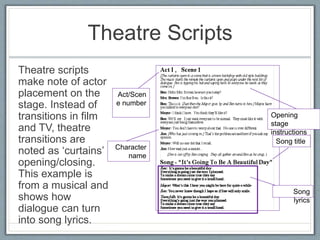
Theatre scripts
make note of actor
placement on the
stage. Instead of
transitions in film
and TV, theatre
transitions are
noted as ‘curtains’
opening/closing.
This example is
from a musical and
shows how
dialogue can turn
into song lyrics.
Opening
stage
instructions
Act/Scen
e number
Character
name
Song
lyrics
Song title
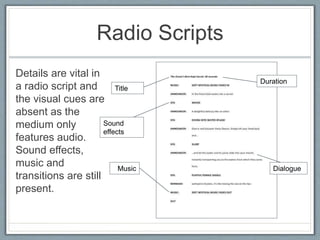
Radio Scripts
Details are vital in
a radio script and
the visual cues are
absent as the
medium only
features audio.
Sound effects,
music and
transitions are still
present.
Title
Duration
Sound
effects
Music Dialogue
Purpose of Scripts
• The purpose of a script is to tell a story and
enable the reader whether it’s the director or an
actor to know what they need to do in order to
bring the story to life.
• The script offers a blueprint or outline for the
director to work from in order to produce the
writers vision.
• Directors can use the script to make a shooting
script which can help speed the process up and
show the director what to shoot when which can
save money.
Conclusion
A script is an outline of the story that directors,
actors, producers and camera operators can use to
know how to bring the story to life.
Scripts are used in film, television, radio and theatre
and are the foundation to creating a project.
A correctly formatted script will enable the crew to be
organised and work in unison which will create a
better product.
Any Questions?

What Is A Script Presentation - Unit 24

  • 1.
    What Is AScript? Unit 24 By Chelsie Brandrick
  • 2.
    Introduction In this presentationI shall cover: • What a script is • The different types of scripts • The purpose of a script
  • 3.
    What Is AScript? • A script is a document that outlines every aural, visual, behavioral and lingual element requirement to tell a story. • A script is a highly collaborative medium as the writer, director, producer and actors can all have input. • The script is an outline of the story that the director, producer and actors can build on to create the writers vision.
  • 4.
    Types Of Scripts •Film Script – Hollywood motion pictures, short or independent films. • TV Script –Television programmes, commercials. • Theatre Script –Stage plays or performances. • Radio Script – Radio interviews, segments or programmes.
  • 5.
    Film Scripts Film scriptscan be called screenplays. This example of a film script contains most of the required elements. Visual cues and details are very important to help the actors and director to accurately represent the writers vision. Descriptive language to set the scene Scene number/setti ng/time of day Character name 2nd Character name Dialogue
  • 6.
    Television Scripts A TVscript is similar to a film script but there are some notable difference, such as, the series and episode is titled at the top of the page along with the page number and air date. These are added to create distinctions between scripts as several are produced in a short space of time due to the serial nature of television. Page number Air dateShow title Episode title Opening credits labelled ‘teaser’- A common trope for televised series’ Act number Scene number
  • 7.
    Theatre Scripts Theatre scripts makenote of actor placement on the stage. Instead of transitions in film and TV, theatre transitions are noted as ‘curtains’ opening/closing. This example is from a musical and shows how dialogue can turn into song lyrics. Opening stage instructions Act/Scen e number Character name Song lyrics Song title
  • 8.
    Radio Scripts Details arevital in a radio script and the visual cues are absent as the medium only features audio. Sound effects, music and transitions are still present. Title Duration Sound effects Music Dialogue
  • 9.
    Purpose of Scripts •The purpose of a script is to tell a story and enable the reader whether it’s the director or an actor to know what they need to do in order to bring the story to life. • The script offers a blueprint or outline for the director to work from in order to produce the writers vision. • Directors can use the script to make a shooting script which can help speed the process up and show the director what to shoot when which can save money.
  • 10.
    Conclusion A script isan outline of the story that directors, actors, producers and camera operators can use to know how to bring the story to life. Scripts are used in film, television, radio and theatre and are the foundation to creating a project. A correctly formatted script will enable the crew to be organised and work in unison which will create a better product.
  • 11.