Ancient History of Ethiopian
Art & Architecture
Pre- Axumite Architecture
Prep. By Ephrem N.
Introduction
•What is history?
…We say Architecture is ‘Living
History’
HOW?
Introduction
• Architecture is subject to social, political, or
cultural influences. It reflects the society and
communicates the values of that society.
• With the change of the society the face of
Architecture changes too.
• Our architecture has so many stories to tell
about us. It’s our personality and our culture
which is reflected in the shelter we build.
■ How Architecture evolve?
Introduction
■ Agriculture vs. Architecture?
Introduction
Introduction
Agriculture created Architecture.
•Agriculture leads to settlement. People needed
to live where there was good land for farming.
•The tools and materials around enabled them to
build shelter/dwellings.
Introduction
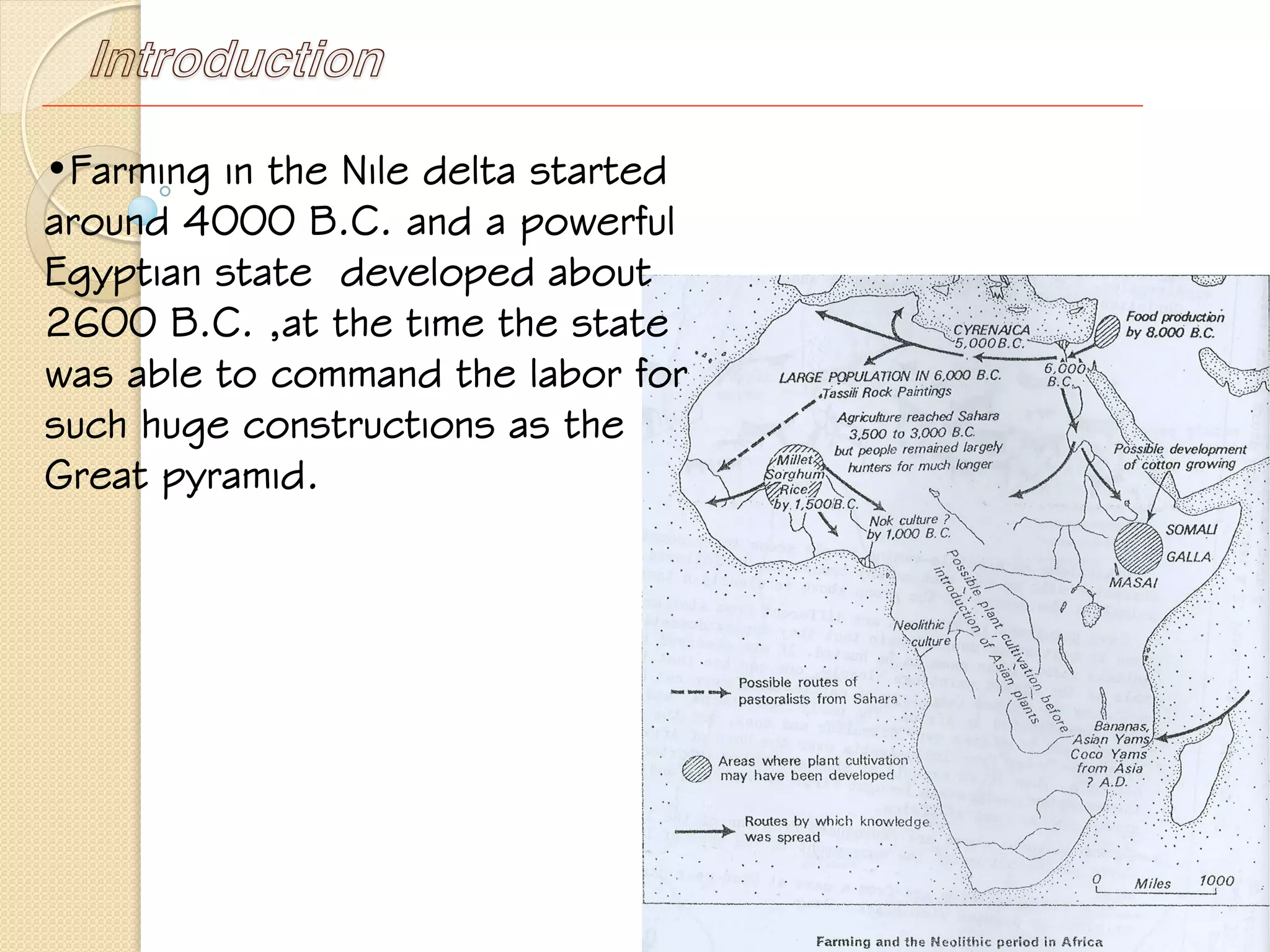
•Farming in the Nile delta started
around 4000 B.C. and a powerful
Egyptian state developed about
2600 B.C. ,at the time the state
was able to command the labor for
such huge constructions as the
Great pyramid.
Pre- Axumite Architecture
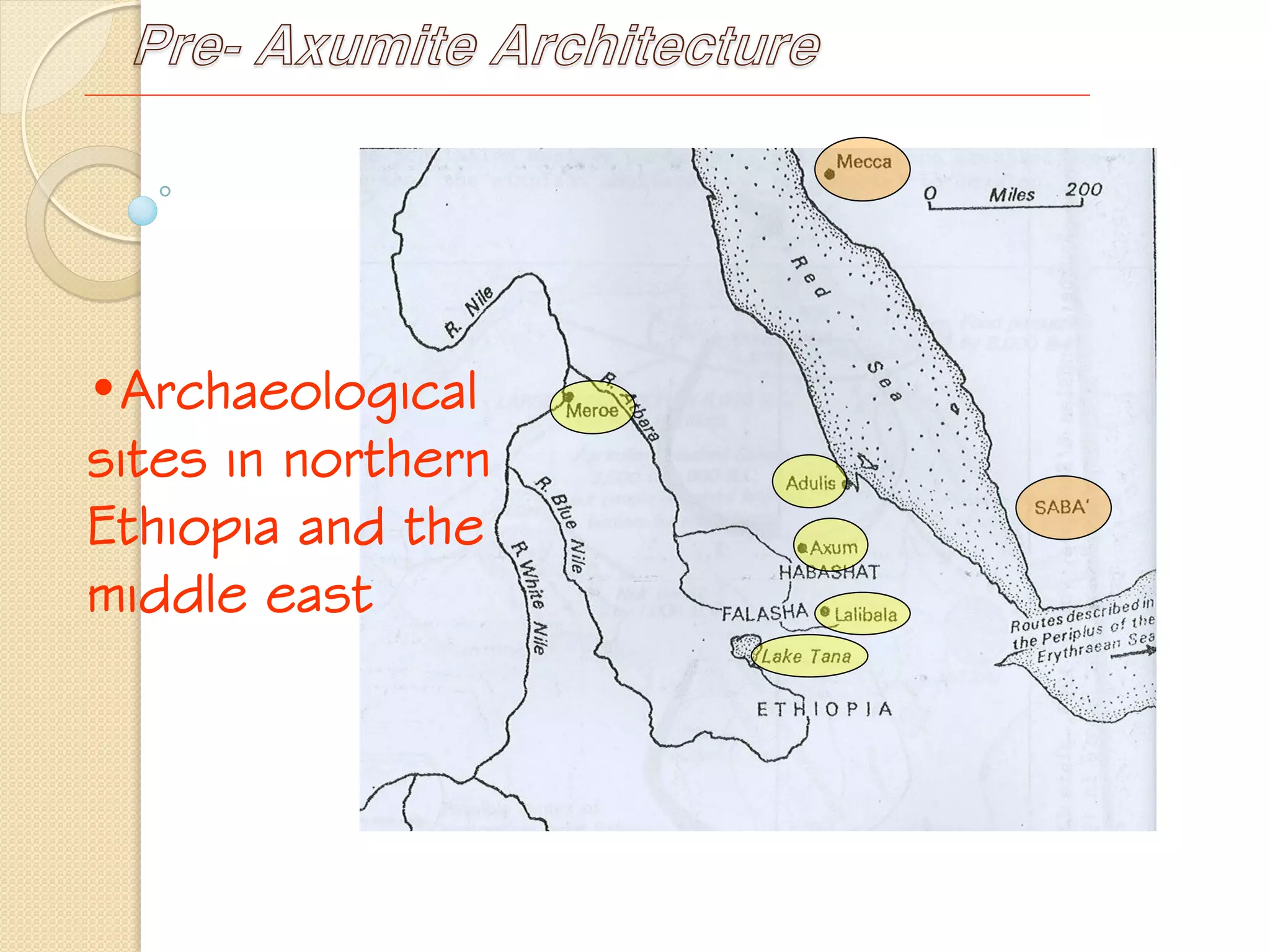
•Archaeological
sites in northern
Ethiopia and the
middle east
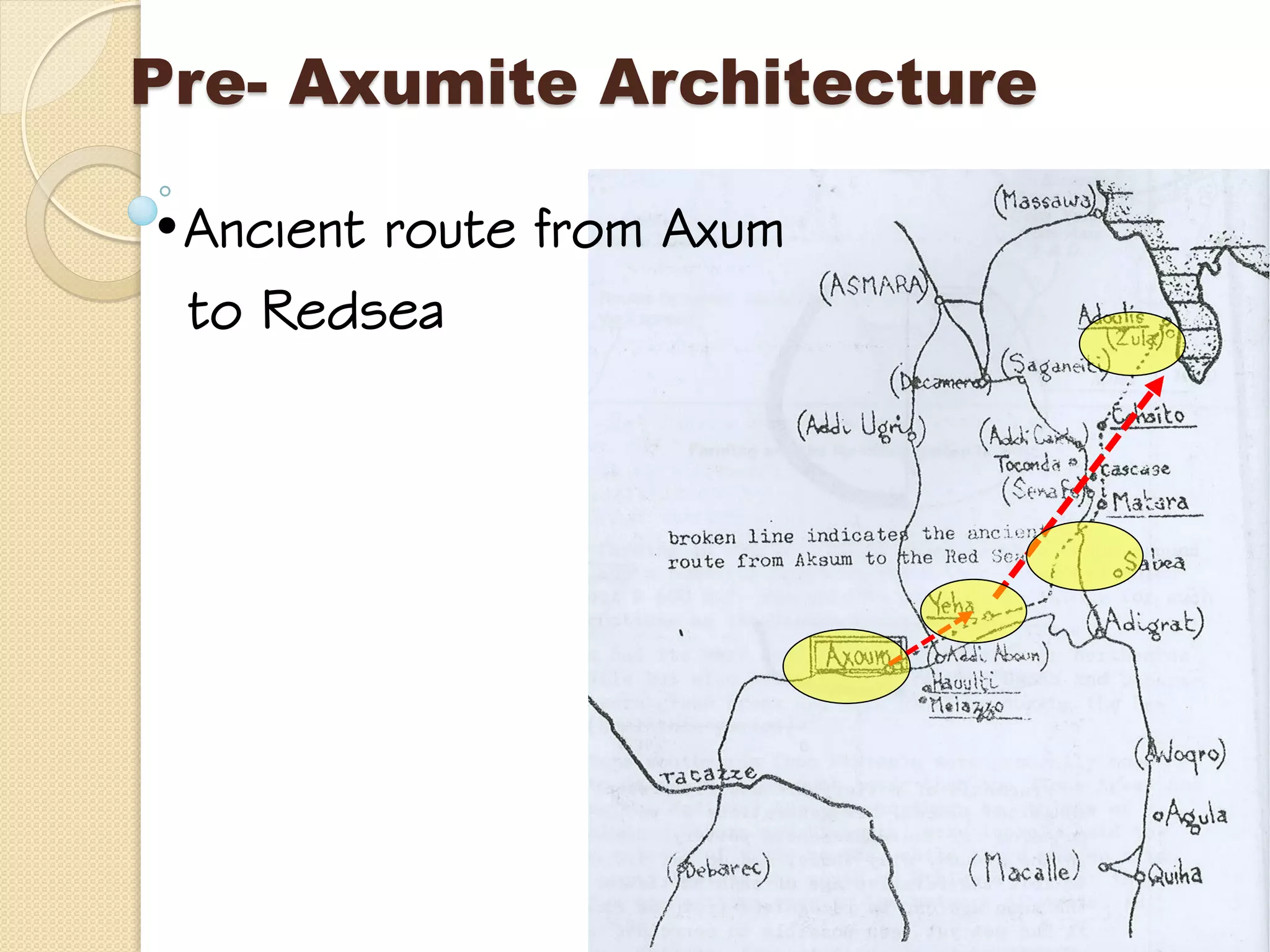
•Ancient route from Axum
to Redsea
Pre- Axumite Architecture
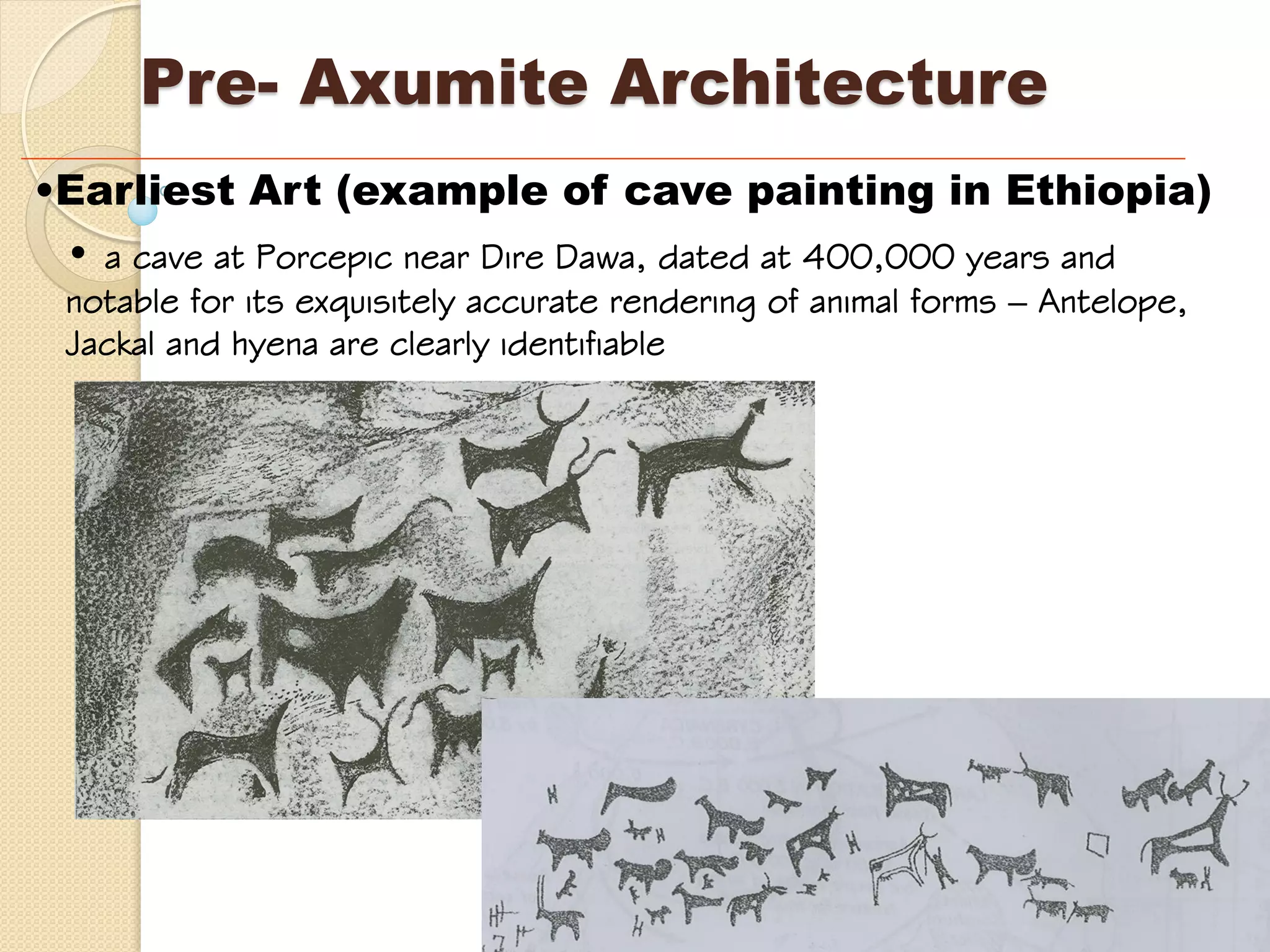
•Earliest Art (example of cave painting in Ethiopia)
• a cave at Porcepic near Dire Dawa, dated at 400,000 years and
notable for its exquisitely accurate rendering of animal forms – Antelope,
Jackal and hyena are clearly identifiable
Pre- Axumite Architecture
Sabian or Intermediate period
(500 b.c. to 100 a.d.)
Sabean architecture
Pre- Axumite Architecture
•Some influences to early Ethiopian culture
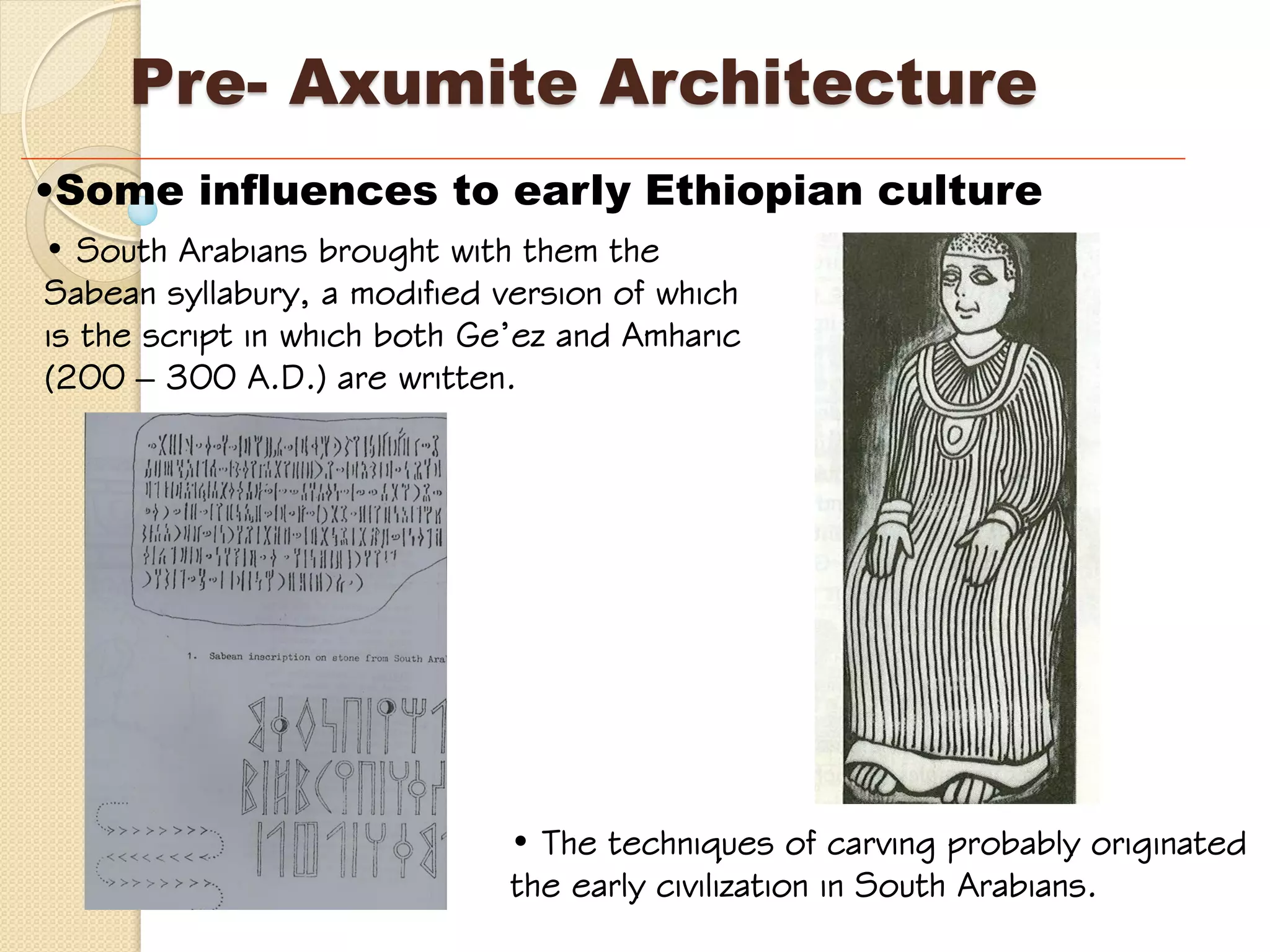
• South Arabians brought with them the
Sabean syllabury, a modified version of which
is the script in which both Ge’ez and Amharic
(200 – 300 A.D.) are written.
• The techniques of carving probably originated
the early civilization in South Arabians.
Pre- Axumite Architecture
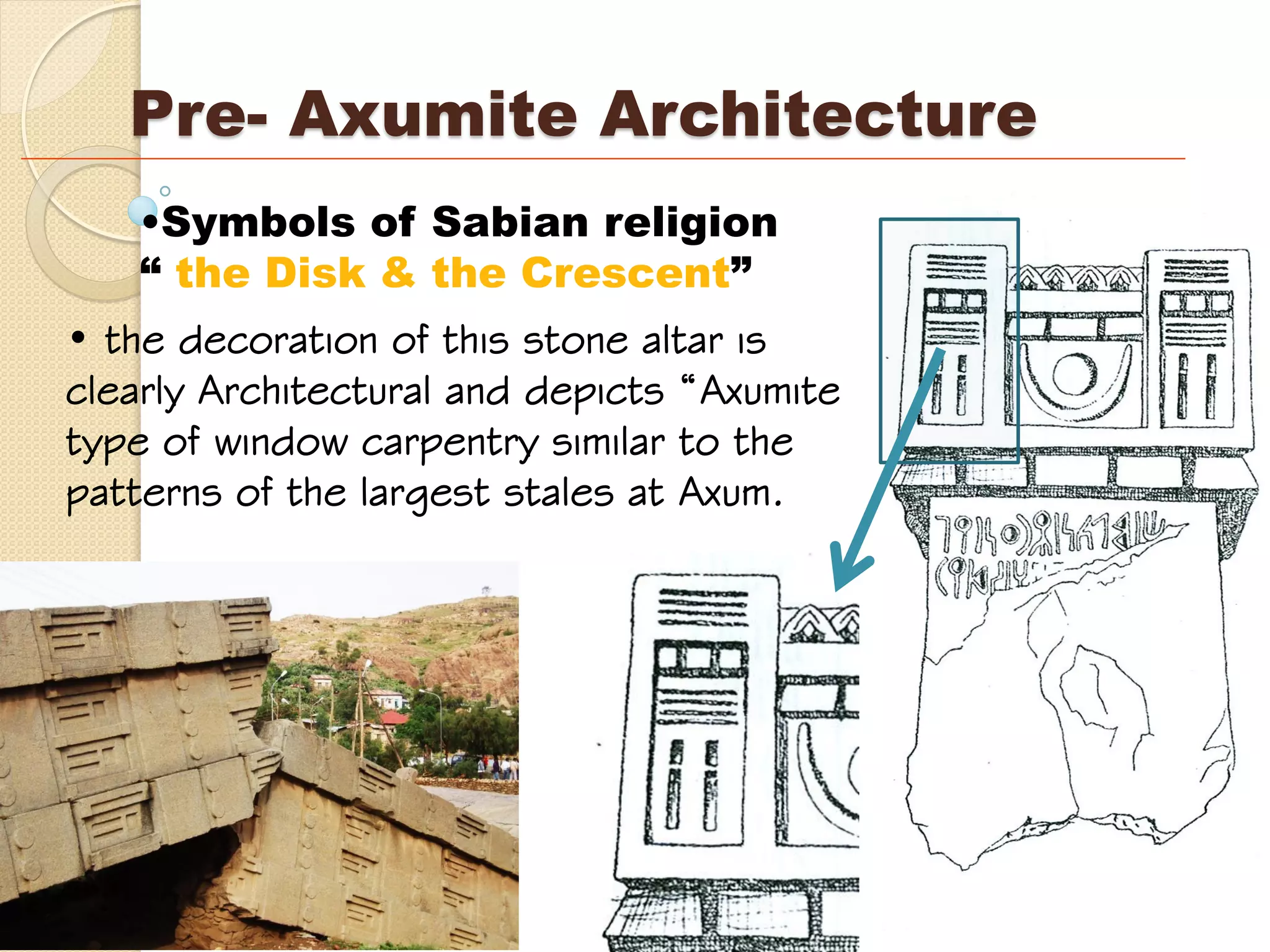
•Symbols of Sabian religion
“ the Disk & the Crescent”
• the decoration of this stone altar is
clearly Architectural and depicts “Axumite
type of window carpentry similar to the
patterns of the largest stales at Axum.
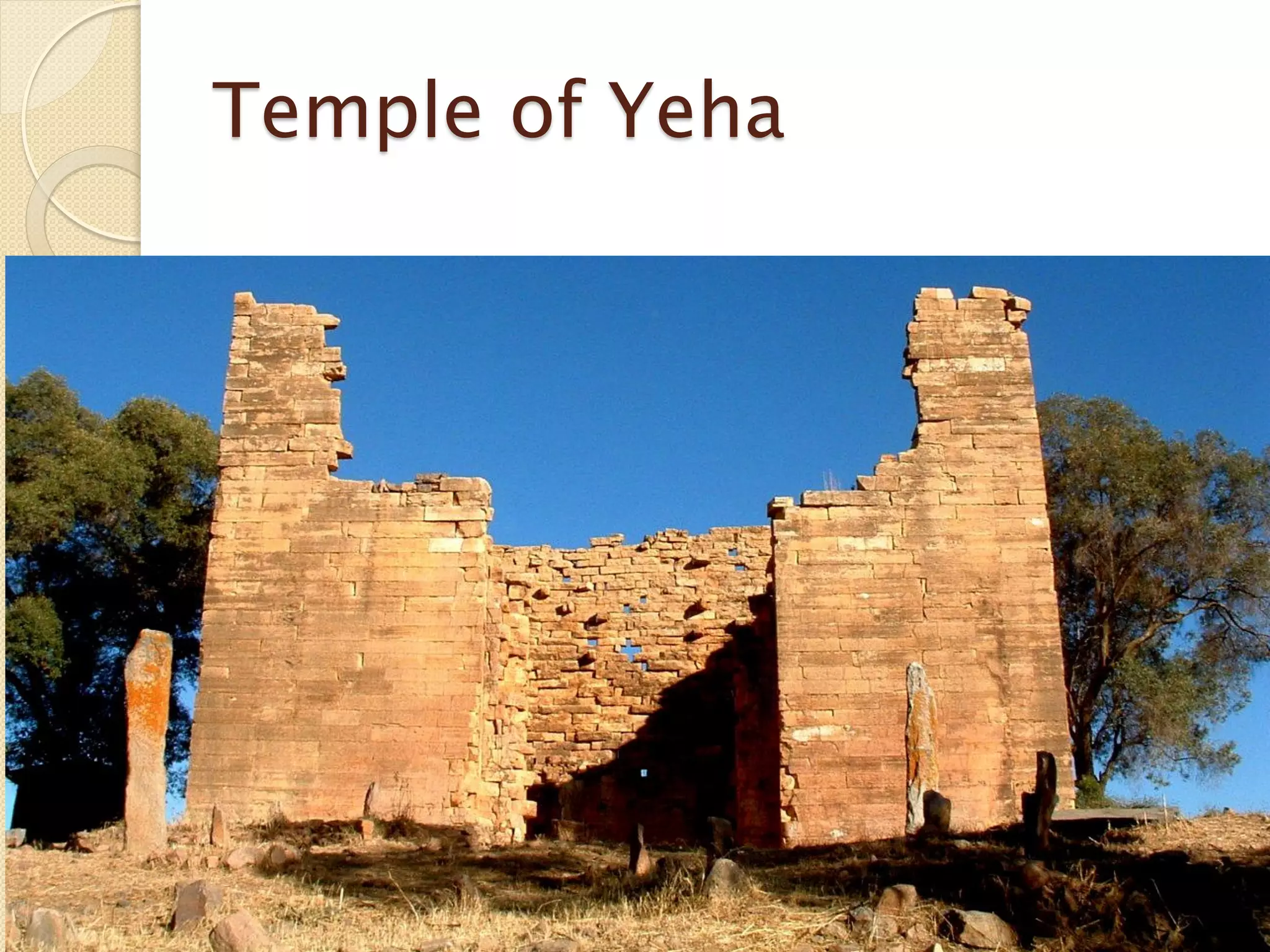
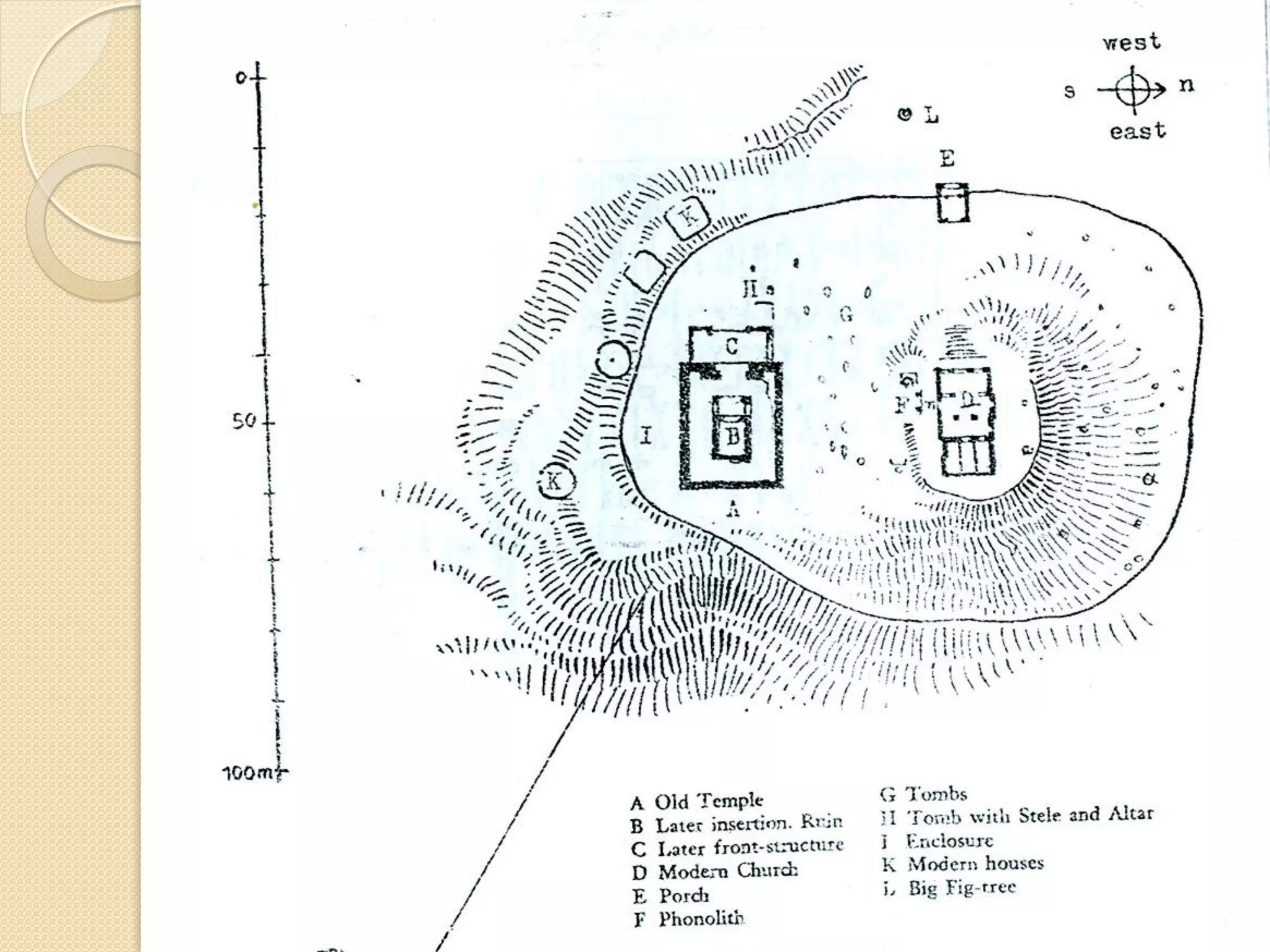
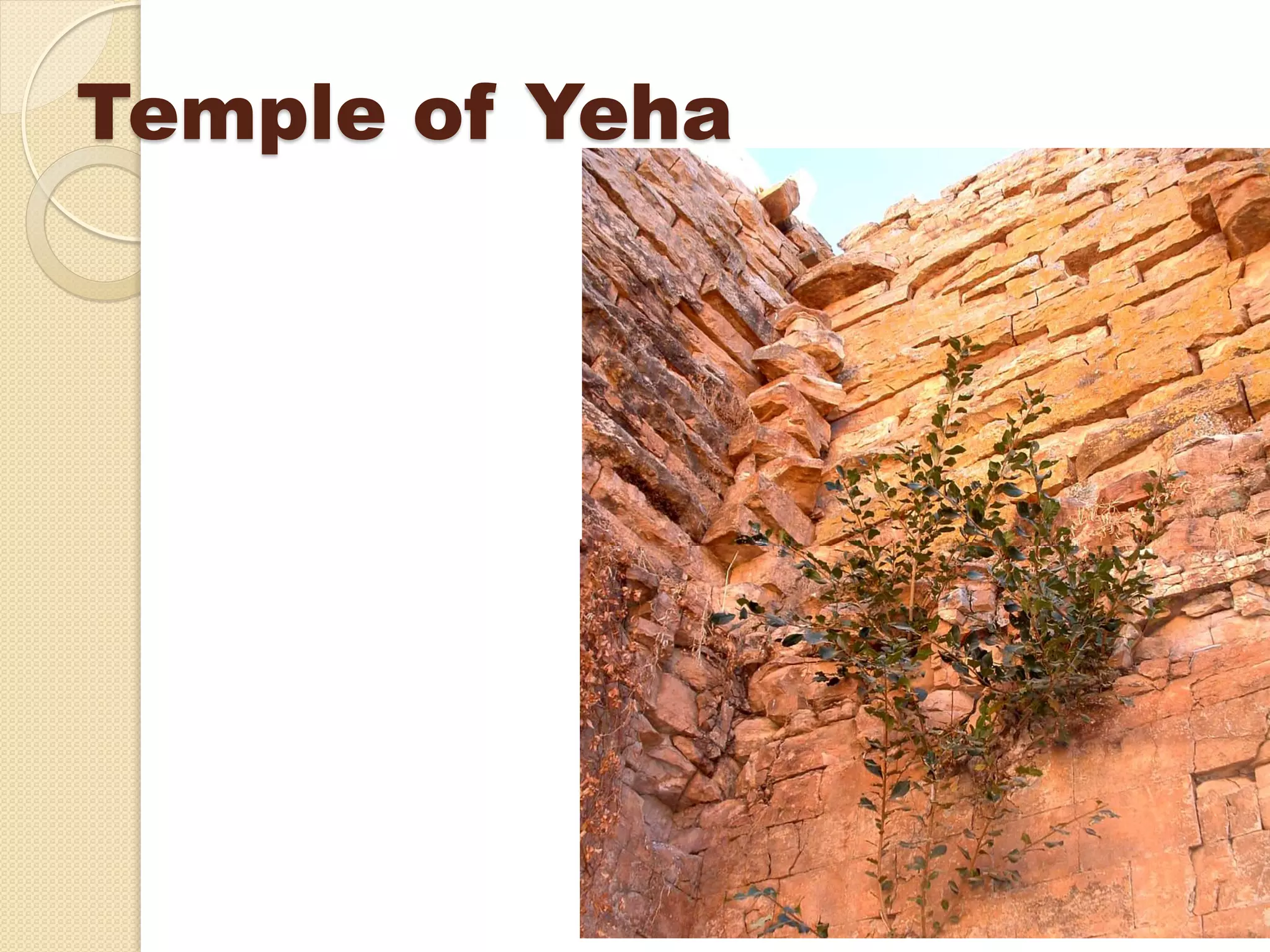
Temple of Yeha
Pre- Axumite Architecture
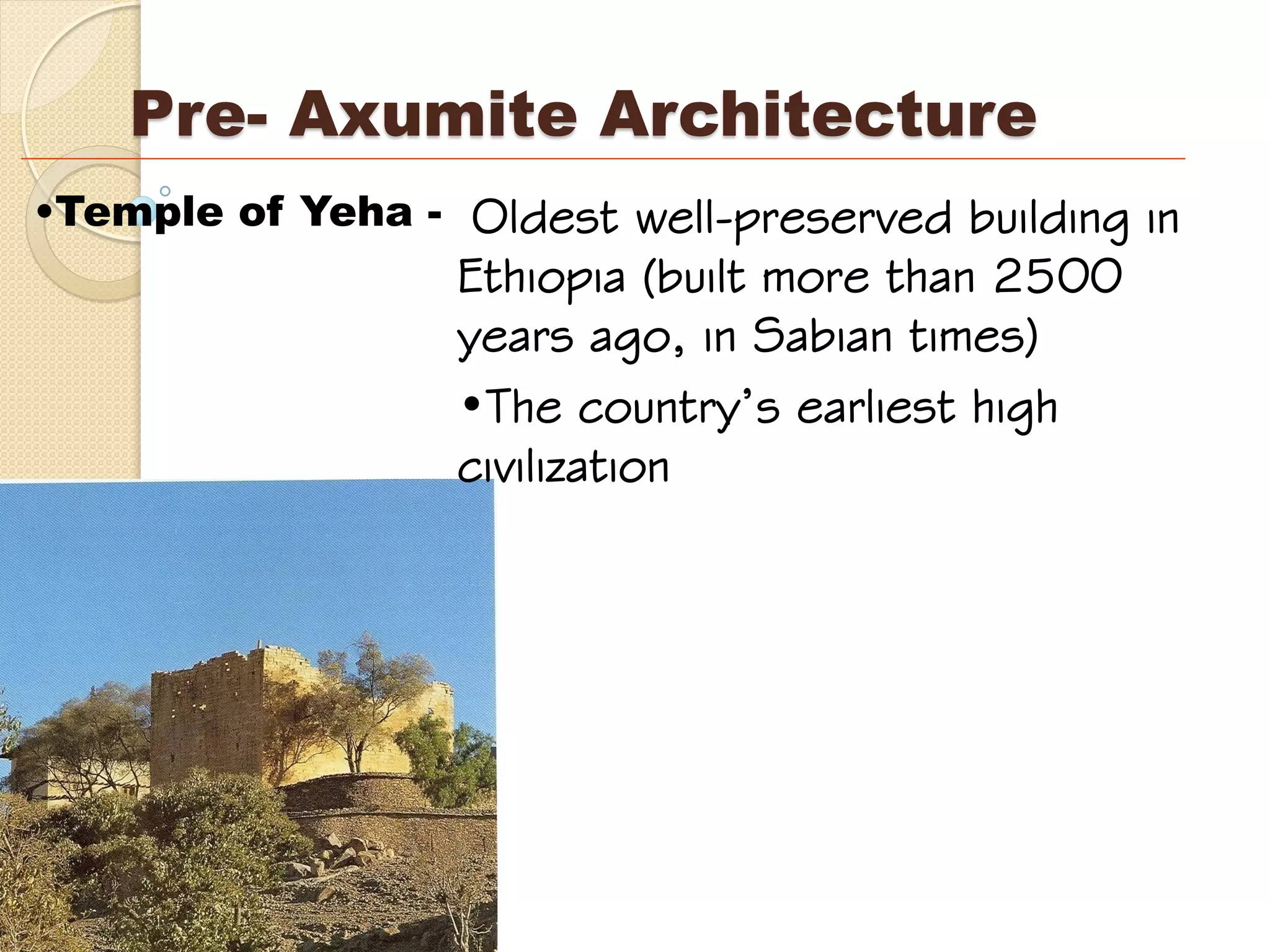
Oldest well-preserved building in
Ethiopia (built more than 2500
years ago, in Sabian times)
•The country’s earliest high
civilization
•Temple of Yeha -
Pre- Axumite Architecture
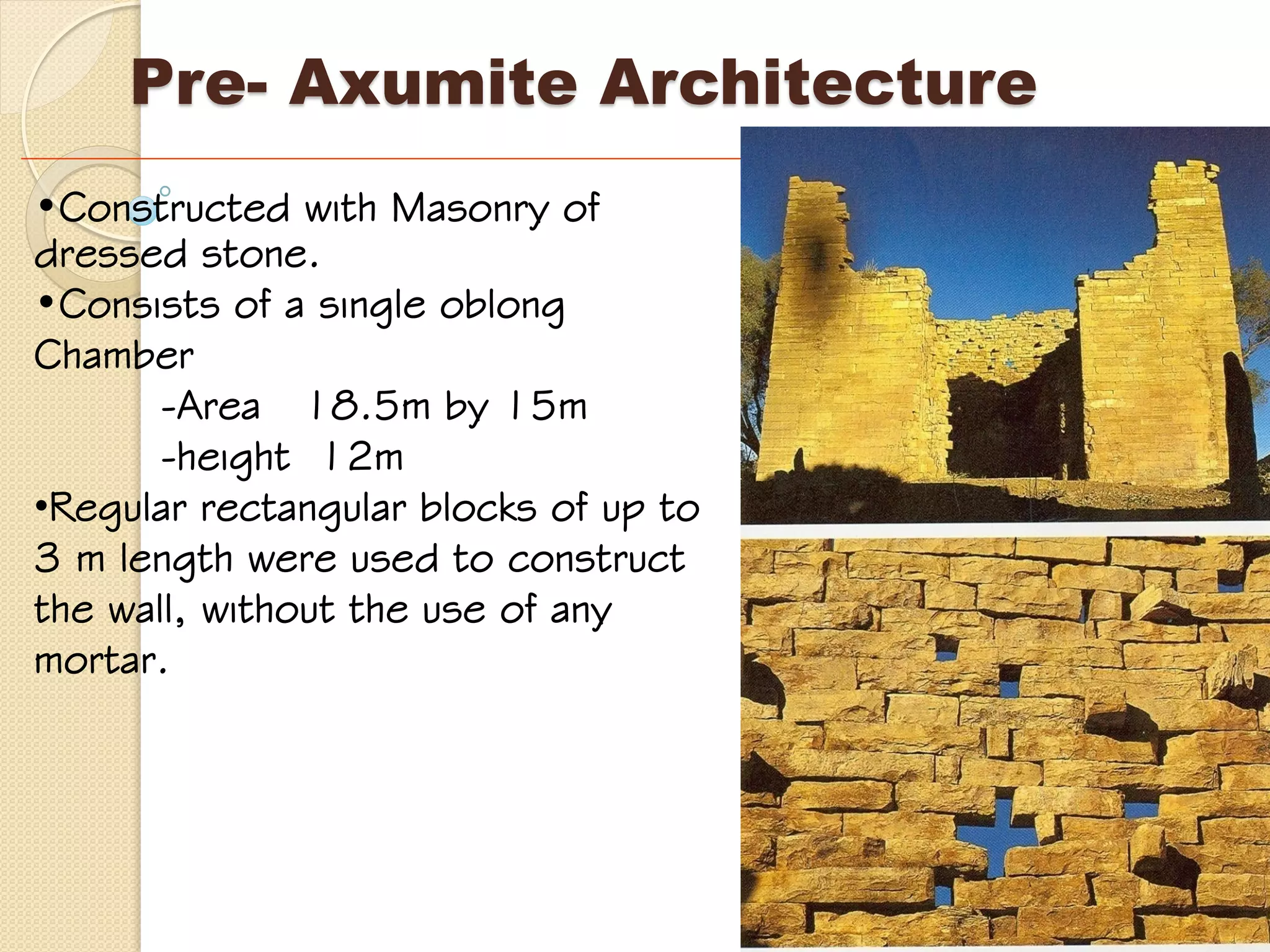
•Constructed with Masonry of
dressed stone.
•Consists of a single oblong
Chamber
-Area 18.5m by 15m
-height 12m
•Regular rectangular blocks of up to
3 m length were used to construct
the wall, without the use of any
mortar.
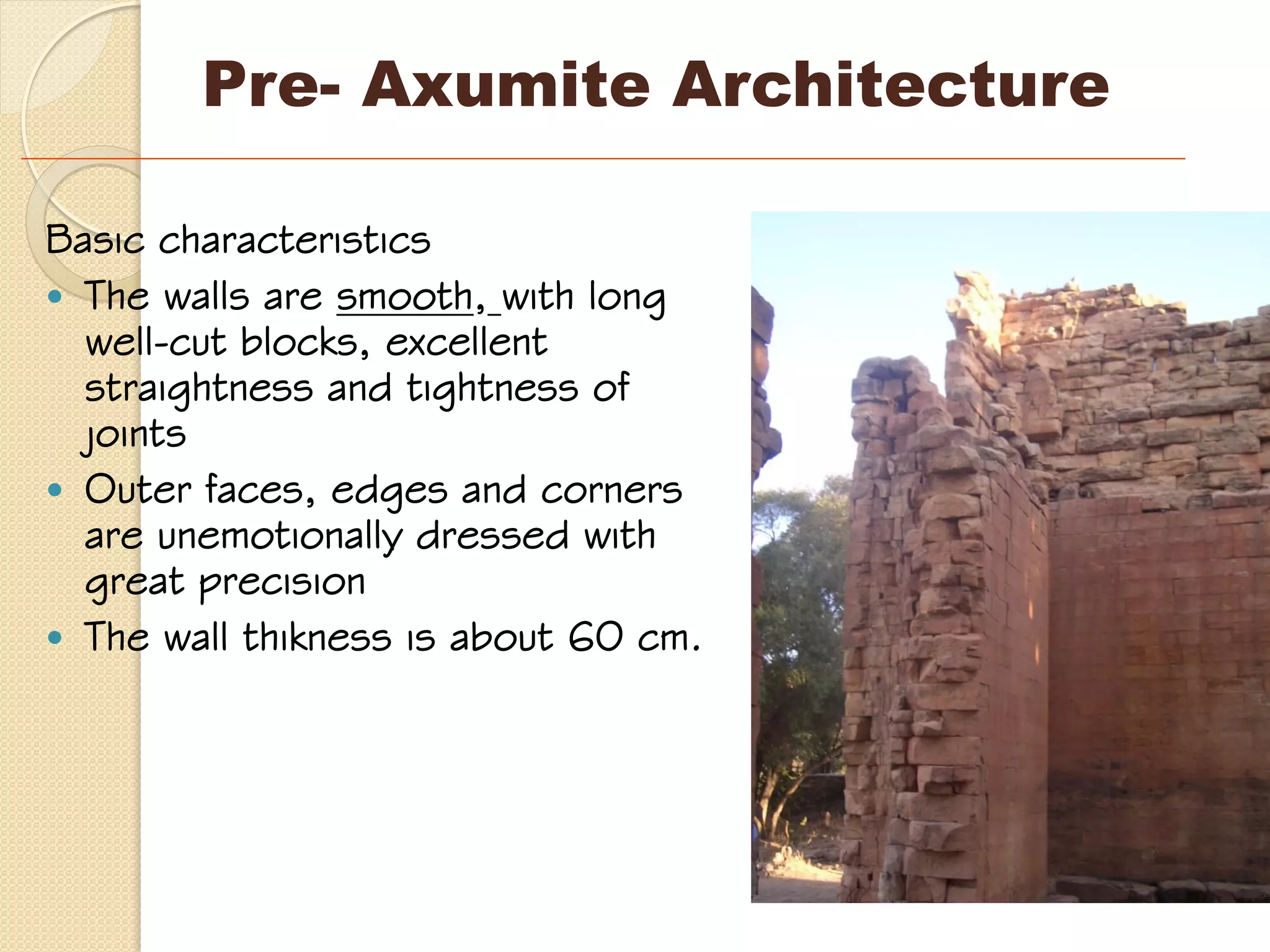
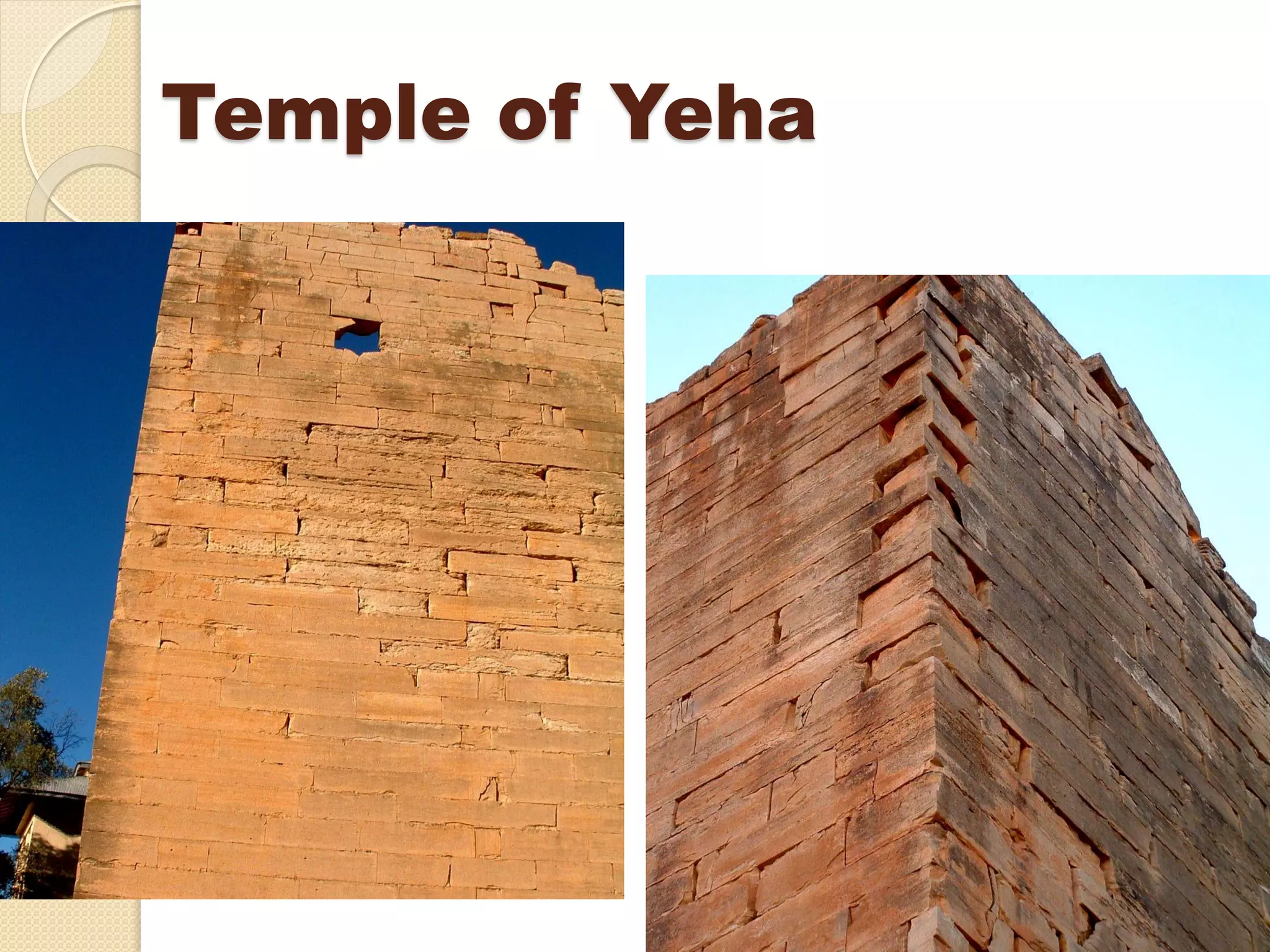
Basic characteristics
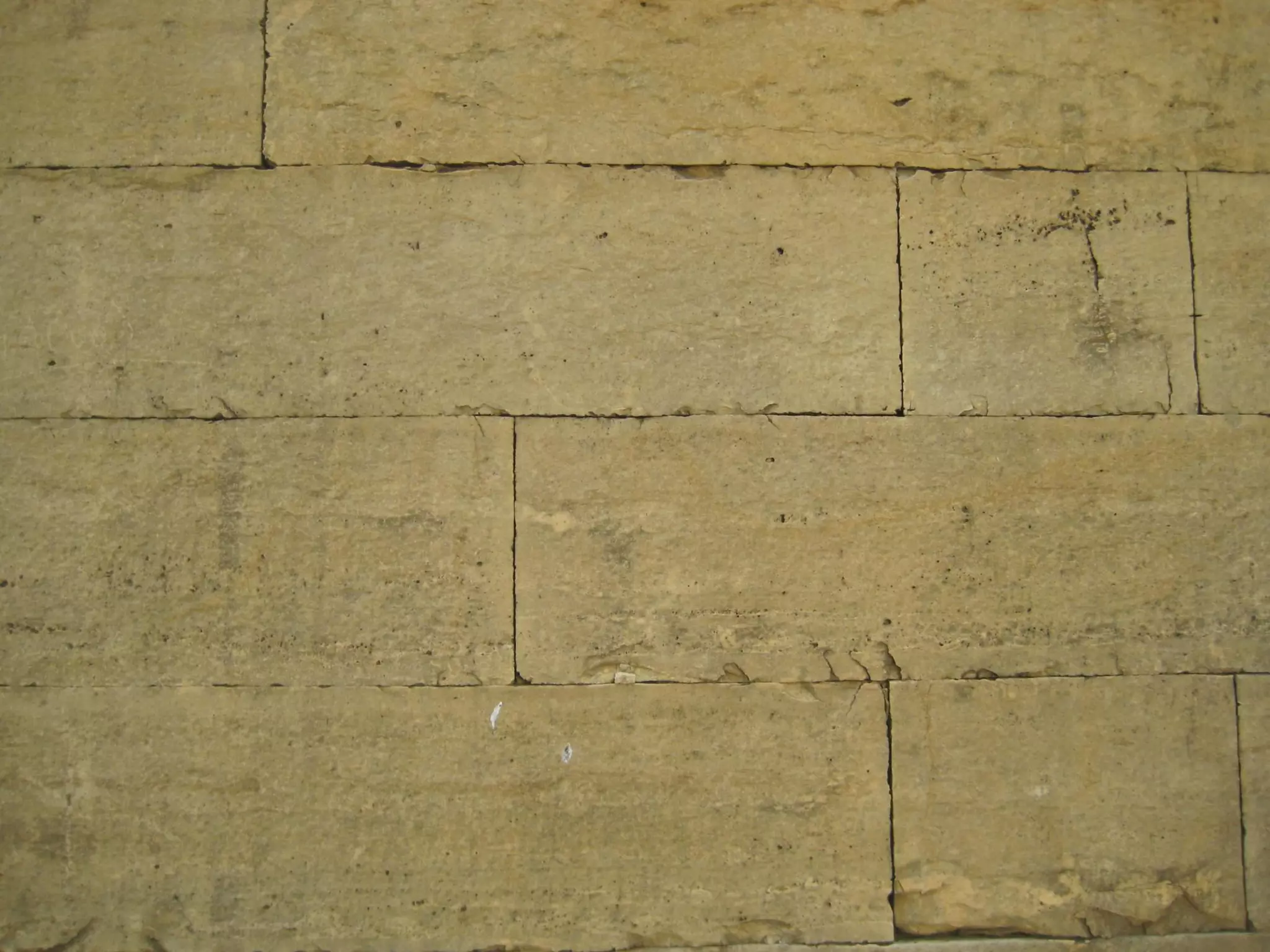
 The walls are smooth, with long
well-cut blocks, excellent
straightness and tightness of
joints
 Outer faces, edges and corners
are unemotionally dressed with
great precision
 The wall thikness is about 60 cm.
Pre- Axumite Architecture
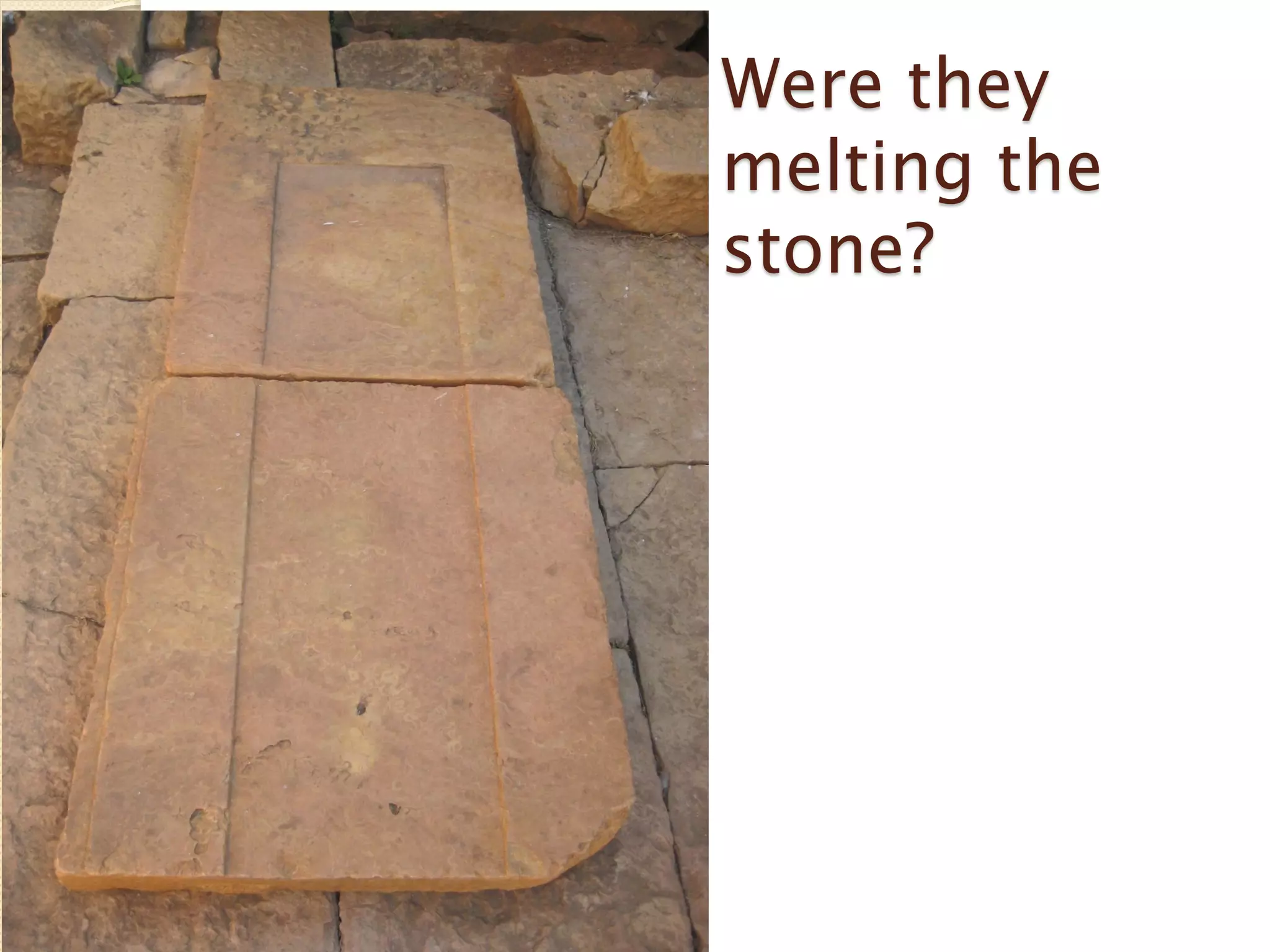
Were they
melting the
stone?
Temple of Yeha
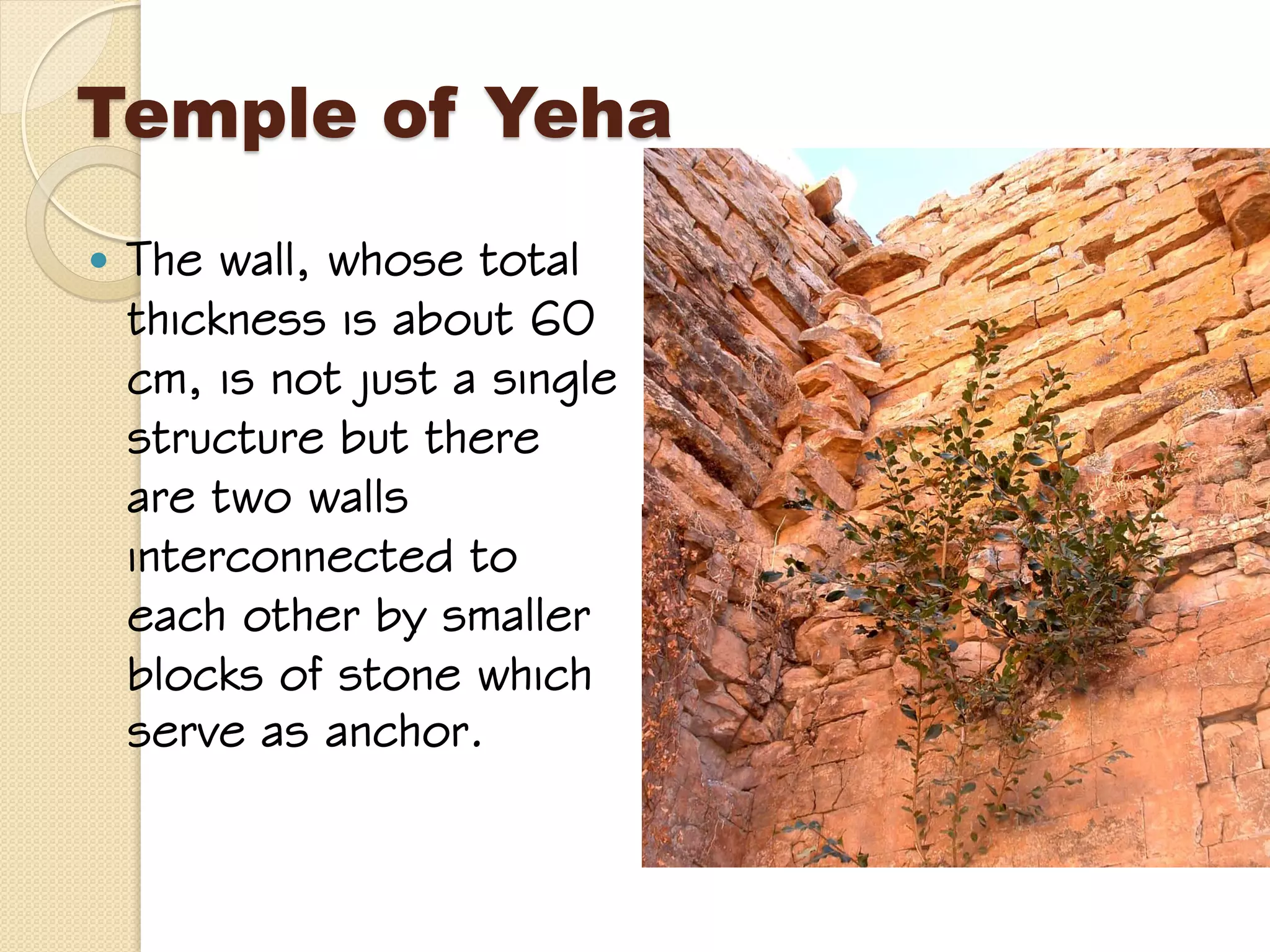
 The wall, whose total
thickness is about 60
cm, is not just a single
structure but there
are two walls
interconnected to
each other by smaller
blocks of stone which
serve as anchor.
Temple of Yeha
Temple of Yeha
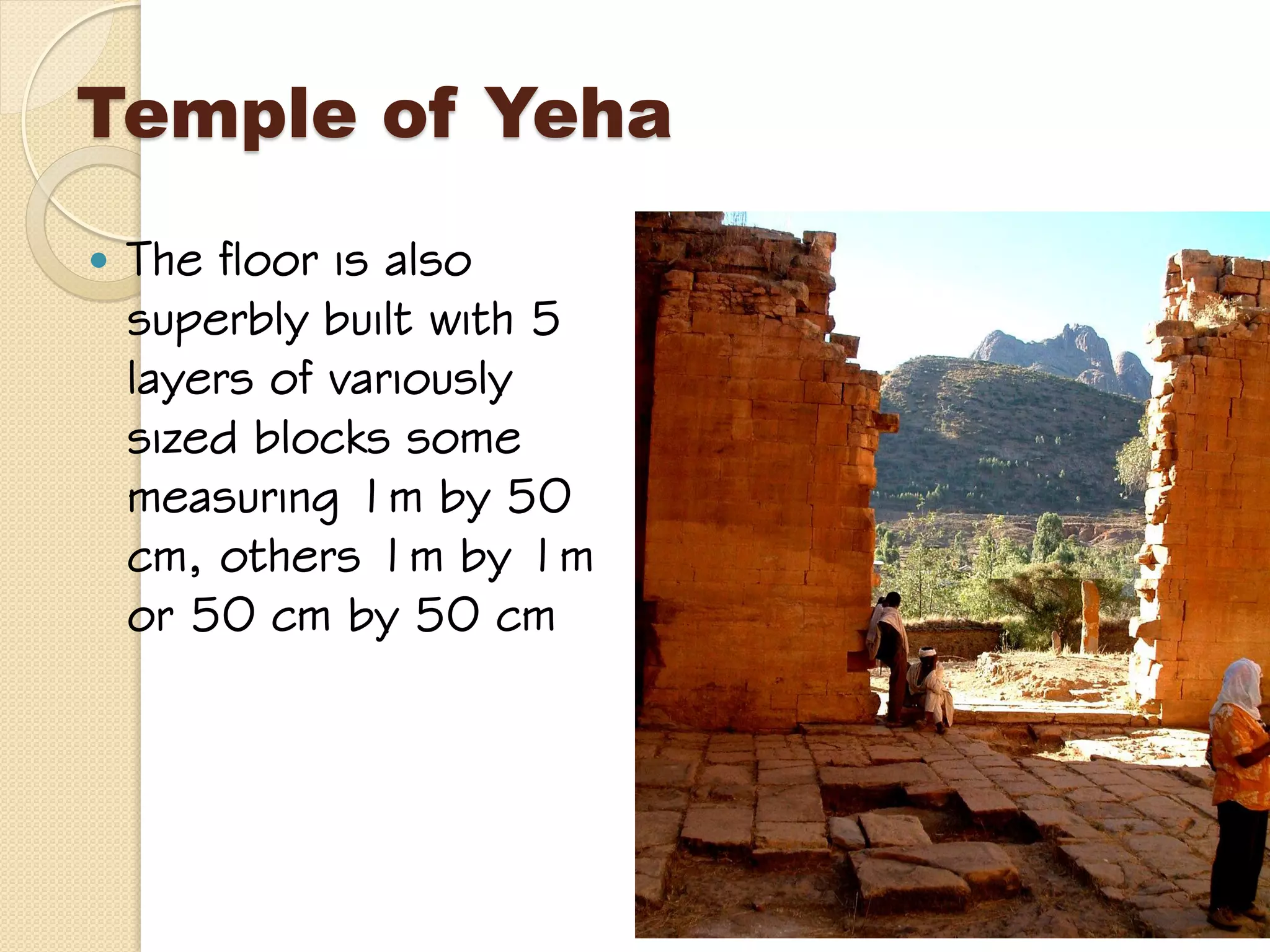
 The floor is also
superbly built with 5
layers of variously
sized blocks some
measuring 1m by 50
cm, others 1m by 1m
or 50 cm by 50 cm
Temple of Yeha
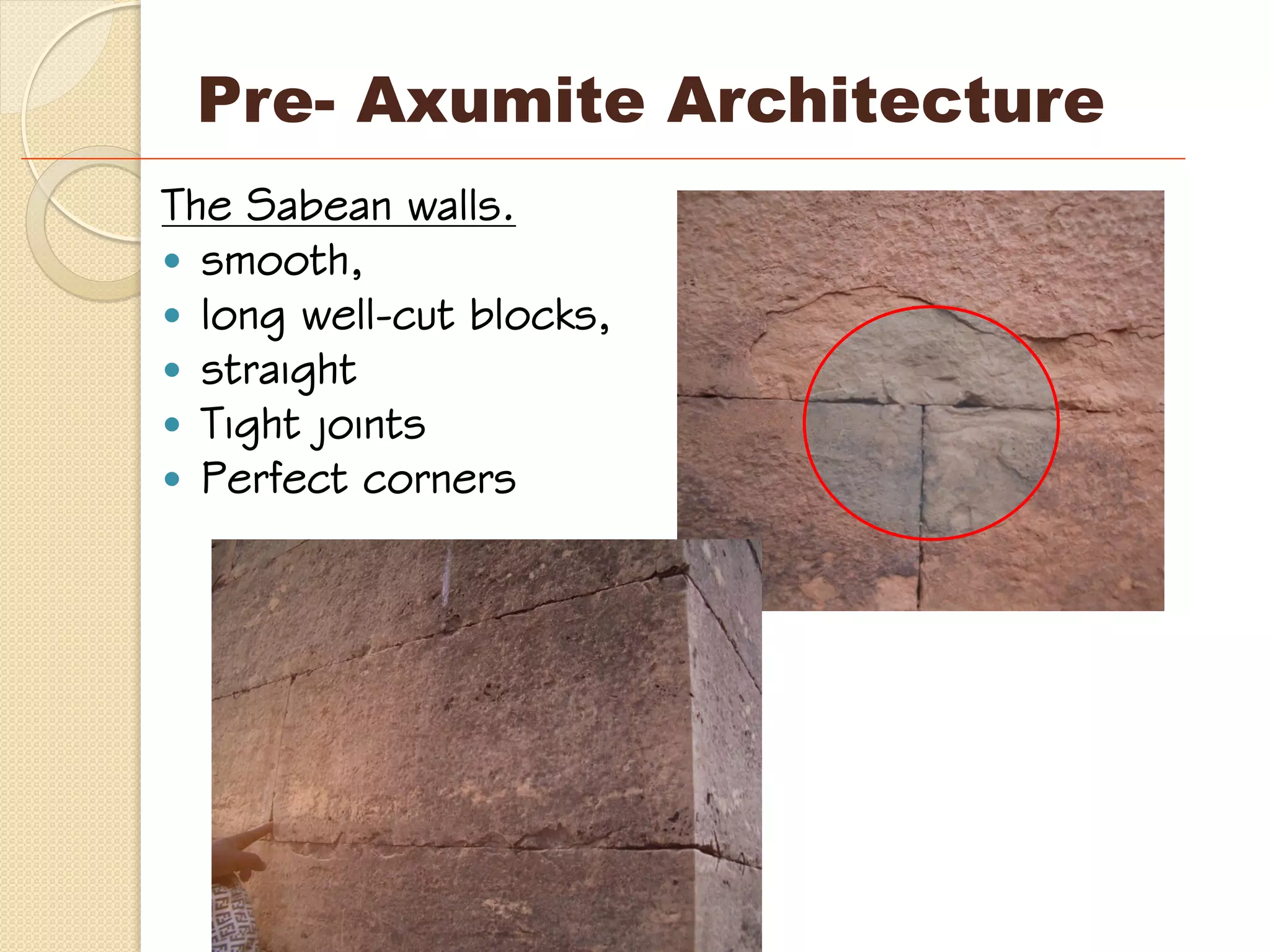
The Sabean walls.
 smooth,
 long well-cut blocks,
 straight
 Tight joints
 Perfect corners
Pre- Axumite Architecture
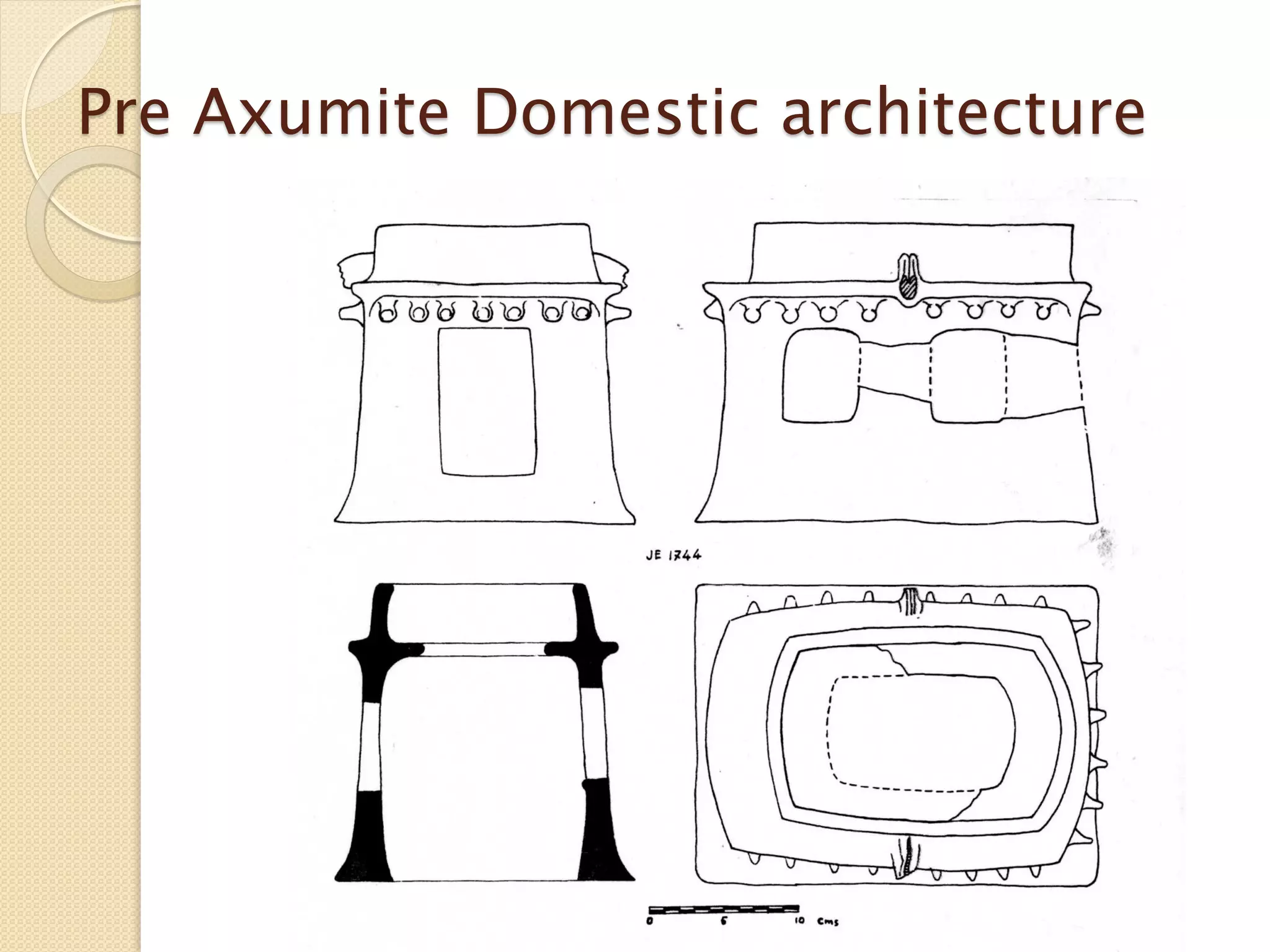
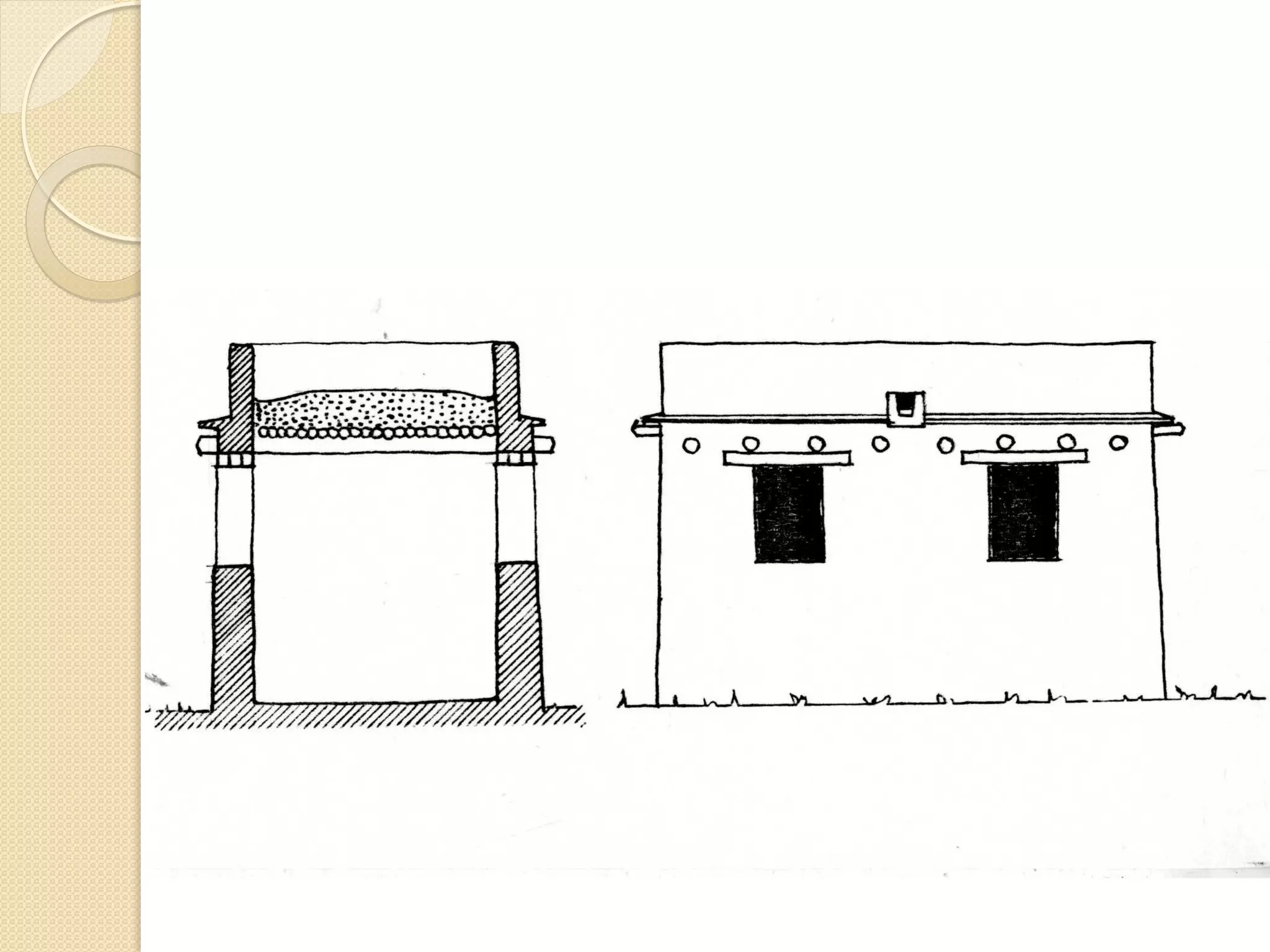
Pre Axumite Domestic architecture
COMPARISON
History of Ethiopian Architecture
vs.
..……the other world
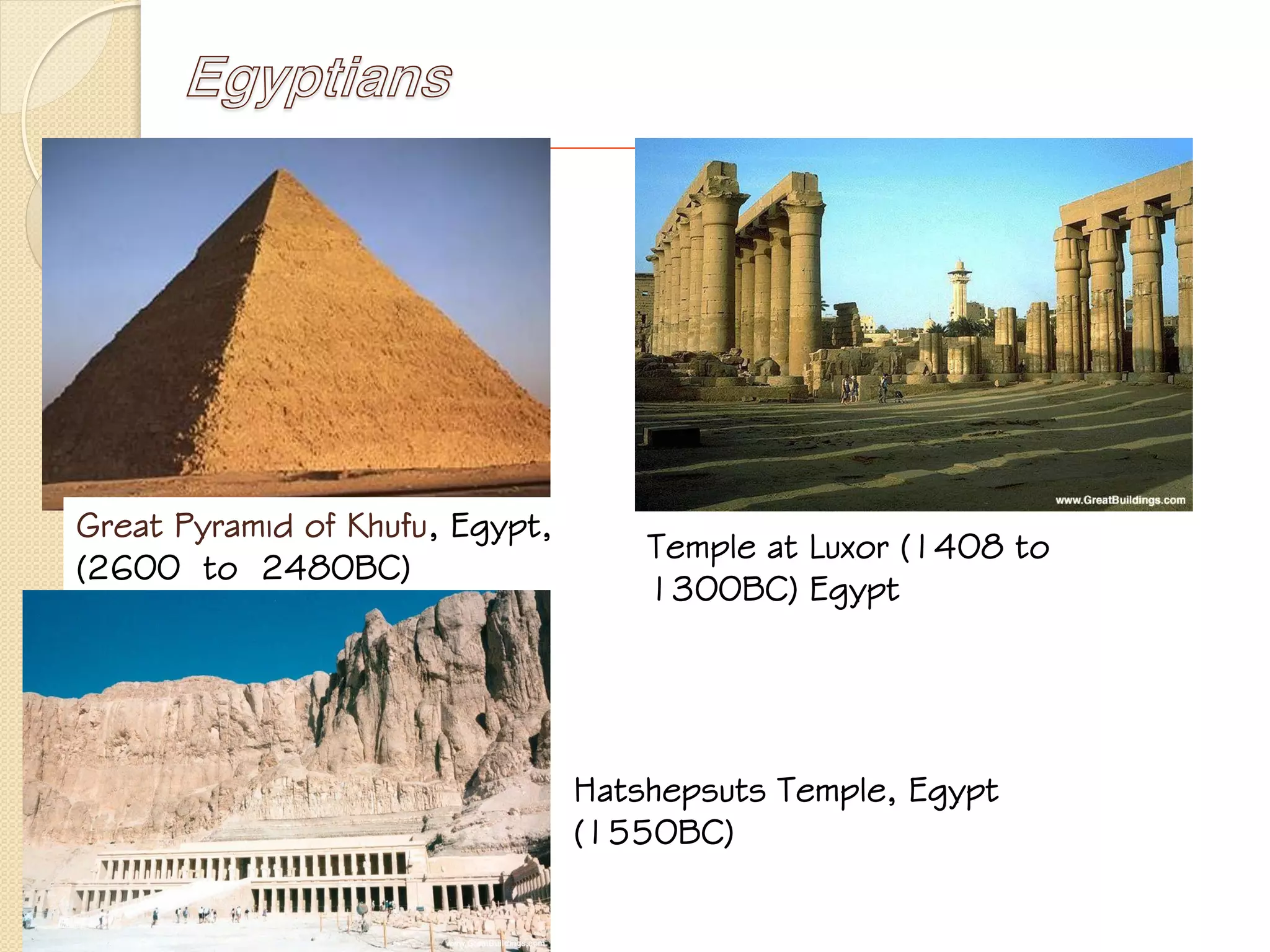
Egyptians
Great Pyramid of Khufu, Egypt,
(2600 to 2480BC)
Temple at Luxor (1408 to
1300BC) Egypt
Hatshepsuts Temple, Egypt
(1550BC)
The Greeks
Parthenon Greece,
477 to 438 BC
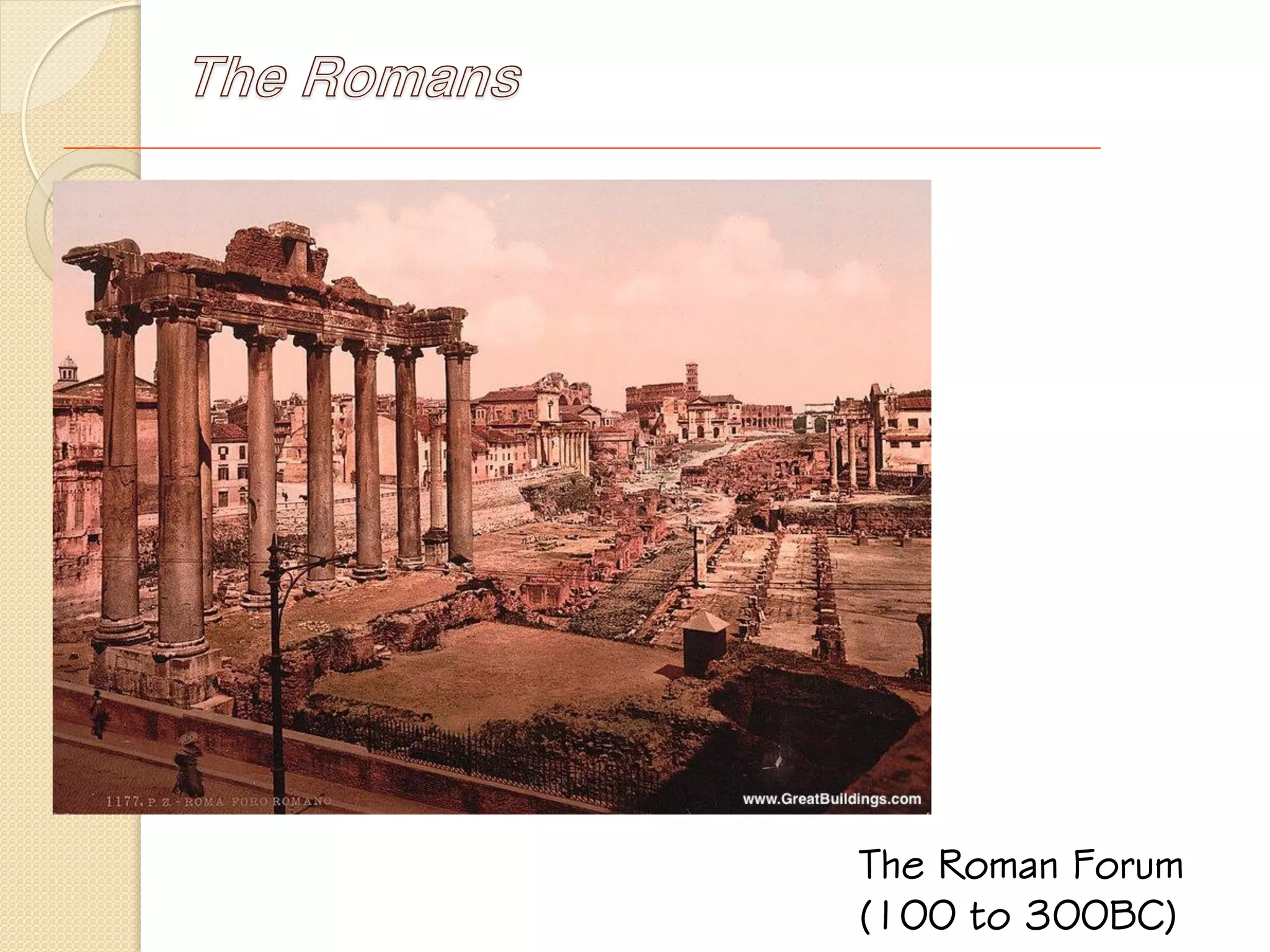
The Romans
The Roman Forum
(100 to 300BC)
The powerful kingdom of Axum
(100 to 1000 a.d.)
To be Continued
Axumite Architecture - II

Lecture 1 pre axumite architecture

  • 1.
    Ancient History ofEthiopian Art & Architecture Pre- Axumite Architecture Prep. By Ephrem N.
  • 2.
    Introduction •What is history? …Wesay Architecture is ‘Living History’ HOW?
  • 3.
    Introduction • Architecture issubject to social, political, or cultural influences. It reflects the society and communicates the values of that society. • With the change of the society the face of Architecture changes too. • Our architecture has so many stories to tell about us. It’s our personality and our culture which is reflected in the shelter we build.
  • 4.
    ■ How Architectureevolve? Introduction
  • 5.
    ■ Agriculture vs.Architecture? Introduction
  • 6.
    Introduction Agriculture created Architecture. •Agricultureleads to settlement. People needed to live where there was good land for farming. •The tools and materials around enabled them to build shelter/dwellings.
  • 7.
    Introduction •Farming in theNile delta started around 4000 B.C. and a powerful Egyptian state developed about 2600 B.C. ,at the time the state was able to command the labor for such huge constructions as the Great pyramid.
  • 8.
    Pre- Axumite Architecture •Archaeological sitesin northern Ethiopia and the middle east
  • 9.
    •Ancient route fromAxum to Redsea Pre- Axumite Architecture
  • 10.
    •Earliest Art (exampleof cave painting in Ethiopia) • a cave at Porcepic near Dire Dawa, dated at 400,000 years and notable for its exquisitely accurate rendering of animal forms – Antelope, Jackal and hyena are clearly identifiable Pre- Axumite Architecture
  • 11.
    Sabian or Intermediateperiod (500 b.c. to 100 a.d.) Sabean architecture
  • 12.
    Pre- Axumite Architecture •Someinfluences to early Ethiopian culture • South Arabians brought with them the Sabean syllabury, a modified version of which is the script in which both Ge’ez and Amharic (200 – 300 A.D.) are written. • The techniques of carving probably originated the early civilization in South Arabians.
  • 13.
    Pre- Axumite Architecture •Symbolsof Sabian religion “ the Disk & the Crescent” • the decoration of this stone altar is clearly Architectural and depicts “Axumite type of window carpentry similar to the patterns of the largest stales at Axum.
  • 14.
  • 15.
    Pre- Axumite Architecture Oldestwell-preserved building in Ethiopia (built more than 2500 years ago, in Sabian times) •The country’s earliest high civilization •Temple of Yeha -
  • 16.
    Pre- Axumite Architecture •Constructedwith Masonry of dressed stone. •Consists of a single oblong Chamber -Area 18.5m by 15m -height 12m •Regular rectangular blocks of up to 3 m length were used to construct the wall, without the use of any mortar.
  • 18.
    Basic characteristics  Thewalls are smooth, with long well-cut blocks, excellent straightness and tightness of joints  Outer faces, edges and corners are unemotionally dressed with great precision  The wall thikness is about 60 cm. Pre- Axumite Architecture
  • 19.
  • 20.
    Temple of Yeha The wall, whose total thickness is about 60 cm, is not just a single structure but there are two walls interconnected to each other by smaller blocks of stone which serve as anchor.
  • 21.
  • 22.
    Temple of Yeha The floor is also superbly built with 5 layers of variously sized blocks some measuring 1m by 50 cm, others 1m by 1m or 50 cm by 50 cm
  • 23.
  • 24.
    The Sabean walls. smooth,  long well-cut blocks,  straight  Tight joints  Perfect corners Pre- Axumite Architecture
  • 26.
  • 28.
    COMPARISON History of EthiopianArchitecture vs. ..……the other world
  • 29.
    Egyptians Great Pyramid ofKhufu, Egypt, (2600 to 2480BC) Temple at Luxor (1408 to 1300BC) Egypt Hatshepsuts Temple, Egypt (1550BC)
  • 30.
  • 31.
    The Romans The RomanForum (100 to 300BC)
  • 32.
    The powerful kingdomof Axum (100 to 1000 a.d.) To be Continued Axumite Architecture - II