Amr Hassan, MD,FEBN
Professor of Neurology
Cairo University - Egypt
Progressive multifocal
leukoencephalopathy (PML)
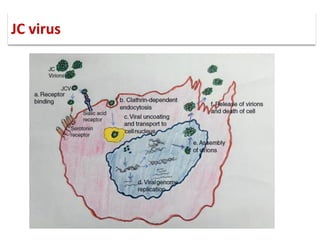
▪ John Cunningham virus (JCV) is a
double-stranded DNA
polyomavirus.
▪ Takes its name from the initials of
the patient from whom it was
first isolated.
▪ PML was initially described in
patients with underlying B-cell
lymphoproliferative disorders [1]
JC virus
JC virus
Progressive Multifocal Leukoencephalopathy
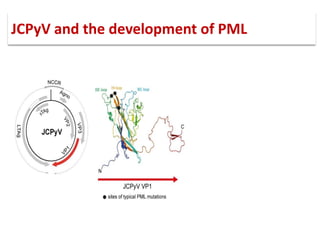
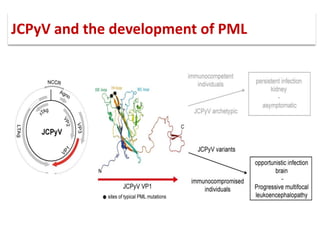
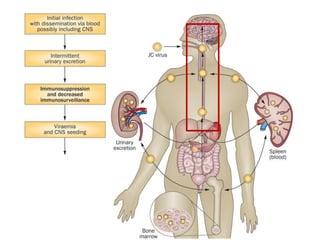
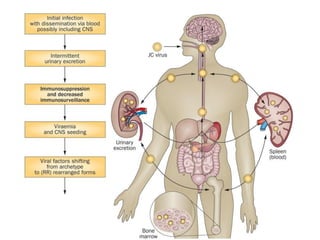
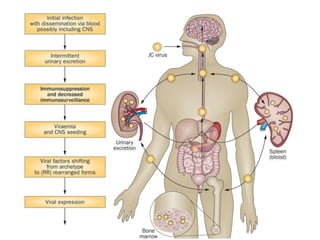
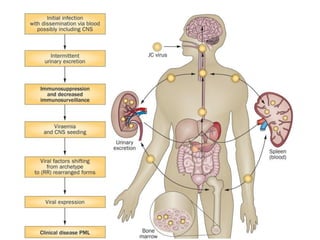
JCPyV and the development of PML
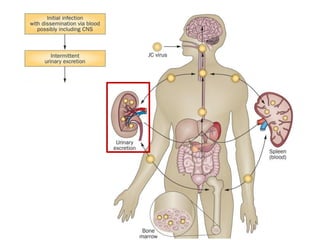
▪ 50-90% of adults have been exposed to this virus
▪ 19-27% of these people shedding JCV in their urine.[5,7-10]
▪ Acquisition of this virus is not associated with a clinical
syndrome.[9]
▪ Opportunistic infection, caused by the polyoma virus JC virus
▪ Characterized by focal demyelination in the CNS
▪ Worldwide distribution, seroprevalence of 39-69% in adults
▪ Primary infection usually in childhood
▪ No recognized acute JC virus infection
▪ Likely asymptomatic chronic carrier state
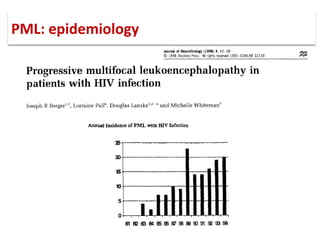
PML: epidemiology
In a large review spanning the 30 years from 1958 to
1984, only 230 cases were identified, with only 69 being
confirmed pathologically.
PML: epidemiology
PML: epidemiology
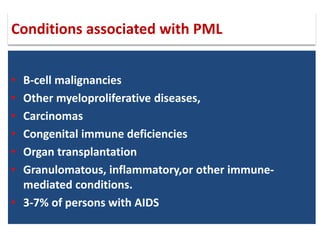
• B-cell malignancies
• Other myeloproliferative diseases,
• Carcinomas
• Congenital immune deficiencies
• Organ transplantation
• Granulomatous, inflammatory,or other immune-
mediated conditions.
• 3-7% of persons with AIDS
Conditions associated with PML
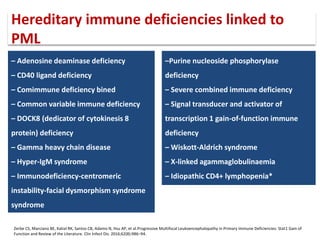
– Adenosine deaminase deficiency
– CD40 ligand deficiency
– Comimmune deficiency bined
– Common variable immune deficiency
– DOCK8 (dedicator of cytokinesis 8
protein) deficiency
– Gamma heavy chain disease
– Hyper-IgM syndrome
– Immunodeficiency-centromeric
instability-facial dysmorphism syndrome
syndrome
–Purine nucleoside phosphorylase
deficiency
– Severe combined immune deficiency
– Signal transducer and activator of
transcription 1 gain-of-function immune
deficiency
– Wiskott-Aldrich syndrome
– X-linked agammaglobulinaemia
– Idiopathic CD4+ lymphopenia*
Zerbe CS, Marciano BE, Katial RK, Santos CB, Adamo N, Hsu AP, et al.Progressive Multifocal Leukoencephalopathy in Primary Immune Deficiencies: Stat1 Gain of
Function and Review of the Literature. Clin Infect Dis. 2016;62(8):986–94.
Hereditary immune deficiencies linked to
PML
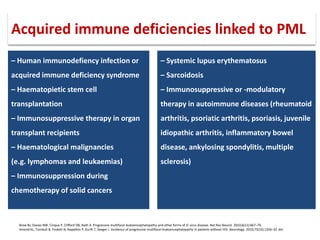
– Human immunodefiency infection or
acquired immune deficiency syndrome
– Haematopietic stem cell
transplantation
– Immunosuppressive therapy in organ
transplant recipients
– Haematological malignancies
(e.g. lymphomas and leukaemias)
– Immunosuppression during
chemotherapy of solid cancers
– Systemic lupus erythematosus
– Sarcoidosis
– Immunosuppressive or -modulatory
therapy in autoimmune diseases (rheumatoid
arthritis, psoriatic arthritis, psoriasis, juvenile
idiopathic arthritis, inflammatory bowel
disease, ankylosing spondylitis, multiple
sclerosis)
Brew BJ, Davies NW, Cinque P, Clifford DB, Nath A. Progressive multifocal leukoencephalopathy and other forms of JC virus disease. Nat Rev Neurol. 2010;6(12):667–79.
Amend KL, Turnbull B, Foskett N, Napalkov P, Kurth T, Seeger J. Incidence of progressive multifocal leukoencephalopathy in patients without HIV. Neurology. 2010;75(15):1326–32. doi
Acquired immune deficiencies linked to PML
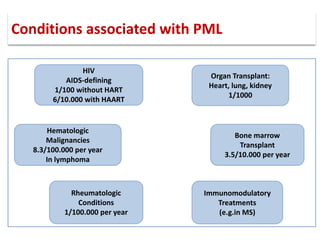
Organ Transplant:
Heart, lung, kidney
1/1000
HIV
AIDS-defining
1/100 without HART
6/10.000 with HAART
Bone marrow
Transplant
3.5/10.000 per year
Hematologic
Malignancies
8.3/100.000 per year
In lymphoma
Immunomodulatory
Treatments
(e.g.in MS)
Rheumatologic
Conditions
1/100.000 per year
Conditions associated with PML
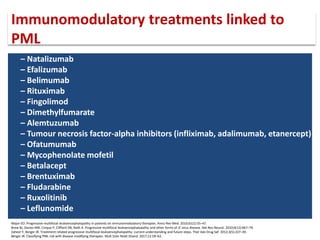
– Natalizumab
– Efalizumab
– Belimumab
– Rituximab
– Fingolimod
– Dimethylfumarate
– Alemtuzumab
– Tumour necrosis factor-alpha inhibitors (infliximab, adalimumab, etanercept)
– Ofatumumab
– Mycophenolate mofetil
– Betalacept
– Brentuximab
– Fludarabine
– Ruxolitinib
– Leflunomide
Major EO. Progressive multifocal leukoencephalopathy in patients on immunomodulatory therapies. Annu Rev Med. 2010;61(1):35–47.
Brew BJ, Davies NW, Cinque P, Clifford DB, Nath A. Progressive multifocal leukoencephalopathy and other forms of JC virus disease. Nat Rev Neurol. 2010;6(12):667–79.
Zaheer F, Berger JR. Treatment-related progressive multifocal leukoencephalopathy: current understanding and future steps. Ther Adv Drug Saf. 2012;3(5):227–39.
Berger JR. Classifying PML risk with disease modifying therapies. Mult Scler Relat Disord. 2017;12:59–63.
Immunomodulatory treatments linked to
PML
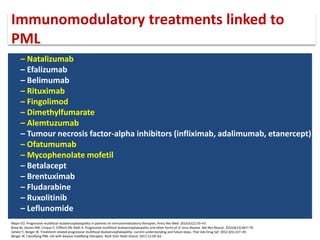
– Natalizumab
– Efalizumab
– Belimumab
– Rituximab
– Fingolimod
– Dimethylfumarate
– Alemtuzumab
– Tumour necrosis factor-alpha inhibitors (infliximab, adalimumab, etanercept)
– Ofatumumab
– Mycophenolate mofetil
– Betalacept
– Brentuximab
– Fludarabine
– Ruxolitinib
– Leflunomide
Immunomodulatory treatments linked to
PML
Major EO. Progressive multifocal leukoencephalopathy in patients on immunomodulatory therapies. Annu Rev Med. 2010;61(1):35–47.
Brew BJ, Davies NW, Cinque P, Clifford DB, Nath A. Progressive multifocal leukoencephalopathy and other forms of JC virus disease. Nat Rev Neurol. 2010;6(12):667–79.
Zaheer F, Berger JR. Treatment-related progressive multifocal leukoencephalopathy: current understanding and future steps. Ther Adv Drug Saf. 2012;3(5):227–39.
Berger JR. Classifying PML risk with disease modifying therapies. Mult Scler Relat Disord. 2017;12:59–63.
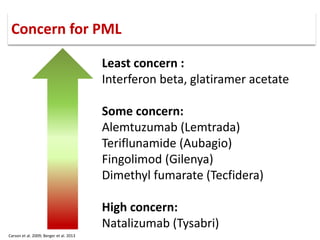
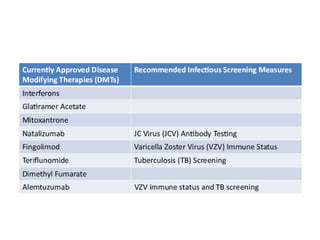
Least concern :
Interferon beta, glatiramer acetate
Some concern:
Alemtuzumab (Lemtrada)
Teriflunamide (Aubagio)
Fingolimod (Gilenya)
Dimethyl fumarate (Tecfidera)
High concern:
Natalizumab (Tysabri)
Carson et al. 2009; Berger et al. 2013
Concern for PML
26
• Focal neurologic deficits, usually with insidious onset,
steady progression over several weeks/months
• Demyelinating lesions may involve any region of the
brain
– Common: occipital lobes (hemianopsia), frontal and parietal
lobes (aphasia, hemiparesis, hemisensory deficits), cerebellar
peduncles and deep white matter (dysmetria, ataxia)
– Spinal cord involvement is rare
PML: Clinical Manifestations
27
• Headache and fever not characteristic (except in severe IRIS)
• Seizures in 20%
• Cognitive dysfunction may occur but diffuse encephalopathy or
dementia is rare
PML: Clinical Manifestations
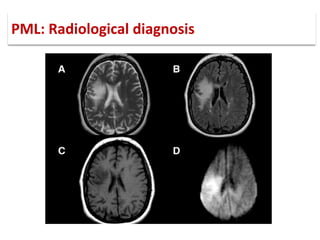
PML: Radiological diagnosis
An early progressive
multifocal
leukoencephalopathy (PML)
patient within 6 days of PML
diagnosis with a large (A)
T2-hyperintense and (B) fluid-
attenuated inversion
recovery–hyperintense lesion
in the right frontal lobe. The
lesion was (C) T1
hypointense and (D)
diffusion-weighted imaging
hyperintense, with sharp
scalloped borders toward the
gray matter and illdefined
borders toward the white
matter.
PML: Radiological diagnosis
30
PML, CT scan PML, MRI scan
PML: Radiological diagnosis
CT scan: single or multiple hypodense, nonenhancing white matter lesions
PML: Radiological diagnosis
Progressive multifocal leukoencephalopathy (PML) radiographically.
(a) Typical lesion of PML as a T2 hyperintensity
involving large portion of 1 hemisphere. (b) T2 fluid-attenuated
inversion recovery image demonstrating hyperintensity in the bilateral
cerebellum consistent with PML
PML: Radiological diagnosis
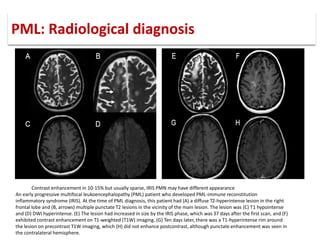
Contrast enhancement in 10-15% but usually sparse, IRIS PMN may have different appearance
An early progressive multifocal leukoencephalopathy (PML) patient who developed PML-immune reconstitution
inflammatory syndrome (IRIS). At the time of PML diagnosis, this patient had (A) a diffuse T2-hyperintense lesion in the right
frontal lobe and (B, arrows) multiple punctate T2 lesions in the vicinity of the main lesion. The lesion was (C) T1 hypointense
and (D) DWI hyperintense. (E) The lesion had increased in size by the IRIS phase, which was 37 days after the first scan, and (F)
exhibited contrast enhancement on T1-weighted (T1W) imaging. (G) Ten days later, there was a T1-hyperintense rim around
the lesion on precontrast T1W imaging, which (H) did not enhance postcontrast, although punctate enhancement was seen in
the contralateral hemisphere.
PML: Radiological diagnosis
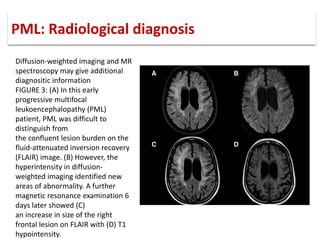
Diffusion-weighted imaging and MR
spectroscopy may give additional
diagnositic information
FIGURE 3: (A) In this early
progressive multifocal
leukoencephalopathy (PML)
patient, PML was difficult to
distinguish from
the confluent lesion burden on the
fluid-attenuated inversion recovery
(FLAIR) image. (B) However, the
hyperintensity in diffusion-
weighted imaging identified new
areas of abnormality. A further
magnetic resonance examination 6
days later showed (C)
an increase in size of the right
frontal lesion on FLAIR with (D) T1
hypointensity.
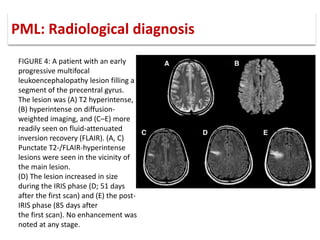
PML: Radiological diagnosis
FIGURE 4: A patient with an early
progressive multifocal
leukoencephalopathy lesion filling a
segment of the precentral gyrus.
The lesion was (A) T2 hyperintense,
(B) hyperintense on diffusion-
weighted imaging, and (C–E) more
readily seen on fluid-attenuated
inversion recovery (FLAIR). (A, C)
Punctate T2-/FLAIR-hyperintense
lesions were seen in the vicinity of
the main lesion.
(D) The lesion increased in size
during the IRIS phase (D; 51 days
after the first scan) and (E) the post-
IRIS phase (85 days after
the first scan). No enhancement was
noted at any stage.
PML: Radiological diagnosis
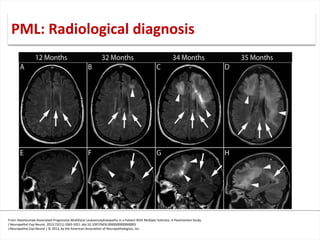
FIGURE 5: An early progressive
multifocal leukoencephalopathy
(PML) patient, 9 days prior to
PML diagnosis, shows (A) an
unusual cluster of punctate T2-
hyperintense lesions, many of
which (B) were enhanced with
contrast on T1-weighted (T1W)
imaging and were diffusion-
weighted imaging (DWI)
hyperintense. (D) The lesions
became confluent on a T2-
weighted followup
scan 30 days later. (E) There was
no contrast enhancement on
T1W imaging, but (F) the cluster
remained hyperintense on
DWI.
From: Natalizumab-Associated Progressive Multifocal Leukoencephalopathy in a Patient With Multiple Sclerosis: A Postmortem Study
J Neuropathol Exp Neurol. 2013;72(11):1043-1051. doi:10.1097/NEN.0000000000000005
J Neuropathol Exp Neurol | © 2013, by the American Association of Neuropathologists, Inc.
PML: Radiological diagnosis
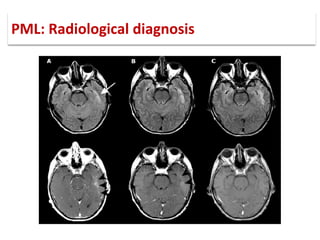
Magnetic resonance imaging evaluation of multiple sclerosis (MS) and progressive
multifocal leukoencephalopathy (PML). After receiving 55 infusions of Natalizumab
(May 2013). Axial FLAIR (A) and corresponding contrast enhanced T1W images (B)
show MS lesions in the periventricular white matter and a new area of hyperintense
FLAIR signal (white arrow) and faint enhancement (black arrow) in the left parietal
subcortical white matter.
PML: Radiological diagnosis
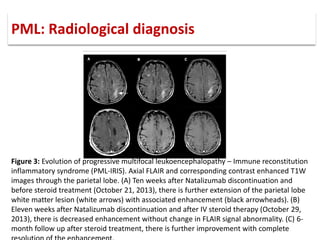
Figure 3: Evolution of progressive multifocal leukoencephalopathy – Immune reconstitution
inflammatory syndrome (PML-IRIS). Axial FLAIR and corresponding contrast enhanced T1W
images through the parietal lobe. (A) Ten weeks after Natalizumab discontinuation and
before steroid treatment (October 21, 2013), there is further extension of the parietal lobe
white matter lesion (white arrows) with associated enhancement (black arrowheads). (B)
Eleven weeks after Natalizumab discontinuation and after IV steroid therapy (October 29,
2013), there is decreased enhancement without change in FLAIR signal abnormality. (C) 6-
month follow up after steroid treatment, there is further improvement with complete
Elizabeth C. Neil, and Lisa M. DeAngelis Blood Adv 2017;1:2041-2045
© 2017 by The American Society of Hematology
PML: Radiological diagnosis
Features Characteristics
Location Subcortical Location is the prime site,thereby involving U-fibers cortex and basal ganglia are
often involved; often bilatcral
Size Usually > 3cm
Borders Sharp toward the gray matter, ill defined toward the white matter
Mode of extension Lesions increase in size and new lesions appear
Mass effect No mass effect in small or large lesions
T2W images Always hyperintense
T1W images Typically hypointense ; no reversion of signal intenstiy; hyperintensity is suggestive of PML-
IRIS
FLALR Always hyperintense ; better appreciated than om T2W images
DW images Always hyperintense ; in larger lesions there is a hyperintense rim at the lesion’s edge
Perilesional Small, punctate T2-hyperintense lesions in the immediate vicinity of the main lesion are
often present
Enhancement Frequent enhancement, punctate and/or rimlike
Atrophy No atrophy in the early phase
Ann Neurol.2012 Nov;72(5):779-87. doi: 10.1002/ana.23676.
PML: Radiological diagnosis
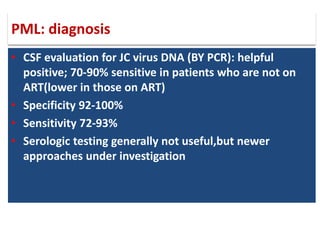
• CSF evaluation for JC virus DNA (BY PCR): helpful
positive; 70-90% sensitive in patients who are not on
ART(lower in those on ART)
• Specificity 92-100%
• Sensitivity 72-93%
• Serologic testing generally not useful,but newer
approaches under investigation
PML: diagnosis
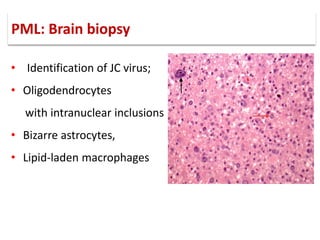
PML: Brain biopsy
• Identification of JC virus;
• Oligodendrocytes
with intranuclear inclusions
• Bizarre astrocytes,
• Lipid-laden macrophages
Berger et al. 2013
Features indicative of
MS PML
Onset Acute Sub-acute
Evolution • Over hours to days
• Normally stabilise
• Resolve spontaneously
even without therapy
• Over weeks
• progressive
Clinical
Presentation
• Diplopia
• Paraesthesia
• Paraparesis
• Optic neuritis
• myelopathy
• Aphasia
• Behavioural or cognitive
changes and neuropsychological
alteration
• Retrochiasmal visual deficits
• Hemiparesis
• Seizures
• Ataxia (for GCN)
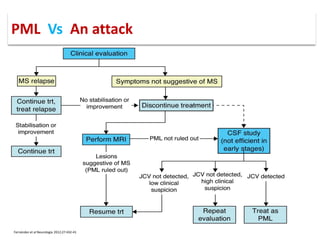
PML Vs An attack
Fernández et al Neurologia 2012;27:432-41
PML Vs An attack
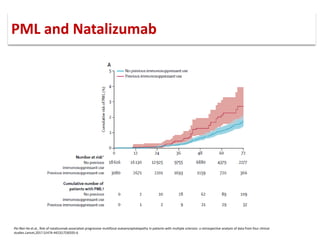
Pei-Ran Ho et al., Risk of natalizumab-associated progressive multifocal eukoencephalopathy in patients with multiple sclerosis: a retrospective analysis of data from four clinical
studies.Lancet,2017.S1474-4422(17)30335-6
PML and Natalizumab
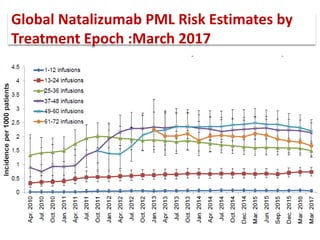
Global Natalizumab PML Risk Estimates by
Treatment Epoch :March 2017
As of November 30, 2017, the global overall incidence of
PML in natalizumab-treated patients is: 4.19 per 1000
patients (95% CI 3.89 to 4.49 per 1000 patients).
As of December 7, 2017 there have been 756 confirmed
PML cases (753 MS, 3 CD), (205 US, 480 EEA, 71 ROW)
76.5% of patients were alive with varying levels of disability*
As of December 7, 2017, the duration of natalizumab
dosing prior to PML diagnosis ranged from 8 to 136 doses
Biogen, data on file.2017
PML and Natalizumab
PML and MS therapeutics
PML and Fingolimod
PML Cases in Patients Switching From
Natalizumab to Fingolimod
• Cases reported at ECTRIMS 2014
• Background: Now >135,800 patient-years of experience with fingolimod
accumulated; about 15–20% of patients were pre-exposed to natalizumab1
• Objective: To investigate characteristics of the PML cases under fingolimod (post
natalizumab)1
• Data from Novartis pharmacovigilance database1
• 11 reports of PML to date; most had fairly long exposure to natalizumab (2.5–6.0
years, mean 4 years, median 5 years)1,2
• 10/11 cases had PML before fingolimod start or PML occurred within 6 months
after switch to fingolimod (washout (n=4) 1–5 months, information around JCV
status not always known)
• 1 additional case; no previous exposure to natalizumab was reported as PML after 7
months of fingolimod treatment; clinical features and MRI evolution consistent with
neuromyelitis optica. Diagnosis made based on the results of CSF showing low copy
number of JCV1
• The presenter argued for vigilance for PML following natalizumab discontinuation1
1. Putzki N et al. ECTRIMS 2014. FC3.1; 2. Medscape Pharmacists. September 25, 2014.
52
PML and Fingolimod
PML and Fingolimod
PML cases with Gilenya in patient not
pre-treated with Tysabri
• 1st case reported in Feb 2015 1,2
• 49 year old male diagnosed with RRMS in 2009. Received prior treatment with Rebif which was
discontinued without initiating any other treatment, switched to Gilenya in October 2010.
Diagnosed with PML in January 2015
• No co-existing conditions reported, no concurrent treatment along with Gilenya, never received
Tysabi
• 2nd case reported in July 20153,4
• 54 year old female, developed PML after taking fingolimod for ~ 2.5 years. The patient had a
13-14 year history of MS and was previously treated with Betaferon for ~ 11 years. She also
received mesalazine for ulcerative colitis for the last 4 years
• FDA issued a warning regarding the 2 PML cases on Gilenya3
• 3rd case reported on August 17, 20154
• Patient had a history of colorectal cancer treated with chemotherapy and radiation treatment,
as well as Crohn’s disease. The role of various risk factors are currently evaluated
55
1. Novartis Press Release on Feb 16, 2015, available on http://www.novartis.com/newsroom/product-related-info-center/gilenya-safety-update.shtml 2.
https://beta.mssociety.ca/research-news/article/case-of-pml-reported-in-patient-treated-with-gilenya (accessed Aug 24, 2015). 3.
www.fda.gov/Drugs/DrugSafety/ucm456919.htm (accessed Aug 24, 2015) 4. www.medscape.com/viewarticle/849015.
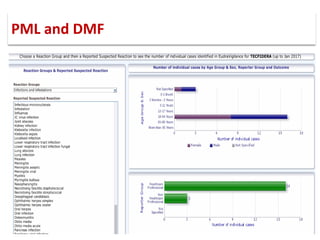
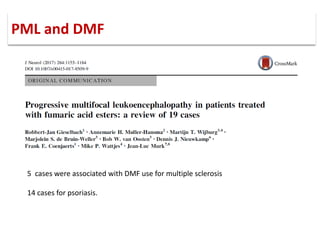
PML and DMF
5 cases were associated with DMF use for multiple sclerosis
14 cases for psoriasis.
PML and DMF
PML cases with dimethyl fumarate
1. Rosenkranz et al New Engl. J Med 2015; 372: 1476-1478. 2.http://www.bfarm.de/SharedDocs/Risikoinformationen/Pharmakovigilanz/DE/RI/2015/RI-dimethylfumarat.html Accessed July
21, 2015. 3. http://www.medpagetoday.com/Neurology/MultipleSclerosis/52622?isalert=1&uun=g274661d4296R5269425u&xid=NL_breakingnews_2015-07-16, accessed July 21, 2015 4.
Nieuwkamp, e al New Engl. J Med 2015; 372: 1474-1476, 5. Philipp et al 2013 et al, Eur. J Dermatol 2013; 23(3): 339-43 6. Spencer et al, Neurol Neuroimmunol Neuroinflamm 2015;2:e76
• Case 11 : Female, 4.5 years on DMF (participated in the DEFINE trial)
• 3.5 years having severe lymphopenia (start 12 month after tx initiation, lymphocyte count, 290 to 580 cells per mm3).
Died from complications of pneumonia.
• On April 7, 2015, the German authorities mentioned 2 PML cases with Tecfidera (+ 9 with Fumaderm) but no
details provided2
• On July 17, 2015, also Biogen confirmed a 2nd PML case with Tecfidera, (likewise no details provided)3
• Role of lymphopenia
• About 2% of patients treated with DMF
develop lymphopenia < 500 cells per mm3)1
• Monitoring of lymphocyte recommended
to prevent severe opportunistic infections4*
• In April 2015, Nieuwkamp et al published
a PML case with (compounded) DMF
for the tx of psoriasis. This patients had no
major lymphopenia (nadir 792 cells per mm3)
and no other immunosuppressive
therapies4
*Researchers increasingly recommend to determine
besides the commonly-used differential blood counts
also lymphocyte subsets (mainly CD4+ and CD8+
Tcells)5,6Depletion of CD8+ T cells seems to be
more pronounced than that of CD4+T cells.6
58
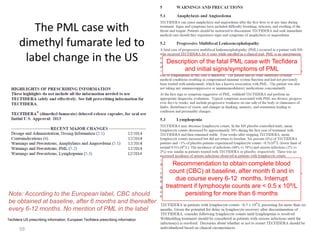
The PML case with
dimethyl fumarate led to
label change in the US
59
Description of the fatal PML case with Tecfidera
and initial signs/symptoms of PML
Recommendation to obtain complete blood
count (CBC) at baseline, after month 6 and in
due course every 6-12 months. Interrupt
treatment if lymphocyte counts are < 0.5 x 10⁹/L
persisting for more than 6 months
Note: According to the European label, CBC should
be obtained at baseline, after 6 months and thereafter
every 6-12 months. No mention of PML in the label
Tecfidera US prescribing information, European Tecfidera prescribing information
PML and Teriflunomide
• A single fatal case
• Reported in a patient who switched from natalizumab
to alemtuzumab.
• however, retrospective analysis of the MRI data
showed that the onset of PML predated alemtuzumab
treatment and, therefore, was attributed to
natalizumab treatment
Thomas Berger et al., Alemtuzumab Use in Clinical Practice: Recommendations from European Multiple Sclerosis Experts.CNS Drugs. 2017; 31(1): 33–50.
PML and Alemtuzumab
PML and Ocrelizumab
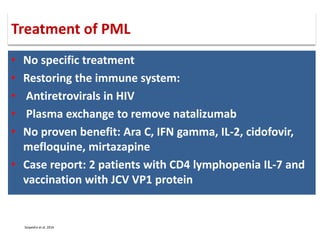
• No specific treatment
• Restoring the immune system:
• Antiretrovirals in HIV
• Plasma exchange to remove natalizumab
• No proven benefit: Ara C, IFN gamma, IL-2, cidofovir,
mefloquine, mirtazapine
• Case report: 2 patients with CD4 lymphopenia IL-7 and
vaccination with JCV VP1 protein
Sospedra et al. 2014
Treatment of PML
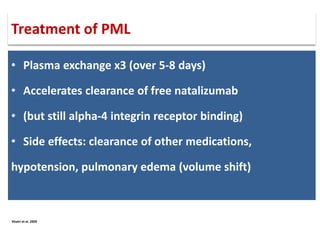
• Plasma exchange x3 (over 5-8 days)
• Accelerates clearance of free natalizumab
• (but still alpha-4 integrin receptor binding)
• Side effects: clearance of other medications,
hypotension, pulmonary edema (volume shift)
Khatri et al. 2009
Treatment of PML
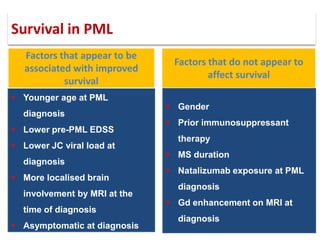
▪ Younger age at PML
diagnosis
▪ Lower pre-PML EDSS
▪ Lower JC viral load at
diagnosis
▪ More localised brain
involvement by MRI at the
time of diagnosis
▪ Asymptomatic at diagnosis
Factors that appear to be
associated with improved
survival
Factors that do not appear to
affect survival
▪ Gender
▪ Prior immunosuppressant
therapy
▪ MS duration
▪ Natalizumab exposure at PML
diagnosis
▪ Gd enhancement on MRI at
diagnosis
Survival in PML
• Clinical worsening due to improvement of immune
function rapid worsening.
• Neurological symptoms, fever, seizure.
• In most patients with natalizumab (up to 90%).
• 3-6 weeks after antiretrovirals or plasma exchange.
Immune Reconstitution Syndrome (IRIS)
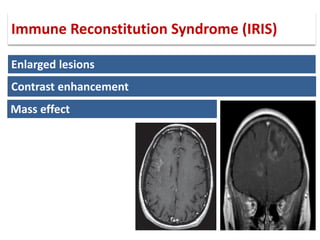
Enlarged lesions
Contrast enhancement
Mass effect
Immune Reconstitution Syndrome (IRIS)
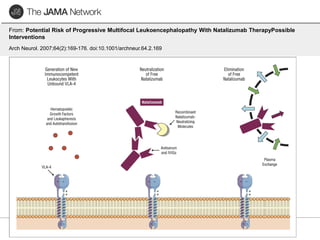
Copyright © 2007 American Medical
Association. All rights reserved.
From: Potential Risk of Progressive Multifocal Leukoencephalopathy With Natalizumab TherapyPossible
Interventions
Arch Neurol. 2007;64(2):169-176. doi:10.1001/archneur.64.2.169
THANK YOU
amrhasanneuro@kasralainy.edu.eg

Progressive multifocal leukoencephalopathy (PML)

  • 1.
    Amr Hassan, MD,FEBN Professorof Neurology Cairo University - Egypt Progressive multifocal leukoencephalopathy (PML)
  • 2.
    ▪ John Cunninghamvirus (JCV) is a double-stranded DNA polyomavirus. ▪ Takes its name from the initials of the patient from whom it was first isolated. ▪ PML was initially described in patients with underlying B-cell lymphoproliferative disorders [1] JC virus
  • 3.
  • 4.
  • 5.
    JCPyV and thedevelopment of PML
  • 6.
    JCPyV and thedevelopment of PML
  • 7.
    JCPyV and thedevelopment of PML
  • 15.
    ▪ 50-90% ofadults have been exposed to this virus ▪ 19-27% of these people shedding JCV in their urine.[5,7-10] ▪ Acquisition of this virus is not associated with a clinical syndrome.[9] ▪ Opportunistic infection, caused by the polyoma virus JC virus ▪ Characterized by focal demyelination in the CNS ▪ Worldwide distribution, seroprevalence of 39-69% in adults ▪ Primary infection usually in childhood ▪ No recognized acute JC virus infection ▪ Likely asymptomatic chronic carrier state PML: epidemiology
  • 16.
    In a largereview spanning the 30 years from 1958 to 1984, only 230 cases were identified, with only 69 being confirmed pathologically. PML: epidemiology
  • 17.
  • 19.
    • B-cell malignancies •Other myeloproliferative diseases, • Carcinomas • Congenital immune deficiencies • Organ transplantation • Granulomatous, inflammatory,or other immune- mediated conditions. • 3-7% of persons with AIDS Conditions associated with PML
  • 20.
    – Adenosine deaminasedeficiency – CD40 ligand deficiency – Comimmune deficiency bined – Common variable immune deficiency – DOCK8 (dedicator of cytokinesis 8 protein) deficiency – Gamma heavy chain disease – Hyper-IgM syndrome – Immunodeficiency-centromeric instability-facial dysmorphism syndrome syndrome –Purine nucleoside phosphorylase deficiency – Severe combined immune deficiency – Signal transducer and activator of transcription 1 gain-of-function immune deficiency – Wiskott-Aldrich syndrome – X-linked agammaglobulinaemia – Idiopathic CD4+ lymphopenia* Zerbe CS, Marciano BE, Katial RK, Santos CB, Adamo N, Hsu AP, et al.Progressive Multifocal Leukoencephalopathy in Primary Immune Deficiencies: Stat1 Gain of Function and Review of the Literature. Clin Infect Dis. 2016;62(8):986–94. Hereditary immune deficiencies linked to PML
  • 21.
    – Human immunodefiencyinfection or acquired immune deficiency syndrome – Haematopietic stem cell transplantation – Immunosuppressive therapy in organ transplant recipients – Haematological malignancies (e.g. lymphomas and leukaemias) – Immunosuppression during chemotherapy of solid cancers – Systemic lupus erythematosus – Sarcoidosis – Immunosuppressive or -modulatory therapy in autoimmune diseases (rheumatoid arthritis, psoriatic arthritis, psoriasis, juvenile idiopathic arthritis, inflammatory bowel disease, ankylosing spondylitis, multiple sclerosis) Brew BJ, Davies NW, Cinque P, Clifford DB, Nath A. Progressive multifocal leukoencephalopathy and other forms of JC virus disease. Nat Rev Neurol. 2010;6(12):667–79. Amend KL, Turnbull B, Foskett N, Napalkov P, Kurth T, Seeger J. Incidence of progressive multifocal leukoencephalopathy in patients without HIV. Neurology. 2010;75(15):1326–32. doi Acquired immune deficiencies linked to PML
  • 22.
    Organ Transplant: Heart, lung,kidney 1/1000 HIV AIDS-defining 1/100 without HART 6/10.000 with HAART Bone marrow Transplant 3.5/10.000 per year Hematologic Malignancies 8.3/100.000 per year In lymphoma Immunomodulatory Treatments (e.g.in MS) Rheumatologic Conditions 1/100.000 per year Conditions associated with PML
  • 23.
    – Natalizumab – Efalizumab –Belimumab – Rituximab – Fingolimod – Dimethylfumarate – Alemtuzumab – Tumour necrosis factor-alpha inhibitors (infliximab, adalimumab, etanercept) – Ofatumumab – Mycophenolate mofetil – Betalacept – Brentuximab – Fludarabine – Ruxolitinib – Leflunomide Major EO. Progressive multifocal leukoencephalopathy in patients on immunomodulatory therapies. Annu Rev Med. 2010;61(1):35–47. Brew BJ, Davies NW, Cinque P, Clifford DB, Nath A. Progressive multifocal leukoencephalopathy and other forms of JC virus disease. Nat Rev Neurol. 2010;6(12):667–79. Zaheer F, Berger JR. Treatment-related progressive multifocal leukoencephalopathy: current understanding and future steps. Ther Adv Drug Saf. 2012;3(5):227–39. Berger JR. Classifying PML risk with disease modifying therapies. Mult Scler Relat Disord. 2017;12:59–63. Immunomodulatory treatments linked to PML
  • 24.
    – Natalizumab – Efalizumab –Belimumab – Rituximab – Fingolimod – Dimethylfumarate – Alemtuzumab – Tumour necrosis factor-alpha inhibitors (infliximab, adalimumab, etanercept) – Ofatumumab – Mycophenolate mofetil – Betalacept – Brentuximab – Fludarabine – Ruxolitinib – Leflunomide Immunomodulatory treatments linked to PML Major EO. Progressive multifocal leukoencephalopathy in patients on immunomodulatory therapies. Annu Rev Med. 2010;61(1):35–47. Brew BJ, Davies NW, Cinque P, Clifford DB, Nath A. Progressive multifocal leukoencephalopathy and other forms of JC virus disease. Nat Rev Neurol. 2010;6(12):667–79. Zaheer F, Berger JR. Treatment-related progressive multifocal leukoencephalopathy: current understanding and future steps. Ther Adv Drug Saf. 2012;3(5):227–39. Berger JR. Classifying PML risk with disease modifying therapies. Mult Scler Relat Disord. 2017;12:59–63.
  • 25.
    Least concern : Interferonbeta, glatiramer acetate Some concern: Alemtuzumab (Lemtrada) Teriflunamide (Aubagio) Fingolimod (Gilenya) Dimethyl fumarate (Tecfidera) High concern: Natalizumab (Tysabri) Carson et al. 2009; Berger et al. 2013 Concern for PML
  • 26.
    26 • Focal neurologicdeficits, usually with insidious onset, steady progression over several weeks/months • Demyelinating lesions may involve any region of the brain – Common: occipital lobes (hemianopsia), frontal and parietal lobes (aphasia, hemiparesis, hemisensory deficits), cerebellar peduncles and deep white matter (dysmetria, ataxia) – Spinal cord involvement is rare PML: Clinical Manifestations
  • 27.
    27 • Headache andfever not characteristic (except in severe IRIS) • Seizures in 20% • Cognitive dysfunction may occur but diffuse encephalopathy or dementia is rare PML: Clinical Manifestations
  • 28.
    PML: Radiological diagnosis Anearly progressive multifocal leukoencephalopathy (PML) patient within 6 days of PML diagnosis with a large (A) T2-hyperintense and (B) fluid- attenuated inversion recovery–hyperintense lesion in the right frontal lobe. The lesion was (C) T1 hypointense and (D) diffusion-weighted imaging hyperintense, with sharp scalloped borders toward the gray matter and illdefined borders toward the white matter.
  • 29.
  • 30.
    30 PML, CT scanPML, MRI scan PML: Radiological diagnosis CT scan: single or multiple hypodense, nonenhancing white matter lesions
  • 31.
    PML: Radiological diagnosis Progressivemultifocal leukoencephalopathy (PML) radiographically. (a) Typical lesion of PML as a T2 hyperintensity involving large portion of 1 hemisphere. (b) T2 fluid-attenuated inversion recovery image demonstrating hyperintensity in the bilateral cerebellum consistent with PML
  • 32.
    PML: Radiological diagnosis Contrastenhancement in 10-15% but usually sparse, IRIS PMN may have different appearance An early progressive multifocal leukoencephalopathy (PML) patient who developed PML-immune reconstitution inflammatory syndrome (IRIS). At the time of PML diagnosis, this patient had (A) a diffuse T2-hyperintense lesion in the right frontal lobe and (B, arrows) multiple punctate T2 lesions in the vicinity of the main lesion. The lesion was (C) T1 hypointense and (D) DWI hyperintense. (E) The lesion had increased in size by the IRIS phase, which was 37 days after the first scan, and (F) exhibited contrast enhancement on T1-weighted (T1W) imaging. (G) Ten days later, there was a T1-hyperintense rim around the lesion on precontrast T1W imaging, which (H) did not enhance postcontrast, although punctate enhancement was seen in the contralateral hemisphere.
  • 33.
    PML: Radiological diagnosis Diffusion-weightedimaging and MR spectroscopy may give additional diagnositic information FIGURE 3: (A) In this early progressive multifocal leukoencephalopathy (PML) patient, PML was difficult to distinguish from the confluent lesion burden on the fluid-attenuated inversion recovery (FLAIR) image. (B) However, the hyperintensity in diffusion- weighted imaging identified new areas of abnormality. A further magnetic resonance examination 6 days later showed (C) an increase in size of the right frontal lesion on FLAIR with (D) T1 hypointensity.
  • 34.
    PML: Radiological diagnosis FIGURE4: A patient with an early progressive multifocal leukoencephalopathy lesion filling a segment of the precentral gyrus. The lesion was (A) T2 hyperintense, (B) hyperintense on diffusion- weighted imaging, and (C–E) more readily seen on fluid-attenuated inversion recovery (FLAIR). (A, C) Punctate T2-/FLAIR-hyperintense lesions were seen in the vicinity of the main lesion. (D) The lesion increased in size during the IRIS phase (D; 51 days after the first scan) and (E) the post- IRIS phase (85 days after the first scan). No enhancement was noted at any stage.
  • 35.
    PML: Radiological diagnosis FIGURE5: An early progressive multifocal leukoencephalopathy (PML) patient, 9 days prior to PML diagnosis, shows (A) an unusual cluster of punctate T2- hyperintense lesions, many of which (B) were enhanced with contrast on T1-weighted (T1W) imaging and were diffusion- weighted imaging (DWI) hyperintense. (D) The lesions became confluent on a T2- weighted followup scan 30 days later. (E) There was no contrast enhancement on T1W imaging, but (F) the cluster remained hyperintense on DWI.
  • 36.
    From: Natalizumab-Associated ProgressiveMultifocal Leukoencephalopathy in a Patient With Multiple Sclerosis: A Postmortem Study J Neuropathol Exp Neurol. 2013;72(11):1043-1051. doi:10.1097/NEN.0000000000000005 J Neuropathol Exp Neurol | © 2013, by the American Association of Neuropathologists, Inc. PML: Radiological diagnosis
  • 37.
    PML: Radiological diagnosis Magneticresonance imaging evaluation of multiple sclerosis (MS) and progressive multifocal leukoencephalopathy (PML). After receiving 55 infusions of Natalizumab (May 2013). Axial FLAIR (A) and corresponding contrast enhanced T1W images (B) show MS lesions in the periventricular white matter and a new area of hyperintense FLAIR signal (white arrow) and faint enhancement (black arrow) in the left parietal subcortical white matter.
  • 38.
  • 39.
    PML: Radiological diagnosis Figure3: Evolution of progressive multifocal leukoencephalopathy – Immune reconstitution inflammatory syndrome (PML-IRIS). Axial FLAIR and corresponding contrast enhanced T1W images through the parietal lobe. (A) Ten weeks after Natalizumab discontinuation and before steroid treatment (October 21, 2013), there is further extension of the parietal lobe white matter lesion (white arrows) with associated enhancement (black arrowheads). (B) Eleven weeks after Natalizumab discontinuation and after IV steroid therapy (October 29, 2013), there is decreased enhancement without change in FLAIR signal abnormality. (C) 6- month follow up after steroid treatment, there is further improvement with complete
  • 40.
    Elizabeth C. Neil,and Lisa M. DeAngelis Blood Adv 2017;1:2041-2045 © 2017 by The American Society of Hematology PML: Radiological diagnosis
  • 41.
    Features Characteristics Location SubcorticalLocation is the prime site,thereby involving U-fibers cortex and basal ganglia are often involved; often bilatcral Size Usually > 3cm Borders Sharp toward the gray matter, ill defined toward the white matter Mode of extension Lesions increase in size and new lesions appear Mass effect No mass effect in small or large lesions T2W images Always hyperintense T1W images Typically hypointense ; no reversion of signal intenstiy; hyperintensity is suggestive of PML- IRIS FLALR Always hyperintense ; better appreciated than om T2W images DW images Always hyperintense ; in larger lesions there is a hyperintense rim at the lesion’s edge Perilesional Small, punctate T2-hyperintense lesions in the immediate vicinity of the main lesion are often present Enhancement Frequent enhancement, punctate and/or rimlike Atrophy No atrophy in the early phase Ann Neurol.2012 Nov;72(5):779-87. doi: 10.1002/ana.23676. PML: Radiological diagnosis
  • 42.
    • CSF evaluationfor JC virus DNA (BY PCR): helpful positive; 70-90% sensitive in patients who are not on ART(lower in those on ART) • Specificity 92-100% • Sensitivity 72-93% • Serologic testing generally not useful,but newer approaches under investigation PML: diagnosis
  • 43.
    PML: Brain biopsy •Identification of JC virus; • Oligodendrocytes with intranuclear inclusions • Bizarre astrocytes, • Lipid-laden macrophages
  • 44.
  • 45.
    Features indicative of MSPML Onset Acute Sub-acute Evolution • Over hours to days • Normally stabilise • Resolve spontaneously even without therapy • Over weeks • progressive Clinical Presentation • Diplopia • Paraesthesia • Paraparesis • Optic neuritis • myelopathy • Aphasia • Behavioural or cognitive changes and neuropsychological alteration • Retrochiasmal visual deficits • Hemiparesis • Seizures • Ataxia (for GCN) PML Vs An attack
  • 46.
    Fernández et alNeurologia 2012;27:432-41 PML Vs An attack
  • 47.
    Pei-Ran Ho etal., Risk of natalizumab-associated progressive multifocal eukoencephalopathy in patients with multiple sclerosis: a retrospective analysis of data from four clinical studies.Lancet,2017.S1474-4422(17)30335-6 PML and Natalizumab
  • 48.
    Global Natalizumab PMLRisk Estimates by Treatment Epoch :March 2017
  • 49.
    As of November30, 2017, the global overall incidence of PML in natalizumab-treated patients is: 4.19 per 1000 patients (95% CI 3.89 to 4.49 per 1000 patients). As of December 7, 2017 there have been 756 confirmed PML cases (753 MS, 3 CD), (205 US, 480 EEA, 71 ROW) 76.5% of patients were alive with varying levels of disability* As of December 7, 2017, the duration of natalizumab dosing prior to PML diagnosis ranged from 8 to 136 doses Biogen, data on file.2017 PML and Natalizumab
  • 50.
    PML and MStherapeutics
  • 51.
  • 52.
    PML Cases inPatients Switching From Natalizumab to Fingolimod • Cases reported at ECTRIMS 2014 • Background: Now >135,800 patient-years of experience with fingolimod accumulated; about 15–20% of patients were pre-exposed to natalizumab1 • Objective: To investigate characteristics of the PML cases under fingolimod (post natalizumab)1 • Data from Novartis pharmacovigilance database1 • 11 reports of PML to date; most had fairly long exposure to natalizumab (2.5–6.0 years, mean 4 years, median 5 years)1,2 • 10/11 cases had PML before fingolimod start or PML occurred within 6 months after switch to fingolimod (washout (n=4) 1–5 months, information around JCV status not always known) • 1 additional case; no previous exposure to natalizumab was reported as PML after 7 months of fingolimod treatment; clinical features and MRI evolution consistent with neuromyelitis optica. Diagnosis made based on the results of CSF showing low copy number of JCV1 • The presenter argued for vigilance for PML following natalizumab discontinuation1 1. Putzki N et al. ECTRIMS 2014. FC3.1; 2. Medscape Pharmacists. September 25, 2014. 52
  • 53.
  • 54.
  • 55.
    PML cases withGilenya in patient not pre-treated with Tysabri • 1st case reported in Feb 2015 1,2 • 49 year old male diagnosed with RRMS in 2009. Received prior treatment with Rebif which was discontinued without initiating any other treatment, switched to Gilenya in October 2010. Diagnosed with PML in January 2015 • No co-existing conditions reported, no concurrent treatment along with Gilenya, never received Tysabi • 2nd case reported in July 20153,4 • 54 year old female, developed PML after taking fingolimod for ~ 2.5 years. The patient had a 13-14 year history of MS and was previously treated with Betaferon for ~ 11 years. She also received mesalazine for ulcerative colitis for the last 4 years • FDA issued a warning regarding the 2 PML cases on Gilenya3 • 3rd case reported on August 17, 20154 • Patient had a history of colorectal cancer treated with chemotherapy and radiation treatment, as well as Crohn’s disease. The role of various risk factors are currently evaluated 55 1. Novartis Press Release on Feb 16, 2015, available on http://www.novartis.com/newsroom/product-related-info-center/gilenya-safety-update.shtml 2. https://beta.mssociety.ca/research-news/article/case-of-pml-reported-in-patient-treated-with-gilenya (accessed Aug 24, 2015). 3. www.fda.gov/Drugs/DrugSafety/ucm456919.htm (accessed Aug 24, 2015) 4. www.medscape.com/viewarticle/849015.
  • 56.
  • 57.
    5 cases wereassociated with DMF use for multiple sclerosis 14 cases for psoriasis. PML and DMF
  • 58.
    PML cases withdimethyl fumarate 1. Rosenkranz et al New Engl. J Med 2015; 372: 1476-1478. 2.http://www.bfarm.de/SharedDocs/Risikoinformationen/Pharmakovigilanz/DE/RI/2015/RI-dimethylfumarat.html Accessed July 21, 2015. 3. http://www.medpagetoday.com/Neurology/MultipleSclerosis/52622?isalert=1&uun=g274661d4296R5269425u&xid=NL_breakingnews_2015-07-16, accessed July 21, 2015 4. Nieuwkamp, e al New Engl. J Med 2015; 372: 1474-1476, 5. Philipp et al 2013 et al, Eur. J Dermatol 2013; 23(3): 339-43 6. Spencer et al, Neurol Neuroimmunol Neuroinflamm 2015;2:e76 • Case 11 : Female, 4.5 years on DMF (participated in the DEFINE trial) • 3.5 years having severe lymphopenia (start 12 month after tx initiation, lymphocyte count, 290 to 580 cells per mm3). Died from complications of pneumonia. • On April 7, 2015, the German authorities mentioned 2 PML cases with Tecfidera (+ 9 with Fumaderm) but no details provided2 • On July 17, 2015, also Biogen confirmed a 2nd PML case with Tecfidera, (likewise no details provided)3 • Role of lymphopenia • About 2% of patients treated with DMF develop lymphopenia < 500 cells per mm3)1 • Monitoring of lymphocyte recommended to prevent severe opportunistic infections4* • In April 2015, Nieuwkamp et al published a PML case with (compounded) DMF for the tx of psoriasis. This patients had no major lymphopenia (nadir 792 cells per mm3) and no other immunosuppressive therapies4 *Researchers increasingly recommend to determine besides the commonly-used differential blood counts also lymphocyte subsets (mainly CD4+ and CD8+ Tcells)5,6Depletion of CD8+ T cells seems to be more pronounced than that of CD4+T cells.6 58
  • 59.
    The PML casewith dimethyl fumarate led to label change in the US 59 Description of the fatal PML case with Tecfidera and initial signs/symptoms of PML Recommendation to obtain complete blood count (CBC) at baseline, after month 6 and in due course every 6-12 months. Interrupt treatment if lymphocyte counts are < 0.5 x 10⁹/L persisting for more than 6 months Note: According to the European label, CBC should be obtained at baseline, after 6 months and thereafter every 6-12 months. No mention of PML in the label Tecfidera US prescribing information, European Tecfidera prescribing information
  • 60.
  • 61.
    • A singlefatal case • Reported in a patient who switched from natalizumab to alemtuzumab. • however, retrospective analysis of the MRI data showed that the onset of PML predated alemtuzumab treatment and, therefore, was attributed to natalizumab treatment Thomas Berger et al., Alemtuzumab Use in Clinical Practice: Recommendations from European Multiple Sclerosis Experts.CNS Drugs. 2017; 31(1): 33–50. PML and Alemtuzumab
  • 62.
  • 64.
    • No specifictreatment • Restoring the immune system: • Antiretrovirals in HIV • Plasma exchange to remove natalizumab • No proven benefit: Ara C, IFN gamma, IL-2, cidofovir, mefloquine, mirtazapine • Case report: 2 patients with CD4 lymphopenia IL-7 and vaccination with JCV VP1 protein Sospedra et al. 2014 Treatment of PML
  • 65.
    • Plasma exchangex3 (over 5-8 days) • Accelerates clearance of free natalizumab • (but still alpha-4 integrin receptor binding) • Side effects: clearance of other medications, hypotension, pulmonary edema (volume shift) Khatri et al. 2009 Treatment of PML
  • 66.
    ▪ Younger ageat PML diagnosis ▪ Lower pre-PML EDSS ▪ Lower JC viral load at diagnosis ▪ More localised brain involvement by MRI at the time of diagnosis ▪ Asymptomatic at diagnosis Factors that appear to be associated with improved survival Factors that do not appear to affect survival ▪ Gender ▪ Prior immunosuppressant therapy ▪ MS duration ▪ Natalizumab exposure at PML diagnosis ▪ Gd enhancement on MRI at diagnosis Survival in PML
  • 67.
    • Clinical worseningdue to improvement of immune function rapid worsening. • Neurological symptoms, fever, seizure. • In most patients with natalizumab (up to 90%). • 3-6 weeks after antiretrovirals or plasma exchange. Immune Reconstitution Syndrome (IRIS)
  • 68.
    Enlarged lesions Contrast enhancement Masseffect Immune Reconstitution Syndrome (IRIS)
  • 69.
    Copyright © 2007American Medical Association. All rights reserved. From: Potential Risk of Progressive Multifocal Leukoencephalopathy With Natalizumab TherapyPossible Interventions Arch Neurol. 2007;64(2):169-176. doi:10.1001/archneur.64.2.169
  • 70.