Amr Hassan MD,FEBN
Professor of Neurology- Cairo University
VAGAL NERVE STIMULATION
European
epilepsy
population
Prevalence of
epilepsy
Well
controlled
with AEDs2
70%
1.8 m DRE patients are
candidates for non-
pharmacological
interventions
~6m1
8.2/
1,0001 DRE
30%2
(1.8m)
DRE is a large potential non-pharmacological treatment
population
1. Available at: Epilepsy in the WHO European Union http://www.ibe-epilepsy.org/downloads/EURO%20Report%20160510.pdf. Accessed Jan 2018; 2. Mohanraj and Brodie. Eur J
Neurol. 2006;13:277–82.
Diet1 Vagus Nerve Stimulation
(VNS) Therapy®1
Ketogenic
Modified
Atkins
Low
glycaemic
Cranial
surgery1
Responsive
Neurostimulation
System (RNS) and
Deep Brain
Stimulation (DBS)2
Resective surgery
• Hemispherectomy
• Corpus callosotomy
• Multiple subpial transection
MRI laser ablation
Adapted from 1. Yusuf M & Al-Ghamdi SBA. Ind Res J Pharm Sci.2016;3:737–50; 2. Engel J. Neurology 2016;87:2483–9.
Non-pharmacological treatment options for DRE
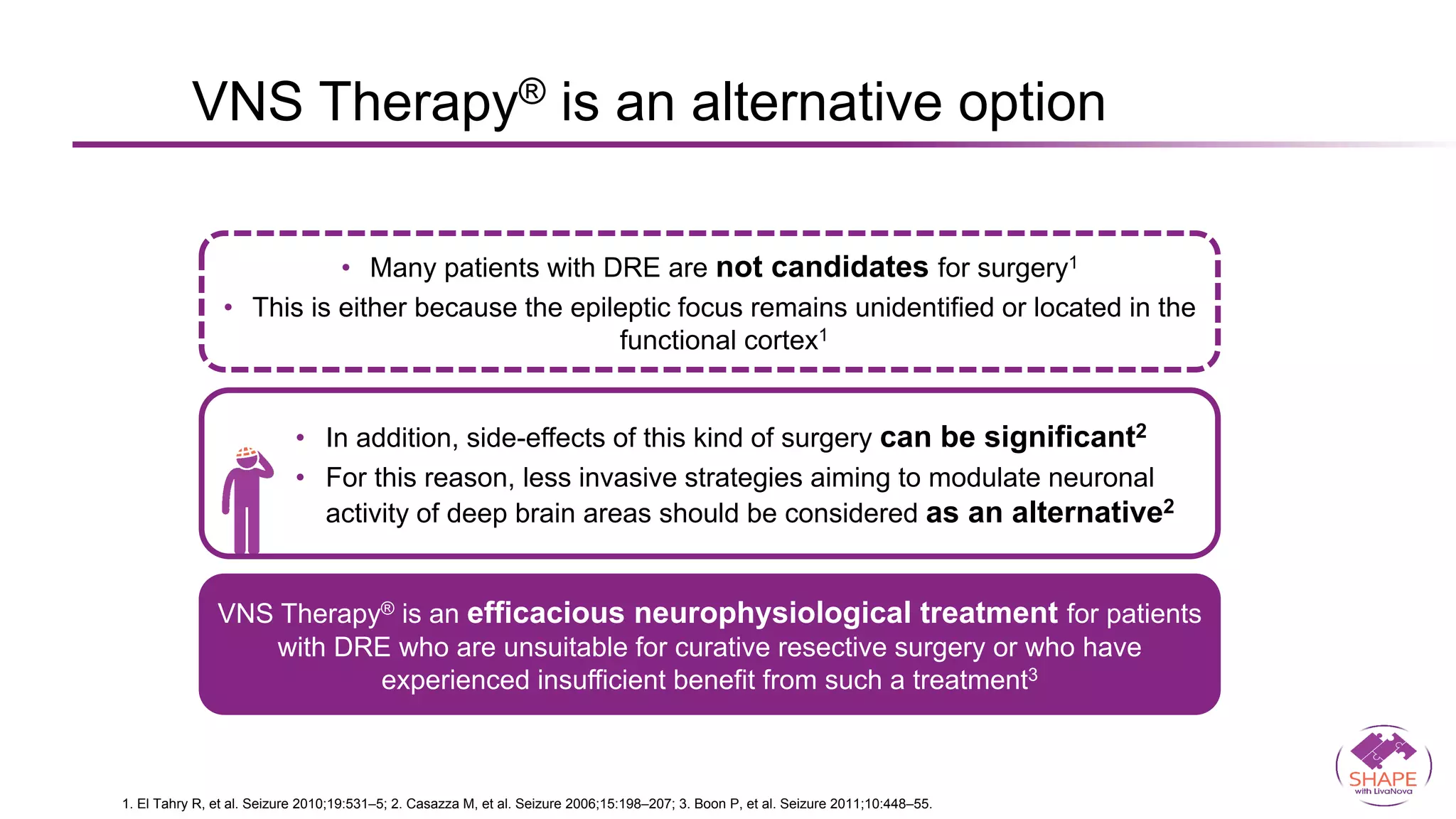
• In addition, side-effects of this kind of surgery can be significant2
• For this reason, less invasive strategies aiming to modulate neuronal
activity of deep brain areas should be considered as an alternative2
VNS Therapy® is an alternative option
• Many patients with DRE are not candidates for surgery1
• This is either because the epileptic focus remains unidentified or located in the
functional cortex1
VNS Therapy® is an efficacious neurophysiological treatment for patients
with DRE who are unsuitable for curative resective surgery or who have
experienced insufficient benefit from such a treatment3
1. El Tahry R, et al. Seizure 2010;19:531–5; 2. Casazza M, et al. Seizure 2006;15:198–207; 3. Boon P, et al. Seizure 2011;10:448–55.
…
VNS Therapy® or palliative surgery?
Mesial temporal
unilateral
Neocortical lesional
Bitemporal/bifocal
Multifocal
Idiopathic
generalised
Generalised epilepsy
(Lennox-Gastaut type)
Candidacy for epilepsy surgery1,2 Influencing factors1,3
Suitable for epilepsy
surgery
Less suitable for
epilepsy surgery*
*Patients that are not suitable for epilepsy surgery may benefit from VNS Therapy® over other palliative treatment options2,3
…
Expected extent of seizure reduction
Risk
Comorbidities
Living situation
Patient preference
1. Available from: MedScape - Outcomes of Epilepsy Surgery http://emedicine.medscape.com/article/1185416-overview. Accessed March 2018; 2. Jenssen S, et al. Seizure
2006;15:621–9; 3. 1. Ryvlin P & Rheims S. Dialogues Clin Neurosci. 2008;10:91–103.
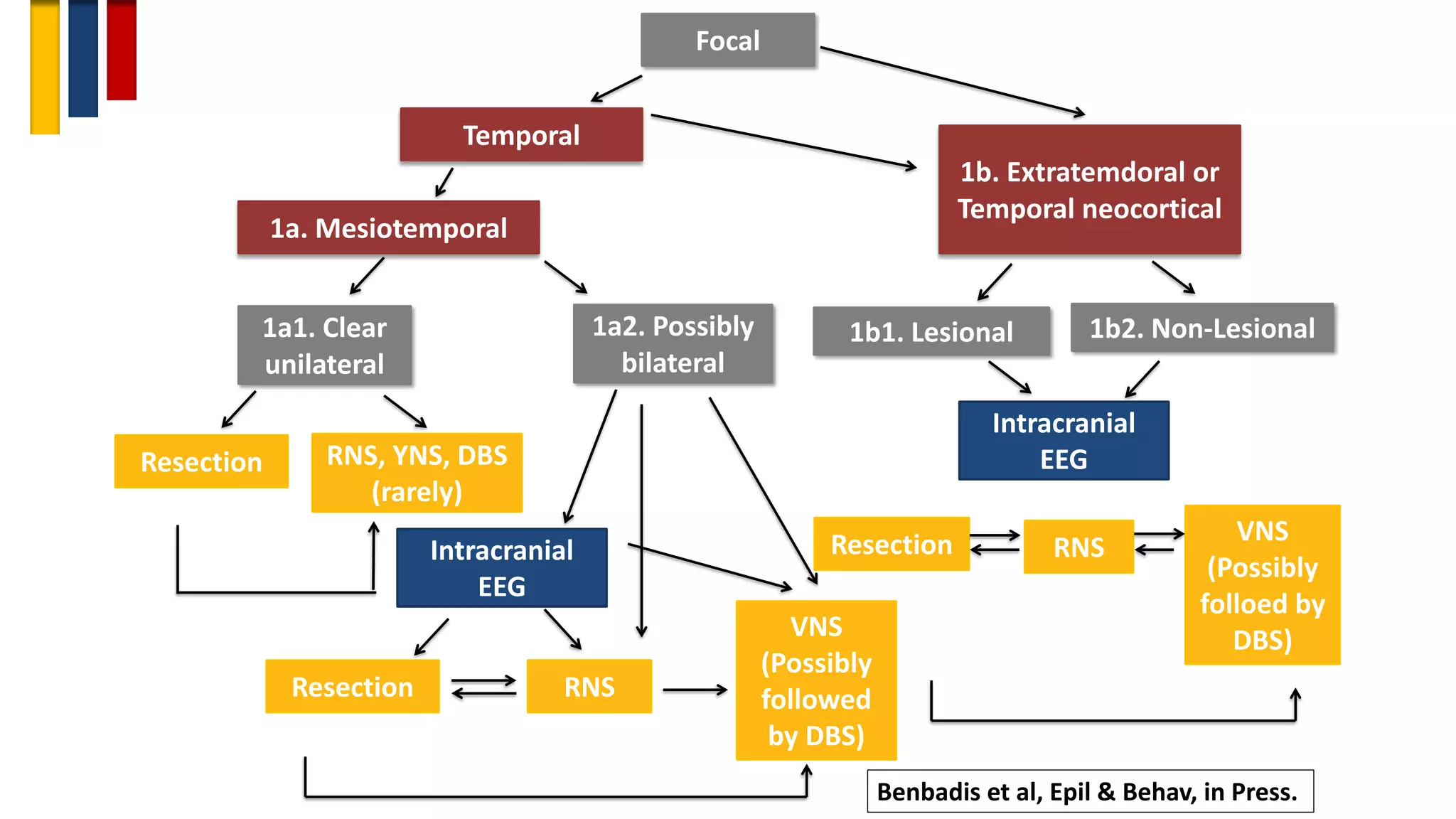
Focal
Temporal
1a. Mesiotemporal
1a1. Clear
unilateral
Resection RNS, YNS, DBS
(rarely)
1a2. Possibly
bilateral
Intracranial
EEG
Resection RNS
VNS
(Possibly
followed
by DBS)
1b. Extratemdoral or
Temporal neocortical
1b1. Lesional 1b2. Non-Lesional
Intracranial
EEG
Resection RNS
VNS
(Possibly
folloed by
DBS)
Benbadis et al, Epil & Behav, in Press.
Generalized
epilepsy
Genetic
Generalized
epilepsy
Lennox.
Gastaut type
VNS
(Possibly followed By
DBS)
VNS
(Possibly followed By
DBS)
Corpus
Callosotomy
(Partial to
complete)
Benbadis et al, Epil & Behav, in Press.
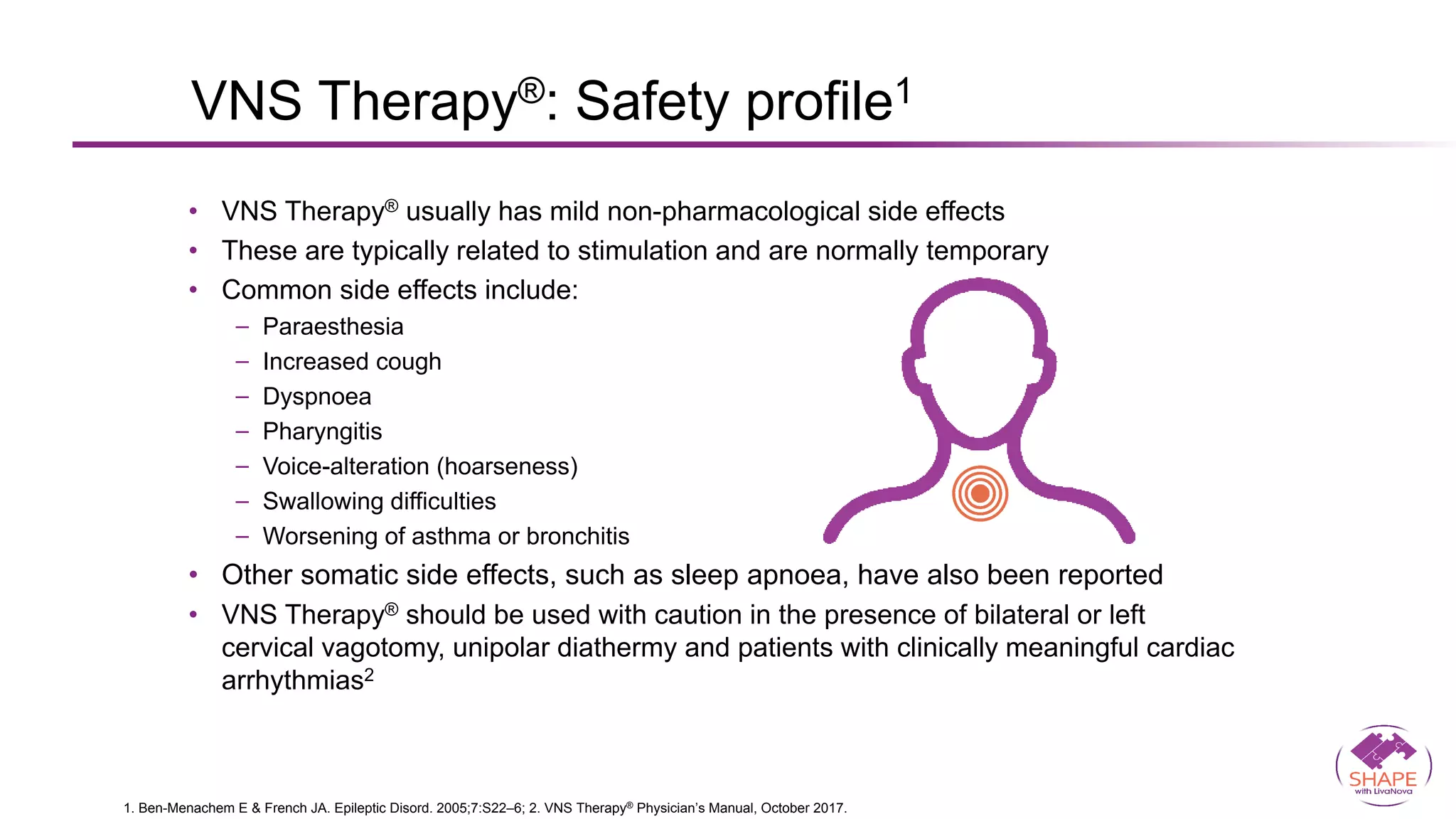
• VNS Therapy® usually has mild non-pharmacological side effects
• These are typically related to stimulation and are normally temporary
• Common side effects include:
– Paraesthesia
– Increased cough
– Dyspnoea
– Pharyngitis
– Voice-alteration (hoarseness)
– Swallowing difficulties
– Worsening of asthma or bronchitis
• Other somatic side effects, such as sleep apnoea, have also been reported
• VNS Therapy® should be used with caution in the presence of bilateral or left
cervical vagotomy, unipolar diathermy and patients with clinically meaningful cardiac
arrhythmias2
VNS Therapy®: Safety profile1
1. Ben-Menachem, E & French, JA. Epileptic Disord. 2005;7:S22–6; 2. VNS Therapy® Physician’s Manual, October 2017.
…sufficient evidence exists to rank VNS
Therapy® for epilepsy as effective and safe,*
based on a preponderance of Class 1 evidence†1
*Safe: A judgment of the acceptability of risk in a specified situation, e.g., for a given medical problem, by a provider with specified
training, at a specified type of facility
†Class 1 evidence: Provided by one or more well designed randomised, controlled clinical trials
1. Fisher RS & Handforth A. Neurol. 1999;53:666–9.
What is VNS Therapy®?
• VNS Therapy® is:
– An adjunctive therapy for partial and generalised seizures*
– Suitable for adults and children1
– Implanted in a simple, short outpatient procedure2
– Proven safety profile and efficacy3,4
– Easy to dose1
• VNS Therapy® is recommended by guidelines as an
adjunctive therapy in reducing seizure frequency in
children and adults with DRE who are not suitable for
resective surgery5
• A VNS Therapy® implant is a pulse generator that is
implanted under the skin and connected to the left
vagus nerve at the carotid sheath6
Left vagus nerve
Electrodes
*VNS Therapy® is not approved for these indications in all countries. Consult your label. VNS=Vagus Nerve Stimulation.
1. VNS Therapy System. Physicians manual. Available at: http://en.eu.livanova.cyberonics.com/healthcare-professionals/resources/product-training. Accessed March 2018;
2. Benifla M, et al. Childs Nerv Syst. 2006. DOI 10.1007/s00381-006-0123-6; 3. George R, et al. Neurology 1995;45:224–30; 4. Handforth A, et al. Neurology 1998;51:48–55; 5.
NICE Guideline CG137 Epilepsy. Available at: https://www.nice.org.uk/guidance/cg137. Accessed March 2018; 6. Edwards C, et al. Mayo Clin Proc. 2017;92;1427–44.
Pulse generator
How does VNS Therapy® work?
VNS Therapy® delivers an anti-convulsive effect via multiple pathways
Neurotransmitter
expression
Cerebral
blood flow
Changes in
EEG
Alters neurotransmitter
expression and release
Increases cerebral
blood flow3
↑ Noradrenaline1
↑ GABA2
↑ Serotonin2
↓ Aspartate2
↑ Thalamus
↑ Cortex
Desynchronises ictal
EEG patterns4
ANTI-CONVULSIVE
EFFECT
1. Roosevelt R, et al. Brain Res. 2006;124–32; 2. Ben-Menachem E, et al. Epilepsy Res. 1995;221–7; 3. Henry TR, et al. Epilepsia 2004;45:1064–70; 4. Koo BJ,
Clin Neurophysiol. 2001;434–41.
EEG=electroencephalogram, GABA=gamma-aminobutyric acid.
Glutamate
GAD
GABA
GABA-T
Succinic
semi-
aldehyde
Inhibitory
pre-synaptic
terminal
GABA
GATI
GABAA receptor
CI-
VNS Therapy®2
VNS Therapy®3
Post-synaptic neuron
GABAA receptor
At the inhibitory synapse1
Impaired GABA-mediated inhibition associated with
epilepsy suggests that GABAA receptors contribute
to the therapeutic efficacy of VNS Therapy®2
Neuronal inhibition in the brain is mediated
predominantly by the interaction of GABA with the
heteromeric GABAA receptor2
VNS Therapy® stimulation increases GABA levels
and density of GABAA receptors.2
The role of GABA in the anti-epileptic effect of VNS
Therapy® remains to be demonstrated2,3
Mechanism of action of VNS Therapy®: Inhibition
1. Adapted from Bialer M & White HS. Nat Rev Drug Disc. 2010;9:68–82; 2. Marrosu F, et al. Epilepsy Res. 2003;55:59–70; 3. Ben-Menachem E, et al. Epilepsy Res 1995;20:221–7.
Cl=chlorine, GABA-T=4-aminobutyrate transaminase, GAT=GABA transporter, GAD=glutamate decarboxylase.
Excitatory
pre-synaptic
terminal
Propagated
action potential
Voltage-gated
Na+ channel
Glutamate
α2δ subunit
of L-type Ca2+
channel
Ca2+, Na+
Na+(Ca2+)
AMPA and kainate
receptors
NMDA
receptor
Post-synaptic neuron
K+ K+
VNS Therapy®3
SV2A
Na+
Depolarisation
At the excitatory synapse1
VNS Therapy® has been shown to
decrease glutamate levels in patients with
DRE3
Glutamate plays a key role in normal
excitatory neuronal signalling2
Excess glutamate is associated with
recurrent seizures and is observed in
chronic epilepsy2
Mechanism of action of VNS Therapy®: Excitation
Adapted from 1. Bialer M & White HS. Nat Rev Drug Disc. 2010;9:68–82; 2. Barker-Haliski M & White HS. CSH Perspect Med. 2015;5:a022863;
3. Ben-Menachem E, et al. Epilepsy Res. 1995;20:221–7.
AED=anti-epileptic drug, AMPA=α-amino-3-hydroxy-5-methyl-4-isoxazolepropionic acid, Ca=calcium, Na=sodium,
NMDA=n-methyl-D-aspartate.
DRE patients
after 1 year of VNS Therapy® (n=10)
DRE patients
eligible for VNS Therapy® (n=7)
-20 0 20 40 60 80 100
GRD distribution (% change)
Seizure
frequency
reduction
GRD distribution (% change)
Seizure
frequency
reduction
-20
-5
10
25
40
55
70
85
-10 0 10 20 30
-15
-5
5
15
25
35
Changes in cortical GABAA receptor density (GRD) measured
by SPECT with the GABAA receptor agonist [123I] iomazenil
• Clinical efficacy of
VNS Therapy®
correlates with up-
regulation of GRD
in DRE
• GABAA receptor-
mediated neuronal
inhibition is
enhanced by VNS
Therapy®1
Adjunctive VNS Therapy® modulates GABAA
receptor expression1
Adapted from 1. Marrosu F, et al. Epilepsy Res. 2003;55:59–70.
SPECT=single-photon emission computed tomography
GRD : GABA receptor denisty.
VNS Therapy® reduces the inter-ictal EEG
• The inter-ictal period can be used by neurologists when diagnosing epilepsy as
an EEG trace will often show inter-ictal spiking and other abnormalities2
1. Mula M and Monaco F. Behav Neurol. 2011;24:21–5; 2. Hallböok T, et al. Seizure 2005;14:527–33; 3. Marrosu F, et al. Clin Neurophysiol. 2005;116:2026–36;
4. Koo BJ, et al. J Clin Neurophysiol. 2001;8:434–41.
VNS
Therapy®
• The power spectrum3
• Inter-hemispheric gamma band
synchronisation3
• Duration of spike-free intervals4
• Inter-ictal spikes2
• Theta synchronisation3
• Spike duration4
• Spike-and-wave activity4
Clinical evidence for VNS Therapy® in DRE
>1,000 peer-reviewed publications on VNS Therapy®
Primary focus # of articles
Effectiveness >500
Safety >150
Ease of use >30
Economics >15
Mechanism of action >250
Review articles >50
A variety of other clinical studies are currently underway in a range
of settings, including epilepsy, depression, migraine,* congestive
heart failure* and others1
There is ample evidence for the efficacy of VNS Therapy® for DRE
1. Available at: Clin Trials.gov. VNS Therapy: https://clinicaltrials.gov/ct2/results?cond=&term=vns+therapy&cntry=&state=&city=&dist. Accessed Mar 2018.
*Limited by Federal (or United States) law to investigational use. VNS Therapy is not approved or under investigation for these
indications in all countries – consult your label.
With VNS Therapy® patients experience:
Enhanced seizure
control and improved
patient outcomes
when treated early1
Sustained improvements in
seizure frequency2 and
significant reductions in seizure
severity and recovery time3–5
Significant
improvements in
quality of life
(QoL)6–8
VNS Therapy® has been shown to protect against
partial and generalised seizures
1. Renfroe BJ & Wheless JW. Neurology 2002; 59:S26–S31; 2. Elliott RE, et al. Epilepsy & Behavior 2011;20:478–83; 3. Boon P, et al. Seizure 2015;32:52–61; 4. Fisher RS, et al.
Neuromod. 2016;19:188–95; 5. Morris GL. Epilepsy & Behavior 2003;4:740–5; 6. Ryvlin P, et al. Epilepsia 2014;55:893–900; 7. Ergene E, et al. Epilepsy & Behavior 2001;2:284–7;
8. Klinkenberg S, et al. Clin Neurol Neurosurg. 2012;114:336–40; 9. Boon P, et al. Seizure 2001;10:448–55.
Improvements in
mental functioning,
mood and
behaviour9
To be updated for each country’s label
• Early treatment of DRE
patients with VNS
Therapy® has been
shown to enhance
seizure control and
improve patient
outcomes, compared
with later treatment with
VNS Therapy®
• Patients were 3x more
likely to be seizure-free
at 3 months if treated
earlier with VNS
Therapy® (p<0.001)
Early use (N=120)
25.8% 14.3%
15.0% 4.4%
p=0.001
p=<0.001
VNS Therapy® initiated within
5 years of epilepsy onset
VNS Therapy® initiated after 5 years
of epilepsy onset, mean 21 years
These patients
experienced
≥90% reduction
in seizure
frequency at
3 months
These patients
were seizure-free
at 3 months
Percentage of patients
Control (N=2,785)
Treating early is beneficial for patients with DRE1
1. Renfroe JB & Wheless JW. Neurology 2002;59:S26–S31.
• VNS Therapy® usually has mild non-pharmacological side effects
• These are typically related to stimulation and are normally temporary
• Common side effects include:
– Paraesthesia
– Increased cough
– Dyspnoea
– Pharyngitis
– Voice-alteration (hoarseness)
– Swallowing difficulties
– Worsening of asthma or bronchitis
• Other somatic side effects, such as sleep apnoea, have also been reported
• VNS Therapy® should be used with caution in the presence of bilateral or left
cervical vagotomy, unipolar diathermy and patients with clinically meaningful cardiac
arrhythmias2
VNS Therapy®: Safety profile1
1. Ben-Menachem E & French JA. Epileptic Disord. 2005;7:S22–6; 2. VNS Therapy® Physician’s Manual, October 2017.
VNS Therapy® has additional benefits
• VNS Therapy® has none of the AEs commonly associated with AEDs1
• There are no interactions between VNS Therapy®
and AEDs or other common drugs1
• VNS Therapy® side effects:2–5
- Occur mostly during stimulation2
- Decrease over time3
- Can be reduced by adjusting VNS Therapy® output parameters4
• VNS Therapy® happens automatically; adherence is not a problem5
1. VNS Therapy® Physician’s Manual, October 2017; 2. Ben-Menachem E, et al. Neurol. 1999;52:1265–7; 3. Morris GL & Mueller WM. Neurology 1999;53:1731–5; 4. Heck C, et al.
Neurology 2002;59:S31–S37; 5. Ben-Menachem E, et al. Epileptic Disord. 2005;7:S22–S26.
Summary
• VNS Therapy® involves stimulation of the vagus nerve to provide
an anti-convulsive effect in DRE1
• VNS Therapy® works in a number of ways, including:
– Altered neurotransmitter expression2,3
– ↑ cerebral blood flow4
– Altered EEG patterns5
• Effectiveness of VNS Therapy® is maintained long-term6–10 and even
increases over time,11 providing:
– ↓ Seizure frequency and severity10,12
– ↑ QoL12
– ↓ Economic burden13,14
• VNS Therapy® side effects are moderate and controllable15
1. Edwards C, et al. Mayo Clin Proc. 2017;92;1427–44; 2. Roosevelt R, et al. Brain Res. 2006;124–32; 3. Ben-Menachem E, et al. Epilepsy Res. 1995;221–7; 4. Henry TR, et al.
Epilepsia 2004;45:1064–70; 5. Koo BJ, et al. Clin Neurophysiol. 2001;434–41; 6. Labar D, et al. Seizure 2004;13:392–8; 7. Chayasirisobhon S, et al. J Neurol Neurophysiol.
2015;6:1; 8. Vonck K, et al. J Clin Neurophysiol. 2004;21:283–9; 9. De Herdt V, et al. Eur J Paediatr Neurol. 2007;11:261–9; 10. Elliott R, et al. Epilepsy Behav. 2011;20:57–63;
11. Ryvlin P, et al. Epilepsia 2014;55:893–900; 12. Orosz I, et al. Epilepsia 2014;55:1576–84; 13. Bernstein A, Barkan H, and Hess T. Epilepsy Behav. 2007;10:134–37; 14. Helmers
S, et al. Epilepsy Behav. 2011;22:370–75; 15. Ben-Menachem, E & French, JA. Epileptic Disord. 2005;7:S22–6.
LivaNova PLC, 20 Eastbourne Terrace, London, W2 6LG, UK
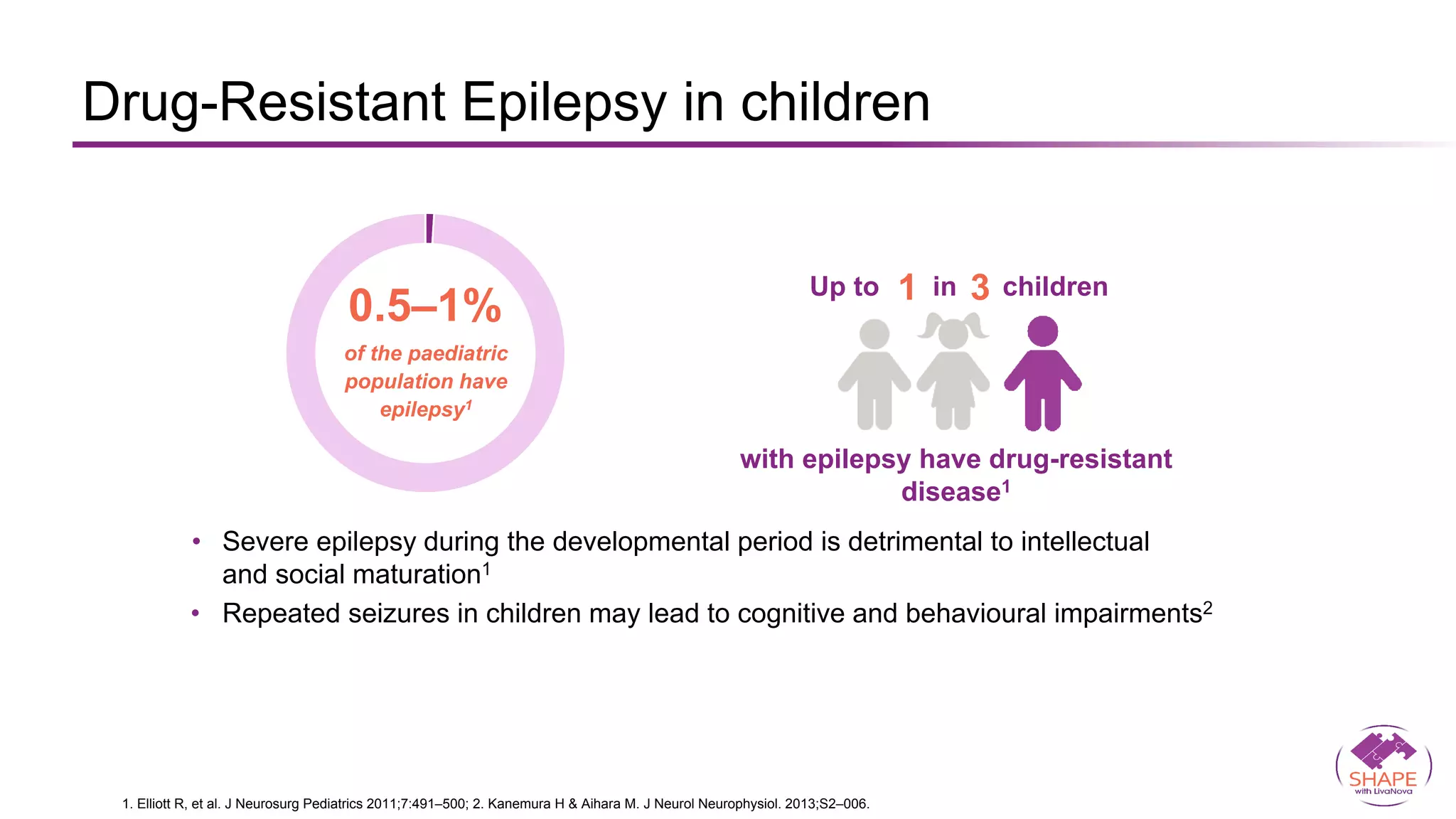
Drug-Resistant Epilepsy in children
of the paediatric
population have
epilepsy1
0.5–1%
• Severe epilepsy during the developmental period is detrimental to intellectual
and social maturation1
• Repeated seizures in children may lead to cognitive and behavioural impairments2
with epilepsy have drug-resistant
disease1
Up to in children
1 3
1. Elliott R, et al. J Neurosurg Pediatrics 2011;7:491–500; 2. Kanemura H & Aihara M. J Neurol Neurophysiol. 2013;S2–006.
Clinical evidence for paediatric VNS Therapy® in DRE
• The initial randomised studies of VNS Therapy® were time-limited (3-month follow
up) and demonstrated a 25%–30% decrease in seizure frequency2–4
• Subsequent non-blinded, non-randomised studies reported superior seizure control
and demonstrated efficacy, and acceptable safety for VNS Therapy® in children with
epilepsy5–10
1. Ben-Menachem E, et al. Euro J Neurol. 2015;22:1260–8; 2. Ben-Menachem E, et al. Epilepsia 1994;35:616–26; 3. George R, et al. Neurology 1995;45:224–30; 4. Handforth A, et al. Neurology
1998;51:48–55; 5. Ben-Menachem E, et al. Neurology 1999;52:1265–7; 6. Benifla M, et al. Childs Nerv Syst. 2006;22:1018–26; 7. Helmers SL, et al. J Child Neurol. 2001;16:843–8; 8. Murphy JV, et
al. J Pediatr. 1999;134:563–6; 9. Murphy JV, et al. Arch Pediatr Adolesc Med. 2003;157:560–4; 10. Patwardhan RV, et al. Neurosurg. 2000;47:1353–8; 11. FDA SSED for VNS. Available at:
https://www.accessdata.fda.gov/cdrh_docs/pdf/p970003s207b.pdf. Accessed March 2018.
In 1994, VNS Therapy® was approved in Europe for the
treatment of DRE1
FDA=Food and Drug Administration; VNS=vagus nerve stimulation.
RNS
DBS
VNS
No
Probably
(Limited
cvidence)
yes
Generalized or
Multifocal epilepsy
Yes
Yes
No
Invasiveness (intracranial)
Yes
No
No
Recording capbility
No
No
Yes
Indication for depression
Probably
Unknown
Yes
Positive effects on mood &
congition
No
Unknown
Yes
Children
No
Variable
Yes
MRI brain
Closed
(electrographic
Seizure)
Open
Open and
closed
(tachcardia)
Loop type
No
No
Yes
Side effect during stimulation
U.S. (FAD) only
U.S. (FDA),
Europe (CE-
mark), Canada,
Australia
All
Regulatory approval as of now
Green = advantage
Red = disadvantage Benbadis et al, Epil & Behav, in Press.
Yes (2020)
Effectiveness of VNS Therapy® by seizure type1,2
Adapted from 1. Cukiert A, et al. Seizure 2013;22:396–400; 2. Cukiert A, et al. Neuromodulation 2013;16:551–3.
42%
58%
17.9%
88%
42%
58%
9.3%
80%
75%
49%
• VNS Therapy® has shown to be effective in reducing daily frequency rates in myoclonic and
generalised tonic-clonic seizures in children with Lennox-Gastaut or Lennox-like syndromes
To be updated for each country’s label
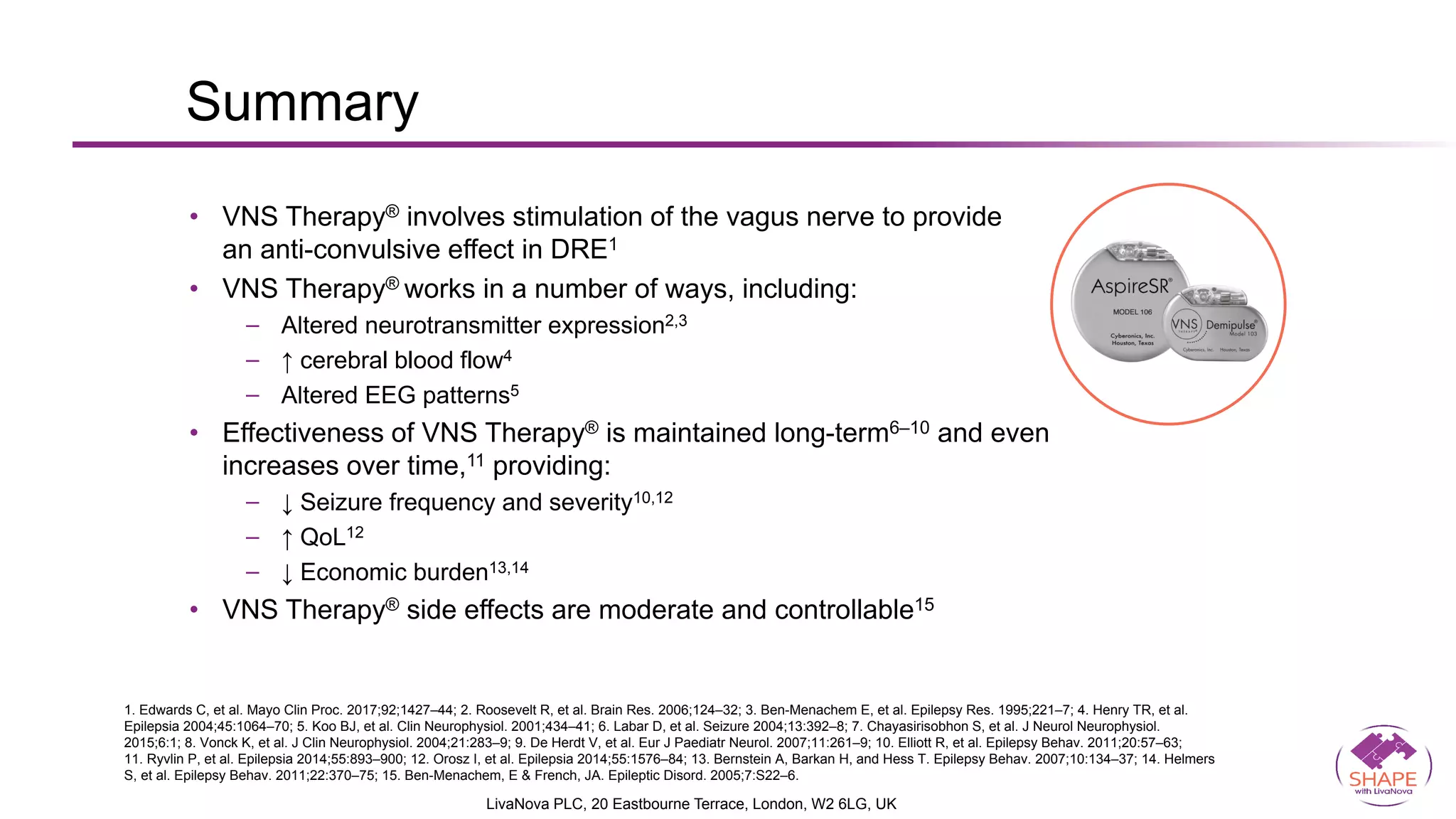
AspireSR®1
The first VNS Therapy® system that provides responsive stimulation to heart-rate increases
that may be associated with seizures
The AutoStim mode feature:
• Detects rapid heart-rate rise
• Delivers automatic stimulation
• Has customisable parameters to meet patients needs
• Works in conjunction with normal and magnet mode
1. VNS Therapy System. Physicians manual. Available at: http://en.eu.livanova.cyberonics.com/healthcare-professionals/resources/product-training. Accessed May 2018
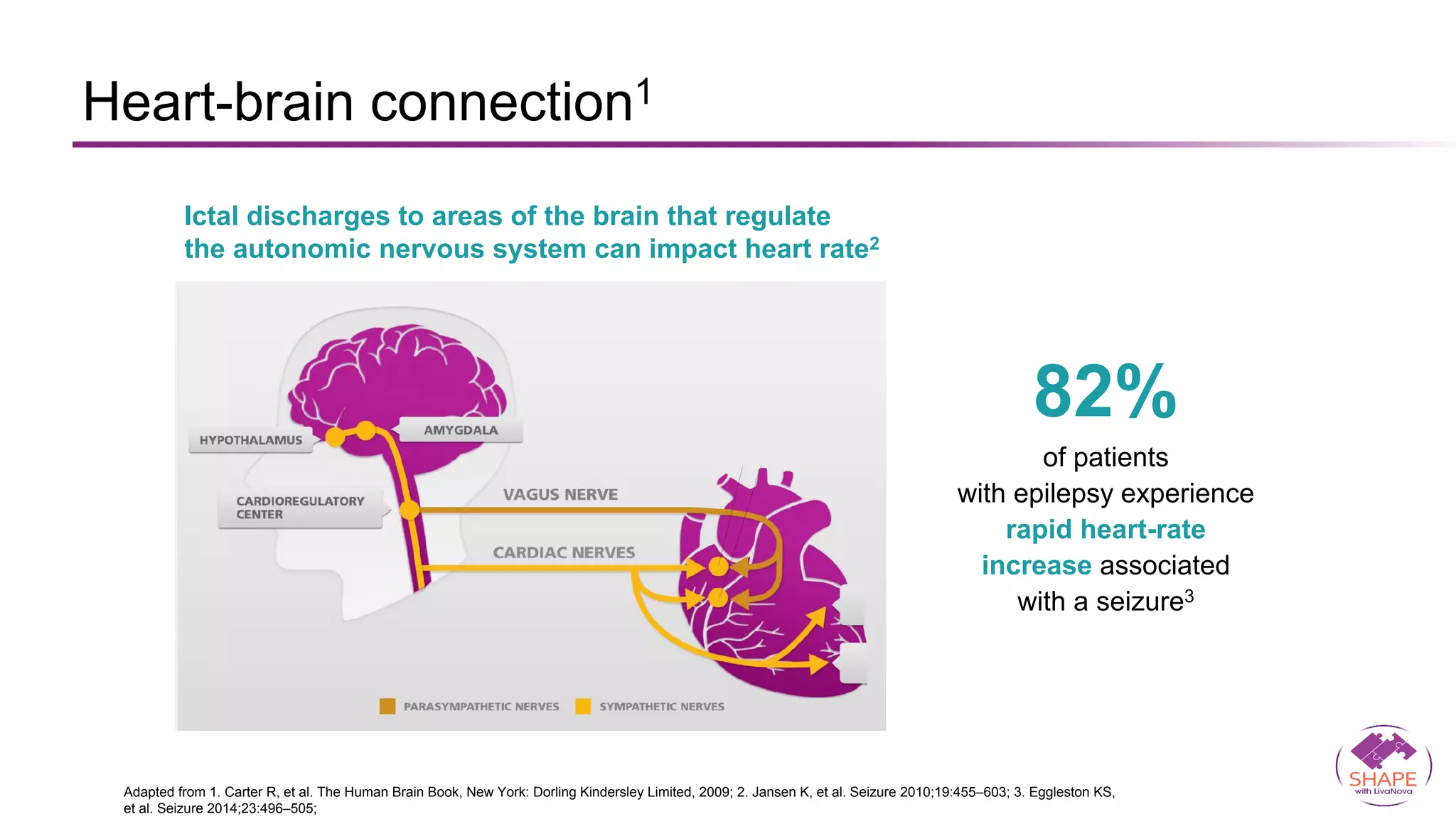
Heart-brain connection1
82%
of patients
with epilepsy experience
rapid heart-rate
increase associated
with a seizure3
Ictal discharges to areas of the brain that regulate
the autonomic nervous system can impact heart rate2
Adapted from 1. Carter R, et al. The Human Brain Book, New York: Dorling Kindersley Limited, 2009; 2. Jansen K, et al. Seizure 2010;19:455–603; 3. Eggleston KS,
et al. Seizure 2014;23:496–505;
More than 60%
of seizures treated with
Automatic Stimulation ended
during the course
of stimulation
(28/46 treated seizures)
Results: Seizure cessation
1. Data on file. LivaNova. E-36/E-37 Integrated Clinical Study Report.
Earlier stimulation correlated with shorter seizures1
R² = 0.69
0
30
60
90
120
-60 -30 0 30 60 90 120
Stimulation latency (seconds)-relative to ictal onset
N=28 seizures
ended during
stimulation, from
14 patients
Seizure
duration
(seconds)
Ictal
EEG
Onset
Earlier stimulation
Shorter seizure
Earlier
stimulation
Shorter
seizures
1. Bialer M, et al Epilepsy Research 2017;130:27–36.
Optimising AspireSR® settings
The Threshold determines the % heart-rate increase that will trigger
AutoStim (20–70%), thereby also influencing detection latency
26 sec detection latency
5 sec
20.5 sec
21 sec
16 sec
11 sec
Reduction of ictal synchronisation by acute
stimulation at seizure-onset
Ictal synchronisability
pre-VNS Therapy®
Ictal synchronisability
post-VNS Therapy®
***p<0.001
1. Ravan M, et al. 2017 IEEE Trans Biomed Eng. 2017;64:419–28; 2, Ravan M, et al. Epilepsia 2016;57(Suppl.):1–261.
Acute VNS Therapy® reduces generalisation
of seizures
pre-VNS Therapy® 105 seizures
post-VNS Therapy® 107 seizures
Seizure duration
Seizure severity
Improves QoL
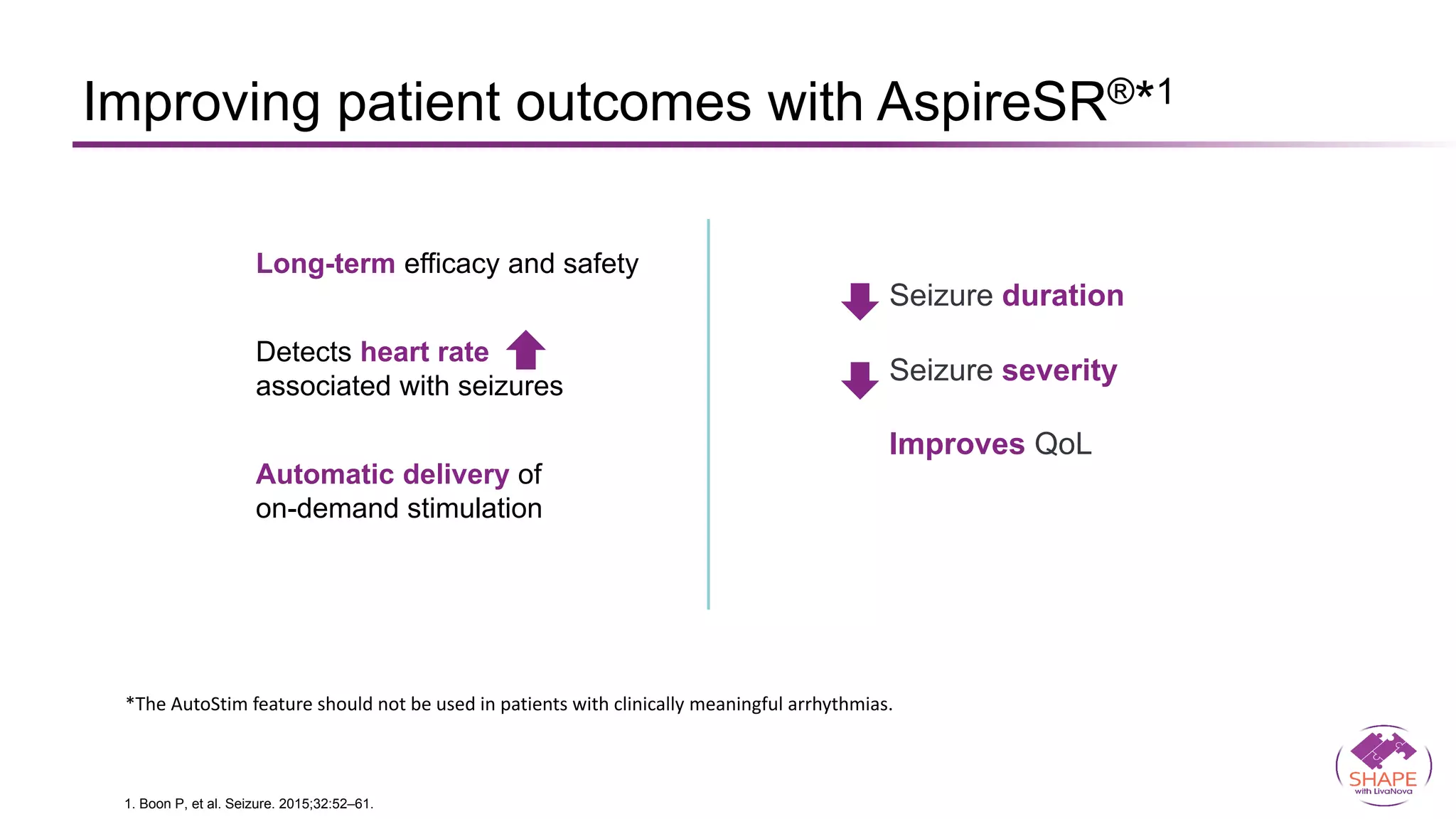
Improving patient outcomes with AspireSR®*1
Long-term efficacy and safety
Detects heart rate
associated with seizures
Automatic delivery of
on-demand stimulation
*The AutoStim feature should not be used in patients with clinically meaningful arrhythmias.
1. Boon P, et al. Seizure. 2015;32:52–61.
What is the goal of dosing?
Adjust stimulation
parameters as quickly
as tolerable to reach a
therapeutic dose
Generate an action
potential on the vagus
nerve by creating a charge
Maximise
therapeutic effect
Minimise
side effects
Action potential initiation
Nerve
membrane
potential U/mV
Generator
Stimulation
20
0
-20
-40
-60
-80
-100
Time
Threshold Level
Resting Potential
Action Potential
One pulse of
stimulation
Stimulation must be high
enough for membrane potential
to reach Threshold Level
Stimulation not enough to reach
Threshold Level
When Threshold Level is met,
Action Potential is initiated
Stimulation not enough to reach
Threshold Level
1. Barker RA, Ciccetti F & Neal MJ. Neuroanatomy and Neuroscience at a Glace (2012) 4th edition. p38–89
Response to stimulation (1)1
• The position, composition of the fascicles (A, B
and C fibres) and key fascicles needed for
effective stimulation vary among patients
• The VNS Therapy® electrode will not fully
encircle the nerve (wraps approximately 270º
around it)
• If the fibres of interest are in the uncovered
region, they may require more charge for
activation
Illustration of a peripheral nerve with
fibre bundles and connective tissues
Connective tissues
Fascicle
Perineurium
Epineurium
VNS Therapy®
electrode Blood vessels
1. Helmers SL, et al. Acta Neurologica Scand. 2012;126:336–43.
VNS Therapy® electrode
Illustration showing the voltage distribution
resulting from an applied stimulus
While ramping up the stimulation
current, more and more nerve
fibres in a mixed nerve get
activated and create action
potentials.
Response to stimulation (2)1
Vagus nerve
Schematic illustration for VNS Therapy®
Stimulus
1. Hille B. Ion Channels of Excitable Membranes; Sinauer Ass. 1992. 2nd Edition.
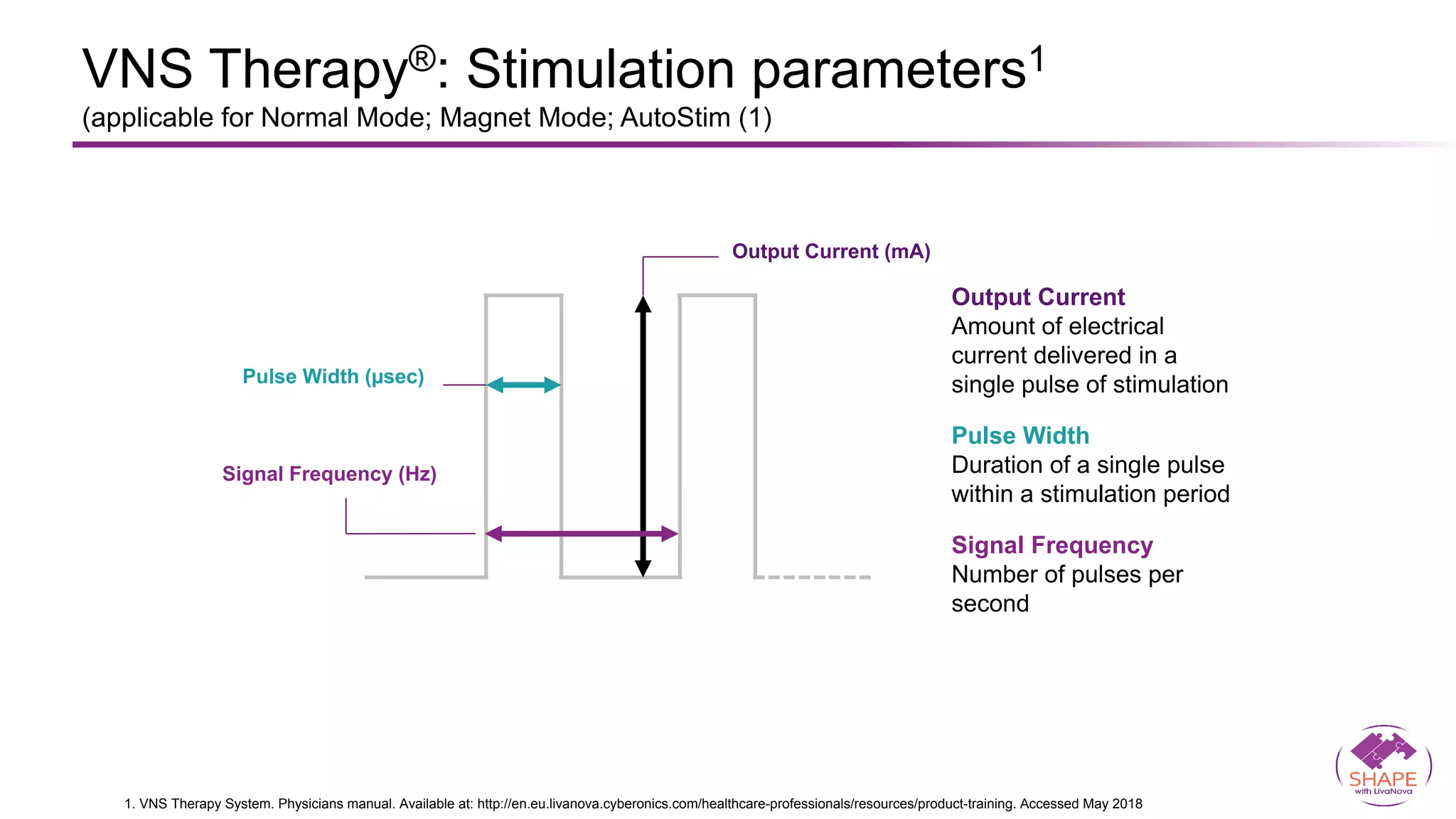
VNS Therapy®: Stimulation parameters1
(applicable for Normal Mode; Magnet Mode; AutoStim (1)
Output Current
Amount of electrical
current delivered in a
single pulse of stimulation
Pulse Width
Duration of a single pulse
within a stimulation period
Signal Frequency
Number of pulses per
second
Pulse Width (µsec)
Output Current (mA)
Signal Frequency (Hz)
1. VNS Therapy System. Physicians manual. Available at: http://en.eu.livanova.cyberonics.com/healthcare-professionals/resources/product-training. Accessed May 2018
Ramp Up/Down Period
Gradual Increase/Decrease in output current intensity at the beginning/end of stimulation pulses
ON Time (sec)
Duration of time that the Generator delivers pulses at the programmed output current
OFF Time (min)
Interval between programmed ON Times (includes Ramp Up/Down periods)
Ramp
Up
Ramp
Down
(2 sec) (2 sec)
ON Time
OFF Time
(Frequencies <10
Hz do not ramp)
1. VNS Therapy System. Physicians manual. Available at: http://en.eu.livanova.cyberonics.com/healthcare-professionals/resources/product-training. Accessed May 2018
VNS Therapy®: Stimulation parameters1
(applicable for Normal Mode; Magnet Mode; AutoStim) (2)
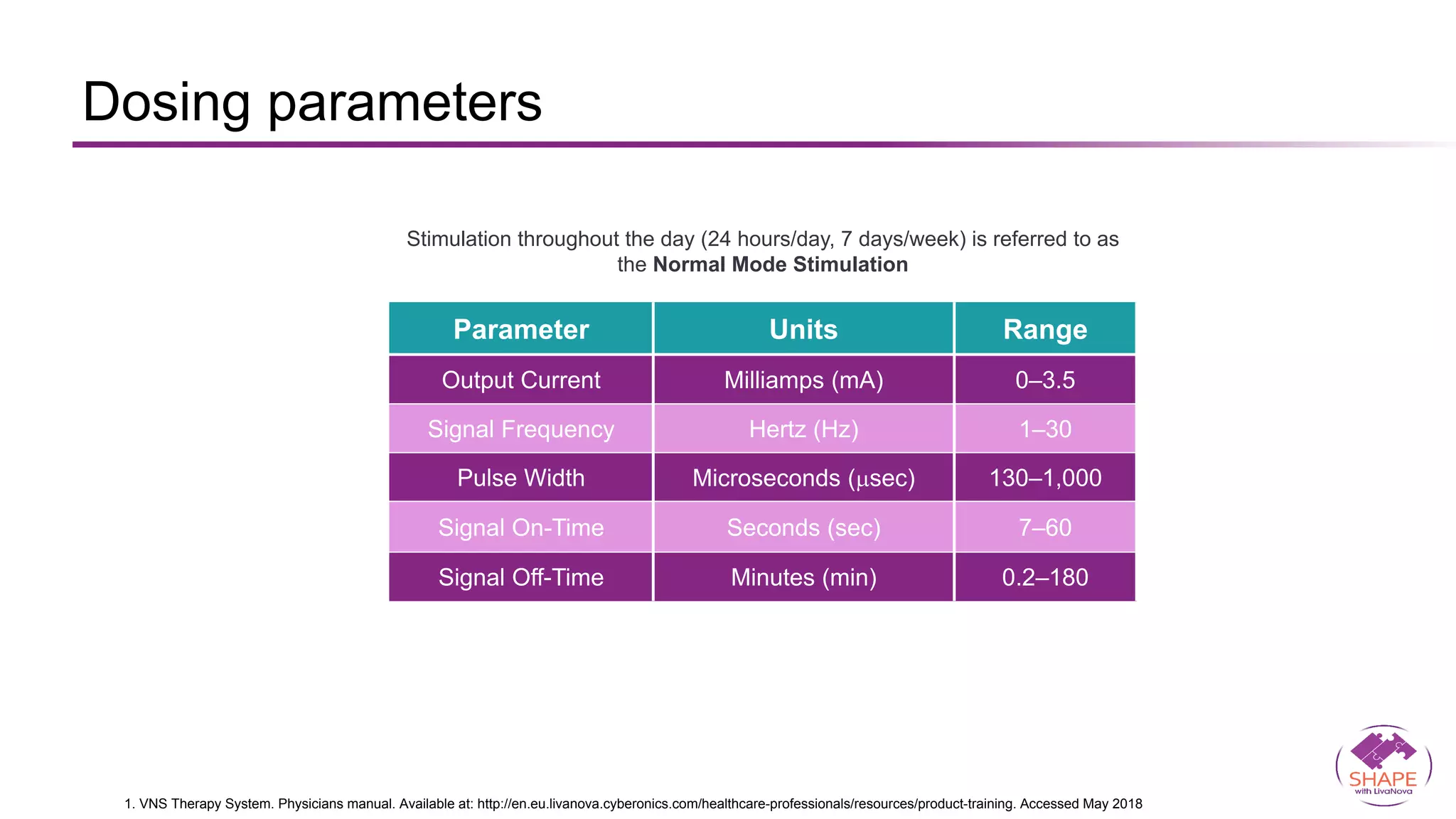
Dosing parameters
Stimulation throughout the day (24 hours/day, 7 days/week) is referred to as
the Normal Mode Stimulation
Parameter Units Range
Output Current Milliamps (mA) 0–3.5
Signal Frequency Hertz (Hz) 1–30
Pulse Width Microseconds (sec) 130–1,000
Signal On-Time Seconds (sec) 7–60
Signal Off-Time Minutes (min) 0.2–180
1. VNS Therapy System. Physicians manual. Available at: http://en.eu.livanova.cyberonics.com/healthcare-professionals/resources/product-training. Accessed May 2018
Time
VNS Therapy® dosing: Phase 1
Ramping up Normal Mode Output Current
Output
Current
0.25 mA
0.50 mA
1.00 mA
Implantation
• Increase Normal Mode Output Current to therapeutic range as quickly as tolerable
• More frequent visits (1–2 weeks) are suggested in Phase 1
1.50 mA
2.00 mA
Phase 1: Normal Mode Output Current
≥2
weeks
Therapeutic Range: 1.5–2.25mA
(some patients may receive additional
efficacy at higher Output Currents)
Phase 2:
0.125 mA
0.375 mA
0.625 mA
Multiple 0.25 mA increases
may be made in a single visit
to reach therapeutic range
sooner; ensure patient
tolerability before making
additional adjustments
1. VNS Therapy System. Physicians manual. Available at: http://en.eu.livanova.cyberonics.com/healthcare-professionals/resources/product-training. Accessed May 2018
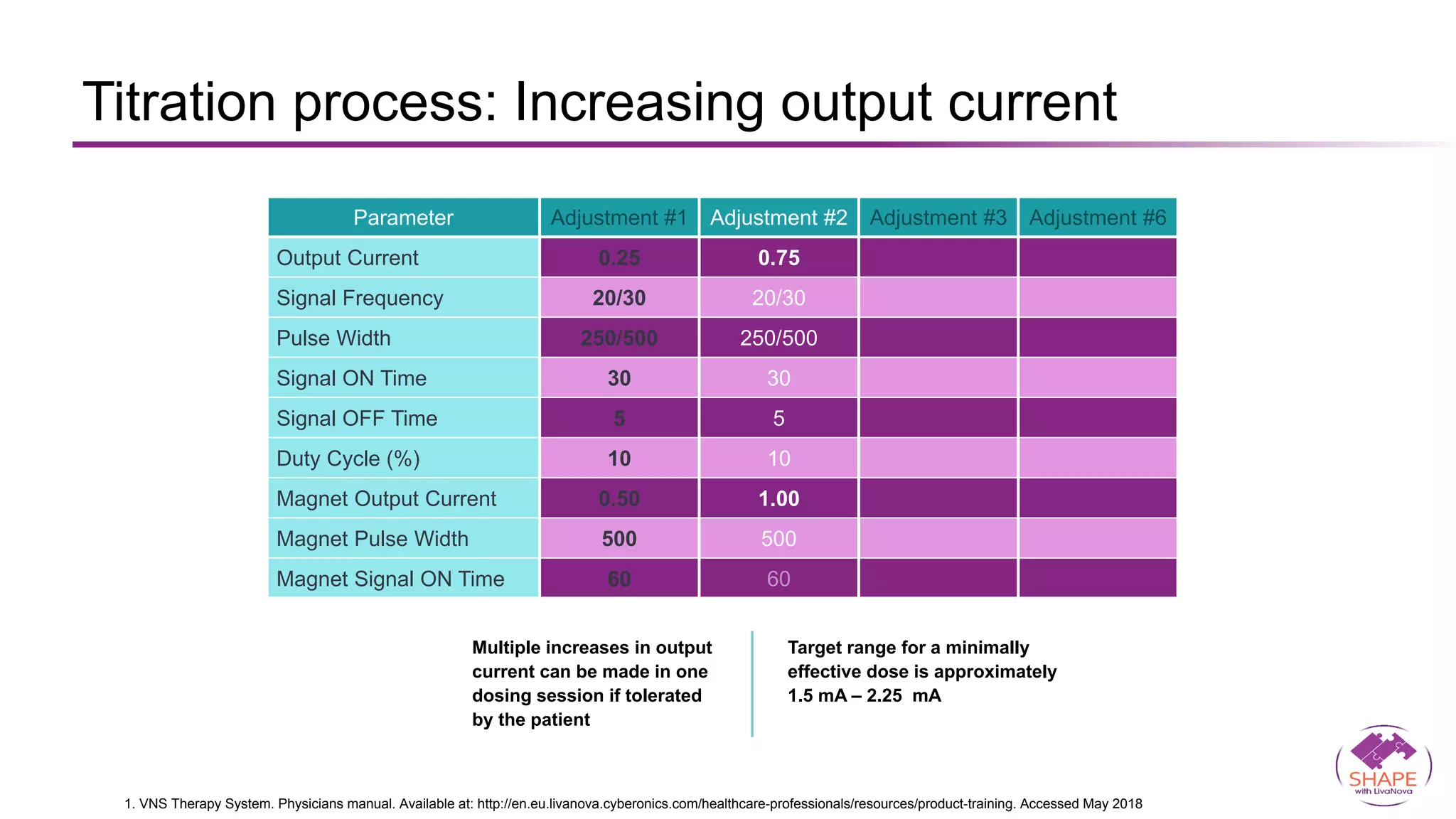
Titration process: Increasing output current
Multiple increases in output
current can be made in one
dosing session if tolerated
by the patient
Target range for a minimally
effective dose is approximately
1.5 mA – 2.25 mA
Parameter Adjustment #1 Adjustment #2 Adjustment #3 Adjustment #6
Output Current 0.25
Signal Frequency 20/30
Pulse Width 250/500
Signal ON Time 30
Signal OFF Time 5
Duty Cycle (%) 10
Magnet Output Current 0.50
Magnet Pulse Width 500
Magnet Signal ON Time 60
1. VNS Therapy System. Physicians manual. Available at: http://en.eu.livanova.cyberonics.com/healthcare-professionals/resources/product-training. Accessed May 2018
Titration process: Increasing output current
Parameter Adjustment #1 Adjustment #2 Adjustment #3 Adjustment #6
Output Current 0.25 0.75
Signal Frequency 20/30 20/30
Pulse Width 250/500 250/500
Signal ON Time 30 30
Signal OFF Time 5 5
Duty Cycle (%) 10 10
Magnet Output Current 0.50 1.00
Magnet Pulse Width 500 500
Magnet Signal ON Time 60
Multiple increases in output
current can be made in one
dosing session if tolerated
by the patient
Target range for a minimally
effective dose is approximately
1.5 mA – 2.25 mA
1. VNS Therapy System. Physicians manual. Available at: http://en.eu.livanova.cyberonics.com/healthcare-professionals/resources/product-training. Accessed May 2018
Titration process: Increasing output current
Parameter Adjustment #1 Adjustment #2 Adjustment #3 Adjustment #6
Output Current 0.25 0.75 1.50
Signal Frequency 20/30 20/30
Pulse Width 250/500 250/500
Signal ON Time 30 30
Signal OFF Time 5 5
Duty Cycle (%) 10 10
Magnet Output Current 0.50 1.00 1.75
Magnet Pulse Width 500 500
Magnet Signal ON Time 60 60
Multiple increases in output
current can be made in one
dosing session if tolerated
by the patient
Target range for a minimally
effective dose is approximately
1.5 mA – 2.25 mA
1. VNS Therapy System. Physicians manual. Available at: http://en.eu.livanova.cyberonics.com/healthcare-professionals/resources/product-training. Accessed May 2018
Titration process: Increasing output current
Parameter Adjustment #1 Adjustment #2 Adjustment #3 Adjustment #6
Output Current 0.25 0.75 1.50 2.00
Signal Frequency 20/30 20/30
Pulse Width 250/500 250/500
Signal ON Time 30 60
Signal OFF Time 5 1.8
Duty Cycle (%) 10 38
Magnet Output Current 0.50 1.00 1.75 2.25
Magnet Pulse Width 500 500
Magnet Signal ON Time 60 60
Multiple increases in output
current can be made in one
dosing session if tolerated
by the patient
Target range for a minimally
effective dose is approximately
1.5 mA – 2.25 mA
1. VNS Therapy System. Physicians manual. Available at: http://en.eu.livanova.cyberonics.com/healthcare-professionals/resources/product-training. Accessed May 2018
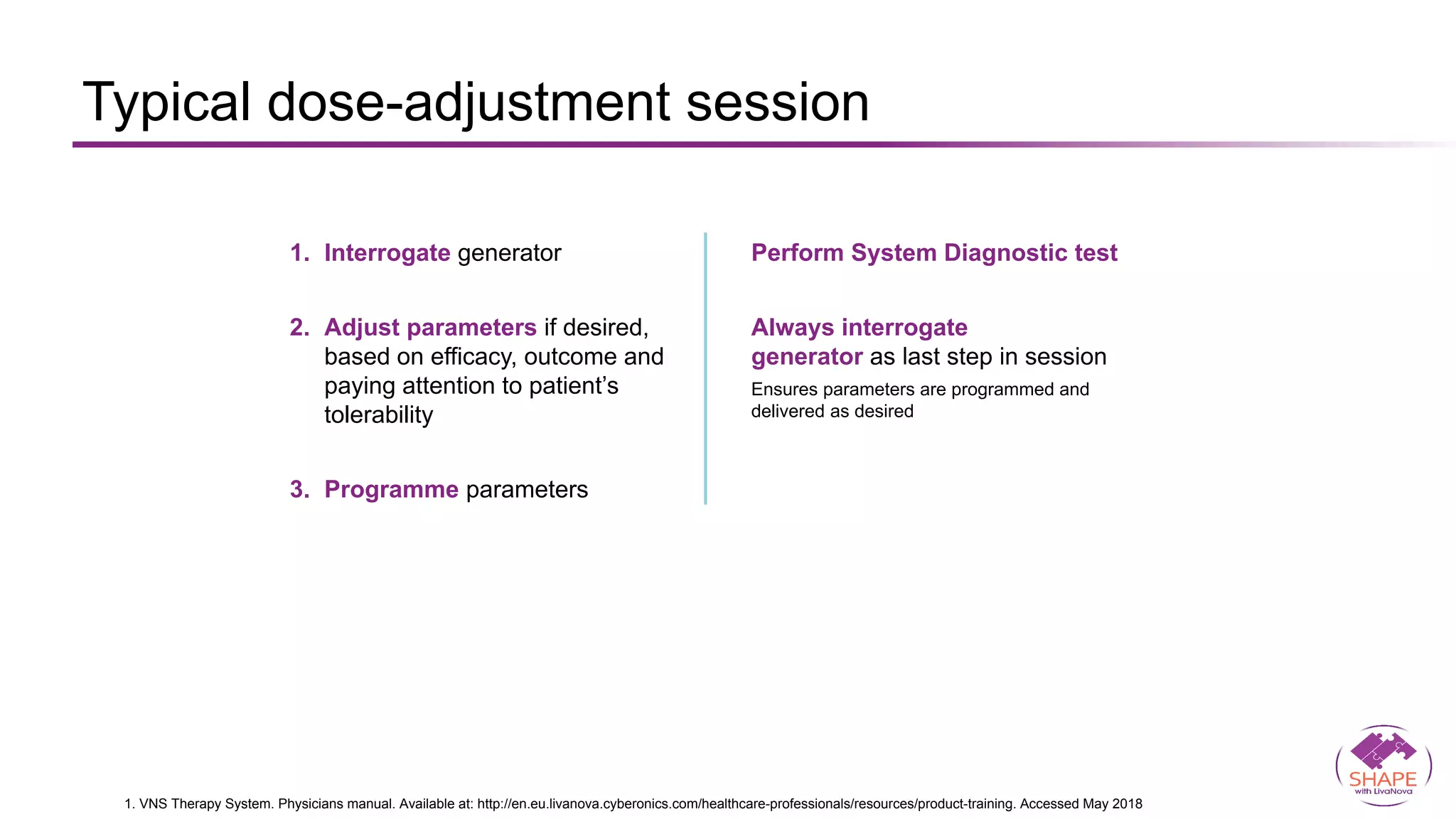
Typical dose-adjustment session
1. Interrogate generator
2. Adjust parameters if desired,
based on efficacy, outcome and
paying attention to patient’s
tolerability
3. Programme parameters
Perform System Diagnostic test
Always interrogate
generator as last step in session
Ensures parameters are programmed and
delivered as desired
1. VNS Therapy System. Physicians manual. Available at: http://en.eu.livanova.cyberonics.com/healthcare-professionals/resources/product-training. Accessed May 2018
Strategies to alleviate side effects
Reduce signal
frequency from
30 Hz to 20 Hz
Reduce the pulse
width from 500 sec
to 250  sec.
If the patient cannot
tolerate a pulse width of
250 sec, reduce output
current by 0.25 mA
1. VNS Therapy System. Physicians manual. Available at: http://en.eu.livanova.cyberonics.com/healthcare-professionals/resources/product-training. Accessed May 2018
Optimising dosing effectiveness
Increasing output current
beyond generating an
action potential is likely to
generate side effects and
decrease battery life, but
does not increase
effectiveness
Increasing the amount of time
VNS Therapy® is stimulating per
day may increase effectiveness
Achieved through duty cycle
adjustments
1. VNS Therapy System. Physicians manual. Available at: http://en.eu.livanova.cyberonics.com/healthcare-professionals/resources/product-training. Accessed May 2018
Duty Cycle
Duty Cycle
is the amount of
time stimulation is
being delivered in a
24-hour period
Standard Duty
Cycle is 10%
30 sec on;
5 min off
Maximum
recommended Duty
Cycle is 49%
21 sec on;
0.5 min off
1. VNS Therapy System. Physicians manual. Available at: http://en.eu.livanova.cyberonics.com/healthcare-professionals/resources/product-training. Accessed May 2018
Duty Cycle: Caution
IMPORTANT
Excessive stimulation, combination of:
• Excess duty cycle (i.e. occurs when ON time is greater than OFF time)
• High-frequency stimulation (i.e. stimulation at ≥50 Hz)
Excessive stimulation:
• Resulted in degenerative nerve damage in laboratory animals
• Excess Duty Cycle can be produced by continuous or frequent magnet activation (>8
hours)
• Continuous or frequent magnet use could lead to early battery depletion
Maximum programmable frequency is limited to 30 Hz to prevent excessive stimulation
1. VNS Therapy System. Physicians manual. Available at: http://en.eu.livanova.cyberonics.com/healthcare-professionals/resources/product-training. Accessed May 2018
Duty Cycle
The design prevents excessive stimulation by limiting the frequency to 30 Hz.
It is recommended that ON time is not programmed to be greater than OFF time
Off Time (Minutes)
On Time
(Seconds)
0.2 0.3 0.5 0.8 1.1 1.8 3.0 5.0 10
7 58% 44% 30% 20% 15% 10% 6% 4% 2%
14 69% 56% 41% 29% 23% 15% 9% 6% 3%
21 76% 64% 49% 36% 29% 19% 12% 8% 4%
30 81% 71% 57% 44% 35% 25% 16% 10% 5%
60 89% 82% 71% 59% 51% 38% 27% 18% 10%
1. VNS Therapy System. Physicians manual. Available at: http://en.eu.livanova.cyberonics.com/healthcare-professionals/resources/product-training. Accessed May 2018
Duty Cycle
Off Time (Minutes)
On Time
(Seconds)
0.2 0.3 0.5 0.8 1.1 1.8 3.0 5.0 10
7 58% 44% 30% 20% 15% 10% 6% 4% 2%
14 69% 56% 41% 29% 23% 15% 9% 6% 3%
21 76% 64% 49% 36% 29% 19% 12% 8% 4%
30 81% 71% 57% 44% 35% 25% 16% 10% 5%
60 89% 82% 71% 59% 51% 38% 27% 18% 10%
1. VNS Therapy System. Physicians manual. Available at: http://en.eu.livanova.cyberonics.com/healthcare-professionals/resources/product-training. Accessed May 2018
On-demand dosing parameters
Parameter Units Range
Magnet Output
Current
Milliamps
(mA)
0–3.5
Magnet Pulse Width
Microseconds
(sec)
130–1,000
Magnet On Time Seconds 7–60
1. VNS Therapy System. Physicians manual. Available at: http://en.eu.livanova.cyberonics.com/healthcare-professionals/resources/product-training. Accessed May 2018
AspireSR® dosing parameters
Stimulation throughout the day (24 hours/day, 7 days/week)
is referred to as the Normal Mode Stimulation
Besides the Normal Mode and Magnet Mode parameter settings AspireSR has the following
extra parameters:
Parameter Units Range
CBSD seizure detection ON
AutoStim Output Current Milliamps (mA)
0–2.0 (0.125)
2.0–3.5 (0.25)
AutoStim Pulse Width Hertz (Hz) 130–1,000
AutoStim On Time Seconds (sec) 30–60
Heartbeat Detection Sensitivity 1–5
Threshold for AutoStim Percentage 20–70
1. VNS Therapy System. Physicians manual. Available at: http://en.eu.livanova.cyberonics.com/healthcare-professionals/resources/product-training. Accessed May 2018
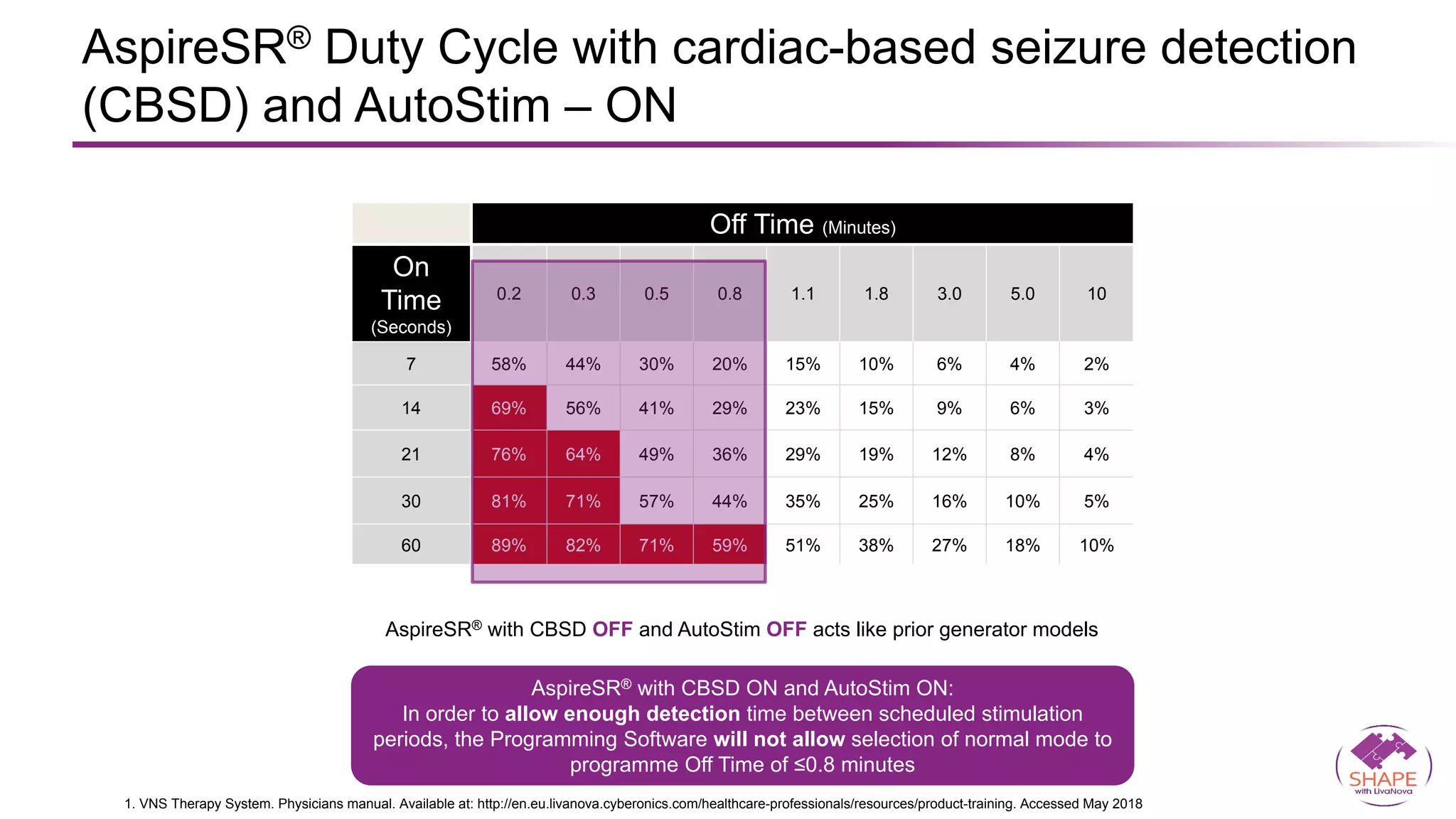
AspireSR® Duty Cycle with cardiac-based seizure detection
(CBSD) and AutoStim – ON
Off Time (Minutes)
On
Time
(Seconds)
0.2 0.3 0.5 0.8 1.1 1.8 3.0 5.0 10
7 58% 44% 30% 20% 15% 10% 6% 4% 2%
14 69% 56% 41% 29% 23% 15% 9% 6% 3%
21 76% 64% 49% 36% 29% 19% 12% 8% 4%
30 81% 71% 57% 44% 35% 25% 16% 10% 5%
60 89% 82% 71% 59% 51% 38% 27% 18% 10%
AspireSR® with CBSD OFF and AutoStim OFF acts like prior generator models
AspireSR® with CBSD ON and AutoStim ON:
In order to allow enough detection time between scheduled stimulation
periods, the Programming Software will not allow selection of normal mode to
programme Off Time of ≤0.8 minutes
1. VNS Therapy System. Physicians manual. Available at: http://en.eu.livanova.cyberonics.com/healthcare-professionals/resources/product-training. Accessed May 2018
General dosing guidelines
Always dose to
patient tolerance
and ensure that the
patient can tolerate
settings before
leaving the office
Give the patient time
to adjust to parameter
changes before making
additional adjustments
Higher magnet mode
settings can increase
tolerability of higher
settings
Frequent office visits
(every 1–2 weeks) are
suggested for the first
several months to
track patient response
and adjust stimulation
parameters
1. VNS Therapy System. Physicians manual. Available at: http://en.eu.livanova.cyberonics.com/healthcare-professionals/resources/product-training. Accessed May 2018
THANK YOU
amrhasanneuro@kasralainy.edu.eg

Vagal Nerve stimulation

  • 1.
    Amr Hassan MD,FEBN Professorof Neurology- Cairo University VAGAL NERVE STIMULATION
  • 2.
    European epilepsy population Prevalence of epilepsy Well controlled with AEDs2 70% 1.8m DRE patients are candidates for non- pharmacological interventions ~6m1 8.2/ 1,0001 DRE 30%2 (1.8m) DRE is a large potential non-pharmacological treatment population 1. Available at: Epilepsy in the WHO European Union http://www.ibe-epilepsy.org/downloads/EURO%20Report%20160510.pdf. Accessed Jan 2018; 2. Mohanraj and Brodie. Eur J Neurol. 2006;13:277–82.
  • 3.
    Diet1 Vagus NerveStimulation (VNS) Therapy®1 Ketogenic Modified Atkins Low glycaemic Cranial surgery1 Responsive Neurostimulation System (RNS) and Deep Brain Stimulation (DBS)2 Resective surgery • Hemispherectomy • Corpus callosotomy • Multiple subpial transection MRI laser ablation Adapted from 1. Yusuf M & Al-Ghamdi SBA. Ind Res J Pharm Sci.2016;3:737–50; 2. Engel J. Neurology 2016;87:2483–9. Non-pharmacological treatment options for DRE
  • 4.
    • In addition,side-effects of this kind of surgery can be significant2 • For this reason, less invasive strategies aiming to modulate neuronal activity of deep brain areas should be considered as an alternative2 VNS Therapy® is an alternative option • Many patients with DRE are not candidates for surgery1 • This is either because the epileptic focus remains unidentified or located in the functional cortex1 VNS Therapy® is an efficacious neurophysiological treatment for patients with DRE who are unsuitable for curative resective surgery or who have experienced insufficient benefit from such a treatment3 1. El Tahry R, et al. Seizure 2010;19:531–5; 2. Casazza M, et al. Seizure 2006;15:198–207; 3. Boon P, et al. Seizure 2011;10:448–55.
  • 5.
    … VNS Therapy® orpalliative surgery? Mesial temporal unilateral Neocortical lesional Bitemporal/bifocal Multifocal Idiopathic generalised Generalised epilepsy (Lennox-Gastaut type) Candidacy for epilepsy surgery1,2 Influencing factors1,3 Suitable for epilepsy surgery Less suitable for epilepsy surgery* *Patients that are not suitable for epilepsy surgery may benefit from VNS Therapy® over other palliative treatment options2,3 … Expected extent of seizure reduction Risk Comorbidities Living situation Patient preference 1. Available from: MedScape - Outcomes of Epilepsy Surgery http://emedicine.medscape.com/article/1185416-overview. Accessed March 2018; 2. Jenssen S, et al. Seizure 2006;15:621–9; 3. 1. Ryvlin P & Rheims S. Dialogues Clin Neurosci. 2008;10:91–103.
  • 6.
    Focal Temporal 1a. Mesiotemporal 1a1. Clear unilateral ResectionRNS, YNS, DBS (rarely) 1a2. Possibly bilateral Intracranial EEG Resection RNS VNS (Possibly followed by DBS) 1b. Extratemdoral or Temporal neocortical 1b1. Lesional 1b2. Non-Lesional Intracranial EEG Resection RNS VNS (Possibly folloed by DBS) Benbadis et al, Epil & Behav, in Press.
  • 7.
    Generalized epilepsy Genetic Generalized epilepsy Lennox. Gastaut type VNS (Possibly followedBy DBS) VNS (Possibly followed By DBS) Corpus Callosotomy (Partial to complete) Benbadis et al, Epil & Behav, in Press.
  • 8.
    • VNS Therapy®usually has mild non-pharmacological side effects • These are typically related to stimulation and are normally temporary • Common side effects include: – Paraesthesia – Increased cough – Dyspnoea – Pharyngitis – Voice-alteration (hoarseness) – Swallowing difficulties – Worsening of asthma or bronchitis • Other somatic side effects, such as sleep apnoea, have also been reported • VNS Therapy® should be used with caution in the presence of bilateral or left cervical vagotomy, unipolar diathermy and patients with clinically meaningful cardiac arrhythmias2 VNS Therapy®: Safety profile1 1. Ben-Menachem, E & French, JA. Epileptic Disord. 2005;7:S22–6; 2. VNS Therapy® Physician’s Manual, October 2017.
  • 9.
    …sufficient evidence existsto rank VNS Therapy® for epilepsy as effective and safe,* based on a preponderance of Class 1 evidence†1 *Safe: A judgment of the acceptability of risk in a specified situation, e.g., for a given medical problem, by a provider with specified training, at a specified type of facility †Class 1 evidence: Provided by one or more well designed randomised, controlled clinical trials 1. Fisher RS & Handforth A. Neurol. 1999;53:666–9.
  • 10.
    What is VNSTherapy®? • VNS Therapy® is: – An adjunctive therapy for partial and generalised seizures* – Suitable for adults and children1 – Implanted in a simple, short outpatient procedure2 – Proven safety profile and efficacy3,4 – Easy to dose1 • VNS Therapy® is recommended by guidelines as an adjunctive therapy in reducing seizure frequency in children and adults with DRE who are not suitable for resective surgery5 • A VNS Therapy® implant is a pulse generator that is implanted under the skin and connected to the left vagus nerve at the carotid sheath6 Left vagus nerve Electrodes *VNS Therapy® is not approved for these indications in all countries. Consult your label. VNS=Vagus Nerve Stimulation. 1. VNS Therapy System. Physicians manual. Available at: http://en.eu.livanova.cyberonics.com/healthcare-professionals/resources/product-training. Accessed March 2018; 2. Benifla M, et al. Childs Nerv Syst. 2006. DOI 10.1007/s00381-006-0123-6; 3. George R, et al. Neurology 1995;45:224–30; 4. Handforth A, et al. Neurology 1998;51:48–55; 5. NICE Guideline CG137 Epilepsy. Available at: https://www.nice.org.uk/guidance/cg137. Accessed March 2018; 6. Edwards C, et al. Mayo Clin Proc. 2017;92;1427–44. Pulse generator
  • 11.
    How does VNSTherapy® work? VNS Therapy® delivers an anti-convulsive effect via multiple pathways Neurotransmitter expression Cerebral blood flow Changes in EEG Alters neurotransmitter expression and release Increases cerebral blood flow3 ↑ Noradrenaline1 ↑ GABA2 ↑ Serotonin2 ↓ Aspartate2 ↑ Thalamus ↑ Cortex Desynchronises ictal EEG patterns4 ANTI-CONVULSIVE EFFECT 1. Roosevelt R, et al. Brain Res. 2006;124–32; 2. Ben-Menachem E, et al. Epilepsy Res. 1995;221–7; 3. Henry TR, et al. Epilepsia 2004;45:1064–70; 4. Koo BJ, Clin Neurophysiol. 2001;434–41. EEG=electroencephalogram, GABA=gamma-aminobutyric acid.
  • 12.
    Glutamate GAD GABA GABA-T Succinic semi- aldehyde Inhibitory pre-synaptic terminal GABA GATI GABAA receptor CI- VNS Therapy®2 VNSTherapy®3 Post-synaptic neuron GABAA receptor At the inhibitory synapse1 Impaired GABA-mediated inhibition associated with epilepsy suggests that GABAA receptors contribute to the therapeutic efficacy of VNS Therapy®2 Neuronal inhibition in the brain is mediated predominantly by the interaction of GABA with the heteromeric GABAA receptor2 VNS Therapy® stimulation increases GABA levels and density of GABAA receptors.2 The role of GABA in the anti-epileptic effect of VNS Therapy® remains to be demonstrated2,3 Mechanism of action of VNS Therapy®: Inhibition 1. Adapted from Bialer M & White HS. Nat Rev Drug Disc. 2010;9:68–82; 2. Marrosu F, et al. Epilepsy Res. 2003;55:59–70; 3. Ben-Menachem E, et al. Epilepsy Res 1995;20:221–7. Cl=chlorine, GABA-T=4-aminobutyrate transaminase, GAT=GABA transporter, GAD=glutamate decarboxylase.
  • 13.
    Excitatory pre-synaptic terminal Propagated action potential Voltage-gated Na+ channel Glutamate α2δsubunit of L-type Ca2+ channel Ca2+, Na+ Na+(Ca2+) AMPA and kainate receptors NMDA receptor Post-synaptic neuron K+ K+ VNS Therapy®3 SV2A Na+ Depolarisation At the excitatory synapse1 VNS Therapy® has been shown to decrease glutamate levels in patients with DRE3 Glutamate plays a key role in normal excitatory neuronal signalling2 Excess glutamate is associated with recurrent seizures and is observed in chronic epilepsy2 Mechanism of action of VNS Therapy®: Excitation Adapted from 1. Bialer M & White HS. Nat Rev Drug Disc. 2010;9:68–82; 2. Barker-Haliski M & White HS. CSH Perspect Med. 2015;5:a022863; 3. Ben-Menachem E, et al. Epilepsy Res. 1995;20:221–7. AED=anti-epileptic drug, AMPA=α-amino-3-hydroxy-5-methyl-4-isoxazolepropionic acid, Ca=calcium, Na=sodium, NMDA=n-methyl-D-aspartate.
  • 14.
    DRE patients after 1year of VNS Therapy® (n=10) DRE patients eligible for VNS Therapy® (n=7) -20 0 20 40 60 80 100 GRD distribution (% change) Seizure frequency reduction GRD distribution (% change) Seizure frequency reduction -20 -5 10 25 40 55 70 85 -10 0 10 20 30 -15 -5 5 15 25 35 Changes in cortical GABAA receptor density (GRD) measured by SPECT with the GABAA receptor agonist [123I] iomazenil • Clinical efficacy of VNS Therapy® correlates with up- regulation of GRD in DRE • GABAA receptor- mediated neuronal inhibition is enhanced by VNS Therapy®1 Adjunctive VNS Therapy® modulates GABAA receptor expression1 Adapted from 1. Marrosu F, et al. Epilepsy Res. 2003;55:59–70. SPECT=single-photon emission computed tomography GRD : GABA receptor denisty.
  • 15.
    VNS Therapy® reducesthe inter-ictal EEG • The inter-ictal period can be used by neurologists when diagnosing epilepsy as an EEG trace will often show inter-ictal spiking and other abnormalities2 1. Mula M and Monaco F. Behav Neurol. 2011;24:21–5; 2. Hallböok T, et al. Seizure 2005;14:527–33; 3. Marrosu F, et al. Clin Neurophysiol. 2005;116:2026–36; 4. Koo BJ, et al. J Clin Neurophysiol. 2001;8:434–41. VNS Therapy® • The power spectrum3 • Inter-hemispheric gamma band synchronisation3 • Duration of spike-free intervals4 • Inter-ictal spikes2 • Theta synchronisation3 • Spike duration4 • Spike-and-wave activity4
  • 16.
    Clinical evidence forVNS Therapy® in DRE >1,000 peer-reviewed publications on VNS Therapy® Primary focus # of articles Effectiveness >500 Safety >150 Ease of use >30 Economics >15 Mechanism of action >250 Review articles >50 A variety of other clinical studies are currently underway in a range of settings, including epilepsy, depression, migraine,* congestive heart failure* and others1 There is ample evidence for the efficacy of VNS Therapy® for DRE 1. Available at: Clin Trials.gov. VNS Therapy: https://clinicaltrials.gov/ct2/results?cond=&term=vns+therapy&cntry=&state=&city=&dist. Accessed Mar 2018. *Limited by Federal (or United States) law to investigational use. VNS Therapy is not approved or under investigation for these indications in all countries – consult your label.
  • 17.
    With VNS Therapy®patients experience: Enhanced seizure control and improved patient outcomes when treated early1 Sustained improvements in seizure frequency2 and significant reductions in seizure severity and recovery time3–5 Significant improvements in quality of life (QoL)6–8 VNS Therapy® has been shown to protect against partial and generalised seizures 1. Renfroe BJ & Wheless JW. Neurology 2002; 59:S26–S31; 2. Elliott RE, et al. Epilepsy & Behavior 2011;20:478–83; 3. Boon P, et al. Seizure 2015;32:52–61; 4. Fisher RS, et al. Neuromod. 2016;19:188–95; 5. Morris GL. Epilepsy & Behavior 2003;4:740–5; 6. Ryvlin P, et al. Epilepsia 2014;55:893–900; 7. Ergene E, et al. Epilepsy & Behavior 2001;2:284–7; 8. Klinkenberg S, et al. Clin Neurol Neurosurg. 2012;114:336–40; 9. Boon P, et al. Seizure 2001;10:448–55. Improvements in mental functioning, mood and behaviour9 To be updated for each country’s label
  • 18.
    • Early treatmentof DRE patients with VNS Therapy® has been shown to enhance seizure control and improve patient outcomes, compared with later treatment with VNS Therapy® • Patients were 3x more likely to be seizure-free at 3 months if treated earlier with VNS Therapy® (p<0.001) Early use (N=120) 25.8% 14.3% 15.0% 4.4% p=0.001 p=<0.001 VNS Therapy® initiated within 5 years of epilepsy onset VNS Therapy® initiated after 5 years of epilepsy onset, mean 21 years These patients experienced ≥90% reduction in seizure frequency at 3 months These patients were seizure-free at 3 months Percentage of patients Control (N=2,785) Treating early is beneficial for patients with DRE1 1. Renfroe JB & Wheless JW. Neurology 2002;59:S26–S31.
  • 19.
    • VNS Therapy®usually has mild non-pharmacological side effects • These are typically related to stimulation and are normally temporary • Common side effects include: – Paraesthesia – Increased cough – Dyspnoea – Pharyngitis – Voice-alteration (hoarseness) – Swallowing difficulties – Worsening of asthma or bronchitis • Other somatic side effects, such as sleep apnoea, have also been reported • VNS Therapy® should be used with caution in the presence of bilateral or left cervical vagotomy, unipolar diathermy and patients with clinically meaningful cardiac arrhythmias2 VNS Therapy®: Safety profile1 1. Ben-Menachem E & French JA. Epileptic Disord. 2005;7:S22–6; 2. VNS Therapy® Physician’s Manual, October 2017.
  • 20.
    VNS Therapy® hasadditional benefits • VNS Therapy® has none of the AEs commonly associated with AEDs1 • There are no interactions between VNS Therapy® and AEDs or other common drugs1 • VNS Therapy® side effects:2–5 - Occur mostly during stimulation2 - Decrease over time3 - Can be reduced by adjusting VNS Therapy® output parameters4 • VNS Therapy® happens automatically; adherence is not a problem5 1. VNS Therapy® Physician’s Manual, October 2017; 2. Ben-Menachem E, et al. Neurol. 1999;52:1265–7; 3. Morris GL & Mueller WM. Neurology 1999;53:1731–5; 4. Heck C, et al. Neurology 2002;59:S31–S37; 5. Ben-Menachem E, et al. Epileptic Disord. 2005;7:S22–S26.
  • 21.
    Summary • VNS Therapy®involves stimulation of the vagus nerve to provide an anti-convulsive effect in DRE1 • VNS Therapy® works in a number of ways, including: – Altered neurotransmitter expression2,3 – ↑ cerebral blood flow4 – Altered EEG patterns5 • Effectiveness of VNS Therapy® is maintained long-term6–10 and even increases over time,11 providing: – ↓ Seizure frequency and severity10,12 – ↑ QoL12 – ↓ Economic burden13,14 • VNS Therapy® side effects are moderate and controllable15 1. Edwards C, et al. Mayo Clin Proc. 2017;92;1427–44; 2. Roosevelt R, et al. Brain Res. 2006;124–32; 3. Ben-Menachem E, et al. Epilepsy Res. 1995;221–7; 4. Henry TR, et al. Epilepsia 2004;45:1064–70; 5. Koo BJ, et al. Clin Neurophysiol. 2001;434–41; 6. Labar D, et al. Seizure 2004;13:392–8; 7. Chayasirisobhon S, et al. J Neurol Neurophysiol. 2015;6:1; 8. Vonck K, et al. J Clin Neurophysiol. 2004;21:283–9; 9. De Herdt V, et al. Eur J Paediatr Neurol. 2007;11:261–9; 10. Elliott R, et al. Epilepsy Behav. 2011;20:57–63; 11. Ryvlin P, et al. Epilepsia 2014;55:893–900; 12. Orosz I, et al. Epilepsia 2014;55:1576–84; 13. Bernstein A, Barkan H, and Hess T. Epilepsy Behav. 2007;10:134–37; 14. Helmers S, et al. Epilepsy Behav. 2011;22:370–75; 15. Ben-Menachem, E & French, JA. Epileptic Disord. 2005;7:S22–6. LivaNova PLC, 20 Eastbourne Terrace, London, W2 6LG, UK
  • 22.
    Drug-Resistant Epilepsy inchildren of the paediatric population have epilepsy1 0.5–1% • Severe epilepsy during the developmental period is detrimental to intellectual and social maturation1 • Repeated seizures in children may lead to cognitive and behavioural impairments2 with epilepsy have drug-resistant disease1 Up to in children 1 3 1. Elliott R, et al. J Neurosurg Pediatrics 2011;7:491–500; 2. Kanemura H & Aihara M. J Neurol Neurophysiol. 2013;S2–006.
  • 23.
    Clinical evidence forpaediatric VNS Therapy® in DRE • The initial randomised studies of VNS Therapy® were time-limited (3-month follow up) and demonstrated a 25%–30% decrease in seizure frequency2–4 • Subsequent non-blinded, non-randomised studies reported superior seizure control and demonstrated efficacy, and acceptable safety for VNS Therapy® in children with epilepsy5–10 1. Ben-Menachem E, et al. Euro J Neurol. 2015;22:1260–8; 2. Ben-Menachem E, et al. Epilepsia 1994;35:616–26; 3. George R, et al. Neurology 1995;45:224–30; 4. Handforth A, et al. Neurology 1998;51:48–55; 5. Ben-Menachem E, et al. Neurology 1999;52:1265–7; 6. Benifla M, et al. Childs Nerv Syst. 2006;22:1018–26; 7. Helmers SL, et al. J Child Neurol. 2001;16:843–8; 8. Murphy JV, et al. J Pediatr. 1999;134:563–6; 9. Murphy JV, et al. Arch Pediatr Adolesc Med. 2003;157:560–4; 10. Patwardhan RV, et al. Neurosurg. 2000;47:1353–8; 11. FDA SSED for VNS. Available at: https://www.accessdata.fda.gov/cdrh_docs/pdf/p970003s207b.pdf. Accessed March 2018. In 1994, VNS Therapy® was approved in Europe for the treatment of DRE1 FDA=Food and Drug Administration; VNS=vagus nerve stimulation.
  • 24.
    RNS DBS VNS No Probably (Limited cvidence) yes Generalized or Multifocal epilepsy Yes Yes No Invasiveness(intracranial) Yes No No Recording capbility No No Yes Indication for depression Probably Unknown Yes Positive effects on mood & congition No Unknown Yes Children No Variable Yes MRI brain Closed (electrographic Seizure) Open Open and closed (tachcardia) Loop type No No Yes Side effect during stimulation U.S. (FAD) only U.S. (FDA), Europe (CE- mark), Canada, Australia All Regulatory approval as of now Green = advantage Red = disadvantage Benbadis et al, Epil & Behav, in Press. Yes (2020)
  • 25.
    Effectiveness of VNSTherapy® by seizure type1,2 Adapted from 1. Cukiert A, et al. Seizure 2013;22:396–400; 2. Cukiert A, et al. Neuromodulation 2013;16:551–3. 42% 58% 17.9% 88% 42% 58% 9.3% 80% 75% 49% • VNS Therapy® has shown to be effective in reducing daily frequency rates in myoclonic and generalised tonic-clonic seizures in children with Lennox-Gastaut or Lennox-like syndromes To be updated for each country’s label
  • 26.
    AspireSR®1 The first VNSTherapy® system that provides responsive stimulation to heart-rate increases that may be associated with seizures The AutoStim mode feature: • Detects rapid heart-rate rise • Delivers automatic stimulation • Has customisable parameters to meet patients needs • Works in conjunction with normal and magnet mode 1. VNS Therapy System. Physicians manual. Available at: http://en.eu.livanova.cyberonics.com/healthcare-professionals/resources/product-training. Accessed May 2018
  • 27.
    Heart-brain connection1 82% of patients withepilepsy experience rapid heart-rate increase associated with a seizure3 Ictal discharges to areas of the brain that regulate the autonomic nervous system can impact heart rate2 Adapted from 1. Carter R, et al. The Human Brain Book, New York: Dorling Kindersley Limited, 2009; 2. Jansen K, et al. Seizure 2010;19:455–603; 3. Eggleston KS, et al. Seizure 2014;23:496–505;
  • 28.
    More than 60% ofseizures treated with Automatic Stimulation ended during the course of stimulation (28/46 treated seizures) Results: Seizure cessation 1. Data on file. LivaNova. E-36/E-37 Integrated Clinical Study Report.
  • 29.
    Earlier stimulation correlatedwith shorter seizures1 R² = 0.69 0 30 60 90 120 -60 -30 0 30 60 90 120 Stimulation latency (seconds)-relative to ictal onset N=28 seizures ended during stimulation, from 14 patients Seizure duration (seconds) Ictal EEG Onset Earlier stimulation Shorter seizure Earlier stimulation Shorter seizures 1. Bialer M, et al Epilepsy Research 2017;130:27–36.
  • 30.
    Optimising AspireSR® settings TheThreshold determines the % heart-rate increase that will trigger AutoStim (20–70%), thereby also influencing detection latency 26 sec detection latency 5 sec 20.5 sec 21 sec 16 sec 11 sec
  • 31.
    Reduction of ictalsynchronisation by acute stimulation at seizure-onset Ictal synchronisability pre-VNS Therapy® Ictal synchronisability post-VNS Therapy® ***p<0.001 1. Ravan M, et al. 2017 IEEE Trans Biomed Eng. 2017;64:419–28; 2, Ravan M, et al. Epilepsia 2016;57(Suppl.):1–261. Acute VNS Therapy® reduces generalisation of seizures pre-VNS Therapy® 105 seizures post-VNS Therapy® 107 seizures
  • 32.
    Seizure duration Seizure severity ImprovesQoL Improving patient outcomes with AspireSR®*1 Long-term efficacy and safety Detects heart rate associated with seizures Automatic delivery of on-demand stimulation *The AutoStim feature should not be used in patients with clinically meaningful arrhythmias. 1. Boon P, et al. Seizure. 2015;32:52–61.
  • 33.
    What is thegoal of dosing? Adjust stimulation parameters as quickly as tolerable to reach a therapeutic dose Generate an action potential on the vagus nerve by creating a charge Maximise therapeutic effect Minimise side effects
  • 34.
    Action potential initiation Nerve membrane potentialU/mV Generator Stimulation 20 0 -20 -40 -60 -80 -100 Time Threshold Level Resting Potential Action Potential One pulse of stimulation Stimulation must be high enough for membrane potential to reach Threshold Level Stimulation not enough to reach Threshold Level When Threshold Level is met, Action Potential is initiated Stimulation not enough to reach Threshold Level 1. Barker RA, Ciccetti F & Neal MJ. Neuroanatomy and Neuroscience at a Glace (2012) 4th edition. p38–89
  • 35.
    Response to stimulation(1)1 • The position, composition of the fascicles (A, B and C fibres) and key fascicles needed for effective stimulation vary among patients • The VNS Therapy® electrode will not fully encircle the nerve (wraps approximately 270º around it) • If the fibres of interest are in the uncovered region, they may require more charge for activation Illustration of a peripheral nerve with fibre bundles and connective tissues Connective tissues Fascicle Perineurium Epineurium VNS Therapy® electrode Blood vessels 1. Helmers SL, et al. Acta Neurologica Scand. 2012;126:336–43.
  • 36.
    VNS Therapy® electrode Illustrationshowing the voltage distribution resulting from an applied stimulus While ramping up the stimulation current, more and more nerve fibres in a mixed nerve get activated and create action potentials. Response to stimulation (2)1 Vagus nerve Schematic illustration for VNS Therapy® Stimulus 1. Hille B. Ion Channels of Excitable Membranes; Sinauer Ass. 1992. 2nd Edition.
  • 37.
    VNS Therapy®: Stimulationparameters1 (applicable for Normal Mode; Magnet Mode; AutoStim (1) Output Current Amount of electrical current delivered in a single pulse of stimulation Pulse Width Duration of a single pulse within a stimulation period Signal Frequency Number of pulses per second Pulse Width (µsec) Output Current (mA) Signal Frequency (Hz) 1. VNS Therapy System. Physicians manual. Available at: http://en.eu.livanova.cyberonics.com/healthcare-professionals/resources/product-training. Accessed May 2018
  • 38.
    Ramp Up/Down Period GradualIncrease/Decrease in output current intensity at the beginning/end of stimulation pulses ON Time (sec) Duration of time that the Generator delivers pulses at the programmed output current OFF Time (min) Interval between programmed ON Times (includes Ramp Up/Down periods) Ramp Up Ramp Down (2 sec) (2 sec) ON Time OFF Time (Frequencies <10 Hz do not ramp) 1. VNS Therapy System. Physicians manual. Available at: http://en.eu.livanova.cyberonics.com/healthcare-professionals/resources/product-training. Accessed May 2018 VNS Therapy®: Stimulation parameters1 (applicable for Normal Mode; Magnet Mode; AutoStim) (2)
  • 39.
    Dosing parameters Stimulation throughoutthe day (24 hours/day, 7 days/week) is referred to as the Normal Mode Stimulation Parameter Units Range Output Current Milliamps (mA) 0–3.5 Signal Frequency Hertz (Hz) 1–30 Pulse Width Microseconds (sec) 130–1,000 Signal On-Time Seconds (sec) 7–60 Signal Off-Time Minutes (min) 0.2–180 1. VNS Therapy System. Physicians manual. Available at: http://en.eu.livanova.cyberonics.com/healthcare-professionals/resources/product-training. Accessed May 2018
  • 40.
    Time VNS Therapy® dosing:Phase 1 Ramping up Normal Mode Output Current Output Current 0.25 mA 0.50 mA 1.00 mA Implantation • Increase Normal Mode Output Current to therapeutic range as quickly as tolerable • More frequent visits (1–2 weeks) are suggested in Phase 1 1.50 mA 2.00 mA Phase 1: Normal Mode Output Current ≥2 weeks Therapeutic Range: 1.5–2.25mA (some patients may receive additional efficacy at higher Output Currents) Phase 2: 0.125 mA 0.375 mA 0.625 mA Multiple 0.25 mA increases may be made in a single visit to reach therapeutic range sooner; ensure patient tolerability before making additional adjustments 1. VNS Therapy System. Physicians manual. Available at: http://en.eu.livanova.cyberonics.com/healthcare-professionals/resources/product-training. Accessed May 2018
  • 41.
    Titration process: Increasingoutput current Multiple increases in output current can be made in one dosing session if tolerated by the patient Target range for a minimally effective dose is approximately 1.5 mA – 2.25 mA Parameter Adjustment #1 Adjustment #2 Adjustment #3 Adjustment #6 Output Current 0.25 Signal Frequency 20/30 Pulse Width 250/500 Signal ON Time 30 Signal OFF Time 5 Duty Cycle (%) 10 Magnet Output Current 0.50 Magnet Pulse Width 500 Magnet Signal ON Time 60 1. VNS Therapy System. Physicians manual. Available at: http://en.eu.livanova.cyberonics.com/healthcare-professionals/resources/product-training. Accessed May 2018
  • 42.
    Titration process: Increasingoutput current Parameter Adjustment #1 Adjustment #2 Adjustment #3 Adjustment #6 Output Current 0.25 0.75 Signal Frequency 20/30 20/30 Pulse Width 250/500 250/500 Signal ON Time 30 30 Signal OFF Time 5 5 Duty Cycle (%) 10 10 Magnet Output Current 0.50 1.00 Magnet Pulse Width 500 500 Magnet Signal ON Time 60 Multiple increases in output current can be made in one dosing session if tolerated by the patient Target range for a minimally effective dose is approximately 1.5 mA – 2.25 mA 1. VNS Therapy System. Physicians manual. Available at: http://en.eu.livanova.cyberonics.com/healthcare-professionals/resources/product-training. Accessed May 2018
  • 43.
    Titration process: Increasingoutput current Parameter Adjustment #1 Adjustment #2 Adjustment #3 Adjustment #6 Output Current 0.25 0.75 1.50 Signal Frequency 20/30 20/30 Pulse Width 250/500 250/500 Signal ON Time 30 30 Signal OFF Time 5 5 Duty Cycle (%) 10 10 Magnet Output Current 0.50 1.00 1.75 Magnet Pulse Width 500 500 Magnet Signal ON Time 60 60 Multiple increases in output current can be made in one dosing session if tolerated by the patient Target range for a minimally effective dose is approximately 1.5 mA – 2.25 mA 1. VNS Therapy System. Physicians manual. Available at: http://en.eu.livanova.cyberonics.com/healthcare-professionals/resources/product-training. Accessed May 2018
  • 44.
    Titration process: Increasingoutput current Parameter Adjustment #1 Adjustment #2 Adjustment #3 Adjustment #6 Output Current 0.25 0.75 1.50 2.00 Signal Frequency 20/30 20/30 Pulse Width 250/500 250/500 Signal ON Time 30 60 Signal OFF Time 5 1.8 Duty Cycle (%) 10 38 Magnet Output Current 0.50 1.00 1.75 2.25 Magnet Pulse Width 500 500 Magnet Signal ON Time 60 60 Multiple increases in output current can be made in one dosing session if tolerated by the patient Target range for a minimally effective dose is approximately 1.5 mA – 2.25 mA 1. VNS Therapy System. Physicians manual. Available at: http://en.eu.livanova.cyberonics.com/healthcare-professionals/resources/product-training. Accessed May 2018
  • 45.
    Typical dose-adjustment session 1.Interrogate generator 2. Adjust parameters if desired, based on efficacy, outcome and paying attention to patient’s tolerability 3. Programme parameters Perform System Diagnostic test Always interrogate generator as last step in session Ensures parameters are programmed and delivered as desired 1. VNS Therapy System. Physicians manual. Available at: http://en.eu.livanova.cyberonics.com/healthcare-professionals/resources/product-training. Accessed May 2018
  • 46.
    Strategies to alleviateside effects Reduce signal frequency from 30 Hz to 20 Hz Reduce the pulse width from 500 sec to 250  sec. If the patient cannot tolerate a pulse width of 250 sec, reduce output current by 0.25 mA 1. VNS Therapy System. Physicians manual. Available at: http://en.eu.livanova.cyberonics.com/healthcare-professionals/resources/product-training. Accessed May 2018
  • 47.
    Optimising dosing effectiveness Increasingoutput current beyond generating an action potential is likely to generate side effects and decrease battery life, but does not increase effectiveness Increasing the amount of time VNS Therapy® is stimulating per day may increase effectiveness Achieved through duty cycle adjustments 1. VNS Therapy System. Physicians manual. Available at: http://en.eu.livanova.cyberonics.com/healthcare-professionals/resources/product-training. Accessed May 2018
  • 48.
    Duty Cycle Duty Cycle isthe amount of time stimulation is being delivered in a 24-hour period Standard Duty Cycle is 10% 30 sec on; 5 min off Maximum recommended Duty Cycle is 49% 21 sec on; 0.5 min off 1. VNS Therapy System. Physicians manual. Available at: http://en.eu.livanova.cyberonics.com/healthcare-professionals/resources/product-training. Accessed May 2018
  • 49.
    Duty Cycle: Caution IMPORTANT Excessivestimulation, combination of: • Excess duty cycle (i.e. occurs when ON time is greater than OFF time) • High-frequency stimulation (i.e. stimulation at ≥50 Hz) Excessive stimulation: • Resulted in degenerative nerve damage in laboratory animals • Excess Duty Cycle can be produced by continuous or frequent magnet activation (>8 hours) • Continuous or frequent magnet use could lead to early battery depletion Maximum programmable frequency is limited to 30 Hz to prevent excessive stimulation 1. VNS Therapy System. Physicians manual. Available at: http://en.eu.livanova.cyberonics.com/healthcare-professionals/resources/product-training. Accessed May 2018
  • 50.
    Duty Cycle The designprevents excessive stimulation by limiting the frequency to 30 Hz. It is recommended that ON time is not programmed to be greater than OFF time Off Time (Minutes) On Time (Seconds) 0.2 0.3 0.5 0.8 1.1 1.8 3.0 5.0 10 7 58% 44% 30% 20% 15% 10% 6% 4% 2% 14 69% 56% 41% 29% 23% 15% 9% 6% 3% 21 76% 64% 49% 36% 29% 19% 12% 8% 4% 30 81% 71% 57% 44% 35% 25% 16% 10% 5% 60 89% 82% 71% 59% 51% 38% 27% 18% 10% 1. VNS Therapy System. Physicians manual. Available at: http://en.eu.livanova.cyberonics.com/healthcare-professionals/resources/product-training. Accessed May 2018
  • 51.
    Duty Cycle Off Time(Minutes) On Time (Seconds) 0.2 0.3 0.5 0.8 1.1 1.8 3.0 5.0 10 7 58% 44% 30% 20% 15% 10% 6% 4% 2% 14 69% 56% 41% 29% 23% 15% 9% 6% 3% 21 76% 64% 49% 36% 29% 19% 12% 8% 4% 30 81% 71% 57% 44% 35% 25% 16% 10% 5% 60 89% 82% 71% 59% 51% 38% 27% 18% 10% 1. VNS Therapy System. Physicians manual. Available at: http://en.eu.livanova.cyberonics.com/healthcare-professionals/resources/product-training. Accessed May 2018
  • 52.
    On-demand dosing parameters ParameterUnits Range Magnet Output Current Milliamps (mA) 0–3.5 Magnet Pulse Width Microseconds (sec) 130–1,000 Magnet On Time Seconds 7–60 1. VNS Therapy System. Physicians manual. Available at: http://en.eu.livanova.cyberonics.com/healthcare-professionals/resources/product-training. Accessed May 2018
  • 53.
    AspireSR® dosing parameters Stimulationthroughout the day (24 hours/day, 7 days/week) is referred to as the Normal Mode Stimulation Besides the Normal Mode and Magnet Mode parameter settings AspireSR has the following extra parameters: Parameter Units Range CBSD seizure detection ON AutoStim Output Current Milliamps (mA) 0–2.0 (0.125) 2.0–3.5 (0.25) AutoStim Pulse Width Hertz (Hz) 130–1,000 AutoStim On Time Seconds (sec) 30–60 Heartbeat Detection Sensitivity 1–5 Threshold for AutoStim Percentage 20–70 1. VNS Therapy System. Physicians manual. Available at: http://en.eu.livanova.cyberonics.com/healthcare-professionals/resources/product-training. Accessed May 2018
  • 54.
    AspireSR® Duty Cyclewith cardiac-based seizure detection (CBSD) and AutoStim – ON Off Time (Minutes) On Time (Seconds) 0.2 0.3 0.5 0.8 1.1 1.8 3.0 5.0 10 7 58% 44% 30% 20% 15% 10% 6% 4% 2% 14 69% 56% 41% 29% 23% 15% 9% 6% 3% 21 76% 64% 49% 36% 29% 19% 12% 8% 4% 30 81% 71% 57% 44% 35% 25% 16% 10% 5% 60 89% 82% 71% 59% 51% 38% 27% 18% 10% AspireSR® with CBSD OFF and AutoStim OFF acts like prior generator models AspireSR® with CBSD ON and AutoStim ON: In order to allow enough detection time between scheduled stimulation periods, the Programming Software will not allow selection of normal mode to programme Off Time of ≤0.8 minutes 1. VNS Therapy System. Physicians manual. Available at: http://en.eu.livanova.cyberonics.com/healthcare-professionals/resources/product-training. Accessed May 2018
  • 55.
    General dosing guidelines Alwaysdose to patient tolerance and ensure that the patient can tolerate settings before leaving the office Give the patient time to adjust to parameter changes before making additional adjustments Higher magnet mode settings can increase tolerability of higher settings Frequent office visits (every 1–2 weeks) are suggested for the first several months to track patient response and adjust stimulation parameters 1. VNS Therapy System. Physicians manual. Available at: http://en.eu.livanova.cyberonics.com/healthcare-professionals/resources/product-training. Accessed May 2018
  • 56.