
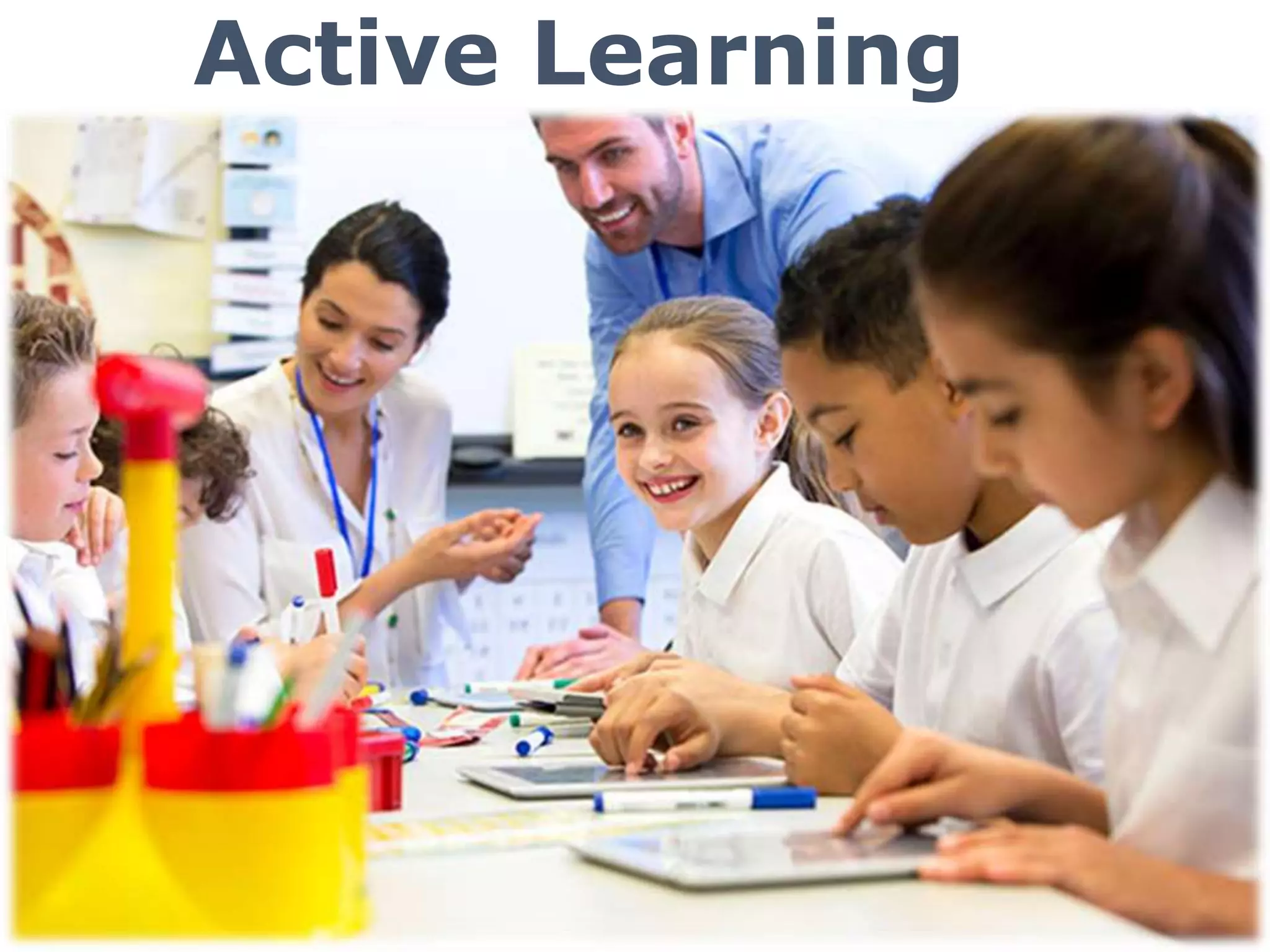






Active Learning
In this Session
Teachers will be able to:
• Understand the process of learning
• Develop an understanding of principles of learning.
• Reflect on and discuss which style(s) of learning they are
personally inclined towards.
• Identify the characteristics of four common learning styles.
• Understand that learning styles of each student is different
from others based on their individual differences.
• Understand the concept of active learning
• Understand Active Learning Strategies
In this Session (continued)
Teachers will be able to:
• Analyze & compare lesson plans to understand Active
Learning.
• Understand the role of a teacher in an active learning
environment.
• Analyze the shift from teacher centered classroom to student
centered classroom
• Understand the criteria for classroom observation
How Do We Learn?
• Most people learn:
–10% of what they read
–20% of what they hear
–30% of what they see
–50% of what they see and hear
–70% of what they discuss with other people
–80% of what they use and do in real life
–95% of what they teach someone else
— E.E. Ekwall and J. L. Shanker, 1988
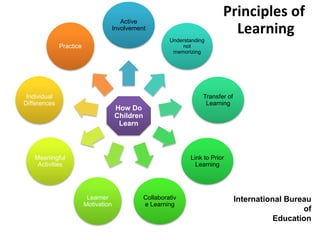
Principles of
Learning
How Do
Children
Learn
Active
Involvement
Understanding
not
memorizing
Transfer of
Learning
Link to Prior
Learning
Collaborativ
e Learning
Learner
Motivation
Meaningful
Activities
Individual
Differences
Practice
International Bureau
of
Education
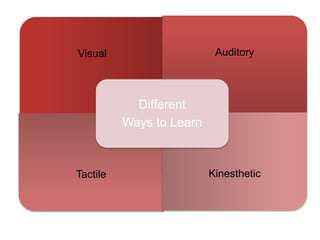
Visual Auditory
Tactile Kinesthetic
Different
Ways to Learn
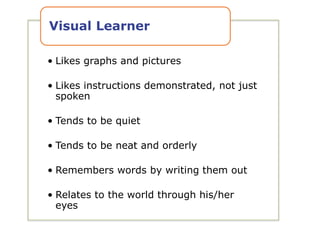
• Likes graphs and pictures
• Likes instructions demonstrated, not just
spoken
• Tends to be quiet
• Tends to be neat and orderly
• Remembers words by writing them out
• Relates to the world through his/her
eyes
Visual Learner
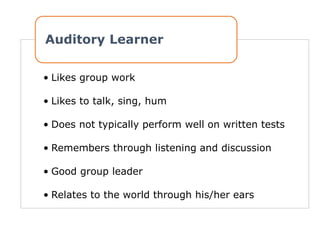
• Likes group work
• Likes to talk, sing, hum
• Does not typically perform well on written tests
• Remembers through listening and discussion
• Good group leader
• Relates to the world through his/her ears
Auditory Learner
• Often has difficulty paying attention
• Needs to hear instructions repeated
• Relies on physical and material surroundings
to learn
• Likes arts and crafts
• Often has difficulty staying still
• Relates to the world through sense of touch
Tactile Learner
• Needs quiet periods for specific tasks
• Learns through Total Physical Response (TPR)
activities
• Often has good coordination
• Likes to complete tasks in a position other than
sitting (that he/she chooses)
• Often in motion; has difficulty sitting still
• Relates to the world through physical activity
Kinesthetic Learner
What Is Active Learning?
Active learning is an approach to learning based on
these assumptions:
• Learning is an active endeavor (not passive).
• Students are responsible for their own learning.
• Students learn more effectively when they are
active learners, not passive learners.
• People learn in different ways (they have
different learning styles).
Active Learning Strategies
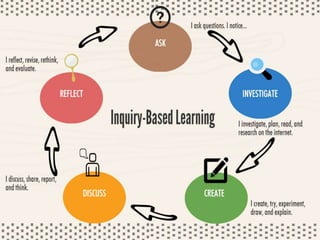
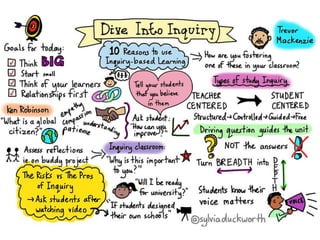
1. Inquiry Based Learning
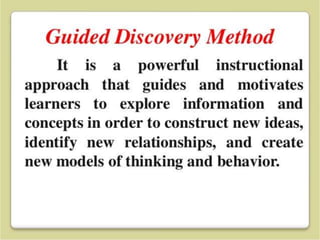
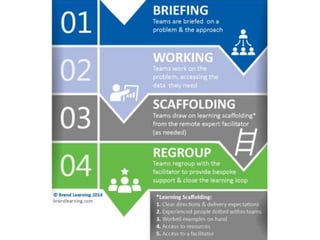
2. Guided Discovery
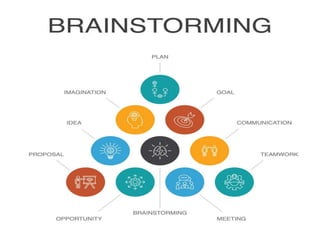
3. Brainstorming
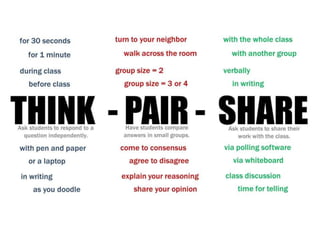
4. Think-Pair-Share (Quick Write-Pair-Share)
5. Small Groups
6. Graphic Organizer
7. Gallery Walk
8. Jigsaw Activity
INQUIRY BASED LEARNING
GUIDED DISCOVERY
BRAINSTORMING
Think-Pair-Share
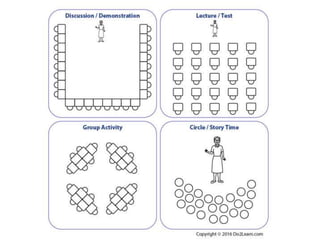
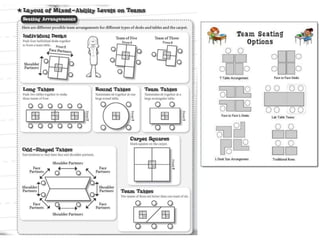
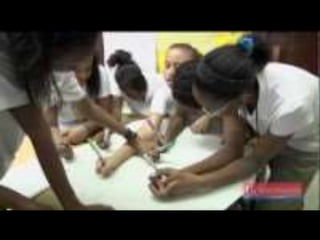
Small Groups
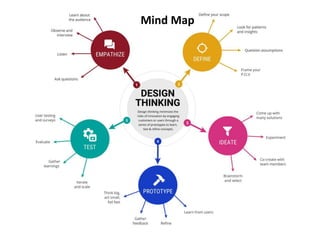
GRAPHIC ORGANISER
Mind Map
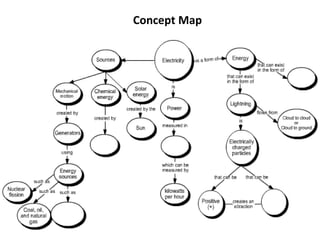
Concept Map
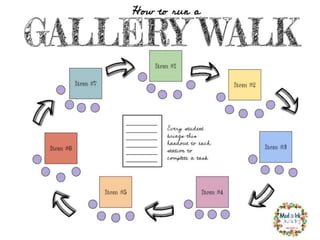
GALLERY WALK
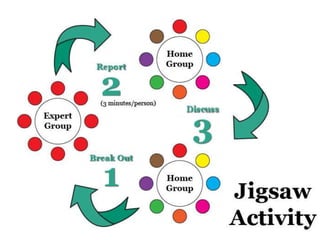
JIGSAW METHOD
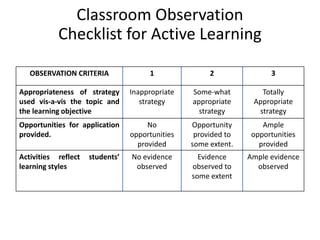
Classroom Observation
Checklist for Active Learning
OBSERVATION CRITERIA 1 2 3
Appropriateness of strategy
used vis-a-vis the topic and
the learning objective
Inappropriate
strategy
Some-what
appropriate
strategy
Totally
Appropriate
strategy
Opportunities for application
provided.
No
opportunities
provided
Opportunity
provided to
some extent.
Ample
opportunities
provided
Activities reflect students’
learning styles
No evidence
observed
Evidence
observed to
some extent
Ample evidence
observed
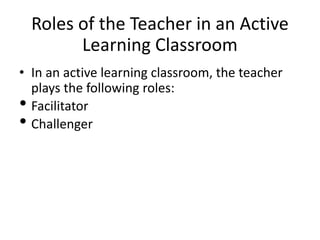
Roles of the Teacher in an Active
Learning Classroom
• In an active learning classroom, the teacher
plays the following roles:
• Facilitator
• Challenger
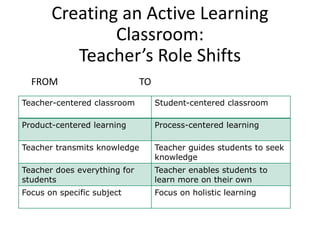
Creating an Active Learning
Classroom:
Teacher’s Role Shifts
FROM TO
Teacher-centered classroom Student-centered classroom
Product-centered learning Process-centered learning
Teacher transmits knowledge Teacher guides students to seek
knowledge
Teacher does everything for
students
Teacher enables students to
learn more on their own
Focus on specific subject Focus on holistic learning
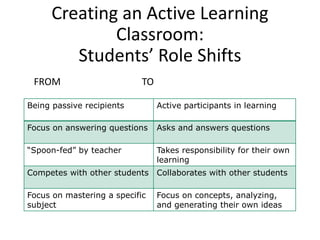
Creating an Active Learning
Classroom:
Students’ Role Shifts
FROM TO
Being passive recipients Active participants in learning
Focus on answering questions Asks and answers questions
“Spoon-fed” by teacher Takes responsibility for their own
learning
Competes with other students Collaborates with other students
Focus on mastering a specific
subject
Focus on concepts, analyzing,
and generating their own ideas
Active Learning: “Make Our Own
Meaning”
• Students learn more material and retain
information longer than when using traditional
methods (lecture).
• Active learning requires us to “make our own
meaning,” which is based on making neural
connections in our brains.
• Passive methods, such as listening to a lecture, do
not require us to make these neural connections.
Active Learning
Thank you for coming!

Active Learning

  • 1.
  • 2.
    In this Session Teacherswill be able to: • Understand the process of learning • Develop an understanding of principles of learning. • Reflect on and discuss which style(s) of learning they are personally inclined towards. • Identify the characteristics of four common learning styles. • Understand that learning styles of each student is different from others based on their individual differences. • Understand the concept of active learning • Understand Active Learning Strategies
  • 3.
    In this Session(continued) Teachers will be able to: • Analyze & compare lesson plans to understand Active Learning. • Understand the role of a teacher in an active learning environment. • Analyze the shift from teacher centered classroom to student centered classroom • Understand the criteria for classroom observation
  • 4.
    How Do WeLearn? • Most people learn: –10% of what they read –20% of what they hear –30% of what they see –50% of what they see and hear –70% of what they discuss with other people –80% of what they use and do in real life –95% of what they teach someone else — E.E. Ekwall and J. L. Shanker, 1988
  • 5.
    Principles of Learning How Do Children Learn Active Involvement Understanding not memorizing Transferof Learning Link to Prior Learning Collaborativ e Learning Learner Motivation Meaningful Activities Individual Differences Practice International Bureau of Education
  • 6.
  • 7.
    • Likes graphsand pictures • Likes instructions demonstrated, not just spoken • Tends to be quiet • Tends to be neat and orderly • Remembers words by writing them out • Relates to the world through his/her eyes Visual Learner
  • 8.
    • Likes groupwork • Likes to talk, sing, hum • Does not typically perform well on written tests • Remembers through listening and discussion • Good group leader • Relates to the world through his/her ears Auditory Learner
  • 9.
    • Often hasdifficulty paying attention • Needs to hear instructions repeated • Relies on physical and material surroundings to learn • Likes arts and crafts • Often has difficulty staying still • Relates to the world through sense of touch Tactile Learner
  • 10.
    • Needs quietperiods for specific tasks • Learns through Total Physical Response (TPR) activities • Often has good coordination • Likes to complete tasks in a position other than sitting (that he/she chooses) • Often in motion; has difficulty sitting still • Relates to the world through physical activity Kinesthetic Learner
  • 11.
    What Is ActiveLearning? Active learning is an approach to learning based on these assumptions: • Learning is an active endeavor (not passive). • Students are responsible for their own learning. • Students learn more effectively when they are active learners, not passive learners. • People learn in different ways (they have different learning styles).
  • 12.
    Active Learning Strategies 1.Inquiry Based Learning 2. Guided Discovery 3. Brainstorming 4. Think-Pair-Share (Quick Write-Pair-Share) 5. Small Groups 6. Graphic Organizer 7. Gallery Walk 8. Jigsaw Activity
  • 13.
  • 17.
  • 21.
  • 25.
  • 28.
  • 32.
  • 33.
  • 34.
  • 37.
  • 40.
  • 43.
    Classroom Observation Checklist forActive Learning OBSERVATION CRITERIA 1 2 3 Appropriateness of strategy used vis-a-vis the topic and the learning objective Inappropriate strategy Some-what appropriate strategy Totally Appropriate strategy Opportunities for application provided. No opportunities provided Opportunity provided to some extent. Ample opportunities provided Activities reflect students’ learning styles No evidence observed Evidence observed to some extent Ample evidence observed
  • 44.
    Roles of theTeacher in an Active Learning Classroom • In an active learning classroom, the teacher plays the following roles: • Facilitator • Challenger
  • 45.
    Creating an ActiveLearning Classroom: Teacher’s Role Shifts FROM TO Teacher-centered classroom Student-centered classroom Product-centered learning Process-centered learning Teacher transmits knowledge Teacher guides students to seek knowledge Teacher does everything for students Teacher enables students to learn more on their own Focus on specific subject Focus on holistic learning
  • 46.
    Creating an ActiveLearning Classroom: Students’ Role Shifts FROM TO Being passive recipients Active participants in learning Focus on answering questions Asks and answers questions “Spoon-fed” by teacher Takes responsibility for their own learning Competes with other students Collaborates with other students Focus on mastering a specific subject Focus on concepts, analyzing, and generating their own ideas
  • 47.
    Active Learning: “MakeOur Own Meaning” • Students learn more material and retain information longer than when using traditional methods (lecture). • Active learning requires us to “make our own meaning,” which is based on making neural connections in our brains. • Passive methods, such as listening to a lecture, do not require us to make these neural connections.
  • 48.