Methods of
Planting
Learning Outcomes:
Identify the two methods of planting
Participate actively in the class discussion
Create a container garden
TWO METHODS
OF PLANTING
Direct-seeding
Indirect Method
1.
2.
Direct-seeding
or planting
- method of planting seeds directly
in the garden plot.
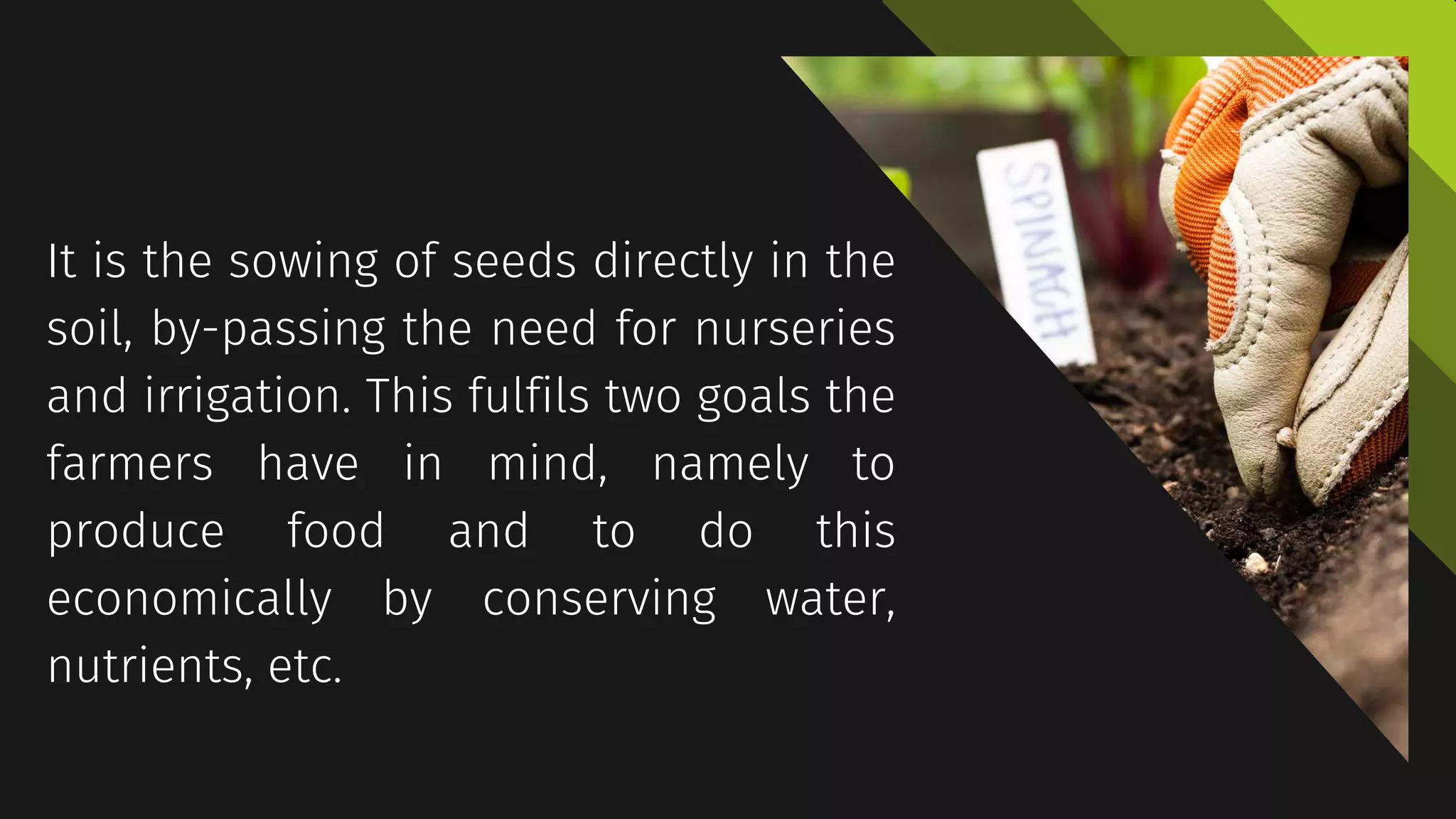
It is the sowing of seeds directly in the
soil, by-passing the need for nurseries
and irrigation. This fulfils two goals the
farmers have in mind, namely to
produce food and to do this
economically by conserving water,
nutrients, etc.
Characteristics of
seeds and plants:
big seeds
seeds that grow fast
seeds and plants that do not need extra
care during the seedling stage
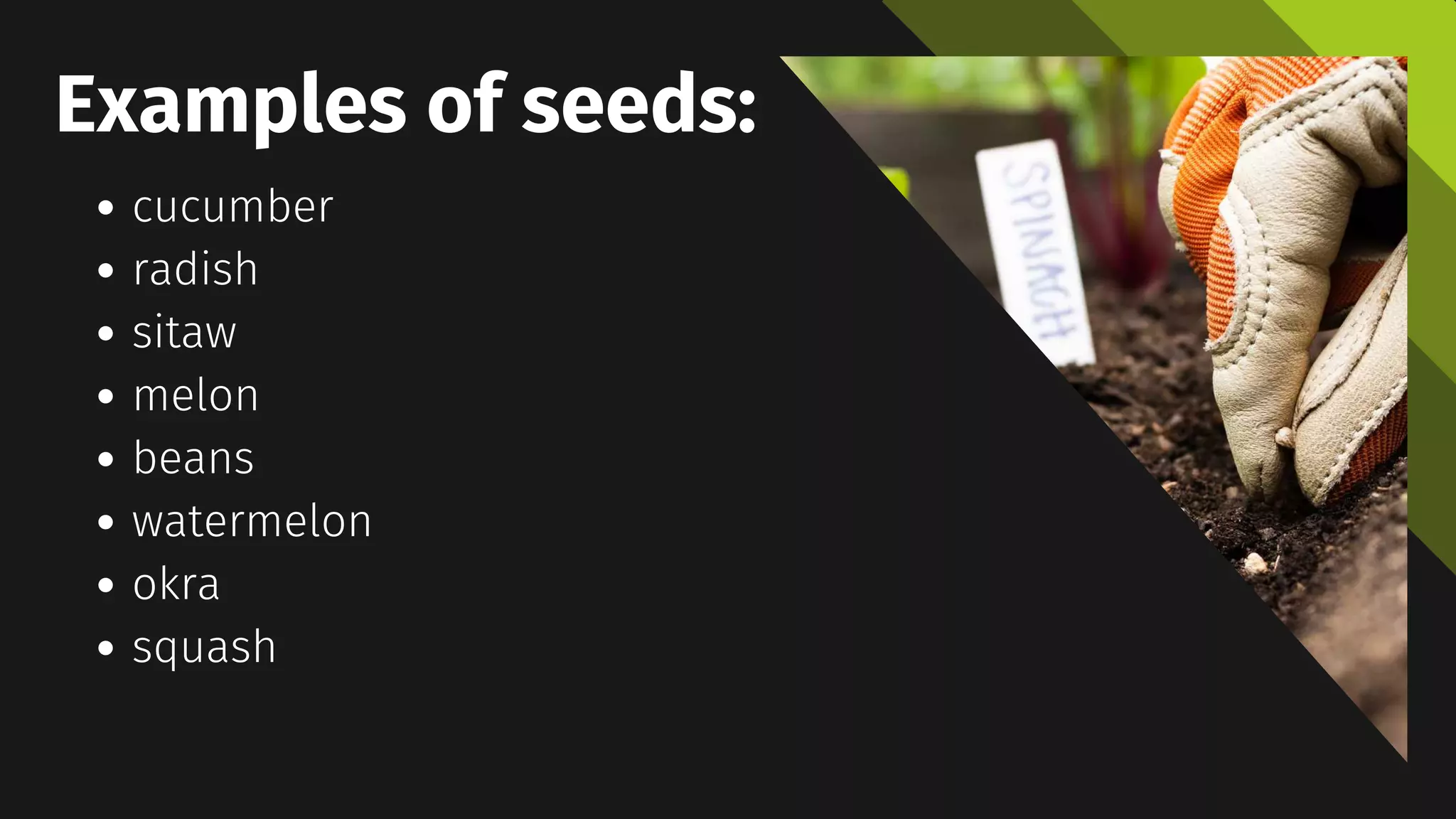
Examples of seeds:
cucumber 
radish 
sitaw 
melon 
beans 
watermelon
okra
squash
ADVANTAGES
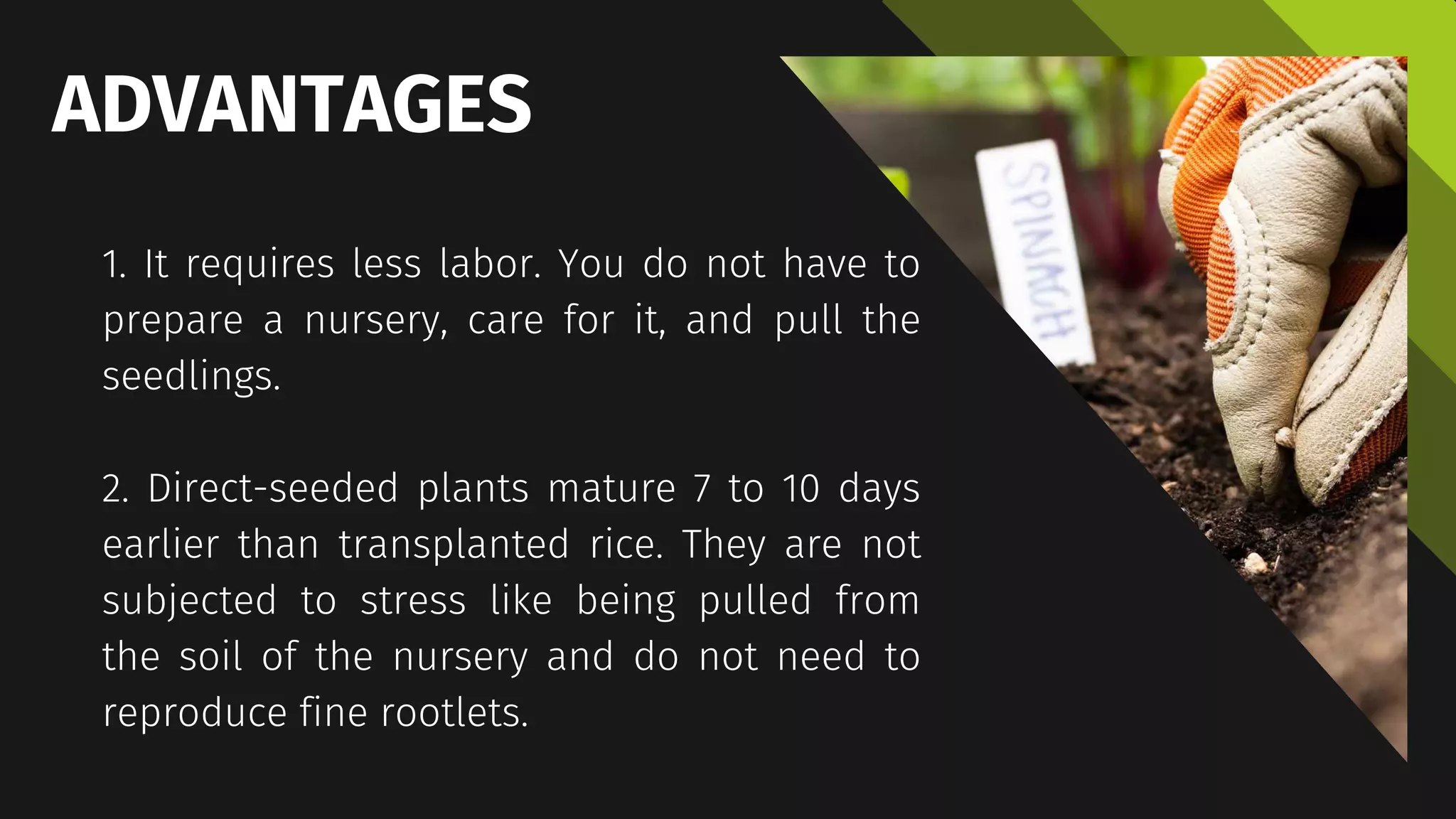
1. It requires less labor. You do not have to
prepare a nursery, care for it, and pull the
seedlings.
2. Direct-seeded plants mature 7 to 10 days
earlier than transplanted rice. They are not
subjected to stress like being pulled from
the soil of the nursery and do not need to
reproduce fine rootlets.
DISADVANTAGES
1. In direct seeding, the seeds are exposed to birds,
rats, and snails.
2. There is greater crop-weed competition because
rice plants and weeds are of similar age.
3. Plants tend to lodge more because there is less
root anchorage.
4. More seeds are required:80 to 100 kilograms per
hectare compared with 35 to 65 kilograms per
hectare with transplanting.
Indirect Method
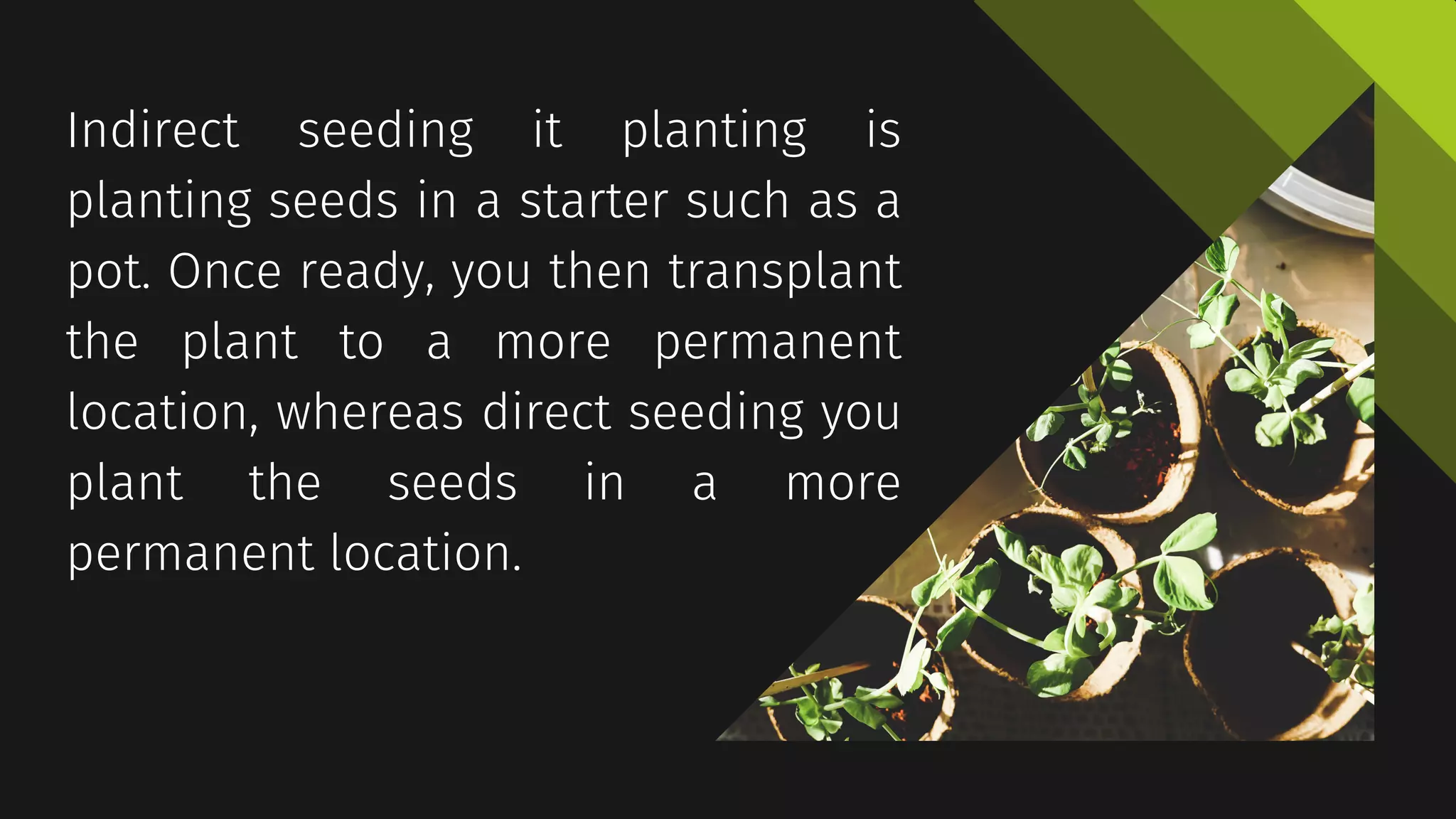
Indirect seeding it planting is
planting seeds in a starter such as a
pot. Once ready, you then transplant
the plant to a more permanent
location, whereas direct seeding you
plant the seeds in a more
permanent location.
It is practical among plants with small
seeds such as cabbage, pechay, mustard,
tomatoes, eggplants and spinach.
- they are sown in seedboxes or seedbeds
in rows to produce seedlings which are
then transplanted into the field. As soon as
seedlings have grown three or more leaves,
they are now ready for transplanting.
ADVANTAGES
1. Indirect seeding gives you greater control
over growing conditions, such as protecting
the soil from pests or allowing the seeds to
germinate in a protected environment like a
greenhouse.
2. The success rate for indirect seeding is
higher than direct seeding, and will therefore
yield a greater crop.
DISADVANTAGES
1. Indirect seeding can potentially lead to
greater expenses due to the cost of materials
such as seedling trays, or possibly even
maintaining a greenhouse.
2. Indirect seeding also requires additional
preparation in order to make sure that your
seedlings are ready for transplantation during
the correct growing season.
3. Additionally, the young plants are at risk of
transplant shock when you transplant them into
a new, less controlled environment.
It is the method of planting seed in a seed
box and later, when the seedlings are big
enough, (when they have two or four
“true” leaves) they are transplanted from
the seed box to the garden plot.
Transplanting is done when seedlings
have attained 12 -15 cm in height and 3 – 4
leaves have developed.
TRANSPLANTING
Characteristics of Seeds and Plants
small seeds 
plants that need extra care during their seedling stage
Examples of seeds:
- Tomato
- Pechay
- Eggplant
- Pepper
- Mustard
1. Water the seedlings before pulling.
2. Pull the seedlings carefully without shaking off the media from the roots.
3. Plant the seedlings immediately to prevent the roots from drying out.
4. Gently press the soil around the roots.
5. Water the seedlings at the soil surface with a gentle stream of water to
settle the soil around the roots.
Steps to follow in transplanting seedlings:

Methods of Planting.pdf

  • 1.
  • 2.
    Learning Outcomes: Identify thetwo methods of planting Participate actively in the class discussion Create a container garden
  • 3.
  • 4.
    Direct-seeding or planting - methodof planting seeds directly in the garden plot.
  • 5.
    It is thesowing of seeds directly in the soil, by-passing the need for nurseries and irrigation. This fulfils two goals the farmers have in mind, namely to produce food and to do this economically by conserving water, nutrients, etc.
  • 6.
    Characteristics of seeds andplants: big seeds seeds that grow fast seeds and plants that do not need extra care during the seedling stage
  • 7.
    Examples of seeds: cucumber radish  sitaw  melon  beans  watermelon okra squash
  • 8.
    ADVANTAGES 1. It requiresless labor. You do not have to prepare a nursery, care for it, and pull the seedlings. 2. Direct-seeded plants mature 7 to 10 days earlier than transplanted rice. They are not subjected to stress like being pulled from the soil of the nursery and do not need to reproduce fine rootlets.
  • 9.
    DISADVANTAGES 1. In directseeding, the seeds are exposed to birds, rats, and snails. 2. There is greater crop-weed competition because rice plants and weeds are of similar age. 3. Plants tend to lodge more because there is less root anchorage. 4. More seeds are required:80 to 100 kilograms per hectare compared with 35 to 65 kilograms per hectare with transplanting.
  • 10.
  • 11.
    Indirect seeding itplanting is planting seeds in a starter such as a pot. Once ready, you then transplant the plant to a more permanent location, whereas direct seeding you plant the seeds in a more permanent location.
  • 12.
    It is practicalamong plants with small seeds such as cabbage, pechay, mustard, tomatoes, eggplants and spinach. - they are sown in seedboxes or seedbeds in rows to produce seedlings which are then transplanted into the field. As soon as seedlings have grown three or more leaves, they are now ready for transplanting.
  • 13.
    ADVANTAGES 1. Indirect seedinggives you greater control over growing conditions, such as protecting the soil from pests or allowing the seeds to germinate in a protected environment like a greenhouse. 2. The success rate for indirect seeding is higher than direct seeding, and will therefore yield a greater crop.
  • 14.
    DISADVANTAGES 1. Indirect seedingcan potentially lead to greater expenses due to the cost of materials such as seedling trays, or possibly even maintaining a greenhouse. 2. Indirect seeding also requires additional preparation in order to make sure that your seedlings are ready for transplantation during the correct growing season. 3. Additionally, the young plants are at risk of transplant shock when you transplant them into a new, less controlled environment.
  • 15.
    It is themethod of planting seed in a seed box and later, when the seedlings are big enough, (when they have two or four “true” leaves) they are transplanted from the seed box to the garden plot. Transplanting is done when seedlings have attained 12 -15 cm in height and 3 – 4 leaves have developed. TRANSPLANTING
  • 16.
    Characteristics of Seedsand Plants small seeds  plants that need extra care during their seedling stage Examples of seeds: - Tomato - Pechay - Eggplant - Pepper - Mustard
  • 17.
    1. Water theseedlings before pulling. 2. Pull the seedlings carefully without shaking off the media from the roots. 3. Plant the seedlings immediately to prevent the roots from drying out. 4. Gently press the soil around the roots. 5. Water the seedlings at the soil surface with a gentle stream of water to settle the soil around the roots. Steps to follow in transplanting seedlings: