CultureSCAN:
An Introduction to Spiral Dynamics
 developed by Clare W. Graves and Don E. Beck
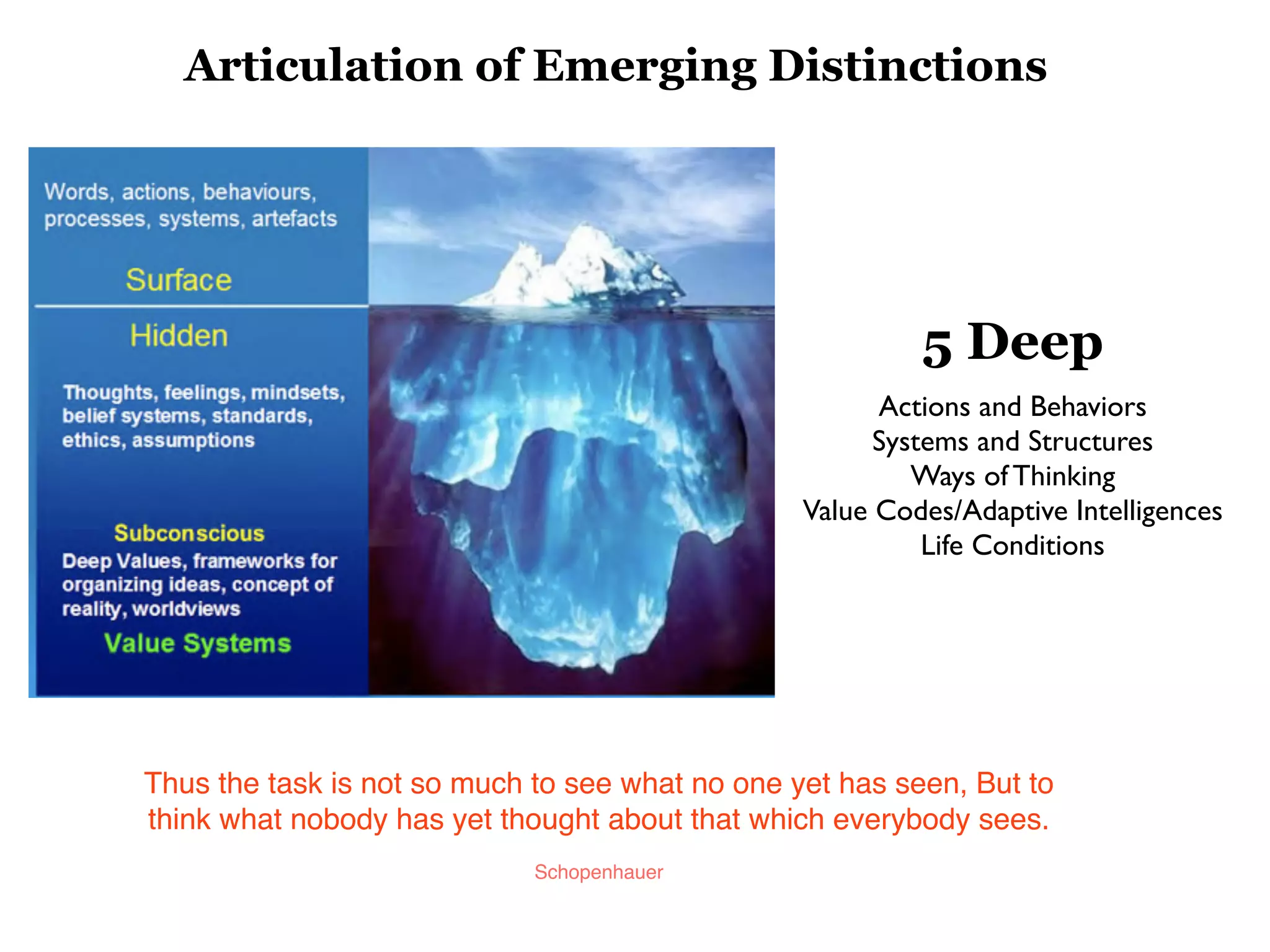
Articulation of Emerging Distinctions


                                                          5 Deep
                                                       Actions and Behaviors
                                                       Systems and Structures
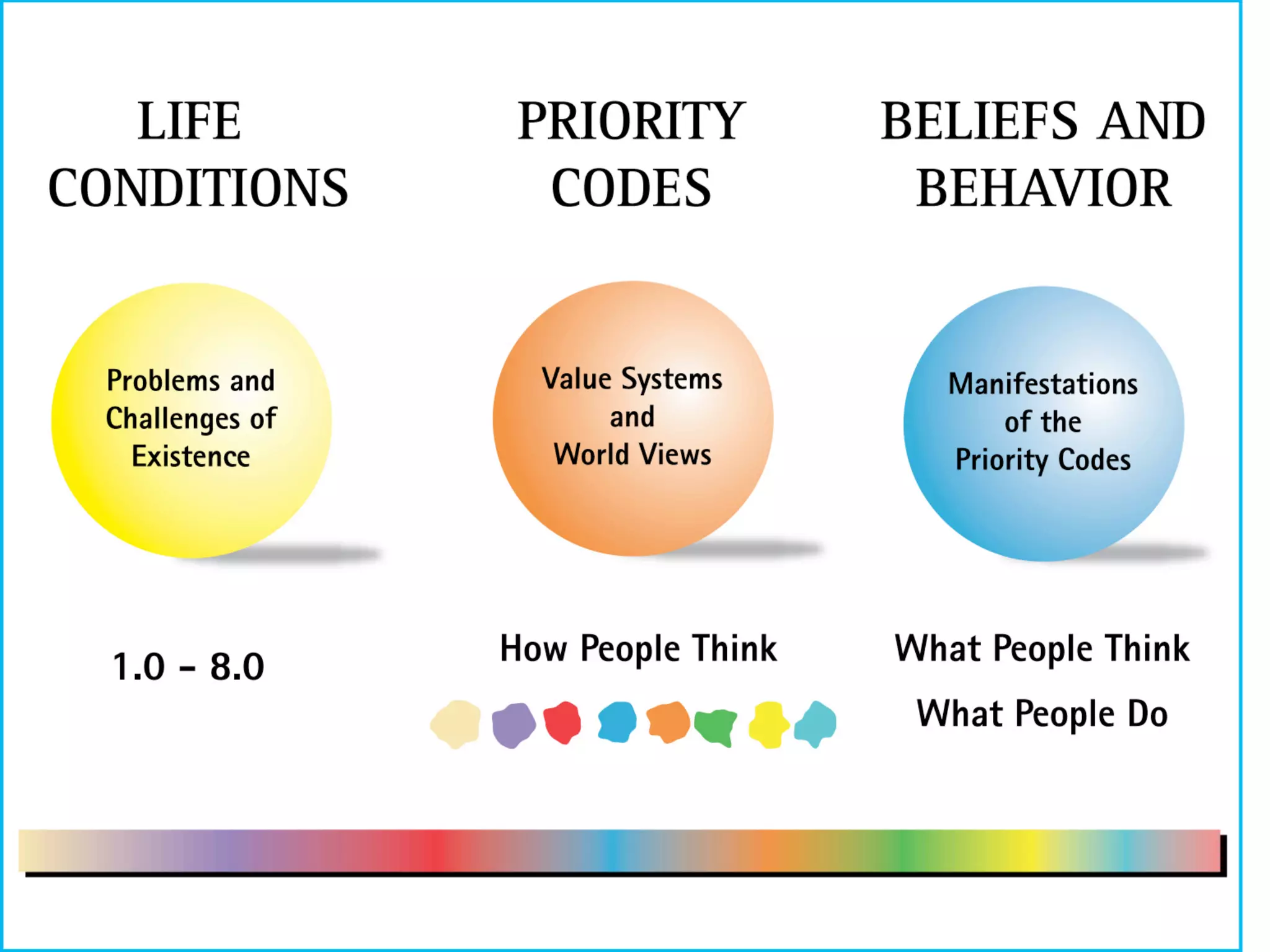
                                                          Ways of Thinking
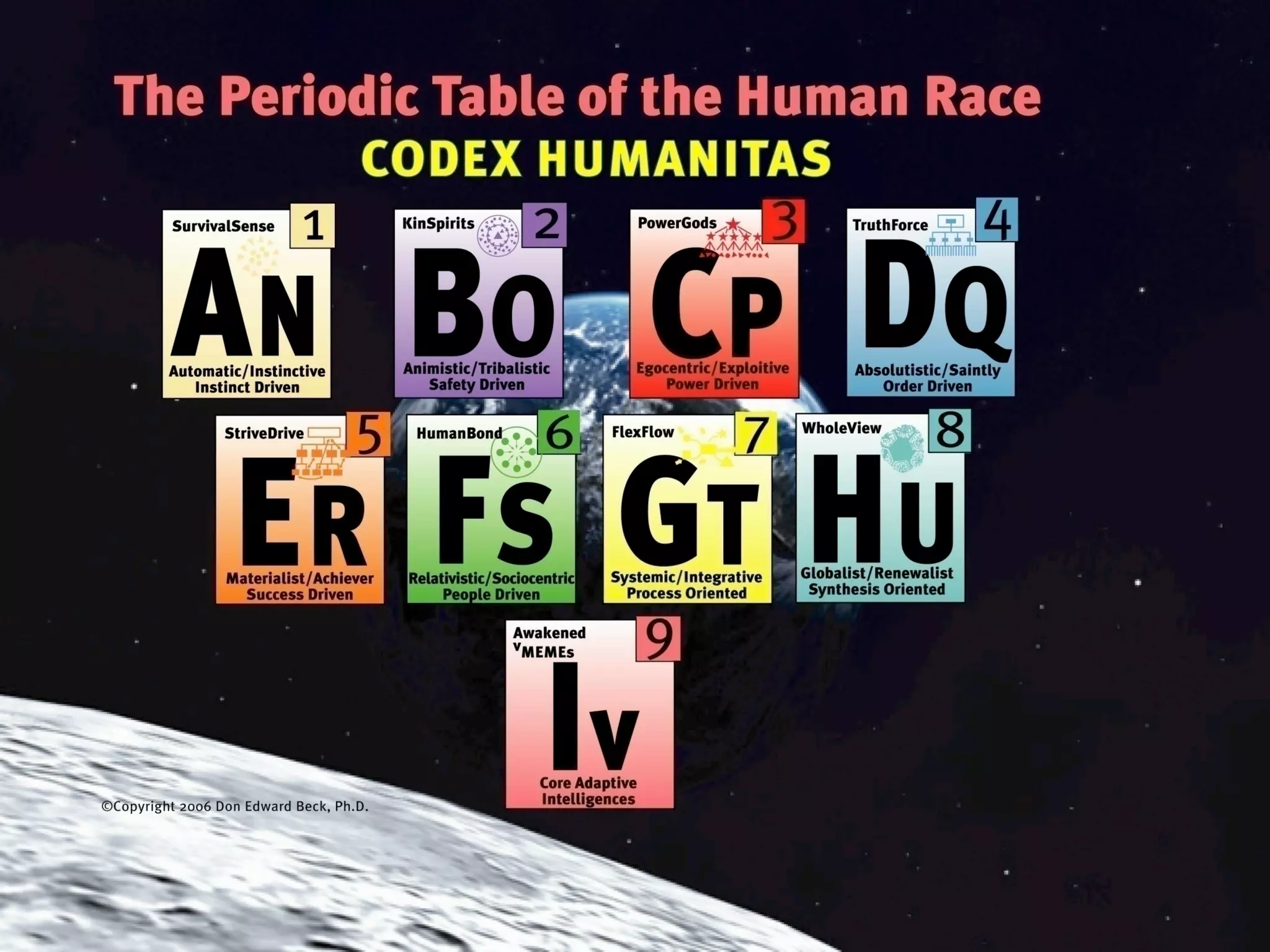
                                                 Value Codes/Adaptive Intelligences
                                                           Life Conditions


Thus the task is not so much to see what no one yet has seen, But to
think what nobody has yet thought about that which everybody sees.
                             Schopenhauer
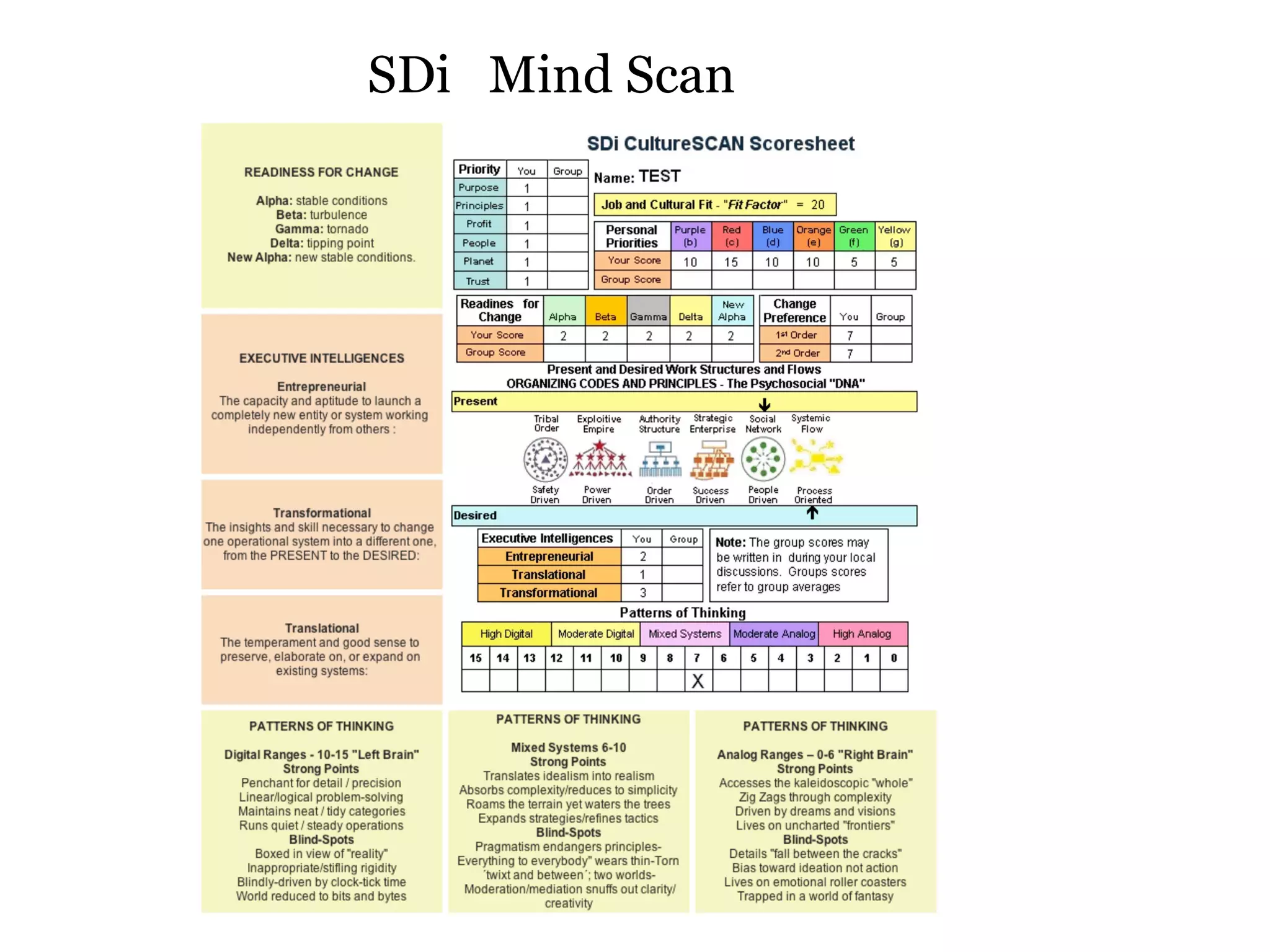
SDi Mind Scan
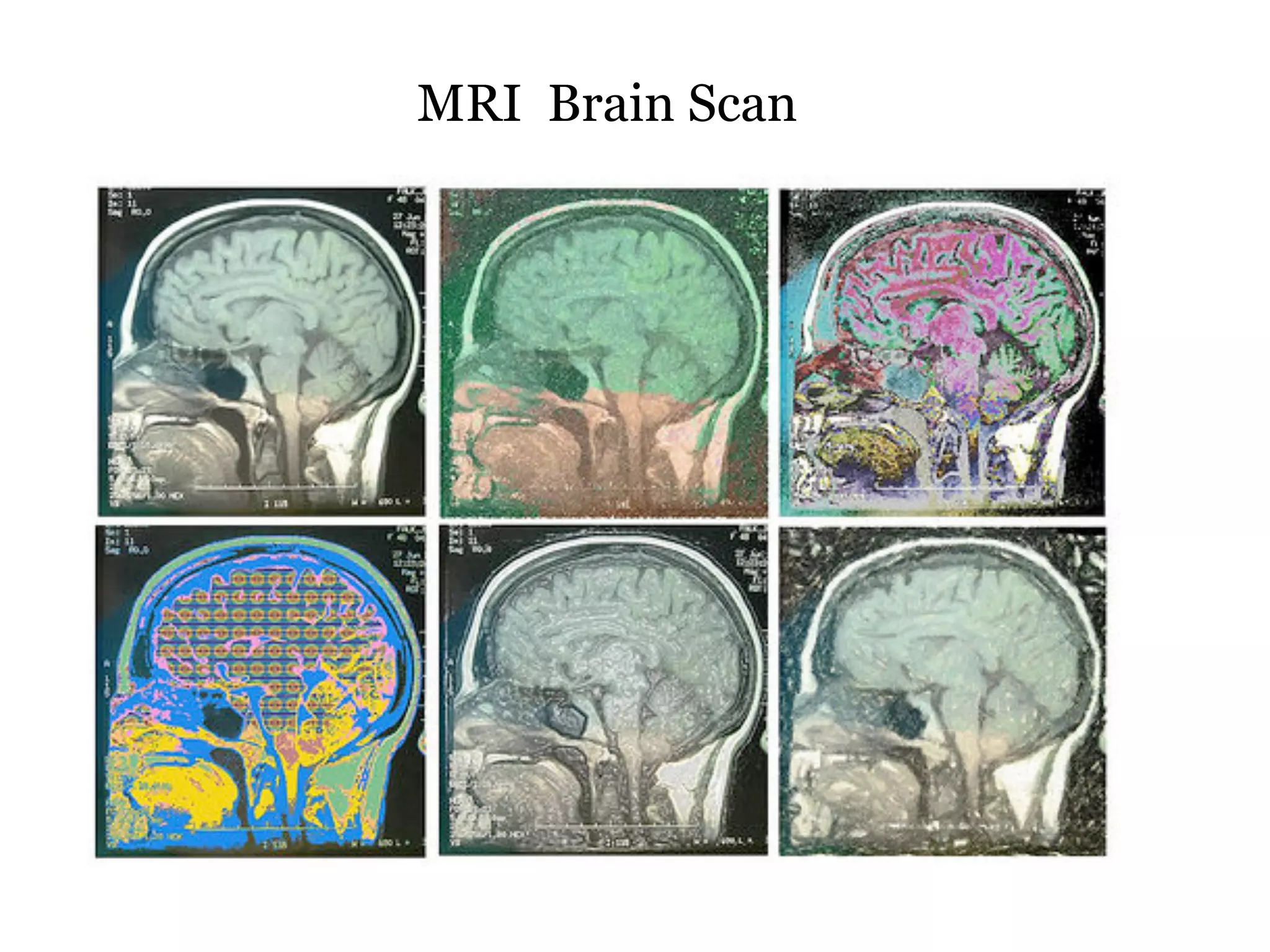
MRI Brain Scan
Value Proposition
✓ Helps pinpoint strengths, areas of potential improvement
✓ Scales from individual up to organization
✓ Identifies potential early adopters and people who may resist change.
✓ Offers insights into personal and collective values and patterns of thinking.
✓ Offers pathways, what’s next, for varying individual futures
✓ Psychological dig to understand source of conflict, shadows, developmental sink
  holes, and attachments
✓ Analyses and predicts team behaviors.
✓ Critical foundation for designing adaptive organizations as current life conditions:
   ✓ change faster,
   ✓ increase in complexity, and
   ✓ become more chaotic over the next decade
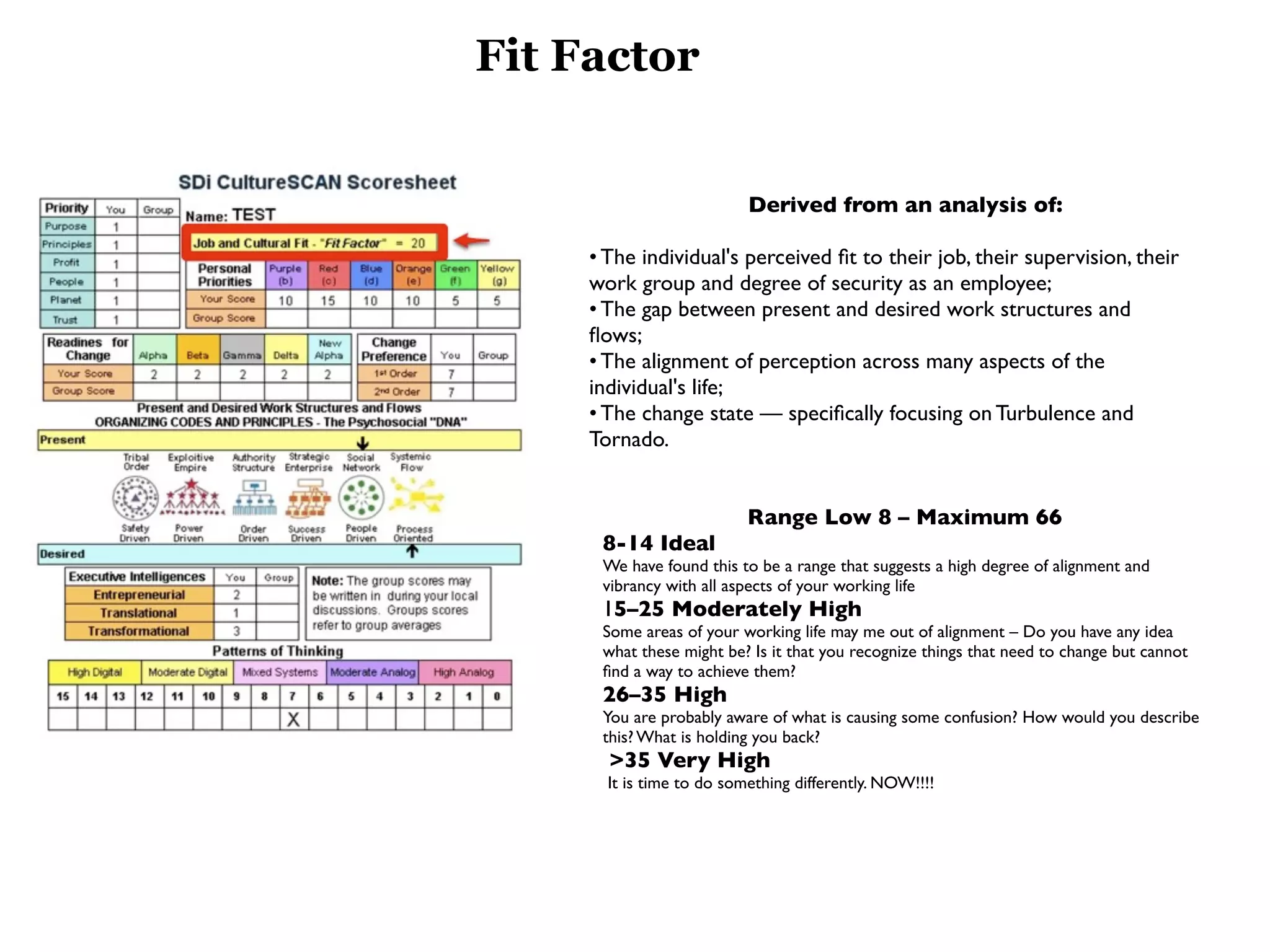
Fit Factor


                           Derived from an analysis of:

     • The individual's perceived fit to their job, their supervision, their
     work group and degree of security as an employee;
     • The gap between present and desired work structures and
     flows;
     • The alignment of perception across many aspects of the
     individual's life;
     • The change state — specifically focusing on Turbulence and
     Tornado.


                           Range Low 8 – Maximum 66
      8-14 Ideal
      We have found this to be a range that suggests a high degree of alignment and
      vibrancy with all aspects of your working life
      15–25 Moderately High
      Some areas of your working life may me out of alignment – Do you have any idea
      what these might be? Is it that you recognize things that need to change but cannot
      find a way to achieve them?
      26–35 High
      You are probably aware of what is causing some confusion? How would you describe
      this? What is holding you back?
       >35 Very High
       It is time to do something differently. NOW!!!!
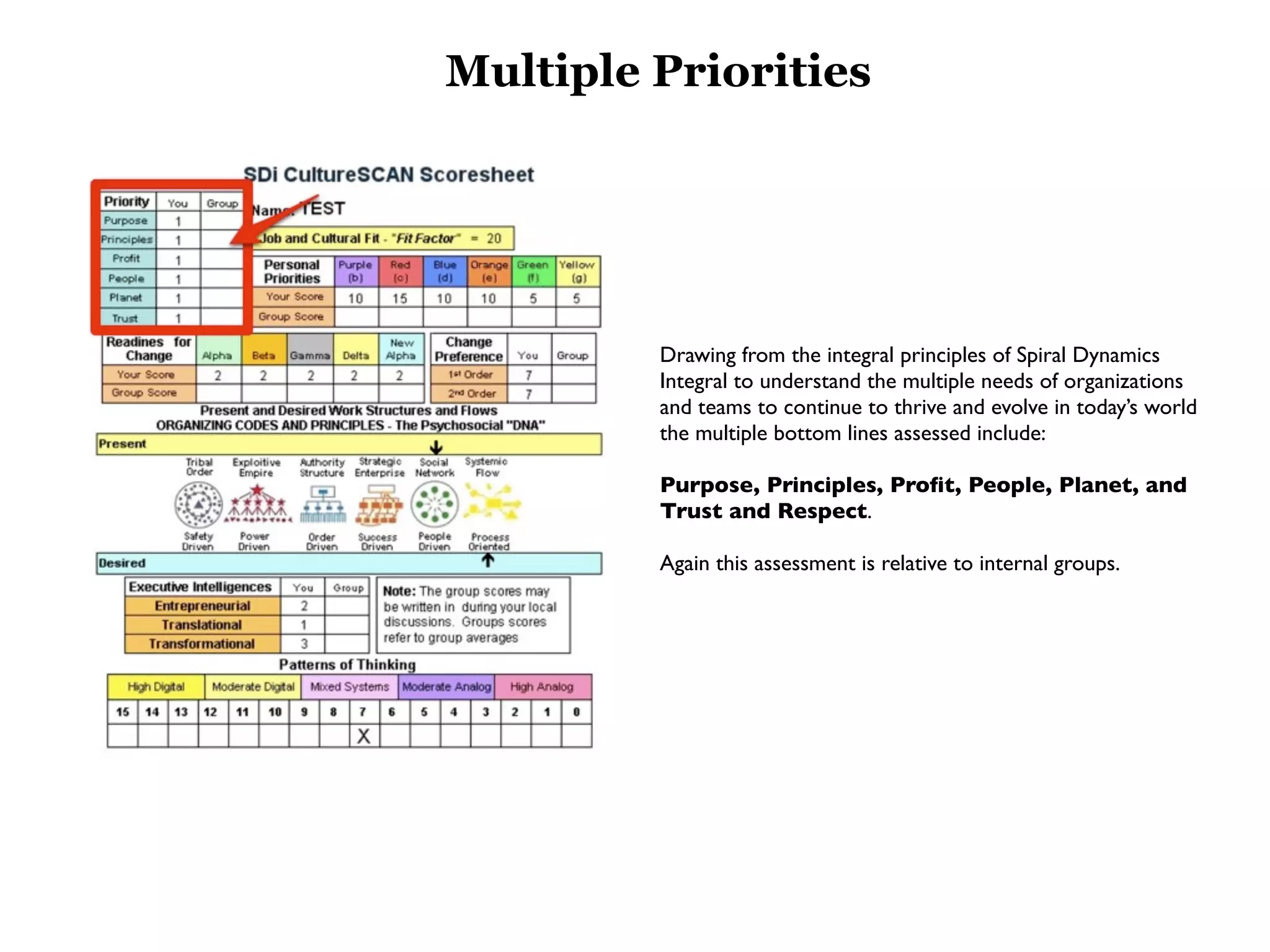
Multiple Priorities


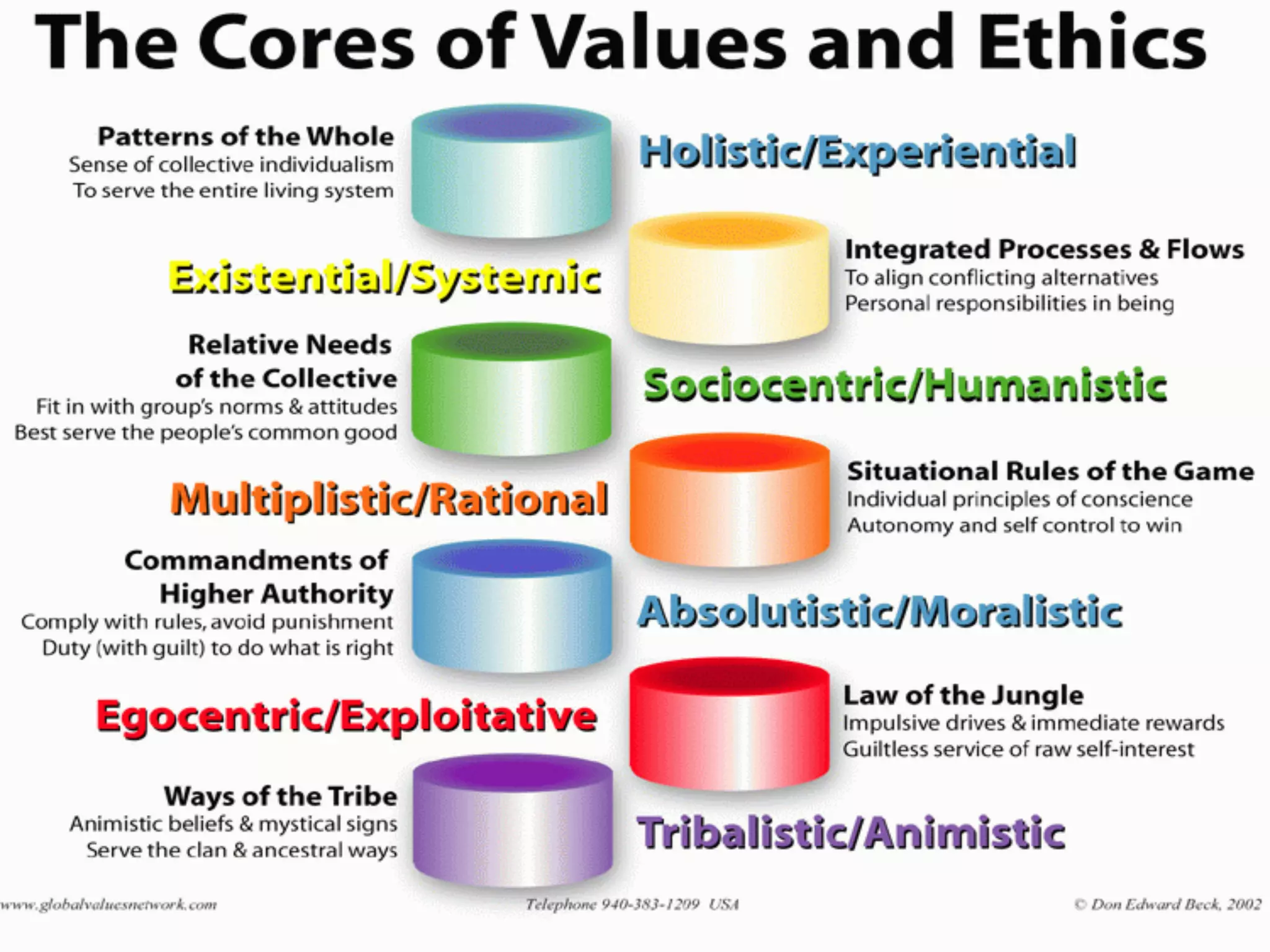
         Drawing from the integral principles of Spiral Dynamics
         Integral to understand the multiple needs of organizations
         and teams to continue to thrive and evolve in today’s world
         the multiple bottom lines assessed include:

         Purpose, Principles, Profit, People, Planet, and
         Trust and Respect.

         Again this assessment is relative to internal groups.
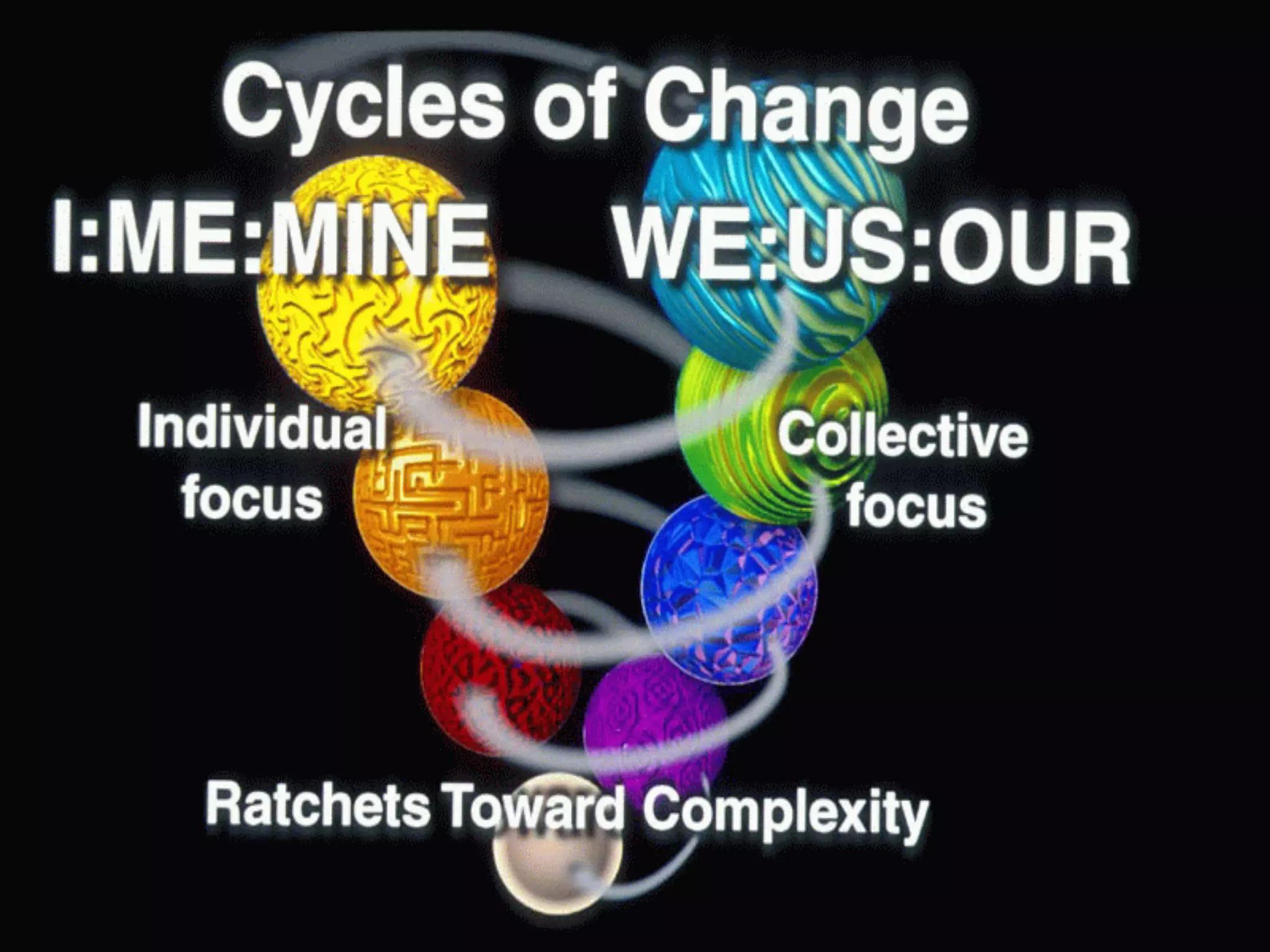
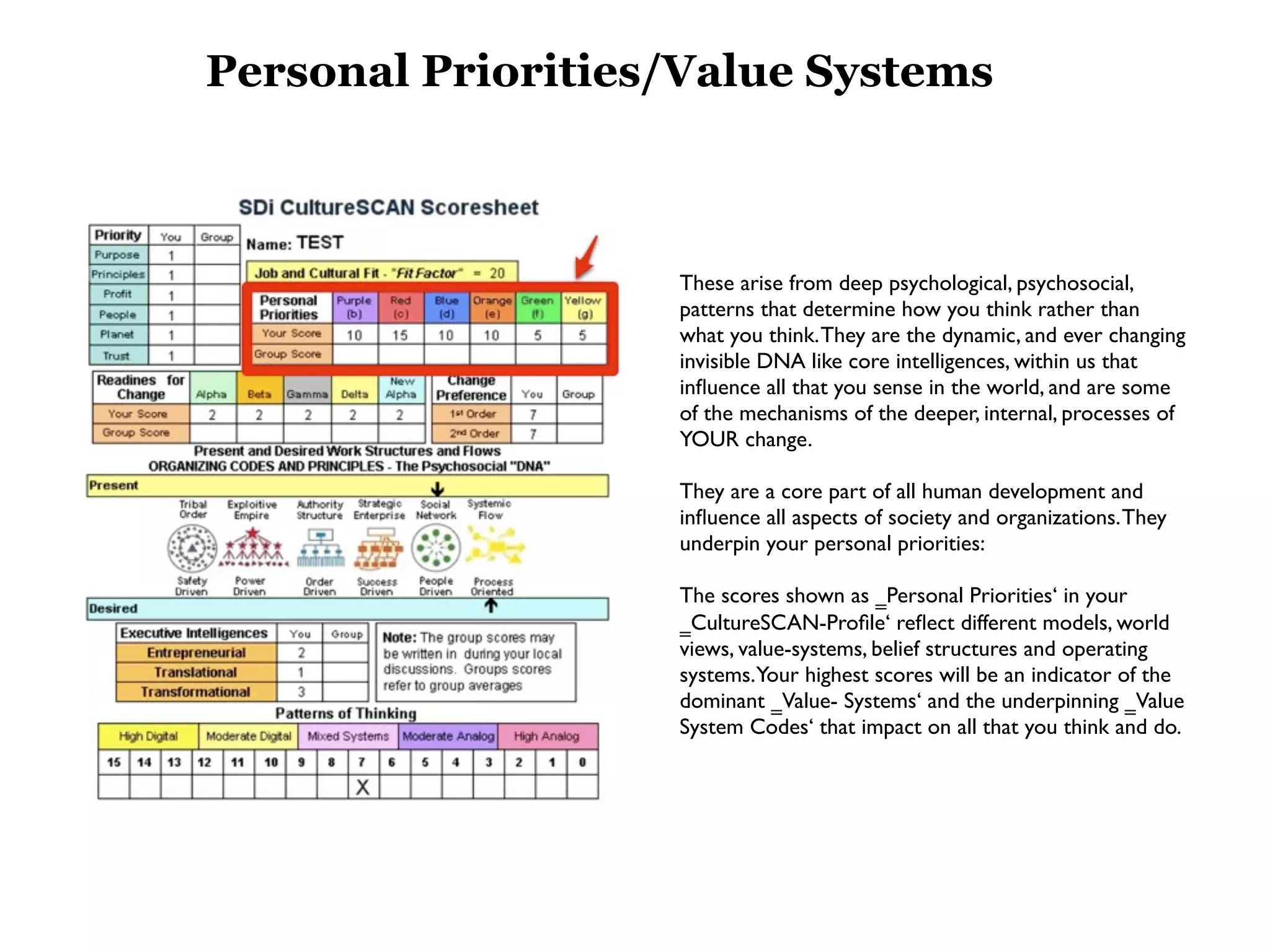
Personal Priorities/Value Systems


                   These arise from deep psychological, psychosocial,
                   patterns that determine how you think rather than
                   what you think. They are the dynamic, and ever changing
                   invisible DNA like core intelligences, within us that
                   influence all that you sense in the world, and are some
                   of the mechanisms of the deeper, internal, processes of
                   YOUR change.

                   They are a core part of all human development and
                   influence all aspects of society and organizations. They
                   underpin your personal priorities:

                   The scores shown as ‗Personal Priorities‘ in your
                   ‗CultureSCAN-Profile‘ reflect different models, world
                   views, value-systems, belief structures and operating
                   systems.Your highest scores will be an indicator of the
                   dominant ‗Value- Systems‘ and the underpinning ‗Value
                   System Codes‘ that impact on all that you think and do.
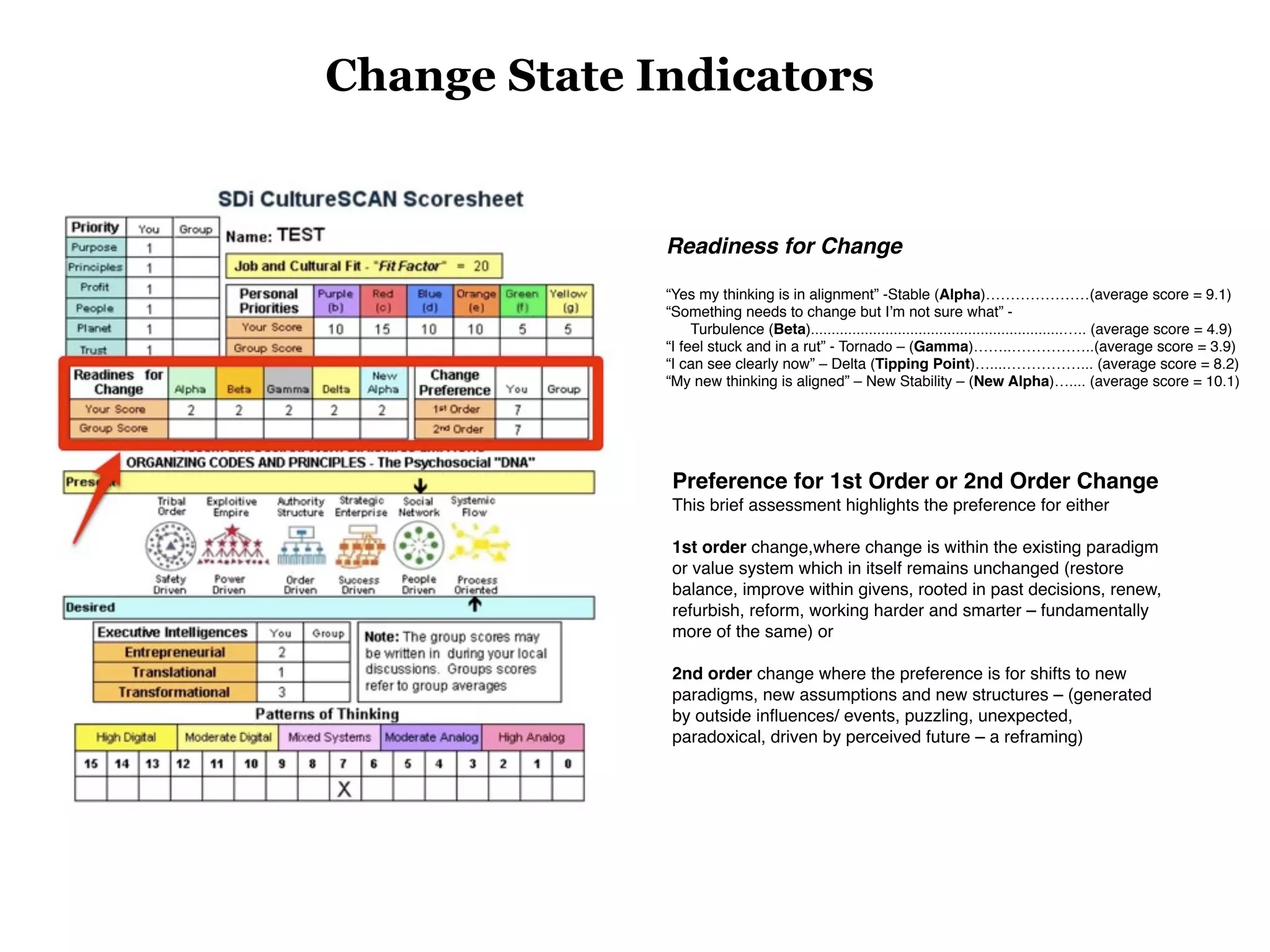
Change State Indicators


              Readiness for Change

              “Yes my thinking is in alignment” -Stable (Alpha)…………………(average score = 9.1)
              “Something needs to change but Iʼm not sure what” -
                   Turbulence (Beta).............................................................….. (average score = 4.9)
              “I feel stuck and in a rut” - Tornado – (Gamma)……..……………..(average score = 3.9)
              “I can see clearly now” – Delta (Tipping Point)…....……………... (average score = 8.2)
              “My new thinking is aligned” – New Stability – (New Alpha)….... (average score = 10.1)


               Preference for 1st Order or 2nd Order Change
               This brief assessment highlights the preference for either

               1st order change,where change is within the existing paradigm
               or value system which in itself remains unchanged (restore
               balance, improve within givens, rooted in past decisions, renew,
               refurbish, reform, working harder and smarter – fundamentally
               more of the same) or

               2nd order change where the preference is for shifts to new
               paradigms, new assumptions and new structures – (generated
               by outside influences/ events, puzzling, unexpected,
               paradoxical, driven by perceived future – a reframing)
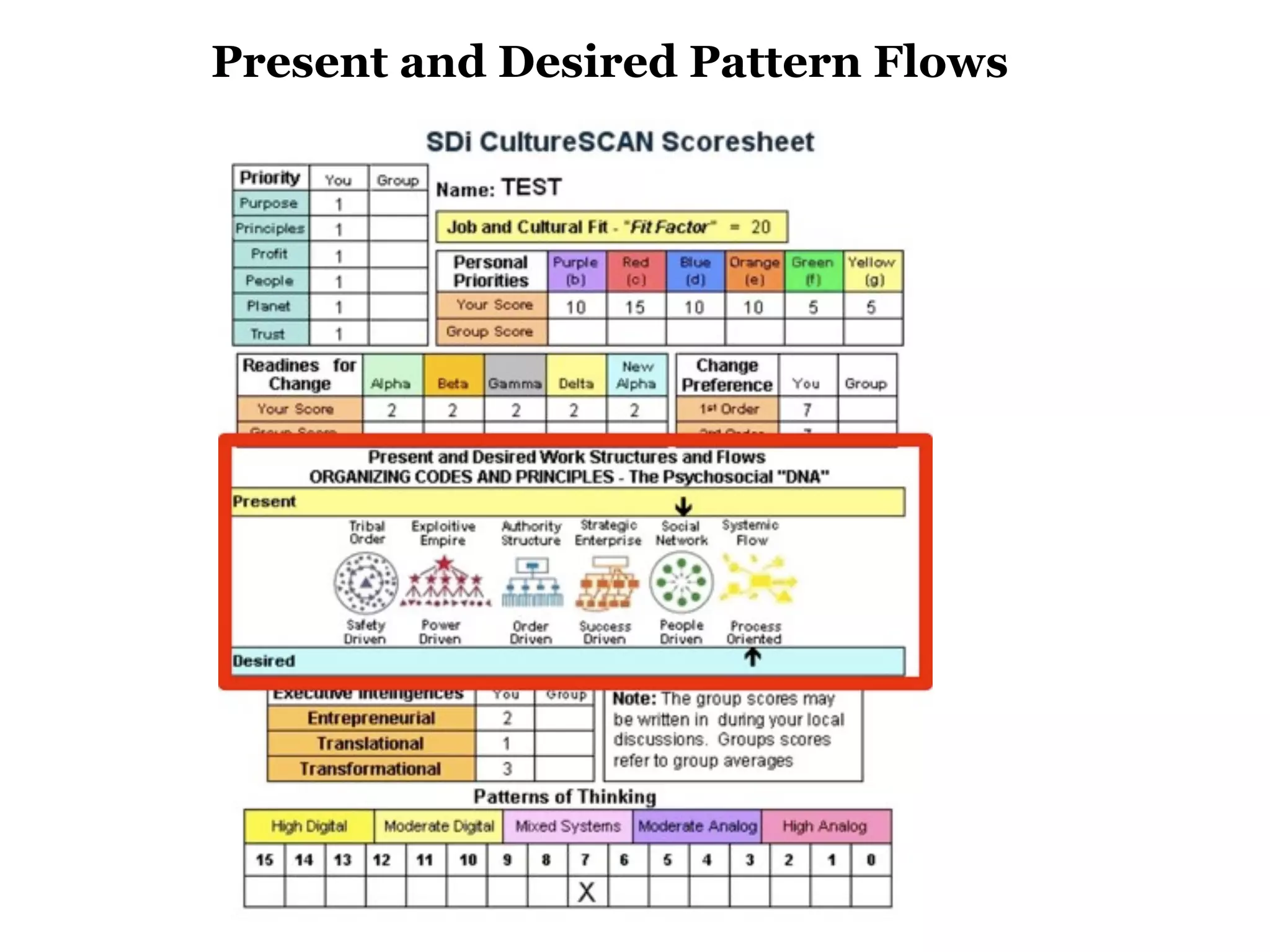
Present and Desired Pattern Flows
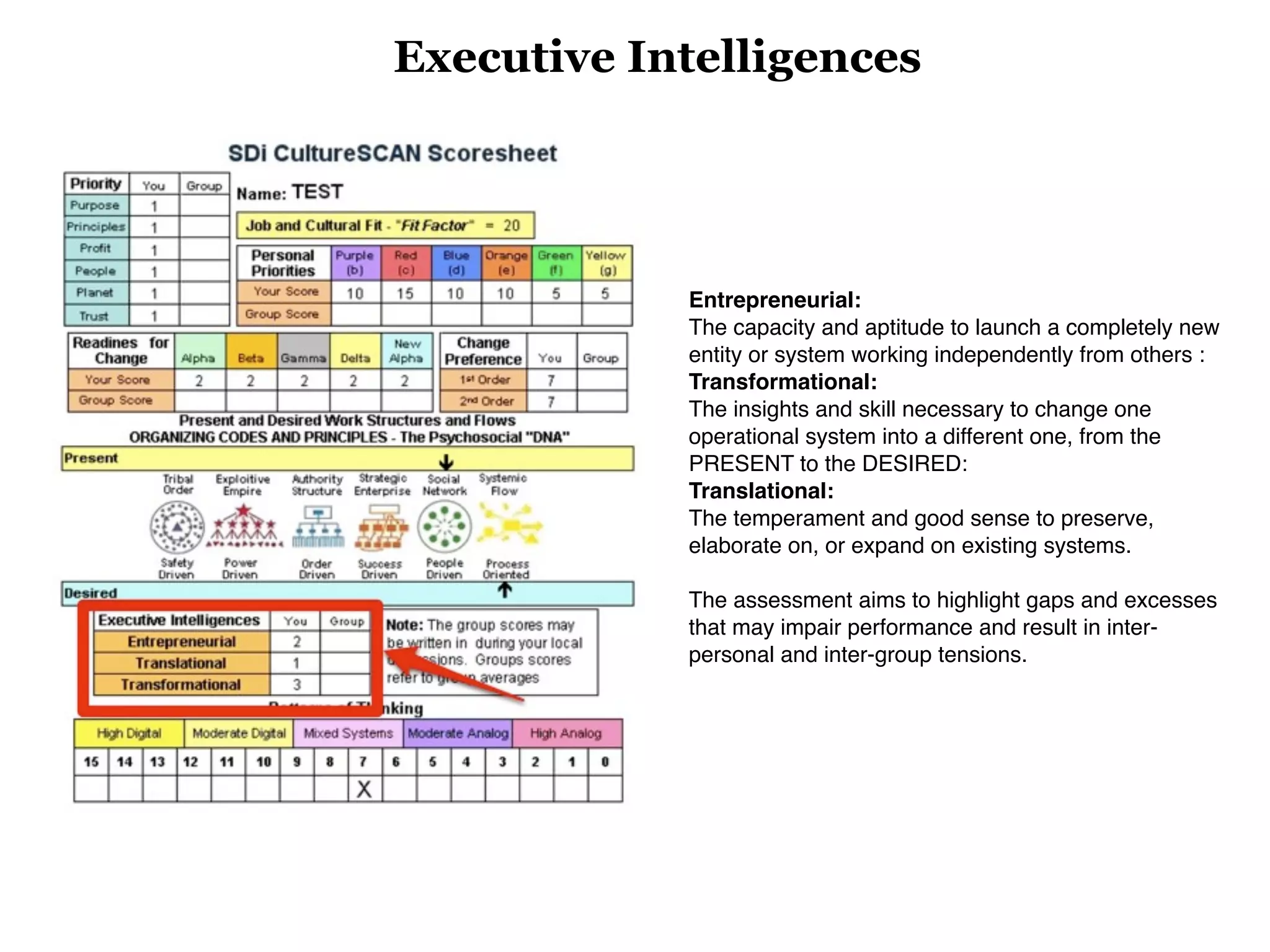
Executive Intelligences


            Entrepreneurial:
            The capacity and aptitude to launch a completely new
            entity or system working independently from others :
            Transformational:
            The insights and skill necessary to change one
            operational system into a different one, from the
            PRESENT to the DESIRED:
            Translational:
            The temperament and good sense to preserve,
            elaborate on, or expand on existing systems.

            The assessment aims to highlight gaps and excesses
            that may impair performance and result in inter-
            personal and inter-group tensions.
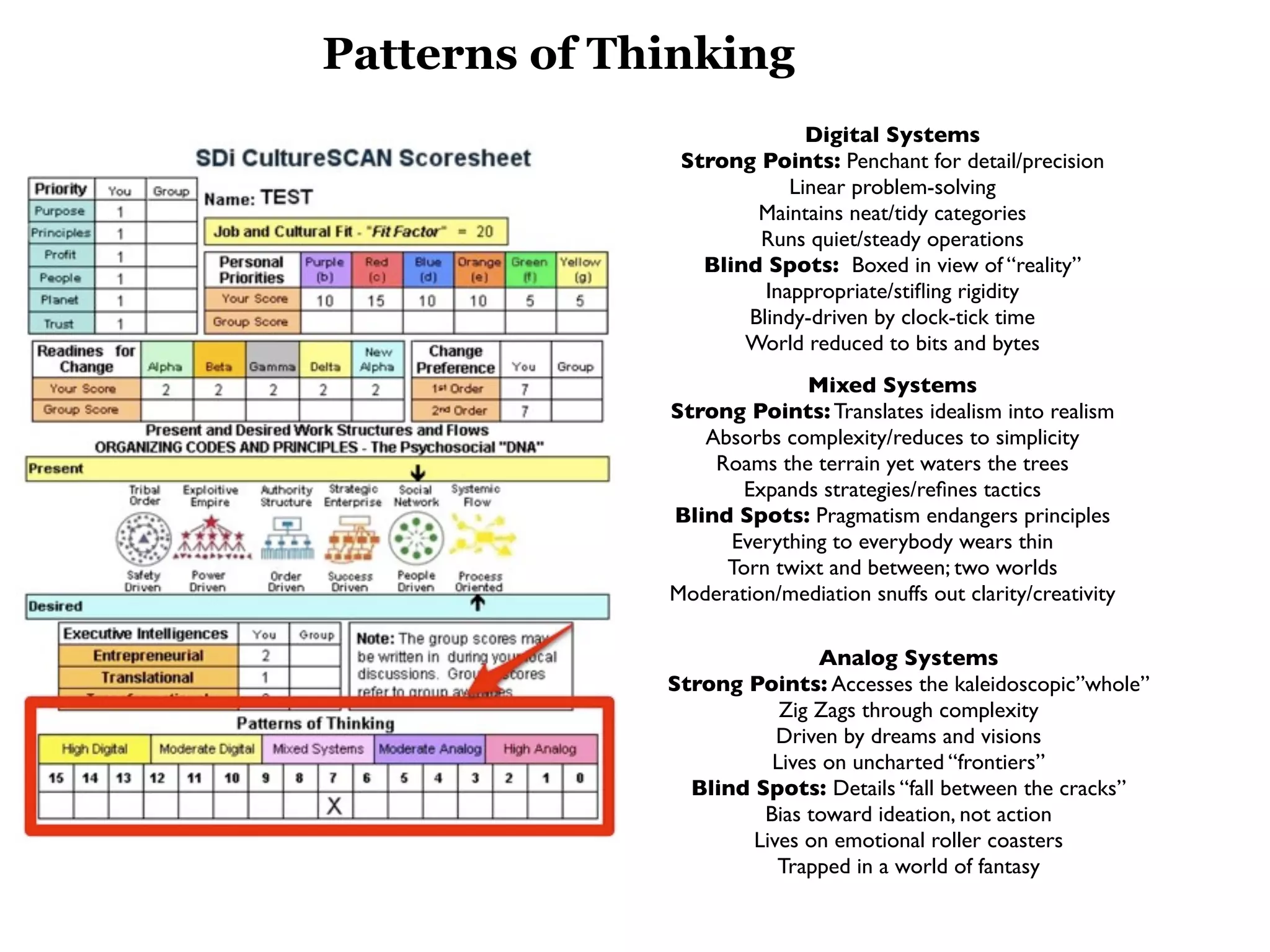
Patterns of Thinking
                            Digital Systems
               Strong Points: Penchant for detail/precision
                          Linear problem-solving
                      Maintains neat/tidy categories
                      Runs quiet/steady operations
                 Blind Spots: Boxed in view of “reality”
                       Inappropriate/stifling rigidity
                     Blindy-driven by clock-tick time
                     World reduced to bits and bytes
                           Mixed Systems
              Strong Points: Translates idealism into realism
                 Absorbs complexity/reduces to simplicity
                  Roams the terrain yet waters the trees
                     Expands strategies/refines tactics
              Blind Spots: Pragmatism endangers principles
                   Everything to everybody wears thin
                   Torn twixt and between; two worlds
              Moderation/mediation snuffs out clarity/creativity

                             Analog Systems
              Strong Points: Accesses the kaleidoscopic”whole”
                         Zig Zags through complexity
                         Driven by dreams and visions
                        Lives on uncharted “frontiers”
                Blind Spots: Details “fall between the cracks”
                       Bias toward ideation, not action
                      Lives on emotional roller coasters
                         Trapped in a world of fantasy

Culture Scan: An Introduction to Spiral Dynamics

  • 1.
    CultureSCAN: An Introduction toSpiral Dynamics developed by Clare W. Graves and Don E. Beck
  • 6.
    Articulation of EmergingDistinctions 5 Deep Actions and Behaviors Systems and Structures Ways of Thinking Value Codes/Adaptive Intelligences Life Conditions Thus the task is not so much to see what no one yet has seen, But to think what nobody has yet thought about that which everybody sees. Schopenhauer
  • 7.
  • 8.
  • 9.
    Value Proposition ✓ Helpspinpoint strengths, areas of potential improvement ✓ Scales from individual up to organization ✓ Identifies potential early adopters and people who may resist change. ✓ Offers insights into personal and collective values and patterns of thinking. ✓ Offers pathways, what’s next, for varying individual futures ✓ Psychological dig to understand source of conflict, shadows, developmental sink holes, and attachments ✓ Analyses and predicts team behaviors. ✓ Critical foundation for designing adaptive organizations as current life conditions: ✓ change faster, ✓ increase in complexity, and ✓ become more chaotic over the next decade
  • 10.
    Fit Factor Derived from an analysis of: • The individual's perceived fit to their job, their supervision, their work group and degree of security as an employee; • The gap between present and desired work structures and flows; • The alignment of perception across many aspects of the individual's life; • The change state — specifically focusing on Turbulence and Tornado. Range Low 8 – Maximum 66 8-14 Ideal We have found this to be a range that suggests a high degree of alignment and vibrancy with all aspects of your working life 15–25 Moderately High Some areas of your working life may me out of alignment – Do you have any idea what these might be? Is it that you recognize things that need to change but cannot find a way to achieve them? 26–35 High You are probably aware of what is causing some confusion? How would you describe this? What is holding you back? >35 Very High It is time to do something differently. NOW!!!!
  • 11.
    Multiple Priorities Drawing from the integral principles of Spiral Dynamics Integral to understand the multiple needs of organizations and teams to continue to thrive and evolve in today’s world the multiple bottom lines assessed include: Purpose, Principles, Profit, People, Planet, and Trust and Respect. Again this assessment is relative to internal groups.
  • 12.
    Personal Priorities/Value Systems These arise from deep psychological, psychosocial, patterns that determine how you think rather than what you think. They are the dynamic, and ever changing invisible DNA like core intelligences, within us that influence all that you sense in the world, and are some of the mechanisms of the deeper, internal, processes of YOUR change. They are a core part of all human development and influence all aspects of society and organizations. They underpin your personal priorities: The scores shown as ‗Personal Priorities‘ in your ‗CultureSCAN-Profile‘ reflect different models, world views, value-systems, belief structures and operating systems.Your highest scores will be an indicator of the dominant ‗Value- Systems‘ and the underpinning ‗Value System Codes‘ that impact on all that you think and do.
  • 13.
    Change State Indicators Readiness for Change “Yes my thinking is in alignment” -Stable (Alpha)…………………(average score = 9.1) “Something needs to change but Iʼm not sure what” - Turbulence (Beta).............................................................….. (average score = 4.9) “I feel stuck and in a rut” - Tornado – (Gamma)……..……………..(average score = 3.9) “I can see clearly now” – Delta (Tipping Point)…....……………... (average score = 8.2) “My new thinking is aligned” – New Stability – (New Alpha)….... (average score = 10.1) Preference for 1st Order or 2nd Order Change This brief assessment highlights the preference for either 1st order change,where change is within the existing paradigm or value system which in itself remains unchanged (restore balance, improve within givens, rooted in past decisions, renew, refurbish, reform, working harder and smarter – fundamentally more of the same) or 2nd order change where the preference is for shifts to new paradigms, new assumptions and new structures – (generated by outside influences/ events, puzzling, unexpected, paradoxical, driven by perceived future – a reframing)
  • 14.
    Present and DesiredPattern Flows
  • 15.
    Executive Intelligences Entrepreneurial: The capacity and aptitude to launch a completely new entity or system working independently from others : Transformational: The insights and skill necessary to change one operational system into a different one, from the PRESENT to the DESIRED: Translational: The temperament and good sense to preserve, elaborate on, or expand on existing systems. The assessment aims to highlight gaps and excesses that may impair performance and result in inter- personal and inter-group tensions.
  • 16.
    Patterns of Thinking Digital Systems Strong Points: Penchant for detail/precision Linear problem-solving Maintains neat/tidy categories Runs quiet/steady operations Blind Spots: Boxed in view of “reality” Inappropriate/stifling rigidity Blindy-driven by clock-tick time World reduced to bits and bytes Mixed Systems Strong Points: Translates idealism into realism Absorbs complexity/reduces to simplicity Roams the terrain yet waters the trees Expands strategies/refines tactics Blind Spots: Pragmatism endangers principles Everything to everybody wears thin Torn twixt and between; two worlds Moderation/mediation snuffs out clarity/creativity Analog Systems Strong Points: Accesses the kaleidoscopic”whole” Zig Zags through complexity Driven by dreams and visions Lives on uncharted “frontiers” Blind Spots: Details “fall between the cracks” Bias toward ideation, not action Lives on emotional roller coasters Trapped in a world of fantasy