Explaining causal modelling OR What a causal model  ought to explain Federica Russo Universit é catholique de Louvain
Overview  What is a causal model Explanatory vocabulary  in causal modelling Modelling causal mechanisms Causal-model explanations Causal modelling vs. other models
What is a causal model
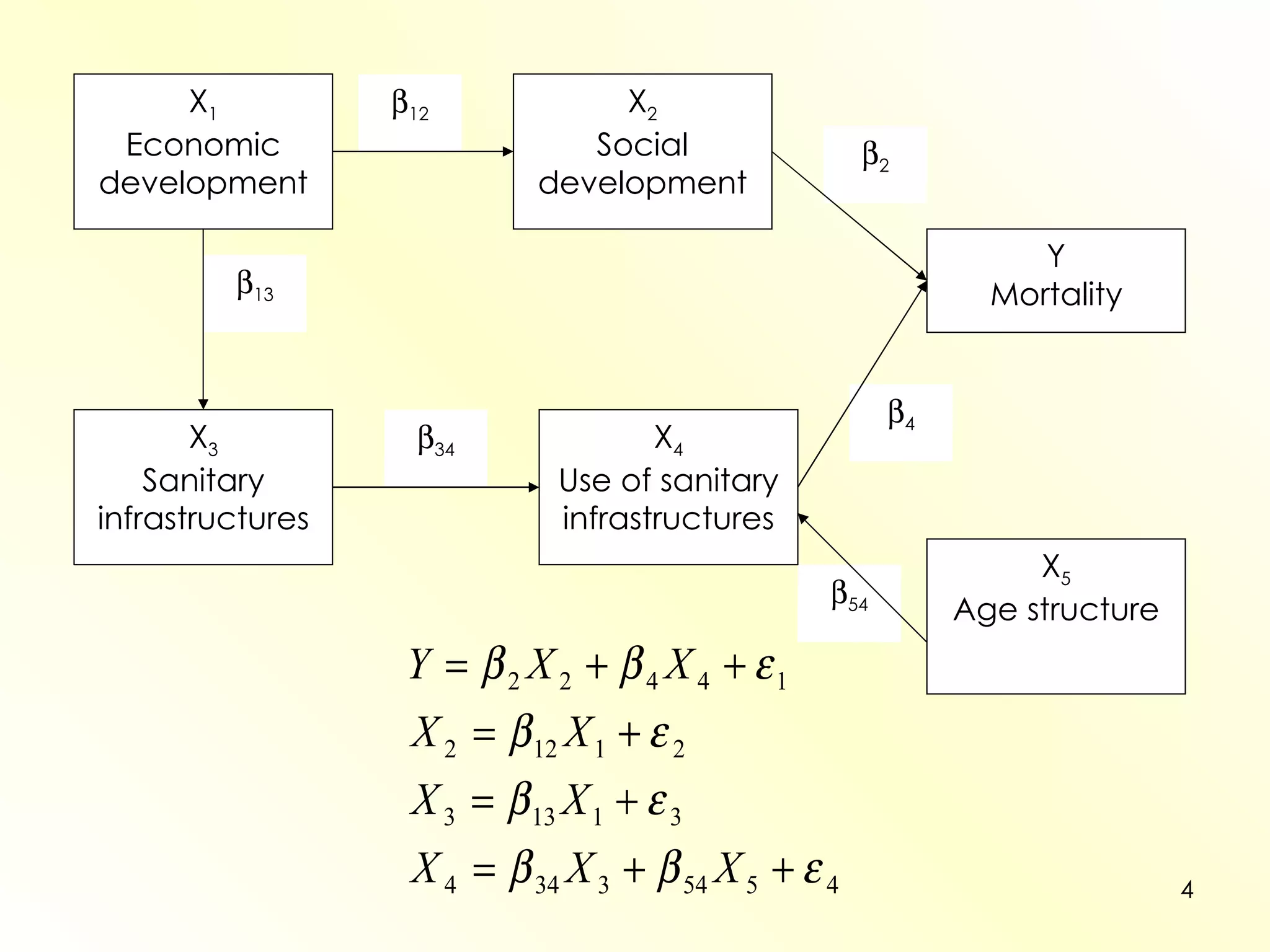
 54  4  13  34  12  2 X 1 Economic development X 2 Social development X 3 Sanitary infrastructures X 4 Use of sanitary infrastructures X 5 Age structure Y Mortality
Causal models Rest on a number of assumptions Model causal relations  statistically Uncover stable variational relations
Explanatory vocabulary in causal modelling
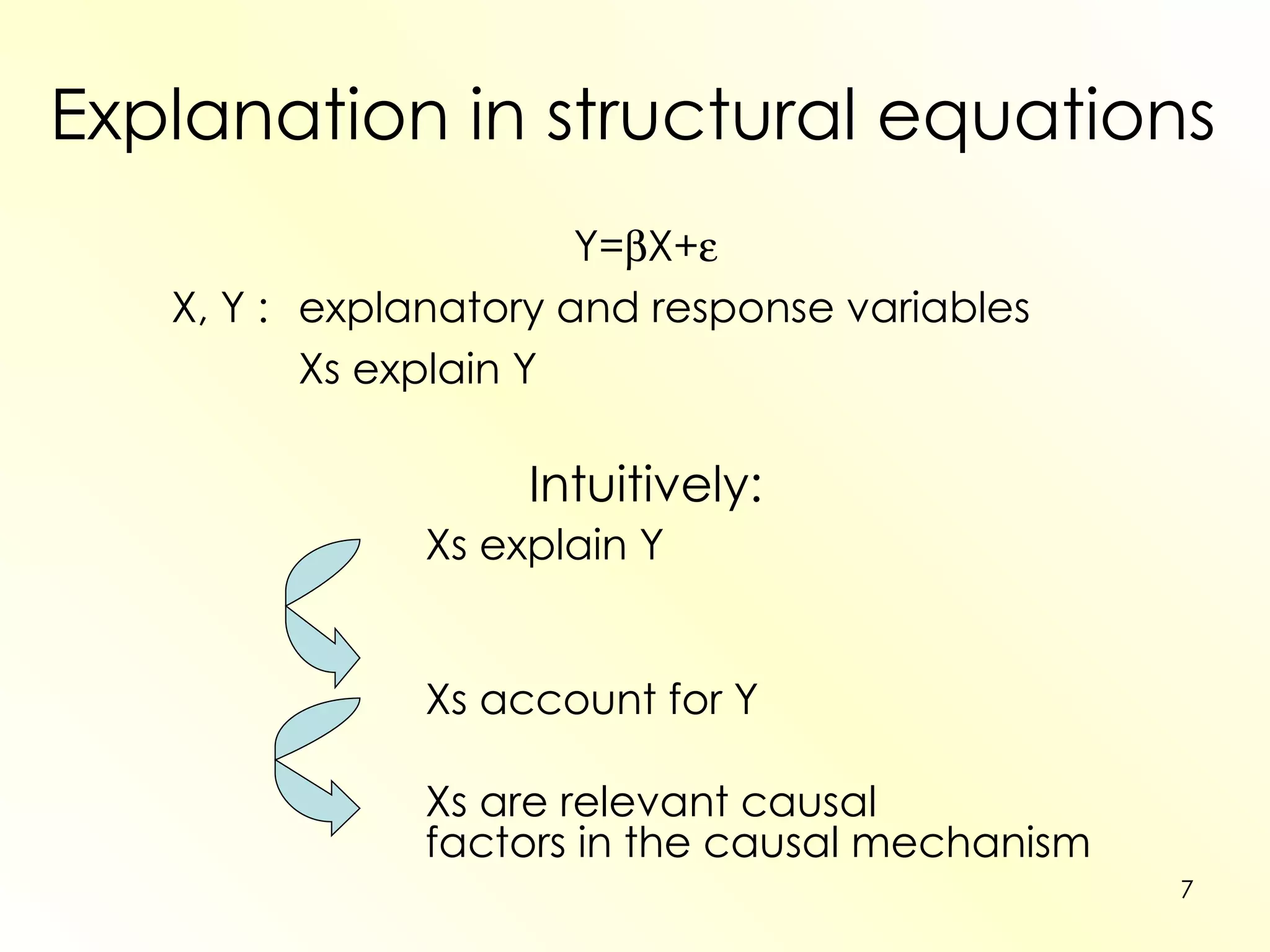
Explanation in structural equations Y=  X+  X, Y :  explanatory and response variables Xs explain Y Intuitively: Xs explain Y Xs account for Y Xs are relevant causal  factors in the causal mechanism
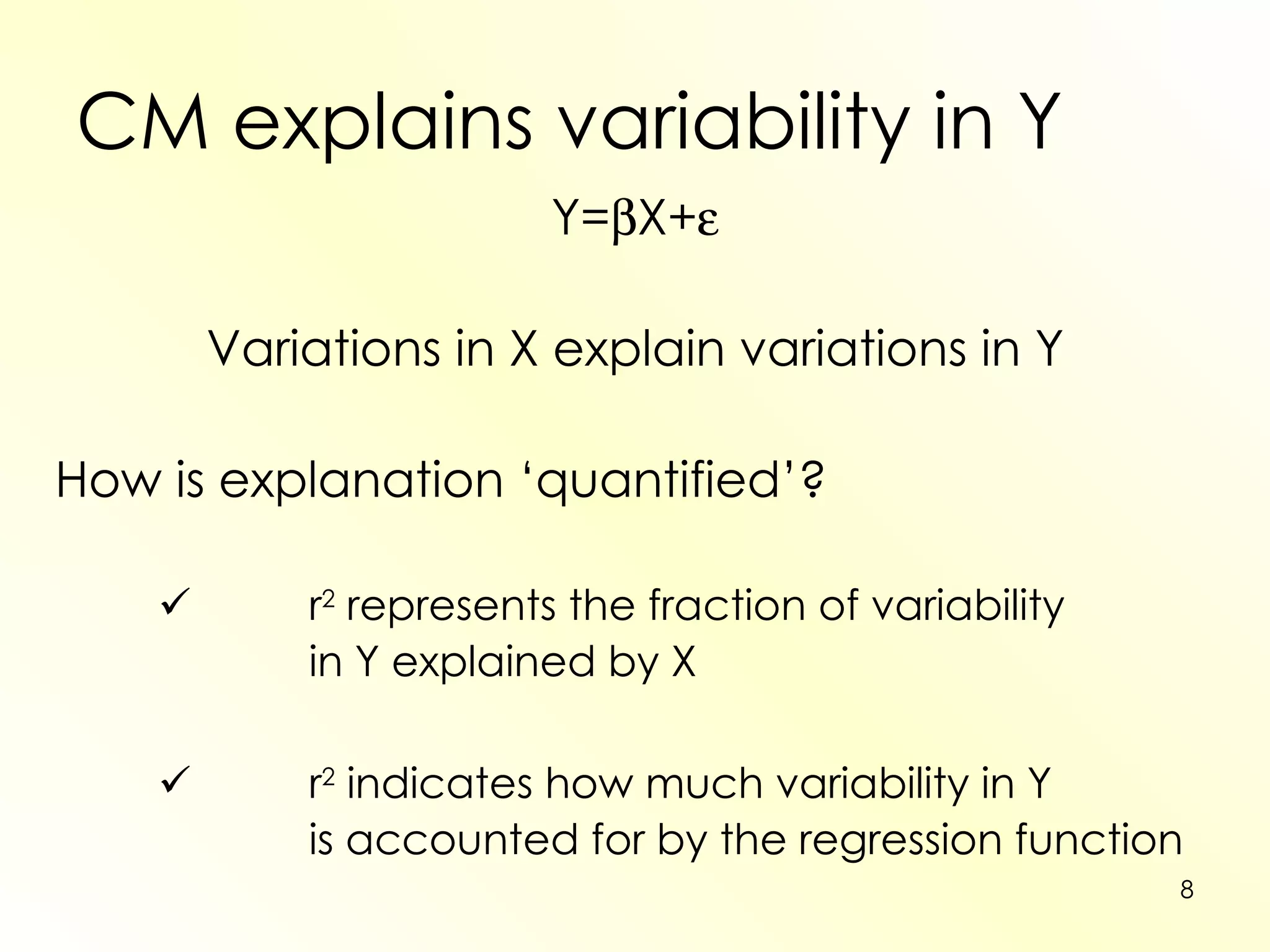
CM explains variability in Y Y=  X+  Variations in X explain variations in Y How is explanation ‘quantified’?  r 2  represents the fraction of variability  in Y explained by X    r 2  indicates how much variability in Y  is accounted for by the regression function
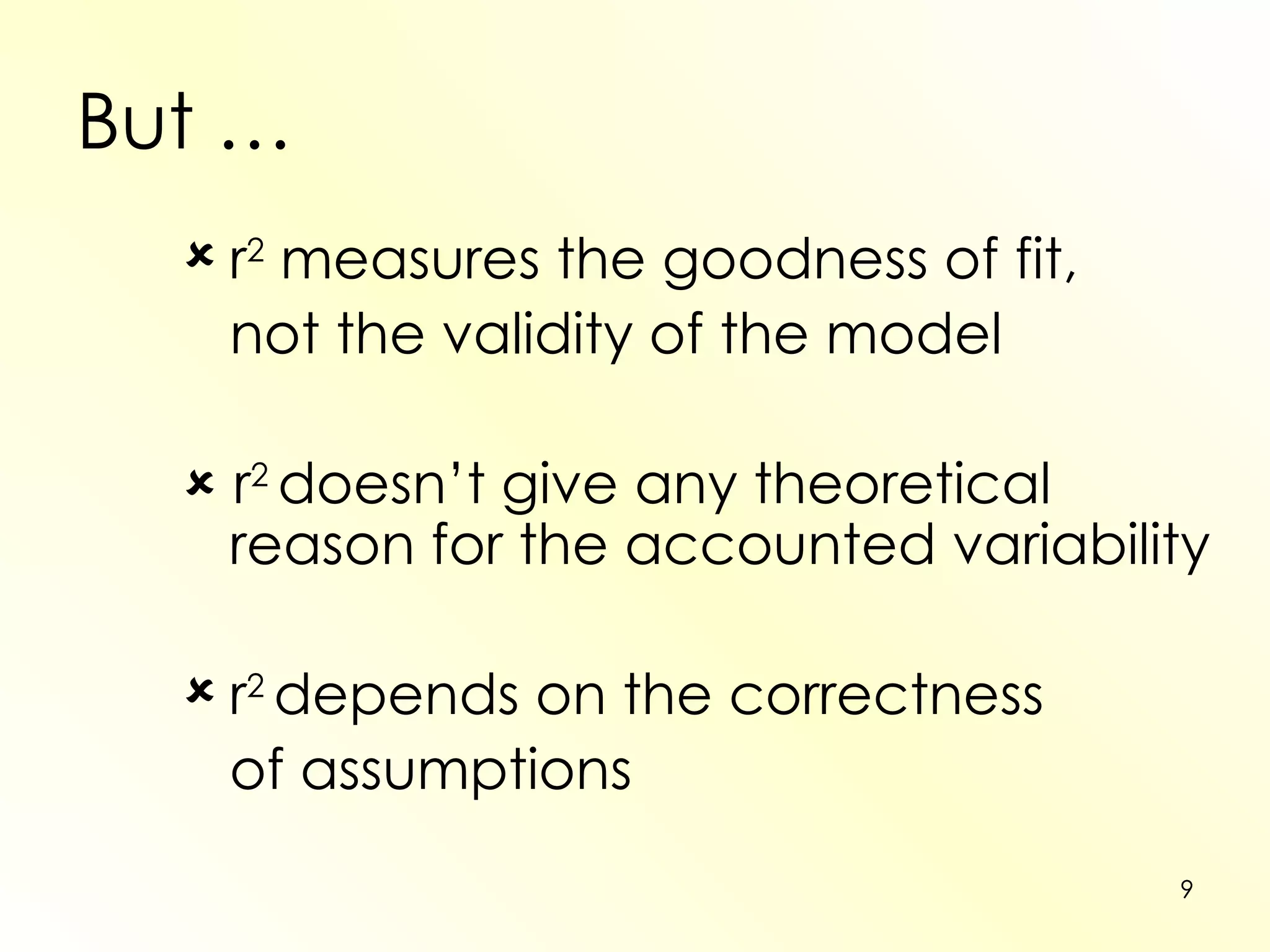
But … r 2  measures the goodness of fit,  not the validity of the model   r 2  doesn’t give any theoretical reason for the accounted variability r 2  depends on the correctness  of assumptions
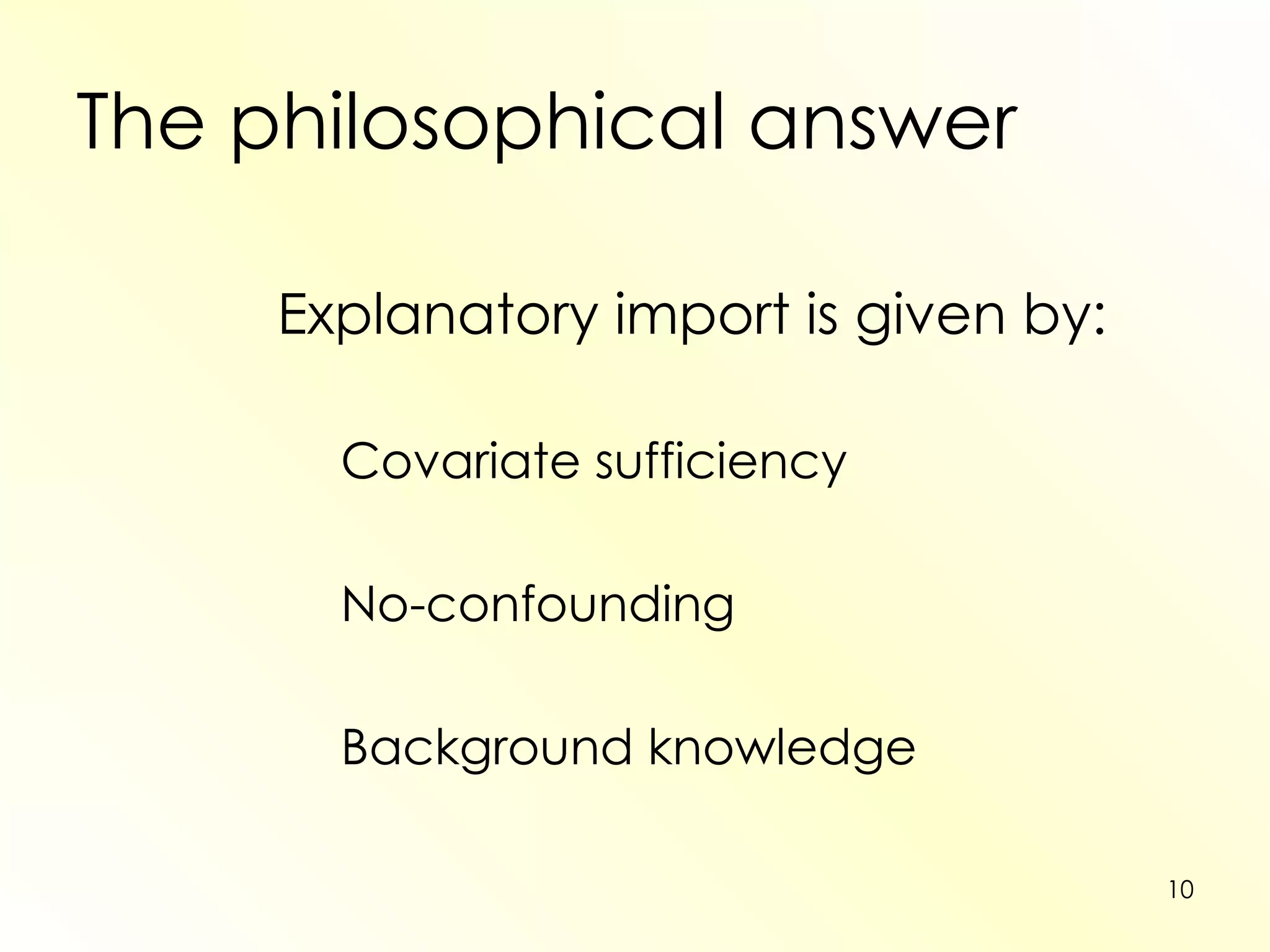
The philosophical answer Explanatory import is given by: Covariate sufficiency No-confounding Background knowledge
Modelling causal mechanisms
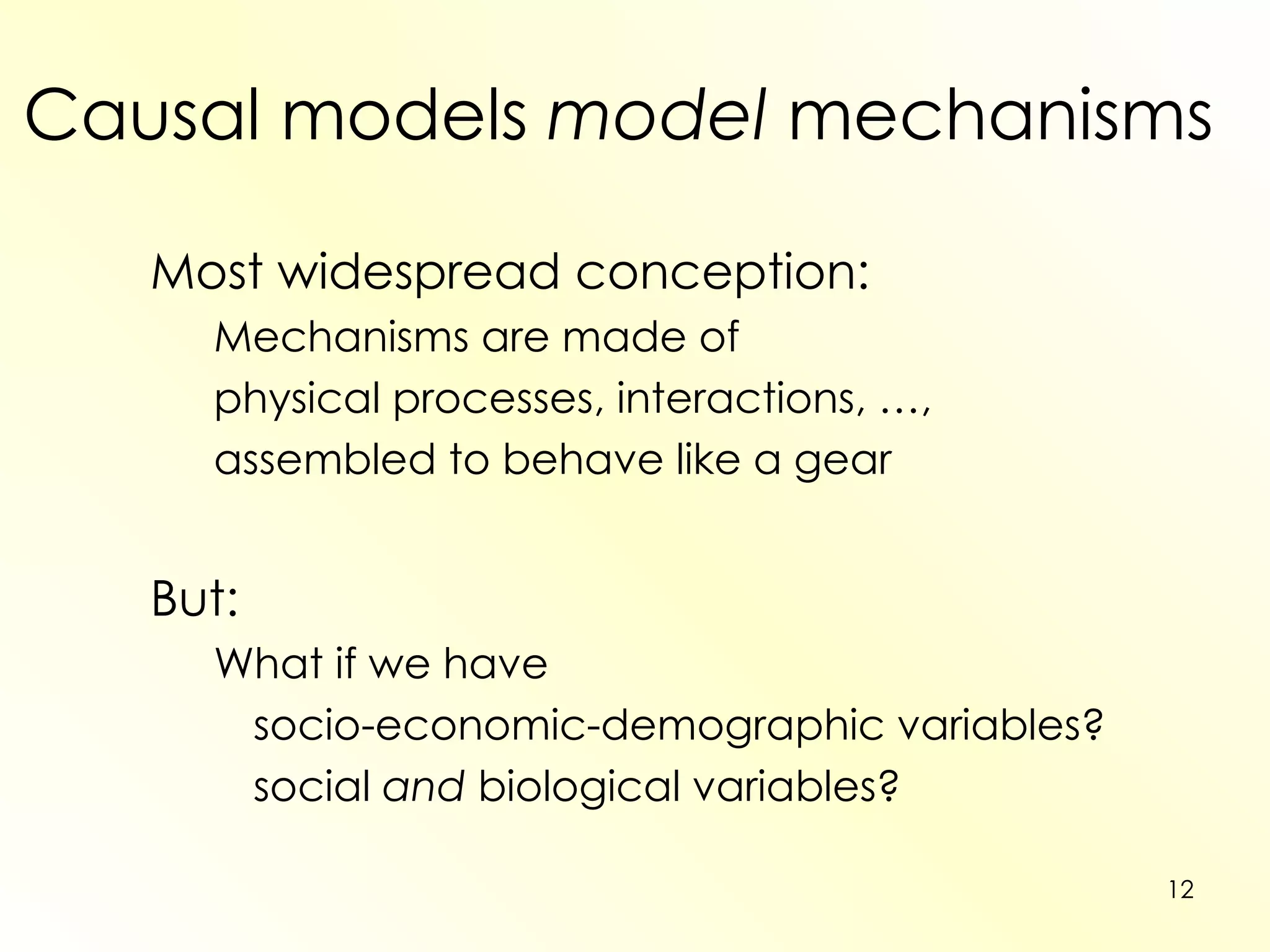
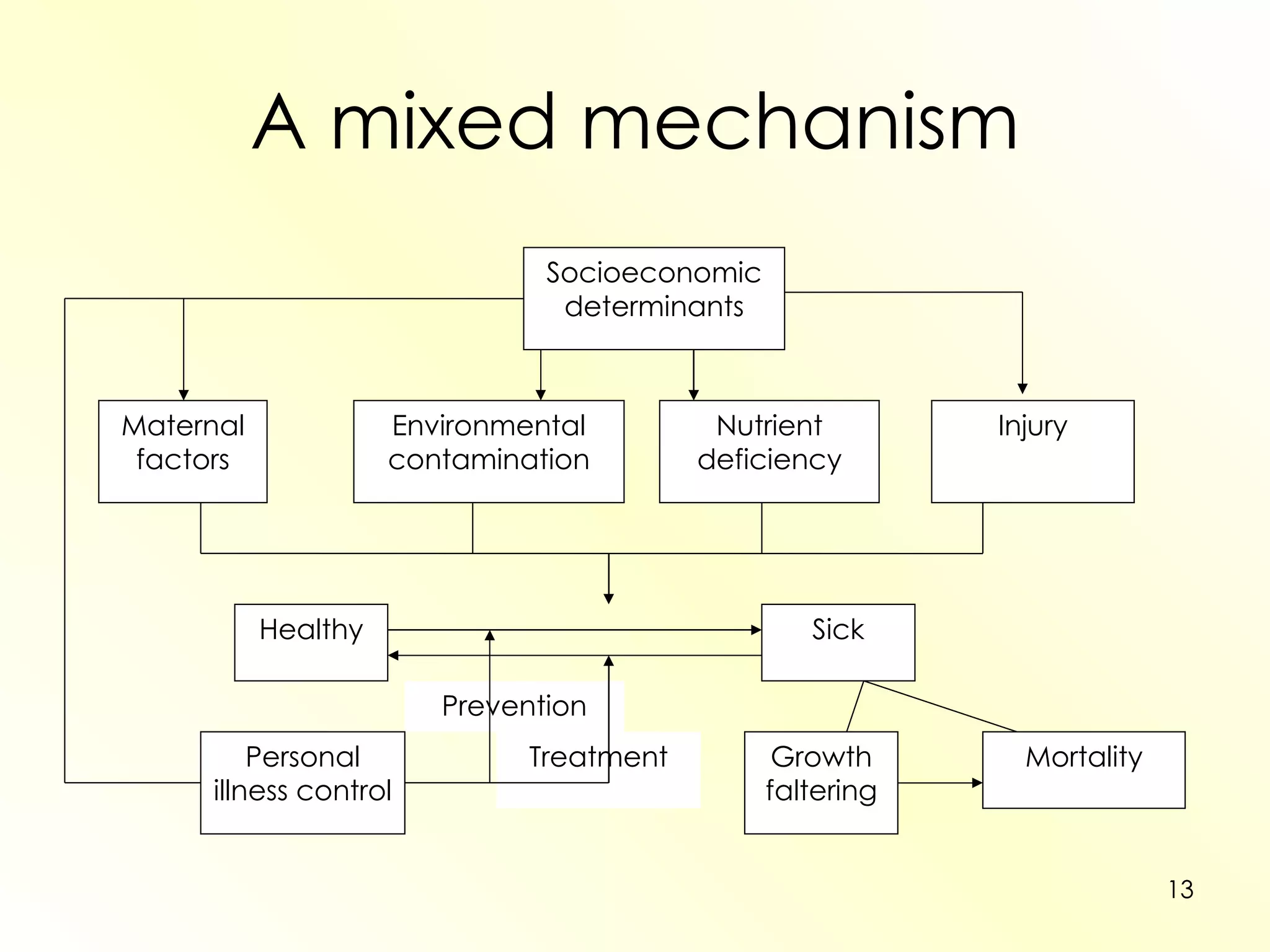
Causal models  model  mechanisms Most widespread conception: Mechanisms are made of  physical processes, interactions, …,  assembled to behave like a gear But: What if we have  socio-economic-demographic variables? social  and  biological variables?
A mixed mechanism Treatment Prevention Socioeconomic determinants Maternal factors Environmental contamination Nutrient deficiency Injury Healthy Sick Personal illness control Growth faltering Mortality
The causal model incorporates  social and biological variables Modelling the mechanism gives  the causal model explanatory power
Causal-models explanations
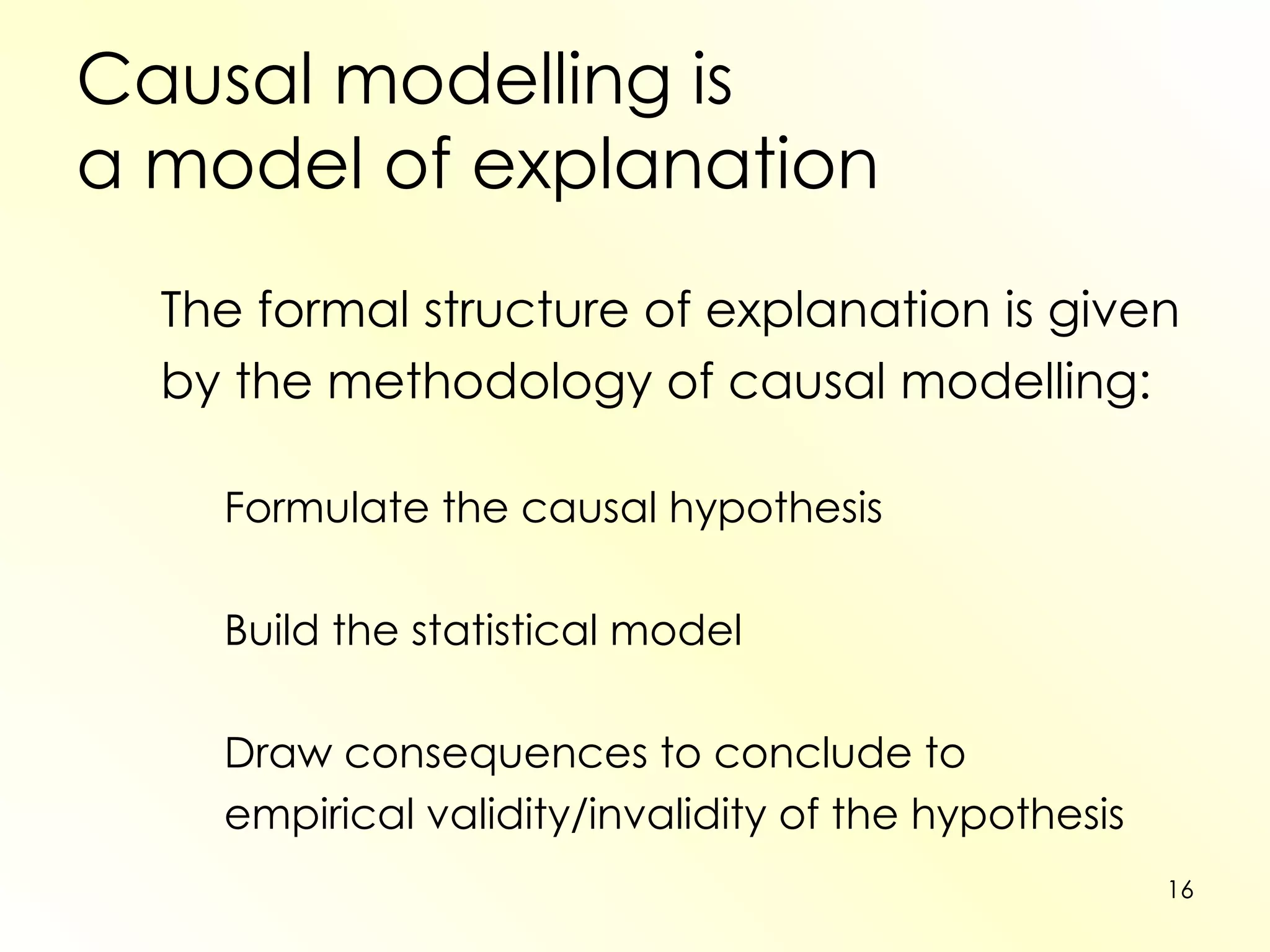
Causal modelling is  a model of explanation The formal structure of explanation is given by the methodology of causal modelling: Formulate the causal hypothesis Build the statistical model Draw consequences to conclude to  empirical validity/invalidity of the hypothesis
CM explanations are flexible: they allow a  va et viens  between  established theories and establishing theories they participate in establishing new theories negative results may trigger further research
CM explanations allow control: 1) statistical r 2  measures amount of variability explained 2) epistemic CM requires coherence of results with background knowledge 3) metaphysical CM requires ontological homogeneity between variables in the mechanism
Causal modelling vs other models of explanation
CM  vs  deductive-nomological model  well known problems with laws  not all explanations involve deduction CM  vs  statistical-relevance model  S-R is too narrow in scope CM  vs  causal-mechanical model  it cannot account for mixed mechanisms
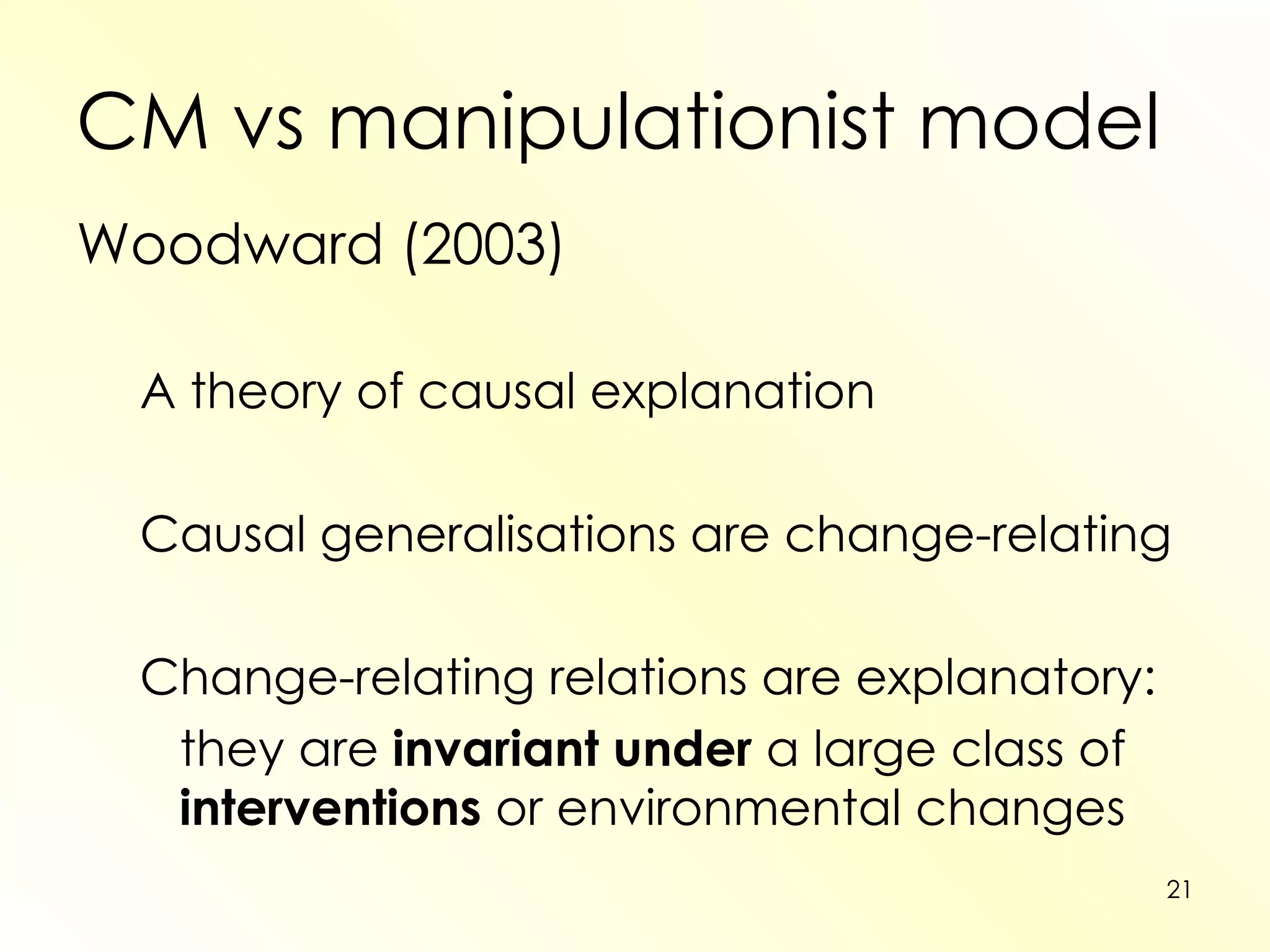
CM vs manipulationist model Woodward (2003) A theory of causal explanation Causal generalisations are change-relating Change-relating relations are explanatory: they are  invariant under  a large class of  interventions  or environmental changes
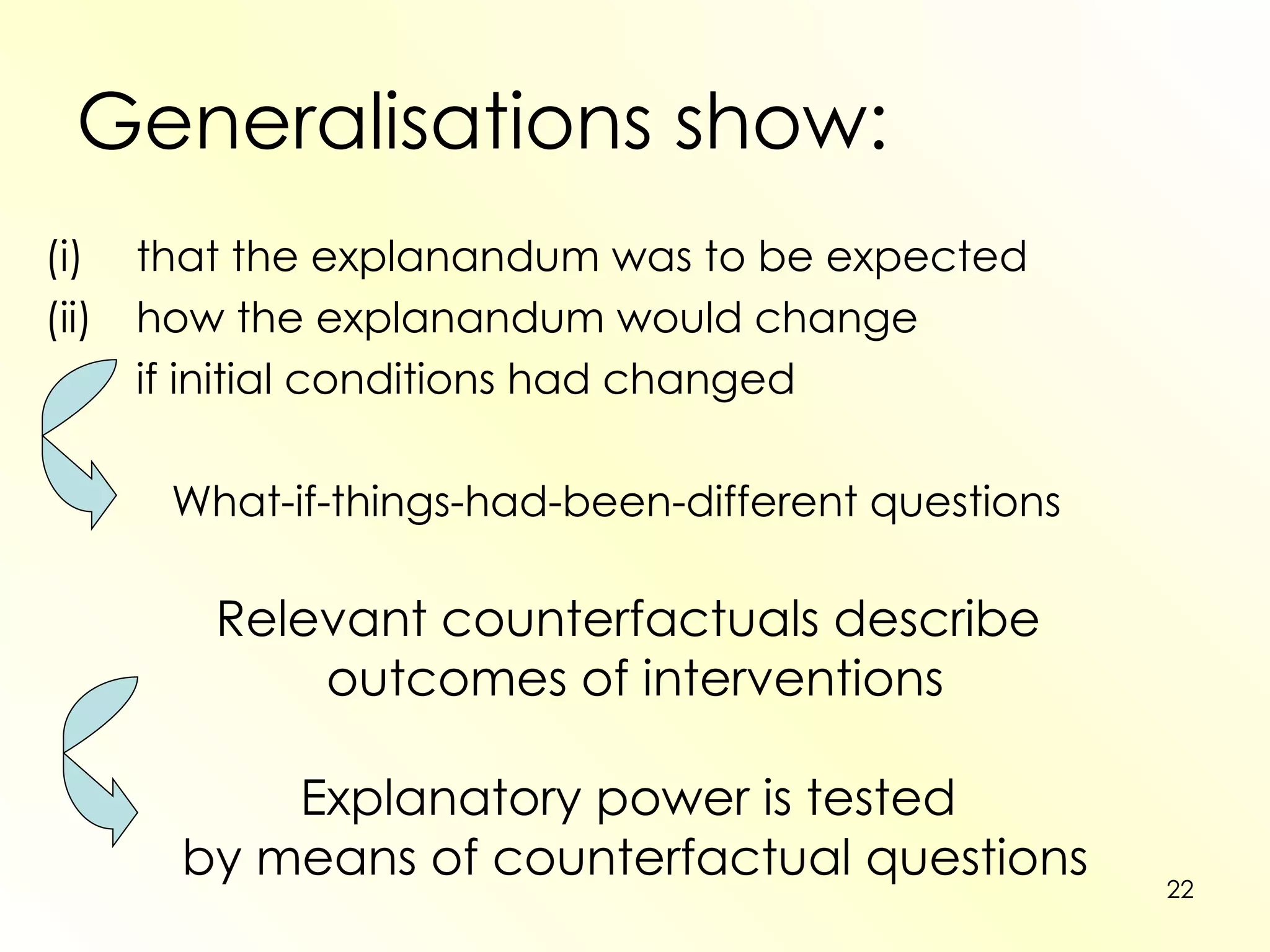
Generalisations show: (i) that the explanandum was to be expected how the explanandum would change  if initial conditions had changed What-if-things-had-been-different questions Relevant counterfactuals describe  outcomes of interventions Explanatory power is tested  by means of counterfactual questions
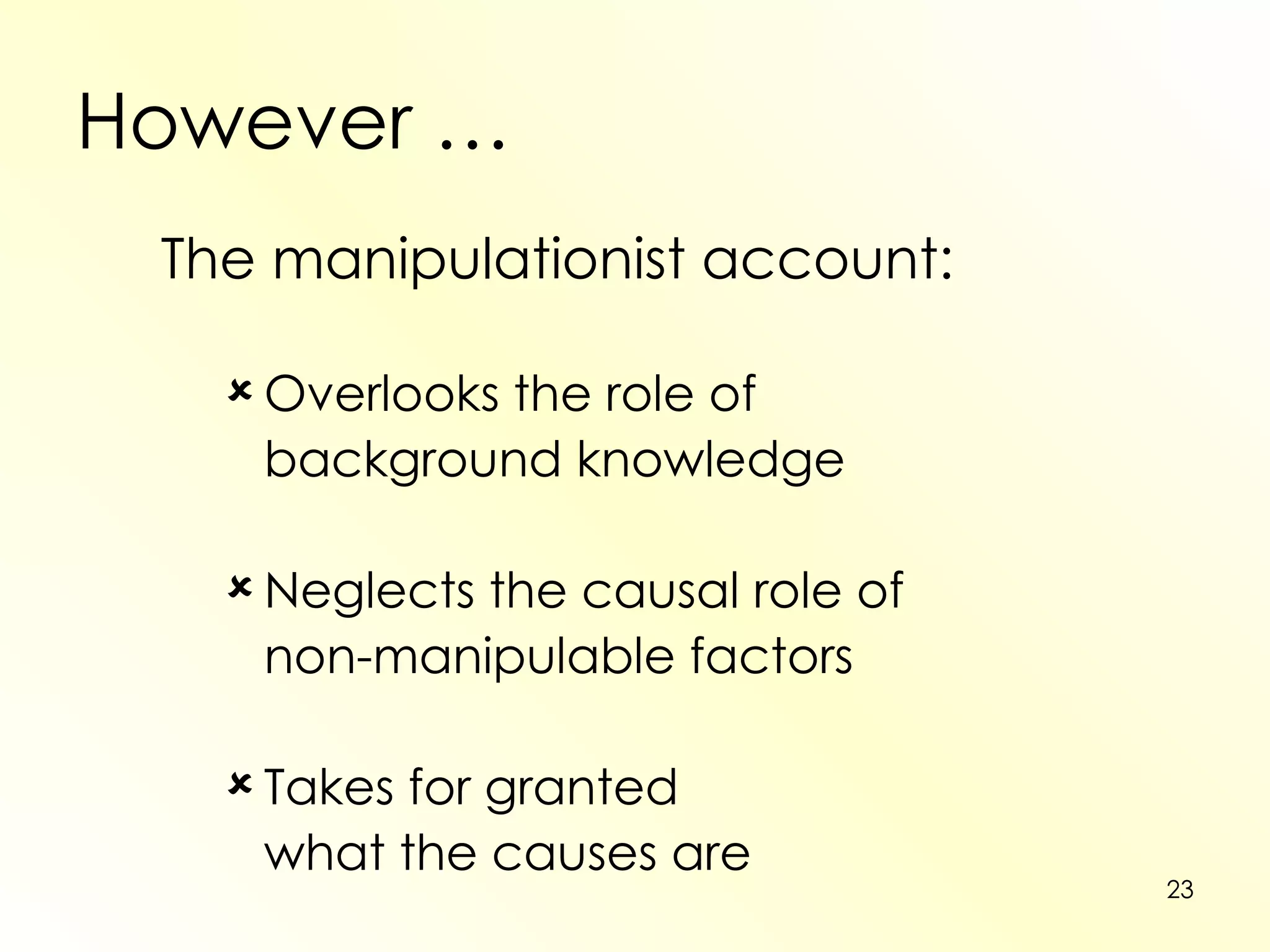
However … The manipulationist account: Overlooks the role of  background knowledge Neglects the causal role of  non-manipulable factors Takes for granted  what the causes are
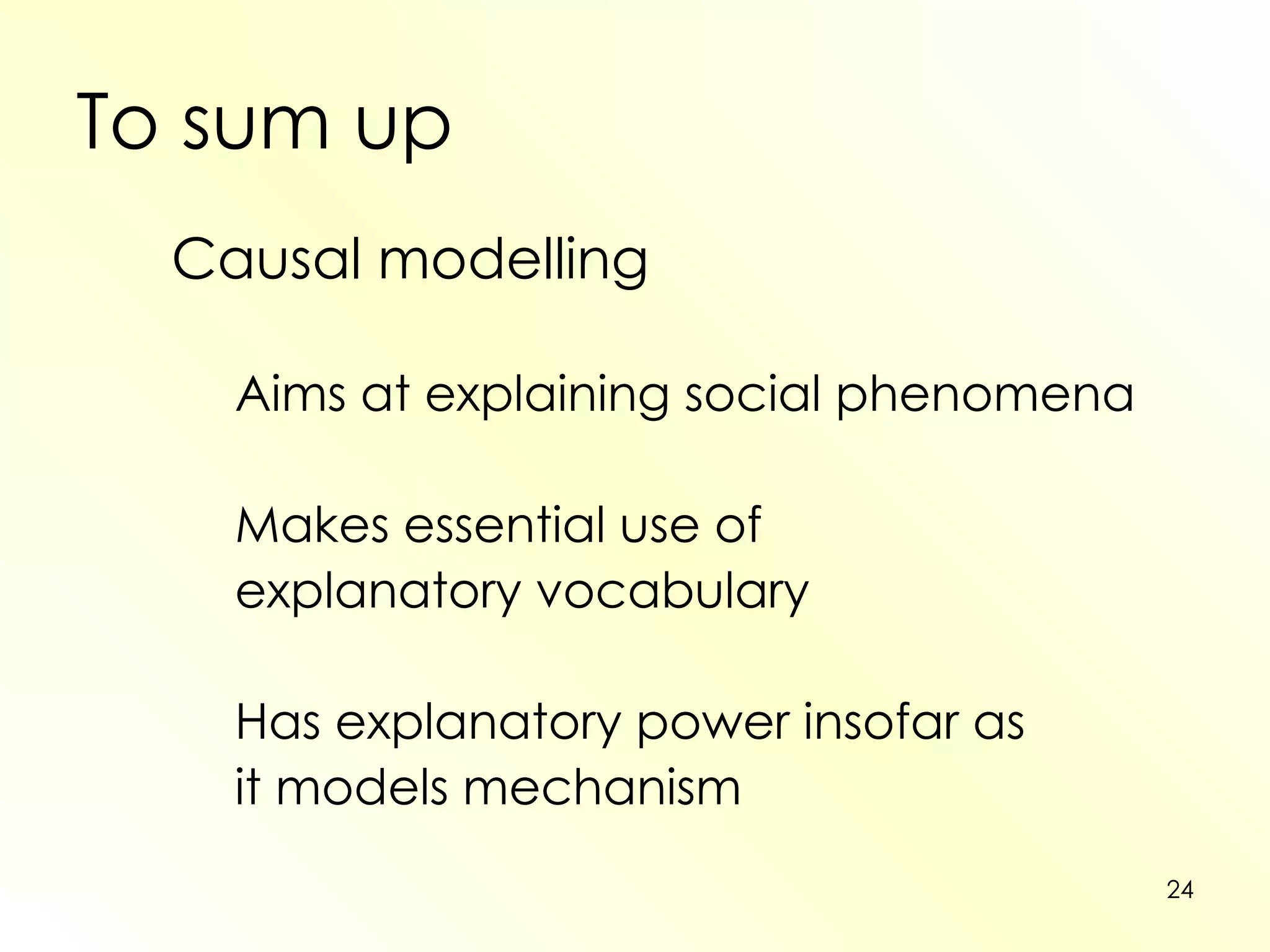
To sum up Causal modelling Aims at explaining social phenomena Makes essential use of  explanatory vocabulary Has explanatory power insofar as  it models mechanism
To conclude Causal modelling is  a model of explanation Among its virtues,  over and above alternative models: Flexibility Control

Russo Silf07 Explaining Causal Modelling

  • 1.
    Explaining causal modellingOR What a causal model ought to explain Federica Russo Universit é catholique de Louvain
  • 2.
    Overview Whatis a causal model Explanatory vocabulary in causal modelling Modelling causal mechanisms Causal-model explanations Causal modelling vs. other models
  • 3.
    What is acausal model
  • 4.
     54 4  13  34  12  2 X 1 Economic development X 2 Social development X 3 Sanitary infrastructures X 4 Use of sanitary infrastructures X 5 Age structure Y Mortality
  • 5.
    Causal models Reston a number of assumptions Model causal relations statistically Uncover stable variational relations
  • 6.
    Explanatory vocabulary incausal modelling
  • 7.
    Explanation in structuralequations Y=  X+  X, Y : explanatory and response variables Xs explain Y Intuitively: Xs explain Y Xs account for Y Xs are relevant causal factors in the causal mechanism
  • 8.
    CM explains variabilityin Y Y=  X+  Variations in X explain variations in Y How is explanation ‘quantified’?  r 2 represents the fraction of variability in Y explained by X  r 2 indicates how much variability in Y is accounted for by the regression function
  • 9.
    But … r2 measures the goodness of fit, not the validity of the model  r 2 doesn’t give any theoretical reason for the accounted variability r 2 depends on the correctness of assumptions
  • 10.
    The philosophical answerExplanatory import is given by: Covariate sufficiency No-confounding Background knowledge
  • 11.
  • 12.
    Causal models model mechanisms Most widespread conception: Mechanisms are made of physical processes, interactions, …, assembled to behave like a gear But: What if we have socio-economic-demographic variables? social and biological variables?
  • 13.
    A mixed mechanismTreatment Prevention Socioeconomic determinants Maternal factors Environmental contamination Nutrient deficiency Injury Healthy Sick Personal illness control Growth faltering Mortality
  • 14.
    The causal modelincorporates social and biological variables Modelling the mechanism gives the causal model explanatory power
  • 15.
  • 16.
    Causal modelling is a model of explanation The formal structure of explanation is given by the methodology of causal modelling: Formulate the causal hypothesis Build the statistical model Draw consequences to conclude to empirical validity/invalidity of the hypothesis
  • 17.
    CM explanations areflexible: they allow a va et viens between established theories and establishing theories they participate in establishing new theories negative results may trigger further research
  • 18.
    CM explanations allowcontrol: 1) statistical r 2 measures amount of variability explained 2) epistemic CM requires coherence of results with background knowledge 3) metaphysical CM requires ontological homogeneity between variables in the mechanism
  • 19.
    Causal modelling vsother models of explanation
  • 20.
    CM vs deductive-nomological model  well known problems with laws  not all explanations involve deduction CM vs statistical-relevance model  S-R is too narrow in scope CM vs causal-mechanical model  it cannot account for mixed mechanisms
  • 21.
    CM vs manipulationistmodel Woodward (2003) A theory of causal explanation Causal generalisations are change-relating Change-relating relations are explanatory: they are invariant under a large class of interventions or environmental changes
  • 22.
    Generalisations show: (i)that the explanandum was to be expected how the explanandum would change if initial conditions had changed What-if-things-had-been-different questions Relevant counterfactuals describe outcomes of interventions Explanatory power is tested by means of counterfactual questions
  • 23.
    However … Themanipulationist account: Overlooks the role of background knowledge Neglects the causal role of non-manipulable factors Takes for granted what the causes are
  • 24.
    To sum upCausal modelling Aims at explaining social phenomena Makes essential use of explanatory vocabulary Has explanatory power insofar as it models mechanism
  • 25.
    To conclude Causalmodelling is a model of explanation Among its virtues, over and above alternative models: Flexibility Control