WHAT IS A DATA DICTIONARY? A DATA DICTIONARY IS AN INTEGRAL PART OF DATABASE. IT HOLDS INFORMATION ABOUT THE DATABASE AND THE DATA THAT IT STORES, i.e. the META-DATA.
Introduction : The data dictionary (or data repository) or system catalog is an important part of the DBMS. It contains data about data (or metadata). It means that it contains the actual database descriptions used by the DBMS. In most DBMSs, the data dictionary is active and integrated. It means that the DBMS checks the data dictionary every time the database is accessed.
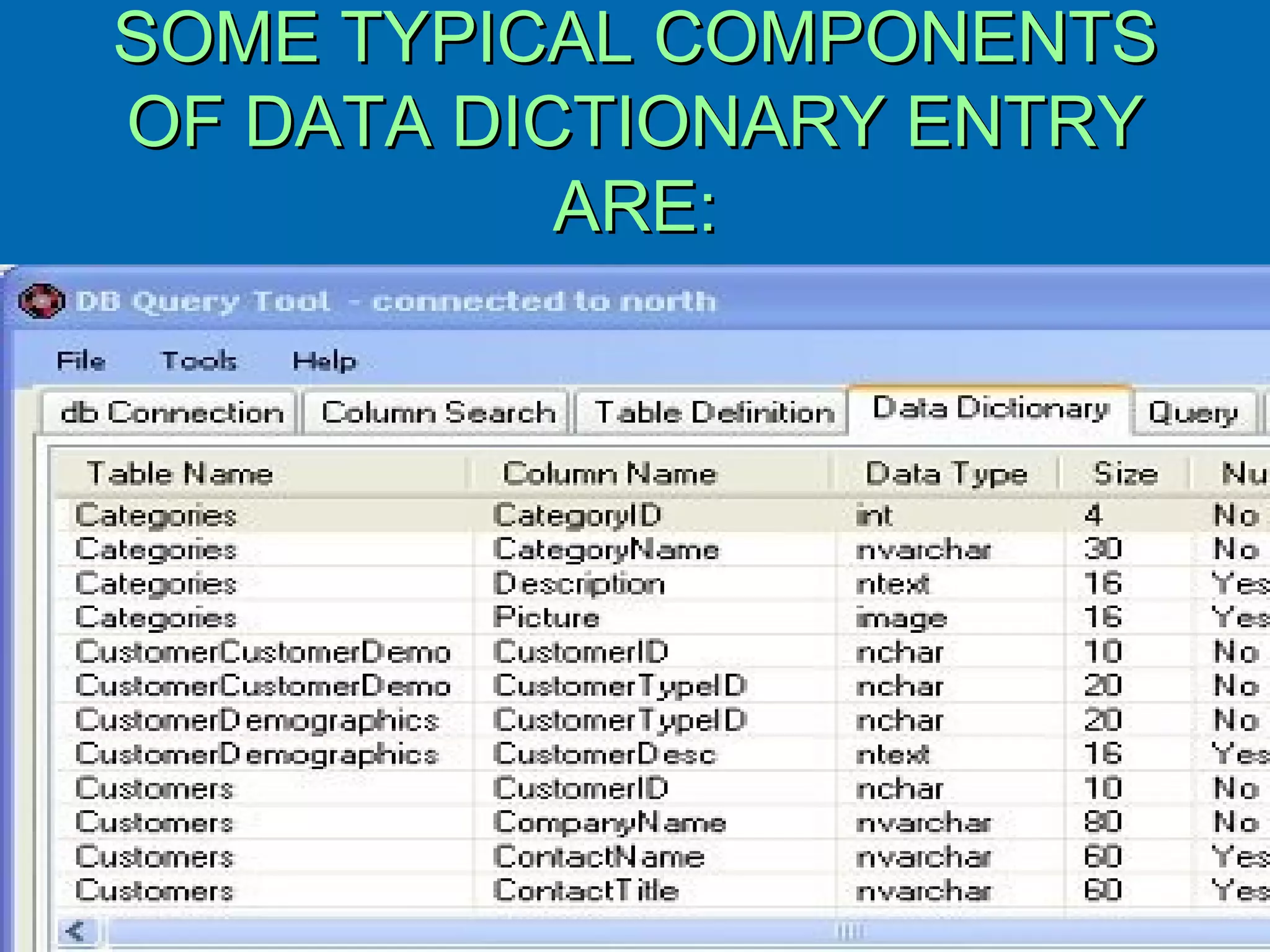
SOME TYPICAL COMPONENTS OF DATA DICTIONARY ENTRY ARE:
ALL WELL DESIGNED DATABASE WILL SURELY INCLUDE A DATA DICTIONARY. IT PROVIDES DATABASE ADMINISTRATORS AND OTHER USERS, EASY ACCESS TO TYPE OF DATA THAT THEY SHOULD EXPECT TO SEE IN EVERY TABLE, ROW AND COLUMN OF DATABASE, WITHOUT ACTUALLY ACCESSING THE DATABASE
NECESSITY OF A DATA DICTIONARY. SINCE DATABASE IS MEANT TO BE BUILT  AND USED BY MULTIPLE USERS, MAKING SURE THAT EVERYONE IS AWARE OF WHAT TYPES OF DATA EACH FIELD WILL ACCEPT BECOMES A CHALLENGE. SO A DATA DICTIONARY IS EFFECTIVE ADD ON  TO ENSURE DATA CONSISTENCY.
A data dictionary is : A tool for recording and processing information (metadata)about the data that an organisation uses. A central catalogue for metadata. Can be integrated within the DBMS or be separate. May be referenced during system design, programming, and by actively-executing programs.
Meta data: Metadata (meta content) is defined as data providing information about one or more aspects of the data, such as: Means of creation of the data Purpose of the data Time and date of creation Creator or author of data Placement on a computer network where the data was created Standards used The basic information
FORMAT FOR DATA DICTIONARY THERE EXISTS NO STANDARD FORMAT FOR CREATING A DATA DICTIONARY. META-DATA DIFFERS FROM TABLE TO TABLE. THE ONLY PREREQUISITE FOR A DATA DICTIONARY IS THAT IT SHOULD BE EASILY SEARCHABLE.
STORAGE ONLY APPLICABLE RULE FOR STORAGE IS THAT IT SHOULD BE AT CONVENIENT LOCATION THAT IS EASILY ACCESSIBLE TO ALL USERS OF DATABASE. TYPES OF FILES USED TO STORE DATA IN DATA DICTIONARY RANGE FROM TEXT FILES, XML FILES, SPREADSHEETS, AN ADDITIONAL TABLE IN DATA BASE ITSELF ETC.
Structure of a DD: DD can be  integrated  with the DBMS or  stand-alone Relational systems all have some form of integrated DD (e.g., Oracle) Integrated DD is usually active, meaning it is automatically updated to reflect changes in the database A stand-alone DD is not directly linked to the database and must be updated manually
ADVANTAGES OF DATA DICTIONARY IT EXUDES CLARITY ON THE REST OF THE DATABASE DOCUMENTATION. WHEN A NEW USER IS INTRODUCED TO THE SYSTEM, IDENTIFYING TABLE STRUCTURE AND TYPES BECOMES SIMPLE.
Disadvantages: A DDS is a useful management tool, but at a price. The DDS ’project’ may itself take two or three years. It needs careful planning, defining the exact requirements designing its contents, testing, implementation and evaluation. The cost of a DDS includes not only the initial price of its installation and any hardware requirements, but also the cost of collecting the information entering it into the DDS, keeping it up-to-date and enforcing standards. The use of a DDS requires management commitment, which is not easy to achieve, particularly where the benefits are intangible and long term.

Data dictionary

  • 1.
    WHAT IS ADATA DICTIONARY? A DATA DICTIONARY IS AN INTEGRAL PART OF DATABASE. IT HOLDS INFORMATION ABOUT THE DATABASE AND THE DATA THAT IT STORES, i.e. the META-DATA.
  • 2.
    Introduction : Thedata dictionary (or data repository) or system catalog is an important part of the DBMS. It contains data about data (or metadata). It means that it contains the actual database descriptions used by the DBMS. In most DBMSs, the data dictionary is active and integrated. It means that the DBMS checks the data dictionary every time the database is accessed.
  • 3.
    SOME TYPICAL COMPONENTSOF DATA DICTIONARY ENTRY ARE:
  • 4.
    ALL WELL DESIGNEDDATABASE WILL SURELY INCLUDE A DATA DICTIONARY. IT PROVIDES DATABASE ADMINISTRATORS AND OTHER USERS, EASY ACCESS TO TYPE OF DATA THAT THEY SHOULD EXPECT TO SEE IN EVERY TABLE, ROW AND COLUMN OF DATABASE, WITHOUT ACTUALLY ACCESSING THE DATABASE
  • 5.
    NECESSITY OF ADATA DICTIONARY. SINCE DATABASE IS MEANT TO BE BUILT AND USED BY MULTIPLE USERS, MAKING SURE THAT EVERYONE IS AWARE OF WHAT TYPES OF DATA EACH FIELD WILL ACCEPT BECOMES A CHALLENGE. SO A DATA DICTIONARY IS EFFECTIVE ADD ON TO ENSURE DATA CONSISTENCY.
  • 6.
    A data dictionaryis : A tool for recording and processing information (metadata)about the data that an organisation uses. A central catalogue for metadata. Can be integrated within the DBMS or be separate. May be referenced during system design, programming, and by actively-executing programs.
  • 7.
    Meta data: Metadata(meta content) is defined as data providing information about one or more aspects of the data, such as: Means of creation of the data Purpose of the data Time and date of creation Creator or author of data Placement on a computer network where the data was created Standards used The basic information
  • 8.
    FORMAT FOR DATADICTIONARY THERE EXISTS NO STANDARD FORMAT FOR CREATING A DATA DICTIONARY. META-DATA DIFFERS FROM TABLE TO TABLE. THE ONLY PREREQUISITE FOR A DATA DICTIONARY IS THAT IT SHOULD BE EASILY SEARCHABLE.
  • 9.
    STORAGE ONLY APPLICABLERULE FOR STORAGE IS THAT IT SHOULD BE AT CONVENIENT LOCATION THAT IS EASILY ACCESSIBLE TO ALL USERS OF DATABASE. TYPES OF FILES USED TO STORE DATA IN DATA DICTIONARY RANGE FROM TEXT FILES, XML FILES, SPREADSHEETS, AN ADDITIONAL TABLE IN DATA BASE ITSELF ETC.
  • 10.
    Structure of aDD: DD can be integrated with the DBMS or stand-alone Relational systems all have some form of integrated DD (e.g., Oracle) Integrated DD is usually active, meaning it is automatically updated to reflect changes in the database A stand-alone DD is not directly linked to the database and must be updated manually
  • 11.
    ADVANTAGES OF DATADICTIONARY IT EXUDES CLARITY ON THE REST OF THE DATABASE DOCUMENTATION. WHEN A NEW USER IS INTRODUCED TO THE SYSTEM, IDENTIFYING TABLE STRUCTURE AND TYPES BECOMES SIMPLE.
  • 12.
    Disadvantages: A DDSis a useful management tool, but at a price. The DDS ’project’ may itself take two or three years. It needs careful planning, defining the exact requirements designing its contents, testing, implementation and evaluation. The cost of a DDS includes not only the initial price of its installation and any hardware requirements, but also the cost of collecting the information entering it into the DDS, keeping it up-to-date and enforcing standards. The use of a DDS requires management commitment, which is not easy to achieve, particularly where the benefits are intangible and long term.