ry
The Data Dictionary
a quasi-formal grammar for describing the content
of data that the software will process and create
a notation for describing control data and the
values that control data can take, e.g., "on," or "off"
a repository that also contains "where-used" / "how
used" information
a notation that can be represented manually, but is
best developed using CASE tools
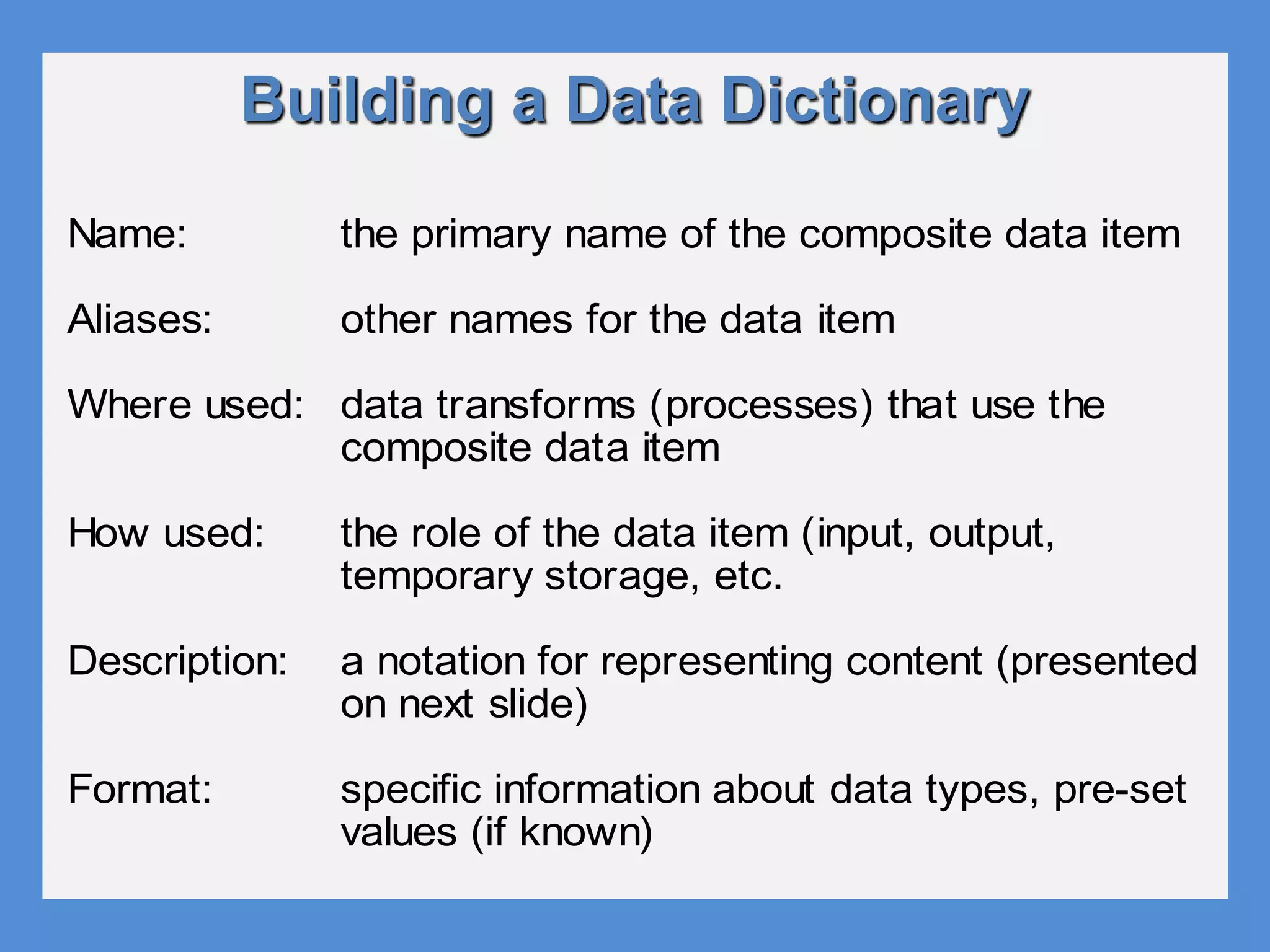
Building a Data Dictionary
Name:
Aliases:
Where used:
How used:
Description:
Format:
the primary name of the composite data item
other names for the data item
data transforms (processes) that use the
composite data item
the role of the data item (input, output,
temporary storage, etc.
a notation for representing content (presented
on next slide)
specific information about data types, pre-set
values (if known)
Data Dictionary Notation
Notation
=
+
[ ]
{ }
( ... )
* ... text ...*
n
Meaning
is composed of
and
either-or
n repetitions of
optional data
delimits a comment
Data Dictionary Example
telephone number
integrated
office
phone
system
Name:
Aliases:
Where/How
us ed:
Description:
Format:
telephone number
phone number, number
read-phone-number (input)
display-phone-number (output)
analyze-long-distance-calls (input)
telephone no. = [ local extension | outside no. | 0 ]
outside no. = 9 + [ service code | domestic no. ]
service code = [ 211 | 411 | 611 | 911 ]
domestic no. = ( ( 0 ) + area code ) + local number
area code = *three numeral designator*
Build the requirements dictionary:
alphanumeric data
system output
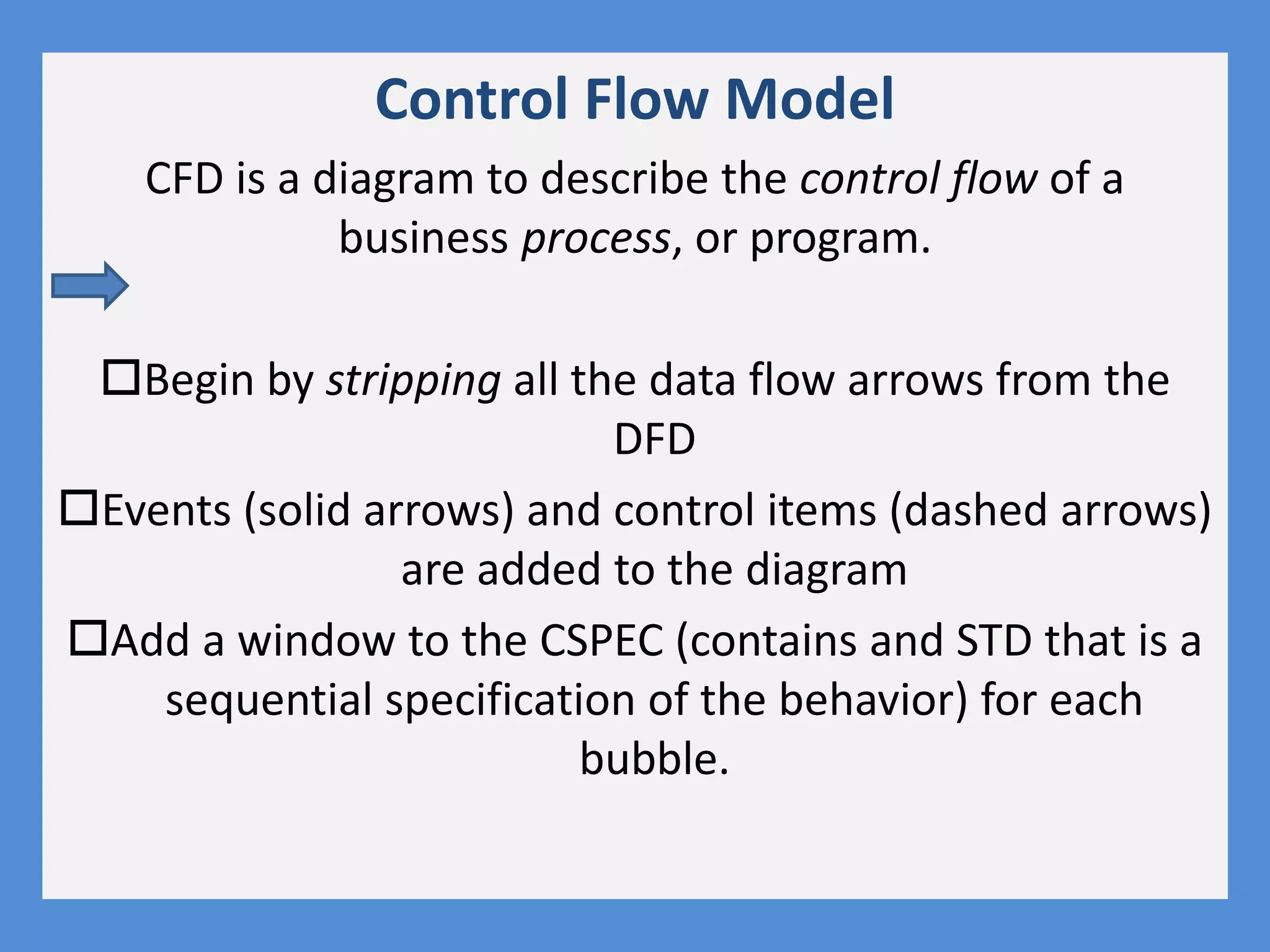
Control Flow Model
CFD is a diagram to describe the control flow of a
business process, or program.
Begin by stripping all the data flow arrows from the
DFD
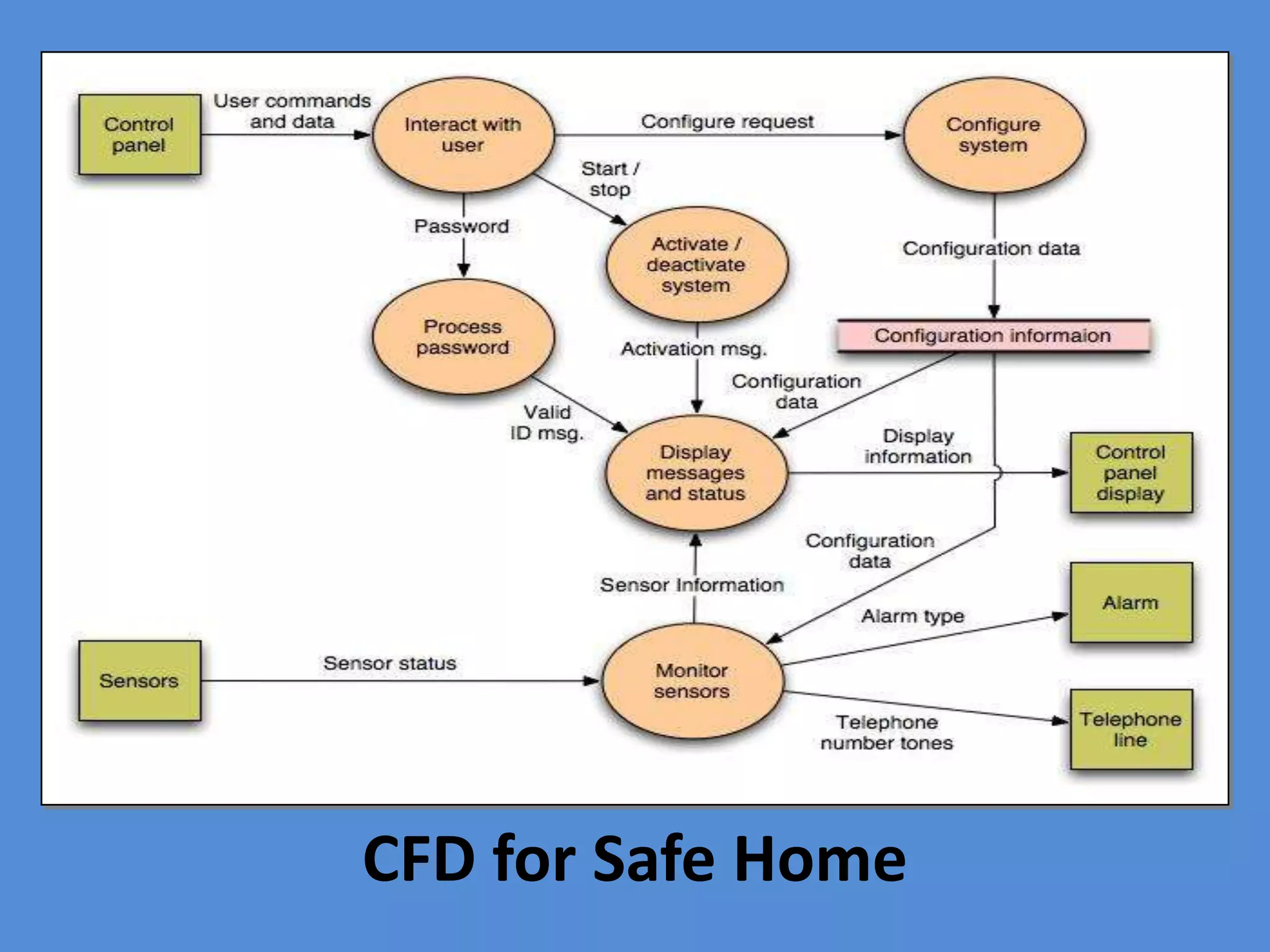
Events (solid arrows) and control items (dashed arrows)
are added to the diagram
Add a window to the CSPEC (contains and STD that is a
sequential specification of the behavior) for each
bubble.
CFD for Safe Home
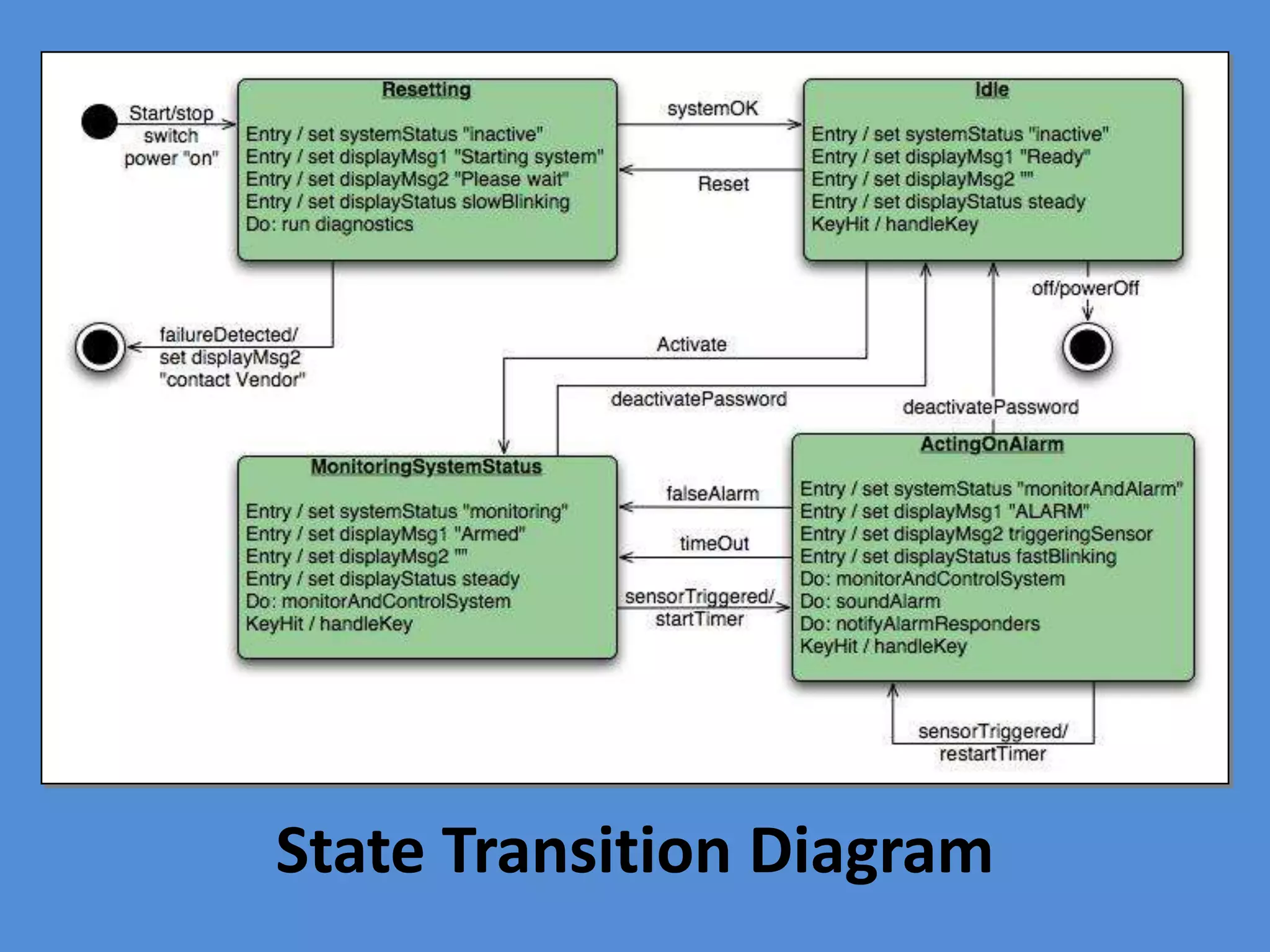
State Transition Diagram
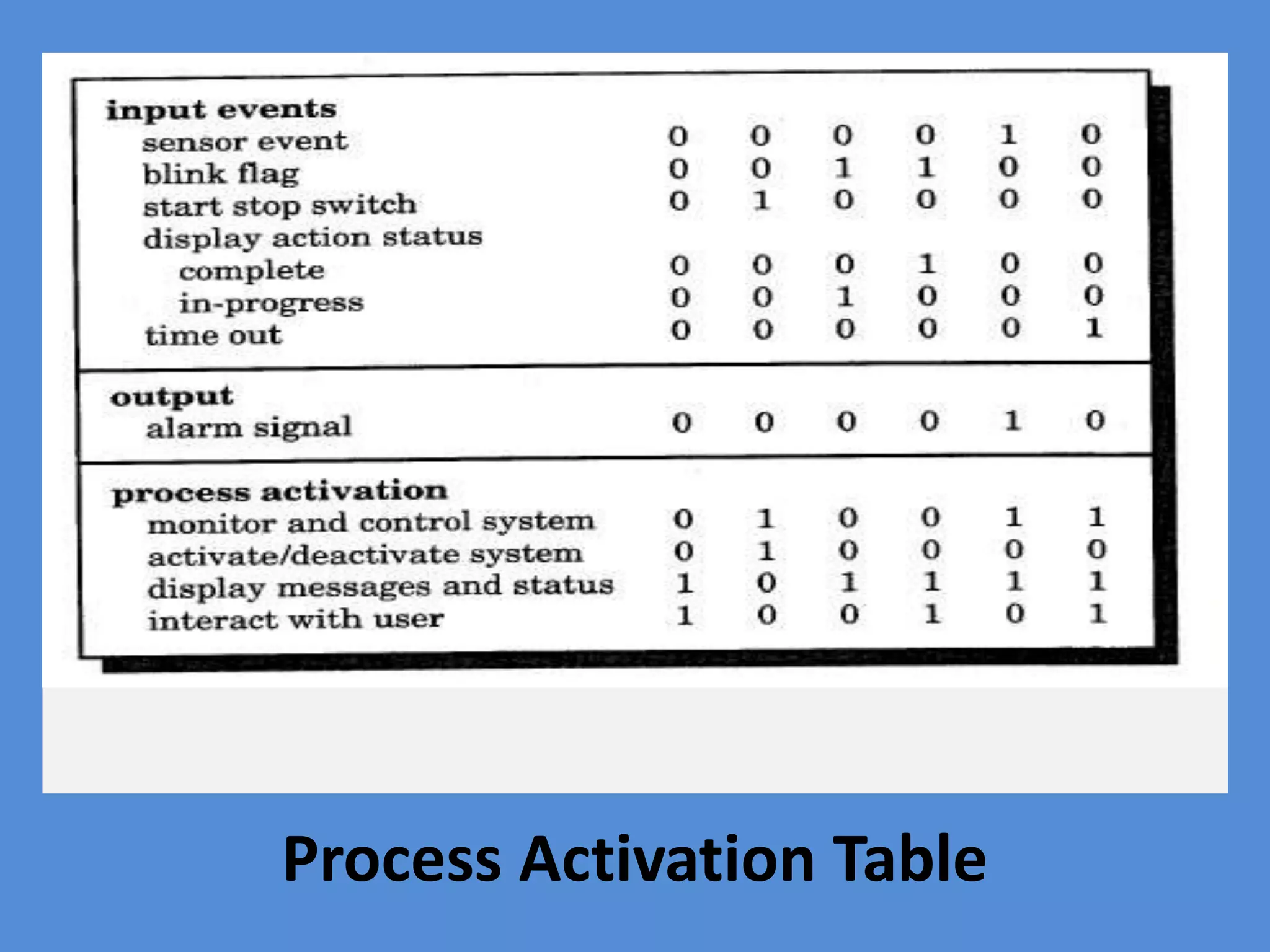
Process Activation Table

What is a DATA DICTIONARY?

  • 1.
    ry The Data Dictionary aquasi-formal grammar for describing the content of data that the software will process and create a notation for describing control data and the values that control data can take, e.g., "on," or "off" a repository that also contains "where-used" / "how used" information a notation that can be represented manually, but is best developed using CASE tools
  • 2.
    Building a DataDictionary Name: Aliases: Where used: How used: Description: Format: the primary name of the composite data item other names for the data item data transforms (processes) that use the composite data item the role of the data item (input, output, temporary storage, etc. a notation for representing content (presented on next slide) specific information about data types, pre-set values (if known)
  • 3.
    Data Dictionary Notation Notation = + [] { } ( ... ) * ... text ...* n Meaning is composed of and either-or n repetitions of optional data delimits a comment
  • 4.
    Data Dictionary Example telephonenumber integrated office phone system Name: Aliases: Where/How us ed: Description: Format: telephone number phone number, number read-phone-number (input) display-phone-number (output) analyze-long-distance-calls (input) telephone no. = [ local extension | outside no. | 0 ] outside no. = 9 + [ service code | domestic no. ] service code = [ 211 | 411 | 611 | 911 ] domestic no. = ( ( 0 ) + area code ) + local number area code = *three numeral designator* Build the requirements dictionary: alphanumeric data system output
  • 5.
    Control Flow Model CFDis a diagram to describe the control flow of a business process, or program. Begin by stripping all the data flow arrows from the DFD Events (solid arrows) and control items (dashed arrows) are added to the diagram Add a window to the CSPEC (contains and STD that is a sequential specification of the behavior) for each bubble.
  • 6.
  • 7.
  • 8.

Editor's Notes

  • #2 Here quasi means form seeming to be but not really so. Repository means a storage place. Here case tools are “structured analysis and design tool”
  • #4 The notation enables a SE to represent composite data as a sequence of data items. Data dictionary defines information items un-ambiguously.
  • #8 Control specification –represents the behaciour of system in 2 ways. That is, STD that is a sequencial specification of behaviour and a PAT.