





Design Thinking for Accessible
User Experiences
David Sloan @sloandr
The Paciello Group
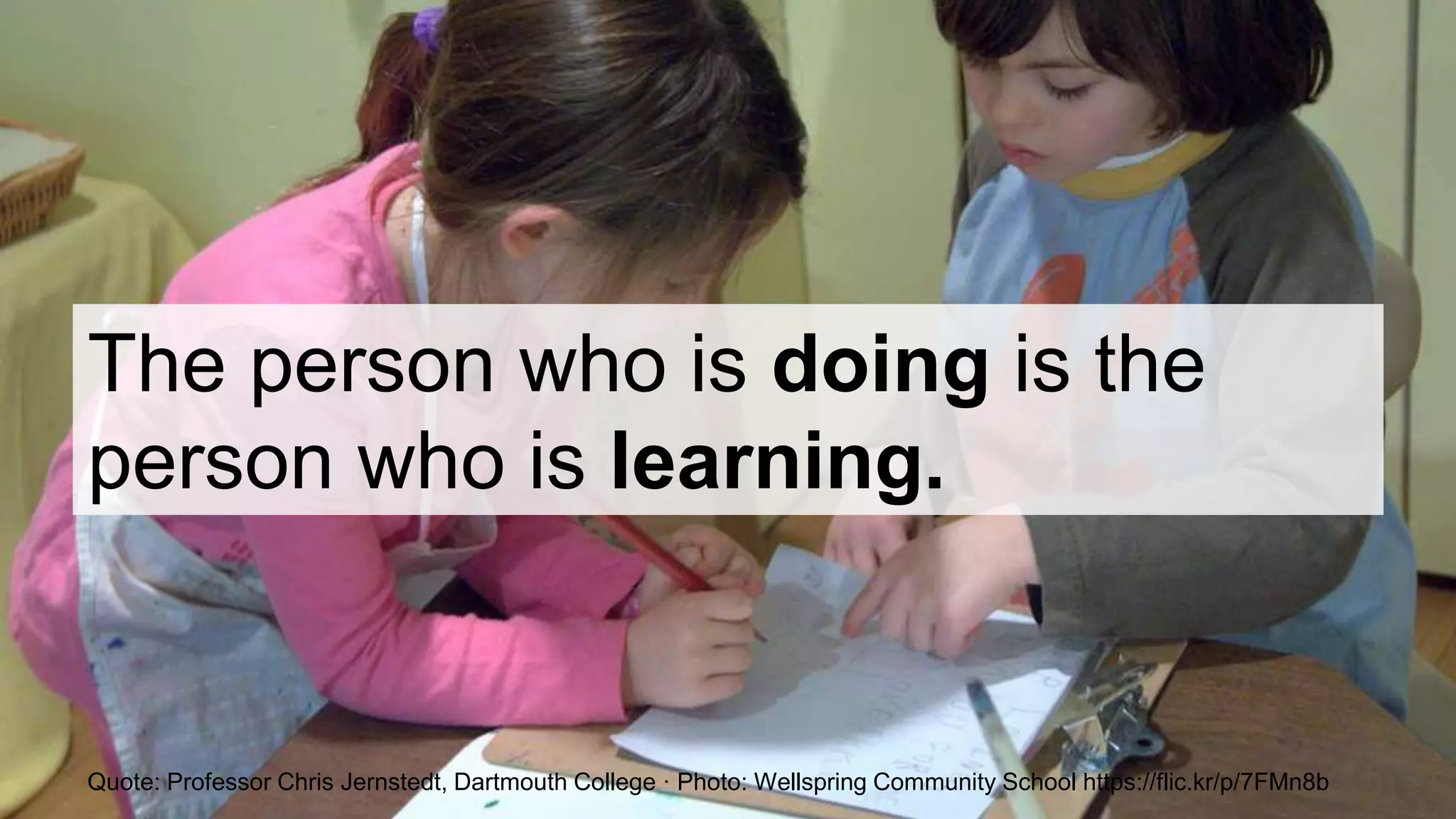
The person who is doing is the
person who is learning.
Quote: Professor Chris Jernstedt, Dartmouth College · Photo: Wellspring Community School https://flic.kr/p/7FMn8b
Accessibility as a journey.
Demo
Comparing visual and audio user
experience
What Went Wrong?
• Structure
• Wayfinding
• Interaction
• Content
Discussion
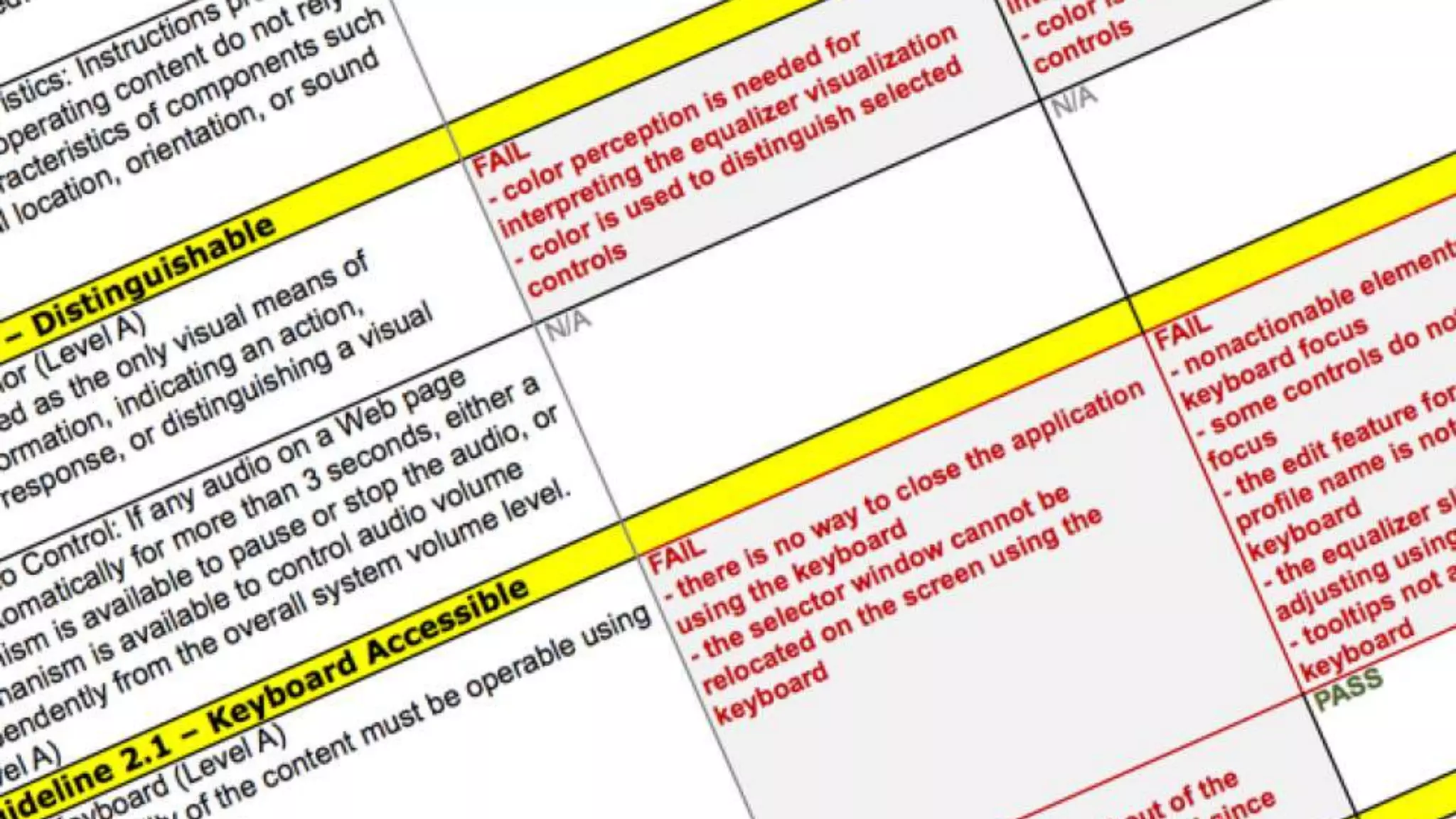
Reviewing and responding to an
accessibility audit
Equitable Use
Provide the same means of use for all users:
identical whenever possible;
equivalent when not
From Principles of Universal Design, http://www.ncsu.edu/ncsu/design/cud/about_ud/udprinciplestext.htm
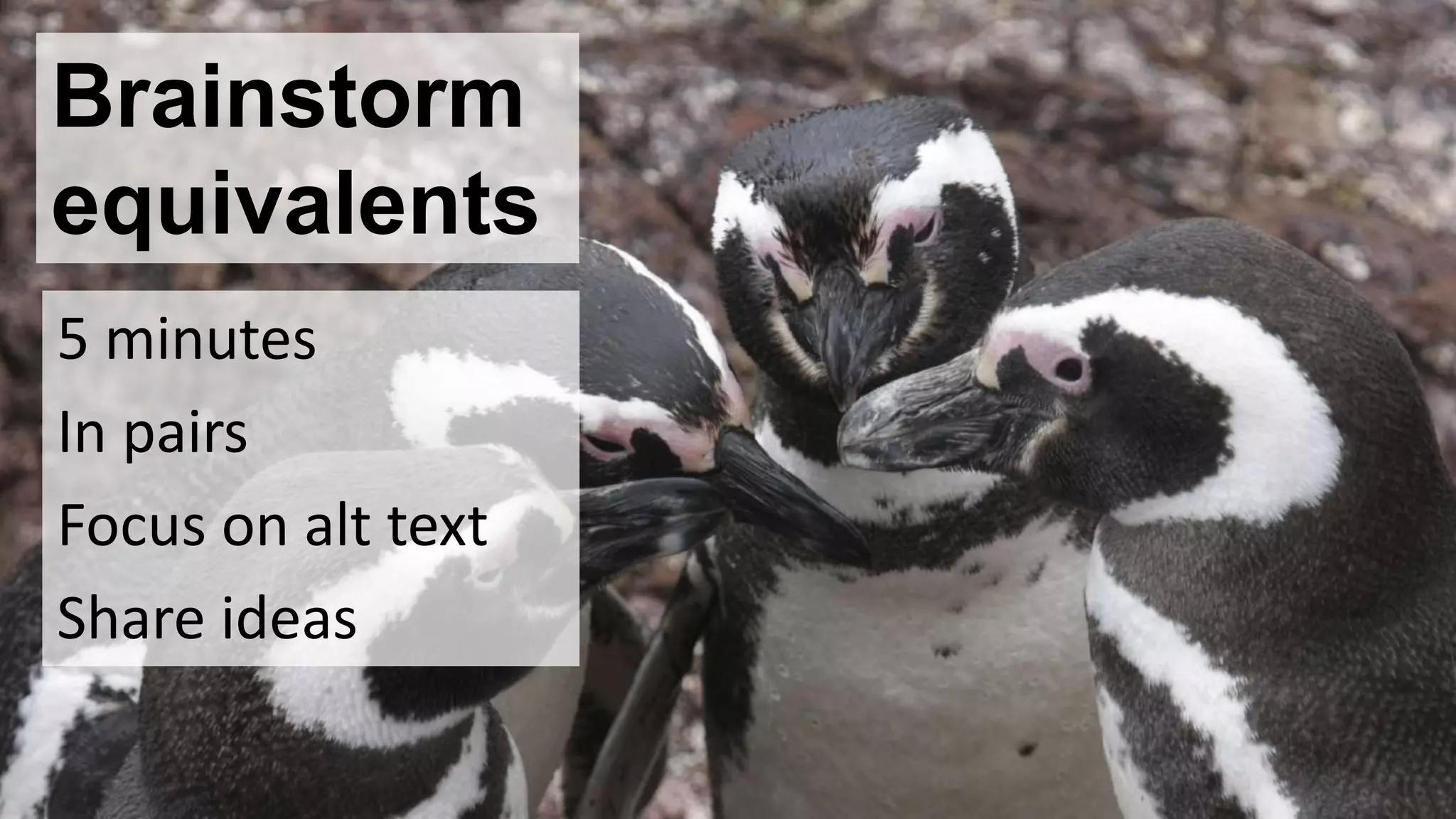
Brainstorm
equivalents
5 minutes
In pairs
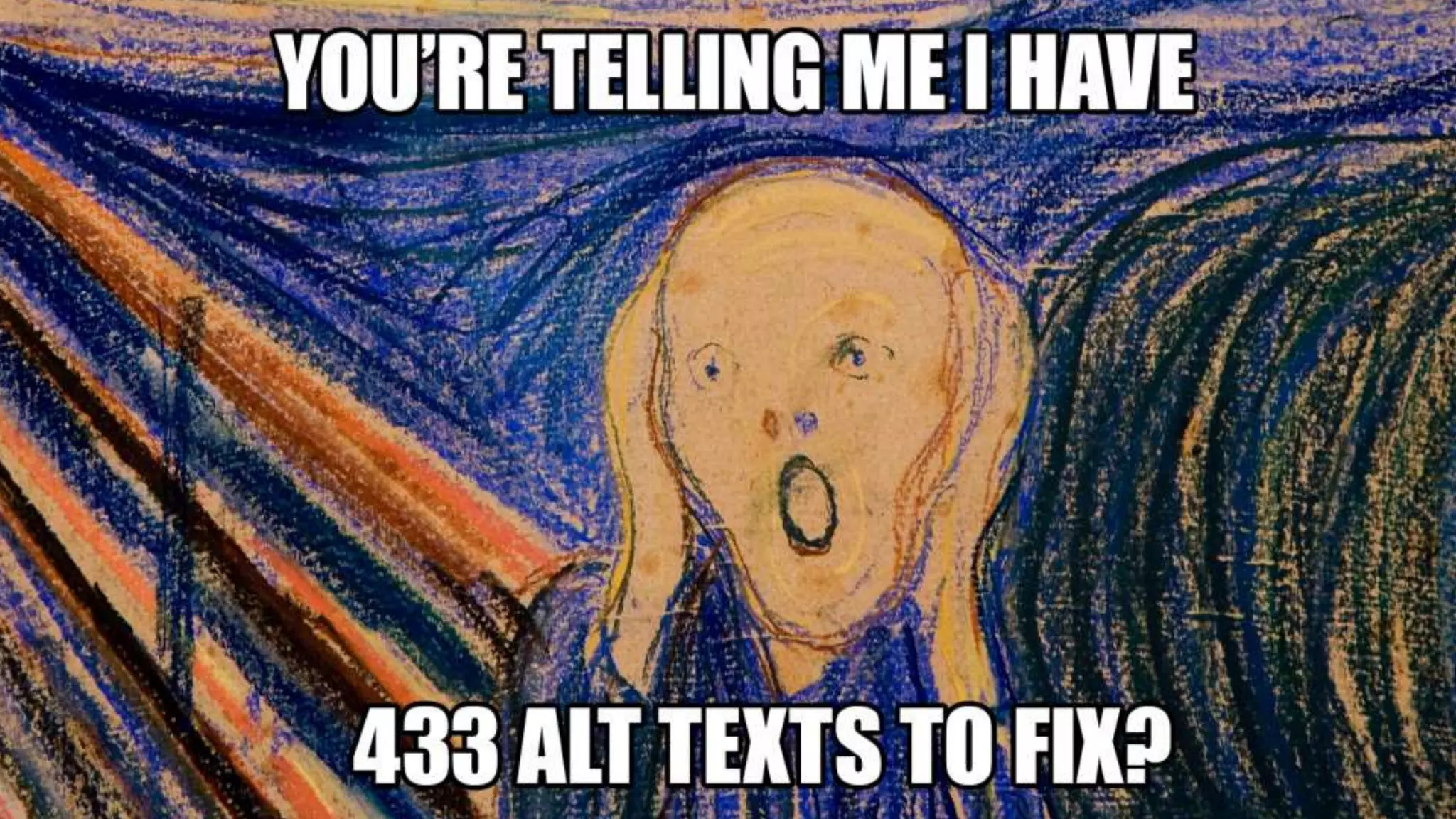
Focus on alt text
Share ideas
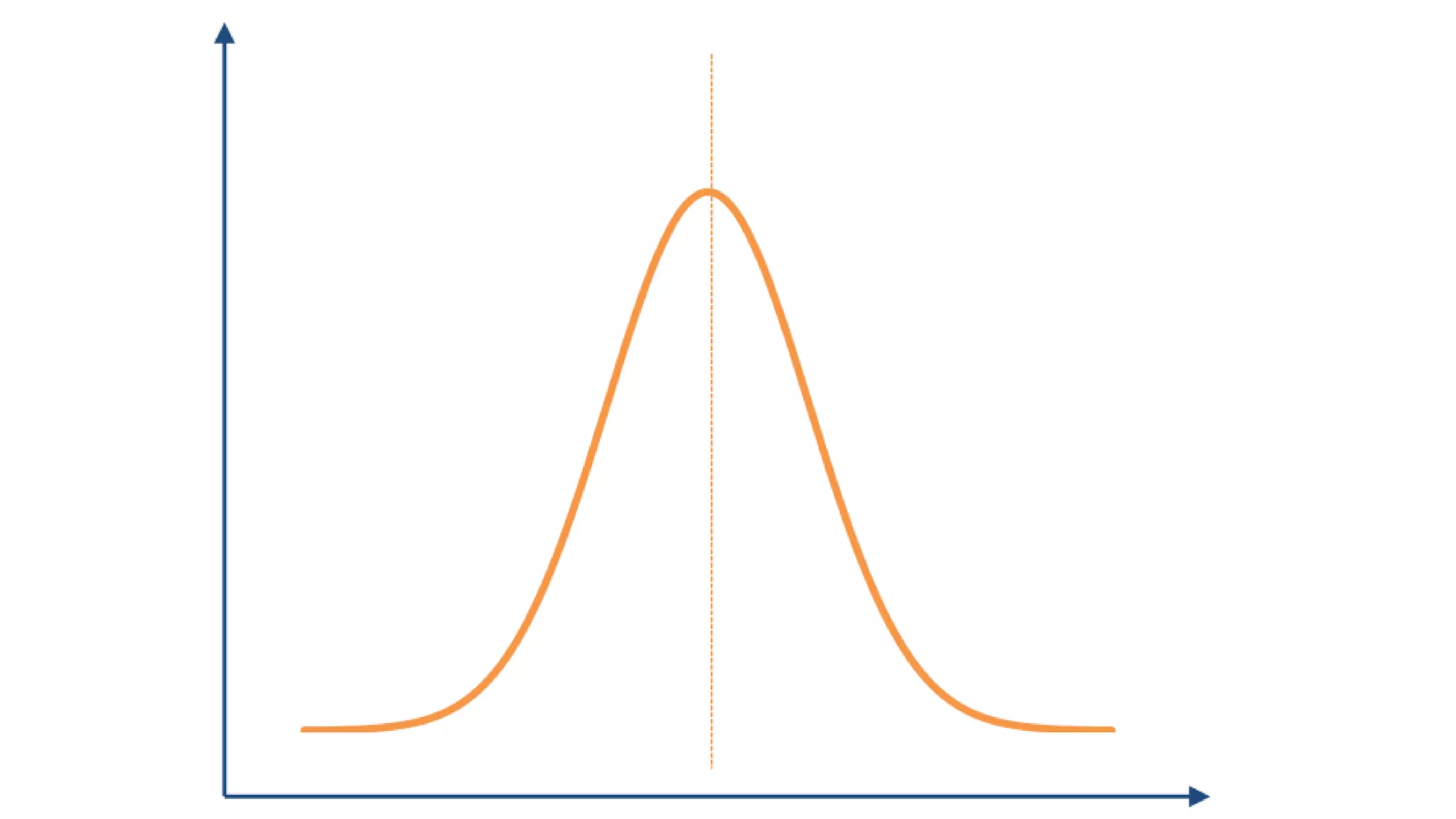
By concentrating solely on the bulge
at the centre of the bell curve we
are more likely to confirm what we
already know than learn something
new and surprising.
From Change By Design by Tim Brown
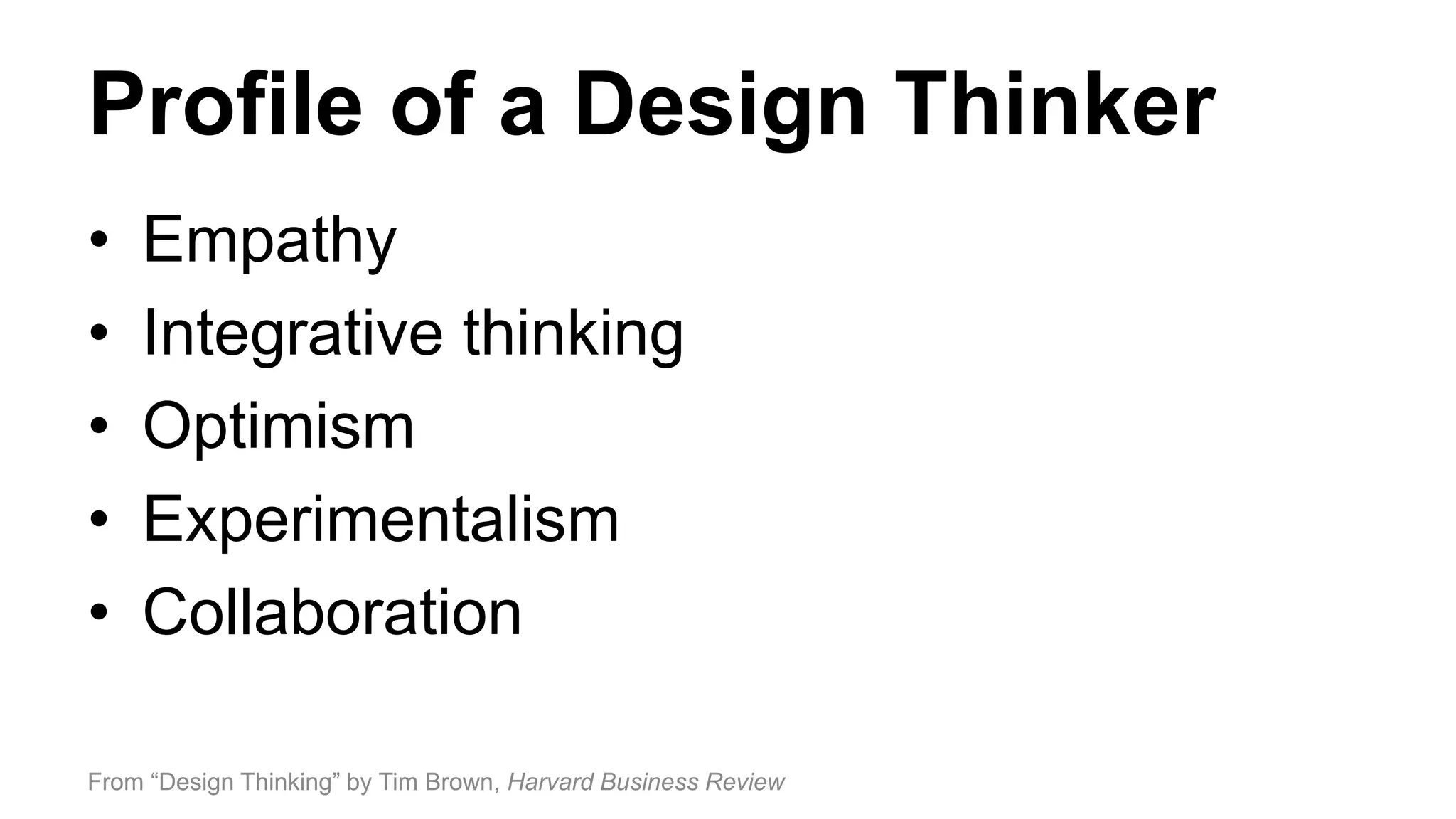
Profile of a Design Thinker
• Empathy
• Integrative thinking
• Optimism
• Experimentalism
• Collaboration
From “Design Thinking” by Tim Brown, Harvard Business Review
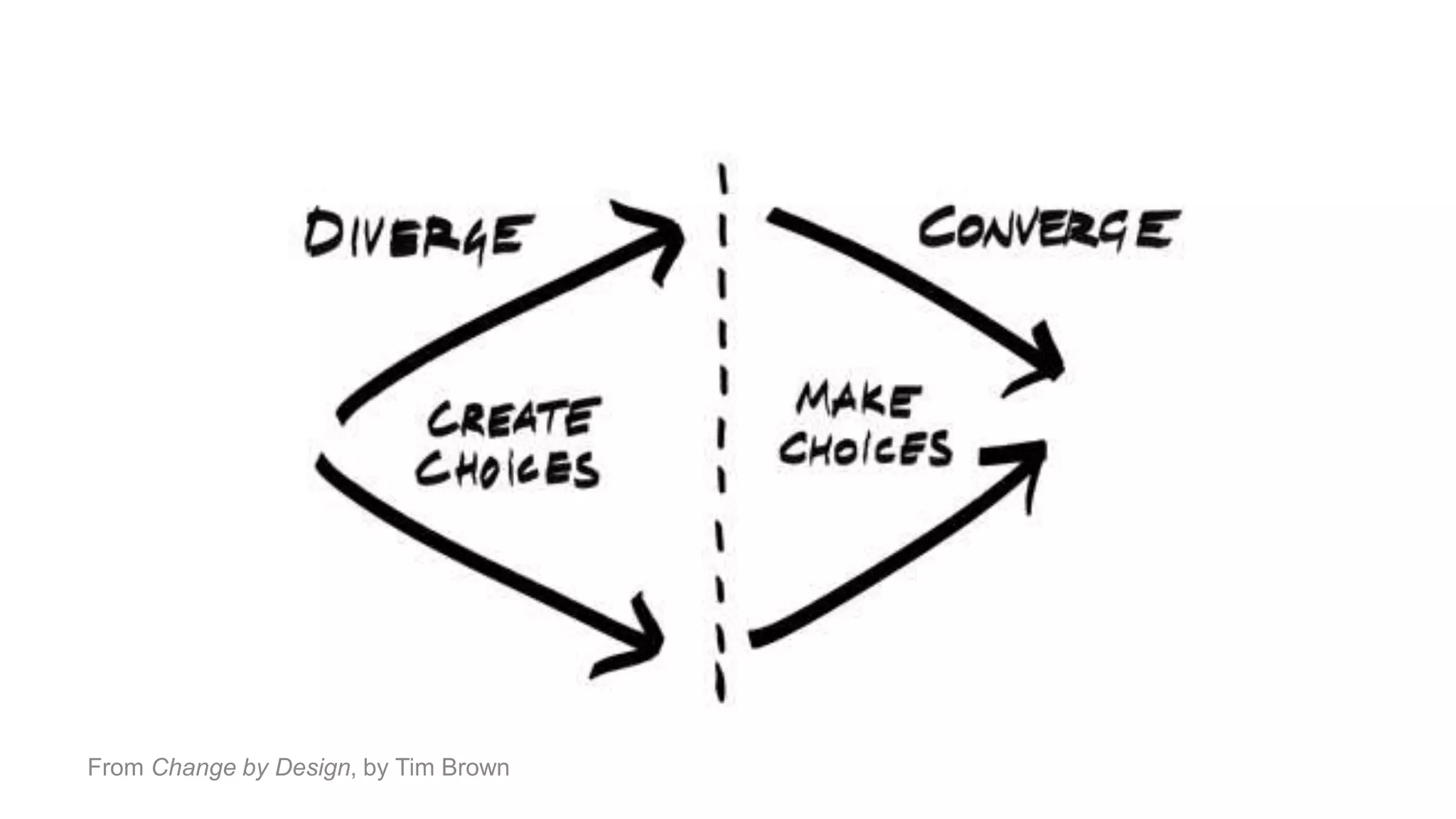
From Change by Design, by Tim Brown
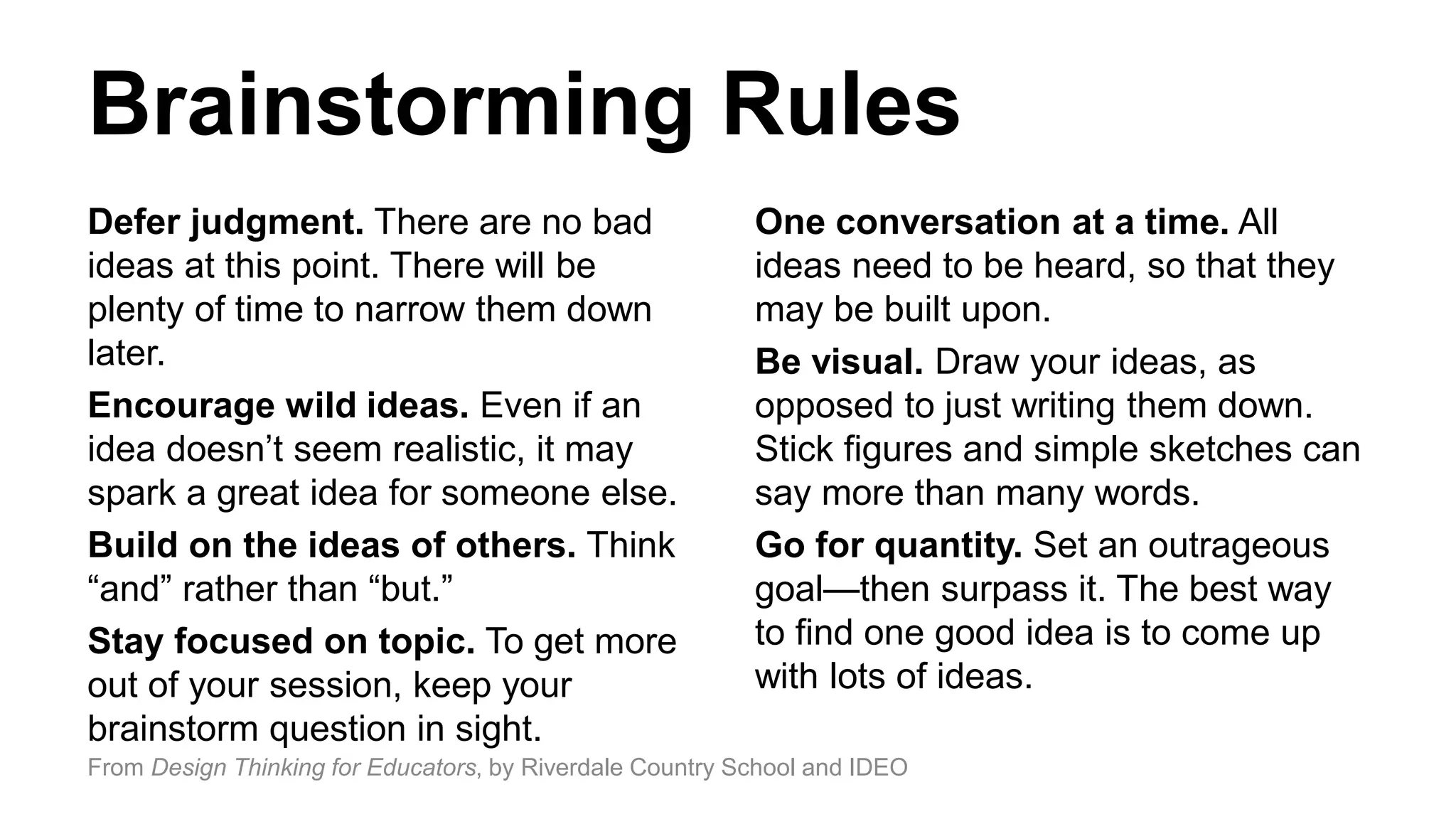
Brainstorming Rules
Defer judgment. There are no bad
ideas at this point. There will be
plenty of time to narrow them down
later.
Encourage wild ideas. Even if an
idea doesn’t seem realistic, it may
spark a great idea for someone else.
Build on the ideas of others. Think
“and” rather than “but.”
Stay focused on topic. To get more
out of your session, keep your
brainstorm question in sight.
One conversation at a time. All
ideas need to be heard, so that they
may be built upon.
Be visual. Draw your ideas, as
opposed to just writing them down.
Stick figures and simple sketches can
say more than many words.
Go for quantity. Set an outrageous
goal—then surpass it. The best way
to find one good idea is to come up
with lots of ideas.
From Design Thinking for Educators, by Riverdale Country School and IDEO
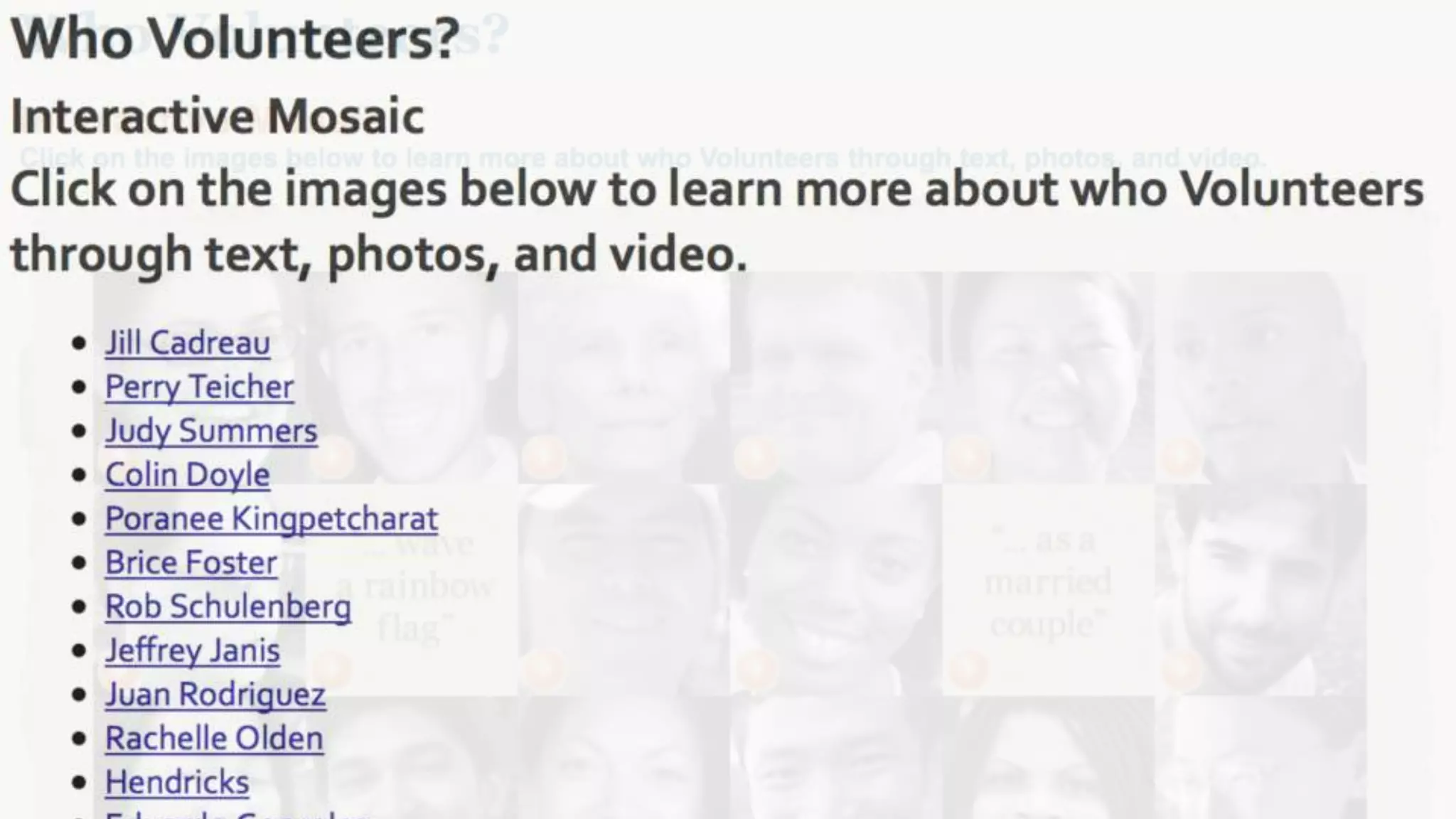
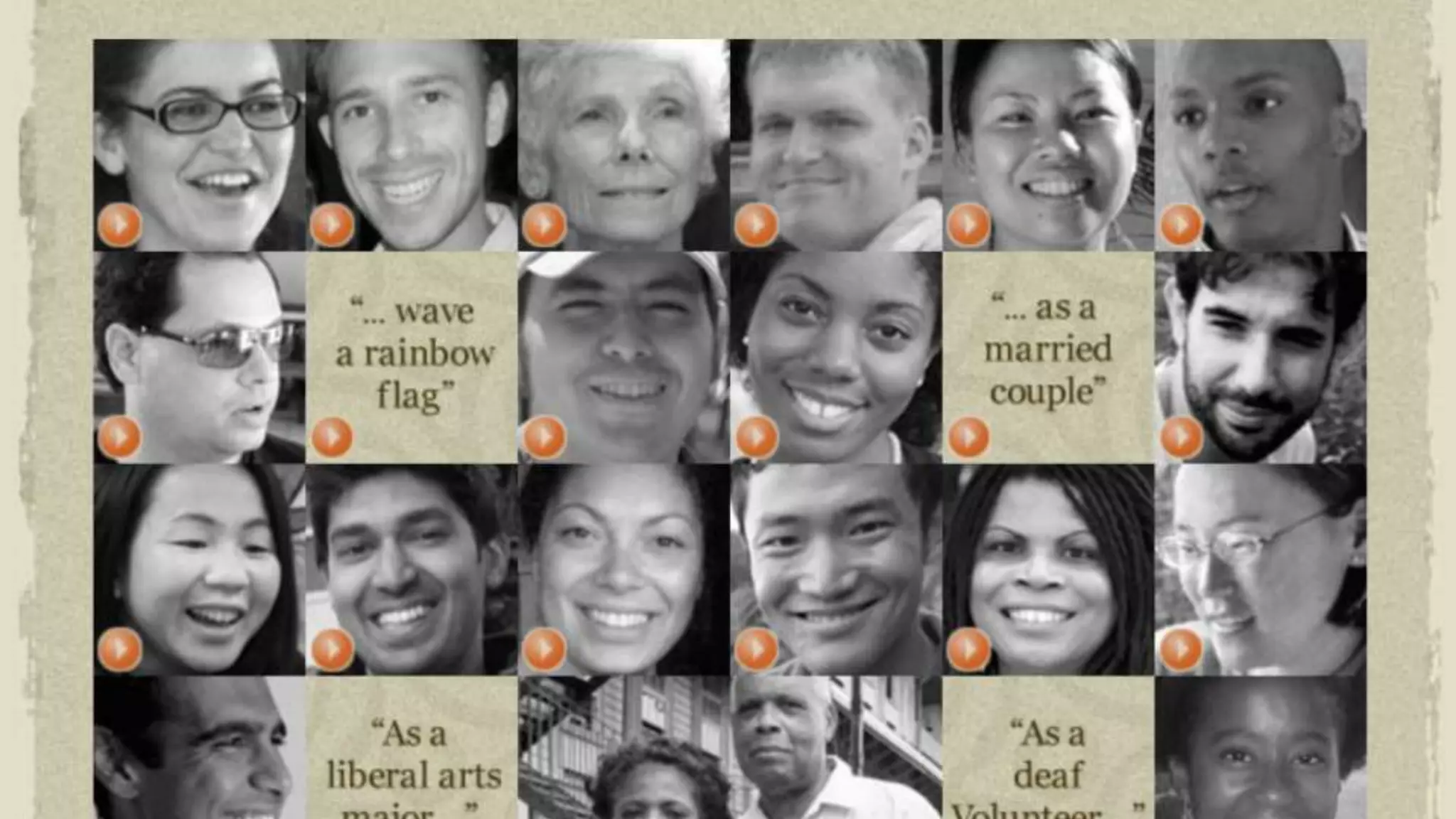
Mosaic Challenge: How might we
provide an accessible immersive
experience that demonstrates the
diversity of volunteers and
resonates for prospective
volunteers?
Teams Report
Back
Title
One-sentence summary
Prototype
Evolving the role of
accessibility into Accessible UX.
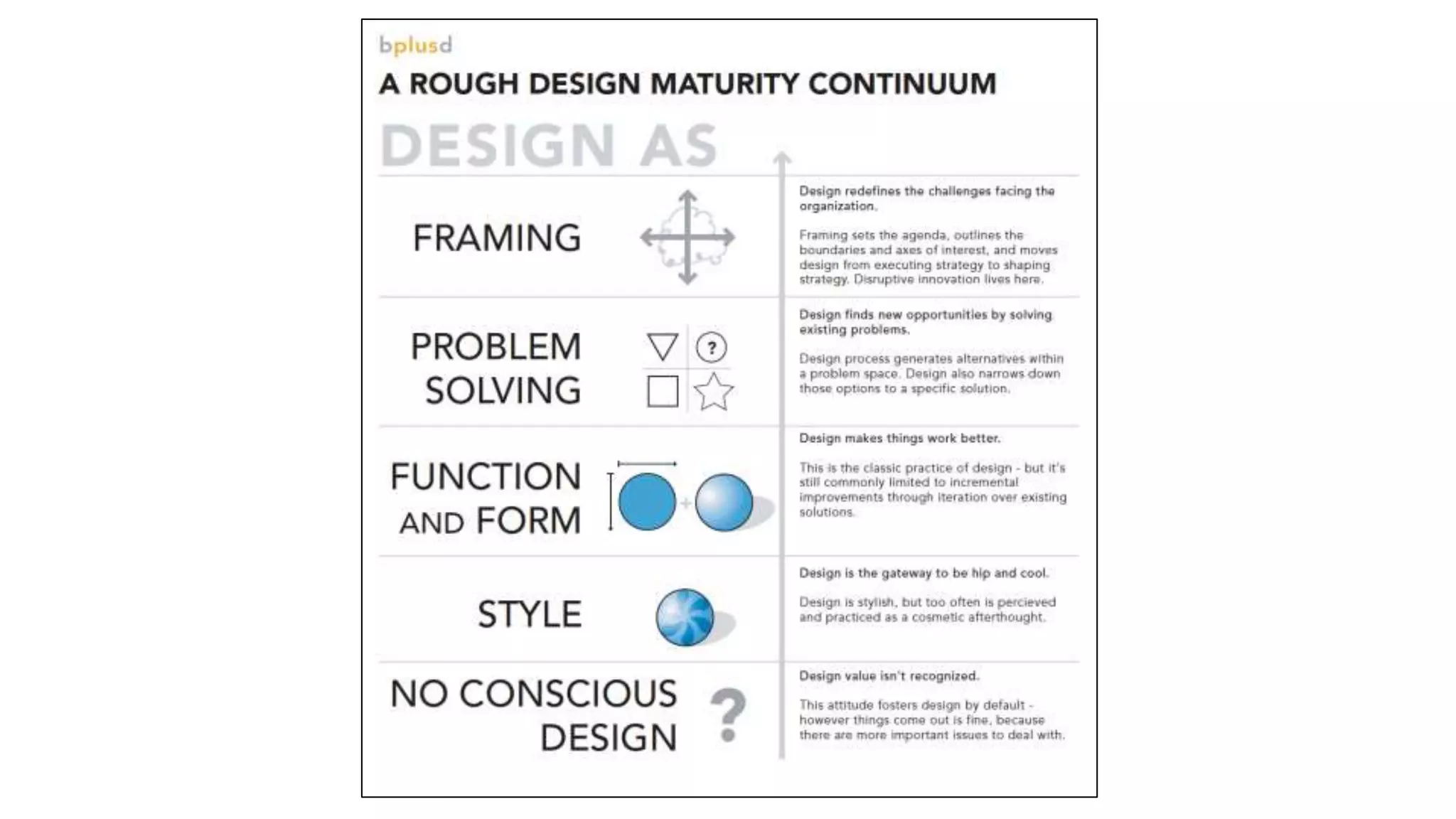
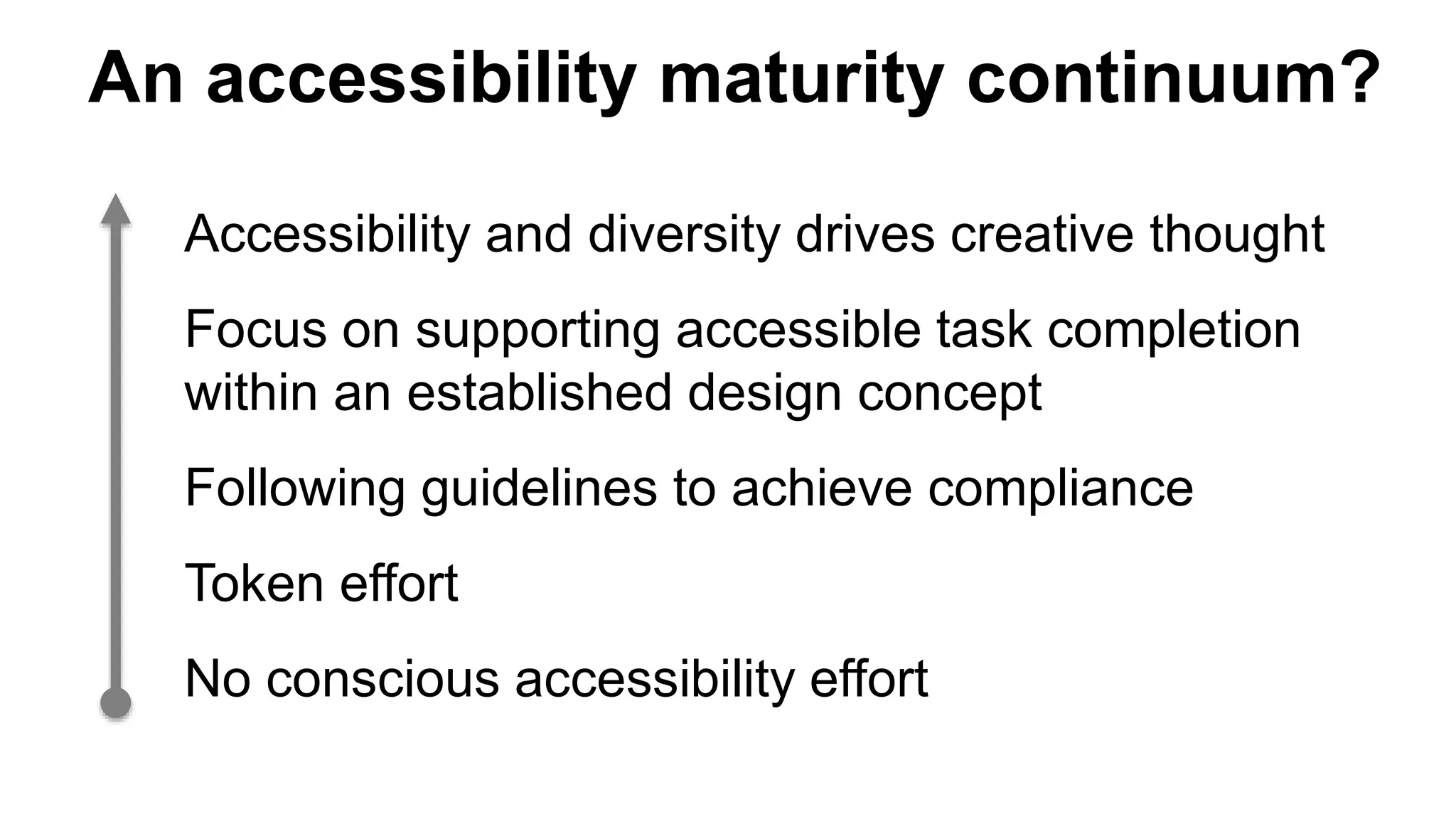
An accessibility maturity continuum?
Accessibility and diversity drives creative thought
Focus on supporting accessible task completion
within an established design concept
Following guidelines to achieve compliance
Token effort
No conscious accessibility effort
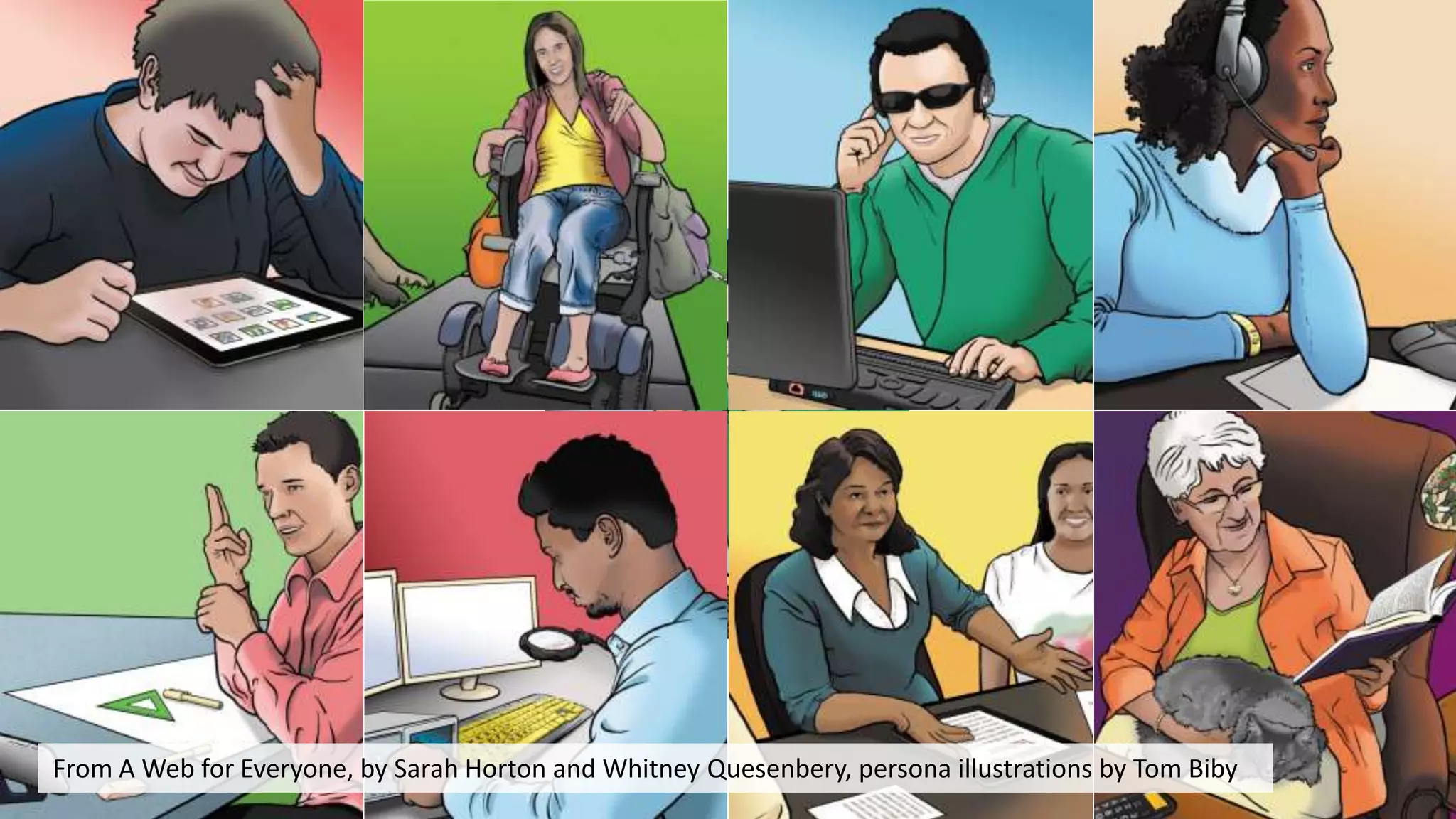
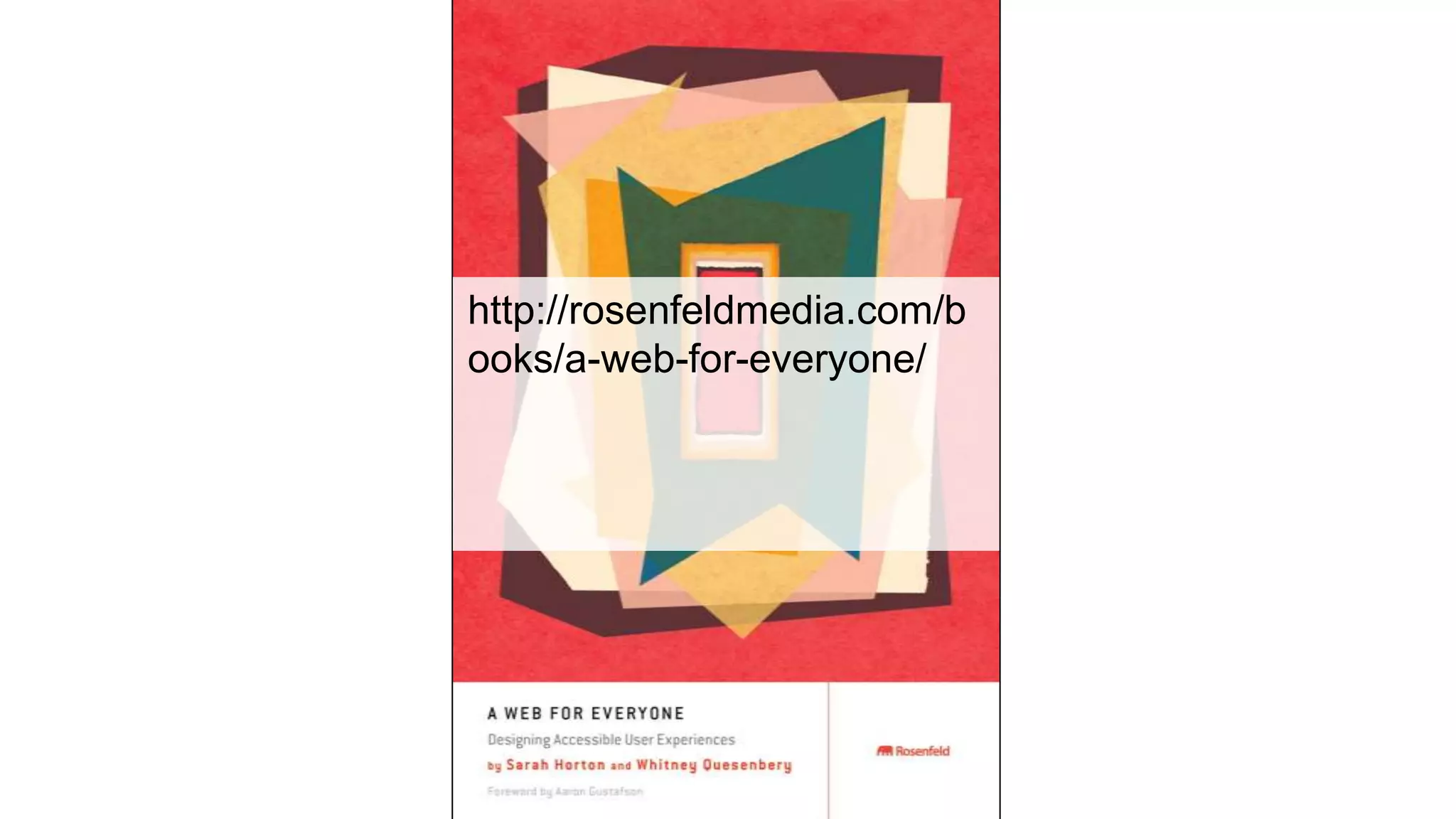
From A Web for Everyone, by Sarah Horton and Whitney Quesenbery, persona illustrations by Tom Biby
Accessibility + User Experience =
Accessible User Experience
http://rosenfeldmedia.com/b
ooks/a-web-for-everyone/
Thankyou.
David Sloan
@sloandr
www.paciellogroup.com
www.58sound.com

Design thinking for accessible user experiences - UX Scotland2014

  • 1.
    Design Thinking forAccessible User Experiences David Sloan @sloandr The Paciello Group
  • 2.
    The person whois doing is the person who is learning. Quote: Professor Chris Jernstedt, Dartmouth College · Photo: Wellspring Community School https://flic.kr/p/7FMn8b
  • 3.
  • 6.
    Demo Comparing visual andaudio user experience
  • 7.
    What Went Wrong? •Structure • Wayfinding • Interaction • Content
  • 8.
    Discussion Reviewing and respondingto an accessibility audit
  • 9.
    Equitable Use Provide thesame means of use for all users: identical whenever possible; equivalent when not From Principles of Universal Design, http://www.ncsu.edu/ncsu/design/cud/about_ud/udprinciplestext.htm
  • 13.
  • 17.
    By concentrating solelyon the bulge at the centre of the bell curve we are more likely to confirm what we already know than learn something new and surprising. From Change By Design by Tim Brown
  • 19.
    Profile of aDesign Thinker • Empathy • Integrative thinking • Optimism • Experimentalism • Collaboration From “Design Thinking” by Tim Brown, Harvard Business Review
  • 20.
    From Change byDesign, by Tim Brown
  • 21.
    Brainstorming Rules Defer judgment.There are no bad ideas at this point. There will be plenty of time to narrow them down later. Encourage wild ideas. Even if an idea doesn’t seem realistic, it may spark a great idea for someone else. Build on the ideas of others. Think “and” rather than “but.” Stay focused on topic. To get more out of your session, keep your brainstorm question in sight. One conversation at a time. All ideas need to be heard, so that they may be built upon. Be visual. Draw your ideas, as opposed to just writing them down. Stick figures and simple sketches can say more than many words. Go for quantity. Set an outrageous goal—then surpass it. The best way to find one good idea is to come up with lots of ideas. From Design Thinking for Educators, by Riverdale Country School and IDEO
  • 22.
    Mosaic Challenge: Howmight we provide an accessible immersive experience that demonstrates the diversity of volunteers and resonates for prospective volunteers?
  • 23.
  • 24.
    Evolving the roleof accessibility into Accessible UX.
  • 26.
    An accessibility maturitycontinuum? Accessibility and diversity drives creative thought Focus on supporting accessible task completion within an established design concept Following guidelines to achieve compliance Token effort No conscious accessibility effort
  • 27.
    From A Webfor Everyone, by Sarah Horton and Whitney Quesenbery, persona illustrations by Tom Biby
  • 30.
    Accessibility + UserExperience = Accessible User Experience
  • 31.
  • 32.

Editor's Notes