Role of Metadata
Why Metadata
 Before touches the keyboard by the
prominent(superlative) users.
 Several questions come to their mind.
What are various data in the data
warehouse?
Is there information about unit sale and
costs by product?
How old is the data in the warehouse.
When was the last time fresh data was
brought in?
Are there any summaries by month and
product?
Why Meta data contd.,
 These questions and several more
information are very valid and pertinent.
 What are answers? Where are the
answers? Can ur user see the answers?
How easy to get the answers?
What is Meta data?
 Metadata in a data warehouse contains
the answer to questions about the data
in the data warehouse.
 Keep the answer in a place called the
metadata repository.
Different definitions for
metadata
 Data about the data.
 Table of contents for the data.
 Catalog for the data.
 Data warehouse roadmap.
 Data warehouse directory.
 Tongs to handle the data.
 The nerve center.
So, what exactly is metadata
 It tells u more.
 It gives more than the explanation of the
semantics and the syntax.
 Describes all the pertinent(relevant)
aspect of the data in the data
warehouse.
 Pertinent to whom?
 The answer is – primarily to the user
and also developer and even project
team.
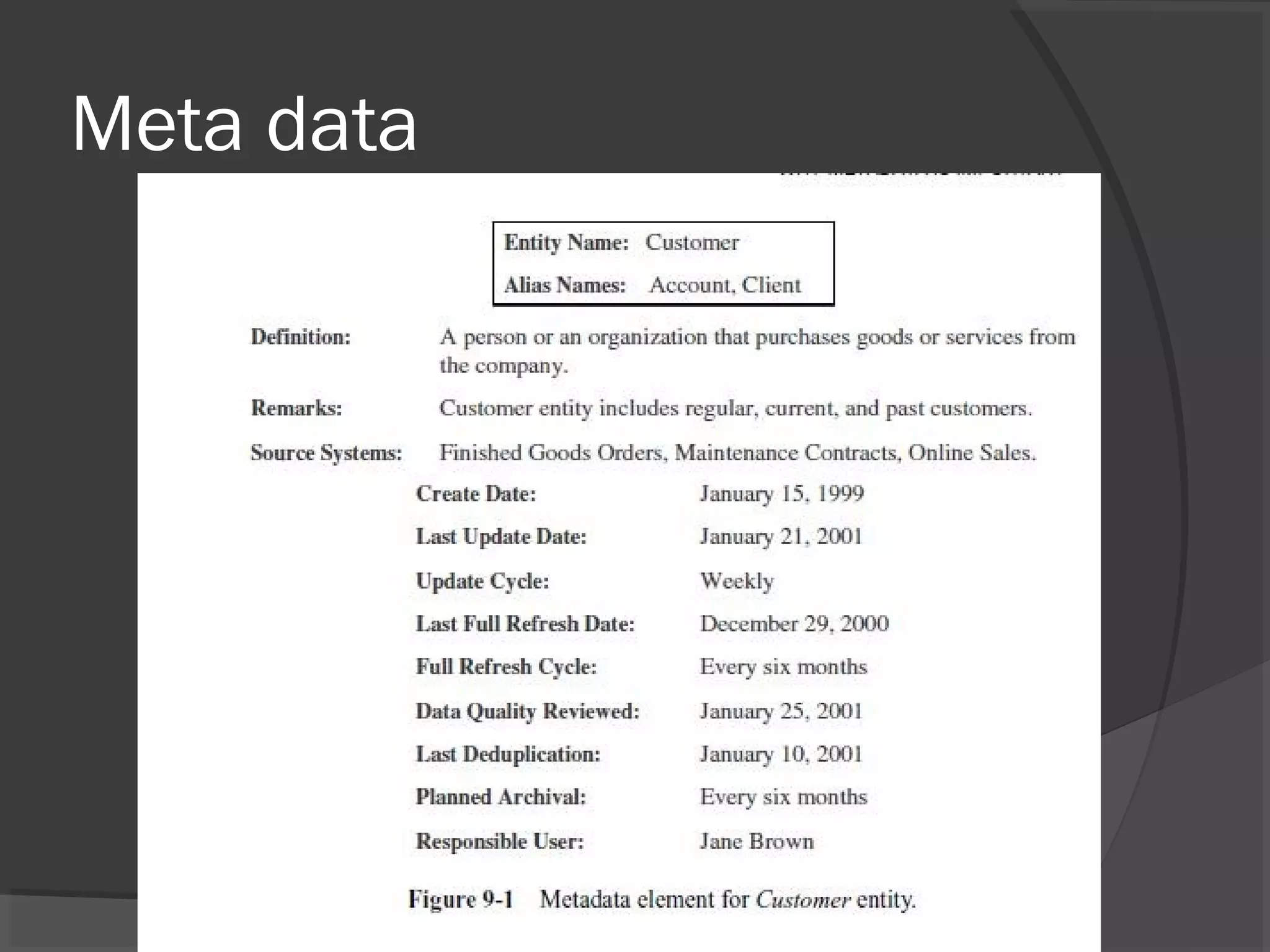
Meta data
Why it is important?
 Metadata is necessary for using,
building and administering your data
warehouse.
For using the data warehouse
 Without the metadata support, user
cannot get an information every time
they needed(user create their own ad
hoc report).
 Today data warehouses are much larger
in size, wide in scope.
 User critically need metadata.
For building the data
warehouse(extraction team)
 Need to know the structure and data
content in the data warehouse.
 Mapping and data transformations.
 Logical structure of data warehouse
database.
For administering the data
warehouse
 Impossible to administer the data
warehouse(size)
 Large no of questions and queries.
 Cannot administer without answers for
these questions.
 Metadata must address these issues.
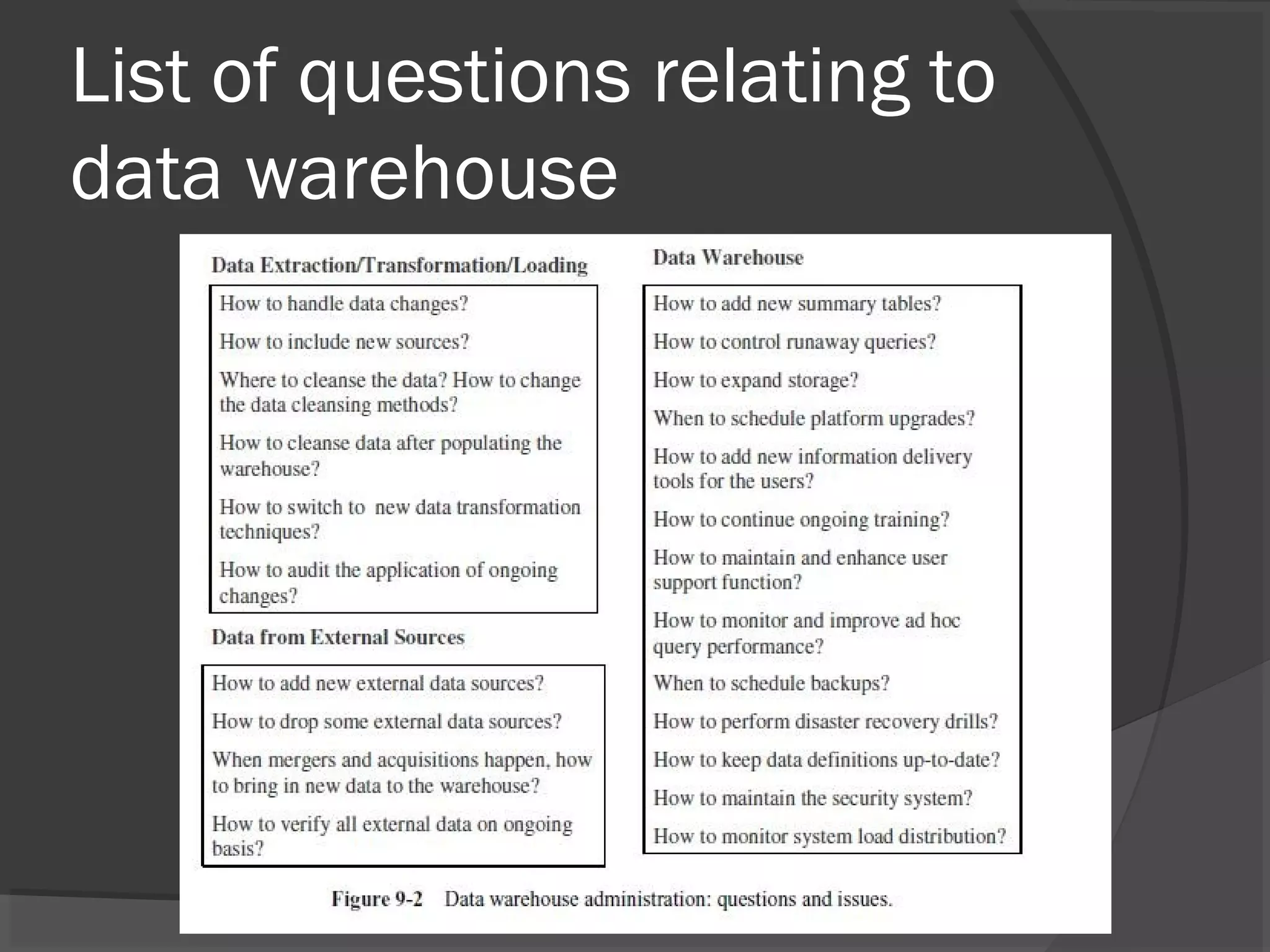
List of questions relating to
data warehouse
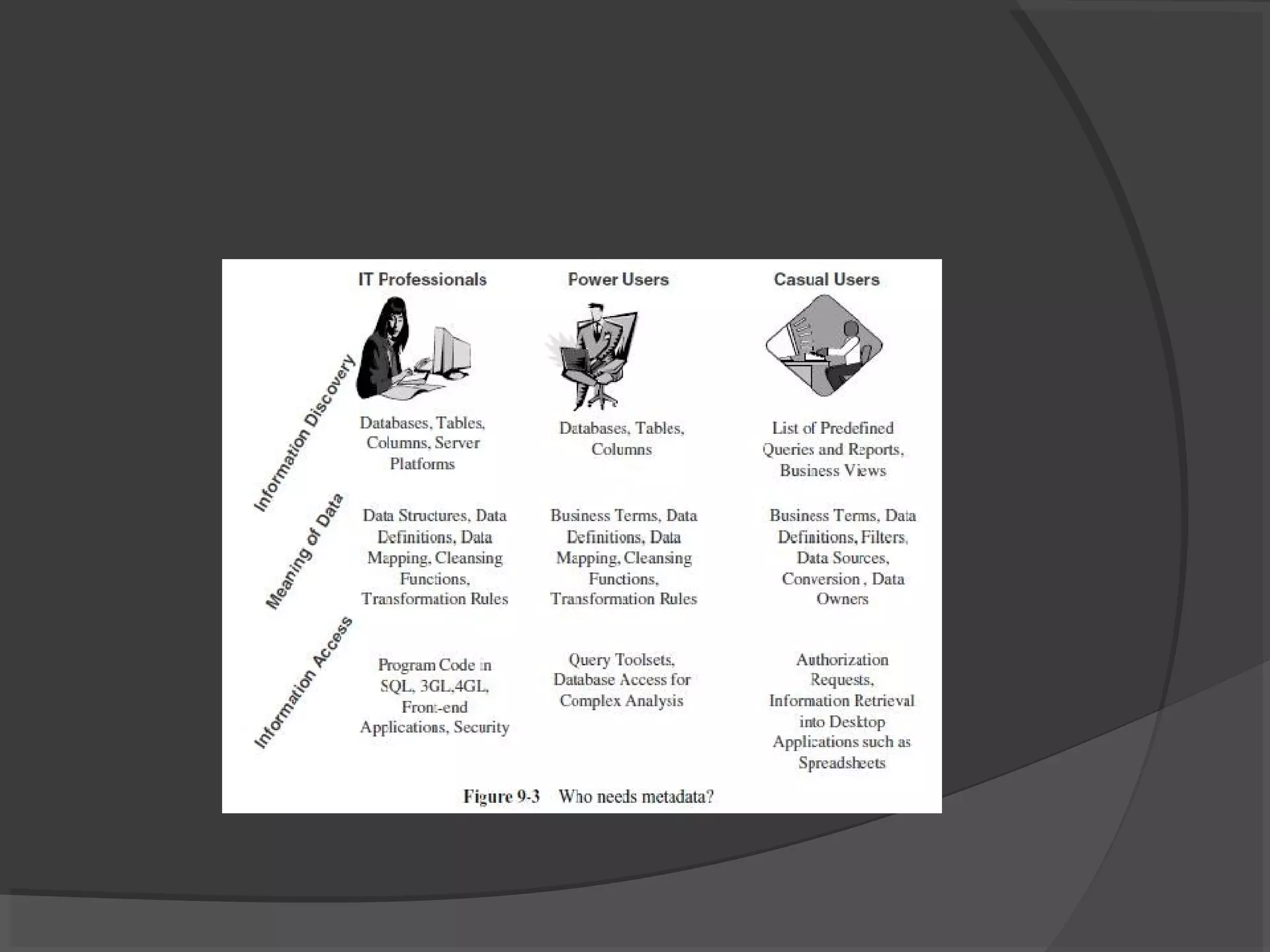
Who needs metadata?
 Without metadata, Datawarehouse is
like such a filling cabinet without
information.
 Go through the image column(it address
the our question)
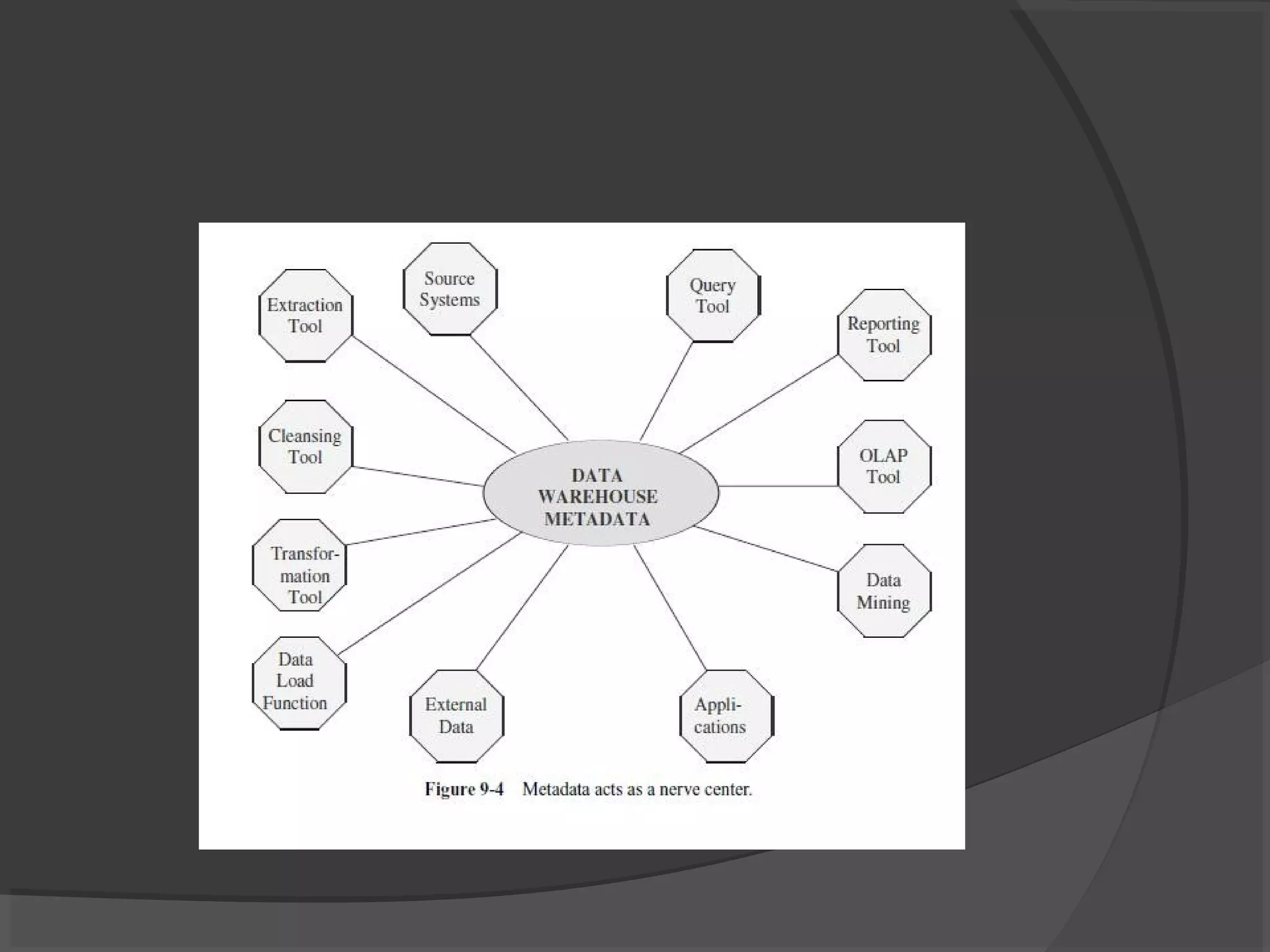
Like a nerve center
 Metadata placed in a key position and
enables communication among various
processes.
Why metadata is essential for
IT
 Development and deployment of data
warehouse is joint effort between users
and IT staff.
 Technical issue-IT primarily responsible
design and ongoing administration.
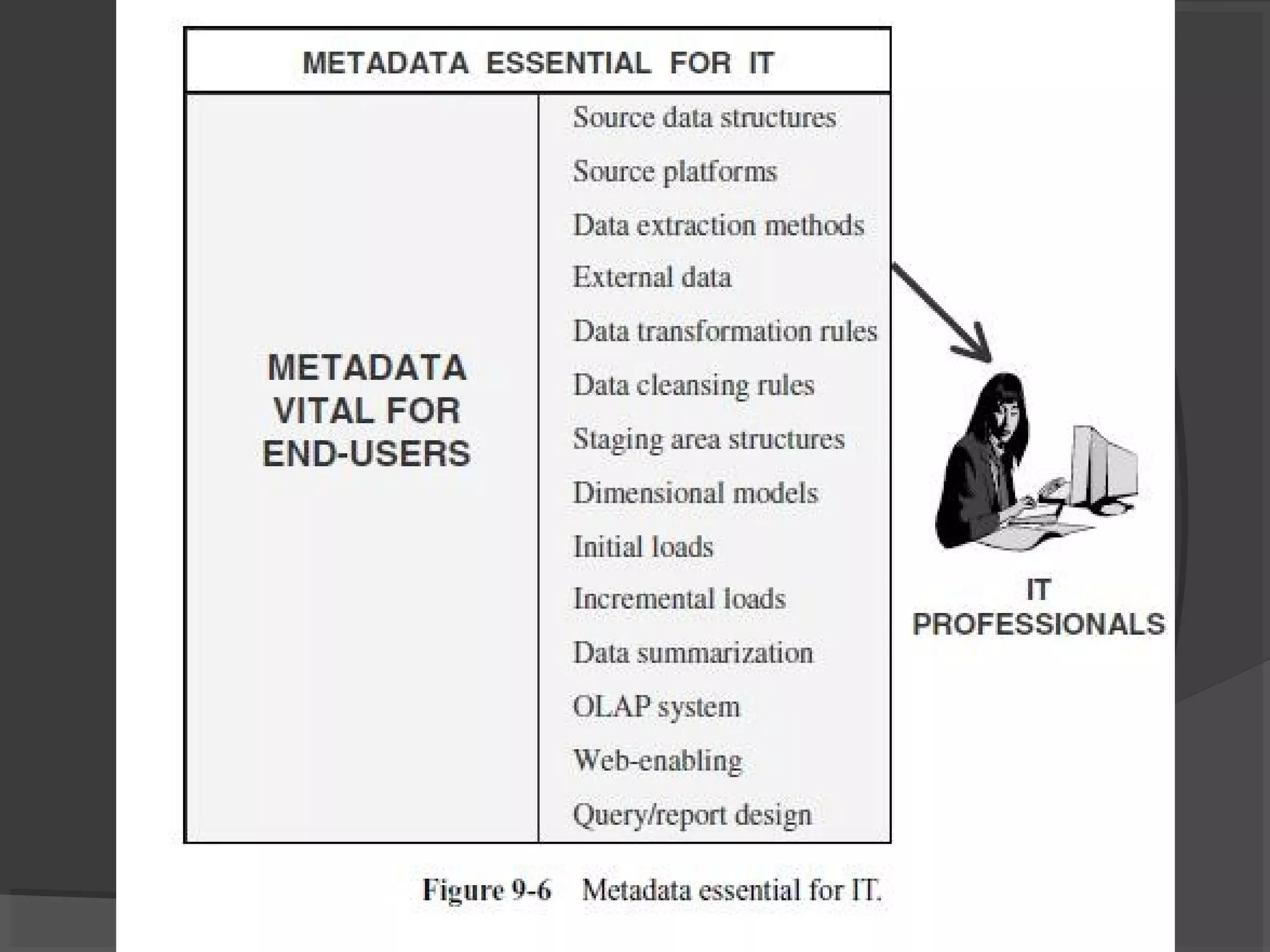
 Metadata essential for IT
 beginning with the data extraction and
ending with information delivery.
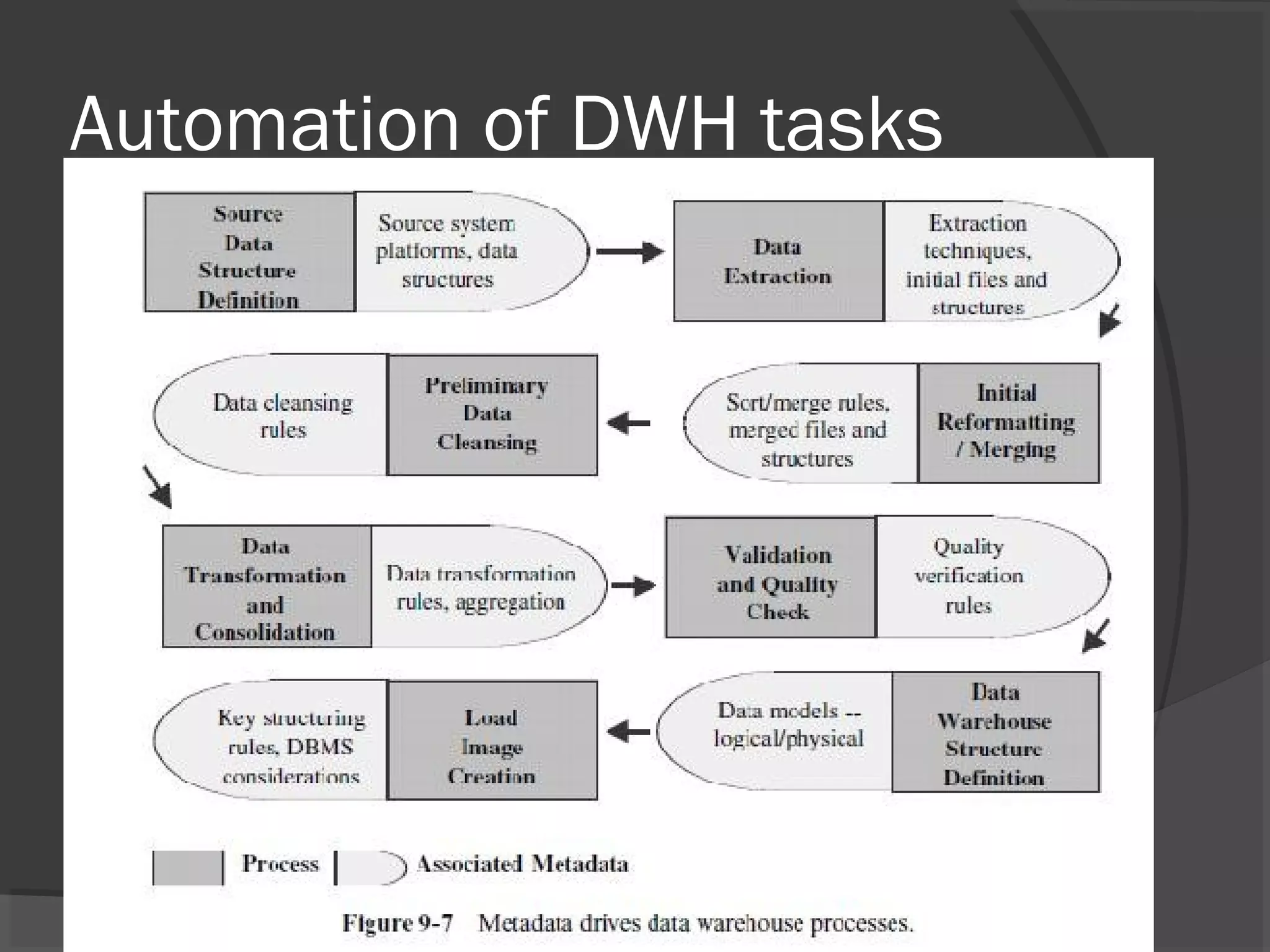
 It drives and record the each processes.
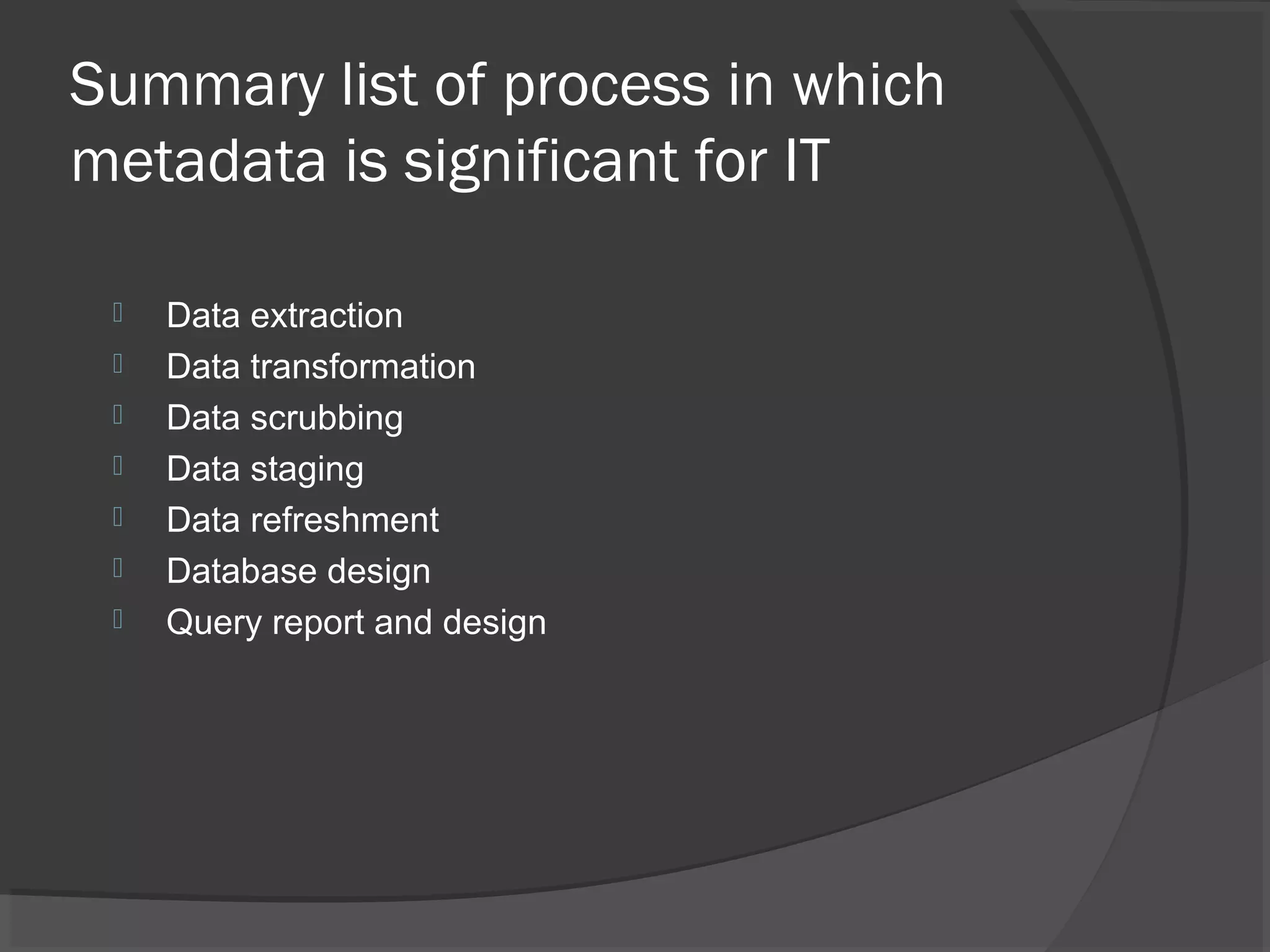
Summary list of process in which
metadata is significant for IT
 Data extraction
 Data transformation
 Data scrubbing
 Data staging
 Data refreshment
 Database design
 Query report and design
Automation of DWH tasks
Types by Functional Area
 Classify and group in various way-some
by usage and who use it
 Administrative/End-user/Optimization
 Technical/Business
 Development/usage
 In the data mart/At the workstation
 Bank room/front room
 Internal/External
Functional Areas
 Data Acquisition
 Data stroage
 Information delivery
Data Acquisition
 DWH process related to following
functions.
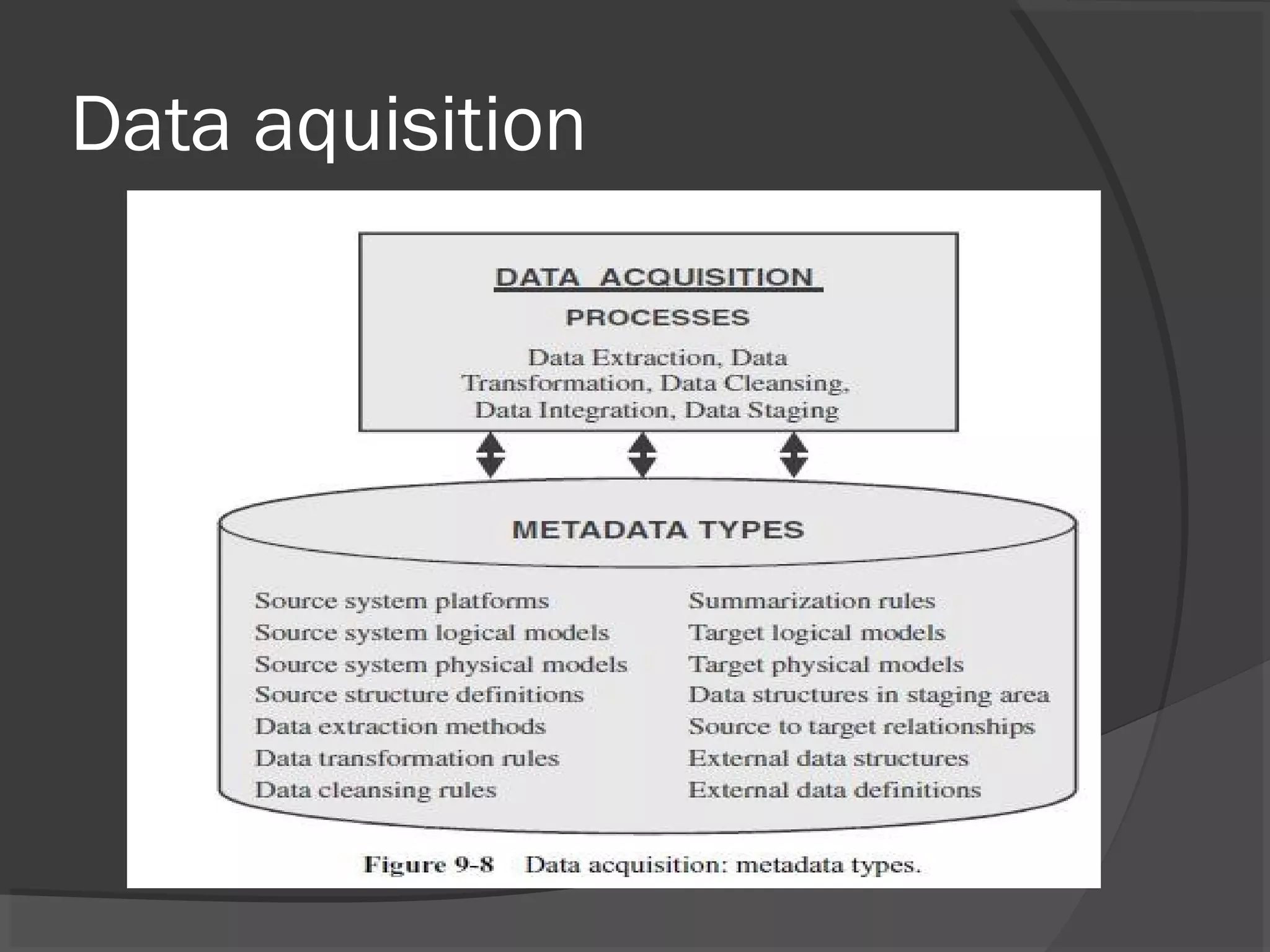
Data extraction
Data transformation
Data cleaning
Data integration
Data staging
Data aquisition
Data stroage
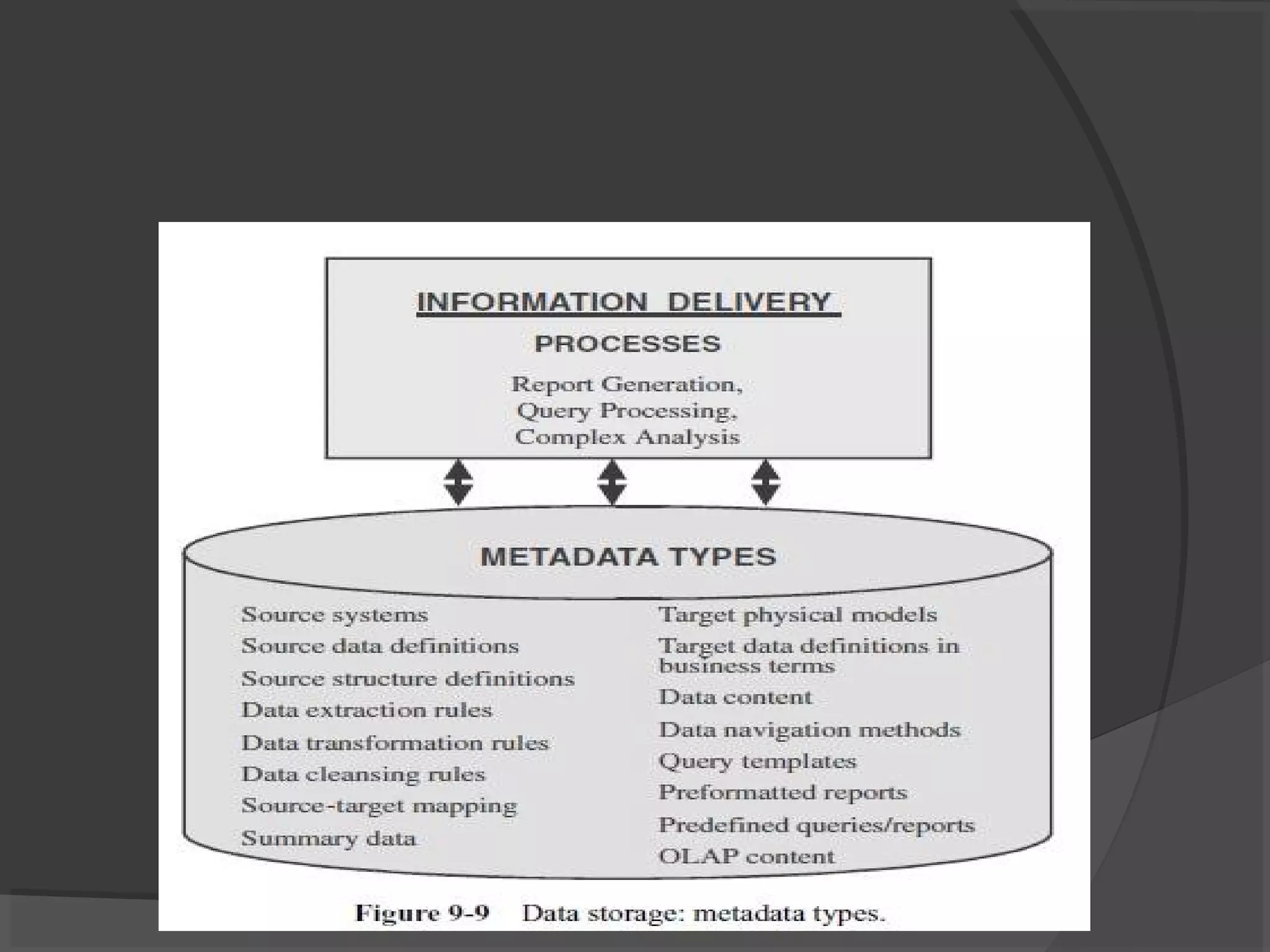
 Data loading
 Data archiving
 Data management
 Use metadata in this area for full data
refresh and load.
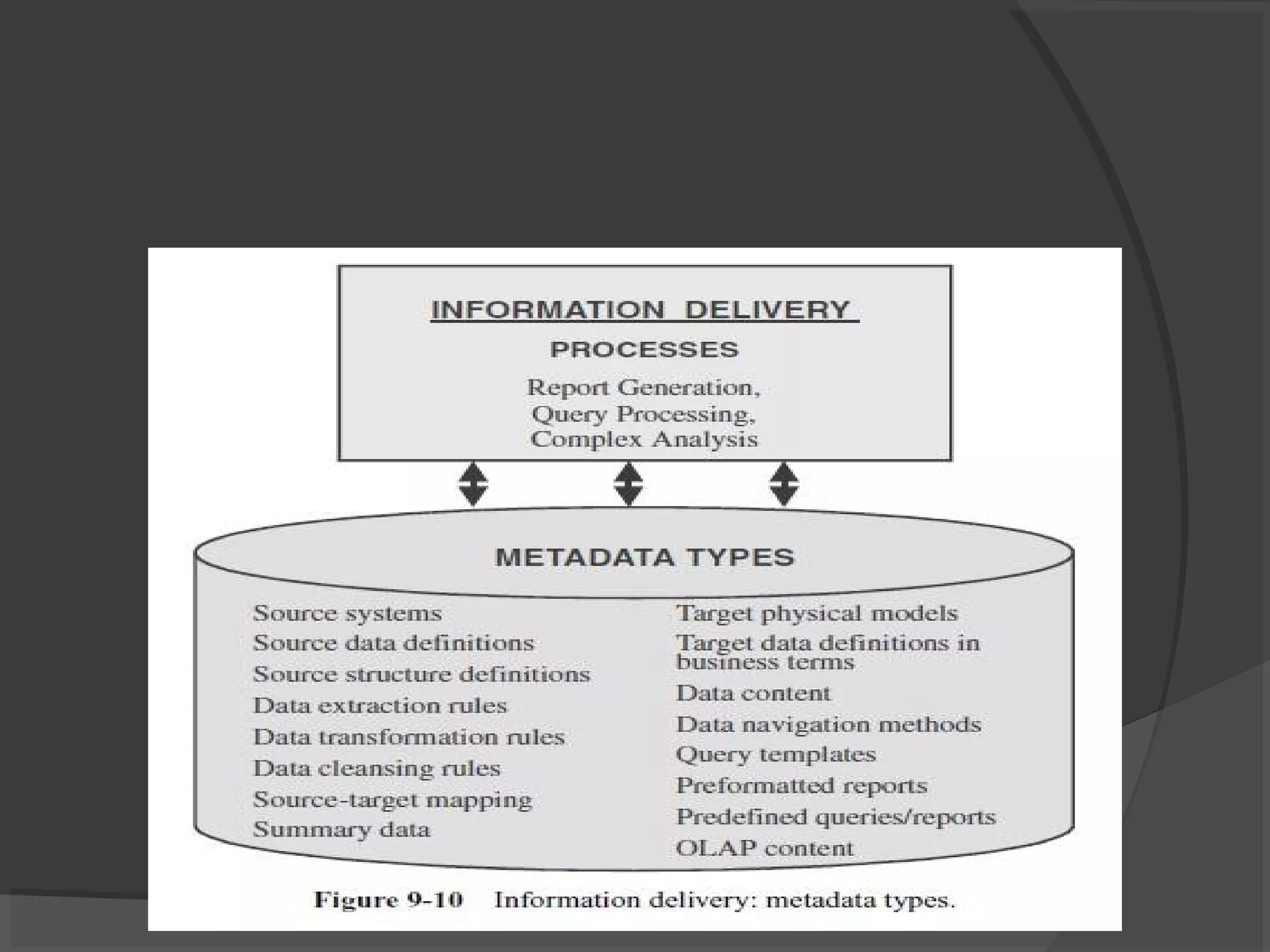
Information Delivery
 Report generating
 Query processing
 Complex analysis
Mostly this are meant for end-user.
Metadata recorded in processes of other
two areas.
It also record OLAP-the developer and
administrators are involved in this
processes.
Business METADATA
 It connect business with DWH.
 Business users need more than other
users.
 Business metadata is like a roadmap.
 Tout guide-managers and analysis.
 Must describe the contents in plain
language giving information in business
teerms.
 Example
The name of data tables (or) individual
element must not be cryptic.
The data item name-calc_pr_sle.
You need to rename this as calculated-prior-
month-sale
Business metadata Contd.,
 Much less structured than technical
metadata.
 Textual documents, spreadsheets, and
even business rules and policies not
written down completely.
Examples of Business
Metadata who Benefits?
 Primarily benefits end-users.
Managers
Business analysis
Power users
Regular users
Casual users
Senior managers/ junior managers
Technical Metadata
 IT staff- Development and
Administration of the data warehouse.
 Who Benefits?
Project manager
Data warehouse administrator
Metadata manager
Database administrator
Business analyst
Data quality analyst

Metadata in data warehouse

  • 1.
  • 2.
    Why Metadata  Beforetouches the keyboard by the prominent(superlative) users.  Several questions come to their mind. What are various data in the data warehouse? Is there information about unit sale and costs by product? How old is the data in the warehouse. When was the last time fresh data was brought in? Are there any summaries by month and product?
  • 3.
    Why Meta datacontd.,  These questions and several more information are very valid and pertinent.  What are answers? Where are the answers? Can ur user see the answers? How easy to get the answers?
  • 4.
    What is Metadata?  Metadata in a data warehouse contains the answer to questions about the data in the data warehouse.  Keep the answer in a place called the metadata repository.
  • 5.
    Different definitions for metadata Data about the data.  Table of contents for the data.  Catalog for the data.  Data warehouse roadmap.  Data warehouse directory.  Tongs to handle the data.  The nerve center.
  • 6.
    So, what exactlyis metadata  It tells u more.  It gives more than the explanation of the semantics and the syntax.  Describes all the pertinent(relevant) aspect of the data in the data warehouse.  Pertinent to whom?  The answer is – primarily to the user and also developer and even project team.
  • 7.
  • 8.
    Why it isimportant?  Metadata is necessary for using, building and administering your data warehouse.
  • 9.
    For using thedata warehouse  Without the metadata support, user cannot get an information every time they needed(user create their own ad hoc report).  Today data warehouses are much larger in size, wide in scope.  User critically need metadata.
  • 10.
    For building thedata warehouse(extraction team)  Need to know the structure and data content in the data warehouse.  Mapping and data transformations.  Logical structure of data warehouse database.
  • 11.
    For administering thedata warehouse  Impossible to administer the data warehouse(size)  Large no of questions and queries.  Cannot administer without answers for these questions.  Metadata must address these issues.
  • 12.
    List of questionsrelating to data warehouse
  • 13.
    Who needs metadata? Without metadata, Datawarehouse is like such a filling cabinet without information.  Go through the image column(it address the our question)
  • 15.
    Like a nervecenter  Metadata placed in a key position and enables communication among various processes.
  • 17.
    Why metadata isessential for IT  Development and deployment of data warehouse is joint effort between users and IT staff.  Technical issue-IT primarily responsible design and ongoing administration.  Metadata essential for IT  beginning with the data extraction and ending with information delivery.  It drives and record the each processes.
  • 19.
    Summary list ofprocess in which metadata is significant for IT  Data extraction  Data transformation  Data scrubbing  Data staging  Data refreshment  Database design  Query report and design
  • 20.
  • 21.
    Types by FunctionalArea  Classify and group in various way-some by usage and who use it  Administrative/End-user/Optimization  Technical/Business  Development/usage  In the data mart/At the workstation  Bank room/front room  Internal/External
  • 22.
    Functional Areas  DataAcquisition  Data stroage  Information delivery
  • 23.
    Data Acquisition  DWHprocess related to following functions. Data extraction Data transformation Data cleaning Data integration Data staging
  • 24.
  • 25.
    Data stroage  Dataloading  Data archiving  Data management  Use metadata in this area for full data refresh and load.
  • 27.
    Information Delivery  Reportgenerating  Query processing  Complex analysis Mostly this are meant for end-user. Metadata recorded in processes of other two areas. It also record OLAP-the developer and administrators are involved in this processes.
  • 29.
    Business METADATA  Itconnect business with DWH.  Business users need more than other users.  Business metadata is like a roadmap.  Tout guide-managers and analysis.
  • 30.
     Must describethe contents in plain language giving information in business teerms.  Example The name of data tables (or) individual element must not be cryptic. The data item name-calc_pr_sle. You need to rename this as calculated-prior- month-sale
  • 31.
    Business metadata Contd., Much less structured than technical metadata.  Textual documents, spreadsheets, and even business rules and policies not written down completely.
  • 32.
    Examples of Business Metadatawho Benefits?  Primarily benefits end-users. Managers Business analysis Power users Regular users Casual users Senior managers/ junior managers
  • 33.
    Technical Metadata  ITstaff- Development and Administration of the data warehouse.  Who Benefits? Project manager Data warehouse administrator Metadata manager Database administrator Business analyst Data quality analyst